EP0218347A1 - Anticorps anti-digoxine - Google Patents
Anticorps anti-digoxine Download PDFInfo
- Publication number
- EP0218347A1 EP0218347A1 EP86306489A EP86306489A EP0218347A1 EP 0218347 A1 EP0218347 A1 EP 0218347A1 EP 86306489 A EP86306489 A EP 86306489A EP 86306489 A EP86306489 A EP 86306489A EP 0218347 A1 EP0218347 A1 EP 0218347A1
- Authority
- EP
- European Patent Office
- Prior art keywords
- digoxin
- conjugate
- derivative
- lactone ring
- immunogenic protein
- Prior art date
- Legal status (The legal status is an assumption and is not a legal conclusion. Google has not performed a legal analysis and makes no representation as to the accuracy of the status listed.)
- Withdrawn
Links
Images


Classifications
-
- C—CHEMISTRY; METALLURGY
- C07—ORGANIC CHEMISTRY
- C07J—STEROIDS
- C07J19/00—Normal steroids containing carbon, hydrogen, halogen or oxygen, substituted in position 17 by a lactone ring
- C07J19/005—Glycosides
-
- C—CHEMISTRY; METALLURGY
- C07—ORGANIC CHEMISTRY
- C07K—PEPTIDES
- C07K1/00—General methods for the preparation of peptides, i.e. processes for the organic chemical preparation of peptides or proteins of any length
- C07K1/107—General methods for the preparation of peptides, i.e. processes for the organic chemical preparation of peptides or proteins of any length by chemical modification of precursor peptides
- C07K1/1072—General methods for the preparation of peptides, i.e. processes for the organic chemical preparation of peptides or proteins of any length by chemical modification of precursor peptides by covalent attachment of residues or functional groups
- C07K1/1077—General methods for the preparation of peptides, i.e. processes for the organic chemical preparation of peptides or proteins of any length by chemical modification of precursor peptides by covalent attachment of residues or functional groups by covalent attachment of residues other than amino acids or peptide residues, e.g. sugars, polyols, fatty acids
-
- G—PHYSICS
- G01—MEASURING; TESTING
- G01N—INVESTIGATING OR ANALYSING MATERIALS BY DETERMINING THEIR CHEMICAL OR PHYSICAL PROPERTIES
- G01N33/00—Investigating or analysing materials by specific methods not covered by groups G01N1/00 - G01N31/00
- G01N33/48—Biological material, e.g. blood, urine; Haemocytometers
- G01N33/50—Chemical analysis of biological material, e.g. blood, urine; Testing involving biospecific ligand binding methods; Immunological testing
- G01N33/53—Immunoassay; Biospecific binding assay; Materials therefor
- G01N33/531—Production of immunochemical test materials
-
- G—PHYSICS
- G01—MEASURING; TESTING
- G01N—INVESTIGATING OR ANALYSING MATERIALS BY DETERMINING THEIR CHEMICAL OR PHYSICAL PROPERTIES
- G01N33/00—Investigating or analysing materials by specific methods not covered by groups G01N1/00 - G01N31/00
- G01N33/48—Biological material, e.g. blood, urine; Haemocytometers
- G01N33/50—Chemical analysis of biological material, e.g. blood, urine; Testing involving biospecific ligand binding methods; Immunological testing
- G01N33/94—Chemical analysis of biological material, e.g. blood, urine; Testing involving biospecific ligand binding methods; Immunological testing involving narcotics or drugs or pharmaceuticals, neurotransmitters or associated receptors
- G01N33/9453—Cardioregulators, e.g. antihypotensives, antiarrhythmics
-
- Y—GENERAL TAGGING OF NEW TECHNOLOGICAL DEVELOPMENTS; GENERAL TAGGING OF CROSS-SECTIONAL TECHNOLOGIES SPANNING OVER SEVERAL SECTIONS OF THE IPC; TECHNICAL SUBJECTS COVERED BY FORMER USPC CROSS-REFERENCE ART COLLECTIONS [XRACs] AND DIGESTS
- Y10—TECHNICAL SUBJECTS COVERED BY FORMER USPC
- Y10S—TECHNICAL SUBJECTS COVERED BY FORMER USPC CROSS-REFERENCE ART COLLECTIONS [XRACs] AND DIGESTS
- Y10S436/00—Chemistry: analytical and immunological testing
- Y10S436/815—Test for named compound or class of compounds
- Y10S436/817—Steroids or hormones
-
- Y—GENERAL TAGGING OF NEW TECHNOLOGICAL DEVELOPMENTS; GENERAL TAGGING OF CROSS-SECTIONAL TECHNOLOGIES SPANNING OVER SEVERAL SECTIONS OF THE IPC; TECHNICAL SUBJECTS COVERED BY FORMER USPC CROSS-REFERENCE ART COLLECTIONS [XRACs] AND DIGESTS
- Y10—TECHNICAL SUBJECTS COVERED BY FORMER USPC
- Y10S—TECHNICAL SUBJECTS COVERED BY FORMER USPC CROSS-REFERENCE ART COLLECTIONS [XRACs] AND DIGESTS
- Y10S436/00—Chemistry: analytical and immunological testing
- Y10S436/823—Immunogenic carrier or carrier per se
Definitions
- This invention relates to an immunoassay for digoxin in the presence of its metabolites in serum and the development of antibodies for use in such diagnostic tests.
- Digoxin is widely used in the treatment of cardiac irregularities. Efficacy of a digoxin dose, as administered to a patient, is dependent on many factors. A narrow therapeutic index necessitates an accurate and reliable means for the measurement of serum digoxin concentration. The measurement for digoxin concentrations in the serum is complicated by the metabolites of digoxin in the serum. There is considerable variation between patients regarding the manner in which digoxin is metabolized in vivo. Digoxin is a steroid-carbohydrate conjugate. A major route of metabolism is the sequential loss of glycose units and/or saturation of the steroid lactone ring. The resulting metabolites retain various degrees of biological and toxic activities of the native digoxin.
- the antibodies generated in vivo against this conjugate are, therefore, for the most part directed against the steroid moiety of digoxin.
- the metabolites such as digoxigenin bis and monodigitoxide and digoxigenin all react with the antibodies whilst other metabolites such as dihydrodigoxigenin and dihydrodigoxin, where the C22 carbon is reduced, show little or no cross-reactivity with the antibodies.
- the cross-reactivity of the metabolites of digoxin with the antidigoxin antibodies is an appreciated fact and the specifications of most commercial antidigoxin sera state the degree of cross-reactivity.
- the carbohydrate metabolites are more potent antigens than digoxin itself, the additional carbohydrate units in some way reducing the antibody binding activity of native digoxin.
- the glycosidic metabolites may account for the measured digoxin concentration in serum samples.
- a digoxin derivative/ immunogenic protein conjugate which has its carbohydrate moiety intact and to which antibodies may be raised which are specific to digoxin and with which digoxin metabolites have little if any cross-reactivity.
- the digoxin derivatives/immunogenic protein conjugate has its lactone ring at C17 opened at a double bond between C20 and C23 of the lactone ring.
- An immunogenic protein is coupled to the C23 of the open lactone ring without altering the carbohydrate moiety of the digoxin derivative.
- the digoxin derivative/immunogenic protein conjugate is prepared by opening the double bond between C20 and C23 of the C17 lactone ring of digoxin having a carbohydrate moiety at C3.
- An immunogenic protein is coupled to a resultant C23 of the open lactone ring without altering the carbohydrate moiety.
- Antidigoxin antibodies specific to the carbohydrate moiety of the digoxin derivative/immunogenic protein conjugate are raised and used in an immunoassay diagnostic method for detecting the presence of digoxin in a fluid sample.
- a process for preparing a compound 3 ⁇ -12 ⁇ -14 ⁇ -trihydroxy-5 ⁇ -17 ⁇ (glyoxylate ester of C 21 hydroxy, C 20 keto)etianic acid 3-tridigitoxoside.
- the compound is prepared by treating digoxin with ozone to yield an ozonide in the Cl7 lactone ring and reducing the ozonide to produce the compound which may be used as an intermediate in the production of a digoxin derivative/methylated bovine serum albumin conjugate.
- Digoxin which can be isolated from the foxglove plant, has a carbohydrate moiety which is not found in mammals. Thus, an antibody raised against the unique carbohydrate moiety of digoxin would provide a more specific immunoassay for native digoxin. Digoxin is represented by the formula:
- Digoxin when metabolized in the body, produces a variety of metabolites which include digoxigenin bisdigitoxide, monodigitoxide and digoxigenin. All of these metabolites involve the modification of the carbohydrate moiety of digoxin and are the most dominant of the metabolites. Other metabolites include dihydrodigoxigenin, dihydrodigoxin and digitoxin, which involve modifications to the steroidal moiety of digoxin.
- This invention is directed to the development of a digoxin derivative which is coupled to an immonugenic protein at the C23 position of the C17 lactone ring of digoxin, while leaving the carbohydrate moiety of digoxin intact.
- This locates the immunogenic protein on the opposite side of the steroidal moiety of digoxin to permit the raising of antibodies to the unique carbohydrate moiety and thereby provide low cross-reactivity with the metabolites of digoxin, because, as noted above, most digoxin metabolites involve the modification of the carbohydrate moiety.
- the lactone ring is opened in a manner to provide the C23 carbon in a form which is reactive with the amine groups of the immunogenic protein.
- the double bond between carbon atoms C20 and C23 may be opened in accordance with a variety of organic synthesis techniques, as will be understood by those skilled in the art.
- the preferred technique is to oxidize the lactone ring to form an ozonide.
- the oxidation of the lactone ring may be effected by the use of ozone in ozonolysis, the use of osmium tetroxide or the use of potassium permaganate in acetone.
- ozonolysis is used to form the ozonide as follows.
- the ozonide may then be opened by reduction to produce an aldehyde at C23 or by oxidation to produce a carboxyl group at C23. It is appreciated that there are many useful forms of reductants which may be used in reducing the ozonide to open the ring, as will be appreciated by those skilled in the art.
- the preferred reductant is dimethylsulfide which, when reacted with the ozonide of the above formula II, results in the aldehyde of the following formula III:
- the digoxin derivative of formula IV is confirmed to thereby indicate that the aldehyde of formula III is prepared when the ozonide of formula II is reduced.
- the immunogenic protein may be coupled to the C23 carboxylate by use of catalyst, such as dicyclocarbodiamide which catalyses the reaction of the amine groups of the protein moiety with the C23 carboxyl group of the digoxin derivative.
- catalyst such as dicyclocarbodiamide which catalyses the reaction of the amine groups of the protein moiety with the C23 carboxyl group of the digoxin derivative.
- a variety of immongenic proteins may be coupled to the digoxin derivative to provide a conjugate which, when appropriately treated and injected into an animal, can raise antibodies to the conjugate.
- a diamine may be used in linking the desired immunogenic protein to the C23 carbon of the digoxin derivative of formula III or V.
- Such diamines include 4-aminophenylethylamine.
- Suitable immunogenic proteins include bovine serum ablumin (BSA) which is not soluble in an organic reaction medium which may be used in the production of the derivatives of formulas III an V.
- the organic soluble form of BSA namely methylated bovine serum albumin (mBSA)
- mBSA methylated bovine serum albumin
- the immunization may be conducted in accordance with standard techniques, such as injecting the conjugate subcutaneously into a rabbit at multiple sites.
- Booster injections may be later injected where serum samples are taken periodically and assayed for antidigoxin activity until a desired level of raised antibodies is achieved.
- the raised antibodies can then be evaluated for their specificity to digoxin and the extent of cross-reactivity with digoxin metabolites in the manner to be discussed with respect to the following Examples.
- the antidigoxin antibodies as isolated in the serum samples taken from the animal in which they are raised, can be used in an immunoassay diagnostic method to determine the concentration of native or pure digoxin in serum samples from humans and other animals in which it is desired to detect the presence of native digoxin.
- an immunoassay diagnostic method to determine the concentration of native or pure digoxin in serum samples from humans and other animals in which it is desired to detect the presence of native digoxin.
- radioimmunoassay in which the digoxin to be measured competes with a known amount of radiolabelled digoxin for binding to the antibody
- fluorescence polarization immunoassay in which the unknown digoxin competes with a known amount of a fluorescent digoxin derivative for binding to the antibody.
- the antidigoxin antibodies may be purified and isolated from the serum and furthermore, it is possible to develop a hybridoma which produces a monoclonal antibody having the same specificity to the carbohydrate moiety of digoxin.
- the compound of formula III is prepared. 128 pmoles digoxin (Sigma St. Louis, Mo.) was spiked with [12a 3 H]-digoxin (NEN, Boston, Mass) and dissolved in 3.5 ml CH 2 C1 2 MeOH (5:1 v/v). The solution was cooled to -78°C in dry ice/acetone. Ozone (from a high voltage ozone generator) was bubbled through the solution (0.4 ml/min)in the presence of a starch iodine paper. After 5 min, the tube was capped and the reaction mixture stirred for 3 hours at -78°C. The reaction tube was then flushed with nitrogen and 2 ml of dimethyl sulfide (Sigma) was added. The mixture was stirred overnight in a Duwar flask and the temperature allowed to rise to 25°C. The product was evaporated under nitrogen.
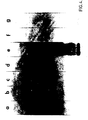
- the compound of formula IV was also subjected to mass spectral analysis as shown in Figure 3 after cleavage of the carbohydrate moiety and derivatization with heptafluorobutyrate (HFB).
- HFB heptafluorobutyrate
- the aglycone of compound IV containing one HFB group should give an ion peak at 596. Cleavage of the C13-C17 and C14-C-15 bonds should result in a peak at 496. Loss of HFB from this species should give a peak at 282, while loss of CO (C16) should give a 468 signal. Loss of HFB should give 254 or loss of CH 3 (C20) should account for the signal at 453m/e. Thus, the major peaks coincide with those predicted from the structure of formula IV.
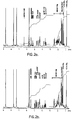
- the NMR and mass spectrametric analysis confirm the production of the compound of formula IV following ozonolysis and alkali hydrolysis of digoxin. This confirms the presence of the compound of formula III as the immediate product of the reductive ozonolysis of digoxin.
- Example 3 The conjugate of Example 3 (1 mg protein containing m50 digoxin molecules/BSA) was dissolved in water, emulsified in an equal volume of Freunds complete adjuvant, and injected subcutanesouly into a rabbit at multiple sites. A booster injection of the same conjugate (1.5 mg protein) in incomplete adjuvant was administered after one month. A second booster using a less potent conjugate (5.8 mg protein containing - 5 digoxin molecules/BSA) was given three weeks later. Serum samples were taken periodically and assayed for antidigoxin activity undiluted prior to the second booster and diluted 1 in 10 thereafter.
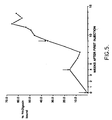
- Antidogixin activity was detected approximately eight weeks after subcutaneous injection of the mBSA/digoxin derivative conjugate, as shown in Figure 5. Serum samples up to this time were assayed undiluted and thereafter at a 1 in 10 dilution.
- the 3 H-digoxin radioimmunoassay method was adapted from that previously described Cerceo E. and Elloso CA (1972) Factors Affecting the Radioimmunoassay of Digoxin, Clin. Chem. 18, 539-542. Briefly, tubes containing 0-30 ng 3 H-digoxin (3000 dpm) in PBS were incubated at room temperature for 15 mins in the presence of 1/20 diluted antidigoxin serum. Ice cold dextran coated charcoal was added and incubated at 4°C for 10 mins. This mixture was centrifuged and the 3 H-digoxin remaining in the supernate was counted in a liquid scintillation spectrometer. Controls in the absence of serum and for non-immune serum were performed in parallel.
- Multiwell ELISA plates were coated with 500 ng/well digoxin/BSA conjugate or BSA alone. Serial dilutions of immune vs non-immune serum were assayed for antigen binding using a goat anti rabbit Ig/horseradish peroxidase conjugate. Binding was quantitated using a Dynatech automatic ELISA reader.
- Antidigoxin antibodies raised against BSA periodate conjugated digoxin were purchased from Antibodies Incorporated (Davis, CA) and Wien Laboratories (Succasunna, NJ). Antidigoxin activity was determined using the 125 I-digoxin radioimmune assay as previously described. Soldin, s: Papanastasion-Diamand, A; Heyes, J;, Lingwood, C.A. and Olley, P. (1984) Are Immunoassays for Digoxin Reliable? Clin. Biochem. 17, 317-320. The immune serum was precipitated with 40% ammonium sulfate. The precipitate was redissolved and dialysed against phosphate buffered saline pH 7.4 (PBS).
- PBS phosphate buffered saline pH 7.4
- Digoxin antibodies were further purified by immunoaffinity chromatography.
- Digoxin was covalently linked to agarose by use of a photoactive heterobifunctional crosslinking agent as described in Lingwood, C.A. (1984) Production of Glycolipid Affinity Matrices by Use of Heterbifunctional Crosslingkin g Agents, J. Lipid Res. 25, 1010-1012.
- Amino hexyl agarose was treated with 2mM hydroxysuccinimidyl azidobenzoate in the dark for 1 hour at room temperature. The beads were washed with water and 2 mg 3 H-digoxin (1 mg/ml enthanol/water 1:1) was added.
- the beads were rotoevaporated to dryness when the digoxin was absorbed onto the beads.
- the dry beads were then irradiated for 2 min/l cm from a Mineralight II UV source with stirring, when the digoxin is covalently attached to the agarose beads.
- the matrix was washed with 100 column volumes 50% ethanol and 50 column volumes water. The wash fractions were concentrated and unbound 3 H-digoxin was measured. The amount of digoxin coupled/ml agarose was calculated (0.2 ⁇ moles/ml beads).
- the immunoglobulin fraction from 1 ml immune serum was applied and the digoxin column was washed with PBS.
- Antidigoxin activity was measured using the automated 125 I-RIA method. All antidigoxin activity was found to bind to the column.
- Specific antibodies were eluted by addition of 10 ml 1M Kl followed by 10ml 1M KSCN. The eluted fractions were dialysed, concentrated vs sucrose, dialysed and used in the RIA.
- Antidigoxin activity was detected approximately eight weeks after subcutaneous injection of the mBSA/digoxin derivative conjugate, as shown in Figure 5. Serum samples, in accordance with Example 4, up to this time were assayed undiluted and thereafter at a 1 in 10 dilution. In accordance with the procedure of Example 5, the 3'H-digoxin radioimmunoassay the percentage digoxin bound was constant up to a dilution of 1 in 40. However, considerably greater reactivity was demonstrated in the enzyme linked immunosorbent assay of Example 6 as shown in Figures 6a and 6b.
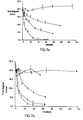
- the degree of cross reactivity of the digoxin metabolites was monitored using the 3 H-digoxin radioimmunoassay.
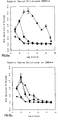
- the binding of 3 H-digoxin was effectively competed out in the presence of unlabelled digoxin to give the standard curve shown in Figure 7a.
- the bisdigitoxoside was a considerably less potent inhibitor, showing a cross-reactivity index of 14.6% (calculated from the molar concentration required to reduce the 3 H-digoxin binding by 50%), and the reactivity of the monodigitoxoside is further reduced (cross reactivity index 3.7%).
- the agylcone digoxigenin was found to be an ineffective antigen for the new antibody.
- the free digitoxose sugar does not compete for digoxin binding and digitoxin shows a cross reactivity index of 11% ( Figure 7b).
Landscapes
- Health & Medical Sciences (AREA)
- Chemical & Material Sciences (AREA)
- Life Sciences & Earth Sciences (AREA)
- Engineering & Computer Science (AREA)
- Immunology (AREA)
- Molecular Biology (AREA)
- Biomedical Technology (AREA)
- General Health & Medical Sciences (AREA)
- Organic Chemistry (AREA)
- Urology & Nephrology (AREA)
- Hematology (AREA)
- Analytical Chemistry (AREA)
- Medicinal Chemistry (AREA)
- Biochemistry (AREA)
- Physics & Mathematics (AREA)
- Cell Biology (AREA)
- Microbiology (AREA)
- Pathology (AREA)
- Food Science & Technology (AREA)
- General Physics & Mathematics (AREA)
- Biotechnology (AREA)
- Pharmacology & Pharmacy (AREA)
- Cardiology (AREA)
- Bioinformatics & Cheminformatics (AREA)
- Heart & Thoracic Surgery (AREA)
- Chemical Kinetics & Catalysis (AREA)
- General Chemical & Material Sciences (AREA)
- Biophysics (AREA)
- Genetics & Genomics (AREA)
- Proteomics, Peptides & Aminoacids (AREA)
- Steroid Compounds (AREA)
Applications Claiming Priority (2)
| Application Number | Priority Date | Filing Date | Title |
|---|---|---|---|
| CA489708 | 1985-08-29 | ||
| CA489708 | 1985-08-29 |
Publications (1)
| Publication Number | Publication Date |
|---|---|
| EP0218347A1 true EP0218347A1 (fr) | 1987-04-15 |
Family
ID=4131274
Family Applications (1)
| Application Number | Title | Priority Date | Filing Date |
|---|---|---|---|
| EP86306489A Withdrawn EP0218347A1 (fr) | 1985-08-29 | 1986-08-21 | Anticorps anti-digoxine |
Country Status (2)
| Country | Link |
|---|---|
| US (1) | US4767720A (fr) |
| EP (1) | EP0218347A1 (fr) |
Cited By (4)
| Publication number | Priority date | Publication date | Assignee | Title |
|---|---|---|---|---|
| EP0326073A1 (fr) * | 1988-01-25 | 1989-08-02 | Roche Diagnostics GmbH | Conjugués haptènes-protéines et leur utilisation |
| EP0397879A4 (en) * | 1988-05-02 | 1991-01-02 | P.C.C. Technology Inc. | Method for detecting glycosidically linked low-molecular compound by immunoassay |
| EP0374946A3 (fr) * | 1988-12-23 | 1991-05-08 | Roche Diagnostics GmbH | Procédé de détection des composés contenant des glucides |
| WO1996003423A1 (fr) * | 1994-07-25 | 1996-02-08 | Boehringer Mannheim Gmbh | Peptides marques par un haptene |
Families Citing this family (26)
| Publication number | Priority date | Publication date | Assignee | Title |
|---|---|---|---|---|
| CN1093255A (zh) * | 1986-06-17 | 1994-10-12 | 恩特雷麦德有限公司 | 抗甾醇疫苗 |
| US6346510B1 (en) | 1995-10-23 | 2002-02-12 | The Children's Medical Center Corporation | Therapeutic antiangiogenic endostatin compositions |
| US7402313B2 (en) * | 2002-07-25 | 2008-07-22 | Charles David Adair | Method for controlling preeclampsia and eclampsia |
| US7794716B2 (en) * | 2002-07-25 | 2010-09-14 | Glenveigh Pharmaceuticals, Llc | Antibody composition and passive immunization against pregnancy-induced hypertension |
| GB0225476D0 (en) * | 2002-11-01 | 2002-12-11 | Bio Med Reagents Ltd | Labelled proteins and production and uses thereof |
| RU2503463C2 (ru) | 2006-07-03 | 2014-01-10 | Чарльз Дэвид ЭДЕЙР | Композиция для модулирования экспрессии молекул клеточной адгезии |
| CA2745111A1 (fr) | 2008-12-03 | 2010-06-10 | Research Development Foundation | Modulation de l'angiogenese a mediation par olfml-3 |
| CA2842971C (fr) | 2011-08-05 | 2019-11-12 | Research Development Foundation | Procedes et compositions ameliores pour la modulation de l'angiogenese mediee par olfml3 |
| EP2912064B1 (fr) | 2012-10-24 | 2019-04-24 | Research Development Foundation | Anticorps anti-jam-c et procédés pour le traitement du cancer |
| CN114621346B (zh) | 2013-08-21 | 2025-06-10 | 德克萨斯州大学系统董事会 | 用于靶向连接蛋白半通道的组合物和方法 |
| EP3383908A1 (fr) | 2015-12-02 | 2018-10-10 | Stsciences, Inc. | Anticorps spécifiques au btla glycosylé (atténuateur de lymphocytes b et t) |
| MX2018006613A (es) | 2015-12-02 | 2019-01-30 | Stcube & Co Inc | Anticuerpos y moleculas que se unen inmunoespecificamente a btn1a1 y los usos terapeuticos de los mismos. |
| EP3419998A4 (fr) | 2016-02-26 | 2019-09-25 | The Board of Regents of The University of Texas System | Anticorps se liant aux hémicanaux de la connexine (cx) 43 et leurs utilisations |
| KR102367074B1 (ko) | 2016-03-29 | 2022-02-25 | 주식회사 에스티큐브 | 글리코실화된 pd-l1에 특이적인 이중 기능 항체 및 이의 사용 방법 |
| US11046782B2 (en) | 2016-03-30 | 2021-06-29 | Musc Foundation For Research Development | Methods for treatment and diagnosis of cancer by targeting glycoprotein A repetitions predominant (GARP) and for providing effective immunotherapy alone or in combination |
| KR20190031299A (ko) | 2016-07-20 | 2019-03-25 | 주식회사 에스티큐브 | 글리코실화된 pd-l1에 결합하는 항체의 조합을 사용하는 암 치료 방법 |
| WO2018222685A1 (fr) | 2017-05-31 | 2018-12-06 | Stcube & Co., Inc. | Méthodes de traitement du cancer à l'aide d'anticorps et de molécules se liant de manière immunospécifique à btn1a1 |
| KR20250036941A (ko) | 2017-05-31 | 2025-03-14 | 주식회사 에스티큐브앤컴퍼니 | Btn1a1에 면역특이적으로 결합하는 항체 및 분자 및 이의 치료적 용도 |
| EP3635007A1 (fr) | 2017-06-06 | 2020-04-15 | STCube & Co., Inc. | Procédés de traitement du cancer à l'aide d'anticorps et de molécules se liant à btn1a1 ou des ligands de btn1a1 |
| GB2581619A (en) | 2017-09-15 | 2020-08-26 | Univ California | Inhibition of aminoacylase 3 (AA3) in the treatment of cancer |
| US20200290978A1 (en) | 2017-09-26 | 2020-09-17 | The Regents Of The University Of California | Compositions and methods for treating cancer |
| CN114729045B (zh) | 2019-09-26 | 2025-09-09 | 斯特库比公司 | 对糖基化的ctla-4特异性的抗体及其使用方法 |
| CN114829404B (zh) | 2019-10-09 | 2025-09-09 | 斯特库比公司 | 对糖基化的lag3特异的抗体及其使用方法 |
| US20230106973A1 (en) | 2020-02-17 | 2023-04-06 | Board Of Regents, The University Of Texas System | Methods for expansion of tumor infiltrating lymphocytes and use thereof |
| WO2023056361A1 (fr) | 2021-09-29 | 2023-04-06 | Board Of Regents, The University Of Texas System | Anticorps anti-hsp70 et leurs utilisations thérapeutiques |
| CN116396392B (zh) * | 2023-01-17 | 2023-10-27 | 珠海重链生物科技有限公司 | 一种特异性针对异羟基洋地黄毒甙元的抗体及其相关应用 |
Citations (2)
| Publication number | Priority date | Publication date | Assignee | Title |
|---|---|---|---|---|
| AT362391B (de) * | 1975-08-20 | 1981-05-11 | Boehringer Mannheim Gmbh | Verfahren zur herstellung von neuen ver- bindungen zum nachweis von herzglykosiden |
| US4469797A (en) * | 1982-09-23 | 1984-09-04 | Miles Laboratories, Inc. | Digoxigenin immunogens, antibodies, labeled conjugates, and related derivatives |
-
1985
- 1985-09-10 US US06/774,370 patent/US4767720A/en not_active Expired - Fee Related
-
1986
- 1986-08-21 EP EP86306489A patent/EP0218347A1/fr not_active Withdrawn
Patent Citations (2)
| Publication number | Priority date | Publication date | Assignee | Title |
|---|---|---|---|---|
| AT362391B (de) * | 1975-08-20 | 1981-05-11 | Boehringer Mannheim Gmbh | Verfahren zur herstellung von neuen ver- bindungen zum nachweis von herzglykosiden |
| US4469797A (en) * | 1982-09-23 | 1984-09-04 | Miles Laboratories, Inc. | Digoxigenin immunogens, antibodies, labeled conjugates, and related derivatives |
Cited By (7)
| Publication number | Priority date | Publication date | Assignee | Title |
|---|---|---|---|---|
| EP0326073A1 (fr) * | 1988-01-25 | 1989-08-02 | Roche Diagnostics GmbH | Conjugués haptènes-protéines et leur utilisation |
| US5032518A (en) * | 1988-01-25 | 1991-07-16 | Boehringer Mannheim Gmbh | Hapten-protein conjugates and the use therof |
| EP0397879A4 (en) * | 1988-05-02 | 1991-01-02 | P.C.C. Technology Inc. | Method for detecting glycosidically linked low-molecular compound by immunoassay |
| EP0374946A3 (fr) * | 1988-12-23 | 1991-05-08 | Roche Diagnostics GmbH | Procédé de détection des composés contenant des glucides |
| US5179004A (en) * | 1988-12-23 | 1993-01-12 | Boehringer Mannheim Gmbh | Process for the detection of compounds containing carbohydrate and a suitable reagent therefor |
| WO1996003423A1 (fr) * | 1994-07-25 | 1996-02-08 | Boehringer Mannheim Gmbh | Peptides marques par un haptene |
| US5804371A (en) * | 1994-07-25 | 1998-09-08 | Boehringer Mannheim Gmbh | Hapten-labelled peptides |
Also Published As
| Publication number | Publication date |
|---|---|
| US4767720A (en) | 1988-08-30 |
Similar Documents
| Publication | Publication Date | Title |
|---|---|---|
| US4767720A (en) | Antidigoxin antibodies | |
| DE69132055T2 (de) | Ortsgenaue konjugatbildung zwischen immunglobulinen und nachweisbaren markierungsstoffen | |
| US3879262A (en) | Detection and determination of haptens | |
| US4043872A (en) | Polyiodothyronine immunoassay | |
| US4298685A (en) | Diagnostic reagent | |
| JPH0131141B2 (fr) | ||
| Gross et al. | Production of antisera to steroids coupled to proteins directly through the phenolic A ring | |
| Schnappinger et al. | Enzyme immunoassay for the detection of streptomycin and dihydrostreptomycin in milk | |
| Paxton et al. | Production and characterisation of antisera to diphenylhydantoin suitable for radioimmunoassay | |
| EP0712497B1 (fr) | Reactifs et procedes de detection et de quantification de la testosterone dans des echantillons de fluides | |
| US4990443A (en) | Hapten-protein conjugates and methods of use in immunoassays | |
| Thong et al. | Lack of specificity of current anti-digoxin antibodies, and preparation of a new, specific polyclonal antibody that recognizes the carbohydrate moiety of digoxin. | |
| US4085202A (en) | Testosterone derivatives | |
| US20040121400A1 (en) | Method and kit for detecting, or determining, 3,4-methylenedioxymethamphetamine | |
| DE3114362C2 (de) | Verfahren zur Herstellung eines Antikörpers bzw. Antiserums, Verwendung dieses Verfahrens zur Gewinnung von Säugetierzellen, welche fähig sind, einen solchen Antikörper zu erzeugen und Verwendung des so hergestellten Antikörpers bzw. Antiserums zur Immunoprüfung | |
| US3997525A (en) | Tetra-125 iodo-di-tyramine of digitalis derivative and process for making the same | |
| Bauminger et al. | Antiserum to 5α-dihydrotestosterone: production, characterization and use in radioimmunoassay | |
| EP3234604A2 (fr) | Conjugués utilisables en vue du dosage de l'oxycodone et de l'oxymorphone | |
| Kayoko et al. | A novel immunization procedure for production of anti-testosterone and anti-5α-dihydrotestosterone antisera of low cross-reactivity | |
| EP0178683B1 (fr) | Essai immunologique pour estriol-3-sulfate | |
| RU2088230C1 (ru) | Способ получения конъюгата аймалина с бычьим сывороточным альбумином | |
| FUJII et al. | Preparation and Antigenic Properties of Digitoxin-Bovine Serum Albumin Conjugates Linked at the Digitoxose C-3'and C-3" Positions | |
| IKEGAWA et al. | Preparation of specific antisera to 3β-hydroxy-5-cholenoic acid by immunization with conjugates attached to protein through the C-3 position | |
| JPH01131200A (ja) | リン脂質複合体、蛋白質複合体およびそれらの製造法 | |
| WO1995021196A1 (fr) | Dosages immunologiques d'inositols |
Legal Events
| Date | Code | Title | Description |
|---|---|---|---|
| PUAI | Public reference made under article 153(3) epc to a published international application that has entered the european phase |
Free format text: ORIGINAL CODE: 0009012 |
|
| AK | Designated contracting states |
Kind code of ref document: A1 Designated state(s): CH DE FR GB IT LI NL SE |
|
| 17P | Request for examination filed |
Effective date: 19871003 |
|
| 17Q | First examination report despatched |
Effective date: 19890607 |
|
| STAA | Information on the status of an ep patent application or granted ep patent |
Free format text: STATUS: THE APPLICATION HAS BEEN WITHDRAWN |
|
| 18W | Application withdrawn |
Withdrawal date: 19890715 |
|
| R18W | Application withdrawn (corrected) |
Effective date: 19890715 |
|
| RIN1 | Information on inventor provided before grant (corrected) |
Inventor name: LINGWOOD, CLIFFORD A. |