EP0218352B1 - Procédé de traitement de cellules de protistes - Google Patents
Procédé de traitement de cellules de protistes Download PDFInfo
- Publication number
- EP0218352B1 EP0218352B1 EP19860306599 EP86306599A EP0218352B1 EP 0218352 B1 EP0218352 B1 EP 0218352B1 EP 19860306599 EP19860306599 EP 19860306599 EP 86306599 A EP86306599 A EP 86306599A EP 0218352 B1 EP0218352 B1 EP 0218352B1
- Authority
- EP
- European Patent Office
- Prior art keywords
- cells
- protista
- suspension
- process according
- cell
- Prior art date
- Legal status (The legal status is an assumption and is not a legal conclusion. Google has not performed a legal analysis and makes no representation as to the accuracy of the status listed.)
- Expired
Links
Images

Classifications
-
- C—CHEMISTRY; METALLURGY
- C12—BIOCHEMISTRY; BEER; SPIRITS; WINE; VINEGAR; MICROBIOLOGY; ENZYMOLOGY; MUTATION OR GENETIC ENGINEERING
- C12P—FERMENTATION OR ENZYME-USING PROCESSES TO SYNTHESISE A DESIRED CHEMICAL COMPOUND OR COMPOSITION OR TO SEPARATE OPTICAL ISOMERS FROM A RACEMIC MIXTURE
- C12P19/00—Preparation of compounds containing saccharide radicals
- C12P19/26—Preparation of nitrogen-containing carbohydrates
- C12P19/28—N-glycosides
- C12P19/38—Nucleosides
- C12P19/40—Nucleosides having a condensed ring system containing a six-membered ring having two nitrogen atoms in the same ring, e.g. purine nucleosides
-
- C—CHEMISTRY; METALLURGY
- C12—BIOCHEMISTRY; BEER; SPIRITS; WINE; VINEGAR; MICROBIOLOGY; ENZYMOLOGY; MUTATION OR GENETIC ENGINEERING
- C12N—MICROORGANISMS OR ENZYMES; COMPOSITIONS THEREOF; PROPAGATING, PRESERVING, OR MAINTAINING MICROORGANISMS; MUTATION OR GENETIC ENGINEERING; CULTURE MEDIA
- C12N1/00—Microorganisms; Compositions thereof; Processes of propagating, maintaining or preserving microorganisms or compositions thereof; Processes of preparing or isolating a composition containing a microorganism; Culture media therefor
- C12N1/06—Lysis of microorganisms
- C12N1/066—Lysis of microorganisms by physical processes
-
- C—CHEMISTRY; METALLURGY
- C12—BIOCHEMISTRY; BEER; SPIRITS; WINE; VINEGAR; MICROBIOLOGY; ENZYMOLOGY; MUTATION OR GENETIC ENGINEERING
- C12N—MICROORGANISMS OR ENZYMES; COMPOSITIONS THEREOF; PROPAGATING, PRESERVING, OR MAINTAINING MICROORGANISMS; MUTATION OR GENETIC ENGINEERING; CULTURE MEDIA
- C12N13/00—Treatment of microorganisms or enzymes with electrical or wave energy, e.g. magnetism, sonic waves
Definitions
- This invention relates to a process for treating protista cells having a useful substance accumulated therein, more particularly a process for recovering the useful substance in the cells by irradiating the cells with laser beam.
- useful substances include, for example, enzymes and proteins such as trypsin, amylase, cellulase, lysozyme, ribonuclease, cytochrome, insulin, pepsin and single cell proteins (SCP); amino acids such as lysine, glutamic acid, leucine, tryptophan, arginine, homoserine and methionine; nucleic acids such as nucleosides, nucleotides, oligonucleotides, DNA and RNA; vitamins such as vitamin B1, vitamin B2, vitamin B6 and vitamin H; and biologically active substances such as S-adenosyl-L-methionine (hereinafter referred to as SAM in some cases), S-adenosylhomocysteine, glutathione, interferon and interleukin.
- enzymes and proteins such as trypsin, amylase, cellulase, lysozyme, ribonuclease,
- Previously known treatment processes for extracting these useful substances from cells are, for example, a mechanical grinding process using, for example, a mortar ball mill or homogenizer; an ultrasonication process comprising bacteriolysis by autolysis; a process comprising treatment with an agent such as perchloric acid, sulfuric acid, formic acid, acetic acid, ethyl acetate, acetone or toluene; and a process comprising treatment with a cell wall-degrading enzyme.
- the mechanical process and the ultrasonic process are disadvantageous in that since destruction of cell walls results in discharge of all substances in cells, a very troublesome procedure is required for thereafter selectively separating and purifying a useful substance, for example, only a protein having a molecular weight in a specific range.
- the process comprising bacteriolysis by autolysis and the process comprising treatment with a cell wall-degrading enzyme are applicable only to limited kinds of protista.
- the treatment with an agent such as perchloric acid permits substantially complete extraction of a useful substance in cells but has been disadvantageous in that it requires a subsequent neutralization step or results in decomposition of the useful substance or increases its toxicity.
- Berns et al, Science, (1981), 213 ,505 disclose various uses of laser microbeams for laser microsurgery in cell and development biology. The principles of selective damage and their application to detailed studies of cell behaviour are discussed.
- the invention provides a process for treating protista cells which makes it possible to extract a useful substance from a variety of protista cells by a simple procedure.
- Such a process of this invention can be achieved by irradiating protista cells having a useful substance therein with a laser beam to discharge the useful substance from the cells.
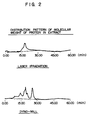
- Figs. 1 and 2 show analysis charts of HPLC of the proteins obtained in Examples 1 and 6 (see later), respectively.
- the invention is applicable to a wide spectrum of protista, ranging from higher protista to lower protista.
- specific examples of the protista include bacteria such as Escherichia , Pseudomonas , Bacillus , Brevibacterium , Corynebacterium , Serratia , Citrobacter , Streptococcus , Lactobacillus and Staphylococcus ; fungi such as Aspergillus , Penicillium , Mucor , Rhizopus , Gibberella , Monascus , Neurospora , Botrytis , Cladospolium and Fusarium ; yeasts such as Saccharomyces , Candida , Pichia , Hansenula , Schizosaccharomyces , Lipomyces and Rhodotorula ; Actinomycetes such as Streptomyces , Nocardia and Actinomyces ; and Bacidiomyce
- the laser beam used in a process of this invention usually has a specific wavelength in the range of from the ultraviolet region to the infrared region, and its output mode may be either CW (continuous wave) or pulse.
- the laser beam is preferably pulsed. In this case, a rise of temperature due to light absorption of the substance can be prevented by a non-irradiation time between pulses, so that even a useful substance unstable to heat becomes extractable in a stable state.
- the laser beam used includes solid-state lasers such as a YAG laser, glass laser or ruby laser, a dye laser, and gas lasers such as an excima laser or argon ion laser. Furthermore, lasers pumped by other lasers such as a YAG laser pumped-dye laser, excima laser pumped-dye laser or argon ion laser pumped-dye laser may be used.
- the treatment of cells with a laser beam is usually carried out by suspending the cells in a liquid medium for example, water, a buffer solution or an organic solvent such as an alcohol, ketone, ester, ether or hydrocarbon, and irradiating the resulting suspension with a laser beam.
- a liquid medium for example, water, a buffer solution or an organic solvent such as an alcohol, ketone, ester, ether or hydrocarbon, and irradiating the resulting suspension with a laser beam.
- the mode of the treatment with the laser beam may properly be selected depending on the purpose, and any of the batch mode, semicontinuous mode and continuous mode can be employed.
- the suspension of protista cells are irradiated with the laser beam.
- the treatment is carried out by feeding the suspension of protista cells to a laser beam irradiation zone intermittently or continuously.
- the method for feeding the cell suspension is not critical and includes, for instance, a method comprising feeding the suspension from an upper part of the laser beam irradiation zone and removing it from the lower part; a method comprising feeding the suspension from a lower part and removing it from the upper part; and a method comprising passing the suspension through the laser beam irradiation zone transversely.
- the semicontinuous mode or the continuous mode is preferred among these treatment modes, and according to them, the efficiency of treatment can be raised by recycling the cell suspension after the treatment to the laser beam irradiation zone.
- the recycling it is also possible to separate cells by a conventional method such as centrifugation, then prepare a suspension thereof again and again feed it to the irradiation zone.
- the content of cells in the cell suspension is usually 0.01 to 50% by weight, preferably 0.1 to 20% by weight in terms of the weight of the wet cells.
- the temperature of the cell suspension is not critical so long as it causes no denaturation of a desired useful substance, it is usually 0° to 100°C, preferably 0° to 50°C.
- the irradiation time of the laser beam is usually tens of seconds to about 10 hours, preferably 1 minute to 2 hours.
- the irradiation dose of the laser beam is varied depending, for example, on the kind of cells and the kind of substance to be extracted, it can easily be determined by carrying out a simple preliminary experiment.
- the recovery method includes, for example, a method comprising directly obtaining the useful substance by extraction with a solvent, and a method comprising removing cell debris by centrifugation or the like and recovering the useful substance from the thus obtained supernatant by a technique such as ion-exchange chromatography, gel filtration, electrophoresis, solvent precipitation or salting-out.
- intracellular useful substances can be extracted from various kinds of protista cells very efficiently by a simple procedure.
- Saccharomyces cerevisiae IFO-2044 was cultured in the medium of Schlenk, F. et al. [see J. Biol. Chem. 229 , 1037 (1957)] and 1 g (wet weight) of the S-adenosylmethionine (SAM)-containing cells thus obtained were suspended in 99 ml of distilled water. Then, 3ml of the resulting suspension was placed in a quartz cuvette and irradiated with a YAG laser pumped - dye laser system (wavelength 266 nm, 15mJ/pulse, 10Hz) for 10 minutes with stirring by means of a stirrer. The irradiated suspension was centrifuged to remove a cell debris, and the amount of SAM in the supernatant thus obtained was measured by HPLC to be 42.9 mg.
- SAM S-adenosylmethionine
- the protein concentration in the supernatant obtained by the procedure described above was measure and found to be 0.46 mg.
- a suspension of 1 g of wet cells in 99 ml of 0.2M patassium phosphate buffer (pH 7.5) containing 5mM dithiothreitol (hereinafter abbreviated as DTT) was ground and stirred by means of a DYNO-MILL (mfd. by Willy. A. Bachofen A.G.) at 4,500 r.p.m. for 11 minutes by using glass beads (0.25 to 0.5 mm), to disrupt the cells.
- the suspension was centrifuged to remove the cell debris and the glass beads, and the protein concentration in the cell-free extract thus obtained was measured to be 0.97 mg. That is to say, protein was extracted by the laser irradiation in an amount of 47% of the amount of protein extracted by means of the DYNO-MILL.
- Escherichia coli ATCC-14948 was inoculated into a liquid medium consisting of 1g/dl of glucose, 1.5g/dl of peptone, 0.3g/dl of yeast extract, 0.3g/dl of K2HPO4, 0.2g/dl of NaCl and 0.02g/dl of MgSO4 ⁇ 7H2O which had been adjusted to pH 7.0 and sterilized by heating, and the cells were subjected to shaking culture at 28°C for 16 hours. The culture broth was centrifuged and 1 g (wet weight) of the cells thus obtained were suspended in 99 ml of 0.02M potassium phosphate buffer (pH 7.5) containing 5mM DTT.
- 0.02M potassium phosphate buffer pH 7.5
- Penicillium oxalicum IFO-5748 was inoculated into a liquid medium consisting of 5g/dl of glucose, 0.5g/dl of peptone, 0.1g/dl of yeast extract, 2.0g/dl of KH2PO4, 0.1g/dl of K2HPO4 and 0.02g/dl of MgSO4 ⁇ 7H2O which had been adjusted to pH 6.5 and sterilized by heating, and the cells were subjected to shaking culture at 28°C for 48 hours. The culture broth was centrifuged and 1 g (wet weight) of the cells thus obtained were suspended in 99 ml of 0.02M potassium phasphate buffer (pH 7.5) containing 5mM DTT.
- 0.02M potassium phasphate buffer pH 7.5
- Streptomyces hygroscopicus IFO-3192 was inoculated into a liquid medium consisting of 1g/dl of peptone, 0.5g/dl of meat extract, 0.1g/dl of yeast extract and 0.5g/dl of NaCl which had been adjusted to pH 7.0 and sterilized by heating, and the cells were subjected to shaking culture at 34°C for 72 hours.
- the culture broth was centrifuged and 1 g (wet weight) of the cells thus obtained were suspended in 99 ml of 0.02M potassium phosphate buffer (pH 7.5) containing 5mM DTT.
- the extraction percentage in the case of this process was calculated and found to be 70.7% from the fact that in Example 1, the SAM content of the cells was 55.0 mg.
- Pycnoporus coccineus IFO 6489 was inoculated into a liquid medium consisting of 5g/dl of glucose, 0.5g/dl of peptone, 0.1g/dl of yeast extract, 0.2g/dl of KH2PO4, 0.1g/dl of K2HPO4 and 0.02g/dl of MgSO4 ⁇ 7H2O which had been adjusted to pH 6.5 and sterilized by heating, and the cells were subjected to shaking culture at 28°C for 72 hours. The culture broth was filtered and 1 g (wet weight) of the cell's thus obtained were suspended in 99 ml of 0.02M potassium phosphate buffer (pH 7.5) containing 5mM DTT.
- 1g (wet weight) of the same cells as described above were suspended in 99 ml of 0.02M potassium phosphate buffer containing 5mM DTT, and the resulting suspension was treated by means of a DYNO-MILL (mfd. by Willy. A. Bachofen A.G.) at 4°C at 4,500 r.p.m. for 11 minutes by using glass beads for DYNO-MILL (0.25 to 0.5 mm), to grind the cells.
- the suspension treated was centrifuged to remove cell debris and the glass beads, and the protein concentration in the cell-free extract thus obtained was measured and found to be 9.8 mg/g wet cell. From this result, the percentage of extraction of protein by laser irradiation was calculated and found to be 87.7% based on the protein extracted by the grinding by means of the DYNO-MILL.
Landscapes
- Life Sciences & Earth Sciences (AREA)
- Chemical & Material Sciences (AREA)
- Health & Medical Sciences (AREA)
- Engineering & Computer Science (AREA)
- Organic Chemistry (AREA)
- Wood Science & Technology (AREA)
- Zoology (AREA)
- Genetics & Genomics (AREA)
- Bioinformatics & Cheminformatics (AREA)
- Biotechnology (AREA)
- General Health & Medical Sciences (AREA)
- Microbiology (AREA)
- Biochemistry (AREA)
- General Engineering & Computer Science (AREA)
- Biomedical Technology (AREA)
- Chemical Kinetics & Catalysis (AREA)
- General Chemical & Material Sciences (AREA)
- Mycology (AREA)
- Medicinal Chemistry (AREA)
- Tropical Medicine & Parasitology (AREA)
- Virology (AREA)
- Molecular Biology (AREA)
- Preparation Of Compounds By Using Micro-Organisms (AREA)
- Immobilizing And Processing Of Enzymes And Microorganisms (AREA)
Claims (9)
- Procédé de traitement de cellules de protiste contenant une substance utile, qui comporte l'irradiation des cellules de protiste avec un faisceau laser, de façon à libérer sélectivement des cellules de protiste une matière présentant une taille moléculaire non significativement supérieure à celle de la substance utile, pendant que la matière non recherchée, de taille significativement grande, est retenue à l'intérieur des cellules.
- Procédé conforme à la revendication 1, dans lequel le faisceau laser fonctionne en mode continu ou par impulsions.
- Procédé conforme à la revendication 1 ou 2, dans lequel lesdites cellules de protiste dont utilisées sous la forme d'une suspension dans un véhicule.
- Procédé conforme à la revendication 3, dans lequel la teneur de la suspension en lesdites cellules de protiste vaut de 0,01 à 50 % en poids.
- Procédé conforme à la revendication 3 ou 4, dans lequel ledit véhicule est de l'eau, une solution tampon ou un solvant organique.
- Procédé conforme à la revendication 3, 4 ou 5, dans lequel la température de ladite suspension vaut de 0 à 100°C.
- Procédé conforme à l'une quelconque des revendications précédentes, dans lequel ledit protiste est une bactérie, un champignon inférieur, une levure, un actinomycète ou un basidiomycète.
- Procédé conforme à l'une quelconque des revendications précédentes, dans lequel ladite irradiation avec le faisceau laser est effectuée pendant une durée comprise entre une dizaine de secondes et dix heures.
- Procédé conforme à l'une quelconque des revendications précédentes, dans lequel ladite substance utile est une enzyme, une protéine, un acide aminé, un acide nucléique, une vitamine ou une substance biologiquement active.
Applications Claiming Priority (2)
| Application Number | Priority Date | Filing Date | Title |
|---|---|---|---|
| JP190612/85 | 1985-08-29 | ||
| JP19061285A JPS6251990A (ja) | 1985-08-29 | 1985-08-29 | 微生物菌体の処理方法 |
Publications (2)
| Publication Number | Publication Date |
|---|---|
| EP0218352A1 EP0218352A1 (fr) | 1987-04-15 |
| EP0218352B1 true EP0218352B1 (fr) | 1991-07-10 |
Family
ID=16260966
Family Applications (1)
| Application Number | Title | Priority Date | Filing Date |
|---|---|---|---|
| EP19860306599 Expired EP0218352B1 (fr) | 1985-08-29 | 1986-08-27 | Procédé de traitement de cellules de protistes |
Country Status (3)
| Country | Link |
|---|---|
| EP (1) | EP0218352B1 (fr) |
| JP (1) | JPS6251990A (fr) |
| DE (1) | DE3680172D1 (fr) |
Families Citing this family (4)
| Publication number | Priority date | Publication date | Assignee | Title |
|---|---|---|---|---|
| HU204856B (en) * | 1987-08-12 | 1992-02-28 | Orszagos Mueszaki Fejlesztesi | Process for releasing cell mixtures and tissues from undesired populations and for producing monoclonal antibody - hematoporphyrin conjugates |
| AT389889B (de) * | 1988-05-03 | 1990-02-12 | Langenecker Bertwin Dr | Verfahren und vorrichtung zum inaktivieren von in einem traegermedium enthaltenen viren |
| FR2815640B1 (fr) * | 2000-10-19 | 2004-01-30 | Centre Nat Rech Scient | Procede de production de proteines par electropulsation de levures |
| JP3973606B2 (ja) * | 2003-07-04 | 2007-09-12 | 本田技研工業株式会社 | 無段変速機用ベルト |
Family Cites Families (2)
| Publication number | Priority date | Publication date | Assignee | Title |
|---|---|---|---|---|
| DE2558750C3 (de) * | 1975-12-24 | 1980-04-03 | Kernforschungsanlage Juelich Gmbh, 5170 Juelich | Herstellung einer Masse von in einer physiologischen Lösung suspendierten, eine Zellwand aufweisenden lebenden Zellen von Lebewesen |
| EP0137504B1 (fr) * | 1983-10-13 | 1991-01-16 | Rikagaku Kenkyusho | Méthode et appareil pour implanter une substance étrangère dans des cellules vivantes |
-
1985
- 1985-08-29 JP JP19061285A patent/JPS6251990A/ja active Pending
-
1986
- 1986-08-27 DE DE8686306599T patent/DE3680172D1/de not_active Expired - Lifetime
- 1986-08-27 EP EP19860306599 patent/EP0218352B1/fr not_active Expired
Also Published As
| Publication number | Publication date |
|---|---|
| EP0218352A1 (fr) | 1987-04-15 |
| JPS6251990A (ja) | 1987-03-06 |
| DE3680172D1 (de) | 1991-08-14 |
Similar Documents
| Publication | Publication Date | Title |
|---|---|---|
| Torchilin et al. | Incorporation of hydrophilic protein modified with hydrophobic agent into liposome membrane | |
| EP0052861B1 (fr) | Extraction d'interféron à partir de bactéries | |
| KR20210089648A (ko) | 메신저 rna 정제를 위한 방법 및 조성물 | |
| Ohshima et al. | Selective release of intracellular protein using pulsed electric field | |
| DK0477280T3 (fr) | ||
| EP0218352B1 (fr) | Procédé de traitement de cellules de protistes | |
| EP4317191A1 (fr) | Nicotinamide phosphoribosyltransférase modifié | |
| Liu et al. | Generation of a glutathione peroxidase-like mimic using bioimprinting and chemical mutation | |
| Ohta et al. | Production, purification and characterization of HYI, an anti-yeast substance, produced by Hansenula saturnus | |
| JPH0244508B2 (fr) | ||
| CA1047303A (fr) | Concentre de proteines contenant peu d'acides nucleiques | |
| Ganeva et al. | Flow process for electroextraction of intracellular enzymes from the fission yeast, Schizosaccharomyces pombe | |
| Rosa et al. | Photocrosslinking analysis of the contact surface of tRNAMet in complexes with Escherichia coli methionine: tRNA ligase | |
| Nath et al. | Separation of enzymes from Candida boidinii crude extract by continuous flow zone electrophoresis | |
| Vary et al. | Initiation of bacterial spore germination | |
| Pope et al. | Purification and characterization of a tRNA methylase from Salmonella typhimurium | |
| Horikoshi et al. | Ribosomes in dormant and germinating conidia of Aspergillus oryzae | |
| US4599309A (en) | Post cultivation treatment of yeast cells to facilitate product recovery | |
| Uozumi et al. | Studies on the Autolysis of Aspergillus oryzae Part II. Morphological Chenge of Mycelia and Degradation Products of Cellular Constituents | |
| Danneel et al. | Production, purification and characterization of an alcohol oxidase of the ligninolytic fungus Peniophora gigantea | |
| Bodley et al. | Participation of ribosomes in the biosynthesis of gramicidins and tyrocidines | |
| Fukumori et al. | Effect of cardiolipin on the enzymatic activity of Nitrobacter agilis cytochrome c oxidase | |
| Cortez et al. | Liquid–liquid extraction of xylitol dehydrogenase from Candida guilliermondii homogenate by reversed micelles | |
| US5008188A (en) | Process for producing S-adenosyl-L-homocysteine | |
| Shetty et al. | Ribonuclease isolated from yeast (Saccharomyces carlsbergensis): Characterization and properties |
Legal Events
| Date | Code | Title | Description |
|---|---|---|---|
| PUAI | Public reference made under article 153(3) epc to a published international application that has entered the european phase |
Free format text: ORIGINAL CODE: 0009012 |
|
| AK | Designated contracting states |
Kind code of ref document: A1 Designated state(s): DE FR GB SE |
|
| 17P | Request for examination filed |
Effective date: 19870827 |
|
| 17Q | First examination report despatched |
Effective date: 19890414 |
|
| GRAA | (expected) grant |
Free format text: ORIGINAL CODE: 0009210 |
|
| AK | Designated contracting states |
Kind code of ref document: B1 Designated state(s): DE FR GB SE |
|
| ET | Fr: translation filed | ||
| PGFP | Annual fee paid to national office [announced via postgrant information from national office to epo] |
Ref country code: GB Payment date: 19910808 Year of fee payment: 6 |
|
| REF | Corresponds to: |
Ref document number: 3680172 Country of ref document: DE Date of ref document: 19910814 |
|
| PGFP | Annual fee paid to national office [announced via postgrant information from national office to epo] |
Ref country code: FR Payment date: 19910821 Year of fee payment: 6 |
|
| PGFP | Annual fee paid to national office [announced via postgrant information from national office to epo] |
Ref country code: SE Payment date: 19910826 Year of fee payment: 6 |
|
| PGFP | Annual fee paid to national office [announced via postgrant information from national office to epo] |
Ref country code: DE Payment date: 19911030 Year of fee payment: 6 |
|
| PLBE | No opposition filed within time limit |
Free format text: ORIGINAL CODE: 0009261 |
|
| STAA | Information on the status of an ep patent application or granted ep patent |
Free format text: STATUS: NO OPPOSITION FILED WITHIN TIME LIMIT |
|
| 26N | No opposition filed | ||
| PG25 | Lapsed in a contracting state [announced via postgrant information from national office to epo] |
Ref country code: GB Effective date: 19920827 |
|
| PG25 | Lapsed in a contracting state [announced via postgrant information from national office to epo] |
Ref country code: SE Effective date: 19920828 |
|
| GBPC | Gb: european patent ceased through non-payment of renewal fee |
Effective date: 19920827 |
|
| PG25 | Lapsed in a contracting state [announced via postgrant information from national office to epo] |
Ref country code: FR Effective date: 19930430 |
|
| PG25 | Lapsed in a contracting state [announced via postgrant information from national office to epo] |
Ref country code: DE Effective date: 19930501 |
|
| REG | Reference to a national code |
Ref country code: FR Ref legal event code: ST |
|
| EUG | Se: european patent has lapsed |
Ref document number: 86306599.1 Effective date: 19930307 |