EP0218958B1 - Mikrobiologische Entschwefelung von Gasen - Google Patents
Mikrobiologische Entschwefelung von Gasen Download PDFInfo
- Publication number
- EP0218958B1 EP0218958B1 EP86113109A EP86113109A EP0218958B1 EP 0218958 B1 EP0218958 B1 EP 0218958B1 EP 86113109 A EP86113109 A EP 86113109A EP 86113109 A EP86113109 A EP 86113109A EP 0218958 B1 EP0218958 B1 EP 0218958B1
- Authority
- EP
- European Patent Office
- Prior art keywords
- denitrificans
- reactor
- slurry
- sulfide
- sulfate
- Prior art date
- Legal status (The legal status is an assumption and is not a legal conclusion. Google has not performed a legal analysis and makes no representation as to the accuracy of the status listed.)
- Expired - Lifetime
Links
- 239000007789 gas Substances 0.000 title claims description 59
- 238000006477 desulfuration reaction Methods 0.000 title description 12
- 230000023556 desulfurization Effects 0.000 title description 12
- 230000002906 microbiologic effect Effects 0.000 title description 4
- 238000000034 method Methods 0.000 claims description 85
- RWSOTUBLDIXVET-UHFFFAOYSA-N Dihydrogen sulfide Chemical group S RWSOTUBLDIXVET-UHFFFAOYSA-N 0.000 claims description 83
- 229910000037 hydrogen sulfide Inorganic materials 0.000 claims description 83
- 230000008569 process Effects 0.000 claims description 71
- 239000002028 Biomass Substances 0.000 claims description 50
- UCKMPCXJQFINFW-UHFFFAOYSA-N Sulphide Chemical compound [S-2] UCKMPCXJQFINFW-UHFFFAOYSA-N 0.000 claims description 37
- QAOWNCQODCNURD-UHFFFAOYSA-L Sulfate Chemical compound [O-]S([O-])(=O)=O QAOWNCQODCNURD-UHFFFAOYSA-L 0.000 claims description 28
- 239000002002 slurry Substances 0.000 claims description 28
- 238000012423 maintenance Methods 0.000 claims description 23
- 238000011068 loading method Methods 0.000 claims description 6
- 230000003100 immobilizing effect Effects 0.000 claims description 3
- 241000029493 Thiopseudomonas denitrificans Species 0.000 claims 21
- DHCDFWKWKRSZHF-UHFFFAOYSA-N sulfurothioic S-acid Chemical compound OS(O)(=O)=S DHCDFWKWKRSZHF-UHFFFAOYSA-N 0.000 claims 6
- 239000012530 fluid Substances 0.000 claims 5
- 238000004064 recycling Methods 0.000 claims 3
- 238000012258 culturing Methods 0.000 claims 1
- 108010027322 single cell proteins Proteins 0.000 claims 1
- 241001509286 Thiobacillus denitrificans Species 0.000 description 61
- 210000004027 cell Anatomy 0.000 description 41
- NINIDFKCEFEMDL-UHFFFAOYSA-N Sulfur Chemical compound [S] NINIDFKCEFEMDL-UHFFFAOYSA-N 0.000 description 27
- 239000002609 medium Substances 0.000 description 26
- 238000007254 oxidation reaction Methods 0.000 description 26
- 230000003647 oxidation Effects 0.000 description 25
- DHCDFWKWKRSZHF-UHFFFAOYSA-L thiosulfate(2-) Chemical compound [O-]S([S-])(=O)=O DHCDFWKWKRSZHF-UHFFFAOYSA-L 0.000 description 24
- VNWKTOKETHGBQD-UHFFFAOYSA-N methane Chemical compound C VNWKTOKETHGBQD-UHFFFAOYSA-N 0.000 description 23
- 238000010790 dilution Methods 0.000 description 15
- 239000012895 dilution Substances 0.000 description 15
- 230000000813 microbial effect Effects 0.000 description 14
- 239000002904 solvent Substances 0.000 description 14
- 235000015097 nutrients Nutrition 0.000 description 13
- IJGRMHOSHXDMSA-UHFFFAOYSA-N Atomic nitrogen Chemical compound N#N IJGRMHOSHXDMSA-UHFFFAOYSA-N 0.000 description 12
- 239000002253 acid Substances 0.000 description 11
- 230000000694 effects Effects 0.000 description 11
- 239000003345 natural gas Substances 0.000 description 11
- 239000000047 product Substances 0.000 description 11
- 230000002829 reductive effect Effects 0.000 description 11
- CURLTUGMZLYLDI-UHFFFAOYSA-N Carbon dioxide Chemical compound O=C=O CURLTUGMZLYLDI-UHFFFAOYSA-N 0.000 description 10
- UQSXHKLRYXJYBZ-UHFFFAOYSA-N Iron oxide Chemical compound [Fe]=O UQSXHKLRYXJYBZ-UHFFFAOYSA-N 0.000 description 10
- GQPLMRYTRLFLPF-UHFFFAOYSA-N Nitrous Oxide Chemical compound [O-][N+]#N GQPLMRYTRLFLPF-UHFFFAOYSA-N 0.000 description 10
- 244000005700 microbiome Species 0.000 description 10
- QGJOPFRUJISHPQ-UHFFFAOYSA-N Carbon disulfide Chemical compound S=C=S QGJOPFRUJISHPQ-UHFFFAOYSA-N 0.000 description 9
- 229910002651 NO3 Inorganic materials 0.000 description 9
- NHNBFGGVMKEFGY-UHFFFAOYSA-N Nitrate Chemical compound [O-][N+]([O-])=O NHNBFGGVMKEFGY-UHFFFAOYSA-N 0.000 description 9
- 239000011593 sulfur Substances 0.000 description 9
- 229910052717 sulfur Inorganic materials 0.000 description 9
- 241000894006 Bacteria Species 0.000 description 8
- QVGXLLKOCUKJST-UHFFFAOYSA-N atomic oxygen Chemical compound [O] QVGXLLKOCUKJST-UHFFFAOYSA-N 0.000 description 8
- 239000011324 bead Substances 0.000 description 8
- 238000011109 contamination Methods 0.000 description 8
- 239000001301 oxygen Substances 0.000 description 8
- 229910052760 oxygen Inorganic materials 0.000 description 8
- 235000018102 proteins Nutrition 0.000 description 8
- 102000004169 proteins and genes Human genes 0.000 description 8
- 108090000623 proteins and genes Proteins 0.000 description 8
- 150000003467 sulfuric acid derivatives Chemical class 0.000 description 8
- 229910052799 carbon Inorganic materials 0.000 description 7
- 239000007788 liquid Substances 0.000 description 7
- 239000011159 matrix material Substances 0.000 description 7
- 239000000758 substrate Substances 0.000 description 7
- OKTJSMMVPCPJKN-UHFFFAOYSA-N Carbon Chemical compound [C] OKTJSMMVPCPJKN-UHFFFAOYSA-N 0.000 description 6
- JJWKPURADFRFRB-UHFFFAOYSA-N carbonyl sulfide Chemical compound O=C=S JJWKPURADFRFRB-UHFFFAOYSA-N 0.000 description 6
- 230000007423 decrease Effects 0.000 description 6
- 150000002500 ions Chemical class 0.000 description 6
- 229910052757 nitrogen Inorganic materials 0.000 description 6
- 239000000126 substance Substances 0.000 description 6
- 150000003464 sulfur compounds Chemical class 0.000 description 6
- 230000035899 viability Effects 0.000 description 6
- XEEYBQQBJWHFJM-UHFFFAOYSA-N Iron Chemical compound [Fe] XEEYBQQBJWHFJM-UHFFFAOYSA-N 0.000 description 5
- 150000001412 amines Chemical class 0.000 description 5
- 229910002092 carbon dioxide Inorganic materials 0.000 description 5
- 230000001419 dependent effect Effects 0.000 description 5
- 230000002401 inhibitory effect Effects 0.000 description 5
- 230000000670 limiting effect Effects 0.000 description 5
- 230000002503 metabolic effect Effects 0.000 description 5
- 239000001272 nitrous oxide Substances 0.000 description 5
- 230000009467 reduction Effects 0.000 description 5
- 231100000331 toxic Toxicity 0.000 description 5
- 230000002588 toxic effect Effects 0.000 description 5
- 238000009825 accumulation Methods 0.000 description 4
- 235000001014 amino acid Nutrition 0.000 description 4
- 229940024606 amino acid Drugs 0.000 description 4
- 150000001413 amino acids Chemical class 0.000 description 4
- 230000001580 bacterial effect Effects 0.000 description 4
- 238000006243 chemical reaction Methods 0.000 description 4
- 239000007791 liquid phase Substances 0.000 description 4
- 239000000463 material Substances 0.000 description 4
- 238000012856 packing Methods 0.000 description 4
- FGIUAXJPYTZDNR-UHFFFAOYSA-N potassium nitrate Chemical compound [K+].[O-][N+]([O-])=O FGIUAXJPYTZDNR-UHFFFAOYSA-N 0.000 description 4
- 238000011084 recovery Methods 0.000 description 4
- 239000007787 solid Substances 0.000 description 4
- QGZKDVFQNNGYKY-UHFFFAOYSA-O Ammonium Chemical compound [NH4+] QGZKDVFQNNGYKY-UHFFFAOYSA-O 0.000 description 3
- QMMFVYPAHWMCMS-UHFFFAOYSA-N Dimethyl sulfide Chemical compound CSC QMMFVYPAHWMCMS-UHFFFAOYSA-N 0.000 description 3
- 235000019733 Fish meal Nutrition 0.000 description 3
- LSDPWZHWYPCBBB-UHFFFAOYSA-N Methanethiol Chemical compound SC LSDPWZHWYPCBBB-UHFFFAOYSA-N 0.000 description 3
- IOVCWXUNBOPUCH-UHFFFAOYSA-M Nitrite anion Chemical compound [O-]N=O IOVCWXUNBOPUCH-UHFFFAOYSA-M 0.000 description 3
- 235000019764 Soybean Meal Nutrition 0.000 description 3
- 230000015572 biosynthetic process Effects 0.000 description 3
- 239000007795 chemical reaction product Substances 0.000 description 3
- 239000000356 contaminant Substances 0.000 description 3
- 238000005260 corrosion Methods 0.000 description 3
- 230000007797 corrosion Effects 0.000 description 3
- 238000001914 filtration Methods 0.000 description 3
- 239000004467 fishmeal Substances 0.000 description 3
- 229930195733 hydrocarbon Natural products 0.000 description 3
- 150000002430 hydrocarbons Chemical class 0.000 description 3
- 210000001822 immobilized cell Anatomy 0.000 description 3
- 230000001965 increasing effect Effects 0.000 description 3
- 238000004519 manufacturing process Methods 0.000 description 3
- 230000004060 metabolic process Effects 0.000 description 3
- 239000000203 mixture Substances 0.000 description 3
- 230000036961 partial effect Effects 0.000 description 3
- 230000000717 retained effect Effects 0.000 description 3
- 239000004455 soybean meal Substances 0.000 description 3
- 239000000725 suspension Substances 0.000 description 3
- NLXLAEXVIDQMFP-UHFFFAOYSA-N Ammonia chloride Chemical compound [NH4+].[Cl-] NLXLAEXVIDQMFP-UHFFFAOYSA-N 0.000 description 2
- VTYYLEPIZMXCLO-UHFFFAOYSA-L Calcium carbonate Chemical compound [Ca+2].[O-]C([O-])=O VTYYLEPIZMXCLO-UHFFFAOYSA-L 0.000 description 2
- 102000004190 Enzymes Human genes 0.000 description 2
- 108090000790 Enzymes Proteins 0.000 description 2
- MBMLMWLHJBBADN-UHFFFAOYSA-N Ferrous sulfide Chemical compound [Fe]=S MBMLMWLHJBBADN-UHFFFAOYSA-N 0.000 description 2
- QIVBCDIJIAJPQS-VIFPVBQESA-N L-tryptophane Chemical compound C1=CC=C2C(C[C@H](N)C(O)=O)=CNC2=C1 QIVBCDIJIAJPQS-VIFPVBQESA-N 0.000 description 2
- TWRXJAOTZQYOKJ-UHFFFAOYSA-L Magnesium chloride Chemical compound [Mg+2].[Cl-].[Cl-] TWRXJAOTZQYOKJ-UHFFFAOYSA-L 0.000 description 2
- CSNNHWWHGAXBCP-UHFFFAOYSA-L Magnesium sulfate Chemical compound [Mg+2].[O-][S+2]([O-])([O-])[O-] CSNNHWWHGAXBCP-UHFFFAOYSA-L 0.000 description 2
- 239000007832 Na2SO4 Substances 0.000 description 2
- CDBYLPFSWZWCQE-UHFFFAOYSA-L Sodium Carbonate Chemical compound [Na+].[Na+].[O-]C([O-])=O CDBYLPFSWZWCQE-UHFFFAOYSA-L 0.000 description 2
- PMZURENOXWZQFD-UHFFFAOYSA-L Sodium Sulfate Chemical compound [Na+].[Na+].[O-]S([O-])(=O)=O PMZURENOXWZQFD-UHFFFAOYSA-L 0.000 description 2
- UIIMBOGNXHQVGW-UHFFFAOYSA-M Sodium bicarbonate Chemical compound [Na+].OC([O-])=O UIIMBOGNXHQVGW-UHFFFAOYSA-M 0.000 description 2
- 241000605118 Thiobacillus Species 0.000 description 2
- QIVBCDIJIAJPQS-UHFFFAOYSA-N Tryptophan Natural products C1=CC=C2C(CC(N)C(O)=O)=CNC2=C1 QIVBCDIJIAJPQS-UHFFFAOYSA-N 0.000 description 2
- BFNBIHQBYMNNAN-UHFFFAOYSA-N ammonium sulfate Chemical compound N.N.OS(O)(=O)=O BFNBIHQBYMNNAN-UHFFFAOYSA-N 0.000 description 2
- 229910052921 ammonium sulfate Inorganic materials 0.000 description 2
- 235000011130 ammonium sulphate Nutrition 0.000 description 2
- 230000003115 biocidal effect Effects 0.000 description 2
- 239000003139 biocide Substances 0.000 description 2
- 210000000234 capsid Anatomy 0.000 description 2
- 239000001569 carbon dioxide Substances 0.000 description 2
- 238000005119 centrifugation Methods 0.000 description 2
- 239000003153 chemical reaction reagent Substances 0.000 description 2
- 239000013626 chemical specie Substances 0.000 description 2
- 150000001875 compounds Chemical class 0.000 description 2
- 239000013078 crystal Substances 0.000 description 2
- 239000008394 flocculating agent Substances 0.000 description 2
- 239000001963 growth medium Substances 0.000 description 2
- 238000003306 harvesting Methods 0.000 description 2
- 239000002920 hazardous waste Substances 0.000 description 2
- XLYOFNOQVPJJNP-UHFFFAOYSA-M hydroxide Chemical compound [OH-] XLYOFNOQVPJJNP-UHFFFAOYSA-M 0.000 description 2
- 239000000543 intermediate Substances 0.000 description 2
- 229910052742 iron Inorganic materials 0.000 description 2
- 238000009630 liquid culture Methods 0.000 description 2
- 230000014759 maintenance of location Effects 0.000 description 2
- 230000007483 microbial process Effects 0.000 description 2
- 239000011707 mineral Substances 0.000 description 2
- 230000017066 negative regulation of growth Effects 0.000 description 2
- 230000003287 optical effect Effects 0.000 description 2
- 239000011368 organic material Substances 0.000 description 2
- 230000037361 pathway Effects 0.000 description 2
- 230000000243 photosynthetic effect Effects 0.000 description 2
- 235000010333 potassium nitrate Nutrition 0.000 description 2
- OTYBMLCTZGSZBG-UHFFFAOYSA-L potassium sulfate Chemical compound [K+].[K+].[O-]S([O-])(=O)=O OTYBMLCTZGSZBG-UHFFFAOYSA-L 0.000 description 2
- 229910052939 potassium sulfate Inorganic materials 0.000 description 2
- 230000008929 regeneration Effects 0.000 description 2
- 238000011069 regeneration method Methods 0.000 description 2
- 150000003839 salts Chemical class 0.000 description 2
- 238000004062 sedimentation Methods 0.000 description 2
- 229910052938 sodium sulfate Inorganic materials 0.000 description 2
- 235000011152 sodium sulphate Nutrition 0.000 description 2
- 241000894007 species Species 0.000 description 2
- 150000003568 thioethers Chemical class 0.000 description 2
- 231100000419 toxicity Toxicity 0.000 description 2
- 230000001988 toxicity Effects 0.000 description 2
- 238000012546 transfer Methods 0.000 description 2
- XLYOFNOQVPJJNP-UHFFFAOYSA-N water Substances O XLYOFNOQVPJJNP-UHFFFAOYSA-N 0.000 description 2
- 229920001817 Agar Polymers 0.000 description 1
- 241000190909 Beggiatoa Species 0.000 description 1
- BVKZGUZCCUSVTD-UHFFFAOYSA-M Bicarbonate Chemical compound OC([O-])=O BVKZGUZCCUSVTD-UHFFFAOYSA-M 0.000 description 1
- 239000004215 Carbon black (E152) Substances 0.000 description 1
- 241000191363 Chlorobium limicola Species 0.000 description 1
- 241000211180 Chlorobium vibrioforme f. thiosulfatophilum Species 0.000 description 1
- 241000196324 Embryophyta Species 0.000 description 1
- AGPKZVBTJJNPAG-WHFBIAKZSA-N L-isoleucine Chemical compound CC[C@H](C)[C@H](N)C(O)=O AGPKZVBTJJNPAG-WHFBIAKZSA-N 0.000 description 1
- KDXKERNSBIXSRK-YFKPBYRVSA-N L-lysine Chemical compound NCCCC[C@H](N)C(O)=O KDXKERNSBIXSRK-YFKPBYRVSA-N 0.000 description 1
- AYFVYJQAPQTCCC-GBXIJSLDSA-N L-threonine Chemical compound C[C@@H](O)[C@H](N)C(O)=O AYFVYJQAPQTCCC-GBXIJSLDSA-N 0.000 description 1
- KDXKERNSBIXSRK-UHFFFAOYSA-N Lysine Natural products NCCCCC(N)C(O)=O KDXKERNSBIXSRK-UHFFFAOYSA-N 0.000 description 1
- 239000004472 Lysine Substances 0.000 description 1
- 241000605268 Thiobacillus thioparus Species 0.000 description 1
- 241000190807 Thiothrix Species 0.000 description 1
- AYFVYJQAPQTCCC-UHFFFAOYSA-N Threonine Natural products CC(O)C(N)C(O)=O AYFVYJQAPQTCCC-UHFFFAOYSA-N 0.000 description 1
- 239000004473 Threonine Substances 0.000 description 1
- 238000010521 absorption reaction Methods 0.000 description 1
- 230000002411 adverse Effects 0.000 description 1
- 238000005273 aeration Methods 0.000 description 1
- 239000008272 agar Substances 0.000 description 1
- 238000005054 agglomeration Methods 0.000 description 1
- 230000002776 aggregation Effects 0.000 description 1
- 239000003513 alkali Substances 0.000 description 1
- -1 amine salts Chemical class 0.000 description 1
- XKMRRTOUMJRJIA-UHFFFAOYSA-N ammonia nh3 Chemical compound N.N XKMRRTOUMJRJIA-UHFFFAOYSA-N 0.000 description 1
- 235000019270 ammonium chloride Nutrition 0.000 description 1
- 239000012736 aqueous medium Substances 0.000 description 1
- 239000012298 atmosphere Substances 0.000 description 1
- 239000002585 base Substances 0.000 description 1
- 239000011942 biocatalyst Substances 0.000 description 1
- 230000003139 buffering effect Effects 0.000 description 1
- 239000006227 byproduct Substances 0.000 description 1
- 229910000019 calcium carbonate Inorganic materials 0.000 description 1
- 235000010216 calcium carbonate Nutrition 0.000 description 1
- 230000015556 catabolic process Effects 0.000 description 1
- 238000012512 characterization method Methods 0.000 description 1
- 239000003795 chemical substances by application Substances 0.000 description 1
- 238000009295 crossflow filtration Methods 0.000 description 1
- XUJNEKJLAYXESH-UHFFFAOYSA-N cysteine Natural products SCC(N)C(O)=O XUJNEKJLAYXESH-UHFFFAOYSA-N 0.000 description 1
- 235000018417 cysteine Nutrition 0.000 description 1
- 230000009089 cytolysis Effects 0.000 description 1
- 230000003247 decreasing effect Effects 0.000 description 1
- 238000006731 degradation reaction Methods 0.000 description 1
- 230000008021 deposition Effects 0.000 description 1
- 238000013461 design Methods 0.000 description 1
- 230000003009 desulfurizing effect Effects 0.000 description 1
- 238000010586 diagram Methods 0.000 description 1
- 230000037213 diet Effects 0.000 description 1
- 235000005911 diet Nutrition 0.000 description 1
- 235000015872 dietary supplement Nutrition 0.000 description 1
- ZPWVASYFFYYZEW-UHFFFAOYSA-L dipotassium hydrogen phosphate Chemical compound [K+].[K+].OP([O-])([O-])=O ZPWVASYFFYYZEW-UHFFFAOYSA-L 0.000 description 1
- 235000019797 dipotassium phosphate Nutrition 0.000 description 1
- 229910000396 dipotassium phosphate Inorganic materials 0.000 description 1
- VDQVEACBQKUUSU-UHFFFAOYSA-M disodium;sulfanide Chemical compound [Na+].[Na+].[SH-] VDQVEACBQKUUSU-UHFFFAOYSA-M 0.000 description 1
- 238000009826 distribution Methods 0.000 description 1
- 230000000459 effect on growth Effects 0.000 description 1
- 235000020776 essential amino acid Nutrition 0.000 description 1
- 239000003797 essential amino acid Substances 0.000 description 1
- 235000021321 essential mineral Nutrition 0.000 description 1
- 238000002474 experimental method Methods 0.000 description 1
- 239000000284 extract Substances 0.000 description 1
- 239000000446 fuel Substances 0.000 description 1
- 230000005484 gravity Effects 0.000 description 1
- 238000010438 heat treatment Methods 0.000 description 1
- 230000001939 inductive effect Effects 0.000 description 1
- 229910052500 inorganic mineral Inorganic materials 0.000 description 1
- 229960000310 isoleucine Drugs 0.000 description 1
- AGPKZVBTJJNPAG-UHFFFAOYSA-N isoleucine Natural products CCC(C)C(N)C(O)=O AGPKZVBTJJNPAG-UHFFFAOYSA-N 0.000 description 1
- 239000010808 liquid waste Substances 0.000 description 1
- 229910001629 magnesium chloride Inorganic materials 0.000 description 1
- 235000011147 magnesium chloride Nutrition 0.000 description 1
- 229910052943 magnesium sulfate Inorganic materials 0.000 description 1
- 235000019341 magnesium sulphate Nutrition 0.000 description 1
- 230000007246 mechanism Effects 0.000 description 1
- 235000010755 mineral Nutrition 0.000 description 1
- 238000002156 mixing Methods 0.000 description 1
- 230000035772 mutation Effects 0.000 description 1
- 230000007935 neutral effect Effects 0.000 description 1
- 150000002823 nitrates Chemical class 0.000 description 1
- 231100000252 nontoxic Toxicity 0.000 description 1
- 230000003000 nontoxic effect Effects 0.000 description 1
- 239000006916 nutrient agar Substances 0.000 description 1
- 235000016709 nutrition Nutrition 0.000 description 1
- 150000002894 organic compounds Chemical class 0.000 description 1
- 239000007800 oxidant agent Substances 0.000 description 1
- 239000008363 phosphate buffer Substances 0.000 description 1
- 230000001376 precipitating effect Effects 0.000 description 1
- 238000012545 processing Methods 0.000 description 1
- 230000002035 prolonged effect Effects 0.000 description 1
- 238000005086 pumping Methods 0.000 description 1
- 238000010926 purge Methods 0.000 description 1
- 230000002441 reversible effect Effects 0.000 description 1
- 239000013049 sediment Substances 0.000 description 1
- 238000000926 separation method Methods 0.000 description 1
- 235000017557 sodium bicarbonate Nutrition 0.000 description 1
- 229910000030 sodium bicarbonate Inorganic materials 0.000 description 1
- 235000017550 sodium carbonate Nutrition 0.000 description 1
- 229910000029 sodium carbonate Inorganic materials 0.000 description 1
- 229910052979 sodium sulfide Inorganic materials 0.000 description 1
- 239000007790 solid phase Substances 0.000 description 1
- 239000000243 solution Substances 0.000 description 1
- 230000001954 sterilising effect Effects 0.000 description 1
- 238000004659 sterilization and disinfection Methods 0.000 description 1
- 238000012360 testing method Methods 0.000 description 1
- 231100000816 toxic dose Toxicity 0.000 description 1
- 239000011573 trace mineral Substances 0.000 description 1
- 235000013619 trace mineral Nutrition 0.000 description 1
- 239000002912 waste gas Substances 0.000 description 1
- 239000002699 waste material Substances 0.000 description 1
- 239000002023 wood Substances 0.000 description 1
Images

Classifications
-
- B—PERFORMING OPERATIONS; TRANSPORTING
- B01—PHYSICAL OR CHEMICAL PROCESSES OR APPARATUS IN GENERAL
- B01D—SEPARATION
- B01D53/00—Separation of gases or vapours; Recovering vapours of volatile solvents from gases; Chemical or biological purification of waste gases, e.g. engine exhaust gases, smoke, fumes, flue gases, aerosols
- B01D53/34—Chemical or biological purification of waste gases
- B01D53/74—General processes for purification of waste gases; Apparatus or devices specially adapted therefor
- B01D53/84—Biological processes
-
- Y—GENERAL TAGGING OF NEW TECHNOLOGICAL DEVELOPMENTS; GENERAL TAGGING OF CROSS-SECTIONAL TECHNOLOGIES SPANNING OVER SEVERAL SECTIONS OF THE IPC; TECHNICAL SUBJECTS COVERED BY FORMER USPC CROSS-REFERENCE ART COLLECTIONS [XRACs] AND DIGESTS
- Y02—TECHNOLOGIES OR APPLICATIONS FOR MITIGATION OR ADAPTATION AGAINST CLIMATE CHANGE
- Y02A—TECHNOLOGIES FOR ADAPTATION TO CLIMATE CHANGE
- Y02A50/00—TECHNOLOGIES FOR ADAPTATION TO CLIMATE CHANGE in human health protection, e.g. against extreme weather
- Y02A50/20—Air quality improvement or preservation, e.g. vehicle emission control or emission reduction by using catalytic converters
Definitions
- This invention relates to the desulfurization of gases and, in particular, relates to the microbiological desulfurization of natural gas.
- Natural gas from a well may contain a number of undesirable components which must be reduced to acceptable levels prior to distribution and sale.
- One of the most common problems in the gas industry is the removal of hydrogen sulfide.
- Hydrogen sulfide is an acid gas which is toxic and quite corrosive in the presence of water.
- Natural gas destined for the fuel market ordinarily may contain no more than 0.25 grains per 100 standard cubic feet or 4 ppm on a volume basis.
- the gas stream is contacted with a liquid phase or solvent containing a reagent which oxidizes hydrogen sulfide to produce elemental sulfur.
- Sulfur is typically removed by floatation or filtering.
- the oxidizing agent is then regenerated by aeration of the solvent.
- a natural gas stream is contacted with a liquid phase in which acid gases simply dissolve under pressure while hydrocarbons are excluded. After contacting the gas stream, dissolved acid gases are generally released when pressure is reduced.
- physical solvent processes remove and collect acid gases from a natural gas stream; however, further treatment is required to eliminate hydrogen sulfide.
- the natural gas stream is contacted with a solid phase which physically adsorbs hydrogen sulfide or chemically reacts with hydrogen sulfide to form an insoluble and non-volatile metallic sulfide which is retained in the bed.
- a solid bed process is the iron oxide or iron sponge process.
- the gas stream is contacted with moist iron oxide supported on a bed of wood shavings.
- Hydrogen sulfide reacts with the iron oxide to form iron sulfide which is retained in the bed.
- the bed can be regenerated with oxygen which converts the iron sulfide to oxide and elemental sulfur.
- elemental sulfur accumulates to the point that much of the remaining iron oxide surface area is unavailable to H2S or excessive pressure drop develops. The bed material must then be replaced.
- the amine process for example, is energy intensive due to the high temperatures required for solvent regeneration. Degradation during thermal regeneration can create disposal problems and amine salts produced in the process are corrosive. Also, a sulfur recovery plant may be required.
- a direct conversion process is conceptually less complicated than the amine process, in practice the direct conversion processes currently available are plagued by a complex chemistry which requires close attention, high chemical make-up costs and disposal problems.
- the elemental sulfur produced in these processes is generally of such a poor quality that it is a waste product rather than a process credit.
- Solid bed and slurry processes are generally simple to operate but labor intensive when the bed material must be replaced.
- disposal of the reaction product, with certain processes, require a hazardous waste disposal site.
- H2S is first precipitated as CuS or FeS, respectively, which is oxidized aerobically to sulfate in a second stage by Thiobacillus ferroxidans .
- the precipitating agent is regenerated in the second stage.
- An object of the present invention is to provide a method for desulfurizing gases by microbiological techniques. More particularly, the invention involves the use of chemoautotrophic bacteria of the Thiobacillus genus to convert sulfides to sulfates either as a sulfide removal process or as a process for producing biomass. More specifically, the invention involves the use of Thiobacillus denitrificans under anaerobic conditions to oxidize sulfur compounds such as hydrogen sulfide to sulfate compounds. A particular embodiment of the invention includes the use of specific strains of Thiobacillus denitrificans which will withstand high sulfide concentrations and be resistant to a common biocide. The process of the invention may be carried out by various techniques such as in a continuous bioreactor system. The invention is particularly applicable to treating natural gas containing hydrogen sulfide and producing a biomass byproduct.
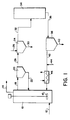
- Figure 1 is a flow diagram of the preferred embodiment of the invention.
- Figure 2 is a graph showing the effect of temperature on the growth of Thiobacillus denitrificans .
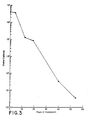
- Figure 3 is a graph showing the viability of Thiobacillus denitrificans in free suspension in liquid medium without an energy source.
- microorganisms predominantly bacteria, which may derive metabolic energy and reducing equivalents for biosynthesis from the oxidation of inorganic elements and compounds.
- microorganisms may also derive carbon for biosynthesis from an inorganic source such as carbon dioxide. This is termed a chemoautotrophic mode of metabolism.
- the present invention employs such bacteria and such mode of metabolism in order to remove sulfides from gas streams.
- a microbial gas desulfurization process offers several advantages which make the process commercially viable. These include the following:
- the ideal microorganism upon which to base a microbial hydrogen sulfide removal process must possess several characteristics in addition to the ability to oxidize hydrogen sulfide.
- the ideal microorganism should have simple nutritional requirements in order to minimize chemical costs.
- the organism would be a strict autotroph, that is, the organism would be capable of deriving all of its metabolic needs from inorganic sources.
- the ideal organism would also be capable of hydrogen sulfide oxidation in an anaerobic environment thereby avoiding possible oxygen contamination of the gas.
- the ideal organism would produce a soluble oxidation product from the hydrogen sulfide in order to facilitate separation of the oxidation product from the biomass.
- the organism should also be capable of utilizing a highly soluble terminal acceptor that may be easily supplied in high concentrations.
- any organism requires the presence of a particular chemical species to accept the electrons generated by the oxidation of nutrients.
- this species is oxygen.
- another chemical species is substituted which, in the case of the present invention, is supplied by the oxides of nitrogen.
- the ideal organism would also exhibit a small size and simple morphology so that it can be easily maintained in suspension. Many microorganisms produce an extracellular slime layer or capsid which can cause the microorganisms to adhere to walls and to each other.
- the ideal organism for hydrogen sulfide removal applications should not produce a capsid in order to prevent problems in transport of the organism.
- a useful organism should also be able to withstand high pressures and to withstand moderately high temperatures.
- An optimal pH near neutral would be desirable in order to minimize corrosion.
- the ideal microorganism would also exhibit a high rate of hydrogen sulfide oxidation per unit biomass.
- chemolithotrophic bacteria are capable of utilizing the oxidation of elemental sulfur and reduced or partially reduced sulfur compounds as a source of energy and reducing equivalents.
- the bacterium Thiobacillus denitrificans have been discovered to be uniquely suitable for the objects of the present invention.
- T. denitrificans Thiobacillus denitrificans (T. denitrificans) was first isolated in 1904 by innoculation of an aqueous medium containing MgCl2, K2HPO4, KNO3, Na2CO3 and a sediment of elementary sulfur and CaCO3 with canal water or mud.
- a bacterial flora developed which oxidized the sulfur to sulfate and simultaneously reduced nitrate to elemental nitrogen. This was the first evidence of the existence of a chemolithotrophic bacterium which could survive in the absence of oxygen. It was subsequently shown that thiosulfate could be substituted for elemental sulfur. It was later demonstrated that a reduced nitrogen source was required for growth and T. denitrificans was cultivated in a defined medium for the first time.
- denitrificans will grow anaerobically on sulfide as an energy source if sulfide is used as the growth limiting factor in a chemostat.
- sulfide is used as the growth limiting factor in a chemostat.
- T. denitrificans for stock cultures in a medium containing sulfide as an energy source would require continuous or semi-continuous addition of sulfide in such a way that sulfide did not accumulate to inhibitory levels in the culture but sufficient substrate was made available for growth.
- a non-toxic substrate preferably thiosulfate.
- a typical thiosulfate maintenance medium is given by Tables 1 to 3.
- the thiosulfate in the maintenance medium is the energy source, nitrate is the terminal electron acceptor, bicarbonate is the carbon source and ammonium is the nitrogen source.
- the medium also includes a phosphate buffer and sources of various essential mineral nutrients.
- This maintenance medium is similar to the S-8 medium for Thiobacilli recommended by the American Type Culture Collection except that ammonium chloride has been substituted for ammonium sulfate as the source of reduced nitrogen with an increase in the concentration of ammonium ion, the concentrations of sodium bicarbonate and hydrated magnesium sulfate have been increased and a known source of trace elements has been added.
- the organism would typically be grown in the thiosulfate maintenance medium at 30°C and a pH of 7.0 to an optical density at a wavelength of 460 nanometers (OD460) of approximately 1.0.
- This optical density corresponds to greater than 109 cells per ml.
- the purpose of this cultivation on thiosulfate is to develop a sufficient concentration of biomass so that hydrogen sulfide can be fed to the reactor at an appreciable rate without exceeding the bio-oxidation capabilities of the biomass. Otherwise, sulfide would accumulate in the culture. While growing on thiosulfate a gas feed of 5 mol % CO2 in N2 at a rate of approximately 20 ml/min/l of culture is advisable to ensure continuous availability of a carbon source.
- thiosulfate may also be eliminated by cultivating the cells to the point that all thiosulfate is metabolized.
- nitrite which is toxic to T. denitrificans , has been observed to accumulate in the reactor medium. This leads to unstable behavior during the initial hours of operation. The nitrite is eventually metabolized and eliminated.
- H2S When H2S is introduced to a culture of T. denitrificans previously grown on thiosulfate, the H2S is immediately metabolized with no apparent lag. Under sulfide limiting conditions, less than 0.001 mM of total sulfide can be detected in the reactor medium. Provided then that the feed gas exits the reactor in equilibrium with the medium, very low levels of H2S in the outlet gas can be achieved (less than 1 ppmv). With 10,000 ppm H2S in the feed gas at one atmosphere, residence times in the range of 1-2 s are required if the average bubble diameter is approximately 0.25 cm.
- stoichiometry of any microbial process are affected by the environment and the growth rate of the microbial cells. During batch growth these parameters are constantly changing. In a continuous stirred tank reactor (CSTR) system, where a fresh nutrient feed (maintenance medium minus thiosulfate) is fed to the reactor at the same rate at which mixed liquor is removed from the reactor, and where there is complete mixing, the environment and growth rate are held constant. Each of these parameters is controlled by the dilution rate at which the reactor is operated.
- the dilution rate D is defined by Equation (1) where q is the volumetric flow rate of nutrient to the reactor and v is the culture volume.
- the stoichiometric parameters of anaerobic H2S oxidation by T. denitrificans most affected by dilution rate are the OH ⁇ /H2S ratio and the yield of biomass per mole H2S oxidized.
- the OH ⁇ /H2S ratio will decrease since more buffering capacity from the nutrient feed is available for maintaining pH.
- D 0.029hr ⁇ 1
- OH ⁇ /H2S is approximately 1.37.
- D 0.058hr ⁇ 1
- Yield of biomass will be greater at higher dilution rates since a greater fraction of' substrate (H2S) supports biosynthesis at higher growth rates.
- the specific growth rated ⁇ is defined by Equation (3) and is equal to the dilution rate for a CSTR configuration.
- H2S is an inhibitory substrate
- H2S feed rate to a T. denitrificans reactor not exceed the maximum capacity of the biomass for H2S oxidation. If the H2S oxidation capacity of the biomass is exceeded, sulfide will accumulate in the reactor medium and inhibit the complete oxidation of H2S.
- Reactor upset is first detected by the appearance of nitrous oxide (N2O) in the reactor outlet gas. N2O results from the incomplete reduction of nitrate. This is followed by H2S breakthrough and the accumulation of elemental sulfur in the reactor medium. The upset condition is reversible if exposure to the accumulated sulfide is not prolonged.
- N2O nitrous oxide
- H2S feed rate following an upset condition will reduce H2S and N2O concentrations in the outlet gas to pre-upset levels.
- elemental sulfur which accumulated during upset will be oxidized to sulfate upon reduction in H2S feed rate.
- the maximum loading of a T. denitrificans culture will be somewhat dependent upon both the metabolic state (growth rate) of the biomass and the environment of the biomass. Maximum loadings in the range of 5.0-8.0 mmoles H2S/hr/g dry wt. biomass may be expected.
- the medium described by Tables 1-3 will not support the growth of heterotrophic microorganisms since there is no organic carbon source.
- T. denitrificans releases organic material into the medium in the normal course of growth or through lysis of nonviable cells. This organic material then supports the growth of facultatively anaerobic heterotrophs which are capable of using nitrate as a terminal electron acceptor.
- the concentration of heterotrophic contaminants will level off and remain constant after a time. The steady state concentration of contaminant is not surprisingly dependent upon the concentration of T.
- denitrificans Contaminant levels of up to 10% of the T. denitrificans concentration can be expected. Although the presence of a heterotrophic contamination can affect the end use of the biomass product of the process, the contamination does not affect H2S oxidation by T. denitrificans .
- T. denitrificans The optimum temperature for growth of T. denitrificans has been reported as 30°C. However, a temperature profile indicating relative growth rates above and below this optimum has not been published. A temperature profile is necessary to predict the effects of a temperature excursion or temperature gradients on overall and local growth rates in a culture. This can be especially important in the case of an inhibitory substrate where a general or localized decrease in growth rate could result in accumulation of the substrate to toxic concentrations.
- a temperature profile for T. denitrificans ATCC 23642 growing anaerobically on thiosulfate is given in Figure 1 which indicates optimal growth over a relatively narrow range of temperatures with complete inhibition of growth above 40°C. However, viable counts have shown that at temperatures as high as 45°C, no measurable effect on viability is observed for exposures of up to 5 hours.
- T. denitrificans in thiosulfate medium at 30°C at elevated pressures indicates that total pressure has no significant effect on growth at pressures of up to 1800 psig N2 or 1000 psig CH4. These results are shown in Table 5. Viability was demonstrated at the conclusion of each test by growth on thiosulfate agar and no heteotropic contamination was indicated in that no growth appeared on nutrient agar. In a microbial gas desulfurization process the microorganisms may be subjected to rapid pressurization-depressurization cycles. Table 6 summarizes the results of rapid pressurization-depressurization at 1250 psig of N2 on viable count in a culture of T. denitrificans originally grown at that pressure on thiosulfate. Table 6 indicates that repeated pressurization-depressurization has no significant effect on viability.
- T. denitrificans Various sulfur compounds common to natural gas are somewhat toxic to T. denitrificans . Those compounds are methyl mercaptan (CH3SH3), carbon disulfide (CS2), carbonyl sulfide (COS) and dimethyl sulfide (CH3SCH3).
- CH3SH3 methyl mercaptan
- CS2 carbon disulfide
- COS carbonyl sulfide
- CH3SCH3 dimethyl sulfide
- the order of toxicity to wild type T. denitrificans is CH3SH>CS2>COS, CH3SCH3. All are toxic at a partial pressure of 26,7kPa (200 mmHg). At partial pressures sufficiently low to be tolerated none are metabolized.
- a sulfate salt accumulates in the medium.
- the counter ion of the sulfate in this salt will be determined by the counter ion of the hydroxide equivalents added to the culture to maintain pH and the counter ion of the nitrate salt which furnishes the terminal electron acceptor.
- KNO3 is the nitrate source and KOH is the alkali used for pH control
- the oxidation product of H2S is primarily present as K2SO4.
- the concentration of sulfate salt will be dependent upon the rate of H2S oxidation per unit volume of culture. The tolerance of T.
- denitrificans for the accumulating sulfate salt therefore, has a major influence on the operation of the reactor.
- Wild type T. denitrificans is tolerant of up to 350 mM K2SO4 when grown anaerobically on H2S. Above approximately 400 mM, incomplete oxidation of H2S is observed with the accumulation of elemental sulfur and production of N2O. The organism is less tolerant of Na2SO4; however, normal reactor operation is observed at Na2SO4 concentrations of 250-300 mM. (NH4)2SO4 causes incomplete H2S oxidation at concentrations above 150-200 mM.
- T. denitrificans whole cells grown on H2S is 60% ⁇ 3% by dry weight. This protein content is intermediate between that of soybean meal (51%) and fish meal (72%), the two most commercially important sources of bulk protein.
- the quality of a bulk protein source as a food supplement is dependent not only upon the protein content but also upon the amino acid composition of that protein.
- Table 7 gives the amino acid composition of T. denitrificans whole cell protein when the organism is grown on H2S.
- Table 8 compares the amino acid composition of T.
- T. denitrificans whole cell protein with respect to the ten essential amino acids in a mammalian diet, to that of soybean meal and fish meal.
- Table 8 indicates that T. denitrificans whole cell protein, on a g/100 g basis, contains more of nine of these amino acids than soybean meal. The only possible exception is tryptophan which has not been determined for T. denitrificans protein.
- Fish meal contains greater quantities of isoleucine, lysine, threonine and possibly tryptophan. The cysteine content of T. denitrificans is so low as to be undetectable.
- the present invention includes not only the use of wild strains of T. denitrificans such as ATCC 23646 (American Type Culture Collection, Rockville, Maryland), but also mutant strains.
- T. denitrificans such as ATCC 23646 (American Type Culture Collection, Rockville, Maryland)
- mutant strains For example, sulfide tolerant strains of T. denitrificans are desirable to make the proposed microbial gas desulfurization process more resistant to upset from excess H2S feed and possibly more tolerant of other sulfur compounds.
- a biocide resistant strain could provide a means of controlling heterotrophic contamination and therefore produce a microbially pure biomass product without the expense of maintaining aseptic conditions by sterilization of feed streams. Therefore, the term T. denitrificans as used herein and in the claims includes mutations.
- a simple CSTR is an economically impractical reactor configuration with respect to volumetric productivity for the proposed microbial gas desulfurization process except where very small amounts of H2S are removed.
- a completely mixed, homogeneous environment for the cells is required to avoid localized inhibitory concentrations of sulfide.
- the most practical reactor configuration presently contemplated for a microbial gas desulfurization process based on T. denitrificans is a CSTR with biomass recycle. Recycle of the biomass allows much higher biomass concentrations to be maintained in the reactor.
- biomass recycle the hydraulic retention time and biomass retention time are decoupled. Therefore, high dilution rates can be used to replenish the culture medium and control the environment of the cells. Biomass concentration and the quality of the cells' environment will be the two most important variables in maximizing volumetric productivity while maintaining reactor stability. With cell recycle, these two variables are independently controlled.
- the microbial cells For a CSTR with biomass recycle, the microbial cells must continuously be harvested from the reactor liquid waste stream.
- the more common methods of continuous harvesting of microbial cells include continuous centrifugation and tangential flow filtration.
- An alternative to harvesting and recycle of free cell biomass is the use of an immobilized biomass which is the preferred embodiment of the present invention as will be described hereinafter. If the immobilization matrix is sufficiently dense, biomass from the reactor effluent may be harvested by low gravity sedimentation. An immobilization matrix appropriate for growing cells must allow release of new cells into the surrounding medium. Therefore, the reactor effluent will contain both immobilized cells which could be readily recovered and recycled and free cells. If the free cells are to represent a process credit, they must be recovered. Therefore, even when immobilized cells are utilized, a free cell recovery problem still exists. However, since these cells are not recycled back to the reactor, treatment of the process stream (with a flocculating agent, for example) to improve sedimentation properties can be tolerated.
- the particular immobilization matrix does not form a part of the present invention and any known matrix material may be used which is suitable for the T. denitrificans .
- any suitable procedure well known in the prior art for immobilizing T. denitrificans cells on the matrix material can be used in the present invention as long as the cells may grow and divide while releasing new cells from the matrix.
- the immobilized biomass is loaded into the reactor 10 which is filled with maintenance medium without thiosulfate.
- the hydrogen sulfide containing gas is passed into the reactor through line 12 and the treated gas with the H2S removed flows out line 14.
- the maintenance medium and immobilized biomass are stirred by the mixer 16 in order to achieve homogeneity, avoid localized inhibitory concentrations of sulfide and obtain good mass transfer.
- a slurry stream 18 which contains partially spent nutrient, free floating bacteria which have been expelled from the immobilizing support material and the dissolved sulfate formed in the reactor during the H2S removal process.
- a form of filtration may be employed to prevent the immobilized biomass from being withdrawn from the reactor along with the slurry.
- immobilized biomass withdrawn from the reactor along with the slurry is removed from the slurry in separator 20 and recycled to the reactor through line 22.
- This separator 20 for example, may be a conventional settling basin or hydrocyclone.
- the slurry from the separator 20 is then passed to the settler 24 through line 26 to form the removal of the free cell bacterial biomass.
- the preferred method of accomplishing this removal is by introducing a flocculating agent as indicated at 28 into the slurry to assist in the agglomeration and settling of the bacterial biomass.
- the bacterial biomass product is then removed from the settler as indicated at 30.
- the remaining liquid from the settler 24 now contains the spent nutrient and the sulfate. This liquid is passed through line 32 into the evaporator/fractional crystallizer 34.
- the process is controlled depending upon the relative concentrations of the sulfate and the remaining nutrients in the liquid such that only the sulfate is crystallized or such that the crystallized sulfate will contain only that amount of nutrient which has also been crystallized which can be tolerated in the sulfate product depending upon its intended end use.
- the product from the evaporator/fractional crystallizer 34 is passed through line 36 to the separator 38 where the crystals are separated from the remaining liquid.
- the separated crystals containing primarily the sulfate is removed from the settler 38 through line 40.
- the liquid from the settler 38 contains primarily only the remaining nutrient materials which were present in the withdrawn spent nutrient.
- the system for practicing this invention includes a temperature controlling heat exchanger 46 in which the medium being fed into the reactor 10 is controlled to a temperature of about 30°C if wild type T. denitrificans is utilized or a higher temperature if a temperature tolerant strain is utilized. It may also be advantageous to precondition the makeup medium being introduced through line 44 to the optimal temperature. Further measures which can be employed to control temperature is to precondition the entering gas 12 to the optimal temperature, include a heat exchanger within the reactor 10 and insulate reactor 10.
- the treatment of 25 ⁇ 106 standard cubic feed/day (7.08 ⁇ 108 standard liters/day) of natural gas at 600 psig (42 atmospheres or 4238 kilopascals absolute) containing 1.5 mol % H2S will be used.
- the volumetric flow of gas at pressure is 1.78 ⁇ 107 liters/day.
- This gas stream will contain 1.87 ⁇ 104 gram-mol of H2S per hour. If a stable loading (sulfide limiting conditions) of 4.0 millimols H2S per hour per gram biomass is assumed then 4.68 ⁇ 106 g of T. denitrificans biomass will be required to treat the gas stream.
- immobilized whole cell reactors can be operated with 40% slurries of porous immobilization beads with low rates of attrition. Furthermore, the beads can develop internal populations of viable cells which pack the beads to 50% of their theoretical packing density. However, to be conservative, a 20% slurry of 200 ⁇ m beads with a maximum packing density of 25% of theoretical is assumed. This small bead diameter is selected to minimize internal mass transfer resistances. If a T. denitrificans cell is idealized as a cylinder with a diameter of 0.5 ⁇ m and length of 1.5 ⁇ m, a 200 ⁇ m bead would contain 1.67 ⁇ 107 cells at maximum packing.
- a 20% slurry of beads would therefore contain 1.33 ⁇ 1014 cells per liter.
- a viable cell density of 109 cells per milliliter is roughly equivalent to 0.5 grams dry weight of biomass per liter. Therefore, a 20% slurry of 200 micron beads with maximum cell packing would contain 67 grams per liter of immobilized cells. To be conservative, 50 grams per liter is chosen as a design basis. Therefore, if the free cell biomass is neglected, a total bubble free culture volume of 9.4 ⁇ 104 liters will be required to treat the gas stream described above.
Landscapes
- Engineering & Computer Science (AREA)
- Chemical & Material Sciences (AREA)
- Biomedical Technology (AREA)
- Environmental & Geological Engineering (AREA)
- Health & Medical Sciences (AREA)
- Life Sciences & Earth Sciences (AREA)
- Molecular Biology (AREA)
- Analytical Chemistry (AREA)
- General Chemical & Material Sciences (AREA)
- Oil, Petroleum & Natural Gas (AREA)
- Chemical Kinetics & Catalysis (AREA)
- Preparation Of Compounds By Using Micro-Organisms (AREA)
- Micro-Organisms Or Cultivation Processes Thereof (AREA)
Claims (8)
- Verfahren zur Behandlung eines Fluidstroms, der ein Sulfid enthält, zum Entfernen besagten Sulfids, das einen Schritt umfaßt, in dem besagter Fluidstrom unter anaeroben Bedingungen mit einer in einem im wesentlichen thiosulfatfreien Erhaltungsmedium suspendierten T. deni trificans-Kultur in Kontakt gebracht wird, wodurch besagtes Sulfid durch besagten T. denitrificans aus besagtem Fluidstrom entfernt und in Sulfat umgewandelt wird, und worin das Verhältnis des Pluidstromflusses zur Menge an T. denitrificans derart ist, daß die durchschnittliche maximale Sulfidbelastung nicht größer ist als die maximale Sulfidentfernungskapazität von T. denitrificans.
- Verfahren nach Anspruch 1, worin besagter FluidStrom ein Gasstrom ist und worin besagtes Sulfid Schwefelwasserstoff ist und worin das Verfahren zur Herstellung der in einem Erhaltungsmedium suspendierten T. denitrificans-Kultur die folgenden Schritte umfaßt:a. Kultur von T. denitrificans bei Abwesenheit von H₂S in einem Erhaltungsmedium mit einer Menge an Thiosulfat zum Züchten einer gewünschten T.denitrificans-Population, wodurch besagte Thiosulfatmenge verringert und eine T. denitrificans-Schlammim Erhaltungsmedium gebildet wird;b. Entfernen des im besagten Schlamm eventuell noch vorhandenen Thiosulfats undc. Einbringen des besagten Schlammes, der die besagte T. denitrificans-Populationenthält, in einen thiosulfatfreies Erhaltungsmedium enthaltenden Reaktor.
- Verfahren nach Anspruch 2, worin der Schritt, in dem der Gasstrom mit der Kultur in Kontakt gebracht wird, die folgenden Schritte umfaßt:a. Fließenlassen des besagten Gasstroms durch besagten Schlamm in besagtem Reaktor, wodurch besagter T. denitrificans den besagten Schwefelwasserstoff unter anaeroben Bedingungen entfernt und Sulfat produziert und wodurch besagte T. denitri ficans-Population sich unter Bildung eines Überschusses an T. denitrificans vermehrt;b. Entfernen eines Teils des besagten Schlamms aus besagtem Reaktor, wobei der besagte Schlamm einen T. denitrificans-Überschuß und Sulfat enthält;c. Entfernen von zumindest einem Teil des besagten T. denitrificans-Überschussesund von zumindest einem Teil des besagten Sulfats aus dem besagten entfernten Schlamm, wodurch ein Rest an Schlamm verbleibt; undd. Zurückführen des verbleibenden Schlamms in den besagten Reaktor.
- Verfahren nach Anspruch 3, das die folgenden Schritte umfaßt:a. Immobilisieren der besagten T. denitri ficans-Population auf Immobilisierungsmatrizen;b. Einbringen der besagten T. denitrificans-Population auf den besagten Immobilisierungsmatrizen in den besagten Reaktor, der das besagte thiosulfatfreie Erhaltungsmedium enthält;c. Fließenlassen des besagten Gasstroms durch besagten Schlamm in besagtem Reaktor, wodurch sich besagte T. denitrificans-Population unter Bildung eines T. denitrificans-Überschusses vermehrt, der von den besagten Immobilisierungsmatrizen freigesetzt wird;d. Entfernen eines Teils der besagten Immobilisierungsmatrizen aus besagtem Reaktor mit dem Anteil des Schlamms, der entfernt wird;e. Entfernen der besagten Immobilisierungsmatrizen, die besagten T. denitrificansenthalten, aus besagtem Schlamm, und das Zurückführen derselben zu besagtem Reaktor, und Entstehen eines verbleibenden Schlammes;f. Entfernen des besagten T. denitrificans-Überschusses aus besagtem verbleibenden Schlamm zur Herstellung eines T. denitrificans-Biomasseprodukts und eines verbrauchten, sulfathaltigen Erhaltungsmediums, undg. Entfernen von zumindest einem Teil des besagten Sulfats aus dem besagten verbrauchten Erhaltungsmedium und Zurückführen des besagten verbrauchten Erhaltungs-mediums in den besagten Reaktor.
- Verfahren nach Anspruch 4, das weiterhin einen Schritt einschließt, in dem frisches Erhaltungsmedium in besagten Reaktor eingebracht wird.
- Verfahren nach Ansprüchen 1 bis 6, wodurch sich T. denitrificans vermehrt und das einen Schritt umfaßt, in dem besagter T. denitrificans als "single cell protein"-Produkt wiedergewonnen wird.
- Verfahren nach Ansprüchen 1 bis 6, worin die Temperatur in besagtem Reaktor auf ca. 30°C thermostatisiert ist.
- Verfahren nach Ansprüchen 1 bis 7, worin das Verhältnis des Gasstromflusses zu der Menge an T. denitrificans derart ist, daß die durchschnittliche maximale H₂S-Belastung nicht mehr als 20 mmol H₂S pro Stunde pro Gramm T. denitrificans-Trockengewicht beträgt.
Applications Claiming Priority (2)
| Application Number | Priority Date | Filing Date | Title |
|---|---|---|---|
| US78721985A | 1985-10-15 | 1985-10-15 | |
| US787219 | 1985-10-15 |
Publications (3)
| Publication Number | Publication Date |
|---|---|
| EP0218958A2 EP0218958A2 (de) | 1987-04-22 |
| EP0218958A3 EP0218958A3 (en) | 1989-02-08 |
| EP0218958B1 true EP0218958B1 (de) | 1991-03-06 |
Family
ID=25140784
Family Applications (1)
| Application Number | Title | Priority Date | Filing Date |
|---|---|---|---|
| EP86113109A Expired - Lifetime EP0218958B1 (de) | 1985-10-15 | 1986-09-24 | Mikrobiologische Entschwefelung von Gasen |
Country Status (3)
| Country | Link |
|---|---|
| EP (1) | EP0218958B1 (de) |
| CA (1) | CA1278761C (de) |
| DE (1) | DE3677875D1 (de) |
Families Citing this family (14)
| Publication number | Priority date | Publication date | Assignee | Title |
|---|---|---|---|---|
| AT388313B (de) * | 1987-10-19 | 1989-06-12 | Waagner Biro Ag | Verfahren zur mikrobiologischen umwandlung von schwefelhaltigen schadstoffen in abgasen |
| US4880542A (en) * | 1988-05-13 | 1989-11-14 | Combustion Engineering, Inc. | Biofilter for the treatment of sour water |
| FR2654437A1 (fr) * | 1989-11-16 | 1991-05-17 | Biobic Monaco | Utilisation des thiobacillus denitrificans pour controler la corrosion due au h2s en milieu anaerobie. |
| FR2711922B1 (fr) * | 1993-11-02 | 1996-01-05 | Omnium Traitement Valorisa | Procédé d'épuration et de biodésodorisation d'un effluent gazeux et installation pour la mise en Óoeuvre d'un tel procédé. |
| US5686293A (en) * | 1995-07-07 | 1997-11-11 | Phillips Petroleum Company | Sulfide-oxidizing bacteria |
| US5981266A (en) * | 1996-05-20 | 1999-11-09 | Gas Research Institute | Microbial process for the mitigation of sulfur compounds from natural gas |
| EP0845288A1 (de) * | 1996-11-27 | 1998-06-03 | Thiopaq Sulfur Systems B.V. | Verfahren zur biologischen Entfernung von Sulfiden |
| EP2459725B1 (de) | 2009-07-27 | 2019-01-16 | The University Of Wyoming Research Corporation | Biologisch reine brennstoffverarbeitungssysteme und -verfahren |
| US10557155B2 (en) | 2013-03-14 | 2020-02-11 | The University Of Wyoming Research Corporation | Methods and systems for biological coal-to-biofuels and bioproducts |
| JP2016513977A (ja) | 2013-03-14 | 2016-05-19 | ザ ユニバーシティ オブ ワイオミング リサーチ コーポレーション | 化学合成独立栄養細菌を利用した二酸化炭素の変換システムおよび方法 |
| NO20131255A1 (no) | 2013-09-18 | 2015-03-19 | Yara Int Asa | Prosess og biofiltersystem for fjerning av H2S fra en H2S-kontaminert energiproduksjonsgasstrøm inneholdende metan og anvendelse av et slikt biofiltersystem |
| CN107537293B (zh) * | 2016-06-24 | 2020-10-30 | 中国石油化工股份有限公司 | 一种闭路循环微生物脱硫及回收单质硫的方法 |
| CN110408453A (zh) * | 2018-04-26 | 2019-11-05 | 天津工业大学 | 一种生物脱除煤中有机硫的工艺 |
| CN115121092B (zh) * | 2022-06-09 | 2023-04-04 | 北京博源恒升高科技有限公司 | 居盐膜黄色弯曲菌在脱硫中的应用 |
Family Cites Families (1)
| Publication number | Priority date | Publication date | Assignee | Title |
|---|---|---|---|---|
| NL8403773A (nl) * | 1984-12-12 | 1986-07-01 | Tno | Werkwijze voor het biologisch reinigen van verontreinigde gassen. |
-
1986
- 1986-09-03 CA CA000517357A patent/CA1278761C/en not_active Expired - Fee Related
- 1986-09-24 EP EP86113109A patent/EP0218958B1/de not_active Expired - Lifetime
- 1986-09-24 DE DE8686113109T patent/DE3677875D1/de not_active Expired - Fee Related
Also Published As
| Publication number | Publication date |
|---|---|
| CA1278761C (en) | 1991-01-08 |
| EP0218958A2 (de) | 1987-04-22 |
| EP0218958A3 (en) | 1989-02-08 |
| DE3677875D1 (de) | 1991-04-11 |
Similar Documents
| Publication | Publication Date | Title |
|---|---|---|
| EP0244659B1 (de) | Mikrobiologische Entschwefelung von Gasen | |
| EP0218958B1 (de) | Mikrobiologische Entschwefelung von Gasen | |
| Nanninga et al. | Properties of Desulfovibrio carbinolicus sp. nov. and other sulfate-reducing bacteria isolated from an anaerobic-purification plant | |
| AU673753B2 (en) | Process for purifying sulphide-containing waste water | |
| AU713615B2 (en) | Sulphur reducing bacterium and its use in biological desulphurisation processes | |
| Schedel et al. | Anaerobic oxidation of thiosulfate and elemental sulfur in Thiobacillus denitrificans | |
| Syed et al. | Removal of hydrogen sulfide from gas streams using biological processes• a review | |
| Van Houten et al. | Biological sulfate reduction using synthesis gas as energy and carbon source | |
| US4200523A (en) | Process for removing sulfate ions from aqueous streams | |
| EP0417185B1 (de) | Verfahren zur beseitigung von stickstoffverbindungen aus rohwasser | |
| US4666852A (en) | Photosynthetic bioconversion sulfur removal | |
| Koe et al. | A bioscrubber for hydrogen sulphide removal | |
| AU657957B2 (en) | Method for removing sulphur compounds from water | |
| Battaglia-Brunet et al. | The mutual effect of mixed thiobacilli and leptospirilli populations on pyrite bioleaching | |
| US4859588A (en) | Production of a single cell protein | |
| CN110438025A (zh) | 一种脱氮菌株及其应用 | |
| Cadenhead et al. | Oxidation of hydrogen sulfide by Thiobacilli | |
| Ongcharit et al. | Oxidation of hydrogen sulfide by flocculated Thiobaccillus denitrificans in a continuous culture | |
| RU2099412C1 (ru) | Способ культивирования thiobacillus ferrooxidans и способ извлечения не менее одного металла из труднообогатимой руды | |
| US6051518A (en) | Microbial process and composition for the regeneration of catalysts | |
| EP0811416B1 (de) | Entschwefelung von Schwefelwasserstoff enthaltenden Gasen | |
| Suhaimi et al. | NH+/4‐N assimilation by Rhodobacter capsulatus ATCC 23782 grown axenically and non‐axenically in N and C rich media | |
| Khanna et al. | Microbial recovery of sulfur from thiosulfate-bearing wastewater with phototrophic and sulfur-reducing bacteria | |
| Alcántara et al. | Sulfur formation by steady-state continuous cultures of a sulfoxidizing consortium and Thiobacillus thioparus ATCC 23645 | |
| Jensen et al. | A trickle bed reactor for ferrous sulphate oxidation using Thiobacillus ferrooxidans |
Legal Events
| Date | Code | Title | Description |
|---|---|---|---|
| PUAI | Public reference made under article 153(3) epc to a published international application that has entered the european phase |
Free format text: ORIGINAL CODE: 0009012 |
|
| AK | Designated contracting states |
Kind code of ref document: A2 Designated state(s): DE FR GB IT NL |
|
| PUAL | Search report despatched |
Free format text: ORIGINAL CODE: 0009013 |
|
| AK | Designated contracting states |
Kind code of ref document: A3 Designated state(s): DE FR GB IT NL |
|
| 17P | Request for examination filed |
Effective date: 19890328 |
|
| 17Q | First examination report despatched |
Effective date: 19891108 |
|
| GRAA | (expected) grant |
Free format text: ORIGINAL CODE: 0009210 |
|
| AK | Designated contracting states |
Kind code of ref document: B1 Designated state(s): DE FR GB IT NL |
|
| REF | Corresponds to: |
Ref document number: 3677875 Country of ref document: DE Date of ref document: 19910411 |
|
| ITF | It: translation for a ep patent filed | ||
| ET | Fr: translation filed | ||
| PLBE | No opposition filed within time limit |
Free format text: ORIGINAL CODE: 0009261 |
|
| STAA | Information on the status of an ep patent application or granted ep patent |
Free format text: STATUS: NO OPPOSITION FILED WITHIN TIME LIMIT |
|
| 26N | No opposition filed | ||
| PGFP | Annual fee paid to national office [announced via postgrant information from national office to epo] |
Ref country code: FR Payment date: 19940616 Year of fee payment: 9 |
|
| PGFP | Annual fee paid to national office [announced via postgrant information from national office to epo] |
Ref country code: DE Payment date: 19940618 Year of fee payment: 9 |
|
| PGFP | Annual fee paid to national office [announced via postgrant information from national office to epo] |
Ref country code: GB Payment date: 19940624 Year of fee payment: 9 |
|
| PGFP | Annual fee paid to national office [announced via postgrant information from national office to epo] |
Ref country code: NL Payment date: 19940930 Year of fee payment: 9 |
|
| PG25 | Lapsed in a contracting state [announced via postgrant information from national office to epo] |
Ref country code: GB Effective date: 19950924 |
|
| PG25 | Lapsed in a contracting state [announced via postgrant information from national office to epo] |
Ref country code: NL Effective date: 19960401 |
|
| GBPC | Gb: european patent ceased through non-payment of renewal fee |
Effective date: 19950924 |
|
| PG25 | Lapsed in a contracting state [announced via postgrant information from national office to epo] |
Ref country code: FR Effective date: 19960531 |
|
| PG25 | Lapsed in a contracting state [announced via postgrant information from national office to epo] |
Ref country code: DE Effective date: 19960601 |
|
| NLV4 | Nl: lapsed or anulled due to non-payment of the annual fee |
Effective date: 19960401 |
|
| REG | Reference to a national code |
Ref country code: FR Ref legal event code: ST |
|
| PG25 | Lapsed in a contracting state [announced via postgrant information from national office to epo] |
Ref country code: IT Free format text: LAPSE BECAUSE OF NON-PAYMENT OF DUE FEES;WARNING: LAPSES OF ITALIAN PATENTS WITH EFFECTIVE DATE BEFORE 2007 MAY HAVE OCCURRED AT ANY TIME BEFORE 2007. THE CORRECT EFFECTIVE DATE MAY BE DIFFERENT FROM THE ONE RECORDED. Effective date: 20050924 |