EP0220647A1 - Procédé de restructuration et de transformation de boue - Google Patents
Procédé de restructuration et de transformation de boue Download PDFInfo
- Publication number
- EP0220647A1 EP0220647A1 EP19860114514 EP86114514A EP0220647A1 EP 0220647 A1 EP0220647 A1 EP 0220647A1 EP 19860114514 EP19860114514 EP 19860114514 EP 86114514 A EP86114514 A EP 86114514A EP 0220647 A1 EP0220647 A1 EP 0220647A1
- Authority
- EP
- European Patent Office
- Prior art keywords
- sludge
- solids
- digester
- accordance
- organic
- Prior art date
- Legal status (The legal status is an assumption and is not a legal conclusion. Google has not performed a legal analysis and makes no representation as to the accuracy of the status listed.)
- Withdrawn
Links
- 239000010802 sludge Substances 0.000 title claims abstract description 119
- 238000000034 method Methods 0.000 title claims abstract description 77
- 238000006243 chemical reaction Methods 0.000 title abstract description 26
- 239000007787 solid Substances 0.000 claims abstract description 57
- 108090000790 Enzymes Proteins 0.000 claims abstract description 38
- 102000004190 Enzymes Human genes 0.000 claims abstract description 38
- 230000003301 hydrolyzing effect Effects 0.000 claims abstract description 25
- 229910001385 heavy metal Inorganic materials 0.000 claims abstract description 19
- 229910052751 metal Inorganic materials 0.000 claims abstract description 19
- 239000002184 metal Substances 0.000 claims abstract description 19
- 150000002739 metals Chemical class 0.000 claims abstract description 17
- 238000005904 alkaline hydrolysis reaction Methods 0.000 claims abstract description 14
- 230000029087 digestion Effects 0.000 claims abstract description 11
- 239000005416 organic matter Substances 0.000 claims description 14
- 238000006460 hydrolysis reaction Methods 0.000 claims description 12
- NBIIXXVUZAFLBC-UHFFFAOYSA-N Phosphoric acid Chemical compound OP(O)(O)=O NBIIXXVUZAFLBC-UHFFFAOYSA-N 0.000 claims description 10
- 239000000126 substance Substances 0.000 claims description 10
- 230000007062 hydrolysis Effects 0.000 claims description 9
- 239000013618 particulate matter Substances 0.000 claims description 9
- 229910019142 PO4 Inorganic materials 0.000 claims description 7
- 235000021317 phosphate Nutrition 0.000 claims description 7
- 150000003013 phosphoric acid derivatives Chemical class 0.000 claims description 7
- 239000002253 acid Substances 0.000 claims description 5
- 229910000147 aluminium phosphate Inorganic materials 0.000 claims description 5
- 230000003472 neutralizing effect Effects 0.000 claims description 5
- 230000001580 bacterial effect Effects 0.000 claims description 4
- 239000000835 fiber Substances 0.000 claims description 3
- 239000000446 fuel Substances 0.000 claims description 3
- 230000006872 improvement Effects 0.000 claims description 3
- 229910001463 metal phosphate Inorganic materials 0.000 claims description 3
- 239000002738 chelating agent Substances 0.000 claims description 2
- 239000007788 liquid Substances 0.000 claims description 2
- 230000003071 parasitic effect Effects 0.000 claims description 2
- 230000003612 virological effect Effects 0.000 claims description 2
- 239000012530 fluid Substances 0.000 claims 1
- 238000006386 neutralization reaction Methods 0.000 claims 1
- VNWKTOKETHGBQD-UHFFFAOYSA-N methane Chemical compound C VNWKTOKETHGBQD-UHFFFAOYSA-N 0.000 abstract description 30
- 230000008569 process Effects 0.000 abstract description 28
- 239000012141 concentrate Substances 0.000 abstract description 10
- 235000015097 nutrients Nutrition 0.000 abstract description 8
- 230000002452 interceptive effect Effects 0.000 abstract description 2
- 239000007789 gas Substances 0.000 description 26
- 239000010813 municipal solid waste Substances 0.000 description 19
- 244000005700 microbiome Species 0.000 description 15
- 238000012545 processing Methods 0.000 description 15
- 239000002351 wastewater Substances 0.000 description 15
- 239000000463 material Substances 0.000 description 12
- 239000010841 municipal wastewater Substances 0.000 description 11
- 238000011282 treatment Methods 0.000 description 9
- 235000008504 concentrate Nutrition 0.000 description 8
- 239000002028 Biomass Substances 0.000 description 7
- 230000014759 maintenance of location Effects 0.000 description 7
- 230000000813 microbial effect Effects 0.000 description 7
- 239000011368 organic material Substances 0.000 description 7
- 239000000047 product Substances 0.000 description 7
- 231100000331 toxic Toxicity 0.000 description 7
- 230000002588 toxic effect Effects 0.000 description 7
- 239000002699 waste material Substances 0.000 description 7
- 238000004065 wastewater treatment Methods 0.000 description 7
- 241000894006 Bacteria Species 0.000 description 6
- HEMHJVSKTPXQMS-UHFFFAOYSA-M Sodium hydroxide Chemical compound [OH-].[Na+] HEMHJVSKTPXQMS-UHFFFAOYSA-M 0.000 description 6
- 239000001913 cellulose Substances 0.000 description 6
- 229920002678 cellulose Polymers 0.000 description 6
- 238000009434 installation Methods 0.000 description 6
- 238000004519 manufacturing process Methods 0.000 description 6
- XLYOFNOQVPJJNP-UHFFFAOYSA-N water Substances O XLYOFNOQVPJJNP-UHFFFAOYSA-N 0.000 description 6
- 239000002054 inoculum Substances 0.000 description 5
- 229910003480 inorganic solid Inorganic materials 0.000 description 5
- 238000011084 recovery Methods 0.000 description 5
- PXHVJJICTQNCMI-UHFFFAOYSA-N Nickel Chemical compound [Ni] PXHVJJICTQNCMI-UHFFFAOYSA-N 0.000 description 4
- 230000007613 environmental effect Effects 0.000 description 4
- 238000000926 separation method Methods 0.000 description 4
- 238000005549 size reduction Methods 0.000 description 4
- KWYUFKZDYYNOTN-UHFFFAOYSA-M Potassium hydroxide Chemical compound [OH-].[K+] KWYUFKZDYYNOTN-UHFFFAOYSA-M 0.000 description 3
- 239000003518 caustics Substances 0.000 description 3
- 238000005516 engineering process Methods 0.000 description 3
- 238000000855 fermentation Methods 0.000 description 3
- 230000004151 fermentation Effects 0.000 description 3
- 239000002737 fuel gas Substances 0.000 description 3
- 239000000203 mixture Substances 0.000 description 3
- 229960004838 phosphoric acid Drugs 0.000 description 3
- 235000011007 phosphoric acid Nutrition 0.000 description 3
- 238000004064 recycling Methods 0.000 description 3
- 239000002002 slurry Substances 0.000 description 3
- 239000000243 solution Substances 0.000 description 3
- 239000002562 thickening agent Substances 0.000 description 3
- IJGRMHOSHXDMSA-UHFFFAOYSA-N Atomic nitrogen Chemical compound N#N IJGRMHOSHXDMSA-UHFFFAOYSA-N 0.000 description 2
- VYZAMTAEIAYCRO-UHFFFAOYSA-N Chromium Chemical compound [Cr] VYZAMTAEIAYCRO-UHFFFAOYSA-N 0.000 description 2
- RYGMFSIKBFXOCR-UHFFFAOYSA-N Copper Chemical compound [Cu] RYGMFSIKBFXOCR-UHFFFAOYSA-N 0.000 description 2
- CDBYLPFSWZWCQE-UHFFFAOYSA-L Sodium Carbonate Chemical compound [Na+].[Na+].[O-]C([O-])=O CDBYLPFSWZWCQE-UHFFFAOYSA-L 0.000 description 2
- 238000007792 addition Methods 0.000 description 2
- 238000005273 aeration Methods 0.000 description 2
- 239000007864 aqueous solution Substances 0.000 description 2
- QVGXLLKOCUKJST-UHFFFAOYSA-N atomic oxygen Chemical compound [O] QVGXLLKOCUKJST-UHFFFAOYSA-N 0.000 description 2
- 229910052793 cadmium Inorganic materials 0.000 description 2
- BDOSMKKIYDKNTQ-UHFFFAOYSA-N cadmium atom Chemical compound [Cd] BDOSMKKIYDKNTQ-UHFFFAOYSA-N 0.000 description 2
- 210000004027 cell Anatomy 0.000 description 2
- 229910052804 chromium Inorganic materials 0.000 description 2
- 239000011651 chromium Substances 0.000 description 2
- 230000002860 competitive effect Effects 0.000 description 2
- 239000000306 component Substances 0.000 description 2
- 239000000470 constituent Substances 0.000 description 2
- 229910052802 copper Inorganic materials 0.000 description 2
- 239000010949 copper Substances 0.000 description 2
- 238000010586 diagram Methods 0.000 description 2
- 238000001914 filtration Methods 0.000 description 2
- 150000004676 glycans Chemical class 0.000 description 2
- 238000000227 grinding Methods 0.000 description 2
- 150000004679 hydroxides Chemical class 0.000 description 2
- 229910052500 inorganic mineral Inorganic materials 0.000 description 2
- 239000013067 intermediate product Substances 0.000 description 2
- 238000011068 loading method Methods 0.000 description 2
- 229910052759 nickel Inorganic materials 0.000 description 2
- 235000021048 nutrient requirements Nutrition 0.000 description 2
- 239000010815 organic waste Substances 0.000 description 2
- 239000001301 oxygen Substances 0.000 description 2
- 229910052760 oxygen Inorganic materials 0.000 description 2
- 244000045947 parasite Species 0.000 description 2
- 229920001282 polysaccharide Polymers 0.000 description 2
- 239000005017 polysaccharide Substances 0.000 description 2
- BWHMMNNQKKPAPP-UHFFFAOYSA-L potassium carbonate Substances [K+].[K+].[O-]C([O-])=O BWHMMNNQKKPAPP-UHFFFAOYSA-L 0.000 description 2
- 230000036515 potency Effects 0.000 description 2
- 238000000746 purification Methods 0.000 description 2
- 230000009467 reduction Effects 0.000 description 2
- 230000002829 reductive effect Effects 0.000 description 2
- 238000007670 refining Methods 0.000 description 2
- 239000002910 solid waste Substances 0.000 description 2
- 241000894007 species Species 0.000 description 2
- 239000000758 substrate Substances 0.000 description 2
- 241000244185 Ascaris lumbricoides Species 0.000 description 1
- 241000195493 Cryptophyta Species 0.000 description 1
- RWSOTUBLDIXVET-UHFFFAOYSA-N Dihydrogen sulfide Chemical compound S RWSOTUBLDIXVET-UHFFFAOYSA-N 0.000 description 1
- 241000233866 Fungi Species 0.000 description 1
- 229920002488 Hemicellulose Polymers 0.000 description 1
- GRYLNZFGIOXLOG-UHFFFAOYSA-N Nitric acid Chemical class O[N+]([O-])=O GRYLNZFGIOXLOG-UHFFFAOYSA-N 0.000 description 1
- OAICVXFJPJFONN-UHFFFAOYSA-N Phosphorus Chemical compound [P] OAICVXFJPJFONN-UHFFFAOYSA-N 0.000 description 1
- 241000607142 Salmonella Species 0.000 description 1
- BQCADISMDOOEFD-UHFFFAOYSA-N Silver Chemical compound [Ag] BQCADISMDOOEFD-UHFFFAOYSA-N 0.000 description 1
- 229920002472 Starch Polymers 0.000 description 1
- UCKMPCXJQFINFW-UHFFFAOYSA-N Sulphide Chemical compound [S-2] UCKMPCXJQFINFW-UHFFFAOYSA-N 0.000 description 1
- 241000700605 Viruses Species 0.000 description 1
- 150000007513 acids Chemical class 0.000 description 1
- 230000002411 adverse Effects 0.000 description 1
- 150000001413 amino acids Chemical class 0.000 description 1
- 239000002956 ash Substances 0.000 description 1
- 235000010633 broth Nutrition 0.000 description 1
- 239000006227 byproduct Substances 0.000 description 1
- 150000001720 carbohydrates Chemical class 0.000 description 1
- 235000014633 carbohydrates Nutrition 0.000 description 1
- 150000001768 cations Chemical class 0.000 description 1
- 239000013522 chelant Substances 0.000 description 1
- 230000009920 chelation Effects 0.000 description 1
- 230000007073 chemical hydrolysis Effects 0.000 description 1
- 238000002485 combustion reaction Methods 0.000 description 1
- 230000001143 conditioned effect Effects 0.000 description 1
- 238000012272 crop production Methods 0.000 description 1
- 210000000805 cytoplasm Anatomy 0.000 description 1
- 238000000354 decomposition reaction Methods 0.000 description 1
- 230000001419 dependent effect Effects 0.000 description 1
- 235000014113 dietary fatty acids Nutrition 0.000 description 1
- 238000010291 electrical method Methods 0.000 description 1
- 239000003925 fat Substances 0.000 description 1
- 239000000194 fatty acid Substances 0.000 description 1
- 229930195729 fatty acid Natural products 0.000 description 1
- 150000004665 fatty acids Chemical class 0.000 description 1
- 210000003608 fece Anatomy 0.000 description 1
- -1 ferrous metals Chemical class 0.000 description 1
- 239000003337 fertilizer Substances 0.000 description 1
- 235000013305 food Nutrition 0.000 description 1
- 230000002538 fungal effect Effects 0.000 description 1
- 231100001261 hazardous Toxicity 0.000 description 1
- 238000010438 heat treatment Methods 0.000 description 1
- 238000000265 homogenisation Methods 0.000 description 1
- 229910000037 hydrogen sulfide Inorganic materials 0.000 description 1
- 239000003295 industrial effluent Substances 0.000 description 1
- 230000002401 inhibitory effect Effects 0.000 description 1
- 230000000977 initiatory effect Effects 0.000 description 1
- 229910010272 inorganic material Inorganic materials 0.000 description 1
- 239000011147 inorganic material Substances 0.000 description 1
- 239000003621 irrigation water Substances 0.000 description 1
- 239000011133 lead Substances 0.000 description 1
- 239000012978 lignocellulosic material Substances 0.000 description 1
- 238000009630 liquid culture Methods 0.000 description 1
- 239000010871 livestock manure Substances 0.000 description 1
- 239000012528 membrane Substances 0.000 description 1
- 238000009629 microbiological culture Methods 0.000 description 1
- 239000011707 mineral Substances 0.000 description 1
- 150000007522 mineralic acids Chemical class 0.000 description 1
- 238000002156 mixing Methods 0.000 description 1
- 238000012986 modification Methods 0.000 description 1
- 230000004048 modification Effects 0.000 description 1
- 229910052757 nitrogen Inorganic materials 0.000 description 1
- 231100000252 nontoxic Toxicity 0.000 description 1
- 230000003000 nontoxic effect Effects 0.000 description 1
- 150000002894 organic compounds Chemical class 0.000 description 1
- 229940116542 other nutrients in atc Drugs 0.000 description 1
- 239000010893 paper waste Substances 0.000 description 1
- 239000002846 particulate organic matter Substances 0.000 description 1
- 244000052769 pathogen Species 0.000 description 1
- 239000001814 pectin Substances 0.000 description 1
- 229920001277 pectin Polymers 0.000 description 1
- 235000010987 pectin Nutrition 0.000 description 1
- 229910052698 phosphorus Inorganic materials 0.000 description 1
- 239000011574 phosphorus Substances 0.000 description 1
- 239000004033 plastic Substances 0.000 description 1
- 229910000027 potassium carbonate Inorganic materials 0.000 description 1
- 238000002203 pretreatment Methods 0.000 description 1
- 230000000750 progressive effect Effects 0.000 description 1
- 230000035755 proliferation Effects 0.000 description 1
- 102000004169 proteins and genes Human genes 0.000 description 1
- 108090000623 proteins and genes Proteins 0.000 description 1
- 238000004537 pulping Methods 0.000 description 1
- 230000003134 recirculating effect Effects 0.000 description 1
- 230000001105 regulatory effect Effects 0.000 description 1
- 230000003252 repetitive effect Effects 0.000 description 1
- 238000012958 reprocessing Methods 0.000 description 1
- 230000004044 response Effects 0.000 description 1
- 230000000717 retained effect Effects 0.000 description 1
- 238000009420 retrofitting Methods 0.000 description 1
- 239000011435 rock Substances 0.000 description 1
- 239000004576 sand Substances 0.000 description 1
- 238000009384 sea disposal Methods 0.000 description 1
- 230000001932 seasonal effect Effects 0.000 description 1
- 230000003248 secreting effect Effects 0.000 description 1
- 238000005204 segregation Methods 0.000 description 1
- 239000010865 sewage Substances 0.000 description 1
- 229910052709 silver Inorganic materials 0.000 description 1
- 239000004332 silver Substances 0.000 description 1
- 229910000029 sodium carbonate Inorganic materials 0.000 description 1
- 238000001179 sorption measurement Methods 0.000 description 1
- 230000006641 stabilisation Effects 0.000 description 1
- 238000011105 stabilization Methods 0.000 description 1
- 235000019698 starch Nutrition 0.000 description 1
- 239000008107 starch Substances 0.000 description 1
- 238000004659 sterilization and disinfection Methods 0.000 description 1
- 230000009469 supplementation Effects 0.000 description 1
- 239000003053 toxin Substances 0.000 description 1
- 231100000765 toxin Toxicity 0.000 description 1
- 108700012359 toxins Proteins 0.000 description 1
- 241001148471 unidentified anaerobic bacterium Species 0.000 description 1
- 244000052613 viral pathogen Species 0.000 description 1
- 235000019156 vitamin B Nutrition 0.000 description 1
- 239000011720 vitamin B Substances 0.000 description 1
- 238000001238 wet grinding Methods 0.000 description 1
- 239000012991 xanthate Substances 0.000 description 1
Images

Classifications
-
- C—CHEMISTRY; METALLURGY
- C02—TREATMENT OF WATER, WASTE WATER, SEWAGE, OR SLUDGE
- C02F—TREATMENT OF WATER, WASTE WATER, SEWAGE, OR SLUDGE
- C02F3/00—Biological treatment of water, waste water, or sewage
- C02F3/02—Aerobic processes
- C02F3/12—Activated sludge processes
- C02F3/1278—Provisions for mixing or aeration of the mixed liquor
- C02F3/1284—Mixing devices
-
- C—CHEMISTRY; METALLURGY
- C02—TREATMENT OF WATER, WASTE WATER, SEWAGE, OR SLUDGE
- C02F—TREATMENT OF WATER, WASTE WATER, SEWAGE, OR SLUDGE
- C02F1/00—Treatment of water, waste water, or sewage
- C02F1/34—Treatment of water, waste water, or sewage with mechanical oscillations
- C02F1/36—Treatment of water, waste water, or sewage with mechanical oscillations ultrasonic vibrations
-
- C—CHEMISTRY; METALLURGY
- C02—TREATMENT OF WATER, WASTE WATER, SEWAGE, OR SLUDGE
- C02F—TREATMENT OF WATER, WASTE WATER, SEWAGE, OR SLUDGE
- C02F1/00—Treatment of water, waste water, or sewage
- C02F1/52—Treatment of water, waste water, or sewage by flocculation or precipitation of suspended impurities
- C02F1/5236—Treatment of water, waste water, or sewage by flocculation or precipitation of suspended impurities using inorganic agents
-
- C—CHEMISTRY; METALLURGY
- C02—TREATMENT OF WATER, WASTE WATER, SEWAGE, OR SLUDGE
- C02F—TREATMENT OF WATER, WASTE WATER, SEWAGE, OR SLUDGE
- C02F1/00—Treatment of water, waste water, or sewage
- C02F1/68—Treatment of water, waste water, or sewage by addition of specified substances, e.g. trace elements, for ameliorating potable water
- C02F1/683—Treatment of water, waste water, or sewage by addition of specified substances, e.g. trace elements, for ameliorating potable water by addition of complex-forming compounds
-
- C—CHEMISTRY; METALLURGY
- C02—TREATMENT OF WATER, WASTE WATER, SEWAGE, OR SLUDGE
- C02F—TREATMENT OF WATER, WASTE WATER, SEWAGE, OR SLUDGE
- C02F11/00—Treatment of sludge; Devices therefor
- C02F11/004—Sludge detoxification
-
- C—CHEMISTRY; METALLURGY
- C02—TREATMENT OF WATER, WASTE WATER, SEWAGE, OR SLUDGE
- C02F—TREATMENT OF WATER, WASTE WATER, SEWAGE, OR SLUDGE
- C02F11/00—Treatment of sludge; Devices therefor
- C02F11/18—Treatment of sludge; Devices therefor by thermal conditioning
-
- C—CHEMISTRY; METALLURGY
- C02—TREATMENT OF WATER, WASTE WATER, SEWAGE, OR SLUDGE
- C02F—TREATMENT OF WATER, WASTE WATER, SEWAGE, OR SLUDGE
- C02F3/00—Biological treatment of water, waste water, or sewage
- C02F3/28—Anaerobic digestion processes
-
- C—CHEMISTRY; METALLURGY
- C02—TREATMENT OF WATER, WASTE WATER, SEWAGE, OR SLUDGE
- C02F—TREATMENT OF WATER, WASTE WATER, SEWAGE, OR SLUDGE
- C02F3/00—Biological treatment of water, waste water, or sewage
- C02F3/34—Biological treatment of water, waste water, or sewage characterised by the microorganisms used
- C02F3/342—Biological treatment of water, waste water, or sewage characterised by the microorganisms used characterised by the enzymes used
-
- Y—GENERAL TAGGING OF NEW TECHNOLOGICAL DEVELOPMENTS; GENERAL TAGGING OF CROSS-SECTIONAL TECHNOLOGIES SPANNING OVER SEVERAL SECTIONS OF THE IPC; TECHNICAL SUBJECTS COVERED BY FORMER USPC CROSS-REFERENCE ART COLLECTIONS [XRACs] AND DIGESTS
- Y02—TECHNOLOGIES OR APPLICATIONS FOR MITIGATION OR ADAPTATION AGAINST CLIMATE CHANGE
- Y02E—REDUCTION OF GREENHOUSE GAS [GHG] EMISSIONS, RELATED TO ENERGY GENERATION, TRANSMISSION OR DISTRIBUTION
- Y02E50/00—Technologies for the production of fuel of non-fossil origin
- Y02E50/30—Fuel from waste, e.g. synthetic alcohol or diesel
-
- Y—GENERAL TAGGING OF NEW TECHNOLOGICAL DEVELOPMENTS; GENERAL TAGGING OF CROSS-SECTIONAL TECHNOLOGIES SPANNING OVER SEVERAL SECTIONS OF THE IPC; TECHNICAL SUBJECTS COVERED BY FORMER USPC CROSS-REFERENCE ART COLLECTIONS [XRACs] AND DIGESTS
- Y02—TECHNOLOGIES OR APPLICATIONS FOR MITIGATION OR ADAPTATION AGAINST CLIMATE CHANGE
- Y02W—CLIMATE CHANGE MITIGATION TECHNOLOGIES RELATED TO WASTEWATER TREATMENT OR WASTE MANAGEMENT
- Y02W10/00—Technologies for wastewater treatment
- Y02W10/10—Biological treatment of water, waste water, or sewage
Definitions
- This invention relates to improvements to known methods of converting the biodegradable fraction of raw sludges into gaseous fuel. More particularly, it relates to the use of anaerobic digestion, enzyme hydrolysis and alkaline hydrolysis for processing of said sludges.
- Municipal Wastewater Sludge removed in the purification of municipal wastewater in modern treatment plants, currently is produced at an annual rate of about 2,750 dry weight tons per 100,000 population. It usual strictlyly includes a dilute mixture of primary and secondary treatment sludges containing about 30% inorganic and 70% organic matter. Usually, such raw sludge is stabilized by anaerobic digestion; a marginal amount of methane gas is produced; and the digester sludge residue is processed to waste disposal.
- MSW Municipal Solid Wastes
- urban areas being produced at an annual rate of about 40,000 dry weight tons per 100,000 population. Also produced annually is about 20,000 tons of inorganic and nonbiodegradable material. Most of this material is currently disposed of in landfills; however, disposal costs are increasing because of a developing shortage of convenient disposal sites and the need to control seepage of effluents containing heavy metals and other toxins.
- MSW incineration is an alternative method of stabilization and energy recovery; however, in some areas it is unacceptable to discharge the products of combustion, which may include vaporized heavy metals and toxic organic compounds.
- the energy potential of the 50% to 75% organic fraction of MSW is illustrated by the fact that part of this material converts to methane gas in the landfills by anaerobic bacterial decomposition. This results in the potentially hazardous seepage of gasses from such sites and the subsidence to ground surface levels. Recent technology is being applied at some of these MSW disposal sites to remove the gasses through wells and to refine the methane to fuel-gas quality.
- Wastewater Influent refers primarily to raw sewage wastewater acceptable as influent to conventional municipal wastewater treatment plants.
- Wastewater Treatment includes all methods for removal of organic and inorganic solids from municipal wastewaters.
- Wastewater Effluent is the water reclaimed from municipal wastewater treatment.
- Wastewater Sludge refers primarily to an aqueous concentration of solids removed during municipal wastewater treatment, typically containing biodegradable organic matter and biologically inert materials, including heavy metals.
- MSW Sludge is an aqueous concentration of organic matter comprising most of the biodegradable solids content of Municipal Solid Wastes, separated from inorganic materials by methods well known in the art. Such sludge may contain residual amounts of heavy metals.
- Raw Sludge includes wastewater sludge, MSW sludge and any other aqueous sludge of predominantly biodegradable organic matter and usually includes biologically inert matter.
- Biodegradable or Biodegradable matter is organic matter is particulate or soluble forms, comprising most of the solids in raw sludges.
- Sludge Restructuring in the method of our invention is a combination of process steps including size reduction of particulates, enzyme hydrolysis, chemical hydrolysis, and chemical insolubilization of heavy metals.
- Residual Solids are solids removed from restructured sludge, primarily including matter which is not biodegradable and the small portion of the original organic material which was resistant to restructuring or conversion into digester gas. Such solids include heavy metals, grit, ash, partially degraded organic fibers, and biodetritus.
- BioFeedstock is the major intermediate product of our invention, containing most of the organic solids in process in readily biodegradable form.
- Anaerobic Digester refers to all known types of digesters in which microbial metabolization in the absence of oxygen is used for conversion of biodegradable matter, including BioFeedstock, into Digester Gas containing Methane , a fuel gas.
- Digester Sludge is an aqueous residue or anaerobic digestion and includes partially digested organic matter, a biomass of freshly grown anaerobic microorganisms, and a proportion of nonbiodegradable solids. This residue is recycled to the Sludge Restructuring process of our invention.
- Digester Effluent (present with Digester Sludge) is primarily water containing any dissolved inorganic solids that may be present.
- the method of this invention is adaptable to the recovery of resources by the onsite restructuring of wastewater sludges.
- the objectives are: *to convert substantially all biodegradable matter into digester gas resulting in an increased volume of methane, and *to reduce the waste sludge remaining after such treatment to an inert, easily dewatered concentrate of primarily inorganic solids.
- the methods of this invention are adaptable to the enhanced recovery of energy from the biodegradable fraction of materials separated from municipal solid wastes.
- the objectives are: *to convert this material into a nutrient BioFeedstock useful for production of digester gas containing methane, and *to reduce the residual solids remaining after such treatment to relatively low volume concentrates.
- the method of this invention includes the means for disintegrating conglomerate raw sludges into low molecular weight, nonagglomerated constituents, thus: *to destroy viruses, bacteria, microorganisms, and other parasites; and *to facilitate the removal of biologically inert matter in a form suitable for classification and segregation into its constituents. For instance, heavy metals may be concentrated in a condition suitable for refining to recover individual metals.
- the resultant BioFeedstock of soluble and microparticulate nutrients may be metabolized relatively rapidly by the microorganisms in an anaerobic digester, free of extraneous inert matter and free of the inhibitory effect of toxic metals and competitive microorganisms.
- the objectives are: *to accomplish a more complete conversion of biodegradable matter into an increased volume of digester gas; *to produce digester gas with a higher proporttion of methane; and *to reduce the digester temperature and/or hydraulic retention time required to convert solids into gas, thus to reduce the costs of digester reactor structures, related equipment, and operations.
- the method of this invention includes the means for restructuring the discharged component of the microbial biomass which was created by the proliferation of anaerobic bacteria within the digester. This component of the digester sludge is recycled back to the sludge restructuring process of this invention, for disintegration and removal of detritus, thus to produce fresh nutrient BioFeedstock for supply to the digester.
- the method of this invention includes the means for repetitive processing of resistant organic particulate matter that may initially survive the restructuring and anaerobic digestion processes of this invention. This is accomplished by recycling such resistant particulate matter through the sludge restructuring process of this invention to continually improve its biodegradability before each return to the digester.
- a major environmental objective is to reduce pollution inherent in the land or sea disposal of, or incineration of, municipal wastewater sludges and solid wastes.
- a major economic objective is to save capital and operating costs otherwise required for treatment-to-disposal of municipal wastewater sludges and solid wastes.
- the method includes the use of an improvement upon our earlier method disclosed in U.S. 4,342,650.
- Our earlier method processed sludge by disintegrating it and hydrolyzing it with hydrolytic enzymes.
- the present method adds the feature of alkaline hydrolysis to highly fluidize the organic matter in the sludge.
- the improved method provides for their removal. This is done by neutralizing the alkaline hydrolysis product with phosphoric acid to form insoluble metal phosphates. The insoluble phosphates can then be physically separated from the fluidized organic matter.
- anaerobic digester 11 in which acid-forming bacteria and methane-producing microorganisms, well known in the art, metabolize and convert organic matter into digester gas, a major fraction of which is methane fuel gas.
- Digester gas is removed via conduit 12.
- Such digesters include provisions for heating, mixing, and recirculating the contents.
- Part of the digester sludge is removed via conduit 13, at approximately the same volumetric rate as the inflow of sludge feedstock to the digester.
- the discharged digester sludge usually 2-3% solids, is treated by effluent removal equipment 14 to remove effluent water 15 (which will contain any dissolved inorganic solids), thus increasing the solids content of the sludge, preferably to the range of 5-10%.
- a centrifugal thickener or other well known techniques may be used, and the effluent 15 may be treated for discharge or recycled through the wastewater purification processes in a wastewater treatment plant.
- Thickened digester sludge is conveyed via conduit 16 to the sludge restructuring process of our invention indicated within the rectangular area bounded by solid lines 17. Therein the physical characteristics of the sludge are restructured in a series of processing steps.
- Particulate Size Reduction processing 18 may include use of grinding, comminuting, and homogenizing machines, well known in the art, to accomplish protrusion and dispersal of the sludge solids.
- the resultant size range of granular particulates in the sludge will be less than 20 microns in diameter, and the length of smaller diameter fibrous particulates will range up to about 50 microns.
- the in-process sludge flows into an Enzyme Hydrolysis reactor 19 into which a solution of hydrolytic enzymes is added at 20.
- a solution of hydrolytic enzymes is added at 20.
- contact between the enzymes and the dispersed particulate matter results in the hydrolysis of the polysaccharide gel fraction of typical waste sludges and also serves to hydrolyze or degrade particulate organic matter.
- the sludge should be mixed as necessary to facilitate contact between the enzymes and the particulate solids.
- the enzyme hydrolysis reaction may be accomplished most effectively within the pH range 6.5 to 7.2 and temperature range 20°C to 50°C maintained for six to twelve hours. The effectiveness of the hydrolytic reaction increases with temperature and time, and these factors should be adjusted to the characteristics of the raw sludge to be processed while taking economics into consideration.
- the final step in hydrolyzing the organic matter is an Alkaline Hydrolysis reaction 21.
- a caustic chemical is added at 22, usually sodium hydroxide, in quantity sufficient to raise the alkalinity to pH 10-13, preferable to about pH 11.5.
- the alkaline hydrolysis reaction may be accomplished most effectively within the temperature range 20°C to 90°C maintained for six to twelve hours. The effectiveness of the hydrolytic reaction increases with temperature and time, and these factors are also taken into account in adjusting the process to the characteristics of the raw sludge to be processed.
- the sludge in process is pretreated to remove the sulfide content prior to Alkaline Hydrolysis.
- An inorganic acid is added to reduce the pH to about 2.5, followed by intensive aeration for about twenty minutes to remove hydrogen sulfide gas.
- Suitable chemicals include hydrochloric and nitric acids.
- a unique feature of the sludge restructuring process of our invention is that the combination of homogenization, enzyme hydrolysis, and alkaline hydrolysis at elevated temperature and pH, serves to destroy practically all viral, bacterial, and parasitic microorganisms.
- a feature of the alkaline hydrolysis step of our invention is that at pH 10.5 or higher, practically all metals, including metals which were soluble at lower pH, are converted into metallic hydroxides.
- phosphoric acid is added at 24 to react with the metallic hydroxides to form insoluble metallic phosphates, thus preventing reversion to solution of any of the metals upon the reduction of the pH of the in-process sludge to about 7.0.
- a unique result of this processing is that the metals, in the form of insoluble phosphates, are nonbiodegradable and are therefore nontoxic in any subsequent contacts with microorganisms.
- the resultant hydrolyzed intermediate product is conveyed via conduit 25 to Residual Solids Removal equipment 26.
- centrifugal separators are preferably used to remove particulate matter.
- Such matter includes biologically-resistant Fibrous Solids produced at 27 and a Granular Solids concentrate produced at 28, including metallic phosphates, grit, ash, and biodetritus.
- These residual solids may be economically dewa tered and classified into relatively dry concentrates because of the minimal content of water-retaining organic solids in the hydrolyzed inflow 25.
- heavy metal cations may be conditioned into forms which are easier to remove, as is well known in the art. It is usually advantageous to add the chelate chemical after removal of the fibrous solids and prior to removal of the granular solids. Other chemicals may also be added to facilitate removal or separation of the solids.
- the removed granular solids concentrate 28 may be refined to recover individual metals such as cadmium, chromium, copper, nickel, or silver.
- the separated fibrous solids concentrate 27 is a potentially biodegradable by-product, and all or part may be recycled to the digester via conduit 31.
- Subsequent processing and reprocessing through the digester 11 and sludge restructuring process 17 in the interactive circle process of our invention will convert organic fibers and other biologically resistant organic material into digester gas and residual granular solids.
- a certain content of fibrous substrate material in a digester is usually found to be advantageous. Any excess amount of fibrous solids may be removed from process via conduit 32.
- the BioFeedstock thus produced via conduit 30 is a unique product of our invention. It contains biologically available nutrients in soluble and microparticulate form. The content of viable microorganisms, inert or nonbiodegradable materials, and heavy metals have been reduced to levels which permit more efficient operation of the digester.
- the BioFeedstock is introduced into digester 11 via conduit 30, thus completing the return of the restructured biodegradable fraction of waste digester sludge 13 back to the same digester from which it originated, there to be converted into additional digester gas.
- Raw sludge feedstock as necessary to accomplish an efficient loading rate for the digester, is added into this sludge restructuring and conversion system via either or both of two alternative routes: raw sludge from sources illustrated in Fig. 2 may be conveyed via conduits 33 and 34 and combined with thickened sludge 16 as additional inflow to the sludge restructuring process 17 of our invention. This will result in an increased flow of improved BioFeedstock 30 to the digester 11. Alternatively, raw sludge may be added via conduits 33 and 35 so that the feedstock inflow to the digester 11 will include a mixture of raw sludge 33 and BioFeedstock 30.
- the biologically inert fraction of matter introduced into digester 11 via conduit 35 is removed as digester sludge 13, processed through effluent removal equipment 14 and the sludge restructuring process 17 of our invention and is substantially removed by residual solids removal equipment 26.
- Optimum digester performance is obtained when all of the raw sludge is first processed through the sludge restructuring and residual solids removal steps of our invention.
- the resultant anaerobic conversion process will proceed more efficiently since substantially all of the biologically available feedstock is in soluble or microparticulate form practically free of nonbiodegradable matter, heavy metals in toxic form, and competitive microorganisms.
- the digester can support a larger population of productive microorganisms, and the operating conditions can be adjusted to optimize this reaction.
- the pH level in the digester is maintained in the 6.5 to 8.0 range, and the temperature is usually in the range 32°-38°C; however, operation at temperatures as low as 27°C is practical for situations in which existing digester capacity permits a longer retention time.
- a hydraulic retention time of a few days up to ten days is usually adequate, as compared to twenty to thirty day retention times typical for municipal raw sludge digester operations.
- Improved digester operating results are directly attributable to: *more rapid conversion of organic matter into digester gas; *conversion of a larger portion of the biodegradable organic matter into digester (typically above 90% conversion as compared to the usual 50-60% for raw sludge digestion); *a higher percentage of methane in the digester gas (typically 75% as compared to 50-60% for digestion of raw sludge); and *correspondingly higher Btu values (up to about 800 Btu/scf as compared to approximately 600 Btu/scf for digestion of raw sludge).
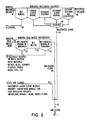
- Wastewater influent 41 is treated to remove grit 42, then processed through conventional primary and secondary treatments to remove solids.
- Thickener 43 is used to remove surplus wastewater effluent sufficiently to produce a wastewater sludge 44, thickened to about 4.8% solids. After disinfection, the treated wastewater effluent is discharged at 45.
- MSW Municipal Solid Wastes
- dry processing 52 to remove trash, ferrous metals, oversize and undersize materials, including cans, bottles, plastic containers, rocks, ash, and sand.
- the remaining material is subjected to a wet milling operation 53, in which particulate size is reduced by grinding, and then to wet process removal of inorganic solids 54 by centrifugal and screen processing.
- Such processing is described in publications about the Resources Recovery Facility owned by Metropolitan Dade County, Florida, developed by Parsons and Whittemore, New York, and operated by Resources Recovery (Dade County), Inc.
- the resulting MSW sludge 55 is dewatered and incinerated to produce steam which is converted into electric power.
- the high cellulose content occurs because the MSW contains much waste paper in which the cellulose portion has been both pretreated and enriched by the pulping process.”
- the method of our invention is effective in the restructuring of such preconditioned cellulose, together with the more volatile putrescible organic fraction of the MSW, into high-energy BioFeedstock.
- the MSW sludge 55 may be more advantageously processed as raw sludge inflow 33 to the Fig. 1 Sludge Restructuring and Conversion Method of our invention.
- the sludge restructuring process 17 and the fibrous slids recycling feature (27 and 31) of our process combine effectively to facilitate the conversion of this predominantly cellulosic material into digester gas.
- a relatively low volume of granular solids concentrates are produced at 28 for disposal or for refining to recover individual metals.
- Fig. 2 there is shown all inclusively other sources of raw sludges 61 pretreated to aqueous sludge form.
- any raw sludge containing over 50% biodegradable organic material may be suitable for processing through the sludge restructuring and conversion method of our invention.
- Suitable sources of such organic waste sludges include wastewater lagoon-treatment sludge residues, agricultural manures, aquacultural biomass, and food processing residues.
- All of the types of raw sludges 44, 55, and 61 may be processed individually or in combination and are introduced into process via conduit 33 according to the method of our invention.
- EXAMPLE 1 A sample of BioFeedstock (obtained at conduit 30) derived from wastewater sludge was tested for its biological conversion characteristics in a laboratory scale, single-stage digester. During the initial 48 hours, digester gas was produced as a rate about eight times faster than for conversion of raw sludge.
- EXAMPLE 2 A batch sample of mixed primary-secondary wastewater sludge was tested before and after the restructuring and removal of inert solids. We obtained an average 63% reduction in the concentration of the metals cadmium, chromium, copper, nickel, and lead. Initial concentrations of metals were in biologically toxic forms; residual metals in the BioFeedstock were in the form of biologically inert metallic phosphates.
- Machines suitable for use in the particulate size reduction step 18 in the process of our invention include a first stage sludge comminutor; e.g., the Maz-O-Rator machines available from Robbins and Myers, Inc., Springfield, Ohio. Subsequent processing may include use of the Dispax-Reactor 3-Stage, inline disperser machines available from Tekmar Company, Cincinnati, Ohio. These have high-speed, rotor-stator generators to create dispersal and hydraulic shear forces to disintegrate organic particulate matter.
- Alternative disintegration technologies may be used, such as piston-orifice, pressure-release homogenizers or ultrasonic wave energy to disperse solids in slurries, as are well known in the art.
- the hydrolytic enzymes employed in the process are added as an aqueous solution prepared from crude, dehydrated, nonspecific enzyme mixtures isolated from microbial fermentation broths and subsequently dehydrated. Potency, depending on the enzyme involved, averages 50,000 international units of hydrolytic activity per gram as supplied by Worne Biotechnology, Inc., Medford, NJ.
- the hydrolytic enzymes may be rehydrated by dissolving 1 lb of dried enzymes in 5 gallons of water at 25°-37°C. This solution is added into the reactors in the ratio of 1 lb of dehydrated enzymes per 1000 lbs (dry weight) of biodegradable organic material inflow in the sludge to be hydrolyzed.
- Hydrolytic enzymes useful for the purpose of this invention includes a wide variety of the following: These hydrolytic enzymes are capable of hydrolyzing proteins, carbohydrates, fats, protopectins, pectins, hemicellulose, cellulose, and polysaccharides into soluble, low molecular weight fractions.
- one pound of the inoculant is added to a 1,000 gallon stirred fermenter containing 750 gallons of sterile media of a type meeting the growth requirements of the specific microbial strains being cultured and designed to insure maximum enzyme production. Aerobic microbial cultures are provided with sterile air at a rate which gives a dissolved oxygen of approximately 2 ppm. Depending on the environmental requirements of the culture, the temperature is maintained between 20°C and 50°C, with an average of 25°C to 37°C. The media is adjusted to pH 4.5 to 7.5, the optimum being 6.5 to 7.0, depending on the cultures being grown.
- Anaerobic cultures used in the process receive identical treatment without the aeration. In about 24 to 36 hours, bacteria in the finished liquid culture will have a minimum cell concentration of 3 to 5 billion microorganisms per milliliter and will have reached the maximum level of enzyme production. Due to slower growth rates, fungi will require a residence time of 3 to 5 days to reach maximum enzyme production.
- the size of the vessel or vessels needed to grow the cultures and produce the enzymes averages 1,000 gallons per 250,000 gallons of liquid sludge slurry containing 10% solids.
- the spent biomass should be separated from the enzyme rich media as soon as possible by filtration or centrifugal separation. After separation the biomass is added to the raw sludge feedstock 34 for restructuring and conversion according to the process of our invention. About 90% of each batch of the enzyme rich media may be added to the enzyme hydrolysis reactor 19 at the rate of 50 gallons per 1,000 gallons of sludge slurry having 10% solids.
- Ten percent of each enzyme batch, before separation of the biomass, may be retained for use as an inoculant for subsequent culture batches up to a total of five such extension cultures, after which a new series of cultures should be started with a fresh supply of dehydrated microorganisms as the inoculant.
- a microbial inoculant plus its exocellular enzymes, may be produced economically on site from relatively small amounts of commercially produced dehydrated enzyme-producing microorganisms.
- Enzyme-producing microorganisms useful for the purpose of this invention include:
- caustic chemicals 22 other than sodium hydroxide may be employed for the alkaline hydrolysis step 21 of our invention.
- Such alternative caustics may include potassium hydroxide, potassium carbonate, and sodium carbonate.
- acids other than phosphoric acid may be used alternatively at 24 for pH adjustment, as is well known in the art.
- a method suitable for the optional chemical chelation reaction described as part of the residual solids removal process 26 of our invention is described by Wing, et al . in U.S. Pat. No. 3,978,286.
- This method employs the chelating capacity of insoluble cross-linked starch xanthates to remove heavy metals in an aqueous solution by contact adsorption.
- other methods may be used for removal of metals, including chemical and electrical methods described in the literature for use with industrial effluents.
- Centrifuge machines well known in the art may be used for the digester sludge thickener 14 and for residual solids removal 26. Suitable high-speed, bowl-scroll machines for continuous flow operation are available from the Sharples-Stockes Division of Pennwalt Corporation, Warminster, Pennsylvania, and from Bird Machine Company, Inc., So. Walpole, Massachusetts. Alternatively, suitable filtration equipment may be used, including membrane filters produced by Dorr-Oliver, Incorporated, Stamford, Connecticut, and others.
- the specific arrangement of the sludge restructuring process 17 may be modified or adapted to the characteristics of the raw sludge to be processed. For instance, some of the raw sludges 61 do not contain an undesirable level of heavy metals.
- two specifically adapted installations of sludge restructuring equipment 17 and residual solids removal equipment 26 may be used to produce optimized BioFeedstocks 30 for inflow to the digester 11.
- the digester 11 will usually be the existing conventional high-rate digester(s), typically with capacities exceeding one million gallons and designed for hydraulic retention intervals of about 20-30 days.
- the conventional loading rate of the digester installation may be increased by restructuring part of the raw sludge inflow into improved BioFeedstock 30, or variable-rate processing may be used as needed to compensate for seasonal or shock-load changes in the rate that raw sludge is required to be treated.
- the digester fermentation and microbial growth are dependent on the optimal supply of nutrients.
- the bacteria have simple nutrient requirements; and the various organic materials required by some species, such as B vitamins, a small number of amino acids, or fatty acids, are supplied by other bacterial species.
- Inorganic minerals are usually the only other nutrients required.
- Most of the crude substrates utilized for methane fermentation contain sufficient minerals to satisfy the nutrient requirements for growth of the microorganisms; however, supplementation with relatively minor amounts of nitrogen, phosphorus, and other nutrients may be advantageous.
- BioFeedstock product of our invention available at conduit 30, may be used alternatively as a high performance liquified fertilizer, usually distributed in irrigation water.
- This biologically available nutrient may also be useful in hydroculture crop production or in the production of algae or aquatic plants. More complete information about such alternative uses has been published in our U.S. patents No. 4,267,049 and No. 4,432,650.
Landscapes
- Life Sciences & Earth Sciences (AREA)
- Engineering & Computer Science (AREA)
- Chemical & Material Sciences (AREA)
- Organic Chemistry (AREA)
- Hydrology & Water Resources (AREA)
- Environmental & Geological Engineering (AREA)
- Water Supply & Treatment (AREA)
- Microbiology (AREA)
- Biodiversity & Conservation Biology (AREA)
- Mechanical Engineering (AREA)
- Thermal Sciences (AREA)
- Physics & Mathematics (AREA)
- Inorganic Chemistry (AREA)
- Health & Medical Sciences (AREA)
- Medicinal Chemistry (AREA)
- Treatment Of Sludge (AREA)
Applications Claiming Priority (2)
| Application Number | Priority Date | Filing Date | Title |
|---|---|---|---|
| US79118685A | 1985-10-25 | 1985-10-25 | |
| US791186 | 1985-10-25 |
Publications (1)
| Publication Number | Publication Date |
|---|---|
| EP0220647A1 true EP0220647A1 (fr) | 1987-05-06 |
Family
ID=25152926
Family Applications (1)
| Application Number | Title | Priority Date | Filing Date |
|---|---|---|---|
| EP19860114514 Withdrawn EP0220647A1 (fr) | 1985-10-25 | 1986-10-20 | Procédé de restructuration et de transformation de boue |
Country Status (2)
| Country | Link |
|---|---|
| EP (1) | EP0220647A1 (fr) |
| JP (1) | JPS6297698A (fr) |
Cited By (13)
| Publication number | Priority date | Publication date | Assignee | Title |
|---|---|---|---|---|
| EP0291665A3 (en) * | 1987-04-24 | 1989-03-29 | Rohm Gmbh | Process for improving the dehydration of biological sewage sludge |
| DE4141832C1 (en) * | 1991-12-18 | 1993-05-19 | Dauber, Siegfried Reinhard, Dipl.-Ing., 5100 Aachen, De | Waste water process and appts. treats mixt. of activated and primary sludges |
| EP0537595A3 (en) * | 1991-10-07 | 1993-06-16 | Allied Colloids Gmbh | Process for the degradation of organic compounds in sewage sludge |
| EP0564298A1 (fr) * | 1992-04-01 | 1993-10-06 | Ngk Insulators, Ltd. | Procédé pour le traitement des boues organiques |
| WO2004024640A1 (fr) * | 2002-09-13 | 2004-03-25 | Kemira Oyj | Procede de digestion des boues dans une purification de l'eau |
| FR2849019A1 (fr) * | 2002-12-20 | 2004-06-25 | Ondeo Degremont | Procede et dispositif de reduction de la production de boues de stations d'epuration |
| WO2005012191A3 (fr) * | 2003-07-28 | 2005-04-28 | Otv Sa | Systeme et procede pour traitement ameliore des eaux usees |
| EP1646589A1 (fr) | 2003-06-27 | 2006-04-19 | Bio-Circuit ApS | Equipement de production de biogaz a hydrolyse anaerobique |
| GB2428670A (en) * | 2005-08-04 | 2007-02-07 | Barry Howard Waste Man Ltd | Anaerobic digestion of organic wastes |
| EP2158166A4 (fr) * | 2007-05-31 | 2010-08-25 | Kemira Oyj | Procédé de traitement enzymatique d'une boue dans la purification de l'eau |
| EP1924717A4 (fr) * | 2005-09-02 | 2012-01-25 | Novozymes North America Inc | Méthodes d'amélioration de la capacité de deshydratation de boue avec un traitement d'alpha-amylase |
| WO2014194174A1 (fr) * | 2013-05-31 | 2014-12-04 | The University Of Akron | Production de biomasse et de produits d'algues à partir d'une matière organique solide |
| EP3438239A1 (fr) * | 2017-08-01 | 2019-02-06 | SUEZ Groupe | Appareil et procédé de conversion de matières organiques réfractaires en biogaz |
Families Citing this family (6)
| Publication number | Priority date | Publication date | Assignee | Title |
|---|---|---|---|---|
| DK169066B1 (da) * | 1987-02-27 | 1994-08-08 | N Viro Energy Systems Ltd | Fremgangsmåde til behandling af slam fra spildevand |
| JPH02211297A (ja) * | 1988-09-16 | 1990-08-22 | Fujita Corp | 汚泥の処理方法 |
| JPH08240B2 (ja) * | 1989-01-25 | 1996-01-10 | 榮 畑山 | 汚泥物類の浄化分離処理剤 |
| WO1996019420A1 (fr) * | 1994-12-20 | 1996-06-27 | Mitsuyo Kimura | Produit de fermentation et procede de fabrication |
| DE19940994B4 (de) * | 1999-08-28 | 2004-02-26 | Clausthaler Umwelttechnikinstitut Gmbh, (Cutec-Institut) | Verfahren zum Abbau von Klärschlamm |
| CN105174680B (zh) * | 2015-09-23 | 2018-07-06 | 江南大学 | 一种阶梯式水解提高污泥预处理效率和脱水效果的方法 |
Citations (5)
| Publication number | Priority date | Publication date | Assignee | Title |
|---|---|---|---|---|
| US3622507A (en) * | 1969-07-23 | 1971-11-23 | Tno | Activated sludge processing |
| US4022665A (en) * | 1974-12-09 | 1977-05-10 | Institute Of Gas Technology | Two phase anaerobic digestion |
| EP0019733A1 (fr) * | 1979-05-30 | 1980-12-10 | Klöckner-Humboldt-Deutz Aktiengesellschaft | Procédé pour optimaliser l'activité d'assimilation de microorganismes dans le substrat d'un système de réaction biologique |
| US4342650A (en) * | 1978-02-13 | 1982-08-03 | Erickson Lennart G | Organic sludge-energy recycling method |
| JPS6071087A (ja) * | 1983-08-31 | 1985-04-22 | デイーア・アンド・カンパニー | リン酸/石灰による危険性廃棄物の無毒化処理方法 |
-
1986
- 1986-09-17 JP JP61219088A patent/JPS6297698A/ja active Pending
- 1986-10-20 EP EP19860114514 patent/EP0220647A1/fr not_active Withdrawn
Patent Citations (5)
| Publication number | Priority date | Publication date | Assignee | Title |
|---|---|---|---|---|
| US3622507A (en) * | 1969-07-23 | 1971-11-23 | Tno | Activated sludge processing |
| US4022665A (en) * | 1974-12-09 | 1977-05-10 | Institute Of Gas Technology | Two phase anaerobic digestion |
| US4342650A (en) * | 1978-02-13 | 1982-08-03 | Erickson Lennart G | Organic sludge-energy recycling method |
| EP0019733A1 (fr) * | 1979-05-30 | 1980-12-10 | Klöckner-Humboldt-Deutz Aktiengesellschaft | Procédé pour optimaliser l'activité d'assimilation de microorganismes dans le substrat d'un système de réaction biologique |
| JPS6071087A (ja) * | 1983-08-31 | 1985-04-22 | デイーア・アンド・カンパニー | リン酸/石灰による危険性廃棄物の無毒化処理方法 |
Non-Patent Citations (1)
| Title |
|---|
| CHEMICAL ABSTRACTS, vol. 103, no. 12, 23rd September 1985, page 291, abstract no. 92428s, Columbus, Ohio, US; & JP-A-60 71 087 (DEERE AND CO.) 22-04-1985 * |
Cited By (21)
| Publication number | Priority date | Publication date | Assignee | Title |
|---|---|---|---|---|
| EP0291665A3 (en) * | 1987-04-24 | 1989-03-29 | Rohm Gmbh | Process for improving the dehydration of biological sewage sludge |
| EP0537595A3 (en) * | 1991-10-07 | 1993-06-16 | Allied Colloids Gmbh | Process for the degradation of organic compounds in sewage sludge |
| DE4141832C1 (en) * | 1991-12-18 | 1993-05-19 | Dauber, Siegfried Reinhard, Dipl.-Ing., 5100 Aachen, De | Waste water process and appts. treats mixt. of activated and primary sludges |
| EP0564298A1 (fr) * | 1992-04-01 | 1993-10-06 | Ngk Insulators, Ltd. | Procédé pour le traitement des boues organiques |
| US5360546A (en) * | 1992-04-01 | 1994-11-01 | Ngk Insulators, Ltd. | Method for treating organic sludge |
| WO2004024640A1 (fr) * | 2002-09-13 | 2004-03-25 | Kemira Oyj | Procede de digestion des boues dans une purification de l'eau |
| FR2849019A1 (fr) * | 2002-12-20 | 2004-06-25 | Ondeo Degremont | Procede et dispositif de reduction de la production de boues de stations d'epuration |
| WO2004065313A1 (fr) * | 2002-12-20 | 2004-08-05 | Degremont | Procede et dispositif de reduction de la production de boues de stations d'epuration |
| EP1646589A1 (fr) | 2003-06-27 | 2006-04-19 | Bio-Circuit ApS | Equipement de production de biogaz a hydrolyse anaerobique |
| US7163629B2 (en) | 2003-07-28 | 2007-01-16 | Virginia Tech Intellectual Properties, Inc. | System and method for enhanced wastewater treatment |
| WO2005012191A3 (fr) * | 2003-07-28 | 2005-04-28 | Otv Sa | Systeme et procede pour traitement ameliore des eaux usees |
| GB2428670A (en) * | 2005-08-04 | 2007-02-07 | Barry Howard Waste Man Ltd | Anaerobic digestion of organic wastes |
| EP1924717A4 (fr) * | 2005-09-02 | 2012-01-25 | Novozymes North America Inc | Méthodes d'amélioration de la capacité de deshydratation de boue avec un traitement d'alpha-amylase |
| US9650276B2 (en) | 2005-09-02 | 2017-05-16 | Novozymes North America, Inc. | Methods for enhancing the dewaterability of sludge with—alpha-amylase treatment |
| EP2158166A4 (fr) * | 2007-05-31 | 2010-08-25 | Kemira Oyj | Procédé de traitement enzymatique d'une boue dans la purification de l'eau |
| US8377304B2 (en) | 2007-05-31 | 2013-02-19 | Kemira Oyj | Method for treatment of sludge in water purification |
| WO2014194174A1 (fr) * | 2013-05-31 | 2014-12-04 | The University Of Akron | Production de biomasse et de produits d'algues à partir d'une matière organique solide |
| US10000402B2 (en) | 2013-05-31 | 2018-06-19 | The University Of Akron | Producing algal biomass and products from organic solid material |
| EP3438239A1 (fr) * | 2017-08-01 | 2019-02-06 | SUEZ Groupe | Appareil et procédé de conversion de matières organiques réfractaires en biogaz |
| WO2019025390A1 (fr) * | 2017-08-01 | 2019-02-07 | Suez Groupe | Appareil et procédé de conversion de matières organiques réfractaires en biogaz |
| US11279908B2 (en) | 2017-08-01 | 2022-03-22 | Suez Groupe | Apparatus and method for refractory organics conversion into biogas |
Also Published As
| Publication number | Publication date |
|---|---|
| JPS6297698A (ja) | 1987-05-07 |
Similar Documents
| Publication | Publication Date | Title |
|---|---|---|
| EP0220647A1 (fr) | Procédé de restructuration et de transformation de boue | |
| CN111333179B (zh) | 一种餐厨垃圾乳酸发酵生产废水反硝化碳源的方法 | |
| US4491522A (en) | Anaerobic digestion process for organic wastes | |
| CN101337838B (zh) | 有机固体废弃物联合厌氧发酵方法 | |
| US4159944A (en) | Wastewater energy recycling method | |
| Mata-Alvarez et al. | Anaerobic digestion of organic solid wastes. An overview of research achievements and perspectives | |
| US6342378B1 (en) | Biogasification of solid waste with an anaerobic-phased solids-digester system | |
| WO1988004282A1 (fr) | Procede de restructuration et de conversion de boues | |
| US4735724A (en) | Solids concentrating anaerobic digestion process and apparatus | |
| Schieder et al. | Thermal hydrolysis (TDH) as a pretreatment method for the digestion of organic waste | |
| Show et al. | Anaerobic treatment versus aerobic treatment | |
| Handous et al. | Two-stage anaerobic digestion of meat processing solid wastes: methane potential improvement with wastewater addition and solid substrate fermentation | |
| KR20220078722A (ko) | 폐수 처리 시설들에 의해 생성된 슬러지 감소 시스템 및 방법 | |
| JP5121111B2 (ja) | 有機性廃棄物の嫌気性処理方法及び装置 | |
| KR20010025926A (ko) | 3단계 메탄발효시스템을 이용한 음식물 쓰레기의 고속 소화 및 메탄 생산방법 | |
| Sanchez et al. | Determination of the kinetic constants of anaerobic digestion of sugar-mill-mud waste (SMMW) | |
| CN106282245A (zh) | 新型有机垃圾资源化回用方法及系统 | |
| CN110305775A (zh) | 一种处理固体废弃物的水解反应器及其应用方法 | |
| Rashed et al. | Improvement in the efficiency of hydrolysis of anaerobic digestion in sewage sludge by the use of enzymes | |
| Gijzen et al. | Application of rumen microorganisms for a high rate anaerobic digestion of papermill sludge | |
| Moo-Young et al. | Bioreactor applications in waste treatment | |
| JP4864339B2 (ja) | 有機性廃棄物の処理装置及び処理方法 | |
| Kalia | Microbial treatment of domestic and industrial wastes for bioenergy production | |
| JP2002316130A (ja) | 有機性固形廃棄物の処理方法及び装置 | |
| EP1281678A2 (fr) | Procédé pour le traitement des boues provenant d'une installation pour la purification biologique d'eau usée |
Legal Events
| Date | Code | Title | Description |
|---|---|---|---|
| PUAI | Public reference made under article 153(3) epc to a published international application that has entered the european phase |
Free format text: ORIGINAL CODE: 0009012 |
|
| AK | Designated contracting states |
Kind code of ref document: A1 Designated state(s): AT BE CH DE FR GB IT LI LU NL SE |
|
| STAA | Information on the status of an ep patent application or granted ep patent |
Free format text: STATUS: THE APPLICATION IS DEEMED TO BE WITHDRAWN |
|
| 18D | Application deemed to be withdrawn |
Effective date: 19871107 |
|
| RIN1 | Information on inventor provided before grant (corrected) |
Inventor name: ERICKSON, LENNARD G. Inventor name: WORNE, HOWARD F. |