EP0220844A2 - Verwendung von Östrogen-dihydropyridinverbindungen zur Gewichtsreglung - Google Patents
Verwendung von Östrogen-dihydropyridinverbindungen zur Gewichtsreglung Download PDFInfo
- Publication number
- EP0220844A2 EP0220844A2 EP86307536A EP86307536A EP0220844A2 EP 0220844 A2 EP0220844 A2 EP 0220844A2 EP 86307536 A EP86307536 A EP 86307536A EP 86307536 A EP86307536 A EP 86307536A EP 0220844 A2 EP0220844 A2 EP 0220844A2
- Authority
- EP
- European Patent Office
- Prior art keywords
- use according
- formula
- estradiol
- residue
- estrogen
- Prior art date
- Legal status (The legal status is an assumption and is not a legal conclusion. Google has not performed a legal analysis and makes no representation as to the accuracy of the status listed.)
- Withdrawn
Links
- 0 CCc1c(C=**=O)cccc1 Chemical compound CCc1c(C=**=O)cccc1 0.000 description 5
- WYLMWKWDUMZKSQ-UHFFFAOYSA-N CC(CC1)(C(CC2CC#C)C(CCc3c4)C1c3ccc4OC1CCCC1)C2O Chemical compound CC(CC1)(C(CC2CC#C)C(CCc3c4)C1c3ccc4OC1CCCC1)C2O WYLMWKWDUMZKSQ-UHFFFAOYSA-N 0.000 description 1
- DGWOYEKDNUCXSY-UHFFFAOYSA-N CC(CC1)C(C)(CC2)C1C(CCc1c3)C2c1ccc3N=O Chemical compound CC(CC1)C(C)(CC2)C1C(CCc1c3)C2c1ccc3N=O DGWOYEKDNUCXSY-UHFFFAOYSA-N 0.000 description 1
Images


Classifications
-
- A—HUMAN NECESSITIES
- A61—MEDICAL OR VETERINARY SCIENCE; HYGIENE
- A61K—PREPARATIONS FOR MEDICAL, DENTAL OR TOILETRY PURPOSES
- A61K47/00—Medicinal preparations characterised by the non-active ingredients used, e.g. carriers or inert additives; Targeting or modifying agents chemically bound to the active ingredient
- A61K47/50—Medicinal preparations characterised by the non-active ingredients used, e.g. carriers or inert additives; Targeting or modifying agents chemically bound to the active ingredient the non-active ingredient being chemically bound to the active ingredient, e.g. polymer-drug conjugates
- A61K47/51—Medicinal preparations characterised by the non-active ingredients used, e.g. carriers or inert additives; Targeting or modifying agents chemically bound to the active ingredient the non-active ingredient being chemically bound to the active ingredient, e.g. polymer-drug conjugates the non-active ingredient being a modifying agent
- A61K47/54—Medicinal preparations characterised by the non-active ingredients used, e.g. carriers or inert additives; Targeting or modifying agents chemically bound to the active ingredient the non-active ingredient being chemically bound to the active ingredient, e.g. polymer-drug conjugates the non-active ingredient being a modifying agent the modifying agent being an organic compound
- A61K47/559—Redox delivery systems, e.g. dihydropyridine pyridinium salt redox systems
Definitions
- the present invention relates to the use of brain-specific dihydropyridine redox carrier type derivatives of estrogenic agents in the preparation of medicaments for mammalian weight control.
- the invention further relates to compositions containing such carrier-linked estrogens which are useful for weight control in mammals.
- Overweight is considered a very important problem in today's society, not only because of cosmetic considerations but also for medical reasons, especially when weight exceeds normal ranges to the point of obesity.
- dieting to reduce food intake, along with increased exercise, is used to reduce weight (or to prevent weight gain).
- Persistent and strict dieting is very difficult to maintain, however, and a number of drugs have been used in the past in attempts to suppress appetite and, consequently, food intake, and thus to make adherence to a dietary regime more tolerable.
- Amphetamine-type drugs have been used for this purpose for some time, but these drugs have dangerous side effects, present a significant addiction problem, are not always effective and are subject to tolerance development within a short period of time.
- naltrexone and other narcotic antagonists have been proposed for use as appetite suppressants. Nevertheless, there remains a serious need for yet another pharmacological means for weight control.
- Tarttelin et al report potent effects of estradiol administration in ovariectomized rats, they note that estrogen treatment of intact females interrupted normal vaginal cycles but did not significantly affect food intake or body weight.
- estradiol In ovariectomized rats, administration of estradiol, but not of progesterone or of testosterone, suppresses food intake and reduces body weight.
- CNS central nervous system
- estradiol on food intake (FI) rater intake (WI) and body weight (BWt) may be indicative of more complex effects not necessarily dep dent on the CNS.
- FI food intake
- WI rater intake
- BWt body weight
- the cyclic variations in food intake and body weight has been described for other species as well.
- the hamster, guinea pig, ewe, pigtailed monkey, baboon, rhesus monkey and human female show reduced food intake and body weight during the follicular (increasing estrogen) phase of their ovarian cycles and increase in these during the luteal (high progesterone/low estrogen activity) phase of their ovarian cycles.
- systemic administration of estradiol to ovariectomized rhesus monkeys depresses food intake, while progesterone is ineffective.
- the suppressory effect of estradiol on food intake appears to be common to many mammalian species.
- oral contraceptives which contain progestins and semi-synthetic estrogens, has been variously reported to cause increase or decrease in weight; these effects have been neither confirmed nor refuted. Fluid retention has been noted in "pill" users and this may be associated with the reports of weight gain in women who use oral contraceptives. Thus, there is no consistent evidence for the effects of oral contraceptives on body weight in women.
- estrogens are generally administered to control symptoms of menopause; for postmenopausal osteoporosis, dysmenorrhea, menorrhagia, amenorrhea, atrophic vaginitis, ovarian dwarfism and post partum breast engorgement; in combination with progestins in oral contraceptives; in breast cancer; and in men in prostatic carcinoma.
- These users are a reflection of the significant physiological and pharmacological actions of the estrogens, especially on the reproductive organs.
- some significant toxic effects including increased risk of thromboembolism, thrombophlebitis and endometrial carcinoma, are associated with the use of these hormones in therapy.
- CDS chemical delivery system
- centrally acting drugs such as the estrogens
- the desired centrally-mediated hormonal effects of the estrogens can be achieved without the high concentrations throughout the body which are believed to be responsible for the significant toxic effects generally associated with use of these drugs.
- the estrogen-chemical delivery system is generally described in Bodor United States Patent No. 4,479,932 issued to UNIVERSITY OF FLORIDA on October 30, 1984, and more specifically to UNIVERSITY OF FLORIDA's International Application No. PCT/US83/00725 (published under International Publication No. W083/03968) and in Bodor United States Patent No.
- the present invention aims to provide a new method for overcoming the problem of weight control in mammals, particularly in humans and in domestic animals such as dogs and cats, by the use of brain-specific dihydropyridine redox carrier type derivatives of estrogenic agents.
- the invention further aims to provide a new use for a selected group of estrogen derivatives in the preparation of compositions for eliciting inhibitory effects on appetite, food consumption and/or body weight in mammals, preferably without producing pronounced estrogenic effects on the reproductive system.
- the present invention provides for the use of a compound of the formula [E-DHC] (I) or a non-toxic pharmaceutically acceptable salt thereof, wherein [E] is an estrogen and [DHC] is the reduced, biooxidizable, blood-brain barrier penetrating lipoidal form of a dihydropyridine#pyridinium salt redox carrier in the preparation of a medicament for controlling body weight in a mammal.
- the selected compound of formula (I) is administered in the form of a novel composition comprising an amount of said compound sufficient to effect weight control but insufficient to cause pronounced peripheral estrogenic effects in the mammalian species to which the compound is administered (e.g. total inhibition of ovulation and/or cessation of estrous or menstrual cycles).
- estrogen derivatives of the formula [E-DHC] as defined above are especially long-acting. Further, they may be administered in amounts so as not to produce pronounced estrogenic effects on the reproductive system.
- controlling weight or "weight control” is used herein in its conventional sense. Primarily, the said terms are used to mean reducing the body weight of an overweight mammal, especially of an obese mammal, preferably to ultimately achieve levels generally recognized as normal for the mammal in ques tion. However, the said terms also encompass the concept of maintaining body weight at a normal level. Thus, both the treatments and the prevention of problems of overweight, especially of obesity, in mammals are encompassed by the said terms.
- estradien e.g. as used in connection with formula (I)
- Estrogen is also employed herein in its conventional sense and thus comprises the natural estrogens, the semi-synthetic estrogens and the synthetic estrogens. See, for example, Cutting's Handbook of Pharmacology, seventh edition, ed. T.Z. Csaky, M.D. and Byron A. Bames, Ph.D., Appleton-Century-Crofts, Norwalk, Connecticut, 1984, Part 14, Chapter 35, pp. 427-432.
- Preferred compounds for use in the method and compositions of this invention can be represented by the formula E ⁇ E DHC] " (la)
- E- is the residue of an estrogen containing at least one reactive hydroxyl functional group, said residue being characterized by the absence of a hydrogen atom from at least one of said reactive functional groups in said estrogen; n is a positive integer equal to the number of said functional groups from which a hydrogen atom is absent; and [DHC] is the reduced, biooxidizable, blood-brain barrier penetrating, lipoidal form of a dihydropyidine#pyridinium salt redox carrier.
- n is preferably 1, 2 or 3, more preferably 1 or 2 and most preferably 1.
- estrogens whose derivatives of formulas (I) and (la) are intended for use in the method and compositions of this invention
- natural estrogens i.e. estradiol and its 3-or 17- monoesters such as estradiol benzoate, estradiol cypionate, estradiol enanthate, estradiol undecylate, estradiol valerate, estradiol propionate and estradiol undecenylate, as well as estrone and estriol
- semisynthetic estrogens for example ethinyl estradiol, mestranol, quinestrol, estrazinol, estrofurate and nylestriol
- synthetic estrogens e.g.
- the estrogenic portion of the compounds of formulas (I) and (la) has a steroidal structure, i.e. it is derived from a natural or semi-synthetic estrogen; more preferably, it is derived from a 3-monohydroxy, 17-monohydroxy or 3,17-dihydroxy steroid having an aromatic A-ring, a carrier moiety replacing the mono hydroxy group in the 3-or 17-monohydroxy steroid, and replacing one or both hydroxy groups in the 3,17-dihydroxy steroid.
- compounds derived from estradiol by replacement of one or both hydroxyl functions with carrier groupings are most especially preferred for use in the method and compositions of this invention.
- lipoidal as used herein is intended to designate a carrier moiety which is lipid-soluble or lipophilic, as in the earlier Bodor patents and PCT application referenced hereinabove.
- non-toxic pharmaceutically acceptable salts as used herein generally includes the non-toxic salts of the compounds of formulas (I) and (la) hereinabove formed with non-toxic, pharmaceutically acceptable inorganic or organic acids of the general formula HX.
- the salts include those derived from inorganic acids such as hydrochloric, hydrobromic, sulfuric, sulfamic, phosphoric, nitric and the like; and the salts prepared from organic acids such as acetic, propionic, succinic, glycolic, stearic, lactic, malic, tartaric, citric, ascorbic, pamoic, maleic, hydroxymaleic, phenylacetic, glutamic, benzoic, salicyclic, sulfanilic, fumaric, methanesulfonic, toluenesulfonic and the like.
- organic acids such as acetic, propionic, succinic, glycolic, stearic, lactic, malic, tartaric, citric, ascorbic, pamoic, maleic, hydroxymaleic, phenylacetic, glutamic, benzoic, salicyclic, sulfanilic, fumaric, methanesulfonic, toluenes
- a compound of formula (I) may be administered as the free base or in the form of a non-toxic pharmaceutically acceptable salt thereof, i.e. a salt which can be represented by the formula [E-DHC] .HX wherein the structural variables are defined as before; and that, regardless of the actual form in which the compound is administered, it will be converted in vivo to a quarternary salt of formula (II) hereinbelow, X-being present in vivo. It is not necessary that the anion be introduced as part of the compound administered.
- the anion of the formula (II) compound in vivo is not necessarily the same as that present in the formula (I) compound.
- the exact identity of the anionic portion of the compound of formula (II) is immaterial to the in vivo transformation of (I) to (II).
- the compounds of formula (I) which are employed in the method and compositions of the present invention can be synthesized by methods described in the aforementioned Bodor U.S. Patents No. 4,479,932 and 4,540,564 and University of Florida PCT/US83/00725 (International Publication No. W083/03968). Synthesis generally begins with preparation of the corresponding quaternary intermediates of the formula [E-QC + ] X- (II) wherein X- is the anion of a non-toxic pharmaceutically acceptable acid, [E] is an estrogen and [QC + ] is the hydrophilic, ionic pyridinium salt form of a dihydropyridine#pyridinium salt redox carrier.
- the corresponding quaternary intermediates have the formula E ⁇ EQC+] n qX -t (Ila) wherein E-and n are as defined with formula (la); [QC + ] and X - are as defined with formula (II); t is the valence of the acid anion; and q is the number which when multiplied by t is equal to n.
- the pyridinium salts of formulas (II) and (Ila) are not only chemical intermediates to the corresponding compounds of formulas (I) and (la), respectively, but also represent the form of the chemical delivery system which is "locked in" the brain following administration of the dihydro derivative.
- the preparation of the intermediates of formula (II) is tailored to the particular estrogen portion and carrier portion to be combined, especially to the nature of the chemical bond between them and the presence or absence of other reactive functional groups, which may need to be protected during particular stages of the synthetic pathway.
- at least one reactive functional group for example a hydroxyl, amino, mercapto, amide or imide group, in the estrogen will be bonded to - [QC + ], the hydrophilic, ionic pyridinium salt form of a dihydropyridine#pyridinium salt redox carrier.
- dihydropyridine carrier or “[DHC]”
- any non-toxic carrier moiety comprising, containing or including the dihydropyridine nucleus, whether or not a part of any larger basic nucleus, and whether substituted or unsubstituted, the only criteria therefor being capacity for penetration of the blood-brain barrier (BBB) and in vivo oxidation thereof to the corresponding quaternary pyridinium salt carrier [QC + ].
- BBB blood-brain barrier
- QC + quaternary pyridinium salt carrier
- E-QC + the ionic pyridinium salt estrogen/carrier prodrug entity
- the bond coupling the estrogen species to the quaternary carrier [QC * ] is metabolically cleaved, which results in sustained delivery of the estrogen in the brain and facile elimination of the carrier moiety [QC * ].
- the cleavage of the quaternary compound (II) to sustainedly deliver the estrogen in the brain with concomitant facile elimination of the carrier moiety [QC + ] is characteristically enzymatic cleavage, e.g., by esterase, peptidase, amidase, cholinesterase or hydrolytic enzyme, albeit any type of in brain cleavage which might result, whether enzymatic, metabolic or otherwise, of course remains within the ambit of the delivery system.
- alkylene group can be straight or branched and can contain 1 to 3 carbon atoms;
- R o is a radical identical to the corresponding portion of a natural amino acid; p is 0, 1 or 2, provided that, when p is 2, then the alkylene groups can be the same or different and the R o radicals can be the same or different;
- R, is C,-C, alkyl, C 1 -C 7 haloalkyl or C 7 -C 10 aralkyl;
- R J is C, to C, alkylene;
- C,-C, haloalkyl means C 1 -C 7 alkyl substituted by one or more halogen atoms.
- alkyl radicals including alkyl and alkylene portions of other radicals, can be straight or branched unless otherwise specified.
- R o is a radical identical to the corresponding portion of a natural amino acid" is believed to be self-explanatory.
- R o can be hydrogen, as in glycine; methyl, as in alanine; -CH(CH 3 ) 2 , as in valine; -CH 2 -CH(CH 3 ) 2 , as in leucine; - , as in isoleucine;
- the dihydro forms [DHC] corresponding to the aforementioned quaternaries are as follows: wherein the alkylene group can be straight or branched and can contain 1 to 3 carbon atoms; R o is a radical identical to the corresponding portion of a natural amino acid; p is 0, 1 or 2, provided that, when p is 2, then the alkylene groups can be the same or different and the R 0 radicals can be the same or different; the dotted line in formulas (a'), (b') and (c') indicates the presence of a double bond in either the 4 or 5 position of the dihydropyridine ring; the dotted line in formulas (d'), (e') and (f') indicates the presence of a double bond in either the 2 or 3 position of the dihydroquinoline ring; R, is C 1 -C 7 alkyl, C 1 -C 7 halo alkyl or C 7 -C 10 aralkyl; R 3 is C,-C 3 alkylene; X is
- the process is conducted in the presence of a suitable reducing agent, preferably an alkali metal dithionite such as sodium dithionite or an alkali metal borohydride such as sodium borohydride or lithium aluminum borohydride, in a suitable solvent.
- a suitable reducing agent preferably an alkali metal dithionite such as sodium dithionite or an alkali metal borohydride such as sodium borohydride or lithium aluminum borohydride
- Sodium dithionite reduction is conveniently carried out in an aqueous solution; the dihydro product of formula (I) is usually ihsoluble in water and thus can be readily separated from the reaction medium.
- an organic reaction medium is employed, e.g. a lower alkanol such as methanol, an aqueous alkanol or other protic solvent.
- the estrogen is reacted with nicotinoyl chloride, with nicotinic anhydride, or with nicotinic acid in the presence of a suitable coupling agent such as dicyclohexylcarbodiimide, in an appropriate organic solvent, to afford the corresponding nicotinate.
- a suitable coupling agent such as dicyclohexylcarbodiimide
- the nicotinate is then quaternized, typically by treatment with methyl iodide in a suitable organic solvent, to afford the quaternary derivative of formula (11), which is then reduced by treatment with sodium dithionite or sodium borohydride as generally described hereinabove to afford the desired compound of formula (I).
- reaction conditions may be varied so that more than one hydroxyl function will be converted to nicotinate groupings. If more than one carrier moiety is so introduced, selective hydrolysis may be employed at a later stage, e.g. after quaternization, to generate a derivative containing fewer carrier moieties, if such is desired.
- the representative estrogens depicted below may be derivatized in this manner to corresponding compounds of formulas (11) and (I).
- 3-Monoesters and 17-monoesters of estradiol e.g. estradiol benzoate and estradiol valerate, and estriol may be similarly derivatized, as may the other hydroxy-containing estrogens specifically mentioned in this specification.
- the foregoing procedure may be repeated using picolinic acid or its acid chloride or anhydride, or isonicotinic acid or its acid chloride or anhydride, in place of nicotinic acid or its acid chloride or anhydride, respectively, to convert drugs such as those specifically mentioned for derivatizing by this method to the corresponding picolinates and isonicotinates and then to the corresponding compounds of formulas (11) and (I).
- the estrogen may be reacted with an activated ester of nicotinic acid, picolinic acid or isonicotinic acid, e.g. a succinimidyl ester such as and the procedure described above repeated to afford the identical products.
- the activated ester e.g. the succinimidyl ester depicted above, may be quaternized (e.g. by treatment with methyl iodide) and the quaternized activated ester then reacted with the estrogen.
- the quaternary compound of formula (II) thus obtained may then be reduced as described in the first paragraph of this method to give the corresponding compound of formula (I).
- This is an alternate process for derivatizing estrogens containing secondary or tertiary hydroxyl functional groups with p O type carriers.
- the estrogen is reacted with chloral or other aldehyde capable of forming a hemiacetal therewith.
- chloral this converts the -OH function(s) to -O CHOH groupings.
- the -OH function(s) of the resultant hemiacetal can then be derivatized by any of the methods for derivatizing -OH groups disclosed herein, e.g. by reactions with nicotinic acid or its acid chloride or anhydride as described in Method A.
- This process is of particular value when the -OH group(s) in the estrogen is/are sterically hindered and/or when it is desired to alter the rate of release of the estrogen from that obtained when the carrier is hooked directly to the estrogen's hydroxy function(s).
- the representative estrogen depicted below may be derivatized in this manner to the corresponding compounds of formulas (II) and (I).
- Other estrogens containing secondary or tertiary -OH groups which are disclosed herein, e.g. in connection with Method A, may be similarly derivatized.
- This method is of special interest for derivatizing steroidal estrogens containing secondary or tertiary 17 ⁇ -hydroxy substituents, especially such hormones bearing a bulky 17a-substituent such as a 17a-ethynyl grouping.
- n 1-3, preferably 2, is used in place of nicotinic acid.
- the quaternary salt of formula (II) thus obtained may then be reduced as described in Method A.
- the representative estrogen depicted below may be derivatized in this manner to the corresponding compounds of formulas (II) and (I), as may the remaining estrogens mentioned with Method A.
- 'Method C may be of particular use in preparing derivatives of estrogens in which the hydroxy function is hindered, e.g. mestranol.
- Method C may follow Method A except that it employs a reactant of the formula
- Method A is followed, except that the drug is reacted with 3-quinolinecarboxylic acid or its acid chloride or anhydride or activated ester or quaternized activated ester instead of nicotinic acid or its acid chloride or anhydride or activated ester or quaternized activated ester.
- Method D may be repeated using 4-isoquinolinecarboxylic acid or its acid chloride or anhydride or activated ester or quaternized activated ester in place of 3-quinolinecarboxylic acid or its acid chloride or anhydride or activated ester or quaternized activated ester, to afford the corresponding derivatives of estrogens such as those indicated with Method A.
- nicotinic acid is used in place of nicotinic acid.
- That starting material may be prepared by reacting nicotinic anhydride, nicotinoyl chloride or nicotinic acid with glycolic acid.
- the representative estrogen mentioned below may be derivatized in this manner to the corresponding compounds of formulas (II) and (I), as may the remaining estrogens mentioned with Method A.
- Method E may follow Method A except that it employs a reactant of the formula
- the estrogen is reacted with nicotinuric acid chloride, with nicotinuric acid anhydride, or with nicotinuric acid in the presence of a suitable coupling agent such as dicyclohexylcarbodiimide, in an appropriate organic solvent, to afford the corresponding glycylnicotinate, or nicotinurate.
- a suitable coupling agent such as dicyclohexylcarbodiimide
- the nicotinurate is then quaternized and subsequently reduced using the methods described above in Method A.
- reaction conditions may be varied so that more than one hydroxyl function will be converted to nicotinurate groupings.
- selective hydrolysis may be employed at a later stage in the synthetic pathway, e.g. after quaternization, to generate a derivative containing fewer carrier moieties, if such is desired.
- the estrogen may be reacted with an activated ester of nicotinuric acid or the like, e.g. a succinimidyl ester such as
- the activated ester e.g. the succinimidyl ester depicted above
- the activated ester may be quaternized (e.g. by treatment with methyl iodide) and the quaternized activated ester then reacted with the estrogen.
- the quaternary compound of formula (II) thus obtained may then be reduced as described in Method A to give the corresponding compound of formula (1).
- glycine may be first reacted with a reagent capable of introducing an amino protecting group such as benzyloxycarbonyl or t-butylcarbonyl and the N-protected glycine then reacted with the estrogen in the presence of a coupling agent such as dicyclohexylcarbodiimide', followed by removal of the N-protecting group, followed by reaction with the riicotinoyl chloride or nicotine anhydride, or with nicotinic acid in the presence of dicyclohexylcarbodiimide or other suitable coupling agent, to afford the nicotinurate.
- the nicotinurate may then be quaternized and the quaternary reduced as described in the preceding paragraph.
- estradiol e.g. estradiol benzoate and estradiol valerate
- Estriol and 3-monoesters and 17-monoesters of estradiol may be similarly derivatized, as may the other hydroxy-containing estrogens specifically mentioned in this specification.
- the procedure of the third paragraph of this method may be repeated using picolinic acid or its acid chloride or anhydride, or isonicotinic acid or its acid chloride or anhydride, in place of nicotinic acid or its acid chloride or anhyride, respectively, to convert estrogens such as those specifically mentioned for derivatizing by this method to the corresponding glycyl picolinic acid esters or glycyl isonicotinic acid esters and then to the corresponding compounds of formulas (11) and (I).
- the procedure of the first or second paragraph of this method may be similarly adapted.
- any of these procedures may be repeated, substituting a different amino acid or nicotinic acid derivative thereof for the glycine or nicotinuric acid used above, e.g. replacing glycine with alanine, valine, leucine, phenylalanine, isoleucine, methionine, asparagine or glutamine.
- This is an alternate process for derivatizing estrogens containing secondary or tertiary hydroxyl functional groups with p 1 or 2 type carriers.
- the estrogen is reacted with chloral or other aldehyde capable of forming a hemiacetal therewith.
- chloral this converts the -OH function(s) to - groupings.
- the -OH function(s) of the resultant hemiacetal can then be derivatized by any of the methods for derivatizing -OH groups disclosed herein, e.g. by reaction with nicotinuric acid or its acid chloride or anhydride as described in Method F.
- Method I may be repeated using 4-isoquinolinecarboxylic acid or its acid chloride or anhydride in place of 3-quinolinecarboxylic acid or its acid chloride or anhydride, to afford the corresponding derivatives.
- the representative estrogen depicted below may be derivatized in this manner to the corresponding compounds of formulas (II) and (I), as may the remaining estrogens mentioned with Method F.
- Method J may follow Method F, third paragraph, except that it employs a reactant of the formula
- the procedure of the first or third paragraph of this method may be repeated, substituting a different amino acid, e.g. alanine, valine, leucine, phenylala nine, isoleucine, methionine, asparagine or glutamine, for the glycine used in the first step. (See Method F, third paragraph).
- a different amino acid e.g. alanine, valine, leucine, phenylala nine, isoleucine, methionine, asparagine or glutamine
- the present invention is an outgrowth of animal testing designed to examine the dose-response and duration of estrogen-like activity following administration of a representative compound of formula (I), namely 17 ⁇ -[(1-methyl-1,4-dihydro-3-pyridinyl)carbonyloxyjestra-1,3,5(10)-trien-3-ol, hereafter referred to as CDS-E2.
- CDS-E2 17 ⁇ -[(1-methyl-1,4-dihydro-3-pyridinyl)carbonyloxyjestra-1,3,5(10)-trien-3-ol
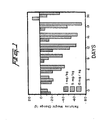
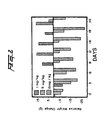
- FIGS. 1 and 2 depict the effects of CDS-E 2 on weight gain relative to vehicle injected controls in male (FIG. 1) and female (FIG. 2 ) rats from 0 to 36 days post-treatment.
- Mean drug treatment group weight was subtracted from mean control weight for each day examined.
- Figs. 1 and 2 illustrate that both the magnitude and duration of CDS-E 2 effect on weight gain is dose-related.
- FIGS. 3 and 4 show the effects of CDS-E 2 on body weight in comparison to two other widely used estrogenic compounds in the experiment described above.
- FIG. 3 shows the dose response effects of CDS-E2, estradiol and estradiol valerate on the magnitude of cumulative weight loss through day 19 post-treatment in male rats.
- Individual weight gains were calculated and averaged for each day and treatment group and then expressed as per cent change from initial weight (day 0).
- Area under the curve (AUC) of per cent weight change vs. time was estimated by the trape zoidal method for each of the 10 treatment groups.
- FIG. 4 shows the dose response effects of CDS-E., estradiol and estradiol valerate on the magnitude of weight loss through day 6 post-treatment in female rats. Calculations of individual weight gains and AUC's were done in the same manner as for FIG. 3.
- compositions for use in the method of this invention comprise an effective weight-controlling amount of a compound of formula (I) above or a non-toxic pharmaceutically acceptable salt thereof, and a non-toxic pharmaceutically acceptable carrier therefor.
- Suitable non-toxic pharmaceutically acceptable carriers for use with the selected compound of formula - (I), e.g. those less toxic than the target drug species themselves, will be apparent to those skilled in the art of pharmaceutical formulation. See, for example, Remington's Pharmaceutical Sciences, Seventeenth edition, ed. Alfonso R. Gennaro, Mack Publishing Company, Easton, Pennsylvania (1985). Obviously, the choice of suitable carriers will depend upon the exact nature of the particular dosage form selected, as well as upon the identity of the compound to be administered.
- the therapeutic dosage range for administration of a compound of formula (1) for use in weight control can be estimated on the basis of animal test results detailed hereinabove.
- therapeutic dosage ranges will vary with the particular compound of formula (I) used, the size, species and condition of the subject, the severity of the subject's weight problem, the particular dosage form employed, the route of administration and the like. And the quantity of given dosage form needed to deliver the desired dose will of course depend upon the concentration of the compound of formula (I) in any given pharmaceutical composition/dosage form thereof.
- the compounds of formula (I) exhibit very long-acting effects on weight control; however, the length of action appears to be dose-related. Moreover, the dose level also appears to determine the extent of direct effects on the female reproduction cycle. Judicious selection of dose level therefore should be used. Lower doses, administered more frequently, may be desirable in cases where effects of the reproductive cycle should be minimized. Moreover, it is believed that a substantial lowering effect on weight can be achieved in females by administering the formula (I) compound so that it acts during only part of the reproductive cycle, i.e., so that the compound exerts its weight-controlling effect primarily during the luteal phase, the portion of the cycle in which endogenous estrogen activity is lower.
- Such administration would also serve to minimize effects on the reproductive cycle; in humans, endogenous estrogen influence declines after ovulation and is at its lowest during the few days which precede menstruation, so that administration during the second half of the menstrual cycle would maximize the weight control effect while minimizing the effect on the reproductive cycle.
- the dosage level would be accordingly adjusted downward, so that the compound administered would not continue to exert substantial effects during the first half of the subsequent cycle.
- the compounds of formula (I) may be used at the higher, longer-acting levels.
- the active ingredient may be formulated into a sustained release carrier system and/or a route of administration may be selected to slowly release the chemical, e.g. subcutaneous implantation.
Landscapes
- Health & Medical Sciences (AREA)
- Epidemiology (AREA)
- Bioinformatics & Cheminformatics (AREA)
- Chemical & Material Sciences (AREA)
- Medicinal Chemistry (AREA)
- Pharmacology & Pharmacy (AREA)
- Engineering & Computer Science (AREA)
- Life Sciences & Earth Sciences (AREA)
- Animal Behavior & Ethology (AREA)
- General Health & Medical Sciences (AREA)
- Public Health (AREA)
- Veterinary Medicine (AREA)
- Pharmaceuticals Containing Other Organic And Inorganic Compounds (AREA)
- Steroid Compounds (AREA)
Applications Claiming Priority (2)
| Application Number | Priority Date | Filing Date | Title |
|---|---|---|---|
| US790159 | 1985-10-22 | ||
| US06/790,159 US4617298A (en) | 1985-10-22 | 1985-10-22 | Method and compositions for weight control |
Publications (2)
| Publication Number | Publication Date |
|---|---|
| EP0220844A2 true EP0220844A2 (de) | 1987-05-06 |
| EP0220844A3 EP0220844A3 (de) | 1989-08-30 |
Family
ID=25149811
Family Applications (1)
| Application Number | Title | Priority Date | Filing Date |
|---|---|---|---|
| EP86307536A Withdrawn EP0220844A3 (de) | 1985-10-22 | 1986-10-01 | Verwendung von Östrogen-dihydropyridinverbindungen zur Gewichtsreglung |
Country Status (3)
| Country | Link |
|---|---|
| US (1) | US4617298A (de) |
| EP (1) | EP0220844A3 (de) |
| AU (1) | AU6342586A (de) |
Cited By (1)
| Publication number | Priority date | Publication date | Assignee | Title |
|---|---|---|---|---|
| EP0692965A4 (de) * | 1993-04-02 | 1998-08-12 | Univ California | Verfahren und präparat zur behandlung von osteoporose |
Families Citing this family (11)
| Publication number | Priority date | Publication date | Assignee | Title |
|---|---|---|---|---|
| US4863911A (en) * | 1986-08-04 | 1989-09-05 | University Of Florida | Method for treating male sexual dysfunction |
| US5002935A (en) * | 1987-12-30 | 1991-03-26 | University Of Florida | Improvements in redox systems for brain-targeted drug delivery |
| US5017566A (en) * | 1987-12-30 | 1991-05-21 | University Of Florida | Redox systems for brain-targeted drug delivery |
| DE69626927T2 (de) * | 1995-10-30 | 2003-11-20 | Oleoyl-Estrone Developments, S.I. | Oleat Monoester von Estrogenen zur Behandlung von Fettleibigkeit |
| US6534085B1 (en) * | 1999-09-23 | 2003-03-18 | Bioresponse L.L.C. | Phytochemicals for promoting weight loss |
| ES2287184T3 (es) * | 2000-11-03 | 2007-12-16 | Washington University | Estructuras aromaticas modificadas con sustituyentes hidroxi-, que tienen actividad citoprotectora. |
| US20020132802A1 (en) * | 2000-11-17 | 2002-09-19 | Washington Univeristy | Cytoprotective polycyclic compounds |
| US20020151732A1 (en) * | 2001-01-05 | 2002-10-17 | Claes Ohlsson | Estrogen receptors |
| US20040018959A1 (en) * | 2002-05-02 | 2004-01-29 | Randall S. Hickle | System and methods of lipid removal from the body |
| US9315539B2 (en) * | 2002-10-01 | 2016-04-19 | Yale University | 11 beta-short chain substituted estradiol analogs and their use in the treatment of menopausal symptoms and estrogen sensitive cancer |
| WO2005011617A2 (en) * | 2003-07-31 | 2005-02-10 | Ivax Corporation | Transmucosal dosage forms for brain-targeted steroid chemical delivery systems |
Family Cites Families (7)
| Publication number | Priority date | Publication date | Assignee | Title |
|---|---|---|---|---|
| US4065566A (en) * | 1975-04-17 | 1977-12-27 | Interx Research Corporation | N-Nicotinoyl-3,4-dinicotinoyloxy-L-phenylalanine and derivatives pharmaceutical compositions and methods containing same |
| US4035507A (en) * | 1975-04-17 | 1977-07-12 | Interx Research Corporation | Novel, transient pro-drug forms of L-DOPA to treat Parkinson's disease |
| US4202323A (en) * | 1978-04-28 | 1980-05-13 | Herz Matthew L | Drug activation by radiation |
| US4206220A (en) * | 1978-07-13 | 1980-06-03 | Interx Research Corporation | Prodrugs for the improved delivery of non-steroidal anti-inflammatory agents |
| US4242330A (en) * | 1979-05-30 | 1980-12-30 | The University Of Kentucky Research Foundation | Derivative of aspirin |
| US4479932A (en) * | 1982-05-18 | 1984-10-30 | University Of Florida | Brain-specific drug delivery |
| US4540564A (en) * | 1982-05-18 | 1985-09-10 | University Of Florida | Brain-specific drug delivery |
-
1985
- 1985-10-22 US US06/790,159 patent/US4617298A/en not_active Expired - Lifetime
-
1986
- 1986-10-01 EP EP86307536A patent/EP0220844A3/de not_active Withdrawn
- 1986-10-01 AU AU63425/86A patent/AU6342586A/en not_active Abandoned
Cited By (1)
| Publication number | Priority date | Publication date | Assignee | Title |
|---|---|---|---|---|
| EP0692965A4 (de) * | 1993-04-02 | 1998-08-12 | Univ California | Verfahren und präparat zur behandlung von osteoporose |
Also Published As
| Publication number | Publication date |
|---|---|
| US4617298A (en) | 1986-10-14 |
| EP0220844A3 (de) | 1989-08-30 |
| AU6342586A (en) | 1987-04-30 |
Similar Documents
| Publication | Publication Date | Title |
|---|---|---|
| EP0256668B1 (de) | Verfahren zur Behandlung von männlicher sexueller Dysfunktion | |
| KR100270432B1 (ko) | 성스테로이드활성억제용에스트로겐핵유도체 | |
| EP0615448B1 (de) | Sex steroide inhibitonen | |
| US5393785A (en) | Therapeutic antiestrogens | |
| EP0536282B1 (de) | Zusammensetzung für die behandlung des humanen prostata adenokarzinom | |
| EP0220844A2 (de) | Verwendung von Östrogen-dihydropyridinverbindungen zur Gewichtsreglung | |
| US5686437A (en) | Estrogen nucleus derivatives for use in the inhibition of sex steroid activity | |
| JP3814292B2 (ja) | エストラ−1,3,5(10)−トリエン誘導体、これらの製造方法及びこれら化合物を含有する製薬組成物 | |
| IE902458A1 (en) | Method of treatment of androgen-related diseases | |
| EP2039701A2 (de) | 20-Keto-11Beta-Arylsteroide und ihre Derivate mit agonistischen oder antagonistischen Hormoneigenschaften | |
| HK1006412B (en) | Meducament for treating prostatic adenocarcinoma | |
| MXPA05001017A (es) | Composicion conteniendo un 11¦-halogeno esteroide androgenico y un gestageno asi como un anticonceptivo masculino basado en esta composicion. | |
| US20050026891A1 (en) | Progesterone receptor modulators with increased antigonadotropic activity for female birth control and hormone replacement therapy | |
| US6740645B1 (en) | 17β-acyl-17α-propynyl-11β-(cyclic amino) aryl steroids and their derivatives having antagonist hormonal properties | |
| US5686465A (en) | Sex steroid activity inhibitors | |
| JPH03294230A (ja) | 子宮内膜症治療剤 | |
| JP2010516686A (ja) | ステロイド誘導体の安定性向上のための方法 | |
| CA2421302C (en) | 4-halogenated 17-methylene steroids, method for the production thereof and pharmaceutical compositions containing these compounds | |
| JP2002502406A (ja) | 11β−アリール置換した14,17−エタノエストラトリエン、該化合物の製造法並びに医薬品の製造のための該化合物の使用 | |
| AU3405600A (en) | Sex steroid activity inhibitors |
Legal Events
| Date | Code | Title | Description |
|---|---|---|---|
| PUAI | Public reference made under article 153(3) epc to a published international application that has entered the european phase |
Free format text: ORIGINAL CODE: 0009012 |
|
| AK | Designated contracting states |
Kind code of ref document: A2 Designated state(s): AT BE CH DE ES FR GB GR IT LI LU NL SE |
|
| PUAL | Search report despatched |
Free format text: ORIGINAL CODE: 0009013 |
|
| AK | Designated contracting states |
Kind code of ref document: A3 Designated state(s): AT BE CH DE ES FR GB GR IT LI LU NL SE |
|
| 111L | Licence recorded |
Free format text: 0100 PHARMATEC, INC. P.O. BOX 730 |
|
| STAA | Information on the status of an ep patent application or granted ep patent |
Free format text: STATUS: THE APPLICATION IS DEEMED TO BE WITHDRAWN |
|
| 18D | Application deemed to be withdrawn |
Effective date: 19900302 |
|
| RIN1 | Information on inventor provided before grant (corrected) |
Inventor name: SIMPKINS, JAMES W. Inventor name: ESTES, KERRY S. Inventor name: BODOR, NICHOLAS S. |