EP0221114B1 - Verfahren zur herstellung eines proteins - Google Patents
Verfahren zur herstellung eines proteins Download PDFInfo
- Publication number
- EP0221114B1 EP0221114B1 EP86902753A EP86902753A EP0221114B1 EP 0221114 B1 EP0221114 B1 EP 0221114B1 EP 86902753 A EP86902753 A EP 86902753A EP 86902753 A EP86902753 A EP 86902753A EP 0221114 B1 EP0221114 B1 EP 0221114B1
- Authority
- EP
- European Patent Office
- Prior art keywords
- protein
- solid phase
- process according
- solvent
- urea
- Prior art date
- Legal status (The legal status is an assumption and is not a legal conclusion. Google has not performed a legal analysis and makes no representation as to the accuracy of the status listed.)
- Expired
Links
- 108090000623 proteins and genes Proteins 0.000 title claims abstract description 117
- 102000004169 proteins and genes Human genes 0.000 title claims abstract description 109
- 238000000034 method Methods 0.000 title claims abstract description 36
- 230000008569 process Effects 0.000 title claims description 26
- 238000004519 manufacturing process Methods 0.000 title claims description 9
- 239000007790 solid phase Substances 0.000 claims abstract description 33
- 239000002904 solvent Substances 0.000 claims abstract description 21
- 239000003795 chemical substances by application Substances 0.000 claims abstract description 10
- 239000004202 carbamide Substances 0.000 claims description 38
- XSQUKJJJFZCRTK-UHFFFAOYSA-N urea group Chemical group NC(=O)N XSQUKJJJFZCRTK-UHFFFAOYSA-N 0.000 claims description 38
- 239000000243 solution Substances 0.000 claims description 16
- 239000003153 chemical reaction reagent Substances 0.000 claims description 8
- 238000010828 elution Methods 0.000 claims description 8
- 239000003463 adsorbent Substances 0.000 claims description 7
- 239000003456 ion exchange resin Substances 0.000 claims description 7
- 229920003303 ion-exchange polymer Polymers 0.000 claims description 7
- 150000003839 salts Chemical class 0.000 claims description 6
- NWUYHJFMYQTDRP-UHFFFAOYSA-N 1,2-bis(ethenyl)benzene;1-ethenyl-2-ethylbenzene;styrene Chemical group C=CC1=CC=CC=C1.CCC1=CC=CC=C1C=C.C=CC1=CC=CC=C1C=C NWUYHJFMYQTDRP-UHFFFAOYSA-N 0.000 claims description 5
- 108020004511 Recombinant DNA Proteins 0.000 claims description 5
- VHJLVAABSRFDPM-QWWZWVQMSA-N dithiothreitol Chemical compound SC[C@@H](O)[C@H](O)CS VHJLVAABSRFDPM-QWWZWVQMSA-N 0.000 claims description 5
- 239000013598 vector Substances 0.000 claims description 4
- 239000000463 material Substances 0.000 claims description 3
- 239000000203 mixture Substances 0.000 claims description 3
- 229920000936 Agarose Polymers 0.000 claims description 2
- 229920002678 cellulose Polymers 0.000 claims description 2
- 239000001913 cellulose Substances 0.000 claims description 2
- 238000005342 ion exchange Methods 0.000 claims 1
- 239000012266 salt solution Substances 0.000 claims 1
- 239000000872 buffer Substances 0.000 abstract description 21
- 108020005087 unfolded proteins Proteins 0.000 abstract description 9
- 238000004153 renaturation Methods 0.000 abstract description 4
- 230000001939 inductive effect Effects 0.000 abstract 1
- 239000013612 plasmid Substances 0.000 description 15
- 101000984722 Bos taurus Pancreatic trypsin inhibitor Proteins 0.000 description 14
- HZAXFHJVJLSVMW-UHFFFAOYSA-N 2-Aminoethan-1-ol Chemical compound NCCO HZAXFHJVJLSVMW-UHFFFAOYSA-N 0.000 description 8
- 239000003398 denaturant Substances 0.000 description 8
- 239000012634 fragment Substances 0.000 description 8
- 229920002134 Carboxymethyl cellulose Polymers 0.000 description 7
- 108020004414 DNA Proteins 0.000 description 7
- 108010058846 Ovalbumin Proteins 0.000 description 7
- VJHCJDRQFCCTHL-UHFFFAOYSA-N acetic acid 2,3,4,5,6-pentahydroxyhexanal Chemical compound CC(O)=O.OCC(O)C(O)C(O)C(O)C=O VJHCJDRQFCCTHL-UHFFFAOYSA-N 0.000 description 7
- 229940092253 ovalbumin Drugs 0.000 description 7
- KCXVZYZYPLLWCC-UHFFFAOYSA-N EDTA Chemical compound OC(=O)CN(CC(O)=O)CCN(CC(O)=O)CC(O)=O KCXVZYZYPLLWCC-UHFFFAOYSA-N 0.000 description 6
- 241000588724 Escherichia coli Species 0.000 description 6
- 230000002829 reductive effect Effects 0.000 description 6
- 102000005876 Tissue Inhibitor of Metalloproteinases Human genes 0.000 description 5
- 108010005246 Tissue Inhibitor of Metalloproteinases Proteins 0.000 description 5
- 238000002474 experimental method Methods 0.000 description 5
- 239000011347 resin Substances 0.000 description 5
- 229920005989 resin Polymers 0.000 description 5
- 239000007787 solid Substances 0.000 description 5
- 150000003573 thiols Chemical class 0.000 description 5
- 102100030497 Cytochrome c Human genes 0.000 description 4
- 108010075031 Cytochromes c Proteins 0.000 description 4
- GUBGYTABKSRVRQ-WFVLMXAXSA-N DEAE-cellulose Chemical compound OC1C(O)C(O)C(CO)O[C@H]1O[C@@H]1C(CO)OC(O)C(O)C1O GUBGYTABKSRVRQ-WFVLMXAXSA-N 0.000 description 4
- 101000726354 Equus caballus Cytochrome c Proteins 0.000 description 4
- 108010051696 Growth Hormone Proteins 0.000 description 4
- FAPWRFPIFSIZLT-UHFFFAOYSA-M Sodium chloride Chemical compound [Na+].[Cl-] FAPWRFPIFSIZLT-UHFFFAOYSA-M 0.000 description 4
- 102100038803 Somatotropin Human genes 0.000 description 4
- 238000002835 absorbance Methods 0.000 description 4
- 230000003247 decreasing effect Effects 0.000 description 4
- 239000000122 growth hormone Substances 0.000 description 4
- 229920001184 polypeptide Polymers 0.000 description 4
- 108090000765 processed proteins & peptides Proteins 0.000 description 4
- 102000004196 processed proteins & peptides Human genes 0.000 description 4
- 108010064037 prorennin Proteins 0.000 description 4
- 230000002441 reversible effect Effects 0.000 description 4
- 108010039627 Aprotinin Proteins 0.000 description 3
- 108090000746 Chymosin Proteins 0.000 description 3
- 241001131785 Escherichia coli HB101 Species 0.000 description 3
- 230000008901 benefit Effects 0.000 description 3
- 229940080701 chymosin Drugs 0.000 description 3
- DNJIEGIFACGWOD-UHFFFAOYSA-N ethyl mercaptane Natural products CCS DNJIEGIFACGWOD-UHFFFAOYSA-N 0.000 description 3
- 230000005714 functional activity Effects 0.000 description 3
- 230000003993 interaction Effects 0.000 description 3
- GNOLWGAJQVLBSM-UHFFFAOYSA-N n,n,5,7-tetramethyl-1,2,3,4-tetrahydronaphthalen-1-amine Chemical compound C1=C(C)C=C2C(N(C)C)CCCC2=C1C GNOLWGAJQVLBSM-UHFFFAOYSA-N 0.000 description 3
- DGVVWUTYPXICAM-UHFFFAOYSA-N β‐Mercaptoethanol Chemical compound OCCS DGVVWUTYPXICAM-UHFFFAOYSA-N 0.000 description 3
- 239000007983 Tris buffer Substances 0.000 description 2
- 239000007864 aqueous solution Substances 0.000 description 2
- 230000015572 biosynthetic process Effects 0.000 description 2
- 238000009795 derivation Methods 0.000 description 2
- 102000034238 globular proteins Human genes 0.000 description 2
- 108091005896 globular proteins Proteins 0.000 description 2
- RWSXRVCMGQZWBV-WDSKDSINSA-N glutathione Chemical compound OC(=O)[C@@H](N)CCC(=O)N[C@@H](CS)C(=O)NCC(O)=O RWSXRVCMGQZWBV-WDSKDSINSA-N 0.000 description 2
- 230000002209 hydrophobic effect Effects 0.000 description 2
- NOESYZHRGYRDHS-UHFFFAOYSA-N insulin Chemical compound N1C(=O)C(NC(=O)C(CCC(N)=O)NC(=O)C(CCC(O)=O)NC(=O)C(C(C)C)NC(=O)C(NC(=O)CN)C(C)CC)CSSCC(C(NC(CO)C(=O)NC(CC(C)C)C(=O)NC(CC=2C=CC(O)=CC=2)C(=O)NC(CCC(N)=O)C(=O)NC(CC(C)C)C(=O)NC(CCC(O)=O)C(=O)NC(CC(N)=O)C(=O)NC(CC=2C=CC(O)=CC=2)C(=O)NC(CSSCC(NC(=O)C(C(C)C)NC(=O)C(CC(C)C)NC(=O)C(CC=2C=CC(O)=CC=2)NC(=O)C(CC(C)C)NC(=O)C(C)NC(=O)C(CCC(O)=O)NC(=O)C(C(C)C)NC(=O)C(CC(C)C)NC(=O)C(CC=2NC=NC=2)NC(=O)C(CO)NC(=O)CNC2=O)C(=O)NCC(=O)NC(CCC(O)=O)C(=O)NC(CCCNC(N)=N)C(=O)NCC(=O)NC(CC=3C=CC=CC=3)C(=O)NC(CC=3C=CC=CC=3)C(=O)NC(CC=3C=CC(O)=CC=3)C(=O)NC(C(C)O)C(=O)N3C(CCC3)C(=O)NC(CCCCN)C(=O)NC(C)C(O)=O)C(=O)NC(CC(N)=O)C(O)=O)=O)NC(=O)C(C(C)CC)NC(=O)C(CO)NC(=O)C(C(C)O)NC(=O)C1CSSCC2NC(=O)C(CC(C)C)NC(=O)C(NC(=O)C(CCC(N)=O)NC(=O)C(CC(N)=O)NC(=O)C(NC(=O)C(N)CC=1C=CC=CC=1)C(C)C)CC1=CN=CN1 NOESYZHRGYRDHS-UHFFFAOYSA-N 0.000 description 2
- 239000008188 pellet Substances 0.000 description 2
- 239000002243 precursor Substances 0.000 description 2
- 230000009257 reactivity Effects 0.000 description 2
- 230000000717 retained effect Effects 0.000 description 2
- 239000011780 sodium chloride Substances 0.000 description 2
- 238000001179 sorption measurement Methods 0.000 description 2
- 230000014616 translation Effects 0.000 description 2
- LENZDBCJOHFCAS-UHFFFAOYSA-N tris Chemical compound OCC(N)(CO)CO LENZDBCJOHFCAS-UHFFFAOYSA-N 0.000 description 2
- KYNFOMQIXZUKRK-UHFFFAOYSA-N 2,2'-dithiodiethanol Chemical compound OCCSSCCO KYNFOMQIXZUKRK-UHFFFAOYSA-N 0.000 description 1
- QKNYBSVHEMOAJP-UHFFFAOYSA-N 2-amino-2-(hydroxymethyl)propane-1,3-diol;hydron;chloride Chemical compound Cl.OCC(N)(CO)CO QKNYBSVHEMOAJP-UHFFFAOYSA-N 0.000 description 1
- QFVHZQCOUORWEI-UHFFFAOYSA-N 4-[(4-anilino-5-sulfonaphthalen-1-yl)diazenyl]-5-hydroxynaphthalene-2,7-disulfonic acid Chemical compound C=12C(O)=CC(S(O)(=O)=O)=CC2=CC(S(O)(=O)=O)=CC=1N=NC(C1=CC=CC(=C11)S(O)(=O)=O)=CC=C1NC1=CC=CC=C1 QFVHZQCOUORWEI-UHFFFAOYSA-N 0.000 description 1
- HRPVXLWXLXDGHG-UHFFFAOYSA-N Acrylamide Chemical compound NC(=O)C=C HRPVXLWXLXDGHG-UHFFFAOYSA-N 0.000 description 1
- 241000894006 Bacteria Species 0.000 description 1
- 108090000790 Enzymes Proteins 0.000 description 1
- 102000004190 Enzymes Human genes 0.000 description 1
- 108010024636 Glutathione Proteins 0.000 description 1
- UFHFLCQGNIYNRP-UHFFFAOYSA-N Hydrogen Chemical compound [H][H] UFHFLCQGNIYNRP-UHFFFAOYSA-N 0.000 description 1
- 108060003951 Immunoglobulin Proteins 0.000 description 1
- 102000004877 Insulin Human genes 0.000 description 1
- 108090001061 Insulin Proteins 0.000 description 1
- 108010052285 Membrane Proteins Proteins 0.000 description 1
- 239000012614 Q-Sepharose Substances 0.000 description 1
- 102000007056 Recombinant Fusion Proteins Human genes 0.000 description 1
- 108010008281 Recombinant Fusion Proteins Proteins 0.000 description 1
- 240000004808 Saccharomyces cerevisiae Species 0.000 description 1
- 229920002684 Sepharose Polymers 0.000 description 1
- NINIDFKCEFEMDL-UHFFFAOYSA-N Sulfur Chemical group [S] NINIDFKCEFEMDL-UHFFFAOYSA-N 0.000 description 1
- 102000004142 Trypsin Human genes 0.000 description 1
- 108090000631 Trypsin Proteins 0.000 description 1
- 101710162629 Trypsin inhibitor Proteins 0.000 description 1
- 229940122618 Trypsin inhibitor Drugs 0.000 description 1
- 239000011358 absorbing material Substances 0.000 description 1
- 230000002776 aggregation Effects 0.000 description 1
- 238000004220 aggregation Methods 0.000 description 1
- 101150115889 al gene Proteins 0.000 description 1
- 150000001413 amino acids Chemical class 0.000 description 1
- AVKUERGKIZMTKX-NJBDSQKTSA-N ampicillin Chemical compound C1([C@@H](N)C(=O)N[C@H]2[C@H]3SC([C@@H](N3C2=O)C(O)=O)(C)C)=CC=CC=C1 AVKUERGKIZMTKX-NJBDSQKTSA-N 0.000 description 1
- 229960000723 ampicillin Drugs 0.000 description 1
- 238000003556 assay Methods 0.000 description 1
- 230000004071 biological effect Effects 0.000 description 1
- 238000006664 bond formation reaction Methods 0.000 description 1
- 239000007853 buffer solution Substances 0.000 description 1
- 229960004015 calcitonin Drugs 0.000 description 1
- 239000012461 cellulose resin Substances 0.000 description 1
- 229920001429 chelating resin Polymers 0.000 description 1
- 238000004587 chromatography analysis Methods 0.000 description 1
- 238000012258 culturing Methods 0.000 description 1
- UFULAYFCSOUIOV-UHFFFAOYSA-N cysteamine Chemical compound NCCS UFULAYFCSOUIOV-UHFFFAOYSA-N 0.000 description 1
- 230000003292 diminished effect Effects 0.000 description 1
- 125000002228 disulfide group Chemical group 0.000 description 1
- 230000000694 effects Effects 0.000 description 1
- 229940088598 enzyme Drugs 0.000 description 1
- 239000013604 expression vector Substances 0.000 description 1
- 230000006251 gamma-carboxylation Effects 0.000 description 1
- 229960003180 glutathione Drugs 0.000 description 1
- 230000013595 glycosylation Effects 0.000 description 1
- 238000006206 glycosylation reaction Methods 0.000 description 1
- 229960000789 guanidine hydrochloride Drugs 0.000 description 1
- PJJJBBJSCAKJQF-UHFFFAOYSA-N guanidinium chloride Chemical compound [Cl-].NC(N)=[NH2+] PJJJBBJSCAKJQF-UHFFFAOYSA-N 0.000 description 1
- 238000010438 heat treatment Methods 0.000 description 1
- 239000001257 hydrogen Substances 0.000 description 1
- 229910052739 hydrogen Inorganic materials 0.000 description 1
- 230000033444 hydroxylation Effects 0.000 description 1
- 238000005805 hydroxylation reaction Methods 0.000 description 1
- 102000018358 immunoglobulin Human genes 0.000 description 1
- 229940072221 immunoglobulins Drugs 0.000 description 1
- 229940125396 insulin Drugs 0.000 description 1
- 125000003010 ionic group Chemical group 0.000 description 1
- 239000003446 ligand Substances 0.000 description 1
- 239000006166 lysate Substances 0.000 description 1
- 229960003151 mercaptamine Drugs 0.000 description 1
- 230000004048 modification Effects 0.000 description 1
- 238000012986 modification Methods 0.000 description 1
- 230000007935 neutral effect Effects 0.000 description 1
- 230000036961 partial effect Effects 0.000 description 1
- 239000002245 particle Substances 0.000 description 1
- -1 phospho-cellulose Polymers 0.000 description 1
- 229940080469 phosphocellulose Drugs 0.000 description 1
- 230000026731 phosphorylation Effects 0.000 description 1
- 238000006366 phosphorylation reaction Methods 0.000 description 1
- 230000004481 post-translational protein modification Effects 0.000 description 1
- 230000002035 prolonged effect Effects 0.000 description 1
- 230000006432 protein unfolding Effects 0.000 description 1
- 230000006337 proteolytic cleavage Effects 0.000 description 1
- 230000008707 rearrangement Effects 0.000 description 1
- 238000011084 recovery Methods 0.000 description 1
- 238000002415 sodium dodecyl sulfate polyacrylamide gel electrophoresis Methods 0.000 description 1
- 241000894007 species Species 0.000 description 1
- 238000003756 stirring Methods 0.000 description 1
- 239000003774 sulfhydryl reagent Substances 0.000 description 1
- 239000000725 suspension Substances 0.000 description 1
- 125000003396 thiol group Chemical group [H]S* 0.000 description 1
- 230000009466 transformation Effects 0.000 description 1
- 229940108519 trasylol Drugs 0.000 description 1
- 239000012588 trypsin Substances 0.000 description 1
- 239000002753 trypsin inhibitor Substances 0.000 description 1
Images




Classifications
-
- C—CHEMISTRY; METALLURGY
- C12—BIOCHEMISTRY; BEER; SPIRITS; WINE; VINEGAR; MICROBIOLOGY; ENZYMOLOGY; MUTATION OR GENETIC ENGINEERING
- C12N—MICROORGANISMS OR ENZYMES; COMPOSITIONS THEREOF; PROPAGATING, PRESERVING, OR MAINTAINING MICROORGANISMS; MUTATION OR GENETIC ENGINEERING; CULTURE MEDIA
- C12N9/00—Enzymes; Proenzymes; Compositions thereof; Processes for preparing, activating, inhibiting, separating or purifying enzymes
- C12N9/0004—Oxidoreductases (1.)
- C12N9/0006—Oxidoreductases (1.) acting on CH-OH groups as donors (1.1)
-
- C—CHEMISTRY; METALLURGY
- C07—ORGANIC CHEMISTRY
- C07K—PEPTIDES
- C07K1/00—General methods for the preparation of peptides, i.e. processes for the organic chemical preparation of peptides or proteins of any length
- C07K1/107—General methods for the preparation of peptides, i.e. processes for the organic chemical preparation of peptides or proteins of any length by chemical modification of precursor peptides
- C07K1/113—General methods for the preparation of peptides, i.e. processes for the organic chemical preparation of peptides or proteins of any length by chemical modification of precursor peptides without change of the primary structure
- C07K1/1133—General methods for the preparation of peptides, i.e. processes for the organic chemical preparation of peptides or proteins of any length by chemical modification of precursor peptides without change of the primary structure by redox-reactions involving cystein/cystin side chains
-
- C—CHEMISTRY; METALLURGY
- C07—ORGANIC CHEMISTRY
- C07K—PEPTIDES
- C07K1/00—General methods for the preparation of peptides, i.e. processes for the organic chemical preparation of peptides or proteins of any length
- C07K1/107—General methods for the preparation of peptides, i.e. processes for the organic chemical preparation of peptides or proteins of any length by chemical modification of precursor peptides
- C07K1/113—General methods for the preparation of peptides, i.e. processes for the organic chemical preparation of peptides or proteins of any length by chemical modification of precursor peptides without change of the primary structure
- C07K1/1136—General methods for the preparation of peptides, i.e. processes for the organic chemical preparation of peptides or proteins of any length by chemical modification of precursor peptides without change of the primary structure by reversible modification of the secondary, tertiary or quarternary structure, e.g. using denaturating or stabilising agents
-
- C—CHEMISTRY; METALLURGY
- C07—ORGANIC CHEMISTRY
- C07K—PEPTIDES
- C07K14/00—Peptides having more than 20 amino acids; Gastrins; Somatostatins; Melanotropins; Derivatives thereof
- C07K14/435—Peptides having more than 20 amino acids; Gastrins; Somatostatins; Melanotropins; Derivatives thereof from animals; from humans
- C07K14/575—Hormones
- C07K14/61—Growth hormone [GH], i.e. somatotropin
-
- C—CHEMISTRY; METALLURGY
- C07—ORGANIC CHEMISTRY
- C07K—PEPTIDES
- C07K14/00—Peptides having more than 20 amino acids; Gastrins; Somatostatins; Melanotropins; Derivatives thereof
- C07K14/435—Peptides having more than 20 amino acids; Gastrins; Somatostatins; Melanotropins; Derivatives thereof from animals; from humans
- C07K14/76—Albumins
- C07K14/77—Ovalbumin
-
- C—CHEMISTRY; METALLURGY
- C07—ORGANIC CHEMISTRY
- C07K—PEPTIDES
- C07K14/00—Peptides having more than 20 amino acids; Gastrins; Somatostatins; Melanotropins; Derivatives thereof
- C07K14/81—Protease inhibitors
- C07K14/8107—Endopeptidase (E.C. 3.4.21-99) inhibitors
- C07K14/811—Serine protease (E.C. 3.4.21) inhibitors
- C07K14/8114—Kunitz type inhibitors
- C07K14/8117—Bovine/basic pancreatic trypsin inhibitor (BPTI, aprotinin)
-
- C—CHEMISTRY; METALLURGY
- C07—ORGANIC CHEMISTRY
- C07K—PEPTIDES
- C07K14/00—Peptides having more than 20 amino acids; Gastrins; Somatostatins; Melanotropins; Derivatives thereof
- C07K14/81—Protease inhibitors
- C07K14/8107—Endopeptidase (E.C. 3.4.21-99) inhibitors
- C07K14/8146—Metalloprotease (E.C. 3.4.24) inhibitors, e.g. tissue inhibitor of metallo proteinase, TIMP
-
- C—CHEMISTRY; METALLURGY
- C12—BIOCHEMISTRY; BEER; SPIRITS; WINE; VINEGAR; MICROBIOLOGY; ENZYMOLOGY; MUTATION OR GENETIC ENGINEERING
- C12N—MICROORGANISMS OR ENZYMES; COMPOSITIONS THEREOF; PROPAGATING, PRESERVING, OR MAINTAINING MICROORGANISMS; MUTATION OR GENETIC ENGINEERING; CULTURE MEDIA
- C12N9/00—Enzymes; Proenzymes; Compositions thereof; Processes for preparing, activating, inhibiting, separating or purifying enzymes
- C12N9/14—Hydrolases (3)
- C12N9/48—Hydrolases (3) acting on peptide bonds (3.4)
- C12N9/50—Proteinases, e.g. Endopeptidases (3.4.21-3.4.25)
- C12N9/64—Proteinases, e.g. Endopeptidases (3.4.21-3.4.25) derived from animal tissue
- C12N9/6421—Proteinases, e.g. Endopeptidases (3.4.21-3.4.25) derived from animal tissue from mammals
- C12N9/6478—Aspartic endopeptidases (3.4.23)
- C12N9/6481—Pepsins (3.4.23.1; 3.4.23.2; 3.4.23.3)
-
- C—CHEMISTRY; METALLURGY
- C12—BIOCHEMISTRY; BEER; SPIRITS; WINE; VINEGAR; MICROBIOLOGY; ENZYMOLOGY; MUTATION OR GENETIC ENGINEERING
- C12N—MICROORGANISMS OR ENZYMES; COMPOSITIONS THEREOF; PROPAGATING, PRESERVING, OR MAINTAINING MICROORGANISMS; MUTATION OR GENETIC ENGINEERING; CULTURE MEDIA
- C12N9/00—Enzymes; Proenzymes; Compositions thereof; Processes for preparing, activating, inhibiting, separating or purifying enzymes
- C12N9/14—Hydrolases (3)
- C12N9/48—Hydrolases (3) acting on peptide bonds (3.4)
- C12N9/50—Proteinases, e.g. Endopeptidases (3.4.21-3.4.25)
- C12N9/64—Proteinases, e.g. Endopeptidases (3.4.21-3.4.25) derived from animal tissue
- C12N9/6421—Proteinases, e.g. Endopeptidases (3.4.21-3.4.25) derived from animal tissue from mammals
- C12N9/6478—Aspartic endopeptidases (3.4.23)
- C12N9/6483—Chymosin (3.4.23.4), i.e. rennin
-
- C—CHEMISTRY; METALLURGY
- C12—BIOCHEMISTRY; BEER; SPIRITS; WINE; VINEGAR; MICROBIOLOGY; ENZYMOLOGY; MUTATION OR GENETIC ENGINEERING
- C12P—FERMENTATION OR ENZYME-USING PROCESSES TO SYNTHESISE A DESIRED CHEMICAL COMPOUND OR COMPOSITION OR TO SEPARATE OPTICAL ISOMERS FROM A RACEMIC MIXTURE
- C12P21/00—Preparation of peptides or proteins
-
- C—CHEMISTRY; METALLURGY
- C12—BIOCHEMISTRY; BEER; SPIRITS; WINE; VINEGAR; MICROBIOLOGY; ENZYMOLOGY; MUTATION OR GENETIC ENGINEERING
- C12P—FERMENTATION OR ENZYME-USING PROCESSES TO SYNTHESISE A DESIRED CHEMICAL COMPOUND OR COMPOSITION OR TO SEPARATE OPTICAL ISOMERS FROM A RACEMIC MIXTURE
- C12P21/00—Preparation of peptides or proteins
- C12P21/005—Glycopeptides, glycoproteins
-
- C—CHEMISTRY; METALLURGY
- C12—BIOCHEMISTRY; BEER; SPIRITS; WINE; VINEGAR; MICROBIOLOGY; ENZYMOLOGY; MUTATION OR GENETIC ENGINEERING
- C12P—FERMENTATION OR ENZYME-USING PROCESSES TO SYNTHESISE A DESIRED CHEMICAL COMPOUND OR COMPOSITION OR TO SEPARATE OPTICAL ISOMERS FROM A RACEMIC MIXTURE
- C12P21/00—Preparation of peptides or proteins
- C12P21/02—Preparation of peptides or proteins having a known sequence of two or more amino acids, e.g. glutathione
-
- C—CHEMISTRY; METALLURGY
- C12—BIOCHEMISTRY; BEER; SPIRITS; WINE; VINEGAR; MICROBIOLOGY; ENZYMOLOGY; MUTATION OR GENETIC ENGINEERING
- C12Y—ENZYMES
- C12Y304/00—Hydrolases acting on peptide bonds, i.e. peptidases (3.4)
- C12Y304/23—Aspartic endopeptidases (3.4.23)
- C12Y304/23004—Chymosin (3.4.23.4), i.e. rennin
-
- Y—GENERAL TAGGING OF NEW TECHNOLOGICAL DEVELOPMENTS; GENERAL TAGGING OF CROSS-SECTIONAL TECHNOLOGIES SPANNING OVER SEVERAL SECTIONS OF THE IPC; TECHNICAL SUBJECTS COVERED BY FORMER USPC CROSS-REFERENCE ART COLLECTIONS [XRACs] AND DIGESTS
- Y10—TECHNICAL SUBJECTS COVERED BY FORMER USPC
- Y10S—TECHNICAL SUBJECTS COVERED BY FORMER USPC CROSS-REFERENCE ART COLLECTIONS [XRACs] AND DIGESTS
- Y10S530/00—Chemistry: natural resins or derivatives; peptides or proteins; lignins or reaction products thereof
- Y10S530/82—Proteins from microorganisms
Definitions
- This invention relates to processes for the production of proteins, in particular to the production of soluble native proteins.
- Especially the invention relates to a process for the production of a soluble native protein, in which an insoluble form of the protein is produced by host cells transformed with a vector including a gene coding for the protein, and as such relates to the field of protein production using recombinant DNA biotechnology.
- a protein exists as a chain of amino acids linked by peptide bonds.
- the chain In the normal biologically active form of a protein (hereinafter referred to as the native form) the chain is folded into a thermodynamically preferred three dimensional structure, the conformation of which is maintained by relatively weak interatomic forces such as hydrogen. bonding, hydrophobic interactions and charge interactions.
- Covalent bonds between sulphur atoms may form intramolecular disulphide bridges in the polypeptide chain, as well as intermolecular disulphide bridges between separate polypeptide chains of multisubunit proteins, e. g. insulin.
- proteins which may be produced in large quantities by culturing host cells capable of expressing heterologous genetic material, i. e. using the techniques of recombinant DNA biotechnology.
- the proteins are produced within the host cells in the form of insoluble protein aggregates and in this form do not exhibit the functional activity of their natural counterparts and are therefore in general of little use as commercial products.
- the lack of functional activity may be due to a number of factors but it is likely that such proteins produced by transformed cells are formed in a conformation which differs from that of their native form.
- unfolded proteins may be adsorbed reversibly on solid adsorbents, induced to fold whilst bound to the adsorbent by progressively reducing with time the concentration of denaturing agent in the solvent in contact with the adsorbent, and then eluted from the adsorbent to yield the protein in native form.
- This provides a process for the production of soluble native proteins which avoids the requirement for refolding, of the protein in very dilute solution, and in large volumes, and thus provides benefits for industrial scale applications.
- the process further provides a way of separating different proteins or different conformational states. Other advantages and benefits of this process are described hereinafter and will be apparent to those skilled in the art of protein production.
- the process may be applied advantageously to proteins produced by recombinant DNA biotechnology which are produced within host cells in the form of insoluble protein aggregates.
- the present invention comprises a process for the production of a protein in native form, in which a solution of the denatured protein is contacted with a solid phase which reversibly binds the protein and the denatured protein is reversibly bound to the solid phase, characterised in that, the bound protein is renatured by progressively reducing with time the concentration of the denaturing agent in the solvent in contact with the solid phase, and the renatured protein is recovered from the solid phase in native form.
- the process of the invention may be applied to any protein which is produced in a non-native form e. g. in the form of insoluble protein aggregates.
- the process may be used to convert the non-native form of the protein to the native form, e. g. the soluble native form of the protein.
- the invention may be applied to proteins produced by recombinant DNA biotechnology, in which an insoluble form of the protein is produced by host cells transformed with a vector including a gene coding for the protein.
- Examples of « recombinant proteins produced in insoluble form by tranformed host cells are porcine growth hormone, tissue inhibitor of metalloproteinases (TIMP), insoluble chymosin precursors e. g.
- met- prochymosin immunoglobulins and CAT-fusion proteins e. g. CAT-calcitonin, produced in bacteria (e. g. E. coli) or yeast (e. g. S. cerevisiae) host cells.
- bacteria e. g. E. coli
- yeast e. g. S. cerevisiae
- the protein may be denatured in any suitable denaturant solution.
- the solution of the denaturing agent may be chosen having regard to the solid phase to be used for reversible binding of the denatured protein.
- the denaturing agent may be in aqueous solution, such as for example an aqueous solution of guanidine hydrochloride, though is preferably urea, e. g. 8 M urea.
- the solid phase may be any solid phase to which the denatured protein may be reversibly bound.
- the protein may be bound to the solid phase by reversible covalent linkage.
- the solid phase may comprise an adsorbent for the protein.
- the solid phase may be an ion-exchange resin such as an agarose or similar material e. g. Q-sepharose TM or S-sepharose TM, Pharmacia Mono Q TM FPLC, Pharmacia Mono S TM FPLC, or cellulose, e. g. CM-cellulose, DEAE-cellulose, phospho-cellulose, or Amberlite TM of which CM-cellulose and Pharmacia Mono Q TM FPLC are preferred.
- the solid phase is an ion-exchange resin the denaturant solution used is typically of low ionic strength to promote adsorption of the protein.
- the solid phase may comprise a continuous solid phase such as a surface, though is preferably particulate.
- the solid phase may be in the form of a column containing particles of the solid phase through which the denaturant solution and solvent may be flowed.
- Renaturing of the protein bound to the solid phase is effected by progressively reducing with time the concentration of denaturing agent in the solvent in contact with solid phase to which the protein is bound.
- the protein bound to the solid phase is treated with a solvent gradient, preferably a linear gradient, in which the composition varies from one in which the solvent initially presents a denaturing environment to one in which the solvent presents a natural environment to the protein.
- a solvent gradient preferably a linear gradient
- the composition of the gradient is typically varied in a continuous manner, e. g. linearly, over a prolonged period of time, usually at least over about 30 minutes and preferably over about 60 minutes.
- the solvent gradient is passed through a column containing bound protein.
- the solvent which is contacted with the solid phase may contain other components such as cofactors, disulphide forming and breaking reagents and salts.
- concentration of these other components may be varied as desired during renaturation of the protein.
- renatured protein On completion of renaturation treatment the protein is recovered from the solid phase.
- renatured protein may be recovered from an ion-exchange resin column by elution with a salt, e. g. NaCI, gradient.
- the invention also extends to a protein whenever produced by the process according to the invention.
- This Example relates to studies of model proteins.
- Horse cytochrome c was obtained from BDH. Hen ovalbumin was obtained from Sigma. Bovine pancreatic trypsin inhibitor (BPTI, R Trasylol) was the generous gift of Bayer AG.
- the carboxymethyl-(CM) and diethylaminoethyl-(DEAE) cellulose resins were respectively the CM52 and DE52 products of Whatman TM.
- Proteins were unfolded by dissolving the dry native protein obtained commercially to a concentration of 5 to 10 mg/ml in 8 M urea also containing the appropriate buffer. Unfolding of ovalbumin was ensured by heating the solutions at 50° for 15 minutes. When disulphides were also to the reduced, dithiothreitol was included at 50 mM. Urea was the Aristar TM grade of BDH, and all urea solutions were prepared just prior to use.
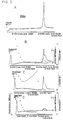
- Horse cytochrome c (Fig. 1) was unfolded in 8 M urea (Myer Y.P., Biochemistry 7 765 (1968) ; Stellwagen E., Biochemistry 7 289 (1968)) and applied to a small column of CM-cellulose at low ionic strength, where it was observed from its colour to bind to the top 1 to 2 mm of resin.
- the urea concentration of the solvent was gradually lowered by a linear gradient of 8 M to 0 M urea.
- the adsorbed protein was then quantitatively eluted with a gradient of increasing salt concentration. No coloured protein was retained by the column and the elution profile was indistinguishable from that of cytochrome c that had not been unfolded. The same result was obtained if the unfolded cytochrome c was dispersed by stirring it into the resin of the top third of the column.
- Fig. 1 Refolding of horse cytochrome c adorbed to CM-cellulose.
- the buffer throughout was 0.1 M Tris-HCI, pH 8.7, 1 mM EDTA.
- 10.0 mg of cytochrome c dissolved in 1.0 ml of buffer was applied to a column of CM-cellulose equilibrated with the same buffer.
- the unfolded protein was followed by a 200-ml linear gradient of 8 M to 0 M urea in buffer. Both proteins were eluted with a 200 ml linear gradient of 0 M to 1.0 M NaCI.
- the elution profile shown is given by the absorbance at 280 nm.
- Fig. 2 Refolding of hen ovalbumin adsorbed to DEAE-cellulose.
- the buffer throughout was 20 mM Tris-HCI, pH 8.7.
- 20 mg of ovalbumin dissolved in 2.0 ml of buffer was applied to 1 column of DEAE-cellulose equilibrated with the same buffer.
- the unfolded protein was followed by a 200 ml linear gradient of 8 M to 0 M urea. Both proteins were eluted with a 200 ml linear gradient of 0 M to 0.5 M NaCl.
- BPTI BPTI
- CM-cellulose columns CM-cellulose columns
- urea concentration was gradually diminished with a linear gradient coupled to various alternations of the thiolldisulphide redox potential via the concentrations of the thiol and disulphide forms of glutathione, mercaptoethanol, or cysteamine, respectively negatively charged, neutral and positively charged.
- the protein was then eluted with a salt gradient (Fig. 3).
- the absorbance at 280 nm detected both protein and the disulphide reagent ; thiols and BPTI trypsin inhibitor activity were assayed in the eluant. These procedures measured the reactivity of the thiols with the disulphide reagent (to generate reduced reagent) and the proportion of eluted protein that had a native-like conformation.
- At least 90 % of the BPTI could be eluted from the column after removing the urea from the buffer by a linear gradient, which also included thiol and disulfide forms of mercaptoethanol, RSH and RSSR respectively, in constant, increasing, or decreasing concentrations.
- the disulphide reagent was included to generate protein disulphides, the thiol reagent to assist in protein disulphide rearrangements.
- Fig. 3 Refolding of reduced BPTI adsorbed to CM-cellulose.
- 20 mg of BPTI in 2 ml of 8 M urea plus buffer was adsorbed.
- A is the control in which the BPTI was not reduced, but only dissolved in 8 M urea, where it remains folded and the disulphides intact ;
- B, C and D used reduced BPTI by inclusion of 50 mM dithiothreitol, which is the absorbing material not bound to the column.
- A, B, and C the protein was followed by a 200 ml linear gradient of 8 M to 0 M urea in buffer; in D there was no urea in the subsequent buffer and no gradient.
- RSSR hydroxyethyl disulfide
- Mercaptoethanol was present uniformly at 0.1 mM in B and D, but in C was present at 1.0 mM in the 0 M urea solution only and consequently increased in concentration.
- the proteins were eluted with 200 ml linear gradients of 0 M to 0.6 M NaCI in buffer. In A and B these solutions also contained 1.0 mM RSSR and 0.1 mM RSH ; in D only 1 mM RSSR.
- the buffer throughout was 10 mM Tris. (pH 8.7) and 1 mM EDTA.
- the solid line gives the absorbance at 280 nm, which monitors both RSSR and protein.
- Fig. 4 Improved yield of correctly refolded BPTI using 0.1 M Tris-HCl , pH 8.7, 1 mM EDTA buffer throughout. The conditions were as in Fig. 3c, except for the ten-fold higher Tris concentration ; also 1.0 mM RSSR was present uniformly throughout the urea gradient, whereas the concentration of RSH increased linearly from 0 M to 1.0 mM.
- Protein not eluted from the column may be recovered by going through a second treatment involving 8 M urea and 50 mM dithiothreitol, followed by the refolding and disulphide formation steps.
- a wide variety of solid supports may be used.
- Various hydrophilic ion-exchange resins were used here because of their availability and widespread use in chromatography of proteins, but there are very many other chromatographic supports that might be suitable.
- the electrostatic binding of the protein to the resin is not expected to interfere greatly with folding, since modification of the ionized groups of at least some proteins does not alter substantially their folding or stability.
- Globular proteins generally have all ionic groups on their surface. Non polar supports would be expected to interfere with the hydrophobic interaction that is important for folding of globular proteins, but might be ideal for membrane proteins.
- the solvents used must be compatible with both adsorption of the protein to the solid support and variation of the folding conditions.
- Other parameters beside denaturant concentrations may be used to vary the folding conditions, such as temperature, pH, ionic strength, disulphide formation or breakage and ligand concentrations.
- Specific cofactors may also be included in the solvent to vary the folding conditions.
- the unfolded protein adsorbed to the ion-exchange resin is accessible to at least small reagents, as shown by the reactivity of the thiol groups of BPTI. Disulfide bond formation is one type of post- translational modification, so others might also be possible, such as glycosylation, ⁇ -carboxylation and hydroxylations. This would require that the adsorbed protein be accessible to the necessary reagents and enzymes.
- a procedure to minimize aggregation of the protein bound to the solid support may be to use one or a few covalent, but reversible, attachments of the protein to a solid support.
- the cells used in this experiment were E. coli HB101 cells carrying the plasmid pCT70 which contains the gene coding for prochymosin.
- a full description of this plasmid and its derivation is provided in British Patent No. 2100737B.
- 10 g wet weight cells (HB101/pCT70) were suspended in 30 ml 50 mM TrisCI pH 8.0, 1 mM EDTA, 50 mM NaCI and lysed by one pass through a French press at 1250 p. s. i.
- the lysate was centrifuged at 12000 Xg for 5 minutes at 4°C.
- the pellet was suspended in 30 ml H 2 0 and centrifuged as before.
- the washed pellet was then suspended in 8 ml 20 mM TrisC I pH 9.0, 1 mM EDTA, 8 M area and incubated for 30 minutes at 30 °C.
- a 10 mm x 100 mm Pharmacia Mono Q TM FPLC column was equilibrated with 20 mM ethanolamine pH9, 8 M urea. 200 ⁇ l of the prochymosin urea suspension was applied to the column at a flow rate of 0.5 ml . min- 1.
- a linear decreasing gradient of 8 M to 0 M urea in 20 mM ethanolamine pH 9.0 was applied to the column at a flow rate of 0.5 ml . min- 1 over a total period of 60 minutes. 1 ml fractions were collected.
- Tissue Inhibitor of Metalloproteinases Tissue Inhibitor of Metalloproteinases
- the cells used in this experiment were E. coli E103S cells carrying the plasmid pMG461 which contains the gene coding for TIMP.
- the derivation of plasmid pMG461 is described in our co-pending British patent application number 8600199 filed 6th January 1986.
- the experiment was performed essentially as described in Example 2, using E. coli E103S cells carrying plasmid pMG461 in place of E. coli HB101 carrying plasmid pCT 70.
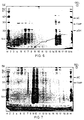
- Figure 8 shows the elution profile from the Pharmacia Mono Q TM FPLC column monitored at 280 nm.
- the cells used in this experiment were E. coli E1035S carrying the plasmid pMG935.
- a gene coding for porcine growth hormone may be derived as described in published European patent applications EP 104920A (Biogen) and EP 111389A (Genentech).
- Plasmid pMG935 is a derivative of pMG196, carrying the gene encoding porcine growth hormone.
- pMG196 is a dual-origin expression vector carrying the pTrp promoter and T 7 terminator.
- a Xhol-BamH1 DNA fragment carrying the Col E1 origin from pMG15 was ligated to an EcoR1 BamH1 DNA fragment isolated from pMG411 (Yarranton et al Gene 28 293-300 (1984)), and to a EcoR1-Sa11 DNA fragment carrying pR and c1357 from pCQV2 (Queen J. Mol. and Applied Genet.
- This fragment carried the pTrp and T 7 terminator and the resulting plasmid is pMG196 (Wright et al submitted for publication).
- the gene for pGH was assembled into pMG196, by inserting into partially EcoRl cleaved, Cia cleaved vector, and after ligation and transformation ampicillin resistant transformants were selected at 30 °C.
- the plasmid isolated from these transformants is pMG935, and expresses pGH from the pTrp.
- Figure 9 shows the elution profile from the Pharmacia Mono Q TM FPLC column monitored at 280 nm.
Landscapes
- Chemical & Material Sciences (AREA)
- Health & Medical Sciences (AREA)
- Organic Chemistry (AREA)
- Life Sciences & Earth Sciences (AREA)
- Genetics & Genomics (AREA)
- Engineering & Computer Science (AREA)
- Zoology (AREA)
- Biochemistry (AREA)
- General Health & Medical Sciences (AREA)
- Wood Science & Technology (AREA)
- Molecular Biology (AREA)
- Bioinformatics & Cheminformatics (AREA)
- Medicinal Chemistry (AREA)
- Proteomics, Peptides & Aminoacids (AREA)
- General Engineering & Computer Science (AREA)
- Microbiology (AREA)
- Chemical Kinetics & Catalysis (AREA)
- Biotechnology (AREA)
- Biophysics (AREA)
- General Chemical & Material Sciences (AREA)
- Biomedical Technology (AREA)
- Gastroenterology & Hepatology (AREA)
- Toxicology (AREA)
- Analytical Chemistry (AREA)
- Endocrinology (AREA)
- Crystallography & Structural Chemistry (AREA)
- Peptides Or Proteins (AREA)
- Preparation Of Compounds By Using Micro-Organisms (AREA)
Claims (12)
Priority Applications (1)
| Application Number | Priority Date | Filing Date | Title |
|---|---|---|---|
| AT86902753T ATE48645T1 (de) | 1985-03-29 | 1986-04-01 | Verfahren zur herstellung eines proteins. |
Applications Claiming Priority (2)
| Application Number | Priority Date | Filing Date | Title |
|---|---|---|---|
| GB8508340 | 1985-03-29 | ||
| GB858508340A GB8508340D0 (en) | 1985-03-29 | 1985-03-29 | Production of protein |
Publications (2)
| Publication Number | Publication Date |
|---|---|
| EP0221114A1 EP0221114A1 (de) | 1987-05-13 |
| EP0221114B1 true EP0221114B1 (de) | 1989-12-13 |
Family
ID=10576938
Family Applications (1)
| Application Number | Title | Priority Date | Filing Date |
|---|---|---|---|
| EP86902753A Expired EP0221114B1 (de) | 1985-03-29 | 1986-04-01 | Verfahren zur herstellung eines proteins |
Country Status (7)
| Country | Link |
|---|---|
| US (1) | US4977248A (de) |
| EP (1) | EP0221114B1 (de) |
| JP (1) | JPS62502615A (de) |
| AU (1) | AU593548B2 (de) |
| DE (1) | DE3667489D1 (de) |
| GB (1) | GB8508340D0 (de) |
| WO (1) | WO1986005809A1 (de) |
Families Citing this family (28)
| Publication number | Priority date | Publication date | Assignee | Title |
|---|---|---|---|---|
| DE3611817A1 (de) * | 1986-04-08 | 1987-10-15 | Boehringer Mannheim Gmbh | Verfahren zur renaturierung von proteinen |
| US5179199A (en) * | 1986-10-20 | 1993-01-12 | Genzyme Corporation | Protein purification |
| CA1339757C (en) * | 1987-04-16 | 1998-03-17 | Robert F. Halenbeck | Production of purified biologically active, bacterially produced recombinant human csf-1 |
| US4929700A (en) * | 1987-04-16 | 1990-05-29 | Cetus Corporation | Production of purified, biologically active, bacterially produced recombinant human CSF-1 |
| CA1305285C (en) * | 1987-04-21 | 1992-07-14 | Malcolm Roy Brandon | Production of proteins in active forms |
| AU621051B2 (en) * | 1987-04-28 | 1992-03-05 | Amgen, Inc. | Method for purifying granulocyte-macrophage colony stimulating factor |
| US4931543A (en) * | 1987-05-11 | 1990-06-05 | Cetus Corporation | Process for recovering microbially produced interleukin-2 |
| US5759815A (en) * | 1988-02-11 | 1998-06-02 | Creative Biomolecules, Inc. | Production of platelet derived growth factor (PDGF) an muteins thereof |
| DK580789D0 (da) * | 1989-11-20 | 1989-11-20 | Novo Nordisk As | Fremgangsmaade til oprensning af polypeptider |
| GB8927546D0 (en) * | 1989-12-06 | 1990-02-07 | Ciba Geigy | Process for the production of biologically active tgf-beta |
| US5288931A (en) * | 1991-12-06 | 1994-02-22 | Genentech, Inc. | Method for refolding insoluble, misfolded insulin-like growth factor-I into an active conformation |
| US5151501A (en) * | 1991-12-20 | 1992-09-29 | American Cyanamid Company | Method for solubilization and naturation of somatotropins utilizing sulfolane |
| AU674568B2 (en) * | 1993-02-04 | 1997-01-02 | Anaphore, Inc. | Improved method for the refolding of proteins |
| FI951541A0 (fi) * | 1993-08-04 | 1995-03-31 | Ciba Geigy Ag | Suurimolekyylipainoinen desulfatohirudiini |
| US5663304A (en) * | 1993-08-20 | 1997-09-02 | Genentech, Inc. | Refolding of misfolded insulin-like growth factor-I |
| AU2603995A (en) * | 1994-05-25 | 1995-12-18 | University Of Nebraska Board Of Regents | Biologically active glycoprotein hormones produced in procaryotic cells |
| TW517059B (en) | 1994-07-25 | 2003-01-11 | Ciba Geigy Ag | New process for the production of biologically active protein |
| US5714371A (en) * | 1995-05-12 | 1998-02-03 | Schering Corporation | Method for refolding insoluble aggregates of hepatitis C virus protease |
| EP0840745A2 (de) * | 1995-07-21 | 1998-05-13 | Amgen Inc. | Verfahren zur proteinrückfaltung mittels pufferaustausch, unter verwendung einerkontinuierlischen stationärenphase die proteine von salzenbrennen kann |
| US6031075A (en) * | 1996-02-05 | 2000-02-29 | Children's Hospital Medical Center | Mature alveolar SP-B and a process for producing the same |
| ZA9711733B (en) | 1996-12-31 | 1998-07-01 | Monsanto Co | Method for solubilization and naturation of somatotropins |
| US7060460B2 (en) * | 2001-10-03 | 2006-06-13 | Boehringer Ingelheim Austria Gmbh | Method for reconstituting a recombinant protein to its biologically active form |
| US20040072262A1 (en) * | 2002-10-11 | 2004-04-15 | Montero-Julian Felix A. | Methods and systems for detecting MHC class I binding peptides |
| WO2004085611A2 (en) * | 2003-03-21 | 2004-10-07 | The Research Foundation Of State University Of New York | Model for mutually exclusive domain folding molecular switch |
| EP3366692A1 (de) | 2009-06-22 | 2018-08-29 | Amgen, Inc | Proteinneufaltung mit einem chemisch gesteuerten redoxzustand |
| AU2010266093B2 (en) | 2009-06-25 | 2013-06-27 | Amgen Inc. | Capture purification processes for proteins expressed in a non-mammalian system |
| US10457716B2 (en) | 2014-08-06 | 2019-10-29 | University Of Notre Dame Du Lac | Protein folding and methods of using same |
| KR20230044394A (ko) * | 2020-06-09 | 2023-04-04 | 아이코사백스, 인크. | 바이러스 유사 입자를 제조하는 방법 |
Family Cites Families (14)
| Publication number | Priority date | Publication date | Assignee | Title |
|---|---|---|---|---|
| AU561343B2 (en) * | 1981-10-19 | 1987-05-07 | Genentech Inc. | Human immune interferon by recombinant dna |
| ZA83768B (en) * | 1982-03-01 | 1983-10-26 | Hoffmann La Roche | Homogeneous human immune interferon and process therefor |
| EP0111814A3 (de) * | 1982-12-16 | 1985-08-14 | Mgi Pharma, Inc. | Klonierung und Expression von nucleotiden Sequenzen die für Rinderwachstumshormon kodieren |
| GR79124B (de) * | 1982-12-22 | 1984-10-02 | Genentech Inc | |
| EP0122080B1 (de) * | 1983-03-25 | 1989-09-13 | Celltech Limited | Verfahren zur Herstellung eines Proteins |
| ZA846554B (en) * | 1983-09-20 | 1985-04-24 | Hoffmann La Roche | Immune interferon and method for its purification |
| JPS6079000A (ja) * | 1983-10-04 | 1985-05-04 | Takeda Chem Ind Ltd | ヒトγ型インタ−フエロン単量体の製造法 |
| US4568488A (en) * | 1984-01-11 | 1986-02-04 | Lee Huang Sylvia | Reverse immunoaffinity chromatography purification method |
| US4572798A (en) * | 1984-12-06 | 1986-02-25 | Cetus Corporation | Method for promoting disulfide bond formation in recombinant proteins |
| US4659568A (en) * | 1985-02-27 | 1987-04-21 | American Cyanamid Company | Process for solubilization, purification and characterization of protein from insoluble protein aggregates or complexes and compositions of matter therefrom |
| DE3515252C2 (de) * | 1985-04-27 | 1994-02-24 | Roehm Gmbh | Verfahren zur Immobilisierung gelöster Eiweißstoffe |
| US4766224A (en) * | 1985-08-19 | 1988-08-23 | International Minerals & Chemical Corp. | Purification and activation of proteins from insoluble inclusion bodies |
| US4656255A (en) * | 1985-09-09 | 1987-04-07 | International Minerals & Chemical Corp. | Protein recovery |
| US4766205A (en) * | 1985-11-13 | 1988-08-23 | Beatrice Companies, Inc. | Method for isolation of recombinant polypeptides in biologically active forms |
-
1985
- 1985-03-29 GB GB858508340A patent/GB8508340D0/en active Pending
-
1986
- 1986-04-01 WO PCT/GB1986/000188 patent/WO1986005809A1/en not_active Ceased
- 1986-04-01 DE DE8686902753T patent/DE3667489D1/de not_active Expired - Lifetime
- 1986-04-01 AU AU56648/86A patent/AU593548B2/en not_active Ceased
- 1986-04-01 JP JP61502003A patent/JPS62502615A/ja active Pending
- 1986-04-01 EP EP86902753A patent/EP0221114B1/de not_active Expired
-
1989
- 1989-08-10 US US07/391,709 patent/US4977248A/en not_active Expired - Fee Related
Non-Patent Citations (2)
| Title |
|---|
| Kita et al. Microb. Immunol. 27(1983) 7-24 * |
| von Wilcken-Bergmann et al. EMBO J. 5(1986)3219-3225 * |
Also Published As
| Publication number | Publication date |
|---|---|
| AU5664886A (en) | 1986-10-23 |
| EP0221114A1 (de) | 1987-05-13 |
| JPS62502615A (ja) | 1987-10-08 |
| DE3667489D1 (de) | 1990-01-18 |
| AU593548B2 (en) | 1990-02-15 |
| WO1986005809A1 (en) | 1986-10-09 |
| GB8508340D0 (en) | 1985-05-09 |
| US4977248A (en) | 1990-12-11 |
Similar Documents
| Publication | Publication Date | Title |
|---|---|---|
| EP0221114B1 (de) | Verfahren zur herstellung eines proteins | |
| AU605291B2 (en) | Process for the purification of recombinant polypeptides | |
| CA2220515C (en) | Process for producing erythropoietin containing no animal proteins | |
| US5013653A (en) | Product and process for introduction of a hinge region into a fusion protein to facilitate cleavage | |
| EP0122080B1 (de) | Verfahren zur Herstellung eines Proteins | |
| US5917018A (en) | Iterative method of at least five cycles for the refolding of proteins | |
| Clark et al. | [15] Inhibition of aggregation side reactions during in vitro protein folding | |
| JPS61135591A (ja) | 組み換え融合タン白質 | |
| JPH04501514A (ja) | 高度の発現性を持つ宿主細胞系からの、生物学的活性の高いインシュリン様成長因子iの製造法 | |
| CA2736141A1 (en) | Purification of erythropoietin | |
| KR100305341B1 (ko) | 변성된단백질의활성화방법 | |
| KR20140135959A (ko) | 온-컬럼 효소적 절단 | |
| US5340926A (en) | Process for the recovery of recombinantly produced protein from insoluble aggregate | |
| JP3509104B2 (ja) | 塩基性線維芽細胞成長因子の精製プロセス | |
| Li et al. | Refolding human lysozyme produced as an inclusion body by urea concentration and pH gradient ion exchange chromatography | |
| Kelley et al. | Folding of eukaryotic proteins produced in Escherichia coli | |
| CN100387614C (zh) | 包涵体蛋白复性并同时纯化的方法 | |
| Lu et al. | Isolation and Characterization of Human Tissue Kallikrein Produced inEscherichia coli: Biochemical Comparison to the Enzymatically Inactive Prokallikrein and Methionyl Kallikrein | |
| US4845032A (en) | Process for the isolation and purification of alpha-interferons | |
| Chao et al. | Expression and partial characterization of Dolichos biflorus seed lectin in Escherichia coli | |
| MXPA06014318A (es) | Proceso para aislamiento de proteinas. | |
| KR100409092B1 (ko) | 단백질의 제조 방법 | |
| Grcinfeld et al. | Effector-assisted refolding of recombinant tissue-plasminogen activator produced in Escherichia coli | |
| EP0268743B1 (de) | Verfahren zur Herstellung eines Proteins | |
| JP4086179B2 (ja) | 封入体からの多重t細胞エピトープポリペプチドの精製法。 |
Legal Events
| Date | Code | Title | Description |
|---|---|---|---|
| PUAI | Public reference made under article 153(3) epc to a published international application that has entered the european phase |
Free format text: ORIGINAL CODE: 0009012 |
|
| 17P | Request for examination filed |
Effective date: 19861128 |
|
| AK | Designated contracting states |
Kind code of ref document: A1 Designated state(s): AT BE CH DE FR GB IT LI LU NL SE |
|
| 17Q | First examination report despatched |
Effective date: 19880803 |
|
| GRAA | (expected) grant |
Free format text: ORIGINAL CODE: 0009210 |
|
| AK | Designated contracting states |
Kind code of ref document: B1 Designated state(s): AT BE CH DE FR GB IT LI LU NL SE |
|
| REF | Corresponds to: |
Ref document number: 48645 Country of ref document: AT Date of ref document: 19891215 Kind code of ref document: T |
|
| REF | Corresponds to: |
Ref document number: 3667489 Country of ref document: DE Date of ref document: 19900118 |
|
| ET | Fr: translation filed | ||
| ITF | It: translation for a ep patent filed | ||
| PLBE | No opposition filed within time limit |
Free format text: ORIGINAL CODE: 0009261 |
|
| STAA | Information on the status of an ep patent application or granted ep patent |
Free format text: STATUS: NO OPPOSITION FILED WITHIN TIME LIMIT |
|
| 26N | No opposition filed | ||
| PGFP | Annual fee paid to national office [announced via postgrant information from national office to epo] |
Ref country code: GB Payment date: 19910402 Year of fee payment: 6 |
|
| PGFP | Annual fee paid to national office [announced via postgrant information from national office to epo] |
Ref country code: AT Payment date: 19910411 Year of fee payment: 6 |
|
| PGFP | Annual fee paid to national office [announced via postgrant information from national office to epo] |
Ref country code: SE Payment date: 19910426 Year of fee payment: 6 Ref country code: LU Payment date: 19910426 Year of fee payment: 6 Ref country code: FR Payment date: 19910426 Year of fee payment: 6 |
|
| ITTA | It: last paid annual fee | ||
| PGFP | Annual fee paid to national office [announced via postgrant information from national office to epo] |
Ref country code: NL Payment date: 19910430 Year of fee payment: 6 |
|
| PGFP | Annual fee paid to national office [announced via postgrant information from national office to epo] |
Ref country code: CH Payment date: 19910507 Year of fee payment: 6 |
|
| PGFP | Annual fee paid to national office [announced via postgrant information from national office to epo] |
Ref country code: BE Payment date: 19910529 Year of fee payment: 6 |
|
| PGFP | Annual fee paid to national office [announced via postgrant information from national office to epo] |
Ref country code: DE Payment date: 19910531 Year of fee payment: 6 |
|
| EPTA | Lu: last paid annual fee | ||
| PG25 | Lapsed in a contracting state [announced via postgrant information from national office to epo] |
Ref country code: LU Free format text: LAPSE BECAUSE OF NON-PAYMENT OF DUE FEES Effective date: 19920401 Ref country code: GB Effective date: 19920401 Ref country code: AT Effective date: 19920401 |
|
| PG25 | Lapsed in a contracting state [announced via postgrant information from national office to epo] |
Ref country code: SE Effective date: 19920402 |
|
| PG25 | Lapsed in a contracting state [announced via postgrant information from national office to epo] |
Ref country code: LI Effective date: 19920430 Ref country code: CH Effective date: 19920430 Ref country code: BE Effective date: 19920430 |
|
| BERE | Be: lapsed |
Owner name: CREIGHTON THOMAS EDWIN Effective date: 19920430 |
|
| PG25 | Lapsed in a contracting state [announced via postgrant information from national office to epo] |
Ref country code: NL Effective date: 19921101 |
|
| GBPC | Gb: european patent ceased through non-payment of renewal fee | ||
| NLV4 | Nl: lapsed or anulled due to non-payment of the annual fee | ||
| PG25 | Lapsed in a contracting state [announced via postgrant information from national office to epo] |
Ref country code: FR Effective date: 19921230 |
|
| REG | Reference to a national code |
Ref country code: CH Ref legal event code: PL |
|
| PG25 | Lapsed in a contracting state [announced via postgrant information from national office to epo] |
Ref country code: DE Effective date: 19930101 |
|
| REG | Reference to a national code |
Ref country code: FR Ref legal event code: ST |
|
| EUG | Se: european patent has lapsed |
Ref document number: 86902753.2 Effective date: 19921108 |
|
| PG25 | Lapsed in a contracting state [announced via postgrant information from national office to epo] |
Ref country code: IT Free format text: LAPSE BECAUSE OF NON-PAYMENT OF DUE FEES;WARNING: LAPSES OF ITALIAN PATENTS WITH EFFECTIVE DATE BEFORE 2007 MAY HAVE OCCURRED AT ANY TIME BEFORE 2007. THE CORRECT EFFECTIVE DATE MAY BE DIFFERENT FROM THE ONE RECORDED. Effective date: 20050401 |