EP0223417A1 - Plasmides sous-T-ADN à base de TL-ADN - Google Patents
Plasmides sous-T-ADN à base de TL-ADN Download PDFInfo
- Publication number
- EP0223417A1 EP0223417A1 EP86308064A EP86308064A EP0223417A1 EP 0223417 A1 EP0223417 A1 EP 0223417A1 EP 86308064 A EP86308064 A EP 86308064A EP 86308064 A EP86308064 A EP 86308064A EP 0223417 A1 EP0223417 A1 EP 0223417A1
- Authority
- EP
- European Patent Office
- Prior art keywords
- dna
- plant
- promoter
- segment
- structural gene
- Prior art date
- Legal status (The legal status is an assumption and is not a legal conclusion. Google has not performed a legal analysis and makes no representation as to the accuracy of the status listed.)
- Withdrawn
Links
- 239000013612 plasmid Substances 0.000 title abstract description 155
- 238000000034 method Methods 0.000 claims abstract description 36
- 239000013598 vector Substances 0.000 claims abstract description 29
- 108020004414 DNA Proteins 0.000 claims description 176
- 108090000623 proteins and genes Proteins 0.000 claims description 162
- 108010025815 Kanamycin Kinase Proteins 0.000 claims description 55
- 241000588724 Escherichia coli Species 0.000 claims description 42
- 230000008488 polyadenylation Effects 0.000 claims description 40
- 101710198378 Uncharacterized 10.8 kDa protein in cox-rep intergenic region Proteins 0.000 claims description 27
- 239000003550 marker Substances 0.000 claims description 23
- 101000833492 Homo sapiens Jouberin Proteins 0.000 claims description 21
- 101000651236 Homo sapiens NCK-interacting protein with SH3 domain Proteins 0.000 claims description 21
- 102100024407 Jouberin Human genes 0.000 claims description 21
- 230000001580 bacterial effect Effects 0.000 claims description 18
- 108020004999 messenger RNA Proteins 0.000 claims description 18
- 238000013518 transcription Methods 0.000 claims description 17
- 230000035897 transcription Effects 0.000 claims description 17
- 101000758973 Haemophilus phage HP1 (strain HP1c1) Uncharacterized 11.3 kDa protein in lys 3'region Proteins 0.000 claims description 12
- 101000652805 Homo sapiens Protein shisa-8 Proteins 0.000 claims description 12
- 101000667300 Homo sapiens WD repeat-containing protein 19 Proteins 0.000 claims description 12
- 101000666843 Orgyia pseudotsugata multicapsid polyhedrosis virus Uncharacterized 24.0 kDa protein Proteins 0.000 claims description 12
- 102000053602 DNA Human genes 0.000 claims description 8
- 101710115267 ATP synthase protein MI25 Proteins 0.000 claims description 6
- 108020005120 Plant DNA Proteins 0.000 claims description 6
- 101710134973 Uncharacterized 9.7 kDa protein in cox-rep intergenic region Proteins 0.000 claims description 6
- 238000004519 manufacturing process Methods 0.000 claims description 5
- 230000010076 replication Effects 0.000 claims description 5
- 230000003115 biocidal effect Effects 0.000 claims description 4
- 230000001131 transforming effect Effects 0.000 claims description 4
- 239000003242 anti bacterial agent Substances 0.000 claims description 3
- 108010077805 Bacterial Proteins Proteins 0.000 claims description 2
- 102100030890 Protein shisa-8 Human genes 0.000 claims 2
- 108020004705 Codon Proteins 0.000 claims 1
- 108091036407 Polyadenylation Proteins 0.000 claims 1
- 241000206602 Eukaryota Species 0.000 abstract description 3
- 241000196324 Embryophyta Species 0.000 description 133
- 210000004027 cell Anatomy 0.000 description 87
- 239000012634 fragment Substances 0.000 description 59
- 241000701489 Cauliflower mosaic virus Species 0.000 description 36
- 230000009466 transformation Effects 0.000 description 35
- 210000001519 tissue Anatomy 0.000 description 33
- 241000589158 Agrobacterium Species 0.000 description 27
- 101150029798 ocs gene Proteins 0.000 description 25
- 230000014509 gene expression Effects 0.000 description 24
- SBUJHOSQTJFQJX-NOAMYHISSA-N kanamycin Chemical compound O[C@@H]1[C@@H](O)[C@H](O)[C@@H](CN)O[C@@H]1O[C@H]1[C@H](O)[C@@H](O[C@@H]2[C@@H]([C@@H](N)[C@H](O)[C@@H](CO)O2)O)[C@H](N)C[C@@H]1N SBUJHOSQTJFQJX-NOAMYHISSA-N 0.000 description 21
- 229960000723 ampicillin Drugs 0.000 description 20
- AVKUERGKIZMTKX-NJBDSQKTSA-N ampicillin Chemical compound C1([C@@H](N)C(=O)N[C@H]2[C@H]3SC([C@@H](N3C2=O)C(O)=O)(C)C)=CC=CC=C1 AVKUERGKIZMTKX-NJBDSQKTSA-N 0.000 description 20
- 229930027917 kanamycin Natural products 0.000 description 20
- 229960000318 kanamycin Drugs 0.000 description 20
- 229930182823 kanamycin A Natural products 0.000 description 20
- 108091028043 Nucleic acid sequence Proteins 0.000 description 15
- 239000013605 shuttle vector Substances 0.000 description 15
- 102000004190 Enzymes Human genes 0.000 description 14
- 108090000790 Enzymes Proteins 0.000 description 14
- 108700026244 Open Reading Frames Proteins 0.000 description 14
- 239000000203 mixture Substances 0.000 description 14
- 241000894006 Bacteria Species 0.000 description 13
- 238000012546 transfer Methods 0.000 description 13
- 238000004458 analytical method Methods 0.000 description 12
- 102000004169 proteins and genes Human genes 0.000 description 12
- 230000008929 regeneration Effects 0.000 description 12
- 238000011069 regeneration method Methods 0.000 description 12
- 238000010276 construction Methods 0.000 description 11
- 238000013507 mapping Methods 0.000 description 11
- 238000006467 substitution reaction Methods 0.000 description 11
- IMXSCCDUAFEIOE-UHFFFAOYSA-N D-Octopin Natural products OC(=O)C(C)NC(C(O)=O)CCCN=C(N)N IMXSCCDUAFEIOE-UHFFFAOYSA-N 0.000 description 10
- IMXSCCDUAFEIOE-RITPCOANSA-N D-octopine Chemical compound [O-]C(=O)[C@@H](C)[NH2+][C@H](C([O-])=O)CCCNC(N)=[NH2+] IMXSCCDUAFEIOE-RITPCOANSA-N 0.000 description 10
- 102000004594 DNA Polymerase I Human genes 0.000 description 10
- 108010017826 DNA Polymerase I Proteins 0.000 description 10
- 102100039744 WD repeat-containing protein 19 Human genes 0.000 description 10
- 230000037431 insertion Effects 0.000 description 10
- 238000003780 insertion Methods 0.000 description 10
- 239000002253 acid Substances 0.000 description 9
- 150000007513 acids Chemical class 0.000 description 9
- 238000010586 diagram Methods 0.000 description 9
- 230000001976 improved effect Effects 0.000 description 9
- 241000589155 Agrobacterium tumefaciens Species 0.000 description 8
- 230000009471 action Effects 0.000 description 8
- 238000002474 experimental method Methods 0.000 description 8
- DXHYQIJBUNRPJT-UHFFFAOYSA-N parsalmide Chemical compound CCCCNC(=O)C1=CC(N)=CC=C1OCC#C DXHYQIJBUNRPJT-UHFFFAOYSA-N 0.000 description 8
- 230000001276 controlling effect Effects 0.000 description 7
- 230000002068 genetic effect Effects 0.000 description 7
- 230000013011 mating Effects 0.000 description 7
- 101150085703 vir gene Proteins 0.000 description 7
- 101100406879 Neurospora crassa (strain ATCC 24698 / 74-OR23-1A / CBS 708.71 / DSM 1257 / FGSC 987) par-2 gene Proteins 0.000 description 6
- 239000004098 Tetracycline Substances 0.000 description 6
- 229960005091 chloramphenicol Drugs 0.000 description 6
- WIIZWVCIJKGZOK-RKDXNWHRSA-N chloramphenicol Chemical compound ClC(Cl)C(=O)N[C@H](CO)[C@H](O)C1=CC=C([N+]([O-])=O)C=C1 WIIZWVCIJKGZOK-RKDXNWHRSA-N 0.000 description 6
- 238000010353 genetic engineering Methods 0.000 description 6
- 230000001939 inductive effect Effects 0.000 description 6
- MYWUZJCMWCOHBA-VIFPVBQESA-N methamphetamine Chemical compound CN[C@@H](C)CC1=CC=CC=C1 MYWUZJCMWCOHBA-VIFPVBQESA-N 0.000 description 6
- 229950001060 parsalmide Drugs 0.000 description 6
- 229960002180 tetracycline Drugs 0.000 description 6
- 229930101283 tetracycline Natural products 0.000 description 6
- 235000019364 tetracycline Nutrition 0.000 description 6
- 150000003522 tetracyclines Chemical class 0.000 description 6
- LMKYZBGVKHTLTN-NKWVEPMBSA-N D-nopaline Chemical compound NC(=N)NCCC[C@@H](C(O)=O)N[C@@H](C(O)=O)CCC(O)=O LMKYZBGVKHTLTN-NKWVEPMBSA-N 0.000 description 5
- 206010028980 Neoplasm Diseases 0.000 description 5
- 235000002637 Nicotiana tabacum Nutrition 0.000 description 5
- 238000012217 deletion Methods 0.000 description 5
- 230000037430 deletion Effects 0.000 description 5
- 230000029087 digestion Effects 0.000 description 5
- 230000012010 growth Effects 0.000 description 5
- 238000011534 incubation Methods 0.000 description 5
- 208000015181 infectious disease Diseases 0.000 description 5
- 230000004048 modification Effects 0.000 description 5
- 238000012986 modification Methods 0.000 description 5
- 230000035772 mutation Effects 0.000 description 5
- 108091008146 restriction endonucleases Proteins 0.000 description 5
- 108091032973 (ribonucleotides)n+m Proteins 0.000 description 4
- 108010066133 D-octopine dehydrogenase Proteins 0.000 description 4
- 108700039691 Genetic Promoter Regions Proteins 0.000 description 4
- 206010020649 Hyperkeratosis Diseases 0.000 description 4
- 239000002299 complementary DNA Substances 0.000 description 4
- 239000002131 composite material Substances 0.000 description 4
- 230000000694 effects Effects 0.000 description 4
- 230000000977 initiatory effect Effects 0.000 description 4
- 150000007523 nucleic acids Chemical group 0.000 description 4
- 238000003976 plant breeding Methods 0.000 description 4
- 241000894007 species Species 0.000 description 4
- 239000000126 substance Substances 0.000 description 4
- 238000011144 upstream manufacturing Methods 0.000 description 4
- 108010035563 Chloramphenicol O-acetyltransferase Proteins 0.000 description 3
- 108091035707 Consensus sequence Proteins 0.000 description 3
- 244000068988 Glycine max Species 0.000 description 3
- 235000010469 Glycine max Nutrition 0.000 description 3
- FBOZXECLQNJBKD-ZDUSSCGKSA-N L-methotrexate Chemical compound C=1N=C2N=C(N)N=C(N)C2=NC=1CN(C)C1=CC=C(C(=O)N[C@@H](CCC(O)=O)C(O)=O)C=C1 FBOZXECLQNJBKD-ZDUSSCGKSA-N 0.000 description 3
- GHSJKUNUIHUPDF-BYPYZUCNSA-N L-thialysine Chemical compound NCCSC[C@H](N)C(O)=O GHSJKUNUIHUPDF-BYPYZUCNSA-N 0.000 description 3
- 101150019589 NPT1 gene Proteins 0.000 description 3
- 241000208125 Nicotiana Species 0.000 description 3
- 108091081024 Start codon Proteins 0.000 description 3
- 108020005202 Viral DNA Proteins 0.000 description 3
- 230000009418 agronomic effect Effects 0.000 description 3
- 238000002744 homologous recombination Methods 0.000 description 3
- 238000009396 hybridization Methods 0.000 description 3
- 238000002955 isolation Methods 0.000 description 3
- 229960000485 methotrexate Drugs 0.000 description 3
- 108010058731 nopaline synthase Proteins 0.000 description 3
- 239000002773 nucleotide Substances 0.000 description 3
- 125000003729 nucleotide group Chemical group 0.000 description 3
- 238000002360 preparation method Methods 0.000 description 3
- 210000001938 protoplast Anatomy 0.000 description 3
- 238000012552 review Methods 0.000 description 3
- 238000012216 screening Methods 0.000 description 3
- 238000001228 spectrum Methods 0.000 description 3
- 238000010561 standard procedure Methods 0.000 description 3
- 239000000725 suspension Substances 0.000 description 3
- 238000000844 transformation Methods 0.000 description 3
- 230000003612 virological effect Effects 0.000 description 3
- LWTDZKXXJRRKDG-KXBFYZLASA-N (-)-phaseollin Chemical compound C1OC2=CC(O)=CC=C2[C@H]2[C@@H]1C1=CC=C3OC(C)(C)C=CC3=C1O2 LWTDZKXXJRRKDG-KXBFYZLASA-N 0.000 description 2
- 108020005029 5' Flanking Region Proteins 0.000 description 2
- 241000589156 Agrobacterium rhizogenes Species 0.000 description 2
- IJGRMHOSHXDMSA-UHFFFAOYSA-N Atomic nitrogen Chemical compound N#N IJGRMHOSHXDMSA-UHFFFAOYSA-N 0.000 description 2
- 101000878902 Bacillus thuringiensis Pesticidal crystal protein Cry6Aa Proteins 0.000 description 2
- 101000878906 Bacillus thuringiensis Pesticidal crystal protein Cry6Ba Proteins 0.000 description 2
- 108091026890 Coding region Proteins 0.000 description 2
- 101710088194 Dehydrogenase Proteins 0.000 description 2
- 241000238631 Hexapoda Species 0.000 description 2
- 108091092195 Intron Proteins 0.000 description 2
- 241001465754 Metazoa Species 0.000 description 2
- 244000061176 Nicotiana tabacum Species 0.000 description 2
- 108091034117 Oligonucleotide Proteins 0.000 description 2
- 241000723873 Tobacco mosaic virus Species 0.000 description 2
- 108020004566 Transfer RNA Proteins 0.000 description 2
- 240000008042 Zea mays Species 0.000 description 2
- 108010055615 Zein Proteins 0.000 description 2
- 229920002494 Zein Polymers 0.000 description 2
- 238000000246 agarose gel electrophoresis Methods 0.000 description 2
- 150000001413 amino acids Chemical class 0.000 description 2
- 102000005936 beta-Galactosidase Human genes 0.000 description 2
- 108010005774 beta-Galactosidase Proteins 0.000 description 2
- 230000015572 biosynthetic process Effects 0.000 description 2
- 239000003795 chemical substances by application Substances 0.000 description 2
- 210000003763 chloroplast Anatomy 0.000 description 2
- 230000000295 complement effect Effects 0.000 description 2
- 230000000875 corresponding effect Effects 0.000 description 2
- 201000010099 disease Diseases 0.000 description 2
- 208000037265 diseases, disorders, signs and symptoms Diseases 0.000 description 2
- 229940079593 drug Drugs 0.000 description 2
- 239000003814 drug Substances 0.000 description 2
- 238000010230 functional analysis Methods 0.000 description 2
- 230000004927 fusion Effects 0.000 description 2
- 230000006801 homologous recombination Effects 0.000 description 2
- 238000000338 in vitro Methods 0.000 description 2
- 230000010354 integration Effects 0.000 description 2
- 208000016021 phenotype Diseases 0.000 description 2
- 239000002243 precursor Substances 0.000 description 2
- 230000008569 process Effects 0.000 description 2
- 238000012545 processing Methods 0.000 description 2
- 230000001172 regenerating effect Effects 0.000 description 2
- 108020004418 ribosomal RNA Proteins 0.000 description 2
- JQXXHWHPUNPDRT-WLSIYKJHSA-N rifampicin Chemical compound O([C@](C1=O)(C)O/C=C/[C@@H]([C@H]([C@@H](OC(C)=O)[C@H](C)[C@H](O)[C@H](C)[C@@H](O)[C@@H](C)\C=C\C=C(C)/C(=O)NC=2C(O)=C3C([O-])=C4C)C)OC)C4=C1C3=C(O)C=2\C=N\N1CC[NH+](C)CC1 JQXXHWHPUNPDRT-WLSIYKJHSA-N 0.000 description 2
- 229960001225 rifampicin Drugs 0.000 description 2
- 230000001568 sexual effect Effects 0.000 description 2
- 238000002741 site-directed mutagenesis Methods 0.000 description 2
- 238000003786 synthesis reaction Methods 0.000 description 2
- 230000017423 tissue regeneration Effects 0.000 description 2
- 230000002103 transcriptional effect Effects 0.000 description 2
- 238000013519 translation Methods 0.000 description 2
- 230000014621 translational initiation Effects 0.000 description 2
- 239000005019 zein Substances 0.000 description 2
- 229940093612 zein Drugs 0.000 description 2
- SODPIMGUZLOIPE-UHFFFAOYSA-N (4-chlorophenoxy)acetic acid Chemical compound OC(=O)COC1=CC=C(Cl)C=C1 SODPIMGUZLOIPE-UHFFFAOYSA-N 0.000 description 1
- 101150039504 6 gene Proteins 0.000 description 1
- 101000768957 Acholeplasma phage L2 Uncharacterized 37.2 kDa protein Proteins 0.000 description 1
- 101000823746 Acidianus ambivalens Uncharacterized 17.7 kDa protein in bps2 3'region Proteins 0.000 description 1
- 101000916369 Acidianus ambivalens Uncharacterized protein in sor 5'region Proteins 0.000 description 1
- 101000769342 Acinetobacter guillouiae Uncharacterized protein in rpoN-murA intergenic region Proteins 0.000 description 1
- 101000823696 Actinobacillus pleuropneumoniae Uncharacterized glycosyltransferase in aroQ 3'region Proteins 0.000 description 1
- 101000786513 Agrobacterium tumefaciens (strain 15955) Uncharacterized protein outside the virF region Proteins 0.000 description 1
- 101000618005 Alkalihalobacillus pseudofirmus (strain ATCC BAA-2126 / JCM 17055 / OF4) Uncharacterized protein BpOF4_00885 Proteins 0.000 description 1
- 102100020724 Ankyrin repeat, SAM and basic leucine zipper domain-containing protein 1 Human genes 0.000 description 1
- 241000239223 Arachnida Species 0.000 description 1
- 101000967489 Azorhizobium caulinodans (strain ATCC 43989 / DSM 5975 / JCM 20966 / LMG 6465 / NBRC 14845 / NCIMB 13405 / ORS 571) Uncharacterized protein AZC_3924 Proteins 0.000 description 1
- 101000823761 Bacillus licheniformis Uncharacterized 9.4 kDa protein in flaL 3'region Proteins 0.000 description 1
- 101000819719 Bacillus methanolicus Uncharacterized N-acetyltransferase in lysA 3'region Proteins 0.000 description 1
- 101000789586 Bacillus subtilis (strain 168) UPF0702 transmembrane protein YkjA Proteins 0.000 description 1
- 101000792624 Bacillus subtilis (strain 168) Uncharacterized protein YbxH Proteins 0.000 description 1
- 101000790792 Bacillus subtilis (strain 168) Uncharacterized protein YckC Proteins 0.000 description 1
- 101000819705 Bacillus subtilis (strain 168) Uncharacterized protein YlxR Proteins 0.000 description 1
- 101000948218 Bacillus subtilis (strain 168) Uncharacterized protein YtxJ Proteins 0.000 description 1
- 101000718627 Bacillus thuringiensis subsp. kurstaki Putative RNA polymerase sigma-G factor Proteins 0.000 description 1
- 101000641200 Bombyx mori densovirus Putative non-structural protein Proteins 0.000 description 1
- 240000002791 Brassica napus Species 0.000 description 1
- 101710132601 Capsid protein Proteins 0.000 description 1
- 208000005623 Carcinogenesis Diseases 0.000 description 1
- GNWUOVJNSFPWDD-XMZRARIVSA-M Cefoxitin sodium Chemical compound [Na+].N([C@]1(OC)C(N2C(=C(COC(N)=O)CS[C@@H]21)C([O-])=O)=O)C(=O)CC1=CC=CS1 GNWUOVJNSFPWDD-XMZRARIVSA-M 0.000 description 1
- JFPVXVDWJQMJEE-QMTHXVAHSA-N Cefuroxime Chemical compound N([C@@H]1C(N2C(=C(COC(N)=O)CS[C@@H]21)C(O)=O)=O)C(=O)C(=NOC)C1=CC=CO1 JFPVXVDWJQMJEE-QMTHXVAHSA-N 0.000 description 1
- 101000947633 Claviceps purpurea Uncharacterized 13.8 kDa protein Proteins 0.000 description 1
- 101710094648 Coat protein Proteins 0.000 description 1
- 241000252095 Congridae Species 0.000 description 1
- ZZYYVZYAZCMNPG-RQJHMYQMSA-N D-lysopine Chemical compound [O-]C(=O)[C@@H](C)[NH2+][C@H](C([O-])=O)CCCC[NH3+] ZZYYVZYAZCMNPG-RQJHMYQMSA-N 0.000 description 1
- YAHZABJORDUQGO-NQXXGFSBSA-N D-ribulose 1,5-bisphosphate Chemical compound OP(=O)(O)OC[C@@H](O)[C@@H](O)C(=O)COP(O)(O)=O YAHZABJORDUQGO-NQXXGFSBSA-N 0.000 description 1
- 101150074155 DHFR gene Proteins 0.000 description 1
- 230000004543 DNA replication Effects 0.000 description 1
- 230000006820 DNA synthesis Effects 0.000 description 1
- 102100024746 Dihydrofolate reductase Human genes 0.000 description 1
- 206010059866 Drug resistance Diseases 0.000 description 1
- 101000948901 Enterobacteria phage T4 Uncharacterized 16.0 kDa protein in segB-ipI intergenic region Proteins 0.000 description 1
- 101000805958 Equine herpesvirus 4 (strain 1942) Virion protein US10 homolog Proteins 0.000 description 1
- 101000790442 Escherichia coli Insertion element IS2 uncharacterized 11.1 kDa protein Proteins 0.000 description 1
- 101000788354 Escherichia phage P2 Uncharacterized 8.2 kDa protein in gpA 5'region Proteins 0.000 description 1
- 108091029865 Exogenous DNA Proteins 0.000 description 1
- 101000770304 Frankia alni UPF0460 protein in nifX-nifW intergenic region Proteins 0.000 description 1
- 108700007698 Genetic Terminator Regions Proteins 0.000 description 1
- 229930182566 Gentamicin Natural products 0.000 description 1
- CEAZRRDELHUEMR-URQXQFDESA-N Gentamicin Chemical compound O1[C@H](C(C)NC)CC[C@@H](N)[C@H]1O[C@H]1[C@H](O)[C@@H](O[C@@H]2[C@@H]([C@@H](NC)[C@@](C)(O)CO2)O)[C@H](N)C[C@@H]1N CEAZRRDELHUEMR-URQXQFDESA-N 0.000 description 1
- 101000797344 Geobacillus stearothermophilus Putative tRNA (cytidine(34)-2'-O)-methyltransferase Proteins 0.000 description 1
- 101000748410 Geobacillus stearothermophilus Uncharacterized protein in fumA 3'region Proteins 0.000 description 1
- WQZGKKKJIJFFOK-GASJEMHNSA-N Glucose Natural products OC[C@H]1OC(O)[C@H](O)[C@@H](O)[C@@H]1O WQZGKKKJIJFFOK-GASJEMHNSA-N 0.000 description 1
- 102100036263 Glutamyl-tRNA(Gln) amidotransferase subunit C, mitochondrial Human genes 0.000 description 1
- 239000005562 Glyphosate Substances 0.000 description 1
- 102100021181 Golgi phosphoprotein 3 Human genes 0.000 description 1
- 101000772675 Haemophilus influenzae (strain ATCC 51907 / DSM 11121 / KW20 / Rd) UPF0438 protein HI_0847 Proteins 0.000 description 1
- 101000631019 Haemophilus influenzae (strain ATCC 51907 / DSM 11121 / KW20 / Rd) Uncharacterized protein HI_0350 Proteins 0.000 description 1
- 101000768938 Haemophilus phage HP1 (strain HP1c1) Uncharacterized 8.9 kDa protein in int-C1 intergenic region Proteins 0.000 description 1
- 102000002812 Heat-Shock Proteins Human genes 0.000 description 1
- 108010004889 Heat-Shock Proteins Proteins 0.000 description 1
- 102100021519 Hemoglobin subunit beta Human genes 0.000 description 1
- 108091005904 Hemoglobin subunit beta Proteins 0.000 description 1
- 108010033040 Histones Proteins 0.000 description 1
- 101000785414 Homo sapiens Ankyrin repeat, SAM and basic leucine zipper domain-containing protein 1 Proteins 0.000 description 1
- 101001001786 Homo sapiens Glutamyl-tRNA(Gln) amidotransferase subunit C, mitochondrial Proteins 0.000 description 1
- 206010021929 Infertility male Diseases 0.000 description 1
- 102000014150 Interferons Human genes 0.000 description 1
- 108010050904 Interferons Proteins 0.000 description 1
- 101000782488 Junonia coenia densovirus (isolate pBRJ/1990) Putative non-structural protein NS2 Proteins 0.000 description 1
- 101000811523 Klebsiella pneumoniae Uncharacterized 55.8 kDa protein in cps region Proteins 0.000 description 1
- 101000818409 Lactococcus lactis subsp. lactis Uncharacterized HTH-type transcriptional regulator in lacX 3'region Proteins 0.000 description 1
- 108090001090 Lectins Proteins 0.000 description 1
- 102000004856 Lectins Human genes 0.000 description 1
- 108010063653 Leghemoglobin Proteins 0.000 description 1
- 101000878851 Leptolyngbya boryana Putative Fe(2+) transport protein A Proteins 0.000 description 1
- 241000209510 Liliopsida Species 0.000 description 1
- ZZYYVZYAZCMNPG-UHFFFAOYSA-N Lysopine Natural products OC(=O)C(C)NC(C(O)=O)CCCCN ZZYYVZYAZCMNPG-UHFFFAOYSA-N 0.000 description 1
- 101710125418 Major capsid protein Proteins 0.000 description 1
- 208000007466 Male Infertility Diseases 0.000 description 1
- 241000124008 Mammalia Species 0.000 description 1
- VPRLICVDSGMIKO-UHFFFAOYSA-N Mannopine Natural products NC(=O)CCC(C(O)=O)NCC(O)C(O)C(O)C(O)CO VPRLICVDSGMIKO-UHFFFAOYSA-N 0.000 description 1
- 101000758828 Methanosarcina barkeri (strain Fusaro / DSM 804) Uncharacterized protein Mbar_A1602 Proteins 0.000 description 1
- 101001122401 Middle East respiratory syndrome-related coronavirus (isolate United Kingdom/H123990006/2012) Non-structural protein ORF3 Proteins 0.000 description 1
- 101001055788 Mycolicibacterium smegmatis (strain ATCC 700084 / mc(2)155) Pentapeptide repeat protein MfpA Proteins 0.000 description 1
- HYVABZIGRDEKCD-UHFFFAOYSA-N N(6)-dimethylallyladenine Chemical compound CC(C)=CCNC1=NC=NC2=C1N=CN2 HYVABZIGRDEKCD-UHFFFAOYSA-N 0.000 description 1
- 241000244206 Nematoda Species 0.000 description 1
- 229930193140 Neomycin Natural products 0.000 description 1
- 101710141454 Nucleoprotein Proteins 0.000 description 1
- 101150068419 ORF 1 gene Proteins 0.000 description 1
- 101150054159 ORF24 gene Proteins 0.000 description 1
- 101000740670 Orgyia pseudotsugata multicapsid polyhedrosis virus Protein C42 Proteins 0.000 description 1
- 241000283973 Oryctolagus cuniculus Species 0.000 description 1
- 101710163504 Phaseolin Proteins 0.000 description 1
- 108700011203 Phaseolus vulgaris phaseolin Proteins 0.000 description 1
- 101000769182 Photorhabdus luminescens Uncharacterized protein in pnp 3'region Proteins 0.000 description 1
- 108700001094 Plant Genes Proteins 0.000 description 1
- 108020005089 Plant RNA Proteins 0.000 description 1
- 101710083689 Probable capsid protein Proteins 0.000 description 1
- 101000961392 Pseudescherichia vulneris Uncharacterized 29.9 kDa protein in crtE 3'region Proteins 0.000 description 1
- 101000731030 Pseudomonas oleovorans Poly(3-hydroxyalkanoate) polymerase 2 Proteins 0.000 description 1
- 101001065485 Pseudomonas putida Probable fatty acid methyltransferase Proteins 0.000 description 1
- 108091034057 RNA (poly(A)) Proteins 0.000 description 1
- 102000009572 RNA Polymerase II Human genes 0.000 description 1
- 101000711023 Rhizobium leguminosarum bv. trifolii Uncharacterized protein in tfuA 3'region Proteins 0.000 description 1
- 101000948156 Rhodococcus erythropolis Uncharacterized 47.3 kDa protein in thcA 5'region Proteins 0.000 description 1
- 101000917565 Rhodococcus fascians Uncharacterized 33.6 kDa protein in fasciation locus Proteins 0.000 description 1
- 240000004808 Saccharomyces cerevisiae Species 0.000 description 1
- 101000790284 Saimiriine herpesvirus 2 (strain 488) Uncharacterized 9.5 kDa protein in DHFR 3'region Proteins 0.000 description 1
- 101000936719 Streptococcus gordonii Accessory Sec system protein Asp3 Proteins 0.000 description 1
- 101000788499 Streptomyces coelicolor Uncharacterized oxidoreductase in mprA 5'region Proteins 0.000 description 1
- 101001102841 Streptomyces griseus Purine nucleoside phosphorylase ORF3 Proteins 0.000 description 1
- 101000708557 Streptomyces lincolnensis Uncharacterized 17.2 kDa protein in melC2-rnhH intergenic region Proteins 0.000 description 1
- 101000649826 Thermotoga neapolitana Putative anti-sigma factor antagonist TM1081 homolog Proteins 0.000 description 1
- 108010022394 Threonine synthase Proteins 0.000 description 1
- 241000209140 Triticum Species 0.000 description 1
- 235000021307 Triticum Nutrition 0.000 description 1
- 108091023045 Untranslated Region Proteins 0.000 description 1
- 101000827562 Vibrio alginolyticus Uncharacterized protein in proC 3'region Proteins 0.000 description 1
- 101000778915 Vibrio parahaemolyticus serotype O3:K6 (strain RIMD 2210633) Uncharacterized membrane protein VP2115 Proteins 0.000 description 1
- 241000607479 Yersinia pestis Species 0.000 description 1
- 235000007244 Zea mays Nutrition 0.000 description 1
- 235000016383 Zea mays subsp huehuetenangensis Nutrition 0.000 description 1
- 235000002017 Zea mays subsp mays Nutrition 0.000 description 1
- JLCPHMBAVCMARE-UHFFFAOYSA-N [3-[[3-[[3-[[3-[[3-[[3-[[3-[[3-[[3-[[3-[[3-[[5-(2-amino-6-oxo-1H-purin-9-yl)-3-[[3-[[3-[[3-[[3-[[3-[[5-(2-amino-6-oxo-1H-purin-9-yl)-3-[[5-(2-amino-6-oxo-1H-purin-9-yl)-3-hydroxyoxolan-2-yl]methoxy-hydroxyphosphoryl]oxyoxolan-2-yl]methoxy-hydroxyphosphoryl]oxy-5-(5-methyl-2,4-dioxopyrimidin-1-yl)oxolan-2-yl]methoxy-hydroxyphosphoryl]oxy-5-(6-aminopurin-9-yl)oxolan-2-yl]methoxy-hydroxyphosphoryl]oxy-5-(6-aminopurin-9-yl)oxolan-2-yl]methoxy-hydroxyphosphoryl]oxy-5-(6-aminopurin-9-yl)oxolan-2-yl]methoxy-hydroxyphosphoryl]oxy-5-(6-aminopurin-9-yl)oxolan-2-yl]methoxy-hydroxyphosphoryl]oxyoxolan-2-yl]methoxy-hydroxyphosphoryl]oxy-5-(5-methyl-2,4-dioxopyrimidin-1-yl)oxolan-2-yl]methoxy-hydroxyphosphoryl]oxy-5-(4-amino-2-oxopyrimidin-1-yl)oxolan-2-yl]methoxy-hydroxyphosphoryl]oxy-5-(5-methyl-2,4-dioxopyrimidin-1-yl)oxolan-2-yl]methoxy-hydroxyphosphoryl]oxy-5-(5-methyl-2,4-dioxopyrimidin-1-yl)oxolan-2-yl]methoxy-hydroxyphosphoryl]oxy-5-(6-aminopurin-9-yl)oxolan-2-yl]methoxy-hydroxyphosphoryl]oxy-5-(6-aminopurin-9-yl)oxolan-2-yl]methoxy-hydroxyphosphoryl]oxy-5-(4-amino-2-oxopyrimidin-1-yl)oxolan-2-yl]methoxy-hydroxyphosphoryl]oxy-5-(4-amino-2-oxopyrimidin-1-yl)oxolan-2-yl]methoxy-hydroxyphosphoryl]oxy-5-(4-amino-2-oxopyrimidin-1-yl)oxolan-2-yl]methoxy-hydroxyphosphoryl]oxy-5-(6-aminopurin-9-yl)oxolan-2-yl]methoxy-hydroxyphosphoryl]oxy-5-(4-amino-2-oxopyrimidin-1-yl)oxolan-2-yl]methyl [5-(6-aminopurin-9-yl)-2-(hydroxymethyl)oxolan-3-yl] hydrogen phosphate Polymers Cc1cn(C2CC(OP(O)(=O)OCC3OC(CC3OP(O)(=O)OCC3OC(CC3O)n3cnc4c3nc(N)[nH]c4=O)n3cnc4c3nc(N)[nH]c4=O)C(COP(O)(=O)OC3CC(OC3COP(O)(=O)OC3CC(OC3COP(O)(=O)OC3CC(OC3COP(O)(=O)OC3CC(OC3COP(O)(=O)OC3CC(OC3COP(O)(=O)OC3CC(OC3COP(O)(=O)OC3CC(OC3COP(O)(=O)OC3CC(OC3COP(O)(=O)OC3CC(OC3COP(O)(=O)OC3CC(OC3COP(O)(=O)OC3CC(OC3COP(O)(=O)OC3CC(OC3COP(O)(=O)OC3CC(OC3COP(O)(=O)OC3CC(OC3COP(O)(=O)OC3CC(OC3COP(O)(=O)OC3CC(OC3COP(O)(=O)OC3CC(OC3CO)n3cnc4c(N)ncnc34)n3ccc(N)nc3=O)n3cnc4c(N)ncnc34)n3ccc(N)nc3=O)n3ccc(N)nc3=O)n3ccc(N)nc3=O)n3cnc4c(N)ncnc34)n3cnc4c(N)ncnc34)n3cc(C)c(=O)[nH]c3=O)n3cc(C)c(=O)[nH]c3=O)n3ccc(N)nc3=O)n3cc(C)c(=O)[nH]c3=O)n3cnc4c3nc(N)[nH]c4=O)n3cnc4c(N)ncnc34)n3cnc4c(N)ncnc34)n3cnc4c(N)ncnc34)n3cnc4c(N)ncnc34)O2)c(=O)[nH]c1=O JLCPHMBAVCMARE-UHFFFAOYSA-N 0.000 description 1
- 230000002776 aggregation Effects 0.000 description 1
- 238000004220 aggregation Methods 0.000 description 1
- 239000000427 antigen Substances 0.000 description 1
- 108091007433 antigens Proteins 0.000 description 1
- 102000036639 antigens Human genes 0.000 description 1
- 238000003491 array Methods 0.000 description 1
- WZSDNEJJUSYNSG-UHFFFAOYSA-N azocan-1-yl-(3,4,5-trimethoxyphenyl)methanone Chemical compound COC1=C(OC)C(OC)=CC(C(=O)N2CCCCCCC2)=C1 WZSDNEJJUSYNSG-UHFFFAOYSA-N 0.000 description 1
- 229910002056 binary alloy Inorganic materials 0.000 description 1
- 102000023732 binding proteins Human genes 0.000 description 1
- 108091008324 binding proteins Proteins 0.000 description 1
- 230000004071 biological effect Effects 0.000 description 1
- 239000000872 buffer Substances 0.000 description 1
- 230000036952 cancer formation Effects 0.000 description 1
- 229960003669 carbenicillin Drugs 0.000 description 1
- FPPNZSSZRUTDAP-UWFZAAFLSA-N carbenicillin Chemical compound N([C@H]1[C@H]2SC([C@@H](N2C1=O)C(O)=O)(C)C)C(=O)C(C(O)=O)C1=CC=CC=C1 FPPNZSSZRUTDAP-UWFZAAFLSA-N 0.000 description 1
- 125000003178 carboxy group Chemical group [H]OC(*)=O 0.000 description 1
- 231100000504 carcinogenesis Toxicity 0.000 description 1
- 229960002682 cefoxitin Drugs 0.000 description 1
- 238000004113 cell culture Methods 0.000 description 1
- 230000008859 change Effects 0.000 description 1
- 238000006243 chemical reaction Methods 0.000 description 1
- 239000003153 chemical reaction reagent Substances 0.000 description 1
- 229930002868 chlorophyll a Natural products 0.000 description 1
- ATNHDLDRLWWWCB-AENOIHSZSA-M chlorophyll a Chemical compound C1([C@@H](C(=O)OC)C(=O)C2=C3C)=C2N2C3=CC(C(CC)=C3C)=[N+]4C3=CC3=C(C=C)C(C)=C5N3[Mg-2]42[N+]2=C1[C@@H](CCC(=O)OC\C=C(/C)CCC[C@H](C)CCC[C@H](C)CCCC(C)C)[C@H](C)C2=C5 ATNHDLDRLWWWCB-AENOIHSZSA-M 0.000 description 1
- 229930002869 chlorophyll b Natural products 0.000 description 1
- NSMUHPMZFPKNMZ-VBYMZDBQSA-M chlorophyll b Chemical compound C1([C@@H](C(=O)OC)C(=O)C2=C3C)=C2N2C3=CC(C(CC)=C3C=O)=[N+]4C3=CC3=C(C=C)C(C)=C5N3[Mg-2]42[N+]2=C1[C@@H](CCC(=O)OC\C=C(/C)CCC[C@H](C)CCC[C@H](C)CCCC(C)C)[C@H](C)C2=C5 NSMUHPMZFPKNMZ-VBYMZDBQSA-M 0.000 description 1
- 239000003593 chromogenic compound Substances 0.000 description 1
- 238000004040 coloring Methods 0.000 description 1
- 235000009508 confectionery Nutrition 0.000 description 1
- 230000002596 correlated effect Effects 0.000 description 1
- 238000005520 cutting process Methods 0.000 description 1
- 230000007812 deficiency Effects 0.000 description 1
- 102000004419 dihydrofolate reductase Human genes 0.000 description 1
- 108020001096 dihydrofolate reductase Proteins 0.000 description 1
- 230000008641 drought stress Effects 0.000 description 1
- 238000010828 elution Methods 0.000 description 1
- 210000002257 embryonic structure Anatomy 0.000 description 1
- 238000005516 engineering process Methods 0.000 description 1
- 230000006862 enzymatic digestion Effects 0.000 description 1
- 230000002255 enzymatic effect Effects 0.000 description 1
- 238000009585 enzyme analysis Methods 0.000 description 1
- 230000001973 epigenetic effect Effects 0.000 description 1
- 241001233957 eudicotyledons Species 0.000 description 1
- 230000029142 excretion Effects 0.000 description 1
- 238000000605 extraction Methods 0.000 description 1
- 239000000835 fiber Substances 0.000 description 1
- 239000000796 flavoring agent Substances 0.000 description 1
- 235000019634 flavors Nutrition 0.000 description 1
- 235000013305 food Nutrition 0.000 description 1
- 230000002538 fungal effect Effects 0.000 description 1
- 108020001507 fusion proteins Proteins 0.000 description 1
- 102000037865 fusion proteins Human genes 0.000 description 1
- 108060003196 globin Proteins 0.000 description 1
- 102000018146 globin Human genes 0.000 description 1
- 239000008103 glucose Substances 0.000 description 1
- XDDAORKBJWWYJS-UHFFFAOYSA-N glyphosate Chemical compound OC(=O)CNCP(O)(O)=O XDDAORKBJWWYJS-UHFFFAOYSA-N 0.000 description 1
- 229940097068 glyphosate Drugs 0.000 description 1
- 210000004209 hair Anatomy 0.000 description 1
- 210000002443 helper t lymphocyte Anatomy 0.000 description 1
- 239000004009 herbicide Substances 0.000 description 1
- 238000010324 immunological assay Methods 0.000 description 1
- 238000010348 incorporation Methods 0.000 description 1
- 238000011081 inoculation Methods 0.000 description 1
- 230000000749 insecticidal effect Effects 0.000 description 1
- 230000003993 interaction Effects 0.000 description 1
- 229940079322 interferon Drugs 0.000 description 1
- 239000000543 intermediate Substances 0.000 description 1
- 101150066555 lacZ gene Proteins 0.000 description 1
- 239000002523 lectin Substances 0.000 description 1
- 230000004807 localization Effects 0.000 description 1
- 238000012423 maintenance Methods 0.000 description 1
- 235000009973 maize Nutrition 0.000 description 1
- VPRLICVDSGMIKO-SZWOQXJISA-N mannopine Chemical compound NC(=O)CC[C@@H](C(O)=O)NC[C@@H](O)[C@@H](O)[C@H](O)[C@H](O)CO VPRLICVDSGMIKO-SZWOQXJISA-N 0.000 description 1
- 230000001404 mediated effect Effects 0.000 description 1
- 229940087515 mefoxin Drugs 0.000 description 1
- 230000021121 meiosis Effects 0.000 description 1
- 239000002207 metabolite Substances 0.000 description 1
- 238000010369 molecular cloning Methods 0.000 description 1
- 238000012544 monitoring process Methods 0.000 description 1
- 230000000877 morphologic effect Effects 0.000 description 1
- 229960004927 neomycin Drugs 0.000 description 1
- 229910052757 nitrogen Inorganic materials 0.000 description 1
- 230000031787 nutrient reservoir activity Effects 0.000 description 1
- 235000015097 nutrients Nutrition 0.000 description 1
- 235000016709 nutrition Nutrition 0.000 description 1
- 210000000056 organ Anatomy 0.000 description 1
- 230000008723 osmotic stress Effects 0.000 description 1
- 230000008506 pathogenesis Effects 0.000 description 1
- LWTDZKXXJRRKDG-UHFFFAOYSA-N phaseollin Natural products C1OC2=CC(O)=CC=C2C2C1C1=CC=C3OC(C)(C)C=CC3=C1O2 LWTDZKXXJRRKDG-UHFFFAOYSA-N 0.000 description 1
- 230000005097 photorespiration Effects 0.000 description 1
- 230000000243 photosynthetic effect Effects 0.000 description 1
- 230000008635 plant growth Effects 0.000 description 1
- 210000002706 plastid Anatomy 0.000 description 1
- 229920001184 polypeptide Polymers 0.000 description 1
- 230000001124 posttranscriptional effect Effects 0.000 description 1
- 125000002924 primary amino group Chemical group [H]N([H])* 0.000 description 1
- 102000004196 processed proteins & peptides Human genes 0.000 description 1
- 108090000765 processed proteins & peptides Proteins 0.000 description 1
- 230000001737 promoting effect Effects 0.000 description 1
- 239000011541 reaction mixture Substances 0.000 description 1
- 230000003362 replicative effect Effects 0.000 description 1
- 150000003839 salts Chemical class 0.000 description 1
- 229930000044 secondary metabolite Natural products 0.000 description 1
- 125000006850 spacer group Chemical group 0.000 description 1
- 230000008093 supporting effect Effects 0.000 description 1
- 239000000892 thaumatin Substances 0.000 description 1
- 235000010436 thaumatin Nutrition 0.000 description 1
- 231100000331 toxic Toxicity 0.000 description 1
- 230000002588 toxic effect Effects 0.000 description 1
- 239000003053 toxin Substances 0.000 description 1
- 231100000765 toxin Toxicity 0.000 description 1
- 108700012359 toxins Proteins 0.000 description 1
- 230000032258 transport Effects 0.000 description 1
- 150000003918 triazines Chemical class 0.000 description 1
- 230000001018 virulence Effects 0.000 description 1
- 239000002023 wood Substances 0.000 description 1
Images




Classifications
-
- C—CHEMISTRY; METALLURGY
- C12—BIOCHEMISTRY; BEER; SPIRITS; WINE; VINEGAR; MICROBIOLOGY; ENZYMOLOGY; MUTATION OR GENETIC ENGINEERING
- C12N—MICROORGANISMS OR ENZYMES; COMPOSITIONS THEREOF; PROPAGATING, PRESERVING, OR MAINTAINING MICROORGANISMS; MUTATION OR GENETIC ENGINEERING; CULTURE MEDIA
- C12N15/00—Mutation or genetic engineering; DNA or RNA concerning genetic engineering, vectors, e.g. plasmids, or their isolation, preparation or purification; Use of hosts therefor
- C12N15/09—Recombinant DNA-technology
- C12N15/63—Introduction of foreign genetic material using vectors; Vectors; Use of hosts therefor; Regulation of expression
- C12N15/79—Vectors or expression systems specially adapted for eukaryotic hosts
- C12N15/82—Vectors or expression systems specially adapted for eukaryotic hosts for plant cells, e.g. plant artificial chromosomes (PACs)
- C12N15/8201—Methods for introducing genetic material into plant cells, e.g. DNA, RNA, stable or transient incorporation, tissue culture methods adapted for transformation
- C12N15/8202—Methods for introducing genetic material into plant cells, e.g. DNA, RNA, stable or transient incorporation, tissue culture methods adapted for transformation by biological means, e.g. cell mediated or natural vector
- C12N15/8205—Agrobacterium mediated transformation
Definitions
- the present invention is in the fields of genetics engineering and plant husbandry, and especially provides vectors useful for plant transformation and means for promotion of transcript termination in plants.
- Octopine T L -DNA-based sub-Ti plasmids are disclosed by Deblaere R et al . (1985) Nucl. Acids Res. 13 :4777-4788; Klee HJ et al . (1985) Biotechnol. 3 :637-642; Dahl GA et al ., European Patent application 140,556; Hoekema A (1985) Ph.D. Thesis, Rijksuniversiteit Leiden, The Netherlands; and Barker RF et al . (1983) Plant Mol. Biol. 2 :335-350 (see the Background section on Genes on the Transformation-Inducing Plasmids).
- Fraley RT et al . (1985) Biotechnol. 3 :629-635 discloses a split end vector system. Use of CaMV and ORF24 promoters to drive expression of NPT2 structural genes are disclosed by Koziel MG et al . (1985) J. Mol. Appl. Genet. 2 :549-562, and Gelvin SB et al . (1985) Mol. Gen. Genet. 199 :240-248 (Selectable or Screenable Markers).
- Ti tumor-inducing or transformation-inducing plasmids
- pRi root-inducing plasmids
- Ti and Ri plasmids both contain DNA sequences, known as T-DNA (transferred-DNA), which in tumors are found to be integrated into the genome of the host plant.
- T-DNA genes are under control of T-DNA promoters which resemble canonical eukaryotic promoters in structure.
- the Ti plasmid also carries genes outside the T-DNA region. Ti and Ri plasmids are for many purposes functionally equivalent.
- Plant cells can be transformed by Agrobacterium by several methods known in the art. For a review of recent work, see Syono K (1984) Oxford Surveys Plant Mol. Cell Biol. 1 :217-219.
- tissue pieces are innoculated, e.g. leaf disks (Horsch RB et al . (1985) Science 227 :1229-1231), or inverted stem segments (Barton KA et al . (1983) Cell 32 :1033-1043).
- Traditional inoculation and culture techniques may be modified for use of disarmed T-DNA vectors incapable of hormone- independent growth (e.g. see Zambryski P et al . (1984) in Genetic Engineering, Principles, and Methods , 6 , eds.: Hollaender A and Setlow J).
- Agrobacterium is also capable of infecting isolated cells, cells grown in culture, callus cells, and isolated protoplasts (e.g. Horsch RB and Fraley RT (1983) in Advances in Gene Technology: Molecular Genetics of Plants and Animals (Miami Winter Symposium 20 ), eds.: Downey K et al ., p. 576; Fraley RT et al . (1984) Plant Mol. Biol. 3 :371-378; Fraley RT and Horsch RB (1983) in Genetic Engineering of Plants: an Agricultural Perspective , eds.: Kosuge T et al ., pp. 177-194; Muller A et al . (1983) Biochem. Biophys. Res.
- the transformation frequency of inoculated callus pieces can be increased by addition of an opine or opine precursors (Cello LM and Olsen WL, U.S. Patent 4,459,355).
- the host range of crown gall pathogenesis may be influenced by T-DNA-encoded functions such as onc genes (Hoekema A et al . (1984) J. Bacteriol. 158 :383-385; Hoekema A et al . (1984) EMBO J. 3 :3043-3047; Buchholz WC and Thomasshow MF (1984) 160 :327-332).
- Ausich RL European Patent Application 108,580, reports transfer of T-DNA from A . tumefaciens to green algal cells, and expression therein of octopine synthase and Tn 5 kanamycin resistance genes. Hooykaas-van Slogteren GMS et al .
- T-DNA, disarmed T-DNA, and functional foreign genes can be inherited seemingly unaltered in a dominant, closely-linked, Mendelian fashion (e.g. see Horsch RB et al . (1984) Science 223 :496-498; Tepfer D (1984) Cell 37 :959-967; DeBlock M et al . (1984) EMBO J. 3 :1681-1689; Wöstemeyer A et al . (1984) Mol. Gen. Genet. 194 :500-507.
- Plant cells transformed by totally disarmed T-DNA can usually be regenerated into whole plants by using regeneration protocols effective for regeneration of untransformed plants of that particular species.
- the epigenetic state of the plant cells initially transformed can affect regeneration potential (van Slogteren GMS et al . (1983) Plant Mol. Biol. 2 :321-333).
- T-DNA A number of genes have been identified within the T-DNA of the Ti or Ri plasmids. Several plasmid T-DNA transcripts have been mapped (e.g. Willmitzer L et al . (1982) EMBO J. 1 :139-146; Karcher SJ et al . (1984) Mol. Gen. Genet. 194 :159-165 and some functions have been assigned.
- Octopine Ti plasmids having mutations in the genes tms , tmr , tml , ons , and ocs respectively incite tumorous calli of Nicotiana tabacum which generate shoots, proliferate roots, are larger than normal, do not secrete opines, and do not synthesize octopine; tms , tmr , and tml are onc (oncogenicity) genes. In other hosts, mutants of these genes can induce different phenotypes (see Bevan and Chilton, Ann. Rev. Genet., supra ). Mutations in T-DNA genes do not affect insertion of T-DNA into the plant genome (Leemans J et al . (1982) EMBO J. 1 :147-152; Ream LW et al . (1983) Proc. Natl. Acad. Sci. USA 80 :1660-1664).
- Octopine Ti plasmids carry an ocs gene which encodes octopine synthase (lysopine dehydrogenase).
- Koncz C et al . (1983) EMBO J. 2 :1597-1603 provides a functional analysis of ocs .
- Dhaese P. et al . (1983) EMBO J. 2 :419-426 reported the utilization of various polyadenylation sites by "transcript 7" (ORF3 of Barker R et al ., supra ) and ocs .
- the presence of the enzyme octopine synthase within a tissue can protect that tissue from the toxic effect of various amino acid analogs (Dahl GA and Tempé J, (1983) Theor. Appl. Genet. 66 :233-239; Koziel MG et al . (1984) J. Mol. Appl. Genet. 2 :549-562).
- Nopaline Ti plasmids encode the nopaline synthase gene ( nos ) (sequenced by Depicker A et al . (1982) J. Mol. Appl. Genet. 1 :561-573). Shaw CH et al . (1984) Nucl. Acids Res. 12 :7831-7846, provides a functional analysis of nos .
- Ti and Ri plasmid genes outside of the T-DNA region include the vir genes, which when mutated result in an avirulent Ti plasmid.
- vir genes have been accurately mapped and have been found to be located in regions conserved among various Ti plasmids (Iyer VN et al . (1982) Mol. Gen. Genet. 188 :418-424).
- Vir genes of different Ti plasmids can promote transformation at different levels (Otten L et al . (1985) Mol. Gen. Genet. 199 :189-193).
- the vir genes function in trans , being capable of causing the transformation of plant cells with T-DNA of a different plasmid type and physically located on another plasmid (e.g.
- T-DNA need not be on a plasmid to transform a plant cell; chromosomally located T-DNA is functional (Hoekema A et al . (1984) EMBO J. 3 :2485-2490).
- T-DNA has direct repeats of about 25 base pairs associated with the left and right borders, i.e. with the T-DNA/plant DNA junctions, which may be involved in either transfer from Agrobacterium or integration into the host genome.
- Ti plasmid-determined characteristics have been reviewed by Merlo, supra (see especially Table II therein), and Ream and Gordon, supra .
- T-DNA is often integrated (i.e. inserted) into host DNA at multiple sites in the nucleus. Flanking plant DNA may be either repeated or low copy number sequences. Integrated T-DNA can be found in either direct or inverted tandem arrays and can be separated by spacers. T-DNA can also transform chloroplasts (De Block M et al . (1985) EMBO J. 4 :1367-1372).
- Octopine-type Ti plasmids integrate two separate T-DNAs, T L -DNA and T R -DNA, left and right T-DNAs, respectively. Though T-DNA is occasionally deleted after integration in the plant genome, it is generally stable.
- a synthetic 25 bp nopaline right border repeat is functional (Wang K et al . (1984) Cell 38 :455-462). Circular intermediates associated with T-DNA transfer appear to be spliced precisely within the 25 bp direct repeats (Koukolikova-Nicola Z et al . (1985) Nature 313 :191-196).
- Shuttle vectors have proven useful for manipulation of Agrobacterium plasmids. They were developed by Ruvkun GB and Ausubel FM (1981) Nature 289 :85-88, and provide means for inserting foreign genetic material into large DNA molecules, include copies of recipient genome DNA sequences into which the foreign genetic material is inserted. Shuttle vectors can be introduced into the ultimate recipient cells, by well known methods, including the tri-parental mating technique (Ruvkin and Ausubel, supra ), direct transfer of a self-mobilizable vector in a bi-parental mating, direct uptake of exogenous DNA by Agrobacterium cells ("transformation"), spheroplast fusion of Agrobacterium with another bacterial cell, or uptake of liposome-encapsulated DNA.
- tri-parental mating technique Ruvkin and Ausubel, supra
- transformation direct uptake of exogenous DNA by Agrobacterium cells
- spheroplast fusion of Agrobacterium with another bacterial cell or uptake of liposome-encapsul
- Possible events include a double cross-over with one recombinational event on either side of the marker (homogenotization).
- Phenotypically dominant traits may be introduced by single cross-over events (cointegration) (Caplan A et al . (1983) Science 222 :815-821; Horsch RB et al . (1984) Science 223 :496-498); one must guard against deletion of the resulting tandem duplication.
- genes usually non-dicot genes, have not been expressed in transformed plant cells under control of their own promoters (e.g. rabbit ⁇ -globin, yeast alchohol dehydrogenase ( Adh ), Adh I and ribulose-1,5-bis-phosphate carboxylase (RuBP-Case) large subunit from maize, soybean leghemoglobin, interferon and globin from mammals, and the mammalian virus SV40).
- Adh yeast alchohol dehydrogenase
- Adh I Adh I
- RuBP-Case ribulose-1,5-bis-phosphate carboxylase
- plant genes have been transcribed, and even translated, after T-DNA-mediated transformation (e.g. genes for nopaline synthase, bean phaseolin, Zea mays zein, RuBP-Case small subunit, wheat chlorophyll a/b binding protein, and a soybean heat shock protein).
- the nos promoter can drive expression of drug resistance structural genes useful for selection of transformed plant cells. Bevan MW et al . (1983) Nature 304 :184-187; Fraley RT et al . (1983) Proc. Natl. Acad. Sci. USA 80 :4803-4807; and Herrera-Estrella L et al . (1983) EMBO J. 2 :987-995, inserted the bacterial kanamycin resistance structural gene (neomycin phosphotransferase II, NPT2), or kan , from Tn 5 downstream from (i.e. behind or under control of) the nopaline synthase promoter.
- NPT2 bacterial kanamycin resistance structural gene
- a chimeric RuBP-Case small subunit/NPT2 protein was translocated into the chloroplast (Van den Broeck G et al . (1985) Nature 313 :358-363). That gene's promoter confers light-inducible expression in tobacco or soybean callus to CAT or NPT2 structural genes (Herrera-Estrella L et al . (1984) Nature 310 :115-120; Facciotti D et al . (1985) Biotechnol. 3 :241-246).
- the NPT2 gene under control of a cauliflower mosaic virus (CaMV) promoter was expressed in plant cells transformed by T-DNA (Koziel MG et al . (1984) J. Mol. Appl. Genet. 2 :549-562).
- a DHFR gene from R67 behind the CaMV 35S promoter similarly conferred methotrexate resistance to infected turnip plants (Brisson N et al . (1984) Nature 310 :511-514).
- Tobacco mosaic virus (TMV) coat protein has been expressed in transformed tobacco tissue under control of a CaMV promoter (Bevan MW et al . (1985) EMBO J. 4 :1921-1926).
- One object of this invention is to provide means for expression of structural genes within plant cells wherein said genes are foreign to said cells. Another object is to provide disarmed plant transformation vectors compatible with the growth of morphologically normal plants. Yet another object is to provide specialized plant tissues and plants having within them proteins encoded by foreign structural genes and, in cases where the protein is an enzyme, having or lacking metabolites or chemicals which respectively are not or are otherwise found in the cells in which the genes are inserted. Towards these ends, sub-Ti plasmids containing T R -DNA are provided. Further objects and advantages will become evident from the following description.
- sub-Ti plasmids based on octopine pTi T L -DNA, that is having borders A and B while lacking borders C and D.
- these sub-Ti plasmids lack functional onc genes and include a functional ocs gene.
- the use of sub-Ti plasmids, as disclosed herein, containing the direct border repeats involved in incorporation of the T-DNA into the plant genome and a antibiotic-resistance-type plant-selectable marker can have the following useful results: (1) onc genes can be deleted resulting in greater success of plant regeneration from transformed tissue cultures or protoplasts. (2) Both the antibiotic-resistance-type marker (e.g.
- kan and ocs genes can serve as selectable markers. Their presence, especially that of ocs , can also be screened for.
- Sub-Ti plasmids are relatively small, thereby facilitating or eliminating many manipulations otherwise required during the process of plant transformation.
- Selection of transformed plant tissues with kanamycin is more efficient than selection with aminoethylcysteine (AEC), i.e. higher plant transformation rates, in terms of tranformed plant tissues obtained, are observed.
- AEC aminoethylcysteine
- One may simultaneously select for resistance to two substances, AEC and an antibiotic such as kanamycin.
- Inclusion of a drug-selectable marker increases the size of the sub-Ti plasmid's T-DNA. This results in an increased plant transformation frequency.
- Plasmids having no plant-selectable markers e.g. pAK-4, pAN6, pAR2, pAR-Sal.
- Plasmids having a plant-selectable marker under control of a promoter intrinsic to the T L -DNA segments which carry borders A and B e.g. ORF1 or tml
- Plasmids having a plant-selectable marker under control of a promoter extrinsic to the vector's T-DNA but not have a seperate bacterial-selectable marker between its T-DNA border repeats e.g.
- ORF24 or a CaMV promoter e.g. pCT29, pCV10, pH4-1, pH400. pH410, pH411, pH420, pH421.
- Plasmids having both a bacterial-selectable marker and a seperate plant-selectable marker between its T-DNA border repeats e.g. pCT29K-2, pH506, pH575, pH592, pH1592.
- the invention also provides a plant comprising a genetically modified plant cell having an extraneous coding DNA introduced by such a sub-Ti plasmid. Further, the invention provides plant tissue comprising a plant cell having a genome comprising an extraneous coding DNA. Also provided are novel strains of bacteria containing and replicating T-DNA. Additionally, the invention provides novel vectors useful in efforts to transform plants. These vectors have the ability to replicate in bacteria and comprising T L -DNA. They further comprise an extraneous coding gene inserted within T L -DNA contained within the vector in such manner as to be expressible in a plant cell. Furthermore, strains of bacteria harboring said vectors are disclosed.
- the present invention comprises extraneous coding DNA consisting of a foreign structural gene under control of a promoter and a transcript terminator, said promoter/gene/terminator combination being inserted into a cell by means of sub-Ti plasmids based on octopine-type Ti plasmid T L -DNA.
- the invention disclosed herein further comprises expression in plant cells of foreign structural genes under control of a certain T-DNA-derived, plant-expressible promoter, derived from DNA flanking ORF1 or ORF24 structural genes or the Camv 19S transcript, after introduction via T-DNA, that is to say, by inserting the foreign structural gene into T-DNA under control of the ORF1, ORF24, or CaMV promoter and ahead of an ORF24, ORF25, ORF26, or CaMV polyadenylation site and introducing the T-DNA containing the insert into a plant cell using known means.
- plant cells expressing the foreign structural gene are obtained, plant tissues and whole plants can be regenerated therefrom using methods and techniques well known in the art.
- the regenerated plants are then reproduced by conventional means and the introduced genes can be transferred to other strains and cultivars by conventional plant breeding techniques.
- the invention in principle applies to any introduction of a foreign structural gene into any plant species into which DNA can be introduced.
- the invention is useful for genetically modifying bacteria, plant cells, plant tissues, and whole plants by inserting useful foreign structural genes from other species, organisms, or strains.
- useful structural genes include, but are not limited to, genes conveying identifiable phenotypes such as the following: improved tolerance to extremes of heat or cold; improved tolerance to anaerobic conditions (e.g. water-logging), drought, or osmotic stress; improved resistance or tolerance to insect (e.g.
- insecticidal toxins such as the Bacillus thuringiensis crystal protein), arachnid, nematode, or epiphyte pests and fungal, bacterial, or viral diseases; the production of enzymes or secondary metabolites not normally found in said tissues or plants; improved nutritional (e.g. lectins and storage proteins such as zein or phaseolin), flavor (e.g. sweet proteins such as thaumatin), or processing properties when used for fiber or human or animal food; changed morphological traits or developmental patterns (e.g.
- leaf hairs which protect the plant from insects, coloring which is aesthetically pleasing, changed plant growth habits, dwarf plants, reduced time needed for the plants to reach maturity, expression of a gene in a tissue or at a time that gene is not usually expressed, and the like); male sterility; improved photosynthetic efficiency (including lowered photorespiration); improved nitrogen fixation; improved uptake of nutrients; improved tolerance to herbicides (e.g. glyphosate or triazines); increased crop yield; improved competition with other plants; genetic markers novel to the genetically modified cell; and the like. Genetic markers can be used to improve germplasm identification by the presence of one or more characteristic nucleic acid sequences, proteins, gene products, or phenotypes however identified.
- Genetic markers can distinguish a genetically modified plant, plant cell, or bacterial cell of the present invention from plants, plant cells, or bacteria which are not so modified, to facilitate transfer of a genetically linked or cotransformed artificially introduced DNA sequence or phenotype by other (e.g. sexual) means to other genotypes, or to facilitate identification of plants protected by patents or by plant variety protection certificates.
- Resistance (or tolerance) in cell or tissue culture to selective agents (i.e. selectable markers) and markers that are readily identified during screening e.g. screenable markers such as distinctive cell-surface antigens or enzymes, like ⁇ -galactosidase, that are readily recognized visually are also useful genetic markers.
- the invention is exemplified by placing a structural gene, encoding neomycin phosphotransferase II (NPT2) from Tn 5 and providing a phenotype of resistance to the effects of kanamycin and its analogs (a kan gene), under control of a promoter region which in nature controls expression of either the ORF1, ORF24, or CaMV 19S transcripts and ahead of a polyadenylation site found between ORF25 and ORF26 or at the end of the CaMV 19S transcript.
- NPT2 neomycin phosphotransferase II
- Any DNA sequences linked to the combination may be selected for, both in eukaryotes and prokaryotes, and cells transformed by linked DNA sequences may therefore be identified, as will be understood by those in the art.
- Other uses of the invention, exploiting the properties of other structural genes introduced into various plant species, will be readily apparent to those skilled in the art.
- Promoter Refers to sequences at the 5'-end of a structural gene involved in initiation of transcription.
- the T-DNA promoter region sequences exemplified herein causes transcription in crown gall tumors of the ORF24.
- Eukaryotic promoter sequences are commonly recognized by the presence of DNA sequences homologous to the canonical form 5'...TATAA...3' about 10-30 base pairs (bp) 5'-to the location of the 5'-end of the mRNA (cap site). About 30 bp 5'-to the TATAA another canonical sequence is often found which is recognized by the presence of DNA sequences homologous to the canonical form 5'...CCAAT...3'. Translational initiation is usually most efficient at the first 5'...AUG...3' 3'-from the cap site.
- Transcript Terminator refers herein to any nucleic acid sequence capable of determining the position of the 3'-end of a transcript.
- the transcript terminator DNA segment may itself be a composite of segments derived from a plurality of sources, naturally occurring or synthetic, prokaryotic, or eukaryotic, and may be from a genomic DNA or an mRNA-derived cDNA.
- Transcript termination sites include polyadenylation sites and sites determining the 3'-end of ribosomal RNAs (rRNAs), transfer RNAs, (tRNAs), and nonpolyadenylated messenger RNAs (mRNAs) (e.g. histone mRNA, P. A. Krieg and D. A. Melton (1984) Nature 308 :203-206).
- transcript terminators actually determine the 3'-end of the mRNA, not the end of transcription, the origonal 3'-end being removed by posttranscriptional processing (see Birnstied ML et al . (1985) Cell 41 :349-359).
- Polyadenylation Site refers herein to a nucleic acid sequence correlated with polyadenylation of mRNA in eukaryotes, i.e. after transcriptional termination polyadenylic acid "tails" are added to the 3'-end of mRNA precursors. Polyadenylation sites are commonly recognized by the presence of homology to the canonical form 5'...AATAAA...3', although variations of distance 5' to the 3'-end of the transcript, partial "read-thru", and multiple tandem canonical sequences are not uncommon. DNA sequences between 20 and 35 bp downstream from the transcripts 3'-end seem to be necessary (M. A. McDevitt et al .
- Transcription controlling sequences refers to a promoter/polyadenylation site combination flanking a structural gene.
- Foreign structural gene As used herein includes that portion of a gene comprising a DNA segment coding for a RNA, protein, polypeptide or portion thereof, possibly including a translational start codon, foreign to, i.e. not naturally found in, T R -DNA.
- a foreign structural gene may be derived in whole or in part from prokaryotic DNA, eukaryotic DNA, episomal DNA, plasmid DNA, plastid DNA, genomic DNA, cDNA, viral DNA, viral cDNA, chemically synthesized DNA, or the like.
- a foreign structural gene may contain one or more modifications in either the coding segments or untranslated regions which could affect the biological activity or chemical structure of the expression product, the rate of expression or the manner of expression control. Such modifications include, but are not limited to, mutations, insertions, deletions, and substitutions of one or more nucleotides, and "silent" modifications that do not alter the chemical structure of the expression product but which affect intercellular localization, transport, excretion or stability of the expression product.
- the structural gene may constitute an uninterrupted coding sequence or it may include one or more introns, bounded by the appropriate plant functional splice junctions, which may be obtained from synthetic or a naturally occurring source.
- the structural gene may be a composite of segments derived from a plurality of sources, naturally occurring or synthetic, coding for a composite protein, the composite protein being foreign to the cell into which the gene is introduced and expressed or being derived in part from a foreign protein.
- the foreign structural gene may be a fusion protein, and in particular, may be fused to all or part of a T R -DNA structural gene derived from that which the transcriptional conrol sequences were derived.
- Extraneous coding DNA refers to a DNA segment which, when expressed in a plant cell, conveys a useful or identifiable phenotype. Such phenotypes include those suggested for foreign structural genes in the Summary.
- An extraneous coding DNA usually will include a DNA sequence which is to be expressed as an RNA flanked by a promoter and a transcript terminator. In many cases the expressed RNA will be a translatable messenger RNA.
- An extraneous coding DNA may comprise a foreign structural gene undercontrol of a T-DNA promoter (e.g. the ORF1 promoter) that is an extrinsic component of the sub-Ti plasmid.
- Replicon refers herein to a fundamental unit of replication comprising all the genetic elements sufficient to confer autonomous replication in a bacterial cell, e.g. Agrobacterium . Individual replicons differ in the extent to which they are functional in different host cell species. Many of the replicons commonly employed in plasmids for genetic engineering are functional only in bacteria of the E . coli group. Others are able to replicate in a wide range of gram-negative bacterial hosts, including Agrobacterium . A replicon will always include an origon of replication. A replicon will also include genes for functions necessary for DNA replication in a particular host cell which are not supplied by that host cell.
- Plant tissue Includes differentiated and undifferentiated tissues of plants including but not limited to roots, shoots, pollen, seeds, tumor tissue, such as crown galls, and various forms of aggregations of plant cells in culture, such as embryos and calluses.
- the plant tissue may be in planta or in organ, tissue, or cell culture.
- Plant cell As used herein includes plant cells in planta and plant cells and protoplasts in culture.
- Bacterial cell As used herein includes bacteria in culture, including but not limited to biologically pure cultures, and dispersed in the environment.
- Positions in, open reading frames (ORFs) of, orientations (e.g. "left” and “right", both as directions and as ends of a DNA fragment or segment) of, and border sequences of octopine T-DNA are defined as numbered or designated by R. F. Barker et al . (1983) Plant Mol. Biol. 2 :335-350.
- CaMV positions are defined by Franck A et al . (1980) Cell 21 :285-294.
- pBR322 positions are as defined by Sutcliffe JG (1979) Cold Spring Harbor Symp. Quant. Biol. 43 :79-90.
- Tn 5 positions are as defined by Beck E et al . (1982) Gene 19 :327-336.
- the remaining steps of the preferred embodiment for obtaining a genetically modified plant include inserting the promoter/structural gene/transcript terminator combination into T L -DNA-derived sub-Ti plasmid, transferring the sub-Ti plasmid to an Agrobacterium helper cell and then transforming a plant cell wherein the T R -DNA becomes stably integrated as part of the plant cell genome, techniques for in vitro culture and eventual regeneration into whole plants, which may include steps for selecting and detecting transformed plant cells and steps of transferring the introduced T-DNA from the originally transformed strain into commercially acceptable cultivars, and monitoring expression in transformed plants.
- a principal feature of the present invention in its preferred embodiment is the construction of a T-DNA derivative having a promoter and a transcript terminator combined with foreign structural gene, as these terms have been defined, supra , to form an extraneous coding DNA.
- the structural gene must be inserted in correct position and orientation with respect to both the promoter and the transcript terminator. It is known that eukaryotic promoters and transcript terminators promote and terminate transcription in one direction only along the DNA.
- the terminator region of DNA is said to lie “downstream” or alternatively “behind” or "3'-to” the transcribed structural gene. Similarly, the promoter is "upstream”, "ahead of", or "5'-to” the structural gene.
- the correct position of promoter or the terminator must be respectively "upstream” or “downstream” from the foreign structural gene.
- Orientation refers to the directionality of the structural gene. That portion of a structural gene which ultimately codes for the amino terminus of the foreign protein is termed the 5'-end of the structural gene, while that end which codes for amino acids near the carboxyl end of the protein is termed the 3'-end of the structural gene. Correct orientation of the foreign structural gene is with the 5'-end thereof proximal to the promoter and the 3'-end thereof proximal to the transcript terminator.
- plasmids comprising modified T L -DNA, into which a promoter structural gene/transcript terminator combination is inserted, said plasmids being capable of independent replication in an Agrobacterium strain.
- border-delimited T-DNA of such plasmids can be transferred from an Agrobacterium strain to a plant cell provided the Agrobacterium strain contains certain trans -acting genes whose function is to promote the transfer of T-DNA to a plant cell.
- Borders are polar sequences, being nonselfcomplementary. Pairs of borders can function together when present in parallel orientation, i.e. when having homologous sequences on the same DNA strand.
- Sub-Ti plasmids may have borders derived from Ti plasmids, Ri plasmids, or synthetic DNA.
- sub-Ti plasmids differ in the amount of T-DNA they contain.
- One end of the spectrum retains all of the T-DNA from a transformation inducing plasmid, and is termed herein mini-Ti plasmid.
- mini-Ti plasmid At the other end of the spectrum, all but an amount of DNA surrounding the T-DNA borders is deleted, the remaining portions being the minimum necessary for the sub-Ti plasmid to be transferrable and integratable in the host cell.
- Such plasmids are termed herein micro-Ti.
- Sub-Ti plasmids are advantageous in that they can be small and relatively easy to manipulate directly, eliminating the need to transfer the gene to T-DNA from a shuttle vector by homologous recombination.
- a . tumefaciens or A . rhizogenes cell containing the trans -acting vir genes that promote T-DNA transfer is conveniently accomplished either by transformation of the Agrobacterium strain or by conjugal transfer from a donor bacterial cell, the techniques for which are well known to those of ordinary skill.
- the present invention includes sub-Ti plasmids based on T L -DNA, that is having borders A and A and lacking borders C and D.
- the T L -DNA-derived sub-Ti plasmids disclosed herein are advantageous in that they lack all onc genes and are therefore disarmed. They are also advantageous in that they have ocs genes usefull for screening or selecting transformed plant cells.
- the extraneous coding DNA may be placed between any restriction sites convenient for removing the combination from the plasmid it is carried on and convenient for insertion into the plant transformation or shuttle vector of choice.
- Location of an extraneous coding DNA insertion site within a plant transformation vector is not critical as long as the transfer function of sequences immediately surrounding the T-DNA borders are not disrupted, since in prior art studies these regions appear to be essential for insertion of the modified T-DNA into the plant genome.
- the coding DNA should not disrupt the function of any selectable or screenable markers needed for identification of transformed plant cells.
- the T-DNA into which the combination is inserted is obtained from any of the octopine-type Ti plasmid having a restriction map essentially identical to pTi15955, and the coding DNA is inserted by standard techniques well known to those skilled in the art.
- the orientation of the extraneous coding DNA with respect to the direction of transcription and translation of endogenous T-DNA or vector genes is not critical, either of the two possible orientations is functional, unless, of course, its expression is being controlled by a promoter intrinsic to the sub-Ti plasmid (e.g. the ORF1 promoter). Differences in rates of expression in plants may be observed when a given combination is inserted at different locations or orientations within T-DNA.
- the modified T-DNA can be transferred to plant cells by any technique known in the art, e.g. by direct infection of plants, by infection of leaf disks, or by cocultivation of plant cells with the novel Agrobacterium strain containing a foreign structural gene incorporated within T-DNA (see Background).
- Transformed cells must be selected or screened to distinguish them from untransformed cells. Selection is most readily accomplished by providing a selectable marker incorporated into the T-DNA (see Background).
- the promoter/structural gene/transcript terminator is a selectable marker, an ORF1, ORF24, or CaMV 19S promoter/NPT2 structural gene/ORF24, ORF25, ORF26, or CaMV polyadenylation site combination, suitivelyable for selection of transformed plant tissues. Screening methods well known to those skilled in the art include, but are not limited to specific hybridization to characteristic nucleic acid sequences, or immunological assays. Additionally, a phenotype of any expressed gene located between the T-DNA borders can be used to identify transformed tissue.
- Regeneration of transformed cells and tissues is accomplished by resort to known techniques.
- An object of the regeneration step is to obtain a whole plant that grows and reproduces normally but which retains integrated T-DNA.
- the techniques of regeneration vary somewhat according to principles known in the art, depending upon the origin of the T-DNA, the nature of any modifications thereto and the species of the transformed plant.
- the herein disclosed Sub-Ti plasmids based on octopine-type T L -DNA have no functional onc genes, are therefore totally disarmed, and can be use to create transformed tissues which may be regenerated by protocols directly derived from protocols developed for regeneration of untransformed tissues.
- the transformed tissue regeneration protocols generally will not need undue experimentation for adaption from untransformed tissue regeneration protocols, the changes resulting primarily from plant tissue infection steps and not from presense of the T L -DNA vector in the transformed tissue.
- the genotype of the plant tissue transformed is often chosen for the ease with which its cells can be grown and regenerated in in vitro culture and for susceptibility to the selective agent to be used. Should a cultivar of agronomic interest be unsuitable for these manipulations, a more amenable variety is first transformed. After regeneration, the newly introduced extraneous coding DNA/T L -DNA-derived sub-Ti plasmid combination may be readily transferred to the desired agronomic cultivar by techniques well known to those skilled in the arts of plant breeding and plant genetics. Sexual crosses of transformed plants with the agronomic cultivars yield initial hybrids. These hybrids can then be back-crossed with plants of the desired genetic background.
- Progeny are continuously screened and/or selected for the continued presence of integrated foreign DNA or for a new phenotype resulting from expression of genes carried by the inserted foreign DNA. In this manner, after a number of rounds of back-crossing and selection, plants can be produced having a genotype essentially identical to the agronomically desired parents with the addition of inserted foreign DNA sequences.
- restriction endonuclease in isolation refers to use of that enzyme in an enzymatic digestion, except in a diagram where it can refer to the site of a sequence susceptible to action of that enzyme, e.g. a restriction site.
- restriction sites are indicated by the additional use of the word "site”, e.g. " Bcl I site”.
- the additional use of the word "fragment”, e.g. " Bcl I fragment” indicates a linear double-stranded DNA molecule having ends generated by action of the named enzyme (e.g. a restriction fragment).
- Bcl I/ Sma I fragment indicates that the restriction fragment was generated by the action of two different enzymes, here Bcl I and Sma I, the two ends resulting from the action of different enzymes. Note that the ends will have the characteristics of being “sticky” (i.e. having a single-stranded protrusion capable of base-pairing with a complementary single-stranded oligonucleotide) or "blunt" and that the specificity of a sticky-end will be determined by the specificity of the enzyme which produces it.
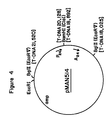
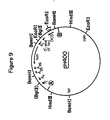
- Positions and open reading frames (ORFs) of octopine-type T-DNA are as defined for pTi15955 by R. F. Barker et al . (1983) Plant Mol. Biol. 2 :335-350, and are diagramed in Fig. 1.
- plasmids and only plasmids, are prefaced with a "p", e.g., pTi15955 or pBR322.
- Strain designations parenthetically indicate a plasmid harbored within, e.g., A . tumefaciens (pTi15955).
- the following strains are on deposit: E . coli K802 (pH4-1) NRRL B-18009 E . coli K802 (pCT29K-2) NRRL B-18010 E . coli C600 (pKS4) NRRL B-15394 A . tumefaciens (pTi15955) ATCC 15955
- other plasmids and strains are widely available and accessible to those in the art.
- the kanamycin resistance gene ( kan ) of Tn 5 encodes the enzyme neomycin phosphotransferase II (NPT2).
- NPT2 neomycin phosphotransferase II
- the kan gene has been sequenced (Beck E et al . (1982) Gene 19 :327-336) and may be extracted from pKS4, a pBR322 derivative.
- pKS4 DNA may be isolated from E . coli C600 (pKS4) which is on deposit as NRRL B-15394.
- Tn 5 kan structural gene has proven useful for construction of plant-expressible selectable markers, its unmodified sequence is not optimum for eukaryotic selection.
- eukaryotic translation is preferentially initiated at the first AUG of an mRNA; optimum initiation efficiency occurs if there is an A or G at position -3 and G at position +4 relative to the translational start site.
- the A of the AUG is +1 and the base pair immediately before that A is -1.
- 5' NNAUGG3' is a consensus sequence for optimum eukaryotic translational initiation sites (Kozak M (1983) Microbiol. Rev. 47 :1-45; see also Rogers SG et al . (1985) Plant Mol. Biol.
- initiation can also occur at the second AUG.
- extraction of the kan structural gene from its vector involves the restriction enzyme Bgl II, a Bgl II site being about 30 bp upstream from the kan translational start site (AUG). Between the Bgl II site and the translational start is an AUG triplet sequence in a different reading frame than that encoding NPT2. Also, the translational start for the kan gene does not match the consensus sequence. To remedy these deficiencies in the Tn 5 kan gene sequence, two mutant sequences were constructed. One mutantation introduced a Bam HI site between the translational start and the upstream ATG, and is herein referred to as the "single mutant".
- the other mutantion changed a C to an A at position -3 relative to the AUG translational start in addition to introducing a Bam HI site, and is herein referred to as the "double mutant".
- the wild-type (wt), single mutant (sm), and double mutant (dm) sequences are compared below. Features described on the top line are indicated by underlining. Introduced single base pair substitutions are indicated by arrows below the sequence.
- oligonucleotide-directed mutagenesis include Carter P et al . (1985) Nucl. Acids Res. 13 :4431-4443; Zoller MJ and Smith M (1984) DNA 3 :479-488; Kramer W et al . (1984) Nucl. Acids Res. 12 :9441-9456; Zoller and Smith (1983) supra ; Zoller MJ and Smith M (1982) Nucl. Acids Res. 10 :6487-6500; Dalbadie-McFarland G et al . (1982) Proc. Natl. Acad. Sci. USA 79 :6409-6413; and Simons GFM et al .
- Useful M13-based vectors include mWB2341 and related vectors (Barnes WM (1983) Meth. Enzymol. 101 :98-122; Barnes WM and Bevan M (1983) Nucl. Acids Res. 11 :349- 368), and the M13mp-series of vectors (e.g. see J. Norrander et al . (1983) Gene 26 :101-106, Messing J and Vieira J (1982) Gene 19 :269-276)
- pKS4 DNA was digested with Sma I to open it at the Tn 5 -derived Sma I site. After this linearized DNA was mixed with and ligated to Cla I linkers, the DNA transformed into E . coli K802. Plasmid DNAs isolated from transformants resistant to ampicillin and kanamycin were screened by restriction mapping and a colony was identified which harbored a plasmid, designated pKS4.2, having a kan gene that could be extracted on a Cla I fragment.
- pKS4.2 was digested with Cla I and a fragment carrying the kan gene was electrophoretically isolated. This fragment was mixed with and ligated to Cla I-linearized pBR322 and transformed into E . coli . Plasmid DNAs isolated from transformants resistant to ampicillin and kanamycin were screened by restriction analysis and a colony was identified which harbored a plasmid designated pKS4.3.
- the pKS4.3 kan gene was oriented with its 5'-end and 3'-end respectively proximal to the pBR322 Eco RI and Bam HI sites. In this orientation the kan gene may be removed on a Hin dIII fragment.
- pKS4.3 DNA was digested with Hin dIII and mixed with and ligated to Hin dIII-linearized M13mp8 RF DNA (Vieira J and Messing J (1982) Gene 19 :259-268).
- the ligation mixture was transformed into E . coli JM107 (Yanisch-Perron C et al. (1985) Gene 33 :103-119) and, after isolation of RF DNA from transformants resistant to ampicillin and kanamycin, a colony was identified which harbored a M13-derivative designated M13HS-Kan.
- M13HS-Kan had the kan gene inserted into the M13mp8 Hin dIII site parallel to the M13mp8 lac gene.
- the NPT2 sequence When in viral form, the NPT2 sequence was equivalent to an NPT2-encoding mRNA. In other words, the M23HS-Kan single-stranded viral DNA could not hybridize to NPT2 mRNA but was complementary to a cDNA made from NPT2 mRNA.
- Single-stranded viral DNA was mixed with and hybridized to a primer having the sequence (a) 5'CAATCATGCGAAA G GATCC3'. (The underlined base indicates the position of the introduced mutation.) After primer extension, this DNA was transformed into E . coli JM107.
- RF DNAs isolated from transformed plaques were screened by hybridization under stringent conditions to [32]P-end-labeled primer and by restriction analysis. A colony was identified which harbored a M13HS-Kan derivative designated M13HS-Kan1 (sm). M13HS-Kan1 had a Bam HI site at about -10 relative to the ATG translational start codon. Cutting at this Bam HI site removes a Tn 5 ATG located approximately at position -15.
- M13HS-Kan2 had a Bam HI site at about -10 relative to the translational start codon and a substitution of an A for a C at -3.
- the transcript terminators of pTi15955 ORFs 25 and 26 are both located within a DNA segment bounded by Hin cII sites at positions 21,727 and 22,440, as defined by Barker et al ., supra (see Fig. 1).
- This 714 bp Hin cII fragment carries polyadenylation sites of two antiparallel genes, ORFs 25 and 26.
- This Hin cII fragment or any DNA segment having two antiparallel polyadenylation sites, is placed behind a structural gene, one or the other polyadenylation sites will be functional for promoting transcript termination in a plant cell.
- This Hin cII fragment is a subfragment of octopine pTi Eco RI fragment 22.
- Nonblunt-ended segments can be obtained and either used directly or have sticky-ends converted to blunt ends by methods well known to the art; e.g. a 1.11 kbp Bbv I/ Cla I fragment carries terminators of pTi15955 T-DNA ORFs 1 and 3 and a 1.46 kbp Nci I fragment carries terminators of ORFs 9 and 10.
- a pBR322 clone of the Eco RI fragment spanning T-DNA positions 16,202 to 21,631 was digested with Hin cII.
- a 714 bp Hin cII fragment carrying the ORFs 25 and 26 polyadenylation sites was electrophoretically purified.
- pKS4 DNA digested with Sma I was mixed with and ligated to the 714 bp Hin cIII fragment.
- E . coli cells were transformed by the ligation mixture. Plasmid DNAs isolated from transformants resistant to kanamycin and ampicillin were screened by restriction analysis.
- pKS4.5 a plasmid, designated pKS4.5, that had the 714 bp T-DNA fragment inserted into the Sma I site present in the Tn 5 sequences of pKS4 3'-from the NPT2-encoding sequence (Fig. 2).
- pKS4.5 DNA was digested with Hin dIII and Nco I. This operation deleted the 5'-end of the NPT2 gene along with some 5'-flanking sequences.
- the Hin dIII/ Nco I-digested DNA was mixed with and ligated to M13HS-Kan1 RF DNA which had been digested with Hin dIII and Nco I. After transformation of the ligation mix into E . coli and selection for resistance to ampicillin, plasmid DNAs were isolated and screened by restriction analysis.
- pKS4.5 DNA digested with Hin dIII and Nco I was mixed with and ligated to M13HS-Kan2 RF DNA which had been digested with Hin dIII and Nco I.
- pKS4.7 plasmid
- pKS4.7 was essentially identical to pKS4.5 except for two single-base substitutions.
- One substitution created a Bam HI site just 5'-to the NPT2 encoding sequence, as was done with pKS4.6, while the other changed a C to an A at position -3 to the NPT2 translational start (Fig. 2).
- pDOB512 carrying cauliflower mosaic virus (CaMV) transcription controlling sequences (obtained from Dr. Ken Richards, Centre National de la Recherche Scientifique, Institute de Biologie Mole Les et Cellulaire, 15, rue Descartes, F-67084 France) was constructed as follows: (For a review of CaMV, see Hohn T et al . (1982) Curr. Top. Microbiol. Immunol. 96 :193-236.) A Hin dIII fragment carrying the CaMV 19S RNA promoter region (CaMV nucleotides 5376-5851) was inserted into pBR322 and was trimmed back to within one base pair of the 19S transcript cap site.
- CaMV cauliflower mosaic virus
- An adapter molecule having both a Sma I site and a Bam HI (the structure being 5'CCCGGGGATCCGG3': 5'CCGGATCCCCGGG3', see below) was then ligated to the trimmed DNA.
- a Hin cII fragment carrying the CaMV 19S transcript terminator (CaMV nucleotides 7018-7794) to which Bam HI linkers had been added was then inserted behind the 19S promoter, the promoter and terminator being separated by the Sma I/ Bam HI linker.
- the resulting plasmid is designated pDOB412.
- pDOB412 DNA was digested with Bgl II and Sal I, filled in by incubation with the Klenow fragment of E .
- the resultant plasmid was designated pDOB512.
- pDOB513 has CaMV 19S transcription controlling sequences on a Bgl II fragment.
- the sequence of this suture is as follows:
- the first underlined base, an A corresponds to the first base of the 19S mRNA, transcription being towards the right
- the second and third underlined bases, respectively a G and an A are derived from CaMV sequences at positions 5765 and 7018, respectively, as defined by Hohn et al ., supra .
- pKS111 is a recombinant plasmid having Ti15955 T-DNA which spans the sequence between the Eco RI sites at positions 16,202 and 21,631 inserted into the Eco RI site of pRK290.
- E . coli K802 methylates DNA at many, but not all, Cla I sites, thereby specifically protecting certain sites from the action of Cla I.
- the only susceptible Cla I sites of pKS111 are the sites at T-DNA positions 18,892 and 20,128. These sites define a DNA fragment which includes the ORF24 structural gene but does not include the ORF24 promoter or polyadenylation site. ORF24 is associated with mannopine synthesis. Plasmid DNA isolated from E .
- coli K802 (pKS111) was digested with Cla I, ligated to itself, and transformed into K802.
- a tetracycline-resistant transformant was identified by restriction analysis which harbored a plasmid identical to pKS111 except for deletion of a fragment which spanned the Cla I sites at positions 18,892 and 20,128.
- pBR322 has a Bam HI site which will prove inconvenient for later manipulations. Therefore, the T-DNA of the Cla I-deleted pKS111-derivative was transferred to a pBR325 derivative which was lacking a Bam HI site.
- pBR325 DNA isolated from E . coli GM33 (pBR325), was digested with both Bam HI and Bcl I, was ligated to itself and was transformed into E . coli .
- Plasmid DNA isolated from transformants sensitive to tetracycline and resistant to chloramphenicol and ampicillin were characterized by restriction mapping and a colony was identified which harbored a plasmid, designated pBR325aBB, which could not be cleaved with either Bam HI or Bcl I.
- DNA of the Cla I-deleted pKS111-derivative was digested with Eco RI and was mixed with and ligated to Eco RI-linearized, dephosphorylated pBR325aBB DNA. After transformation into E . coli , plasmid DNAs isolated from transformants resistant to ampicillin and sensitive to both chloramphenicol and tetracycline were characterized by restriction mapping. A colony was identified which harbored a plasmid having the Cla I-deleted T-DNA recombined with the pBR325aBB vector.
- Plasmid DNA from this transformant was isolated, and cleaved at its single Cla I site (the suture between the sites at positions 18,892 and 20,128) by Cla I. After the Cla I sticky-ends were then removed by incubation with the Klenow fragment of E . coli DNA polymerase I, the blunt-ended DNA was mixed with and ligated to commercially available Bam HI linkers. After digestion of the Bam HI-linkered DNA with Bam HI, religation to itself, and transformation of the resulting DNA into K802, plasmid DNAs were isolated from transformants resistant to ampicillin were screened by restriction mapping.
- a colony was identified which harbored a plasmid, designated p403BRL1, lacking a Cla I site at the T-DNA positions 18,892/20,128 suture but, instead, having a Bam HI site at the former location of that Cla I site.
- pDOB513 DNA was digested with Bgl II, religated to itself, and transformed into K802. Colonies which harbored a plasmid, designated pDOB514, having no CaMV sequences were identified by restriction mapping of the harbored plasmids.
- p403BRL1 DNA which had a Bam HI site between the ORF24 promoter, and transcript terminator, was then digested with Eco RV, which cleaves at sites which in T-DNA correspond to positions 18,027 and 21,522.
- the restriction digested DNA had its sticky-ends removed by incubation with the Klenow fragment of E . coli DNA polymerase I.
- the blunt-ended DNA was then mixed with and ligated to commercially available Bgl II linkers, digested with Bgl II, and subjected to agarose gel electrophoresis. A 2.26 kbp fragment was mixed with and ligated to Bgl II-linearized pDOB514 DNA.
- Plasmid DNAs of ampicillin-resistant transformants were characterized by restriction mapping, and a colony was identified which harbored a plasmid, designated pMAN514 (Fig. 4), having a 2.29 kbp Bgl II fragment carrying a ORF24 promoter and polyadenylation site separated by a Bam HI site.
- the NPT2 structural gene was removed from pKS4.6 (single-mutant: Bam HI site present but the C at -3 not changed to an A) by digestion with Bam HI. After the 2.23 bp fragment was electrophoretically isolated, it was mixed with and ligated to Bam HI-linearized, dephosphorylated pDOB513 DNA. The ligation mixture was transformed into K802. Plasmid DNAs isolated from ampicillin-resistant transformants were screened by restriction mapping and a colony was identified which harbored a plasmid designated pDOB513K4.6 (Fig. 5). The NPT2 structural gene of this plasmid was oriented with its 5'-end proximal and its 3'-end distal to the CaMV 19S promoter.
- pKS4.7 double mutant: Bam H5 site present and the C at -3 changed to an A
- pKS4.6 single mutant: Bam HI site present but -3 unchanged
- a colony was identified that harbored a plasmid, designated pDOB513K4.7 (Fig. 5), which was essentially identical to pDOB513K4.6 except for a substitution of an A for a C 3 bp 5' to the translational start of the NPT2 structural gene.
- pKS4.6 DNA digested with Bam HI was mixed with and ligated to Bam HI-linearized pMAN514 DNA. After transformation of E . coli and selection for resistance to ampicillin, plasmid DNAs were isolated and restriction mapped. A colony was identified which harbored a plasmid, designated pManKan-sm (Fig. 6), which had the Bam HI fragment carrying both the NPT2 structural gene and ORF26 polyadenylation site inserted into the Bam HI site of pMan514.
- the NPT2/ORF26 fragment was oriented with the 5'-end of the kan gene proximal to the ORF24 promoter and the ORF26 polyadenylation site proximal to the ORF24 polyadenylation site.
- the orientation was such that a plant RNA polymerase II initiating transcription off of the ORF24 promoter would transcribe an mRNA encoding NPT2 before reaching the ORF26 and ORF24 polyadenylation sites, the ORF26 site being 5'-to the ORF24 site.
- p102 (Fig. 7), a pBR322 clone of the pTi15955 T-DNA fragment between Hin dIII sites at positions 602 and 3,390 (as defined by Barker RF et al . (1983) Plant Mol. Biol. 2 :335-350) carries the left border of T L and promoter sequences associated with ORF1.
- p233 is a pBR322 clone of the pTi15955 T-DNA Bam HI/ Eco RI fragment spanning positions 9,062 and 16,202.
- the T-DNA of p233 includes a Sma I/ Bcl I fragment spanning positions 11,207 and 14,711 having ocs , a 3'-deleted tml , and the right border of T L .
- p233 was linearized with Sma I, mixed with and ligated to a commercially available blunt-end Bgl II linker, trimmed with Bgl II, religated to itself , and transformed into E . coli GM33 (a dam ⁇ host that does not methylate DNA in a manner incompatible with the action of Bcl I, Marinus MG and Morris NR (1974) J. Mol. Biol. 85 :309-322).
- a colony was identified which harbored a plasmid, designated p233G (Fig. 7), having a Bgl II site in the location formerly occupied by the position 11,207 Sma I site.
- p233G DNA was digested with Bgl II and Bcl I and a 3.5 kbp fragment was isolated by agarose gel electrophoresis followed by elution. The 3.5 kbp Bgl II/ Bcl I fragment was mixed with and ligated to Bgl II-digested, dephosphorylated p102 DNA. The ligation mixture was transformed into E . coli K802 (Wood WB (1966) J. Mol. Biol. 16 :118). Plasmids DNAs from ampicillin-resistant transformants were characterized by restriction analysis and a colony was identified, designated pAK-4 (Fig.
- pAK-4 may be represented as follows: .... pBR322 ... Hin dIII ... left border ... ORF1 promoter ... Bgl II ... 5'-end of tml ... ocs ... right border ... ( Bgl II/ Bcl I) ... Hin dIII ... pBR322 ....
- the T-DNA of pAK-4 may be removed on a 6 kbp Hin dIII fragment.
- Hin dIII-digested pAK-4 DNA was mixed with and ligated to Hin dIII-linearized, dephosphorylated pSUP106 DNA.
- pSUP106 a 11 kbp wide host-range plasmid capable of maintenance in both E . coli and Agrobacterium (Priefer UB et al . (1985) J. Bacteriol. 163 :324-330), is harbored by E . coli CSH52 (pSUP106) which is on deposit as NRRL B-15486.
- pAN6 a plasmid, designated pAN6 (Fig. 7), having the Agrobacterium DNA of pAK-4 inserted into the Hin dIII site of pSUP106 oriented so that Bgl II/ Bcl I suture was proximal to the pSUP106 Eco RI site.
- pAN6 is a micro-Ti plasmid having within its two T-DNA borders a functional ocs gene and a Bgl II site that is unique to the plasmid.
- the Bgl II site is flanked by an incomplete tml gene and the ORF1 promoter, both of which are transcribed towards the Bgl II site.
- Example 7 Construction of a micro-Ti T-DNA Cassette, part of pCT29K-2
- p102 is a plasmid having T-DNA spanning the Hin dIII sites at T-DNA positions 602 and 3,390 inserted into the Hin dIII site of pBR322.
- T-DNA near position 602 is proximal to the pBR322 Eco RI site while T-DNA near position 3,390 is proximal to the pBR322 Sal I and Bam HI sites.
- the 3.5 kbp Bcl I/ Bgl II fragment of p233G, which carries border repeat B, ocs , and the 5'-end of tml was mixed with and ligated to p102 DNA that had been dephosphorylated after digestion with Bam HI and Bgl II.
- pAR2 has the following structure: .... amp ... Eco RI ... pBR322 position 29 Hin dIII pTi15955 position 602 ... T-DNA position 1,617 Bgl II T-DNA position 11,207 ... T-DNA position 14,711 ( Bcl I/ Bam HI) pBR322 position 375 ... pBR322 position 651 Sal I ... ori ... amp ...
- two pTi15955 fragments were inserted between the Hin dIII and Bam HI sites of pBR322, a Hin dIII/ Bgl II fragment spanning T-DNA positions 602 to 1,617 and a Bgl II/ Bcl I fragment spanning T-DNA positions 11,207 to 14,711 (the Bgl II site having been converted from a Sma I site at position 11,207), the two T-DNA fragments being ligated together at their Bgl II-derived ends to form a Bgl II-cleavable suture.
- pAR2 was digested with Sal I, thereby being linearized at the pBR322 position 651 Sal I site.
- Sticky-ends of the linearized DNA were converted to blunt-ends by incubation with the Klenow fragment of DNA polymerase I, this DNA was mixed with and ligated to commercially available Hin dIII linkers. After partial digestion with Hin dIII and religation of the mixture to itself, the mixture was transformed into E . coli .
- Plasmid DNAs isolated from ampicillin-resistant transformants were screened by restriction analysis and a colony was identified which harbored a plasmid designated plasmid designated plasmid designated pAR-Sal (Fig. 8).
- pAR-Sal was identical to pAR2 except for conversion of the pAR2 Sal I site to the specificity of Hin dIII (one or more Hin dIII sites may be present at this location).
- a 4.8 kbp Hin dIII fragment could be isolated from pAR-Sal which carried the T-DNA of a micro-Ti, having between Borders A and B the ORF1 promoter, a unique Bgl II site, the 5'-end of a tml gene, and a functional ocs gene.
- pDOB513K4.6 DNA was digested with Bgl II and a 3.26 kbp fragment carrying the CaMV 19S promoter/NPT2 structural gene/CaMV and T-DNA polyadenylation sites combination was electrophoretically isolated.
- This Bgl II fragment was mixed with and ligated to Bgl II-linearized, dephosphorylated pAR-Sal DNA. The ligation mixture was transformed into E . coli .
- Plasmid DNAs isolated from ampicillin resistant transformants were restriction mapped and a colony was isolated which harbored a plasmid, designated pCT-29 (Fig 8), that had the promoter/NPT2 gene/polyadenylation site combination inserted into the Bgl II site of pAR-Sal. The combination was oriented so that it was transcribed parallel to the 5'-end of tml and the ocs gene and antiparallel to the ORF1 promoter.
- pCT-29 had two Bgl II sites
- pCT-29 DNA was digested with Hin dIII.
- a 8.0 kbp fragment carrying the T-DNA of pCT-29 was mixed with and ligated to Hin dIII-linearized, dephosphorylated pRK292 DNA.
- the ligation mixture was transformed into E . coli .
- Plasmids DNAs isolated from transformants resistant to tetracycline and sensitive to ampicillin were restriction mapped and a colony was identified which harbored a plasmid, designated pCV10 (Fig. 8), the T-DNA-bearing Hin dIII fragment of pCT-29 inserted into the Hin dIII site of pRK292.
- pCV10 has two Bgl II sites. It may serve as a micro-Ti plasmid.
- Kanamycin resistant is a useful genetic marker to use when transforming Agrobacterium .
- CaMV promoter/NPT2 structural gene combination is not expressed in bacteria, it was useful to include a kan gene in the micro-Ti cassette.
- a neomycin phosphotransferase I (NPT1) gene from Tn903 is present on pUC4K (Vieira J and Messing J (1982) Gene 19 :259-268).
- pUC4K DNA was digested with Bam HI and a 1.45 kbp fragment carrying an NPT1 gene was electrophoretically isolated. This Bam HI fragment was mixed with and ligated to linear, dephosphorylated pCT-29 DNA that had been linearized with Bgl II under partial digestion conditions.
- pCT29K-2 has an NPT1 gene that is expressible in bacteria inserted into the Bgl II site found between the ORF1 promoter and the NPTII gene.
- the Bgl II/ Bam HI sutures between the pUC4K fragment and the pCT-29 vector could not be cleaved by either Bgl II or Bam HI; pCT29K-2 had only one Bgl II site, located between the NPT2 and ocs genes.
- the NPT1 gene was oriented parallel to the ORF1 promoter and antiparallel to the NPT2 gene, the 5'-end of tml , and the ocs gene.
- the T-DNA can be represented as follows: borderA ... bacteria selectable NPT1 ... unique Bgl II site ... plant selectable NPT2 ... 5'-end of tml ... ocs ... border B. This T-DNA can be removed from pCT29K-2 on a 9.52 kbp Hin dIII fragment.
- Example 8 A pTi Having a disarmed T-DNA
- Triparental matings were generally accomplished as described below; other variations known to those skilled in the art are also acceptable.
- pRK290 and pRK2013 were disclosed by G. Ditta et al . (1980) Proc. Natl. Acad. Sci. USA 77 :7347-7351, and pPH1J1 by P. R. Hirsh (1978) Thesis, Univ. E. Yale. E . coli RR1 (pRK290-based-shuttle-vector) or E . coli K802 (pRK290-based-shuttle-vector) was mated with E . coli RR1 (pRK2013) and A348, a transformation-inducing plasmid harboring A .
- pRK2013 tumefaciens strain resistant to rifampicin.
- pRK2013 mobilized the pRK290-based shuttle vector for transfer to the Agrobacterium .
- pPH1J1 and pRK290-based shuttle vectors cannot coexist for long in the same cell. Growth on gentamycin and kanamycin select for cells which have Ti plasmids that have undergone single- or double-homologous recombination events (cointegration or homogenotization, respectively) with the shuttle vector and now carry the desired construction.
- pH592 was a pRK290-based shuttle vector.
- pRK292 was a pRK290 derivative having the pRK290 Bgl II site converted to a Hin dIII site by insertion of a linker.
- pH592 was mated into A . tumefaciens 15955 (which is available to the public as ATCC 15955) by the triparental mating technique (see below).
- a colony was identified by restriction mapping and selection which was the result of double homologous recombination event. This colony harbored a plasmid, designated pH1592 (Fig.
- pDOB513K4.6 DNA was digested with Bgl II and a 3.26 kbp fragment carrying the CaMV 19S promoter/NPT2 structural gene/CaMV and T-DNA polyadenylation sites combination was electrophoretically isolated.
- This Bgl II fragment was mixed with and ligated to Bgl II-linearized, dephosphorylated pAN6 DNA.
- the ligation mixture was transformed in E . coli .
- Plasmid DNAs isolated from transformants resistant to chloramphenicol were screened by restriction mapping and a colony was identified which harbored a plasmid, designated pH4-1, that had the promoter/NPT2 gene/polyadenylation site combination inserted into the Bgl II site of pAN6. The combination was oriented so it was transcribed parallel to the tml and the ocs promoters and antiparallel to the ORF1 promoter.
- pH4-1 has two Bgl II sites, both of which flank the kan selectable marker. One of the Bgl II sites was removed, thereby leaving a unique Bgl II site useful for insertion of extraneous coding DNA.
- pH4-1 DNA was linearized by being partially digested with Bgl II and full-length, linear DNA was electrophoretically isolated. The Bgl II sticky-ends were then removed by incubation with the Klenow fragment of E . coli DNA polymerase I. The resulting blunt-ended DNA was ligated to itself and transformed into E . coli . Plasmid DNAs isolated from transformants resistant to chloramphenicol were screened by restriction analysis and a colony was identified which harbored a plasmid designated pH400 (Fig.
- pH400 is identical to pH4-1 except for the absense of the Bgl II site between the kan gene and the ORF1 promoter, the unique pH400 Bgl II site being located between the kan gene and the ocs gene.
- the single Bgl II site is a convenient place to insert extraneous coding DNA, in particular if that DNA has compatble 5'GATC...3' sticky-ends resulting from the action of Bgl II, Bcl I, Bam HI, Mbo I, or Sau 3AI.
- the Bgl II site may be converted to that of another restriction enzyme, provided that pH400 does not already have a site for that enzyme.
- the sticky-ends can be converted to blunt ends and a blunt-ended DNA fragment can be blunt-end ligated into the gap, as is understood in the art.
- the micro T-DNA-carrying 9.52 kbp Hin dIII fragment of pCT29K-2 was mixed with and ligated to various Hin dII-linearized, dephosphorylated vector DNAs.
- the vectors were pSUP106 (Priefer et al ., supra ), pTJS75 (see Klee HJ et al . (1985) Biotechnol. 3 :637-642), and pRK292 (Ditta G et al . (1985) Plasmid 13 :149-153). Restriction mapping of E .
- coli transformants resistant both to kanamycin and to either chloramphenicol, tetracycline, or tetracycline resulted in identification of colonies harboring plasmids designated pH506, pH575, and pH592 (Fig. 8). These plasmids are derivatives, respectively, of pSUP106, pTJS75, and pRK292.
- pKS4.5 DNA was digested with Bgl II and Bam HI, it was mixed with and ligated to Bgl II-linearized, dephosphorylated pAN6 DNA. After transformation into E . coli , plasmid DNAs isolated from chloramphenicol-resistant transformants were screened by restriction analysis. A colony was identified which harbored a plasmid designated pBE239.
- pBE239 has a NPT2 structural gene/ORF26 polyadenylation site combination inserted into the pAN6 Bgl II in such orientation that a NPT2-encoding mRNA may be transcribed, transcripts being initiated by pAN6's ORF1 promoter and being terminated by the ORF26 polyadenylation site.
- pH410 was constructed essentially as described for pH4-1, except that pManKan-sm was substituted for pDOB513K4.6. Therefore, pH410 was essentially the same as pH4-1 except that the NPT2 structural gene was transcribed off of a ORF24 promoter rather than a CaMV promoter.
- the geneology of pH420 was essentially the same as that of pH410 except that the source of the NPT2 structural gene was the pKS4.7 doubly mutated kan gene rather than the singly mutated pKS4.6 gene.
- the two plasmids differ in sequence essentially only at position -3 from the NPT2 ATG translational start, pH410 having a C (wild-type) and pH420 having an A (mutated).
- pH411 and pH421 were constructed essentially as described for pH410 and pH420, respectively, except that the ORF24 promoter/NPT2 structural gene/polyadenylation site combinations were inverted.
- the pH410 and pH420 kan genes are transcribed parallel to, i.e. off of the same DNA strand as, the ocs gene.
- the pH411 and pH421 kan genes are transcribed antiparallel to, i.e. off the opposite DNA strand as, the ocs gene.
- Micro-Ti plasmids were transferred into A . tumefaciens LBA4404 (Ooms G et al . (1981) Gene 14 :33-50), a vir gene-bearing, micro-Ti-mobilizing strain, by the triparental mating technique.
- Tobacco leaf tissue was inoculated using a modification of the method of Horsch RB et al . (1985) Science 227 :1229-1231.
- Leaf segments were dipped in the innoculating suspension of bacteria for 10-30 min.
- the inoculating bacterial suspensions had titres of 107-108 ml ⁇ 1; the exact concentration was found to be unimportant.
- the medium was a tobacco regenerating medium having MS salts, a mixture well known to the art, supplemented with 0.1 mg/l p-chlorophenoxy-acetic acid (pPCPA), 7.5 mg/ml 6-( ⁇ , ⁇ -dimethylallylamino)-purine (2iP), 125 mg/l each of cefoxitin and mefoxin, and 300 mg/l kanamycin.
- pPCPA p-chlorophenoxy-acetic acid
- 2iP 6-( ⁇ , ⁇ -dimethylallylamino)-purine
- the number of individual shoots and shoot cultures were totaled, divided by the number of leaf pieces, and multiplied by 100; i.e. scores are numbers of shoots or shoot clusters per 100 pieces. Experiments were scored after 3 to 5 weeks. Generally 75-80% of the shoots were able to root in a kanamycin-containing medium and all were transformed. Some kanamycin-resistant shoots did not make measurable quantities of o
- Experiment 1 indicated that the efficiency of transformation is affected by the orientation of the selectable marker, kan genes parallel to ocs gene being more efficient than those that are antiparallel. Experiment 1 also indicated that changing the C to an A at -3 from the NPT2 translational start more than doubled the combined transformation and selection efficiency of these micro-Ti plasmids. This experiment further indicated that the caMV 19S promoter may be more efficient than the ORF 24 promoter, having higher transformation rates than the equivalent pH410 and pH411 NPT2 genes.
- transformation efficiency can be affected by insertion of extraneous coding DNA, in this case being increased by the presence of a plant-expressible Bacillus thuringiensis crystal protein gene under control of an ORF24 promoter (pH4-1-Bt). This might be an effect of the presence of additional DNA or a result of the nature of the sequence of the particular extraneous coding DNA sequence.
- Kanamycin kill curves of plant cells transformed by LBA4404 (pBE239) and T-DNAs having selectable markers using CaMV and ORF24 promoters were compared. Tissues were resistant to similar concentrations of the drug.
- pBE239 has an ATG between the 5'-end of the NPT2 mRNA and the NPT2 translational start, and as Rogers SG et al . (1985) Plant Mol. Biol. Reptr. 3 :111-116, show that presence of that ATG lowers five-fold both the LD50 of plant tissue to kanamycin and the assayed NPT2 activity, this result indicates that the ORF1 promoter is highly active.
- micro-Ti plasmids disclosed herein are functional and are useful for plant transformation. It will be recognized by those skilled in the art that various extraneous coding DNAs may be inserted into these vectors and subsequently transformed into plants. It will also be recognized that the present invention is not limited to the vectors disclosed herein, but that there are many possible variations within the scope of the claims that those of ordinary skill in the art may find advantageous to use.
Landscapes
- Health & Medical Sciences (AREA)
- Life Sciences & Earth Sciences (AREA)
- Genetics & Genomics (AREA)
- Engineering & Computer Science (AREA)
- Biomedical Technology (AREA)
- Biotechnology (AREA)
- General Engineering & Computer Science (AREA)
- Chemical & Material Sciences (AREA)
- Organic Chemistry (AREA)
- Zoology (AREA)
- Molecular Biology (AREA)
- Wood Science & Technology (AREA)
- Bioinformatics & Cheminformatics (AREA)
- Microbiology (AREA)
- Plant Pathology (AREA)
- Biophysics (AREA)
- Cell Biology (AREA)
- Biochemistry (AREA)
- General Health & Medical Sciences (AREA)
- Physics & Mathematics (AREA)
- Micro-Organisms Or Cultivation Processes Thereof (AREA)
- Breeding Of Plants And Reproduction By Means Of Culturing (AREA)
Applications Claiming Priority (2)
| Application Number | Priority Date | Filing Date | Title |
|---|---|---|---|
| US78898485A | 1985-10-21 | 1985-10-21 | |
| US788984 | 1985-10-21 |
Publications (1)
| Publication Number | Publication Date |
|---|---|
| EP0223417A1 true EP0223417A1 (fr) | 1987-05-27 |
Family
ID=25146211
Family Applications (1)
| Application Number | Title | Priority Date | Filing Date |
|---|---|---|---|
| EP86308064A Withdrawn EP0223417A1 (fr) | 1985-10-21 | 1986-10-17 | Plasmides sous-T-ADN à base de TL-ADN |
Country Status (3)
| Country | Link |
|---|---|
| EP (1) | EP0223417A1 (fr) |
| JP (1) | JPS62175186A (fr) |
| AU (1) | AU6419686A (fr) |
Cited By (4)
| Publication number | Priority date | Publication date | Assignee | Title |
|---|---|---|---|---|
| EP0265556A1 (fr) * | 1986-10-31 | 1988-05-04 | Max-Planck-Gesellschaft zur Förderung der Wissenschaften e.V. | Vecteurs binaires stables pour l'agrobactérium et leur utilisation |
| EP0334383A3 (fr) * | 1988-03-25 | 1990-01-31 | Max-Planck-Gesellschaft zur Förderung der Wissenschaften e.V. | Plantes transgéniques avec physiologie, morphologie et métabolisme hormonal modifiés, cultures tissulaires de ces plantes et procédé de préparation |
| WO2001037645A1 (fr) * | 1999-11-16 | 2001-05-31 | The United States Of America, As Represented By The Secretary Of Agriculture | Transformation de ricinus communis, plante de ricin |
| US6620986B1 (en) | 1999-11-23 | 2003-09-16 | The United States Of America As Represented By The Secretary Of Agriculture | Transformation of Ricinus communis, the castor plant |
Citations (5)
| Publication number | Priority date | Publication date | Assignee | Title |
|---|---|---|---|---|
| WO1984002919A1 (fr) * | 1983-01-17 | 1984-08-02 | Monsanto Co | Plasmides de transformation de cellules vegetales |
| EP0122791A1 (fr) * | 1983-04-15 | 1984-10-24 | Mycogen Plant Science, Inc. | Expression de gène végétal |
| EP0140556A1 (fr) * | 1983-09-14 | 1985-05-08 | Lubrizol Genetics Inc. | Vecteur dérivé du T-ADN |
| EP0145338A1 (fr) * | 1983-11-18 | 1985-06-19 | Lubrizol Genetics Inc. | Promoteurs de T-ADN d'octopine |
| EP0186425A2 (fr) * | 1984-12-24 | 1986-07-02 | Eli Lilly And Company | Marqueur de sélection pour développer des vecteurs et des systèmes de transformation de plantes |
-
1986
- 1986-10-17 EP EP86308064A patent/EP0223417A1/fr not_active Withdrawn
- 1986-10-20 AU AU64196/86A patent/AU6419686A/en not_active Abandoned
- 1986-10-20 JP JP61249382A patent/JPS62175186A/ja active Pending
Patent Citations (5)
| Publication number | Priority date | Publication date | Assignee | Title |
|---|---|---|---|---|
| WO1984002919A1 (fr) * | 1983-01-17 | 1984-08-02 | Monsanto Co | Plasmides de transformation de cellules vegetales |
| EP0122791A1 (fr) * | 1983-04-15 | 1984-10-24 | Mycogen Plant Science, Inc. | Expression de gène végétal |
| EP0140556A1 (fr) * | 1983-09-14 | 1985-05-08 | Lubrizol Genetics Inc. | Vecteur dérivé du T-ADN |
| EP0145338A1 (fr) * | 1983-11-18 | 1985-06-19 | Lubrizol Genetics Inc. | Promoteurs de T-ADN d'octopine |
| EP0186425A2 (fr) * | 1984-12-24 | 1986-07-02 | Eli Lilly And Company | Marqueur de sélection pour développer des vecteurs et des systèmes de transformation de plantes |
Non-Patent Citations (3)
| Title |
|---|
| JOURNAL OF MOLECULAR AND APPLIED GENETICS, vol. 2, no. 6, 1984 (New York) M.G. KOZIEL et al. "A Couliflower Mosaic Virus Promoter Directs Expression of Kanamycin Resistance in Morphogenic Transformed Plant Cells" pages 549-562 * |
| MOLECULAR & GENERAL GENETICS, vol. 199, 1985, (Berlin, Heidelberg) S.B.GELVIN et al. "Use of a TR T-DNA promoter to express genes in plants and bacteria" pages 240-248 * |
| PLANT MOLECULAR BIOLOGY, vol. 2, no. 1, 1983 (The Hague) R.F.BARKER et al. "Nucleotide sequence of the T-DNA region from the Agrobacterium tumefaciens octopine Ti plasmid pTi 15 955" pages 335-350 * |
Cited By (6)
| Publication number | Priority date | Publication date | Assignee | Title |
|---|---|---|---|---|
| EP0265556A1 (fr) * | 1986-10-31 | 1988-05-04 | Max-Planck-Gesellschaft zur Förderung der Wissenschaften e.V. | Vecteurs binaires stables pour l'agrobactérium et leur utilisation |
| EP0270822A1 (fr) * | 1986-10-31 | 1988-06-15 | Max-Planck-Gesellschaft zur Förderung der Wissenschaften e.V. | Vecteurs binaires stables pour l'agrobacterium et leur utilisation |
| EP0334383A3 (fr) * | 1988-03-25 | 1990-01-31 | Max-Planck-Gesellschaft zur Förderung der Wissenschaften e.V. | Plantes transgéniques avec physiologie, morphologie et métabolisme hormonal modifiés, cultures tissulaires de ces plantes et procédé de préparation |
| EP0362349B1 (fr) * | 1988-03-25 | 1995-12-27 | Max-Planck-Gesellschaft zur Förderung der Wissenschaften e.V. | Plante transgenique avec physiologie, morphologie et metabolisme hormonal modifies, cultures tissulaires de ladite plante et procede de preparation de ladite plante |
| WO2001037645A1 (fr) * | 1999-11-16 | 2001-05-31 | The United States Of America, As Represented By The Secretary Of Agriculture | Transformation de ricinus communis, plante de ricin |
| US6620986B1 (en) | 1999-11-23 | 2003-09-16 | The United States Of America As Represented By The Secretary Of Agriculture | Transformation of Ricinus communis, the castor plant |
Also Published As
| Publication number | Publication date |
|---|---|
| AU6419686A (en) | 1987-04-30 |
| JPS62175186A (ja) | 1987-07-31 |
Similar Documents
| Publication | Publication Date | Title |
|---|---|---|
| US5466792A (en) | RI T-DNA Promoters | |
| US5215912A (en) | Monocot seed storage proteins in dicots | |
| US4771002A (en) | Transcription in plants and bacteria | |
| US5428147A (en) | Octopine T-DNA promoters | |
| AU648951B2 (en) | Agrobacterium mediated transformation of germinating plant seeds | |
| JP2573797B2 (ja) | 植物細胞の遺伝学的修飾方法 | |
| AU727849B2 (en) | Methods for (agrobacterium)-mediated transformation | |
| EP0240332B1 (fr) | Plantes résistantes aux virus comportant l'ARN anti-sens | |
| WO1998049332A1 (fr) | Transformation du sorgho par l'agrobacterie | |
| WO1985004899A1 (fr) | Procedes et vecteurs pour la transformation de cellules vegetales | |
| EP0145338B1 (fr) | Promoteurs de T-ADN d'octopine | |
| EP0240331B2 (fr) | Plantes résistant aux virus contenant une protéine de l'enveloppe d'un virus | |
| EP0174166A1 (fr) | T-ADN désarmé | |
| EP0222493A1 (fr) | Plasmides sous-TI à base de TR-ADN | |
| JP2574130B2 (ja) | 植物細胞の遺伝的修飾方法 |
Legal Events
| Date | Code | Title | Description |
|---|---|---|---|
| PUAI | Public reference made under article 153(3) epc to a published international application that has entered the european phase |
Free format text: ORIGINAL CODE: 0009012 |
|
| AK | Designated contracting states |
Kind code of ref document: A1 Designated state(s): AT BE CH DE ES FR GB GR IT LI LU NL SE |
|
| 17P | Request for examination filed |
Effective date: 19871105 |
|
| STAA | Information on the status of an ep patent application or granted ep patent |
Free format text: STATUS: THE APPLICATION HAS BEEN WITHDRAWN |
|
| 18W | Application withdrawn |
Withdrawal date: 19891120 |
|
| R18W | Application withdrawn (corrected) |
Effective date: 19891120 |
|
| RIN1 | Information on inventor provided before grant (corrected) |
Inventor name: TALBOT, DUNCAN R. Inventor name: MERLO, DONALD J. Inventor name: SUTTON, DENNIS W. |