EP0224294A1 - Plasmid zur Analyse und Klonierung einer Regulationsregion von Bacillus - Google Patents
Plasmid zur Analyse und Klonierung einer Regulationsregion von Bacillus Download PDFInfo
- Publication number
- EP0224294A1 EP0224294A1 EP86201951A EP86201951A EP0224294A1 EP 0224294 A1 EP0224294 A1 EP 0224294A1 EP 86201951 A EP86201951 A EP 86201951A EP 86201951 A EP86201951 A EP 86201951A EP 0224294 A1 EP0224294 A1 EP 0224294A1
- Authority
- EP
- European Patent Office
- Prior art keywords
- pprom
- plasmid
- bacillus
- promoter
- sequence
- Prior art date
- Legal status (The legal status is an assumption and is not a legal conclusion. Google has not performed a legal analysis and makes no representation as to the accuracy of the status listed.)
- Granted
Links
- 239000013612 plasmid Substances 0.000 title claims abstract description 82
- 241000193830 Bacillus <bacterium> Species 0.000 title claims abstract description 41
- 230000001105 regulatory effect Effects 0.000 title claims abstract description 20
- 238000010367 cloning Methods 0.000 title description 7
- 108090000623 proteins and genes Proteins 0.000 claims abstract description 39
- 108010076504 Protein Sorting Signals Proteins 0.000 claims abstract description 34
- 238000012216 screening Methods 0.000 claims abstract description 12
- 230000028327 secretion Effects 0.000 claims abstract description 12
- 230000014509 gene expression Effects 0.000 claims abstract description 11
- 108090000765 processed proteins & peptides Proteins 0.000 claims abstract description 7
- 230000002103 transcriptional effect Effects 0.000 claims abstract description 7
- 108090000637 alpha-Amylases Proteins 0.000 claims description 37
- 235000014469 Bacillus subtilis Nutrition 0.000 claims description 29
- 102000004139 alpha-Amylases Human genes 0.000 claims description 29
- 229940024171 alpha-amylase Drugs 0.000 claims description 29
- 108020004414 DNA Proteins 0.000 claims description 17
- 239000012634 fragment Substances 0.000 claims description 17
- 210000003705 ribosome Anatomy 0.000 claims description 17
- 239000000203 mixture Substances 0.000 claims description 15
- 230000010076 replication Effects 0.000 claims description 14
- 238000004519 manufacturing process Methods 0.000 claims description 13
- 108700039691 Genetic Promoter Regions Proteins 0.000 claims description 12
- 238000000034 method Methods 0.000 claims description 12
- 241000194108 Bacillus licheniformis Species 0.000 claims description 11
- 108091034117 Oligonucleotide Proteins 0.000 claims description 10
- JLCPHMBAVCMARE-UHFFFAOYSA-N [3-[[3-[[3-[[3-[[3-[[3-[[3-[[3-[[3-[[3-[[3-[[5-(2-amino-6-oxo-1H-purin-9-yl)-3-[[3-[[3-[[3-[[3-[[3-[[5-(2-amino-6-oxo-1H-purin-9-yl)-3-[[5-(2-amino-6-oxo-1H-purin-9-yl)-3-hydroxyoxolan-2-yl]methoxy-hydroxyphosphoryl]oxyoxolan-2-yl]methoxy-hydroxyphosphoryl]oxy-5-(5-methyl-2,4-dioxopyrimidin-1-yl)oxolan-2-yl]methoxy-hydroxyphosphoryl]oxy-5-(6-aminopurin-9-yl)oxolan-2-yl]methoxy-hydroxyphosphoryl]oxy-5-(6-aminopurin-9-yl)oxolan-2-yl]methoxy-hydroxyphosphoryl]oxy-5-(6-aminopurin-9-yl)oxolan-2-yl]methoxy-hydroxyphosphoryl]oxy-5-(6-aminopurin-9-yl)oxolan-2-yl]methoxy-hydroxyphosphoryl]oxyoxolan-2-yl]methoxy-hydroxyphosphoryl]oxy-5-(5-methyl-2,4-dioxopyrimidin-1-yl)oxolan-2-yl]methoxy-hydroxyphosphoryl]oxy-5-(4-amino-2-oxopyrimidin-1-yl)oxolan-2-yl]methoxy-hydroxyphosphoryl]oxy-5-(5-methyl-2,4-dioxopyrimidin-1-yl)oxolan-2-yl]methoxy-hydroxyphosphoryl]oxy-5-(5-methyl-2,4-dioxopyrimidin-1-yl)oxolan-2-yl]methoxy-hydroxyphosphoryl]oxy-5-(6-aminopurin-9-yl)oxolan-2-yl]methoxy-hydroxyphosphoryl]oxy-5-(6-aminopurin-9-yl)oxolan-2-yl]methoxy-hydroxyphosphoryl]oxy-5-(4-amino-2-oxopyrimidin-1-yl)oxolan-2-yl]methoxy-hydroxyphosphoryl]oxy-5-(4-amino-2-oxopyrimidin-1-yl)oxolan-2-yl]methoxy-hydroxyphosphoryl]oxy-5-(4-amino-2-oxopyrimidin-1-yl)oxolan-2-yl]methoxy-hydroxyphosphoryl]oxy-5-(6-aminopurin-9-yl)oxolan-2-yl]methoxy-hydroxyphosphoryl]oxy-5-(4-amino-2-oxopyrimidin-1-yl)oxolan-2-yl]methyl [5-(6-aminopurin-9-yl)-2-(hydroxymethyl)oxolan-3-yl] hydrogen phosphate Polymers Cc1cn(C2CC(OP(O)(=O)OCC3OC(CC3OP(O)(=O)OCC3OC(CC3O)n3cnc4c3nc(N)[nH]c4=O)n3cnc4c3nc(N)[nH]c4=O)C(COP(O)(=O)OC3CC(OC3COP(O)(=O)OC3CC(OC3COP(O)(=O)OC3CC(OC3COP(O)(=O)OC3CC(OC3COP(O)(=O)OC3CC(OC3COP(O)(=O)OC3CC(OC3COP(O)(=O)OC3CC(OC3COP(O)(=O)OC3CC(OC3COP(O)(=O)OC3CC(OC3COP(O)(=O)OC3CC(OC3COP(O)(=O)OC3CC(OC3COP(O)(=O)OC3CC(OC3COP(O)(=O)OC3CC(OC3COP(O)(=O)OC3CC(OC3COP(O)(=O)OC3CC(OC3COP(O)(=O)OC3CC(OC3COP(O)(=O)OC3CC(OC3CO)n3cnc4c(N)ncnc34)n3ccc(N)nc3=O)n3cnc4c(N)ncnc34)n3ccc(N)nc3=O)n3ccc(N)nc3=O)n3ccc(N)nc3=O)n3cnc4c(N)ncnc34)n3cnc4c(N)ncnc34)n3cc(C)c(=O)[nH]c3=O)n3cc(C)c(=O)[nH]c3=O)n3ccc(N)nc3=O)n3cc(C)c(=O)[nH]c3=O)n3cnc4c3nc(N)[nH]c4=O)n3cnc4c(N)ncnc34)n3cnc4c(N)ncnc34)n3cnc4c(N)ncnc34)n3cnc4c(N)ncnc34)O2)c(=O)[nH]c1=O JLCPHMBAVCMARE-UHFFFAOYSA-N 0.000 claims description 9
- 238000003780 insertion Methods 0.000 claims description 9
- 230000037431 insertion Effects 0.000 claims description 9
- 238000006467 substitution reaction Methods 0.000 claims description 9
- 238000010276 construction Methods 0.000 claims description 8
- 238000001556 precipitation Methods 0.000 claims description 8
- 238000012986 modification Methods 0.000 claims description 7
- 230000004048 modification Effects 0.000 claims description 7
- 241001515965 unidentified phage Species 0.000 claims description 7
- 229930193140 Neomycin Natural products 0.000 claims description 6
- 230000015572 biosynthetic process Effects 0.000 claims description 6
- 230000000977 initiatory effect Effects 0.000 claims description 6
- 229960004927 neomycin Drugs 0.000 claims description 6
- 238000013518 transcription Methods 0.000 claims description 6
- 230000035897 transcription Effects 0.000 claims description 6
- 230000003115 biocidal effect Effects 0.000 claims description 5
- 238000012262 fermentative production Methods 0.000 claims description 5
- 238000000746 purification Methods 0.000 claims description 5
- 238000003786 synthesis reaction Methods 0.000 claims description 5
- 108091035707 Consensus sequence Proteins 0.000 claims description 4
- 108091081024 Start codon Proteins 0.000 claims description 4
- 210000004027 cell Anatomy 0.000 claims description 4
- 238000000855 fermentation Methods 0.000 claims description 4
- 230000004151 fermentation Effects 0.000 claims description 4
- 238000010353 genetic engineering Methods 0.000 claims description 4
- 229930027917 kanamycin Natural products 0.000 claims description 4
- 229960000318 kanamycin Drugs 0.000 claims description 4
- SBUJHOSQTJFQJX-NOAMYHISSA-N kanamycin Chemical compound O[C@@H]1[C@@H](O)[C@H](O)[C@@H](CN)O[C@@H]1O[C@H]1[C@H](O)[C@@H](O[C@@H]2[C@@H]([C@@H](N)[C@H](O)[C@@H](CO)O2)O)[C@H](N)C[C@@H]1N SBUJHOSQTJFQJX-NOAMYHISSA-N 0.000 claims description 4
- 229930182823 kanamycin A Natural products 0.000 claims description 4
- 239000007788 liquid Substances 0.000 claims description 4
- 244000005700 microbiome Species 0.000 claims description 4
- 244000063299 Bacillus subtilis Species 0.000 claims description 3
- 108020004511 Recombinant DNA Proteins 0.000 claims description 3
- 241000700605 Viruses Species 0.000 claims description 3
- 238000006243 chemical reaction Methods 0.000 claims description 3
- 238000011144 upstream manufacturing Methods 0.000 claims description 3
- 229920001817 Agar Polymers 0.000 claims description 2
- 229920002472 Starch Polymers 0.000 claims description 2
- 239000002253 acid Substances 0.000 claims description 2
- 150000007513 acids Chemical class 0.000 claims description 2
- 239000008272 agar Substances 0.000 claims description 2
- 125000001475 halogen functional group Chemical group 0.000 claims description 2
- 238000001802 infusion Methods 0.000 claims description 2
- 238000010561 standard procedure Methods 0.000 claims description 2
- 239000008107 starch Substances 0.000 claims description 2
- 235000019698 starch Nutrition 0.000 claims description 2
- 101000702488 Rattus norvegicus High affinity cationic amino acid transporter 1 Proteins 0.000 claims 1
- 238000000137 annealing Methods 0.000 claims 1
- 235000015097 nutrients Nutrition 0.000 claims 1
- 230000001131 transforming effect Effects 0.000 claims 1
- 102000004190 Enzymes Human genes 0.000 abstract description 4
- 108090000790 Enzymes Proteins 0.000 abstract description 4
- 238000001514 detection method Methods 0.000 abstract description 2
- 230000003248 secreting effect Effects 0.000 abstract description 2
- 230000000007 visual effect Effects 0.000 abstract 1
- LFQSCWFLJHTTHZ-UHFFFAOYSA-N Ethanol Chemical group CCO LFQSCWFLJHTTHZ-UHFFFAOYSA-N 0.000 description 18
- 241000588724 Escherichia coli Species 0.000 description 8
- YTRQFSDWAXHJCC-UHFFFAOYSA-N chloroform;phenol Chemical compound ClC(Cl)Cl.OC1=CC=CC=C1 YTRQFSDWAXHJCC-UHFFFAOYSA-N 0.000 description 8
- 108091008146 restriction endonucleases Proteins 0.000 description 8
- 241000304886 Bacilli Species 0.000 description 7
- 239000013598 vector Substances 0.000 description 7
- TWRXJAOTZQYOKJ-UHFFFAOYSA-L Magnesium chloride Chemical compound [Mg+2].[Cl-].[Cl-] TWRXJAOTZQYOKJ-UHFFFAOYSA-L 0.000 description 6
- FAPWRFPIFSIZLT-UHFFFAOYSA-M Sodium chloride Chemical compound [Na+].[Cl-] FAPWRFPIFSIZLT-UHFFFAOYSA-M 0.000 description 6
- 108091028043 Nucleic acid sequence Proteins 0.000 description 5
- 238000011534 incubation Methods 0.000 description 5
- 239000000047 product Substances 0.000 description 5
- HEDRZPFGACZZDS-UHFFFAOYSA-N Chloroform Chemical compound ClC(Cl)Cl HEDRZPFGACZZDS-UHFFFAOYSA-N 0.000 description 4
- KCXVZYZYPLLWCC-UHFFFAOYSA-N EDTA Chemical compound OC(=O)CN(CC(O)=O)CCN(CC(O)=O)CC(O)=O KCXVZYZYPLLWCC-UHFFFAOYSA-N 0.000 description 4
- 239000007984 Tris EDTA buffer Substances 0.000 description 4
- 239000013611 chromosomal DNA Substances 0.000 description 4
- 230000029087 digestion Effects 0.000 description 4
- 239000002609 medium Substances 0.000 description 4
- QKNYBSVHEMOAJP-UHFFFAOYSA-N 2-amino-2-(hydroxymethyl)propane-1,3-diol;hydron;chloride Chemical compound Cl.OCC(N)(CO)CO QKNYBSVHEMOAJP-UHFFFAOYSA-N 0.000 description 3
- 108010035563 Chloramphenicol O-acetyltransferase Proteins 0.000 description 3
- HEMHJVSKTPXQMS-UHFFFAOYSA-M Sodium hydroxide Chemical compound [OH-].[Na+] HEMHJVSKTPXQMS-UHFFFAOYSA-M 0.000 description 3
- DBMJMQXJHONAFJ-UHFFFAOYSA-M Sodium laurylsulphate Chemical compound [Na+].CCCCCCCCCCCCOS([O-])(=O)=O DBMJMQXJHONAFJ-UHFFFAOYSA-M 0.000 description 3
- 230000008901 benefit Effects 0.000 description 3
- 230000033228 biological regulation Effects 0.000 description 3
- 230000002759 chromosomal effect Effects 0.000 description 3
- 230000000694 effects Effects 0.000 description 3
- 229940088598 enzyme Drugs 0.000 description 3
- 238000002955 isolation Methods 0.000 description 3
- 229910001629 magnesium chloride Inorganic materials 0.000 description 3
- 239000003550 marker Substances 0.000 description 3
- 239000000463 material Substances 0.000 description 3
- 102000004169 proteins and genes Human genes 0.000 description 3
- 239000011780 sodium chloride Substances 0.000 description 3
- 229940083575 sodium dodecyl sulfate Drugs 0.000 description 3
- 235000019333 sodium laurylsulphate Nutrition 0.000 description 3
- 239000006228 supernatant Substances 0.000 description 3
- 238000013519 translation Methods 0.000 description 3
- 230000014616 translation Effects 0.000 description 3
- 229920000856 Amylose Polymers 0.000 description 2
- 102000004163 DNA-directed RNA polymerases Human genes 0.000 description 2
- 108090000626 DNA-directed RNA polymerases Proteins 0.000 description 2
- 102000003960 Ligases Human genes 0.000 description 2
- 108090000364 Ligases Proteins 0.000 description 2
- ISWSIDIOOBJBQZ-UHFFFAOYSA-N Phenol Chemical compound OC1=CC=CC=C1 ISWSIDIOOBJBQZ-UHFFFAOYSA-N 0.000 description 2
- 239000004098 Tetracycline Substances 0.000 description 2
- 239000007983 Tris buffer Substances 0.000 description 2
- VHJLVAABSRFDPM-QWWZWVQMSA-N dithiothreitol Chemical compound SC[C@@H](O)[C@H](O)CS VHJLVAABSRFDPM-QWWZWVQMSA-N 0.000 description 2
- 238000011156 evaluation Methods 0.000 description 2
- 238000000605 extraction Methods 0.000 description 2
- 239000002773 nucleotide Substances 0.000 description 2
- 125000003729 nucleotide group Chemical group 0.000 description 2
- 102000004196 processed proteins & peptides Human genes 0.000 description 2
- 230000008439 repair process Effects 0.000 description 2
- 239000013605 shuttle vector Substances 0.000 description 2
- 239000000243 solution Substances 0.000 description 2
- ATHGHQPFGPMSJY-UHFFFAOYSA-N spermidine Chemical compound NCCCCNCCCN ATHGHQPFGPMSJY-UHFFFAOYSA-N 0.000 description 2
- UCSJYZPVAKXKNQ-HZYVHMACSA-N streptomycin Chemical compound CN[C@H]1[C@H](O)[C@@H](O)[C@H](CO)O[C@H]1O[C@@H]1[C@](C=O)(O)[C@H](C)O[C@H]1O[C@@H]1[C@@H](NC(N)=N)[C@H](O)[C@@H](NC(N)=N)[C@H](O)[C@H]1O UCSJYZPVAKXKNQ-HZYVHMACSA-N 0.000 description 2
- 229960002180 tetracycline Drugs 0.000 description 2
- 229930101283 tetracycline Natural products 0.000 description 2
- 235000019364 tetracycline Nutrition 0.000 description 2
- 150000003522 tetracyclines Chemical class 0.000 description 2
- 230000009466 transformation Effects 0.000 description 2
- XLYOFNOQVPJJNP-UHFFFAOYSA-N water Substances O XLYOFNOQVPJJNP-UHFFFAOYSA-N 0.000 description 2
- ZCYVEMRRCGMTRW-UHFFFAOYSA-N 7553-56-2 Chemical compound [I] ZCYVEMRRCGMTRW-UHFFFAOYSA-N 0.000 description 1
- 102000013142 Amylases Human genes 0.000 description 1
- 108010065511 Amylases Proteins 0.000 description 1
- 241000193744 Bacillus amyloliquefaciens Species 0.000 description 1
- UXVMQQNJUSDDNG-UHFFFAOYSA-L Calcium chloride Chemical compound [Cl-].[Cl-].[Ca+2] UXVMQQNJUSDDNG-UHFFFAOYSA-L 0.000 description 1
- 101150074155 DHFR gene Proteins 0.000 description 1
- 108060002716 Exonuclease Proteins 0.000 description 1
- 208000034454 F12-related hereditary angioedema with normal C1Inh Diseases 0.000 description 1
- 241000192125 Firmicutes Species 0.000 description 1
- 241000193385 Geobacillus stearothermophilus Species 0.000 description 1
- 241000941423 Grom virus Species 0.000 description 1
- 102000016943 Muramidase Human genes 0.000 description 1
- 108010014251 Muramidase Proteins 0.000 description 1
- 108010062010 N-Acetylmuramoyl-L-alanine Amidase Proteins 0.000 description 1
- 229930182555 Penicillin Natural products 0.000 description 1
- JGSARLDLIJGVTE-MBNYWOFBSA-N Penicillin G Chemical compound N([C@H]1[C@H]2SC([C@@H](N2C1=O)C(O)=O)(C)C)C(=O)CC1=CC=CC=C1 JGSARLDLIJGVTE-MBNYWOFBSA-N 0.000 description 1
- 108091005804 Peptidases Proteins 0.000 description 1
- 102000035195 Peptidases Human genes 0.000 description 1
- 108091000080 Phosphotransferase Proteins 0.000 description 1
- 239000004365 Protease Substances 0.000 description 1
- 102000006382 Ribonucleases Human genes 0.000 description 1
- 108010083644 Ribonucleases Proteins 0.000 description 1
- 238000012300 Sequence Analysis Methods 0.000 description 1
- 229930006000 Sucrose Natural products 0.000 description 1
- CZMRCDWAGMRECN-UGDNZRGBSA-N Sucrose Chemical compound O[C@H]1[C@H](O)[C@@H](CO)O[C@@]1(CO)O[C@@H]1[C@H](O)[C@@H](O)[C@H](O)[C@@H](CO)O1 CZMRCDWAGMRECN-UGDNZRGBSA-N 0.000 description 1
- 239000012190 activator Substances 0.000 description 1
- 238000005273 aeration Methods 0.000 description 1
- 230000004075 alteration Effects 0.000 description 1
- 150000001413 amino acids Chemical group 0.000 description 1
- 235000019418 amylase Nutrition 0.000 description 1
- 229940025131 amylases Drugs 0.000 description 1
- 239000003242 anti bacterial agent Substances 0.000 description 1
- 239000001110 calcium chloride Substances 0.000 description 1
- 229910001628 calcium chloride Inorganic materials 0.000 description 1
- 235000011148 calcium chloride Nutrition 0.000 description 1
- 238000005119 centrifugation Methods 0.000 description 1
- 229960005091 chloramphenicol Drugs 0.000 description 1
- WIIZWVCIJKGZOK-RKDXNWHRSA-N chloramphenicol Chemical compound ClC(Cl)C(=O)N[C@H](CO)[C@H](O)C1=CC=C([N+]([O-])=O)C=C1 WIIZWVCIJKGZOK-RKDXNWHRSA-N 0.000 description 1
- 239000013599 cloning vector Substances 0.000 description 1
- 230000000295 complement effect Effects 0.000 description 1
- 231100000433 cytotoxic Toxicity 0.000 description 1
- 229940127089 cytotoxic agent Drugs 0.000 description 1
- 239000002254 cytotoxic agent Substances 0.000 description 1
- 231100000599 cytotoxic agent Toxicity 0.000 description 1
- 230000001472 cytotoxic effect Effects 0.000 description 1
- 238000004090 dissolution Methods 0.000 description 1
- 239000012153 distilled water Substances 0.000 description 1
- 239000002158 endotoxin Substances 0.000 description 1
- 239000003623 enhancer Substances 0.000 description 1
- 102000013165 exonuclease Human genes 0.000 description 1
- 108020001507 fusion proteins Proteins 0.000 description 1
- 102000037865 fusion proteins Human genes 0.000 description 1
- 239000011521 glass Substances 0.000 description 1
- 239000001963 growth medium Substances 0.000 description 1
- 229910001385 heavy metal Inorganic materials 0.000 description 1
- 208000016861 hereditary angioedema type 3 Diseases 0.000 description 1
- 238000004128 high performance liquid chromatography Methods 0.000 description 1
- 238000000338 in vitro Methods 0.000 description 1
- 230000001939 inductive effect Effects 0.000 description 1
- 230000010354 integration Effects 0.000 description 1
- 238000011835 investigation Methods 0.000 description 1
- PNDPGZBMCMUPRI-UHFFFAOYSA-N iodine Chemical compound II PNDPGZBMCMUPRI-UHFFFAOYSA-N 0.000 description 1
- 229910052740 iodine Inorganic materials 0.000 description 1
- 239000011630 iodine Substances 0.000 description 1
- 239000006166 lysate Substances 0.000 description 1
- 229960000274 lysozyme Drugs 0.000 description 1
- 239000004325 lysozyme Substances 0.000 description 1
- 235000010335 lysozyme Nutrition 0.000 description 1
- 238000012423 maintenance Methods 0.000 description 1
- 238000013507 mapping Methods 0.000 description 1
- 238000002703 mutagenesis Methods 0.000 description 1
- 231100000350 mutagenesis Toxicity 0.000 description 1
- 108020004707 nucleic acids Proteins 0.000 description 1
- 102000039446 nucleic acids Human genes 0.000 description 1
- 150000007523 nucleic acids Chemical class 0.000 description 1
- 229940049954 penicillin Drugs 0.000 description 1
- 230000007030 peptide scission Effects 0.000 description 1
- 102000020233 phosphotransferase Human genes 0.000 description 1
- 239000013600 plasmid vector Substances 0.000 description 1
- 229940093429 polyethylene glycol 6000 Drugs 0.000 description 1
- 238000012545 processing Methods 0.000 description 1
- 230000037425 regulation of transcription Effects 0.000 description 1
- 230000009712 regulation of translation Effects 0.000 description 1
- 238000002271 resection Methods 0.000 description 1
- 239000013606 secretion vector Substances 0.000 description 1
- 238000012163 sequencing technique Methods 0.000 description 1
- 229940063673 spermidine Drugs 0.000 description 1
- 229960005322 streptomycin Drugs 0.000 description 1
- 239000005720 sucrose Substances 0.000 description 1
- 239000000725 suspension Substances 0.000 description 1
- 238000012546 transfer Methods 0.000 description 1
- 108700026220 vif Genes Proteins 0.000 description 1
Images



Classifications
-
- C—CHEMISTRY; METALLURGY
- C12—BIOCHEMISTRY; BEER; SPIRITS; WINE; VINEGAR; MICROBIOLOGY; ENZYMOLOGY; MUTATION OR GENETIC ENGINEERING
- C12N—MICROORGANISMS OR ENZYMES; COMPOSITIONS THEREOF; PROPAGATING, PRESERVING, OR MAINTAINING MICROORGANISMS; MUTATION OR GENETIC ENGINEERING; CULTURE MEDIA
- C12N9/00—Enzymes; Proenzymes; Compositions thereof; Processes for preparing, activating, inhibiting, separating or purifying enzymes
- C12N9/14—Hydrolases (3)
- C12N9/24—Hydrolases (3) acting on glycosyl compounds (3.2)
- C12N9/2402—Hydrolases (3) acting on glycosyl compounds (3.2) hydrolysing O- and S- glycosyl compounds (3.2.1)
- C12N9/2405—Glucanases
- C12N9/2408—Glucanases acting on alpha -1,4-glucosidic bonds
- C12N9/2411—Amylases
- C12N9/2414—Alpha-amylase (3.2.1.1.)
- C12N9/2417—Alpha-amylase (3.2.1.1.) from microbiological source
-
- C—CHEMISTRY; METALLURGY
- C12—BIOCHEMISTRY; BEER; SPIRITS; WINE; VINEGAR; MICROBIOLOGY; ENZYMOLOGY; MUTATION OR GENETIC ENGINEERING
- C12N—MICROORGANISMS OR ENZYMES; COMPOSITIONS THEREOF; PROPAGATING, PRESERVING, OR MAINTAINING MICROORGANISMS; MUTATION OR GENETIC ENGINEERING; CULTURE MEDIA
- C12N15/00—Mutation or genetic engineering; DNA or RNA concerning genetic engineering, vectors, e.g. plasmids, or their isolation, preparation or purification; Use of hosts therefor
- C12N15/09—Recombinant DNA-technology
- C12N15/11—DNA or RNA fragments; Modified forms thereof; Non-coding nucleic acids having a biological activity
- C12N15/62—DNA sequences coding for fusion proteins
- C12N15/625—DNA sequences coding for fusion proteins containing a sequence coding for a signal sequence
-
- C—CHEMISTRY; METALLURGY
- C12—BIOCHEMISTRY; BEER; SPIRITS; WINE; VINEGAR; MICROBIOLOGY; ENZYMOLOGY; MUTATION OR GENETIC ENGINEERING
- C12N—MICROORGANISMS OR ENZYMES; COMPOSITIONS THEREOF; PROPAGATING, PRESERVING, OR MAINTAINING MICROORGANISMS; MUTATION OR GENETIC ENGINEERING; CULTURE MEDIA
- C12N15/00—Mutation or genetic engineering; DNA or RNA concerning genetic engineering, vectors, e.g. plasmids, or their isolation, preparation or purification; Use of hosts therefor
- C12N15/09—Recombinant DNA-technology
- C12N15/63—Introduction of foreign genetic material using vectors; Vectors; Use of hosts therefor; Regulation of expression
- C12N15/74—Vectors or expression systems specially adapted for prokaryotic hosts other than E. coli, e.g. Lactobacillus, Micromonospora
- C12N15/75—Vectors or expression systems specially adapted for prokaryotic hosts other than E. coli, e.g. Lactobacillus, Micromonospora for Bacillus
-
- C—CHEMISTRY; METALLURGY
- C07—ORGANIC CHEMISTRY
- C07K—PEPTIDES
- C07K2319/00—Fusion polypeptide
- C07K2319/01—Fusion polypeptide containing a localisation/targetting motif
- C07K2319/02—Fusion polypeptide containing a localisation/targetting motif containing a signal sequence
-
- Y—GENERAL TAGGING OF NEW TECHNOLOGICAL DEVELOPMENTS; GENERAL TAGGING OF CROSS-SECTIONAL TECHNOLOGIES SPANNING OVER SEVERAL SECTIONS OF THE IPC; TECHNICAL SUBJECTS COVERED BY FORMER USPC CROSS-REFERENCE ART COLLECTIONS [XRACs] AND DIGESTS
- Y10—TECHNICAL SUBJECTS COVERED BY FORMER USPC
- Y10S—TECHNICAL SUBJECTS COVERED BY FORMER USPC CROSS-REFERENCE ART COLLECTIONS [XRACs] AND DIGESTS
- Y10S435/00—Chemistry: molecular biology and microbiology
- Y10S435/8215—Microorganisms
- Y10S435/822—Microorganisms using bacteria or actinomycetales
- Y10S435/832—Bacillus
Definitions
- Plasmids are provided for isolating and evaluating regulatory regions of genes in Gram-positive bacteria, particularly Bacillus. Synthetic regulatory regions are provided associated with convenient restriction sites, whereby various cassettes can be prepared involving at least one of a promoter sequence, a ribosomal binding-site sequence, and a signal sequence functional in Bacillus, where one or more of these regions may be substituted by the region to be evaluated. A plurality of restriction sites are provided for ease of substitution of one of the regions with a different region.
- Bacillus Bacillus has, after E. coli, in recent years also formed the subject of extensive investigation. See, for example, Dubnau, in Experimental Manipulation of Gene Expression, Academic Press, (1983) 33-51 and Doi, Biotechnology and Genetic Engineering (1984) 2:126-155. Bacilli have now been used for a long time in the fermentation industry. Bacilli offer numerous advantages, such as good growth on inexpensive base materials, and in contrast to E. coli, do not produce any endotoxins. Furthermore, Bacilli are capable of secreting proteins into the growth medium, in particular, certain types of enzymes such as proteases and amylases, frequently produced in large amounts by Bacilli. These enzymes may be relatively inexpensively and conveniently isolated from the fermentation medium.
- Plasmids for S. aureus are capable of extra- chromosomal maintenance in B. subtilis (Ehrlich, Proc. Natl. Acad. Sci. USA (1977) 74:1680-1682).
- Various prokaryotic and eukaryotic heterologous proteins have been cloned in B. subtilis, usually at low expression levels. See, for example, Kovacevic et al., J. Bacteriol. (1985) 162:521-528; Saunders et al., ibid.
- these plasmids have the disadvantage that they are fairly large and comprise only 1 or 2 promoter insertion sites. Moreover, they are almost all based on chloramphenicol acetyl-transferase as the indicator enzyme, and comprise an inducible Shine-Dalgarno sequence (pPL 603) or an inactive Shine-Dalgarno sequence (pGR 71).
- promoters can be isolated only if a fusion protein is formed with the chloramphenicol acetyl-transferase, that is to say if a Bacillus Shine-Dalgarno seuence is also co-cloned and the reading frame is in phase with that of the chloramphenicol acetyl-transferase.
- Novel DNA sequences and combinations of sequences are provided for the isolation of DNA fragments that can function as promoter in Bacilli.
- Said sequences are characterized by a structural gene, including a functional signal sequence, and a synthetic ribosomal binding site.
- the gene product encoded by the structural gene is, with the aid of the signal sequence, secreted by the host organism. Its activity can be easily assayed for, provided that upstream of the ribosomal binding site a DNA fragment is inserted, preferably using one of the available unique restriction sites.
- Said sequences are further characterized in that regulatory regions concerned with transcription, translation and secretion, and the structural gene itself can be conveniently exchanged by the presence of unique restriction sites bordering these regions.
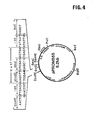
- pPROM 54 is a promoterless plasmid useful in the screening of fragments for the presence of promoters in proper orientation and spacing.
- Novel DNA sequences are provided in which a regulatory domain is provided.
- the domain allows for insertion and exchange of individual functional elements of the domain, as well as subunits of a functional element.
- the domains provide for transcriptional and translational regulatory elements, including elements affecting such regulation, such as operators, enhancers, activators, or the like.
- a domain which provides for regulation of transcription, regulation of translation, both a ribosomal binding site and an initiation codon, a signal sequence for secretion and, as appropriate, a structural gene in reading phase with the signal sequence, which signal sequence may or may not include a processing signal for peptide cleavage.
- the constructs involve selected promoter sequences which bind to the Bacillus ⁇ 55 , ⁇ 37, ⁇ 32, ⁇ 29, ⁇ 28, or other RNA polymerases, provided with convenient restriction sites for introduction and excision from a .ector. Also provided is a Shine-Dalgarno sequence with a plurality of convenient restriction sites so as to allow for introduction to and excision from a vector.
- a signal sequence for secretion is provided with convenient restriction sites for insertion and excision of the signal sequence, as well as insertion downstream and in reading frame with the signal sequence of a structural gene of interest.
- a convenient Bacillus replication system is employed, such as the replication system pUB110.
- the vectors which are available will normally have a marker for selection, which marker allows for resistance to a cytotoxic agent such as an antibiotic, e.g. kanamycin, chloramphenicol, tetracycline, streptomycin, etc.; heavy metal, or the like; or complementation in an auxotrophic host.
- a cytotoxic agent such as an antibiotic, e.g. kanamycin, chloramphenicol, tetracycline, streptomycin, etc.; heavy metal, or the like; or complementation in an auxotrophic host.
- One or more markers may be present, particularly where a shuttle vector is employed, where the vector is capable of replication in two or more hosts.
- the vector may include a replication system for replication in two or more hosts.
- the vector may include a replication system for replication in E . coli, so as to allow for cloning and expansion of the DNA after each of the manipulative
- Suitable host microorganisms of the Bacillus species are B. subtilis, B. licheniformis, B. amylolique- faciens and B. stearothermophilus.
- At least one and preferably two of the subject sequences providing for a particular regulatory region or signal sequence are employed in combination with the sequence to be evaluated.
- the first sequence to be considered is the promoter sequence. This region is involved with the binding of the ⁇ X-RNA polymerase wherein X intends any of the RNA polymerases indicated previously.
- the sequence may be synthetic or wild-type.
- One synthetic promoter will have the following sequence:
- the subject synthetic sequence which is recognized by the ⁇ 55-RNA polymerase has a number of significant features, allowing for the individual substitution of the -10 region or the -35 region by digestion with restriction enzymes HindIII or XhoI and SstI or digestion with EcoRI and HindIII or XhoI, respectively.
- the entire synthtic promoter may be substituted by digestion with EcoRI and SstI.
- a second sythetic promoter, for the r37-RNA polymerase will have the following sequence:
- promoters which may be used to advantage include wild-type promoters, such as the wild-type promoter found in plasmid pPROM 3-4C, deposited at the CBS on November 5, 1985, under No. 699.85, where the promoter is a chromosomal promoter sequence derived from B. licheniformis.
- the above plasmid is derived from the plasmid pPROM 54, where the insertion of the B. licheniformis promoter results in an increase in alpha-amylase production in B. subtilis of 35%, compared with the plasmid pGB 33 carrying the original promoter and Shine-Dalgarno sequences.
- plasmid pPROM SP02 Another promoter derived from a bacteriophage promoter sequence is present in plasmid pPROM SP02, deposited at the CBS on November 5, 1986, under No. 698.85.
- This plasmid is also derived from the plasmid pPROM 54, by insertion-of a promoter sequence from the bacteriophage sequence derived from the plasmid pPL 608, which is described by Williams et al. (1981), supra.
- the insertion of the bacteriophage promoter results in an increase of alpha-amylase production in B. subtilis of 37% over the natural promoter.
- promoter sequences may be substituted by any other promoter sequence, from any source, where it is intended to determine the efficiency of such promoter in a Bacillus host.
- promoter sequences, or portions of promoter sequences, either synthetic or natural, such as the -10 region or the -35 region consensus sequences may be incorporated for evaluation, by ligating such DNA sequences to one or more of the other sequences provided in accordance with this invention.
- the next region of interest is the Shine-Dalgarno sequence or ribosome binding region.
- a synthetic region may be suitably employed having the following sequence:
- the third sequence which is employed in the subject invention is the signal sequence of alpha-amylase, which may be conveniently joined to the region coding for the mature alpha-amylase or to a different gene resulting in a hybrid gene.
- a convenient restriction site is provided between the alpha-amylase signal sequence and the remainder of the alpha-amylase gene, so as to allow for substitution of the region coding for the mature alpha-amylase.
- Each of the fragments which are employed provide for one or more restriction sites which allow for introduction and excision of the individual fragments.
- polylinkers or one or more restriction sites desirably unique restriction sites, are present within and between the regions for convenient insertion or excision of sequences.
- the polylinker will have at least two restiction sites and usually not more than about six restriction sites, more usually not more than about four restriction sites, frequently unique restriction sites. Exemplary restriction enzyme recognition sites have been indicated previously.
- the constructs of the subject invention may be prepared in accordance with conventional ways.
- the substitution by other sequences of the above regions may require modification of such other sequences.
- Modifications may include the use of linkers, adapters, in vitro mutagenesis, resection, repair, primer repair, or the like, where restriction sites may be introduced or removed, termini modified, etc.
- a convenient host such as E. coli
- isolate the new construct and establish the presence of the correct sequence by restriction mapping, sequencing, or the like.
- the construct Once the construct is completed, it may then be transferred to a vector capable of replication in a Bacillus host or a shuttle vector may be used for the construct, which allows for cloning in E. coli and direct transfer to the Bacillus host.
- the fishing plasmid has two regions necessary for detection of a promoter region.
- the first region is a promoter screening region and the second region is a transformant selection region.
- the screening region comprises in the directibn of transcription, a region of from about 4 to 100bp having one or more unique restriction sites, usually not more than about 6, and lacking any transcriptional initiation activity.
- Downstream from the restriction site region is a ribosomal binding site region of from about 5 to 50 bp, including the non-coding nucleotides on either side of the Shine-Dalgarno consensus sequence.
- the sequence may be natural occurring or synthetic.
- the ribosomal binding region is followed by a structural gene having a signal sequence for secretion.
- the structural gene expresses a product which can be readily detected by a simple chemical reaction without the possibility of significant interference from endogenous host materials.
- alpha-amylase which can be detected with a combination of amylose and iodine, where discharge of the color indicates the expression of alpha-amylase and the presence of a promoter in the restriction site region.
- the second region provides for selection of transformants.
- This region will normally encode a gene imparting antibiotic resistance, so that only transformants having the plasmid will survive when grown in medium containing an otherwise cytotoxic amount of the antibiotic. Resistance to neomycin, tetracycline, penicillin, kanamycin, etc. may be provided with the appropr:ate genes.
- Both the screening and selection regions will be joined to a replication system functional in Bacillus.
- Other functional regions may be present in the plasmid, such as a replication system for E. coli for cloning.
- the fishing or screening method will involve fragmenting DNA from a Bacillus or other host e.g. virus, which may have regions capable of transcriptional initiation in Bacillus.
- the fragments may be mechanically produced or by using one or more restriction enzymes, particularly ones that have complementary ends to the restriction sites present in the restriction site region. Fragments as small as 20bp and up to about 5kbp, usually 2kbp, may be obtained for screening, usually from about 50bp to lkbp.
- the fragments are inserted into the fishing plasmid in accordance with conventional ways.
- the resulting plasmid library may then be transformed into a Bacillus host and the transformants selected by means of the antibiotic resistance.
- Surviving Bacillus transformants may then be screened for active promoters by contacting clones with amylose and iodine and isolating those clones which become surrounded by a clear zone.
- Transformation of Bacillus may be carried out in accordance with conventional ways. See, for example Anagnostopoulos and Spizizen, J. Bacteriol. (1961) 81: 741-748. Transformants may then be selected in accordance with the nature of the marker.
- structural genes may be evaluated for their ability to be expressed and secreted, where regulatory regions and the structural genes may be mixed and matched to provide for efficient production of the desired product.
- the production including secretion of a peptide may be determined and compared to other regulatory and functional sequences.
- Chromosomal DNA of B. licheniformis, strain T5, deposited at the CBS on July 6, 1983, under No. 470.83 was isolated from 3 1 of cultures which had grown overnight at 37°C, under aeration.
- the cells were centrifuged for 10 min. in a Sorvall GSA rotor at 10,000rpm, suspended in 10 ml of sucrose-Tris buffer which contained 25% by weight of sucrose and 50mM Tris-HCl at pH 8.0, and lysed by addition of 0.5 ml of lysozyme solution (20 mg/ml) and subsequently 15 min. incubation at 37°C. After addition of 2 ml of EDTA (0.5M) and 5 min.
- B. subtilis 1-85 containing plasmid pGB 33, deposited at the CBS under No. 466.83 (see EPA 134048), was cultured overnight in 1 1 of minimal medium to which 10 mg/ml neomycin had been added. After centrifuging for 15 min. in a Sorvall model GSA rotor at 5,000rpm and resuspending in 15 ml of sucrose-Tris, the cells were lysed and treated with EDTA and SDS (see Example I). After addition of NaCl to a final concentration of 1M, the lysate was stored overnight at 4°C and subsequently centrifuged for 15 min. at 12,500rpm in a Sorvall type SS 34 rotor.
- the uppermost 70% (by volume) of the supernatant liquid was treated for 30 min. at 37°C with 20 ⁇ g/ml of DNAse-free RNAse, and extracted with a 1:1 mixture of phenol-chloroform and subsequently with pure chloroform.
- the DNA was precipitated from the extracted supernatant liquid by addition of 0.2 part of 5M NaCl and 0.25 part of 40% by weight polyethylene glycol 6000, followed by incubation_at 4°C overnight. After precipitation and centrifugation (30 min. at 12,500rpm, Sorvall type SS 34 the DNA was resuspended in 2-3 ml of TE buffer (see Example I) and kept at pH 12.0 for 10-15 min. with the aid of 4N NaOH. Thereafter the pH was returned to 8.5 and the mixture was extracted with phenol. After precipitation with ethanol, the plasmid DNA was resuspended in a small volume of TE buffer.
- oligonucleotide sequences were synthesized with the aid of a Biosearch Synthesis Automation Machine and were purified by means of HPLC, extraction with phenol-chloroform (1:1) and precipitation with ethanol:
- the oligonucleotides A and B were kinased by incubating a mixture of 5 pg of the two oligonucleotides for 1 h at 37°C with 60 pl of 1mM ATP, 5 ⁇ l of 10 x kinase mix (0.5M Tris-HC1 pH 7.0, 0.1M MgCl 2 , 50mM dithiothreitol, lmM spermidine, 1mM EDTA) and 3 ⁇ l of T 4 -kinase (Gibco, 10U/ ⁇ l) in a volume of 50 pl.
- the kinased oligonucleotides were subsequently annealed by 5 min. incubation at 100°C followed by 30 min. incubation at 65°C. After purification with phenol-chloroform (1:1) and precipitation with ethanol, the DNA was resuspended in a small volume of TE buffer.
- the digested plasmid-DNA was resuspended in 59 ⁇ l of Ba131 mix (120 ⁇ l of 100mM Tris-HCl pH 8.1, 72 ⁇ l of 100mM MgCl2, 72 ⁇ l of 100mM CaCl2, 120 pl of 1M NaCl, 156 ⁇ l of H 2 0 and 1 ⁇ l of Ba131 exonuclease (Gibco 1.2U/ ⁇ l)). After 3.5 min. incubation at 15°C, the material was again extracted with phenol-chloroform (1:1) and reprecipitated with ethanol.
- the DNA was digested with the restriction enzyme PstI, extracted with phenol-chloroform (1:1), precipitated with ethanol and resuspended in 20 ⁇ l of a ligase mix which contained 20mM Tris-HC1 pH 7.6, lOmM MgCl 2 , lOmM dithiothreitol, 0.5mM ATP, 1 ⁇ l E. coli phage M13mp10 (digested with the restriction enzymes HincII and PstI) and 1 ⁇ l of T 4 ligase (Boehringer 1U/ ⁇ l), after which ligation was carried out overnight at 4°C (see Fig. 2).
- the plasmid pPROM 54 in B. subtilis 1A40 (amy-, lys-, met-, trp-) was deposited at the CBS on November 5, 1985 under No. 696.85.
- chromosomal DNA isolated from B. licheniformis strain T5 (Example I) were cut with RsaI, HaeIII, AluI, HincII and EcoRV and, after purification with phenol-chloroform and precipitation with ethanol, were ligated to 1 ⁇ g of pPROM 54 (Example IV), restricted with SmaI.
- Another portion of chromosomal DNA from B. licheniformis strain T 5 was digested with EcoRI under Eco * conditions, purified, precipitated and ligated to 1 ⁇ g of pPROM 54, linearised with E c oRI. The ligated mixtures were transformed into B.
- subtilis lA40 (amy-, lys-, met - , trp-) using the method described by Anagnostopoulos and Spizizen, J. Bacteriol. (1981) 81:741-746. Transformants were first selected for neomycin/kanamycin resistance on minimal agar plates to which 0.02% (w/v) of casamino acids (Difco) and 10 ⁇ g/ml neomycin were added.
- transformants were subsequently analyzed for the presence of a promotor sequence by selection in respect of the capacity achieved for the synthesis of alpha-amylase, which was done by looking for halos after having poured a solution of 0.6% (w/v) of KI and 0.3% (w/v) of 1 2 over the plates.
- the transformants thus selected were used for fermentation production of alpha-amylase in comparison with production under the influence of the native alpha-amylase regulatory region.
- the selected transformants were also used as the source for recombinant DNA plasmids.
- One of the selected transformants comprised the plasmid pPROM 3-4C.
- This plasmid in B. subtilis 1A40 (amy-, lys-, met - , trp-), was deposited at the CBS on November 5, 1985 under No. 699.85.
- the plasmid pPROM 55s in B. subtilis lA40 (amy-, lys-, met-, trp-) was deposited at the CBS on November 5, 1985 under No. 697.85.
- the quantities of alpha-amylase produced, in comparison with the original B. subtilis strain having the starting plasmid pGB 33 (bearing the unmodified alpha-amylase gene) are shown in Table I.
- functional sequences can be readily isolated and evaluated by substitution or insertion of regulatory regions, signal sequences, or structural genes into a designed construct.
- the resulting constructs may then by introduced into a Bacillus host and the efficiency of expression and secretion determined.
- Bacillus libraries or libraries from other hosts which may have regulatory regions functional in Bacillus may be screened for their use in Bacillus.
- the promoters, ribosomal binding sites and signal sequences may be evaluated from a wide variety of hosts, such as viruses, microorganisms, and the like.
Landscapes
- Health & Medical Sciences (AREA)
- Genetics & Genomics (AREA)
- Life Sciences & Earth Sciences (AREA)
- Engineering & Computer Science (AREA)
- Chemical & Material Sciences (AREA)
- Biomedical Technology (AREA)
- Wood Science & Technology (AREA)
- Biotechnology (AREA)
- Zoology (AREA)
- Bioinformatics & Cheminformatics (AREA)
- Organic Chemistry (AREA)
- General Engineering & Computer Science (AREA)
- Molecular Biology (AREA)
- Microbiology (AREA)
- Biochemistry (AREA)
- General Health & Medical Sciences (AREA)
- Plant Pathology (AREA)
- Biophysics (AREA)
- Physics & Mathematics (AREA)
- Medicinal Chemistry (AREA)
- Micro-Organisms Or Cultivation Processes Thereof (AREA)
- Saccharide Compounds (AREA)
- Measuring Or Testing Involving Enzymes Or Micro-Organisms (AREA)
- Enzymes And Modification Thereof (AREA)
- Preparation Of Compounds By Using Micro-Organisms (AREA)
- Peptides Or Proteins (AREA)
Priority Applications (1)
| Application Number | Priority Date | Filing Date | Title |
|---|---|---|---|
| AT86201951T ATE56989T1 (de) | 1985-11-08 | 1986-11-10 | Plasmid zur analyse und klonierung einer regulationsregion von bacillus. |
Applications Claiming Priority (2)
| Application Number | Priority Date | Filing Date | Title |
|---|---|---|---|
| NL8503074 | 1985-11-08 | ||
| NL8503074 | 1985-11-08 |
Publications (2)
| Publication Number | Publication Date |
|---|---|
| EP0224294A1 true EP0224294A1 (de) | 1987-06-03 |
| EP0224294B1 EP0224294B1 (de) | 1990-09-26 |
Family
ID=19846830
Family Applications (1)
| Application Number | Title | Priority Date | Filing Date |
|---|---|---|---|
| EP86201951A Expired - Lifetime EP0224294B1 (de) | 1985-11-08 | 1986-11-10 | Plasmid zur Analyse und Klonierung einer Regulationsregion von Bacillus |
Country Status (9)
| Country | Link |
|---|---|
| US (1) | US5024943A (de) |
| EP (1) | EP0224294B1 (de) |
| JP (1) | JPS62181789A (de) |
| AT (1) | ATE56989T1 (de) |
| DE (1) | DE3674548D1 (de) |
| DK (1) | DK533286A (de) |
| ES (1) | ES2031818T3 (de) |
| FI (1) | FI864547L (de) |
| PT (1) | PT83714B (de) |
Cited By (9)
| Publication number | Priority date | Publication date | Assignee | Title |
|---|---|---|---|---|
| EP0424473A4 (en) * | 1988-07-05 | 1992-12-09 | Baylor College Of Medicine | Antisense oligonucleotide antibiotics complementary to the macromolecular synthesis operon, methods of treating bacterial infections and methods for identification of bacteria |
| US5304637A (en) * | 1987-07-13 | 1994-04-19 | Gist-Brocades N.V. | Expression and purification of human interleukin-3 and muteins thereof |
| US5364782A (en) * | 1989-06-29 | 1994-11-15 | Gist-Brocades N.V. | Mutant microbial α-amylases with increased thermal, acid and/or alkaline stability |
| US5529917A (en) * | 1985-08-09 | 1996-06-25 | Gist-Brocades | Compositions and methods for making lipolytic enzymes |
| US5830735A (en) * | 1987-03-06 | 1998-11-03 | Gist-Brocades Nv | Method for producing lipolytic enzymes using transformed Pseudomonas |
| US6238889B1 (en) | 1986-12-16 | 2001-05-29 | Dsm N.V. | Molecular cloning and expression of the Pro8 isoform of human IL-3 |
| WO2001021772A3 (en) * | 1999-09-21 | 2002-03-07 | Omnigene Bioproducts | Methods and microorganisms for production of panto-compounds |
| US6384194B1 (en) | 1987-12-16 | 2002-05-07 | Dsm N.V. | Expression and purification of human interleukin-3 and muteins thereof |
| US8232081B2 (en) | 1999-09-21 | 2012-07-31 | Basf Se | Methods and microorganisms for production of panto-compounds |
Families Citing this family (9)
| Publication number | Priority date | Publication date | Assignee | Title |
|---|---|---|---|---|
| WO2009149283A1 (en) * | 2008-06-06 | 2009-12-10 | Danisco Us Inc. | Saccharification enzyme composition |
| WO2009149419A2 (en) * | 2008-06-06 | 2009-12-10 | Danisco Us Inc. | Variant alpha-amylases from bacillus subtilis and methods of use, thereof |
| JP5560266B2 (ja) * | 2008-06-06 | 2014-07-23 | ダニスコ・ユーエス・インク | バシルススブチリス(B.subtilis)由来アルファ‐アミラーゼを用いるデンプンからのグルコースの生産 |
| WO2010020589A1 (en) * | 2008-08-21 | 2010-02-25 | Novozymes A/S | Microfluidic device screening method |
| EP2362896A2 (de) | 2008-11-11 | 2011-09-07 | Danisco US Inc. | Bacillus subtilisin mit mindestens einer kombinierbaren mutation |
| US20100192985A1 (en) | 2008-11-11 | 2010-08-05 | Wolfgang Aehle | Compositions and methods comprising serine protease variants |
| WO2010056635A1 (en) | 2008-11-11 | 2010-05-20 | Danisco Us Inc. | Compositions and methods comprising a subtilisin variant |
| CN101434308B (zh) * | 2008-11-12 | 2010-08-25 | 中材科技股份有限公司 | 桶 |
| IN2012DN02731A (de) | 2009-10-23 | 2015-09-11 | Danisco Us Inc |
Citations (1)
| Publication number | Priority date | Publication date | Assignee | Title |
|---|---|---|---|---|
| EP0134048A1 (de) * | 1983-07-06 | 1985-03-13 | Gist-Brocades N.V. | Molekulare Klonierung und Expression in industriellen Mikroorganismen |
Family Cites Families (4)
| Publication number | Priority date | Publication date | Assignee | Title |
|---|---|---|---|---|
| GB2048894A (en) * | 1979-05-11 | 1980-12-17 | Gist Brocades Nv | Plasmid |
| US4711843A (en) * | 1980-12-31 | 1987-12-08 | Cetus Corporation | Method and vector organism for controlled accumulation of cloned heterologous gene products in Bacillus subtilis |
| FI64813C (fi) * | 1980-12-31 | 1984-01-10 | Ilkka Antero Palva | Foerfarande foer producering av ett utvalt aeggviteaemne och vid foerfarandet anvaenda rekombinantplasmidvektorer |
| US4624926A (en) * | 1981-01-02 | 1986-11-25 | The Research Foundation Of State University Of New York | Novel cloning vehicles for polypeptide expression in microbial hosts |
-
1986
- 1986-11-04 US US06/927,249 patent/US5024943A/en not_active Expired - Fee Related
- 1986-11-07 DK DK533286A patent/DK533286A/da not_active Application Discontinuation
- 1986-11-07 FI FI864547A patent/FI864547L/fi not_active Application Discontinuation
- 1986-11-07 JP JP61265399A patent/JPS62181789A/ja active Pending
- 1986-11-10 AT AT86201951T patent/ATE56989T1/de active
- 1986-11-10 PT PT83714A patent/PT83714B/pt not_active IP Right Cessation
- 1986-11-10 ES ES198686201951T patent/ES2031818T3/es not_active Expired - Lifetime
- 1986-11-10 EP EP86201951A patent/EP0224294B1/de not_active Expired - Lifetime
- 1986-11-10 DE DE8686201951T patent/DE3674548D1/de not_active Expired - Fee Related
Patent Citations (1)
| Publication number | Priority date | Publication date | Assignee | Title |
|---|---|---|---|---|
| EP0134048A1 (de) * | 1983-07-06 | 1985-03-13 | Gist-Brocades N.V. | Molekulare Klonierung und Expression in industriellen Mikroorganismen |
Non-Patent Citations (3)
| Title |
|---|
| GENE, vol. 26, 1983, pages 313-315, Elsevier Science Publishers, Amsterdam, NL; L. BAND et al.: "Construction of a vector for cloning promoters in Bacillus subtilis" * |
| JOURNAL OF BACTERIOLOGY, vol. 146, no. 3, June 1981, pages 1162-1165; D.M. WILLIAMS et al.: "Cloning restriction fragments that promote expression of a gene in Bacillus subtilis" * |
| NATURE, vol. 293, no. 5830, 24th September 1981, pages 309-311, Macmillan Journals Ltd, Chesham, Bucks, GB; D.S. GOLDFARB et al.: "Expression of Tn9-derived chloramphenicol resistance in Bacillus subtilis" * |
Cited By (10)
| Publication number | Priority date | Publication date | Assignee | Title |
|---|---|---|---|---|
| US5529917A (en) * | 1985-08-09 | 1996-06-25 | Gist-Brocades | Compositions and methods for making lipolytic enzymes |
| US6238889B1 (en) | 1986-12-16 | 2001-05-29 | Dsm N.V. | Molecular cloning and expression of the Pro8 isoform of human IL-3 |
| US5830735A (en) * | 1987-03-06 | 1998-11-03 | Gist-Brocades Nv | Method for producing lipolytic enzymes using transformed Pseudomonas |
| US5304637A (en) * | 1987-07-13 | 1994-04-19 | Gist-Brocades N.V. | Expression and purification of human interleukin-3 and muteins thereof |
| US6384194B1 (en) | 1987-12-16 | 2002-05-07 | Dsm N.V. | Expression and purification of human interleukin-3 and muteins thereof |
| EP0424473A4 (en) * | 1988-07-05 | 1992-12-09 | Baylor College Of Medicine | Antisense oligonucleotide antibiotics complementary to the macromolecular synthesis operon, methods of treating bacterial infections and methods for identification of bacteria |
| US5364782A (en) * | 1989-06-29 | 1994-11-15 | Gist-Brocades N.V. | Mutant microbial α-amylases with increased thermal, acid and/or alkaline stability |
| WO2001021772A3 (en) * | 1999-09-21 | 2002-03-07 | Omnigene Bioproducts | Methods and microorganisms for production of panto-compounds |
| EP2163629A3 (de) * | 1999-09-21 | 2010-06-02 | Basf Se | Verfahren und Mikroorganismen zur Produktion von Panto-Verbindungen |
| US8232081B2 (en) | 1999-09-21 | 2012-07-31 | Basf Se | Methods and microorganisms for production of panto-compounds |
Also Published As
| Publication number | Publication date |
|---|---|
| US5024943A (en) | 1991-06-18 |
| PT83714B (pt) | 1988-08-17 |
| ATE56989T1 (de) | 1990-10-15 |
| DE3674548D1 (de) | 1990-10-31 |
| PT83714A (en) | 1986-12-01 |
| JPS62181789A (ja) | 1987-08-10 |
| FI864547A7 (fi) | 1987-05-09 |
| EP0224294B1 (de) | 1990-09-26 |
| FI864547L (fi) | 1987-05-09 |
| DK533286A (da) | 1987-05-09 |
| DK533286D0 (da) | 1986-11-07 |
| ES2031818T3 (es) | 1993-01-01 |
| FI864547A0 (fi) | 1986-11-07 |
Similar Documents
| Publication | Publication Date | Title |
|---|---|---|
| US5024943A (en) | Regulatory region cloning and analysis plasmid for bacillus | |
| Bahl et al. | A general method for inserting specific DNA sequences into cloning vehicles | |
| US4868111A (en) | Gram-positive expression control sequences | |
| Miller | Primary structure of the himA gene of Escherichia coli: homology with DNA-binding protein HU and association with the phenylalanyl-tRNA synthetase operon | |
| US6808896B2 (en) | Method for stable chromosomal multi-copy integration of genes | |
| Yamagata et al. | Cloning and characterization of the 5'region of the cell wall protein gene operon in Bacillus brevis 47 | |
| AU643511B2 (en) | Bacterial vectors | |
| Baty et al. | Extracellular release of colicin A is non‐specific. | |
| GB2110694A (en) | Stabilizing and selecting cells | |
| JPH0648987B2 (ja) | 部分的合成遺伝子の発現によるペプチドの製法 | |
| GB2084584A (en) | Method for stabilizing and selecting host cells containing recombinant dna | |
| JP2001503249A (ja) | 選択された生物のための人工プロモーターライブラリー及び該ライブラリー由来のプロモーター | |
| Meinhardt et al. | Highly efficient expression of homologous and heterologous genes in Bacillus megaterium | |
| Murotsu et al. | Identification of the minimal essential region for the replication origin of miniF plasmid | |
| CN1177004A (zh) | 改进的核黄素生产方法 | |
| US4987078A (en) | Plasmid vectors for expression in Escherichia coli and/or Bacillus subtilis | |
| Porter et al. | The single-stranded-DNA-binding protein encoded by the Escherichia coli F factor can complement a deletion of the chromosomal ssb gene | |
| Leemans et al. | A broad-host-range expression vector based on the pL promoter of coliphage lambda: regulated synthesis of human interleukin 2 in Erwinia and Serratia species | |
| EP0151760A1 (de) | DNA und ihre Verwendung | |
| EP0228726B1 (de) | Verfahren zur Herstellung von Proteinen unter Verwendung von transformierten Milchsäurebakterien | |
| EP0063494A2 (de) | Verfahren zum Produzieren von Protein aus einem Mikroorganismus, Mikroorganismen zur Verwendung in solchem Verfahren und ihre Erzeugung, Vektoren zur Verwendung in dieser Erzeugung und Protein produziert durch diesen Mikroorganismus und von diesen Mikroorganismen abgeleitete transformierte Kulturen | |
| KR100393297B1 (ko) | 돌연변이체aox2프로모터,이를보유한벡터,형질전환체및이종단백질의제조방법 | |
| Valla et al. | Conjugative transfer of the naturally occurring plasmids of Acetobacter xylinum by IncP-plasmid-mediated mobilization | |
| HU197351B (en) | Process for preparing polypeptide from genetically codeable aminoacids | |
| Kenri et al. | Construction and characterization of an Escherichia coli mutant deficient in the metY gene encoding tRNAf2Met: either tRNAf1Met or tRNAf2Met is required for cell growth |
Legal Events
| Date | Code | Title | Description |
|---|---|---|---|
| PUAI | Public reference made under article 153(3) epc to a published international application that has entered the european phase |
Free format text: ORIGINAL CODE: 0009012 |
|
| AK | Designated contracting states |
Kind code of ref document: A1 Designated state(s): AT BE CH DE ES FR GB GR IT LI LU NL SE |
|
| 17P | Request for examination filed |
Effective date: 19870616 |
|
| 17Q | First examination report despatched |
Effective date: 19881201 |
|
| GRAA | (expected) grant |
Free format text: ORIGINAL CODE: 0009210 |
|
| AK | Designated contracting states |
Kind code of ref document: B1 Designated state(s): AT BE CH DE ES FR GB GR IT LI LU NL SE |
|
| PG25 | Lapsed in a contracting state [announced via postgrant information from national office to epo] |
Ref country code: GR Free format text: LAPSE BECAUSE OF FAILURE TO SUBMIT A TRANSLATION OF THE DESCRIPTION OR TO PAY THE FEE WITHIN THE PRESCRIBED TIME-LIMIT Effective date: 19900926 |
|
| REF | Corresponds to: |
Ref document number: 56989 Country of ref document: AT Date of ref document: 19901015 Kind code of ref document: T |
|
| ITF | It: translation for a ep patent filed | ||
| REF | Corresponds to: |
Ref document number: 3674548 Country of ref document: DE Date of ref document: 19901031 |
|
| ET | Fr: translation filed | ||
| PLBE | No opposition filed within time limit |
Free format text: ORIGINAL CODE: 0009261 |
|
| STAA | Information on the status of an ep patent application or granted ep patent |
Free format text: STATUS: NO OPPOSITION FILED WITHIN TIME LIMIT |
|
| 26N | No opposition filed | ||
| ITTA | It: last paid annual fee | ||
| PGFP | Annual fee paid to national office [announced via postgrant information from national office to epo] |
Ref country code: FR Payment date: 19921010 Year of fee payment: 7 |
|
| PGFP | Annual fee paid to national office [announced via postgrant information from national office to epo] |
Ref country code: AT Payment date: 19921013 Year of fee payment: 7 |
|
| PGFP | Annual fee paid to national office [announced via postgrant information from national office to epo] |
Ref country code: CH Payment date: 19921015 Year of fee payment: 7 |
|
| PGFP | Annual fee paid to national office [announced via postgrant information from national office to epo] |
Ref country code: GB Payment date: 19921016 Year of fee payment: 7 |
|
| PGFP | Annual fee paid to national office [announced via postgrant information from national office to epo] |
Ref country code: SE Payment date: 19921019 Year of fee payment: 7 Ref country code: DE Payment date: 19921019 Year of fee payment: 7 |
|
| PGFP | Annual fee paid to national office [announced via postgrant information from national office to epo] |
Ref country code: BE Payment date: 19921026 Year of fee payment: 7 |
|
| PGFP | Annual fee paid to national office [announced via postgrant information from national office to epo] |
Ref country code: LU Payment date: 19921109 Year of fee payment: 7 |
|
| PGFP | Annual fee paid to national office [announced via postgrant information from national office to epo] |
Ref country code: ES Payment date: 19921120 Year of fee payment: 7 |
|
| PGFP | Annual fee paid to national office [announced via postgrant information from national office to epo] |
Ref country code: NL Payment date: 19921130 Year of fee payment: 7 |
|
| REG | Reference to a national code |
Ref country code: ES Ref legal event code: FG2A Ref document number: 2031818 Country of ref document: ES Kind code of ref document: T3 |
|
| EPTA | Lu: last paid annual fee | ||
| PG25 | Lapsed in a contracting state [announced via postgrant information from national office to epo] |
Ref country code: LU Free format text: LAPSE BECAUSE OF NON-PAYMENT OF DUE FEES Effective date: 19931110 Ref country code: GB Effective date: 19931110 Ref country code: AT Effective date: 19931110 |
|
| PG25 | Lapsed in a contracting state [announced via postgrant information from national office to epo] |
Ref country code: SE Effective date: 19931111 Ref country code: ES Free format text: LAPSE BECAUSE OF THE APPLICANT RENOUNCES Effective date: 19931111 |
|
| PG25 | Lapsed in a contracting state [announced via postgrant information from national office to epo] |
Ref country code: LI Effective date: 19931130 Ref country code: CH Effective date: 19931130 Ref country code: BE Effective date: 19931130 |
|
| BERE | Be: lapsed |
Owner name: GIST-BROCADES N.V. Effective date: 19931130 |
|
| PG25 | Lapsed in a contracting state [announced via postgrant information from national office to epo] |
Ref country code: NL Effective date: 19940601 |
|
| GBPC | Gb: european patent ceased through non-payment of renewal fee |
Effective date: 19931110 |
|
| NLV4 | Nl: lapsed or anulled due to non-payment of the annual fee | ||
| PG25 | Lapsed in a contracting state [announced via postgrant information from national office to epo] |
Ref country code: FR Effective date: 19940729 |
|
| REG | Reference to a national code |
Ref country code: CH Ref legal event code: PL |
|
| PG25 | Lapsed in a contracting state [announced via postgrant information from national office to epo] |
Ref country code: DE Effective date: 19940802 |
|
| REG | Reference to a national code |
Ref country code: FR Ref legal event code: ST |
|
| EUG | Se: european patent has lapsed |
Ref document number: 86201951.0 Effective date: 19940610 |
|
| REG | Reference to a national code |
Ref country code: ES Ref legal event code: FD2A Effective date: 20010402 |
|
| PG25 | Lapsed in a contracting state [announced via postgrant information from national office to epo] |
Ref country code: IT Free format text: LAPSE BECAUSE OF NON-PAYMENT OF DUE FEES;WARNING: LAPSES OF ITALIAN PATENTS WITH EFFECTIVE DATE BEFORE 2007 MAY HAVE OCCURRED AT ANY TIME BEFORE 2007. THE CORRECT EFFECTIVE DATE MAY BE DIFFERENT FROM THE ONE RECORDED. Effective date: 20051110 |