EP0225182B1 - Cephalosporinverbindungen - Google Patents
Cephalosporinverbindungen Download PDFInfo
- Publication number
- EP0225182B1 EP0225182B1 EP86309279A EP86309279A EP0225182B1 EP 0225182 B1 EP0225182 B1 EP 0225182B1 EP 86309279 A EP86309279 A EP 86309279A EP 86309279 A EP86309279 A EP 86309279A EP 0225182 B1 EP0225182 B1 EP 0225182B1
- Authority
- EP
- European Patent Office
- Prior art keywords
- alkyl
- formula
- alkoxy
- compound
- hydrogen
- Prior art date
- Legal status (The legal status is an assumption and is not a legal conclusion. Google has not performed a legal analysis and makes no representation as to the accuracy of the status listed.)
- Expired - Lifetime
Links
- 0 C*C(NC=C)=*(C)[C@@](C)S(C)(C)=C Chemical compound C*C(NC=C)=*(C)[C@@](C)S(C)(C)=C 0.000 description 2
- GDOPTJXRTPNYNR-UHFFFAOYSA-N CC1CCCC1 Chemical compound CC1CCCC1 GDOPTJXRTPNYNR-UHFFFAOYSA-N 0.000 description 1
Classifications
-
- C—CHEMISTRY; METALLURGY
- C07—ORGANIC CHEMISTRY
- C07D—HETEROCYCLIC COMPOUNDS
- C07D501/00—Heterocyclic compounds containing 5-thia-1-azabicyclo [4.2.0] octane ring systems, i.e. compounds containing a ring system of the formula:, e.g. cephalosporins; Such ring systems being further condensed, e.g. 2,3-condensed with an oxygen-, nitrogen- or sulfur-containing hetero ring
- C07D501/14—Compounds having a nitrogen atom directly attached in position 7
- C07D501/16—Compounds having a nitrogen atom directly attached in position 7 with a double bond between positions 2 and 3
- C07D501/20—7-Acylaminocephalosporanic or substituted 7-acylaminocephalosporanic acids in which the acyl radicals are derived from carboxylic acids
- C07D501/24—7-Acylaminocephalosporanic or substituted 7-acylaminocephalosporanic acids in which the acyl radicals are derived from carboxylic acids with hydrocarbon radicals, substituted by hetero atoms or hetero rings, attached in position 3
- C07D501/38—Methylene radicals, substituted by nitrogen atoms; Lactams thereof with the 2-carboxyl group; Methylene radicals substituted by nitrogen-containing hetero rings attached by the ring nitrogen atom; Quaternary compounds thereof
- C07D501/46—Methylene radicals, substituted by nitrogen atoms; Lactams thereof with the 2-carboxyl group; Methylene radicals substituted by nitrogen-containing hetero rings attached by the ring nitrogen atom; Quaternary compounds thereof with the 7-amino radical acylated by carboxylic acids containing hetero rings
-
- A—HUMAN NECESSITIES
- A61—MEDICAL OR VETERINARY SCIENCE; HYGIENE
- A61P—SPECIFIC THERAPEUTIC ACTIVITY OF CHEMICAL COMPOUNDS OR MEDICINAL PREPARATIONS
- A61P31/00—Antiinfectives, i.e. antibiotics, antiseptics, chemotherapeutics
- A61P31/04—Antibacterial agents
-
- C—CHEMISTRY; METALLURGY
- C07—ORGANIC CHEMISTRY
- C07D—HETEROCYCLIC COMPOUNDS
- C07D519/00—Heterocyclic compounds containing more than one system of two or more relevant hetero rings condensed among themselves or condensed with a common carbocyclic ring system not provided for in groups C07D453/00 or C07D455/00
Definitions
- This invention relates to cephalosporin derivatives which have antibacterial activity.
- or -R2 is of the formula -G-CH2-R10 in which G is carbonyl or a direct bond and R10 is phthalimido
- -R2 is of the formula R11R12R13 in which R11, R12 and R13 are (1-4C)alkyl, or R11 is (1-4c)-alkyl and R12 and R13 are joined to form a (3-6C)carbocyclic ring, or R11, R12 and R13 are joined to form a 1-azonia-4-azabicyclo[2,2,2]octane or 1-azonia-3,5,7-triazatricyclo[3,3,1,1 3,7 ]decane, or -R2 is of the formula II in which p is 1 or 2 and R14 and R15 are hydrogen or (1-4C)alkyl, or -R2 is of the formula -P(O)R16R17 in which R16 is hydroxy, (1-4C)alkoxy, (2-8C)dialkylamino, phen
- R2 is hydrogen, methyl, ethyl, isopropyl, t-butyl, cyclopropyl, cyclobutyl, cyclopentyl, cyclohexyl, methylcyclopropyl, methylcyclobutyl, methylcyclopentyl, methylcyclohexyl, cyclopropylmethyl, cyclobutylmethyl, cyclopentylmethyl, allyl, cyclopentenyl, cyclohexenyl, propargyl, methylcarbamoyl, ethylcarbamoyl, phenylcarbamoyl, benzylcarbamoyl, triphenylmethyl, 2-chloroethyl, 2-fluoroethyl, 2-bromoethyl, 2-hydroxyethyl, 3-hydroxypropyl, 2-methoxyethyl, 2-ethoxyethyl, 2-methylthioeth
- R3 is hydrogen or methoxy.
- R4 is hydrogen, methyl, ethyl, n-propyl, isopropyl, 2-fluoroethyl, 2-chloroethyl, 2-hydroxymethyl, 2-methoxyethyl, carboxymethyl, ( R ) and ( S )-1-carboxyethyl, 2-aminoethyl, 2-cyanoethyl, 2-formamidoethyl, allyl, furfuryl, benzyl or 4-pyridylmethyl.
- Particular values for the groups R26 and R28 are hydrogen, fluorine, chlorine, bromine, methyl, ethyl, n-propyl, isopropyl, carboxy, methoxy-carbonyl, ethoxycarbonyl, methoxycarbonylmethyl, ethoxycarbonylmethyl, methoxy, ethoxy, methylthio, ethylthio, cyano, cyanomethyl, 2-cyanoethyl, amino, methylamino, ethylamino, isopropylamino, dimethylamino, benzylamino, (optionally substituted in the benzene ring by nitro), allylamino, 2-aminoethyl-amino, 2-methoxyethylamino, 2-hydroxyethylamino, hydroxy, mercapto, carbamoyl, methylcarbamoyl, ethylcarbamoyl, di
- Particular values for the group R27 are hydrogen, methyl, ethyl, n-propyl, isopropyl, phenyl or benzyl, each optionally substituted by one or two groups selected from fluorine, chlorine, bromine, methyl, ethyl, n-propyl, isopropyl, hydroxy, carboxy and cyano.
- Particular values for the group R29 are hydrogen, methyl, ethyl, n-propyl, isopropyl, t-butyl, methoxymethyl, 2-methoxyethyl, carboxymethyl, 2-carboxyethyl, methoxycarbonylmethyl, 2-methoxycarbonylethyl, carbamoylmethyl, 2-carbamoylethyl, carboxyaminocarbonylmethyl, 2-(carboxyaminocarbonyl)-ethyl, methoxycarbonylaminocarbonylmethyl, 2-(methoxycarbonylaminocarbonyl)ethyl, acetylmethyl, propionylmethyl, benzoylmethyl, hydroxymethyl, 2-hydroxyethyl, methylamino, ethylamino, benzyl, 2-phenethyl, amino, cyclopropyl, cyclobutyl, methoxy, ethoxy, 2-methoxyethoxymethyl, mono
- a particular base which affords a pharmaceutically acceptable cation is, for example, a base containing an alkali metal, (e.g. sodium or potassium) or an alkaline earth metal (e.g. calcium or magnesium), or a primary, secondary or tertiary organic amine (e.g. triethylamine, morpholine, N-methylpiperidine, N-ethylpiperidine, procaine, dibenzylamine or N,N'-dibenzylethylenediamine), or other amine which has been used to form salts with cephalosporins.
- an alkali metal e.g. sodium or potassium
- an alkaline earth metal e.g. calcium or magnesium
- a primary, secondary or tertiary organic amine e.g. triethylamine, morpholine, N-methylpiperidine, N-ethylpiperidine, procaine, dibenzylamine or N,N'-dibenzylethylenediamine
- cephalosporin derivatives of the formula I may be manufactured by methods known in themselves for the manufacture of chemically analogous compounds, The following processes, (R1, R2, R3, R4, R5, R50 and X having the meanings stated above, unless indicated otherwise) are therefore provided as further features of the invention.
- the process of the invention manufactures the compound of the formula I in the form of the zwitterion, and a salt is required, the compound of the formula I in the zwitterionic form is reacted with an acid which affords a pharmaceutically-acceptable anion, or with a base which affords a pharmaceutically-acceptable cation.
- the starting material of the formula X may be prepared by acylation of the appropriate 7-amino-3-azidomethylcephalosporin derivative with an acid of the formula XII, or an activated derivative thereof, followed by reduction of the 3-azidomethyl group to the 3-aminomethyl group. During this process it may be necessary to protect amino and carboxy groups. There is thus obtained the compound of the formula X in which R4 is hydrogen. When R4 is other than hydrogen, the compound in which R4 is hydrogen is then alkylated or benzylated.
- the starting material of the formula XI may be prepared by reaction of the compound of the formula XV with a compound of the formula R5-R40 in which R40 is a displaceable radical. During this reaction it may be necessary to protect the 7-amino, 3'-amino and/or 4-carboxy groups.
- the starting material of the formula XI is particularly valuable and is regarded as a further feature of the invention.
- cephalosporin derivatives of the invention have antibacterial properties.
- they are useful antibacterial agents, many of them having a broad spectrum of activity in vitro against standard laboratory microorganisms, both Gram-negative and Gram- positive, which are used to screen for activity against pathogenic bacteria.
- the antibacterial spectrum and potency of a particular compound may be determined in a standard test system.
- the antibacterial properties of the compounds of the invention may also be demonstrated in conventional mouse protection tests, and the preferred compounds of this invention have MIC50 values of less than 4 ⁇ g./ml. against both Pseudomonas aeruginosa and Staphyllococcus aureus .
- Cephalosporin derivatives have generally been found to be relatively non-toxic to warm-blooded animals, and this generalisation holds true for the compounds of the present invention. A number of compounds were administered to mice at doses in excess of those required to afford protection against bacterial infections, and no overt toxic symptoms or side effects attributable to the administered compounds were noted.
- a pharmaceutical composition which comprises a cephalosporin derivative of the invention in association with a pharmaceutically-acceptable diluent or carrier.
- the pharmaceutical composition of the invention may, for example, be in a form suitable for oral, rectal or parenteral administration, for which purposes it may be formulated by means known to the art into the form of, for example, tablets, capsules, aqueous or oily solutions or suspensions, emulsions, dispersible powders, suppositories and sterile injectable aqueous or oily solutions or suspensions.
- the pharmaceutical composition of the invention may also contain, or be co-administered with, one or mare known drugs selected from other clinically useful antibacterial agents (for example other beta-lactams or aminoglycosides), inhibitors of beta-lactamase (for example clavulanic acid), renal tubular blocking agents (e.g. probenicid) and inhibitors of metabolising enzymes (for example inhibitors of peptidases, for example Z-2-acylamino-3-substituted propenoates).
- drugs selected from other clinically useful antibacterial agents (for example other beta-lactams or aminoglycosides), inhibitors of beta-lactamase (for example clavulanic acid), renal tubular blocking agents (e.g. probenicid) and inhibitors of metabolising enzymes (for example inhibitors of peptidases, for example Z-2-acylamino-3-substituted propenoates).
- a preferred pharmaceutical composition of the invention is one suitable for intravenous, subcutaneous or intramuscular injection, for example a sterile injectable containing between 1 and 10% w/w of the cephalosporin derivative, or one suitable for oral administration in unit dosage form, for example a tablet or capsule which contains between 100 mg. and 1 g. of the cephalosporin derivative.
- the pharmaceutical composition of the invention will normally be administered to man in order to combat infections caused by bacteria, in the same general manner as that employed for cephalothin, cefoxitin, cephradine, ceftazidime and other known clinically used cephalosporin derivatives, due allowance being made in terms of dose levels for the potency of the cephalosporin derivative of the present invention relative to the known clinically used cephalosporins.
- each patient will receive a daily intravenous, subcutaneous or intramuscular dose of 0.5 to 50 g., and preferably 0.5 to 10 g., of the cephalosporin derivative, the composition being administered 1 to 4 times per day.
- the intravenous, subcutaneous and intramuscular dose will be given by means of a bolus injection.
- the intravenous dose may be given by continuous infusion over a period of time, Alternatively each patient will receive a daily oral dose which is approximately equivalent to the daily parenteral dose.
- a preferred daily oral dose is 0.5 to 10 g. of the cephalosporin derivative, the composition being administered 1 to 4 times per day.
- the invention is illustrated, but not limited, by the following Examples.
- the n.m.r. are measured at a field strength of 90 or 400 MHz.
- the n.m.r. solvent was d6DMSO + CD3COOD + TFAd unless otherwise indicated.
- the temperatures are in degrees Centigrade.
- HOAc means acetic acid
- DMF dimethylformamide.
- the quaternised pyrazolo [1,5-a]pyrimidine starting material was prepared as follows: To a solution of 7-methylthiopyrazolo[1,5-a]pyrimidine (1g, 6 mmoles) in methylene chloride (25 ml) was added trimethyloxonium tetrafluoroborate (1g, 6.7 mmoles). After stirring at room temperature for 1 hour, the solid was filtered and used without further purification, nmr 2.93 (s, 3H); 4.27 (s, 3H); 7.2 (d, 1H); 7.55 (d, 1H); 8.6 (d, 1H); 9.0 (d, 1H). Yield 27%.
- the quaternised thieno pyrimidine starting material was prepared as follows: to a solution of 4-methylthiothieno[3,4-d]pyrimidine (1g, 5.5 mmole) in methylene chloride (80 ml) was added trimethyloxonium tetrafluoroborate (730 mg, 4.8 mmole). After stirring overnight, the solid was filtered and washed with methylene chloride. Nmr (in DMSOd6): 2.92 (s, 3H); 4.22 (s, 3H); 8.6 (d, 1H); 9.25 (m, 2H).
- the compound 3-ethylaminomethyl-7-[2-(2-aminothiazol-4-yl)-2-((Z)-1-carboxy-1-methylethoxy imino)acetamido]ceph-3-em-4-carboxylic acid used as starting material in Examples 1, 2, 5, 6 and 8 may be obtained by reductive amination of acetaldehyde (1.1 eq) with 3-aminomethyl-7-[2-(2-aminothiazol-4-yl)-2-((Z)-1-carboxy-1-methylethoxyimino)-acetamido]ceph-3-em-4-carboxylic acid (1.0 eq) in the presence of NaBH3CN (1.0 eq) and Et3N (1.0 eq).
- the acetaldehyde is added dropwise at room temperature in methanol, and the mixture stirred for 1 ⁇ 2 hour.
- the product may be purified by preparative HPLC e.g. using methanol/H2O/HOAc 10:90:1 v/v/v, followed by 15,85,1.
- the compound 3-ethylaminomethyl-7-[2-(2-aminothiazol-4-yl)-2-((Z)-1-carboxycyclopentyloxyimino)-acetamido]ceph-3-em-4-carboxylic acid used as starting material in Example 3 may be prepared by an analogous method starting from 3-aminomethyl-7-[2-(2-aminothiazol-4-yl)-2-((Z-1-carboxycyclopentyloxyimino)acetamido]ceph-3-em-4-carboxylic acid.
- the quaternary heterocycle was prepared by dissolving 4-chloro-1-methyl-4-pyrrolo[2,3-d]pyridazine (Chimie Therapeutique 3 , 348 (1968)) (352mg; 2.1 mmole) in dry dichloromethane (2ml) and adding 129mg (0.48mmole) of trimethyloxonium tetrafluoroborate. After stirring for 4 hours, the solids were removed by filtration yielding 500mg (88%) of the required compound. Nmr in DMSOd6 : 4.17 (s,3H); 4.53 (s,3H); 7.27(d,1H); 8.54(d,1H); 10.39(s,1H).
- the quaternised isoxazolo-pyrimidinium starting material was prepared as follows: To a solution of 3-methyl-4-methylthio isoxazolo[5,4-d]pyrimidine (3g, 0.016 mole) in methylene chloride (50ml) was added trimethyloxonium tetrafluoroborate (2.3g, 0.016 mole). The mixture was stirred at 20°C overnight. After evaporation, the solid was saturated with ether and used without further purification: Nmr (DMSOd6 + CD3COOD+TFAd): 2.7(s,3H); 2.9(s,3H); 4.2(s,3H); 9.4(s,1H). Yield: 70%.
Landscapes
- Chemical & Material Sciences (AREA)
- Organic Chemistry (AREA)
- Health & Medical Sciences (AREA)
- Life Sciences & Earth Sciences (AREA)
- General Health & Medical Sciences (AREA)
- Chemical Kinetics & Catalysis (AREA)
- General Chemical & Material Sciences (AREA)
- Medicinal Chemistry (AREA)
- Nuclear Medicine, Radiotherapy & Molecular Imaging (AREA)
- Pharmacology & Pharmacy (AREA)
- Communicable Diseases (AREA)
- Animal Behavior & Ethology (AREA)
- Oncology (AREA)
- Public Health (AREA)
- Veterinary Medicine (AREA)
- Cephalosporin Compounds (AREA)
- Pharmaceuticals Containing Other Organic And Inorganic Compounds (AREA)
- Peptides Or Proteins (AREA)
- Compounds Of Unknown Constitution (AREA)
- Nitrogen And Oxygen Or Sulfur-Condensed Heterocyclic Ring Systems (AREA)
Claims (8)
- Cephalosporin-Derivate der Formel I,

X für Schwefel, Sauerstoff, Methylen oder Sulfinyl (R- oder S-Konfiguration) steht;
R1 für 2-Aminothiazol-4-yl oder 2-Aminooxazol-4-yl, die jeweils gegebenenfalls in der 5-Stellung durch Fluor, Chlor oder Brom substituiert sind, oder für 5-Aminoisothiazol-3-yl, 5-Amino-1,2,4-thiadiazol-3-yl, 3-Aminopyrazol-5-yl, 3-Aminopyrazol-4-yl, 2-Aminopyrimidin-5-yl, 2-Aminopyrid-6-yl, 4-Aminopyrimidin-2-yl, 2-Amino-1,3,4-thiadiazol-5-yl oder 5-Amino-1-methyl-1,2,4-triazol-3-yl steht;
R 50 für Chloromethylen oder ein Radikal der Formel =N.O.R2 steht, worin
R2 für Wasserstoff, (1-6C)Alkyl, (3-8C)Cycloalkyl, (1-3C)Alkyl(3-6C)cycloalkyl, (3-6C)Cycloalkyl(1-3C)alkyl, (3-6C)Alkenyl, das gegebenenfalls durch Carboxy substituiert ist, (5-8C)Cycloalkenyl, (3-6C)Alkinyl, (2-5C)Alkylcarbamoyl, Phenylcarbamoyl, Benzylcarbamoyl, (1-4C)Alkylcarbamoyl(1-4C)alkyl, Di(1-4C)alkylcarbamoyl(1-4C)alkyl, (1-4C)Halogenoalkyl-carbamoyl(1-4C)alkyl, Triphenylmethyl, (1-3C)Halogenoalkyl, (2-6C)Hydroxyalkyl, (1-4C)Alkoxy(2-4C)alkyl, (1-4C)Alkylthio(2-4C)alkyl, (1-4C)Alkansulfinyl(1-4C)alkyl, (1-4C)Alkansulfonyl(1-4C)alkyl, (2-6C)Aminoalkyl, (1-4C)Alkylamino(1-6C)alkyl, (2-8C)Dialkylamino(2-6C)alkyl, (1-5C)Cyanoalkyl, 3-Amino-3-carboxypropyl, 2-(Amidinothio)ethyl, 2-(N-Aminoamidinothio)ethyl, Tetrahydropyran-2-yl, Thietan-3-yl, 2-Oxopyrrolidinyl oder 2-Oxotetrahydrofuran-3-yl steht, oder
R2 für ein Radikal der Formel -(CH₂)n-R6 steht, worin n für 1 bis 4 steht und R6 für Piperidino, Pyrrolidino, Morpholino, Piperazino oder N-Methylpiperazino steht, wobei jeder Wert R6 gegebenenfalls substituiert ist durch (1-4C)Alkyl, Phenyl oder Benzyl, oder
R2 für ein Radikal der Formel -(CH)m-W-R7 steht, worin m für 0 bis 3 steht, W für Schwefel oder eine direkte Bindung steht und R 7 für Phenyl oder Pyridinio(1-4C)alkylen oder für Pyridyl, Imdidazolyl, 1,3,4-Thiadiazolyl, Tetrazolyl, 1-(1-4C)Alkyltetrazolyl, Thiazolyl, Isothiazolyl oder Isoxazolyl, worin die Bindung mit W über Kohlenstoff oder ungeladenen Stickstoff erfolgt, steht, wobei jeder Wert R7 gegebenenfalls, sofern möglich, durch eine oder zwei Gruppen substituiert ist, die ausgewählt sind aus (1-4C)Alkyl, Amino, Hydroxy, Carboxy, Carbamoyl, Nitro, (2-5C)Alkoxycarbonyl, Cyano oder Sulfo, oder
R2 für ein Radikal der Formel -(CH₂)n-CO-R8 steht, worin n für 1 bis 4 steht und R 8 für (1-4C)Alkyl, Phenyl oder Benzyl steht, oder
R2 für ein Radikal der Formel -COR9 oder -(CH₂)n-OCO-R9 steht, worin n für 1 bis 4 steht und R9 für Wasserstoff (1-4C)Alkyl, (1-4C)Halogenoalkyl, Phenyl oder Benzyl steht, wobei jede Phenyl- oder Benzyl-Gruppe gegebenenfalls durch 1, 2 oder 3 Substituenten substituiert ist, die ausgewählt sind aus (1-6C)Alkyl, (2-6C)Alkanoyloxy und Hydroxy, oder
R2 für ein Radikal der Formel -G-CH₂-R10 steht, worin G für Carbonyl oder eine direkte Bindung steht und R10 für Phthalimido steht, oder
R2 für ein Radikal der Formel -N⁺R11R12R13 steht, worin R11, R12 und R13 für (1-4C)Alkyl stehen oder R11 für (1-4C)Alkyl steht und R12 und R13 unter Bildung eines (3-6C)carbocyclischen Rings verbunden sind oder R11, R12 und R13 unter Bildung von 1-Azonia-4-azabicyclo[2,2,2]octan oder 1-Azonia-3,5,7-triazatricyclo[3,3,1,13,7]decan verbunden sind, oder
R2 für ein Radikal der Formel II
R2 für ein Radikal der Formel -P(O)R16R17 steht, worin R16 für Hydroxy, (1-4C)Alkoxy, (2-8C)Dialkylamino, Phenoxy, Phenylamino oder einen der oben für R6 angegebenen Werte steht und R17 für (1-4C)Alkyl, (1-4C)Alkoxy, (2-8C)Dialkylamino, Phenoxy, Phenylamino, Piperidino, Pyrrolidino, Morpholino, Piperazino oder N-Methylpiperazino steht, oder
R2 für ein Radikal der Formel -CH₂P(O)R18R19 steht, worin R18 und R19 für Hydroxy oder (1-4C)Alkoxy stehen, oder R2 für ein Radikal der Formel -CH(SR20)COOR21 steht, worin R20 für (1-4C)Alkyl steht und R21 für Wasserstoff oder (1-6C)Alkyl steht, oder
R2 für ein Radikal der Formel III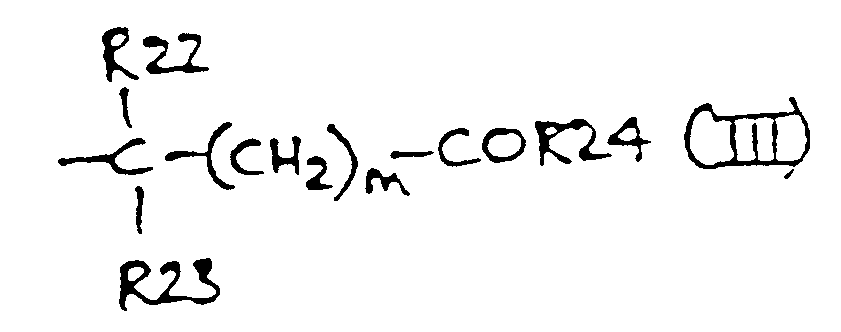
R2 für ein Radikal der Formel -*CH(COOH)Ph steht, worin Ph für einen Benzol-Ring steht, der gegebenenfalls durch 1, 2 oder 3 Substituenten substituiert ist, die ausgewählt sind aus (1-6C)Alkyl, (2-6C)Alkanoyloxy und Hydroxy, und worin das mit * bezeichnete chirale Zentrum entweder die absolute R- oder S-Konfiguration oder diejenige eines Racemats aufweist,
mit der Maßgabe, daß, wenn R2 Phenyl enthält, sofern nichts anderes angegeben ist, das Phenyl gegebenenfalls durch 1 oder 2 Gruppen substituiert ist, die ausgewählt sind aus Halogen, Hydroxy, Amino, Carboxy, Nitro, Carbamoyl, Cyano und Aminomethyl;
R3 für Wasserstoff oder Methoxy steht;
R4 für Wasserstoff, (1-4C)Alkyl, Halogeno(1-4C)alkyl, Hydroxy(1-4C)alkyl, (1-4C)Alkoxy(1-4C)alkyl, Carboxy(1-4)alkyl, Amino(1-4C)alkyl, Cyano(1-4C)alkyl, (1-4C)Alkanoylamino(1-4C)alkyl, Allyl, Furfuryl, Benzyl oder Pypridyl(1-4C)alkyl steht; und
R5 für ein aromatisches heterocyclisches kondensiertes Ringsystem steht, das über Kohlenstoff gebunden ist und aus einem der Formeln IV bis X ausgewählt ist,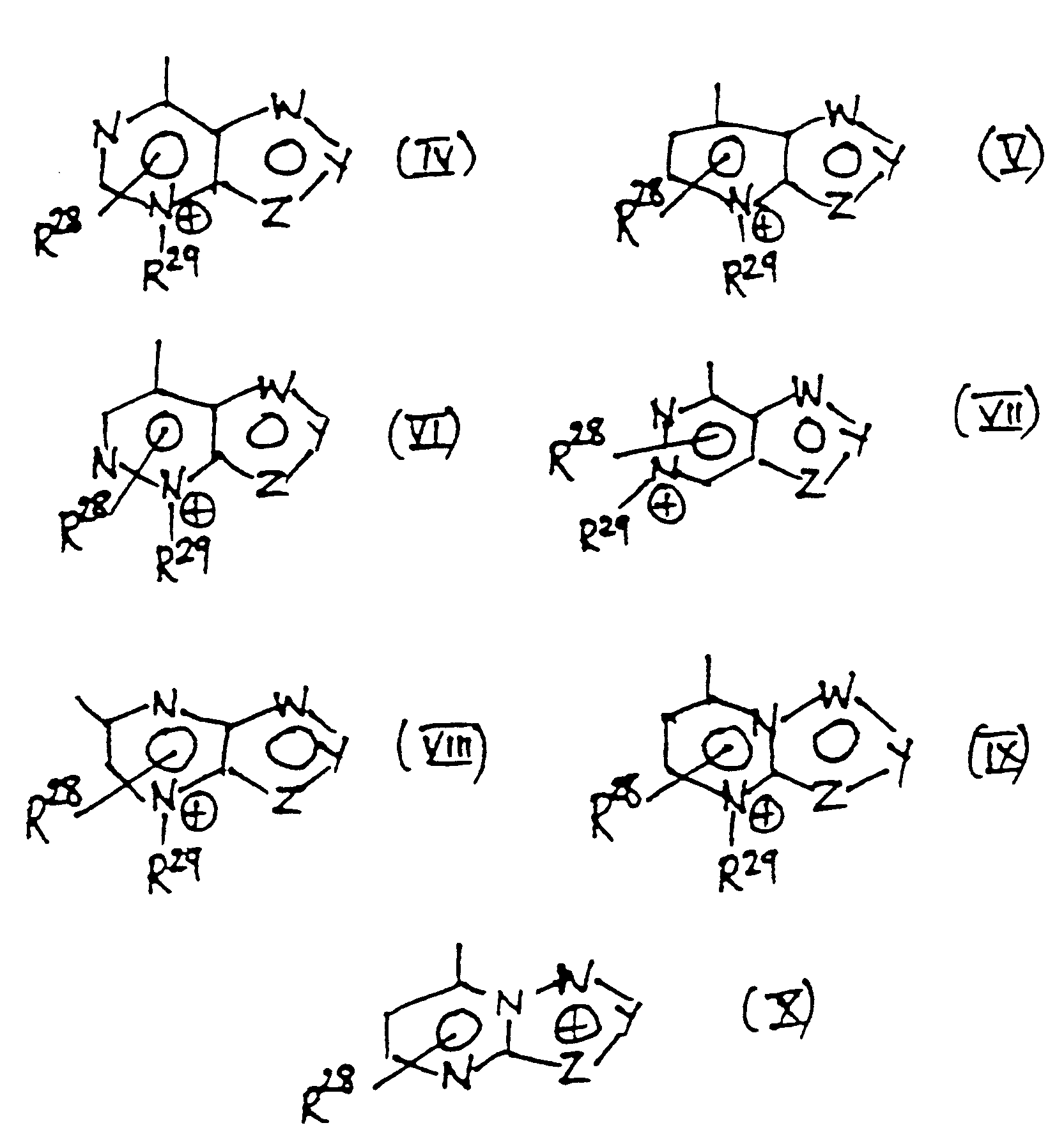
mit der Maßgabe, daßi) nur eines der Sybole W, Y und Z für S oder O stehen kann,ii) in den Formeln IV und V Y für etwas anderes als CR26 stehen muß,iii) in Formel V eines der Sybole W und Z für etwas anderes als CR26 stehen muß undiv) in Formel IX weder W noch Z für S stehen kann und W nicht für O stehen kann,R28 an Kohlenstoff gebunden ist und ausgewählt ist aus den bei R 26 angegebenen Atomen und Gruppen, und
R29 ausgewählt ist aus Wasserstoff, (1-6C)Alkyl, (1-6C)Alkyl(2-6C)alkenyl, (1-6C)Alkoxy, (2-8C)Alkoxyalkyl, Carboxy(1-6C)alkyl, [(1-6C)Alkoxy]carbonyl(1-6C)alkyl, Carbamoyl(1-6C)alkyl, Mono oder Di(1-4C)alkylamino(1-6C)alkyl, Carboxyaminocarbonyl(1-6C)alkyl, [(1-6C)Alkoxy]carbonylaminocarbonyl(1-6C)alkyl, [(2-8C)Alkanoyl]methyl, Benzoylmethyl(1-6C)hydroxyalkyl, Amino, (1-6C)Alkylamino, (1-6C)Aminoalkyl, Phenyl(1-6C)alkyl, Phenyl(1-6C)alkoxy, (3-6C)Cycloalkyl, (3-6C)Cycloalkenyl, Cyano(3-6C)cycloalkenyl, Mono- oder Di(1-4)alkylcarbamoyl(1-6C)alkyl oder (1-4C)Alkoxy(2-4C)alkoxy(1-4C)alkyl; oder aus Phenyl, das gegebenenfalls durch 1 oder 2 Gruppen substituiert ist, die ausgewählt sind aus Halogen, (1-6C)Alkyl, (1-6C)Alkoxy, Hydroxy, Amino, Carboxy, Nitro, Carbamoyl, Cyano, Trifluoromethyl, Aminomethyl, (1-4C)Alkanoyl, (1-4C)Alkanoylamino, Halogeno(1-4C)alkyl, (2-6C)Alkoxycarbonyl, Mono- oder Di(1-4C)alkylcarbamoyl, Mesyl, Vinyl, Sulfo, Sulfamoyl oder Mono- oder Di(1-4C)alkylsulfamoyl; oder aus (2-6C)Alkenyl, das gegebenenfalls substituiert ist durch Halogen, Cyano, Carbamoyl, Mono- oder Di-(1-4C)alkylcarbamoyl, Piperidinocarbonyl, Morpholinocarbonyl, 2-Ureidoethyl, 2-Thioureidoethyl, 2-(Thioacetylamino)ethyl, Sulfamoyl, 2-Amino-2-carboxyethyl, Acetylaminomethyl, Phthalimidomethyl, 4,5-Dihydroimidazol-2-ylmethyl, 3,4,5,6-tetrahydropyrimidin-2-ylmethyl, 2-(1,2,3,6-Tetrahydro-2,6-dioxopurin-7-ylethyl, 2-Hydroxyiminopropyl (syn oder anti), 2[(1-4C)Alkoxyimino]propyl (syn oder anti) oder Cyano(1-4C)alkyl, oder
R29 für ein Radikal der Formel -(CH₂)₂-N⁺R30R31R32 steht, worin R30, R31 und R32 für (1-4C)Alkyl stehen, oder
R29 für ein Radikal der Formel -(CH₂)q-R33 steht, worin q für 0 bis 2 steht und R33 für Pyridin, Pyridazin, Pyrimidin, Pyrazin, 1,2,5,6-Dihydro-5,6-dioxo-1,2,4-triazin, 2-[(1-4C)Alkyl]-1,2,5,6-dihydro-5,6-dioxo-1,2,4-triazin, 1-[(1-4C)Alkyl]tetrazol, Furan, Thiophen, Pyrrol, 1-[(1-4C)Alkyl]pyrrol, Oxazol, Thiazol, Imidazol, 1-[(1-4C)Alkyl]imidazol, Isoxazol, Isothiazol, Pyrazol, 1,2,3-Thiadiazol, 1-[(1-4C)Alkyl]pyrazol, Benzfuran, Benzthiophen, Indol, Oxindol, 1-[(1-4C)Alkyl]indol, Benzoxazol, Benzthiazol, Benzimidazol, 1-[(1-4C)Alkyl]benzimidazol oder 3,4-Dihydro-4-oxo-2H-benzo[e]oxazin steht, wobei jedes dieser Ringsysteme an (CH₂)q über Kohlenstoff gebunden ist und jedes Ringsystem gegebenenfalls substituiert ist durch Halogen, Amino, (1-6C)Alkyl, (1-4C)Halogenoalkyl,(3-6C)Cycloalkyl, (2-6C)Alkenyl, Carboxy, (2-6C)Alkoxycarbonyl, (1-6C)Alkoxy, Cyano, (2-6C)Cyanoalkenyl, Carbamoyl, Mono- oder Di(1-4C)alkylcarbamoyl, (1-4C)Alkanoylamino, Guanidino, Hydroxy, Nitro oder Amino, oder
R29 für 2-Guanidinothiazol-4-ylmethyl, Hydroxybenzoylmethyl, 2-Thenyl, 2-Imidazolylmethyl oder Cinnamyl steht, das gegebenenfalls substituiert ist durch Halogen, (1-6C)Alkyl, Hydroxy, (1-4C)Alkoxy, Carboxy, (2-6C)Alkoxycarbonyl, Nitro oder Carbamoyl, oder
R29 für -(CH₂)tNHCOR34 oder -(CH₂)tS(O)s-R34 steht, worin t für 1 bis 6 steht, s für 0, 1 oder 2 steht und R34 für (1-6C)Alkyl oder (1-6C)Alkoxy steht, oder
R29 für ein Radikal der Formel -(CH₂)₂N=CR36NR37R38 oder -(CH₂)nC(NR36)NR37R38 oder ein Tautomer davon steht, worin n für 1 bis 6 steht und R36, R37 und R38 für Wasserstoff oder (1-4C)Alkyl stehen;
und die N-Oxide davon, sofern chemisch möglich;
und die mit Säuren und Basen gebildeten Salze davon, welche phamazeutisch zulässige Anionen bzw. Kationen bilden. - Verbindungen nach Anspruch 1, worin R50 für =N.OR2 steht, worin R2 für ein in Anspruch 1 beschriebenes Radikal der Formel III steht, worin m für 0 steht, R24 für Hydroxy oder (1-4C)Alkoxy steht und R22 und R23 beide für Wasserstoff oder (1-3C)Alkyl stehen oder R22 und R23 miteinander verbunden sind, so daß sie mit dem Kohlenstoff, woran sie gebunden sind, einen (3-7C)carbocyclischen Ring bilden.
- Verbindungen nach Anspruch 1, worin R50 für =N.OR2 steht, worin R2 für (1-6C)Alkyl, (3-6)Alkenyl, das gegebenenfalls durch Carboxy substituiert ist, (3-6C)Alkinyl, (3-8C)Cycloalkyl, (3-6C)Cycloalkyl(1-3C)alkyl, (1-4C)Halogenoalkyl, (1-5C)Cyanoalkyl, (2-6C)Hydroxyalkyl, (1-4C)Alkoxy(2-4C)alkyl, (2-6C)Aminoalkyl oder Benzyl steht.
- Verbindungen nach Anspruch 1 bis 3, worin X für Schwefel steht.
- Verbindungen nach einem der Ansprüche 1 bis 4, worin R1 für 2-Aminothiazol-4-yl oder 5-Amino-1,2,4-thiadiazol-3-yl steht.
- Verfahren zur Herstellung einer Verbindung der Formel I von Anspruch 1, bei welchema) eine Verbindung der Formel Xa
 b) eine Verbindung der Formel XI mit einer Säure der Formel XII oder einem aktivierten Derivat davon
 c) von einer entsprechenden Verbindung, die anstelle des sauren Wasserstoffatoms der Carboxyl-Gruppe eine Schutzgruppe trägt, die Schutzgruppe unter Bildung einer Carboxy-Gruppe abgespalten wird; oderd) von einer entsprechenden Verbindung, die anstelle eines Amino-Wasserstoffatoms eine Schutzgruppe trägt, die Schutzgruppe unter Bildung einer primären oder sekundären Amino-Gruppe abgespalten wird; odere) für solche Verbindungen, worin X für Sulfinyl steht, eine entsprechende Verbindung, worin X für Schwefel steht, oxidiert wird; oderf) eine Verbindung der Formel XIII
 g) für solche Verbindungen, worin R2 für etwas anderes als Wasserstoff steht, eine Verbindung der Formel I von Anspruch 1, worin R2 für Wasserstoff steht, mit einer Verbindung der Formel R41-R40, worin R40 für ein ersetzbares Radikal steht und R41 für einen der oben für R2 angegebenen Werte außer Wasserstoff steht, umgesetzt wird; oderh) für solche Verbindungen, die eine Aminophenyl-Gruppe enthalten, eine entsprechende Nitrophenyl-Verbindung reduziert wird; oderi) eine Verbindung der Formel XIV,worauf, wenn das erfindungsgemäße Verfahren die Verbindung der Formel I in Form des Zwitterions liefert und ein Salz gewünscht wird, die Verbindung der Formel I in der Zwitterionenform mit einer Säure, die ein pharmazeutisch zulässiges Anion liefert, oder mit einer Base, die ein phamarzeutisch zulässiges Kation liefert, umgesetzt wird.
- Pharmazeutische Zusammensetzung, welche eine Verbindung nach Anspruch 1 und ein pharmazeutisch zulässiges Verdünnungs- oder Trägermittel enthält.
- Verbindung der Formel XI

Priority Applications (1)
| Application Number | Priority Date | Filing Date | Title |
|---|---|---|---|
| AT86309279T ATE85616T1 (de) | 1985-11-27 | 1986-11-27 | Cephalosporinverbindungen. |
Applications Claiming Priority (2)
| Application Number | Priority Date | Filing Date | Title |
|---|---|---|---|
| EP85402331 | 1985-11-27 | ||
| EP85402331 | 1985-11-27 |
Publications (3)
| Publication Number | Publication Date |
|---|---|
| EP0225182A2 EP0225182A2 (de) | 1987-06-10 |
| EP0225182A3 EP0225182A3 (en) | 1988-12-14 |
| EP0225182B1 true EP0225182B1 (de) | 1993-02-10 |
Family
ID=8194555
Family Applications (1)
| Application Number | Title | Priority Date | Filing Date |
|---|---|---|---|
| EP86309279A Expired - Lifetime EP0225182B1 (de) | 1985-11-27 | 1986-11-27 | Cephalosporinverbindungen |
Country Status (16)
| Country | Link |
|---|---|
| US (1) | US5013731A (de) |
| EP (1) | EP0225182B1 (de) |
| JP (1) | JPS62155286A (de) |
| AT (1) | ATE85616T1 (de) |
| AU (1) | AU585091B2 (de) |
| DE (1) | DE3687740T2 (de) |
| DK (1) | DK571786A (de) |
| FI (1) | FI864836A7 (de) |
| GB (1) | GB8626245D0 (de) |
| HU (1) | HU196813B (de) |
| IE (1) | IE862914L (de) |
| IL (1) | IL80623A0 (de) |
| NO (1) | NO864746D0 (de) |
| NZ (1) | NZ218404A (de) |
| PT (1) | PT83816B (de) |
| ZA (1) | ZA868506B (de) |
Families Citing this family (8)
| Publication number | Priority date | Publication date | Assignee | Title |
|---|---|---|---|---|
| EP0997466A1 (de) * | 1988-10-24 | 2000-05-03 | PROCTER & GAMBLE PHARMACEUTICALS, INC. | Antimikrobielle Laktamchinolone |
| US5273973A (en) * | 1988-10-24 | 1993-12-28 | Norwich Eaton Pharmaceuticals, Inc. | Antimicrobial quinolonyl esters |
| US5180719A (en) * | 1988-10-24 | 1993-01-19 | Norwich Eaton Pharmaceuticals, Inc. | Antimicrobial quinolonyl lactam esters |
| US5491139A (en) * | 1988-10-24 | 1996-02-13 | The Procter & Gamble Company | Antimicrobial quinolonyl lactams |
| US5328908A (en) * | 1988-10-24 | 1994-07-12 | Procter & Gamble Pharmaceuticals, Inc. | Antimicrobial quinolone thioureas |
| CA2001203C (en) * | 1988-10-24 | 2001-02-13 | Thomas P. Demuth, Jr. | Novel antimicrobial dithiocarbamoyl quinolones |
| DK0525057T3 (da) * | 1990-04-18 | 2000-07-31 | Procter & Gamble Pharma | Antimikrobielle quinolonyllactamer |
| JP6027610B2 (ja) | 2011-07-19 | 2016-11-16 | インフィニティー ファーマシューティカルズ, インコーポレイテッド | 複素環式化合物及びその使用 |
Family Cites Families (16)
| Publication number | Priority date | Publication date | Assignee | Title |
|---|---|---|---|---|
| US4024133A (en) * | 1971-05-14 | 1977-05-17 | Glaxo Laboratories Limited | 7β-[2-Etherified oximino-2-(thienyl-,furyl- or pyridylacetamido)]cephalosporins |
| US4033950A (en) * | 1971-05-14 | 1977-07-05 | Glaxo Laboratories Limited | 3-Hydroxymethyl-7β-(2-alkoxy-or benzyloxyimino-2-arylacetamido)ceph-3-em-4-carboxylic acids and salts thereof |
| US4138555A (en) * | 1971-05-14 | 1979-02-06 | Glaxo Laboratories, Limited | (6R,7R)-7-[2-aryl-2-(etherified oximino)acetamido]-3-carbamoyloxymethylceph-3-em-4-carboxylic acid 1-oxides |
| DE2714880A1 (de) * | 1977-04-02 | 1978-10-26 | Hoechst Ag | Cephemderivate und verfahren zu ihrer herstellung |
| SE448379B (sv) * | 1978-03-31 | 1987-02-16 | Roussel Uclaf | O-substituerade oximderivat av 7-amino-tiazolyl-acetamidocefalosporansyra |
| DK145579A (da) * | 1979-04-09 | 1980-10-10 | Novo Industri As | Fremgangsmaade til fremstilling af cephalosporinderivater |
| JPS56127389A (en) * | 1980-02-11 | 1981-10-06 | Squibb & Sons Inc | 7-((2-amino-4-thiazolyl)(carboxy(alkylthio) alkoxyimino)acetamido)cephalosporins |
| US4252802A (en) * | 1980-03-13 | 1981-02-24 | E. R. Squibb & Sons, Inc. | Hydroxamic acid derivatives of 7-[(2-amino-4-thiazolyl)-oximino] cephalosporins |
| GB2071664B (en) * | 1980-03-14 | 1984-03-21 | Squibb & Sons Inc | Phosphonic acid derivatives of 7-(2-amino-4- thiazolyl)oximino) cephalosporins |
| JPS6011917B2 (ja) * | 1981-04-09 | 1985-03-28 | 山之内製薬株式会社 | 新規なセファロスポリン化合物 |
| GB2103205A (en) * | 1981-06-15 | 1983-02-16 | Fujisawa Pharmaceutical Co | New cephem compounds |
| GR76701B (de) * | 1981-09-08 | 1984-08-29 | Lilly Co Eli | |
| DE3207840A1 (de) * | 1982-03-04 | 1983-09-15 | Hoechst Ag, 6230 Frankfurt | "cephalosporinderivate und verfahren zu ihrer herstellung" |
| GB8413152D0 (en) * | 1983-06-03 | 1984-06-27 | Ici Pharma | Cephalosporin derivatives |
| FI851934A7 (fi) * | 1984-05-30 | 1985-12-01 | Ici Plc | Kefalosporiinijohdannaisia. |
| NZ215527A (en) * | 1985-04-01 | 1989-06-28 | Mochida Pharm Co Ltd | Cephalosporin derivatives and pharmaceutical compositions |
-
1986
- 1986-11-03 GB GB868626245A patent/GB8626245D0/en active Pending
- 1986-11-05 IE IE862914A patent/IE862914L/xx unknown
- 1986-11-07 ZA ZA868506A patent/ZA868506B/xx unknown
- 1986-11-13 IL IL8680623A patent/IL80623A0/xx unknown
- 1986-11-14 AU AU65145/86A patent/AU585091B2/en not_active Ceased
- 1986-11-26 NO NO864746A patent/NO864746D0/no unknown
- 1986-11-26 HU HU864885A patent/HU196813B/hu not_active IP Right Cessation
- 1986-11-26 NZ NZ218404A patent/NZ218404A/xx unknown
- 1986-11-26 PT PT83816A patent/PT83816B/pt not_active IP Right Cessation
- 1986-11-27 DK DK571786A patent/DK571786A/da not_active Application Discontinuation
- 1986-11-27 AT AT86309279T patent/ATE85616T1/de not_active IP Right Cessation
- 1986-11-27 DE DE8686309279T patent/DE3687740T2/de not_active Expired - Fee Related
- 1986-11-27 JP JP61280947A patent/JPS62155286A/ja active Pending
- 1986-11-27 FI FI864836A patent/FI864836A7/fi not_active Application Discontinuation
- 1986-11-27 EP EP86309279A patent/EP0225182B1/de not_active Expired - Lifetime
-
1990
- 1990-04-19 US US07/512,069 patent/US5013731A/en not_active Expired - Fee Related
Also Published As
| Publication number | Publication date |
|---|---|
| HUT43078A (en) | 1987-09-28 |
| NO864746D0 (no) | 1986-11-26 |
| FI864836L (fi) | 1987-05-28 |
| EP0225182A3 (en) | 1988-12-14 |
| PT83816B (pt) | 1989-06-30 |
| AU6514586A (en) | 1987-06-04 |
| ZA868506B (en) | 1987-07-29 |
| HU196813B (en) | 1989-01-30 |
| DK571786D0 (da) | 1986-11-27 |
| PT83816A (en) | 1986-12-01 |
| GB8626245D0 (en) | 1986-12-03 |
| US5013731A (en) | 1991-05-07 |
| ATE85616T1 (de) | 1993-02-15 |
| DE3687740T2 (de) | 1993-05-27 |
| FI864836A0 (fi) | 1986-11-27 |
| IL80623A0 (en) | 1987-02-27 |
| AU585091B2 (en) | 1989-06-08 |
| DE3687740D1 (de) | 1993-03-25 |
| EP0225182A2 (de) | 1987-06-10 |
| DK571786A (da) | 1987-05-28 |
| NZ218404A (en) | 1990-01-29 |
| JPS62155286A (ja) | 1987-07-10 |
| FI864836A7 (fi) | 1987-05-28 |
| IE862914L (en) | 1987-05-27 |
Similar Documents
| Publication | Publication Date | Title |
|---|---|---|
| EP0304158B1 (de) | Cephalosporine, Verfahren zu ihrer Herstellung und diese enthaltende pharmazeutische Präparate | |
| EP0341990B1 (de) | Cephalosporine, Verfahren zu ihrer Herstellung und pharmazeutische Präparate | |
| EP0127992B1 (de) | Cephalosporinderivate | |
| US4396619A (en) | Cephalosporin betaines | |
| EP0164944B1 (de) | Cephalosporinderivate | |
| DE3854684T2 (de) | Cephalosporinverbindungen, Verfahren zu ihrer Herstellung und diese enthaltende pharmazeutische Präparate. | |
| US5013731A (en) | Cephalosporin compounds | |
| US4894371A (en) | 3-substituted-aminomethyl cephalosporin derivatives | |
| US5057511A (en) | 3-heterocyclic thiomethyl cephalosporins | |
| EP0341948B1 (de) | Cephalosporine, Verfahren zu ihrer Herstellung und pharmazeutische Präparate | |
| CA2022664A1 (en) | Antibiotic compounds | |
| US4767754A (en) | Cephalosporins | |
| US4868173A (en) | Cephalosporin derivatives | |
| US5114933A (en) | Cephalosporin compounds | |
| US5149803A (en) | Intermediates for cephalosporin compounds | |
| US5053500A (en) | Intermediates for the preparation of beta-lactam antibiotics | |
| US5262410A (en) | 3-heterocyclic thiomethyl cephalosporins | |
| EP0269298B1 (de) | Cephalosporine, Verfahren zu ihrer Herstellung und pharmazeutische Präparate | |
| EP0300665B1 (de) | Cephalosporinverbindungen, Verfahren zu ihrer Herstellung und diese enthaltende pharmazeutische Präparate | |
| EP0300664A2 (de) | Cephalosporinverbindungen | |
| US4486426A (en) | Unsaturated cephalosporin derivatives | |
| JP2002514650A (ja) | 新規なセファロスポリン化合物、その製造方法およびそれを含有する抗菌性組成物 | |
| JPS60132992A (ja) | 新規セフエム化合物およびその製造法 |
Legal Events
| Date | Code | Title | Description |
|---|---|---|---|
| PUAI | Public reference made under article 153(3) epc to a published international application that has entered the european phase |
Free format text: ORIGINAL CODE: 0009012 |
|
| AK | Designated contracting states |
Kind code of ref document: A2 Designated state(s): AT BE CH DE ES FR GB GR IT LI LU NL SE |
|
| PUAL | Search report despatched |
Free format text: ORIGINAL CODE: 0009013 |
|
| AK | Designated contracting states |
Kind code of ref document: A3 Designated state(s): AT BE CH DE ES FR GB GR IT LI LU NL SE |
|
| 17P | Request for examination filed |
Effective date: 19890523 |
|
| 17Q | First examination report despatched |
Effective date: 19910516 |
|
| GRAA | (expected) grant |
Free format text: ORIGINAL CODE: 0009210 |
|
| AK | Designated contracting states |
Kind code of ref document: B1 Designated state(s): AT BE CH DE ES FR GB GR IT LI LU NL SE |
|
| PG25 | Lapsed in a contracting state [announced via postgrant information from national office to epo] |
Ref country code: SE Effective date: 19930210 Ref country code: NL Effective date: 19930210 Ref country code: LI Effective date: 19930210 Ref country code: GR Free format text: LAPSE BECAUSE OF FAILURE TO SUBMIT A TRANSLATION OF THE DESCRIPTION OR TO PAY THE FEE WITHIN THE PRESCRIBED TIME-LIMIT Effective date: 19930210 Ref country code: CH Effective date: 19930210 Ref country code: BE Effective date: 19930210 Ref country code: AT Effective date: 19930210 |
|
| REF | Corresponds to: |
Ref document number: 85616 Country of ref document: AT Date of ref document: 19930215 Kind code of ref document: T |
|
| ITF | It: translation for a ep patent filed | ||
| REF | Corresponds to: |
Ref document number: 3687740 Country of ref document: DE Date of ref document: 19930325 |
|
| ET | Fr: translation filed | ||
| REG | Reference to a national code |
Ref country code: CH Ref legal event code: PL |
|
| PG25 | Lapsed in a contracting state [announced via postgrant information from national office to epo] |
Ref country code: ES Free format text: LAPSE BECAUSE OF FAILURE TO SUBMIT A TRANSLATION OF THE DESCRIPTION OR TO PAY THE FEE WITHIN THE PRESCRIBED TIME-LIMIT Effective date: 19930521 |
|
| NLV1 | Nl: lapsed or annulled due to failure to fulfill the requirements of art. 29p and 29m of the patents act | ||
| PG25 | Lapsed in a contracting state [announced via postgrant information from national office to epo] |
Ref country code: LU Free format text: LAPSE BECAUSE OF NON-PAYMENT OF DUE FEES Effective date: 19931130 |
|
| PLBE | No opposition filed within time limit |
Free format text: ORIGINAL CODE: 0009261 |
|
| STAA | Information on the status of an ep patent application or granted ep patent |
Free format text: STATUS: NO OPPOSITION FILED WITHIN TIME LIMIT |
|
| 26N | No opposition filed | ||
| PGFP | Annual fee paid to national office [announced via postgrant information from national office to epo] |
Ref country code: FR Payment date: 19941007 Year of fee payment: 9 |
|
| PGFP | Annual fee paid to national office [announced via postgrant information from national office to epo] |
Ref country code: DE Payment date: 19941024 Year of fee payment: 9 |
|
| PGFP | Annual fee paid to national office [announced via postgrant information from national office to epo] |
Ref country code: GB Payment date: 19941026 Year of fee payment: 9 |
|
| PG25 | Lapsed in a contracting state [announced via postgrant information from national office to epo] |
Ref country code: GB Effective date: 19951127 |
|
| GBPC | Gb: european patent ceased through non-payment of renewal fee |
Effective date: 19951127 |
|
| PG25 | Lapsed in a contracting state [announced via postgrant information from national office to epo] |
Ref country code: FR Effective date: 19960731 |
|
| PG25 | Lapsed in a contracting state [announced via postgrant information from national office to epo] |
Ref country code: DE Effective date: 19960801 |
|
| REG | Reference to a national code |
Ref country code: FR Ref legal event code: ST |
|
| PG25 | Lapsed in a contracting state [announced via postgrant information from national office to epo] |
Ref country code: IT Free format text: LAPSE BECAUSE OF NON-PAYMENT OF DUE FEES Effective date: 20051127 |