EP0226883A2 - Verfahren zur Begasung von Böden - Google Patents
Verfahren zur Begasung von Böden Download PDFInfo
- Publication number
- EP0226883A2 EP0226883A2 EP86116643A EP86116643A EP0226883A2 EP 0226883 A2 EP0226883 A2 EP 0226883A2 EP 86116643 A EP86116643 A EP 86116643A EP 86116643 A EP86116643 A EP 86116643A EP 0226883 A2 EP0226883 A2 EP 0226883A2
- Authority
- EP
- European Patent Office
- Prior art keywords
- film
- gas
- methyl bromide
- edges
- gassing
- Prior art date
- Legal status (The legal status is an assumption and is not a legal conclusion. Google has not performed a legal analysis and makes no representation as to the accuracy of the status listed.)
- Withdrawn
Links
- 238000000034 method Methods 0.000 title claims abstract description 14
- 239000002689 soil Substances 0.000 title abstract description 22
- 230000008569 process Effects 0.000 title abstract description 6
- 239000013543 active substance Substances 0.000 claims abstract description 12
- 239000011888 foil Substances 0.000 claims abstract description 8
- GZUXJHMPEANEGY-UHFFFAOYSA-N bromomethane Chemical group BrC GZUXJHMPEANEGY-UHFFFAOYSA-N 0.000 claims description 89
- 239000010408 film Substances 0.000 claims description 77
- 229940102396 methyl bromide Drugs 0.000 claims description 41
- 239000013039 cover film Substances 0.000 claims description 10
- 239000004480 active ingredient Substances 0.000 claims description 7
- 239000003795 chemical substances by application Substances 0.000 claims description 2
- 201000010099 disease Diseases 0.000 claims description 2
- 208000037265 diseases, disorders, signs and symptoms Diseases 0.000 claims description 2
- 239000000575 pesticide Substances 0.000 claims description 2
- 238000003958 fumigation Methods 0.000 abstract description 8
- 239000007789 gas Substances 0.000 description 35
- 239000010410 layer Substances 0.000 description 11
- 239000004698 Polyethylene Substances 0.000 description 8
- 241000607479 Yersinia pestis Species 0.000 description 7
- -1 polyethylene Polymers 0.000 description 7
- 230000004888 barrier function Effects 0.000 description 6
- 229920000573 polyethylene Polymers 0.000 description 6
- 238000007789 sealing Methods 0.000 description 6
- 241000196324 Embryophyta Species 0.000 description 5
- 239000000203 mixture Substances 0.000 description 5
- 239000002131 composite material Substances 0.000 description 4
- 238000009792 diffusion process Methods 0.000 description 4
- 238000009826 distribution Methods 0.000 description 4
- VGGSQFUCUMXWEO-UHFFFAOYSA-N Ethene Chemical compound C=C VGGSQFUCUMXWEO-UHFFFAOYSA-N 0.000 description 3
- 239000005977 Ethylene Substances 0.000 description 3
- 241000244206 Nematoda Species 0.000 description 3
- 229920001684 low density polyethylene Polymers 0.000 description 3
- 239000004702 low-density polyethylene Substances 0.000 description 3
- 238000003466 welding Methods 0.000 description 3
- CURLTUGMZLYLDI-UHFFFAOYSA-N Carbon dioxide Chemical compound O=C=O CURLTUGMZLYLDI-UHFFFAOYSA-N 0.000 description 2
- 239000004952 Polyamide Substances 0.000 description 2
- 229920001328 Polyvinylidene chloride Polymers 0.000 description 2
- 239000012790 adhesive layer Substances 0.000 description 2
- 229920001577 copolymer Polymers 0.000 description 2
- LELOWRISYMNNSU-UHFFFAOYSA-N hydrogen cyanide Chemical compound N#C LELOWRISYMNNSU-UHFFFAOYSA-N 0.000 description 2
- 230000035699 permeability Effects 0.000 description 2
- 239000002985 plastic film Substances 0.000 description 2
- 229920006255 plastic film Polymers 0.000 description 2
- 229920002647 polyamide Polymers 0.000 description 2
- 229920000728 polyester Polymers 0.000 description 2
- 239000005033 polyvinylidene chloride Substances 0.000 description 2
- 229920001169 thermoplastic Polymers 0.000 description 2
- 239000004416 thermosoftening plastic Substances 0.000 description 2
- PAAZPARNPHGIKF-UHFFFAOYSA-N 1,2-dibromoethane Chemical compound BrCCBr PAAZPARNPHGIKF-UHFFFAOYSA-N 0.000 description 1
- CPELXLSAUQHCOX-UHFFFAOYSA-M Bromide Chemical compound [Br-] CPELXLSAUQHCOX-UHFFFAOYSA-M 0.000 description 1
- 229920000298 Cellophane Polymers 0.000 description 1
- 229920000219 Ethylene vinyl alcohol Polymers 0.000 description 1
- XYFCBTPGUUZFHI-UHFFFAOYSA-N Phosphine Chemical compound P XYFCBTPGUUZFHI-UHFFFAOYSA-N 0.000 description 1
- 239000004743 Polypropylene Substances 0.000 description 1
- 239000004372 Polyvinyl alcohol Substances 0.000 description 1
- XTXRWKRVRITETP-UHFFFAOYSA-N Vinyl acetate Chemical compound CC(=O)OC=C XTXRWKRVRITETP-UHFFFAOYSA-N 0.000 description 1
- 239000002318 adhesion promoter Substances 0.000 description 1
- 238000004026 adhesive bonding Methods 0.000 description 1
- 229910002092 carbon dioxide Inorganic materials 0.000 description 1
- 239000001569 carbon dioxide Substances 0.000 description 1
- NEHMKBQYUWJMIP-NJFSPNSNSA-N chloro(114C)methane Chemical compound [14CH3]Cl NEHMKBQYUWJMIP-NJFSPNSNSA-N 0.000 description 1
- 150000001875 compounds Chemical class 0.000 description 1
- 239000005038 ethylene vinyl acetate Substances 0.000 description 1
- 238000001125 extrusion Methods 0.000 description 1
- 239000000945 filler Substances 0.000 description 1
- 239000004009 herbicide Substances 0.000 description 1
- 230000006872 improvement Effects 0.000 description 1
- 238000002347 injection Methods 0.000 description 1
- 239000007924 injection Substances 0.000 description 1
- 239000000463 material Substances 0.000 description 1
- 239000002184 metal Substances 0.000 description 1
- 230000001069 nematicidal effect Effects 0.000 description 1
- 239000005645 nematicide Substances 0.000 description 1
- 238000005457 optimization Methods 0.000 description 1
- 229920003023 plastic Polymers 0.000 description 1
- 239000004033 plastic Substances 0.000 description 1
- 229920001200 poly(ethylene-vinyl acetate) Polymers 0.000 description 1
- 229920000098 polyolefin Polymers 0.000 description 1
- 229920001155 polypropylene Polymers 0.000 description 1
- 229920002451 polyvinyl alcohol Polymers 0.000 description 1
- 230000000750 progressive effect Effects 0.000 description 1
- 238000003892 spreading Methods 0.000 description 1
- 230000007480 spreading Effects 0.000 description 1
Images
Classifications
-
- A—HUMAN NECESSITIES
- A01—AGRICULTURE; FORESTRY; ANIMAL HUSBANDRY; HUNTING; TRAPPING; FISHING
- A01M—CATCHING, TRAPPING OR SCARING OF ANIMALS; APPARATUS FOR THE DESTRUCTION OF NOXIOUS ANIMALS OR NOXIOUS PLANTS
- A01M17/00—Apparatus for the destruction of vermin in soil or in foodstuffs
- A01M17/002—Injection of toxic gases or fluids into the soil
-
- Y—GENERAL TAGGING OF NEW TECHNOLOGICAL DEVELOPMENTS; GENERAL TAGGING OF CROSS-SECTIONAL TECHNOLOGIES SPANNING OVER SEVERAL SECTIONS OF THE IPC; TECHNICAL SUBJECTS COVERED BY FORMER USPC CROSS-REFERENCE ART COLLECTIONS [XRACs] AND DIGESTS
- Y10—TECHNICAL SUBJECTS COVERED BY FORMER USPC
- Y10T—TECHNICAL SUBJECTS COVERED BY FORMER US CLASSIFICATION
- Y10T428/00—Stock material or miscellaneous articles
- Y10T428/13—Hollow or container type article [e.g., tube, vase, etc.]
- Y10T428/1334—Nonself-supporting tubular film or bag [e.g., pouch, envelope, packet, etc.]
- Y10T428/1341—Contains vapor or gas barrier, polymer derived from vinyl chloride or vinylidene chloride, or polymer containing a vinyl alcohol unit
-
- Y—GENERAL TAGGING OF NEW TECHNOLOGICAL DEVELOPMENTS; GENERAL TAGGING OF CROSS-SECTIONAL TECHNOLOGIES SPANNING OVER SEVERAL SECTIONS OF THE IPC; TECHNICAL SUBJECTS COVERED BY FORMER USPC CROSS-REFERENCE ART COLLECTIONS [XRACs] AND DIGESTS
- Y10—TECHNICAL SUBJECTS COVERED BY FORMER USPC
- Y10T—TECHNICAL SUBJECTS COVERED BY FORMER US CLASSIFICATION
- Y10T428/00—Stock material or miscellaneous articles
- Y10T428/28—Web or sheet containing structurally defined element or component and having an adhesive outermost layer
- Y10T428/2813—Heat or solvent activated or sealable
-
- Y—GENERAL TAGGING OF NEW TECHNOLOGICAL DEVELOPMENTS; GENERAL TAGGING OF CROSS-SECTIONAL TECHNOLOGIES SPANNING OVER SEVERAL SECTIONS OF THE IPC; TECHNICAL SUBJECTS COVERED BY FORMER USPC CROSS-REFERENCE ART COLLECTIONS [XRACs] AND DIGESTS
- Y10—TECHNICAL SUBJECTS COVERED BY FORMER USPC
- Y10T—TECHNICAL SUBJECTS COVERED BY FORMER US CLASSIFICATION
- Y10T428/00—Stock material or miscellaneous articles
- Y10T428/28—Web or sheet containing structurally defined element or component and having an adhesive outermost layer
- Y10T428/2813—Heat or solvent activated or sealable
- Y10T428/2817—Heat sealable
- Y10T428/2826—Synthetic resin or polymer
-
- Y—GENERAL TAGGING OF NEW TECHNOLOGICAL DEVELOPMENTS; GENERAL TAGGING OF CROSS-SECTIONAL TECHNOLOGIES SPANNING OVER SEVERAL SECTIONS OF THE IPC; TECHNICAL SUBJECTS COVERED BY FORMER USPC CROSS-REFERENCE ART COLLECTIONS [XRACs] AND DIGESTS
- Y10—TECHNICAL SUBJECTS COVERED BY FORMER USPC
- Y10T—TECHNICAL SUBJECTS COVERED BY FORMER US CLASSIFICATION
- Y10T428/00—Stock material or miscellaneous articles
- Y10T428/28—Web or sheet containing structurally defined element or component and having an adhesive outermost layer
- Y10T428/2848—Three or more layers
-
- Y—GENERAL TAGGING OF NEW TECHNOLOGICAL DEVELOPMENTS; GENERAL TAGGING OF CROSS-SECTIONAL TECHNOLOGIES SPANNING OVER SEVERAL SECTIONS OF THE IPC; TECHNICAL SUBJECTS COVERED BY FORMER USPC CROSS-REFERENCE ART COLLECTIONS [XRACs] AND DIGESTS
- Y10—TECHNICAL SUBJECTS COVERED BY FORMER USPC
- Y10T—TECHNICAL SUBJECTS COVERED BY FORMER US CLASSIFICATION
- Y10T428/00—Stock material or miscellaneous articles
- Y10T428/31504—Composite [nonstructural laminate]
- Y10T428/31855—Of addition polymer from unsaturated monomers
- Y10T428/3188—Next to cellulosic
-
- Y—GENERAL TAGGING OF NEW TECHNOLOGICAL DEVELOPMENTS; GENERAL TAGGING OF CROSS-SECTIONAL TECHNOLOGIES SPANNING OVER SEVERAL SECTIONS OF THE IPC; TECHNICAL SUBJECTS COVERED BY FORMER USPC CROSS-REFERENCE ART COLLECTIONS [XRACs] AND DIGESTS
- Y10—TECHNICAL SUBJECTS COVERED BY FORMER USPC
- Y10T—TECHNICAL SUBJECTS COVERED BY FORMER US CLASSIFICATION
- Y10T428/00—Stock material or miscellaneous articles
- Y10T428/31504—Composite [nonstructural laminate]
- Y10T428/31855—Of addition polymer from unsaturated monomers
- Y10T428/31909—Next to second addition polymer from unsaturated monomers
- Y10T428/31913—Monoolefin polymer
-
- Y—GENERAL TAGGING OF NEW TECHNOLOGICAL DEVELOPMENTS; GENERAL TAGGING OF CROSS-SECTIONAL TECHNOLOGIES SPANNING OVER SEVERAL SECTIONS OF THE IPC; TECHNICAL SUBJECTS COVERED BY FORMER USPC CROSS-REFERENCE ART COLLECTIONS [XRACs] AND DIGESTS
- Y10—TECHNICAL SUBJECTS COVERED BY FORMER USPC
- Y10T—TECHNICAL SUBJECTS COVERED BY FORMER US CLASSIFICATION
- Y10T428/00—Stock material or miscellaneous articles
- Y10T428/31504—Composite [nonstructural laminate]
- Y10T428/31855—Of addition polymer from unsaturated monomers
- Y10T428/31909—Next to second addition polymer from unsaturated monomers
- Y10T428/31928—Ester, halide or nitrile of addition polymer
-
- Y—GENERAL TAGGING OF NEW TECHNOLOGICAL DEVELOPMENTS; GENERAL TAGGING OF CROSS-SECTIONAL TECHNOLOGIES SPANNING OVER SEVERAL SECTIONS OF THE IPC; TECHNICAL SUBJECTS COVERED BY FORMER USPC CROSS-REFERENCE ART COLLECTIONS [XRACs] AND DIGESTS
- Y10—TECHNICAL SUBJECTS COVERED BY FORMER USPC
- Y10T—TECHNICAL SUBJECTS COVERED BY FORMER US CLASSIFICATION
- Y10T428/00—Stock material or miscellaneous articles
- Y10T428/31504—Composite [nonstructural laminate]
- Y10T428/31855—Of addition polymer from unsaturated monomers
- Y10T428/31935—Ester, halide or nitrile of addition polymer
Definitions
- the present invention relates to methods for gassing soils with active ingredients, in particular methyl bromide, which are characterized in that a bottom cover film also serves as a gas reservoir.
- the methyl bromide dose per square meter of soil is often set extremely high. Success is not based on the dose per square meter of soil, but on the methyl bromide concentration in the gas space under the film and the soil.
- the volume of the gas space can vary in size from case to case. This inevitably results in different concentrations in the soil with the same dosage per square meter of soil.
- the known fumigation process therefore does not offer any control of the maximum methyl bromide concentration under the film and can therefore lead to the pests becoming resistant due to constant overdosing.
- the invention therefore relates to a method for controlling pests and weeds in soils by covering the soils with film and gassing them with gaseous active substances, in particular methyl bromide, characterized in that a floor covering film is used which has a gas-tight top film and one with the top film has gas-permeable bottom film connected at the edges and at the same time serves as an active ingredient or active ingredient / air gas container from which the gas diffuses through the bottom sheet into the soils to be treated.
- the cover film preferably consists of the top and bottom films.
- Another object of the invention are floor covering films, as described above, for gassing floors with active substances, in particular methyl bromide.
- thermoplastic, film-forming plastics can be used to produce the upper film of the cover film which serves as a gas container, and which itself provide gas-tight films or can be processed into composite films with a gas barrier layer.
- Thermoplastics with sufficient gas tightness are e.g. B. polyvinylidene chloride, polyester, over 90 mol-X saponified ethylene / vinyl acetate copolymer, polyvinyl alcohol and polyamide.
- Metal foils can also be used as the top foil.
- the top film preferably consists of a composite film of a polyethylene film, a gas barrier layer of ethylene / vinyl acetate copolymers saponified to more than 98% and a sealing layer, preferably of low-density polyethylene, and customary adhesive layers.
- the composite film is preferably produced by (co) extrusion.
- the lower film should be a film with a gas permeability of at least 100 g of methyl bromide (m 2 d. Bar), preferably of at least 750 g methyl bromide (m 2 d. Bar).
- a polyolefin film such.
- B. a polyethylene, polypropylene film, a cellophane film or a combination of such known films.
- the bottom film particularly preferably consists of the polyethylene from which the sealing layer of the top film is also made.
- the surface is firmly connected on all sides to the bottom film at the edges, preferably over a width of at least 10 cm or at a distance of at least 10 cm from the edge.
- This connecting seam can be done in a known manner, preferably by gluing or welding (sealing).
- the gas container thus formed also has a closable fill opening in the top film, preferably a valve, for charging gas.
- the active ingredients are in particular pesticides and agents against plant diseases, e.g. Herbicides, arthropodicides and nematocides.
- Methyl bromide is particularly preferred. Methyl chloride, ethylene dibromide, hydrogen phosphide, hydrogen cyanide and carbon dioxide are also suitable.
- the cover film is charged with either pure methyl bromide or first with air and then with methyl bromide, so that a certain methyl bromide concentration in the container can be set.
- the rate of diffusion of the methyl bromide through the gas-permeable lower film and thus the duration of the gassing process can be influenced via this methyl bromide concentration of a predetermined methyl bromide / air mixture in the container. It is also possible to limit the maximum concentration in the soil area, which will always be below the initial concentration of the methyl bromide in the container, thereby avoiding an overdose and largely preventing the pests becoming resistant.
- the procedure according to the invention also achieves a uniform spreading of the methyl bromide into the ground over the entire area covered by the film. This spread is also independent of the methyl bromide specification and is controlled by the diffusion of the gas through the lower film, which is much slower than the distribution of the methyl bromide in the film container. This optimization of the methyl bromide distribution over the floor area to be fumigated significantly improves the economy of the fumigation.
- methyl bromide concentration in the gas space between the ground and the bottom film increases only gradually, with the progressive diffusion of the gas through the bottom film.
- the maximum methyl bromide concentration in the soil area is reached either if the concentration ratios above and below the bottom film are the same and / or if the methyl bromide consumption in the soil is as large as the amount of gas supplied by diffusion.
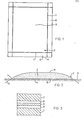
- FIG. 1 shows a top view of the cover film showing the top film (A) which is connected to the bottom film (B) via the weld seams (1), the connecting seams, the film edges (6) and the gas container ( 3) arise.
- the gas container (3) will Filled with methyl bromide or a gas mixture of methyl bromide and air via the closable filler opening (2).
- Fig. 2 shows the cover film according to the invention in function, the film edges (6) up to the weld (1) are buried in the bottom (4).
- the bottom film (B) lies as smoothly as possible on the surface of the soil (5) to be treated. Through them, the gas mixture diffuses from the gas container (3) in a controlled manner.
- the methyl bromide or methyl bromide / air mixture has been filled through the valve (2) in the gas-tight upper film (A).
- Fig. 3 the preferred structure of the gas-tight surfaces A is shown, which consists of a gas barrier layer (9), preferably of saponified ethylene / vinyl acetate with a thickness of 3 microns, which on each surface is a combination of a conventional adhesive layer with a thickness of 2.5 microns (8) and a sealing layer (7), preferably made of low density polyethylene with a thickness of 16 microns.
- a gas barrier layer (9) preferably of saponified ethylene / vinyl acetate with a thickness of 3 microns
- a conventional adhesive layer with a thickness of 2.5 microns (8)
- a sealing layer (7) preferably made of low density polyethylene with a thickness of 16 microns.
- the gas container was produced by welding a 40 ⁇ m thick upper film A to a 30 ⁇ m thick lower film B, corresponding to FIGS. 1 and 2.
- the top film A has a symmetrical structure corresponding to FIG. 3.
- a low-density polyethylene was used to produce the sealing layer, a polyethylene copolymer was used to produce the adhesion promoter layer, and an ethylene-vinyl alcohol copolymer was used as the barrier layer material.
- the lower film (B) was made from the same polyethylene as the upper film.
- the top film A is practically gas-tight and has an extremely low gas permeability of 0.0003 ml / h / m 2 / (ml / l), corresponding to approx. 0.03 g MeBr / (m 2 xdx bar) at 30 ° C. and that Bottom film of 12 ml / h / m 2 (ml / l), corresponding to approx. 1200 g MeBr / (m 2 xdx bar) at 30 ° C.
- top film In one corner of the top film was a closable. Filling opening made by hand using a sealing piston by welding to the film. The welds were then produced in the usual way.
- a gas mixture consisting of one volume of air and one part by volume MeBr introduced, a total of 9 kg MeBr (2m 3) and 2 m 3 of air. This corresponds to 50 g MeBr / m 2 .
Landscapes
- Life Sciences & Earth Sciences (AREA)
- Soil Sciences (AREA)
- Food Science & Technology (AREA)
- Engineering & Computer Science (AREA)
- Insects & Arthropods (AREA)
- Pest Control & Pesticides (AREA)
- Wood Science & Technology (AREA)
- Zoology (AREA)
- Environmental Sciences (AREA)
- Catching Or Destruction (AREA)
- Agricultural Chemicals And Associated Chemicals (AREA)
Abstract
Description
- Die vorliegende Erfindung bezieht sich auf Verfahren zum Begasen von Böden mit Wirkstoffen, insbesondere Methylbromid, die sich dadurch auszeichnen, daß eine Bodenabdeckfolie gleichzeitig als Gasreservoir dient.
- Der Einsatz von Wirkstoffen, insbesondere Methylbromid unter Verwendung von gasdichten Kunststoffolien zur Keimfreimachung von Kulturböden ist seit langem bekannt. Hierbei werden coextrudierte und/oder laminierte Verbundfolien auf Basis von Polyethylenfolien - mit oder ohne Barriere-Schicht - eingesetzt. Bei Verwendung von Verbunden mit einer Gasbarriere-Schicht besteht diese vorzugsweise aus Polyvinylidenchlorid, Polyester, weitgehend verseiftem Ethylen-Vinylacetat-Copolymerem oder Polyamid.
- Das übliche Begasungsverfahren läuft im wesentlichen so ab, daß die zu behandelnde Bodenfläche mit der Kunststofffolie bedeckt wird. Um den Verlust an Methylbromid zu reduzieren, werden dabei die Folienränder vorzugsweise in die Erde eingegraben und anschließend Methylbromid durch perforierte PE-Schläuche, die im Abstand von 1-2 Metern unter der Folie verlegt sind, eingeleitet. Diese bekannte Verfahrensweise hat folgende Nachteile:
- Da das Methylbromid durch die perforierten PE-Schläuche eingeleitet wird, ist die Gaskonzentration in unmittelbarer Nähe der Schläuche immer höher und bedingt so eine ungleichmäßige Verteilung der verbleibenden Bromidionen über die Bodenfläche.
- Mit Ende der Gaseinleitung wird die maximale Methylbromid-Konzentration erreicht. Danach klingt sie exponentiell ab. Für die Schädlingsbekämpfung ist dieser Konzentrationsverlauf denkbar ungünstig, da die Einwirkzeit einer hohen Methylbromid-Konzentration relativ kurz ist.
- Aus Sorge vor Mißerfolgen bei der Bekämpfung von Schädlingen und von Unkräutern wird die Methylbromid-Dosis pro Quadratmeter Boden häufig extrem hoch angesetzt. Für den Erfolg ist aber nicht die Dosis pro Quadratmeter Boden, sondern die Methylbromid-Konzentration in dem Gasraum unter der Folie und dem Boden entscheidend. Das Volumen des Gasraumes kann aber von Fall zu Fall unterschiedlich groß sein. Damit ergeben sich bei gleicher Dosierung pro Quadratmeter Boden zwangsläufig unterschiedliche Konzentrationen im Boden. Das bekannte Begasungsverfahren bietet daher keinerlei Kontrolle der maximalen Methylbromid-Konzentration unter der Folie und kann daher durch ständige Überdosierung zu einem Resistentwerden der Schädlinge führen.
- Ziel der vorliegenden Erfindung war es daher, ein verbessertes Verfahren für die Begasung von Kulturböden mit Wirkstoffen, insbesondere Methylbromid zur Verfügung zu stellen, indem man die Wirkstoff-Zugabe so steuert, daß
- 1) eine gleichmäßige Verteilung des Wirkstoffes unter der Folie erreicht wird,
- 2) ein allmähliches Ansteigen der Wirkstoff-Konzentration im Gasraum der Folie bis zu einem maximalen Wert eingestellt wird, wobei dieser Wert über einen längeren Zeitraum nahezu konstant bleiben soll, und schließlich
- 3) eine kontrollierbare, maximale Wirkstoff-Konzentration unter der Folie vorgegeben werden kann, um damit ein Resistentwerden der Schädlinge und Unkräuter zu vermeiden und die Umwelt deutlich weniger zu belasten.
- Gegenstand der Erfindung ist daher ein Verfahren zur Bekämpfung von Schädlingen und Unkräutern in Böden, indem man die Böden mit Folie abdeckt und mit gasförmigen Wirkstoffen, insbesondere Methylbromid begast, dadurch gekennzeichnet, daß eine Bodenabdeckfolie verwendet wird, die eine gasdichte Oberfolie und eine mit der Oberfolie an den Rändern verbundenen gasdurchlässigen Unterfolie aufweist und gleichzeitig als Wirkstoff bzw. Wirkstoff/ Luftgasbehälter dient, aus dem das Gas durch die Unterfolie in die zu behandelnden Böden diffundiert. Vorzugsweise besteht die Abdeckfolie aus der Ober- und der Unterfolie.
- Ein weiterer Gegenstand der Erfindung sind Bodenabdeckfolien, wie sie vorstehend beschrieben sind, zur Begasung von Böden mit Wirkstoffen, insbesondere Methylbromid.
- Zur Herstellung der Oberfolie der als Gasbehälter dienenden Abdeckfolie können alle bekannten thermoplastischen, filmbildenden Kunststoffe verwendet werden, die selbst gasdichte Folien liefern oder zu Verbundfolien mit einer Gassperrschicht verarbeitet werden können. Thermoplasten mit einer ausreichenden Gasdichtigkeit sind z. B. Polyvinylidenchlorid, Polyester, über 90 Mol-X verseiftes Ethylen/Vinylacetat-Copolymeres, Polyvinylalkohol und Polyamid. Als Oberfolie können auch Metallfolien eingesetzt werden. Vorzugsweise besteht die Oberfolie aus einer Verbundfolie aus einer Polyethylenfolie, einer Gassperrschicht aus zu über 98 X verseiftem Ethylen/Vinylacetat-Copolymeren und einer Siegelschicht, vorzugsweise aus Polyethylen niederer Dichte und übliche Haftvermittlerschichten. Die Verbundfolie wird vorzugsweise durch (Co-)-extrusion hergestellt.
- Die Unterfolie sollte eine Folie mit einer Gasdurchlässigkeit von mindestens 100 g Methylbromidi(m2 d. bar), vorzugsweise von mindestens 750 g Methybromidl(m2 d. bar) sein. Vorzugsweise wird eine Polyolefinfolie wie z. B. eine Polyethylen-, Polypropylenfolie, eine Zellglasfolie oder eine Kombination solcher bekannten Folien eingesetzt. Besonders bevorzugt besteht die Unterfolie aus dem Polyethylen, aus dem auch die Siegelschicht der Oberfolie hergestellt ist.
- Die Oberfläche ist allseitig fest mit der Unterfolie an den Rändern, vorzugsweise über eine Breite von wenigstens 10 cm oder im Abstand von wenigstens 10 cm vom Rand, verbunden. Diese Verbindungsnaht kann in bekannter Weise, vorzugsweise durch Verkleben, oder Verschweißen (Versiegeln) erfolgen. Der so gebildete Gasbehälter hat außerdem in der Oberfolie eine verschließbare Einfüllöffnung, vorzugsweise ein Ventil, zur Gasbeschickung.
- Bei den Wirkstoffen handelt es sich insbesondere um Schädlingsbekämpfungsmittel und Mittel gegen Pflanzenkrankheiten, z.B. Herbizide, Arthropodicide und Nematocide.
- Besonders bevorzugt wird Methylbromid. Weiter sind geeignet Methylchlorid, Ethylendibromid, Phosphorwasserstoff, Cyanwasserstoff und Kohlendioxid.
- Erfindungsgemäß wird vorzugsweise wie folgt gearbeitet, wobei statt Methylbromid auch ein anderer gasförmiger Wirkstoff verwendet werden kann:
- Vor Beginn der Begasung wird entsprechend der zu begasenden Fläche in den Erdboden eine 5-10 cm tiefe Furche gegraben. Die Abdeckfolie wird dann mit der gasdurchlässigen Folienseite (Unterfolie) nach unten glatt auf den zu behandelnden Boden gelegt, wobei die Folienränder in den vorbereiteten Furchen zu liegen kommen sollen. Anschließend werden die Ränder bis zur Verbindungsnaht mit Erde bedeckt. Da dabei auch die am Rand vorhandene gasdichte Oberfolie eingegraben wird, ist ein Methylbromid-Verlust durch die Folie hindurch bei der späteren Begasung praktisch ausgeschlossen.
- Über die Einfüllöffnung, vorzugsweise ein Ventil, wird die Abdeckfolie mit wahlweise reinem Methylbromid oder zunächst mit Luft und anschließend mit Methylbromid beschickt, so daß eine bestimmte Methylbromid-Konzentration im Behälter eingestellt werden kann.
- Uber diese Methylbromid-Konzentration einer so vorgegebenen Methylbromid/Luftmischung im Behälter läßt sich die Diffusionsgeschwindigkeit des Methylbromids durch die gasdurchlässige Unterfolie und somit die Dauer des Begasungsvorgangs beeinflussen. Außerdem ist es so möglich, die maximale Konzentration im Bodenbereich zu begrenzen, die immer unterhalb der Ausgangskonzentration des Methylbromids im Behälter liegen wird, wodurch eine Uberdosierung vermieden und ein dadurch verursachtes Resistentwerden der Schädlinge weitgehend verhindert werden kann.
- Durch die erfindungsgemäße Verfahrensweise wird außerdem ein gleichmäßiges Verbreiten des Methylbromids in den Erdboden über die gesamte, durch die Folie bedeckte Fläche erreicht. Diese Verbreitung ist auch unabhängig von der Methylbromidvorgabe, und wird durch die Diffusion des Gases durch die Unterfolie gesteuert, die viel langsamer verläuft, als die Verteilung des Methylbromids im Folienbehälter. Durch diese Optimierung der Methylbromid-Verteilung über die zu begasende Bodenfläche wird die Wirtschaftlichkeit der Begasung deutlich verbessert.
- Diese Verbesserung wird auch dadurch erreicht, daß die Methylbromid-Konzentration im Gasraum zwischen Erdboden und Unterfolie erst allmählich, mit fortschreitender Diffusion des Gases durch die Unterfolie, ansteigt. Die maximale Methylbromid-Konzentration im Bodenbereich wird entweder dann erreicht, wenn die Konzentrationsverhältnisse oberhalb und unterhalb der Unterfolie gleich sind und/oder wenn der Methylbromidverbrauch im Boden ebenso groß ist, wie die durch Diffusion nachgelieferte Gasmenge.
- Solange aus dem Depot Methylbromid nachgeliefert wird, verändert sich diese maximale Konzentration nur wenig und klingt erst stärker ab, wenn der Vorrat erschöpft ist. Daraus resultiert schließlich, daß mit einer weit geringeren Menge an Methylbromid als bisher eine ausreichende Vernichtung von Schädlingen und Unkräutern erzielt wird.
- In Fig. 1 ist eine Draufsicht auf die Abdeckungsfolie abgebildet.
- In Fig. 2. ist ein Querschnitt durch die verlegte Abdeckfolie, gefüllt mit Methylbromid, abgebildet.
- Fig. 3 zeigt den Aufbau einer Oberfolie.
- Im einzelnen wird in Fig. 1 in der Draufsicht auf die Abdeckungsfolie die Oberfolie (A) gezeigt, die über die Schweißnähte (1), den Verbindungsnähten, mit der Unterfolie (B) verbunden ist, wobei die Folienränder (6) und der Gasbehälter (3) entstehen. Der Gasbehälter (3) wird über die verschließbare Einfüllöffnung (2) mit Methylbromid bzw. einer Gasmischung aus Methylbromid und Luft gefüllt.
- Fig. 2 zeigt die erfindungsgemäße Abdeckfolie in Funktion, wobei die Folienränder (6) bis zur Schweißnaht (1) in den Boden (4) eingegraben sind. Dabei liegt die Unterfolie (B) möglichst glatt auf der zu behandelnden Erdbodenoberfläche (5). Durch sie diffundiert aus dem Gasbehälter (3) das Gasgemisch gesteuert. Das Methylbromid bzw. Methylbromid/Luftgemisch ist durch das Ventil (2) in der gasdichten Oberfolie (A) eingefüllt worden.
- In Fig. 3 ist der bevorzugte Aufbau der gasdichten Oberflächen A dargestellt, die aus einer Gassperrschicht (9), vorzugsweise aus verseiften Ethylen/Vinylacetat mit einer Dicke von 3 µm besteht, die auf jeder Oberfläche eine Kombination aus einer üblichen Haftvermittlerschicht mit einer Dicke von 2,5 µm (8) und einer Siegelschicht (7), vorzugsweise aus Polyethylen niederer Dichte mit einer Dicke von 16 µm trägt.
- Der Gasbehälter wurde durch Verschweißen einer 40 µm dicken Oberfolie A mit einer 30 µm dicken Unterfolie B, entsprechend Fig. 1 und 2, hergestellt.
- Die Oberfolie A hat einen symmetrischen Aufbau entsprechend Fig. 3. Zur Herstellung der Siegelschicht wurde ein Polyethylen niederer Dichte, zur Herstellung der Haftvermittlerschicht ein Polyethylen-Copolymer und als Sperrschichtmaterial ein Ethylen-Vinylalkohol-Copolymer verwendet. Die Unterfolie (B) wurde aus dem gleichen Polyethylen, wie die Oberfolie hergestellt.
- Die Oberfolie A ist praktisch gasdicht und hat eine äußerst geringe Gasdurchlässigkeit von 0,0003 ml/h/m2/ (ml/l), entsprechend ca. 0,03 g MeBr/(m2 x d x bar) bei 30°C und die Unterfolie von 12 ml/h/m2 (ml/l), entsprechend ca. 1200 g MeBr/(m2 x d x bar) bei 30°C.
- Die Abmessungen des so hergestellten Gasbehälters waren wie folgt:

- In eine Ecke der Oberfolie wurde eine verschließbare. Einfüllöffnung mit Hilfe eines Siegelkolbens durch Verschweißen mit der Folie von Hand angebracht. Anschließend wurden die Schweißnähte in üblicher Weise hergestellt.
- Vor der Begasung wurde in den Erdboden eine 10 cm tiefe Furche - entsprechend den Abmessungen des Gasbehälters - gegraben. Der Gasbehälter wurde nun mit der gasdurchlässigen Folienseite (Unterfolie B) nach unten glatt auf den zu behandelnden Kulturboden gelegt, in der Weise, daß die Ränder des Gasbehälters in den vorbereiteten Furchen lagen. Anschließend wurden die Ränder bis zur Schweißnaht hin mit Erde eingegraben.
- Durch die Einfüllöffnung wurde ein Gasgemisch, bestehend aus einem Volumenteil Luft und einem Volumenteil MeBr, eingeleitet, insgesamt 9 kg MeBr (ca. 2m3) und 2 m3 Luft. Dies entspricht 50 g MeBr/m2.
- Nach einer Begasungszeit von 10 Tagen wurde der Gasbehälter unter Beachtung der üblichen Sicherheitsvorschriften für Methylbromid entfernt.
- Bodenproben vor der Begasung hatten ergeben, daß pro 100 g Boden 97 Nematoden (Fadenwürmer) ausgezählt wurden. Nach der Begasung konnten in den Bodenproben keine Nematoden mehr festgestellt werden.
Claims (5)
Applications Claiming Priority (2)
| Application Number | Priority Date | Filing Date | Title |
|---|---|---|---|
| DE19853544308 DE3544308A1 (de) | 1985-12-14 | 1985-12-14 | Verfahren zur begasung von boeden mit methylbromid |
| DE3544308 | 1985-12-14 |
Publications (2)
| Publication Number | Publication Date |
|---|---|
| EP0226883A2 true EP0226883A2 (de) | 1987-07-01 |
| EP0226883A3 EP0226883A3 (de) | 1988-10-19 |
Family
ID=6288473
Family Applications (1)
| Application Number | Title | Priority Date | Filing Date |
|---|---|---|---|
| EP86116643A Withdrawn EP0226883A3 (de) | 1985-12-14 | 1986-11-29 | Verfahren zur Begasung von Böden |
Country Status (5)
| Country | Link |
|---|---|
| US (1) | US4812342A (de) |
| EP (1) | EP0226883A3 (de) |
| JP (1) | JPS62148401A (de) |
| DE (1) | DE3544308A1 (de) |
| IL (1) | IL80946A0 (de) |
Cited By (1)
| Publication number | Priority date | Publication date | Assignee | Title |
|---|---|---|---|---|
| ES2437190A1 (es) * | 2012-07-06 | 2014-01-09 | Agroquímicos De Levante, S.A. | Sistema y método de termosoldadura |
Families Citing this family (1)
| Publication number | Priority date | Publication date | Assignee | Title |
|---|---|---|---|---|
| JP3344019B2 (ja) * | 1993-08-26 | 2002-11-11 | 大日本インキ化学工業株式会社 | 高品質農作物の生産方法 |
Family Cites Families (11)
| Publication number | Priority date | Publication date | Assignee | Title |
|---|---|---|---|---|
| US2419073A (en) * | 1943-01-30 | 1947-04-15 | Dow Chemical Co | Method for controlling parasites in soil |
| DE1139689B (de) * | 1961-07-08 | 1962-11-15 | Testa Internationale Ges Fuer | Verfahren und Vorrichtung zur Entseuchung von Kulturbodenflaechen groesserer Ausdehnung |
| NL6806886A (de) * | 1968-05-15 | 1969-11-18 | ||
| US3589861A (en) * | 1968-05-20 | 1971-06-29 | American Sterilizer Co | Balanced pressure process of sterilization |
| US3503497A (en) * | 1968-07-25 | 1970-03-31 | Pall Corp | Breather container |
| IT1058730B (it) * | 1976-04-01 | 1982-05-10 | Montedison Spa | Coperture in plastica per colture agrarie contenenti antiparassitari processo per ottenere e per proteggere le colture da infestanti |
| US4399763A (en) * | 1979-12-10 | 1983-08-23 | Alexander Marvin C | Method of making dual-ply plant bed cover |
| JPS5789076A (en) * | 1980-11-22 | 1982-06-03 | Motohiro Gotanda | Lock device |
| JPS60161146A (ja) * | 1984-01-31 | 1985-08-22 | 株式会社クラレ | 耐屈曲疲労に優れたフレキシブルな気体遮断性積層包装材よりなるバッグインボックス内容器の構成材 |
| IT1176180B (it) * | 1984-05-23 | 1987-08-18 | Eurodomestici Ind Riunite | Metodo per il confezionamento sotto vuoto di materiali finemente suddivisi e contenitore per l'attuazione del metodo |
| DE3435233A1 (de) * | 1984-09-26 | 1986-04-03 | N.V. Cobelplast S.A., Lokeren | Thermoverformbare, mehrschichtige kunststoffolie mit gasabdichteigenschaften |
-
1985
- 1985-12-14 DE DE19853544308 patent/DE3544308A1/de not_active Withdrawn
-
1986
- 1986-11-29 EP EP86116643A patent/EP0226883A3/de not_active Withdrawn
- 1986-12-11 JP JP61293567A patent/JPS62148401A/ja active Pending
- 1986-12-11 US US06/940,322 patent/US4812342A/en not_active Expired - Fee Related
- 1986-12-11 IL IL80946A patent/IL80946A0/xx unknown
Cited By (2)
| Publication number | Priority date | Publication date | Assignee | Title |
|---|---|---|---|---|
| ES2437190A1 (es) * | 2012-07-06 | 2014-01-09 | Agroquímicos De Levante, S.A. | Sistema y método de termosoldadura |
| US9403349B2 (en) | 2012-07-06 | 2016-08-02 | Agroquímicos De Levante, S.A. | Heat welding system and method |
Also Published As
| Publication number | Publication date |
|---|---|
| IL80946A0 (en) | 1987-03-31 |
| EP0226883A3 (de) | 1988-10-19 |
| JPS62148401A (ja) | 1987-07-02 |
| US4812342A (en) | 1989-03-14 |
| DE3544308A1 (de) | 1987-06-19 |
Similar Documents
| Publication | Publication Date | Title |
|---|---|---|
| DE2445573C3 (de) | Falle für kriechende Schädlinge | |
| DE60001171T2 (de) | Behälter für flüssige insekticidkoder | |
| DE3855728T2 (de) | Vorrichtung zur langsamen Freigabe eines Pestizids | |
| DE2356155A1 (de) | Fertigungsgegenstand fuer die gesteuerte abgabe von schaedlingsbekaempfungsmitteln und verfahren zur bekaempfung von schaedlingen damit | |
| AU2002239467A1 (en) | Barrier preventing wood pest access to wooden structures | |
| EP0540932A1 (de) | Dispenser zur kontrollierten Freisetzung von Pheromonen | |
| CH634226A5 (de) | Wirkstoffspender und verfahren zu seiner herstellung. | |
| DE2841669A1 (de) | Verpackung zur fluessigkeitsabgabe | |
| DE102011000223A1 (de) | Vorrichtung zum Freisetzen eines flüchtigen Wirkstoffs, Verfahren zur Herstellung einer solchen Vorrichtung sowie deren Verwendung | |
| DE2715683A1 (de) | Verfahren und zusammensetzung zur kontrolle fliegender insekten | |
| DE2121242A1 (de) | Vorrichtung zum Einspritzen von Begasungsmitteln | |
| EP0273197A1 (de) | Kunststoffampullen als Pheromondispenser | |
| US20020192259A1 (en) | Barrier preventing wood pest access to wooden structures | |
| DE3501748A1 (de) | Profilelemente, insbesondere zur versorgung und/oder entsorgung von umgebungs- und/oder stroemungsgut und ihre anwendungen | |
| DE3544308A1 (de) | Verfahren zur begasung von boeden mit methylbromid | |
| DE2741990A1 (de) | Insektenfalle | |
| EP0496102B1 (de) | Vorrichtung zur Abgabe von Pheromonen | |
| DE2206487B1 (de) | Vorrichtung fuer erdmetallphosphid und/oder erdalkalimetallphosphid enthaltende schaedlingsbekaempfungsmittel | |
| DE2825534C2 (de) | Tablette zur Bekämpfung von Wirbeltieren | |
| DE3490632C2 (de) | Abweisendes Material für Schadinsekten | |
| DE60002263T2 (de) | Paarungsstörungsverfahren zur Bekämpfung von Schadinsekten | |
| DE69615760T2 (de) | Pheromonen enthaltendes Präparät mit verlängerter Freisetzung | |
| DE3017342C2 (de) | ||
| DE102013015323A1 (de) | Anordnung zur Abgabe von Wirkstoffen an Agrar- oder Forsterzeugnisse | |
| DE2052428A1 (en) | Soil - sterilizing and nematocidal agents - comprising volatile active substances in gas-permeable microcapsules |
Legal Events
| Date | Code | Title | Description |
|---|---|---|---|
| PUAI | Public reference made under article 153(3) epc to a published international application that has entered the european phase |
Free format text: ORIGINAL CODE: 0009012 |
|
| 17P | Request for examination filed |
Effective date: 19861129 |
|
| AK | Designated contracting states |
Kind code of ref document: A2 Designated state(s): BE DE ES FR GR IT NL |
|
| PUAL | Search report despatched |
Free format text: ORIGINAL CODE: 0009013 |
|
| AK | Designated contracting states |
Kind code of ref document: A3 Designated state(s): BE DE ES FR GR IT NL |
|
| STAA | Information on the status of an ep patent application or granted ep patent |
Free format text: STATUS: THE APPLICATION HAS BEEN WITHDRAWN |
|
| 18W | Application withdrawn |
Withdrawal date: 19900419 |
|
| R18W | Application withdrawn (corrected) |
Effective date: 19900419 |
|
| RIN1 | Information on inventor provided before grant (corrected) |
Inventor name: MENDE, REINHOLD, DR. Inventor name: LINDE, HARTMUT, ING.-GRAD. |