EP0227723B1 - Verfahren für die herstellung einer evolutiven photographischen komposition, die so erhaltene komposition und das evolutive bild - Google Patents
Verfahren für die herstellung einer evolutiven photographischen komposition, die so erhaltene komposition und das evolutive bild Download PDFInfo
- Publication number
- EP0227723B1 EP0227723B1 EP86903435A EP86903435A EP0227723B1 EP 0227723 B1 EP0227723 B1 EP 0227723B1 EP 86903435 A EP86903435 A EP 86903435A EP 86903435 A EP86903435 A EP 86903435A EP 0227723 B1 EP0227723 B1 EP 0227723B1
- Authority
- EP
- European Patent Office
- Prior art keywords
- elements
- photograph
- evolutive
- basic
- composition
- Prior art date
- Legal status (The legal status is an assumption and is not a legal conclusion. Google has not performed a legal analysis and makes no representation as to the accuracy of the status listed.)
- Expired - Lifetime
Links
- 239000000203 mixture Substances 0.000 title claims abstract description 33
- 238000004519 manufacturing process Methods 0.000 title claims 3
- 230000003287 optical effect Effects 0.000 claims abstract description 6
- 239000000853 adhesive Substances 0.000 claims abstract description 4
- 230000001070 adhesive effect Effects 0.000 claims abstract description 3
- 238000000034 method Methods 0.000 claims description 21
- 239000002184 metal Substances 0.000 claims description 2
- 229910052751 metal Inorganic materials 0.000 claims description 2
- 230000015572 biosynthetic process Effects 0.000 claims 2
- CWYNVVGOOAEACU-UHFFFAOYSA-N Fe2+ Chemical compound [Fe+2] CWYNVVGOOAEACU-UHFFFAOYSA-N 0.000 claims 1
- 238000009825 accumulation Methods 0.000 claims 1
- 238000010276 construction Methods 0.000 claims 1
- 230000003014 reinforcing effect Effects 0.000 claims 1
- 239000005338 frosted glass Substances 0.000 description 4
- 239000011521 glass Substances 0.000 description 4
- 241001465754 Metazoa Species 0.000 description 3
- 238000009432 framing Methods 0.000 description 3
- XEEYBQQBJWHFJM-UHFFFAOYSA-N Iron Chemical compound [Fe] XEEYBQQBJWHFJM-UHFFFAOYSA-N 0.000 description 2
- 230000007935 neutral effect Effects 0.000 description 2
- 238000005034 decoration Methods 0.000 description 1
- 239000004744 fabric Substances 0.000 description 1
- 238000010438 heat treatment Methods 0.000 description 1
- 229910052742 iron Inorganic materials 0.000 description 1
- 238000003698 laser cutting Methods 0.000 description 1
- 238000010422 painting Methods 0.000 description 1
- 235000010603 pastilles Nutrition 0.000 description 1
Images
Classifications
-
- G—PHYSICS
- G03—PHOTOGRAPHY; CINEMATOGRAPHY; ANALOGOUS TECHNIQUES USING WAVES OTHER THAN OPTICAL WAVES; ELECTROGRAPHY; HOLOGRAPHY
- G03B—APPARATUS OR ARRANGEMENTS FOR TAKING PHOTOGRAPHS OR FOR PROJECTING OR VIEWING THEM; APPARATUS OR ARRANGEMENTS EMPLOYING ANALOGOUS TECHNIQUES USING WAVES OTHER THAN OPTICAL WAVES; ACCESSORIES THEREFOR
- G03B15/00—Special procedures for taking photographs; Apparatus therefor
- G03B15/08—Trick photography
-
- Y—GENERAL TAGGING OF NEW TECHNOLOGICAL DEVELOPMENTS; GENERAL TAGGING OF CROSS-SECTIONAL TECHNOLOGIES SPANNING OVER SEVERAL SECTIONS OF THE IPC; TECHNICAL SUBJECTS COVERED BY FORMER USPC CROSS-REFERENCE ART COLLECTIONS [XRACs] AND DIGESTS
- Y10—TECHNICAL SUBJECTS COVERED BY FORMER USPC
- Y10S—TECHNICAL SUBJECTS COVERED BY FORMER USPC CROSS-REFERENCE ART COLLECTIONS [XRACs] AND DIGESTS
- Y10S446/00—Amusement devices: toys
- Y10S446/901—Detachably adhesive
Definitions
- the present invention relates to a process for producing an evolving photographic composition which differs from the abovementioned processes in that the subject which it is desired to represent in different locations from the photograph is photographed in the same context in which it is evolving.
- the method according to the invention is defined in claims 1 and 2.
- the present invention also relates to an evolving photographic composition for producing evolving images as defined in claim 6.
- the network of reference lines can be constituted by a grid on the scale of the final print, which is placed on the frosted glass of the viewfinder of the camera.
- This grid may be square, rectangular or any other suitable form, provided that they are identical for all the prints drawn.
- the method according to the invention has nothing to do with a puzzle, since in the latter, the puzzle pieces are all unique and represent image elements which can only occupy one place on the final composition, while in the present process, the variable subject can be placed, at the option of the owner, one day in a given location on the basic photo and another day in another location, by restructuring or destroying the 'picture.
- the cut-out photography elements that are applied to the basic photography hide the underlying positions of the latter but are perfectly integrated into the overall landscape since the said elements represent around the subject portions of the decor identical to those of said basic photograph.
- composition according to the invention is clearly distinguished from the cartoon or the faked films mentioned previously, since in the latter, the subject is filmed on a neutral background, for example transparent, whereas in the present case, the subject is photographed in the same landscape where it evolves.
- the subject can be constituted by a person or a group of people, by animals, various accessories, furniture etc ..., photographed in a given frame, for example in a room or in an outdoor landscape.
- the composition may one day show the naked landscape another day, the said subject (s) at a point in the landscape or another day the same or other subjects in the same landscape, this by intervening on the elements containing the subject (s) .
- the method according to the invention can find a multitude of interesting applications in the most varied fields.
- a family portrait or photograph is often monotonous because they represent frozen subjects.
- the method according to the invention makes it possible to make them more alive, by changing from time to time the location or the attitude of one of the subjects or of several subjects.
- the photographic elements must be detachably fixed to the basic photograph by any suitable means, so that they can be detached later, for example to replace them with other elements.
- suitable means such as reusable self-adhesive pastilles or tapes of the "3M Scotch” type or of strips known under the brand "Velcro”. Said elements can still be stuck on magnet plates, while the basic photograph is stuck on a fiery metal support or vice versa.
- the invention applies to all kinds of photographs representing people, animals or objects, etc., in any setting.
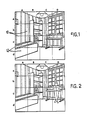
- the photograph represented in FIG. 1 was taken by means of a camera mounted on a tripod, the frosted glass of the viewfinder is provided with a grid of reference lines.
- a grid of lines 10 appears which defines a plurality of photographic elements which are identified in FIG. 1 by means of the coordinates A to D and a to d.
- the grid is square, but we can also give it any other geometric shape, such as rectangular, triangular or even less regular shapes.
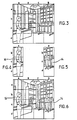
- the photographs obtained have a network of reference lines 10 identical to that of FIG. 1 and which define elements of photographs directly superimposable on those which they correspond in FIG. 1. It is not only possible to vary with each shot , the position of the subject but also the subject itself. For example, you can introduce another or more people, an animal or an object.
- the photographic elements which contain the subject are cut out from said photographs along the reference lines 10.
- the strip 14 shown in Figure 6 we separate the strip 14 shown in Figure 6 and which is formed of the elements Db, Dc and Dd.
- the strip 16 formed from the elements Ab, Ac and Ad is cut out. This is represented in FIG. 5.
- the evolving subject interests three elements aligned vertically, but it goes without saying that it can occupy one or more elements arranged in any manner, and these elements may or may not be cut according to the reference lines.
- One or more of said strips or cut elements can then be applied to the basic photograph of FIG. 1.
- the latter will be exposed in its initial state.
- the elements must be able to be detachably fixed on the basic photograph and without damaging the surface thereof.
- they can be applied on an iron plate and the basic photograph on magnetic support, or vice versa.
- said basic photography elements can be provided on their reverse side with bands of the “Velcro” brand type, for using the process on fabrics. They can just as easily on their back receive a reusable double-sided adhesive surface of the "3M” brand type. Or any other means of temporary fixation.
- the basic photograph is not marked with a network of lines, it is presented in the form of a conventional image. Additional elements, (characters, objects, etc 7), can be plated and come as a fitting on the base image, by the natural reference lines of this image, by simple cutting.
- the fixing of the elements to be adapted on the basic image is as indicated above, by any means of temporary fixing.
- a variant would consist in cutting out the subject or subjects to be placed on the basic image according to their own outline. This gives a precise silhouette. The subject thus taken out of its environment, can be replaced on the basic image, squared or not.
- the basic image is taken with a wide angle
- the additional images are taken with a telephoto lens or a so-called standard objective, so that the elements to be reported on the basic image are elements brought out in close-up detail shots, or vice versa.
- the lighting conditions can be deliberately different: For example, a landscape photographed at different times of the day to show the passage of time by placing or heating elements on the basic image.
- the basic image represents a photograph with many characters in a landscape and elements of landscape without characters come to be placed according to the invention on the characters and thus to host or to reappear whichever of the characters you want.
Landscapes
- Physics & Mathematics (AREA)
- General Physics & Mathematics (AREA)
- Silver Salt Photography Or Processing Solution Therefor (AREA)
- Studio Devices (AREA)
Claims (18)
Priority Applications (1)
| Application Number | Priority Date | Filing Date | Title |
|---|---|---|---|
| AT86903435T ATE56827T1 (de) | 1985-06-25 | 1986-06-19 | Verfahren fuer die herstellung einer evolutiven photographischen komposition, die so erhaltene komposition und das evolutive bild. |
Applications Claiming Priority (2)
| Application Number | Priority Date | Filing Date | Title |
|---|---|---|---|
| FR8509663 | 1985-06-25 | ||
| FR8509663A FR2583891B1 (fr) | 1985-06-25 | 1985-06-25 | Procede de realisation d'une composition photographique evolutive et composition ainsi obtenue |
Publications (2)
| Publication Number | Publication Date |
|---|---|
| EP0227723A1 EP0227723A1 (de) | 1987-07-08 |
| EP0227723B1 true EP0227723B1 (de) | 1990-09-19 |
Family
ID=9320654
Family Applications (1)
| Application Number | Title | Priority Date | Filing Date |
|---|---|---|---|
| EP86903435A Expired - Lifetime EP0227723B1 (de) | 1985-06-25 | 1986-06-19 | Verfahren für die herstellung einer evolutiven photographischen komposition, die so erhaltene komposition und das evolutive bild |
Country Status (6)
| Country | Link |
|---|---|
| US (1) | US4745424A (de) |
| EP (1) | EP0227723B1 (de) |
| CA (1) | CA1263046A (de) |
| DE (1) | DE3674360D1 (de) |
| FR (1) | FR2583891B1 (de) |
| WO (1) | WO1987000302A1 (de) |
Families Citing this family (6)
| Publication number | Priority date | Publication date | Assignee | Title |
|---|---|---|---|---|
| US5439220A (en) * | 1994-06-22 | 1995-08-08 | Hendricks; Ronald F. | Puzzle game |
| EP0729271A3 (de) * | 1995-02-24 | 1998-08-19 | Eastman Kodak Company | Animierte Bildvorführungen mit personalisierten, digitalisierten Bildern |
| JP4045024B2 (ja) * | 1998-04-24 | 2008-02-13 | 富士フイルム株式会社 | 画像取込装置および方法 |
| GB9810975D0 (en) * | 1998-05-22 | 1998-07-22 | Champion Hire Limited | Pictorial device |
| US8397412B2 (en) * | 2005-08-05 | 2013-03-19 | Redevex Corporation | Image mounting system |
| US20090269729A1 (en) * | 2008-04-28 | 2009-10-29 | Mccoy Carol M | System for tracking the passage of time |
Family Cites Families (10)
| Publication number | Priority date | Publication date | Assignee | Title |
|---|---|---|---|---|
| US242709A (en) * | 1881-06-07 | Dissected toy picture | ||
| US257102A (en) * | 1882-04-25 | stranders | ||
| US258651A (en) * | 1882-05-30 | Dissected toy picture | ||
| US689361A (en) * | 1900-11-19 | 1901-12-17 | Frank Dolezal | Method of taking photographic measurements for tailoring purposes. |
| US1372811A (en) * | 1918-12-23 | 1921-03-29 | Walter L Hall | Method of making pictures |
| US1737021A (en) * | 1926-11-23 | 1929-11-26 | Gordon B Pollock | Method of making composite pictures |
| US1676641A (en) * | 1927-05-20 | 1928-07-10 | Gustavus W Eschenbach | Interchangeable panoramic-picture blocks |
| US1867800A (en) * | 1928-08-16 | 1932-07-19 | Bhosys Charles William | Photographic background |
| US2329384A (en) * | 1941-05-03 | 1943-09-14 | Beverly Williams | Photographic glass tile |
| DD108608A1 (de) * | 1972-10-20 | 1974-09-20 |
-
1985
- 1985-06-25 FR FR8509663A patent/FR2583891B1/fr not_active Expired
-
1986
- 1986-06-19 WO PCT/FR1986/000210 patent/WO1987000302A1/fr not_active Ceased
- 1986-06-19 EP EP86903435A patent/EP0227723B1/de not_active Expired - Lifetime
- 1986-06-19 DE DE8686903435T patent/DE3674360D1/de not_active Expired - Fee Related
- 1986-06-19 US US07/032,453 patent/US4745424A/en not_active Expired - Fee Related
- 1986-06-25 CA CA000512461A patent/CA1263046A/fr not_active Expired
Also Published As
| Publication number | Publication date |
|---|---|
| FR2583891A1 (fr) | 1986-12-26 |
| FR2583891B1 (fr) | 1987-08-21 |
| WO1987000302A1 (fr) | 1987-01-15 |
| EP0227723A1 (de) | 1987-07-08 |
| DE3674360D1 (de) | 1990-10-25 |
| US4745424A (en) | 1988-05-17 |
| CA1263046A (fr) | 1989-11-21 |
Similar Documents
| Publication | Publication Date | Title |
|---|---|---|
| Lavédrine et al. | Photographs of the past: process and preservation | |
| Bonanos | Instant: the story of Polaroid | |
| Viditz-Ward | Photography in Sierra Leone, 1850–1918 | |
| EP0227723B1 (de) | Verfahren für die herstellung einer evolutiven photographischen komposition, die so erhaltene komposition und das evolutive bild | |
| Latsis | Landscape in motion: Muybridge and the origins of chronophotography | |
| Burns | Topographies of Tourism:" Documentary" Photography and" The Stones of Venice" | |
| Smith | The early history of animation: Saturday morning TV discovers 1915 | |
| Mayer | The actress as photographic icon: from early photography to early film | |
| Raban | A Student at Saint Martin’s, River Yar and Other Early Works | |
| US2075684A (en) | Excised photographic plate system of composite motion-picture photography | |
| Zahar | Photo Exemplar Classification: The Integration of Photographic History into Photographic Technique | |
| Kozak | Translating nature: manipulation of natural landscape in contemporary digital photography | |
| Forment | Reconnecting the Romantic Opera Repertoire: The Forgotten Stage Photographs of the Grand Théâtre de Gand | |
| Rosen et al. | Photography and digital imaging | |
| Smith | Photographic Sculptures, Photographic Films: David Smith and Douglass Crockwell’s Stop-Motion Experiment | |
| Gardner | Photography previsualization handbook for high school photography students | |
| Peraica | The aesthetics of the negative or; the negative dialectics of photography | |
| JP3047596U (ja) | フォトシールシート | |
| Earls et al. | Polaroid | |
| Carter | Some important principles of composition | |
| Krist | Digital Masters: Travel Photography: Documenting the World's People and Places | |
| Salgado | Waltércio Caldas: An Intimate Horizon | |
| BE1000026A6 (fr) | Transformation d'une image plane en image-relief par transposition des differents elements de cette image sur des plans transparents distincts. | |
| Birrell et al. | Private Realms of Light: Canadian Amateur Photography, 1839-1940-2. On View: The Evolution of Amateur Photography | |
| Stefoff | The Camera |
Legal Events
| Date | Code | Title | Description |
|---|---|---|---|
| PUAI | Public reference made under article 153(3) epc to a published international application that has entered the european phase |
Free format text: ORIGINAL CODE: 0009012 |
|
| AK | Designated contracting states |
Kind code of ref document: A1 Designated state(s): AT BE CH DE FR GB IT LI LU NL SE |
|
| 17P | Request for examination filed |
Effective date: 19870619 |
|
| 17Q | First examination report despatched |
Effective date: 19890608 |
|
| GRAA | (expected) grant |
Free format text: ORIGINAL CODE: 0009210 |
|
| AK | Designated contracting states |
Kind code of ref document: B1 Designated state(s): AT BE CH DE FR GB IT LI LU NL SE |
|
| PG25 | Lapsed in a contracting state [announced via postgrant information from national office to epo] |
Ref country code: SE Effective date: 19900919 |
|
| REF | Corresponds to: |
Ref document number: 56827 Country of ref document: AT Date of ref document: 19901015 Kind code of ref document: T |
|
| REF | Corresponds to: |
Ref document number: 3674360 Country of ref document: DE Date of ref document: 19901025 |
|
| ITF | It: translation for a ep patent filed | ||
| GBT | Gb: translation of ep patent filed (gb section 77(6)(a)/1977) | ||
| ITTA | It: last paid annual fee | ||
| PLBE | No opposition filed within time limit |
Free format text: ORIGINAL CODE: 0009261 |
|
| STAA | Information on the status of an ep patent application or granted ep patent |
Free format text: STATUS: NO OPPOSITION FILED WITHIN TIME LIMIT |
|
| 26N | No opposition filed | ||
| PGFP | Annual fee paid to national office [announced via postgrant information from national office to epo] |
Ref country code: DE Payment date: 19940607 Year of fee payment: 9 |
|
| PGFP | Annual fee paid to national office [announced via postgrant information from national office to epo] |
Ref country code: BE Payment date: 19940614 Year of fee payment: 9 |
|
| PGFP | Annual fee paid to national office [announced via postgrant information from national office to epo] |
Ref country code: AT Payment date: 19940624 Year of fee payment: 9 |
|
| PGFP | Annual fee paid to national office [announced via postgrant information from national office to epo] |
Ref country code: NL Payment date: 19940630 Year of fee payment: 9 Ref country code: LU Payment date: 19940630 Year of fee payment: 9 |
|
| EPTA | Lu: last paid annual fee | ||
| GBPC | Gb: european patent ceased through non-payment of renewal fee |
Effective date: 19940619 |
|
| PGFP | Annual fee paid to national office [announced via postgrant information from national office to epo] |
Ref country code: GB Payment date: 19950411 Year of fee payment: 9 |
|
| REG | Reference to a national code |
Ref country code: GB Ref legal event code: 728C |
|
| REG | Reference to a national code |
Ref country code: GB Ref legal event code: 728A |
|
| PG25 | Lapsed in a contracting state [announced via postgrant information from national office to epo] |
Ref country code: LU Free format text: LAPSE BECAUSE OF NON-PAYMENT OF DUE FEES Effective date: 19950619 Ref country code: GB Free format text: LAPSE BECAUSE OF NON-PAYMENT OF DUE FEES Effective date: 19950619 Ref country code: AT Effective date: 19950619 |
|
| PGFP | Annual fee paid to national office [announced via postgrant information from national office to epo] |
Ref country code: CH Payment date: 19950620 Year of fee payment: 10 |
|
| PG25 | Lapsed in a contracting state [announced via postgrant information from national office to epo] |
Ref country code: BE Effective date: 19950630 |
|
| BERE | Be: lapsed |
Owner name: CARDAIRE JEAN-CLAUDE Effective date: 19950630 |
|
| PG25 | Lapsed in a contracting state [announced via postgrant information from national office to epo] |
Ref country code: NL Effective date: 19960101 |
|
| GBPC | Gb: european patent ceased through non-payment of renewal fee |
Effective date: 19950619 |
|
| NLV4 | Nl: lapsed or anulled due to non-payment of the annual fee |
Effective date: 19960101 |
|
| PG25 | Lapsed in a contracting state [announced via postgrant information from national office to epo] |
Ref country code: DE Effective date: 19960301 |
|
| PG25 | Lapsed in a contracting state [announced via postgrant information from national office to epo] |
Ref country code: LI Effective date: 19960630 Ref country code: CH Effective date: 19960630 |
|
| REG | Reference to a national code |
Ref country code: CH Ref legal event code: PL |
|
| PGFP | Annual fee paid to national office [announced via postgrant information from national office to epo] |
Ref country code: FR Payment date: 19980630 Year of fee payment: 13 |
|
| PG25 | Lapsed in a contracting state [announced via postgrant information from national office to epo] |
Ref country code: FR Free format text: THE PATENT HAS BEEN ANNULLED BY A DECISION OF A NATIONAL AUTHORITY Effective date: 19990630 |
|
| REG | Reference to a national code |
Ref country code: FR Ref legal event code: ST |
|
| PG25 | Lapsed in a contracting state [announced via postgrant information from national office to epo] |
Ref country code: IT Free format text: LAPSE BECAUSE OF NON-PAYMENT OF DUE FEES;WARNING: LAPSES OF ITALIAN PATENTS WITH EFFECTIVE DATE BEFORE 2007 MAY HAVE OCCURRED AT ANY TIME BEFORE 2007. THE CORRECT EFFECTIVE DATE MAY BE DIFFERENT FROM THE ONE RECORDED. Effective date: 20050619 |