EP0227909A1 - Polynucléotides codant pour la réductase de nitrate - Google Patents
Polynucléotides codant pour la réductase de nitrate Download PDFInfo
- Publication number
- EP0227909A1 EP0227909A1 EP86114978A EP86114978A EP0227909A1 EP 0227909 A1 EP0227909 A1 EP 0227909A1 EP 86114978 A EP86114978 A EP 86114978A EP 86114978 A EP86114978 A EP 86114978A EP 0227909 A1 EP0227909 A1 EP 0227909A1
- Authority
- EP
- European Patent Office
- Prior art keywords
- nitrate reductase
- nitrate
- cdna
- mrna
- gene
- Prior art date
- Legal status (The legal status is an assumption and is not a legal conclusion. Google has not performed a legal analysis and makes no representation as to the accuracy of the status listed.)
- Withdrawn
Links
Images


Classifications
-
- C—CHEMISTRY; METALLURGY
- C12—BIOCHEMISTRY; BEER; SPIRITS; WINE; VINEGAR; MICROBIOLOGY; ENZYMOLOGY; MUTATION OR GENETIC ENGINEERING
- C12N—MICROORGANISMS OR ENZYMES; COMPOSITIONS THEREOF; PROPAGATING, PRESERVING, OR MAINTAINING MICROORGANISMS; MUTATION OR GENETIC ENGINEERING; CULTURE MEDIA
- C12N9/00—Enzymes; Proenzymes; Compositions thereof; Processes for preparing, activating, inhibiting, separating or purifying enzymes
- C12N9/0004—Oxidoreductases (1.)
- C12N9/0012—Oxidoreductases (1.) acting on nitrogen containing compounds as donors (1.4, 1.5, 1.6, 1.7)
- C12N9/0036—Oxidoreductases (1.) acting on nitrogen containing compounds as donors (1.4, 1.5, 1.6, 1.7) acting on NADH or NADPH (1.6)
-
- C—CHEMISTRY; METALLURGY
- C12—BIOCHEMISTRY; BEER; SPIRITS; WINE; VINEGAR; MICROBIOLOGY; ENZYMOLOGY; MUTATION OR GENETIC ENGINEERING
- C12Y—ENZYMES
- C12Y107/00—Oxidoreductases acting on other nitrogenous compounds as donors (1.7)
- C12Y107/01—Oxidoreductases acting on other nitrogenous compounds as donors (1.7) with NAD+ or NADP+ as acceptor (1.7.1)
- C12Y107/01003—Nitrate reductase (NADPH) (1.7.1.3)
Definitions
- the present invention relates to the field of recombinant DNA technology and to its uses in the isolation, cloning, and expression of the cDNA or of chromosomal genes coding for nitrate reductase.
- Microorganisms vary considerably in their capacity to synthesize amino acids. Most microorganisms, however, require a reduced form of nitrogen, such as ammonia, but numerous bacteria and fungi can also utilize nitrite or nitrate.
- Nitrate as a nitrogen source, is first reduced to nitrite and the nitrite is then reduced to ammonia. Nitrate reduction is catalyzed by nitrate reductase (NR), which is ubiquitous in plants and microorganisms. This enzyme is a molybdenum-containing flavoprotein and employs NADPH (nicotinamide adenine dinucleotide phosphate-reduced). The characteristic reaction of nitrate reductase is as follows: (FAD is flavin adenine dinucleotide).
- ferredoxin reduced during the light reactions may serve as the ultimate reductant of nitrite in the following chain of reactions:
- NH3 Free ammonia
- Free ammonia is formed as the end product, which is then utilized to aminate alpha-ketoglutarate and thus to provide amino groups by transamination.
- nitrate reductase is given in L. Beevers and R. Hageman, "Nitrate and Nitrite Reduction,” Chapter 3 of The Biochemistry of Plants , Vol. 5 (Academic Press, Inc. 1980) at pages 115 to 168, incorporated herein by reference.
- Nitrate reductase levels fluctuate in response to a number of environmental factors such as temperature and light. Further, nitrate reductase is the first higher plant enzyme that shows induction by its substrate, nitrate. Filner, P., "Regulation of Nitrate Reductase in Cultured Tobacco Cells," Biochim., Biophys. Acta , 118 : 299-310 (1966), showed that nitrate induction involves de novo synthesis of nitrate reductase protein.
- Induction by nitrate also increases the nitrate reductase protein activity as described by Somers et al. , “Synthesis and Degradation of Barley Nitrate Reductase," Plant Physiol. , 72 : 949-52 (1982). Induction of nitrate reductase is also described in Mendel et al. , “Molybdenum Cofactor in Nitrate Reductase--Deficient Tobacco Mutants. III, Induction of Cofactor Synthesis by Nitrate," Plant Science Letters , 27 : 95-101 (1982).
- Nitrate reductase-deficient mutants can be used as a selection marker in recombinant DNA techniques. Moreover, using recombinant DNA techniques, the level of nitrate reductase activity in plants may be increased.
- the present invention provides DNA molecules and fragments coding for nitrate reductase.
- the invention provides DNA fragments comprising a non-functional part of the cDNA sequence (fragment type A), a functional cDNA sequence (fragment type B), or a functional chromosomal gene (fragment type C) of nitrate reductase of barley seedlings ( Hordeum vulgare ).
- the invention also provides for vehicles capable of replication and expression comprising the type A, B, or C DNA molecules and fragments coding for nitrate reductase.
- the invention further provides for hosts transformed with said vehicle and with said type A, B, or C DNA molecules and fragments coding for nitrate reductase.
- the invention provides for plants and plant cells and methods thereof, such that the level of nitrate reductase activity of said plants and plant cells is increased.
- Nucleotide A monomeric unit of DNA or RNA consisting of a sugar moiety, a phosphate, and a nitrogenous heterocyclic base.
- the base is linked to the sugar moiety via the glycocytic carbon (1' carbon of the pentose).
- the combination of a base and a sugar is called a nucleoside.
- Each nucleotide is characterized by its base.
- the four DNA bases are adenine (A), guanine (G), cytosine (C) and thymine (T).
- the four RNA bases are A, G, C, and uracil (U).
- DNA or Genetic Sequence A linear array of nucleotides connected one to the other via phosphodiester bonds between the 3' and 5' carbons of adjacent pentoses.
- Functional Genetic Sequence A genetic sequence coding for a polypeptide having desired activity, regardless of whether the sequence is shorter or longer than that of the full length sequence for the polypeptide. It is also referred to as a "functional gene.”
- Codon or Triplet A sequence of three nucleotides which encodes an amino acid, a translation start signal or a translation termination signal.
- messenger codons TTA, TTG, CTT, CTC, CTA, and CTG encode for the amino acid leucine.
- TAG, TAA, and TGA are translation stop signals.
- ATG is a translation start signal..
- Reading Frame The grouping of codons during translation of mRNA into amino acid sequence. During translation, the proper reading frame must be maintained. For example, the sequence GCTGGTTGTAAG may be translated into three reading frames or phases depending on whether one starts with G, with C or with T, and thus may yield three different peptide products.
- Structural Gene A DNA sequence which encodes through its template or mRNA a sequence of amino acids characteristic of a specific peptide.
- Expression is the process by which a structural gene produces a polypeptide. It involves transcription of the gene into mRNA and the translation of such mRNA into the polypeptide.
- Cloning Vehicle A plasmid or phage DNA or other DNA sequences which are able to replicate in a host cell, which are characterized by one or a small number of endonuclease recognition sites at which such DNA sequences may be cut in a determinable fashion without loss of an essential biological function of the DNA, and which contain a phenotypic selection marker suit severelyable for use in the identification of transformed cells. Markers, for example, are tetracycline resistance or ampicillin resistance. Phenotypic markers can also include for the purposes of the present invention conferring nitrate reductase activity to nitrate reductase-deficient mutant host cells. The word "vector" is sometimes used for a cloning vehicle.
- Expression Vehicle A vehicle similar to a cloning vehicle, but which is capable of expressing a given structural gene in a host, normally under control of certain regulatory sequences.
- Replication Vehicle A cloning or expression vehicle.
- Plasmid A non-chromosomal double-stranded DNA sequence comprising an intact "replicon" such that the plasmid is replicated in a host cell.
- the plasmid When the plasmid is placed with a unicellular organism, the characteristics of that organism may be changed or transformed as a result of the DNA of the plasmid.
- a plasmid carrying the gene for tetracycline resistance transforms a cell previously sensitive to tetracycline into one which is resistant to it.
- Expression Control Sequence A sequence of nucleotides that controls or regulates expression of structural genes when operably linked to those genes. They include the lac system, the trp system, major operator and promoter regions of phage lambda, the control region of fd protein, and other sequences known to control the expression of genes and procaryotic or eucaryotic cells.
- Plant Promoter An expression control sequence which is capable of causing the expression in said plant of any homologous or heterologous genetic sequence or sequences operably linked to such promoter.
- Cloning The process of obtaining a population of organisms or DNA sequences derived from one such organism or sequence by asexual reproduction.
- Host Any organism that is the recipient of a replicable expression vehicle, including procaryotes and eucaryotes.
- Heterologous Gene A gene that is foreign, i.e. originating from a donor different from the host or a chemically synthesized gene and can include a donor of a different species from the host.
- the gene codes for polypeptides ordinarily not produced by the organism suseptible to transformation by the expression vehicle.
- Nitrate Reductase The definition of this enzyme is functional, and includes any nitrate reductase capable of functioning as a selectable marker by conferring nitrate reductase activity to a nitrate reductase-deficient host cell. The definition also includes any nitrate reductase capable of functioning in a given desired plant to increase the nitrate reduc tase activity of said plant.
- the term therefore in strictlycludes not only the specific enzyme from the specific plant species involved in the genetic transformation, but may include nitrate reductase from other plant species or microbes or even other eucaryotes, if such nitrate reductase is capable of functioning in the transformed plant cells.
- the present invention is based on the discovery of cDNA fragments encoding nitrate reductase (NR). These cDNA fragments for nitrate reductase constitute the basis for the preparation of the functional nitrate reductase gene.
- the cDNA fragments of the present invention were isolated from two separate libraries.
- a cDNA library in the ⁇ gt11 vector (Young, R.A. and Davis, R.W. PNAS , 80 :1194-1198 (1983).
- the recombinants were screened for the expression of antigenic sites which could be recognized by the antibody against nitrate reductase.
- Two independent recombinant clones showed cross-reactivity to nitrate reductase antibody.
- the cDNA of these two clones also cross-hybridized to each other.
- the two recombinant clones from the ⁇ gt11 vector were named "bNR ⁇ 1" and bNR ⁇ 2" (i.e. bNR ⁇ 1 vector and bNR ⁇ 2 vector).
- a highly enriched nitrate reductase mRNA was used in constructing a cDNA library in the plasmid vector pUC12 (Vieira, J. and Messing, J., Gene , 19 :259-268 1982).
- the largest recombinant clone obtained from this library contained a 1.1 Kb cDNA insert when screened with bNR ⁇ 1 and bNR ⁇ 2 probes.
- This recombinant clone from the pUC12 vector was named "bNRp10 (i.e., bNRp10 vector).
- NR fragment present in the vector ⁇ gt11 and in plasmid vector pUC12, as will be obvious to one of skill in genetics, are not the only form which these fragments can take.
- genetic information of type A, B, or C can, using readily available techniques, be prepared by synthetic methods.
- the NR fragment may, in addition, be present by itself, or in the particular plasmid described above, or in other replication vehicles, or, most importantly, may be part of longer fragments, e.g., type B, containing a functional cDNA, or part of a functional chromosomal gene, e.g., type C, for nitrate reductase.
- a functional cDNA gene (fragment of type B) coding for nitrate reductase, which may comprise the NR fragment may also be in operable linkage with expression control sequences.
- DNA fragments which are preferred are those based on cDNA which, by the nature of its origin, does not contain any naturally occurring introns.
- Another preferred material is messenger RNA which has been matured and is capped, and includes a poly A-3' chain.
- a third preferred material is the functional chromosomal gene of nitrate reductase.
- polynucleotide cDNA fragments of type A including the NR fragment, partially coding for nitrate reductase, find their utilities as probes for the detection, identification, and characterization of the functional cDNA and chromosomal genes coding for nitrate reductase.
- the DNA fragments of type B, functional cDNA, and type C, functional chromosomal DNA which may include the NR fragments of type A, may be used in selectable marker techniques in recombinant DNA methods.
- the type B or type C fragments usually in a replication vehicle are used to transform host cells that are deficient in nitrate reductase.
- the transformed host cells are grown and selected for nitrate reductase production. Subsequently, transformed host cells that show nitrate reductase activity can be induced using nitrate, or repressed using ammonia or nitrite.
- the preparation of a functional cDNA clone of type B can take a variety of routes.
- the NR fragment can be used to screen a cDNA library in lambda gt11 (about 1-3 x 10⁶ clones), or a nitrate reductase cDNA library in pUC12 (about 1-3 x 10⁶ clones).
- pUC12 about 1-3 x 10⁶ clones
- a pUC12 library is readily prepared by priming poly (A) RNA from nitrate reductase with oligo dT, reverse transcribing, size selecting on an alkaline sucrose gradient, synthesizing double stranded DNA with DNA polymerase I Klenow fragment, treating with S1 nuclease, tailing with dC, size selecting the DNA on an agarose gel, and introducing the fragments into the dG tailed Pst I site of the vector (pUC12) (Maniatis, T. et al. , see page 20 and Chandrda T. et al. , see page 20). Up to 1-3 x 10⁶ independent clones are available in such a library.
- Isolated clones are characterized by mapping and sequencing. Overlapping sequences are determined and newly identified parts which are not covered by the NR fragment are used to rescreen the cDNA libraries. Finally, all different subclones are assembled into a functional cDNA fragment of type B. The subclones or assembled clones are tested for the presence of functional sequences coding for nitrate reductase, by introducing the sequences into appropriate expression systems.
- Nitrate reductase specific mRNA is enriched by hybrid selection, by size selection, by overexpressing a complete genomic copy in an appropriate cell line, or by a combination of these methods.
- An oligonucleotide (20-30 bp) complementary to nitrate reductase mRNA is synthesized.
- This oligonucleotide should map close (at a distance of about 20-50 nucleotides) to the 5'-end of the already cloned and identified region.
- cDNA is obtained by reverse transcription (Maniatis et al. , supra ).
- the cDNA/RNA hybrid is tailed with dC, and the RNA is removed by alkaline hydrolysis or digested with RNase H.
- Double-stranded cDNA can be cloned into an appropriate vector either after synthetic linker addition or after a second tailing step with dC (Maniatis et al. , supra ).
- a probe for screening for N-terminally coding NR cDNA inserts can be generated as a synthetic oligonucleotide which is complementary to a region between the previously identified 5'-end and the primer used for reverse transcription. If the 5'-primed region of a functional gene has been identified for a genomic clone, this fragment can also serve as a suitable probe in screening for upstream coding cDNA fragments.
- a functional clone of the nitrate reductase cDNA and/or a functional chromosomal gene can be identified and isolated, and then introduced into appropriate cloning and/or expression vehicles and hosts in order to express nitrate reductase by microbiological fermentation, in tissue culture or in a whole animal by microinjection of fertilized eggs (Palmiter et al. , Science , 222 : 809 (1983)). It may further be desirable to tailor fragments of types B and C, containing the functional cDNA and functional chromosomal gene, respectively, for nitrate reductase, by removing non-essential or non-coding portions.
- Nitrate reductase reduces chlorate to chlorite, a compound toxic to plant cells. Nitrate reductase deficient cells, however, are resistant to chlorate. Thus, mutant nitrate reductase deficient cell lines can be selected as host cells. Morton et al. , "Nitrate Reductase Deficient Cell Lines from Haploid Protoplast Cultures of Nicotiana plumbaginifolia ,” Mol. Gen. Genet. , 182 : 301-304 (1982); Muller et al.
- nitrate reductase-deficient mutants include Aspergillus nidulans , Neurospora crassa , tobacco mutants, (for example, Nicotiana tabacum ), barley mutants, (for example, Hordeum vulgare ), and Arabadopsis thaliana .
- nitrate reductase either functional cDNA or chromosomal DNA, operably linked to a promoter can be recombined with a suitable transfer vehicle, such as tumor-inducing (Ti) plasmid to transfer NR activity to mutant eucaryotic cells.
- a suitable transfer vehicle such as tumor-inducing (Ti) plasmid to transfer NR activity to mutant eucaryotic cells.
- Transformed cells can be selected based on nitrate reductase activity, as shown by cell growth in a culture medium containing nitrate, as the only nitrogen source.
- the transformed host can be fermented and cultured according to means known in the art to achieve optimal cell growth.
- the NR fragment or functional cDNA or genomic DNA for NR may be used to increase nitrate reductase activity in grain crops, for example, resulting in grain production of more grain or grain protein.
- nitrate reductase activity is correlated with grain and grain protein production, such as in corn, wheat, sorgum, soy beans, and rye grass.
- the claimed nitrate reductase can be used to increase the production of grain or grain protein.
- One method of introducing genetic material into plant cells is to infect a wounded leaf of the plant with Agrobacterium tumefaciens bacteria. Under appropriate growth conditions, a ring of calli forms around the wound. The calli are then transferred to growth medium, allowed to form shoots, roots and develop further into plants.
- NR tumor inducing
- the genetic material can be microinjected directly into plant embryo cells or by electroporation as described in Fromm et al. , "Expression of Genes Transformed into Monocot and Dicot Plant Cells by Electroporation," Proc. Nat'l. Acad. Sci., USA , 82 : 5824-28 (1985) or by direct precipitation using polyethylene glycol as described in Paszkowski et al. , EMBO J. , 3 : 2717-22 (1984).
- pollen may be transformed with total DNA or an appropriate functional clone providing resistance, and the pollen then utilized to produce progeny by sexual reproduction.
- Any other methods utilizable to introduce and increase nitrate reductase activity in a given cell can be utilized.
- Of particular interest in this invention is the operable linkage of a genetic sequence coding for a structural nitrate reductase gene to another genetic sequence capable of overproduction of the gene product derived therefrom. This linkage of genetic sequences can be introduced into appropriate plant cells, for example, by means of the Ti plasmid.
- Ti plasmids contain two regions essential for the production of transformed cells. One of these, named transfer DNA (T DNA), induces tumor formation. The other, termed virulent region, is essential for the formation but not maintenance of tumors.
- Transfer DNA which transfers to the plant genome, can be increased in size by the insertion of the functional nitrate reductase gene or of a gene combination without its transferring ability being affected. By removing the tumor-causing genes so that they no longer interfere, the modified Ti plasmid can then be used as a vector for the transfer of the gene constructs of the invention into an appropriate plant cell.
- the foreign DNA to be inserted is usually introduced between the terminal sequences flanking the T-region.
- a particularly useful Ti plasmid vector is pGV3850, a non-oncogenic derivative of the nopaline Ti plasmid C58. (See Caplan et al. , supra )
- This vector utilizes the natural transfer properties of the Ti plasmid.
- the internal T DNA genes that determines the undifferentiated crown gall phenotype have been de leted and are replaced by any commonly used cloning vehicle (such as pBR322).
- the cloning vehicle sequence containing between T DNA border regions serves as a region of homology for recombination to reintroduce foreign DNA cloned in a derivative of the same cloning vehicle.
- Any gene construct of the invention cloned in such plasmid can thus be inserted into pGV3850 by a single recombination of the homologous sequences.
- Antibiotic resistance markers can be added to the plasmid to select for the recombination event.
- the presence of the nopaline synthase (nos) gene in this vector makes it easy to monitor the efficiency of transformation using pGV3850. A callus in tissue culture can then be tested for the presence of nopaline.
- the same may be selected by aid of an appropriate marker, such as antibiotic resistance, or more relevant, increased nitrate reductase activity, and then grown in conventional ways.
- an appropriate marker such as antibiotic resistance, or more relevant, increased nitrate reductase activity
- CaMV cauliflower mosaic virus
- CaMV Hohn, B. et al. , in "Molecular Biology of Plant Tumors," Academic Press, New York, pp. 549-560; and Howell, United States Patent 4,407,956
- the entire CaMV viral DNA genome is inserted into a parent bacterial plasmid creating a recombinant DNA molecule which can be propagated in bacteria.
- the recombinant plasmid is cleaved with restriction enzymes either at random or at unique sites in the viral portion of the recombinant plasmid for insertion of the gene of the invention.
- a small oligonucleotide, described as a linker, having a unique restriction site may also be inserted.
- the modified recombinant plasmid again may be cloned and further modified by introduction of larger pieces of the NR gene or construct thereof into the unique restriction site of the linker.
- the modified viral portion of the recombinant plasmid is then excised from the parent bacterial plasmid, and used to inoculate the plant cells or plants. This virus is described in the aforementioned Howell patent as being particularly good for insertion of genes capable of enhanced production of protein, greater tolerance to stress, resistance to pests and pesticides, nitrogen fixation, and the like.
- nitrate reductase (NR) activity is induced by its substrate, nitrate.
- Barley seedlings Hordeum vulgare ) were used to study the regulation of NR, especially its induction by nitrate.
- Nitrate reductase protein exhibits a single protein band of 110,000 Kd molecular weight on an SDS-polyacrylamide gel electrophoresis.
- the barley nitrate reductase (native molecular weight of 221,000) therefore consists of two identical subunits. Kuo et al. , "NADH-Nitrate Reductase in Barley Leaves, Identification and Amino Acid Composition of Subunit Protein," Biochim., Biophys. Acta , 118 : 299-310 (1982).
- Nitrate reductase increased markedly upon nitrate induction, and the NR was immunoprecipitated by a nitrate reductase specific polyclonal antibody.
- the nitrate reductase 110 Kd band increased in intensity markedly upon nitrate induction.
- Figure 1 lanes 3-8, shows the in vivo labeling of protein in barley seedlings, followed by immunoprecipitation. In lanes 3 and 4, the nitrate reductase specific polyclonal antibodies were used to immunoprecipitate the protein.
- Lane 3 induced (I) with nitrate reductase, shows the induced nitrate reductase product, with the band at 110 Kd molecular weight.
- Lane 4 non-induced (N), does not show the induced nitrate reductase product.
- pre-immune serum was used as a control.
- Lanes 7 and 8 show the results of the in vivo labeled protein, without immunoprecipitation. Lane 7 shows the induced nitrate reductase product.
- mRNA was extracted from nitrate induced and non-induced barley seedlings. Two populations of mRNA were translated in vitro and their products immunoprecipitated with nitrate reductase specific polyclonal antibodies. The observed level of induction is comparable to that exhibited in vivo in Figure 1. Lanes 1 and 2 of Figure 1, shows the in vitro translation of mRNA. Only the induced mRNA, lane 1, showed the 110 Kd molecular weight nitrate reductase product.
- cloning of the nitrate reductase gene was initiated.
- One approach taken to cloning the nitrate reductase gene was first to clone the cDNA corresponding to nitrate reductase, and once this cDNA was identified, it could then be used as a probe to isolate the NR gene.
- the size of the NR protein was 110 Kd, the estimated minimum size of the mRNA would be 3 Kb. From the in vitro translation and immunoprecipitation experiment, it was learned that the level of NR mRNA in the total mRNA population is low, i.e. about 0.01%.
- the population of poly(A+) enriched for NR mRNA was used to construct a cDNA library in the ⁇ gt11 vector. 40,000 recombinants were screened with NR antibody for the expression of antigenic sites which could be recognized by the barley antibody against NR. Two independent clones (bNR ⁇ 1 and (bNR ⁇ 2) showed cross-reactivity to NR antibody. The cDNA of these two clones cross-hybridize to each other, suggesting a common origin.
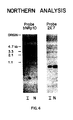
- sucrose gradient enriched mRNA population was further enriched for NR by methylmercury hydroxide agarose gel electrophoresis as shown in Figure 3.
- This method was a separation based on size of the mRNA.
- the alternative separation methods one based on sedimentation in a native sucrose gradient as shown in Figure 2, and the other size fractionation by gel electrophoresis as shown in Figure 3, allowed a total enrichment of about 100-fold.
- the level of unenriched mRNA was 0.01-0.02% of mRNA poly(A+).
- the level of mRNA poly(A+) was 0.05-0.1%.
- the sucrose gradient fractionation plus the methylmercury hydroxide agarose gel fractionation level of mRNA was 1-2%.
- NR mRNA in the gel was again determined by in vitro translation of the mRNA extracted from gel slices.
- One hundred ng of this highly enriched mRNA was used in constructing a cDNA library in the plasmid vector pUC12 ( Vieria and Messing , 1982) using GC tailing. About 4,000 recombinant clones were obtained.
- This library was initially intended for screening by direct hybrid selection. This library was later screened with bNR ⁇ 1 and bNR ⁇ 2 from the ⁇ gt11 library. Positive clones were obtained from the pUC12 library when 1,000 clones were screened. The number of positive clones in this library (approximately 1%) confirmed the estimation of the gradient and gel enrichment steps.
- the largest cone, bNRp10, among these ten clones contained approximately a 1.1 Kb cDNA insert.
- Immobilized bNRp10 cDNA was able to hybrid select specifically a mRNA which produces a protein of the same size as NR and is immunoprecipitable with NR specific polyclonal antibody.
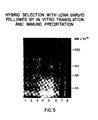
- Figure 5 shows the hybrid selection using cDNA bNRp10 followed by in vitro translation and immunoprecipitation. The cDNA clone was immobilized on nitrocellulose paper and used to hybrid select the nitrate reductase mRNA.
- Lane1 of Figure 5 shows in vitro translation of mRNA with no added messenger (mock translation).
- Lane 2 is the in vitro translation with hybrid selected messenger, showing the 110 Kd molecular weight nitrate reductase.
- Lane 3 shows the hybrid selection using the vector along (pUC12) without the insert, immobilized to the filter.
- Lane 4 shows the immunoprecipitation of the product of lane 2.
- Lane 5 shows the immunoprecipitation of lane 3.
- Lane 6 shows the immunoprecipitation of lane 7.
- Lane 7 is the in vitro translation of the total poly A+RNA (not hybrid selected).
- Lane 8 is the message after hybrid selection (-NR) using bNRp10 (i.e. the RNA that did not bind to the filter in lane 1).
- Clones bNR ⁇ 1 and bNR ⁇ 2 were digested with Eco RI and the NR-hybridizing DNA inserts subcloned into the single-stranded vector, M13 mp18 in both orientations.
- the size of the insert in bNR ⁇ 1 is approximately 0.4-0.5 Kb and in bNR ⁇ 2 is approximately 0.3-0.4 Kb.
- DNA sequence was obtained using the universal M13 external primer and the Sanger method of dideoxy sequencing.
- the approximately 1.1 Kb insert in the pUC12 clone, bNRp10 was digested with Sal I and with Hin dIII (in the polylinker) and Sal I and subcloned into appropriately cut M13 mp18. The DNA sequence was then obtained as described above.
- bNR ⁇ 1, bNR ⁇ 2 and bNRp10 have been deposited prior to the filing date of this application at the applicant's depository at the Department of Molecular Biology, Massachusetts General Hospital, Boston, Massachusetts and at the American Type Culture Collection (ATCC), Rockville, Maryland, U.S., on October 7, 1986, and given ATCC accession numbers as follows: bNR ⁇ 1 is ATCC 40275; bNR ⁇ 2 is ATCC 40274; and bNRp10 is ATCC 40276.
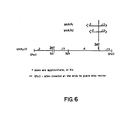
- Figure 6 shows the restriction mapping of the bNRp10, and the bNR ⁇ 1 and bNR ⁇ 2.
- NR nitrate reductase
- the mRNA of arabidopsis was enriched by sucrose gradiant size fractionation prior to cDNA synthesis, as described in Example 2.
- the fractions containing the nitrate reductase mRNA were identified by in vitro translation and immunoprecipitation with barley nitrate reductase antibody.
- This population of mRNA, enriched for NR mRNA was used to construct a cDNA library in an expression vector. Double stranded cDNAs were synthesized according to Gubler and Hoffman, Gene , 25 :263 (1983) and, after Eco RI linker addition, were cloned into ⁇ gt11. The recombinant plaques were screened with NR antibody. Four cDNA clones were identified, ranging in size from 2.3-2.5 Kb.
Landscapes
- Chemical & Material Sciences (AREA)
- Organic Chemistry (AREA)
- Life Sciences & Earth Sciences (AREA)
- Health & Medical Sciences (AREA)
- Engineering & Computer Science (AREA)
- Bioinformatics & Cheminformatics (AREA)
- Zoology (AREA)
- Wood Science & Technology (AREA)
- Genetics & Genomics (AREA)
- Biochemistry (AREA)
- General Health & Medical Sciences (AREA)
- General Engineering & Computer Science (AREA)
- Medicinal Chemistry (AREA)
- Molecular Biology (AREA)
- Biomedical Technology (AREA)
- Biotechnology (AREA)
- Microbiology (AREA)
- Enzymes And Modification Thereof (AREA)
- Micro-Organisms Or Cultivation Processes Thereof (AREA)
Applications Claiming Priority (4)
| Application Number | Priority Date | Filing Date | Title |
|---|---|---|---|
| US79190585A | 1985-10-28 | 1985-10-28 | |
| US791905 | 1985-10-28 | ||
| US91976286A | 1986-10-16 | 1986-10-16 | |
| US919762 | 1992-07-24 |
Publications (1)
| Publication Number | Publication Date |
|---|---|
| EP0227909A1 true EP0227909A1 (fr) | 1987-07-08 |
Family
ID=27121215
Family Applications (1)
| Application Number | Title | Priority Date | Filing Date |
|---|---|---|---|
| EP86114978A Withdrawn EP0227909A1 (fr) | 1985-10-28 | 1986-10-28 | Polynucléotides codant pour la réductase de nitrate |
Country Status (4)
| Country | Link |
|---|---|
| EP (1) | EP0227909A1 (fr) |
| AU (1) | AU6447386A (fr) |
| DK (1) | DK516086A (fr) |
| PT (1) | PT83621B (fr) |
Cited By (5)
| Publication number | Priority date | Publication date | Assignee | Title |
|---|---|---|---|---|
| FR2610948A1 (fr) * | 1987-02-16 | 1988-08-19 | Agronomique Inst Nat Rech | Vecteur de clonage du gene de structure de la nitrate reductase |
| WO1990010074A1 (fr) * | 1989-03-02 | 1990-09-07 | Glaxo Group Limited | Nitrate reductase utilisee comme marqueur dans la transformation de champignons filamenteux |
| EP0409730A1 (fr) * | 1989-07-19 | 1991-01-23 | Institut National De La Recherche Agronomique | Vecteur de clonage et d'expression du gène de la nitrate réductase de tomate |
| FR2688228A1 (fr) * | 1992-03-05 | 1993-09-10 | Agronomique Inst Nat Rech | Procede pour accroitre la precocite d'une plante et/ou abaisser la teneur en nitrates stockes dans la plante. |
| US5902728A (en) * | 1991-10-21 | 1999-05-11 | The United States Of America As Represented By The Secretary Of The Air Force | Diazodenitrification in manufacture of recombinant bacterial biosensors |
-
1986
- 1986-10-27 PT PT8362186A patent/PT83621B/pt unknown
- 1986-10-28 EP EP86114978A patent/EP0227909A1/fr not_active Withdrawn
- 1986-10-28 AU AU64473/86A patent/AU6447386A/en not_active Abandoned
- 1986-10-28 DK DK516086A patent/DK516086A/da not_active Application Discontinuation
Non-Patent Citations (5)
| Title |
|---|
| CHEMICAL ABSTRACTS, vol. 100, no. 9, 27th February 1984, page 137, abstract no. 62678u, Columbus, Ohio, US; J.L. TAYLOR et al.: "Reconstitution of plant nitrate reductase by Escherichia coli extracts and the molecular cloning of the chlA gene of Escherichia coli K12", & J. MOL. APPL. GENET. 1983, 2(3), 261/71 * |
| CHEMICAL ABSTRACTS, vol. 99, no. 9, 29th August 1983, page 174, abstract no. 65314u, Columbus, Ohio, US; T, MANZARA: "Construction of recombinant Ti plasmids containing the chlM gene from E. coli", & NATO ADV. SCI. INST. SER., SER. A 1983, 61(Genet. Eng. Eukaryotes), 125-31 * |
| CHEMICAL ABSTRACTS, vol. 99, no. 9, 29th August 1983, page 174, abstract no. 65315v, Columbus, Ohio, US; A. KLEINHOFS et al.: "Nitrate reductase genes as selectable markers for plant cell transformation", & NATO ADV. SCI. INST. SER., SER. A 1983, 61(Genet. Eng. Eukaryotes), 215-31 * |
| JOURNAL OF CELLULAR BIOCHEMISTRY SUPPLEMENT US, vol. O, no. 9, part C, 1985, page 232; C.L. CHENG et al.: "The cloning of the plant nitrate reductase gene(s)" * |
| PROCEEDINGS OF THE NATIONAL ACADEMY OF SCIENCES USA, vol. 83, September 1986, pages 6825-6828; C.-L. CHENG et al.: "Cloning and nitrate induction of nitrate reductase mRNA" * |
Cited By (8)
| Publication number | Priority date | Publication date | Assignee | Title |
|---|---|---|---|---|
| FR2610948A1 (fr) * | 1987-02-16 | 1988-08-19 | Agronomique Inst Nat Rech | Vecteur de clonage du gene de structure de la nitrate reductase |
| WO1990010074A1 (fr) * | 1989-03-02 | 1990-09-07 | Glaxo Group Limited | Nitrate reductase utilisee comme marqueur dans la transformation de champignons filamenteux |
| US5302527A (en) * | 1989-03-02 | 1994-04-12 | Glaxo Group Limited | Nitrate reductase as marker for filamentous fungi |
| EP0409730A1 (fr) * | 1989-07-19 | 1991-01-23 | Institut National De La Recherche Agronomique | Vecteur de clonage et d'expression du gène de la nitrate réductase de tomate |
| US5902728A (en) * | 1991-10-21 | 1999-05-11 | The United States Of America As Represented By The Secretary Of The Air Force | Diazodenitrification in manufacture of recombinant bacterial biosensors |
| FR2688228A1 (fr) * | 1992-03-05 | 1993-09-10 | Agronomique Inst Nat Rech | Procede pour accroitre la precocite d'une plante et/ou abaisser la teneur en nitrates stockes dans la plante. |
| WO1993018154A3 (fr) * | 1992-03-05 | 1993-10-28 | Agronomique Inst Nat Rech | Procede pour accroitre la precocite d'une plante et/ou abaisser la teneur en nitrates stockes dans la plante |
| US5569833A (en) * | 1992-03-05 | 1996-10-29 | Institut National De La Recherche Agronomique | Method for enhancing the earliness of a plant and/or lowering the content of nitrates stored in the plant |
Also Published As
| Publication number | Publication date |
|---|---|
| DK516086A (da) | 1987-04-29 |
| DK516086D0 (da) | 1986-10-28 |
| AU6447386A (en) | 1987-04-30 |
| PT83621B (en) | 1988-03-02 |
| PT83621A (en) | 1986-11-01 |
Similar Documents
| Publication | Publication Date | Title |
|---|---|---|
| US5169770A (en) | Agrobacterium mediated transformation of germinating plant seeds | |
| US10358649B2 (en) | In vivo assembly of transcription units | |
| CA2006454C (fr) | Regulation transcriptionnelle specifique des tubercules de pommes de terre | |
| JPH01500400A (ja) | 外来宿主における野生型及び変異型グルタミンシンテターゼの発現 | |
| JP5519192B2 (ja) | 種子のタンパク質含量を増産させる遺伝子及びその利用方法 | |
| JPH0191787A (ja) | バーソレティアエクセルサh.b.k.の高イオウタンパク | |
| US5073675A (en) | Method of introducing spectinomycin resistance into plants | |
| JPH05236971A (ja) | 習性及び収量において変更されたトランスジェニック植物を作製するプラスミド | |
| JP5186076B2 (ja) | myb遺伝子プロモーターおよびサイトカイニン生合成遺伝子を使用する植物の老化の操作 | |
| US5223419A (en) | Alteration of gene expression in plants | |
| EP3052633B1 (fr) | Éléments régulateurs du gène de type métallothionéine de zea mays et leurs utilisations | |
| KR100260483B1 (ko) | Rna 비루스에 대하여 저항성을 갖는 식물 제조방법 | |
| US6664384B1 (en) | Duplicated cassava vein mosaic virus enhancers and uses thereof | |
| CA2204023A1 (fr) | Procede permettant de modifier la floraison de plantes | |
| CN101245349A (zh) | 植物叶片各级脉和分蘖基部特异表达启动子及应用 | |
| JP3782013B2 (ja) | 改良されたプロモーターおよびその使用 | |
| JP5360960B2 (ja) | 組換え植物における目的遺伝子産物の高生産方法 | |
| JPH01132382A (ja) | 硝酸レダクタ−ゼについてコ−ドするポリヌクレオチド | |
| US6355864B1 (en) | Versatile rpL34 promoter elements and use thereof | |
| JP5956225B2 (ja) | グリシンベタイン合成酵素遺伝子で形質転換された環境ストレス耐性ヤトロファ | |
| CN120648693A (zh) | 一种玉米phd2基因及其在调控植物抗旱性中的应用 | |
| CN120665893A (zh) | 一种调控甜瓜蔓长和果长的基因及其编码蛋白和用途 | |
| JP2025077409A (ja) | 翻訳エンハンサーおよびその利用 | |
| CN121271956A (zh) | TaSCR蛋白及其编码基因在提高小麦遗传转化效率中的应用 | |
| CN119899838A (zh) | 一种植物组成型表达启动子及其应用 |
Legal Events
| Date | Code | Title | Description |
|---|---|---|---|
| PUAI | Public reference made under article 153(3) epc to a published international application that has entered the european phase |
Free format text: ORIGINAL CODE: 0009012 |
|
| AK | Designated contracting states |
Kind code of ref document: A1 Designated state(s): AT BE CH DE ES FR GB GR IT LI LU NL SE |
|
| 17P | Request for examination filed |
Effective date: 19871104 |
|
| STAA | Information on the status of an ep patent application or granted ep patent |
Free format text: STATUS: THE APPLICATION HAS BEEN WITHDRAWN |
|
| 18W | Application withdrawn |
Withdrawal date: 19890819 |
|
| R18W | Application withdrawn (corrected) |
Effective date: 19890819 |
|
| RIN1 | Information on inventor provided before grant (corrected) |
Inventor name: CHENG, CHI-LIEN Inventor name: GOODMAN, HOWARD M. |