EP0228290A2 - Bioassay für giftige Stoffe - Google Patents
Bioassay für giftige Stoffe Download PDFInfo
- Publication number
- EP0228290A2 EP0228290A2 EP86310138A EP86310138A EP0228290A2 EP 0228290 A2 EP0228290 A2 EP 0228290A2 EP 86310138 A EP86310138 A EP 86310138A EP 86310138 A EP86310138 A EP 86310138A EP 0228290 A2 EP0228290 A2 EP 0228290A2
- Authority
- EP
- European Patent Office
- Prior art keywords
- assay method
- assay
- enzymes
- mitochondrial
- sample
- Prior art date
- Legal status (The legal status is an assumption and is not a legal conclusion. Google has not performed a legal analysis and makes no representation as to the accuracy of the status listed.)
- Granted
Links
Images
Classifications
-
- C—CHEMISTRY; METALLURGY
- C12—BIOCHEMISTRY; BEER; SPIRITS; WINE; VINEGAR; MICROBIOLOGY; ENZYMOLOGY; MUTATION OR GENETIC ENGINEERING
- C12Q—MEASURING OR TESTING PROCESSES INVOLVING ENZYMES, NUCLEIC ACIDS OR MICROORGANISMS; COMPOSITIONS OR TEST PAPERS THEREFOR; PROCESSES OF PREPARING SUCH COMPOSITIONS; CONDITION-RESPONSIVE CONTROL IN MICROBIOLOGICAL OR ENZYMOLOGICAL PROCESSES
- C12Q1/00—Measuring or testing processes involving enzymes, nucleic acids or microorganisms; Compositions therefor; Processes of preparing such compositions
- C12Q1/26—Measuring or testing processes involving enzymes, nucleic acids or microorganisms; Compositions therefor; Processes of preparing such compositions involving oxidoreductase
- C12Q1/32—Measuring or testing processes involving enzymes, nucleic acids or microorganisms; Compositions therefor; Processes of preparing such compositions involving oxidoreductase involving dehydrogenase
-
- G—PHYSICS
- G01—MEASURING; TESTING
- G01N—INVESTIGATING OR ANALYSING MATERIALS BY DETERMINING THEIR CHEMICAL OR PHYSICAL PROPERTIES
- G01N33/00—Investigating or analysing materials by specific methods not covered by groups G01N1/00 - G01N31/00
- G01N33/48—Biological material, e.g. blood, urine; Haemocytometers
- G01N33/50—Chemical analysis of biological material, e.g. blood, urine; Testing involving biospecific ligand binding methods; Immunological testing
- G01N33/5005—Chemical analysis of biological material, e.g. blood, urine; Testing involving biospecific ligand binding methods; Immunological testing involving human or animal cells
- G01N33/5008—Chemical analysis of biological material, e.g. blood, urine; Testing involving biospecific ligand binding methods; Immunological testing involving human or animal cells for testing or evaluating the effect of chemical or biological compounds, e.g. drugs, cosmetics
- G01N33/5076—Chemical analysis of biological material, e.g. blood, urine; Testing involving biospecific ligand binding methods; Immunological testing involving human or animal cells for testing or evaluating the effect of chemical or biological compounds, e.g. drugs, cosmetics involving cell organelles, e.g. Golgi complex, endoplasmic reticulum
- G01N33/5079—Mitochondria
-
- Y—GENERAL TAGGING OF NEW TECHNOLOGICAL DEVELOPMENTS; GENERAL TAGGING OF CROSS-SECTIONAL TECHNOLOGIES SPANNING OVER SEVERAL SECTIONS OF THE IPC; TECHNICAL SUBJECTS COVERED BY FORMER USPC CROSS-REFERENCE ART COLLECTIONS [XRACs] AND DIGESTS
- Y10—TECHNICAL SUBJECTS COVERED BY FORMER USPC
- Y10S—TECHNICAL SUBJECTS COVERED BY FORMER USPC CROSS-REFERENCE ART COLLECTIONS [XRACs] AND DIGESTS
- Y10S435/00—Chemistry: molecular biology and microbiology
- Y10S435/81—Packaged device or kit
Definitions
- Some of the toxicants even though present at very low levels in aquatic water systems, are concentrated by biological activity, such as occurs with some chlorinated pesticides and polychlorinated biphenyls and other similar compounds, to thus cause deleterious affects on higher life forms, including both wildlife and humans which consume fish from contaminated waters.
- Bioassays typically measure the response of a biological preparation or whole organism to toxic challenges from a sample of unknown constituents, without the need for identifying or quantifying the chemicals concerned, other than quantitatively measuring their effect on biological activity.
- bioassay tests correlate well with affects on laboratory animals and humans when determined by conventional toxicological or epidemiological data.
- Some prior bioassays have been developed which are based on relatively simple biochemical tests, such as those based on single enzymes or groups of enzymes.
- Another type of prior bioassay is one based on the responses of whole organisms.
- One example of a test based on a whole organism approach is the well-known Ames tests for mutagenicity which tests the effect of a sample of known or unknown character on the rate of mutagenic effect on a bacterial strain of known genetic character.
- Typical bioassays to test unknown environmental toxicants have been done with whole higher organisms such as Cereodaphnia magna , water fleas, or selected fish species, such as minnows or rainbow trout, which are sensitive to toxicological effects.
- One previously known bioassay using whole organisms, in this case bacteria is based on the light output of the bioluminescent bacterium Photobacterium phosphoreum and is marketed by Beckman Instruments under the trade name Microtox.
- the Microtox test utilizes the bioluminescent bacteria, and measures their sensitivity to toxic substances, by noting the quenching of the bioluminescence as the bacteria are adversely affected by dosages of the toxicant.
- a method of assaying for toxicants in an environmental sample characterised in that it comprises the steps of: combining in a common receptacle (a) a suspension of submitochondrial particles formed from the inner membranes of mitochondria and carrying competent mitochondrial enzymes thereon, (b) an assay medium including a substrate the conversion of which by mitochondrial enzymes can be detected spectrophotometrically, and (c) a quantity of the environmental sample to be tested; and measuring spectrophotometrically the conversion of the substrate to determine the effect of the sample on the efficacy of the enzymes in the suspension particles.
- the method of assaying for the presence of toxicants in a sample includes the steps of: preparing a suspension of mitochondrial particles formed from the inner membranes of mitochondria; adding substrates to the suspension which are normally metabolized by the oxidative phosphorylating enzymes carried on the particles; adding a quantity of the sample to the suspension; and assaying for the reaction products of the substrates to determine the efficacy of the enzymes on the particles in the presence of the sample.
- the method and kit of the present invention make use of mitochondrial preparations as biological assay tools in bioassays intended to detect the presence of toxicants in environmental samples.
- Mitochondrial preparations present an attractive compromise between the over simplification of most in vitro assays and the time-consuming and expensive nature of sophisticated whole-organism tests.
- mitochondrial tests have a high sensitivity, while they are, at the same time, responsive to a broad spectrum of toxic substances.
- Mitochondria are cellular organelles which are often characterized as being the biochemical power plant of eukaryotic cells, because mitochondria house the basic biochemical enzymes required to oxidize nutrients on a cellular level to produce energy, largely stored in adenosine triphosphate (ATP), the major energy-storing molecules in cells.
- mitochondria perform a variety of other functions involving metabolic and ion-transfer activities which require a highly organized system of enzymes and membrane structures. Most of the enzymes of critical interest, including those in the oxidative phosphorylation chain are carried on the inner membrane of mitochondria and their function is dependent on the competency of that inner membrane and the gradients created across it.
- the inner membrane is intrinsically impermeable to most ions and most uncharged molecules, so the membrane contains certain specific protein carriers to transport essential molecules and reaction products in and out of the inner membrane space and to maintain proper gradients.
- the intricacy of the enzymes of mitochondria and their interactions, plus their need for competent membranes, makes the mitochondrial systems highly susceptible to a wide spectrum of toxic substances. Interference with only a single enzyme in a cascade or metabolic chain, or interference with membrane mechanical stability or a membrane transport activity, can upset the fine tuning and disrupt the function of the entire system. It is for this reason that mitochondria make an attractive choice of a subcellular system for use in a bioassay, because they respond with high sensitivity to many toxic compounds present in environmental sample which may operate in diverse ways upon whole biological systems.
- the present invention is directed toward the use of a mitochondrial preparation to test for the presence of a toxicant of unknown character in an environmental sample by assaying for the effect of the unknown sample on at least a portion of the oxidative phosphorylation enzyme cascade carried on a mitochondrial membrane. Therefore, to practice the present invention, it is necessary to have a mitochondrial preparation that includes a competent mitochondrial inner membrane carrying thereon the appropriate enzymes.
- the source of the mitochondrial or submitochondrial particles used in this test is not critical. Conventional mitochondrial preparations such as rabbit heart, rat liver, rat kidney, rat brown fat, or unfractionated beef heart mitochondria, may be used and whole or partial preparations of any such mitochondria are useable within the present process.
- the preferred mitochondrial preparation for use in the present invention is, however, submitochondrial particles.
- submitochondrial particles are bilayer lipid vesicles resulting from micelle formation from the fragments of cristae membranes when whole mitochondria are ruptured.
- whole mitochondria from any of the above sources are ruptured by sonication or detergents such as digitonin or treatment in a French press, separated from cytosolic residues by centrifugation, and the membrane segments are then allowed to reform into vesicles which model the behavior of the intact inner membrane of mitochondria.
- submitochondria particles have the asset, in addition to modeling mitochondria behavior, that they may be prepared and frozen or freeze-dried for storage in quantity, so that aliquots of the submitochondrial preparation can be readily available for use in conducting toxicant assays over a long period of time.
- NADH nicotinamide adenine dinucleotide
- the presence of NADH produced from NAD+ can be measured spectrophotometrically by taking advantage of the fact that NADH, and not NAD+, exhibits a light absorption at 340 nanometers. Responses of light adsorption can be quantified by reference to calibrated dose-response curves prepared for appropriate environmental pollutants or mixtures of interest.
- the preparation of submitochondrial particles for use in the practice of the present invention therefore begins with the preparation of whole mitochondria.
- Whole mitochondria from any available source can be used by any known technique capable of reliably separating mitochondria.
- Beef-heart mitochondria are relatively easy to prepare by the method described by Crane, et al. in Biochem. Biophys. Acta 22 :475-487 (1956) or by the method described by Blondin and Green in Arch. Biochem. Biophys. 132 :509-523 (1969).
- the heavy fraction of mitochondria isolated by the procedure described by Hatefi and Lester in Biochem. Biophys. Acta 27 :83-85 (1958) gives a more standard preparation which has longer viability.
- the submitochondrial particles themselves can be prepared from either fresh or frozen mitochondria preferably by the method described by Hansen and Smith in Biochem. Biophys. Acta 81 :214-222 (1964). Such submitochondrial particles once prepared can be stored or shipped frozen at -20°C in a preserving mixture such as that described by Lenaz and MacLennan in J. Biol. Chem., 241 :5260-5265 (1966). Alternatively, for storage and shipment the submitochondrial particles can be freeze-dried via the procedure described by Jolly, et al. in Arch. Biochem. Biophys. 130 :191-211 (1969). The frozen preparations prepared by this process can simply be thawed to be ready for use in the practice of the present invention. The freeze-dried preparations can be simply reconstituted by wetting with the assay medium shortly before use.
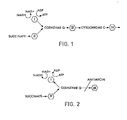
- enzyme complex I catalyzes the reduction of NADH to NAD+ at the same time that ADP is converted to ATP in the reaction. Electron flow is from the enzyme complex I toward coenzyme Q and from thereafter to enzyme complex III. Meanwhile, succinate is oxidized in enzyme complex II to produce an alternative source of electron flow into the system. From coenzyme Q, the electron flow proceeds through enzyme complex III to cytochrome c to enzyme complex IV, which ultimately transfers electrons to molecular oxygen.
- Each of the enzyme complexes in the oxidative phosphorylation chain can be inhibited selectively by individual toxicants.
- complex I can be inhibited by rotenone, complex II by thenoyltrifluoroacetone, complex III by antimycin, complex IV by cyanide, and complex V by oligomycin. It is particularly the inhibitory affect of antimycin on enzyme complex III which is of use in the practice of the present invention.
- Each of the enzyme complexes consists of a series of enzymes embedded in the inner mitochondrial membrane and linked together for efficient interaction. Thus, in addition to being subject to specific inhibition, each complex depends on the competency of the membrane for successful operation.
- the membrane contains other enzymes, such as ATPase, also essential to oxidative phosphorylation, or reverse electron transfer, which must operate for the system to function.
- the reverse electron transfer aspect of the present invention reverses the electron transfer which would normally occur from the enzyme complex I to coenzyme Q. This occurs by inhibiting the function of enzyme complex III by antimycin, and then making an excess of succinate for complex II enzymes. The effect of this is to drive an endergonic reduction of NAD+ to NADH as long as there is sufficient presence of ATP. For the process to be effective, therefore, there must be a sufficient quantity of NAD+ in the sample preparation to serve as a substrate for conversion by competent enzymes. It may also be required that other enzymes such as glutamate, or alcohol or pyruvate dehydrogenases be added from exogenous sources in the event these materials are lost by rupture of the intact mitochondria during particle preparation.
- other enzymes such as glutamate, or alcohol or pyruvate dehydrogenases be added from exogenous sources in the event these materials are lost by rupture of the intact mitochondria during particle preparation.
- an assay medium is also necessary to perform the assay.
- the assay should contain suitable buffers and sugars, such as a TRIS-chloride buffer and sucrose, and should also contain the substrates and inhibitors necessary to drive the mitochondrial enzymes to or from a reaction product which can be measured.
- a magnesium salt may be appropriate to avoid sensitivity to calcium in the sample by the system.
- NAD+ is to be reduced to NADH
- one obvious requirement of the assay medium is NAD+ to be a substrate.
- succinate is a preferred substrate which can be oxidized by the complex II enzymes.
- this assay is that the reactants can be simply admixed in a common receptable, since the reaction can be controlled by withholding the energy source until desired. Normally, for convenience, the assay is run at 25°C, but any temperature between about 10 and 45°C is suitable. As long as the reaction product, such as NADH, is to be assayed spectrophotometrically, the assay can most conveniently be performed in a spectrophotometer cuvette. Most cuvettes, such as the conventional 1 cm path length quartz cuvette, are usable in the present invention although it has been found that using a cuvette with a 5 cm path length enables a lowering of protein concentration and an increase in sensitivity to many toxicants by as much as a factor of five times.
- the assay may be conducted by adding the mitochondrial preparation, the assay medium, and the assay sample to cuvette. A base line reading of optical adsorbancy can then be taken. The system can then be energized, as by addition of ATP, and adsorbancy re-measured after a standard time period, such as two minutes. To obtain a standard calibration curve and derive an effective response of 50%, successive tests at differing concentrations of toxicants must be performed so that dose-response can be calculated based on inhibition as plotted against the log of toxicant concentration. Longer preincubation times, i.e. for 10 minutes, before adding the ATP or other energizing agent increases the sensitivity to some toxicants, as does increasing the reaction temperature.
- adsorbance measured with the test sample is compared with the appropriate calibration curve.
- this absorbance reading gives a quantitative analysis of the toxicant concentration in the sample.
- the shape of the dose-responsive curve obtained with various volumes of sample or separate chemical analysis can reveal the nature of the toxicant or toxicants of concern.
- the assay will generally be used simply to screen for general toxicity as a prelude to closer chemical or toxicological investigation by other qualitative methods. The assay can thus be efficiently used as a screening test to avoid repetitive testing on those samples which are free from toxicants so that monitoring programs can achieve savings and concentrate further testing on the samples of valid concern.
- calibration curves can be used to determine the presence or absence of toxicants in water from a wide variety of suspect sources, e.g. industrial plant or municipal sewage treatment plant effluents, seepage from sanitary or secure landfills, or groundwater near pesticide storage and mixing areas.
- suspect sources e.g. industrial plant or municipal sewage treatment plant effluents, seepage from sanitary or secure landfills, or groundwater near pesticide storage and mixing areas.
- the calibration curves for that toxicant can be used to determine toxicant levels in all waste or wash streams associated with the toxicant.
- a supply of submitochondrial particles were prepared by the method of Hansen and Smith, cited above, and frozen. Aliquots of the frozen submitochondrial particles with a protein concentration of 30 mg per ml were thawed and diluted with a cold solution of 0.25M sucrose in 10mM TRIS-chloride buffer at pH 7.4 to give a final protein concentration of 6 mg per ml. This dilution created a working submitochondrial particle suspension which was stored on ice for a series of assays.
- An assay medium was prepared composed of 0.18M sucrose, 50mM TRIS-chloride (pH 7.5), 6mM magnesium sulfate, 1mM NAD+, 5mM potassium succinate and 0.2 ⁇ g per ml antimycin.
- 2.9ml of assay medium at 25°C was placed in a 1-cm spectrophotometric cuvette. The toxicant was then added to the cuvette. The toxicant was added in solution with water, ethanol or dimethyl sulfoxide. The toxicant solution additions were in amounts of 20 ⁇ l or less in volumes and controls were also performed with pure solvent.
- the assays were then commenced by adding 0.1ml of the working submitochondrial particle suspension.
- the optical absorbance of the suspension at 340 nm was then monitored for two minutes to establish a base line. After two minutes, 50 ⁇ l of 0.2 M K+ATP was added to energize the system. After two minutes the optical absorbance at 340nm was again taken as a measure of the NAD+ reduction to NADH.
- successive tests were conducted using different concentrations of toxicant and the inhibition of NAD+ reduction observed. Dose-response curves were then determined from the test data by plotting percentage of inhibition versus the logarithm of toxicant concentration.
- a volume of 2.9 ml of water sample containing an unknown concentration of pentachlorophenol was added to a cuvette containing an aliquot of the assay medium as in Example 1 above and equilibrated at 25°C. After addition of 0.1 ml of the working suspension of submitochondrial particles, equilibration for two minutes, and addition of ATP, the absorbance at 340 nm was measured after two more minutes and recorded. By reference to a calibration curve, the reading indicated an EC of 39%, i.e. an inhibition of 39% of the maximum NADH concentration, and a penta chlorophenol concentration in water of 16 ppb.
- a method of assaying for the presence of toxicants in a sample by spectrophotometric analysis comprises the steps of preparing a suspension including at least fractions of mitochondrial membranes having competent oxidative phosphorylation enzyme complexes I and II and ATPase thereon; adding the suspension to an assay medium including buffer salts; magnesium ion; NAD+; succinate ion and antimycin, so that the conversion of succinate by complex II enzymes will cause reverse electron flow to cause reduction of NAD+ to NADH by complex I enzymes if an energy source is present; adding a quantity of the sample; measuring the base-line spectrophotometric response of the suspension of 340nm to determine base-line NADH concentration; adding a quantity of an energy source to the suspension; and measuring the spectrophotometric response of the suspension at 340nm to determine the increase of NADH concentration.
- kit for use in spectrophotometrically assaying for toxicants in an environmental sample there may be provided: submitochondrial particles which are preferably freeze-dried; a reaction substrate, preferably NAD+ which can be reduced by enzyme complex I on the submitochondrial particles to NADH, which can be detected spectrophotometrically at 340nm; an electron source which is preferably succinate; an enzyme inhibitor, preferably antimycin; an energy source, preferably ATP; and an assay medium which preferably also includes magnesium ion to prevent calcium disruption of the mitochondrial enzymes.
- submitochondrial particles which are preferably freeze-dried
- a reaction substrate preferably NAD+ which can be reduced by enzyme complex I on the submitochondrial particles to NADH, which can be detected spectrophotometrically at 340nm
- an electron source which is preferably succinate
- an enzyme inhibitor preferably antimycin
- an energy source preferably ATP
- assay medium which preferably also includes magnesium ion to prevent calcium disruption
Landscapes
- Health & Medical Sciences (AREA)
- Life Sciences & Earth Sciences (AREA)
- Engineering & Computer Science (AREA)
- Chemical & Material Sciences (AREA)
- Immunology (AREA)
- Molecular Biology (AREA)
- Organic Chemistry (AREA)
- Biomedical Technology (AREA)
- Proteomics, Peptides & Aminoacids (AREA)
- General Health & Medical Sciences (AREA)
- Hematology (AREA)
- Microbiology (AREA)
- Biotechnology (AREA)
- Urology & Nephrology (AREA)
- Zoology (AREA)
- Wood Science & Technology (AREA)
- Bioinformatics & Cheminformatics (AREA)
- Physics & Mathematics (AREA)
- Analytical Chemistry (AREA)
- Biochemistry (AREA)
- Food Science & Technology (AREA)
- Tropical Medicine & Parasitology (AREA)
- Pathology (AREA)
- Biophysics (AREA)
- Toxicology (AREA)
- Medicinal Chemistry (AREA)
- Cell Biology (AREA)
- General Physics & Mathematics (AREA)
- General Engineering & Computer Science (AREA)
- Genetics & Genomics (AREA)
- Measuring Or Testing Involving Enzymes Or Micro-Organisms (AREA)
- Apparatus Associated With Microorganisms And Enzymes (AREA)
- Agricultural Chemicals And Associated Chemicals (AREA)
- Micro-Organisms Or Cultivation Processes Thereof (AREA)
Priority Applications (1)
| Application Number | Priority Date | Filing Date | Title |
|---|---|---|---|
| AT86310138T ATE64623T1 (de) | 1985-12-27 | 1986-12-24 | Bioassay fuer giftige stoffe. |
Applications Claiming Priority (2)
| Application Number | Priority Date | Filing Date | Title |
|---|---|---|---|
| US813686 | 1985-12-27 | ||
| US06/813,686 US4808517A (en) | 1985-12-27 | 1985-12-27 | Bioassay for toxic substances |
Publications (3)
| Publication Number | Publication Date |
|---|---|
| EP0228290A2 true EP0228290A2 (de) | 1987-07-08 |
| EP0228290A3 EP0228290A3 (en) | 1988-10-26 |
| EP0228290B1 EP0228290B1 (de) | 1991-06-19 |
Family
ID=25213095
Family Applications (1)
| Application Number | Title | Priority Date | Filing Date |
|---|---|---|---|
| EP86310138A Expired - Lifetime EP0228290B1 (de) | 1985-12-27 | 1986-12-24 | Bioassay für giftige Stoffe |
Country Status (6)
| Country | Link |
|---|---|
| US (1) | US4808517A (de) |
| EP (1) | EP0228290B1 (de) |
| JP (1) | JPH07114715B2 (de) |
| AT (1) | ATE64623T1 (de) |
| CA (1) | CA1268407A (de) |
| DE (1) | DE3679897D1 (de) |
Cited By (4)
| Publication number | Priority date | Publication date | Assignee | Title |
|---|---|---|---|---|
| WO1990013664A1 (en) * | 1989-05-08 | 1990-11-15 | Wisconsin Alumni Research Foundation | Bioassay for chemicals which generate prooxidant states |
| EP1775588A1 (de) * | 2005-10-14 | 2007-04-18 | Samsung Electronics Co., Ltd. | Verfahren zum Nachweis der Wirkung einer toxischen Substanz unter Verwendung von submitochondrialen Partikeln |
| EP1804060A3 (de) * | 2005-12-28 | 2007-09-19 | Samsung Electronics Co., Ltd. | Verfahren und Vorrichtung für den Nachweis von toxischem Material in einer Probe |
| CN105891169A (zh) * | 2015-01-26 | 2016-08-24 | 北京师范大学 | 一种环境水样雄激素干扰化合物快速测试方法 |
Families Citing this family (13)
| Publication number | Priority date | Publication date | Assignee | Title |
|---|---|---|---|---|
| US5633144A (en) * | 1990-05-03 | 1997-05-27 | University Of Florida Research Foundation, Inc. | Assay pad and method for determination of the presence of total coliforms |
| US5919645A (en) * | 1991-04-09 | 1999-07-06 | Azur Environmental | Method for the direct determination of the toxicity of particulate solids |
| GB2279738A (en) * | 1993-06-18 | 1995-01-11 | Yorkshire Water Plc | Determining toxicity in fluid samples |
| CA2111521A1 (en) * | 1993-12-15 | 1995-06-16 | Stroud Water Research Center, Inc. | Mayfly centroptilum triangulifer as a bioassay organism |
| US5614375A (en) * | 1994-03-23 | 1997-03-25 | Yissum Research Development Co. Of The Hebrew University Of Jerusalem | Method and test kit for the rapid detection of biotoxic contaminants |
| US5843696A (en) * | 1995-11-01 | 1998-12-01 | Wisconsin Alumni Research Foundation | Bioassay for toxic substances activated by metabolic enzyme system |
| GB9721901D0 (en) * | 1997-10-16 | 1997-12-17 | Univ Manchester | Particles |
| GB9802503D0 (en) * | 1998-02-05 | 1998-04-01 | Isis Innovation | Sensor |
| US6183948B1 (en) | 1998-04-15 | 2001-02-06 | Johns Hopkins University | Methods to identify compounds affecting mitochondria |
| US7374905B2 (en) * | 2000-11-08 | 2008-05-20 | Oxyrase, Inc. | Medium composition, method and device for selectively enhancing the isolation of anaerobic microorganisms contained in a mixed sample with facultative microorganisms |
| JP2006329024A (ja) * | 2005-05-25 | 2006-12-07 | Chugoku Electric Power Co Inc:The | サイフォン式排水装置 |
| KR100738099B1 (ko) | 2006-01-19 | 2007-07-12 | 삼성전자주식회사 | 독성 물질의 양성적 검출 방법 및 키트 |
| CN103975073B (zh) | 2011-12-19 | 2016-01-20 | 英派尔科技开发有限公司 | 包含线粒体颗粒的空气质量传感器 |
Family Cites Families (2)
| Publication number | Priority date | Publication date | Assignee | Title |
|---|---|---|---|---|
| US4242446A (en) * | 1978-07-26 | 1980-12-30 | Coulter Electronics, Inc. | Method for determining a substance in a biological fluid and reagent combination for use in the method |
| US4525704A (en) * | 1983-11-09 | 1985-06-25 | Allied Corporation | Enzymatic toxic gas sensor |
-
1985
- 1985-12-27 US US06/813,686 patent/US4808517A/en not_active Expired - Lifetime
-
1986
- 1986-12-22 CA CA000526084A patent/CA1268407A/en not_active Expired - Lifetime
- 1986-12-24 EP EP86310138A patent/EP0228290B1/de not_active Expired - Lifetime
- 1986-12-24 DE DE8686310138T patent/DE3679897D1/de not_active Expired - Lifetime
- 1986-12-24 AT AT86310138T patent/ATE64623T1/de not_active IP Right Cessation
- 1986-12-27 JP JP61315909A patent/JPH07114715B2/ja not_active Expired - Lifetime
Cited By (5)
| Publication number | Priority date | Publication date | Assignee | Title |
|---|---|---|---|---|
| WO1990013664A1 (en) * | 1989-05-08 | 1990-11-15 | Wisconsin Alumni Research Foundation | Bioassay for chemicals which generate prooxidant states |
| EP1775588A1 (de) * | 2005-10-14 | 2007-04-18 | Samsung Electronics Co., Ltd. | Verfahren zum Nachweis der Wirkung einer toxischen Substanz unter Verwendung von submitochondrialen Partikeln |
| EP1804060A3 (de) * | 2005-12-28 | 2007-09-19 | Samsung Electronics Co., Ltd. | Verfahren und Vorrichtung für den Nachweis von toxischem Material in einer Probe |
| US7713716B2 (en) | 2005-12-28 | 2010-05-11 | Samsung Electronics Co., Ltd. | Method for detecting presence of toxic material within sample |
| CN105891169A (zh) * | 2015-01-26 | 2016-08-24 | 北京师范大学 | 一种环境水样雄激素干扰化合物快速测试方法 |
Also Published As
| Publication number | Publication date |
|---|---|
| JPH07114715B2 (ja) | 1995-12-13 |
| ATE64623T1 (de) | 1991-07-15 |
| US4808517A (en) | 1989-02-28 |
| DE3679897D1 (de) | 1991-07-25 |
| EP0228290B1 (de) | 1991-06-19 |
| JPS62179400A (ja) | 1987-08-06 |
| CA1268407A (en) | 1990-05-01 |
| EP0228290A3 (en) | 1988-10-26 |
Similar Documents
| Publication | Publication Date | Title |
|---|---|---|
| EP0228290B1 (de) | Bioassay für giftige Stoffe | |
| Dahlgren et al. | Respiratory burst in human neutrophils | |
| Esimbekova et al. | Enzymatic biotesting: scientific basis and application | |
| Johnson | Microtox® acute toxicity test | |
| Esimbekova et al. | Application of enzyme bioluminescence in ecology | |
| Fernández-Alba et al. | Toxicity of pesticides in wastewater: a comparative assessment of rapid bioassays | |
| Fernández-Alba et al. | Comparative evaluation of the effects of pesticides in acute toxicity luminescence bioassays | |
| Maldonado et al. | Understanding tetrazolium reduction and the importance of substrates in measuring respiratory electron transport activity | |
| Esimbekova et al. | Design of bioluminescent biosensors for assessing contamination of complex matrices | |
| Ranjan et al. | Development of immobilized biophotonic beads consisting of Photobacterium leiognathi for the detection of heavy metals and pesticide | |
| Oakes et al. | Effects of a herbicide formulation, Tordon 75D®, and its individual components on the oxidative functions of mitochondria | |
| Van Der Schalie et al. | Selection of a battery of rapid toxicity sensors for drinking water evaluation | |
| Buchwalter et al. | Roles of uptake, biotransformation, and target site sensitivity in determining the differential toxicity of chlorpyrifos to second to fourth instar Chironomous riparius (Meigen) | |
| Karp et al. | Simultaneous extraction and combined bioluminescent assay of NAD+ and NADH | |
| US5198336A (en) | Bioassay for chemicals which generate prooxidant states | |
| Borcherding et al. | Enzymatic microtiter plate-based nitrate detection in environmental and medical analysis | |
| US5843696A (en) | Bioassay for toxic substances activated by metabolic enzyme system | |
| Amini et al. | An enzymatic flow analysis method for the determination of phosphatidylcholine in sediment pore waters and extracts | |
| Strosnider | Whole-cell bacterial biosensors and the detection of bioavailable arsenic | |
| Lewis et al. | Novel use of a whole cell E. coli bioreporter as a urinary exposure biomarker | |
| Vasić et al. | ATP ases as Multi-Response Sensing System for Various Organic and Inorganic Analytes | |
| EP0105413A2 (de) | Nachweis von Zellen durch Messung von Flavinadenindinukleotid | |
| Grabowski et al. | Fluorogenic compound hydrolysis as a measure of toxicity-induced cytoplasmic viscosity and pH changes | |
| Doherty et al. | Repeatability of the submitochondrial particle assay | |
| Ranjan et al. | Acute Osmotic and pH Shock to Bioluminescent Bacteria Is Reversible in Terms of Luminescence Response |
Legal Events
| Date | Code | Title | Description |
|---|---|---|---|
| PUAI | Public reference made under article 153(3) epc to a published international application that has entered the european phase |
Free format text: ORIGINAL CODE: 0009012 |
|
| AK | Designated contracting states |
Kind code of ref document: A2 Designated state(s): AT DE FR GB IT NL SE |
|
| PUAL | Search report despatched |
Free format text: ORIGINAL CODE: 0009013 |
|
| AK | Designated contracting states |
Kind code of ref document: A3 Designated state(s): AT DE FR GB IT NL SE |
|
| RHK1 | Main classification (correction) |
Ipc: C12Q 1/32 |
|
| 17P | Request for examination filed |
Effective date: 19890420 |
|
| 17Q | First examination report despatched |
Effective date: 19900814 |
|
| GRAA | (expected) grant |
Free format text: ORIGINAL CODE: 0009210 |
|
| AK | Designated contracting states |
Kind code of ref document: B1 Designated state(s): AT DE FR GB IT NL SE |
|
| PG25 | Lapsed in a contracting state [announced via postgrant information from national office to epo] |
Ref country code: SE Effective date: 19910619 Ref country code: AT Effective date: 19910619 |
|
| REF | Corresponds to: |
Ref document number: 64623 Country of ref document: AT Date of ref document: 19910715 Kind code of ref document: T |
|
| ITF | It: translation for a ep patent filed | ||
| REF | Corresponds to: |
Ref document number: 3679897 Country of ref document: DE Date of ref document: 19910725 |
|
| ET | Fr: translation filed | ||
| PLBE | No opposition filed within time limit |
Free format text: ORIGINAL CODE: 0009261 |
|
| 26N | No opposition filed | ||
| PGFP | Annual fee paid to national office [announced via postgrant information from national office to epo] |
Ref country code: FR Payment date: 20001212 Year of fee payment: 15 |
|
| PGFP | Annual fee paid to national office [announced via postgrant information from national office to epo] |
Ref country code: DE Payment date: 20001218 Year of fee payment: 15 |
|
| PGFP | Annual fee paid to national office [announced via postgrant information from national office to epo] |
Ref country code: GB Payment date: 20001220 Year of fee payment: 15 |
|
| PGFP | Annual fee paid to national office [announced via postgrant information from national office to epo] |
Ref country code: NL Payment date: 20001231 Year of fee payment: 15 |
|
| PG25 | Lapsed in a contracting state [announced via postgrant information from national office to epo] |
Ref country code: GB Free format text: LAPSE BECAUSE OF NON-PAYMENT OF DUE FEES Effective date: 20011224 |
|
| REG | Reference to a national code |
Ref country code: GB Ref legal event code: IF02 |
|
| PG25 | Lapsed in a contracting state [announced via postgrant information from national office to epo] |
Ref country code: NL Free format text: LAPSE BECAUSE OF NON-PAYMENT OF DUE FEES Effective date: 20020701 |
|
| PG25 | Lapsed in a contracting state [announced via postgrant information from national office to epo] |
Ref country code: DE Free format text: LAPSE BECAUSE OF NON-PAYMENT OF DUE FEES Effective date: 20020702 |
|
| GBPC | Gb: european patent ceased through non-payment of renewal fee |
Effective date: 20011224 |
|
| PG25 | Lapsed in a contracting state [announced via postgrant information from national office to epo] |
Ref country code: FR Free format text: LAPSE BECAUSE OF NON-PAYMENT OF DUE FEES Effective date: 20020830 |
|
| NLV4 | Nl: lapsed or anulled due to non-payment of the annual fee |
Effective date: 20020701 |
|
| REG | Reference to a national code |
Ref country code: FR Ref legal event code: ST |
|
| PG25 | Lapsed in a contracting state [announced via postgrant information from national office to epo] |
Ref country code: IT Free format text: LAPSE BECAUSE OF NON-PAYMENT OF DUE FEES;WARNING: LAPSES OF ITALIAN PATENTS WITH EFFECTIVE DATE BEFORE 2007 MAY HAVE OCCURRED AT ANY TIME BEFORE 2007. THE CORRECT EFFECTIVE DATE MAY BE DIFFERENT FROM THE ONE RECORDED. Effective date: 20051224 |