EP0229626A1 - Polyarylensulfide mit definiert einstellbaren Schmelzviskositäten - Google Patents
Polyarylensulfide mit definiert einstellbaren Schmelzviskositäten Download PDFInfo
- Publication number
- EP0229626A1 EP0229626A1 EP87100087A EP87100087A EP0229626A1 EP 0229626 A1 EP0229626 A1 EP 0229626A1 EP 87100087 A EP87100087 A EP 87100087A EP 87100087 A EP87100087 A EP 87100087A EP 0229626 A1 EP0229626 A1 EP 0229626A1
- Authority
- EP
- European Patent Office
- Prior art keywords
- mol
- alkali metal
- formula
- radical
- sulfide
- Prior art date
- Legal status (The legal status is an assumption and is not a legal conclusion. Google has not performed a legal analysis and makes no representation as to the accuracy of the status listed.)
- Granted
Links
- 229920000412 polyarylene Polymers 0.000 title claims abstract description 18
- UCKMPCXJQFINFW-UHFFFAOYSA-N Sulphide Chemical compound [S-2] UCKMPCXJQFINFW-UHFFFAOYSA-N 0.000 title 1
- 230000004927 fusion Effects 0.000 title 1
- 239000011541 reaction mixture Substances 0.000 claims abstract description 8
- -1 chlorine or bromine Chemical class 0.000 claims description 16
- ISWSIDIOOBJBQZ-UHFFFAOYSA-N Phenol Chemical compound OC1=CC=CC=C1 ISWSIDIOOBJBQZ-UHFFFAOYSA-N 0.000 claims description 10
- 239000003513 alkali Substances 0.000 claims description 10
- 238000006243 chemical reaction Methods 0.000 claims description 8
- 150000001875 compounds Chemical class 0.000 claims description 8
- KWYUFKZDYYNOTN-UHFFFAOYSA-M Potassium hydroxide Chemical compound [OH-].[K+] KWYUFKZDYYNOTN-UHFFFAOYSA-M 0.000 claims description 7
- 239000000203 mixture Substances 0.000 claims description 7
- HEMHJVSKTPXQMS-UHFFFAOYSA-M sodium hydroxide Inorganic materials [OH-].[Na+] HEMHJVSKTPXQMS-UHFFFAOYSA-M 0.000 claims description 7
- WKBOTKDWSSQWDR-UHFFFAOYSA-N Bromine atom Chemical compound [Br] WKBOTKDWSSQWDR-UHFFFAOYSA-N 0.000 claims description 6
- ZAMOUSCENKQFHK-UHFFFAOYSA-N Chlorine atom Chemical compound [Cl] ZAMOUSCENKQFHK-UHFFFAOYSA-N 0.000 claims description 6
- DGAQECJNVWCQMB-PUAWFVPOSA-M Ilexoside XXIX Chemical compound C[C@@H]1CC[C@@]2(CC[C@@]3(C(=CC[C@H]4[C@]3(CC[C@@H]5[C@@]4(CC[C@@H](C5(C)C)OS(=O)(=O)[O-])C)C)[C@@H]2[C@]1(C)O)C)C(=O)O[C@H]6[C@@H]([C@H]([C@@H]([C@H](O6)CO)O)O)O.[Na+] DGAQECJNVWCQMB-PUAWFVPOSA-M 0.000 claims description 6
- 229910052783 alkali metal Inorganic materials 0.000 claims description 6
- 229910052736 halogen Inorganic materials 0.000 claims description 6
- 150000002367 halogens Chemical class 0.000 claims description 6
- 229910052717 sulfur Inorganic materials 0.000 claims description 6
- 229910052760 oxygen Inorganic materials 0.000 claims description 5
- UFHFLCQGNIYNRP-UHFFFAOYSA-N Hydrogen Chemical compound [H][H] UFHFLCQGNIYNRP-UHFFFAOYSA-N 0.000 claims description 4
- 125000003118 aryl group Chemical group 0.000 claims description 4
- GDTBXPJZTBHREO-UHFFFAOYSA-N bromine Substances BrBr GDTBXPJZTBHREO-UHFFFAOYSA-N 0.000 claims description 4
- 229910052794 bromium Inorganic materials 0.000 claims description 4
- 239000000460 chlorine Substances 0.000 claims description 4
- 229910052801 chlorine Inorganic materials 0.000 claims description 4
- 125000005842 heteroatom Chemical group 0.000 claims description 4
- 229910052739 hydrogen Inorganic materials 0.000 claims description 4
- 239000001257 hydrogen Substances 0.000 claims description 4
- 238000000034 method Methods 0.000 claims description 4
- 229910052757 nitrogen Inorganic materials 0.000 claims description 4
- 229910052708 sodium Inorganic materials 0.000 claims description 4
- 239000011734 sodium Substances 0.000 claims description 4
- 125000004400 (C1-C12) alkyl group Chemical group 0.000 claims description 3
- 125000004178 (C1-C4) alkyl group Chemical group 0.000 claims description 3
- 125000005913 (C3-C6) cycloalkyl group Chemical group 0.000 claims description 3
- 125000003710 aryl alkyl group Chemical group 0.000 claims description 3
- 150000008044 alkali metal hydroxides Chemical class 0.000 claims description 2
- 229910000318 alkali metal phosphate Inorganic materials 0.000 claims description 2
- 229910052977 alkali metal sulfide Inorganic materials 0.000 claims description 2
- 229940045714 alkyl sulfonate alkylating agent Drugs 0.000 claims description 2
- 150000008064 anhydrides Chemical class 0.000 claims description 2
- 125000004432 carbon atom Chemical group C* 0.000 claims description 2
- 150000001735 carboxylic acids Chemical class 0.000 claims description 2
- 150000002148 esters Chemical class 0.000 claims description 2
- 125000000623 heterocyclic group Chemical group 0.000 claims description 2
- 150000004677 hydrates Chemical class 0.000 claims description 2
- 150000002431 hydrogen Chemical class 0.000 claims description 2
- 150000003951 lactams Chemical class 0.000 claims description 2
- ZOCLAPYLSUCOGI-UHFFFAOYSA-M potassium hydrosulfide Chemical compound [SH-].[K+] ZOCLAPYLSUCOGI-UHFFFAOYSA-M 0.000 claims description 2
- DPLVEEXVKBWGHE-UHFFFAOYSA-N potassium sulfide Chemical compound [S-2].[K+].[K+] DPLVEEXVKBWGHE-UHFFFAOYSA-N 0.000 claims description 2
- 125000006413 ring segment Chemical group 0.000 claims description 2
- 229910052784 alkaline earth metal Inorganic materials 0.000 claims 2
- 229910001515 alkali metal fluoride Inorganic materials 0.000 claims 1
- 150000004763 sulfides Chemical class 0.000 claims 1
- 150000003568 thioethers Chemical class 0.000 abstract description 18
- 150000002989 phenols Chemical class 0.000 abstract description 5
- 238000002360 preparation method Methods 0.000 abstract description 2
- 239000000155 melt Substances 0.000 description 17
- 239000004734 Polyphenylene sulfide Substances 0.000 description 13
- 229920000069 polyphenylene sulfide Polymers 0.000 description 13
- 229920000642 polymer Polymers 0.000 description 5
- 150000003839 salts Chemical class 0.000 description 5
- 150000007942 carboxylates Chemical class 0.000 description 3
- 239000000835 fiber Substances 0.000 description 3
- 239000003365 glass fiber Substances 0.000 description 3
- 239000000843 powder Substances 0.000 description 3
- 230000035882 stress Effects 0.000 description 3
- HVXRCAWUNAOCTA-UHFFFAOYSA-N 4-(6-methylheptyl)phenol Chemical compound CC(C)CCCCCC1=CC=C(O)C=C1 HVXRCAWUNAOCTA-UHFFFAOYSA-N 0.000 description 2
- ZSBDGXGICLIJGD-UHFFFAOYSA-N 4-phenoxyphenol Chemical compound C1=CC(O)=CC=C1OC1=CC=CC=C1 ZSBDGXGICLIJGD-UHFFFAOYSA-N 0.000 description 2
- ZWXPDGCFMMFNRW-UHFFFAOYSA-N N-methylcaprolactam Chemical compound CN1CCCCCC1=O ZWXPDGCFMMFNRW-UHFFFAOYSA-N 0.000 description 2
- 230000000052 comparative effect Effects 0.000 description 2
- 230000000694 effects Effects 0.000 description 2
- JBKVHLHDHHXQEQ-UHFFFAOYSA-N epsilon-caprolactam Chemical compound O=C1CCCCCN1 JBKVHLHDHHXQEQ-UHFFFAOYSA-N 0.000 description 2
- 239000011888 foil Substances 0.000 description 2
- 229910052744 lithium Inorganic materials 0.000 description 2
- KWGKDLIKAYFUFQ-UHFFFAOYSA-M lithium chloride Chemical compound [Li+].[Cl-] KWGKDLIKAYFUFQ-UHFFFAOYSA-M 0.000 description 2
- 238000004519 manufacturing process Methods 0.000 description 2
- NWVVVBRKAWDGAB-UHFFFAOYSA-N p-methoxyphenol Chemical compound COC1=CC=C(O)C=C1 NWVVVBRKAWDGAB-UHFFFAOYSA-N 0.000 description 2
- XLYOFNOQVPJJNP-UHFFFAOYSA-N water Substances O XLYOFNOQVPJJNP-UHFFFAOYSA-N 0.000 description 2
- OCJBOOLMMGQPQU-UHFFFAOYSA-N 1,4-dichlorobenzene Chemical compound ClC1=CC=C(Cl)C=C1 OCJBOOLMMGQPQU-UHFFFAOYSA-N 0.000 description 1
- KJCVRFUGPWSIIH-UHFFFAOYSA-N 1-naphthol Chemical class C1=CC=C2C(O)=CC=CC2=C1 KJCVRFUGPWSIIH-UHFFFAOYSA-N 0.000 description 1
- KDTZBYPBMTXCSO-UHFFFAOYSA-N 2-phenoxyphenol Chemical class OC1=CC=CC=C1OC1=CC=CC=C1 KDTZBYPBMTXCSO-UHFFFAOYSA-N 0.000 description 1
- JSUKRBMPOXGCPR-UHFFFAOYSA-N 4-(benzenesulfonyl)phenol Chemical compound C1=CC(O)=CC=C1S(=O)(=O)C1=CC=CC=C1 JSUKRBMPOXGCPR-UHFFFAOYSA-N 0.000 description 1
- RXUAHMWNMQVZSY-UHFFFAOYSA-N 4-[2-[2-(4-hydroxyphenyl)ethylsulfanyl]ethyl]phenol Chemical compound OC1=CC=C(C=C1)CCSCCC1=CC=C(C=C1)O RXUAHMWNMQVZSY-UHFFFAOYSA-N 0.000 description 1
- XAYCNCYFKLSMGR-UHFFFAOYSA-N 4-phenylsulfanylphenol Chemical compound C1=CC(O)=CC=C1SC1=CC=CC=C1 XAYCNCYFKLSMGR-UHFFFAOYSA-N 0.000 description 1
- QHPQWRBYOIRBIT-UHFFFAOYSA-N 4-tert-butylphenol Chemical compound CC(C)(C)C1=CC=C(O)C=C1 QHPQWRBYOIRBIT-UHFFFAOYSA-N 0.000 description 1
- OKTJSMMVPCPJKN-UHFFFAOYSA-N Carbon Chemical compound [C] OKTJSMMVPCPJKN-UHFFFAOYSA-N 0.000 description 1
- 229920000049 Carbon (fiber) Polymers 0.000 description 1
- RWSOTUBLDIXVET-UHFFFAOYSA-N Dihydrogen sulfide Chemical class S RWSOTUBLDIXVET-UHFFFAOYSA-N 0.000 description 1
- KRHYYFGTRYWZRS-UHFFFAOYSA-M Fluoride anion Chemical compound [F-] KRHYYFGTRYWZRS-UHFFFAOYSA-M 0.000 description 1
- 239000000654 additive Substances 0.000 description 1
- 150000008052 alkyl sulfonates Chemical class 0.000 description 1
- QVGXLLKOCUKJST-UHFFFAOYSA-N atomic oxygen Chemical compound [O] QVGXLLKOCUKJST-UHFFFAOYSA-N 0.000 description 1
- YXVFYQXJAXKLAK-UHFFFAOYSA-N biphenyl-4-ol Chemical group C1=CC(O)=CC=C1C1=CC=CC=C1 YXVFYQXJAXKLAK-UHFFFAOYSA-N 0.000 description 1
- 239000004917 carbon fiber Substances 0.000 description 1
- 150000004649 carbonic acid derivatives Chemical class 0.000 description 1
- 230000015556 catabolic process Effects 0.000 description 1
- 238000009833 condensation Methods 0.000 description 1
- 150000001896 cresols Chemical class 0.000 description 1
- FANSKVBLGRZAQA-UHFFFAOYSA-M dipotassium;sulfanide Chemical compound [SH-].[K+].[K+] FANSKVBLGRZAQA-UHFFFAOYSA-M 0.000 description 1
- 238000002845 discoloration Methods 0.000 description 1
- XNFVGEUMTFIVHQ-UHFFFAOYSA-N disodium;sulfide;hydrate Chemical compound O.[Na+].[Na+].[S-2] XNFVGEUMTFIVHQ-UHFFFAOYSA-N 0.000 description 1
- 239000003792 electrolyte Substances 0.000 description 1
- 239000000945 filler Substances 0.000 description 1
- 150000004673 fluoride salts Chemical class 0.000 description 1
- 239000011521 glass Substances 0.000 description 1
- 229910002804 graphite Inorganic materials 0.000 description 1
- 239000010439 graphite Substances 0.000 description 1
- 238000010438 heat treatment Methods 0.000 description 1
- 238000002347 injection Methods 0.000 description 1
- 239000007924 injection Substances 0.000 description 1
- 238000001746 injection moulding Methods 0.000 description 1
- 229910052500 inorganic mineral Inorganic materials 0.000 description 1
- 238000002955 isolation Methods 0.000 description 1
- 150000002576 ketones Chemical class 0.000 description 1
- XIXADJRWDQXREU-UHFFFAOYSA-M lithium acetate Chemical compound [Li+].CC([O-])=O XIXADJRWDQXREU-UHFFFAOYSA-M 0.000 description 1
- XGZVUEUWXADBQD-UHFFFAOYSA-L lithium carbonate Chemical compound [Li+].[Li+].[O-]C([O-])=O XGZVUEUWXADBQD-UHFFFAOYSA-L 0.000 description 1
- 229910052808 lithium carbonate Inorganic materials 0.000 description 1
- 238000005259 measurement Methods 0.000 description 1
- 229910052751 metal Inorganic materials 0.000 description 1
- 239000002184 metal Substances 0.000 description 1
- 239000011707 mineral Substances 0.000 description 1
- 235000010755 mineral Nutrition 0.000 description 1
- 239000006082 mold release agent Substances 0.000 description 1
- 239000003960 organic solvent Substances 0.000 description 1
- 239000001301 oxygen Substances 0.000 description 1
- 239000000049 pigment Substances 0.000 description 1
- 239000002798 polar solvent Substances 0.000 description 1
- 238000006116 polymerization reaction Methods 0.000 description 1
- 229940072033 potash Drugs 0.000 description 1
- BWHMMNNQKKPAPP-UHFFFAOYSA-L potassium carbonate Substances [K+].[K+].[O-]C([O-])=O BWHMMNNQKKPAPP-UHFFFAOYSA-L 0.000 description 1
- 235000015320 potassium carbonate Nutrition 0.000 description 1
- 239000010453 quartz Substances 0.000 description 1
- 230000035484 reaction time Effects 0.000 description 1
- 230000009257 reactivity Effects 0.000 description 1
- 238000010992 reflux Methods 0.000 description 1
- VYPSYNLAJGMNEJ-UHFFFAOYSA-N silicon dioxide Inorganic materials O=[Si]=O VYPSYNLAJGMNEJ-UHFFFAOYSA-N 0.000 description 1
- 239000007787 solid Substances 0.000 description 1
- 239000000243 solution Substances 0.000 description 1
- 239000003381 stabilizer Substances 0.000 description 1
- 239000000126 substance Substances 0.000 description 1
- 125000000446 sulfanediyl group Chemical group *S* 0.000 description 1
- 150000003871 sulfonates Chemical class 0.000 description 1
- 150000003457 sulfones Chemical class 0.000 description 1
- 150000003462 sulfoxides Chemical class 0.000 description 1
- 230000008646 thermal stress Effects 0.000 description 1
- 229920001169 thermoplastic Polymers 0.000 description 1
- 239000004416 thermosoftening plastic Substances 0.000 description 1
- RIUWBIIVUYSTCN-UHFFFAOYSA-N trilithium borate Chemical compound [Li+].[Li+].[Li+].[O-]B([O-])[O-] RIUWBIIVUYSTCN-UHFFFAOYSA-N 0.000 description 1
Classifications
-
- C—CHEMISTRY; METALLURGY
- C08—ORGANIC MACROMOLECULAR COMPOUNDS; THEIR PREPARATION OR CHEMICAL WORKING-UP; COMPOSITIONS BASED THEREON
- C08G—MACROMOLECULAR COMPOUNDS OBTAINED OTHERWISE THAN BY REACTIONS ONLY INVOLVING UNSATURATED CARBON-TO-CARBON BONDS
- C08G75/00—Macromolecular compounds obtained by reactions forming a linkage containing sulfur with or without nitrogen, oxygen, or carbon in the main chain of the macromolecule
- C08G75/02—Polythioethers
- C08G75/0204—Polyarylenethioethers
- C08G75/025—Preparatory processes
- C08G75/0254—Preparatory processes using metal sulfides
-
- C—CHEMISTRY; METALLURGY
- C08—ORGANIC MACROMOLECULAR COMPOUNDS; THEIR PREPARATION OR CHEMICAL WORKING-UP; COMPOSITIONS BASED THEREON
- C08G—MACROMOLECULAR COMPOUNDS OBTAINED OTHERWISE THAN BY REACTIONS ONLY INVOLVING UNSATURATED CARBON-TO-CARBON BONDS
- C08G75/00—Macromolecular compounds obtained by reactions forming a linkage containing sulfur with or without nitrogen, oxygen, or carbon in the main chain of the macromolecule
- C08G75/02—Polythioethers
- C08G75/0204—Polyarylenethioethers
- C08G75/0231—Polyarylenethioethers containing chain-terminating or chain-branching agents
Definitions
- the invention relates to high molecular weight, optionally branched polyarylene sulfides which are prepared in a conventional manner by adding 0.1-5 mol%, preferably 0.25-4 mol%, of a monophenol as chain regulator to adjust the melt viscosity to the reaction mixture.
- Polyarylene sulfides and their preparation are known (see, for example, US Pat. No. 2,513,188).
- the addition of inorganic or organic salts to the reaction mixture is known to contribute to lowering the melt flow or increasing the melt viscosity of the polyphenylene sulfides obtained. Only when the melt viscosity is sufficiently high can polyphenylene sulfides be processed thermoplastically, for example into injection molded parts, foils and fibers. Without the addition of the abovementioned salts, polyphenylene sulfides are obtained which only obtain the necessary low melt flow through a separate and additional post-condensation or curing (curing).
- Alkali carboxylates (DE-AS 2 453 749), lithium halides or alkali carboxylates (DE-OS 2 623 362), lithium chloride or lithium carboxylate (DE-OS 623 363), alkali carbonates in combination with alkali carboxylates (US Pat. No. 4,038,259), lithium acetate (DE -OS 2 623 333), trialkaliphosphates (DE-OS 2 930 710), trialkaliphosphonates (DE-OS 2 930 797), alkali fluoride (DE-OS 3 019 732), alkali sulfonates (US-PS 4 038 260), lithium carbonate and lithium borate ( US-PS 4 030 518) used.
- Alkali carboxylates (DE-AS 2 453 749)
- lithium halides or alkali carboxylates (DE-OS 2 623 362), lithium chloride or lithium carboxylate (DE-OS 623 363)
- monothiophenols, mercaptans or monohalogen aromatics are described as chain terminators.
- the thio compounds they have the disadvantage of being sensitive to oxygen, which can reduce the chain terminating effect and cause discoloration in the product; in the case of the monohalogen aromatics, their low reactivity causes an unsatisfactory chain termination effect.
- the phenols can also be used as salts, e.g. Alkali or alkaline earth salts are used.
- the phenols of the formula IV can be added before or during the polymerization reaction.
- Mixtures of phenols can also be used.
- the addition can take place by metering over a certain period of the reaction, in portions at certain times during the course of the reaction or by directly adding the calculated total amount at a defined point in time of the reaction.
- the polyarylene sulfides produced according to the invention are distinguished by defined melt viscosities depending on the chain terminator content, which can be reproduced. This is of great importance insofar as the processing of the polyarylene sulfides requires polymer melts with different flow behavior to be adjusted, which must be adapted to the particular intended use.
- melt viscosities are required for the production of foils and fibers than for the adjustment of glass fiber or glass fiber / mineral reinforced injection molding types.
- polyarylene sulfides according to the invention is the greater stability under thermal stress. This is the only way to ensure that no further build-up or breakdown occurs during thermoplastic processing, which can lead to a complete change in the property profile, and that regrind can be used again after processing.
- reaction mixture can be worked up and the polyarylene sulfides can be isolated in a known, customary manner.
- Monophenols which can be used according to the invention are e.g. Phenol, cresols and higher alkylated phenols, alkoxyphenols, phenoxyphenols, hydroxyphenylalkyl sulfides, hydroxydiphenyl sulfides, hydroxydiphenyl sulfoxides, hydroxydiphenyl sulfones, hydroxydiphenyl ketones, hydroxydiphenyls, hydroxynaphthalenes.
- Phenol, cresols and higher alkylated phenols alkoxyphenols, phenoxyphenols, hydroxyphenylalkyl sulfides, hydroxydiphenyl sulfides, hydroxydiphenyl sulfoxides, hydroxydiphenyl sulfones, hydroxydiphenyl ketones, hydroxydiphenyls, hydroxynaphthalenes.
- the polyarylene sulfides according to the invention can be processed into films or fibers or with other polymers, pigments and fillers - for example graphite, metal powder, glass powder, quartz powder, glass fibers or carbon fibers -, mixed or with the usual additives for polyarylene sulfides, for example stabilizers or mold release agents.
- melt flow behavior of polyarylene sulfides is measured according to ASTM 1238-70 at 316 ° C. using a 5 kg weight and is given in g / 10 min.
- the melt viscosity m of the polymer melt (in Pa.s) at 306 ° C. as a function of the shear stress (in Pa) was therefore determined using the Instron rotational viscometer.
- the melt viscosity can be determined in a very wide range from 10 ⁇ 1 to 107 Pa.s.
- the polymer is melted between a solid plate in a rotating cone and the torque of the cone is determined.
- the melt viscosity as a function of the shear stress can be calculated from the torque, the angular velocity and the equipment data.
- the polyarylene sulfides according to the invention After isolation from the reaction mixture, the polyarylene sulfides according to the invention have melt viscosities between 1 and 1 x 10³ Pa.s, preferably 5 to 5 x 10² Pa.s. They can be processed in the usual way.
- the metering rate depends on the conversion and is set so that the temperature of 220 ° C can be maintained with simultaneous additional heating of the reaction vessel.
- the water is simultaneously removed from the reaction during metering.
- Example 2 comparative example to example 1 without chain terminator
- the polyphenylene sulfide obtained has a melt viscosity of 1380 Pa.s (measured at 103 Pa and 306 ° C).
- the polyphenylene sulfide obtained has a melt viscosity of 210 Pa.s (measured at 103 Pa and 306 ° C).
- the polyphenylene sulfide obtained has a melt viscosity of 12 Pa.s (measured at 103 Pa and 306 ° C).
- the polyphenylene sulfide obtained has a melt viscosity of 52 Pa.s (measured at 103 Pa and 306 ° C).
Landscapes
- Chemical & Material Sciences (AREA)
- Health & Medical Sciences (AREA)
- Chemical Kinetics & Catalysis (AREA)
- Medicinal Chemistry (AREA)
- Polymers & Plastics (AREA)
- Organic Chemistry (AREA)
- Polymers With Sulfur, Phosphorus Or Metals In The Main Chain (AREA)
Abstract
Description
- Die Erfindung betrifft hochmolekulare, gegebenenfalls verzweigte Polyarylensulfide, die auf übliche Weise hergestellt werden, indem dem Reaktionsgemisch 0,1 - 5 mol-%, bevorzugt 0,25 - 4 Mol-% eines Monophenols als Kettenregler zur Einstellung der Schmelzviskosität zugegeben werden.
- Polyarylensulfide und ihre Herstellung sind bekannt (s. beispielsweise US-PS 2 513 188). Die Zugabe von anorganischen oder organischen Salzen zum Umsetzungsgemisch soll bekanntlich zur Erniedrigung des Schmelzflusses bzw. zur Erhöhung der Schmelzviskosität der gewonnenen Polyphenylensulfide beitragen. Erst bei ausreichend hoher Schmelzviskosität können Polyphenylensulfide thermoplastisch, z.B. zu Spritzgußteilen, Folien und Fasern verarbeitet werden. Ohne Zugabe der obengenannten Salze werden Polyphenylensulfide gewonnen, die den notwendigen geringen Schmelzfluß erst über eine separate und zusätzliche Nachkondensation bzw. Härtung (Curing) erhalten.
- Als Salze werden z.B. Alkalicarboxylate (DE-AS 2 453 749), Lithiumhalogenide oder Alkalicarboxylate (DE-OS 2 623 362), Lithiumchlorid oder Lithiumcarboxylat (DE-OS 623 363), Alkalicarbonate in Kombination mit Alkalicarboxylaten (US-PS 4 038 259), Lithiumacetat (DE-OS 2 623 333), Trialkaliphosphate (DE-OS 2 930 710), Trialkaliphosphonate (DE-OS 2 930 797), Alkalifluoride (DE-OS 3 019 732), Alkalisulfonate (US-PS 4 038 260), Lithiumcarbonat undLithiumborat (US-PS 4 030 518) eingesetzt.
- Aus der DE-OS 3 120 538 ist bekannt, Polyarylensulfide mit hohen Schmelzviskositäten durch Zugabe von N,N,-Dialkylcarbonsäureamiden zum Umsetzungsgemisch zu erhalten.
- Die Verwendung von polaren Lösungsmitteln für die Herstellung von Polyarylensulfiden ist dort ebenfalls beschrieben.
- Weiterhin werden Monothiophenole, Mercaptane oder Monohalogenaromaten als Kettenabbrecher beschrieben. Sie haben im Falle der Thioverbindungen den Nachteil der Sauerstoffempfindlichkeit, was die Kettenabbrecherwirkung vermindern kann und Verfärbungen im Produkt hervorruft; im Falle der Monohalogenaromaten bewirkt ihre geringe Reaktivität eine unbefriedigende Kettenabbrecherwirkung.
- Es wurde jetzt gefunden, daß durch Zugabe von Monophenolen Polyarylensulfide erhalten werden, die sich durch einstellbare Schmelzviskositäten und hohe Stabilität der Schmelze auszeichnen.
- Gegenstand der Erfindung sind hochmolekulare, gegebenenfalls verzweigte Polyarylensulfide, die hergestellt werden aus
- a) 50-100 Mol-% Dihalogenaromaten der Formel
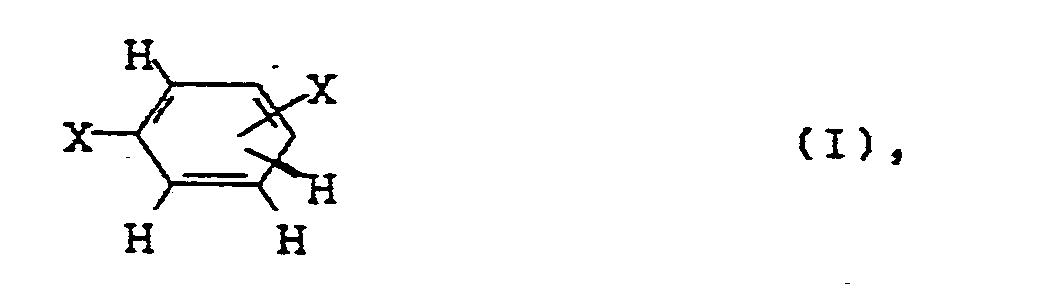

X für zueinander meta- und para-ständiges Halogen wie Chlor oder Brom steht und
R¹ und R² gleich oder verschieden ist und Wasserstoff, C₁-C₄-Alkyl, C₅-C₁₀-Cycloalkyl, C₆-C₁₀Aryl, C₇-C₁₀-Alkylaryl, C₇-C₁₄-Arylalkyl sein kann, wobei zwei zueinander orthoständige Reste R¹ zu einem aromatischen oder heterocyclischen, bis zu drei Heteroatomen wie N,O,S enthaltenden Ring verknüpft sein können und immer ein Rest R¹ verschieden von Wasserstoff ist
und - b) 0 - 5 Mol-%, bevorzugt 0,1 - 2,5 Mol-%, bezogen auf die Summe der Dihalogenaromaten der Formel I und II, eines Tri- oder Tetrahalogenaromaten der Formel
ArXn (III),
wobei
Ar ein aromatischer C₆-C₁₄-Rest oder ein heterocyclicher Rest mit 5-14 Ringatomen, wobei bis zu 3 Ring-C-Atome durch Heteroatome wie N,O,S ersetzt sein können, ist,
X für Halogen wie Chlor oder Brom steht und
n für die Zahl 3 oder 4 steht
und - c) 50 - 100 Mol-% Alkalisulfid, bevorzugt Natrium- oder Kaliumsulfid oder deren Mischung, z.B. in Form ihrer Hydrate oder wäßrigen Mischungen, gegebenenfalls zusammen mit geringen Mengen Alkalihydroxiden wie Natrium- und Kaliumhydroxid, und 0 - 50 Mol-% Alkalibisulfid, bevorzugt Natrium- und Kaliumhydrogensulfid, oder deren Mischung, wobei das molare Verhältnis von (a + b) : c im Bereich von 0,75 : 1 bis 1,25 : 1 liegen kann,
- d) gegebenenfalls in Anwesenheit von Reaktionsbeschleunigern wie Alkalicarboxylaten, Alkaliphosphaten, Al kaliphosphonaten, Alkalifluoriden, Alkalialkylsulfonaten bzw. in Anwesenheit von N,N-Dialkylcarbonsäureamiden, Lactamen, Anhydriden und Estern von Carbonsäuren, dadurch gekennzeichnet, daß dem Reaktionsgemisch 0,1 - 5 Mol-%, vorzugsweise 0,25 - 4 Mol-%, bezogen auf Dihalogenverbindung Monophenole der Formel IV
HO-A-Z-R³ (IV),
in welcher
A ein aromatischer Rest der Formeln (V), (VI) und (VII) ist
Z für C₁-C₆-Alkyliden, C₂-C₆-Cycloalkyliden, CO, -S-, -SO-, -SO₂, O oder eine chemische Einfachbindung darstellt und
p für die Zahl 0, 1, 2, 3 oder 4 steht,
zugegeben werden. - Die Phenole können auch als Salze, z.B. Alkali- oder Erdalkalisalze eingesetzt werden.
- Die Zugabe der Phenole der Formel IV kann vor oder während der Polymerisationsreaktion erfolgen.
- Dabei können auch Gemische von Phenolen eingesetzt werden. Die Zugabe kann durch Dosierung über einen gewissen Zeitraum der Reaktion, portionsweise zu bestimmten Zeiten des Reaktionsablaufes oder durch direkte Zugabe der berechneten Gesamtmenge zu einem definierten Zeitpunkt der Reaktion erfolgen.
- Die erfindungsgemäß hergestellten Polyarylensulfide zeichnen sich durch definierte Schmelzviskositäten abhängig vom Kettenabbrechergehalt aus, die reproduziert werden können. Das ist insofern von großer Bedeutung, als zur Verarbeitung der Polyarylensulfide Polymerschmelzen mit unterschiedlichem Fließverhalten eingestellt werden müssen, die dem jeweiligen Verwendungszweck angepaßt sein müssen.
- So sind z.B. zur Herstellung von Folien und Fasern höhere Schmelzviskositäten als zur Einstellung von Glasfaser- bzw. Glasfaser/Mineralverstärkten Spritzgußtypen notwendig.
- Ein weiterer Vorteil der erfindungsgemäßen Polyarylensulfide ist die größere Stabilität bei thermischer Belastung. Nur so ist gewährleistet, daß kein weiterer Auf- oder Abbau bei der thermoplastischen Verarbeitung, der zur vollständigen Veränderung des Eigenschaftsbildes führen kann, eintritt, und Regenerat nach der Verarbeitung wieder neu eingesetzt werden kann.
- Die Aufarbeitung des Umsetzungsgemisches und die Isolierung der Polyarylensulfide können in bekannter, üblicher Weise erfolgen.
- Erfindungsgemäß einsetzbare Monophenole sind z.B. Phenol, Kresole und höhere alkylierte Phenole, Alkoxyphenole, Phenoxyphenole, Hydroxyphenylalkylsulfide, Hydroxydiphenylsulfide, Hydroxydiphenylsulfoxide, Hydroxydiphenylsulfone, Hydroxydiphenylketone, Hydroxydiphenyle, Hydroxynaphthaline.
- Vorzugsweise werden eingesetzt:
- Phenol, p-tert-Butylphenol, p-Isooctylphenol, 4-Methoxyphenol, 4-Hydroxydiphenylether, 4-Hydroxyphenylethylsulfid, 4-Hydroxydiphenylsulfid, 4-Hydroxydiphenylsulfoxid, 4-Hydroxydiphenylsulfon, 4-Hydroxydiphenylketon, 4-Hydroxydiphenyl, 2-Hydroxynaphthalin.
- Die erfindungsgemäßen Polyarylensulfide können zu Folien oder Fasern verarbeitet oder mit anderen Polymeren, Pigmenten und Füllstoffen - beispielsweise Graphit, Metallpulver, Glaspulver, Quarzmehl, Glasfasern oder Kohle fasern -, gemischt oder mit den für Polyarylensulfide üblichen Additiven, beispielsweise Stabilisatoren oder Entformungsmitteln, versetzt werden.
- Im allgemeinen wird das Schmelzfließverhalten von Polyarylensulfiden nach ASTM 1238-70 bei 316°C unter Verwendung eines 5 kg-Gewichtes gemessen und in g/10 min angegeben.
- Bei hohen Schmelzflußwerten kann diese Messung jedoch aufgrund der hohen Ausflußrate der Polymerschmelze Schwierigkeiten bereiten.
- Es wurde deshalb die Schmelzviskosität m der Polymerschmelze (in Pa.s) bei 306°C in Abhängigkeit von der Schubspannung (in Pa) mit Hilfe des Instron-Rotationsviskosimeters bestimmt.
- Mann kann auf diese Weise die Schmelzviskosität in einem sehr weiten Bereich von 10⁻¹ bis 10⁷ Pa.s bestimmen. In dem Instron-Rheometer wird das Polymer zwischen einer festen Platte in einem drehbaren Kegel geschmolzen und das Drehmoment des Kegels bestimmt. Aus dem Drehmoment, der Winkelgeschwindigkeit und den apparativen Daten kann die Schmelzviskosität in Abhängigkeit von der Schubspannung erechnet werden. Verwendet wurde das Rheometer Modell 3250 der Firma Instron, Durchmesser des Kegels und der Platte 2 cm. Angegeben wird die Schmelzviskosität, die bei einer Schubspannung von τ = 10³ Pa gemessen wird.
- Die erfindungsgemäßen Polyarylensulfide besitzen nach der Isolierung aus dem Reaktionsgemisch Schmelzviskositäten zwischen 1 und 1 x 10³ Pa.s, vorzugsweise 5 bis 5 x 10² Pa.s. Sie können in der üblichen Weise verarbeitet werden.
- Zu 2100 g N-Methylcaprolactam und 940,8 g p-Dichlorbenzol wurden 756,75 g Natriumsulfid-Hydrat (ca. 60 %ig)
135 g 2,5 %ige Natronlauge und
108 g Caprolactam
bei einer Temperatur von 220°C zudosiert. - Die Zudosierrate richtet sich nach dem Umsatz und wird so eingestellt, daß die Temperatur von 220°C bei gleichzeitiger zusätzlicher Beheizung des Reaktionsgefäßes eingehalten werden kann. Bei der Dosierung wird gleichzeitig das Wasser aus der Reaktion entfernt.
- Nach der Dosierung gibt man 9 g Phenol in 50 ml N-Methylcaprolactam hinzu. Nach 7 Stunden Nachreaktionszeit bei schwachem Rückfluß wird das PPS in Wasser ausgefällt, elektrolytfrei gewaschen und mit einem organischen Lösungsmittel kurz extrahiert. Das getrocknete p-Polyphenylensulfid hat eine Schmelzviskosität von 45 Pa.s (gemessen bei 10³ Pa und 306°C).
- Wie Beispiel 1, jedoch wird kein Phenol eingesetzt. Das erhaltene Polyphenylensulfid hat eine Schmelzviskosität von 1380 Pa.s (gemessen bei 10³ Pa und 306°C).
- Wie Beispiel 1, jedoch werden 3,0 g (0,5 Mol-%) Phenol eingesetzt. Das erhaltene Polyphenylensulfid hat eine Schmelzviskosität von 210 Pa.s (gemessen bei 10³ Pa und 306°C).
- Wie Beispiel 1, jedoch werden 15 g (2,5 Mol-%) Phenol eingesetzt. Das erhaltene Polyphenylensulfid hat eine Schmelzviskosität von 12 Pa.s (gemessen bei 10³ Pa und 306°C).
- Wie Beispiel 1, jedoch wird Phenol bereits zu Beginn der Dosierung zugegeben. Das erhaltene Polyphenylensulfid hat eine Schmelzviskosität von 52 Pa.s (gemessen bei 10³ Pa und 306°C).
- Wie Beispiel 1, jedoch werden 19,8 g p-Isooctylphenol als Kettenabbrecher eingesetzt. Das erhaltene Polyphenylensulfid hat eine Schmelzviskosität von 44 Pa.s (gemessen bei 10³ Pa und 306°C).
- Zur Überprüfung der thermischer Stabilität der Polyphenylensulfide wurden die Produkte gemäß Beispiel 1 und Bei spiel 2 vergleichend in einem Zweiwellenextruder vom Typ ZSK 32 bei 320°C aufgeschmolzen, als Faden abgezogen und granuliert. Der Vorgang wurde dreimal wiederholt und anschließend die Schmelzviskosität bestimmt:
PPS gemäß Beispiel 1: 80 Pa.s (gemessen bei 10³ Pa und 306°C)
PPS gemäß Beispiel 2: 40 Pa.s (gemessen bei 10³ Pa und 306°C)
Claims (4)


X für zueinander meta- und para-ständiges Halogen wie Chlor oder Brom steht und
R¹ und R² gleich oder verschieden ist und Wasserstoff, C₁-C₄-Alkyl, C₅-C₁₀-Cycloalkyl, C₆-C₁₀Aryl, C₇-C₁₀-Alkylaryl, C₇-C₁₄-Arylalkyl sein kann, wobei zwei zueinander orthoständige Reste R¹ zu einem aromatischen oder heterocyclischen, bis zu drei Heteroatomen wie N,O,S enthaltenden Ring verknüpft sein können und immer ein Rest R¹ verschieden von Wasserstoff ist
und
ArXn (III),
wobei
Ar ein aromatischer C₆-C₁₄-Rest oder ein heterocyclischer Rest mit 5-14 Ringatomen, wobei bis zu 3 Ring-C-Atome durch Heteroatome wie N,O,S ersetzt sein können, ist,
X für Halogen wie Chlor oder Brom steht und
n für die Zahl 3 oder 4 steht
und
HO-A-Z-R³ (IV),
in welcher
A ein aromatischer Rest der Formeln (V), (VI) oder (VII) ist,

Z für C₁-C₆-Alkyliden, C₂-C₆-Cycloalkyliden, CO, -S-, -SO-, -SO₂-, -O- oder eine Einfachbindung steht und
p für die Zahl 0, 1, 2, 3 oder 4 steht,
zugegeben werden.
Applications Claiming Priority (2)
| Application Number | Priority Date | Filing Date | Title |
|---|---|---|---|
| DE19863601215 DE3601215A1 (de) | 1986-01-17 | 1986-01-17 | Polyarylensulfide mit definiert einstellbaren schmelzviskositaeten |
| DE3601215 | 1986-01-17 |
Publications (2)
| Publication Number | Publication Date |
|---|---|
| EP0229626A1 true EP0229626A1 (de) | 1987-07-22 |
| EP0229626B1 EP0229626B1 (de) | 1990-06-20 |
Family
ID=6292024
Family Applications (1)
| Application Number | Title | Priority Date | Filing Date |
|---|---|---|---|
| EP87100087A Expired - Lifetime EP0229626B1 (de) | 1986-01-17 | 1987-01-07 | Polyarylensulfide mit definiert einstellbaren Schmelzviskositäten |
Country Status (4)
| Country | Link |
|---|---|
| US (1) | US4771120A (de) |
| EP (1) | EP0229626B1 (de) |
| JP (1) | JPS62184026A (de) |
| DE (2) | DE3601215A1 (de) |
Cited By (8)
| Publication number | Priority date | Publication date | Assignee | Title |
|---|---|---|---|---|
| EP0315838A1 (de) * | 1987-11-10 | 1989-05-17 | Bayer Ag | Verfahren zur Herstellung von Polyarylensulfiden mit definiert einstellbaren Schmelzviskositäten |
| EP0346795A3 (de) * | 1988-06-13 | 1990-06-13 | Idemitsu Petrochemical Co. Ltd. | Verfahren zur Herstellung von Polyarylensulfiden |
| EP0332997A3 (de) * | 1988-03-17 | 1990-11-28 | Bayer Ag | Benzoxazol- oder Oxazolingruppenhaltige Polyarylsulfide |
| EP0372252A3 (de) * | 1988-11-23 | 1991-03-20 | Bayer Ag | Verfahren zur Herstellung von hochmolekularen, gegebenenfalls verzweigten polyarylensulfiden |
| EP0374462A3 (de) * | 1988-11-23 | 1991-04-03 | Bayer Ag | Verfahren zur Herstellung von hochmolekularen, gegebenfalls verzweigten Polyarylensulfiden |
| EP0436132A3 (en) * | 1989-12-15 | 1991-09-18 | Bayer Ag | Process for lowering the cristallisation temperature of poly(arylene sulphides) |
| EP0503435A1 (de) * | 1991-03-13 | 1992-09-16 | Bayer Ag | Verfahren zur Molekulargewichts-Stabilisierung von linearen oder gegebenenfalls verzweigten Polyarylensulfiden |
| EP2433977A4 (de) * | 2009-05-18 | 2015-08-12 | Kureha Corp | Polyarylensulfid und herstellungsverfahren dafür |
Families Citing this family (5)
| Publication number | Priority date | Publication date | Assignee | Title |
|---|---|---|---|---|
| DE3528978A1 (de) * | 1985-08-13 | 1987-02-26 | Bayer Ag | Verfahren zur herstellung von hochmolekularen, gegebenenfalls verzweigten polyarylensulfiden |
| US5247063A (en) * | 1987-04-24 | 1993-09-21 | Bayer Aktiengesellschaft | Process for the purification of polyarylene sulphides |
| DE3811451A1 (de) * | 1988-04-06 | 1989-10-19 | Bayer Ag | Polyarylensulfide mit erniedrigter kristallisationstemperatur und verfahren zu deren herstellung |
| US5175243A (en) * | 1990-11-14 | 1992-12-29 | Phillips Petroleum Company | Process for preparing arylene sulfide polymers with halo benzene containing deactivating group |
| ES2881665T3 (es) | 2010-03-09 | 2021-11-30 | Sk Chemicals Co Ltd | Poli(sulfuro de arileno) reutilizable y método para preparar el mismo |
Citations (2)
| Publication number | Priority date | Publication date | Assignee | Title |
|---|---|---|---|---|
| EP0079144A1 (de) * | 1981-10-20 | 1983-05-18 | Kureha Kagaku Kogyo Kabushiki Kaisha | Verfahren zur Herstellung von aromatischen Polysulfiden |
| EP0164638A2 (de) * | 1984-06-09 | 1985-12-18 | Bayer Ag | Verfahren zur Herstellung von Polyarylensulfiden mit funktionellen Endgruppen |
Family Cites Families (3)
| Publication number | Priority date | Publication date | Assignee | Title |
|---|---|---|---|---|
| US3852214A (en) * | 1970-09-28 | 1974-12-03 | Thiokol Corp | Liquid polysulfide polymer glass-to-metal sealant composition |
| US4378442A (en) * | 1982-03-17 | 1983-03-29 | Marsh Andrew J | Polysulphide sealants |
| US4663431A (en) * | 1985-05-07 | 1987-05-05 | Toyo Boseki Kabushiki Kaisha T/U Toyobo Co, Ltd. | Process for preparing polyarylene sulfide with alkali metal salt of phenolic aromatic sulfonic acid |
-
1986
- 1986-01-17 DE DE19863601215 patent/DE3601215A1/de not_active Withdrawn
-
1987
- 1987-01-07 EP EP87100087A patent/EP0229626B1/de not_active Expired - Lifetime
- 1987-01-07 US US07/001,047 patent/US4771120A/en not_active Expired - Fee Related
- 1987-01-07 DE DE8787100087T patent/DE3763315D1/de not_active Expired - Lifetime
- 1987-01-14 JP JP62005154A patent/JPS62184026A/ja active Pending
Patent Citations (2)
| Publication number | Priority date | Publication date | Assignee | Title |
|---|---|---|---|---|
| EP0079144A1 (de) * | 1981-10-20 | 1983-05-18 | Kureha Kagaku Kogyo Kabushiki Kaisha | Verfahren zur Herstellung von aromatischen Polysulfiden |
| EP0164638A2 (de) * | 1984-06-09 | 1985-12-18 | Bayer Ag | Verfahren zur Herstellung von Polyarylensulfiden mit funktionellen Endgruppen |
Cited By (9)
| Publication number | Priority date | Publication date | Assignee | Title |
|---|---|---|---|---|
| EP0315838A1 (de) * | 1987-11-10 | 1989-05-17 | Bayer Ag | Verfahren zur Herstellung von Polyarylensulfiden mit definiert einstellbaren Schmelzviskositäten |
| EP0332997A3 (de) * | 1988-03-17 | 1990-11-28 | Bayer Ag | Benzoxazol- oder Oxazolingruppenhaltige Polyarylsulfide |
| EP0346795A3 (de) * | 1988-06-13 | 1990-06-13 | Idemitsu Petrochemical Co. Ltd. | Verfahren zur Herstellung von Polyarylensulfiden |
| EP0372252A3 (de) * | 1988-11-23 | 1991-03-20 | Bayer Ag | Verfahren zur Herstellung von hochmolekularen, gegebenenfalls verzweigten polyarylensulfiden |
| EP0374462A3 (de) * | 1988-11-23 | 1991-04-03 | Bayer Ag | Verfahren zur Herstellung von hochmolekularen, gegebenfalls verzweigten Polyarylensulfiden |
| EP0436132A3 (en) * | 1989-12-15 | 1991-09-18 | Bayer Ag | Process for lowering the cristallisation temperature of poly(arylene sulphides) |
| US5235035A (en) * | 1989-12-15 | 1993-08-10 | Bayer Aktiengesellschaft | Process for lowering the crystallization temperature of polyarylene sulphides |
| EP0503435A1 (de) * | 1991-03-13 | 1992-09-16 | Bayer Ag | Verfahren zur Molekulargewichts-Stabilisierung von linearen oder gegebenenfalls verzweigten Polyarylensulfiden |
| EP2433977A4 (de) * | 2009-05-18 | 2015-08-12 | Kureha Corp | Polyarylensulfid und herstellungsverfahren dafür |
Also Published As
| Publication number | Publication date |
|---|---|
| JPS62184026A (ja) | 1987-08-12 |
| DE3601215A1 (de) | 1987-07-23 |
| DE3763315D1 (de) | 1990-07-26 |
| US4771120A (en) | 1988-09-13 |
| EP0229626B1 (de) | 1990-06-20 |
Similar Documents
| Publication | Publication Date | Title |
|---|---|---|
| EP0229626B1 (de) | Polyarylensulfide mit definiert einstellbaren Schmelzviskositäten | |
| EP0109637B1 (de) | Verfahren zur Herstellung von hochmolekularen gegebenenfalls verzweigten Polyarylensulfiden | |
| EP0126369B1 (de) | Verfahren zur Herstellung von hochmolekularen, gegebenenfalls verzweigten Polyarylensulfiden | |
| EP0142024B1 (de) | Verfahren zur Herstellung von hochmolekularen, gegebenenfalls verzweigten Polyarylensulfiden | |
| EP0215273B1 (de) | Verfahren zur Herstellung von hochmolekularen, gegebenenfalls verzweigten Polyarylensulfiden | |
| EP0121206B1 (de) | Verfahren zur Herstellung von gegebenenfalls verzweigten Polyarylensulfiden | |
| EP0266662B1 (de) | Verfahren zur Herstellung von Polyarylensulfiden mit erniedrigter Kristallisationstemperatur | |
| EP0121205B1 (de) | Verfahren zur Hestellung von gegebenenfalls verzweigten Polyarylensulfiden | |
| EP0214470B1 (de) | Verfahren zur Herstellung von Polyarylensulfiden | |
| EP0214471B1 (de) | Verfahren zur Herstellung von hochmolekularen, gegebenenfalls verzweigten Polyarylensulfiden | |
| EP0108978B1 (de) | Verfahren zur Herstellung von gegebenenfalls verzweigten Polyarylensulfiden | |
| EP0215258B1 (de) | Verfahren zur Herstellung von hochmolekularen, gegebenenfalls verzweigten Polyarylensulfiden | |
| EP0193827B1 (de) | Verfahren zur Herstellung von hochmolekularen Polyarylensulfiden | |
| EP0218946B1 (de) | Schnellkristallisierende Polyphenylensulfidmassen | |
| EP0275007A2 (de) | Verfahren zur Herstellung von hochmolekularen, gegebenenfalls verzweigten Polyarylensulfiden | |
| EP0279217B1 (de) | Verfahren zur Herstellung von Polyarylensulfiden mit regelbaren Schmelzviskositäten | |
| EP0215259B1 (de) | Verfahren zur Herstellung von hochmolekularen, gegebenenfalls verzweigten Polyarylensulfiden | |
| DE3738142A1 (de) | Verfahren zur herstellung von polyarylensulfiden mit definiert einstellbaren schmelzviskositaeten | |
| EP0355543A2 (de) | Hochmolekulare, gegebenenfalls verzweigte Co-Polyarylensulfide, Verfahren zu deren Herstellung und deren Verwendung | |
| DE3900916A1 (de) | Polyetherketon-polyarylensulfid-blockcopolymere | |
| EP0355646A2 (de) | Verfahren zur Herstellung von unverzweigten Polyarylensulfiden mit verbesserter Farbqualität und Farbstabilität | |
| DE3808496A1 (de) | Neue hochmolekulare, gegebenenfalls verzweigte co-polyarylensulfide, verfahren zu deren herstellung und deren verwendung |
Legal Events
| Date | Code | Title | Description |
|---|---|---|---|
| PUAI | Public reference made under article 153(3) epc to a published international application that has entered the european phase |
Free format text: ORIGINAL CODE: 0009012 |
|
| 17P | Request for examination filed |
Effective date: 19870107 |
|
| AK | Designated contracting states |
Kind code of ref document: A1 Designated state(s): BE DE FR GB IT |
|
| 17Q | First examination report despatched |
Effective date: 19881102 |
|
| GRAA | (expected) grant |
Free format text: ORIGINAL CODE: 0009210 |
|
| AK | Designated contracting states |
Kind code of ref document: B1 Designated state(s): BE DE FR GB IT |
|
| ITF | It: translation for a ep patent filed | ||
| GBT | Gb: translation of ep patent filed (gb section 77(6)(a)/1977) | ||
| REF | Corresponds to: |
Ref document number: 3763315 Country of ref document: DE Date of ref document: 19900726 |
|
| ET | Fr: translation filed | ||
| ITTA | It: last paid annual fee | ||
| PLBE | No opposition filed within time limit |
Free format text: ORIGINAL CODE: 0009261 |
|
| STAA | Information on the status of an ep patent application or granted ep patent |
Free format text: STATUS: NO OPPOSITION FILED WITHIN TIME LIMIT |
|
| 26N | No opposition filed | ||
| PGFP | Annual fee paid to national office [announced via postgrant information from national office to epo] |
Ref country code: DE Payment date: 19951213 Year of fee payment: 10 |
|
| PGFP | Annual fee paid to national office [announced via postgrant information from national office to epo] |
Ref country code: FR Payment date: 19951228 Year of fee payment: 10 |
|
| PGFP | Annual fee paid to national office [announced via postgrant information from national office to epo] |
Ref country code: GB Payment date: 19951229 Year of fee payment: 10 |
|
| PGFP | Annual fee paid to national office [announced via postgrant information from national office to epo] |
Ref country code: BE Payment date: 19960118 Year of fee payment: 10 |
|
| PG25 | Lapsed in a contracting state [announced via postgrant information from national office to epo] |
Ref country code: GB Effective date: 19970107 |
|
| PG25 | Lapsed in a contracting state [announced via postgrant information from national office to epo] |
Ref country code: BE Effective date: 19970131 |
|
| BERE | Be: lapsed |
Owner name: BAYER A.G. Effective date: 19970131 |
|
| GBPC | Gb: european patent ceased through non-payment of renewal fee |
Effective date: 19970107 |
|
| PG25 | Lapsed in a contracting state [announced via postgrant information from national office to epo] |
Ref country code: FR Effective date: 19970930 |
|
| PG25 | Lapsed in a contracting state [announced via postgrant information from national office to epo] |
Ref country code: DE Effective date: 19971001 |
|
| REG | Reference to a national code |
Ref country code: FR Ref legal event code: ST |
|
| PG25 | Lapsed in a contracting state [announced via postgrant information from national office to epo] |
Ref country code: IT Free format text: LAPSE BECAUSE OF NON-PAYMENT OF DUE FEES;WARNING: LAPSES OF ITALIAN PATENTS WITH EFFECTIVE DATE BEFORE 2007 MAY HAVE OCCURRED AT ANY TIME BEFORE 2007. THE CORRECT EFFECTIVE DATE MAY BE DIFFERENT FROM THE ONE RECORDED. Effective date: 20050107 |