EP0237013A2 - Adaptive Befehlsverarbeitung durch Feldrechner mit Prozessoridentifikation und datenabhängigen Statusregistern in jedem Prozessorelement - Google Patents
Adaptive Befehlsverarbeitung durch Feldrechner mit Prozessoridentifikation und datenabhängigen Statusregistern in jedem Prozessorelement Download PDFInfo
- Publication number
- EP0237013A2 EP0237013A2 EP87103374A EP87103374A EP0237013A2 EP 0237013 A2 EP0237013 A2 EP 0237013A2 EP 87103374 A EP87103374 A EP 87103374A EP 87103374 A EP87103374 A EP 87103374A EP 0237013 A2 EP0237013 A2 EP 0237013A2
- Authority
- EP
- European Patent Office
- Prior art keywords
- instruction
- processing
- data
- adaptive
- processor
- Prior art date
- Legal status (The legal status is an assumption and is not a legal conclusion. Google has not performed a legal analysis and makes no representation as to the accuracy of the status listed.)
- Granted
Links
Images

Classifications
-
- G—PHYSICS
- G06—COMPUTING OR CALCULATING; COUNTING
- G06F—ELECTRIC DIGITAL DATA PROCESSING
- G06F9/00—Arrangements for program control, e.g. control units
- G06F9/06—Arrangements for program control, e.g. control units using stored programs, i.e. using an internal store of processing equipment to receive or retain programs
- G06F9/30—Arrangements for executing machine instructions, e.g. instruction decode
- G06F9/38—Concurrent instruction execution, e.g. pipeline or look ahead
- G06F9/3885—Concurrent instruction execution, e.g. pipeline or look ahead using a plurality of independent parallel functional units
-
- G—PHYSICS
- G06—COMPUTING OR CALCULATING; COUNTING
- G06F—ELECTRIC DIGITAL DATA PROCESSING
- G06F15/00—Digital computers in general; Data processing equipment in general
- G06F15/76—Architectures of general purpose stored program computers
- G06F15/80—Architectures of general purpose stored program computers comprising an array of processing units with common control, e.g. single instruction multiple data processors
- G06F15/8007—Architectures of general purpose stored program computers comprising an array of processing units with common control, e.g. single instruction multiple data processors single instruction multiple data [SIMD] multiprocessors
- G06F15/8023—Two dimensional arrays, e.g. mesh, torus
-
- G—PHYSICS
- G06—COMPUTING OR CALCULATING; COUNTING
- G06F—ELECTRIC DIGITAL DATA PROCESSING
- G06F9/00—Arrangements for program control, e.g. control units
- G06F9/06—Arrangements for program control, e.g. control units using stored programs, i.e. using an internal store of processing equipment to receive or retain programs
- G06F9/30—Arrangements for executing machine instructions, e.g. instruction decode
- G06F9/38—Concurrent instruction execution, e.g. pipeline or look ahead
- G06F9/3885—Concurrent instruction execution, e.g. pipeline or look ahead using a plurality of independent parallel functional units
- G06F9/3887—Concurrent instruction execution, e.g. pipeline or look ahead using a plurality of independent parallel functional units controlled by a single instruction for multiple data lanes [SIMD]
-
- G—PHYSICS
- G06—COMPUTING OR CALCULATING; COUNTING
- G06F—ELECTRIC DIGITAL DATA PROCESSING
- G06F9/00—Arrangements for program control, e.g. control units
- G06F9/06—Arrangements for program control, e.g. control units using stored programs, i.e. using an internal store of processing equipment to receive or retain programs
- G06F9/44—Arrangements for executing specific programs
- G06F9/448—Execution paradigms, e.g. implementations of programming paradigms
- G06F9/4494—Execution paradigms, e.g. implementations of programming paradigms data driven
-
- F—MECHANICAL ENGINEERING; LIGHTING; HEATING; WEAPONS; BLASTING
- F02—COMBUSTION ENGINES; HOT-GAS OR COMBUSTION-PRODUCT ENGINE PLANTS
- F02B—INTERNAL-COMBUSTION PISTON ENGINES; COMBUSTION ENGINES IN GENERAL
- F02B75/00—Other engines
- F02B75/02—Engines characterised by their cycles, e.g. six-stroke
- F02B2075/022—Engines characterised by their cycles, e.g. six-stroke having less than six strokes per cycle
- F02B2075/027—Engines characterised by their cycles, e.g. six-stroke having less than six strokes per cycle four
Definitions
- This invention relates to image processors which process data streams passing through arrays of processing elements, each processing element executing an assigned instruction, and more particularly relates to an architecture for adaptively manipulating the instruction assignment of each processing element in response to spatial and data values in the data stream, using an instruction adapter, individual to each processing element, to derive a new instruction as a composite function of processor identification and status and of the data stream.
- European Patent Application Number 84301600.7 Holsztynski, DATA PROCESSING CELLS AND PARALLEL DATA PROCESSORS INCORPORATING SUCH CELLS, October 17, 1984, shows an array processor in which each processing element includes a full adder and storage devices for N-S (north-south), E-W (east-west), and C (carry), so that the processing element can carry out both arithmetic and logic functions.
- NCR GEOMETRIC ARITHMETIC PARALLEL PROCESSOR product specification NCR45CG72, NCR Corp., Dayton, OH, 1984, pp. 1-12, shows physical characteristics of a representative array processor.
- the prior art shows a variety of array processors, with individual processing elements controllable externally in a variety of manners, and with the possibility of OP/NOP according to a flag in the individual processing element-- but the prior art does not teach the use of instruction adaptation within each individual adaptive processing element to make an array processor dynamically optimizable to spatial and data dependencies through derived instruction within the adaptive processing element.
- Data dependence in a loop degrades the performance of these supercomputers.
- the machines are either prevented from presetting the pipe until the date dependence is resolved (e.g. status is known exactly) or will set up the pipe for one path (e.g., status is true) with higher probability.
- the former case delays the execution while the latter case involves the resetting of the pipe (i.e. increase the pipe setup frequency) if the "guess" is wrong. Both cases degrade the performance.
- the spatial condition for the non-homogeneity for example the boundary, could be expressed as conditions such as x ⁇ B or x>N-B or y ⁇ B or y>N-B, where (x,y) is the coordinate of a pixel of an NxN image and B is the width of the boundary.
- the object of the invention is to provide an image processor architecture which speeds the operation of the image processing system by eliminating delays related to spatial or data dependence.
- a feature of the invention is the provision, in each of a finite number of processing elements, of an instruction adapter with addressable instruction derivation means, responsive to the composite of original instruction and bit values in the data stream.
- An advantage of the invention is that the image processing system is self-adaptive to the parameters of the data stream, in that an individual processing element may derive different instructions adapted to the spatial or data parameters of different items as the items arrive for processing at the individual processing element.
- Another advantage of the invention is that is does not require processing delay time for data dependencies.
- the adaptive instruction processor assigns a processor identification (PID) to each adaptive processing element in the parallel computer. It collects a set of data-dependent-status (DDS) bits from the arithmetic & logic unit (ALU) of the adaptive processing element. It then uses an Instruction Adapter (IA) to derive the instruction subject to the spatial dependence and data dependence reflected by the PID, DDS and the original instruction.
- PID processor identification
- DDS data-dependent-status
- ALU arithmetic & logic unit
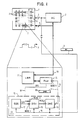
- FIG. 1 shows the array processor, which is similar in concept and operation to array processors known in the art, except insofar as handling of data dependencies and spatial dependencies is concerned.
- the image processor comprises adaptive processing element array 1 and array controller 2, both of which are shown schematically.
- Array controller 2 provides a set of instructions on instruction line 3, and provides a communication path 4 for input and output data.
- Processing element array 1 contains a great number of individual adaptive processing elements 5, each of which is equipped for adaptation according to this invention.
- Processing element array 1 might contain conventional processing elements 6, so long as there is awareness of which type of processing element is in each location, and housekeeping is done accordingly, but this is not preferred. It is preferred to make all the processing elements identical adaptive processing elements, and where conventional performance is desired, to adapt those elements, for example, those identified as elements 6, to perform conventionally.
- Image processing proceeds in conventional image processor fashion so far as dataflow is concerned; data enter the processing element array and flow from processing element to processing element in accordance with initial data values as modified by processing elements through which the data pass, without intervening access to system memory.
- the individual processing elements are set up prior to dataflow commencement.
- an image processor once set up, is for the duration of the execution a specialized, fixed operation computer.
- This invention provides for dynamic changes of setup during execution, by equipping each of the multiplicity of adaptable adaptive processing elements with its own processor identification register, its own data dependent status register, and its own instruction adaptation mechanism which is responsive to the composite of processor identification data, status data, and the applied instruction to provide internal selection of operation for the adaptive processing element.
- processor identification register e.g., a register for storing processor identification data, status data, and the applied instruction to provide internal selection of operation for the adaptive processing element.
- a representative one of the many adaptive processing elements 5, adaptive processing element 7, is shown in greater detail.
- Communication path 70, local memory 71, and arithmetic and logic unit (ALU) 72 are conventional, similar in scope and effect to the analogous items in a conventional processing element. In general, these items can function to accept an assignment (instruction) and execute the assignment on each item of data as it is presented.
- the computation cycle shown simplified in time line 8 uses an original instruction, shown simplified in original instruction view 9, to derive an instruction for execution.
- the original instruction, spatial dependent status and data dependent status values are available early in a cycle, as shown by values X,Y,Z on time line 8.
- the derived instruction then becomes available for control of computation C.
- Adaptability is provided by instruction adapter (IA) 73, which accepts from original instruction line 74 an instruction invoking adaptability, performs appropriate tests on data as presented, determines from test results whether to adapt by deriving a substitute instruction, and provides the substitute derived instruction to ALU 72 on derived instruction line 75.
- the ALU includes or serves as a data dependent status register to provide freshly processed data dependent status bits back on DDS test data line 76 to IA 73.
- the adaptability invoking instruction, presented on adaptability control line 74 is made available to spatial dependent status block (SDS) 77, to dependence select and verify block (DSV) 78, and to instruction modify and extend block (IME) 79.
- SDS spatial dependent status block
- DSV dependence select and verify block
- IME instruction modify and extend block
- the instruction adapter (IA) block 73 accepts an original instruction (of the type which invokes its own modification under specified circumstances) and generates, as output, a derived instruction on line 75 to ALU block 72. This controls the operations of the adaptive processing element.
- a typical instruction set such as that shown in NCR45CG72, 1984, at page 7, includes a micro-NOP instruction, several load/store instructions for inter-processing-element communication, and arithmetic/logic operations.
- FIG. 1 illustrates the instruction format of the derived instruction at inset derived instruction view 80.
- the derived instruction has an "agreement bit" inserted to the input instruction in one or more prescribed bit positions.
- the "agreement bit” is a function of the PID, DDS and the input instruction while the "prescribed bit position" can be predetermined from the format of the input instruction and the derived instruction.
- the "agreement bit” can also overwrite the bits of the input instruction at the prescribed positions.
- the individual adaptive processing element remains quite simple.
- Three major building blocks are registers, shift registers and multiplexers, all of which are common parts available from a number of suppliers and familiar to those skilled in the art. Such parts are described in THE TTL DATA BOOK FOR DESIGN ENGINEERS, Second Edition, Texas Instruments Corporation, LCC4112 74062-116-AI, pp. 7-471;7-316; and 7-181.
- the following examples are typical of building blocks appropriate for selection:
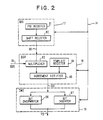
- FIG. 2 shows the structure of the instruction adapter (IA) 73, which contains three functional blocks as follows:
- the Spatial Dependence Status (SDS) block 77 accepts part of the input instruction as control and produces SDS bits as output to indicate the spatial dependence.
- This block contains a PID register 81 whose content is the PID of the PE.
- the PID register can be preloaded by the input instruction.
- the content of the PID register 81 must be correlated to spatial location, for example x-y coordinates.
- It also contains a shift register 82 of the same size as PID register 81.
- the shift register 82 can perform a logic-shift operation, one bit at a time, in either direction. This mechanism allows for any bit group of the PID register to be available on line 88 as the input to the DSV block 78.
- the second functional block is the "Dependence Select and Verify (DSV)" block 78.
- the DSV block 78 contains a multiplexer 83 to select some of the SDS bits or DDS bits.
- a template register 84 is included in this block for matching, masking and comparing purpose. The selected dependent bits and the template are passed to the "agreement verifier" 85 to generate an "agreement bit.”
- Template register 84 contains decision threshold information, preset at initialization. In a typical operation, all template registers are set to the same value to mask a certain subgroup of bits. On a particular cycle, all shift registers are operated similarly, according to instruction, to accomplish sampling of a group of bits in the related PID register and align those bits appropriately.
- the template register and shift register together function so as to select the interested bits from the PID.
- the usual operation is as a movable window, including two consecutive bits to assign the hardware differently for different items of interest or different image subsets.
- the agreement verifier can perform COMPARE, AND, OR and XOR operations.
- the DSV block accepts SDS bits and DDS bits as input, and generates the "agreement bit" as output.
- the DSV block accepts part of the input instruction as control.
- the DDS bits indicate the nature of the data and are used for data adaptation. Common DDS bits include positive/negative, zero/non-zero, positive/non-positive, true/false, greater/equal/less, even/odd. Any other status that can be derived from the Arithmetic Logic Unit (ALU) 72 of the adaptable processing element 7 can be identified by status bits.
- ALU Arithmetic Logic Unit
- the third block is the "instruction modify and extend (IME)" block 79.
- the IME block 79 accepts the agreement bit and the input instruction as inputs, and generates the derived instruction as output.
- the IME block 79 has a "bit overwriter” to replace some bits of the input instruction by the agreement bit at the prescribed positions.
- the block also has a "bit inserter” which inserts the agreement bit into the input instruction at the prescribed positions. The selection of overwriting or insertion or both, and the prescribing of the positions, are controlled by part of the input instruction.
- the IA can perform the following "dependent operations" to facilitate the spatial and/or data adaptation:
- FIG. 3 A very efficient simplified implementation of the Instruction Adaptor (IA) 73 is illustrated in Figure 3.
- the content of the PID register 81 is copied to a logical shift register (LSR) 91 which can perform logic-shift operations in both directions.
- the bits shifted out from them and the rightmost bit of the logical shift-register 91 are the SDS bits.
- a multiplexer then selects one of the SDS or DDS bit as the agreement bit.
- Such an implementation can perform one dimensional and two dimensional operations.
- This implementation is suitable for an adaptive processing element with less complexity, because of the elimination of the template register 84 (FIG. 2) and the agreement verifier 85.
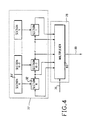
- FIG. 4 shows the spatial dependent status block generalized to detect spatial dependence of a multidimensional interconnection network of a parallel computer, such as an array in 2D or a pyramid in 3D.
- the PID register may be considered as comprising K sections 1-K.
- the shift register 92 which is analogous to the shift registers 82 and 91 in FIGs. 1-2, in SDS block 77, is partitioned into K sections, where K is the dimension of the network.
- Each section manipulates the spatial dependence for one dimension of the network.
- the rightmost and the leftmost bits of each section are SDS bits which are passed to the multiplexer 83 in the DSV block 78 for spatial dependence detection.
- Complementary operations are possible.
- An example of the complementary operation is the +/- (add or subtract) pair.
- the "agreement” bit is derived from the "condition,” which can be data-dependent or spatial-dependent.
- the sequential execution of action 1/action 2 can be totally parallelized into one unified action 3.
- the problem can also be restructured in the following way: An "agreement” bit is derived from the “condition” and is used to generate an "address offset” by either overwriting or inserting the appropriate field of the input instruction.
- the code for action 1 and action 2 are then structured D distance apart where D is equal to the "address offset.”
- each PE will"jump" to the right entry of the code according to the spatial condition of the data. Note that only one version of the coding is necessary.
- a non-homogeneous problem due to the spatial dependence can be converted to a homogeneous one by this invention, so that the degree of parallelism can be more extensive and software effort can be reduced.
- This invention resolves the spatial dependence due to the relative or absolute position (or coordinate) of PEs in a parallel computer which has one single fixed baseline network to connect the PEs in the system.
- the pyramid network can be emulated from the baseline array interconnection of size NxN by the adaptive instruction processor.
- the PID register of each adaptive processing element in the array is loaded with the appropriate Cartesian coordinate value (x, y).
- all PEs are active.
- only adaptive processing elements with x or y equals to the multiple of 2 are active.
- only adaptive processing elements with x or y equals to the multiple of 4 are active.
- at t i only adaptive processing elements with x or y equals to the multiple of 2x(i-1) are active.
- the above-described procedure emulates a pyramid network of shrinkage 2 (i.e.
- the same adaptive instruction processor can also be applied to the emulation of networks such as tree, ring and perfect shuffle etc. from a baseline interconnection.
- the network emulation is a very powerful mechanism in producing multiple parallel architectures from a single PE type. Along with the economic and logistic benefits, the algorithm can have a better match to the architecture, so that the performance can be increased. Because only one element type is required, such emulation scheme is especially suitable for VLSI implementation.
- a complementary operation is a pair of operations that can be distributed between two adaptive processing elements and executed simultaneously.
- Examples of the complementary operations include the SEND/RECEIVE pair for interprocessor communication and the Butterfly computation of FFT (Fast Fourier Transform).
- Another example is the +/- instruction described in application (1).
- the adaptive instruction scheme can speed the execution and save communication bandwidth.
- One adaptive processing element (based on the knowledge of its position in the array, i.e., spatial knowledge) sends data through an interconnection to its neighbor PE while its neighbor PE (based on this spatial knowledge) receives these data through the same interconnection.
- the operation can be accomplished in one cycle using one unit of communication bandwidth for one datum.
- the same operation needs two execution cycles and/or two units of communication bandwidth.
- Adaptive instruction processing can resolve the data dependent problem and increase the performance of a supercomputer.
- An instruction called OPA/OPB (operation A or operation B) can be defined and one agreement bit selected to adapt the instruction.
- the derived instruction will execute OPA if the agreement bit is "1" or OPB if the agreement bit is "0.”
- the pipe within the supercomputers can be set up in advance for instruction OPA/OPB and the vector execution can be started once the agreement bit is available. The probability of"guessing right"is always"1"because of the data adaptation.
- This example illustrates the adaptive instruction processor operating in a spatial adaptation case.
- this example shows how an original instruction is modified as a function of the Processor IDentification (PID).
- PID Processor IDentification
- the derived instruction has two bits, the r-th and the r+1-th bit, pertinent to this example.
- the action of the adaptive processing element is prescribed as follows:
- the PE performs "+" when the r-th bit of the modified instruction is "0" and the r+1-th bit is "1.”
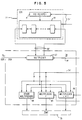
- Figure 5 shows another embodiment using multiple multiplexers.
- a portion of the original instruction commands the shift register 91, which contains the processor identification PID, to SHIFT RIGHT one bit position; as a result, the least significant bit in the processor identifiction register (LSBPID) is placed in one of the inputs to the Dependence Selection and Verify (DSV) Block 78.
- LSBPID least significant bit in the processor identifiction register
- Figure 5 illustrates a sample design to translate the K-th bit (I ⁇ K>) of the original instruction into the r-th and the r+1-th bits (IM ⁇ r> and IM ⁇ r+1>) of the modified instruction according to the Least Significant Bit of PID (LSBPID, i.e. PID ⁇ 0>).
- LSBPID Least Significant Bit of PID
- the "agreement bit" (now carrying the LSBPID) and the original instruction (carrying I ⁇ K> and other bits) are routed into a set of multiplexers 84-86 to produce the derived instruction.
- J multiplexers are required for a J-bit derived instruction, one multiplexer to produce one bit of the derived instruction.
- the original instruction command the "multiplexer r" to SELECT I ⁇ K> as the output.
- the original instruction commands "multiplexer r+1" to SELECT the "agreement bit" as IM ⁇ r+1>.
- a table below shows the relationship among the original instruction (I ⁇ K>), the LSBPID and the modified instruction (IM ⁇ r> and IM ⁇ r+1>), which demonstrates the realization of the invention via the design illustrated in Figure 5.
Landscapes
- Engineering & Computer Science (AREA)
- Theoretical Computer Science (AREA)
- Software Systems (AREA)
- Physics & Mathematics (AREA)
- General Engineering & Computer Science (AREA)
- General Physics & Mathematics (AREA)
- Computer Hardware Design (AREA)
- Computing Systems (AREA)
- Multi Processors (AREA)
- Image Processing (AREA)
- Complex Calculations (AREA)
Applications Claiming Priority (2)
| Application Number | Priority Date | Filing Date | Title |
|---|---|---|---|
| US06/839,311 US4783738A (en) | 1986-03-13 | 1986-03-13 | Adaptive instruction processing by array processor having processor identification and data dependent status registers in each processing element |
| US839311 | 1992-02-20 |
Publications (3)
| Publication Number | Publication Date |
|---|---|
| EP0237013A2 true EP0237013A2 (de) | 1987-09-16 |
| EP0237013A3 EP0237013A3 (en) | 1989-02-08 |
| EP0237013B1 EP0237013B1 (de) | 1993-02-10 |
Family
ID=25279392
Family Applications (1)
| Application Number | Title | Priority Date | Filing Date |
|---|---|---|---|
| EP87103374A Expired - Lifetime EP0237013B1 (de) | 1986-03-13 | 1987-03-10 | Adaptive Befehlsverarbeitung durch Feldrechner mit Prozessoridentifikation und datenabhängigen Statusregistern in jedem Prozessorelement |
Country Status (5)
| Country | Link |
|---|---|
| US (1) | US4783738A (de) |
| EP (1) | EP0237013B1 (de) |
| JP (1) | JPH0719244B2 (de) |
| CA (1) | CA1268554A (de) |
| DE (1) | DE3784082T2 (de) |
Cited By (2)
| Publication number | Priority date | Publication date | Assignee | Title |
|---|---|---|---|---|
| EP0314277A3 (en) * | 1987-10-27 | 1990-07-04 | International Business Machines Corporation | Simd array processor |
| EP0724221A3 (de) * | 1995-01-26 | 1997-03-12 | Ibm | Verfahren und Vorrichtung zur Ausführung unähnlicher Befehlsfolgen in einem Prozessor eines Einzelbefehl- und Mehrfahrdatenrechners (SIMD) |
Families Citing this family (82)
| Publication number | Priority date | Publication date | Assignee | Title |
|---|---|---|---|---|
| DE3506749A1 (de) * | 1984-02-27 | 1985-09-26 | Nippon Telegraph & Telephone Public Corp., Tokio/Tokyo | Matrixprozessor und steuerverfahren hierfuer |
| US4839851A (en) * | 1987-07-13 | 1989-06-13 | Idaho Research Foundation, Inc. | Programmable data path device |
| US4943912A (en) * | 1987-10-13 | 1990-07-24 | Hitachi, Ltd. | Parallel processor system having control processor and array control apparatus for selectively activating different processors |
| US4901360A (en) * | 1987-10-23 | 1990-02-13 | Hughes Aircraft Company | Gated architecture for computer vision machine |
| NL8800071A (nl) * | 1988-01-13 | 1989-08-01 | Philips Nv | Dataprocessorsysteem en videoprocessorsysteem, voorzien van een dergelijk dataprocessorsysteem. |
| US5257395A (en) * | 1988-05-13 | 1993-10-26 | International Business Machines Corporation | Methods and circuit for implementing and arbitrary graph on a polymorphic mesh |
| US5136717A (en) * | 1988-11-23 | 1992-08-04 | Flavors Technology Inc. | Realtime systolic, multiple-instruction, single-data parallel computer system |
| US5280620A (en) * | 1988-12-16 | 1994-01-18 | U.S. Philips Corporation | Coupling network for a data processor, including a series connection of a cross-bar switch and an array of silos |
| US5067069A (en) * | 1989-02-03 | 1991-11-19 | Digital Equipment Corporation | Control of multiple functional units with parallel operation in a microcoded execution unit |
| CA2012938A1 (en) * | 1989-04-19 | 1990-10-19 | Patrick F. Castelaz | Clustering and association processor |
| EP0424618A3 (en) * | 1989-10-24 | 1992-11-19 | International Business Machines Corporation | Input/output system |
| US5471593A (en) * | 1989-12-11 | 1995-11-28 | Branigin; Michael H. | Computer processor with an efficient means of executing many instructions simultaneously |
| CA2073185A1 (en) * | 1990-01-05 | 1991-07-06 | Won S. Kim | Parallel processor memory system |
| US5590345A (en) * | 1990-11-13 | 1996-12-31 | International Business Machines Corporation | Advanced parallel array processor(APAP) |
| US5963746A (en) * | 1990-11-13 | 1999-10-05 | International Business Machines Corporation | Fully distributed processing memory element |
| US5828894A (en) * | 1990-11-13 | 1998-10-27 | International Business Machines Corporation | Array processor having grouping of SIMD pickets |
| US5765015A (en) * | 1990-11-13 | 1998-06-09 | International Business Machines Corporation | Slide network for an array processor |
| US5588152A (en) * | 1990-11-13 | 1996-12-24 | International Business Machines Corporation | Advanced parallel processor including advanced support hardware |
| US5765011A (en) * | 1990-11-13 | 1998-06-09 | International Business Machines Corporation | Parallel processing system having a synchronous SIMD processing with processing elements emulating SIMD operation using individual instruction streams |
| US5963745A (en) * | 1990-11-13 | 1999-10-05 | International Business Machines Corporation | APAP I/O programmable router |
| US5809292A (en) * | 1990-11-13 | 1998-09-15 | International Business Machines Corporation | Floating point for simid array machine |
| US5625836A (en) * | 1990-11-13 | 1997-04-29 | International Business Machines Corporation | SIMD/MIMD processing memory element (PME) |
| US5765012A (en) * | 1990-11-13 | 1998-06-09 | International Business Machines Corporation | Controller for a SIMD/MIMD array having an instruction sequencer utilizing a canned routine library |
| US5815723A (en) * | 1990-11-13 | 1998-09-29 | International Business Machines Corporation | Picket autonomy on a SIMD machine |
| US5617577A (en) * | 1990-11-13 | 1997-04-01 | International Business Machines Corporation | Advanced parallel array processor I/O connection |
| US5794059A (en) * | 1990-11-13 | 1998-08-11 | International Business Machines Corporation | N-dimensional modified hypercube |
| US5708836A (en) * | 1990-11-13 | 1998-01-13 | International Business Machines Corporation | SIMD/MIMD inter-processor communication |
| ATE180586T1 (de) * | 1990-11-13 | 1999-06-15 | Ibm | Paralleles assoziativprozessor-system |
| US5630162A (en) * | 1990-11-13 | 1997-05-13 | International Business Machines Corporation | Array processor dotted communication network based on H-DOTs |
| US5966528A (en) * | 1990-11-13 | 1999-10-12 | International Business Machines Corporation | SIMD/MIMD array processor with vector processing |
| US5734921A (en) * | 1990-11-13 | 1998-03-31 | International Business Machines Corporation | Advanced parallel array processor computer package |
| US5594918A (en) * | 1991-05-13 | 1997-01-14 | International Business Machines Corporation | Parallel computer system providing multi-ported intelligent memory |
| US5237626A (en) * | 1991-09-12 | 1993-08-17 | International Business Machines Corporation | Universal image processing module |
| JP2571655B2 (ja) * | 1991-11-27 | 1997-01-16 | インターナショナル・ビジネス・マシーンズ・コーポレイション | プロトコル変換機構、交換ネットワーク及びコンピュータ・システム |
| JPH06131312A (ja) * | 1992-01-23 | 1994-05-13 | Hitachi Ltd | 並行処理方法およびシステム |
| JP2642039B2 (ja) * | 1992-05-22 | 1997-08-20 | インターナショナル・ビジネス・マシーンズ・コーポレイション | アレイ・プロセッサ |
| US5579527A (en) * | 1992-08-05 | 1996-11-26 | David Sarnoff Research Center | Apparatus for alternately activating a multiplier and a match unit |
| US5581778A (en) * | 1992-08-05 | 1996-12-03 | David Sarnoff Researach Center | Advanced massively parallel computer using a field of the instruction to selectively enable the profiling counter to increase its value in response to the system clock |
| US6298162B1 (en) | 1992-12-23 | 2001-10-02 | Lockheed Martin Corporation | Image compression/expansion using parallel decomposition/recomposition |
| US5493651A (en) * | 1993-02-16 | 1996-02-20 | International Business Machines Corporation | Method and system for dequeuing connection requests in a simplex switch |
| JP3287901B2 (ja) * | 1993-03-12 | 2002-06-04 | シャープ株式会社 | データ駆動型情報処理システムにおける識別データ確認方法 |
| US5765014A (en) * | 1993-10-12 | 1998-06-09 | Seki; Hajime | Electronic computer system and processor element for processing in a data driven manner using reverse polish notation |
| US5535291A (en) * | 1994-02-18 | 1996-07-09 | Martin Marietta Corporation | Superresolution image enhancement for a SIMD array processor |
| US5659780A (en) * | 1994-02-24 | 1997-08-19 | Wu; Chen-Mie | Pipelined SIMD-systolic array processor and methods thereof |
| US5748950A (en) * | 1994-09-20 | 1998-05-05 | Intel Corporation | Method and apparatus for providing an optimized compare-and-branch instruction |
| US5758176A (en) * | 1994-09-28 | 1998-05-26 | International Business Machines Corporation | Method and system for providing a single-instruction, multiple-data execution unit for performing single-instruction, multiple-data operations within a superscalar data processing system |
| US6128720A (en) * | 1994-12-29 | 2000-10-03 | International Business Machines Corporation | Distributed processing array with component processors performing customized interpretation of instructions |
| US5682491A (en) * | 1994-12-29 | 1997-10-28 | International Business Machines Corporation | Selective processing and routing of results among processors controlled by decoding instructions using mask value derived from instruction tag and processor identifier |
| US5898850A (en) * | 1997-03-31 | 1999-04-27 | International Business Machines Corporation | Method and system for executing a non-native mode-sensitive instruction within a computer system |
| US6076156A (en) * | 1997-07-17 | 2000-06-13 | Advanced Micro Devices, Inc. | Instruction redefinition using model specific registers |
| US6366999B1 (en) * | 1998-01-28 | 2002-04-02 | Bops, Inc. | Methods and apparatus to support conditional execution in a VLIW-based array processor with subword execution |
| US6219776B1 (en) * | 1998-03-10 | 2001-04-17 | Billions Of Operations Per Second | Merged array controller and processing element |
| US20050149694A1 (en) * | 1998-12-08 | 2005-07-07 | Mukesh Patel | Java hardware accelerator using microcode engine |
| US7225436B1 (en) | 1998-12-08 | 2007-05-29 | Nazomi Communications Inc. | Java hardware accelerator using microcode engine |
| US6332215B1 (en) | 1998-12-08 | 2001-12-18 | Nazomi Communications, Inc. | Java virtual machine hardware for RISC and CISC processors |
| US6826749B2 (en) | 1998-12-08 | 2004-11-30 | Nazomi Communications, Inc. | Java hardware accelerator using thread manager |
| US7191310B2 (en) * | 2000-01-19 | 2007-03-13 | Ricoh Company, Ltd. | Parallel processor and image processing apparatus adapted for nonlinear processing through selection via processor element numbers |
| EP1197847A3 (de) * | 2000-10-10 | 2003-05-21 | Nazomi Communications Inc. | Java-Hardwarebeschleuniger mit Mikrokodemaschine |
| US7346217B1 (en) * | 2001-04-25 | 2008-03-18 | Lockheed Martin Corporation | Digital image enhancement using successive zoom images |
| US7127593B2 (en) * | 2001-06-11 | 2006-10-24 | Broadcom Corporation | Conditional execution with multiple destination stores |
| US7383421B2 (en) * | 2002-12-05 | 2008-06-03 | Brightscale, Inc. | Cellular engine for a data processing system |
| US8769508B2 (en) | 2001-08-24 | 2014-07-01 | Nazomi Communications Inc. | Virtual machine hardware for RISC and CISC processors |
| US7251594B2 (en) * | 2001-12-21 | 2007-07-31 | Hitachi, Ltd. | Execution time modification of instruction emulation parameters |
| US7581081B2 (en) | 2003-03-31 | 2009-08-25 | Stretch, Inc. | Systems and methods for software extensible multi-processing |
| US7613900B2 (en) * | 2003-03-31 | 2009-11-03 | Stretch, Inc. | Systems and methods for selecting input/output configuration in an integrated circuit |
| US8001266B1 (en) | 2003-03-31 | 2011-08-16 | Stretch, Inc. | Configuring a multi-processor system |
| US7590829B2 (en) * | 2003-03-31 | 2009-09-15 | Stretch, Inc. | Extension adapter |
| US7609297B2 (en) * | 2003-06-25 | 2009-10-27 | Qst Holdings, Inc. | Configurable hardware based digital imaging apparatus |
| US7373642B2 (en) * | 2003-07-29 | 2008-05-13 | Stretch, Inc. | Defining instruction extensions in a standard programming language |
| US7418575B2 (en) * | 2003-07-29 | 2008-08-26 | Stretch, Inc. | Long instruction word processing with instruction extensions |
| FR2865290A1 (fr) * | 2004-01-21 | 2005-07-22 | Thomson Licensing Sa | Procede de gestion de donnees dans un processeur matriciel et processeur matriciel mettant en oeuvre ce procede |
| US7725691B2 (en) * | 2005-01-28 | 2010-05-25 | Analog Devices, Inc. | Method and apparatus for accelerating processing of a non-sequential instruction stream on a processor with multiple compute units |
| US7516301B1 (en) * | 2005-12-16 | 2009-04-07 | Nvidia Corporation | Multiprocessor computing systems with heterogeneous processors |
| US7451293B2 (en) * | 2005-10-21 | 2008-11-11 | Brightscale Inc. | Array of Boolean logic controlled processing elements with concurrent I/O processing and instruction sequencing |
| KR20080094005A (ko) * | 2006-01-10 | 2008-10-22 | 브라이트스케일, 인크. | 병렬 프로세싱 시스템에서 멀티미디어 데이터의 서브블록들을 프로세싱하기 위한 방법 및 장치 |
| US20080244238A1 (en) * | 2006-09-01 | 2008-10-02 | Bogdan Mitu | Stream processing accelerator |
| US20080059764A1 (en) * | 2006-09-01 | 2008-03-06 | Gheorghe Stefan | Integral parallel machine |
| US20080059467A1 (en) * | 2006-09-05 | 2008-03-06 | Lazar Bivolarski | Near full motion search algorithm |
| US20080212895A1 (en) * | 2007-01-09 | 2008-09-04 | Lockheed Martin Corporation | Image data processing techniques for highly undersampled images |
| US7920935B2 (en) * | 2008-08-19 | 2011-04-05 | International Business Machines Corporation | Activity based real-time production instruction adaptation |
| US8755515B1 (en) | 2008-09-29 | 2014-06-17 | Wai Wu | Parallel signal processing system and method |
| US11940945B2 (en) * | 2021-12-31 | 2024-03-26 | Ceremorphic, Inc. | Reconfigurable SIMD engine |
Family Cites Families (22)
| Publication number | Priority date | Publication date | Assignee | Title |
|---|---|---|---|---|
| US3287702A (en) * | 1962-12-04 | 1966-11-22 | Westinghouse Electric Corp | Computer control |
| US3287703A (en) * | 1962-12-04 | 1966-11-22 | Westinghouse Electric Corp | Computer |
| US3544973A (en) * | 1968-03-13 | 1970-12-01 | Westinghouse Electric Corp | Variable structure computer |
| US4558411A (en) * | 1969-05-19 | 1985-12-10 | Burroughs Corp. | Polymorphic programmable units employing plural levels of sub-instruction sets |
| US3970993A (en) * | 1974-01-02 | 1976-07-20 | Hughes Aircraft Company | Cooperative-word linear array parallel processor |
| GB1527289A (en) * | 1976-08-17 | 1978-10-04 | Int Computers Ltd | Data processing systems |
| US4380046A (en) * | 1979-05-21 | 1983-04-12 | Nasa | Massively parallel processor computer |
| US4301443A (en) * | 1979-09-10 | 1981-11-17 | Environmental Research Institute Of Michigan | Bit enable circuitry for an image analyzer system |
| US4287566A (en) * | 1979-09-28 | 1981-09-01 | Culler-Harrison Inc. | Array processor with parallel operations per instruction |
| JPS6042516B2 (ja) * | 1980-03-04 | 1985-09-24 | 日本電信電話株式会社 | デ−タ処理装置 |
| US4435758A (en) * | 1980-03-10 | 1984-03-06 | International Business Machines Corporation | Method for conditional branch execution in SIMD vector processors |
| US4344134A (en) * | 1980-06-30 | 1982-08-10 | Burroughs Corporation | Partitionable parallel processor |
| US4467409A (en) * | 1980-08-05 | 1984-08-21 | Burroughs Corporation | Flexible computer architecture using arrays of standardized microprocessors customized for pipeline and parallel operations |
| US4398176A (en) * | 1980-08-15 | 1983-08-09 | Environmental Research Institute Of Michigan | Image analyzer with common data/instruction bus |
| US4484346A (en) * | 1980-08-15 | 1984-11-20 | Sternberg Stanley R | Neighborhood transformation logic circuitry for an image analyzer system |
| US4574394A (en) * | 1981-06-01 | 1986-03-04 | Environmental Research Institute Of Mi | Pipeline processor |
| US4464689A (en) * | 1981-06-04 | 1984-08-07 | Education & Informations Systems, Inc. | Random access read/write unit |
| NZ207326A (en) * | 1983-03-08 | 1988-03-30 | Stc Plc | Associative data processing array |
| US4739474A (en) * | 1983-03-10 | 1988-04-19 | Martin Marietta Corporation | Geometric-arithmetic parallel processor |
| US4541116A (en) * | 1984-02-27 | 1985-09-10 | Environmental Research Institute Of Mi | Neighborhood image processing stage for implementing filtering operations |
| JPS61264470A (ja) * | 1985-05-03 | 1986-11-22 | アドバンスト・マイクロ・デイバイシズ・インコ−ポレ−テツド | モノリシツク集積回路装置 |
| WO1986007174A1 (en) * | 1985-05-20 | 1986-12-04 | Shekels Howard D | Super-computer system architectures |
-
1986
- 1986-03-13 US US06/839,311 patent/US4783738A/en not_active Expired - Fee Related
-
1987
- 1987-01-09 JP JP62002006A patent/JPH0719244B2/ja not_active Expired - Lifetime
- 1987-02-11 CA CA000529484A patent/CA1268554A/en not_active Expired - Lifetime
- 1987-03-10 DE DE8787103374T patent/DE3784082T2/de not_active Expired - Fee Related
- 1987-03-10 EP EP87103374A patent/EP0237013B1/de not_active Expired - Lifetime
Cited By (3)
| Publication number | Priority date | Publication date | Assignee | Title |
|---|---|---|---|---|
| EP0314277A3 (en) * | 1987-10-27 | 1990-07-04 | International Business Machines Corporation | Simd array processor |
| EP0724221A3 (de) * | 1995-01-26 | 1997-03-12 | Ibm | Verfahren und Vorrichtung zur Ausführung unähnlicher Befehlsfolgen in einem Prozessor eines Einzelbefehl- und Mehrfahrdatenrechners (SIMD) |
| US5680597A (en) * | 1995-01-26 | 1997-10-21 | International Business Machines Corporation | System with flexible local control for modifying same instruction partially in different processor of a SIMD computer system to execute dissimilar sequences of instructions |
Also Published As
| Publication number | Publication date |
|---|---|
| EP0237013B1 (de) | 1993-02-10 |
| DE3784082D1 (de) | 1993-03-25 |
| EP0237013A3 (en) | 1989-02-08 |
| JPH0719244B2 (ja) | 1995-03-06 |
| CA1268554A (en) | 1990-05-01 |
| JPS62221063A (ja) | 1987-09-29 |
| US4783738A (en) | 1988-11-08 |
| DE3784082T2 (de) | 1993-08-12 |
Similar Documents
| Publication | Publication Date | Title |
|---|---|---|
| US4783738A (en) | Adaptive instruction processing by array processor having processor identification and data dependent status registers in each processing element | |
| US4748585A (en) | Processor utilizing reconfigurable process segments to accomodate data word length | |
| EP0314277B1 (de) | SIMD-Feldrechner | |
| US7146487B2 (en) | Methods and apparatus to support conditional execution in a VLIW-based array processor with subword execution | |
| KR100415417B1 (ko) | 이미지-처리프로세서 | |
| US5828894A (en) | Array processor having grouping of SIMD pickets | |
| Annaratone et al. | Warp architecture and implementation | |
| US5204938A (en) | Method of implementing a neural network on a digital computer | |
| US5187801A (en) | Massively-parallel computer system for generating paths in a binomial lattice | |
| US20080301414A1 (en) | Efficient Complex Multiplication and Fast Fourier Transform (FFT) Implementation on the ManArray Architecture | |
| EP0295646B1 (de) | Arithmetik-Parallelverarbeitungseinheit und zugehöriger Kompilator | |
| Hartenstein et al. | A dynamically reconfigurable wavefront array architecture for evaluation of expressions | |
| EP0223849B1 (de) | Superrechnersystemarchitektur | |
| US5473774A (en) | Method for conflict detection in parallel processing system | |
| Magid | High Speed Computer Systems as a Result of Concurrent Execution of Sequential Instructions | |
| Hartenstein et al. | A synthesis system for bus-based wavefront array architectures | |
| Vlontzos et al. | A wavefront array processor using dataflow processing elements | |
| Annexstein et al. | Achieving multigauge behavior in bit-serial SIMD architectures via emulation | |
| WO1988004077A1 (en) | Pipelining technique and pipelined processes | |
| Kondo et al. | Two‐Dimensional Array Processor AAP2 and Its Programming Language | |
| Howard et al. | Simulation and performance evaluation of a parallel architecture for signal processing | |
| Lee et al. | The implementation of a PC-based list processor for symbolic computation | |
| Vasquez | Concurrent use of two programming tools for heterogeneous supercomputers | |
| Hall et al. | Content addressable memory project | |
| Bräunl | A specification language for parallel architectures and algorithms |
Legal Events
| Date | Code | Title | Description |
|---|---|---|---|
| PUAI | Public reference made under article 153(3) epc to a published international application that has entered the european phase |
Free format text: ORIGINAL CODE: 0009012 |
|
| AK | Designated contracting states |
Kind code of ref document: A2 Designated state(s): DE FR GB IT |
|
| 17P | Request for examination filed |
Effective date: 19880126 |
|
| PUAL | Search report despatched |
Free format text: ORIGINAL CODE: 0009013 |
|
| AK | Designated contracting states |
Kind code of ref document: A3 Designated state(s): DE FR GB IT |
|
| 17Q | First examination report despatched |
Effective date: 19901026 |
|
| GRAA | (expected) grant |
Free format text: ORIGINAL CODE: 0009210 |
|
| AK | Designated contracting states |
Kind code of ref document: B1 Designated state(s): DE FR GB IT |
|
| PG25 | Lapsed in a contracting state [announced via postgrant information from national office to epo] |
Ref country code: IT Free format text: LAPSE BECAUSE OF FAILURE TO SUBMIT A TRANSLATION OF THE DESCRIPTION OR TO PAY THE FEE WITHIN THE PRE;WARNING: LAPSES OF ITALIAN PATENTS WITH EFFECTIVE DATE BEFORE 2007 MAY HAVE OCCURRED AT ANY TIME BEFORE 2007. THE CORRECT EFFECTIVE DATE MAY BE DIFFERENT FROM THE ONE RECORDED.SCRIBED TIME-LIMIT Effective date: 19930210 |
|
| ET | Fr: translation filed | ||
| REF | Corresponds to: |
Ref document number: 3784082 Country of ref document: DE Date of ref document: 19930325 |
|
| PLBE | No opposition filed within time limit |
Free format text: ORIGINAL CODE: 0009261 |
|
| STAA | Information on the status of an ep patent application or granted ep patent |
Free format text: STATUS: NO OPPOSITION FILED WITHIN TIME LIMIT |
|
| 26N | No opposition filed | ||
| PGFP | Annual fee paid to national office [announced via postgrant information from national office to epo] |
Ref country code: GB Payment date: 19950227 Year of fee payment: 9 |
|
| PGFP | Annual fee paid to national office [announced via postgrant information from national office to epo] |
Ref country code: FR Payment date: 19950228 Year of fee payment: 9 |
|
| PGFP | Annual fee paid to national office [announced via postgrant information from national office to epo] |
Ref country code: DE Payment date: 19950330 Year of fee payment: 9 |
|
| PG25 | Lapsed in a contracting state [announced via postgrant information from national office to epo] |
Ref country code: GB Effective date: 19960310 |
|
| GBPC | Gb: european patent ceased through non-payment of renewal fee |
Effective date: 19960310 |
|
| PG25 | Lapsed in a contracting state [announced via postgrant information from national office to epo] |
Ref country code: FR Effective date: 19961129 |
|
| PG25 | Lapsed in a contracting state [announced via postgrant information from national office to epo] |
Ref country code: DE Effective date: 19961203 |
|
| REG | Reference to a national code |
Ref country code: FR Ref legal event code: ST |