EP0243831A2 - High-temperature-resistant moulding composition - Google Patents
High-temperature-resistant moulding composition Download PDFInfo
- Publication number
- EP0243831A2 EP0243831A2 EP87105758A EP87105758A EP0243831A2 EP 0243831 A2 EP0243831 A2 EP 0243831A2 EP 87105758 A EP87105758 A EP 87105758A EP 87105758 A EP87105758 A EP 87105758A EP 0243831 A2 EP0243831 A2 EP 0243831A2
- Authority
- EP
- European Patent Office
- Prior art keywords
- blocks
- molding compositions
- atoms
- groups
- temperature resistant
- Prior art date
- Legal status (The legal status is an assumption and is not a legal conclusion. Google has not performed a legal analysis and makes no representation as to the accuracy of the status listed.)
- Withdrawn
Links
Classifications
-
- C—CHEMISTRY; METALLURGY
- C08—ORGANIC MACROMOLECULAR COMPOUNDS; THEIR PREPARATION OR CHEMICAL WORKING-UP; COMPOSITIONS BASED THEREON
- C08L—COMPOSITIONS OF MACROMOLECULAR COMPOUNDS
- C08L71/00—Compositions of polyethers obtained by reactions forming an ether link in the main chain; Compositions of derivatives of such polymers
-
- C—CHEMISTRY; METALLURGY
- C08—ORGANIC MACROMOLECULAR COMPOUNDS; THEIR PREPARATION OR CHEMICAL WORKING-UP; COMPOSITIONS BASED THEREON
- C08G—MACROMOLECULAR COMPOUNDS OBTAINED OTHERWISE THAN BY REACTIONS ONLY INVOLVING UNSATURATED CARBON-TO-CARBON BONDS
- C08G65/00—Macromolecular compounds obtained by reactions forming an ether link in the main chain of the macromolecule
- C08G65/34—Macromolecular compounds obtained by reactions forming an ether link in the main chain of the macromolecule from hydroxy compounds or their metallic derivatives
- C08G65/38—Macromolecular compounds obtained by reactions forming an ether link in the main chain of the macromolecule from hydroxy compounds or their metallic derivatives derived from phenols
- C08G65/40—Macromolecular compounds obtained by reactions forming an ether link in the main chain of the macromolecule from hydroxy compounds or their metallic derivatives derived from phenols from phenols (I) and other compounds (II), e.g. OH-Ar-OH + X-Ar-X, where X is halogen atom, i.e. leaving group
- C08G65/4012—Other compound (II) containing a ketone group, e.g. X-Ar-C(=O)-Ar-X for polyetherketones
-
- C—CHEMISTRY; METALLURGY
- C08—ORGANIC MACROMOLECULAR COMPOUNDS; THEIR PREPARATION OR CHEMICAL WORKING-UP; COMPOSITIONS BASED THEREON
- C08G—MACROMOLECULAR COMPOUNDS OBTAINED OTHERWISE THAN BY REACTIONS ONLY INVOLVING UNSATURATED CARBON-TO-CARBON BONDS
- C08G75/00—Macromolecular compounds obtained by reactions forming a linkage containing sulfur with or without nitrogen, oxygen, or carbon in the main chain of the macromolecule
- C08G75/20—Polysulfones
- C08G75/23—Polyethersulfones
-
- C—CHEMISTRY; METALLURGY
- C08—ORGANIC MACROMOLECULAR COMPOUNDS; THEIR PREPARATION OR CHEMICAL WORKING-UP; COMPOSITIONS BASED THEREON
- C08L—COMPOSITIONS OF MACROMOLECULAR COMPOUNDS
- C08L81/00—Compositions of macromolecular compounds obtained by reactions forming in the main chain of the macromolecule a linkage containing sulfur with or without nitrogen, oxygen or carbon only; Compositions of polysulfones; Compositions of derivatives of such polymers
- C08L81/06—Polysulfones; Polyethersulfones
-
- C—CHEMISTRY; METALLURGY
- C08—ORGANIC MACROMOLECULAR COMPOUNDS; THEIR PREPARATION OR CHEMICAL WORKING-UP; COMPOSITIONS BASED THEREON
- C08L—COMPOSITIONS OF MACROMOLECULAR COMPOUNDS
- C08L2205/00—Polymer mixtures characterised by other features
- C08L2205/05—Polymer mixtures characterised by other features containing polymer components which can react with one another
-
- H—ELECTRICITY
- H05—ELECTRIC TECHNIQUES NOT OTHERWISE PROVIDED FOR
- H05K—PRINTED CIRCUITS; CASINGS OR CONSTRUCTIONAL DETAILS OF ELECTRIC APPARATUS; MANUFACTURE OF ASSEMBLAGES OF ELECTRICAL COMPONENTS
- H05K1/00—Printed circuits
- H05K1/02—Details
- H05K1/03—Use of materials for the substrate
- H05K1/0313—Organic insulating material
- H05K1/032—Organic insulating material consisting of one material
- H05K1/0333—Organic insulating material consisting of one material containing S
Definitions
- the invention also relates to the use of the molding compositions according to the invention for the production of printed circuit boards and electrical plug connections.
- Polyether sulfones with the general structural unit are characterized by a very low water absorption and thus a very low tendency to warp (the molded parts made from them).
- the heat resistance (determined via the maximum continuous use temperature) is not sufficient for some applications, especially in the case of printed circuit boards (also called PCBs) made from the molding compositions.
- Polyether sulfones with the general structural unit have better heat resistance than polysulfones, but the water absorption is much higher.
- molded parts made of polyethersulfones have an unsatisfactory dimensional stability and tend to swell and warp, for example, which is not acceptable when used in electrical engineering and electronics (for example for printed circuit boards for printed circuits).
- the object of the invention was to provide high-temperature-resistant copolycondensates with a balanced range of properties, i.e. to provide sufficient heat resistance with low water absorption and high stress crack resistance, which are particularly suitable for the production of printed circuit boards and electrical connectors.
- this object is achieved by means of molding compositions which are resistant to high temperatures.
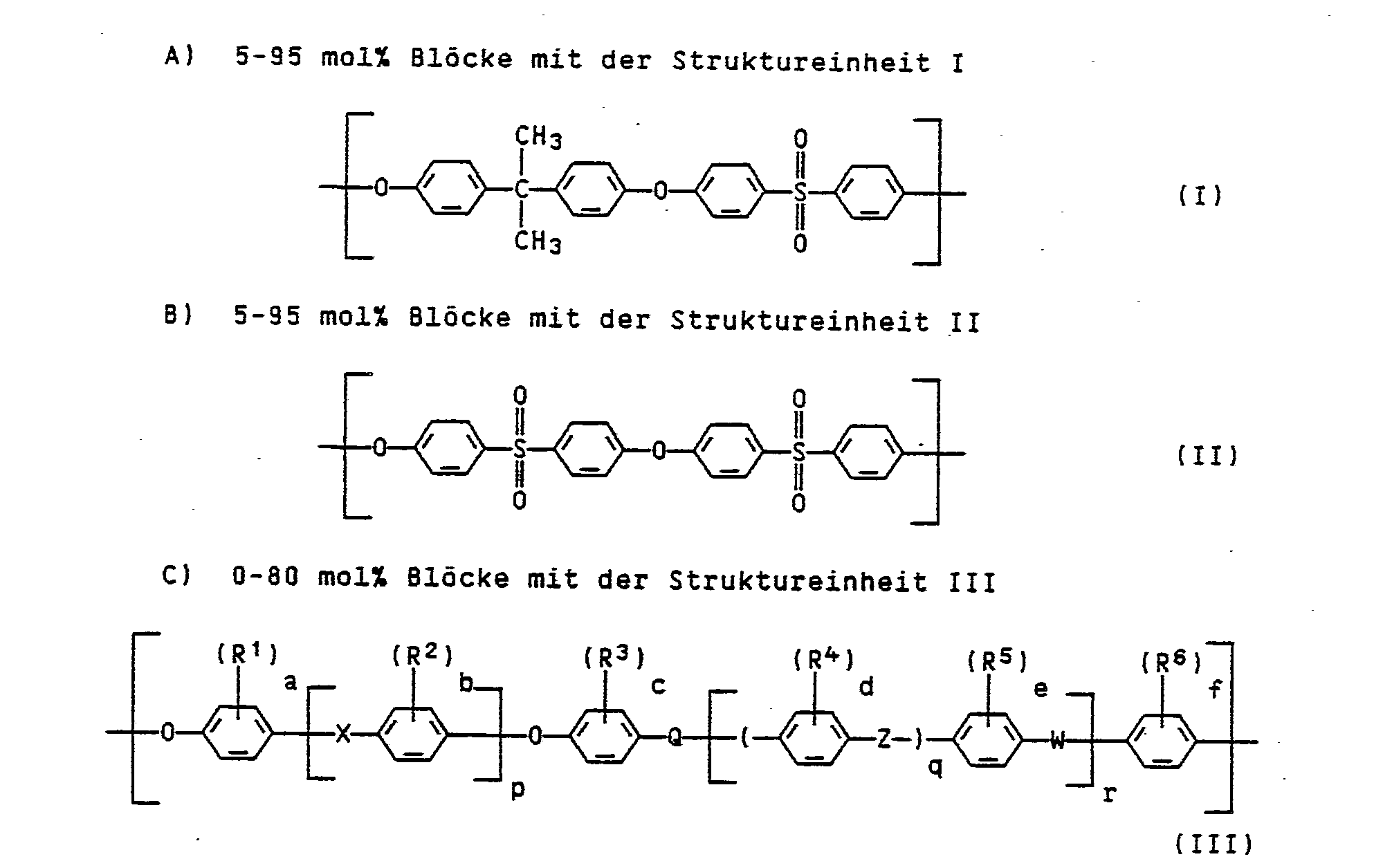
- the blocks of general structure I are derived from the condensation of bisphenol A (2,2-di- (4 ⁇ -hydroxyphenyl) propane) with 4,4 ⁇ -dichlorodiphenyl sulfone or the corresponding fluorine compound, the blocks of general structure II from the condensation of bisphenol S (4,4 ⁇ -dihydroxydiphenyl sulfone) with these dihalogen compounds.
- the blocks of structure III are derived from the condensation of dihydroxy compounds of the general formula IV and dihalogen compounds of the general formula V from where R1 - R6, a - f, X, Q, Z and W have the meanings given in claim 1 and Y1 and Y2 are Cl or F.
- R 1 and R 2 are preferably alkyl groups with 1-4 C atoms, for example methyl, ethyl, i- or n-propyl, i-, n- or t-butyl, corresponding alkoxy groups or also aryl groups.
- R7 and R8 can both only be a methyl group if at least one substituent R1 or R2 is present, ie if either a and / or b ⁇ O.
- a and b are preferably 0.1 or 2.
- p can be 0 or 1, i.e. the dihydroxy compound can contain one or two phenyl rings.
- the substituents R3, R4, R5 and R6 are preferably alkyl groups with 1-4 C atoms, for example methyl, i- or n-propyl or t-butyl or Cl or F.
- the proportion of blocks A of structure I is 5-95, preferably 20-80 and in particular 40-60 mol%, based on the total of blocks AC.
- the proportion of blocks C of structure III is 0-80, preferably 0-60 and in particular 5-50 mol%. A content of 10-40 mol% is very particularly preferred.
- the molecular weight of blocks A, B and C is in the range from 2,000 to 20,000, in particular from 2,000 to 15,000, particularly preferably in the range from 4,000 to 12,000.
- the total molecular weight of the block copolycondensates is in the range from 15,000 to 200,000, preferably from 15,000 to 100,000 and in particular in the range from 20,000 to 50,000.
- copolycondensates can be mixed with other thermoplastics, for example polyesters, polyamides, polyurethanes, polyolefins, polyvinyl chloride and polyoxymethylenes in amounts of 5 to 60% by weight, preferably 20 to 50% by weight, based on the molding compositions.
- thermoplastics for example polyesters, polyamides, polyurethanes, polyolefins, polyvinyl chloride and polyoxymethylenes in amounts of 5 to 60% by weight, preferably 20 to 50% by weight, based on the molding compositions.
- the glass fibers for example in the form of glass fabrics, mats, nonwovens and / or preferably glass silk rovings or cut glass silk made of low-alkali E-glasses with a diameter of 5 to 20 ⁇ m, preferably 8 to 15 ⁇ m, are used, which after incorporation have an average length of 0.05 to 1 mm, preferably 0.1 to 0.5 mm.
- the molding compositions reinforced with glass silk rovings or cut glass silk contain between 10 and 60% by weight, preferably 20 to 50% by weight, of the reinforcing agent, based on the total weight, while the impregnated glass fabrics, mats and / or nonwovens between 10 and Contain 80 wt .-%, preferably between 30 and 60 wt .-%, copolycondensates, based on the total weight.
- suitable pigments are titanium dioxide, cadmium, zinc sulfide, barium sulfate and carbon black.
- additives and auxiliaries are, for example, dyes, lubricants, such as graphite or molybdenum disulfide, abrasives, such as carborundum, light stabilizers and hydrolysis stabilizers. Wollastonite, calcium carbonate, glass balls, quartz powder, S and boron nitride or mixtures of these dyes can also be used.
- the pigments, additives and auxiliaries are Usually used in amounts of 0.01 to 3 wt .-%, based on the weight of copolycondensate.
- the molding compositions according to the invention can be prepared by processes known per se for producing block copolymers, as are described in the literature.
- blocks A, B and C can be produced separately and then linked to one another, or the block copolycondensates can be synthesized in one go by appropriate, separate addition of the dihydroxy compounds.
- reaction in aprotic polar solvents in the presence of anhydrous alkali carbonates as catalysts is particularly suitable.
- a particularly preferred combination is N-methylpyrrolidone as a solvent and K2CO3 as a catalyst.
- free phenolate end groups can be stabilized with an aryl or alkylating agent, e.g. Methyl chloride to be implemented. This is preferably done at temperatures of 50-200 ° C, preferably 50-150 ° C.
- an aryl or alkylating agent e.g. Methyl chloride
- the resulting suspended alkali halide in the polycondensation with K2CO3 as a catalyst can be separated off with a suitable separation device, for example a clarifying filter or a centrifuge.
- copolycondensates can be isolated from the solution by evaporation of the solvent or precipitation in a suitable non-solvent.
- the molding compositions according to the invention are distinguished by their balanced properties. With high heat resistance and good stress crack resistance, they are characterized by a low water absorption and are very easy to process.
- the molding compositions according to the invention can be used for the production of moldings, films and fibers. In particular, because of their good properties, they are suitable for the production of printed circuit boards and electrical plug connections.
- a mixture of dichlorodiphenyl sulfone, bisphenol A (in the amounts given in the table) and potassium carbonate (the latter in a 10% molar excess, based on the sum of the monomers in stage I) were in twice the amount by weight of a mixture of N-methylpyrrolidone and chlorobenzene (3: 1 weight ratio) heated to 170 ° C. while stirring and introducing nitrogen. The water of reaction formed was removed for 4 hours using a water separator. The condensation was then continued at 190 ° C. for 4 h.
- the polymers were isolated by precipitation with water, washed several times with water to remove inorganic constituents and dried in vacuo at 80.degree.
Landscapes
- Chemical & Material Sciences (AREA)
- Health & Medical Sciences (AREA)
- Chemical Kinetics & Catalysis (AREA)
- Medicinal Chemistry (AREA)
- Polymers & Plastics (AREA)
- Organic Chemistry (AREA)
- Compositions Of Macromolecular Compounds (AREA)
- Polymers With Sulfur, Phosphorus Or Metals In The Main Chain (AREA)
Abstract
Hochtemperaturbeständige Formmassen, enthaltend
X -0-, -S-,
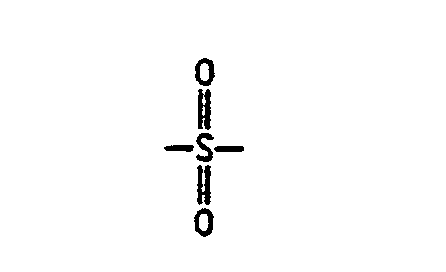

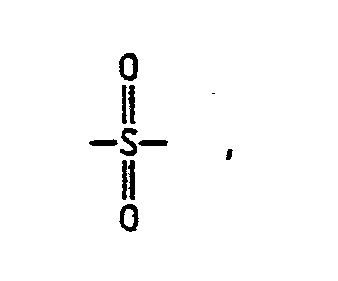
R⁷ und R⁸ Alkoxy- oder Alkylgruppen mit 1-6 C-Atomen, Arylgruppen oder Wasserstoffatome,
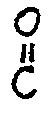
Q, W -
R¹, R², R³, R⁴, R⁵ und R⁶ Alkyl- oder Alkoxygruppen mit 1-6 C-Atomen, Arylgruppen, Cl oder F darstellen und
p, q, r den Wert 0 oder 1 und
a, b, c, d und e den Wert 0, 1, 2, 3 oder 4 haben. Containing high temperature resistant molding compounds
X -0-, -S-,
R⁷ and R⁸ alkoxy or alkyl groups with 1-6 C atoms, aryl groups or hydrogen atoms,
Q, W -
R¹, R², R³, R⁴, R⁵ and R⁶ represent alkyl or alkoxy groups with 1-6 C atoms, aryl groups, Cl or F and
p, q, r the value 0 or 1 and
a, b, c, d and e have the value 0, 1, 2, 3 or 4.
Description
Die Erfindung betrifft hochtemperaturbeständige Formmassen, enthaltend
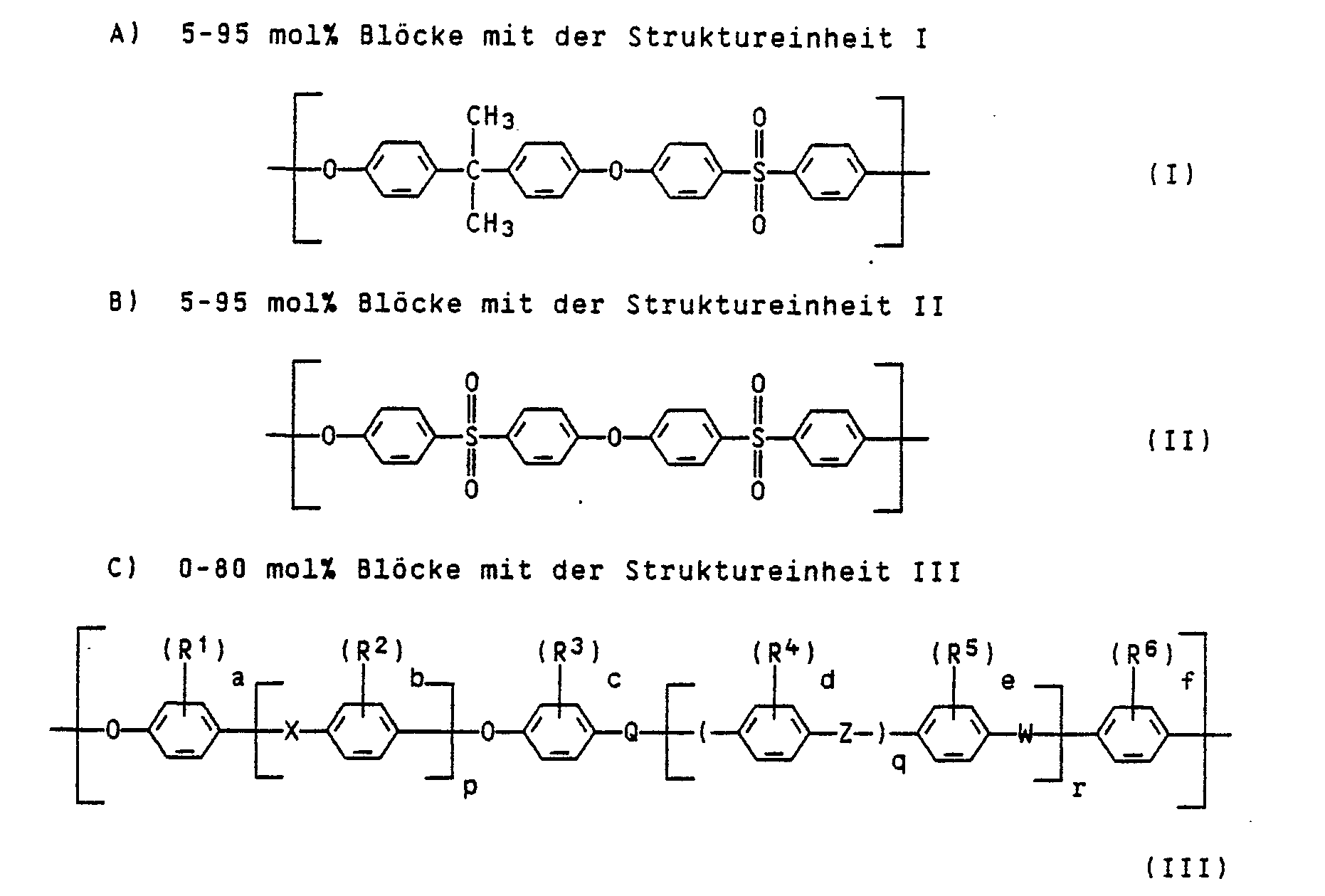
X -0-, -S-,


R⁷ und R⁸ Alkoxy- oder Alkylgruppen mit 1-6 C-Atomen, Arylgruppen oder Wasserstoffatome,
Q, W -

R¹, R², R³, R⁴, R⁵ und R⁶ Alkyl- oder Alkoxygruppen mit 1-6 C-Atomen, Arylgruppen, Cl oder F darstellen und
p, q, r den Wert 0 oder 1 und
a, b, c, d und e den Wert 0, 1, 2, 3 oder 4 haben.The invention relates to high-temperature resistant molding compositions containing
X -0-, -S-,
R⁷ and R⁸ alkoxy or alkyl groups with 1-6 C atoms, aryl groups or hydrogen atoms,
Q, W -
R¹, R², R³, R⁴, R⁵ and R⁶ represent alkyl or alkoxy groups with 1-6 C atoms, aryl groups, Cl or F and
p, q, r the value 0 or 1 and
a, b, c, d and e have the value 0, 1, 2, 3 or 4.
Außerdem betrifft die Erfindung die Verwendung der erfindungsgemäßen Formmassen zur Herstellung von Leiterplatten und elektrischen Steckverbindungen.The invention also relates to the use of the molding compositions according to the invention for the production of printed circuit boards and electrical plug connections.
Polyethersulfone mit der allgemeinen Struktureinheit (häufig, wie auch im folgenden, einfach als Polysulfone bezeichnet)

Polyethersulfone mit der allgemeinen Struktureinheit

Mischungen aus Polysulfonen und Polyethersulfonen zeigen einen linearen Zusammenhang zwischen Mischungsverhältnis und Wasseraufnahme, jedoch wird die Wärmeformbeständigkeit durch den Polysulfon-Anteil negativ beeinflußt. Zudem sind Formteile aus derartigen Mischungen infolge der Unverträglichkeit der beiden Komponenten nicht mehr transparent, was einen wesentlichen Nachteil darstellt.Mixtures of polysulfones and polyether sulfones show a linear relationship between the mixing ratio and water absorption, but the heat resistance is negatively influenced by the polysulfone content. In addition, molded parts made from such mixtures are no longer transparent due to the incompatibility of the two components, which is a major disadvantage.
In der US-A 4 175 175 und der EP-A 113 112 sowie der EP-A 195 130 werden statistische Copolykondensate beschrieben, die durch Polykondensation von Mischungen aus 2,2-Di(4-hydroxyphenyl)propan (Bisphenol A) und 4,4ʹ-Di hydroxydiphenylsulfon (Bisphenol S) mit 4,4ʹ-Dichlordiphenylsulfon (DCDPS) erhätlich sind.Statistical copolycondensates are described in US Pat. No. 4,175,175 and EP-A 113 112 and EP-A 195 130, which are obtained by polycondensation of mixtures of 2,2-di (4-hydroxyphenyl) propane (bisphenol A) and 4 , 4ʹ-Di hydroxydiphenyl sulfone (bisphenol S) with 4,4ʹ-dichlorodiphenyl sulfone (DCDPS) are available.
Der Erfindung lag die Aufgabe zugrunde, hochtemperaturbeständige Copolykondensate mit einem ausgewogenen Eigenschaftsspektrum, d.h. einer ausreichenden Wärmeformbeständigkeit bei geringer Wasseraufnahme und hoher Spannungsrißbeständigkeit zur Verfügung zu stellen, die sich insbesondere zur Herstellung von Leiterplatten (printed circuit boards) und elektrischen Steckverbindungen eignen.The object of the invention was to provide high-temperature-resistant copolycondensates with a balanced range of properties, i.e. to provide sufficient heat resistance with low water absorption and high stress crack resistance, which are particularly suitable for the production of printed circuit boards and electrical connectors.
Diese Aufgabe wird erfindungsgemäß gelöst durch hochtemperaturbeständige Formmassen gemäß Anspruch 1.According to the invention, this object is achieved by means of molding compositions which are resistant to high temperatures.
Bevorzugte Copolykondensate dieser Art sind den Unteransprüchen und der nachfolgenden detaillierten Beschreibung zu entnehmen.Preferred copolycondensates of this type can be found in the subclaims and the detailed description below.
Die Blöcke der allgemeinen Struktur I leiten sich von der Kondensation von Bisphenol A (2,2-Di-(4ʹ-hydroxyphenyl)propan) mit 4,4ʹ-Dichlordiphenylsulfon bzw. der entsprechenden Fluorverbindung ab, die Blöcke der allgemeinen Struktur II von der Kondensation von Bisphenol S (4,4ʹ-Dihydroxydiphenylsulfon) mit diesen Dihalogenverbindungen.The blocks of general structure I are derived from the condensation of bisphenol A (2,2-di- (4ʹ-hydroxyphenyl) propane) with 4,4ʹ-dichlorodiphenyl sulfone or the corresponding fluorine compound, the blocks of general structure II from the condensation of bisphenol S (4,4ʹ-dihydroxydiphenyl sulfone) with these dihalogen compounds.
Die Blöcke der Struktur III leiten sich von der Kondensation von Dihydroxyverbindungen der allgemeinen Formel IV

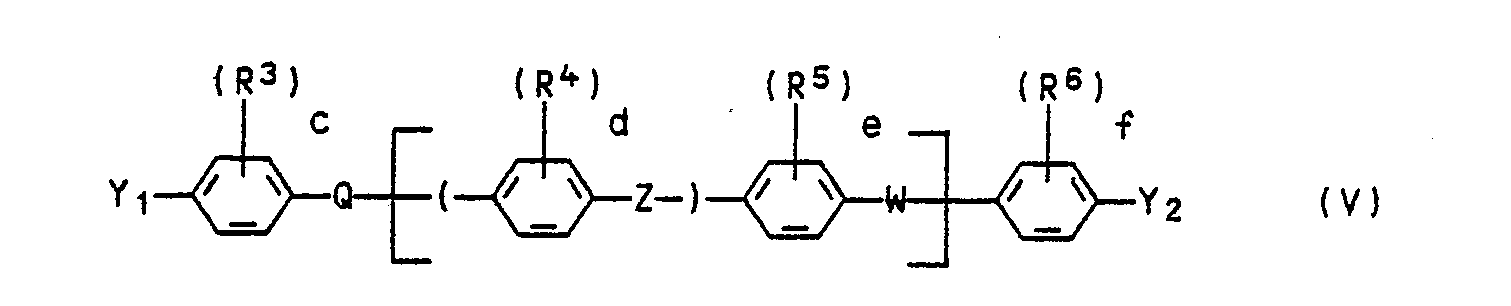
Vorzugsweise sind R¹ und R² Alkylgruppen mit 1-4 C-Atomen, z.B. Methyl-, Ethyl-, i- oder n-Propyl, i-, n- oder t-Butyl, entsprechende Alkoxygruppen oder auch Arylgruppen.R 1 and R 2 are preferably alkyl groups with 1-4 C atoms, for example methyl, ethyl, i- or n-propyl, i-, n- or t-butyl, corresponding alkoxy groups or also aryl groups.
Zu beachten ist, daß für den Fall, daß

p kann 0 oder 1 sein, d.h. die Dihydroxyverbindung kann einen oder zwei Phenylringe enthalten.p can be 0 or 1, i.e. the dihydroxy compound can contain one or two phenyl rings.
Nachstehend seien stellvertretend einige bevorzugte Dihydroxyverbindungen der allgemeinen Formel IV aufgeführt.
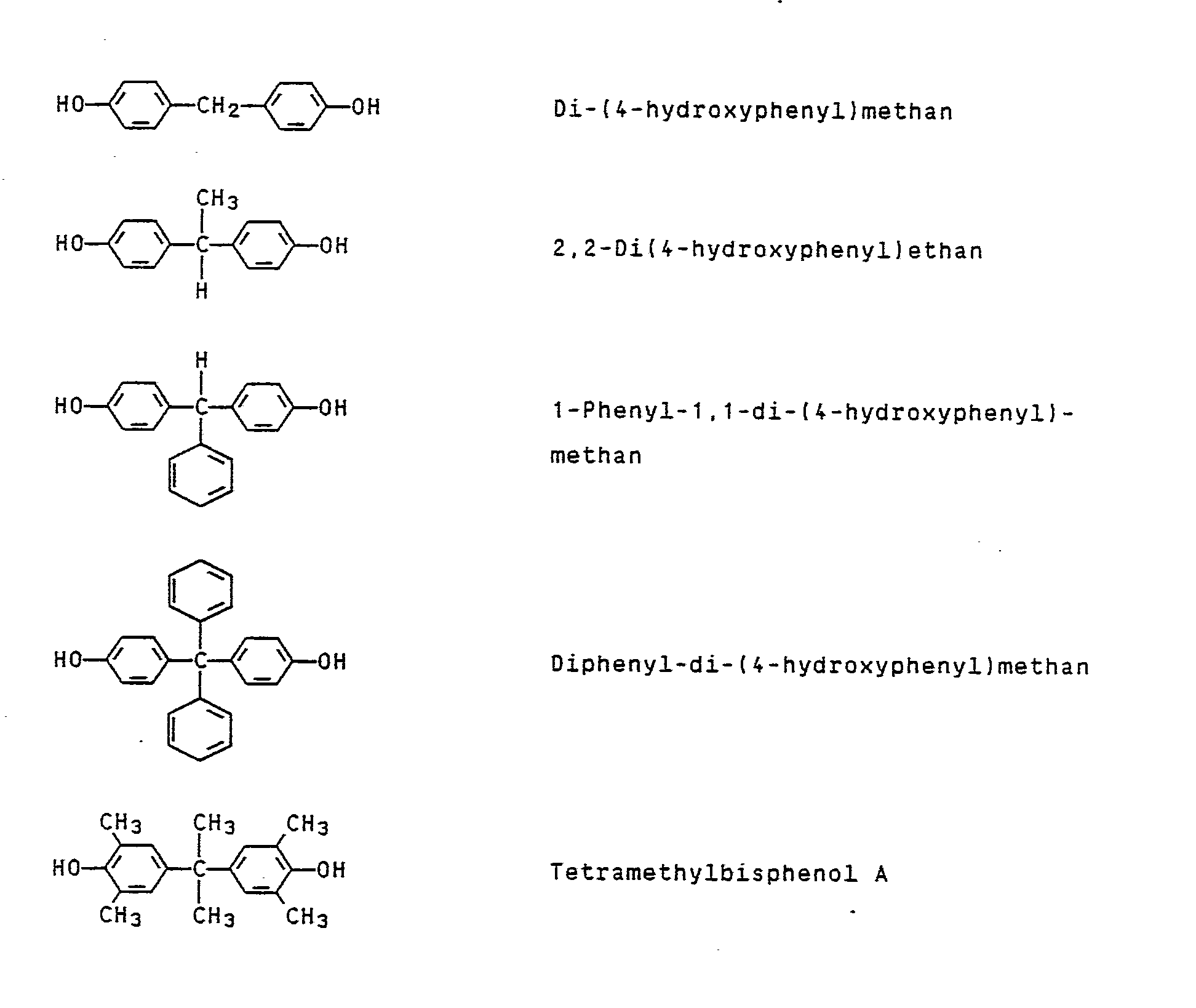

Von den vorstehend aufgeführten Dihydroxyverbindungen werden 4,4ʹ-Dihydroxydiphenyl, 3,3ʹ,5,5ʹ-Tetramethyl-4,4ʹ-dihydroxydiphenyl, Tetramethyl-Bisphenol A und 2,3,6-Trimethylhydrochinon besonders bevorzugt.Of the dihydroxy compounds listed above, 4,4ʹ-dihydroxydiphenyl, 3,3ʹ, 5,5ʹ-tetramethyl-4,4ʹ-dihydroxydiphenyl, tetramethyl-bisphenol A and 2,3,6-trimethylhydroquinone are particularly preferred.
In den Dihalogenverbindungen der vorstehend genannten allgemeinen Formel sind die Substituenten R³, R⁴, R⁵ und R⁶ vorzugsweise Alkylgruppen mit 1-4 C-Atomen, z.B. Methyl, i- oder n-Propyl oder t-Butyl oder Cl oder F.In the dihalogen compounds of the above general formula, the substituents R³, R⁴, R⁵ and R⁶ are preferably alkyl groups with 1-4 C atoms, for example methyl, i- or n-propyl or t-butyl or Cl or F.
Die folgenden Dihalogenverbindungen der allgemeinen Formel V seien stellvertretend als bevorzugte Beispiele aufgeführt.
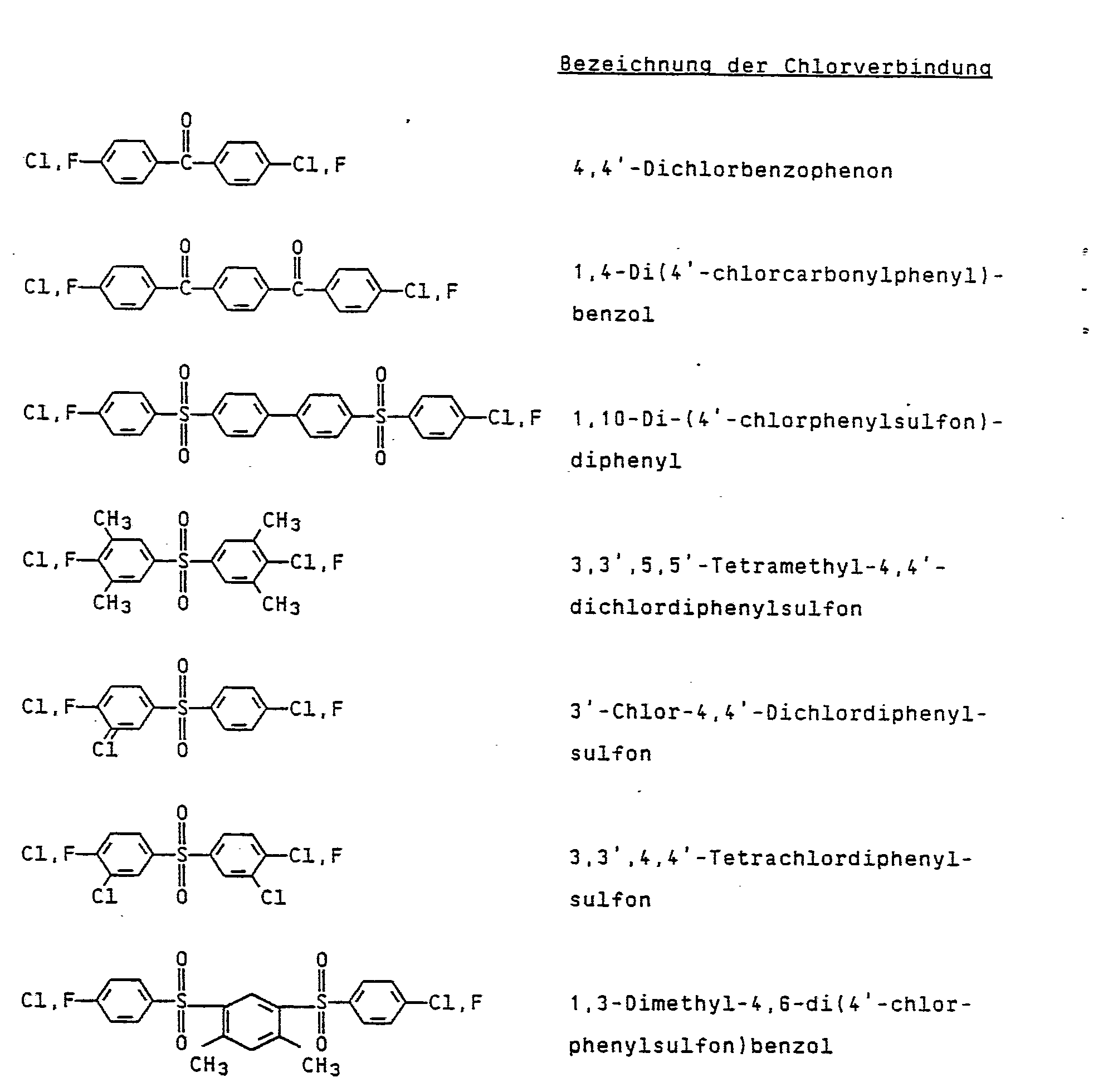
Von den vorstehend aufgeführten Dihalogenverbindungen werden 3,3ʹ,5,5ʹ-Tetramethyl-4,4ʹ-dichlordiphenylsulfon, 1,10-Di(4ʹ-Chlorphenylsulfondiphenyl und 1,3-Dimethyl-4,6-di-(4ʹ-chlorphenylsulfon)benzol besonders bevorzugt.Of the dihalogen compounds listed above, 3,3ʹ, 5,5ʹ-tetramethyl-4,4ʹ-dichlorodiphenylsulfone, 1,10-di (4ʹ-chlorophenylsulfone diphenyl and 1,3-dimethyl-4,6-di- (4ʹ-chlorophenylsulfone) benzene particularly preferred.
Der Anteil der Blöcke A der Struktur I beträgt 5-95, vorzugsweise 20-80 und insbesondere 40-60 mol%, bezogen auf die Summe der Blöcke A-C. Entsprechendes gilt für den molaren Anteil der Blöcke B der allgemeinen Struktur II.The proportion of blocks A of structure I is 5-95, preferably 20-80 and in particular 40-60 mol%, based on the total of blocks AC. The same applies to the molar fraction of blocks B of general structure II.
Der Anteil der Blöcke C der Struktur III beträgt 0-80, vorzugsweise 0-60 und insbesondere 5-50 mol%. Ein Gehalt von 10-40 mol% ist ganz besonders bevorzugt.The proportion of blocks C of structure III is 0-80, preferably 0-60 and in particular 5-50 mol%. A content of 10-40 mol% is very particularly preferred.
Das Molekulargewicht der Blöcke A, B und C liegt im Bereich von 2000 - 20 000, insbesondere von 2000 - 15 000, besonders bevorzugt im Bereich von 4000 - 12 000.The molecular weight of blocks A, B and C is in the range from 2,000 to 20,000, in particular from 2,000 to 15,000, particularly preferably in the range from 4,000 to 12,000.
Das Gesamtmolekulargewicht der Blockcopolykondensate liegt im Bereich von 15 000 - 200 000, vorzugsweise von 15 000 - 100 000 und insbesondere im Bereich von 20 000 - 50 000.The total molecular weight of the block copolycondensates is in the range from 15,000 to 200,000, preferably from 15,000 to 100,000 and in particular in the range from 20,000 to 50,000.
Alle vorstehend genannten Molekulargewichtswerte sind Gewichtsmittelwerte, wie sie z.B. in E. Vollmert, Grundriß der Makromolekularen Chemie, Bd. 3, S. 122 ff (1979) definiert sind.All of the above-mentioned molecular weight values are weight average values, as are e.g. in E. Vollmert, Grundriß der Makromolekularen Chemie, Vol. 3, pp. 122 ff (1979).
Die Copolykondensate können mit anderen Thermoplasten, beispielsweise Polyestern, Polyamiden, Polyurethanen, Polyolefinen, Polyvinylchlorid und Polyoxymethylenen in Mengen von 5 bis 60 Gew.-%, vorzugsweise von 20 bis 50 Gew.-%, bezogen auf die Formmassen, gemischt werden.The copolycondensates can be mixed with other thermoplastics, for example polyesters, polyamides, polyurethanes, polyolefins, polyvinyl chloride and polyoxymethylenes in amounts of 5 to 60% by weight, preferably 20 to 50% by weight, based on the molding compositions.
Sie können außerdem mit verstärkend wirkenden Füllstoffen, gegebenenfalls transparenten Pigmenten und anderen Hilfs- und Zusatzstoffen modifiziert werden.They can also be modified with reinforcing fillers, optionally transparent pigments and other auxiliaries and additives.
Als verstärkend wirkende Füllstoffe seien beispielsweise Asbest, Kohle und vorzugsweise Glasfasern genannt, wobei die Glasfasern z.B. in Form von Glasgeweben, -matten, -vliesen und/oder vorzugsweise Glasseidenrovings oder geschnittener Glasseide aus alkaliarmen E-Glasen mit einem Durchmesser von 5 bis 20 µm, vorzugsweise 8 bis 15 µm, zur Anwendung gelangen, die nach ihrer Einarbeitung eine mittlere Länge von 0,05 bis 1 mm, vorzugsweise 0,1 bis 0,5 mm, aufweisen. Die mit Glasseidenrovings oder geschnittener Glasseide verstärkten Formmassen enthalten zwischen 10 und 60 Gew.-%, vorzugsweise 20 bis 50 Gew.-%, des Verstärkungsmittels, bezogen auf das Gesamtgewicht, während die imprägnierten Glasgewebe, -matten und/oder -vliese zwischen 10 und 80 Gew.-%, vorzugsweise zwischen 30 und 60 Gew.-%, Copolykondensate, bezogen auf das Gesamtgewicht, enthalten. Als Pigmente eignen sich beispielsweise Titandioxid, Cadmium-, Zinksulfid, Bariumsulfat und Ruß. Als andere Zusatz- und Hilfsstoffe kommen beispielsweise in Betracht Farbstoffe, Schmiermittel, wie z.B. Graphit oder Molybdändisulfid, Schleifmittel, wie z.B. Carborund, Lichtstabilisatoren und Hydrolyseschutzmittel. Auch Wollastonit, Calciumcarbonat, Glaskugeln, Quarzmehl, S und Bornitrid oder Mischungen dieser Farbstoffe sind verwendbar. Die Pigmente, Zusatz- und Hilfsstoffe werden üblicherweise in Mengen von 0,01 bis 3 Gew.-%, bezogen auf das Gewicht an Copolykondensat, eingesetzt.As reinforcing fillers, for example, asbestos, coal and preferably glass fibers may be mentioned, the glass fibers, for example in the form of glass fabrics, mats, nonwovens and / or preferably glass silk rovings or cut glass silk made of low-alkali E-glasses with a diameter of 5 to 20 μm, preferably 8 to 15 μm, are used, which after incorporation have an average length of 0.05 to 1 mm, preferably 0.1 to 0.5 mm. The molding compositions reinforced with glass silk rovings or cut glass silk contain between 10 and 60% by weight, preferably 20 to 50% by weight, of the reinforcing agent, based on the total weight, while the impregnated glass fabrics, mats and / or nonwovens between 10 and Contain 80 wt .-%, preferably between 30 and 60 wt .-%, copolycondensates, based on the total weight. Examples of suitable pigments are titanium dioxide, cadmium, zinc sulfide, barium sulfate and carbon black. Other additives and auxiliaries are, for example, dyes, lubricants, such as graphite or molybdenum disulfide, abrasives, such as carborundum, light stabilizers and hydrolysis stabilizers. Wollastonite, calcium carbonate, glass balls, quartz powder, S and boron nitride or mixtures of these dyes can also be used. The pigments, additives and auxiliaries are Usually used in amounts of 0.01 to 3 wt .-%, based on the weight of copolycondensate.
Die erfindungsgemäßen Formmassen können nach an sich bekannten Verfahren zur Herstellung von Blockcopolymeren hergestellt werden, wie sie in der Literatur beschrieben sind. Grundsätzlich können die Blöcke A, B und C getrennt hergestellt und anschließend miteinander verknüpft werden oder aber die Blockcopolykondensate werden durch entsprechende aufeinanderfolgende getrennte Zugabe der Dihydroxyverbindungen in einem Zuge synthetisiert.The molding compositions according to the invention can be prepared by processes known per se for producing block copolymers, as are described in the literature. In principle, blocks A, B and C can be produced separately and then linked to one another, or the block copolycondensates can be synthesized in one go by appropriate, separate addition of the dihydroxy compounds.
Die Verfahrensbedingungen wie Temperatur, Druck, geeignete Lösungsmittel und evtl. Zusätze (Katalysatoren) sind die gleichen, wie sie für statistische Copolykondensate in der EP-A 113 112 und der EP-A 135 130 beschrieben sind, so daß sich hier nähere Angaben erübrigen.The process conditions such as temperature, pressure, suitable solvents and any additives (catalysts) are the same as those described for statistical copolycondensates in EP-A 113 112 and EP-A 135 130, so that further details are unnecessary here.
Besonders geeignet ist die Umsetzung in aprotischen polaren Lösungsmitteln in Gegenwart von wasserfreien Alkalicarbonaten als Katalysatoren. Eine besonders bevorzugte Kombination ist N-Methylpyrrolidon als Lösungsmittel und K₂CO₃ als Katalysator.The reaction in aprotic polar solvents in the presence of anhydrous alkali carbonates as catalysts is particularly suitable. A particularly preferred combination is N-methylpyrrolidone as a solvent and K₂CO₃ as a catalyst.
Im Anschluß an die Polykondensation können zur Stabilisierung freie Phenolat-Endgruppen mit einem Aryl- oder Alkylierungsmittel, wie z.B. Methylchlorid, umgesetzt werden. Dies erfolgt vorzugsweise bei Temperaturen von 50-200°C, vorzugsweise 50-150°C.Following the polycondensation, free phenolate end groups can be stabilized with an aryl or alkylating agent, e.g. Methyl chloride to be implemented. This is preferably done at temperatures of 50-200 ° C, preferably 50-150 ° C.
Das bei der Polykondensation mit K₂CO₃ als Katalysator anfallende suspendierte Alkalihalogenid kann mit einer geeigneten Trenneinrichtung, beispielsweise einem Klärfilter oder einer Zentrifuge abgetrennt werden.The resulting suspended alkali halide in the polycondensation with K₂CO₃ as a catalyst can be separated off with a suitable separation device, for example a clarifying filter or a centrifuge.
Die Isolierung der Copolykondensate aus der Lösung kann durch Verdampfen des Lösungsmittels oder Ausfällung in einem geeigneten Nichtlösungsmittel erfolgen.The copolycondensates can be isolated from the solution by evaporation of the solvent or precipitation in a suitable non-solvent.
Die erfindungsgemäßen Formmassen zeichnen sich durch ihre ausgewogenen Eigenschaften aus. Bei einer hohen Wärmeformbeständigkeit und einer guten Spannungsrißbeständigkeit zeichnen sie sich durch eine geringe Wasseraufnahme aus und sind sehr gut verarbeitbar.The molding compositions according to the invention are distinguished by their balanced properties. With high heat resistance and good stress crack resistance, they are characterized by a low water absorption and are very easy to process.
Die erfindungsgemäßen Formmassen können zur Herstellung von Formkörpern, Folien und Fasern verwendet werden. Insbesondere eignen sie sich wegen ihrer guten Eigenschaften zur Herstellung von Leiterplatten und elektrischen Steckverbindungen.The molding compositions according to the invention can be used for the production of moldings, films and fibers. In particular, because of their good properties, they are suitable for the production of printed circuit boards and electrical plug connections.
Eine Mischung aus Dichlordiphenylsulfon, Bisphenol A (in den in der Tabelle angegebenen Mengen) und Kaliumcarbonat (letzteres in 10%igem molaren Überschuß, bezogen auf die Summe der Monomeren in Stufe I) wurden in der doppelten Gewichtsmenge einer Mischung aus N-Methylpyrrolidon und Chlorbenzol (Gewichtsverhältnis 3:1) unter Rühren und Einleiten von Stickstoff auf 170°C erhitzt. Das entstandene Reaktionswasser wurde 4 h lang mit Hilfe eines Wasserabscheiders entfernt. Anschließend wurde 4 h bei 190°C weiter kondensiert.A mixture of dichlorodiphenyl sulfone, bisphenol A (in the amounts given in the table) and potassium carbonate (the latter in a 10% molar excess, based on the sum of the monomers in stage I) were in twice the amount by weight of a mixture of N-methylpyrrolidone and chlorobenzene (3: 1 weight ratio) heated to 170 ° C. while stirring and introducing nitrogen. The water of reaction formed was removed for 4 hours using a water separator. The condensation was then continued at 190 ° C. for 4 h.
Nach Zugabe der in der Tabelle angegebenen Monomeren für die Stufe II, Kaliumcarbonat (wiederum in 10%igem molaren Überschuß, bezogen auf die Summe der Monomeren der Stufe II) und der 1,5-fachen Gewichtsmenge (bezogen auf die Summe der Monomeren der Stufe II) N-Methylpyrrolidon wurde das Reaktionsgemisch 2 h auf 170°C erhitzt und anschließend die Reaktion bei 190°C 6 h fortgesetzt. Durch 30-minütiges Einleiten von Methylchlorid wurde die Polykondensation abgebrochen.After adding the monomers specified in the table for stage II, potassium carbonate (again in a 10% molar excess, based on the sum of the monomers of stage II) and 1.5 times the amount by weight (based on the sum of the monomers of the stage II) N-methylpyrrolidone, the reaction mixture was heated at 170 ° C. for 2 hours and then the reaction was continued at 190 ° C. for 6 hours. The polycondensation was terminated by introducing methyl chloride for 30 minutes.
Durch Fällung mit Wasser wurden die Polymeren isoliert, zur Entfernung von anorganischen Bestandteilen mehrmals mit Wasser gewaschen und im Vakuum bei 80°C getrocknet.The polymers were isolated by precipitation with water, washed several times with water to remove inorganic constituents and dried in vacuo at 80.degree.
Die Ergebnisse der Messungen der maximalen Dauergebrauchstemperatur (Wärmeformbeständigkeit Tg) und der Wasseraufnahme nach 180 Tagen sind der Tabelle zu entnehmen, in der weiterhin folgende Abkürzungen verwendet werden:
DCDPS = 4,4ʹ-Dichlordiphenylsulfon
Bis A = 2,2-Di(4ʹ-hydroxyphenyl)propan (Bisphenol A)
DHDPS = 4,4ʹ-Dihydroxydiphenylsulfon
MPSU = Molekulargewicht der Polysulfon-Blöcke (Gewichtsmittelwert)
Tg = maximale Dauergebrauchstemperatur in °C

DCDPS = 4,4ʹ-dichlorodiphenyl sulfone
Up to A = 2,2-di (4ʹ-hydroxyphenyl) propane (bisphenol A)
DHDPS = 4,4ʹ-dihydroxydiphenyl sulfone
M PSU = molecular weight of the polysulfone blocks (weight average)
Tg = maximum continuous use temperature in ° C
Claims (5)

X -0-, -S-,


R⁷ und R⁸ Alkoxy- oder Alkylgruppen mit 1-6 C-Atomen, Arylgruppen oder Wasserstoffatome,
Q, W -


R¹, R², R³, R⁴, R⁵ und R⁶ Alkyl- oder Alkoxygruppen mit 1-6 C-Atomen, Arylgruppen, Cl oder F darstellen und
p, q, r den Wert 0 oder 1 und
a, b, c, d und e den Wert 0, 1, 2, 3 oder 4 haben.1. High-temperature resistant molding compositions containing
X -0-, -S-,
R⁷ and R⁸ alkoxy or alkyl groups with 1-6 C atoms, aryl groups or hydrogen atoms,
Q, W -
R¹, R², R³, R⁴, R⁵ and R⁶ represent alkyl or alkoxy groups with 1-6 C atoms, aryl groups, Cl or F and
p, q, r the value 0 or 1 and
a, b, c, d and e have the value 0, 1, 2, 3 or 4.
Applications Claiming Priority (2)
| Application Number | Priority Date | Filing Date | Title |
|---|---|---|---|
| DE3614594 | 1986-04-30 | ||
| DE19863614594 DE3614594A1 (en) | 1986-04-30 | 1986-04-30 | HIGH TEMPERATURE RESISTANT MOLDS |
Publications (2)
| Publication Number | Publication Date |
|---|---|
| EP0243831A2 true EP0243831A2 (en) | 1987-11-04 |
| EP0243831A3 EP0243831A3 (en) | 1989-07-26 |
Family
ID=6299840
Family Applications (1)
| Application Number | Title | Priority Date | Filing Date |
|---|---|---|---|
| EP87105758A Withdrawn EP0243831A3 (en) | 1986-04-30 | 1987-04-18 | High-temperature-resistant moulding composition |
Country Status (4)
| Country | Link |
|---|---|
| US (1) | US4762869A (en) |
| EP (1) | EP0243831A3 (en) |
| JP (1) | JPS62273228A (en) |
| DE (1) | DE3614594A1 (en) |
Cited By (5)
| Publication number | Priority date | Publication date | Assignee | Title |
|---|---|---|---|---|
| EP0294773A3 (en) * | 1987-06-12 | 1989-07-26 | BASF Aktiengesellschaft | Polyarylene ether sulfone blends |
| EP0327498A3 (en) * | 1988-02-01 | 1990-10-17 | Ciba-Geigy Ag | Polyethersulfone- or polyetherketone-copolymers |
| EP0428019A1 (en) * | 1989-11-14 | 1991-05-22 | Bayer Ag | Polyethersulfone-polyarylenesulfide block copolymers and process for making them |
| EP2440599B2 (en) † | 2009-06-08 | 2017-02-22 | Basf Se | Method for producing poly(arylene ether) block copolymers |
| EP1751214B2 (en) † | 2004-04-01 | 2019-11-27 | Solvay Specialities India Private Limited | Block copolymers |
Families Citing this family (12)
| Publication number | Priority date | Publication date | Assignee | Title |
|---|---|---|---|---|
| US4939199A (en) * | 1987-12-21 | 1990-07-03 | Amoco Corporation | Novel poly(aryl ethers) useful for molding into a circuit board substrate |
| JP2875550B2 (en) * | 1989-07-07 | 1999-03-31 | ダイセル化学工業株式会社 | Method for producing aromatic polysulfone copolymer |
| CA2083983A1 (en) * | 1992-01-27 | 1993-07-28 | Kishor P. Gadkaree | Low expansion composition for packaging optical waveguide couplers |
| US5399598A (en) * | 1994-03-03 | 1995-03-21 | Alphaflex Industries | Asphalt composition |
| DE60200877T2 (en) * | 2001-11-22 | 2005-08-11 | Tosoh Corp., Shinnanyo | Polyarylene ether sulfones containing sulfoalkoxy groups, process for their preparation and their use in polymer electrolyte membranes |
| WO2004058696A1 (en) * | 2002-12-26 | 2004-07-15 | Ube Industries, Ltd. | Bisphenol compound and aromatic polyaryl ether |
| US7312282B2 (en) * | 2004-04-01 | 2007-12-25 | Prakash Druman Trivedi | Process of preparation of block copolymers and the block copolymers prepared therefrom |
| EP1802695B1 (en) * | 2004-10-04 | 2013-05-01 | Solvay Specialty Polymers USA, LLC. | Poly(aryletherdisulfone) composition and shaped article made thereof |
| US20080058480A1 (en) * | 2004-10-04 | 2008-03-06 | Solvay Advanced Polymers | Sulfone Polymer Composition |
| EP1802704B1 (en) * | 2004-10-04 | 2014-11-12 | Solvay Specialty Polymers USA, LLC. | High performance membranes, methods of making, and uses thereof |
| WO2006037757A1 (en) * | 2004-10-04 | 2006-04-13 | Solvay Advanced Polymers, L.L.C. | Overmolded plastic articles, uses thereof, method of making |
| EP1526158A1 (en) * | 2004-12-22 | 2005-04-27 | Solvay Advanced Polymers, L.L.C. | Electronic components |
Family Cites Families (4)
| Publication number | Priority date | Publication date | Assignee | Title |
|---|---|---|---|---|
| US4020046A (en) * | 1970-06-19 | 1977-04-26 | Imperial Chemical Industries Limited | Aromatic polysulphone coated article and bonded structure |
| CA1246295A (en) * | 1982-12-23 | 1988-12-06 | Robert A. Clendinning | Aromatic amorphous thermoplastic terpolymers |
| US4654410A (en) * | 1985-01-22 | 1987-03-31 | Asahi Glass Company, Ltd. | Aromatic polysulfone ether/polythioether sulfone copolymer and process for its preparation |
| JPS62339A (en) * | 1985-06-24 | 1987-01-06 | 住友化学工業株式会社 | Denture floor made of thermoplastic resin |
-
1986
- 1986-04-30 DE DE19863614594 patent/DE3614594A1/en not_active Withdrawn
-
1987
- 1987-04-16 US US07/038,896 patent/US4762869A/en not_active Expired - Fee Related
- 1987-04-18 EP EP87105758A patent/EP0243831A3/en not_active Withdrawn
- 1987-04-22 JP JP62097669A patent/JPS62273228A/en active Pending
Cited By (5)
| Publication number | Priority date | Publication date | Assignee | Title |
|---|---|---|---|---|
| EP0294773A3 (en) * | 1987-06-12 | 1989-07-26 | BASF Aktiengesellschaft | Polyarylene ether sulfone blends |
| EP0327498A3 (en) * | 1988-02-01 | 1990-10-17 | Ciba-Geigy Ag | Polyethersulfone- or polyetherketone-copolymers |
| EP0428019A1 (en) * | 1989-11-14 | 1991-05-22 | Bayer Ag | Polyethersulfone-polyarylenesulfide block copolymers and process for making them |
| EP1751214B2 (en) † | 2004-04-01 | 2019-11-27 | Solvay Specialities India Private Limited | Block copolymers |
| EP2440599B2 (en) † | 2009-06-08 | 2017-02-22 | Basf Se | Method for producing poly(arylene ether) block copolymers |
Also Published As
| Publication number | Publication date |
|---|---|
| JPS62273228A (en) | 1987-11-27 |
| DE3614594A1 (en) | 1988-01-07 |
| US4762869A (en) | 1988-08-09 |
| EP0243831A3 (en) | 1989-07-26 |
Similar Documents
| Publication | Publication Date | Title |
|---|---|---|
| DE3614594A1 (en) | HIGH TEMPERATURE RESISTANT MOLDS | |
| DE3382700T2 (en) | Use of an amorphous aromatic thermoplastic polymer. | |
| DE3785421T2 (en) | Resin based on a polyphenylene sulfide-polyphenylene sulfone block copolymer, process for producing the copolymer and molded article. | |
| EP0388358B1 (en) | Polyarylene ether | |
| EP0297363A2 (en) | High temperature resistant thermoplastic moulding masses with improved melt stability | |
| EP0332012B1 (en) | High temperature resistant polyarylethersulfone-/polyaryleneetherketone moulding compounds with improved phase cohesion | |
| EP0000732B1 (en) | Blends of reticulated polyarylsulfones and polycarbonates and their application during the manufacture of extruded films | |
| DE3614753A1 (en) | HIGH TEMPERATURE RESISTANT COPOLY CONDENSATE MOLDS | |
| EP0301409A2 (en) | Thermoplastic polyarylenethers with 9,9-bis-(4'-hydroxyphenyl)fluoren units | |
| DE2612312A1 (en) | MOLDING COMPOUNDS FROM MIXTURES OF HALOGENIC AND HALOGEN-FREE, POLYFUNCTIONAL, AROMATIC CYANIC ACID ESTERS | |
| DE3804159A1 (en) | POLYARYLETHERKETONE WITH IMPROVED PROCESSABILITY | |
| EP0234223A2 (en) | Method for the preparation of aromatic block copolyethers | |
| EP3433300B1 (en) | Desalination of polyaryl ethers by means of melt extraction | |
| EP0120296B1 (en) | Poly(aryl ether-arylsulfone) transparent moulding compounds with low inflammability, process for their manufacture, and their use | |
| EP0265842A2 (en) | High-temperature resistant polyether sulphone polyether ketone block copolycondensates | |
| DE4237768A1 (en) | New polyarylene ether derivs. with reduced viscosity - used to prepare moulded bodies, foils, fibres and membranes, as matrix resins, adhesives or coating agents or as polymer additives | |
| EP0412934B1 (en) | Modified polyarylene ether sulfones | |
| EP0161453B1 (en) | High-temperature-resistant aromatic polyethers | |
| DE3829695A1 (en) | IMPACT MODIFIED THERMOPLASTIC MOLDING MATERIALS WITH IMPROVED NOTCH AND HOLE IMPACT AND THEIR USE | |
| DE3414492A1 (en) | Polyether thioether nitriles | |
| DE3719632A1 (en) | POLYMER MIXTURES BASED ON POLYARYL ETHER SULPHONES | |
| DE3810106A1 (en) | HIGH-TEMPERATURE-RESISTANT CYANOPHENYLENE UNITS CONTAINING POLYARYLENETHERSULPHONE BLOCK COPOLY CONDENSATES CONTAINING, PROCESS FOR THEIR PRODUCTION AND THEIR USE | |
| DE3719631A1 (en) | Thermoplastic moulding compositions based on polyaryl ether sulphones | |
| DE3742445A1 (en) | HIGH TEMPERATURE RESISTANT BLOCK COPOLY CONDENSATES WITH IMPROVED THERMAL RESISTANCE | |
| DE3721337C2 (en) |
Legal Events
| Date | Code | Title | Description |
|---|---|---|---|
| PUAI | Public reference made under article 153(3) epc to a published international application that has entered the european phase |
Free format text: ORIGINAL CODE: 0009012 |
|
| AK | Designated contracting states |
Kind code of ref document: A2 Designated state(s): BE DE FR GB NL |
|
| PUAL | Search report despatched |
Free format text: ORIGINAL CODE: 0009013 |
|
| AK | Designated contracting states |
Kind code of ref document: A3 Designated state(s): BE DE FR GB NL |
|
| 17P | Request for examination filed |
Effective date: 19890613 |
|
| STAA | Information on the status of an ep patent application or granted ep patent |
Free format text: STATUS: THE APPLICATION HAS BEEN WITHDRAWN |
|
| 18W | Application withdrawn |
Withdrawal date: 19910109 |
|
| R18W | Application withdrawn (corrected) |
Effective date: 19910109 |
|
| RIN1 | Information on inventor provided before grant (corrected) |
Inventor name: HEINZ, GERHARD, DR. Inventor name: KOCH, JUERGEN, DR. Inventor name: BUCHERT, HERMANN, DR. Inventor name: ITTEMANN, PETER, DR. Inventor name: SIMON, GEORG NIKOLAUS, DR. Inventor name: ZEINER, HARTMUT, DR. |