EP0246082A1 - Einkristalline Körper aus Superlegierungen - Google Patents
Einkristalline Körper aus Superlegierungen Download PDFInfo
- Publication number
- EP0246082A1 EP0246082A1 EP87304246A EP87304246A EP0246082A1 EP 0246082 A1 EP0246082 A1 EP 0246082A1 EP 87304246 A EP87304246 A EP 87304246A EP 87304246 A EP87304246 A EP 87304246A EP 0246082 A1 EP0246082 A1 EP 0246082A1
- Authority
- EP
- European Patent Office
- Prior art keywords
- percent
- article
- single crystal
- plus
- gamma
- Prior art date
- Legal status (The legal status is an assumption and is not a legal conclusion. Google has not performed a legal analysis and makes no representation as to the accuracy of the status listed.)
- Granted
Links
- 239000000956 alloy Substances 0.000 title claims abstract description 91
- 239000013078 crystal Substances 0.000 title claims abstract description 90
- 229910000601 superalloy Inorganic materials 0.000 title claims abstract description 17
- 229910045601 alloy Inorganic materials 0.000 claims abstract description 89
- 239000000203 mixture Substances 0.000 claims abstract description 40
- 238000000034 method Methods 0.000 claims abstract description 39
- 229910052715 tantalum Inorganic materials 0.000 claims abstract description 36
- GUVRBAGPIYLISA-UHFFFAOYSA-N tantalum atom Chemical compound [Ta] GUVRBAGPIYLISA-UHFFFAOYSA-N 0.000 claims abstract description 35
- 229910052702 rhenium Inorganic materials 0.000 claims abstract description 33
- WUAPFZMCVAUBPE-UHFFFAOYSA-N rhenium atom Chemical compound [Re] WUAPFZMCVAUBPE-UHFFFAOYSA-N 0.000 claims abstract description 33
- PXHVJJICTQNCMI-UHFFFAOYSA-N Nickel Chemical compound [Ni] PXHVJJICTQNCMI-UHFFFAOYSA-N 0.000 claims abstract description 32
- 239000010936 titanium Substances 0.000 claims abstract description 32
- 229910052719 titanium Inorganic materials 0.000 claims abstract description 30
- RTAQQCXQSZGOHL-UHFFFAOYSA-N Titanium Chemical compound [Ti] RTAQQCXQSZGOHL-UHFFFAOYSA-N 0.000 claims abstract description 29
- 229910052782 aluminium Inorganic materials 0.000 claims abstract description 28
- XAGFODPZIPBFFR-UHFFFAOYSA-N aluminium Chemical compound [Al] XAGFODPZIPBFFR-UHFFFAOYSA-N 0.000 claims abstract description 28
- 239000004411 aluminium Substances 0.000 claims abstract description 27
- WFKWXMTUELFFGS-UHFFFAOYSA-N tungsten Chemical compound [W] WFKWXMTUELFFGS-UHFFFAOYSA-N 0.000 claims abstract description 27
- 229910052721 tungsten Inorganic materials 0.000 claims abstract description 27
- 239000010937 tungsten Substances 0.000 claims abstract description 27
- ZOKXTWBITQBERF-UHFFFAOYSA-N Molybdenum Chemical compound [Mo] ZOKXTWBITQBERF-UHFFFAOYSA-N 0.000 claims abstract description 24
- 239000011651 chromium Substances 0.000 claims abstract description 24
- 229910052750 molybdenum Inorganic materials 0.000 claims abstract description 24
- 239000011733 molybdenum Substances 0.000 claims abstract description 24
- 229910017052 cobalt Inorganic materials 0.000 claims abstract description 22
- 239000010941 cobalt Substances 0.000 claims abstract description 22
- GUTLYIVDDKVIGB-UHFFFAOYSA-N cobalt atom Chemical compound [Co] GUTLYIVDDKVIGB-UHFFFAOYSA-N 0.000 claims abstract description 22
- VYZAMTAEIAYCRO-UHFFFAOYSA-N Chromium Chemical compound [Cr] VYZAMTAEIAYCRO-UHFFFAOYSA-N 0.000 claims abstract description 21
- 229910052804 chromium Inorganic materials 0.000 claims abstract description 21
- 229910052735 hafnium Inorganic materials 0.000 claims abstract description 18
- VBJZVLUMGGDVMO-UHFFFAOYSA-N hafnium atom Chemical compound [Hf] VBJZVLUMGGDVMO-UHFFFAOYSA-N 0.000 claims abstract description 18
- 229910052759 nickel Inorganic materials 0.000 claims abstract description 14
- KJTLSVCANCCWHF-UHFFFAOYSA-N Ruthenium Chemical compound [Ru] KJTLSVCANCCWHF-UHFFFAOYSA-N 0.000 claims abstract description 12
- 230000008569 process Effects 0.000 claims abstract description 12
- 229910052707 ruthenium Inorganic materials 0.000 claims abstract description 12
- 239000011159 matrix material Substances 0.000 claims description 25
- 238000000576 coating method Methods 0.000 claims description 18
- 239000011248 coating agent Substances 0.000 claims description 16
- 229910052799 carbon Inorganic materials 0.000 claims description 11
- 238000004519 manufacturing process Methods 0.000 claims description 11
- ZOXJGFHDIHLPTG-UHFFFAOYSA-N Boron Chemical compound [B] ZOXJGFHDIHLPTG-UHFFFAOYSA-N 0.000 claims description 10
- OKTJSMMVPCPJKN-UHFFFAOYSA-N Carbon Chemical compound [C] OKTJSMMVPCPJKN-UHFFFAOYSA-N 0.000 claims description 10
- QCWXUUIWCKQGHC-UHFFFAOYSA-N Zirconium Chemical compound [Zr] QCWXUUIWCKQGHC-UHFFFAOYSA-N 0.000 claims description 10
- 229910052796 boron Inorganic materials 0.000 claims description 10
- 229910052720 vanadium Inorganic materials 0.000 claims description 10
- 229910052726 zirconium Inorganic materials 0.000 claims description 10
- 230000032683 aging Effects 0.000 claims description 9
- 238000001816 cooling Methods 0.000 claims description 9
- 239000002245 particle Substances 0.000 claims description 7
- 238000005266 casting Methods 0.000 claims description 5
- 238000009826 distribution Methods 0.000 claims description 4
- 239000011253 protective coating Substances 0.000 claims description 3
- LEONUFNNVUYDNQ-UHFFFAOYSA-N vanadium atom Chemical compound [V] LEONUFNNVUYDNQ-UHFFFAOYSA-N 0.000 claims 2
- 238000002360 preparation method Methods 0.000 abstract description 2
- 238000010438 heat treatment Methods 0.000 description 32
- 239000000243 solution Substances 0.000 description 26
- 239000002244 precipitate Substances 0.000 description 24
- 238000012360 testing method Methods 0.000 description 21
- 239000007789 gas Substances 0.000 description 17
- 239000000463 material Substances 0.000 description 17
- 229910052751 metal Inorganic materials 0.000 description 15
- 239000002184 metal Substances 0.000 description 15
- 238000005728 strengthening Methods 0.000 description 13
- 238000005275 alloying Methods 0.000 description 12
- 230000015572 biosynthetic process Effects 0.000 description 12
- 230000005496 eutectics Effects 0.000 description 12
- 230000008018 melting Effects 0.000 description 10
- 238000002844 melting Methods 0.000 description 10
- 230000003647 oxidation Effects 0.000 description 10
- 238000007254 oxidation reaction Methods 0.000 description 10
- 238000007711 solidification Methods 0.000 description 9
- 230000008023 solidification Effects 0.000 description 9
- 230000007797 corrosion Effects 0.000 description 8
- 238000005260 corrosion Methods 0.000 description 8
- 230000007613 environmental effect Effects 0.000 description 8
- 239000007787 solid Substances 0.000 description 8
- GPPXJZIENCGNKB-UHFFFAOYSA-N vanadium Chemical compound [V]#[V] GPPXJZIENCGNKB-UHFFFAOYSA-N 0.000 description 8
- XKRFYHLGVUSROY-UHFFFAOYSA-N Argon Chemical compound [Ar] XKRFYHLGVUSROY-UHFFFAOYSA-N 0.000 description 6
- 238000013459 approach Methods 0.000 description 6
- 230000002829 reductive effect Effects 0.000 description 6
- 230000035882 stress Effects 0.000 description 6
- 238000011068 loading method Methods 0.000 description 5
- 238000007792 addition Methods 0.000 description 4
- 230000001627 detrimental effect Effects 0.000 description 4
- 230000000694 effects Effects 0.000 description 4
- 239000006104 solid solution Substances 0.000 description 4
- 239000008186 active pharmaceutical agent Substances 0.000 description 3
- 229910052786 argon Inorganic materials 0.000 description 3
- 230000008901 benefit Effects 0.000 description 3
- 238000011156 evaluation Methods 0.000 description 3
- 230000006872 improvement Effects 0.000 description 3
- 229910001338 liquidmetal Inorganic materials 0.000 description 3
- 238000001556 precipitation Methods 0.000 description 3
- 239000000126 substance Substances 0.000 description 3
- 239000000758 substrate Substances 0.000 description 3
- 150000001875 compounds Chemical class 0.000 description 2
- 239000000470 constituent Substances 0.000 description 2
- 230000007423 decrease Effects 0.000 description 2
- 230000003247 decreasing effect Effects 0.000 description 2
- 239000004615 ingredient Substances 0.000 description 2
- 230000001788 irregular Effects 0.000 description 2
- 230000007246 mechanism Effects 0.000 description 2
- 238000005457 optimization Methods 0.000 description 2
- 230000003389 potentiating effect Effects 0.000 description 2
- 238000005303 weighing Methods 0.000 description 2
- 229910000531 Co alloy Inorganic materials 0.000 description 1
- 208000016311 Freckling Diseases 0.000 description 1
- 229910000990 Ni alloy Inorganic materials 0.000 description 1
- NINIDFKCEFEMDL-UHFFFAOYSA-N Sulfur Chemical compound [S] NINIDFKCEFEMDL-UHFFFAOYSA-N 0.000 description 1
- 239000005864 Sulphur Substances 0.000 description 1
- -1 alloys D Chemical compound 0.000 description 1
- 238000004458 analytical method Methods 0.000 description 1
- 239000012300 argon atmosphere Substances 0.000 description 1
- 239000000919 ceramic Substances 0.000 description 1
- 239000003795 chemical substances by application Substances 0.000 description 1
- 239000000567 combustion gas Substances 0.000 description 1
- 238000011161 development Methods 0.000 description 1
- 230000018109 developmental process Effects 0.000 description 1
- 230000007717 exclusion Effects 0.000 description 1
- 238000005242 forging Methods 0.000 description 1
- 239000000446 fuel Substances 0.000 description 1
- 239000012535 impurity Substances 0.000 description 1
- 230000006698 induction Effects 0.000 description 1
- 230000002401 inhibitory effect Effects 0.000 description 1
- 230000003993 interaction Effects 0.000 description 1
- 230000000670 limiting effect Effects 0.000 description 1
- 230000014759 maintenance of location Effects 0.000 description 1
- 239000000155 melt Substances 0.000 description 1
- 238000001000 micrograph Methods 0.000 description 1
- 238000000386 microscopy Methods 0.000 description 1
- 230000004048 modification Effects 0.000 description 1
- 238000012986 modification Methods 0.000 description 1
- 229910052755 nonmetal Inorganic materials 0.000 description 1
- 238000010899 nucleation Methods 0.000 description 1
- 238000004881 precipitation hardening Methods 0.000 description 1
- 238000012545 processing Methods 0.000 description 1
- 238000007670 refining Methods 0.000 description 1
- 239000007921 spray Substances 0.000 description 1
- 239000007858 starting material Substances 0.000 description 1
- 238000009864 tensile test Methods 0.000 description 1
- 238000005382 thermal cycling Methods 0.000 description 1
- 230000009466 transformation Effects 0.000 description 1
- XLYOFNOQVPJJNP-UHFFFAOYSA-N water Substances O XLYOFNOQVPJJNP-UHFFFAOYSA-N 0.000 description 1
Images

Classifications
-
- C—CHEMISTRY; METALLURGY
- C30—CRYSTAL GROWTH
- C30B—SINGLE-CRYSTAL GROWTH; UNIDIRECTIONAL SOLIDIFICATION OF EUTECTIC MATERIAL OR UNIDIRECTIONAL DEMIXING OF EUTECTOID MATERIAL; REFINING BY ZONE-MELTING OF MATERIAL; PRODUCTION OF A HOMOGENEOUS POLYCRYSTALLINE MATERIAL WITH DEFINED STRUCTURE; SINGLE CRYSTALS OR HOMOGENEOUS POLYCRYSTALLINE MATERIAL WITH DEFINED STRUCTURE; AFTER-TREATMENT OF SINGLE CRYSTALS OR A HOMOGENEOUS POLYCRYSTALLINE MATERIAL WITH DEFINED STRUCTURE; APPARATUS THEREFOR
- C30B11/00—Single-crystal growth by normal freezing or freezing under temperature gradient, e.g. Bridgman-Stockbarger method
-
- C—CHEMISTRY; METALLURGY
- C30—CRYSTAL GROWTH
- C30B—SINGLE-CRYSTAL GROWTH; UNIDIRECTIONAL SOLIDIFICATION OF EUTECTIC MATERIAL OR UNIDIRECTIONAL DEMIXING OF EUTECTOID MATERIAL; REFINING BY ZONE-MELTING OF MATERIAL; PRODUCTION OF A HOMOGENEOUS POLYCRYSTALLINE MATERIAL WITH DEFINED STRUCTURE; SINGLE CRYSTALS OR HOMOGENEOUS POLYCRYSTALLINE MATERIAL WITH DEFINED STRUCTURE; AFTER-TREATMENT OF SINGLE CRYSTALS OR A HOMOGENEOUS POLYCRYSTALLINE MATERIAL WITH DEFINED STRUCTURE; APPARATUS THEREFOR
- C30B29/00—Single crystals or homogeneous polycrystalline material with defined structure characterised by the material or by their shape
- C30B29/10—Inorganic compounds or compositions
- C30B29/52—Alloys
Definitions
- This invention relates to nickel-based superalloys and, more particularly, to a single crystal superalloy which is resistant to the formation of undesirable phases during extended elevated temperature exposure.
- the gas turbine blades and vanes must therefore operate in an extremely hostile environment, of high temperatures, high loadings, fatigue, oxidation and corrosion. Because the turbine vanes and blades lie at the heart of the engine., relatively minor improvements in performance can have highly significant effects on the performance, economics and life of the engine. Much effort has been devoted to improving the performance of the materials that are used to fabricate the vanes and blades.
- Turbine vanes and blades used in current aircraft engines tend to be polycrystalline superalloys, which are nickel and cobalt based alloys having superior elevated temperature performance.
- the microstructure of such materials includes a multitude of small grains having various orientations. ,At elevated temperatures, the grains slip past each other to cause deformation by creep, and part of the improvement of these materials has been to inhibit such creep by strengthening the grain boundaries.
- the present invention resides in nickel-base superalloy single crystal articles which have excellent elevated temperature mechanical properties, making the articles particularly suitable for use as turbine vanes and blades.
- the articles also exhibit excellent metallurgical stability during elevated temperature exposure, and good oxidation and hot corrosion resistance.
- the articles are readily prepared by existing manufacturing techniques, including melting, single crystal growing, heat treating and coating procedures.
- the article may be a turbine vane or blade, and preferably has a microstructure comprising a distribution of gamma prime particles in a gamma matrix.
- a preferred article comprises a single crystal having a composition in weight percent consisting essentially of from about 4.6 to about 5.6 percent chromium, from about 9.7 to about 10.3 percent cobalt, from about 1.4 to about 2.0 percent molybdenum, from about 4.8 to about 5.2 percent tungsten, from about 2.8 to about 3.2 percent rhenium, from about 5.3 to about 5.7 percent aluminium , from about 0.5 to about 1.0 percent titanium, from about 8.0 to about 9.0 percent tantalum, from about 0.08 to about 0.12 percent hafnium, balance nickel, wherein the sum of molybdenum plus tungsten plus rhenium is from about 8.4 to about 10.4 percent and the sum of aluminium plus titanium plus tantalum is from about 13.8 to about 15.7 percent, the article being substantially free of vanadium, carbon, boron and zirconium.
- a most preferred article comprises a single crystal having a composition in weight percent consisting essentially of about 4.8 percent chromium, about 10.0 percent cobalt, from about 1.5 to about 2.1 percent molybdenum, about 4.8 percent tungsten, about 2.9 p ercent.rhenium. from about 5.2 to about 5.5 percent aluminium, about 0.10 percent hafnium, and optionally about 0.5 to about 1.1 percent titanium, about 8.0 to about 9.0 percent ' tantalum, balance nickel, wherein the sum of aluminium plus titanium plus tantalum does not exceed about 15.0 percent, the article beinq substantially free of vanadium, carbon, boron and zirconium.
- Single-crystal articles of this composition have particularly good properties and stability.
- a process for preparing a nickel-base superalloy single crystal article comprises the steps of preparing an alloy having a composition as set forth above for the present invention, or its preferred or most preferred forms, and preparing a single crystal article from the alloy.
- the prepared single crystal may then be solution heat treated at a temperature of greater than the gamma prime solvus for the selected alloy composition, and then aged to produce a microstructure comprising a distribution of gamma prime particles in a gamma matrix.
- the prepared single crystal may be coated with a protective coating.
- the present invention also extends to the alloy per se, as defined above.
- the present invention is embodied in a nickel-base superalloy single crystal article such as a turbine blade or vane used in a gas turbine engine.
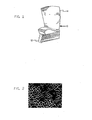
- Figure 1. Illustrates a turbine blade 10 as an example of such a gas turbine component.
- the blade 10 includes a root section 12 for attachment to a turbine wheel (not shown) and an airfoil 14 upon which a hot gas stream impinges.
- the turbine blade 10 is typically coated with a thin coating of an oxidation and corrosion resistant metal or non-metal having a thickness of a few thousandths of an inch. (about 0.1mm).
- the present invention is ccncemed with the underlying component or substrate, and not with the coating. Nevertheless, the substrate material, composition and structure are chosen so as to be compatible with the necessary coatings.
- the article of the present invention is necessarily formed as a single crystal of metal, at least in the section comprising the airfoil 14.
- a single crystal article is one in which substantially all of the article has a single crystallographic orientation through the load bearing portions, without the presence of high angle grain boundaries.
- Low angle grain boundaries such as tilt or twist boundaries, are permitted within such a single crystal article, but are preferably not present. However, such low angle boundaries are often present after solidification and formation of the single crystal article, or after some deformation of the article during creep or other deformation process.
- single crystal Other minor irregularities are also permitted within the scope of the term "single crystal.” For example, small areas of high angle grain boundaries may be formed directly adjacent the coating during the diffusional interaction of the coating and the substrate, and during thermal cycling of the component. Small areas of high angle grain boundaries may also be formed in the root section 12, particularly adjacent the contact surfaces with the turbine wheel. Such minor amounts of deviation from a perfect single crystal, which are found in normal commercial production operations and use of the articles, are within the scope of the term "single crystal" as used herein.
- the completed article typically primarily comprises two phases, a precipitate formed within a matrix.
- the microstructure may also contain minor amounts of a eutectic region formed during solidification of the article and not removed during subsequent heat treatment procedures.
- the eutectic-region may not be of the same crystallographic orientation as the matrix. As with the presence of low angle boundaries and small, isolated regions of polycrystalline matrix, small volume fractions of eutectic material are tolerated within a single crystal material.
- the present article be a single crystal, as that term is used herein.
- prior polycrystalline articles to be used in high temperature service such as gas turbine components, special care and attention was devoted to strengthening the grain boundaries between the grains or crystals, as well as strengthening the individual grains themselves.
- the article of the present invention is composed of a single crystal, alloying additions to the article have been modified substantially. It is not necessary to provide strengthening for non-existent grain boundaries in such a single crystal article.
- the composition of the present single crystal article is therefore optimized for fabrication and use as a single crystal, and would not be suitable in a polycrystalline component.
- Advanced casting techniques now allow the fabrication of single crystal components which are functional to higher operating temperatures than are polycrystalline components.
- the single crystals which form the components can be developed directly during casting of a liquid metal into a solid piece, or by a solid state transformation process in which a polycrystalline structure is transformed to a single crystal.
- the former is preferred, inasmuch as the formation of single crystals during solidification is more rapid and therefore more economical than is solid state formation, and also produces more perfect single crystals.
- any fabrication technique which produces a substantially single crystal article is operable in conjunction with the present invention.
- the preferred technique, used to prepare the single crystal: articles described in the examples herein, is the gradient solidification method.
- Molten metal of the desired composition is placed into a heat resistant ceramic mould having essentially the desired shape of the final fabricated component.
- the mould and metal contained therein are placed within a furnace, induction heating coil, or other heating device to melt the metal, and the mould and molten metal are gradually cooled in a temperature gradient.
- metal adjacent the cooler end of the mold solidifies first, and the interface between the solidified and liquid metal gradually moves through the metal as cooling continues.
- Such gradient solidication can be accomplished by placing a chill block adjacent one end of the mould and then turning off the heat source, allowing the mould and molten metal to cool and solidify in a temperature gradient. Alternatively, the mould and molten metal can be gradually withdrawn from the heat source.
- the floating zone technique may be used, wherein a molten zone is passed through a polycrystalline piece of metal to produce a moving solidification front.
- Solid state techniques are also permitted, wherein a solid piece of polycrystalline material is transformed to a single crystal in the solid state. The solid state approach is not preferred, because it is typically slow and produces a relatively imperfect single crystal.
- the sum of the molybdenum plus tungsten plus rhenium is from about 8.4 to about 10.4 percent, and the sum of aluminium plus titanium plus tantalum is about 13.6 to about 15.7 percent.
- the article is substantially free of vanadium, carbon, boron and zirconium.
- alloying elements are selected to achieve a cooperative optimization of the physical and chemical properties of the completed article, and to optimize the retention of such properties during the operating lifetime of the article.
- a primary consideration in the selection of the alloying ingredients is the attainment of creep strength and phase stability, and to achieve these ends the strengthening mechanisms of the single crystal article must be optimized.
- the preferred microstructure of the article, after heat treatment, is an array of precipitates in a matrix, as illustrated in FIG. 2.
- the matrix is nickel which has been strengthened by the addition of various solid-solution strengthening elements, and is termed gamma phase.
- molybdenum, tungsten and rhenium have been found to be potent solid-solution strengtheners which do not have significant detrimental effects on other properties when used in controlled amounts, and in fact can promote the attainment of desirable properties.
- Molybdenum is present in a amount of from about 1 to about 2.5 weight percent
- tungsten is present in an amount of from about 3 to about 6 weight percent
- rhenium is present in an amount of from about 1.8 to about 3.2 weight percent.
- the sum of these solid-solution strengthening elements should be from about 8.4 to about 10.4 percent. If too low a level of these alloying elements is used, the strength of the matrix is low. If excessively high levels are used, other properties such as hot corrosion resistance and oxidation resistance are reduced.
- Ruthenium has a lesser tendency to promote formation of the undesirable sigma phase, which will be discussed in more detail subsequently, than does rhenium. -Nevertheless, in more preferred and most preferred compositions, no ruthenium is utilized in the alloy.
- the strength of the single crystal article is promoted by precipitation hardening due to the presence of the precipitates in the matrix.
- the precipitates are formed as compounds of nickel, aluminium, titanium and tantalum, the compound being known as gamma-prime phase and having a composition conventionally represented as Ni 3 (Al,Ti,Ta ⁇ . It is desirable that the volume fraction of the gamma-prime phase be maintained at a high level, preferably in the range of from about 65 to about 70 volume percent.
- aluminium is present in an amount of from about 5 to about 6 weight percent
- titanium is present in an amount of from about 0.5 to about 1.5 weight percent
- tantalum is present in an amount of from about 7 to about 10 weight percent. If lower levels of these gamma-prime forming elements are utilized, the volume fraction of gamma-prime precipitate is low, with the result that the tensile and creep strengths are reduced below acceptable levels. If too high levels are used, the volume fraction of eutectic gamma-prime is excessively high.
- the alloy Since the eutectic gamma-prime is highly alloyed with elements that depress the melting temperature, the alloy becomes less responsive to a solution heat treat that dissolves all or most of the eutectic gamma-prime. Hence, the full potential strength of the alloy as a single crystal article cannot be realized.
- the tantalum content of the alloy is increased above the levels typically used in prior single crystal article alloy compositions that contain rhenium, to improve the rupture life of the alloy.
- the higher tantalum level also is effective in maintaining the desired volume fraction of the gamma-prime precipitate, while simultaneously holding the volume fraction of eutectic phase in the as-cast structure to below about 15 volume percent.
- Chromium is present in the alloy in the amount of from about 4 to about 6 weight percent.
- the chromium promotes environmental resistance of the alloy to hot corrosion in the sulphur-containing hot gas of the gas turbine and to oxidation damage. Such inherent resistance to environmental damage is desirable in the article, even though it may be coated with a protective coating. Too low a level of chromium results in insufficient protection against environmental damage, while too high a level of chromium tends to promote formation of the undesirable brittle sigma phase.
- Cobalt is present in the alloy in the amount of from about 8 to about 12 percent. This level of cobalt is generally higher than in prior nickel-base alloys for use in single crystal articles. The cobalt inhibits the formation of sigma phase containing chromium and rhenium, thus allowing these elements to be present for the reasons previously discussed. Too low a cobalt I level has an insufficient inhibiting effect, while too high a cobalt level increases undesirably the solubility of the gamma-prime precipitates in the gamma matrix. Such increased solubility tends to reduce the volume fraction of the gamma-prime precipitates, thereby decreasing the strength of the article. However, it is found that, in combination with the ranges of the other alloying elements, the relatively higher level of cobalt is not detrimental in the present articles.
- Hafnium is present in an amount of from about 0.08 to about 0.12 weight percent.
- Hafnium has been previously recognized as a grain boundary strengthening element, and it has therefore been conventional practice to eliminate hafnium from single crystal alloy articles.
- hafnium promotes resistance to environmental damage by oxidation.:
- the presence of hafnium promotes optimized alloy performance.
- grain boundary strengthening elements such as carbon, boron and zirconium are omitted from the present alloy, since their presence was previously necessary only to strengthen the grain boundaries. Such grain boundary strengtheners can produce brittle precipitates and also depress the melting point of the alloy.
- hafnium has been conventionally considered in this group of grain boundary strengthening elements, for use in the present alloy the other desirable attributes of hafnium have been recognized, with the result that hafnium is incorporated into the alloy.
- Vanadium is also omitted from the alloy, to improve the resistance to environmental damage during elevated temperature exposure. It is recognized that minor amounts of the omitted elements may be present as impurities at a trace level, and such very minor amounts are tolerated to the extent that they do not produce detrimental effects on the alloy and the properties of the single crystal articles.
- the ratio of tungsten to tantalum has also been reduced as compared with prior rhenium containing alloys to promote the castability of the alloy.
- a high ratio of tungsten to tantalum promotes freckling at the surface of the cast article, and reducing this ratio has the opposite effect.
- the tungsten has been decreased and the tantalum increased, as compared with prior alloys, to reduce the ratio of tungsten to tantalum.
- the single crystal piece To place the gamma-prime phase into solution, the single crystal piece must be heated to a temperature which is greater than the solvus temperature of the gamma-prime phase, but less than the melting temperature of the alloy.
- the melting temperature termed the solidus for a composition which melts over a temperature range, should be sufficiently greater than the solvus temperature so that the single crystal piece may be heated and maintained within the temperature range between the solvus and the solidus for a time sufficiently long to dissolve the gamma-prime precipitate phase into the gamma matrix.
- the solyus temperature and the solidus temperature were only about 5F° (2.8K), it would not be commercially practical using existing heat treatment apparatus to maintain the single crystal article within the range for the several hour period necessary to dissolve the gamma-prime precipitate articles.
- the solidus temperature is typically about 2,400 to 2450°F (1316-1343°C) and accurate ccntrol to within a few degrees in commercial heat treating equipment is simply not possible. It is therefore preferred that the solidus be at least about 15F° (8.3K) greater than the solvus temperature for the gamma-prime precipitates.
- the "heat treat window" or difference between the gamma-prime solvus and the alloy solidus temperatures is maintained at least at 15F° (8.3K) and preferably greater than about 50F° (27.8K).
- the articles are solution heat treated at a temperature of about 2,415°F (1324°C) for a period of about three hours, to dissolve the gamma-prime precipitate phase formed during solidification, into the gamma matrix.
- the solution heat treatment may be accomplished at any temperature within the heat treatment window between the gamma-prime solvus and the solidus temperatures. Greater temperatures allow shorter heat treatment times.
- the heat treatment temperature is not typically pushed to a maximum level, to allow a margin of error in the heat treatment equipment.
- the solution heat treated single crystal articles are cooled to supersaturate the matrix with the gamma-prime forming elements.
- a fast argon fan cool to a temperature of less than about 1000°F (538°C) has been found sufficient to achieve the necessary supersaturation. Excessively high cooling rates may not be achieved in all commercial heat treat furnaces, while excessively low cooling rates would not provide the necessary supersaturation.
- the solution heat treated single crystal articles are aged to precipitate the gamma-prime precipitates within the single crystal gamma matrix.
- the aging heat treatment can be combined with the coating treatment.
- gas turbine components are typically coated with a corrosion resistant and oxidation resistant coating prior to use.
- the article being coated is heated to elevated temperature.
- a typical coating treatment requires heating the article to a temperature of about 1,950°F (1066°C) for about four hours.
- This- heat treatment causes some precipitation of the gamma-prime phase within the gamma matrix, thus accomplishing in part the aging heat treatment.
- the aging heat treatment may be completed by a further elevated temperature exposure, separate from the coating procedure.
- a sufficient additional aging heat treatment is accomplished at a temperature of about 1,600°F (871°C) for a time of about twenty hours, following the heat treatment at 1950°F (1066°C) for four hours.
- the aging heat treatment is not limited to this preferred heat treatment sequence, but instead may be accomplished by any acceptable approach which precipitates the desired volume fraction of gamma-prime particles within the gamma matrix, the precipitation occurring from the supersaturated heat treated single crystal matrix.
- the microstructure of the as-solidified single crystals includes irregular gamma-prime particles and regions of gamma-prime eutectic material.
- the solution heat treatment dissolves the irregular gamma-prime particles and most or all of the gamma-prime eutectic constituent into the gamma matrix.
- the subsequent aging treatment precipitates an array of gamma-prime precipitates having a generally regular shape and somewhat uniform size.
- the gamma-prime precipitates illustrated in FIG. 2 vary from about 0.3 to about 0.7 micrometers in size.
- the composition in weight percent consists essentially of from about 4.6 to about 5.6 percent chromium, from about 9.7 to about 10.3 cobalt, from about 1.4 to about 2.0 percent molybdenum, from about 4.8 to about 5.2 percent tungsten, from about 2.8 to about 3.2 percent rhenium, from about 5.3 to about 5.7 percent aluminium from about 0.5 to about 1.0 percent titanium, from about 8.0 to about 9.0 percent tantalum, from about 0.08 to about 0.12 percent hafnium, balance nickel, wherein the sum of molybdenum plus tungsten plus rhenium is from about 8.4 to about 10.4 percent and the sum of aluminium plus titanium plus tantalum is from about 13.8 to about 15.7 percent, the article being substantially free of vanadium, carbon, boron and zirconium. It is found that this preferred range, being within the broader range of the invention, produces its benefits and in addition achieves improved creep properties and phase stability as compared with those of prior single crystal alloy articles.
- the most preferred composition which has the closest limits on composition and achieves the optimum properties, includes chromium of about 4.8 percent, cobalt of about 10.0 percent, molybdenum of about 1.5 to about 2.1 percent, tungsten of about 4.8 percent, rhenium of about 2.9 percent, aluminium of about 5.2 to about 5.5 percent, titanium of about 0.5 to about 1.1 percent, tantalum from about 8.0 to about 9.0 percent, and hafnium of about 0.10 percent, balance nickel, wherein the sum of aluminium plus titanium plus tantalum does not exceed about 15.0 percent, the articles being substantially free of vanadium, carbon, boron and zirconium.
- the articles of the preferred and most preferred compositions are prepared by the process described previously, including the preparation of a single crystal article from the alloy, and solution heat treating and aging the single crystal article.
- Table 2 further shows that alloys H, I and M whose compositions are outside the scope of the restrictive composition claims exhibit the smallest heat treat window. Although the tantalum content of alloys J and L is outside the restricted tantalum range, the heat treat window is still greater than that of alloys H, I and M. This result is related to the volume fraction of eutectic gamma prime phase present in the as-solidified structure. Table 2 indicates that alloys containing less than about 15 volume percent of eutectic phase have a heat treat window greater than 20F° (11.1K). In industrial practice, a large heat treat window is desirable for solution treatment of the airfoils.
- Table 2 demonstrates that combinations of gamma prime forming elements such as aluminium, titanium and tantalum can have a dramatic effect on the heat treat window, which has not been previously recognized.
- the sum of aluminium plus titanium plus tantalum is limited to 15.7 weight percent to ensure that the volume fraction of the eutectic is less than about 15 volume percent and the volume fraction of the gamma prime phase is in the range of from about 65 to about 70 volume percent.
- the preferred alloys such as A, B, C, and K may be solution heat treated in the range of about 2390°F (1310°C) to about 2415°F (1342°C) and a temperature of 2415°F (1342°C) was chosen as the maximum solution temperature for further work. Because of this choice, alloys H and M are expected to exhibit a small amount of incipient melting. The remaining test material was solution heat treated at 2415°F (1342°C) for three.hours in an argon atmosphere and then cooled to below 1000°F (538°C) by a fast argon fan cooling to create a supersaturated gamma matrix. Samples were taken for metallographic evaluation, and it was determined that the solution heat treatment had placed almost all of the eutectic gamma-prime phase into solution. As expected, alloys H and M show some degree of incipient melting.
- the test material was given a heat treatment to simulate a coating procedure, even though no coating was actually applied to the test material.
- the simulated coating treatment utilized heating the test materials to a temperature of about 1950°F (1066°C) for a period of four hours.
- the test material was then aged in argon at a temperature of 1600°F (871°C) for twenty hours.
- Figure 2 illustrates a typical microstructure of the solution treated and aged single crystal material.
- the gamma-prime precipitate occupies at least about 65 volume percent, and has a generally cubic morphology with a characteristic dimension along one edge of the cube of from about 0.3 to about 0.7 micrometers.
- Example 2 Samples of the solution treated and aged single crystal articles prepared in Example 1 were tested to determine mechanical properties. Cylindrical tensile test specimens having a gauge diameter of 0.160 ins (4.06 mm ) and a total length of 2 ins (50.8mm) were machined. The samples were tested in creep rupture tests. Table 3 presents the results of creep rupture testing conducted at 1800°F (982°C) and a loading of 36,000 lb/in 2 (25.3kg/mm2). Tests were conducted by applying a dead weight loading to the sample in a furnace at the indicated temperature.
- the rupture life of.alloy H at 2000°F (1093°C) and 18000 psi (12.7kg/mm 2 ) is lower than that of the. other alloys, as aresult of incipient melting.
- the present alloys produced significantly improved results as compared with the DS Mar-M247.
- FIGURE 3 the lines defining a box delineate the limits of the sum of aluminium plus titanium plus tantalum and the sum of molybdenum plus tungsten plus rhenium. Also drawn in FIGURE 3 is the boundary that separates the phase stable field from the sigma-prone field.
- FIGURE 3 shows the extent of the phase stability field for single crystal superalloy compositions for which the sum of chromium plus cobalt is 15.5 weight percent. Alloy compositions, such as that of Alloy A, located to the left hand side of the boundary are phase stable.
- FIGURE 4 is similar to FIGURE 3, except that the boundary between the phase stable and sigma-prone fields has been drawn with the sum of chromium and cobalt as a parameter. It can be seen that as the sum of chromium and cobalt decreases, the phase stable field increases. It can be readily seen that the compositions of alloys H, I and M are phase unstable because their compositions are located to the right hand side of their respective phase stability limit boundary.
- FIGURE 4 provides a useful means to identify a phase stable alloy composition. The steps involved are as follows.
- Table 7 shows that the stress rupture test results are similar to those of the alloys of Example 2.
- the alloy of the present invention exhibits significantly better stress rupture lives than those of the reference patents.
- nickel-base superalloy single crystal articles such as gas turbine blades and vanes may be readily prepared. Such articles have mechanical, phase stability and environmental properties superior to those of prior nickel-base single crystal alloy materials.
Landscapes
- Chemical & Material Sciences (AREA)
- Engineering & Computer Science (AREA)
- Crystallography & Structural Chemistry (AREA)
- Materials Engineering (AREA)
- Metallurgy (AREA)
- Organic Chemistry (AREA)
- Inorganic Chemistry (AREA)
- Turbine Rotor Nozzle Sealing (AREA)
- Crystals, And After-Treatments Of Crystals (AREA)
Applications Claiming Priority (2)
| Application Number | Priority Date | Filing Date | Title |
|---|---|---|---|
| US86286586A | 1986-05-13 | 1986-05-13 | |
| US862865 | 1986-05-13 |
Publications (2)
| Publication Number | Publication Date |
|---|---|
| EP0246082A1 true EP0246082A1 (de) | 1987-11-19 |
| EP0246082B1 EP0246082B1 (de) | 1991-01-23 |
Family
ID=25339582
Family Applications (1)
| Application Number | Title | Priority Date | Filing Date |
|---|---|---|---|
| EP87304246A Expired - Lifetime EP0246082B1 (de) | 1986-05-13 | 1987-05-13 | Einkristalline Körper aus Superlegierungen |
Country Status (6)
| Country | Link |
|---|---|
| US (1) | US4935072A (de) |
| EP (1) | EP0246082B1 (de) |
| JP (1) | JP2782340B2 (de) |
| CA (1) | CA1315572C (de) |
| DE (1) | DE3767557D1 (de) |
| ES (1) | ES2019636B3 (de) |
Cited By (18)
| Publication number | Priority date | Publication date | Assignee | Title |
|---|---|---|---|---|
| EP0362661A1 (de) * | 1988-10-03 | 1990-04-11 | General Electric Company | Gegossenes aus stengelförmigen Kristallen bestehendes hohles Werkstück auf Nickel basierender Legierung sowie die Legierung und Wärmebehandlung für dessen Herstellung |
| FR2646171A1 (fr) * | 1989-04-10 | 1990-10-26 | Gen Electric | Superalliages contenant du titane et procede pour ameliorer les proprietes de resistance mecanique a haute temperature d'un superalliage a base de nickel contenant du niobium |
| EP0413439A1 (de) * | 1989-08-14 | 1991-02-20 | Cannon-Muskegon Corporation | Gerichtete Erstarrungslegierung mit niedrigem Kohlenstoffgehalt |
| US5173255A (en) * | 1988-10-03 | 1992-12-22 | General Electric Company | Cast columnar grain hollow nickel base alloy articles and alloy and heat treatment for making |
| US5207846A (en) * | 1989-04-10 | 1993-05-04 | General Electric Company | Tantalum-containing superalloys |
| FR2686902A1 (fr) * | 1992-02-05 | 1993-08-06 | Onera (Off Nat Aerospatiale) | Superalliage monocristallin a base de nickel a tenue a l'oxydation amelioree et procede de preparation. |
| US5240518A (en) * | 1990-09-05 | 1993-08-31 | General Electric Company | Single crystal, environmentally-resistant gas turbine shroud |
| US5338379A (en) * | 1989-04-10 | 1994-08-16 | General Electric Company | Tantalum-containing superalloys |
| US5435861A (en) * | 1992-02-05 | 1995-07-25 | Office National D'etudes Et De Recherches Aerospatiales | Nickel-based monocrystalline superalloy with improved oxidation resistance and method of production |
| US5451142A (en) * | 1994-03-29 | 1995-09-19 | United Technologies Corporation | Turbine engine blade having a zone of fine grains of a high strength composition at the blade root surface |
| US5540789A (en) * | 1992-05-28 | 1996-07-30 | United Technologies Corporation | Oxidation resistant single crystal superalloy castings |
| EP0940473A1 (de) * | 1998-03-02 | 1999-09-08 | National Research Institute For Metals, Science and Technology Agency | Verfahren und Herstellung einer gerichtet erstarrten Gusslegierung auf Nickelbasis |
| FR2780983A1 (fr) * | 1998-07-09 | 2000-01-14 | Snecma | Superalliage monocristallin a base de nickel a resistance accrue a haute temperature |
| US6602548B2 (en) | 2001-06-20 | 2003-08-05 | Honeywell International Inc. | Ceramic turbine blade attachment having high temperature, high stress compliant layers and method of fabrication thereof |
| WO2004053177A1 (ja) * | 2002-12-06 | 2004-06-24 | Independent Administrative Institution National Institute For Materials Science | Ni基単結晶超合金 |
| EP2597167A1 (de) * | 2011-11-24 | 2013-05-29 | Siemens Aktiengesellschaft | DS-Superlegierung und Bauteil |
| WO2013143995A1 (en) * | 2012-03-27 | 2013-10-03 | Alstom Technology Ltd | Method for manufacturing components made of single crystal (sx) or directionally solidified (ds) nickelbase superalloys |
| US8968643B2 (en) | 2002-12-06 | 2015-03-03 | National Institute For Materials Science | Ni-based single crystal super alloy |
Families Citing this family (28)
| Publication number | Priority date | Publication date | Assignee | Title |
|---|---|---|---|---|
| JPH0729874B2 (ja) * | 1989-11-04 | 1995-04-05 | コマツ電子金属株式会社 | 多結晶シリコン製造装置の芯線間接続用ブリッジ |
| US5292385A (en) * | 1991-12-18 | 1994-03-08 | Alliedsignal Inc. | Turbine rotor having improved rim durability |
| US5482789A (en) * | 1994-01-03 | 1996-01-09 | General Electric Company | Nickel base superalloy and article |
| US5695821A (en) * | 1995-09-14 | 1997-12-09 | General Electric Company | Method for making a coated Ni base superalloy article of improved microstructural stability |
| US6007645A (en) * | 1996-12-11 | 1999-12-28 | United Technologies Corporation | Advanced high strength, highly oxidation resistant single crystal superalloy compositions having low chromium content |
| US6213192B1 (en) * | 1998-12-15 | 2001-04-10 | General Electric Company | Large structural, thin-wall castings made of metals subject to hot tearing, and their fabrication |
| US6551372B1 (en) | 1999-09-17 | 2003-04-22 | Rolls-Royce Corporation | High performance wrought powder metal articles and method of manufacture |
| KR100340806B1 (ko) * | 1999-10-27 | 2002-06-20 | 윤행순 | 고온등압 압축기술을 이용한 가스터빈 고온부품 수명연장방법 |
| US6632299B1 (en) * | 2000-09-15 | 2003-10-14 | Cannon-Muskegon Corporation | Nickel-base superalloy for high temperature, high strain application |
| DE10100790C2 (de) * | 2001-01-10 | 2003-07-03 | Mtu Aero Engines Gmbh | Nickel-Basislegierung für die gießtechnische Herstellung einkristallin erstarrter Bauteile |
| US20020164263A1 (en) * | 2001-03-01 | 2002-11-07 | Kenneth Harris | Superalloy for single crystal turbine vanes |
| JP3840555B2 (ja) * | 2001-05-30 | 2006-11-01 | 独立行政法人物質・材料研究機構 | Ni基単結晶超合金 |
| US6966956B2 (en) * | 2001-05-30 | 2005-11-22 | National Institute For Materials Science | Ni-based single crystal super alloy |
| US7166176B2 (en) * | 2002-06-26 | 2007-01-23 | Siemens Power Generation, Inc. | Cast single crystal alloy component with improved low angle boundary tolerance |
| US6706241B1 (en) * | 2002-11-12 | 2004-03-16 | Alstom Technology Ltd | Nickel-base superalloy |
| JP4266196B2 (ja) * | 2004-09-17 | 2009-05-20 | 株式会社日立製作所 | 強度、耐食性及び耐酸化特性に優れたニッケル基超合金 |
| WO2007037277A1 (ja) * | 2005-09-27 | 2007-04-05 | National Institute For Materials Science | 耐酸化性に優れたNi基超合金 |
| CN101652487B (zh) * | 2006-09-13 | 2012-02-08 | 独立行政法人物质.材料研究机构 | Ni基单结晶超合金 |
| US9499886B2 (en) | 2007-03-12 | 2016-11-22 | Ihi Corporation | Ni-based single crystal superalloy and turbine blade incorporating the same |
| CA2680650C (en) * | 2007-03-12 | 2012-07-03 | Ihi Corporation | Ni-based single crystal superalloy and turbine blade incorporating the same |
| US20090185944A1 (en) * | 2008-01-21 | 2009-07-23 | Honeywell International, Inc. | Superalloy compositions with improved oxidation performance and gas turbine components made therefrom |
| US20100135846A1 (en) | 2008-12-01 | 2010-06-03 | United Technologies Corporation | Lower cost high strength single crystal superalloys with reduced re and ru content |
| US8216509B2 (en) | 2009-02-05 | 2012-07-10 | Honeywell International Inc. | Nickel-base superalloys |
| WO2011097479A2 (en) * | 2010-02-05 | 2011-08-11 | Thixomat, Inc. | Method and apparatus of forming a wrought material having a refined grain structure |
| US20160214350A1 (en) | 2012-08-20 | 2016-07-28 | Pratt & Whitney Canada Corp. | Oxidation-Resistant Coated Superalloy |
| JP6685800B2 (ja) * | 2016-03-31 | 2020-04-22 | 三菱重工業株式会社 | タービン翼の設計方法、タービン翼の製造方法及びタービン翼 |
| US11130170B2 (en) * | 2018-02-02 | 2021-09-28 | General Electric Company | Integrated casting core-shell structure for making cast component with novel cooling hole architecture |
| FR3097879B1 (fr) * | 2019-06-28 | 2021-05-28 | Safran Aircraft Engines | Procede de fabrication d’une piece en superalliage monocristallin |
Citations (3)
| Publication number | Priority date | Publication date | Assignee | Title |
|---|---|---|---|---|
| FR2374427A1 (fr) * | 1976-12-16 | 1978-07-13 | Gen Electric | Alliage a base de nickel perfectionne et piece coulee obtenue a partir de cet alliage |
| EP0150917A2 (de) * | 1984-01-10 | 1985-08-07 | AlliedSignal Inc. | Monokristalline Legierung auf Nickelbasis |
| EP0225837A2 (de) * | 1985-11-01 | 1987-06-16 | United Technologies Corporation | Hochfeste einkristalline Superlegierungen |
Family Cites Families (25)
| Publication number | Priority date | Publication date | Assignee | Title |
|---|---|---|---|---|
| DE1208595B (de) * | 1961-05-06 | 1966-01-05 | Deutsche Edelstahlwerke Ag | Verfahren zum Erzeugen von Chromdiffusions-zonen mit extrem niedriger Oberflaechenrauhigkeit auf Teilen aus Nickel- oder Kobaltlegierungen |
| US3171739A (en) * | 1963-08-27 | 1965-03-02 | Coast Metals Inc | Use of carbonyl nickel in nickel-chromium-tungsten alloys |
| US3494709A (en) * | 1965-05-27 | 1970-02-10 | United Aircraft Corp | Single crystal metallic part |
| US4019899A (en) * | 1970-06-11 | 1977-04-26 | The Furukawa Electric Co., Ltd. | Erosion-resistant materials |
| US3837933A (en) * | 1971-03-13 | 1974-09-24 | Foundation Res Inst Electric A | Heat treated magnetic material |
| US3922168A (en) * | 1971-05-26 | 1975-11-25 | Nat Res Dev | Intermetallic compound materials |
| JPS5518778B2 (de) * | 1973-02-16 | 1980-05-21 | ||
| US3988118A (en) * | 1973-05-21 | 1976-10-26 | P. R. Mallory & Co., Inc. | Tungsten-nickel-iron-molybdenum alloys |
| US3887363A (en) * | 1973-12-18 | 1975-06-03 | Gen Electric | Nickel-base superalloy cast article |
| US3893851A (en) * | 1974-09-11 | 1975-07-08 | Carondelet Foundry Co | Corrosion-resistant alloys |
| US4012241A (en) * | 1975-04-22 | 1977-03-15 | United Technologies Corporation | Ductile eutectic superalloy for directional solidification |
| US4116723A (en) * | 1976-11-17 | 1978-09-26 | United Technologies Corporation | Heat treated superalloy single crystal article and process |
| US4209348A (en) * | 1976-11-17 | 1980-06-24 | United Technologies Corporation | Heat treated superalloy single crystal article and process |
| US4169742A (en) * | 1976-12-16 | 1979-10-02 | General Electric Company | Cast nickel-base alloy article |
| US4153455A (en) * | 1977-05-19 | 1979-05-08 | Huntington Alloys, Inc. | High temperature nickel-base alloys |
| GB1562082A (en) * | 1977-10-17 | 1980-03-05 | Gen Electric | Nickel-base olloys |
| US4169726A (en) * | 1977-12-21 | 1979-10-02 | General Electric Company | Casting alloy and directionally solidified article |
| US4205985A (en) * | 1978-03-02 | 1980-06-03 | National Research Institute For Metals | Nickel base alloy |
| GB2017148B (en) * | 1978-03-22 | 1983-01-12 | Pompey Acieries | Nickel chromium iron alloys possessing very high resistantance to carburization at very high temperature |
| US4292076A (en) * | 1979-04-27 | 1981-09-29 | General Electric Company | Transverse ductile fiber reinforced eutectic nickel-base superalloys |
| US4388124A (en) * | 1979-04-27 | 1983-06-14 | General Electric Company | Cyclic oxidation-hot corrosion resistant nickel-base superalloys |
| US4222794A (en) * | 1979-07-02 | 1980-09-16 | United Technologies Corporation | Single crystal nickel superalloy |
| JPS6050136A (ja) * | 1983-08-30 | 1985-03-19 | Natl Res Inst For Metals | 一方向凝固用Νi基耐熱合金 |
| FR2555204B1 (fr) * | 1983-11-18 | 1986-04-11 | Onera (Off Nat Aerospatiale) | Superalliage monocristallin a base de nickel, a faible masse volumetrique, pour aubes de turbomachine |
| US4719080A (en) * | 1985-06-10 | 1988-01-12 | United Technologies Corporation | Advanced high strength single crystal superalloy compositions |
-
1987
- 1987-04-02 CA CA000533715A patent/CA1315572C/en not_active Expired - Lifetime
- 1987-04-28 JP JP62106143A patent/JP2782340B2/ja not_active Expired - Lifetime
- 1987-05-13 EP EP87304246A patent/EP0246082B1/de not_active Expired - Lifetime
- 1987-05-13 ES ES87304246T patent/ES2019636B3/es not_active Expired - Lifetime
- 1987-05-13 DE DE8787304246T patent/DE3767557D1/de not_active Expired - Lifetime
-
1988
- 1988-04-07 US US07/177,793 patent/US4935072A/en not_active Expired - Lifetime
Patent Citations (3)
| Publication number | Priority date | Publication date | Assignee | Title |
|---|---|---|---|---|
| FR2374427A1 (fr) * | 1976-12-16 | 1978-07-13 | Gen Electric | Alliage a base de nickel perfectionne et piece coulee obtenue a partir de cet alliage |
| EP0150917A2 (de) * | 1984-01-10 | 1985-08-07 | AlliedSignal Inc. | Monokristalline Legierung auf Nickelbasis |
| EP0225837A2 (de) * | 1985-11-01 | 1987-06-16 | United Technologies Corporation | Hochfeste einkristalline Superlegierungen |
Cited By (22)
| Publication number | Priority date | Publication date | Assignee | Title |
|---|---|---|---|---|
| US5173255A (en) * | 1988-10-03 | 1992-12-22 | General Electric Company | Cast columnar grain hollow nickel base alloy articles and alloy and heat treatment for making |
| EP0362661A1 (de) * | 1988-10-03 | 1990-04-11 | General Electric Company | Gegossenes aus stengelförmigen Kristallen bestehendes hohles Werkstück auf Nickel basierender Legierung sowie die Legierung und Wärmebehandlung für dessen Herstellung |
| FR2646171A1 (fr) * | 1989-04-10 | 1990-10-26 | Gen Electric | Superalliages contenant du titane et procede pour ameliorer les proprietes de resistance mecanique a haute temperature d'un superalliage a base de nickel contenant du niobium |
| US5207846A (en) * | 1989-04-10 | 1993-05-04 | General Electric Company | Tantalum-containing superalloys |
| US5338379A (en) * | 1989-04-10 | 1994-08-16 | General Electric Company | Tantalum-containing superalloys |
| EP0413439A1 (de) * | 1989-08-14 | 1991-02-20 | Cannon-Muskegon Corporation | Gerichtete Erstarrungslegierung mit niedrigem Kohlenstoffgehalt |
| US5240518A (en) * | 1990-09-05 | 1993-08-31 | General Electric Company | Single crystal, environmentally-resistant gas turbine shroud |
| FR2686902A1 (fr) * | 1992-02-05 | 1993-08-06 | Onera (Off Nat Aerospatiale) | Superalliage monocristallin a base de nickel a tenue a l'oxydation amelioree et procede de preparation. |
| EP0555124A1 (de) * | 1992-02-05 | 1993-08-11 | Office National D'etudes Et De Recherches Aerospatiales | Einkristalline Superlegierung auf Nickelbasis mit verbesserte Oxydationsbeständigkeit und Verfahren zu seiner Herstellung |
| US5435861A (en) * | 1992-02-05 | 1995-07-25 | Office National D'etudes Et De Recherches Aerospatiales | Nickel-based monocrystalline superalloy with improved oxidation resistance and method of production |
| US5660649A (en) * | 1992-05-28 | 1997-08-26 | United Technologies Corporation | Method of making oxidation resistant single crystal superalloy castings |
| US5540789A (en) * | 1992-05-28 | 1996-07-30 | United Technologies Corporation | Oxidation resistant single crystal superalloy castings |
| US5451142A (en) * | 1994-03-29 | 1995-09-19 | United Technologies Corporation | Turbine engine blade having a zone of fine grains of a high strength composition at the blade root surface |
| EP0940473A1 (de) * | 1998-03-02 | 1999-09-08 | National Research Institute For Metals, Science and Technology Agency | Verfahren und Herstellung einer gerichtet erstarrten Gusslegierung auf Nickelbasis |
| US6224695B1 (en) | 1998-03-02 | 2001-05-01 | National Research Institute For Metals, Science And Technology Agency | Ni-base directionally solidified alloy casting manufacturing method |
| FR2780983A1 (fr) * | 1998-07-09 | 2000-01-14 | Snecma | Superalliage monocristallin a base de nickel a resistance accrue a haute temperature |
| US6602548B2 (en) | 2001-06-20 | 2003-08-05 | Honeywell International Inc. | Ceramic turbine blade attachment having high temperature, high stress compliant layers and method of fabrication thereof |
| WO2004053177A1 (ja) * | 2002-12-06 | 2004-06-24 | Independent Administrative Institution National Institute For Materials Science | Ni基単結晶超合金 |
| US8968643B2 (en) | 2002-12-06 | 2015-03-03 | National Institute For Materials Science | Ni-based single crystal super alloy |
| EP2597167A1 (de) * | 2011-11-24 | 2013-05-29 | Siemens Aktiengesellschaft | DS-Superlegierung und Bauteil |
| WO2013143995A1 (en) * | 2012-03-27 | 2013-10-03 | Alstom Technology Ltd | Method for manufacturing components made of single crystal (sx) or directionally solidified (ds) nickelbase superalloys |
| US9670571B2 (en) | 2012-03-27 | 2017-06-06 | Ansaldo Energia Ip Uk Limited | Method for manufacturing components made of single crystal (SX) or directionally solidified (DS) nickelbase superalloys |
Also Published As
| Publication number | Publication date |
|---|---|
| ES2019636B3 (es) | 1991-07-01 |
| DE3767557D1 (de) | 1991-02-28 |
| US4935072A (en) | 1990-06-19 |
| JPS62267440A (ja) | 1987-11-20 |
| CA1315572C (en) | 1993-04-06 |
| EP0246082B1 (de) | 1991-01-23 |
| JP2782340B2 (ja) | 1998-07-30 |
Similar Documents
| Publication | Publication Date | Title |
|---|---|---|
| EP0246082B1 (de) | Einkristalline Körper aus Superlegierungen | |
| US4222794A (en) | Single crystal nickel superalloy | |
| JP2753148B2 (ja) | ニッケル基単結晶超合金 | |
| CA2658848C (en) | Nickel-base alloy for gas turbine applications | |
| CA2957786C (en) | Enhanced superalloys by zirconium addition | |
| US5173255A (en) | Cast columnar grain hollow nickel base alloy articles and alloy and heat treatment for making | |
| EP0789087B1 (de) | Hochfeste Superlegierung auf Nickelbasis für gerichtet erstarrte Giesteilen | |
| CA1206398A (en) | Superalloy single crystal articles | |
| US4371404A (en) | Single crystal nickel superalloy | |
| JP3902714B2 (ja) | γ′ソルバスの高い、ニッケル系単結晶超合金 | |
| US6755921B2 (en) | Nickel-based single crystal alloy and a method of manufacturing the same | |
| US5925198A (en) | Nickel-based superalloy | |
| US5489346A (en) | Hot corrosion resistant single crystal nickel-based superalloys | |
| EP0362661B1 (de) | Gegossenes aus stengelförmigen Kristallen bestehendes hohles Werkstück auf Nickel basierender Legierung sowie die Legierung und Wärmebehandlung für dessen Herstellung | |
| JP3506734B2 (ja) | 析出硬化性ニッケル系超合金およびこの合金を指向性凝固された構造用部材の製造の際の材料として使用する方法 | |
| JPS6125773B2 (de) | ||
| US20050000603A1 (en) | Nickel base superalloy and single crystal castings | |
| CA2503326C (en) | Heat treatment of alloys having elements for improving grain boundary strength | |
| JP2004332114A (ja) | ニッケル基超合金及び単結晶鋳造品 | |
| Caruel et al. | SNECMA experience with cost-effective DS airfoil technology applied using CM 186 LC® Alloy | |
| JPH04131343A (ja) | 単結晶用Ni基超合金 |
Legal Events
| Date | Code | Title | Description |
|---|---|---|---|
| PUAI | Public reference made under article 153(3) epc to a published international application that has entered the european phase |
Free format text: ORIGINAL CODE: 0009012 |
|
| AK | Designated contracting states |
Kind code of ref document: A1 Designated state(s): DE ES FR GB IT SE |
|
| 17P | Request for examination filed |
Effective date: 19880414 |
|
| 17Q | First examination report despatched |
Effective date: 19890516 |
|
| RAP1 | Party data changed (applicant data changed or rights of an application transferred) |
Owner name: ALLIED-SIGNAL INC. (A DELAWARE CORPORATION) |
|
| GRAA | (expected) grant |
Free format text: ORIGINAL CODE: 0009210 |
|
| AK | Designated contracting states |
Kind code of ref document: B1 Designated state(s): DE ES FR GB IT SE |
|
| REF | Corresponds to: |
Ref document number: 3767557 Country of ref document: DE Date of ref document: 19910228 |
|
| ITF | It: translation for a ep patent filed | ||
| ET | Fr: translation filed | ||
| PLBE | No opposition filed within time limit |
Free format text: ORIGINAL CODE: 0009261 |
|
| STAA | Information on the status of an ep patent application or granted ep patent |
Free format text: STATUS: NO OPPOSITION FILED WITHIN TIME LIMIT |
|
| 26N | No opposition filed | ||
| EAL | Se: european patent in force in sweden |
Ref document number: 87304246.9 |
|
| REG | Reference to a national code |
Ref country code: GB Ref legal event code: IF02 |
|
| PGFP | Annual fee paid to national office [announced via postgrant information from national office to epo] |
Ref country code: GB Payment date: 20060406 Year of fee payment: 20 |
|
| PGFP | Annual fee paid to national office [announced via postgrant information from national office to epo] |
Ref country code: SE Payment date: 20060504 Year of fee payment: 20 |
|
| PGFP | Annual fee paid to national office [announced via postgrant information from national office to epo] |
Ref country code: ES Payment date: 20060518 Year of fee payment: 20 |
|
| PGFP | Annual fee paid to national office [announced via postgrant information from national office to epo] |
Ref country code: IT Payment date: 20060531 Year of fee payment: 20 Ref country code: DE Payment date: 20060531 Year of fee payment: 20 |
|
| PG25 | Lapsed in a contracting state [announced via postgrant information from national office to epo] |
Ref country code: ES Free format text: LAPSE BECAUSE OF EXPIRATION OF PROTECTION Effective date: 20070514 |
|
| REG | Reference to a national code |
Ref country code: GB Ref legal event code: PE20 |
|
| EUG | Se: european patent has lapsed | ||
| REG | Reference to a national code |
Ref country code: ES Ref legal event code: FD2A Effective date: 20070514 |
|
| PG25 | Lapsed in a contracting state [announced via postgrant information from national office to epo] |
Ref country code: GB Free format text: LAPSE BECAUSE OF EXPIRATION OF PROTECTION Effective date: 20070512 |
|
| PGFP | Annual fee paid to national office [announced via postgrant information from national office to epo] |
Ref country code: FR Payment date: 20060531 Year of fee payment: 20 |