EP0247307A1 - Verfahren zum Entfärben von in der Masse gefärbten Papieren und Selbstdurchschreibepapieren - Google Patents
Verfahren zum Entfärben von in der Masse gefärbten Papieren und Selbstdurchschreibepapieren Download PDFInfo
- Publication number
- EP0247307A1 EP0247307A1 EP87104044A EP87104044A EP0247307A1 EP 0247307 A1 EP0247307 A1 EP 0247307A1 EP 87104044 A EP87104044 A EP 87104044A EP 87104044 A EP87104044 A EP 87104044A EP 0247307 A1 EP0247307 A1 EP 0247307A1
- Authority
- EP
- European Patent Office
- Prior art keywords
- papers
- flotation
- paper
- mass
- consistency
- Prior art date
- Legal status (The legal status is an assumption and is not a legal conclusion. Google has not performed a legal analysis and makes no representation as to the accuracy of the status listed.)
- Granted
Links
- 238000000034 method Methods 0.000 title claims description 26
- 238000004042 decolorization Methods 0.000 claims abstract description 7
- NYYSPVRERVXMLJ-UHFFFAOYSA-N 4,4-difluorocyclohexan-1-one Chemical compound FC1(F)CCC(=O)CC1 NYYSPVRERVXMLJ-UHFFFAOYSA-N 0.000 claims description 30
- 238000005188 flotation Methods 0.000 claims description 21
- 238000004090 dissolution Methods 0.000 claims description 6
- 238000005406 washing Methods 0.000 claims description 5
- 239000000463 material Substances 0.000 claims description 4
- 239000012736 aqueous medium Substances 0.000 claims description 3
- 238000000926 separation method Methods 0.000 claims 1
- 239000002253 acid Substances 0.000 abstract 1
- HEMHJVSKTPXQMS-UHFFFAOYSA-M Sodium hydroxide Chemical compound [OH-].[Na+] HEMHJVSKTPXQMS-UHFFFAOYSA-M 0.000 description 30
- 239000010893 paper waste Substances 0.000 description 11
- 239000000126 substance Substances 0.000 description 11
- MHAJPDPJQMAIIY-UHFFFAOYSA-N Hydrogen peroxide Chemical compound OO MHAJPDPJQMAIIY-UHFFFAOYSA-N 0.000 description 10
- WQYVRQLZKVEZGA-UHFFFAOYSA-N hypochlorite Chemical compound Cl[O-] WQYVRQLZKVEZGA-UHFFFAOYSA-N 0.000 description 10
- 239000002761 deinking Substances 0.000 description 9
- GRWZHXKQBITJKP-UHFFFAOYSA-L dithionite(2-) Chemical compound [O-]S(=O)S([O-])=O GRWZHXKQBITJKP-UHFFFAOYSA-L 0.000 description 9
- 238000004519 manufacturing process Methods 0.000 description 9
- 239000000975 dye Substances 0.000 description 7
- 239000002023 wood Substances 0.000 description 6
- OKTJSMMVPCPJKN-UHFFFAOYSA-N Carbon Chemical compound [C] OKTJSMMVPCPJKN-UHFFFAOYSA-N 0.000 description 5
- 238000004061 bleaching Methods 0.000 description 5
- 239000000203 mixture Substances 0.000 description 5
- 235000019353 potassium silicate Nutrition 0.000 description 5
- NTHWMYGWWRZVTN-UHFFFAOYSA-N sodium silicate Chemical compound [Na+].[Na+].[O-][Si]([O-])=O NTHWMYGWWRZVTN-UHFFFAOYSA-N 0.000 description 5
- 239000002994 raw material Substances 0.000 description 4
- 230000035484 reaction time Effects 0.000 description 3
- 239000000344 soap Substances 0.000 description 3
- 239000011734 sodium Substances 0.000 description 3
- 229910052708 sodium Inorganic materials 0.000 description 3
- 241000294754 Macroptilium atropurpureum Species 0.000 description 2
- 239000007844 bleaching agent Substances 0.000 description 2
- 239000002775 capsule Substances 0.000 description 2
- 229910052799 carbon Inorganic materials 0.000 description 2
- 239000003638 chemical reducing agent Substances 0.000 description 2
- 239000004744 fabric Substances 0.000 description 2
- JVBXVOWTABLYPX-UHFFFAOYSA-L sodium dithionite Chemical compound [Na+].[Na+].[O-]S(=O)S([O-])=O JVBXVOWTABLYPX-UHFFFAOYSA-L 0.000 description 2
- XLYOFNOQVPJJNP-UHFFFAOYSA-N water Substances O XLYOFNOQVPJJNP-UHFFFAOYSA-N 0.000 description 2
- ZAMOUSCENKQFHK-UHFFFAOYSA-N Chlorine atom Chemical compound [Cl] ZAMOUSCENKQFHK-UHFFFAOYSA-N 0.000 description 1
- DGAQECJNVWCQMB-PUAWFVPOSA-M Ilexoside XXIX Chemical compound C[C@@H]1CC[C@@]2(CC[C@@]3(C(=CC[C@H]4[C@]3(CC[C@@H]5[C@@]4(CC[C@@H](C5(C)C)OS(=O)(=O)[O-])C)C)[C@@H]2[C@]1(C)O)C)C(=O)O[C@H]6[C@@H]([C@H]([C@@H]([C@H](O6)CO)O)O)O.[Na+] DGAQECJNVWCQMB-PUAWFVPOSA-M 0.000 description 1
- QPCDCPDFJACHGM-UHFFFAOYSA-N N,N-bis{2-[bis(carboxymethyl)amino]ethyl}glycine Chemical compound OC(=O)CN(CC(O)=O)CCN(CC(=O)O)CCN(CC(O)=O)CC(O)=O QPCDCPDFJACHGM-UHFFFAOYSA-N 0.000 description 1
- 229920001131 Pulp (paper) Polymers 0.000 description 1
- DWAQJAXMDSEUJJ-UHFFFAOYSA-M Sodium bisulfite Chemical compound [Na+].OS([O-])=O DWAQJAXMDSEUJJ-UHFFFAOYSA-M 0.000 description 1
- 239000005708 Sodium hypochlorite Substances 0.000 description 1
- 230000002378 acidificating effect Effects 0.000 description 1
- 239000000654 additive Substances 0.000 description 1
- 230000015572 biosynthetic process Effects 0.000 description 1
- 229920002678 cellulose Polymers 0.000 description 1
- 239000001913 cellulose Substances 0.000 description 1
- 239000000460 chlorine Substances 0.000 description 1
- 229910052801 chlorine Inorganic materials 0.000 description 1
- 239000008139 complexing agent Substances 0.000 description 1
- 230000006378 damage Effects 0.000 description 1
- 239000002270 dispersing agent Substances 0.000 description 1
- 239000000835 fiber Substances 0.000 description 1
- 239000002657 fibrous material Substances 0.000 description 1
- 229920005610 lignin Polymers 0.000 description 1
- 238000005259 measurement Methods 0.000 description 1
- 239000010812 mixed waste Substances 0.000 description 1
- 150000004045 organic chlorine compounds Chemical class 0.000 description 1
- 150000002894 organic compounds Chemical class 0.000 description 1
- 239000002245 particle Substances 0.000 description 1
- 238000012545 processing Methods 0.000 description 1
- 238000004064 recycling Methods 0.000 description 1
- 238000012958 reprocessing Methods 0.000 description 1
- 235000010267 sodium hydrogen sulphite Nutrition 0.000 description 1
- SUKJFIGYRHOWBL-UHFFFAOYSA-N sodium hypochlorite Chemical compound [Na+].Cl[O-] SUKJFIGYRHOWBL-UHFFFAOYSA-N 0.000 description 1
Images
Classifications
-
- D—TEXTILES; PAPER
- D21—PAPER-MAKING; PRODUCTION OF CELLULOSE
- D21C—PRODUCTION OF CELLULOSE BY REMOVING NON-CELLULOSE SUBSTANCES FROM CELLULOSE-CONTAINING MATERIALS; REGENERATION OF PULPING LIQUORS; APPARATUS THEREFOR
- D21C5/00—Other processes for obtaining cellulose, e.g. cooking cotton linters ; Processes characterised by the choice of cellulose-containing starting materials
- D21C5/02—Working-up waste paper
-
- Y—GENERAL TAGGING OF NEW TECHNOLOGICAL DEVELOPMENTS; GENERAL TAGGING OF CROSS-SECTIONAL TECHNOLOGIES SPANNING OVER SEVERAL SECTIONS OF THE IPC; TECHNICAL SUBJECTS COVERED BY FORMER USPC CROSS-REFERENCE ART COLLECTIONS [XRACs] AND DIGESTS
- Y02—TECHNOLOGIES OR APPLICATIONS FOR MITIGATION OR ADAPTATION AGAINST CLIMATE CHANGE
- Y02W—CLIMATE CHANGE MITIGATION TECHNOLOGIES RELATED TO WASTEWATER TREATMENT OR WASTE MANAGEMENT
- Y02W30/00—Technologies for solid waste management
- Y02W30/50—Reuse, recycling or recovery technologies
- Y02W30/64—Paper recycling
Definitions
- the invention relates to a process for decolorizing mass-colored papers and carbonless papers (NCR papers). In many cases, these also contain colored layers of paper.
- the flotation processes usually used in the so-called de-inking are indeed suitable for detaching ink particles from the paper fiber and separating them from the fibrous material, but have proven to be less effective in decolouring mass-colored papers.
- microencapsulated dyes of the carbonless papers present additional difficulties.
- hypochlorite is only suitable if wood-free paper grades are available. This limited applicability of hypochlorite is due to the fact that the hypochlorite reacts with the lignin of wood-containing substances. The increasing proportion of wood-containing paper raw materials therefore makes the use of hypochlorite practically impossible even with the reuse of rejects colored in the mass.
- the use of hypochlorite as a bleaching agent can also lead to the formation of environmentally harmful organochlorine compounds and to chlorine emissions.
- EP-A 0120132 describes a process for decolorizing NCR papers, in which the paper is opened in the presence of sodium hydroxide and hydrogen peroxide without the addition of waterglass, without causing flotation.
- DE-PS 3 309 956 A similar problem is the subject of DE-PS 3 309 956, in which the bleaching of paper raw materials such as e.g. Wood grinding but also waste paper is described. These are mixtures of newspapers and magazines, which are mixed with formamidine sulfinic acid instead of hydrogen peroxide in a known flotation process without the white content increasing remarkably.
- the object of the invention is a method for decolorizing mass-colored papers and carbonless papers which contain microencapsulated dyes and often also mass-colored paper sheets.
- the invention relates to a process for decolorizing mass-colored paper and carbonless paper (NCR paper) in an alkaline aqueous medium, which is characterized in that at a consistency of 2 to 20 and a temperature of 20 to 80 ° C. , preferably from 40 to 60 ° C, with 0.05 to 2.5% by weight, preferably 0.1 to 1.0% by weight, formamidine sulfinic acid (FAS), based on the amount of paper (atro), discolored.
- NCR paper carbonless paper
- the pH of the pulp is adjusted such that it is preferably between 7.5 and 12.0 at the start of the reaction, preferably between 8.5 and 10.0 and between 6.0 and 8.0 after the end, preferably 6.5 and 7.5 is.
- the opening of the paper (dissolution of the substance) is preferably carried out in a pulper at a temperature between 20 and 80 ° C., preferably 30 and 70 ° C. in an aqueous medium which is preferably alkaline with sodium hydroxide. Then the decolorization takes place with FAS.
- the FAS is not used afterwards but at the beginning or during this step of the method.
- the pulp is then allowed to react, if necessary with further circulation, at 20 to 80 ° C., preferably 40 to 60 ° C.
- Papers dyed in bulk can be used as raw materials, which can be both printed and unprinted, wood-free or wood-containing.
- Carbonless papers containing microencapsulated dyes are also used.
- a standard recipe for flotation thinking is:
- Example 1 (comparison without formamidine sulfinic acid)
- Waste paper made from 80% mass-coded carbon copy sets gives a whiteness of 42.9% remission (R457) when opened without chemicals.
- Waste paper made from 80% mass-coded carbon copy sets are subjected to a classic flotation deinking process and then reductively bleached.
- the waste paper is impregnated for 15 min at 15% consistency and 40 ° C, allowed to react for 60 min., Fiberized for 10 min. At 3% consistency in the Frank standard whipping device and floated for 10 min. At 1% consistency in a laboratory flotation cell.
- the flotation-resistant substance is then 1 hour at 70 ° C and 4.5% consistency with FAS at an initial pH value of approx.9.0 and a final pH value of approx.7.2 or dithionite at pH 5 , 5 - 6 reductively bleached.
- the pH values were previously optimized with a view to achieving discolouration.
- the flotation-free waste paper has a white content of 42.9 remission (R457).
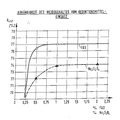
- a more or less complete decolorization of the flotation-resistant substance can be observed (see Fig. 1).
- the whiteness increases depending on the amount of reducing agent used for dithionite up to 74% for FAS to 77% remission (R457). In the area of low concentrations in particular, the whiteness levels obtained with FAS can only be achieved with 2-3 times the amount of dithionite.
- Heavily wood-containing (more than 40%) colored waste paper is flotation-proof in a 120 tpd system and 60 min in the laboratory. bleached at 15% consistency.
- 0.5% by weight of FAS and 1.5% by weight of dithionite are used. The results are summarized in Table 1 below. They demonstrate the great decolorization power of FAS even at a temperature of 37 ° C.
- waste paper is flotation-free and the material, which is partially colored depending on its origin, is then reduced in a downward-running bleaching tower with approx. 12 - 14% consistency with FAS.
- the throughput is 4.5 t / h.
- the aqueous FAS solution is dosed into a screw conveyor leading to the tower.
- Fabric samples are taken before the bleaching tower (2-3 minutes reaction time) and after the bleaching tower (90 minutes reaction time). The results are summarized in Table 2. It can be seen that after a reaction time of 2 - 3 minutes the substance has largely decolorized.
- the flotation was carried out using the following additives: 1.0% hydrogen peroxide 0.8% NaOH 0.2% complexing agent (Na5DTPA) 2.0% water glass 0.6% soap 0.1% dispersant (sodium salinate)
- a mixture of unprinted, approximately 70% dyed rejects from the production of carbonless paper is mechanically treated in a laboratory kneader within 20 minutes at a consistency of 18% and a temperature of 45 ° C and a pH of 9.0.
- a mixture of wood-free, unprinted, approx. 70% dyed rejects from the production of carbonless papers is made at a consistency of 18% and a temperature of 70 ° C in a laboratory kneader with FAS (initial pH value: 9.0, sodium hydroxide solution and FAS were entered simultaneously) or sodium dithionite (initial pH value: 6.0), then diluted to 5% consistency, the pH value again adjusted to 9.0 (FAS) or 6.0 (dithionite) and 1 h stored at 60 ° C.
- FAS initial pH value: 9.0, sodium hydroxide solution and FAS were entered simultaneously
- sodium dithionite initial pH value: 6.0
- a mixture of wood-free, unprinted, approximately 80% dyed rejects from the production of carbonless paper (NCR paper) is impregnated with the deinking chemicals at a consistency of 15% and 40 ° C for 15 minutes.
- the mixture is then left to react for 45 minutes at 5% consistency and 40 ° C, fiberized for 10 minutes at 3% consistency in a standard whipping device, washed for 10 minutes with 2 liters of water / min. and a sieve mesh size of 64 ⁇ m in the Degussa laboratory wash deinking cell.
- Example 7 A sample from the NCR committee as in Example 7 is treated in the same way as in Examples 7a and 7b with deinking chemicals, then floated for 10 minutes at 1% consistency in the Degussa laboratory flotation cell and then at 1% consistency for 10 minutes washed with 2 l of water / min at a mesh size of 64 ⁇ m in the Degussa laboratory wash deinking cell. The substance thus obtained is reductively post-bleached with FAS as in Example 7. The results are shown in Table 7.
Landscapes
- Paper (AREA)
- Color Printing (AREA)
- Absorbent Articles And Supports Therefor (AREA)
- Electrotherapy Devices (AREA)
- Developing Agents For Electrophotography (AREA)
- Separation Of Suspended Particles By Flocculating Agents (AREA)
Abstract
Description
- Die Erfindung betrifft ein Verfahren zum Entfärben von in der Masse gefärbten Papieren und Selbstdurchschreibepapieren (NCR-Papiere). Diese enthalten in vielen Fällen auch in der Masse gefärbte Papierlagen.
- Während für das Recycling von gewöhnlichem Altpapier wie z.B. Zeitungen und Zeitschriften inzwischen eine Vielzahl von Verfahren bekannt ist, besteht bei der Wiederaufbereitung von NCR-Papieren noch eine Reihe von ungelösten Problemen.
- Die üblicherweise beim sogenannten De-inken angewandten Flotationsverfahren sind zwar geeignet, Druckfarbenpartikel von der Papierfaser abzulösen und vom Faserstoff abzutrennen, erweisen sich jedoch als wenig wirksam bei der Entfärbung von in der Masse gefärbten Papieren.
- Zusätzliche Schwierigkeiten bereiten die mikroverkapselten Farbstoffe der Durchschreibepapiere.
- Bei der Herstellung von bunten Papieren führt es z.B. zu Problemen, beim Wechseln der Farbe den Ausschuß in die Produktion zurückzuführen.
- Auch kann in Abhängigkeit vom Anteil an in der Masse gefärbtem Papier beim Einsatz von Altpapier eine Verschiebung des Altpapierfarbtones während der Produktion nicht ausgeschlossen werden. Wird gemischtes Altpapier zur Herstellung von Recyclingpapier verwendet, so kann durch einen hohen Anteil an massegefärbtem Rohstoff die Gleichmäßigkeit der Produktion gefährdet werden.
- Es ist bekannt, Natriumhypochlorit zum Zerstören der Farbstoffe zu verwenden und anschließend mit Natriumdithionit zu bleichen ( Tappi,July 1979, Vol. 62, S. 27 - 30).
- Hypochlorit ist jedoch nur geeignet, wenn holzfreie Papierqualitäten zur Verfügung stehen. Diese begrenzte Anwendbarkeit von Hypochlorit ist auf die Tatsache zurückzuführen, daß das Hypochlorit mit dem Lignin holzhaltiger Stoffe reagiert. Der steigende Anteil holzhaltiger Papierrohstoffe macht daher die Anwendung von Hypochlorit auch bei der Wiederverwendung von in der Masse gefärbtem Ausschuß praktisch unmöglich. Die Verwendung von Hypochlorit als Bleichmittel kann zudem zur Bildung umweltbelastender chlororganischer Verbindungen und zu Chloremissionen führen.
- In der EP-A 0120132 wird ein Verfahren zur Entfärbung von NCR-Papieren beschrieben, bei dem man das Papier in Gegenwart von Natriumhydroxid und Wasserstoffperoxid ohne Wasserglaszusatz aufschlägt, ohne eine Flotation folgen zu lassen.
- In der Praxis hat sich dieses Verfahren jedoch wegen der unzureichenden Ergebisse nicht durchsetzen können.
- Zur Bleiche von Holzpulpen mit niedrigen Zellulosegehalt wird gemäß DE-OS 1 546 252 die Verwendung von Formamidinsulfinsäure, bevorzugt in Gegenwart von Natriumbisulfit, empfohlen.
- Ein ähnliches Problem ist Gegenstand der DE-PS 3 309 956, in der die Bleiche von Papierrohstoffen wie z.B. Holzschliff aber auch Altpapier beschrieben wird. Dabei handelt es sich um Mischungen aus Zeitungen und Illustrierten, die in einem bekannten Flotationsverfahren statt mit Wasserstoffperoxid mit Formamidinsulfinsäure versetzt werden, ohne daß der Weißgehalt bemerkenswert anstiege.
- Aufgabe der Erfindung ist ein Verfahren zum Entfärben von in der Masse gefärbten Papieren und Selbstdurchschreibepapieren, die mikroverkapselte Farbstoffe und häufig auch in der Masse gefärbte Papierbögen enthalten.
- Gegenstand der Erfindung ist ein Verfahren zum Entfärben von in der Masse gefärbten Papieren und Selbstdurchschreibepapieren (NCR-Papier) in einem alkalischen wässrigen Medium, das dadurch gekennzeichnet ist, daß man bei einer Stoffdichte von 2 bis 20 und einer Temperatur von 20 bis 80° C, bevorzugt von 40 bis 60°C, mit 0,05 bis2,5 Gew.-%, bevorzugt 0,1 bis 1,0 % Gew.-%, Formamidinsulfinsäure (FAS), bezogen auf die Menge des Papiers (atro), entfärbt.
- In einer besonders geeigneten Ausführungsform wird pH-Wert der Pulpe so eingestellt, daß er zu Beginn der Reaktion zwischen 7,5 und 12,0 bevorzugt 8,5 und 10,0 und nach der Beendigung zwischen 6,0 und 8,0, bevorzugt 6,5 und 7,5 liegt.
- Zu diesem Zweck erfolgt vorher das Aufschlagen des Papiers (Stoffauflösung) bevorzugt in einem Pulper bei einer Temperatur zwischen 20 und 80° C, bevorzugt 30 und 70° C in einem wässrigen Medium, das alkalisch bevorzugt mit Natriumhydroxid eingestellt ist. Anschließend erfolgt dann die Entfärbung mit FAS.
- In einer vorteilhaften Ausführungsform des Verfahren setzt man das FAS nicht anschließend sondern gleich zu Beginn oder während dieses Verfahrensschrittes ein.
- Da das Aufschlagen selbst nur ca. 10 bis 30 min. erfordert, läßt man die Pulpe anschließend gegebenenfalls unter weiterem Umwälzen noch bei 20 bis 80° C, bevorzugt 40 bis 60° C, ausreagieren.
- Als Rohstoffe verwendbar sind in der Masse gefärbte Papiere, die sowohl bedruckt als auch unbedruckt, holzfrei oder holzhaltig sein können.
- Eingesetzt werden ebenso Selbstdurchschreibepapiere, die mikroverkapselte Farbstoffe enthalten.
- Insbesondere bei Verwendung von unbedrucktem oder nur schwach bedrucktem,in der Masse gefärbtem Recyclingpapier oder Selbstdurchschreibepapieren, oder Ausschuß aus der Produktion dieser Papiersorten erübrigen sich im Normalfall weitere Verfahrenschritte und weitere zusätzliche Chemikalien wie Seifen etc..
- Bei bedrucktem Papier - holzfrei oder holzhaltig - und/oder höheren Ansprüchen an den Weißgrad erweist es sich als zweckmäßig, den nach dem Stand der Technik bekannten Flotations-Deinking-oder den Wasch-Deinking-Prozeß oder eine Folge Flotation/Wäsche bzw. Wäsche/Flotation oder eine Kombination von Wasch- und Flotations-Verfahren unter Verwendung von Wasserstoffperoxid, Natronlauge, Wasserglas und weiteren bekannten Dispergier - und Flotationshilfsmitteln der Entfärbung mit Formamidinsulfinsäure vorausgehen zu lassen. Die DE-AS 2 303 827, DE-AS 2 813 448; PTS - Symposium "Altpapier - Aufbereitung", 1981 München, W. Auhorn und J. Melzer, S 57 - 64 betreffen Deinkingsverfahren nach dem Stand der Technik).
- Eine Standardrezeptur für das Flotationsdeinking lautet:

- Die oben beschriebene Problematik der Entfärbung von in der Masse eingefärbten Papiersorten läßt sich durch eine Behandlung des Papierstoffes mit Formamidinsulfinsäure nach dem Verfahren gemäß der Erfindung einfach lösen. Ebenso lassen sich Recyclingpapiere, die Farbstoffe aus Farbkapseln von Selbstdurchschreibepapieren enthalten, durch die erfindungsgemäße Behandlung mit Formamidinsulfinsäure entfärben, während die Behandlung mit Dithionit im sauren Bereich häufig sogar zu einem Weißgradverlust führt.
- Bei der Beurteilung gefärbter Papiere ist aber nicht nur der Weißgrad (R₄₅₇) maßgeblich,sondern insbesondere auch die Farbmessung, die daher bei den folgenden Versuchen ebenfalls durchgeführt wurde (nach DIN 5033). Die Mengenangaben für FAS und Dithionit beziehen sich auf atro Papierstoff.
- Altpapier aus 80 % in der Masse eingefärbten Durchschreibesätzen liefert beim Aufschlagen ohne Chemikalien einen Weißgehalt von 42,9 % Remission (R₄₅₇). Der Farbort liegt bei x = 0,356 und y = 0,372. Durch eine Behandlung mit 0,5 % H₂O₂, 1 % Natronlauge, 2 % Wasserglas und 0,5 % Seife sowie 0,1 % DTPA bei 12 % Stoffdichte und 40° C wird nach der Flotation eine Weiße von 53,9 % Remission (R₄₅₇) und ein Farbort von x = 0,333 und y = 0,354 gemessen.
- Altpapier aus 80 % in der Masse eingefärbten Durchschreibesätzen (NCR-Papiere) werden einem klassischen Flotationsdeinking-Prozeß unterworfen und anschließend reduktiv gebleicht.
- Hierzu imprägniert man das Altpapier 15 min bei 15 % Stoffdichte und 40°C, läßt 60 Min. ausreagieren, zerfasert 10 Min. bei 3 % Stoffdichte im Frank-Standard-Aufschlaggerät und flotiert 10 Min. bei 1 % Stoffdichte in einer Laborflotationszelle.
- Der flotationsdeinkte Stoff wird dann 1 Std. bei 70°C und 4,5 % Stoffdichte mit FAS bei einem AnfangspH-Wert von ca.9,0 und einem End-pH-Wert von ca. 7,2 bzw. Dithionit bei ph 5,5 - 6 reduktiv gebleicht. Die pH-Werte wurden zuvor im Hinblick auf erzielbare Entfärbungen optimiert.
- Das flotationsdeinkte Altpapier besitzt einen Weißgehalt von 42,9 Remission (R₄₅₇) Der Farbort liegt bei x = 0,356 und y = 0,372. In Abhängigkeit von der Einsatzmenge des Reduktionsmittels ist eine mehr oder weniger vollständige Entfärbung des flotationsdeinkten Stoffes zu beobachten (s. Abb. 1).
- Der Farbort verschiebt sich beim Einsatz von 1 % FAS nach x = 0.322 und y = 0.333, beim Einsatz von 1 % Dithionit nach x = 0.327 und y = 0.337.
- Der Weißgehalt steigt in Abhängigkeit von der Einsatzmenge des Reduktionsmittels bei Dithionit bis auf 74 % bei FAS auf 77 % Remission (R₄₅₇). Insbesondere im Bereich niedriger Konzentrationen können die mit FAS erhaltenen Weißgehalte nur mit der 2 - 3-fachen Dithionitmenge erzielt werden.
- Stark holzhaltiges (mehr als 40 %), in der Masse gefärbtes Altpapier wird in einer 120-tato-Anlage flotationsdeinkt und im Labor 60 MIn. bei 15 % Stoffdichte nachgebleicht. Zu diesem Zweck werden jeweils 0,5 Gew.-% FAS bzw. 1,5 Gew.-% Dithionit eingesetzt. Die Ergebnisse sind in der folgenden Tabelle 1 zusammengefaßt. Sie demonstrieren die große Entfärbungskraft von FAS auch bei einer Temperatur von 37° C.

- Altpapier wird nach dem Stand der Technik flotationsdeinkt und das in Abhängigkeit von der Herkunft teilweise gefärbte Material anschließend in einem abwärts betriebenen Bleichturm bei ca. 12 - 14 % Stoffdichte mit FAS reduziert. Der Durchsatz beträgt 4,5 t/h. Die wässrige FAS-Lösung wird in eine zum Turm führende Transportschnecke dosiert. Stoffproben werden vor dem Bleichturm (2 - 3 Minuten Reaktionszeit) und nach dem Bleichturm (90 Minuten Reaktionszeit) entnommen. Die Ergebnisse sind in Tabelle 2 zusammengefaßt. Man erkennt, daß schon nach 2 - 3 Minuten Reaktionszeit eine weitgehende Entfärbung des Stoffes stattgefunden hat.

- Diese großtechnisch durchgeführten Versuche zeigen noch einmal deutlich, daß in der Masse gefärbte Papiere (3-6) durch Flotations-De-inken nicht entfärbt werden und danach noch einen deutlichen Farbstich aufweisen.
- Die Flotation wurde unter Verwendung folgender Zusätze durchgeführt:
1.0 % Wasserstoffperoxid
0.8 % NaOH
0.2 % Komplexbildner (Na₅DTPA)
2.0 % Wasserglas
0.6 % Seife
0.1 % Dispergiermittel (Natriumolinat) - Eine Mischung aus unbedrucktem, zu ca. 70 % in der Masse gefärbtem Ausschuß aus der Produktion von Selbstdurchschreibepapieren wird bei einer Stoffdichte von 18 % und einer Temperatur von 45 °C und einem pH-Wert von 9.0 innerhalb von 20 Minuten im Laborkneter mechanisch behandelt.
- Diese Vorgehensweise simuliert in verstärkter Form die Verhältnisse im Dickstoffpulper und führt zu einer teilweisen Zerstörung der Farbstoffkapseln, mit denen das Papier beschichtet ist. Die austretenden, zunächst farblosen organischen Verbindungen, reagieren dann zu den Farbstoffen ab.
- Anschließend wird bei 5 % Stoffdichte und 60°C mit Formamidinsulfinsäure (FAS) beziehungsweise Dithionit entfärbt.
Die Ergebnisse sind in den Tabellen 3 und 4 aufgeführt
- Eine Mischung aus holzfreiem, unbedrucktem, zu ca. 70 % in der Masse gefärbtem Ausschuß aus der Produktion von Selbstdurchschreibepapieren wird bei einer Stoffdichte von 18 % und einer Temperatur von 70°C im Laborkneter mit FAS (Anfangs-pH-Wert : 9.0, Natronlauge und FAS wurden gleichzeitig eingetragen) beziehungsweise Natriumdithionit (Anfangs-pH-Wert : 6,0) behandelt, anschließend auf 5 % Stoffdichte verdünnt, der pH-Wert erneut auf 9,0 (FAS) beziehungsweise 6,0 (Dithionit) eingestellt und 1 h bei 60°C aufbewahrt.
Die Ergebnisse sind in der Tabelle 5 aufgeführt.
- Eine Mischung aus holzfreiem, unbedrucktem, zu ca. 80% in der Masse gefärbtem Ausschuß aus der Produktion von Selbstdurchschreibepapier (NCR-Papier) wird bei einer Stoffdichte von 15 % und 40°C für 15 Min. mit den Deinking-Chemikalien imprägniert. Anschließend läßt man 45 Min bei 5% Stoffdichte und 40°C ausreagieren, zerfasert 10 Min. bei 3% Stoffdichte im Standardaufschlaggerät, wäscht 10 Min. mit 2 l Wasser/Min. und einer Siebmaschenweite von 64µm in der Degussa-Labor-Wasch-Deinking-Zelle. Der gewaschene Stoff wird dann eine Stunde bei 60°C und 5% Stoffdichte mit 0,5% FAS/=,3% NaOH bzw. 1,0% FAS/0,5% NaOH gebleicht.
-
- a. 0,6% NaOH
0,5% Na-Olinat - b. 0,8% NaOH
0,5% Na-Olinat
0,5% H₂O₂
2,0% Wasserglas
0,2% Na₅DTPA - Die Ergebnisse sind in Tabelle 6 aufgeführt

- Eine Probe von NCR-Ausschuß wie in Beispiel 7 wird ebenso wie in Beispiel 7a und 7b mit Deinking-Chemikalien behandelt, danach 10 Min. bei 1% Stoffdichte in der Degussa-Labor-Flotations-Zelle flotiert und anschließend bei 1% Stoffdichte 10 Min. mit 2 l Wasser/Min bei einer Siebmaschenweite von 64 µm in der Degussa-Labor-Wasch-Deinking-Zelle gewaschen. Der so erhaltene Stoff wird wie in Beispiel 7 mit FAS reduktiv nachgebleicht. Die Ergebnisse sind in Tabelle 7 aufgeführt.

Claims (6)
Priority Applications (1)
| Application Number | Priority Date | Filing Date | Title |
|---|---|---|---|
| AT87104044T ATE63766T1 (de) | 1986-05-17 | 1987-03-19 | Verfahren zum entfaerben von in der masse gefaerbten papieren und selbstdurchschreibepapieren. |
Applications Claiming Priority (2)
| Application Number | Priority Date | Filing Date | Title |
|---|---|---|---|
| DE3616816 | 1986-05-17 | ||
| DE19863616816 DE3616816A1 (de) | 1986-05-17 | 1986-05-17 | Verfahren zum entfaerben von in der masse gefaerbten papieren und selbstdurchschreibepapieren |
Publications (2)
| Publication Number | Publication Date |
|---|---|
| EP0247307A1 true EP0247307A1 (de) | 1987-12-02 |
| EP0247307B1 EP0247307B1 (de) | 1991-05-22 |
Family
ID=6301146
Family Applications (1)
| Application Number | Title | Priority Date | Filing Date |
|---|---|---|---|
| EP19870104044 Expired - Lifetime EP0247307B1 (de) | 1986-05-17 | 1987-03-19 | Verfahren zum Entfärben von in der Masse gefärbten Papieren und Selbstdurchschreibepapieren |
Country Status (6)
| Country | Link |
|---|---|
| EP (1) | EP0247307B1 (de) |
| JP (1) | JPS62276094A (de) |
| AT (1) | ATE63766T1 (de) |
| CA (1) | CA1281509C (de) |
| DE (2) | DE3616816A1 (de) |
| FI (1) | FI87472C (de) |
Cited By (3)
| Publication number | Priority date | Publication date | Assignee | Title |
|---|---|---|---|---|
| EP0360993A3 (de) * | 1988-09-17 | 1991-11-06 | Sulzer-Escher Wyss Gmbh | Verfahren zur Weissgraderhöhung von Altpapier mit neutralem Wasserkreislauf |
| DE19510278A1 (de) * | 1994-03-22 | 1995-09-28 | Brueggemann L Kg | Bleichmittel zur Bleiche von Sekundärfaserstoffen für die Papierherstellung |
| WO2021219776A1 (de) * | 2020-04-29 | 2021-11-04 | Kübler & Niethammer, Papierfabrik Kriebstein Ag | Verfahren zur herstellung eines etikettenpapiers aus abgelösten nassetiketten |
Families Citing this family (1)
| Publication number | Priority date | Publication date | Assignee | Title |
|---|---|---|---|---|
| JP2003073987A (ja) * | 2001-09-03 | 2003-03-12 | Oji Paper Co Ltd | 印刷古紙の中性脱墨パルプ化方法 |
Citations (3)
| Publication number | Priority date | Publication date | Assignee | Title |
|---|---|---|---|---|
| DE2816148B1 (de) * | 1978-04-14 | 1978-10-12 | Voith Gmbh J M | Verfahren zum Wiederaufbereiten von Papieren |
| EP0040873A1 (de) * | 1980-05-22 | 1981-12-02 | INTEROX Société Anonyme | Verfahren zur Regenerierung von Altpapier |
| DE3309956C1 (de) * | 1983-03-19 | 1984-07-12 | Degussa Ag, 6000 Frankfurt | Verfahren zum Bleichen von Papierrohstoffen |
Family Cites Families (1)
| Publication number | Priority date | Publication date | Assignee | Title |
|---|---|---|---|---|
| JPS5220971A (en) * | 1975-08-12 | 1977-02-17 | Nippon Shokubai Kagaku Kogyo Co Ltd | Process for removing nitrogen oxides |
-
1986
- 1986-05-17 DE DE19863616816 patent/DE3616816A1/de not_active Withdrawn
-
1987
- 1987-03-19 EP EP19870104044 patent/EP0247307B1/de not_active Expired - Lifetime
- 1987-03-19 DE DE8787104044T patent/DE3770194D1/de not_active Expired - Lifetime
- 1987-03-19 AT AT87104044T patent/ATE63766T1/de not_active IP Right Cessation
- 1987-05-04 FI FI871956A patent/FI87472C/fi not_active IP Right Cessation
- 1987-05-13 JP JP62114919A patent/JPS62276094A/ja active Pending
- 1987-05-15 CA CA 537275 patent/CA1281509C/en not_active Expired - Lifetime
Patent Citations (3)
| Publication number | Priority date | Publication date | Assignee | Title |
|---|---|---|---|---|
| DE2816148B1 (de) * | 1978-04-14 | 1978-10-12 | Voith Gmbh J M | Verfahren zum Wiederaufbereiten von Papieren |
| EP0040873A1 (de) * | 1980-05-22 | 1981-12-02 | INTEROX Société Anonyme | Verfahren zur Regenerierung von Altpapier |
| DE3309956C1 (de) * | 1983-03-19 | 1984-07-12 | Degussa Ag, 6000 Frankfurt | Verfahren zum Bleichen von Papierrohstoffen |
Cited By (3)
| Publication number | Priority date | Publication date | Assignee | Title |
|---|---|---|---|---|
| EP0360993A3 (de) * | 1988-09-17 | 1991-11-06 | Sulzer-Escher Wyss Gmbh | Verfahren zur Weissgraderhöhung von Altpapier mit neutralem Wasserkreislauf |
| DE19510278A1 (de) * | 1994-03-22 | 1995-09-28 | Brueggemann L Kg | Bleichmittel zur Bleiche von Sekundärfaserstoffen für die Papierherstellung |
| WO2021219776A1 (de) * | 2020-04-29 | 2021-11-04 | Kübler & Niethammer, Papierfabrik Kriebstein Ag | Verfahren zur herstellung eines etikettenpapiers aus abgelösten nassetiketten |
Also Published As
| Publication number | Publication date |
|---|---|
| DE3770194D1 (de) | 1991-06-27 |
| ATE63766T1 (de) | 1991-06-15 |
| EP0247307B1 (de) | 1991-05-22 |
| FI87472C (fi) | 1993-01-11 |
| JPS62276094A (ja) | 1987-11-30 |
| FI871956L (fi) | 1987-11-18 |
| DE3616816A1 (de) | 1987-11-19 |
| FI87472B (fi) | 1992-09-30 |
| FI871956A0 (fi) | 1987-05-04 |
| CA1281509C (en) | 1991-03-19 |
Similar Documents
| Publication | Publication Date | Title |
|---|---|---|
| DE69204739T2 (de) | Entfernung von Farbe während der Sauerstoffentfärbung von Altpapierfasern. | |
| DE2640027C2 (de) | ||
| DE2141757C3 (de) | Verfahren zum Bleichen von Zellstoffbrei | |
| DE2540919C2 (de) | Verfahren zur Herstellung von Cellulosemassen im Ausbeutebereich von 65 - 95 % | |
| DE3877028T2 (de) | Verfahren und anlage zur wiedergewinnung von bedruckten altpapieren. | |
| DE69104195T2 (de) | Verfahren zur enzymatischen entfärbung. | |
| DE69019350T2 (de) | Umweltfreundlicheres verfahren zum bleichen von lignocellulosischen materialien. | |
| DE69402650T2 (de) | Bleichen von wiederverwendeten zellstoff mittels einer oxydativ-reduktivsequenz | |
| DE69104566T2 (de) | Verfahren zum De-inken von bedruckten Papieren. | |
| CH409613A (de) | Verfahren zur Regeneration von Altpapier | |
| DE69217164T2 (de) | Reinigung und Bleichen von Sekundärfasern | |
| DE19614947A1 (de) | Verfahren zur Erhöhung des Weißgrades von Papierfaserstoff | |
| DE69325098T2 (de) | Verfahren zur behandlung von altpapier und wiedergewonnenes papier | |
| DE69506465T2 (de) | Verfahren zur Verminderung der Fluoreszenz in entfärbtem Zellstoff | |
| DE514864T1 (de) | Sauerstoffentklebung in einem Altpapierfaserrückgewinnungsverfahren. | |
| DE69601194T2 (de) | Verfahren zum Deinken von Altpapier | |
| DE2816148B1 (de) | Verfahren zum Wiederaufbereiten von Papieren | |
| DE69308620T2 (de) | Verfahren zum Bleichen vom entfärbten Zellstoff | |
| DE2901942B1 (de) | Verfahren zum Aufbereiten von Altpapier | |
| EP0247307B1 (de) | Verfahren zum Entfärben von in der Masse gefärbten Papieren und Selbstdurchschreibepapieren | |
| DE69408065T2 (de) | Bleichen von wiederverwendetem zellstoff mittels ozone und wasserstoffperoxyd | |
| DE2805445C2 (de) | Verfahren zur Wiederaufbereitung von hochwertigem Altpapier | |
| DE3309956C1 (de) | Verfahren zum Bleichen von Papierrohstoffen | |
| CH670120A5 (de) | ||
| EP1798329B1 (de) | Verfahren zur Entfernung von Störstoffen aus einer wässrigen Faserstoffsuspension |
Legal Events
| Date | Code | Title | Description |
|---|---|---|---|
| PUAI | Public reference made under article 153(3) epc to a published international application that has entered the european phase |
Free format text: ORIGINAL CODE: 0009012 |
|
| 17P | Request for examination filed |
Effective date: 19870319 |
|
| AK | Designated contracting states |
Kind code of ref document: A1 Designated state(s): AT BE DE FR GB IT NL SE |
|
| 17Q | First examination report despatched |
Effective date: 19890814 |
|
| ITF | It: translation for a ep patent filed | ||
| GRAA | (expected) grant |
Free format text: ORIGINAL CODE: 0009210 |
|
| AK | Designated contracting states |
Kind code of ref document: B1 Designated state(s): AT BE DE FR GB IT NL SE |
|
| REF | Corresponds to: |
Ref document number: 63766 Country of ref document: AT Date of ref document: 19910615 Kind code of ref document: T |
|
| ET | Fr: translation filed | ||
| REF | Corresponds to: |
Ref document number: 3770194 Country of ref document: DE Date of ref document: 19910627 |
|
| GBT | Gb: translation of ep patent filed (gb section 77(6)(a)/1977) | ||
| PLBE | No opposition filed within time limit |
Free format text: ORIGINAL CODE: 0009261 |
|
| STAA | Information on the status of an ep patent application or granted ep patent |
Free format text: STATUS: NO OPPOSITION FILED WITHIN TIME LIMIT |
|
| 26N | No opposition filed | ||
| PGFP | Annual fee paid to national office [announced via postgrant information from national office to epo] |
Ref country code: SE Payment date: 19930210 Year of fee payment: 7 |
|
| PGFP | Annual fee paid to national office [announced via postgrant information from national office to epo] |
Ref country code: BE Payment date: 19930302 Year of fee payment: 7 |
|
| PGFP | Annual fee paid to national office [announced via postgrant information from national office to epo] |
Ref country code: GB Payment date: 19930308 Year of fee payment: 7 |
|
| PGFP | Annual fee paid to national office [announced via postgrant information from national office to epo] |
Ref country code: AT Payment date: 19930310 Year of fee payment: 7 |
|
| PGFP | Annual fee paid to national office [announced via postgrant information from national office to epo] |
Ref country code: FR Payment date: 19930329 Year of fee payment: 7 |
|
| PGFP | Annual fee paid to national office [announced via postgrant information from national office to epo] |
Ref country code: NL Payment date: 19930331 Year of fee payment: 7 |
|
| PG25 | Lapsed in a contracting state [announced via postgrant information from national office to epo] |
Ref country code: GB Effective date: 19940319 Ref country code: AT Effective date: 19940319 |
|
| PG25 | Lapsed in a contracting state [announced via postgrant information from national office to epo] |
Ref country code: SE Free format text: LAPSE BECAUSE OF NON-PAYMENT OF DUE FEES Effective date: 19940320 |
|
| PG25 | Lapsed in a contracting state [announced via postgrant information from national office to epo] |
Ref country code: BE Effective date: 19940331 |
|
| BERE | Be: lapsed |
Owner name: DEGUSSA A.G. Effective date: 19940331 |
|
| PG25 | Lapsed in a contracting state [announced via postgrant information from national office to epo] |
Ref country code: NL Effective date: 19941001 |
|
| GBPC | Gb: european patent ceased through non-payment of renewal fee |
Effective date: 19940319 |
|
| NLV4 | Nl: lapsed or anulled due to non-payment of the annual fee | ||
| PG25 | Lapsed in a contracting state [announced via postgrant information from national office to epo] |
Ref country code: FR Effective date: 19941130 |
|
| REG | Reference to a national code |
Ref country code: FR Ref legal event code: ST |
|
| EUG | Se: european patent has lapsed |
Ref document number: 87104044.0 Effective date: 19941010 |
|
| PGFP | Annual fee paid to national office [announced via postgrant information from national office to epo] |
Ref country code: DE Payment date: 19970220 Year of fee payment: 11 |
|
| PG25 | Lapsed in a contracting state [announced via postgrant information from national office to epo] |
Ref country code: DE Free format text: LAPSE BECAUSE OF NON-PAYMENT OF DUE FEES Effective date: 19981201 |
|
| PG25 | Lapsed in a contracting state [announced via postgrant information from national office to epo] |
Ref country code: IT Free format text: LAPSE BECAUSE OF NON-PAYMENT OF DUE FEES;WARNING: LAPSES OF ITALIAN PATENTS WITH EFFECTIVE DATE BEFORE 2007 MAY HAVE OCCURRED AT ANY TIME BEFORE 2007. THE CORRECT EFFECTIVE DATE MAY BE DIFFERENT FROM THE ONE RECORDED. Effective date: 20050319 |