EP0249502A2 - Löslicher Immunsuppressorfaktor und Suppressorzellen - Google Patents
Löslicher Immunsuppressorfaktor und Suppressorzellen Download PDFInfo
- Publication number
- EP0249502A2 EP0249502A2 EP87305261A EP87305261A EP0249502A2 EP 0249502 A2 EP0249502 A2 EP 0249502A2 EP 87305261 A EP87305261 A EP 87305261A EP 87305261 A EP87305261 A EP 87305261A EP 0249502 A2 EP0249502 A2 EP 0249502A2
- Authority
- EP
- European Patent Office
- Prior art keywords
- cells
- human
- animal body
- suppressor factor
- factor protein
- Prior art date
- Legal status (The legal status is an assumption and is not a legal conclusion. Google has not performed a legal analysis and makes no representation as to the accuracy of the status listed.)
- Withdrawn
Links
Images

Classifications
-
- C—CHEMISTRY; METALLURGY
- C07—ORGANIC CHEMISTRY
- C07K—PEPTIDES
- C07K14/00—Peptides having more than 20 amino acids; Gastrins; Somatostatins; Melanotropins; Derivatives thereof
- C07K14/435—Peptides having more than 20 amino acids; Gastrins; Somatostatins; Melanotropins; Derivatives thereof from animals; from humans
- C07K14/52—Cytokines; Lymphokines; Interferons
-
- A—HUMAN NECESSITIES
- A61—MEDICAL OR VETERINARY SCIENCE; HYGIENE
- A61P—SPECIFIC THERAPEUTIC ACTIVITY OF CHEMICAL COMPOUNDS OR MEDICINAL PREPARATIONS
- A61P37/00—Drugs for immunological or allergic disorders
- A61P37/02—Immunomodulators
- A61P37/06—Immunosuppressants, e.g. drugs for graft rejection
-
- A—HUMAN NECESSITIES
- A61—MEDICAL OR VETERINARY SCIENCE; HYGIENE
- A61K—PREPARATIONS FOR MEDICAL, DENTAL OR TOILETRY PURPOSES
- A61K38/00—Medicinal preparations containing peptides
Definitions
- the invention relates to suppressing immune response. More specifically, immortalized natural suppressor cells which themselves are capable of, and which secrete a soluble immunosuppressive factor capable of, eliciting immunotolerance in a host to coadministered foreign tissue and of donor immunocompetent cells to the tissues of the host are disclosed.
- Immunotolerance is a general term to describe the compatibility of materials which would be normally expected to result in an immune response.
- mice injected with allogeneic substances bearing the histocompatibility antigens are able later to accept skin grafts from donors of the previously injected genotype.
- this immunosuppressive property of neonates is simulated by adults subjected to total lymphoid irradiation (TLI), i.e., high dosages of radiation sustainable when nonlymphoid tissues are protected.
- TLI total lymphoid irradiation
- Such radiation has been used in the treatment, for example, of Hodgkin's disease.
- TLI total lymphoid irradiation
- null suppressor cells have been designated, for purposes of symmetry with natural killer (NK) cells, natural suppressor (NS) cells (Oseroff, A., et al., J Immunol (1984) 132 :101).
- NS cells found in neonatal mice spleens are also recoverable from the spleens of adult mice subjected to TLI and can be propagated in vitro under proper conditions indefinitely (Hertel-Wulff, B., et al, J Immunol (1984) 133:2791-2796, incorporated herein by reference). It has now been found that these cells are capable, when administered in vivo , of suppressing graft vs host disease initiated by simultaneously administered immunocompetent cells.
- the propagated cells secrete into supernatant media a soluble factor which is capable of suppressing the immune response as shown by the ability to suppress alloreactivity in the commonly used in vitro test (the mixed leukocyte reaction (MLR) mentioned above) and in vivo in suppressing the acute immune response referred to as graft vs. host disease.
- MLR mixed leukocyte reaction
- the cultured NS cells and the factors secreted by them are therefore useful in providing immediate immunotolerance in mammalian hosts by coadministration of the cells or factors along with foreign substances or tissues to which such immediate tolerance is desired.
- these cells and/or factors permit the hosts to become tolerant of future grafts where the donor tissue is derived from the same donor as tissue coadministered with the cells or factor.
- the invention provides immortalized cell lines capable of secreting factors useful in suppressing the immune response to any desired antigen.
- the immune response may be that of the host against allogeneic tissue (host versus graft) or that of donor immunocompetent cells to the tissues of the host (graft versus host).
- NS factor natural suppressor factor protein
- This factor is useful in tissue transplant subjects so as to prevent immediate and future host-versus-graft and graft-versus-host disease.
- the NS cells can also be used directly in this way.
- the invention relates to supernatants from immortalized cultures of natural suppressor (NS) spleen-derived cells, and to the natural suppressor factor protein they contain. While a murine-derived culture is described in detail, any mammalian spleen cells may be used. In other aspects, the invention relates to methods of inducing immediate immunosuppression and specific immunotolerance in mammalian transplant hosts, of inducing allogeneic immunotolerance in a recipient with respect to a future allograft, and to treating autoimmune diseases by use of the cells per se or of the natural suppressor protein secreted.
- NS natural suppressor
- Immunosuppression is defined herein as that term is used generally to mean the general lowering of an immune response to challenge. While suppression of the response to a particular antigen may be desired, the suppression is not so limited.
- Specific immunotolerance refers to a characteristic of a host described as the failure of an immune resonse to occur when a particular target antigen is encountered by either the host or donor material immunocompetent cells.
- the target antigen may be for example a simple soluble protein or carbohydrate, an infectious cell, or a cell surface.
- the donor tissue may be an allogeneic transplant tissue which contains immunocompetent cells, in this case the hosts' own tissue are target antigens.
- Donor material refers to the material to which immunotolerance is desired.
- the nature of the donor material's immunoreactivity on a molecular level may or may not be known; for example, it may be desirable simply to tolerize a host against allogeneic transplants.
- the donor material consists of whatever immunogenic and immunocompetent substances are present in the transplanted tissue.
- the host-versus-graft disease graft-versus-host disease
- donor tissue host-versus-graft disease
- graft-versus-host disease graft-versus-host disease.
- the latter is accomplished by preventing an immune response on the part of a transplant tissue to the tissues of the host.
- the "donor material” comprises immunocompetent cells which respond to whatever antigenic substances are present in the transplant recipient which trigger an immune response by this material.
- Null surface phenotype refers to the property of the cells of the invention wherein they lack the surface markers characteristic of T cells, B cells, or macrophages, and have morphologies similar to natural killer cells. Thus, they are large granular lymphocytes which lack antigen specificity and carry out their functions without antigenic stimulation.
- surface markers the appropriate surface markers in the murine system include Lyt-1, Lyt-2, and surface immunoglobulins such as murine Ig and Ia.
- Each mammalian system has its typical corresponding markers, which in the human system includes markers recognized by various monoclonal antibodies known in the art. The corresponding human cells would be expected to be OKT4+, OKT8 ⁇ , LEU3 ⁇ , LEU11+, and LEU7 ⁇ .
- Corresponding target cells refers to standard assay cells which cytotoxic lymphocytes would be expected to lyse. In the murine system, these are YAC-1. In the human system they are K562 cells.
- Cell line or similar words such as “cells”, “cell cultures”, and the like refer to the specific genotype described, to its progeny, and to mutants and derivatives thereof which retain the essential characteristics of the original cell. It is well understood that naturally occurring or deliberately induced mutations are common in propagation of particular cell lines, many of which are irrelevant to the desired properties. For example, in the cells of the invention, the ability to suppress the mixed lymphocyte reaction must be retained, as well as the characteristic of expressing the unique surface receptors characteristic of neither T nor B cells. Other metabolic properties, such as nutritional requirements, antibiotic resistance, and the like are irrelevant to the functionality of the cells, and the definition, as it relates to a particular "cell line", includes mutants and derivatives which contain such alterations. In addition, it is understood to be possible to hybridize two cell lines to retain desired characteristics from both partners, eliminating others. Such hybridomas are considered to be derivatives of the original cell line when the required properties are retained.
- “Suppresses the mixed lymphocyte reaction (MLR)” refers to the ability of the subject material (soluble factors or cell line) to prevent the uptake of a marker substance such as thymidine by maturing T cells in the response which occurs when lymphocytes from allogeneic sources are mixed. Specifically, this property may be tested by the procedure specified according to Hertel-Wulff et al (supra), incorporated herein by reference (see below).
- “Simultaneous” administration is meant to be approximately contemporaneous, i.e., within several hours.
- the NS cells and NS factor protein of the invention are characterized by, and are useful by virtue of, their in vitro or in vivo activities.
- Their in vitro activity is demonstrated using the mixed leukocyte reaction (MLR), a commonly used protocol to detect alloreactivity.
- MLR mixed leukocyte reaction
- lymphocytes from two genetically different individuals of a species are mixed in a culture medium.
- MHC major histocompatibility antigens
- the measurement of the response can be simplified by irradiating the cells of one species to permit them to behave only as stimulators of an immune response by the unirradiated (responder) cell population.
- the immune response is presumed to involve initial secretion of lymphokines by amplifying T cells among the responders, which lymphokines mediate the maturation of cytotoxic T responder cells.
- This proliferation is monitored by uptake of labeled thymidine ([3H] TdR) and suppresion of the response is indicated by inhibition of labeled thymidine uptake.
- the ability to inhibit this uptake is independent of the antigenic makeup of the stimulator cells and does not require that the haplotypes of the suppressor and responder cells be matched.
- the mechanism of the suppression is not known, but it has been established that neither IL-2 induced proliferation of HT-2 cells nor IL-1 secretion by macrophages is inhibited.
- mice which have been irradiated with sublethal dosages of radiation are injected with suspensions of the NS cells or with their supernatants, each coadministered with spleen cells or bone marow derived from an allogeneic species.
- Subsequent prevention of lethal graft vs. host disease confirms the immunosuppressive action with respect to the donor cell immune attack on the host.
- Both the NS cell suspensions and the NS factor proteins are able to suppess the immediate immune response of the donor cells.
- immunotolerance to later skin allografts where the donor was of the strain from which the bone marrow was derived was achieved in the recipients.
- mice Propagation of spleen cells derived from TLI or neonatal mice was conducted as described by Hertel-Wulff, et al (supra). Mice were used as convenient subjects, but, of course, other vertebrates could also be used.
- Human cells are also available as subject cultures using spleens removed for medical indications from neonates or removed from previously ascertained donors who, for other medical indications, had been subject to total lymphoid irradiation, and are recently deceased.
- human bone marrow which carries null phenotypes can be used. If bone marrow is used, the null lymphocyte population is isolated using standard Ficoll-Hypaque gradients and cultured in standard tissue culture media with the addition of an appropriate lymphokine such as IL-2 or the supernatant from human peripheral blood lymphocytes stimulated with PHA.
- the null phenotypes are propagated as a polyclonal population, and then colonies are analyzed for suppressive activity using a human mixed lymphocyte reaction (MLR) similar to that described for the murine cells herein.
- MLR human mixed lymphocyte reaction
- the isolated phenotype resembles that described herein for the murine system.
- the cell has a null phenotype and no natural killer function--i.e., it is not able to lyse human tumor K562 cells.
- spleens were removed aseptically either from newborn BALB/c mice (1-14 days old) or mice which had been subjected to TLI.
- 4-6 month old male BALB/c mice were anesthetized daily with pentobarbitol and were positioned in an apparatus designed to irradiate the major lymphoid organs (lymph nodes, spleen, and thymus) described by Slavin et al. J Exp Med (l977) 146 :34; skull, lungs, tail, and hind legs were shielded.
- mice were given 200 rad/day 5 times a week for a total dose of 3,400 rad, using a dose rate of 92 rad/min with a 0.35 mm copper filter and a 52 cm source/axis distance. Tetracycline was added to the drinking water during TLI and for one week after completion of radiation. TLI-treated mice were sacrificed between 1-3 days after completion of TLI.
- Single cell suspensions were prepared by incising the capsule and disrupting the splenic parenchyma.
- the suspended cells were cultured in RPMI 1640 containing 25 mM HEPES, 2 mM glutamine, and 5 x 10 ⁇ 5 M 2-mercaptoethanol, with 10% fetal calf serum (FCS) and 10% supernatant from Conconavalin A stimulated rat spleen cells (CAS).
- FCS fetal calf serum
- CAS Conconavalin A stimulated rat spleen cells
- the cloned cells were moderately large with granular and vacuolated cytoplasm.
- the cultured cells are induced to produce the soluble suppressor factor by addition of suitable inducing agents.
- suitable inducing agents include those which activate the phosphatidyl inositol pathway, such as the phorbol esters.
- secretion of the NS factor is stimulated by the addition of 5-20 ng/ml of PMA and 0.05-1.0 ⁇ g/ml of a calcium ionophore to the medium.
- NS cells are unusual with respect to surface markers. They have been shown to express the Thy-1 antigen but not Lyt-1 and Lyt-2 antigens nor surface immunoglobulins found on T and B cells respectively, and do not carry the macrophage markers identified by the monoclonal antibodies anti-MAC-1 and F4/80. They do not stain for nonspecific esterase, and do not adhere to plastic or glass. Human-derived cells have similar properties with respect to the appropriate markers.
- NS cells are not able to lyse YAC-1 tumor cells. (The appropiate line for human cells is K562.) However, they suppress [3H]TdR uptake by a myoglobin responsive T-cell line in the presence of myoglobin.
- the cell lines of the invention can generally be derived and cultured as described above. They can be further immortalized by fusion to immortalizing cell lines, infection with virus, or other means known in the art.
- the soluble factor is produced by suitable inducing conditions, which include those particular conditions specified above, as well as addition of other materials which stimulate the phosphatidyl inositol pathway to the medium.
- the supernatants containing NS factor may be used per se, or may be subjected to standard purification techniques to isolate the factor with the suppressor activity by tracking active fractions as measured by suppression of the MLR.
- the suppressor factor from the murine cells exemplified has been partially characterized.
- the analogous factor from cells of other mammalian species, including humans, has similar properties.
- the supernatants of the isolated cell lines are free of activity exhibited by IL-1, IL-2, IL-4, tumor necrosis factor (TNF), and TGF- ⁇ .
- the supernatants do contain IL-3 and ⁇ -interferon activity.
- the suppressor factor has been shown not to be identical to these.
- IL-3 recombinant IL-3 does not show suppressive activity in the standard MLR.
- Recombinant ⁇ -interferon does show such activity; however, after removal of all ⁇ -interferon from the supernatant by immunoaffinity chromatography, the suppressive activity of the supernatants is retained.
- Both the NS cells and their induced supernatants were capable of suppressing the MLR conducted as follows: Responder cells (5 x 10⁵) and stimulator cells (7.5 x 10⁵) were incubated with graded numbers of the NS cells in 0.3 ml/wells in 96-well microculture plates. The culture medium was supplemented with 2 mM glutamine, 5 x 10 ⁇ 5 M 2-mercaptoethanol, 100 units/ml penicillin, 100 ⁇ g/ml streptomycin, and 10% pooled human serum (VSP, Biocell Laboratories, Carson, California). The NS cells and stimulator cells were given 3300 rad before incubation. Cultures were maintained at 37°C in 5% CO2 for 5-6 days.
- TLI-2.B7 Three illustrative cell lines cultured from TLI mice, designated TLI-2.B7, TLI-2.H5, and TLI-2.4C, suppressed the MLR significantly at co-cultured cell counts of 2 x 10⁴ per well. Suppression in the range of 90% was obtained at this concentration when C57BL/Ka stimulator and BALB/c responder cells were used. Similar results were obtained with A/J responder and C57BL/Ka stimulator cell lines.
- the activity of the induced supernatant is destroyed by pronase treatment and is associated with a dialysate of >20 kd.
- 0.5, 1, 5, or 10 x 106 adult C57BL/Ka spleen cells were injected into the Fl cross BALB/c x C57BL/Ka neonatal hosts.
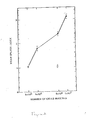
- the adult (8-12 weeks old) dissociated spleen cells were prepared in tissue culture medium RPM1-1640 (GIBCO, Grand Island, NY) and injected intraperitoneally in 0.1 ml into the Fl cross on day 4-7 after birth. Eight days later recipient spleens were removed and assayed. Injection of 5 x 10⁶ cells was shown to give an easily measurable response of the order of a 2.4-fold (average) increase in spleen size, and was on the dose responsive portion of the curve obtained, shown in Figure 2.
- Spleen indices were calculated and represent the ratio of the weight of the spleens of injected mice to the weights of uninjected litter mate controls. Indices greater than 1.0 are indication of graft vs. host disease.
- Table 1 shows the results obtained when the subject neonates were injected intraperitoneally with 5 x 10⁶ C57BL/Ka spleen cells 4-7 days after birth with and without NS cells or control HT-2 cells and the spleen indices measured 8 days later. As expected, controls injected with 5 x 10⁶ Fl hybrid spleen cells showed no spleen enlargement.
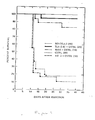
- BALB/c weanlings were given 400 rad whole body irradiation 6-12 hours before administration of 5 x 10⁶ C57BL/Ka spleen cells in 0.5 ml RPMI1640, either alone or in combination with the NS cells. Under these circumstances, BALB/c 21 day old weanlings injected intraperitoneally with C57BL/Ka spleen cells were killed (85% die by 30 days). As would be expected, C57BL/Ka weanlings similarly treated survive. However, for BALB/c mice receiving 15 x 106 cloned NS cells (TLI-2.4C) co-injected with the C57BL/Ka spleen cells, only 5% of the hosts died after 30 days.
- TKI-2.4C 15 x 106 cloned NS cells
- Co-injections of 15 x 106 4BA4 cells are only slightly less effective. Co-injection with HT-2 cells gave results similar to those of the controls. These results are summarized in Figure 3, where the numbers in parentheses show the number of mice in each group. The survival rates at 100 days were the same as those shown for 40 days in the Figure. Those few mice receiving co-injected HT-2 cells which did survive were runted.
- the cloned NS cells are capable of suppressing the acute graft-versus-host disease mounted against immunocompromised hosts. (It should be noted that intraperitoneal injection of the spleen cells and of the NS cells was essential; similar experiments conducted intravenously were not successful, possibly due to failure of NS cells to migrate to the host spleen and interact with the donor cells.)
- peripheral blood mononuclear (PMN) cells were assessed for the presence of C57BL/Ka donor cells. PMN were isolated from surviving hosts after 30 days of test period, and incubated with anti-C57BL/Ka antiserum with complement in a microcytotoxicity test performed as described by Slavin, S., et al, J Exp Med (1977) 146 :34-48. Where C57BL/Ka characteristics present in any PMN cells, cell death would have resulted; however, none was observed. Also, these hosts were not capable of accepting C57BL/Ka skin grafts within 2 wk after the initial injection.
- Spleen cells contain a high population of T-lymphocytes, thought to be responsible for the acute graft-versus-host disease, but a relatively low population of stem cells, which are relatively undifferentiated and are thought to be responsible for, or at 1east essential to, production of immunotolerance.
- PMN from all surviving animals were tested by the microcytotoxicity assay as above and found to be chimeras as shown by 95% killing of PMN cells. Further, they were able to accept C57BL/Ka, but not C3H, skin grafts after 40 days.
- mice The spleen cells of the chimeras were further tested for their ability to induce graft-versus-host disease in fresh BALB/c mice recipients.
- Normal C57BL/Ka donor cells when injected at 10 x 106 spleen cells intraperitoneally in 0.5 ml RPMI 1640 medium into either BALB/c or C3H recipients result in the death of all mice injected within 14 days. As would be expected, control mice having no cells injected survived.
- the NS cells and induced supernatants as well as the NS factor protein per se of the invention will be useful in conferring immunosuppression and immunotolerance on a host subject.
- Subjects susceptible to this treatment include any vertebrate species, including human, but particularly the NS wells and NS factor compositions are adaptable to use in mammals.
- the conferred immunosuppression or immunotolerance is especially useful in permitting the host to accept simultaneous or future transplants of tissues from an allogeneic donor.
- the dosage levels required are highly dependent on the nature of the host and on the nature of the immunological challenge.
- the NS cells are administered to the host in the amount of approximately 108-1010 cells/kg of host weight, along with a comparable number of cells to be used in the allogeneic transplant.
- the amount of supernatant NS factor administered is comparable, i.e., the amount produced in the supernatant from about this same number of induced cells.
- Coadministration with similar numbers of foreign immunocompetent cells permits contemporaneous acceptance of these transplants.
- the foregoing treatment may be used in conjunction with subsequent implantation or injection of tissue from the same donor which has been co-injected with the NS or NS factor, as above.
- the initial simultaneous administration may use immunocompetent donor tissue, such as bone marrow or spleen cells, preferably bone marrow.
- Administration is typically by injection, either intravenous (especially for the soluble factor) or intraperitoneal (which is preferred for the NS cells).
- intravenous especially for the soluble factor
- intraperitoneal which is preferred for the NS cells.
- other modes of administration such as oral, transmucosal, or using other formulations as is understood by those in the art may also be used.
Landscapes
- Health & Medical Sciences (AREA)
- Chemical & Material Sciences (AREA)
- Life Sciences & Earth Sciences (AREA)
- Immunology (AREA)
- Organic Chemistry (AREA)
- Medicinal Chemistry (AREA)
- Bioinformatics & Cheminformatics (AREA)
- Engineering & Computer Science (AREA)
- General Health & Medical Sciences (AREA)
- Biophysics (AREA)
- Nuclear Medicine, Radiotherapy & Molecular Imaging (AREA)
- Molecular Biology (AREA)
- Proteomics, Peptides & Aminoacids (AREA)
- Biochemistry (AREA)
- Gastroenterology & Hepatology (AREA)
- Zoology (AREA)
- Toxicology (AREA)
- Transplantation (AREA)
- Chemical Kinetics & Catalysis (AREA)
- General Chemical & Material Sciences (AREA)
- Genetics & Genomics (AREA)
- Pharmacology & Pharmacy (AREA)
- Animal Behavior & Ethology (AREA)
- Public Health (AREA)
- Veterinary Medicine (AREA)
- Medicines Containing Material From Animals Or Micro-Organisms (AREA)
- Micro-Organisms Or Cultivation Processes Thereof (AREA)
- Medicines That Contain Protein Lipid Enzymes And Other Medicines (AREA)
- Preparation Of Compounds By Using Micro-Organisms (AREA)
- Peptides Or Proteins (AREA)
Applications Claiming Priority (2)
| Application Number | Priority Date | Filing Date | Title |
|---|---|---|---|
| US87358386A | 1986-06-12 | 1986-06-12 | |
| US873583 | 1986-06-12 |
Publications (2)
| Publication Number | Publication Date |
|---|---|
| EP0249502A2 true EP0249502A2 (de) | 1987-12-16 |
| EP0249502A3 EP0249502A3 (de) | 1989-03-15 |
Family
ID=25361932
Family Applications (1)
| Application Number | Title | Priority Date | Filing Date |
|---|---|---|---|
| EP87305261A Withdrawn EP0249502A3 (de) | 1986-06-12 | 1987-06-12 | Löslicher Immunsuppressorfaktor und Suppressorzellen |
Country Status (3)
| Country | Link |
|---|---|
| EP (1) | EP0249502A3 (de) |
| JP (1) | JPS6339899A (de) |
| AU (1) | AU7412987A (de) |
Cited By (1)
| Publication number | Priority date | Publication date | Assignee | Title |
|---|---|---|---|---|
| WO1993009234A3 (en) * | 1991-11-05 | 1993-08-05 | Univ Leland Stanford Junior | Suppressor and progenitor cells |
Families Citing this family (2)
| Publication number | Priority date | Publication date | Assignee | Title |
|---|---|---|---|---|
| JP4819427B2 (ja) | 2005-07-15 | 2011-11-24 | 株式会社リコー | 画像形成装置、画像形成方法、及びプロセスカートリッジ |
| JP4590344B2 (ja) | 2005-11-21 | 2010-12-01 | 株式会社リコー | 静電潜像担持体及びそれを用いた画像形成装置、プロセスカートリッジ及び画像形成方法 |
Family Cites Families (2)
| Publication number | Priority date | Publication date | Assignee | Title |
|---|---|---|---|---|
| NO841953L (no) * | 1983-05-18 | 1984-11-19 | Ortho Pharma Canada | Mutant menneske-t-cellelinje og fremgangsmaate for deres fremstilling |
| CA1253800A (en) * | 1984-05-11 | 1989-05-09 | Chris Platsoucas | Human suppressor factor(s) and method |
-
1987
- 1987-06-11 AU AU74129/87A patent/AU7412987A/en not_active Abandoned
- 1987-06-12 JP JP62147800A patent/JPS6339899A/ja active Pending
- 1987-06-12 EP EP87305261A patent/EP0249502A3/de not_active Withdrawn
Cited By (1)
| Publication number | Priority date | Publication date | Assignee | Title |
|---|---|---|---|---|
| WO1993009234A3 (en) * | 1991-11-05 | 1993-08-05 | Univ Leland Stanford Junior | Suppressor and progenitor cells |
Also Published As
| Publication number | Publication date |
|---|---|
| AU7412987A (en) | 1987-12-17 |
| JPS6339899A (ja) | 1988-02-20 |
| EP0249502A3 (de) | 1989-03-15 |
Similar Documents
| Publication | Publication Date | Title |
|---|---|---|
| ES2589311T5 (es) | Poblaciones de células que tienen actividad inmunorreguladora, método de aislamiento y usos | |
| Strober et al. | Cloned natural suppressor cells prevent lethal graft-vs-host disease. | |
| King et al. | Suppression of the mixed leukocyte response and of graft-vs-host disease by spleen cells following total lymphoid irradiation (TLI). | |
| EP0667904B1 (de) | Suppressorzellen | |
| JP2002534083A (ja) | 骨髄機能廃絶性ではない寛容原性の処置 | |
| Sykes | Mechanisms of tolerance | |
| AU2002311601C1 (en) | Non-myeloablative tolerogenic treatment with tyrphostins | |
| Waer et al. | Induction of transplantation tolerance in mice across major histocompatibility barrier by using allogeneic thymus transplantation and total lymphoid irradiation. | |
| Hawley et al. | Association between ICAM-1 expression and metastatic capacity of murine B-cell hybridomas | |
| US5985656A (en) | Suppressor and progenitor cells | |
| Rosenfeld et al. | Ex vivo purging of allogeneic marrow with L-leucyl-L-leucine methyl ester: a phase I study | |
| JPS6339899A (ja) | 可溶性免疫サプレッサ−因子およびサプレッサ−細胞 | |
| ES2252970T3 (es) | Tratamiento ex vivo de linfocitos t alogenicos y xenogenicos con la ayuda de antagonistas de gp39. | |
| DE69431184T2 (de) | Ein thymus-fremdtransplantat | |
| Imamura et al. | Suppressor activity in the supernatant of T cell clones derived from chimeric mouse spleen cells | |
| AU2003261499B2 (en) | Ex vivo treatment of allogeneic and xenogeneic T-cells with gp39 antagonists | |
| Roberts et al. | IL-4 expression delays eosinophil-independent vasculopathy and fibrosis during allograft rejection in the mouse | |
| Poutsiaka | MACROPHAGE IMMUNE REGION-ASSOCIATED ANTIGEN: ITS INDUCTION, TURNOVER, AND MODULATION BY SHED B16 F10 MELANOMA CELL MEMBRANE VESICLES (INTERFERON-GAMMA) | |
| BOWERS et al. | 15th International Leucocyte Culture Conference December 5-10, 1982. Asilomar | |
| Bast | FOCIS abstract supplement | |
| Wooa et al. | Effects of FK 506 on ch’rism and the induction of donor-specific unresponsiveness following fully allogeneic bone marrow transplantation in mice | |
| Waller et al. | of December 31, 2015. | |
| Patton | Importance of IL-4 during acute schistosomiasis | |
| Gur | Immune regulation by early hematopoietic progenitor cells | |
| WO1996006642A1 (en) | Allogeneic and xenogeneic transplantation |
Legal Events
| Date | Code | Title | Description |
|---|---|---|---|
| PUAI | Public reference made under article 153(3) epc to a published international application that has entered the european phase |
Free format text: ORIGINAL CODE: 0009012 |
|
| AK | Designated contracting states |
Kind code of ref document: A2 Designated state(s): AT BE CH DE ES FR GB GR IT LI LU NL SE |
|
| PUAL | Search report despatched |
Free format text: ORIGINAL CODE: 0009013 |
|
| RHK1 | Main classification (correction) |
Ipc: C12P 21/02 |
|
| AK | Designated contracting states |
Kind code of ref document: A3 Designated state(s): AT BE CH DE ES FR GB GR IT LI LU NL SE |
|
| STAA | Information on the status of an ep patent application or granted ep patent |
Free format text: STATUS: THE APPLICATION IS DEEMED TO BE WITHDRAWN |
|
| 18D | Application deemed to be withdrawn |
Effective date: 19890916 |
|
| RIN1 | Information on inventor provided before grant (corrected) |
Inventor name: STROBER, SAMUEL Inventor name: HERTEL-WULFF, BIRGIT |