EP0251186B1 - Monoklonaler Antikörper gegen menschliches Plasminogen, Verfahren zu seiner Herstellung, diesen Antikörper enthaltendes Testreagenz sowie Testsatz und diesen Antikörper produzierendes Hybridoma - Google Patents
Monoklonaler Antikörper gegen menschliches Plasminogen, Verfahren zu seiner Herstellung, diesen Antikörper enthaltendes Testreagenz sowie Testsatz und diesen Antikörper produzierendes Hybridoma Download PDFInfo
- Publication number
- EP0251186B1 EP0251186B1 EP87109091A EP87109091A EP0251186B1 EP 0251186 B1 EP0251186 B1 EP 0251186B1 EP 87109091 A EP87109091 A EP 87109091A EP 87109091 A EP87109091 A EP 87109091A EP 0251186 B1 EP0251186 B1 EP 0251186B1
- Authority
- EP
- European Patent Office
- Prior art keywords
- plasminogen
- antibody
- human
- monoclonal antibody
- plasmin
- Prior art date
- Legal status (The legal status is an assumption and is not a legal conclusion. Google has not performed a legal analysis and makes no representation as to the accuracy of the status listed.)
- Expired - Lifetime
Links
Images

Classifications
-
- C—CHEMISTRY; METALLURGY
- C07—ORGANIC CHEMISTRY
- C07K—PEPTIDES
- C07K16/00—Immunoglobulins [IG], e.g. monoclonal or polyclonal antibodies
- C07K16/40—Immunoglobulins [IG], e.g. monoclonal or polyclonal antibodies against enzymes
Definitions
- Plasminogen is the only digestive protease precursor existing in plasma, and its active form, plasmin, acts on and dissolves fibrin clots resulting mainly from a coagulation reaction. This phenomenon is called fibrinolysis, and plasmin is a main factor involved in the fibrinolysis mechanism.
- Plasminogen is synthesized in the liver, and its content in the blood is known to be as high as 150 to 200 micrograms/ml. It can be separated and purified as a single component almost quantitatively by a two-stage operation of affinity chromatography on a Lys-Sepharose column and DEAE ion-exchange column chromatography.
- Human plasminogen is a single-chain glycoprotein composed of about 800 amino acid residues in total and having a molecular weight of about 90,000 to about 94,000. Glu-plasminogen having a glutamic acid residue at the NH2 terminal and Lys-plasminogen having a lysine residue at the NH2 terminal are known as the human plasminogen.
- the former is intact plasminogen, and the latter results from cleavage of the Lys-Lys linkage in the NH2 terminal region of the Glu-plasminogen by plasmin.
- the molecular weight of Lys-plasminogen is lower than the intact plasminogen by about 8,000.
- plasminogen is converted to double-chain plasmin by cleavage of the Arg-Val linkage between the 560th Arg and 561st Val by a tissue activator secreted by various cells (e.g., melanoma, vascular endothelial cells: or urokinase.
- This plasmin is composed of two chains, a heavy chain (H chain) having a higher molecular weight on the NH2 terminal side and a light chain (L chain) having a lower molecular weight on the COOH terminal side.
- H chain heavy chain
- L chain light chain
- Two S-S linkages exist between the H and L chains. It is known that a site which plays an important role in enzymatic activity is present in the L chain.
- LBS lysine binding sites
- One known method of assaying human plasminogen is an immunodiffusion method involving the use of an antiserum to human plasminogen. Another method comprises adding an excess of streptokinase to an assay sample to form a complex of it with plasminogen, and determining the plasminogen activity in the sample using a chromogenic synthetic substrate.
- Still another object of this invention is to provide a monoclonal antibody which binds specifically to human plasminogen and permits selective measurement of the amount of plasminogen in a sample, for example, human blood.
- Yet another object of this invention is to provide a monoclonal antibody which binds specifically to human plasminogen and is effective for determining the state of clotting and fibrinolysis in vivo or diagnosing diseases such as thrombosis, disseminated intravascular coagulation (DIC).
- DIC disseminated intravascular coagulation
- a further object of this invention is to provide a monoclonal antibody which can be expected to be used for biochemical analysis of proteins, for example for analyzing disorders in protein molecules of plasminogen.
- a yet further object of this invention is to provide a method of producing the monoclonal antibody of the invention by culturing the aforesaid hybridoma cells.
- An additional object of this invention is to provide a reagent and a kit for quantifying plasminogen, which comprises the monoclonal antibody of the invention.
- Human plasminogen used as an antigen is isolated and purified from human plasma by Lysine-Sepharose column chromatography and DEAE Sephadex column chromatography in accordance with the method of Wallen & Wiman.
- mice of other strains may also be used.
- the immunization should be planned, and the concentration of human plasminogen should be determined, so that sufficient amounts of antigenically stimulated lymphocytes can be formed.
- the mice are intraperitoneally immunized several times with a small amount of plasminogen at certain intervals, and further it is intravenously administered several times.
- the spleen cells are extracted for fusion.
- the spleen is aseptically taken out from the immunized animals, and a spleen cell suspension is prepared from it.
- the spleen cells are fused with mouse myeloma cells from a suitable line by using a suitable fusion promoter.
- the preferred ratio of the spleen cells to the myeloma cells is from about 20:1 to about 2:1.
- Use of 0.5 to 1.5 ml of a fusion medium is suitable per about 108 spleen cells.
- Many myeloma cells suitable for cell fusion are known.
- P3-X63-Ag8-U1 cells (to be abbreviated as P3-U1) [see D. E.
- Yelton et al.: Current Topics in Microbiology and Immunology, 81, 1 (1978)] are used. They are an 8-azaguanine resistant cell line. They lack hypoxanthine-guanine phosphoribosyl transferase, and therefore do not survive in HAT medium (containing hypoxanthine, aminopterin and thymidine). Furthermore, this cell line is of a non-secretion type which does not secrete an antibody.
- Polyethylene glycol having an average molecular weight of 1,000 to 4,000, for example, may be advantageously used as the fusion promoter.
- Other fusion promoters known in the art may also be used.
- polyethylene glycol having an average molecular weight of 1,540 was used.
- a mixture of the fused cells, non-fused spleen cells and non-fused myeloma cells is diluted in a separate receptacle (such as a microtiter plate) with a selective medium in which the non-fused myeloma cells cannot survive, and cultured for a sufficient period of time to allow the non-fused cells to die (about 1 week).
- the culture medium may be one which is resistant to a drug such as 8-azaguanine and in which the non-fused myeloma cells cannot survive, for example the aforesaid HAT medium.
- the selective medium the non-fused myeloma cells die away.
- the non-fused spleen cells are non-tumoral, they die after a certain period of time (about 1 week). On the other hand, the fused cells can survive in the selective medium because they have both the tumor-bearing nature of the parent myeloma cells and the nature of the parent spleen cells.
- the supernatant of the culture medium is collected and screened for an antibody to human plasminogen by enzyme linked immunosorbent assay (to be referred to as ELISA hereinafter).
- enzyme linked immunosorbent assay to be referred to as ELISA hereinafter.
- Culturing of the cloned hybridoma cells and isolation and purification of a monoclonal antibody from the culture medium are carried out in accordance with conventional methods.
- the ability of the resulting monoclonal antibody of this invention to bind to human plasminogen is not substantially inhibited by epsilon-aminocaproic acid.
- the resulting monoclonal antibody does not substantially affect the activation of human plasminogen with a plasminogen activator such as urokinase and tissue plasminogen activator (TPA).
- a plasminogen activator such as urokinase and tissue plasminogen activator (TPA).
- the resulting monoclonal antibody neither substantially inhibits the thrombolytic activity of a complex of plasminogen and streptokinase.
- the sandwich method generally denotes a method in which an antibody binding to two different sites of an antigen is prepared and the presence or absence of the antigen or its amount is determined. It is described, for example, in Wide, Radioimmunoassay Methods, 199-206 (1970).
- the present invention provides an immunological reagent for quantifying human plasminogen by the sandwich method, said reagent comprising a primary antibody fixed to an insoluble solid carrier and a secondary labelled antibody, at least one of said antibodies being the aforesaid monoclonal antibody of the invention.
- Reagents provided by this invention do no differ in quality, and permit constant quantification of plasminogen in solution (for example, in plasma) with a good accuracy. Since plasminogen is directly measured, the measurement is accurate and rapid without any effect of foreign materials. Accordingly, the present invention provides a reagent and a kit capable of quantifying human plasminogen accurately and rapidly.
- the monoclonal antibody (primary antibody) to human plasminogen is fixed to a suitable carrier (such as a plastic container).
- This monoclonal antibody is referred to as the "fixed antibody”.
- the surface of the insoluble carrier is then coated with a suitable substance (such as a bovine serum albumin) to avoid a non-specific binding between the insoluble carrier and the reagent or the assay sample.
- the insoluble carrier to which the primary antibody is fixed is contacted and reacted with the assay sample at a given temperature for a given period of time. During this time, the fixed antibody (primary antibody) binds to plasminogen in the assay sample. It is then washed with a suitable washing liquid.
- a solution (e.g., an aqueous soution) of an antibody to human plasminogen (secondary antibody) which is labelled with a suitable labelling substance is contacted with the plasminogen bound to the fixed antibody at a given temperature for a given period of time to induce reaction of the plasminogen with the secondary antibody.
- the amount of the labelling substance labelling the secondary antibody which is present on the insoluble carrier is measured.
- the amount of plasminogen in the assay sample can be calculated from the amount of the labelling substance.
- the assay reagent of this invention may be formed into a kit together with various auxilliary agents.
- the present invention provides an assay kit comprising
- the secondary antibody may be labelled with an enzyme, a radioisotope or a fluorescent substance.
- the insoluble carrier used in this invention may, for example, be a plastic container, plastic beads, glass beads or metal particles.
- These insoluble carriers may, for example, be formed of a polymer such as polystyrene, polyethylene, polypropylene, polyesters, polyacrylonitrile, fluorine resins, crosslinked dextran and polysaccharides, paper, glass, metals, agarose and combinations of these.
- the insoluble carrier may be in the shape of, for example, a tray, a sphere, fibers, a rod, a disc, a container, a cell, or a test tube.
- radioactive substances examples are 125I, 131I, 14C and 3H.
- examples of the enzymes are alkaline phosphatase, peroxidase and beta-D-galactosidase.
- examples of the fluorescent substances are fluorescein isothiocyanate and tetramethyl Rhodamine isothiocyanate. These examples are not limitative, and any other labelling substances which can be used in immunological assay methods may be selected in this invention.
- mice Male Balb/c mice were immunized intraperitoneally with an emulsion of 100 micrograms of human plasminogen and complete Freund's adjuvant twice with an interval of 14 days. Seven days later, 50 micrograms of human plasminogen was additionally administered intravenously together with physiological saline. Four days after the final immunization, the mouse spleen cells were used for cell fusion.
- the spleen cells were taken out aseptically and passed through a stainless steel mesh to give a suspension of the spleen cells.
- the suspension was transferred to RPMI-1640 medium (made by GIBCO) supplemented with 0.39 g/liter of L-glutamine, 0.2 g/liter of kanamycin sulfate and 2.0 g/liter of NaHCO3.
- the cells which proliferated were washed three times with RPMI-1640 and again suspended in RPMI-1640 medium.
- Mouse myeloma cells P3-UU1 were cultured in RPMI-1640 medium supplemented with 0.39 g/liter of L-glutamine, 0.2 g/liter of kanamycin sulfate, 2.0 g/liter of NaHCO3 and 10% fetal calf serum (this medium is abbreviated as 10% FCS-RPMI-1640).
- the myeloma cells were in the logarithmic stage of cell division at the time of cell fusion.
- the HT medium was added.
- the medium was replaced by fresh HT medium every other day four times in all. Thereafter, the culturing was carried out using ordinary 10% FCS-RPMI-1640 medium.
- the hybridoma cells (3Hl) selected by screening in Example 2 were cloned by the following procedure.
- the 3Hl cells were diluted so that there was 0.9 cell per well of a 96-well microtiter plate.
- Balb/c mouse thymus cells were added as feeder cells, distributed to the plate, and cultured in 10% FCS-RPMI-1640 medium. The medium was observed under a microscope, and it was determined that single cell colonies formed.
- the hybridoma cells in the supernatant of the culture medium were screened by enzyme-linked immunosorbent assay for an antibody to human plasminogen.
- the particular classes of the purified monoclonal antibodies were determined by the Ouchterlony gel diffusion test using class-specific antimouse-immunoglobulin antisera. The results are shown in Table 1 below.
- each of the various antigens indicated above was subjected to 10% SDS-polyacrylamide gel electrophoresis, and then the protein was fixed electrically onto a nitrocellulose membrane at 50 V for 1 hour.
- the nitrocellulose membrane was blocked with Tris buffer containing 3% w/w gelatin (to be referred to as TBS), and reacted overnight at room temperature with a solution of each of monoclonal antibodies, 3H1E6 and 4A3E8 (concentration 1 microgram/ml; diluted with 1% gelatin-TBS).
- Table 4 summarizes the antigen reactivity and properties of the monoclonal antibodies 3H1E6 and 4A3E8.
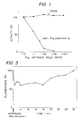
- Plasminogen and monoclonal antibody 3H1E6 or a rabbit polyclonal antibody were mixed in a suitable mole ratio, and reacted at 37°C for 30 minutes. Streptokinase in an excessive amount with respect to plasminogen was added, and reacted at 37°C for 10 minutes. Thereafter, a substrate solution (S-2251) was added, and reacted at 37°C for 5 minutes. The absorbance of the solution at 405 nm was measured. The results of the measurement are shown in Figure 1 in which the absorbance obtained when human plasminogen and streptokinase were reacted without the addition of the monoclonal antibody is expressed as 100%.
- the polyclonal antibody as a result of binding to plasminogen, inhibited the activation of plasminogen with streptokinase.
- the monoclonal antibody 3H1E6 did not affect the activation.
- Monoclonal antibody "3H1E6" shown in Table 1 in Example 3 was fixed to an insoluble carrier (microtiter plate) as described below.
- An antibody component was purified from anti-sera to human plasminogen which was obtained by immunizing rabbit with human plasminogen.
- the antibody was labelled with peroxidase, and used as a second antibody.
- the monoclonal antibody 3H1E6 (20 micrograms/ml) specifically recognizing human plasminogen was left to stand overnight at 4°C on a microtiter plate to fix it.
- a buffer (20 mM phosphate buffer, 0.135 M NaCl) containing 1% bovine serum albumin was added, and left to stand at room temperature for 4 hours.
- the plate was washed three times with a washing liquor (20 mM phosphate buffer, 0.135 M NaCl, 0.05% Tween 20) containing 1% bovine serum albumin.
- Purified human plasminogen diluted to various concentrations with a diluting solution (20 mM phosphate buffer, 0.135 M NaCl), was added, and reacted at 37°C for 2 hours.
- the amount of plasminogen can be easily determined by using a monoclonal antibody specifically recognizing and binding to human plasminogen as one antibody in the sandwich method.
- Table 5 and Figure 3 The results are shown in Table 5 and Figure 3.
- the amount of plasminogen is expressed in % by taking the amount of plasminogen in a plasma sample taken from a healthy person as 100%.
- the level of plasminogen in blood decreased markedly in DIC and hepatic disease.
- the measuring kit in accordance with this invention would be effective for diagnosing these diseases. It is also very useful for monitoring in thrombolytic therapy by administration of urokinase, evaluating the efficacy of a drug, and analyzing a diseased condition.
- Hybridoma cells having the property of producing monoclonal antibody 3H1E6 were cultured in RPMI 1640 medium containing 10% fetal calf serum (FCS). After culturing for 2 days at 37°C in the presence of 5% CO2 when the proliferation of the cells was confluent, the supernatant of the culture medium was collected, and centrifuged at 3,000 rpm for 10 minutes. 250 ml of the supernatant was applied to 5 ml of protein A-Sepharose to adsorb the monoclonal antibody in the supernatant. The gel was washed thoroughly with 400 ml of 0.1M phosphate buffer (pH 8.0), and eluted with 0.1M citrate buffer (pH 3.0).
- FCS fetal calf serum
Landscapes
- Chemical & Material Sciences (AREA)
- Organic Chemistry (AREA)
- Health & Medical Sciences (AREA)
- General Health & Medical Sciences (AREA)
- Biochemistry (AREA)
- Biophysics (AREA)
- Life Sciences & Earth Sciences (AREA)
- Genetics & Genomics (AREA)
- Medicinal Chemistry (AREA)
- Molecular Biology (AREA)
- Proteomics, Peptides & Aminoacids (AREA)
- Immunology (AREA)
- Preparation Of Compounds By Using Micro-Organisms (AREA)
Claims (18)
- Monoklonaler Antikörper, dadurch gekennzeichnet, daß er(A) die Fähigkeit, humanes Glu-Plasminogen und humanes Lys-Plasminogen zu binden, besitzt und(B) im wesentlichen keine Fähigkeit besitzt, humanes Glu-Plasmin und humanes Lys-Plasmin zu binden.
- Monoklonaler Antikörper nach Anspruch 1, dadurch gekennzeichnet, daß die Fähigkeit, humanes Glu-Plasminogen und humanes Lys-Plasminogen zu binden, im wesentlichen nicht durch ε-Aminocapronsäure inhibiert wird.
- Monoklonaler Antikörper nach Anspruch 1, dadurch gekennzeichnet, daß er die Aktivierung von humanem Glu-Plasminogen und humanem Lys-Plasminogen mit einem Plasminogenaktivator im wesentlichen nicht beeinflußt.
- Monoklonaler Antikörper nach Anspruch 1, dadurch gekennzeichnet, daß er die thrombolytische Aktivität von einem Streptokinase-humanem Glu-Plasminogenkomplex und einem Streptokinase-humanem Lys-Plasminogenkomplex im wesentlichen nicht inhibiert.
- Monoklonaler Antikörper nach Anspruch 1, dadurch gekennzeichnet, daß er im wesentlichen keine Bindungsfähigkeit an einen humanen Glu-Plasmin-α₂-Plasmin-Inhibitorkomplex und an einen humanen Lys-Plasmin-α₂-Plasmin-Inhibitorkomplex aufweist.
- Monoklonaler Antikörper nach Anspruch 1, dadurch gekennzeichnet, daß er im wesentlichen keine Bindungsfähigkeit an einen humanen Glu-Plasmin-α₂-Makroglobulinkomplex und an einen humanen Lys-Plasmin-α₂-Makroglobulinkomplex aufweist.
- Hybridomazellen, dadurch gekennzeichnet, daß sie den monoklonalen Antikörper nach Anspruch 1 erzeugen.
- Hybridomazellen nach Anspruch 7, dadurch gekennzeichnet, daß sie durch Fusionierung von Milzzellen eines Säugers, der mit humanem Glu-Plasminogen oder humanem Lys-Plasminogen immunisiert ist, mit Myelomazellen erhalten worden sind.
- Hybridomazellen nach Anspruch 8, dadurch gekennzeichnet, daß der Säuger eine Maus ist.
- Verfahren zur Herstellung des monoklonalen Antikörpers nach Anspruch 1, dadurch gekennzeichnet, daß die Hybridomazellen von Anspruch 7 gezüchtet werden, der durch die Hybridomazellen erzeugte monoklonale Antikörper von anderen Produkten abgetrennt wird und gereinigt wird.
- Monoklonaler Antikörper nach Anspruch 1, dadurch gekennzeichnet, daß er markiert ist.
- Monoklonaler Antikörper nach Anspruch 11, dadurch gekennzeichnet, daß er mit einem Enzym, einem Radioisotop oder einer fluoreszierenden Substanz markiert ist.
- Monoklonaler Antikörper nach Anspruch 1, dadurch gekennzeichnet, daß er an einen unlöslichen Träger fixiert ist.
- Monoklonaler Antikörper nach Anspruch 13, dadurch gekennzeichnet, daß der unlösliche Träger ein Kunststoffbehälter, Kunststoffkügelchen, Glaskügelchen oder Metallteilchen ist.
- Immunologisches Reagens für die quantitative Bestimmung von humanem Plasminogen nach dem Sandwichverfahren, dadurch gekennzeichnet, daß es einen an einen unlöslichen Träger fixierten primären Antikörper und einen sekundären markierten Antikörper umfaßt, wobei mindestens einer der Antikörper der monoklonale Antikörper nach Anspruch 1 ist.
- Reagens nach Anspruch 15, dadurch gekennzeichnet, daß der unlösliche Träger ein Kunststoffbehälter, Kunststoffkügelchen, Glaskügelchen oder Metallteilchen ist.
- Immunologisches Analysekit, dadurch gekennzeichnet, daß es(a) einen an einen unlöslichen Träger fixierten primären Antikörper,(b) einen sekundären markierten Antikörper,(c) ein Auflösungsmittel für ein Antigen und(d) ein Waschmittelumfaßt, wobei mindestens einer der primären und sekundären Antikörper der monoklonale Antikörper von Anspruch 1 ist.
- Kit nach Anspruch 17, dadurch gekennzeichnet, daß der sekundäre markierte Antikörper ein Antikörper ist, der mit einem Enzym markiert ist, und daß es weiter ein Substrat für die Messung der Enzymaktivität und ein Reaktions-Beendigungsmittel für die Deaktivierung der Enzymaktivität umfaßt.
Applications Claiming Priority (4)
| Application Number | Priority Date | Filing Date | Title |
|---|---|---|---|
| JP146252/86 | 1986-06-24 | ||
| JP61146252A JPH074270B2 (ja) | 1986-06-24 | 1986-06-24 | モノクローナル抗体 |
| JP61286790A JPS63140961A (ja) | 1986-12-03 | 1986-12-03 | ヒトプラスミノ−ゲンに対するモノクロ−ナル抗体を用いた免疫学的測定試薬及びキツト |
| JP286790/86 | 1986-12-03 |
Publications (3)
| Publication Number | Publication Date |
|---|---|
| EP0251186A2 EP0251186A2 (de) | 1988-01-07 |
| EP0251186A3 EP0251186A3 (en) | 1989-08-23 |
| EP0251186B1 true EP0251186B1 (de) | 1993-09-01 |
Family
ID=26477131
Family Applications (1)
| Application Number | Title | Priority Date | Filing Date |
|---|---|---|---|
| EP87109091A Expired - Lifetime EP0251186B1 (de) | 1986-06-24 | 1987-06-24 | Monoklonaler Antikörper gegen menschliches Plasminogen, Verfahren zu seiner Herstellung, diesen Antikörper enthaltendes Testreagenz sowie Testsatz und diesen Antikörper produzierendes Hybridoma |
Country Status (4)
| Country | Link |
|---|---|
| EP (1) | EP0251186B1 (de) |
| DE (1) | DE3787220T2 (de) |
| DK (1) | DK321687A (de) |
| NO (1) | NO872633L (de) |
Cited By (1)
| Publication number | Priority date | Publication date | Assignee | Title |
|---|---|---|---|---|
| WO2021081582A1 (en) * | 2019-10-28 | 2021-05-06 | Monash University | Antibodies for binding plasmin |
-
1987
- 1987-06-23 NO NO872633A patent/NO872633L/no unknown
- 1987-06-24 EP EP87109091A patent/EP0251186B1/de not_active Expired - Lifetime
- 1987-06-24 DK DK321687A patent/DK321687A/da unknown
- 1987-06-24 DE DE87109091T patent/DE3787220T2/de not_active Expired - Fee Related
Cited By (1)
| Publication number | Priority date | Publication date | Assignee | Title |
|---|---|---|---|---|
| WO2021081582A1 (en) * | 2019-10-28 | 2021-05-06 | Monash University | Antibodies for binding plasmin |
Also Published As
| Publication number | Publication date |
|---|---|
| DE3787220T2 (de) | 1994-03-03 |
| DK321687D0 (da) | 1987-06-24 |
| DE3787220D1 (de) | 1993-10-07 |
| EP0251186A3 (en) | 1989-08-23 |
| EP0251186A2 (de) | 1988-01-07 |
| NO872633D0 (no) | 1987-06-23 |
| DK321687A (da) | 1987-12-25 |
| NO872633L (no) | 1987-12-28 |
Similar Documents
| Publication | Publication Date | Title |
|---|---|---|
| US4902614A (en) | Monoclonal antibody to human protein C | |
| US5830681A (en) | Immunoassays for and monoclonal antibodies to prothrombin activation peptide F1.2 | |
| US7439025B2 (en) | Antibodies binding a gamma carboxyglutamic acid displaying epitope | |
| EP1007570B1 (de) | Monospezifische antikörper gegen fibrinogen und fibrinopeptide b | |
| EP0842949B1 (de) | NEUARTIGE MONOKLONALE ANTIKÖRPER UND VERFAHREN ZUR IMMUNOLOGISCHEN ANALYSE DES e-D DIMERS UND DES e-DD/E-KOMPLEXES | |
| US5534255A (en) | Monoclonal antibody specific to human α2 -plasmin inhibitor | |
| JPH085920B2 (ja) | 抗ヒトストロムライシンモノクローナル抗体及び酵素免疫測定法 | |
| AU621823B2 (en) | Improvements relating to measurement of tissue plasminogen activator activity | |
| EP0271810B1 (de) | Immunologische Bestimmung von freiem menschlichem Protein-S und c4bp-Protein-S-Komplex | |
| KR960002740B1 (ko) | 안티-트롬빈-결합물질 모노클로날 항체, 이를 생산하는 하이브리도마 및 모노클로날 항체를 이용한 트롬빈-결합물질의 정제법 및 측정법 | |
| US5888749A (en) | Anti-human plasmin-α2 -plasmin inhibitor complex antibodies, hybridomas, and immunological determination method | |
| EP0315447A2 (de) | Verfahren zur immunologischen Bestimmung von humanem Protein S sowie Reagens und Kit dafür | |
| US5187067A (en) | Immunological determination of free human protein S and C4bp-protein S complex | |
| JPH07238099A (ja) | モノクローナル抗体及びこれを用いる免疫学的測定法 | |
| EP0339302B1 (de) | Reagenzsystem zur Bestimmung des Komplexes des menschlichen Plasminogenaktivator-Inhibitors und des menschlichen Gewebeplasminogenaktivators und Testsatz dafür | |
| EP0251186A2 (de) | Monoklonaler Antikörper gegen menschliches Plasminogen, Verfahren zu seiner Herstellung, diesen Antikörper enthaltendes Testreagenz sowie Testsatz und diesen Antikörper produzierendes Hybridoma | |
| EP0205046B1 (de) | Monoklonaler Antikörper gegen humanes Protein C | |
| EP0169549B1 (de) | Immunologische Bestimmung von menschlichem Plasmin/Alpha-2-plasmin-Hemmstoff | |
| EP0192675B1 (de) | Anti-urokinase monoklonaler antikörper, seine herstellung und verwendung | |
| JP2610808B2 (ja) | 人正常細胞由来の組織型プラスミノーゲンアクチベーターに対するモノクロナル抗体を用いる免疫学的測定試薬 | |
| JP2518602B2 (ja) | ヒトプロテインsに対するモノクロ―ナル抗体を用いた免疫学的測定試薬及びキット | |
| JPH074270B2 (ja) | モノクローナル抗体 | |
| JP2609908B2 (ja) | 慢性関節リウマチ疾患の診断用試薬 | |
| JP2000041673A (ja) | 新規のモノクローナル抗体並びにe−Dモノマー、e−Dダイマー、及びe−DD/E複合体の免疫学的分析方法 | |
| JPH08201392A (ja) | 好中球コラゲナーゼの免疫学的定量法 |
Legal Events
| Date | Code | Title | Description |
|---|---|---|---|
| PUAI | Public reference made under article 153(3) epc to a published international application that has entered the european phase |
Free format text: ORIGINAL CODE: 0009012 |
|
| AK | Designated contracting states |
Kind code of ref document: A2 Designated state(s): BE CH DE FR GB LI SE |
|
| PUAL | Search report despatched |
Free format text: ORIGINAL CODE: 0009013 |
|
| AK | Designated contracting states |
Kind code of ref document: A3 Designated state(s): BE CH DE FR GB LI SE |
|
| 17P | Request for examination filed |
Effective date: 19900201 |
|
| 17Q | First examination report despatched |
Effective date: 19911202 |
|
| GRAA | (expected) grant |
Free format text: ORIGINAL CODE: 0009210 |
|
| AK | Designated contracting states |
Kind code of ref document: B1 Designated state(s): BE CH DE FR GB LI SE |
|
| REF | Corresponds to: |
Ref document number: 3787220 Country of ref document: DE Date of ref document: 19931007 |
|
| ET | Fr: translation filed | ||
| PLBE | No opposition filed within time limit |
Free format text: ORIGINAL CODE: 0009261 |
|
| STAA | Information on the status of an ep patent application or granted ep patent |
Free format text: STATUS: NO OPPOSITION FILED WITHIN TIME LIMIT |
|
| 26N | No opposition filed | ||
| EAL | Se: european patent in force in sweden |
Ref document number: 87109091.6 |
|
| PGFP | Annual fee paid to national office [announced via postgrant information from national office to epo] |
Ref country code: FR Payment date: 19950316 Year of fee payment: 9 |
|
| PGFP | Annual fee paid to national office [announced via postgrant information from national office to epo] |
Ref country code: CH Payment date: 19950320 Year of fee payment: 9 |
|
| PGFP | Annual fee paid to national office [announced via postgrant information from national office to epo] |
Ref country code: SE Payment date: 19950321 Year of fee payment: 9 |
|
| PGFP | Annual fee paid to national office [announced via postgrant information from national office to epo] |
Ref country code: GB Payment date: 19950324 Year of fee payment: 9 |
|
| PGFP | Annual fee paid to national office [announced via postgrant information from national office to epo] |
Ref country code: BE Payment date: 19950328 Year of fee payment: 9 |
|
| PGFP | Annual fee paid to national office [announced via postgrant information from national office to epo] |
Ref country code: DE Payment date: 19950630 Year of fee payment: 9 |
|
| PG25 | Lapsed in a contracting state [announced via postgrant information from national office to epo] |
Ref country code: GB Effective date: 19960624 |
|
| PG25 | Lapsed in a contracting state [announced via postgrant information from national office to epo] |
Ref country code: SE Effective date: 19960625 |
|
| PG25 | Lapsed in a contracting state [announced via postgrant information from national office to epo] |
Ref country code: LI Effective date: 19960630 Ref country code: CH Effective date: 19960630 Ref country code: BE Effective date: 19960630 |
|
| BERE | Be: lapsed |
Owner name: TEIJIN LTD Effective date: 19960630 |
|
| GBPC | Gb: european patent ceased through non-payment of renewal fee |
Effective date: 19960624 |
|
| REG | Reference to a national code |
Ref country code: CH Ref legal event code: PL |
|
| PG25 | Lapsed in a contracting state [announced via postgrant information from national office to epo] |
Ref country code: FR Effective date: 19970228 |
|
| PG25 | Lapsed in a contracting state [announced via postgrant information from national office to epo] |
Ref country code: DE Effective date: 19970301 |
|
| EUG | Se: european patent has lapsed |
Ref document number: 87109091.6 |
|
| REG | Reference to a national code |
Ref country code: FR Ref legal event code: ST |