EP0251195A2 - Verfahren und Reagenz zur Bestimmung von alpha-Amylase - Google Patents
Verfahren und Reagenz zur Bestimmung von alpha-Amylase Download PDFInfo
- Publication number
- EP0251195A2 EP0251195A2 EP87109113A EP87109113A EP0251195A2 EP 0251195 A2 EP0251195 A2 EP 0251195A2 EP 87109113 A EP87109113 A EP 87109113A EP 87109113 A EP87109113 A EP 87109113A EP 0251195 A2 EP0251195 A2 EP 0251195A2
- Authority
- EP
- European Patent Office
- Prior art keywords
- alpha
- amylase
- substrate
- ncacc
- ecacc
- Prior art date
- Legal status (The legal status is an assumption and is not a legal conclusion. Google has not performed a legal analysis and makes no representation as to the accuracy of the status listed.)
- Granted
Links
Images


Classifications
-
- C—CHEMISTRY; METALLURGY
- C07—ORGANIC CHEMISTRY
- C07K—PEPTIDES
- C07K16/00—Immunoglobulins [IG], e.g. monoclonal or polyclonal antibodies
- C07K16/40—Immunoglobulins [IG], e.g. monoclonal or polyclonal antibodies against enzymes
-
- C—CHEMISTRY; METALLURGY
- C12—BIOCHEMISTRY; BEER; SPIRITS; WINE; VINEGAR; MICROBIOLOGY; ENZYMOLOGY; MUTATION OR GENETIC ENGINEERING
- C12Q—MEASURING OR TESTING PROCESSES INVOLVING ENZYMES, NUCLEIC ACIDS OR MICROORGANISMS; COMPOSITIONS OR TEST PAPERS THEREFOR; PROCESSES OF PREPARING SUCH COMPOSITIONS; CONDITION-RESPONSIVE CONTROL IN MICROBIOLOGICAL OR ENZYMOLOGICAL PROCESSES
- C12Q1/00—Measuring or testing processes involving enzymes, nucleic acids or microorganisms; Compositions therefor; Processes of preparing such compositions
- C12Q1/34—Measuring or testing processes involving enzymes, nucleic acids or microorganisms; Compositions therefor; Processes of preparing such compositions involving hydrolase
- C12Q1/40—Measuring or testing processes involving enzymes, nucleic acids or microorganisms; Compositions therefor; Processes of preparing such compositions involving hydrolase involving amylase
-
- C—CHEMISTRY; METALLURGY
- C12—BIOCHEMISTRY; BEER; SPIRITS; WINE; VINEGAR; MICROBIOLOGY; ENZYMOLOGY; MUTATION OR GENETIC ENGINEERING
- C12Q—MEASURING OR TESTING PROCESSES INVOLVING ENZYMES, NUCLEIC ACIDS OR MICROORGANISMS; COMPOSITIONS OR TEST PAPERS THEREFOR; PROCESSES OF PREPARING SUCH COMPOSITIONS; CONDITION-RESPONSIVE CONTROL IN MICROBIOLOGICAL OR ENZYMOLOGICAL PROCESSES
- C12Q2334/00—O-linked chromogens for determinations of hydrolase enzymes, e.g. glycosidases, phosphatases, esterases
- C12Q2334/10—O-linked chromogens for determinations of hydrolase enzymes, e.g. glycosidases, phosphatases, esterases p-Nitrophenol derivatives
-
- Y—GENERAL TAGGING OF NEW TECHNOLOGICAL DEVELOPMENTS; GENERAL TAGGING OF CROSS-SECTIONAL TECHNOLOGIES SPANNING OVER SEVERAL SECTIONS OF THE IPC; TECHNICAL SUBJECTS COVERED BY FORMER USPC CROSS-REFERENCE ART COLLECTIONS [XRACs] AND DIGESTS
- Y02—TECHNOLOGIES OR APPLICATIONS FOR MITIGATION OR ADAPTATION AGAINST CLIMATE CHANGE
- Y02P—CLIMATE CHANGE MITIGATION TECHNOLOGIES IN THE PRODUCTION OR PROCESSING OF GOODS
- Y02P20/00—Technologies relating to chemical industry
- Y02P20/50—Improvements relating to the production of bulk chemicals
- Y02P20/55—Design of synthesis routes, e.g. reducing the use of auxiliary or protecting groups
-
- Y—GENERAL TAGGING OF NEW TECHNOLOGICAL DEVELOPMENTS; GENERAL TAGGING OF CROSS-SECTIONAL TECHNOLOGIES SPANNING OVER SEVERAL SECTIONS OF THE IPC; TECHNICAL SUBJECTS COVERED BY FORMER USPC CROSS-REFERENCE ART COLLECTIONS [XRACs] AND DIGESTS
- Y10—TECHNICAL SUBJECTS COVERED BY FORMER USPC
- Y10S—TECHNICAL SUBJECTS COVERED BY FORMER USPC CROSS-REFERENCE ART COLLECTIONS [XRACs] AND DIGESTS
- Y10S435/00—Chemistry: molecular biology and microbiology
- Y10S435/81—Packaged device or kit
-
- Y—GENERAL TAGGING OF NEW TECHNOLOGICAL DEVELOPMENTS; GENERAL TAGGING OF CROSS-SECTIONAL TECHNOLOGIES SPANNING OVER SEVERAL SECTIONS OF THE IPC; TECHNICAL SUBJECTS COVERED BY FORMER USPC CROSS-REFERENCE ART COLLECTIONS [XRACs] AND DIGESTS
- Y10—TECHNICAL SUBJECTS COVERED BY FORMER USPC
- Y10S—TECHNICAL SUBJECTS COVERED BY FORMER USPC CROSS-REFERENCE ART COLLECTIONS [XRACs] AND DIGESTS
- Y10S435/00—Chemistry: molecular biology and microbiology
- Y10S435/975—Kit
Definitions
- the invention relates to a method and a reagent for determining the alpha-amylase by cleaving a substrate thereof in the presence of one or more auxiliary enzymes and measuring a cleavage product.
- alpha-amylase and its isoenzymes is one of the most important methods in clinical chemistry, since its results are used for diagnostic purposes, in particular for the diagnosis of pancreatic diseases.
- a variety of methods for determining alpha-amylase have been developed. They are largely based on the cleavage of a substrate, often in the presence of one or more auxiliary enzymes, and measurement of a cleavage product. Among other things, they have technical significance.
- starch derivatized with determinable groups as well as maltooligosides e.g. are described in US Pat. Nos. 3,879,263 and 4,000,042 and in DE-OS 27 41 192.
- the maltooligosides mentioned can also be derivatized by optically determinable groups, as described for example in DE-OS 27 31 421 and 27 55 803, or they can have ethylidene protecting groups (EP 135758 A1).
- a general difficulty of all of these determinations lies in the fact that the substrates have different points of attack for the cleavage by the alpha-amylase and therefore different cleavage products arise, sometimes according to quite complicated mechanisms. This makes the exact calculation of the activities considerably more difficult and sometimes impairs their accuracy.
- alpha- (4-nitrophenyl) maltoheptaose is formed when the substrate is cleaved about 60% maltotetraose, which is broken down only poorly by the subsequent indicator reaction, which is carried out, for example, with alpha-glucosidase.
- Analogous difficulties exist with the other maltooligoside substrates and their derivatives. The difficulties would be eliminated if the cleavage of the substrates were successful in such a way that only maltotriose and maltose or their corresponding derivatives would arise.
- the invention is therefore based on the object of eliminating the above-described difficulties in the substrates used hitherto and in particular to achieve an improved splitting pattern of the substrates and an increased splitting rate.
- This object is achieved according to the invention by a method for determining alpha-amylase by cleaving a substrate in the presence of one or more auxiliary enzymes and measuring a cleavage product, which is characterized in that the reaction is carried out in the presence of monoclonal antibodies against alpha-amylase.
- Natural substrates of alpha-amylase and their derivatives can be used as substrates for the process according to the invention, for example starch derivatives or oligosaccharides and polysaccharides.
- the D-maltooligosides with 2 to 10 glucose units in the molecule which can optionally be substituted by a chromophoric group and / or have proven to be particularly suitable can carry at least one ethylidene protecting group.
- Those D-maltooligosides which contain 4 to 8 glucose units in the molecule are particularly preferred.
- Suitable chromophoric groups that can easily be determined optically after cleavage are, for example, the phenyl, mononitrophenyl, sorbitol or gluconic acid group (DE-OS 27 55 803).
- Dyes or dye coupling components are also suitable as substituents, for example fluorescent dyes or precursors thereof, which can easily be converted to the actual dye in a known manner. The measurement of these protective groups is known to the person skilled in the art and requires no further explanation here.
- Typical examples of substrates which are particularly suitable in the process according to the invention are maltotetraose, maltopentaose, maltohexaose, maltoheptaose and maltooctaose, their mononitrophenyl and the dinitrophenyl derivatives, the ethylidene derivatives of the listed maltooligooses and the corresponding compounds which are both an ethylidenyl group or a nitrophenyl group or a nitrophenyl group or a nitrophenyl group exhibit.
- auxiliary enzymes that are considered depend on the type of substrate used and serve, on the one hand, to possibly further cleave the cleavage products formed by the alpha-amylase or to implement them further with the formation of definable end products.
- the auxiliary enzyme is alpha-glucosidase alone if the alpha compounds are involved, or together with ⁇ -glucosidase if the beta compounds are used, e.g. ⁇ - (p-nitrophenyl) maltoheptasaccharide is used.
- the split occurs tion by alpha-amylase with the binding of maltotriose and maltotetraose, which in turn is completely cleaved to the glucose units by the alpha-glucosidase.
- the glucose obtained can then be measured by one of the usual glucose determination methods, for example with hexokinase and glucose-6-phosphate dehydrogenase as auxiliary enzymes.
- maltooligoside for example maltoheptaose or maltotetraose
- the alpha-amylase split by the alpha-amylase to form maltose and to determine the latter with maltosephosphorylase, ⁇ -phosphoglucomutase and glucose-6-phosphate dehydrogenase in a likewise known manner.
- the enzymes mentioned are then added as auxiliary enzymes in the process of the invention.
- the invention can also be carried out with other monoclonal antibodies which are directed against the alpha-amylase.
- These monoclonal antibodies can be obtained by the customary methods for this, in particular by using alpha-amylase as an immunogen in a suitable test organism, obtaining and fusing the leukocytes which produce antibodies directed against the immunogen with myeloma cells or other cells or cell fragments which bring about permanent cultivability and Culturing and selection of the cell clones thus obtained according to the antibodies formed.
- Balb / c mice can be used as experimental animals for the immunization, and the immunization itself can be carried out with complete or incomplete Freund's adjuvants or only in physiological saline. After the immunization, the spleen cells of the experimental animals are fused with myeloma cells and either grown and sorted either directly in culture dishes or as ascites.
- a few preliminary tests can easily determine whether an antibody against alpha-amylase is suitable for the invention. It is only necessary to determine whether the effect according to the invention occurs.
- a particularly simple screening method consists only in determining whether the monoclonal antibody to be assessed binds to the enzyme at all, if certain monoclonal antibodies are present which occupy those binding sites on the enzyme which do not give an advantageous effect in the sense of the invention.
- the monoclonal antibodies which are formed by the hybrid cell clones NCACC 84111301, NCACC 84122003, NCACC 85022203 and ECACC 86060601 are preferably used. An alpha-amylase complexed with these antibodies apparently only binds those antibodies which have the effect according to the invention.
- the method of working according to the invention also advantageously changes the cleavage pattern of the substrates in such a way that a larger proportion of directly determinable cleavage products is formed than without the addition of the monoclonal antibodies.
- Table 2 shows the activity and composition of the cleavage products without and with monoclonal antibodies used according to the invention are shown for two different substrates.
- Another object of the invention is a reagent for the determination of alpha-amylase, which contains a substrate, one or more auxiliary enzymes and a system for measuring a cleavage product and is characterized by a content of at least one monoclonal antibody against alpha-amylase.
- the reagent is used to determine one of the isoenzymes of alpha-amylase, it additionally contains one or more monoclonal antibodies against the other alpha-amylase isoenzyme.
- a reagent for determining the pancreatic alpha amylase preference is given to adding monoclonal antibodies to saliva alpha amylase, which are formed by the hybrid cell clone NCACC 84122003, and possibly additionally adding monoclonal antibodies, which are produced by the hybrid cell clone NCACC 84111301 be formed.
- the activity of the alpha-amylase is increased by 30 to more than 100% depending on the substrate and at the same time the cleavage pattern is improved. This creates a more sensitive test for both total alpha amylase and isoenzymes, especially pancreatic amylase.
- Balb / c mice are immunized with 300 ul A.
- the vaccination is continued 3-4 times with 300 ⁇ l B each in approximately 8-week intervals.
- the last immunization is carried out intravenously with 300 ⁇ l C four days before fusion.
- the fusion of the spleen cells with Ag 8.653 (ATCC CRL 1580) or SP2 / 0 (ATCC CRL 1581) myeloma cells is carried out according to the standard method according to J. of Immun. Meth. Vol. 39 , 285-308.
- the fusion ratio of spleen to myeloma cells is 5: 1.
- the fusion products are sown on 20 24 culture dishes (Costar) and fed with 5 ⁇ 10 ⁇ peritoneal exudate cells per culture dish. Positive primary cultures (see C) are cloned 3-4 weeks after fusion using a fluorescence-activated cell sorter.
- the cells are placed individually in 96-well Costar plates and fed with 2 ⁇ 104 peritoneal exudate cells.
- Commercial RPMI-1640 medium with 10% fetal calf serum (described in JAMA 199 (1957) 519) is used as the culture medium.
- an amylase activation text is used as a screening assay.
- pancreatic or saliva-alpha-amylase about 400 U / l
- buffer 50 mmol / l Tris-HCl, 1% bovine serum albumin, 0.1 mol / l
- 50 ⁇ l of the solution to be tested eg culture supernatant, serum in various dilutions (with physiological saline), ascites in various dilutions (with physiological saline) for 20 minutes at room temperature.
- amylase substrate (4-nitrophenylmaltoheptaoside with alpha-glucosidase; Boehringer Mannheim GmbH, catalog order no. 568589). After 20-60 minutes at room temperature, the extinctions at 405 nm are determined in a photometer (ELISA reader, Kontron, Switzerland) (value 1).
- 1-2 ⁇ 106 hybrid cells (cell line 86020601 or 86020602) are intraperitoneally pretreated in 1 to 2 times with 0.5 ml "Pristane Oil” (Sigma, Kunststoff, catalog order no. T 7640) Mice (about 3 months old) injected. After approx. 15-20 days, 3 to 5 ml of ascites containing about 10 mg / ml IgG are tapped per mouse.
- Table 2 shows the mmol / (1 min) for the two substrates without MAKs and with the MAKs ECACC 86020601 and ECACC 86020602. Furthermore, the activity values of the pancreatic amylase with MAKs are shown normalized to the activities without MAKs. There is no free pNP, no G1-pNP, and no G5-pNP and G6-pNP in the reactions. The% numbers of the other fragments are also summarized in Table 1.
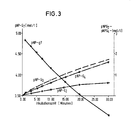
- Figures 1 to 3 show the decrease rate of the substrate and the increase in the products in the pancreatic amylase reaction for G7-pNP as substrate with and without MAK.
- samples III - VI The determined activities of the MAK amylase mixtures (samples III - VI) are related to the corresponding activities of the amylase buffer mixtures (sample I and sample II) and given as% values (samples III and IV are related to sample I and Sample V and VI are related to sample II).
- the following example for screening for amylase-activating MAKs does not take advantage of the activating property of the MAKs for searching.
- the amylase is believed to have at least 5 epitopes (IV). All of these epitopes can bind MAKs at the same time, epitope IV represents the epitope that binds the activating and splitting pattern-changing MAKs.
- the Fab 'fragments of the various monoclonal antibodies were produced as follows: First, ascites (analogous to Example 1 / IV) of the various hybrid cell clones were produced. The ascites were converted to fractionated ammonium sulfate precipitation and a diethylaminoethyl cellulose column (according to A. Johnstone and R. Thorpe; in: Immunochemistry in Practice, Blackwell Scientific Publications, Oxford-London-Edinburgh-Boston-Melbourne, 1982, pp 43-47) the monoclonal antibodies purified. The antibodies were cleaved into their Fab 'fragments according to A. Nisonoff (Methods Med. Res. 10, 134 ff (1964)).
- the extinctions of the individual spots of the ELISA plates are measured in an ELISA reader (Kontron, Switzerland) after the protective film has been removed.
- the extinctions of the blank values are subtracted from the extinctions of the other spots with MAKs.
- Dots coated with antibodies against the epitope IV of amylase show significantly higher extinctions than dots coated with the culture supernatant of the hybrid cell clone NCACC 84111301.
- the extinction differences should be at least 200 mE.
- MAKs will be found that recognize the epitope IV of the amylase.
- These MAKs surprisingly have the property of activating the amylase (i.e. accelerating the rate of cleavage) and possibly also changing the cleavage pattern of the substrate.
Landscapes
- Chemical & Material Sciences (AREA)
- Organic Chemistry (AREA)
- Health & Medical Sciences (AREA)
- Life Sciences & Earth Sciences (AREA)
- Proteomics, Peptides & Aminoacids (AREA)
- Zoology (AREA)
- Engineering & Computer Science (AREA)
- Genetics & Genomics (AREA)
- Immunology (AREA)
- Molecular Biology (AREA)
- Biophysics (AREA)
- Biochemistry (AREA)
- Wood Science & Technology (AREA)
- General Health & Medical Sciences (AREA)
- Analytical Chemistry (AREA)
- Biotechnology (AREA)
- Microbiology (AREA)
- Physics & Mathematics (AREA)
- Medicinal Chemistry (AREA)
- Bioinformatics & Cheminformatics (AREA)
- General Engineering & Computer Science (AREA)
- Measuring Or Testing Involving Enzymes Or Micro-Organisms (AREA)
- Preparation Of Compounds By Using Micro-Organisms (AREA)
- Micro-Organisms Or Cultivation Processes Thereof (AREA)
Abstract
Description
- Die Erfindung betrifft ein Verfahren und ein Reagenz zur Bestimmung der alpha-Amylase durch Spaltung eines Substrats derselben in Gegenwart eines oder mehrerer Hilfsenzyme und Messung eines Spaltproduktes.
- Die Bestimmung der alpha-Amylase sowie ihrer Isoenzyme gehört zu den besonders wichtigen Methoden der klinischen Chemie, da ihre Ergebnisse zu diagnostischen Zwecken, insbesondere zur Diagnose von Pankreaserkrankungen verwendet werden. Infolgedessen wurde eine Vielzahl von Verfahren zur Bestimmung der alpha-Amylase entwickelt. Sie beruhen zum großen Teil auf der Spaltung eines Substrats, häufig in Gegenwart eines oder mehrerer Hilfsenzyme, und Messung eines Spaltproduktes. Technische Bedeutung haben u.a. mit bestimmbaren Gruppen derivatisierte Stärke sowie Maltooligoside erlangt, wie sie z.B. in den US-PSen 3,879,263 und 4,000,042 und in der DE-OS 27 41 192 beschrieben werden. Die erwähnten Maltooligoside können auch durch optisch bestimmbare Gruppen derivatisiert sein, wie beispielsweise in den DE-OSen 27 31 421 und 27 55 803 beschrieben wird, oder Ethylidenschutzgruppen aufweisen (EP 135758 A1).
- Eine generelle Schwierigkeit all dieser Bestimmungen liegt darin, daß die Substrate verschiedene Angriffspunkte für die Spaltung durch die alpha-Amylase aufweisen und daher unterschiedliche Spaltprodukte entstehen, teilweise nach recht komplizierten Mechanismen. Hierdurch wird die exakte Berechnung der Aktivitäten erheblich erschwert und teilweise in der Genauigkeit beeinträchtigt. Beispielsweise entsteht bei der Spaltung des Substrats alpha-(4-Nitrophenyl)-Maltoheptaose etwa 60 % Maltotetraose, welches durch die nachfolgende Indikatorreaktion, die beispielsweise mit alpha-Glucosidase durchgeführt wird, nur schlecht gespalten wird. Analoge Schwierigkeiten liegen bei den anderen Maltooligosid-Substraten und ihren Derivaten vor. Die Schwierigkeiten würden sich beseitigen lassen, wenn es gelänge, die Spaltung der Substrate so ablaufen zu lassen, daß ausschließlich Maltotriose und Maltose bzw. deren entsprechende Derivate entstehen würden.
- Darüberhinaus wäre es erwünscht, wenn man auch die Spaltgeschwindigkeit der Substrate erhöhen könnte.
- Der Erfindung liegt daher die Aufgabe zugrunde, die oben bezeichneten Schwierigkeiten bei den bisher angewendeten Substraten zu beseitigen und insbesondere ein verbessertes Spaltmuster der Substrate sowie eine erhöhte Spaltrate zu erzielen.
- Gelöst wird diese Aufgabe erfindungsgemäß durch ein Verfahren zur Bestimmung von alpha-Amylase durch Spaltung eines Substrats in Gegenwart eines oder mehrerer Hilfsenzyme und Messung eines Spaltproduktes, welches dadurch gekennzeichnet ist, daß man die Umsetzung in Gegenwart von monoklonalen Antikörpern gegen alpha-Amylase durchführt.
- Als Substrate können für das erfindungsgemäße Verfahren die natürlichen Substrate der alpha-Amylase und deren Derivate verwendet werden, beispielsweise Stärkederivate oder Oligo- und Polysaccharide. Als besonders geeignet erwiesen sich die D-Maltooligoside mit 2 bis 10 Glucoseeinheiten im Molekül, welche gegebenenfalls durch eine chromophore Gruppe substituiert sein können oder/und mindestens eine Ethylidenschutzgruppe tragen können. Besonders bevorzugt werden solche D-Maltooligoside, die 4 bis 8 Glucoseeinheiten im Molekül enthalten. Geeignete chromophore Gruppen, die nach Abspaltung leicht optisch bestimmt werden können, sind beispielsweise die Phenyl-, Mononitrophenyl-, Sorbit- oder Gluconsäuregruppe (DE-OS 27 55 803). Ebenso kommen Farbstoffe oder Farbstoffkupplungskomponenten als Substituenten in Betracht, beispielsweise Fluoreszenzfarbstoffe oder Vorläufer derselben, die sich leicht zum eigentlichen Farbstoff in bekannter Weise umwandeln lassen. Die Messung dieser Schutzgruppen ist dem Fachmann bekannt und bedarf hier keiner näheren Erläuterung. Typische Beispiele für im Rahmen des erfindungsgemäßen Verfahrens besonders geeignete Substrate sind Maltotetraose, Maltopentaose, Maltohexaose, Maltoheptaose und Maltooctaose, deren Mononitrophenyl- und die Dinitrophenylderivate, die Ethylidenderivate der aufgeführten Maltooligoosen und die entsprechenden Verbindungen, welche sowohl eine Ethylidenschutzgruppe als auch eine Nitrophenyl- oder Dinitrophenylgruppe aufweisen.
- Die in Betracht kommenden Hilfsenzyme hängen von der Art des verwendeten Substrats ab und dienen dazu, einerseits durch die alpha-Amylase gebildete Spaltprodukte evtl. weiterzuspalten oder unter Bildung bestimmbarer Endprodukte weiterumzusetzen. So wird bei Verwendung der bevorzugten mit Nitrophenylgruppen substituierten Maltooligoside mit 2 bis 10 Glucoseresten als Hilfsenzym alpha-Glucosidase allein, wenn es sich um die alpha-Verbindungen handelt, oder zusammen mit β-Glucosidase, wenn es sich um die β-Verbindungen, wie z.B. β-(p-Nitrophenyl-)Maltoheptasaccharid handelt, verwendet. Im Falle der Maltoheptaose erfolgt die Spal tung durch alpha-Amylase unter Bindung von Maltotriose und Maltotetraose, die ihrerseits durch die alpha-Glucosidase völlig zu den Glucoseeinheiten gespalten wird. Die erhaltene Glucose kann dann nach einem der üblichen Glucosebestimmungsverfahren, beispielsweise mit Hexokinase und Glucose-6-Phosphatdehydrogenase als Hilfsenzymen gemessen werden.
- Ebenso ist es möglich, das Maltooligosid, beispielsweise Maltoheptaose oder Maltotetraose, durch die alpha-Amylase bis zur Maltose spalten zu lassen und letztere mit Maltosephosphorylase, β-Phosphoglucomutase und Glucose-6-Phosphatdehydrogenase in ebenfalls bekannter Weise zu bestimmen. Die genannten Enzyme werden dann als Hilfsenzyme beim Verfahren der Erfindung zugesetzt. Diese und weitere Bestimmungsmethoden für die Spaltprodukte der alpha-Amylase sind dem Fachmann bekannt und bedürfen hier daher keiner weiteren Erläuterung.
- Als monoklonale Antikörper werden im Rahmen der Erfindung bevorzugt diejenigen verwendet, die von den Hybridzellenklonen 469A12 = ECACC 86020601 oder 472G12 = ECACC 86020602 gebildet werden. Die Erfindung kann jedoch auch mit anderen monoklonalen Antikörpern durchgeführt werden, welche gegen die alpha-Amylase gerichtet sind. Diese monoklonalen Antikörper können durch die hierfür üblichen Verfahren erhalten werden, also insbesondere durch Verwendung von alpha-Amylase als Immunogen bei einem geeigneten Versuchsorganismus, Gewinnung und Fusionierung der gegen das Immunogen gerichtete Antikörper produzierenden Leukozyten mit Myelomzellen oder anderen die permanente Kultivierbarkeit bewirkenden Zellen oder Zellfragmenten und Züchtung und Auswahl der so erhaltenen Zellklone nach den gebildeten Antikörpern.
- Als Versuchstiere für die Immunisierung können beispielsweise Balb/c-Mäuse verwendet werden, und die Immunisierung selbst kann mit kompletten oder nicht kompletten Freund'schen Adjuvants oder nur in physiologischer Kochsalzlösung erfolgen. Nach erfolgter Immunisierung werden die Milzzellen der Versuchstiere mit Myelomzellen fusioniert und entweder direkt in Kulturschalen oder als Ascites wachsen gelassen und sortiert.
- Ob ein Antikörper gegen alpha-Amylase für die Erfindung geeignet ist, läßt sich leicht anhand einiger Vorversuche feststellen. Hierbei ist lediglich zu bestimmen, ob der erfindungsgemäße Effekt eintritt. Ein besonders einfaches Screening-Verfahren besteht jedoch darin, lediglich festzustellen, ob der zu beurteilende monoklonale Antikörper überhaupt an das Enzym bindet, wenn bestimmte monoklonale Antikörper zugegen sind, welche diejenigen Bindungsstellen am Enzym besetzen, die keine im Sinne der Erfindung vorteilhafte Wirkung ergeben. Hierzu verwendet man vorzugsweise die monoklonalen Antikörper, die von den Hybridzellklonen NCACC 84111301, NCACC 84122003, NCACC 85022203 und ECACC 86060601 gebildet werden. Eine mit diesen Antikörpern komplexierte alpha-Amylase bindet offenbar nur noch solche Antikörper, welche die erfindungsgemäße Wirkung ausüben.
- Durch den erfindungsgemäßen Zusatz von monoklonalen Antikörpern gegen die alpha-Amylase wird überraschenderweise eine teilweise erhebliche Steigerung der Enzymaktivität erzielt und zwar für beide Isoenzyme der alpha-Amylase. Diese Steigerung eines Isoenzyms bleibt überraschenderweise auch dann erhalten, wenn das andere Isoenzym durch Zusatz spezifisch dieses Isoenzym hemmender monoklonaler Antikörper ausgeschaltet wird. In der nachstehenden Tabelle 1 wird der Einfluß verschiedener monoklonaler Antikörper aus Ascites auf die Aktivitäten der humanen Speichel-(h-SA) und Pankreas-alpha-Amylase (h-PA) bei verschiedenen Substraten gezeigt. Außerdem wird durch die erfindungsgemäße Arbeitsweise auch das Spaltmuster der Substrate vorteilhaft verändert derart, daß ein größerer Anteil an direkt bestimmbaren Spaltprodukten gebildet wird als ohne den Zusatz der monoklonalen Antikörper. Dies wird in der nachfolgenden Tabelle 2 gezeigt, in der für zwei verschiedene Substrate jeweils Aktivität und Zusammensetzung der Spaltprodukte ohne und mit erfindungsgemäß verwendeten monoklonalen Antikörper dargestellt wird.
- Die für die drei ersten Versuche gemäß Tabelle 2 ermittelten Spaltmuster sind in den Fig. 1 bis 3 der beigefügten Zeichnung graphisch dargestellt und lassen so deutlich den durch die Erfindung erzielten überraschenden Effekt erkennen.


- Ein weiterer Gegenstand der Erfindung ist ein Reagenz zur Bestimmung von alpha-Amylase, welches ein Substrat, ein oder mehrere Hilfsenzyme und ein System zur Messung eines Spaltproduktes enthält und durch einen Gehalt an mindestens einem monoklonalen Antikörper gegen alpha-Amylase gekennzeichnet ist. Als monoklonalen Antikörper enthält es vorzugsweise den durch die Hybridzellklone 469A12 = ECACC 86020601 oder/und 472G12 = ECACC 86020602 gebildeten monoklonalen Antikörper.
- Hinsichtlich der geeigneten Substrate und Hilfsenzyme gelten die oben zum Verfahren gemachten Ausführungen entsprechend. Falls das Reagenz für die Bestimmung eines der Isoenzyme der alpha-Amylase verwendet wird, enthält es zusätzlich einen oder mehrere monoklonale Antikörper gegen das jeweils andere alpha-Amylaseisoenzym. Bevorzugt wird dabei für ein Reagenz zur Bestimmung der Pankreas-alpha-Amylase ein Zusatz von monoklonalen Antikörpern gegen Speichel-alpha-Amylase, die durch den Hybridzellklon NCACC 84122003 gebildet werden und evtl. zusätzlich ein Zusatz von monoklonalen Antikörpern, die durch den Hybridzellklon NCACC 84111301 gebildet werden.
- Durch die Erfindung wird erreicht, daß die Aktivität der alpha-Amylase je nach Substrat um 30 bis mehr als 100 % erhöht und gleichzeitig das Spaltmuster verbessert wird. Dadurch wird ein empfindlicherer Test sowohl auf Gesamt-alpha-Amylase als auch auf die Isoenzyme, insbesondere die Pankreasamylase geschaffen.
- Die folgenden Beispiele erläutern die Erfindung weiter.
-
- Balb/c-Mäuse, weiblich, ca. 6-8 Wochen alt
- humane Speichel-alpha-Amylase (Sigma, Bestell Nr. A 0521)
- Freundsches Adjuvanz, komplett (Sigma, Nr. F 5881)
- Freundsches Adjuvanz, nicht komplett (Sigma, Bestell-Nr. F 5506)
- physiologische Kochsalzlösung (Sigma, Nr. P 8033)
-
- A: 300 µg/ml Speichel-alpha-Amylase in komplettem Freundschen Adjuvanz
- B: 150 µg/ml Speichel-alpha-Amylase in nicht komplettem Freundschen Adjuvanz
- C: 150 µg/ml Speichel-alpha-Amylase in physiologischer Kochsalzlösung
- Balb/c Mäuse werden mit 300 µl A immunisiert. In ca. 8-wöchigem Rhythmus wird mit je 300 µl B 3 - 4 mal weiterimmunisiert. Vier Tage vor Fusion wird die letzte Immunisierung mit 300 µl C intravenös durchgeführt.
- Die Fusion der Milzzellen mit Ag 8.653 (ATCC CRL 1580) oder SP2/0 (ATCC CRL 1581) Myelomzellen wird nach dem Standartverfahren gemäß J. of Immun. Meth. Vol. 39, 285-308 durchgeführt. Das Fusionsverhältnis Milz- zu Myelom-Zellen ist 5:1. Die Fusionsprodukte werden auf 20 24er-Kulturschalen (Costar) ausgesät und mit 5×10⁴ peritoneal-exsudat-Zellen pro Kulturnapf gefüttert. Positive Primärkulturen (siehe C) werden 3 - 4 Wochen nach Fusion mit Hilfe eines Fluoreszenz-aktivierten Zellsorters kloniert. Die Zellen werden einzeln in 96er Costar-Platten abgelegt und mit 2×10⁴ peritoneal-exsudat-Zellen gefüttert. Als Kulturmedium wird handelsübliches RPMI-1640-Medium mit 10 % fötalem Kälberserum (beschrieben in J.A.M.A. 199 (1957) 519) verwendet.
- Um die Konzentration amylaseaktivierender Antikörper im Serum immunisierter Mäuse oder im Kulturüberstand der Hybrid-Zellen oder in Ascites zu erfassen, wird ein Amylase-Aktivierungstext als Screening-Assay verwendet.
- Dazu werden in 96er ELISA-Platten (Nunc, Dänemark) 50 µl Pankreas- oder Speichel-alpha-Amylase (etwa 400 U/l) in Puffer (50 mmol/l Tris-HCI, 1 % Rinderserumalbumin, 0,1 Mol/l NaCl, pH 7.5) vorgelegt und mit 50 µl der zu testenden Lösung (z.B. Kulturüberstand, Serum in verschiedener Verdünnung (mit physiologischer Kochsalzlösung), Ascites in verschiedener Verdünnung (mit physiologischer Kochsalzlösung)) 20 Minuten bei Raumtemperatur vorinkubiert.
- Danach wird mit 50 µl Amylasesubstrat (4-Nitrophenylmaltoheptaosid mit alpha-Glucosidase; Boehringer Mannheim GmbH, Katalog-Bestell-Nr. 568589) die Enzymreaktion gestartet. Nach 20 - 60 Minuten bei Raumtemperatur werden die Extinktionen bei 405 nm in einem Photometer (ELISA-Reader, Kontron, Schweiz) bestimmt (Wert 1).
- Folgende Kontrolle wird mitbestimmt: frisches Kulturmedium (Wert II). Die Aktivierung wird in % angegeben, bezogen auf Wert II:

- Folgende Ergebnisse werden mit dem Testsystem erzielt:

- 1-2×10⁶ Hybridzellen (der Zell-Linie 86020601 oder 86020602) werden intraperitoneal in 1 bis 2 mal mit je 0,5 ml "Pristane Oil" (Sigma, München, Katalog-Bestell-Nr. T 7640) vorbehandelte Balb/c Mäuse (ca. 3 Monate alt) gespritzt. Nach ca. 15 - 20 Tagen werden pro Maus 3 bis 5 ml Ascites gezapft, der etwa 10 mg/ml IgG enthält.
- Einfluß der aktivierenden MAKs ECACC 86020602 und ECACC 86020601 auf die Aktivität der humanen Speichel-alpha-Amylase und der humanen Pankreas-alpha-Amylase, auch in Kombination mit den MAKs NCACC 84122003 und NCACC 84111301.
- - EnzAmyl K-Test auf alpha-Amylase (Goedecke, Berlin; Kat. Best. Nr. 847 903); Substrat = Altotetraose
- Phadebas-Test auf alpha-Amylase (Pharmacia, Freiburg; Kat. Best. Nr. 51-5221-00/1); Substrat = blaugefärbte, hochmolekulare Stärke
- 4-Nitrophenyl-alpha-D-maltotetraosid, G4-pNP (Boehringer Mannheim GmbH, Kat.Best. Nr. 720 518)
- 4-Nitrophenyl-alpha-D-maltopentaosid, G5-pNP (Boehringer Mannheim GmbH, Kat. Best. Nr. 720 496)
- 4-Nitrophenyl-alpha-D-maltohexaosid, G₆-pNP (Boehringer Mannheim GmbH, Kat. Best. Nr. 720 488)
- 4-Nitrophenyl-alpha-D-maltoheptaosid, G₇-pNP (Boehringer Mannheim GmbH, Kat. Best. Nr. 720 470)
- 4,6-Ethyliden-4-Nitrophenyl-alpha-D-maltoheptaosid, ethG₇-pNP (präpariert entsprechend Patentanmeldung DE-A 3328616)
- Ascites aus Mäusen der Zellinien ECACC 86020602, ECACC 86020601, NCACC 84122003, NCACC 84111301 (produziert analog Beispiel 1, IV).
- humane Speichel-alpha-Amylase (Sigma, München, Kat. Best. Nr. A 0521)
- humane Pankreas-alpha-Amylase (präpariert nach D.J. Stiefel und P.J. Keller (1973) Biochim. Biophys. Acta 302, 345 - 361)
- Rinderserumalbumin (RSA) (Boehringer Mannheim GmbH, Kat. Best.Nr. 238 031)
- alpha-Glucosidase (Boehringer Mannheim GmbH, Kat. Best. Nr. 750 590)
-
- A: PBS: 100 mM Phosphatpuffer, 150 mM NaCl, pH = 7,1
- B: PBS/RSA: PBS mit 6 % Rinderserumalbumin
- C: h-SA-Lösung: humane Speichel-alpha-Amylase in PBS/RSA, 500 U/l (bestimmt bei 25°C mit handelsüblichem Reagenz alpha-Amylase PNP, Automatenpackung, Boehringer Mannheim GmbH, Kat. Best. Nr. 568 589)
- D: h-PA-Lösung: humane Pankreas-alpha-Amylase in PBS/BSA, 500 U/1 (bestimmt wie h-SA-Lösung)
- E: Amylase-Reagenz (mit jeweils einem pNP-Substrat):
100 mMol/l Hepes-Puffer; pH 7,1
50 mMol/l NaCl
5 mMol/l pNP-Substrat (jeweils ein Substrat)
30 U/l alpha-Glucosidase - F: Ascitesverdünnungen: Die verschiedenen Asciti werden jeweils 1 + 50 mit PBS/RSA verdünnt.
-
- 1. Vorbereitung der Amylase mit MAKs aus Ascites
- 100 µl Amylase (h-SA oder h-PA) werden mit 10 µl der verschiedenen Ascitesverdünnungen (einer oder mehrere) gemischt und auf 200 µl mit PBS/RSA aufgestockt. Als Kontrolle dient Amylase, die nur mit PBS/RSA aufgestockt wird.
- Die Mischungen werden 5 Minuten bei Raumtemperatur inkubiert. - 2. Bestimmung der Amylaseaktivität mit dem Substrat G₄
- Die Bestimmung der Amylaseaktivität der Amylase- MAK-Mischungen bzw. der entsprechenden Kontrollen erfolgt mit dem Goedecke EnzAmyl K-Test bei 25°C genau nach Anleitung. - 3. Bestimmung der Amylaseaktivität mit hochmolekularem Substrat
- Die Bestimmung der Amylaseaktivität der Amylase-MAK-Mischungen bzw. der entsprechenden Kontrollen erfolgt mit dem Phadebas-Test der Firma Pharmacia genau nach Anleitung - 4. Bestimmung der Amylaseaktivität mit den PNP-Substraten
- 1 ml der Amylase-Reagenzien E werden in Halbmikroküvetten auf 25°C temperiert.
- Je 50 µl der Amylase-MAK-Mischungen bzw. Kontrollen werden dazugegeben und gut gemischt.
- Es erfolgt die Bestimmung der Extinktionsänderung ΔE/min zwischen der 3. und 7. Minute nach Amylase-MAK-Zugabe bei 405 nm. -
- 1. G₄-Substrat und hochmolekulares Substrat
- Die als Einheiten pro Liter (U/l) erhaltenen Amylaseaktivitäten der Amylase-MAK-Mischungen werden auf die entsprechenden Amylaseaktivitäten der Kontrollen (ohne MAKs) bei gleichem Substrat bezogen und als %-Werte angegeben. - 2. pNP-Substrate
- Die als ΔE/min erhaltenen Amylaseaktivitäten der Amylase-MAK-Mischungen werden auf die entsprechenden Amylaseaktivitäten der Kontrollen (ohne MAKs) bei gleichem pNP-Substrat bezogen und als %-Werte angegeben. - Die Einflüsse der monoklonalen Antikörper auf die Aktivitäten der Speichel- und Pankreasamylase sind in der Tabelle 1 bei den verschiedenen Substraten als %-Werte Aktivität bezogen auf die Aktivität ohne MAKs zusammengefaßt.
- Bestimmung des Spaltmusters von G₇-pNP und ethG₇-pNP durch humane Pankreas-alpha-Amylase mit und ohne monoklonale Antikörper ECACC 86020601 und ECACC 86020602 sowie der Reaktionsgeschwindigkeit der Spaltung.
-
- 4,6-Ethyliden-4-Nitrophenyl-alpha-D-maltoheptaosid, ehtG₇-pNP (präpariert entsprechend Patentanmeldung DE-A 3328616)
- 4-Nitrophenyl-alpha-D-maltoheptaosid, G₇-pNP (Boehringer Mannheim GmbH, Kat. Best. Nr. 720 470)
- Ascites der Zellinie ECACC 86020601
- Ascites der Zellinie ECACC 86020602
- humane Pankreas-alpha-Amylase (präpariert nach D.J. Stiefel und P.J. Keller (1975) Biochim. Biophys. Acta 302, 345 - 361)
- Rinderserumalbumin (RSA) (Boehringer Mannheim GmbH, Kat. Best. Nr. 238 031)
-
- A: 150 mM Hepes-Puffer, 50 mM NaCl, 1 mg/ml NaN₃, pH 7,1
- B: 100 mM Phosphatpuffer, 150 mM NaCl, 6 % RSA, pH 7,1
- C: humane Pankreas-alpha-Amylase in Puffer B, 756 U/l (bestimmt bei 25°C mit handelsüblichem Reagenz-alpha-Amylase pNP, Automatenpackung, Boehringer Mannheim GmbH, Kat. Best. Nr. 568 589)
- D: monoklonale Antikörper ECACC 86020601: Ascites 1 + 50 verdünnt mit B
- E: monoklonale Antikörper ECACC 86020602: Ascites 1 + 50 verdünnt mit B
- F: 20 Teile Acetonitril, gemischt mit 3 Teilen 1 Mol/l H₃PO₄
- G: 1 Teil 25 mMol/l K₂HPO₄, pH = 7,1, gemischt mit 1 Teil Acetonitril
- H: 5 mM ethG₇-pNP in A
- I: 5 mM G₇-pNP in A
-
- 1. Mischung von Amylase und MAKs
- 20 µl MAK-Lösung D oder E oder Puffer B werden mit 200 µl Pankreasamylase C gemischt und 5 Minuten bei Raumtemperatur inkubiert. - 2. Reaktion von Amylase/MAK mit Substrat
- 2 ml Substratlösung (H oder I) werden vorgelegt und auf 25 °C temperiert.
- Die temperierte Substratlösung wird mit 200 µl der verschiedenen Amylase/MAK (Puffer) Mischungen (aus 1.) gestartet.
- Nach genau 1, 3, 5, 7, 10, 20, 30 Minuten wurden jeweils 200 µl Aliquots der gestarteten Substratlösung entnommen und zu 130 µl Stoppreagenz F gegeben.
- Die gestoppten Aliquots werden mit 1 ml der Lösung verdünnt und bei -20°C gelagert. - 3. Bestimmung des Substrates und der Bruchstücke des Substrates durch HPLC
- Die gestoppten, verdünnten Aliquots aus 2. werden aufgetaut.
- Der Gehalt an G₇-pNP bzw. ethg₇-pNP, wobei an pNP und G₁-pNP bis G₆-pNP (der einzelnen Aliquots) wird durch HPLC genau wie in E.-O. Hägele et. al. (1982) Clin. Chem. 28/11, 2201 - 2205 beschrieben bestimmt. - Im Laufe der Reaktion der Amylase mit dem Substrat nimmt der Gehalt an Substrat ab. Tabelle 2 zeigt die mMol/(1 min) für die beiden Substrate ohne MAKs sowie mit dem MAKs ECACC 86020601 und ECACC 86020602. Weiterhin sind die Aktivitätswerte der Pankreasamylase mit MAKs normiert auf die Aktivitäten ohne MAKs dargestellt. Es entsteht bei den Reaktionen kein freies pNP, kein G₁-pNP, sowie kein G₅-pNP und G₆-pNP. Die %-Zahlen der anderen Bruchstücke sind ebenfalls in Tabelle 1 zusammengefaßt.
- Abbildungen 1 bis 3 zeigen die Abnahmegeschwindigkeit des Substrats sowie die Zunahme der Produkte bei der Pankreasamylasereaktion für G₇-pNP als Substrat mit und ohne MAK.
- Aktivierung von humaner alpha-Amylase durch die MAKs ECACC 86020601 und ECACC 86020602 beim Substrat Maltoheptaose
-
- Monotest alpha-Amylase UV (Boehringer Mannheim GmbH, Mannheim, Katalog-Bestell-Nr. 240001)
- Ascited aus Mäusen der Zellinien ECACC 86020602 oder ECACC 86020601 (gemäß Beispiel 1)
- humane Speichel-alpha-Amylase (Sigma, München, Katalog-Bestell-Nr. A 0521)
- humane Pankreas-alpha-Amylase (präpariert nach D.J. Stiefel und P.J. Keller (1973) Biochem. Biophys. Acta 302, 345-361)
- Rinderserumalbumin, RSA (Boehringer Mannheim GmbH, Katalog-Bestell-Nr. 238031)
-
- A: PBS/RSA: 100 mMol/l Phosphatpuffer, 150 mMol/l NaCl, 6 % RSA, pH 7.1
- B: h-SA-Lösung: humane Speichel-alpha-Amylase in PBS/RSA 500 U/l (bestimmt bei 25°C mit handelsüblichem Reagenz alpha-Amylase PNP, Automatenpackung, Boehringer Mannheim GmbH, Katalog-Bestell-Nr. 568589)
- C: h-PA-Lösung: humane Pankreas-alpha-Amylase in PBS/RSA, 500 U/l (bestimmt wie h-SA-Lösung)
- D: Ascitesverdünnung des MAK ECACC 86020601: Ascites 1 + 50 verdünnt mit PBS/RSA
- E: Ascitesverdünnung des MAK ECACC 86020602: Ascites 1 + 50 verdünnt mit PBS/RSA
-
- alpha-Amylase und MAKs bzw. Puffer werden nach folgendem Schema gemischt:
- Die Aktivität der Proben I - VI werden bei 25°C mit dem Monotest-alpha-Amylase UV genau nach Anleitung bestimmt.
- Die bestimmten Aktivitäten der MAK-Amylase-Mischungen (Proben III - VI) werden auf die entsprechenden Aktivitäten der Amylase-Puffer-Mischungen (Probe I und Probe II) bezogen und als % Werte angegeben (Proben III und IV werden auf Probe I bezogen und Probe V und VI werden auf Probe II bezogen).
- Die Einflüsse der monoklonalen Antikörper und des Puffers auf die humane Speichel- und Pankreas-alpha-Amylase ist in nachfolgender Tabelle dargestellt:

- Screening System auf monoklonale Antikörper aus Kulturüberstand von Fusionen oder aus Ascites oder aus Serum von Mäusen, die nicht die Epitope der humanen-alpha-Amylase Nummer I, II, III und V erkennen.
- Nachfolgendes Beispiel zum Screening auf Amylase-aktivierende MAKs nutzt nicht die aktivierende Eigenschaft der MAKs zum Suchen aus. Es wird angenommen, daß die Amylase mindestens 5 Epitope hat (I-V). An all diese Epitope können MAKs gleichzeitig binden, Epitop IV stellt das Epitop dar, welches die aktivierenden und spaltmusterverändernden MAKs bindet.
-
- Polyklonales Antiserum gegen Maus Fc-gamma-Fragmente aus Schafen
- Rinderserumalbumin (RSA) (Boehringer Mannheim GmbH, Mannheim Kat. Best. Nr. 238031)
- humanes Speichel-alpha-Amylase-Meerrettich-Peroxidase-Konjugat (h-SA=POD); präpariert nach M.B. Wilson und P.K. Nakam (in: Immunofluorescence and Related Staining Techniques, W. Knapp et al., Eds., Elsevier/-North-Holland Biomedical Press, Amsterdam-New York, 1978, pp 215-224) aus humaner Speichel-alpha-Amylase (Sigma, München, Kat. Best. Nr. A0521) und Meerrettich-Peroxidase (Boehringer Mannheim Gmbh, Mannheim, Kat. Best. 238031)
- Kulturüberstand des Hybridzellklons NCACC 84111301
- Fab'-Fragmente des monoklonalen Antikörpers produziert durch den Hybridzellklon NCACC 84111301 (MAK gegen Amylaseepitop I)
- Fab'-Fragmente des monoklonalen Antikörpers produziert durch den Hybridzellklon NCACC 84122003 (MAK gegen Amylaseepitop II)
- Fab'-Fragmente des monoklonalen Antiköpers produziert durch den Hybridzellklon NCACC 85022203 (MAK gegen Amylaseepitop III)
- Fab'-Fragmente des monoklonalen Antikörpers produziert durch den Hybridzellklon ECACC 86060601 (115C9) (MAK gegen Amylaseepitop V)
- ELISA-Platten (Nunc, Roskilde, Dänemark)
- ABTS®:2,2-Azino-di-[3-ethylbenzthiazolinsulfonat(6)] (Boehringer Mannheim GmbH, Kat.Best. Nr. 102946)
- Chemikalien höchster Reinheit von Merck, Darmstadt oder Boehringer Mannheim GmbH
- Schutzfolie für ELISA Platten: Plate Sealers Cat. No. M30 (Dynatech Deutschland GmbH, Denkendorf)
- Die Herstellung der Fab'-Fragmente der verschiedenen monoklonalen Antikörper erfolgte folgendermaßen: Zunächst wurde Ascites (analog zu Beispiel 1/IV) der verschiedenen Hybridzellklone produziert. Aus dem Ascites wurden über fraktionierte Ammoniumsulfatfällung und über eine Diethylaminoethylcellulose-Säule (nach A. Johnstone und R. Thorpe; in: Immunochemistry in Practice, Blackwell Scientific Publications, Oxford-London-Edinburgh-Boston-Melbourne, 1982, pp 43-47) die monoklonalen Antikörper aufgereinigt. Die Spaltung der Antikörper zu ihren Fab'-Fragmenten erfolgte nach A. Nisonoff (Methods Med. Res. 10, 134 ff (1964)).
-
- A: Natriumcarbonatpuffer, 50 mM, pH 9,3 mit 10 µg/ml polyklonalen Antikörpern von Schafen gegen Maus Fc-gamma-Fragmente (gereinigt aus polyklonalem Antiserum über Ammoniumsulfatfällung und Diethylaminoethylcellulosechromatographie (A. Johnstone und R. Thorpe; in: Immunochemistry in Practice, Blackwell Scientific Publications, Oxford-London-Edinburgh-Boston-Melbourne, 1982, pp 43-47))
- B: PBS/RSA: 100 mM Phosphatpuffer, 150 mM NaCl, pH = 7,1 mit 1 % Rinderserumalbumin (RSA)
- C: Reagenz B mit 200 IU/l (Peroxidase-Einheiten) h-SA=POD und je 100 µg/ml der 4 Fab'-Fragmente (der Hybridzellklone NCACC 84111301, 84122003, 85022203 und ECACC 86060601 (76C8)); die Lösung wird 1 h vor Gebrauch angesetzt.
- D: Peroxidase-Substratlösung: 100 mM Phosphat-Citrat-Puffer, pH = 4,4 mit 3,2 mM Natriumperborat und 1,9 mM ABTS®.
- E: PBS: 100 mM Phosphatpuffer, 150 mM NaCl, pH = 7,1
-
- 1. In jedes Tüpfel einer ELISA-Platte werden je 100 µl des Reagenzes A pipettiert. Die Platten werden mit einer Schutzfolie verschlossen und 18 h bei 4°C inkubiert.
- 2. Jeder Tüpfel der Platten wird 3× mit mindestens 250 µl Reagenz E gewaschen (Raumtemperatur, jeweils ca. 5 Minuten).
- 3. Jeder Tüpfel der Platten wird mit 250 µl Reagenz B inkubiert (Schutzfolie; Raumtemperatur, 1h).
- 4. Jeder Tüpfel der Platten wird wie unter 2. beschrieben gewaschen.
- 5. Kulturüberstand der verschiedenen Hybridzellklone oder Ascites oder Seren von immunisierten Mäusen werden unverdünnt und/oder in verschiedenen Verdünnungen (mit Reagenz B verdünnt) in verschiedene Tüpfel der Platten pipettiert (jeweils 100 µl). Die Platten werden verschlossen und 2 h bei 37°C inkubiert. Als Leerwert dienen Tüpfel, die nur mit Reagenz B inkubiert werden. Als Negativkontrolle wird Kulturüberstand des Hybridzellklons NCACC 83111301 verwendet.
- 6. Jeder Tüpfel der Platten wird wie unter 2. beschrieben gewaschen.
- 7. Jeder Tüpfel der Platten wird mit 100 µl Reagenz C (Amylase-POD-Konjugat + Fab'-Fragmente) inkubiert (Schutzfolie; 37°C, 2h).
- 8. Jeder Tüpfel der Platten wird 6× mit Reagenz E gewaschen (mindestens 250 µl, Raumtmperatur, jeweils ca. 2 Minuten). Die Tüpfel werden mittels einer Wasserstrahlpumpe und einer feinen Glaskanüle trockengesaugt.
- 9. Direkt danach wird in jedes Tüpfel des Platte 100 µl des Reagenzes D gegeben. Die Platten werden mit einer Schutzfolie verschlossen und bei 37 °C inkubiert (ca. 15-60 Minuten, je nach Konzentration der zu suchenden MAKs).
- Die Extinktionen der einzelnen Tüpfel der ELISA-Platten werden nach Entfernung der Schutzfolie in einem ELISA-Reader (Kontron, Schweiz) vermessen. Die Extinktionen der Leerwerte (nur Reagenz B) werden von den Extinktionen der anderen Tüpfel mit MAKs subtrahiert.
- Tüpfel, die mit Antikörpern gegen das Epitop IV der Amylase beschichtet wurden, zeigen deutlich höhere Extinktionen als Tüpfel, die mit dem Kulturüberstand des Hybridzellklons NCACC 84111301 beschichtet wurden. Die Extinktionsunterschiede sollten mindestens 200 mE betragen.
- Auf diese Art und Weise werden mit hoher Wahrscheinlichkeit alle MAKs gefunden, die das Epitop IV der Amylase erkennen. Diese MAKs haben überraschenderweise die Eigenschaft, die Amylase zu aktivieren (d.h. die Spaltgeschwindigkeit zu beschleunigen) und evtl. auch das Spaltmuster des Substrates zu verändern.
Claims (25)
Priority Applications (1)
| Application Number | Priority Date | Filing Date | Title |
|---|---|---|---|
| AT87109113T ATE85363T1 (de) | 1986-06-25 | 1987-06-24 | Verfahren und reagenz zur bestimmung von alphaamylase. |
Applications Claiming Priority (2)
| Application Number | Priority Date | Filing Date | Title |
|---|---|---|---|
| DE19863621271 DE3621271A1 (de) | 1986-06-25 | 1986-06-25 | Verfahren und reagenz zur bestimmung von alpha-amylase |
| DE3621271 | 1986-06-25 |
Publications (3)
| Publication Number | Publication Date |
|---|---|
| EP0251195A2 true EP0251195A2 (de) | 1988-01-07 |
| EP0251195A3 EP0251195A3 (en) | 1990-12-05 |
| EP0251195B1 EP0251195B1 (de) | 1993-02-03 |
Family
ID=6303661
Family Applications (1)
| Application Number | Title | Priority Date | Filing Date |
|---|---|---|---|
| EP87109113A Expired - Lifetime EP0251195B1 (de) | 1986-06-25 | 1987-06-24 | Verfahren und Reagenz zur Bestimmung von alpha-Amylase |
Country Status (7)
| Country | Link |
|---|---|
| US (1) | US4945043A (de) |
| EP (1) | EP0251195B1 (de) |
| JP (1) | JPH0710238B2 (de) |
| AT (1) | ATE85363T1 (de) |
| DE (2) | DE3621271A1 (de) |
| ES (1) | ES2053472T3 (de) |
| GR (1) | GR3007698T3 (de) |
Cited By (1)
| Publication number | Priority date | Publication date | Assignee | Title |
|---|---|---|---|---|
| EP0416514A3 (en) * | 1989-09-04 | 1991-06-12 | Boehringer Mannheim Gmbh | Method for specific determination of pancreatic alpha-amylase |
Families Citing this family (14)
| Publication number | Priority date | Publication date | Assignee | Title |
|---|---|---|---|---|
| DE3500526A1 (de) * | 1985-01-09 | 1986-07-10 | Boehringer Mannheim Gmbh, 6800 Mannheim | Spezifisch hemmender s-amylase-mak |
| US5043436A (en) * | 1986-11-20 | 1991-08-27 | Kurita Water Ind., Ltd. | Substrate for measurement of alpha-amylase activity |
| DE3903114A1 (de) * | 1989-02-02 | 1990-08-09 | Boehringer Mannheim Gmbh | Verfahren zur bestimmung eines enzyms aus einem isoenzymgemisch sowie hierfuer geeigneter testtraeger und dessen verwendung |
| JP2576910B2 (ja) * | 1990-04-13 | 1997-01-29 | 富士写真フイルム株式会社 | 免疫分析要素および免疫分析方法 |
| US20050209121A1 (en) * | 1990-12-05 | 2005-09-22 | Novozymes A/S | Proteins with changed epitopes and methods for the production thereof |
| US6967080B1 (en) * | 1990-12-05 | 2005-11-22 | Novozymes A/S | Proteins with changed epitopes and methods for the production thereof |
| JP2770891B2 (ja) * | 1991-06-26 | 1998-07-02 | キッコーマン株式会社 | マルトオリゴシド誘導体、これを有効成分とするα‐アミラーゼ活性測定用試薬及びこれを用いたα‐アミラーゼ活性の測定方法 |
| US5334502A (en) * | 1991-11-27 | 1994-08-02 | Osborn Laboratories, Inc. | Method of collecting, identifying, and quantifying saliva |
| CA2121361C (en) * | 1991-11-27 | 1997-03-04 | Jangbir S. Sangha | Apparatus and method of saliva collection and verification for dried saliva spot drug and hiv antibody testing |
| US5914241A (en) * | 1993-01-19 | 1999-06-22 | Biosite Diagnostics, Inc. | Assays and kits for detecting analytes in the presence of cross-reacting substances |
| JP3124435B2 (ja) * | 1993-10-20 | 2001-01-15 | キッコーマン株式会社 | α‐アミラーゼアイソザイム活性の分別定量法 |
| JPH11299498A (ja) * | 1998-02-19 | 1999-11-02 | Toyobo Co Ltd | アミラ―ゼアイソザイム活性測定用試薬 |
| RU2417374C1 (ru) * | 2009-09-21 | 2011-04-27 | Закрытое акционерное общество "Вектор-Бест" | РЕАГЕНТ ДЛЯ ОПРЕДЕЛЕНИЯ АКТИВНОСТИ ОБЩЕЙ α-АМИЛАЗЫ |
| CN110951824B (zh) * | 2019-11-15 | 2023-08-11 | 中山市创艺生化工程有限公司 | 一种复合缓冲体系在制备α-淀粉酶测定试剂盒中的应用 |
Family Cites Families (10)
| Publication number | Priority date | Publication date | Assignee | Title |
|---|---|---|---|---|
| AT362526B (de) * | 1977-09-13 | 1981-05-25 | Boehringer Mannheim Gmbh | Verfahren und reagens zur bestimmung von alpha- -amylase |
| US4304854A (en) * | 1978-06-06 | 1981-12-08 | Worthington Biochemical Corporation | Alpha-amylase assay and substrates for use therein |
| US4493890A (en) * | 1981-03-23 | 1985-01-15 | Miles Laboratories, Inc. | Activated apoglucose oxidase and its use in specific binding assays |
| US4446233A (en) * | 1982-05-05 | 1984-05-01 | E. I. Du Pont De Nemours And Company | Homogeneous immunoassay using covalent hybrid antibodies |
| DE3328616A1 (de) * | 1983-08-08 | 1985-02-28 | Boehringer Mannheim Gmbh, 6800 Mannheim | Oligoglucosidderivate |
| US4649108A (en) * | 1984-07-26 | 1987-03-10 | Genzyme Corporation | Alpha amylase assay |
| DE3500526A1 (de) * | 1985-01-09 | 1986-07-10 | Boehringer Mannheim Gmbh, 6800 Mannheim | Spezifisch hemmender s-amylase-mak |
| DE3508384A1 (de) * | 1985-03-08 | 1986-11-06 | Boehringer Mannheim Gmbh, 6800 Mannheim | Hemmung humaner speichel- und pankreasamylase durch monoklonale antikoerper |
| DE3525926A1 (de) * | 1985-07-19 | 1987-01-29 | Boehringer Mannheim Gmbh | Verfahren und reagenz zur spezifischen bestimmung von pankreas-alpha-amylase |
| FR2721019B1 (fr) * | 1994-06-14 | 1996-09-06 | Rhone Poulenc Chimie | Procédé de séparation de diacides aliphatiques à partir de leurs mélanges avec l'acide adipique. |
-
1986
- 1986-06-25 DE DE19863621271 patent/DE3621271A1/de not_active Withdrawn
-
1987
- 1987-05-15 US US07/050,887 patent/US4945043A/en not_active Expired - Fee Related
- 1987-06-24 DE DE8787109113T patent/DE3783957D1/de not_active Expired - Fee Related
- 1987-06-24 JP JP62155650A patent/JPH0710238B2/ja not_active Expired - Lifetime
- 1987-06-24 ES ES87109113T patent/ES2053472T3/es not_active Expired - Lifetime
- 1987-06-24 EP EP87109113A patent/EP0251195B1/de not_active Expired - Lifetime
- 1987-06-24 AT AT87109113T patent/ATE85363T1/de not_active IP Right Cessation
-
1993
- 1993-04-27 GR GR920403239T patent/GR3007698T3/el unknown
Cited By (1)
| Publication number | Priority date | Publication date | Assignee | Title |
|---|---|---|---|---|
| EP0416514A3 (en) * | 1989-09-04 | 1991-06-12 | Boehringer Mannheim Gmbh | Method for specific determination of pancreatic alpha-amylase |
Also Published As
| Publication number | Publication date |
|---|---|
| JPH0710238B2 (ja) | 1995-02-08 |
| GR3007698T3 (de) | 1993-08-31 |
| DE3783957D1 (de) | 1993-03-18 |
| JPS637798A (ja) | 1988-01-13 |
| DE3621271A1 (de) | 1988-01-07 |
| EP0251195A3 (en) | 1990-12-05 |
| ATE85363T1 (de) | 1993-02-15 |
| EP0251195B1 (de) | 1993-02-03 |
| US4945043A (en) | 1990-07-31 |
| ES2053472T3 (es) | 1994-08-01 |
Similar Documents
| Publication | Publication Date | Title |
|---|---|---|
| EP0251195B1 (de) | Verfahren und Reagenz zur Bestimmung von alpha-Amylase | |
| EP0073514B1 (de) | Creatinin-Antikörper | |
| DE3854194T2 (de) | Monoklonale antikörper gegen glykosyliertes albumin, hybride zellinien, die diese antikörper produzieren, sowie deren verwendung. | |
| DE3209149A1 (de) | Verfahren zur gemeinsamen immunologischen bestimmung von prokollagen-peptid (typ iii) und prokollagen-peptid col 1 (typ iii) und verfahren zur herstellung von anti-prokollagen-peptid col 1 (typ iii)-serum | |
| DE3486081T2 (de) | Verfahren und testzusammensetzung zur bestimmung von wasserstoffperoxid. | |
| DE3526829A1 (de) | Verfahren und reagenzeinheit zum bestimmen von alpha-amylase | |
| DE2818603A1 (de) | Kinetisches glucosereagens und dessen verwendung in einem kinetischen nachweisverfahren | |
| EP0084655B1 (de) | Verfahren und Reagenz zur Bestimmung von Creatinin | |
| CH668838A5 (de) | Verfahren zum ermitteln von malignen tumorzellen mit metastatischer zellaktivitaet. | |
| EP0191284B1 (de) | Spezifisch hemmender Speichel-alpha-Amylase monoklonaler Antikörper und dessen Verwendung zur Bestimmung von Pankreas-alpha-Amylase | |
| EP0209154B1 (de) | Verfahren und Reagenz zur spezifischen Bestimmung von Pankreas-alpha-Amylase | |
| EP0150309A2 (de) | Hybridoma-Antikörper | |
| EP0339443A2 (de) | Monoklonaler Antikörper zur selektiven immunologischen Bestimmung von intaktem Prokollagen Peptid (Typ III) und Prokollagen (Typ III) in Körperflüssigkeiten | |
| DE2509156A1 (de) | Verfahren zur bestimmung der cholesteringesamtmenge in einer serumprobe und einzelreagens zur durchfuehrung dieses verfahrens | |
| EP0194600A2 (de) | Hemmung humaner Speichel- und Pankreasamylase durch monoklonale Antikörper | |
| DE3883145T2 (de) | Verfahren zur Messung von humanen Insulin. | |
| DE69219855T2 (de) | Verfahren zur Bestimmung der alpha-Amylase-Aktivität | |
| DE69733626T2 (de) | Monoklonale Antikörper gegen Detergenzien und ihren Degradationsprodukte, und deren Verwendung in Immuntests | |
| EP0289930B1 (de) | Monoklonaler Antikörper zur selektiven immunologischen Bestimmung von intaktem Prokollagen Peptid (Typ III) und Prokollagen (Typ III) in Körperflüssigkeiten | |
| EP0874994B1 (de) | Bestimmung der endständigen sialinsäurereste des human-transferrin-moleküls | |
| DE3743402A1 (de) | Neue monoklonale antikoerper und deren verwendung | |
| DE2908053C2 (de) | Verfahren und Reagenz zur Bestimmung der Creatinkinase MB | |
| DE60318271T2 (de) | Antikörper gegen allgegenwärtige mitochondriale Kreatinkinase und dessen Verwendung | |
| DE3915344A1 (de) | Serumdiagnose-verfahren | |
| EP0182888B1 (de) | Verfahren und reagenz zur differenzierten bestimmung von isoenzymen der alkalischen phosphatase sowie hierzu geeigneter monoklonaler antikörper |
Legal Events
| Date | Code | Title | Description |
|---|---|---|---|
| PUAI | Public reference made under article 153(3) epc to a published international application that has entered the european phase |
Free format text: ORIGINAL CODE: 0009012 |
|
| 17P | Request for examination filed |
Effective date: 19870624 |
|
| AK | Designated contracting states |
Kind code of ref document: A2 Designated state(s): AT BE CH DE ES FR GB GR IT LI LU NL SE |
|
| PUAL | Search report despatched |
Free format text: ORIGINAL CODE: 0009013 |
|
| AK | Designated contracting states |
Kind code of ref document: A3 Designated state(s): AT BE CH DE ES FR GB GR IT LI LU NL SE |
|
| 17Q | First examination report despatched |
Effective date: 19911023 |
|
| GRAA | (expected) grant |
Free format text: ORIGINAL CODE: 0009210 |
|
| AK | Designated contracting states |
Kind code of ref document: B1 Designated state(s): AT BE CH DE ES FR GB GR IT LI LU NL SE |
|
| REF | Corresponds to: |
Ref document number: 85363 Country of ref document: AT Date of ref document: 19930215 Kind code of ref document: T |
|
| ITF | It: translation for a ep patent filed | ||
| GBT | Gb: translation of ep patent filed (gb section 77(6)(a)/1977) |
Effective date: 19930215 |
|
| REF | Corresponds to: |
Ref document number: 3783957 Country of ref document: DE Date of ref document: 19930318 |
|
| ET | Fr: translation filed | ||
| REG | Reference to a national code |
Ref country code: GR Ref legal event code: FG4A Free format text: 3007698 |
|
| PLBE | No opposition filed within time limit |
Free format text: ORIGINAL CODE: 0009261 |
|
| STAA | Information on the status of an ep patent application or granted ep patent |
Free format text: STATUS: NO OPPOSITION FILED WITHIN TIME LIMIT |
|
| 26N | No opposition filed | ||
| EPTA | Lu: last paid annual fee | ||
| REG | Reference to a national code |
Ref country code: ES Ref legal event code: FG2A Ref document number: 2053472 Country of ref document: ES Kind code of ref document: T3 |
|
| EAL | Se: european patent in force in sweden |
Ref document number: 87109113.8 |
|
| PGFP | Annual fee paid to national office [announced via postgrant information from national office to epo] |
Ref country code: GB Payment date: 19950613 Year of fee payment: 9 Ref country code: AT Payment date: 19950613 Year of fee payment: 9 |
|
| PGFP | Annual fee paid to national office [announced via postgrant information from national office to epo] |
Ref country code: SE Payment date: 19950615 Year of fee payment: 9 |
|
| PGFP | Annual fee paid to national office [announced via postgrant information from national office to epo] |
Ref country code: NL Payment date: 19950628 Year of fee payment: 9 |
|
| PGFP | Annual fee paid to national office [announced via postgrant information from national office to epo] |
Ref country code: GR Payment date: 19950630 Year of fee payment: 9 |
|
| PGFP | Annual fee paid to national office [announced via postgrant information from national office to epo] |
Ref country code: LU Payment date: 19950701 Year of fee payment: 9 |
|
| PGFP | Annual fee paid to national office [announced via postgrant information from national office to epo] |
Ref country code: BE Payment date: 19950809 Year of fee payment: 9 |
|
| PG25 | Lapsed in a contracting state [announced via postgrant information from national office to epo] |
Ref country code: LU Free format text: LAPSE BECAUSE OF NON-PAYMENT OF DUE FEES Effective date: 19960624 Ref country code: GB Effective date: 19960624 Ref country code: AT Effective date: 19960624 |
|
| PG25 | Lapsed in a contracting state [announced via postgrant information from national office to epo] |
Ref country code: SE Effective date: 19960625 |
|
| PG25 | Lapsed in a contracting state [announced via postgrant information from national office to epo] |
Ref country code: BE Effective date: 19960630 |
|
| BERE | Be: lapsed |
Owner name: BOEHRINGER MANNHEIM G.M.B.H. Effective date: 19960630 |
|
| PG25 | Lapsed in a contracting state [announced via postgrant information from national office to epo] |
Ref country code: GR Free format text: THE PATENT HAS BEEN ANNULLED BY A DECISION OF A NATIONAL AUTHORITY Effective date: 19961231 |
|
| PG25 | Lapsed in a contracting state [announced via postgrant information from national office to epo] |
Ref country code: NL Effective date: 19970101 |
|
| REG | Reference to a national code |
Ref country code: GR Ref legal event code: MM2A Free format text: 3007698 |
|
| GBPC | Gb: european patent ceased through non-payment of renewal fee |
Effective date: 19960624 |
|
| EUG | Se: european patent has lapsed |
Ref document number: 87109113.8 |
|
| NLV4 | Nl: lapsed or anulled due to non-payment of the annual fee |
Effective date: 19970101 |
|
| PGFP | Annual fee paid to national office [announced via postgrant information from national office to epo] |
Ref country code: FR Payment date: 20000612 Year of fee payment: 14 |
|
| PGFP | Annual fee paid to national office [announced via postgrant information from national office to epo] |
Ref country code: DE Payment date: 20000616 Year of fee payment: 14 |
|
| PGFP | Annual fee paid to national office [announced via postgrant information from national office to epo] |
Ref country code: ES Payment date: 20000623 Year of fee payment: 14 |
|
| PGFP | Annual fee paid to national office [announced via postgrant information from national office to epo] |
Ref country code: CH Payment date: 20000628 Year of fee payment: 14 |
|
| PG25 | Lapsed in a contracting state [announced via postgrant information from national office to epo] |
Ref country code: ES Free format text: LAPSE BECAUSE OF NON-PAYMENT OF DUE FEES Effective date: 20010625 |
|
| PG25 | Lapsed in a contracting state [announced via postgrant information from national office to epo] |
Ref country code: LI Free format text: LAPSE BECAUSE OF NON-PAYMENT OF DUE FEES Effective date: 20010630 Ref country code: CH Free format text: LAPSE BECAUSE OF NON-PAYMENT OF DUE FEES Effective date: 20010630 |
|
| REG | Reference to a national code |
Ref country code: CH Ref legal event code: PL |
|
| PG25 | Lapsed in a contracting state [announced via postgrant information from national office to epo] |
Ref country code: FR Free format text: LAPSE BECAUSE OF NON-PAYMENT OF DUE FEES Effective date: 20020228 |
|
| PG25 | Lapsed in a contracting state [announced via postgrant information from national office to epo] |
Ref country code: DE Free format text: LAPSE BECAUSE OF NON-PAYMENT OF DUE FEES Effective date: 20020403 |
|
| REG | Reference to a national code |
Ref country code: ES Ref legal event code: FD2A Effective date: 20030203 |
|
| PG25 | Lapsed in a contracting state [announced via postgrant information from national office to epo] |
Ref country code: IT Free format text: LAPSE BECAUSE OF NON-PAYMENT OF DUE FEES;WARNING: LAPSES OF ITALIAN PATENTS WITH EFFECTIVE DATE BEFORE 2007 MAY HAVE OCCURRED AT ANY TIME BEFORE 2007. THE CORRECT EFFECTIVE DATE MAY BE DIFFERENT FROM THE ONE RECORDED. Effective date: 20050624 |