EP0253193B1 - Verfahren für die Mutagenese durch eine oligonukleotidgeleitete Reparatur eines Strangbruchs - Google Patents
Verfahren für die Mutagenese durch eine oligonukleotidgeleitete Reparatur eines Strangbruchs Download PDFInfo
- Publication number
- EP0253193B1 EP0253193B1 EP19870109357 EP87109357A EP0253193B1 EP 0253193 B1 EP0253193 B1 EP 0253193B1 EP 19870109357 EP19870109357 EP 19870109357 EP 87109357 A EP87109357 A EP 87109357A EP 0253193 B1 EP0253193 B1 EP 0253193B1
- Authority
- EP
- European Patent Office
- Prior art keywords
- strand
- oligonucleotide
- dna
- region
- break
- Prior art date
- Legal status (The legal status is an assumption and is not a legal conclusion. Google has not performed a legal analysis and makes no representation as to the accuracy of the status listed.)
- Expired
Links
- 238000000034 method Methods 0.000 title claims description 97
- 230000008439 repair process Effects 0.000 title claims description 17
- 231100000350 mutagenesis Toxicity 0.000 title description 72
- 238000002703 mutagenesis Methods 0.000 title description 71
- 108020004414 DNA Proteins 0.000 claims description 167
- 108091034117 Oligonucleotide Proteins 0.000 claims description 125
- 239000013612 plasmid Substances 0.000 claims description 93
- 239000002773 nucleotide Substances 0.000 claims description 71
- 125000003729 nucleotide group Chemical class 0.000 claims description 71
- 230000000295 complement effect Effects 0.000 claims description 60
- 108090000623 proteins and genes Proteins 0.000 claims description 33
- 239000013598 vector Substances 0.000 claims description 23
- 238000003780 insertion Methods 0.000 claims description 21
- 230000037431 insertion Effects 0.000 claims description 21
- 230000005782 double-strand break Effects 0.000 claims description 12
- 238000002741 site-directed mutagenesis Methods 0.000 claims description 11
- 238000012217 deletion Methods 0.000 claims description 9
- 230000037430 deletion Effects 0.000 claims description 9
- 238000010348 incorporation Methods 0.000 claims description 8
- 230000008569 process Effects 0.000 claims description 8
- 230000005783 single-strand break Effects 0.000 claims description 8
- 230000012361 double-strand break repair Effects 0.000 claims description 7
- 102000053602 DNA Human genes 0.000 claims description 6
- 229940079593 drug Drugs 0.000 claims description 5
- 239000003814 drug Substances 0.000 claims description 5
- 238000012239 gene modification Methods 0.000 claims description 5
- 230000005017 genetic modification Effects 0.000 claims description 5
- 235000013617 genetically modified food Nutrition 0.000 claims description 5
- 230000005855 radiation Effects 0.000 claims description 5
- 230000004048 modification Effects 0.000 claims description 4
- 238000012986 modification Methods 0.000 claims description 4
- 108020004682 Single-Stranded DNA Proteins 0.000 claims description 3
- 238000010367 cloning Methods 0.000 claims description 3
- 230000001747 exhibiting effect Effects 0.000 claims description 2
- 230000033443 single strand break repair Effects 0.000 claims description 2
- 238000006467 substitution reaction Methods 0.000 claims description 2
- 230000000813 microbial effect Effects 0.000 claims 2
- 230000035772 mutation Effects 0.000 description 56
- 210000004027 cell Anatomy 0.000 description 45
- 238000003776 cleavage reaction Methods 0.000 description 21
- JLCPHMBAVCMARE-UHFFFAOYSA-N [3-[[3-[[3-[[3-[[3-[[3-[[3-[[3-[[3-[[3-[[3-[[5-(2-amino-6-oxo-1H-purin-9-yl)-3-[[3-[[3-[[3-[[3-[[3-[[5-(2-amino-6-oxo-1H-purin-9-yl)-3-[[5-(2-amino-6-oxo-1H-purin-9-yl)-3-hydroxyoxolan-2-yl]methoxy-hydroxyphosphoryl]oxyoxolan-2-yl]methoxy-hydroxyphosphoryl]oxy-5-(5-methyl-2,4-dioxopyrimidin-1-yl)oxolan-2-yl]methoxy-hydroxyphosphoryl]oxy-5-(6-aminopurin-9-yl)oxolan-2-yl]methoxy-hydroxyphosphoryl]oxy-5-(6-aminopurin-9-yl)oxolan-2-yl]methoxy-hydroxyphosphoryl]oxy-5-(6-aminopurin-9-yl)oxolan-2-yl]methoxy-hydroxyphosphoryl]oxy-5-(6-aminopurin-9-yl)oxolan-2-yl]methoxy-hydroxyphosphoryl]oxyoxolan-2-yl]methoxy-hydroxyphosphoryl]oxy-5-(5-methyl-2,4-dioxopyrimidin-1-yl)oxolan-2-yl]methoxy-hydroxyphosphoryl]oxy-5-(4-amino-2-oxopyrimidin-1-yl)oxolan-2-yl]methoxy-hydroxyphosphoryl]oxy-5-(5-methyl-2,4-dioxopyrimidin-1-yl)oxolan-2-yl]methoxy-hydroxyphosphoryl]oxy-5-(5-methyl-2,4-dioxopyrimidin-1-yl)oxolan-2-yl]methoxy-hydroxyphosphoryl]oxy-5-(6-aminopurin-9-yl)oxolan-2-yl]methoxy-hydroxyphosphoryl]oxy-5-(6-aminopurin-9-yl)oxolan-2-yl]methoxy-hydroxyphosphoryl]oxy-5-(4-amino-2-oxopyrimidin-1-yl)oxolan-2-yl]methoxy-hydroxyphosphoryl]oxy-5-(4-amino-2-oxopyrimidin-1-yl)oxolan-2-yl]methoxy-hydroxyphosphoryl]oxy-5-(4-amino-2-oxopyrimidin-1-yl)oxolan-2-yl]methoxy-hydroxyphosphoryl]oxy-5-(6-aminopurin-9-yl)oxolan-2-yl]methoxy-hydroxyphosphoryl]oxy-5-(4-amino-2-oxopyrimidin-1-yl)oxolan-2-yl]methyl [5-(6-aminopurin-9-yl)-2-(hydroxymethyl)oxolan-3-yl] hydrogen phosphate Polymers Cc1cn(C2CC(OP(O)(=O)OCC3OC(CC3OP(O)(=O)OCC3OC(CC3O)n3cnc4c3nc(N)[nH]c4=O)n3cnc4c3nc(N)[nH]c4=O)C(COP(O)(=O)OC3CC(OC3COP(O)(=O)OC3CC(OC3COP(O)(=O)OC3CC(OC3COP(O)(=O)OC3CC(OC3COP(O)(=O)OC3CC(OC3COP(O)(=O)OC3CC(OC3COP(O)(=O)OC3CC(OC3COP(O)(=O)OC3CC(OC3COP(O)(=O)OC3CC(OC3COP(O)(=O)OC3CC(OC3COP(O)(=O)OC3CC(OC3COP(O)(=O)OC3CC(OC3COP(O)(=O)OC3CC(OC3COP(O)(=O)OC3CC(OC3COP(O)(=O)OC3CC(OC3COP(O)(=O)OC3CC(OC3COP(O)(=O)OC3CC(OC3CO)n3cnc4c(N)ncnc34)n3ccc(N)nc3=O)n3cnc4c(N)ncnc34)n3ccc(N)nc3=O)n3ccc(N)nc3=O)n3ccc(N)nc3=O)n3cnc4c(N)ncnc34)n3cnc4c(N)ncnc34)n3cc(C)c(=O)[nH]c3=O)n3cc(C)c(=O)[nH]c3=O)n3ccc(N)nc3=O)n3cc(C)c(=O)[nH]c3=O)n3cnc4c3nc(N)[nH]c4=O)n3cnc4c(N)ncnc34)n3cnc4c(N)ncnc34)n3cnc4c(N)ncnc34)n3cnc4c(N)ncnc34)O2)c(=O)[nH]c1=O JLCPHMBAVCMARE-UHFFFAOYSA-N 0.000 description 20
- 230000007017 scission Effects 0.000 description 20
- 108091008146 restriction endonucleases Proteins 0.000 description 14
- 230000009466 transformation Effects 0.000 description 13
- 238000002474 experimental method Methods 0.000 description 10
- 239000012634 fragment Substances 0.000 description 10
- 210000000349 chromosome Anatomy 0.000 description 9
- 241000588724 Escherichia coli Species 0.000 description 7
- 230000029087 digestion Effects 0.000 description 7
- 238000002744 homologous recombination Methods 0.000 description 6
- 230000006801 homologous recombination Effects 0.000 description 6
- 238000000338 in vitro Methods 0.000 description 6
- 238000001712 DNA sequencing Methods 0.000 description 5
- 238000006243 chemical reaction Methods 0.000 description 5
- 108020004707 nucleic acids Proteins 0.000 description 5
- 102000039446 nucleic acids Human genes 0.000 description 5
- 150000007523 nucleic acids Chemical class 0.000 description 5
- 238000001976 enzyme digestion Methods 0.000 description 4
- 230000010354 integration Effects 0.000 description 4
- 239000000203 mixture Substances 0.000 description 4
- UXVMQQNJUSDDNG-UHFFFAOYSA-L Calcium chloride Chemical compound [Cl-].[Cl-].[Ca+2] UXVMQQNJUSDDNG-UHFFFAOYSA-L 0.000 description 3
- 108091033380 Coding strand Proteins 0.000 description 3
- 108010042407 Endonucleases Proteins 0.000 description 3
- 102000004533 Endonucleases Human genes 0.000 description 3
- 108020005187 Oligonucleotide Probes Proteins 0.000 description 3
- 240000004808 Saccharomyces cerevisiae Species 0.000 description 3
- 239000001110 calcium chloride Substances 0.000 description 3
- 235000011148 calcium chloride Nutrition 0.000 description 3
- 229910001628 calcium chloride Inorganic materials 0.000 description 3
- 239000013611 chromosomal DNA Substances 0.000 description 3
- 238000010276 construction Methods 0.000 description 3
- 230000003247 decreasing effect Effects 0.000 description 3
- 238000004520 electroporation Methods 0.000 description 3
- 230000037433 frameshift Effects 0.000 description 3
- 238000001415 gene therapy Methods 0.000 description 3
- 101150066555 lacZ gene Proteins 0.000 description 3
- 239000003550 marker Substances 0.000 description 3
- 239000002751 oligonucleotide probe Substances 0.000 description 3
- 238000012216 screening Methods 0.000 description 3
- 230000001131 transforming effect Effects 0.000 description 3
- 108091032973 (ribonucleotides)n+m Proteins 0.000 description 2
- 108020004638 Circular DNA Proteins 0.000 description 2
- 108020004705 Codon Proteins 0.000 description 2
- 239000003298 DNA probe Substances 0.000 description 2
- 230000033616 DNA repair Effects 0.000 description 2
- 108060002716 Exonuclease Proteins 0.000 description 2
- 102100021519 Hemoglobin subunit beta Human genes 0.000 description 2
- 108091005904 Hemoglobin subunit beta Proteins 0.000 description 2
- CSNNHWWHGAXBCP-UHFFFAOYSA-L Magnesium sulfate Chemical compound [Mg+2].[O-][S+2]([O-])([O-])[O-] CSNNHWWHGAXBCP-UHFFFAOYSA-L 0.000 description 2
- 108091028043 Nucleic acid sequence Proteins 0.000 description 2
- 238000000246 agarose gel electrophoresis Methods 0.000 description 2
- 230000004075 alteration Effects 0.000 description 2
- 238000004458 analytical method Methods 0.000 description 2
- 230000015572 biosynthetic process Effects 0.000 description 2
- 239000003795 chemical substances by application Substances 0.000 description 2
- 230000002759 chromosomal effect Effects 0.000 description 2
- 238000012790 confirmation Methods 0.000 description 2
- 238000004925 denaturation Methods 0.000 description 2
- 230000036425 denaturation Effects 0.000 description 2
- 230000001419 dependent effect Effects 0.000 description 2
- 230000000694 effects Effects 0.000 description 2
- 230000002255 enzymatic effect Effects 0.000 description 2
- 102000013165 exonuclease Human genes 0.000 description 2
- 231100000221 frame shift mutation induction Toxicity 0.000 description 2
- 230000004927 fusion Effects 0.000 description 2
- 238000009396 hybridization Methods 0.000 description 2
- 238000011065 in-situ storage Methods 0.000 description 2
- 239000002502 liposome Substances 0.000 description 2
- 230000006798 recombination Effects 0.000 description 2
- 238000005215 recombination Methods 0.000 description 2
- 101150098466 rpsL gene Proteins 0.000 description 2
- 238000000926 separation method Methods 0.000 description 2
- YZHUMGUJCQRKBT-UHFFFAOYSA-M sodium chlorate Chemical compound [Na+].[O-]Cl(=O)=O YZHUMGUJCQRKBT-UHFFFAOYSA-M 0.000 description 2
- 125000006850 spacer group Chemical group 0.000 description 2
- RWQNBRDOKXIBIV-UHFFFAOYSA-N thymine Chemical compound CC1=CNC(=O)NC1=O RWQNBRDOKXIBIV-UHFFFAOYSA-N 0.000 description 2
- 230000007704 transition Effects 0.000 description 2
- 241001515965 unidentified phage Species 0.000 description 2
- QKNYBSVHEMOAJP-UHFFFAOYSA-N 2-amino-2-(hydroxymethyl)propane-1,3-diol;hydron;chloride Chemical compound Cl.OCC(N)(CO)CO QKNYBSVHEMOAJP-UHFFFAOYSA-N 0.000 description 1
- OPIFSICVWOWJMJ-AEOCFKNESA-N 5-bromo-4-chloro-3-indolyl beta-D-galactoside Chemical compound O[C@@H]1[C@@H](O)[C@@H](O)[C@@H](CO)O[C@H]1OC1=CNC2=CC=C(Br)C(Cl)=C12 OPIFSICVWOWJMJ-AEOCFKNESA-N 0.000 description 1
- 235000014469 Bacillus subtilis Nutrition 0.000 description 1
- 101100355997 Bacillus subtilis (strain 168) recA gene Proteins 0.000 description 1
- 108010072454 CTGCAG-specific type II deoxyribonucleases Proteins 0.000 description 1
- 108091026890 Coding region Proteins 0.000 description 1
- 230000007023 DNA restriction-modification system Effects 0.000 description 1
- 231100001074 DNA strand break Toxicity 0.000 description 1
- 230000006820 DNA synthesis Effects 0.000 description 1
- 108010053770 Deoxyribonucleases Proteins 0.000 description 1
- 102000016911 Deoxyribonucleases Human genes 0.000 description 1
- 101100364969 Dictyostelium discoideum scai gene Proteins 0.000 description 1
- 108090000204 Dipeptidase 1 Proteins 0.000 description 1
- 102000004190 Enzymes Human genes 0.000 description 1
- 108090000790 Enzymes Proteins 0.000 description 1
- 101100301301 Escherichia coli (strain K12) recE gene Proteins 0.000 description 1
- 108091027305 Heteroduplex Proteins 0.000 description 1
- 101100364971 Mus musculus Scai gene Proteins 0.000 description 1
- 101150006234 RAD52 gene Proteins 0.000 description 1
- 238000002105 Southern blotting Methods 0.000 description 1
- 206010042566 Superinfection Diseases 0.000 description 1
- 108700005078 Synthetic Genes Proteins 0.000 description 1
- ISAKRJDGNUQOIC-UHFFFAOYSA-N Uracil Chemical group O=C1C=CNC(=O)N1 ISAKRJDGNUQOIC-UHFFFAOYSA-N 0.000 description 1
- 241000700605 Viruses Species 0.000 description 1
- 239000002253 acid Substances 0.000 description 1
- 238000007792 addition Methods 0.000 description 1
- GFFGJBXGBJISGV-UHFFFAOYSA-N adenyl group Chemical group N1=CN=C2N=CNC2=C1N GFFGJBXGBJISGV-UHFFFAOYSA-N 0.000 description 1
- AVKUERGKIZMTKX-NJBDSQKTSA-N ampicillin Chemical compound C1([C@@H](N)C(=O)N[C@H]2[C@H]3SC([C@@H](N3C2=O)C(O)=O)(C)C)=CC=CC=C1 AVKUERGKIZMTKX-NJBDSQKTSA-N 0.000 description 1
- 229960000723 ampicillin Drugs 0.000 description 1
- 238000000137 annealing Methods 0.000 description 1
- 238000013459 approach Methods 0.000 description 1
- 230000001580 bacterial effect Effects 0.000 description 1
- 102000005936 beta-Galactosidase Human genes 0.000 description 1
- 108010005774 beta-Galactosidase Proteins 0.000 description 1
- 239000001055 blue pigment Substances 0.000 description 1
- 238000009835 boiling Methods 0.000 description 1
- 230000007910 cell fusion Effects 0.000 description 1
- 238000012512 characterization method Methods 0.000 description 1
- 230000006378 damage Effects 0.000 description 1
- VHJLVAABSRFDPM-QWWZWVQMSA-N dithiothreitol Chemical compound SC[C@@H](O)[C@H](O)CS VHJLVAABSRFDPM-QWWZWVQMSA-N 0.000 description 1
- 230000008030 elimination Effects 0.000 description 1
- 238000003379 elimination reaction Methods 0.000 description 1
- 230000007515 enzymatic degradation Effects 0.000 description 1
- 238000006911 enzymatic reaction Methods 0.000 description 1
- 230000002349 favourable effect Effects 0.000 description 1
- 238000011049 filling Methods 0.000 description 1
- 101150045500 galK gene Proteins 0.000 description 1
- 101150041954 galU gene Proteins 0.000 description 1
- 230000004034 genetic regulation Effects 0.000 description 1
- 101150096208 gtaB gene Proteins 0.000 description 1
- 238000001727 in vivo Methods 0.000 description 1
- 238000002347 injection Methods 0.000 description 1
- 239000007924 injection Substances 0.000 description 1
- 230000003993 interaction Effects 0.000 description 1
- 238000011835 investigation Methods 0.000 description 1
- 238000002955 isolation Methods 0.000 description 1
- 229920002521 macromolecule Polymers 0.000 description 1
- 229910052943 magnesium sulfate Inorganic materials 0.000 description 1
- 235000019341 magnesium sulphate Nutrition 0.000 description 1
- 210000000415 mammalian chromosome Anatomy 0.000 description 1
- 230000007246 mechanism Effects 0.000 description 1
- 230000001404 mediated effect Effects 0.000 description 1
- 238000000520 microinjection Methods 0.000 description 1
- 230000037434 nonsense mutation Effects 0.000 description 1
- 229940124276 oligodeoxyribonucleotide Drugs 0.000 description 1
- 238000004806 packaging method and process Methods 0.000 description 1
- 239000002245 particle Substances 0.000 description 1
- 230000037361 pathway Effects 0.000 description 1
- 150000008300 phosphoramidites Chemical class 0.000 description 1
- 239000013600 plasmid vector Substances 0.000 description 1
- 238000002264 polyacrylamide gel electrophoresis Methods 0.000 description 1
- 229920001184 polypeptide Polymers 0.000 description 1
- 102000004196 processed proteins & peptides Human genes 0.000 description 1
- 108090000765 processed proteins & peptides Proteins 0.000 description 1
- 102000004169 proteins and genes Human genes 0.000 description 1
- 230000008707 rearrangement Effects 0.000 description 1
- 101150079601 recA gene Proteins 0.000 description 1
- -1 recBC Proteins 0.000 description 1
- 101150002589 recF gene Proteins 0.000 description 1
- 230000010076 replication Effects 0.000 description 1
- 230000003362 replicative effect Effects 0.000 description 1
- 239000000523 sample Substances 0.000 description 1
- 230000035939 shock Effects 0.000 description 1
- 238000000527 sonication Methods 0.000 description 1
- 239000000126 substance Substances 0.000 description 1
- 239000000758 substrate Substances 0.000 description 1
- 229940113082 thymine Drugs 0.000 description 1
- 238000004448 titration Methods 0.000 description 1
- 230000035899 viability Effects 0.000 description 1
- 239000013603 viral vector Substances 0.000 description 1
- XLYOFNOQVPJJNP-UHFFFAOYSA-N water Substances O XLYOFNOQVPJJNP-UHFFFAOYSA-N 0.000 description 1
Images


Classifications
-
- C—CHEMISTRY; METALLURGY
- C12—BIOCHEMISTRY; BEER; SPIRITS; WINE; VINEGAR; MICROBIOLOGY; ENZYMOLOGY; MUTATION OR GENETIC ENGINEERING
- C12N—MICROORGANISMS OR ENZYMES; COMPOSITIONS THEREOF; PROPAGATING, PRESERVING, OR MAINTAINING MICROORGANISMS; MUTATION OR GENETIC ENGINEERING; CULTURE MEDIA
- C12N15/00—Mutation or genetic engineering; DNA or RNA concerning genetic engineering, vectors, e.g. plasmids, or their isolation, preparation or purification; Use of hosts therefor
- C12N15/09—Recombinant DNA-technology
- C12N15/10—Processes for the isolation, preparation or purification of DNA or RNA
- C12N15/102—Mutagenizing nucleic acids
Definitions
- the present invention relates in general to methods for site-specific mutagenesis and for repair of DNA strand breaks.
- the present invention relates to methods for site-specific mutagenesis or DNA break repair wherein an oligonucleotide bearing a desired mutation is employed.
- Site-specific mutagenesis is a term which is applied to a large set of in vitro methods [reviewed in Botstein et al., Science , 229 , 1193-1201 (1985)] which set is generally described as including two classes of procedures: mutagenesis by primer extension and mutagenesis by a gene fragment replacement. In vivo , techniques involving homologous recombination allow targetting of specific sites for mutations.
- Primer extension mutagenesis involves hybridization of a mutation-bearing oligonucleotide primer with single-stranded DNA which is the target of mutagenesis.
- the target DNA serves as a template for the in vitro enzymatic extension of the primer into a complete second strand.
- the resulting heterologous double-stranded DNA is introduced by transformation into E . coli . A fraction of clones resulting from this transformation carry the mutation.
- Gene fragment replacement mutagenesis involves the restriction enzyme digestion in vitro of a double-stranded vector on the outside of a targeted region. Double-stranded synthetic DNA containing a mutation is ligated into the the vector at the restriction site.
- the primer extension method was initially applied to the site-specific mutagenesis of the single-stranded bacteriophage ⁇ 174 [Hutchinson, J. Biol. Chem. , 253 , 6551 (1978); Razin et al., Proc. Natl. Acad. Sci. (USA) , 75 4268 (1978)].
- a number of protocols allow application of the method to any gene clone onto a circular vector.
- the requirement for single-stranded target DNA may be satisfied by: (i) the use of an M13 single-stranded vector [Zoller et al., Nucleic Acids Res.
- the mutagenesis efficiency of the primer extension methods may be increased by using two primers to initiate DNA synthesis at two sites [Norris et al., Nucleic Acids Res. , 11 , 5103 (1983); and Zoller et al., DNA , 3 , 479 (1984)], or by using a DNA template containing several uracil residues in place of thymine [Kunkel, Proc. Natl. Acad. Sci. (USA)) , 82 , 488-492 (1985)].
- Synthetic DNA to be used for mutagenesis by gene fragment replacement may consist of two annealed oligonucleotides having ends which match ends created by restriction enzymes in vector DNA.
- mutants may be obtained via the construction of longer gene fragments composed of four or more oligonucleotides, or even whole synthetic genes, [Caruthers et al., "Promoters: Structure and Function", eds. Rodriguez et al., Praeger Scientific, New York, pp. 432-451 (1982)].
- Specialized applications of the method include: (i) linker scanner mutagenesis for introducing clusters of point mutations at discrete locations [McKnight et al., Science , 217 , 316-324 (1982)]; (ii) two codon insertion mutagenesis with the use of selectable marker [Barany, Proc. Natl. Acad. Sci.
- site-directed mutagenesis is widely used to probe the structure-function relationship in DNA, RNA and protein, to study the interaction of these biological macromolecules and to elucidate pathways of genetic regulation.
- the broad applicability of site-directed mutagenesis warrants interest in novel mutagenesis methods, especially in methods which reduce the time and effort currently required to obtain a mutant.
- linearized chimeric plasmid DNA may transform cells containing a resident plasmid which is homologous with a portion of the chimeric plasmid DNA in the process called "marker rescue transformation".
- Marker rescue transformation is recE -dependent, requires that the chimeric and resident plasmids have homologous sequences and that homologous sequences flank any nonhomologous segment to be "rescued,” varies in efficiency with the position of the linearizing cut in the chimeric plasmid DNA, and is a first order reaction with respect to DNA concentration [Contente et al., Plasmid , 2 , 555-571 (1979)].
- the efficiency of transformation is highly dependent on plasmid concentration [Orr-Weaver et. al., supra ].
- the integration of linear molecules having a deletion within the region of homology is accompanied by repair of the missing information using the homologous region of the chromosome as a template, and the integration process may require the same RAD52 gene product required for double-strand break repair and for gene conversion [Orr-Weaver et al., supra ].
- the insertion of a desired sequence leads to the formation of a direct repeat of the homologous sequence in the chomosome and to the undesirable insertion of vector sequences into the chromosome [Orr-Weaver et. al., Methods Enzymol. , 101 , 228-245 (1983)].
- the homologous recombination techbique of Orr-Wearer et al., Proc. Natl. Acad. Sci. (USA) , supra may be employed to target gene insertion into mammalian chromosomes, for example to target the insertion of a plasmid containing a beta-globin deletion analog at the beta-globin locus [Smithies et al., Nature , 317 , 230-234 (1986).
- the insertion of a desired sequence leads to the formation of a direct repeat of the homologous sequence in the chomosome and to the undesirable insertion of vector sequences therein [Smithies et al., supra ].
- the low frequency of homologous recombination and the low frequency with which excision events occur limits the potential use of the technique in gene therapy [Maniatis, Nature , 317 , 205-206 (1986)].
- homologous recombination may be employed to insert nonhomologous sequences linked to flanking sequences homologous to the chromosome (and thus to clone a gene if the nonhomologous sequence is a gene) or to delete chromosomal sequences when the flanking sequences are nonadjacent (upon the occurrence of a double crossover recombination event) [Niaudet et al., Gene , 19 , 277-284 (1982); and Niaudet et al., J. Bacteriol. , 163 , 111-120 (1985)].
- plasmid-borne sequences which are homologous to sequences within a cell but for alterations (i.e., some types or deletions, additions, or inversions) may be cured to complete homology after transformation into the cell [Iglesias et al., Mol. Gen. Genet. , 184 , 405-409 (1981)]. Nevertheless, the usefulness of these techniques is subject to limitations similar to those present in homologous recombination in yeast.
- the present invention provides a method for insertion or substitution of nucleotides by a process which includes the step of cocultivating within an appropriate host cell both linear target DNA having a break and an oligonucleotide having a nucleotide sequence complementary to a strand of the target DNA on both sides of the break and spanning the break.
- break as applied to a segment of DNA, either single- or double-stranded, refers to a separation between ends, including both blunt and cohesive ends.
- break is applied to the separation between ends of single- or double-stranded linear DNA but not to a nick or to a gap in only one strand of double-stranded DNA.
- the oligonucleotide includes a first portion (a "portion” being one or more nucleotides in length) completely complementary to the nucleotide sequence of a first region (a "region” being one or more nucleotides in length) of the strand, a second portion completely complementary to the nucleotide sequence of a second region of the strand, and a third portion which is between the first and second portions and which is not complementary to nucleotide sequence of the strand between the first and second regions.
- “spanning the break” means bringing the two ends of the target into physical proximity.
- the method also includes the step of maintaining said host cell under appropriate conditions, especially conditions favorable for strand break repair, and for a period sufficient to permit incorporation into the target DNA of a third region complementary to the third portion between the first region and the second region.
- “Incorporation” in the sense in which it is used herein refers to any process by which the desired result is obtained, particularly including filling and ligation and including but not limited to the process of repair.
- the cocultivating step of the method for site-directed mutagenesis preferably includes the step of exposing the oligonucleotide to double-stranded target DNA in vitro and more preferably includes the step of cointroducing the oligonucleotide and the target DNA into the host cell.
- “Introduction” may be any suitable means, including but not limited to injection, CaCl2 transformation, electroporation, and cell fusion or fusion with liposomes.
- a cocultivating step further including the step of denaturing the target DNA is presently preferred.
- DNA on a vector preferably a plasmid
- a plasmid preferably a viral vector
- a viral vector such as a bacteriophage may also be employed as convenient.
- the exposing step may involve transforming the host cell with the oligonucleotide, transforming the host cell with the target DNA, and, preferably, cotransforming (i.e., transforming at about the same time and especially where the oligonucleotide and the target DNA are included in the same transformation medium) the host cell with the target DNA and with the oligonucleotide.
- the exposing step may include the step of providing an oligonucleotide having a third portion the most medial nucleotide of which is adjacent a nucleotide of the second portion which is no more than about 26 nucleotides distant from the break along the nucleotide sequence of the strand of the target DNA.
- a method for obtaining a deletion of nucleotides according to the present invention includes the step of cocultivating within an appropriate host cell both target DNA having a break, and an oligonucleotide.
- the sequence of the oligonucleotide is complementary to regions of a strand of the target DNA on both sides of the break and spanning the break, and includes: a first portion completely complementary to the nucleotide sequence of a first region of the strand, a second portion completely complementary to the nucleotide sequence of a second region of the strand and immediately adjacent to the first portion, wherein the target DNA comprises a third region between the first and second regions; and maintaining said host cell under appropriate conditions and for a period sufficient to permit incorporation into the target DNA of a third region complementary to the third portion between the first region and the second region.
- the method may also have a cocultivating step including the steps of exposing the oligonucleotide to double-stranded target DNA and denaturing the target DNA.
- the method may have the additional step of providing about a 1000-fold excess of the oligonucleotide as compared to target DNA.
- the present invention also provides a method for DNA double-strand break repair.
- target DNA having a double-strand break is cocultivated with an oligonucleotide having a nucleotide sequence complementary to a strand of the target DNA on both sides of the break wherein the oligonucleotide includes a first portion completely complementary to the nucleotide sequence of a first region of the strand and located on a first side of the double-strand break , and a second portion completely complementary to the nucleotide sequence of a second region of the strand and located on a second side of the double-strand break.
- the host cell is maintained under appropriate conditions and for a period sufficient to permit repair of the double-strand break.
- an oligonucleotide may be provided which includes a third portion which is located between the first and second portions and which is not complementary to the strand between the first and the second regions.
- the present invention further provides a method for repair of a strand break in single-stranded DNA which involves cocultivating within an appropriate host cell both target DNA having a single-strand break and an oligonucleotide having a nucleotide sequence complementary to a strand of the target DNA on both sides of the break.
- the oligonucleotide has a first portion completely complementary to the nucleotide sequence of a first region of the strand and located on a first side of the single-strand break , and a second portion completely complementary to the nucleotide sequence of a second region of the strand and located on a second side of the single-strand break.
- the host cell is maintained in under appropriate conditions and for a period sufficient to permit repair of the single-strand break.
- the method for DNA single-strand break repair may include a step of providing an oligonucleotide comprising a third portion which is located between the first and second portions and which is not complementary to the strand between the first and the second regions.
- the method may be used for site-directed mutagenesis.
- a method for performing gene therapy to obtain a desired genetic modification includes the step of providing cells having a break in target DNA corresponding to the gene to be treated. It also involves the step of introducing into the cells to be treated an oligonucleotide having a nucleotide sequence complementary to a strand of the target DNA on both sides of the break and wherein the oligonucleotide includes a first portion completely complementary to the nucleotide sequence of a second region of the strand, a second portion completely complementary to the nucleotide sequence of a second region of the strand, and a third portion which is between the first and second portions and which is not complementary to nucleotide sequence of the strand between the first and second regions.
- the host cell is maintained under appropriate conditions and for a period sufficient to permit incorporation of a third region complementary to the third portion between the first region and the second region.
- the maintaining step may include the step of selecting for cells exhibiting the desired genetic modification.
- the cells may be exposed to radiation under conditions suitable for creating a break in DNA by the application of radiation, or by applying a drug to the cells under conditions suitable for creating a break in the DNA by the application of a drug.
- a sequence-specific DNA cleaving molecule having a specificity for the portion of the target DNA which is to be modified is introduced into the cells.
- a method for cloning a segment of DNA includes the step of cocultivating within an appropriate host cell vector DNA having a break and linear target DNA to be cloned. Also cocultivated are a first and a second oligonucleotide.
- the first oligonucleotide includes a first portion completely complementary to the nucleotide sequence of a first region of a strand of the vector DNA, the first region being located on a first side of the break, and a second portion completely complementary to the nucleotide sequence of a first region of a strand of the target DNA, the second region being located proximal to a first end of the target DNA and distal to a second end of the target DNA.
- the second oligonucleotide has a first portion completely complementary to the nucleotide sequence of a second region of a strand of the vector DNA, the second region being located on a second side of the break, and a second portion completely complementary to the nucleotide sequence of a second region of a strand of the target DNA, said second region being located proximal to the second end of the target DNA and distal to the first end.
- the host cell is maintained under appropriate conditions and for a period sufficient to permit repair of a break.
- an "oligonucleotide” in particular an oligodeoxyribonucleotide having a sequence derived from DNA sequences on the two sides of a DNA double-strand break (i.e. spanning the break) may direct the repair of the break.
- the efficiency of transformation of E . coli with denatured linearized plasmid DNA may be increased by orders of magnitude in the presence of the oligonucleotide. If the sequence of the oligonucleotide contains a mutation, the mutation may be incorporated into the repaired plasmid DNA.
- the mutagenesis protocol according to the present invention includes a minimal number of steps. Heat-denatured linearized plasmid DNA and the oligonucleotide are introduced by transformation into E . coli , and transformants screened for the mutation. Unlike "bandaid" mutagenesis, the present invention does not require an in vitro , enzymatic reaction (such as ligation), and the present invention is not restricted in its use to DNA having a particular type of end (such as the 3 ⁇ - and 5 ⁇ -protruding ends required for "bandaid mutagenesis).
- the transformants obtained are screened for the presence of the mutation using methods such as restriction enzyme digestion, colony hybridization, or DNA sequencing.
- the procedure for mutagenesis according to the present invention is applicable in situations where plasmid DNA may be linearized in the immediate vicinity of the site to be mutagenized.
- linearization may be accomplished by cleaving DNA at a unique restriction site within a few nucleotides of the residue to be mutated. If a unique restriction site is not available, the following alternative methods of linearization might be used: (i) partial digestion with restriction enzymes which cleave at more than one site; (ii) reconstructing a linear plasmid by the ligation of DNA fragments obtained with other restriction enzymes; or (iii) random cleavage of DNA under mild conditions (e.g. by DNase digestion, or sonication).
- the method is particularly well suited to such applications as joining of non-matching ends of plasmid DNA (an alternative to in vitro enzymatic manipulations), destruction and/or introduction of a restriction site, random localized mutagenesis with oligonucleotide probes with degeneracies, or generation of defined deletions following DNA exonuclease digestion.
- the method has been observed to be successful in rec ⁇ host cells but not where the target DNA had no break spanned by the oligonucleotide (e.g. where the target DNA was covalently closed circular DNA).
- Example 1 the method according to the present invention is employed to delete a nucleotide from the pUC9 plasmid.
- Example 2 illustrates the use of the present invention to insert a nucleotide into the plasmid resulting from the manipulation of Example 1.
- the relationship between oligonucleotide length and the efficiency of mutagenesis, defined herein as the ratio (percent) of the number of mutants to the total number of transformants obtained, is examined in Example 3.
- Example 4 the relationship in the practice of the present invention between the relative amounts of plasmid DNA and oligonucleotide and the efficiency of mutagenesis is explored.
- Example 5 illustrates the importance of selecting an oligonucleotide which spans the cleavage site.
- the efficiency of mutagenesis is determined for variations in the position of the mutation site with respect to a linearization site at a constant position.
- the relative position of the linearization site is varied with respect to the constant position of a mutation in order to determine the effect on the efficiency of mutagenesis.
- the relationship between the condition of the linearized DNA i.e. denatured versus non-denatured is examined.
- Example 9 the universal applicability of the present invention is illustrated through the use of a variety of plasmids, host strains, restriction enzymes, genes and mutations.
- Example 10 illustrates the applicability of the present invention to mutagenesis of chromosomal DNA in situ .
- Example 11 describes the use of the present invention in "gene therapy”.
- Example 12 the present invention is applied to the cloning of genes.
- a plasmid system having three properties was sought for a quantitative characterization of the mutagenesis method.
- the properties were: (i) the presence of a cluster of unique restriction sites for cleaving plasmid DNA; (ii) the plasmid's applicability for color screening of mutant colonies; and (iii) the accuracy of the mutant screening method.
- the pUC9 plasmid [Vieira et al., Gene 19 , 259-268 (1982)] satisfied the first two criteria, because of its multicloning site and because of its indicator gene (a fragment of the lac Z gene encoding the enzyme beta-galactosidase which digests indolyl-beta-D-galactoside present in the medium of cells transformed with the vector to produce a blue pigment).
- the third criterion was not met by pUC9 because both mutations (such as nonsense or frameshift mutations) of the multicloning site within the lac Z gene and cells carrying rearranged plasmids give rise to colonies of the same type (white, on a background of wild-type blue colonies). This made a precise quantitation of mutant colonies difficult.
- the third requirement was met by constructing a derivative of the pUC9 plasmid carrying a frameshift mutation in the multicloning site.
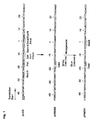
- the mutant plasmid, pWM300 was generated using the mutagenesis method according to the present invention, as shown in Fig. 1.
- Plasmid pWM300 a frameshift mutant of pUC9, was constructed by the DNA double-strand break repair according to the present invention.
- the oligonucleotide used for mutagenesis encompassed residues -45 to 14 of pWM300 (as numbered in Fig. 1).
- pUC9 plasmid DNA was linearized with the Pst I restriction enzyme. The completion of the reaction was confirmed by agarose gel electrophoresis. Uncleaved circular plasmid molecules, if used in the procedure, increase the background of the wild-type clones. The plasmid DNA and oligonucleotide were then combined in a denaturation mixture.
- the denaturation mixture consisted of 50 ng of linearized plasmid DNA and 20 pmol of oligonucleotide in a buffer composed of 10 mM KCl, 5 mM Tris-HCl pH 8.0, 5mM MgSO4, 0.5 mM dithiothreitol in a total volume of 30 ⁇ l in a 1.5 ml Eppendorf tube.
- the mixture was incubated at 100°C for 3 min. (in a boiling water bath), the tube was then removed to room temperature for 5 min., the contents of the tube were transferred to 200 ⁇ l of chilled competent cells prepared by CaCl2 treatment [according to Mandel et al., J. Mol. Biol. 53 , 159-162 (1970)] and gently mixed. The cells and DNA were incubated on ice for 5 min. and then subjected to a 3 min. heat shock at 37°C. After adding 2 ml of 2 x YT medium [prepared according to Miller, "Experiments in Molecular Genetics", Cold Spring Harbor Laboratory, Cold Spring Harbor, p.
- the cells were incubated at 37°C for 1 hr, then plated on LB plates [prepared according to Miller, "Experiments in Molecular Genetics", Cold Spring Harbor Laboratory, Cold Spring Harbor, NY, p. 433 (1972)] containing 100 ⁇ g/ml ampicillin [GIBCO, Grand Island Biological Company, Grand Island, New York] and 20 ⁇ g/ml of 5-bromo-4-chloro-3-indolyl- ⁇ -D-galactoside (Sigma Chemical Company, St. Louis, Missouri), as appropriate.
- Plasmid pWM300 was employed as a substrate for further mutagenesis. As illustrated in Fig. 2, plasmid pWM300 was simultaneously linearized and blunt-ended by cleavage with the enzyme Sma I. Upon mutagenesis with the oligonucleotide shown in Fig. 2 according to the mutagenesis procedure set forth in Example 1, plasmid pWM301 was created. Thus the coding sequence within the multicloning site was brought in frame to allow for the color screening of transformants. In addition, a BstN I site was generated, which allowed confirmation of the presence of the mutation by restriction analysis. The position of the mutation is indicated by an oversize letter.
- mutations introduced into the pWM300 system to investigate the mutagenesis method according to the present invention were typically insertions of one residue which restored the reading frame of the lac Z gene fragment.
- the mutants formed blue colonies, while cells containing only the parent plasmid (pWM300) and/or rearranged plasmids, gave rise to white colonies.
- oligonucleotides 10 to 60 residues long was synthesized in order to determine the effect of the length of the oligonucleotide upon the efficiency of mutagenesis.
- Oligonucleotides were synthesized by the phosphoramidite method [Caruthers, Science 230 , 281-285 (1985)] on a model 380A synthesizer available from Applied Biosystems (Foster City, California) and were purified by polyacrylamide gel electrophoresis under denaturing conditions.
- the sequences of oligonucleotides were homologous to the segment of plasmid pWM300 (as shown in Fig.
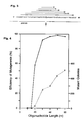
- Fig. 3 and Fig. 4 illustrate the role of the length of oligonucleotide in mutagenesis.
- the sequence of the longest oligonucleotide used (a 60-mer) is given in Fig. 3. Sequences of other oligonucleotides were subsequences of the 60-mer, as indicated by horizontal bars. The lengths of oligonucleotides are given at the right end of each oligomer. The mutation introduced is indicated by the largest letter in the 60-mer.
- the Sma I cleavage site is represented by an arrow at a break in the line.
- Plasmid pWM300 (50 ng) was linearized at the Sma I site and a 20 pmol of each of the oligonucleotides shown in Fig. 3 was used for mutagenesis according to the procedure of Example 1.
- Fig. 4 the results of the experiment are presented.
- the solid line is a graph of the efficiency of mutagenesis; the dotted line is a graph of the number of mutant colonies per plate.
- Twenty clones that formed blue colonies were tested by digestions with endonuclease BstN I ( BstN I was a newly created restriction site) to confirm the presence of the desired mutation. All 20 clones showed the expected digestion pattern as demonstrated by agarose gel electrophoresis.
- the DNA sequence of the multicloning site was obtained as described above for two clones. The sequence was as expected for the mutant.
- an oligonucleotide for use in the method according to the present invention is preferably at least 20 to 30 residues in length, and more preferably longer.
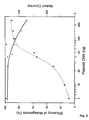
- Fig. 5 The relationship between the efficiency of mutagenesis according to the procedure of Example 1 and the amount of the linearized plasmid DNA is shown in Fig. 5 in which the solid line illustrates efficiency of mutagenesis; and the dotted line is a graph of the number of mutant colonies per plate.
- pWM300 plasmid linearized at the Sma I site in the amount indicated in Fig. 5 and 20 pmol of the 60-mer depicted in Fig. 3 were used. Titrations with plasmid DNA and oligonucleotide were done to optimize amounts of DNA used for mutagenesis.
- oligonucleotide over plasmid DNA is important for mutagenesis, as is evident from Fig. 6.
- the indicated amount of the 60-mer of Fig. 3 and 50 ng (approximately 20 fM, as indicated by the arrow) of Sma I-cleaved pWM300 were employed in the procedure according to Example 1.
- the solid line is a graph of the efficiency of mutagenesis and the dotted line is a graph of the number of mutant colonies per plate.
- the plasmid pWM300 was linearized with the Nde I restriction enzyme, which cleaves at a site about 240 bp from the multicloning site. It was then tested whether the 60-mer sequence given in Fig. 3 which sequence spans the Sma I site, could induce mutations in the Nde I-cleaved plasmid.
- a set of oligonucleotides was synthesized to define the dependence of mutagenesis according to the procedure of Example 1 on the distance between a mutation and the linearization site.
- the oligonucleotides were eight symmetrical 60-mers with insertions of one residue at different positions.
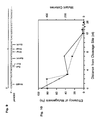
- the sequences of 60-mers which were used for mutagenesis are shown in Fig. 7 as modifications of the sequence of the multicloning site of plasmid pWM300.
- positions of insertion mutations are indicated on horizontal bars representing oligonucleotides.
- the exact locations of inserted residues are defined by apostrophes on the pWM300 sequence.
- the insertions generated new restriction sites, which are given at the left end of the line.
- the oligonucleotide that introduced the Mnl I site contained an insertion of one residue combined with a point mutation (...GCC A AG... ⁇ ...CC TC AG).
- the distance between the mutation and the cleavage site is defined as the length of the spacer DNA between the two.
- the distances (in nucleotides) are given on the right side of the figure.
- the 60-mers were tested for their ability to generate mutations in the pWM300 plasmid linearized at the Sma I site.
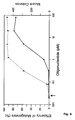
- the results are illustrated in Fig. 8 in which a solid line graphically depicts the efficiency of mutagenesis, a broken line graphically depicts the number of mutant colonies, and a dotted line graphically depicts the number of non-mutant colonies formed by cells carrying the parent or rearranged plasmids.
- the results showed that the efficiency of mutagenesis decreased rapidly from 98% to 13% as the distance between the mutation and the cleavage site increased from 0 to 8 base pairs (bp).
- Half-maximal efficiency was obtained at the distance of about 5 bp.
- the efficiency of mutagenesis at the distance of 17 nucleotides (nt) was 1.4% (6 mutants per 422 transformants, confirmed by DNA sequencing).
- the distance of 26 nt between the mutation and the cleavage site was the maximum that allowed to obtain a mutation, and the efficiency of mutagenesis was 0.2% (2 mutants per 820 transformants, confirmed by DNA sequencing).
- Example 6 In an alternative approach to the investigation of Example 6, the position of the linearization site is varied utilizing different restriction enzymes which cleave within the multicloning site.
- the 60-mer carrying a mutation at the Sma I site was used to direct the repair according to the mutagenesis procedure of Example 1.
- the oligonucleotide used was the 60-mer of Fig. 3, and it is indicated with a heavy line in Fig. 9.
- Linear plasmid DNA was prepared by digesting pWM300 with one of several restriction endonucleases. Their recognition sites are represented by arrows.
- One plasmid strand with polarity identical to that of the oligonucleotide of Fig. 1 was arbitrarily chosen to assign locations of the endonuclease cleavage sites.
- results of this experiment indicate the dependence of the efficiency of mutagenesis (solid line) and number of mutant colonies (dotted line) on the distance between a mutation and the linearization site.
- the distance is defined here as the length of the spacer DNA between the mutation and the endonuclease cleavage site.
- the mutagenesis efficiency decreased to 40% at the distance of 7 bp and 2% at the distance of 13 bp.
- mutagenesis method according to the present invention is not limited to use with any particular strain
- a total of four plasmids, three E . coli strains, three genes and eight restriction enzymes were used in the process of introducing different mutations, as summarized in Table 1.
- Table 1 Within the range of ⁇ 10 bp from the cleavage site the mutations were introduced into a plasmid in all attempted cases utilizing the method of mutagenesis described in the Example 1 above.
- Table 1 the number of mutants per a total number of transformants screened by DNA restriction analysis is enclosed within parentheses. The constructions were confirmed by DNA sequencing of the relevant region in at least one clone of each class. All procedures were performed as set forth in Example 1.
- the nucleotide sequence of the oligonucleotide was the same as the nucleotide sequence from residue 371 to residue 429 of the non-coding strand of the rpsL gene [Post et al., J. Biol. Chem. 255 , 4660-4666 (1980)].
- the oligonucleotide contained a mutation that led to the insertion of an A/T base pair between residues 401 and 402, creating a Bst NI site.
- the oligonucleotide sequence was from residue one to 59 or the non-coding strand of the C5a gene fragment [Mandecki et al., Proc. Natl. Acad. Sci. (USA) , 82 , 3543-3547 (1985)].
- the mutation introduced was an A ⁇ G transition at position 24, which created a Hae III site.
- the oligonucleotide sequence corresponded to residues 3819-3878 of the coding strand of the ⁇ -lactamase gene of pBR322 [Sutcliffe, Cold Spring Harbor Symp. Quant. Biol. , 43 , 77-90 (1978)].
- E . coli strains were employed as host strains in these experiments and in the preceding Examples: CSH26 [ ⁇ ( lac pro ) ara thi ] [Miller, "Experiments in Molecular Genetics,” Cold Spring Harbor Laboratory, Cold Spring Harbor, NY, p. 17 (1972)], JM832 [ ara , ⁇ ( lac proAB ), ⁇ 80, lac Z ⁇ M15] [Vieira et al., Gene 19 , 259-268 (1982) and MC1009 [ ⁇ ( lacIPOZY )X74, rpsL , galK , galU , ⁇ ( ara , leu )7697)] [Casadaban et al., J. Mol. Biol.
- Plasmids pUC9 (Vieira et al., Gene 19 , 259-268 (1982)] and pNO1523 [Dean, Gene 15 , 99-102 (1981)] were obtained from Pharmacia, Piscataway, New Jersey, and pWM111 was from the collection of Abbott Laboratories, Abbott Park, Illinois.
- Example 1 The procedure of Example 1 may be modified for the purpose of introducing defined mutations into chromosomes in situ .
- Cells may be treated in order to induce double-strand breaks through the use of radiation [e.g. according to the procedure of Hutchinson et al., Prog. Nucl. Acid. Res. , 32 , 115-154 (1985)], or through the use of drugs [e,g, according to the procedure of Walker et al., Ann. Rev. Genet. , 19 , 103-126 (1985)], or through the use of derivatized DNA probes [e.g., according to the procedures of Dreyer et al., Proc. Natl. Acad. Sci (USA) , 82 , 968-972 (1985)] and Dervan, Science , 232 , 464-471 (1986)].
- radiation e.g. according to the procedure of Hutchinson et al., Prog. Nucl. Acid. Res. , 32 , 115-154 (1985)
- drugs e,g, according to the procedure of Walker et al., Ann. Rev.
- Oligonucleotides embodying the desired mutation are introduced into the cells, e.g. by CaCl2-mediated transformation as described in Example 1 or electroporation as described in Smithies et al., supra .
- the cells are maintained under conditions which permit their viability and do not interfere with DNA repair within the cells.
- the cells are then screened for the presence of the desired mutation [e.g. by Southern blot analysis as set forth in Williams et al., Nature , 310 , 476-480 (1984)] after a period of time sufficient to permit DNA repair to occur.
- Example 10 Especially in the case where derivatized oligonucleotide probes are employed to target the introduction of double-strand breaks to selected locations in a chromosome, the procedure according to Example 10 may be employed for gene thereapy (i.e. for genetic modification leading to a desired alteration in phenotype.
- oligonucleotide probes may be constructed which embody the mutation required to produce the desired phenotype.
- Cells including but not limited to egg cells
- a double-strand break may be created in a chromosome within the cells by the use of derivatized DNA probes specific for the site to be mutated according to the procedure of Dreyer et al., supra , or Dervan, supra . More than one strand break may be induced where, for example, a segment of a chromosome is to be deleted or replaced.
- Oligonucleotides including the desired mutation may then be introduced into the cells by a modification of the procedure of Example 1 or by a number of techniques such as microinjection [see e.g. Brinster et al., Proc. Natl. Acad. Sci. (USA) , 82 , 4438-4442 (1985)], electroporation [see e.g. Smithies et al., supra ], or fusion with a liposome containing the oligonucleotides [see e.g. Lurquin, Nucleic Acids Res. , 6 , 3773-3784 (1979)].
- the cells may then be screened for the presence of the desired mutation and introduced into an organism [see e.g. Williams et al., supra ] or cultured as appropriate.
- the present invention may be applied to DNA clone a DNA segment by covalently joining the DNA segment to a linearized vector by using two oligonucleotides which respectively span a break between a first end of the DNA to be cloned and a first end of a linearized vector, and a sector end of DNA to be cloned and a second end of a linearized vector.
- oligonucleotide is employed herein, it will be obvious to one skilled in the art to employ any linear, single-stranded deoxyribonucleic acid in the methods according to the present invention.
- present invention may be employed to insert, delete and substitute (i.e., simultaneously delete and insert) groups of nucleotides constituting one or more codons in order to obtain genes encoding analogs of polypeptides from a gene encoding a naturally occurring form.
Landscapes
- Chemical & Material Sciences (AREA)
- Health & Medical Sciences (AREA)
- Life Sciences & Earth Sciences (AREA)
- Engineering & Computer Science (AREA)
- Genetics & Genomics (AREA)
- Organic Chemistry (AREA)
- Zoology (AREA)
- Biomedical Technology (AREA)
- Wood Science & Technology (AREA)
- Biotechnology (AREA)
- General Engineering & Computer Science (AREA)
- Bioinformatics & Cheminformatics (AREA)
- Plant Pathology (AREA)
- Molecular Biology (AREA)
- Microbiology (AREA)
- Biophysics (AREA)
- Physics & Mathematics (AREA)
- Biochemistry (AREA)
- General Health & Medical Sciences (AREA)
- Crystallography & Structural Chemistry (AREA)
- Micro-Organisms Or Cultivation Processes Thereof (AREA)
- Preparation Of Compounds By Using Micro-Organisms (AREA)
- Saccharide Compounds (AREA)
- Pharmaceuticals Containing Other Organic And Inorganic Compounds (AREA)
- Medicines Containing Material From Animals Or Micro-Organisms (AREA)
Claims (22)
- Verfahren zur Insertion oder Substitution von Nukleotiden durch einen Prozess, umfassend den Schritten:
Cokultivierung in einer geeigneten Wirtszelle sowohl der Ziel-DNA mit einer Bruchstelle als auch eines Oligonukleotids mit einer auf beiden Seiten der Bruchstelle zu einem Strang der Ziel-DNA komplementären Nukleotidsequenz und das die Bruchstelle überspannt, wobei das Oligonukleotid
einen zur Nukleotidsequenz einer ersten Strangregion völlig komplementären ersten Teil,
einen zur Nukleotidsequenz einer zweiten Strangregion völlig komplementären zweiten Teil und
einen dritten Teil, der zwischen dem ersten und dem zweiten Teil liegt und der nicht komplementär zur Nukleotidsequenz des Strangs zwischen der ersten und der zweiten Region ist, umfaßt;
und
Halten der genannten Wirtszelle unter geeigneten Bedingungen und fur einen Zeitraum, der ausreicht, um die Inkorporation einer zum dritten Teil zwischen der ersten Region und der zweiten Region komplementären dritten Region in die Ziel-DNA zu ermöglichen, umfaßt. - Verfahren nach Anspruch 1, wobei der genannte Cokultivierungsschritt den Schritt der Cointroduktion des Oligonukleotids und der Ziel-DNA in die Wirtszelle umfaßt.
- Verfahren nach Anspruch 2, wobei der genannte Schritt der Cointroduktion den Schritt der Cotransformation der Wirtszelle mit der Ziel-DNA und dem Oligonukleotid umfaßt.
- Verfahren nach Anspruch 3, wobei der genannte Cokultivierungsschritt die Schritte der Exposition des Oligonukleotids gegenüber der doppelsträngigen Ziel-DNA und der Denaturierung der Ziel-DNA umfaßt.
- Verfahren nach Anspruch 1, das außerdem den Schritt des Einsatzes von DNA auf einem Vektor als die Ziel DNA umfaßt.
- Verfahren nach Anspruch 1, das außerdem den Schritt der Bereitstellung eines im Vergleich zur Ziel-DNA etwa 1000fachen Überschußes des Oligonukleotides umfaßt.
- Verfahren nach Anspruch 1, wobei der genannte Cokultivierungsschritt den Schritt der Bereitstellung eines Oligonucleotids mit einem dritten Teil, bei dem sich das medialste Nucleotid unmittelbar an ein Nucleotid des zweiten Teils anschließt, das zu einem nicht mehr als 26 Nukleotide von der Bruchstelle in der Nukleotidsequenz der Ziel-DNA entfernten Nucleotid komplementär ist, umfaßt.
- Verfahren nach Anspruch 1, wobei der genannte Cokultivierungsschritt den Schritt der Erzeugung eines Oligonucleotids, in dem die Länge des ersten und zweiten Teils jeweils etwa 10 Nucleotide oder mehr beträgt, umfaßt.
- Verfahren, bei dem eine Deletion durch ortsgerichtete (site-directed) Mutagenese erhalten wird, umfassend den Schritten:
Cokultivierung in einer geeigneten Wirtszelle sowohl von Ziel-DNA mit einer Bruchstelle als auch eines Oligonukleotids mit einer auf beiden Seiten der Bruchstelle zu einem Strang der Ziel-DNA komplementären Nukleotidsequenz, das die Bruchstelle überspannt, wobei das Oligonukleotid
einen zur Nukleotidsequenz einer ersten Strangregion völlig komplementären ersten Teil,
einen zur Nukleotidsequenz einer zweiten Strangregion völlig komplementären und unmittelbar an den ersten Teil anschließenden zweiten Teil, worin die Ziel-DNA eine dritte Region zwischen der ersten und der zweiten Region unfaßt, umfaßt; und
Halten der genannten Wirtszelle unter geeigneten Bedingungen und für einen Zeitraum der ausreicht, um die Inkorporation einer zum dritten Teil, zwischen der ersten Region und der zweiten Region, komplementären dritten Region in die Ziel-DNA zu emöglichen. - Verfahren nach Anspruch 9, wobei der genannte Cokultivierungsschritt die Schritte der Exposition des Oligonukleotids gegenüber der doppelsträngigen Ziel-DNA und der Denaturierung der Ziel-DNA umfaßt.
- Verfahren nach Anspruch 9, das weiterhin den Schritt der Bereitstellung eines im Vergleich zur Ziel-DNA etwa 1000fachen Überschußes des Oligonukleotides umfaßt.
- Verfahren zur DNA-Doppelstrang-Bruchstellenreparatur, umfassend den Schritten
Cokultivierung in einer geeigneten Wirtszelle sowohl von Ziel-DNA mit einer Doppelstrang-Bruchstelle als auch eines Oligonukleotids mit einer auf beiden Seiten der Bruchstelle zu einem Strang der Ziel-DNA komplementären Nukleotidsequenz, wobei das Oligonukleotid
einen zur Nukleotidsequenz einer ersten Strangregion völlig komplementären und auf einer ersten Seite der Doppelstrang-Bruchstelle gelegenen ersten Teil und
einen zur Nukleotidsequenz einer zweiten Strangregion völlig komplementären und auf einer zweiten Seite der Doppelstrang-Bruchstelle gelegenen zweiten Teil, umfaßt; und
Halten der Wirtszelle unter geeigneten Bedingungen und für einen Zeitraum, der eine Reparatur der Doppelstrang-Bruchstelle zuläßt, umfaßt. - Verfahren zur DNA-Doppelstrang Bruchstellenreparatur nach Anspruch 12, das weiterhin den Schritt der Bereitstellung eines Oligonukleotids umfaßt, das einen dritten Teil, der zwischen dem ersten und dem zweiten Teil liegt und der nicht komplementär zum Strang zwischen der ersten und der zweiten Region ist, umfaßt.
- Verfahren zur Reparatur eines Strangbruches in Einzelstrang-DNA, umfassend den Schritten:
Cokultivierung in einer geeigneten Wirtszelle sowohl von Einzelstrang-Ziel-DNA mit einer Einzelstrang-Bruchstelle als auch von einem Oligonukleotid mit einer auf beiden Seiten der Bruchstelle zu einem Strang der Ziel-DNA komplementären Nukleotidsequenz, wobei das Oligonukleotid
einen zur Nukleotidsequenz einer ersten Strangregion völlig komplementären ersten Teil, gelegen auf einer ersten Seite des Einzelstrang-Bruches und
einen zur Nukleotidsequenz einer zweiten Strangregion völlig komplementären zweiten Teil, gelegen auf einer zweiten Seite des Einzelstrang-Bruches umfaßt und
Halten der genannten Wirtszelle unter geeigneten Bedingungen und für einen Zeitraum, der ausreicht, um eine Reparatur des Einzelstrangbruches zu ermöglichen. - Verfahren zur DNA-Einzelstrang Bruchreparatur nach Anspruch 14, das weiterhin den Schritt der Bereitstellung eines Oligonukleotids umfaßt, das einen dritten Teil, der zwischen dem ersten und dem zweiten Teil liegt und der nicht komplementär zum Strang zwischen der ersten und der zweiten Region ist, umfaßt.
- Verfahren zur Durchführung einer Gen-Behandlungzum Erhalt einer genotypischen Modifikation und einer anschließenden phänotypischen Modifikation, umfassend den Schritten:
Einführung eines Oligonukleotids mit einer zu einem Strang der Ziel-DNA auf beiden Seiten des Bruches komplementären Nukleotidsequenz in die zu behandelnden Zellen, und wobei das Oligonukleotid
einen zur Nukleotidsequenz einer ersten Strangregion völlig komplementären ersten Teil,
einen zur Nukleotidsequenz einer zweiten Strangregion völlig komplementären zweiten Teil und
einen dritten Teil, der zwischen dem ersten und dem zweiten Teil liegt und der nicht komplementär zur Nukleotidsequenz des Strangs zwischen der ersten und der zweiten Region ist, umfaßt;
und
Halten der genannten Wirtszelle unter geeigneten Bedingungen und für einen Zeitraum der ausreicht, um eine Inkorporation einer zum dritten Teil zwischen der ersten und der zweiten Region komplementären dritten Region zu ermöglichen, so daß der Phänotyp modifiziert wird. - Verfahren nach Anspruch 16, wobei der genannte Bereitstellungsschritt die Exposition der Zellen gegenüber einer Strahlung unter Bedingungen, die zur Erzeugung einer Bruchstelle in DNA durch Anwendung der Strahlung geeignet sind, umfaßt.
- Verfahren nach Anspruch 16, wobei der genannte Bereitstellungsschritt den Schritt der Anwendung einer Droge auf die Zellen, unter Bedingungen, die zur Erzeugung einer Bruchstelle in der DNA durch die Anwendung der Droge geeignet sind, umfaßt.
- Verfahren nach Anspruch 17, wobei der genannte Bereitstellungsschritt die Einführung eines sequenzspezifischen DNA-Spaltungsmoleküls mit einer spezifischen Affinität gegenüber dem zu modifizierenden Teil der Ziel-DNA umfaßt.
- Verfahren nach Anspruch 16, wobei der genannte Schritt der Zellhaltung den Schritt der Selektion von Zellen, die die gewünschte genetische Modifikation aufweisen, umfaßt.
- Verfahren zur Klonierung eines DNA-Segments, umfassend den Schritten:
Cokultivierung eines zur zu klonierenden DNA linearen ersten Oligonukleotids in einer geeigneten Wirtszellen-Vektor-DNA mit einer Bruchstelle, das
einen zur Nukleotidsequenz einer ersten Strangregion der Vektor-DNA völlig komplementären ersten Teil, wobei die genannte erste Region auf einer ersten Seite des Bruchs liegt und
einen zur Nukleotidsequenz einer ersten Strangregion der linearen, zu klonierenden DNA völlig komplementären zweiten Teil, wobei die genannte zweite Region proximal zu einem ersten Ende der zu klonierenden linearen DNA und distal zu einem zweiten Ende der zu klonierenden linearen DNA liegt,umfaßt; und
ein zweites Oligonukleotid, das
einen zur Nukleotidsequenz einer zweiten Strangregion der Vektor-DNA völligkomplementären ersten Teil, wobei sich die genannte zweite Region auf einer zweiten Seite der Bruchstelle befindet, und
einen zur Nukleotidsequenz eines zweiten Stranges der zu klonierenden linearen DNA völlig komplementären zweiten Teil, wobei die genannte zweite Region proximal zum zweiten Ende der zu klonierenden linearen DNA und distal zum ersten Ende liegt, umfaßt; und
Halten der Wirtszelle unter geeigneten Bedingungen und für einen Zeitraum, der ausreicht, um eine Bruchstellenreparatur zu ermöglichen. - Verfahren zur ortsspezifischen (site-directed) Mutagenese, umfassend den Schritten:
Bereitstellung von Ziel-DNA auf einem an einer Bruchstelle linearisierten Plasmid und eines Oligonukleotids mit einer zu einem Strang der Ziel-DNA auf beiden Seiten der Bruchstelle komplementären Nukleotidsequenz und das die Bruchstelle überspannt und wobei das Oligonukleotid
einen zur Nukleotidsequenz einer ersten Strangregion völlig komplementären ersten Teil,
einen zur Nukleotidsequenz einer zweiten Strangregion völlig komplementären zweiten Teil und
einen dritten Teil, der zwischen dem ersten und dem zweiten Teil liegt und der nicht zur Nukleotidsequenz des Stranges zwischen der ersten und der zweiten Region komplementär ist, wobei das medialste Nukleotid des dritten Teils sich unmittelbar an ein Nukleotid des zweiten Teils anschließt, das komplementär zu einem Nukleotid in dem Strang ist, das weniger als etwa 26 Nukleotide von der Bruchstelle entlang der Nukleotidsequenz des Strangs entfernt ist, umfaßt;
Exposition des Oligonukleotids gegenüber denaturierter, doppelsträngiger Ziel-DNA;
Cotransformation einer passenden Mikroorganismus-Wirtszelle mit der Ziel-DNA und mit dem Oligonukleotid;
der Cokultivierung sowohl der Ziel-DNA und des Oligonukleotids in der passenden Mikroorganismus-Wirtszelle;
und
Halten der genannten Wirtszelle unter geeigneten Bedingungen und für einen Zeitraum, der ausreicht, um Inkorporation einer zum dritten Teil zwischen der ersten und der zweiten Region komplementären dritten Region zu ermöglichen.
Applications Claiming Priority (2)
| Application Number | Priority Date | Filing Date | Title |
|---|---|---|---|
| US88324286A | 1986-07-08 | 1986-07-08 | |
| US883242 | 1986-07-08 |
Publications (3)
| Publication Number | Publication Date |
|---|---|
| EP0253193A2 EP0253193A2 (de) | 1988-01-20 |
| EP0253193A3 EP0253193A3 (en) | 1989-04-12 |
| EP0253193B1 true EP0253193B1 (de) | 1992-10-28 |
Family
ID=25382253
Family Applications (1)
| Application Number | Title | Priority Date | Filing Date |
|---|---|---|---|
| EP19870109357 Expired EP0253193B1 (de) | 1986-07-08 | 1987-06-30 | Verfahren für die Mutagenese durch eine oligonukleotidgeleitete Reparatur eines Strangbruchs |
Country Status (4)
| Country | Link |
|---|---|
| EP (1) | EP0253193B1 (de) |
| JP (1) | JPS6368089A (de) |
| CA (1) | CA1315223C (de) |
| DE (1) | DE3782365T2 (de) |
Cited By (1)
| Publication number | Priority date | Publication date | Assignee | Title |
|---|---|---|---|---|
| US10584363B2 (en) | 2016-06-03 | 2020-03-10 | Takara Bio Usa, Inc. | Methods of producing and using single-stranded deoxyribonucleic acids and compositions for use in practicing the same |
Families Citing this family (7)
| Publication number | Priority date | Publication date | Assignee | Title |
|---|---|---|---|---|
| EP0319759B1 (de) * | 1987-12-11 | 1993-01-07 | Abbott Laboratories | Verfahren zur Mutagenese mittels oligonukleotid-gerichteter Reparatur eines Strandbruchs |
| GB8808892D0 (en) * | 1988-04-15 | 1988-05-18 | British Bio Technology | Gene synthesis |
| CA2049679C (en) * | 1990-08-24 | 2005-06-21 | Sushil G. Devare | Hepatitis c assay utilizing recombinant antigens |
| AU6043296A (en) * | 1995-06-06 | 1996-12-24 | Yale University | Chemically modified oligonucleotide for site-directed mutage nesis |
| US8658608B2 (en) | 2005-11-23 | 2014-02-25 | Yale University | Modified triple-helix forming oligonucleotides for targeted mutagenesis |
| JP2019508037A (ja) | 2016-02-16 | 2019-03-28 | イェール ユニバーシティーYale Universit | 標的化遺伝子編集を増強するための組成物およびその使用方法 |
| WO2018187493A1 (en) | 2017-04-04 | 2018-10-11 | Yale University | Compositions and methods for in utero delivery |
Family Cites Families (2)
| Publication number | Priority date | Publication date | Assignee | Title |
|---|---|---|---|---|
| AU577334B2 (en) * | 1983-10-11 | 1988-09-22 | International Genetic Engineering, Inc. | Synthetic thaumatin genes |
| US4711848A (en) * | 1984-03-14 | 1987-12-08 | Zymogenetics, Inc. | Site specific mutagenesis in alpha-1-antitrypsin |
-
1987
- 1987-06-30 EP EP19870109357 patent/EP0253193B1/de not_active Expired
- 1987-06-30 DE DE19873782365 patent/DE3782365T2/de not_active Expired - Fee Related
- 1987-07-07 CA CA000541442A patent/CA1315223C/en not_active Expired - Fee Related
- 1987-07-08 JP JP62168928A patent/JPS6368089A/ja active Pending
Cited By (1)
| Publication number | Priority date | Publication date | Assignee | Title |
|---|---|---|---|---|
| US10584363B2 (en) | 2016-06-03 | 2020-03-10 | Takara Bio Usa, Inc. | Methods of producing and using single-stranded deoxyribonucleic acids and compositions for use in practicing the same |
Also Published As
| Publication number | Publication date |
|---|---|
| DE3782365D1 (de) | 1992-12-03 |
| DE3782365T2 (de) | 1993-04-22 |
| EP0253193A3 (en) | 1989-04-12 |
| CA1315223C (en) | 1993-03-30 |
| JPS6368089A (ja) | 1988-03-26 |
| EP0253193A2 (de) | 1988-01-20 |
Similar Documents
| Publication | Publication Date | Title |
|---|---|---|
| Mandecki | Oligonucleotide-directed double-strand break repair in plasmids of Escherichia coli: a method for site-specific mutagenesis. | |
| EP1421187B1 (de) | Systeme zur stellengerichteten in-vivo-mutagenese mit oligonukleotiden | |
| KR102772997B1 (ko) | Acidaminococcus sp. cpf1의 dna 절단 활성을 향상시키는 신규한 돌연변이 | |
| Phillips et al. | Illegitimate recombination induced by DNA double-strand breaks in a mammalian chromosome | |
| Derbyshire et al. | Nonhomologous recombination in human cells | |
| AU2002319696A1 (en) | Systems for in vivo site-directed mutagenesis using oligonucleotides | |
| Brunier et al. | Copy choice illegitimate DNA recombination | |
| Kalderon et al. | Deletion loop mutagenesis: a novel method for the construction of point mutations using deletion mutants | |
| Strauss et al. | Role of proofreading and mismatch repair in maintaining the stability of nucleotide repeats in DNA | |
| Hamilton et al. | Gene recombination in X-ray-sensitive hamster cells | |
| Carroll et al. | Efficient homologous recombination of linear DNA substrates after injection into Xenopus laevis oocytes | |
| van Duin et al. | UV stimulation of DNA-mediated transformation of human cells | |
| EP0253193B1 (de) | Verfahren für die Mutagenese durch eine oligonukleotidgeleitete Reparatur eines Strangbruchs | |
| Harvey et al. | Loss of the spacer loop sequence from the rrnB operon in the Escherichia coli K-12 subline that bears the relA1 mutation | |
| Abastado et al. | Processing of complex heteroduplexes in Escherichia coli and Cos-1 monkey cells. | |
| Clyman et al. | Trans and cis requirements for intron mobility in a prokaryotic system. | |
| JPH0527400B2 (de) | ||
| EP0319759B1 (de) | Verfahren zur Mutagenese mittels oligonukleotid-gerichteter Reparatur eines Strandbruchs | |
| Seier et al. | Insights into mutagenesis using Escherichia coli chromosomal lacZ strains that enable detection of a wide spectrum of mutational events | |
| Lin et al. | Homologous recombination in mouse L cells | |
| EP0555357B1 (de) | Verfahren zur modifizierung von dna und zur detektion der wirkungen auf die interaktion von modifizierten polypeptiden und zielsubstraten | |
| KR20180128864A (ko) | 매칭된 5' 뉴클레오타이드를 포함하는 가이드 rna를 포함하는 유전자 교정용 조성물 및 이를 이용한 유전자 교정 방법 | |
| Lubys et al. | Cloning and analysis of translational control for genes encoding the Cfr9I restriction-modification system | |
| Palermo et al. | Use of λ exonuclease for efficient oligonucleotide-mediated site-directed deletion and point mutation of double-stranded DNA | |
| Soll | Isolation and characterization of λb221 poriCasnA, a plaque-forming specialized transducing phage carrying the origin of replication of the Escherichia coli chromosome |
Legal Events
| Date | Code | Title | Description |
|---|---|---|---|
| PUAI | Public reference made under article 153(3) epc to a published international application that has entered the european phase |
Free format text: ORIGINAL CODE: 0009012 |
|
| AK | Designated contracting states |
Kind code of ref document: A2 Designated state(s): BE DE FR IT |
|
| PUAL | Search report despatched |
Free format text: ORIGINAL CODE: 0009013 |
|
| AK | Designated contracting states |
Kind code of ref document: A3 Designated state(s): BE DE FR IT |
|
| 17P | Request for examination filed |
Effective date: 19890515 |
|
| 17Q | First examination report despatched |
Effective date: 19910612 |
|
| ITTA | It: last paid annual fee | ||
| GRAA | (expected) grant |
Free format text: ORIGINAL CODE: 0009210 |
|
| AK | Designated contracting states |
Kind code of ref document: B1 Designated state(s): BE DE FR IT |
|
| ET | Fr: translation filed | ||
| REF | Corresponds to: |
Ref document number: 3782365 Country of ref document: DE Date of ref document: 19921203 |
|
| ITF | It: translation for a ep patent filed | ||
| PLBE | No opposition filed within time limit |
Free format text: ORIGINAL CODE: 0009261 |
|
| STAA | Information on the status of an ep patent application or granted ep patent |
Free format text: STATUS: NO OPPOSITION FILED WITHIN TIME LIMIT |
|
| 26N | No opposition filed | ||
| PGFP | Annual fee paid to national office [announced via postgrant information from national office to epo] |
Ref country code: FR Payment date: 19940613 Year of fee payment: 8 |
|
| PGFP | Annual fee paid to national office [announced via postgrant information from national office to epo] |
Ref country code: DE Payment date: 19940630 Year of fee payment: 8 |
|
| PGFP | Annual fee paid to national office [announced via postgrant information from national office to epo] |
Ref country code: BE Payment date: 19940707 Year of fee payment: 8 |
|
| PG25 | Lapsed in a contracting state [announced via postgrant information from national office to epo] |
Ref country code: BE Effective date: 19950630 |
|
| BERE | Be: lapsed |
Owner name: ABBOTT LABORATORIES Effective date: 19950630 |
|
| PG25 | Lapsed in a contracting state [announced via postgrant information from national office to epo] |
Ref country code: FR Effective date: 19960229 |
|
| PG25 | Lapsed in a contracting state [announced via postgrant information from national office to epo] |
Ref country code: DE Effective date: 19960301 |
|
| REG | Reference to a national code |
Ref country code: FR Ref legal event code: ST |
|
| PG25 | Lapsed in a contracting state [announced via postgrant information from national office to epo] |
Ref country code: IT Free format text: LAPSE BECAUSE OF NON-PAYMENT OF DUE FEES;WARNING: LAPSES OF ITALIAN PATENTS WITH EFFECTIVE DATE BEFORE 2007 MAY HAVE OCCURRED AT ANY TIME BEFORE 2007. THE CORRECT EFFECTIVE DATE MAY BE DIFFERENT FROM THE ONE RECORDED. Effective date: 20050630 |