EP0254862A1 - Vaccins contre les parasites protozoiques - Google Patents
Vaccins contre les parasites protozoiques Download PDFInfo
- Publication number
- EP0254862A1 EP0254862A1 EP87108867A EP87108867A EP0254862A1 EP 0254862 A1 EP0254862 A1 EP 0254862A1 EP 87108867 A EP87108867 A EP 87108867A EP 87108867 A EP87108867 A EP 87108867A EP 0254862 A1 EP0254862 A1 EP 0254862A1
- Authority
- EP
- European Patent Office
- Prior art keywords
- antigen
- sequence
- repitope
- parasite
- protozoan
- Prior art date
- Legal status (The legal status is an assumption and is not a legal conclusion. Google has not performed a legal analysis and makes no representation as to the accuracy of the status listed.)
- Withdrawn
Links
Images




Classifications
-
- A—HUMAN NECESSITIES
- A61—MEDICAL OR VETERINARY SCIENCE; HYGIENE
- A61K—PREPARATIONS FOR MEDICAL, DENTAL OR TOILETRY PURPOSES
- A61K38/00—Medicinal preparations containing peptides
- A61K38/16—Peptides having more than 20 amino acids; Gastrins; Somatostatins; Melanotropins; Derivatives thereof
-
- C—CHEMISTRY; METALLURGY
- C07—ORGANIC CHEMISTRY
- C07K—PEPTIDES
- C07K14/00—Peptides having more than 20 amino acids; Gastrins; Somatostatins; Melanotropins; Derivatives thereof
- C07K14/435—Peptides having more than 20 amino acids; Gastrins; Somatostatins; Melanotropins; Derivatives thereof from animals; from humans
- C07K14/44—Peptides having more than 20 amino acids; Gastrins; Somatostatins; Melanotropins; Derivatives thereof from animals; from humans from protozoa
-
- A—HUMAN NECESSITIES
- A61—MEDICAL OR VETERINARY SCIENCE; HYGIENE
- A61K—PREPARATIONS FOR MEDICAL, DENTAL OR TOILETRY PURPOSES
- A61K39/00—Medicinal preparations containing antigens or antibodies
- A61K39/002—Protozoa antigens
-
- C—CHEMISTRY; METALLURGY
- C07—ORGANIC CHEMISTRY
- C07K—PEPTIDES
- C07K14/00—Peptides having more than 20 amino acids; Gastrins; Somatostatins; Melanotropins; Derivatives thereof
- C07K14/435—Peptides having more than 20 amino acids; Gastrins; Somatostatins; Melanotropins; Derivatives thereof from animals; from humans
- C07K14/44—Peptides having more than 20 amino acids; Gastrins; Somatostatins; Melanotropins; Derivatives thereof from animals; from humans from protozoa
- C07K14/445—Plasmodium
-
- A—HUMAN NECESSITIES
- A61—MEDICAL OR VETERINARY SCIENCE; HYGIENE
- A61K—PREPARATIONS FOR MEDICAL, DENTAL OR TOILETRY PURPOSES
- A61K39/00—Medicinal preparations containing antigens or antibodies
-
- Y—GENERAL TAGGING OF NEW TECHNOLOGICAL DEVELOPMENTS; GENERAL TAGGING OF CROSS-SECTIONAL TECHNOLOGIES SPANNING OVER SEVERAL SECTIONS OF THE IPC; TECHNICAL SUBJECTS COVERED BY FORMER USPC CROSS-REFERENCE ART COLLECTIONS [XRACs] AND DIGESTS
- Y02—TECHNOLOGIES OR APPLICATIONS FOR MITIGATION OR ADAPTATION AGAINST CLIMATE CHANGE
- Y02A—TECHNOLOGIES FOR ADAPTATION TO CLIMATE CHANGE
- Y02A50/00—TECHNOLOGIES FOR ADAPTATION TO CLIMATE CHANGE in human health protection, e.g. against extreme weather
- Y02A50/30—Against vector-borne diseases, e.g. mosquito-borne, fly-borne, tick-borne or waterborne diseases whose impact is exacerbated by climate change
Definitions
- This invention relates to vaccines against protozoan parasitic infections, such vaccines being characterized by immunogens that lack the repeated epitopes of the disease-causing parasite's native surface antigens. More specifically, this invention relates to immunogens which lack the repeated epitopes of various parasitic surface antigens, methods of producing them, and methods of using them, as well as compositions containing them for immunizing mammals against and treating protozoan parasitic infections.
- Typical protozoa are unicellular organisms which lack a cell wall and obtain food phagotropically.
- Protozoa are divided into groups on the basis of their mechanisms of motility. Protozoa that move by amoeboid motion are called Sarcodina; those characterized by flagella are Flagellata or Mastigophora, and those using cilia are called Ciliophora.
- a fourth group, the Sporozoa are non-mobile and are characterized by their division by multiple fission of a single cell into a number of smaller cells called spores.
- Sporozoa comprise a large group of protozoa, all of which are obligate parasites. They produce structures called sporozoites, which are analogous to the resting spores of bacteria or fungi. Sporozoites are involved in the transmission of the parasite to new host.
- sporozoites which are analogous to the resting spores of bacteria or fungi. Sporozoites are involved in the transmission of the parasite to new host.
- Babesia which is found in the red blood cells of various higher animals, and which is transmitted by ticks. By far the most important member of the class is made up of plasmodia (malaria parasites).
- Malaria is a major cause of morbidity and mortality in many parts of the word [3rd Annual Report on the Special Program For Research And Training in Tripical Diseases , WHO, Geneva (1979)]. Almost one third of the world's population is exposed to the risk of infection. There are an estimated 150 million cases of malaria per year and in Africa alone the annual mortality, mainly among children, is about 1 million [J. A. Deans and S. Cohen, "Immunology Of Malaria", Ann. Rev. Microbiol. , 37, pp. 25-49 (1963); A. Noguer et al., WHO Chron. , 32, pp. 9-17 (1978)]. Accordingly malaria constitutes a major constraint on economic progress in tropical and subtropical areas of the world.
- plasmodial species that cause malaria in a wide range of vertebrates have been described. These species display a narrowly-defined host specificity. For example, only four species infect man: P. falciparum , P. vivax , P. malariae and P. ovale . There is also a high degree of antigenic heterogeneity within each plasmodium species [E.g., R. L. Coppel et al., "Isolate-Specific S-Antigen Of Plasmodium Falciparum Contains A Repeated Sequence of Eleven Amino Acids", Nature , 306, pp. 751-56 (1983); R.F.
- the preparation of malarial vaccines is beset by several difficulties.
- preparation of antigenic compounds from parasites grown in culture is very difficult, particularly on the large scale necessary for a useful vaccine.
- life cycle of the malarial parasite presents a variety of potential targets for the action of specific immune processes.
- protective immunity can operate against two distinct development stages of the parasite -- the sporozoites and the asexual blood stages [G. V. Brown et al., "Target Antigens Of Purified Human Immunoglobulins Which Inhibit Growth Of Plasmodium Falciparum In Vitro", Nature , 297, pp. 591-93 (1982)].
- malarial parasites may be able to evade detection and attack by the immune system of the compromised host by virtue of an "immune-decoy protein" located within the immunodominant region of their immunoreactive surface antigen (see discussion below) [G. N. Gordon et al., Nature , 305, pp. 29-33 (1983)].
- the sporozoites of plasmodia are introduced into the body by the bite of the mosquito.
- the asexual blood stages are largely responsible for the clinical symptoms of malaria. They involve maturation through a number of development stages called ring, trophozoite and schizont. Finally, at the end of the asexual cycle, mature schizonts rupture the red blood cells and merozoites are released into the circulation. The released merozoites then attach to specific receptors on other red cell membranes to initiate invasion. They also differentiate into male and female gametocytes which may be ingested by mosquitos and sexually reproduced by them to produce sporozoites for subsequent infection.
- malaria surface antigens have regions of repeating amino acids.
- the deduced sequence of the circumsporozoite (CS) protein P. vivax consists of 373 amino acids with a central region of 19 tandem repeats of nine amino acids.
- the most immunogenic portion of the plasmodial parasitic antigen is the repeated sequence portion or epitope.
- a 30-amino acid peptide derived from the tripeptide repeats is far more immunogenic than a peptide derived from the unique portion located just upstream of the repeats.
- the very high immunogenic character of the repeated epitopes in plasmodial antigens has also been confirmed with other species of protozoan parasite [V. Enea et al., Proc Natl. Acad. Sci. USA , 81, pp. 7520-24 (1984)].
- the repeated epitopes of these antigens have been the most focused upon to date as the potential sources of vaccines against malaria. However, to date, the results have been less promising than hoped.
- the repeats are immunodominant, it has been suggested they serve as a decoy in preventing the induction of protective antibodies against parasitic infection [G. N. Godson et al., Philos. Trans. R. Soc. , B307, pp. 129-32 (1984)].
- the repeated epitopes of Plasmodium falciparum vary from isolate to isolate, the unique sequence upstream of the repeats remain the same, which suggests a mechanism on the part of the parasite to avoid detection [A. F. Cowman et al., Cell , 40, pp. 775-82 (1985)].
- the present invention solves the problems referred to above by providing vaccines against infection by protozoan parasites which parasites are characterized by surface antigenic determinants or epitopes comprising a series of repeated amino acid sequence, or repitopes. More particularly, we provide in accordance with this invention, vaccines which lack substantially all of the repitope which characterizes the native protozoan parasitic surface antigens. These vaccines are capable of eliciting antibodies in a compromised or target host, which antibodies recognize and bind to the unique sequences on either side of the deleted repeats so as to immobilize and kill the target parasite.
- One object of one embodiment of this invention includes the location and identification of DNA sequences that code for parasitic antigen-like peptides or polypeptides useful in the vaccines of this invention, the transformation of a variety of hosts with these DNA sequences and the production in those transformed hosts of parasitic antigen-like peptides or polypeptides which lack substantially all of the series of repeated amino acids which characterize the naturally occurring epitope.
- the parasitic antigen-like peptides, polypeptides and immunogens produced according to this invention are modified protozoan antigens, such as modified plasmodial or modified Babesia antigens.
- peptides and polypeptides which are useful in the vaccines of this invention.
- the molecular structure and properties of these peptides and polypeptides may thus be readily determined and their effectiveness in binding to and blocking the activity of the target parasite may be readily assayed.
- the peptides and polypeptides are useful, either as produced in the host or after appropriate derivatization or modification, in compositions and methods for detecting and improving the production of these products for use in the vaccination of target hosts, including humans.
- the repeat-deleted parasitic surface antigen peptides and polypeptides of the present invention may also be prepared using methods for making synthetic peptides which are known to the art.
- other known methods of making immunogens including anti-idiotypic antibody formation, may be employed.
- the term "repeated sequence” or “repitope” refers to a tandemly repeating epitope of a parasitic surface antigen. This includes, a series of two or more amino acids, within a polypeptide, which is tandemly repeated at least twice within each molecule. For example, the 19 tandem repeats of nine amino acids in the circumsporozoite protein of P. vivax , and the 12 amino acids repeated 12 times in P. Knowlesi , exemplify the repeated sequences, or repitopes referred to in this description.
- the present invention relates to vaccines against protozoan parasites which are believed to avoid detection by the immune system through the presence of a repeated amino acid epitope or repitope.
- peptides or polypeptides derived from the surface antigen of the target parasite, from which all or part of the repitope has been removed are used to immunize against or treat infection by protozoan parasites such as malaria and Babesia.
- DNA sequences that code for protozoan parasitic antigens are identified and that portion of the DNA sequence which codes for the repeated amino acids of the antigen is either substantially or completely deleted.
- These DNA sequences can be employed in one embodiment in this invention to produce those "repeat-deleted" parasitic antigens on expression in various prokaryotic and eukaryotic hosts transformed with them for use in the vaccines of the present invention.
- These DNA sequences may also be modified so as to produce peptides or polypeptides on either or both sides of the repitope.
- compositions may be via any of the conventionally accepted modes of administration of agents which exhibit immunogenicity against protozoan parasites. These include oral or parenteral administration.
- compositions used in these vaccines may also be in a variety of forms. These include, for example solid, semi-solid and liquid dosage forms, such as powder, liquid solutions or suspensions, suppositories, injectable and infusable solutions. The preferred form depends on the intended mode of administration and therapeutic application.
- compositions also will preferably include conventional pharmaceutically acceptable carriers and may include other medicinal agents, carriers, adjuvants, excipients, etc., e.g., human serum albumin or plasma preparations.
- the compositions of the invention are in the form of a unit dose.
- the amount of active compound administered as a vaccination or as a medicament at one time, or over a period of time, will depend on the subject being treated, the manner and form of administration, and the judgement of the treating physician.
- an effective dose may be in the range of from about 1 ng to about 1 mg of the composition of this invention, preferably about 100 ⁇ g to about 500 ⁇ g; it being recognised that lower and higher doses may also be useful.
- this invention provides a method of vaccination against and a method of treatment of protozoan parasitic infection in mammals, including humans, comprising the adminstration of an immunologically effective amount of the vaccine or medicament characterized by the peptides or polypeptides of the present invention.
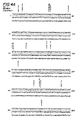
- nucleotide sequence of the DNA insert of p31-1 and the amino acid sequence derived therefrom are depicted in Figure 1.
- the amino acid sequence derived from the DNA insert p31-1 is divided into three areas: 43 amino acids of unique sequence, 30 amino acids of tripeptide repeats (ser-gly-gly or ser-val-ala) and a downstream unique sequence of 20 amino acids.
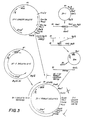
- PF-13 E.coli 537 (pPL31A-Pst (Pst)/X11-011) [DSM 2890] and PF-14: E.coli K12 ⁇ (pPL31A-Pst(Pst)/1) [DSM 2891].
- plasmid 34C derives from pPLc24 in which an AD35 linker is introduced. However 34C does not have a Pst I restriction endonuclease recognition site downstream of the coding sequence for the MS2 portion of the vector. Expression vector 34C differs from pPL31A-Pst in a deletion of four base pairs at the end of the MS2 coding region and a deletion of 27 base pairs from the end of the AD35 linker (see Figure 5).
- Expression vector p31a as described above, is related to p34c, which are both derivatives of pPLc24.
- P31a is characterized by a Pst I restriction site downstream of the coding sequence for the MS2 portion of the vector, in which to insert a cDNA sequence for expression under control of the P L promoter of the vector ( Figure 5).
- Figure 5 We then subjected the plasmid to digestion by EcoR I and Hin fI in order to delete the terminal nucleotides.
- the immunogens of this invention may be employed in a variety of pharmaceutically acceptable compositions to protect against and treat protozoan parasitic infections.
- Such compositions may include various pharmaceutically acceptable carriers or adjuvants. They may also include compounds that enhance the immune response. These may include, for example various lymphokines and interferons. These mixtures may be the most effective in protecting humans against and treating malarial and other protozoan parasitic infections.
- compositions may be used in a variety of pharmaceutically acceptable dosage forms and means of treatment well known in the vaccine art.
- Microorganisms and DNA sequences for use in the production of polypeptides in accordance with one embodiment of this invention are exemplified by a culture deposited in the Deutsche Sammlung von Microorganismen, Gottingen, West Germany, on December 27, 1985 and identified there as: E.coli K12 (SG936cI) (p31-1 Repeat Delete) It has been assigned accession number DSM 3618.
Landscapes
- Health & Medical Sciences (AREA)
- Life Sciences & Earth Sciences (AREA)
- Chemical & Material Sciences (AREA)
- General Health & Medical Sciences (AREA)
- Organic Chemistry (AREA)
- Medicinal Chemistry (AREA)
- Proteomics, Peptides & Aminoacids (AREA)
- Gastroenterology & Hepatology (AREA)
- Toxicology (AREA)
- Biochemistry (AREA)
- Animal Behavior & Ethology (AREA)
- Pharmacology & Pharmacy (AREA)
- Public Health (AREA)
- Veterinary Medicine (AREA)
- Tropical Medicine & Parasitology (AREA)
- Zoology (AREA)
- Immunology (AREA)
- Epidemiology (AREA)
- Biophysics (AREA)
- Genetics & Genomics (AREA)
- Molecular Biology (AREA)
- Microbiology (AREA)
- Mycology (AREA)
- Engineering & Computer Science (AREA)
- Bioinformatics & Cheminformatics (AREA)
- Medicines Containing Antibodies Or Antigens For Use As Internal Diagnostic Agents (AREA)
- Peptides Or Proteins (AREA)
- Preparation Of Compounds By Using Micro-Organisms (AREA)
Applications Claiming Priority (2)
| Application Number | Priority Date | Filing Date | Title |
|---|---|---|---|
| US87907686A | 1986-06-26 | 1986-06-26 | |
| US879076 | 1986-06-26 |
Publications (1)
| Publication Number | Publication Date |
|---|---|
| EP0254862A1 true EP0254862A1 (fr) | 1988-02-03 |
Family
ID=25373391
Family Applications (1)
| Application Number | Title | Priority Date | Filing Date |
|---|---|---|---|
| EP87108867A Withdrawn EP0254862A1 (fr) | 1986-06-26 | 1987-06-20 | Vaccins contre les parasites protozoiques |
Country Status (11)
| Country | Link |
|---|---|
| EP (1) | EP0254862A1 (fr) |
| JP (1) | JPS6314698A (fr) |
| KR (1) | KR890000106A (fr) |
| CN (1) | CN87104399A (fr) |
| AU (1) | AU7468787A (fr) |
| DK (1) | DK321487A (fr) |
| FI (1) | FI872802L (fr) |
| IL (1) | IL82993A0 (fr) |
| MA (1) | MA21013A1 (fr) |
| PT (1) | PT85168B (fr) |
| ZA (1) | ZA874589B (fr) |
Cited By (4)
| Publication number | Priority date | Publication date | Assignee | Title |
|---|---|---|---|---|
| WO1990006130A1 (fr) * | 1988-11-30 | 1990-06-14 | Biomedical Research Institute | Nouvel antigene peptidique du sporozoite et du parasite exoerythrocytere de la malaria |
| EP0398540A1 (fr) * | 1989-05-03 | 1990-11-22 | Smithkline Beecham Corporation | Vaccin contre le paludisme |
| EP0392820A3 (fr) * | 1989-04-11 | 1990-12-27 | Chiron Corporation | Analogues de la protéine du plasmodium circumsporozoite sans séquences répétées |
| US5395614A (en) * | 1990-12-24 | 1995-03-07 | Behringwerke Aktiengesellschaft | Protective Plasmodium falciparum hybrid proteins which contain part-sequences of the malaria antigens HRPII and SERP, the preparation and use thereof |
Families Citing this family (1)
| Publication number | Priority date | Publication date | Assignee | Title |
|---|---|---|---|---|
| GB8706599D0 (en) * | 1987-03-19 | 1987-04-23 | Hoffmann La Roche | Plasmodium falciparum merozoite antigen peptides |
Citations (5)
| Publication number | Priority date | Publication date | Assignee | Title |
|---|---|---|---|---|
| WO1985003725A1 (fr) * | 1984-02-20 | 1985-08-29 | Biogen N.V. | Sequences d'adn, adn recombinant et procedes de production d'antigenes de plasmodium falciparum |
| EP0166410A2 (fr) * | 1984-06-26 | 1986-01-02 | THE UNITED STATES OF AMERICA as represented by the Secretary United States Department of Commerce | Peptides à activité immunologique induisant l'immunisation contre la malaria et leur codage génétique |
| WO1986001721A1 (fr) * | 1984-09-12 | 1986-03-27 | New York University | Epitopes protecteurs et a reaction croisee de proteines de circumsporozoite |
| EP0191748A1 (fr) * | 1985-02-07 | 1986-08-20 | Smithkline Beecham Corporation | Vaccin contre le paludisme |
| EP0192626A1 (fr) * | 1985-02-07 | 1986-08-27 | Smithkline Beecham Corporation | Vaccin contre le paludisme |
-
1987
- 1987-06-20 EP EP87108867A patent/EP0254862A1/fr not_active Withdrawn
- 1987-06-24 FI FI872802A patent/FI872802L/fi not_active IP Right Cessation
- 1987-06-24 DK DK321487A patent/DK321487A/da not_active Application Discontinuation
- 1987-06-25 ZA ZA874589A patent/ZA874589B/xx unknown
- 1987-06-25 CN CN198787104399A patent/CN87104399A/zh active Pending
- 1987-06-25 IL IL82993A patent/IL82993A0/xx unknown
- 1987-06-25 MA MA21254A patent/MA21013A1/fr unknown
- 1987-06-25 PT PT85168A patent/PT85168B/pt not_active IP Right Cessation
- 1987-06-25 AU AU74687/87A patent/AU7468787A/en not_active Abandoned
- 1987-06-26 KR KR1019870006496A patent/KR890000106A/ko not_active Withdrawn
- 1987-06-26 JP JP62159485A patent/JPS6314698A/ja active Pending
Patent Citations (5)
| Publication number | Priority date | Publication date | Assignee | Title |
|---|---|---|---|---|
| WO1985003725A1 (fr) * | 1984-02-20 | 1985-08-29 | Biogen N.V. | Sequences d'adn, adn recombinant et procedes de production d'antigenes de plasmodium falciparum |
| EP0166410A2 (fr) * | 1984-06-26 | 1986-01-02 | THE UNITED STATES OF AMERICA as represented by the Secretary United States Department of Commerce | Peptides à activité immunologique induisant l'immunisation contre la malaria et leur codage génétique |
| WO1986001721A1 (fr) * | 1984-09-12 | 1986-03-27 | New York University | Epitopes protecteurs et a reaction croisee de proteines de circumsporozoite |
| EP0191748A1 (fr) * | 1985-02-07 | 1986-08-20 | Smithkline Beecham Corporation | Vaccin contre le paludisme |
| EP0192626A1 (fr) * | 1985-02-07 | 1986-08-27 | Smithkline Beecham Corporation | Vaccin contre le paludisme |
Cited By (5)
| Publication number | Priority date | Publication date | Assignee | Title |
|---|---|---|---|---|
| WO1990006130A1 (fr) * | 1988-11-30 | 1990-06-14 | Biomedical Research Institute | Nouvel antigene peptidique du sporozoite et du parasite exoerythrocytere de la malaria |
| EP0392820A3 (fr) * | 1989-04-11 | 1990-12-27 | Chiron Corporation | Analogues de la protéine du plasmodium circumsporozoite sans séquences répétées |
| EP0467965A4 (en) * | 1989-04-11 | 1992-04-15 | Chiron Corporation | Plasmodium circumsporozoite protein analogs lacking repeat sequences |
| EP0398540A1 (fr) * | 1989-05-03 | 1990-11-22 | Smithkline Beecham Corporation | Vaccin contre le paludisme |
| US5395614A (en) * | 1990-12-24 | 1995-03-07 | Behringwerke Aktiengesellschaft | Protective Plasmodium falciparum hybrid proteins which contain part-sequences of the malaria antigens HRPII and SERP, the preparation and use thereof |
Also Published As
| Publication number | Publication date |
|---|---|
| FI872802A7 (fi) | 1987-12-27 |
| FI872802A0 (fi) | 1987-06-24 |
| KR890000106A (ko) | 1989-03-11 |
| JPS6314698A (ja) | 1988-01-21 |
| IL82993A0 (en) | 1987-12-20 |
| CN87104399A (zh) | 1988-08-31 |
| ZA874589B (en) | 1988-01-04 |
| PT85168A (en) | 1987-07-01 |
| MA21013A1 (fr) | 1987-12-31 |
| DK321487A (da) | 1987-12-27 |
| DK321487D0 (da) | 1987-06-24 |
| AU7468787A (en) | 1988-01-07 |
| FI872802L (fi) | 1987-12-27 |
| PT85168B (pt) | 1990-08-31 |
Similar Documents
| Publication | Publication Date | Title |
|---|---|---|
| JP2561238B2 (ja) | 免疫的活性ペプチドおよび抗マラリア免疫原性刺激剤 | |
| Danforth et al. | Genetically engineered antigen confers partial protection against avian coccidial parasites | |
| Miller et al. | Characterization and vaccine potential of a novel recombinant coccidial antigen | |
| US20110020387A1 (en) | Malaria vaccine | |
| EP0957933B1 (fr) | Composition vaccinale contre le paludisme | |
| AP17A (en) | Vaccine. | |
| EP0192626B1 (fr) | Vaccin contre le paludisme | |
| JP4116680B2 (ja) | 家禽コクシジウム症ワクチン | |
| McCutchan et al. | Antigenic diversity in Plasmodium falciparum | |
| EP0885012A1 (fr) | Vaccins contre la malaria faisant appel a un peptide de msa1 | |
| Kumar et al. | Vaccines against Asexual Stage Malaria | |
| Kaslow et al. | Malaria transmission-blocking vaccines | |
| EP0357208A1 (fr) | Transformant de salmonella, capable d'expression de gènes hétérologues, utile comme vaccin recombinant | |
| EP0254862A1 (fr) | Vaccins contre les parasites protozoiques | |
| Tuteja | DNA vaccine against malaria: a long way to go | |
| BG65569B1 (bg) | Химерен ген кодиращ антигенни детерминанти на четири протеина на l. infantum | |
| US20060073171A1 (en) | Vaccine composition against malaria | |
| US7749519B2 (en) | Unique DNA and polypeptide sequences based on the circumsporozoite protein of Plasmodium vivax | |
| JPH08502402A (ja) | マラリア寄生虫のための伝播遮断抗体の標的抗原 | |
| US20110262469A1 (en) | Malaria vaccine based on fragments and combination of fragments of the cs protein of plasmodium vivax | |
| Good et al. | Malaria vaccines | |
| Trager et al. | Malaria vaccine | |
| EP0447956A1 (fr) | Antigène de sporozoite de plasmodium | |
| Nussenzweig | Recombinant proteins and synthetic peptides as malaria vaccine candidates | |
| WO2001085927A1 (fr) | Vaccin contre la malaria et methode d'utilisation en fonction d'un nouveau domaine antigenique du plasmodium falciparum |
Legal Events
| Date | Code | Title | Description |
|---|---|---|---|
| PUAI | Public reference made under article 153(3) epc to a published international application that has entered the european phase |
Free format text: ORIGINAL CODE: 0009012 |
|
| AK | Designated contracting states |
Kind code of ref document: A1 Designated state(s): AT BE CH DE ES FR GB GR IT LI LU NL SE |
|
| 17P | Request for examination filed |
Effective date: 19880715 |
|
| 17Q | First examination report despatched |
Effective date: 19901218 |
|
| STAA | Information on the status of an ep patent application or granted ep patent |
Free format text: STATUS: THE APPLICATION HAS BEEN WITHDRAWN |
|
| 18W | Application withdrawn |
Withdrawal date: 19910502 |
|
| R18W | Application withdrawn (corrected) |
Effective date: 19910502 |
|
| RIN1 | Information on inventor provided before grant (corrected) |
Inventor name: SHAW, ALAN Inventor name: HUMBERT, YVES |