EP0256420A2 - Heteroarylethylamine, Verfahren zu ihrer Herstellung und ihre Verwendung als Leistungsförderer bei Tieren - Google Patents
Heteroarylethylamine, Verfahren zu ihrer Herstellung und ihre Verwendung als Leistungsförderer bei Tieren Download PDFInfo
- Publication number
- EP0256420A2 EP0256420A2 EP87111240A EP87111240A EP0256420A2 EP 0256420 A2 EP0256420 A2 EP 0256420A2 EP 87111240 A EP87111240 A EP 87111240A EP 87111240 A EP87111240 A EP 87111240A EP 0256420 A2 EP0256420 A2 EP 0256420A2
- Authority
- EP
- European Patent Office
- Prior art keywords
- alkyl
- formula
- represents hydrogen
- radical
- alkoxy
- Prior art date
- Legal status (The legal status is an assumption and is not a legal conclusion. Google has not performed a legal analysis and makes no representation as to the accuracy of the status listed.)
- Withdrawn
Links
- 0 CC(C)(C)*(C)=C[*@](**)C=CC(C)(C)N Chemical compound CC(C)(C)*(C)=C[*@](**)C=CC(C)(C)N 0.000 description 5
- SVACRPKLVPAIND-UHFFFAOYSA-N CC(c1cncc(C)c1)O Chemical compound CC(c1cncc(C)c1)O SVACRPKLVPAIND-UHFFFAOYSA-N 0.000 description 1
- OIXCZCFLIHKYPV-UHFFFAOYSA-N CC1=CC(C)=CN2C1C2 Chemical compound CC1=CC(C)=CN2C1C2 OIXCZCFLIHKYPV-UHFFFAOYSA-N 0.000 description 1
Classifications
-
- C—CHEMISTRY; METALLURGY
- C07—ORGANIC CHEMISTRY
- C07D—HETEROCYCLIC COMPOUNDS
- C07D213/00—Heterocyclic compounds containing six-membered rings, not condensed with other rings, with one nitrogen atom as the only ring hetero atom and three or more double bonds between ring members or between ring members and non-ring members
- C07D213/02—Heterocyclic compounds containing six-membered rings, not condensed with other rings, with one nitrogen atom as the only ring hetero atom and three or more double bonds between ring members or between ring members and non-ring members having three double bonds between ring members or between ring members and non-ring members
- C07D213/04—Heterocyclic compounds containing six-membered rings, not condensed with other rings, with one nitrogen atom as the only ring hetero atom and three or more double bonds between ring members or between ring members and non-ring members having three double bonds between ring members or between ring members and non-ring members having no bond between the ring nitrogen atom and a non-ring member or having only hydrogen or carbon atoms directly attached to the ring nitrogen atom
- C07D213/60—Heterocyclic compounds containing six-membered rings, not condensed with other rings, with one nitrogen atom as the only ring hetero atom and three or more double bonds between ring members or between ring members and non-ring members having three double bonds between ring members or between ring members and non-ring members having no bond between the ring nitrogen atom and a non-ring member or having only hydrogen or carbon atoms directly attached to the ring nitrogen atom with hetero atoms or with carbon atoms having three bonds to hetero atoms with at the most one bond to halogen, e.g. ester or nitrile radicals, directly attached to ring carbon atoms
-
- C—CHEMISTRY; METALLURGY
- C07—ORGANIC CHEMISTRY
- C07D—HETEROCYCLIC COMPOUNDS
- C07D213/00—Heterocyclic compounds containing six-membered rings, not condensed with other rings, with one nitrogen atom as the only ring hetero atom and three or more double bonds between ring members or between ring members and non-ring members
- C07D213/02—Heterocyclic compounds containing six-membered rings, not condensed with other rings, with one nitrogen atom as the only ring hetero atom and three or more double bonds between ring members or between ring members and non-ring members having three double bonds between ring members or between ring members and non-ring members
- C07D213/04—Heterocyclic compounds containing six-membered rings, not condensed with other rings, with one nitrogen atom as the only ring hetero atom and three or more double bonds between ring members or between ring members and non-ring members having three double bonds between ring members or between ring members and non-ring members having no bond between the ring nitrogen atom and a non-ring member or having only hydrogen or carbon atoms directly attached to the ring nitrogen atom
- C07D213/60—Heterocyclic compounds containing six-membered rings, not condensed with other rings, with one nitrogen atom as the only ring hetero atom and three or more double bonds between ring members or between ring members and non-ring members having three double bonds between ring members or between ring members and non-ring members having no bond between the ring nitrogen atom and a non-ring member or having only hydrogen or carbon atoms directly attached to the ring nitrogen atom with hetero atoms or with carbon atoms having three bonds to hetero atoms with at the most one bond to halogen, e.g. ester or nitrile radicals, directly attached to ring carbon atoms
- C07D213/72—Nitrogen atoms
- C07D213/73—Unsubstituted amino or imino radicals
-
- A—HUMAN NECESSITIES
- A23—FOODS OR FOODSTUFFS; TREATMENT THEREOF, NOT COVERED BY OTHER CLASSES
- A23K—FODDER
- A23K20/00—Accessory food factors for animal feeding-stuffs
- A23K20/10—Organic substances
- A23K20/116—Heterocyclic compounds
- A23K20/132—Heterocyclic compounds containing only one nitrogen as hetero atom
-
- A—HUMAN NECESSITIES
- A61—MEDICAL OR VETERINARY SCIENCE; HYGIENE
- A61P—SPECIFIC THERAPEUTIC ACTIVITY OF CHEMICAL COMPOUNDS OR MEDICINAL PREPARATIONS
- A61P15/00—Drugs for genital or sexual disorders; Contraceptives
-
- C—CHEMISTRY; METALLURGY
- C07—ORGANIC CHEMISTRY
- C07D—HETEROCYCLIC COMPOUNDS
- C07D213/00—Heterocyclic compounds containing six-membered rings, not condensed with other rings, with one nitrogen atom as the only ring hetero atom and three or more double bonds between ring members or between ring members and non-ring members
- C07D213/02—Heterocyclic compounds containing six-membered rings, not condensed with other rings, with one nitrogen atom as the only ring hetero atom and three or more double bonds between ring members or between ring members and non-ring members having three double bonds between ring members or between ring members and non-ring members
- C07D213/04—Heterocyclic compounds containing six-membered rings, not condensed with other rings, with one nitrogen atom as the only ring hetero atom and three or more double bonds between ring members or between ring members and non-ring members having three double bonds between ring members or between ring members and non-ring members having no bond between the ring nitrogen atom and a non-ring member or having only hydrogen or carbon atoms directly attached to the ring nitrogen atom
- C07D213/24—Heterocyclic compounds containing six-membered rings, not condensed with other rings, with one nitrogen atom as the only ring hetero atom and three or more double bonds between ring members or between ring members and non-ring members having three double bonds between ring members or between ring members and non-ring members having no bond between the ring nitrogen atom and a non-ring member or having only hydrogen or carbon atoms directly attached to the ring nitrogen atom with substituted hydrocarbon radicals attached to ring carbon atoms
- C07D213/36—Radicals substituted by singly-bound nitrogen atoms
- C07D213/38—Radicals substituted by singly-bound nitrogen atoms having only hydrogen or hydrocarbon radicals attached to the substituent nitrogen atom
-
- C—CHEMISTRY; METALLURGY
- C07—ORGANIC CHEMISTRY
- C07D—HETEROCYCLIC COMPOUNDS
- C07D213/00—Heterocyclic compounds containing six-membered rings, not condensed with other rings, with one nitrogen atom as the only ring hetero atom and three or more double bonds between ring members or between ring members and non-ring members
- C07D213/02—Heterocyclic compounds containing six-membered rings, not condensed with other rings, with one nitrogen atom as the only ring hetero atom and three or more double bonds between ring members or between ring members and non-ring members having three double bonds between ring members or between ring members and non-ring members
- C07D213/04—Heterocyclic compounds containing six-membered rings, not condensed with other rings, with one nitrogen atom as the only ring hetero atom and three or more double bonds between ring members or between ring members and non-ring members having three double bonds between ring members or between ring members and non-ring members having no bond between the ring nitrogen atom and a non-ring member or having only hydrogen or carbon atoms directly attached to the ring nitrogen atom
- C07D213/60—Heterocyclic compounds containing six-membered rings, not condensed with other rings, with one nitrogen atom as the only ring hetero atom and three or more double bonds between ring members or between ring members and non-ring members having three double bonds between ring members or between ring members and non-ring members having no bond between the ring nitrogen atom and a non-ring member or having only hydrogen or carbon atoms directly attached to the ring nitrogen atom with hetero atoms or with carbon atoms having three bonds to hetero atoms with at the most one bond to halogen, e.g. ester or nitrile radicals, directly attached to ring carbon atoms
- C07D213/61—Halogen atoms or nitro radicals
Definitions
- the present invention relates to new heteroarylethylamines, processes for their preparation and their use as performance promoters in animals.
- Heteroarylethylamines are already known. They have a beta-sympathomimetic effect (DE-OS 2 603 600, EP-OS 120 770, US-P 4 358 955). However, nothing is known about the suitability of these compounds as animal performance promoters.
- the compounds of formal I can exist in the form of their tautomers. Examples of this are in the event that R2 stands for NH2:
- the compounds of the formula I can also be in the form of their steric and optical isomers and thereby form enantiomeric and / or diastereomeric forms with one another.
- Physiologically acceptable salts of the compounds of the formula I can be formed with the following acids: Hydrochloric acid, sulfuric acid, phosphoric acid, perchloric acid, hydrobromic acid, hydroiodic acid, nitric acid, acetic acid, oxalic acid, malonic acid, succinic acid, ascorbic acid, malic acid, tartaric acid, maleic acid, fumaric acid, methanesulfonic acid, benzoic acid, substituted benzoic acids, formic acid, toluenesulfonic acid, benzenesulfonic acid, phthalic acid, naphthalenesulfonic acid, Nicotinic acid, palmitic acid, embonic acid.
- R1 is hydrogen, C 1-4 alkyl, fluorine, chlorine, bromine, C 1-4 haloalkyl, hydroxy, cyano, C 1-4 alkoxycarbonyl, mono- or di-C 1-4 alkylaminocarbonyl, C 1 -6 alkoxy, C 1-6 haloalkoxy, C 1-6 haloalkylthio, -NHSO2-C 1-6 alkyl
- R2 represents hydrogen, hydroxy, C 1-6 alkoxy or the radical -NR11R12
- R3 represents the radicals indicated for R1,
- R4 represents OH, C 1-6 alkoxy or acyloxy and acylox represents oxycarbonyl-C 1-6 alkyl, optionally substituted oxycarbonylphenyl, oxysulfonyl-C 1-6 alkyl, optionally substituted oxysulfonylphenyl
- R5 represents hydrogen or C1-C6 alkyl
- R6 represents hydrogen, optionally substituted
- Preferred substituents for the optionally substituted radicals are: cyano, halogen such as fluorine or chlorine, hydroxy, C 1-4 -alkyl, C 1-4 -haloalkyl, phenyl, C 1-4 -alkoxy, C 1-4 -haloalkoxy, C 1-4 alkylthio, C 1-4 haloalkylthio, in the event that the substituents are located on a phenyl radical, additionally preferably methylenedioxy, ethylenedioxy, halogen-substituted methylenedioxy, halogen-substituted ethylenedioxy, furthermore phenyl, phenoxy, which in turn one or more of the above Can carry substituents.
- halogen such as fluorine or chlorine
- the salts with hydrochloric acid, sulfuric acid, phosphoric acid, oxalic acid, maleic acid, fumaric acid, malonic acid are preferred.
- the compounds of the formula I can be prepared by processes a) to f) given under 2 above.
- process a) can be represented by the following reaction scheme:
- acetyl-substituted heteroaryl compounds are produced by reacting the corresponding acetyl-substituted heteroaryl compounds with elemental halogen or with copper halides in a manner known per se.
- the acetyl-substituted heteroaryl compounds are known from CT Gnewuch J. Med. Chem. 15 , 1321 (1972), US Pat. No. 4,358,455 or can be prepared by the processes specified there.
- the substituents R 1, R 2 and R 3 in formula II preferably have the preferred meanings given above for the compounds of the formula I.
- the following compounds of the formula II may be mentioned in particular: (2-amino-3-chloro-5-pyridyl) chloromethyl ketone, (2-amino-3-chloro-5-pyridyl) chloromethyl ketone, (2,4-dichloro-3-amino-6-pyridyl) bromomethyl ketone, (2-cyano-3-amino-6-pyridyl) bromomethyl ketone, (3-amino-4-cyano-6-pyridyl) bromomethyl ketone, (3-amino-4-cyano-6-pyridyl) chloromethyl ketone, (2-cyano-3-amino-4-chloro-6-pyridyl) bromomethyl ketone, (2-cyano-3-amino-4-chloro-6-pyridyl) chloromethyl
- the amines of the formula III are known (cf. for example EP-OS 70 133) or can be prepared analogously to known processes.
- the substituents R6 to R10 and X and Y preferably have the preferred meanings given above for the compounds of the formula I.
- the following compounds of the formula III may be mentioned individually:
- reducing agents are mentioned as reducing agents for carrying out process 2a): H2 / catalyst, the following may be mentioned as catalysts: PtO2, Pd activated carbon; complex metal hydrides such as LiAlH4, NaBH4, NaBH3CN.
- the following reducing agents are particularly preferably used: NaBH4 and NaBH3CN
- Process 2a is carried out by combining compounds II and III in a diluent in an approximately equimolar ratio.
- the reaction is preferably carried out at temperatures from -20 ° C. to + 100 ° C.
- inert organic solvents are used as diluents. These include in particular aliphatic and aromatic hydrocarbons such as pentane, hexane, cyclohexane, petroleum ether, ligroin, benzene, toluene; chlorinated hydrocarbons such as methylene chloride, ethylene chloride, chloroform; Ethers such as diethyl ether and glycol dimethyl ether; Nitriles such as acetonitrile, propionitrile and benzonitrile; Alcohols such as methanol, ethanol, n- and i-propanol.
- aliphatic and aromatic hydrocarbons such as pentane, hexane, cyclohexane, petroleum ether, ligroin, benzene, toluene
- chlorinated hydrocarbons such as methylene chloride, ethylene chloride, chloroform
- Ethers such as diethyl ether and glycol dimethyl
- Alcohols are preferred, and the reduction can be carried out immediately without isolating the intermediates.
- process 2b) uses 5-methoxypyridine-3-epoxide as the epoxide of formula IV and 3- (4-ethoxycarbonylmethoxyphenyl) -2-aminopropane as the amine of formula III, process 2b) can be reproduced by the following reaction scheme:
- Epoxides of the formula IV are the subject of an older, unpublished patent application by the applicant, German patent application P 3 615 293.5. They are prepared by using halomethyl compounds of the formula in a manner known per se in which R1, R2 and R3 have the meanings given for the compounds of the formula I, reacted with bases or the corresponding aldehydes of the formula with reagents transferring methyl groups in the presence of bases under the conditions of Corey epoxidation (EJ Corey, JACS 87 , 1353 (1955)).
- the aldehydes are obtained by using the corresponding alcohols of the formula oxidized or the corresponding acid chlorides of the formula reduced.
- the alcohols and acid chlorides are known.
- epoxides may be mentioned: 2-amino-3-chloropyridine-5-epoxide, 2-amino-3-cyanopyridine-5-epoxide, 2,4-dichloro-3-aminopyridine-6-epoxide, 2-chloro-3-amino-4-cyanopyridine-6-epoxide, 2-cyano-3-amino-4-chloropyridine-6-epoxide, 2-cyano-3-aminopyridine-6-epoxide, 2-chloro-3-amino-4-trifluoromethylpyridine-6-epoxide, 2-bromo-3-amino-4-cyanopyridine-6-epoxide.
- Process b) is carried out by reacting approximately equimolar amounts of the epoxide of the formula IV and the amine of the formula III in a diluent.
- the reaction is carried out at temperatures from +20 to + 150 ° C.
- inert organic solvents are used as diluents. These include in particular aliphatic and aromatic, optionally halogenated hydrocarbons, such as pentane, hexane, heptane, cyclohexane, petroleum ether, gasoline, ligroin, benzene, toluene, methylene chloride, ethylene chloride, chloroform, carbon tetrachloride, chlorobenzene and o-dichlorobenzene, and also ethers such as diethyl and Dibutyl ether, glycol dimethyl ether and diglycol dimethyl ether, tetrahydrofuran and dioxane, also nitriles such as acetonitrile and benzonitrile, amides such as dimethylformamide, alcohols such as methanol, ethanol, n- and i-propanol.
- ethers such as diethyl and Dibutyl ether, glycol dimethyl
- Alcohols are preferred.
- ⁇ -halomethyl compounds of the formula V are the subject of an older, unpublished patent application by the applicant (German patent application P 3 615 293.5) and are obtained by reducing the corresponding halomethyl ketones or reacting the corresponding heteroaryl vinyl compounds with N-haloacetamides.
- Process 2c) is carried out by reacting the beta-halomethyl compound of the formula V with excess amine of the formula III, if appropriate in the presence of a diluent.
- the reaction is carried out at temperatures from +20 to + 150 ° C.
- inert organic solvents are used as diluents. These include in particular aliphatic and aromatic, optionally halogenated hydrocarbons, such as pentane, hexane, cyclohexane, benzene, toluene, methylene chloride, chloroform, furthermore ethers such as diethyl ether, tetrahydrofuran and dioxane, furthermore nitriles such as acetonitrile and benzonitrile, furthermore amides such as dimethylformamide, furthermore alcohols such as Methanol, ethanol, n- and i-propanol.
- halogenated hydrocarbons such as pentane, hexane, cyclohexane, benzene, toluene, methylene chloride, chloroform, furthermore ethers such as diethyl ether, tetrahydrofuran and dioxane, furthermore nitriles such
- Alcohols are preferably used.
- process 2d) uses 5-fluoro-3- (1-hydroxy-2-aminoethyl) pyridine as the compound of the formula VI and (3-chloro-4-methoxyphenyl) acetone as the compound of the formula VII, the process can be carried out d) reproduce using the following formula:
- the compounds of formula XIV are new. Their manufacture is described below.
- the substituents R1, R2 and R3 in the compounds XIV have the preferred meanings given for the compounds of the formula I, where R1, R2 and R3 must not simultaneously be hydrogen.
- the following compounds of the formula XIV may be mentioned in particular: (2,6-dichloro-4-pyridyl) cyanohydrin (2-amino-5-pyridyl) cyanohydrin (2-amino-3-chloro-5-pyridyl) cyanohydrin 3 (-amino-6-pyridyl) cyanohydrin (2-chloro-3-amino-6-pyridyl) cyanohydrin (2,4-dichloro-3-amino-6-pyridyl) cyanohydrin.
- the process is carried out by reducing Compound XIV in a diluent.
- the reaction is carried out at temperatures from 0 ° C to 150 ° C.
- organic solvents include aliphatic and aromatic, optionally halogenated hydrocarbons such as pentane, hexane, cyclohexane, benzene, toluene, methylene chloride, ethylene chloride, Chloroform, chlorobenzene, furthermore ethers such as diethyl ether, tetrahydrofuran, dioxane, furthermore nitriles such as acetonitrile, benzonitrile, amides such as dimethylformamide, alcohols such as methanol, ethanol.
- halogenated hydrocarbons such as pentane, hexane, cyclohexane, benzene, toluene, methylene chloride, ethylene chloride, Chloroform, chlorobenzene, furthermore ethers such as diethyl ether, tetrahydrofuran, dioxane, furthermore nitriles such as acetonitrile,
- H2 / catalyst for example PtO2 may be mentioned; Alkali and alkaline earth metal malgams such as sodium amalgam; base metals in the presence of hydrochloric acid such as B. zinc / hydrochloric acid; complex metal hydrides such as B. LiAlH4; Boranes such as B. Diboran.
- the process is carried out by reacting the aldehydes of the formula XII or their hydrogen sulfite addition products with hydrogen cyanide or their salts or lower aliphatic ketone cyanohydrins in a manner known from the literature (P. Kurtz, in Houben-Weyl, Vol. VIII, pp. 274 ff).
- Process 2d is carried out by placing approximately equimolar amounts of the compounds of the formulas VI and VII in a diluent and reducing the mixture.
- the reaction is carried out at temperatures from 0 ° C to 150 ° C.
- inert organic solvents are used as diluents. These include aliphatic and aromatic, optionally halogenated hydrocarbons such as pentane, hexane, cyclohexane, benzene, toluene, methylene chloride, ethylene chloride, chloroform, chlorobenzene, furthermore ethers such as diethyl ether, tetrahydrofuran, dioxane, furthermore nitriles such as acetonitrile, benzonitrile, amides such as dimethylformamide, alcohols such as Methanol, ethanol.
- aliphatic and aromatic optionally halogenated hydrocarbons
- halogenated hydrocarbons such as pentane, hexane, cyclohexane, benzene, toluene, methylene chloride, ethylene chloride, chloroform, chlorobenzene, furthermore ethers such as diethyl ether, te
- H2 / catalyst for example PtO2 may be mentioned; complex metal hydrides such as LiAlH4, NaBH4, NaBH3CN
- process e) uses 5-methyl-3-pyridylglyoxal as the compound of the formula VIII and 2- (3-bromo-4-methoxyphenyl) ethylamine as the amine of the formula IX, process e) can be reproduced by the following reaction scheme:
- R 1, R 2, R 3 in formula VIII preferably have the preferred meanings given above for the compounds of the formula I.
- the following compounds of the formula VIII may be mentioned individually: 2-amino-3-chloro-5-pyridylglyoxal, 2-amino-3-cyano-5-pyridylglyoxal, 2,4-dichloro-3-amino-6-pyridylglyoxal, 2-cyano-3-amino-6-pyridylglyoxal, 2-chloro-3-amino-4-trifluoromethyl-6-pyridylglyoxal, Process 2e) is carried out by adding about the equivalent amount of the amine of the formula IX to the compound of the formula VIII in a diluent and then reducing it.
- the reaction is carried out at temperatures from 0 ° C to 100 ° C.
- inert organic solvents are used as diluents. These include in particular aliphatic and aromatic, optionally halogenated hydrocarbons, such as pentane, hexane, heptane, cyclohexane, petroleum ether, gasoline, ligroin, benzene, toluene, methylene chloride, ethylene chloride, chloroform, carbon tetrachloride, chlorobenzene and o-dichlorobenzene, and also ethers such as diethyl and Dibutyl ether, glycol dimethyl ether and di-glycol dimethyl ether, tetrahydrofuran and dioxane, also esters, such as methyl acetate and ethyl ester, furthermore nitriles, such as acetonitrile and propionitrile, benzonitrile, glutaronic acid dinitrile, and also amides, such as dimethylformamide and dimethylacetamide Me
- PtO2 and Pd-charcoal may be mentioned as catalysts, furthermore complex metal hydrides such as LiAlH4 and NaBH4.
- process 2f is used as the compound of the formula X (5-chloro-3-pyridyl) hydroxyacetic acid-2 (4-methylphenyl) ethyl amide, the process can be represented by the following formula:
- Process 2f is carried out by reacting the compound of the formula X in a diluent with excess reducing agent.
- the reaction is carried out at temperatures from 0 ° C to + 150 ° C.
- inert organic solvents are used as diluents. These include in particular aliphatic and aromatic, optionally halogenated hydrocarbons, such as pentane, hexane, heptane, cyclohexane, Petroleum ether, gasoline, ligroin, benzene, toluene, methylene chloride, ethylene chloride, chloroform, carbon tetrachloride, chlorobenzene and o-dichlorobenzene, furthermore ethers such as diethyl and dibutyl ether, glycol dimethyl ether and diglycol dimethyl ether, tetrahydrofuran and dioxane.
- ethers such as diethyl and dibutyl ether, glycol dimethyl ether and diglycol dimethyl ether, tetrahydrofuran and dioxane.
- process 4 is used as a compound of the formula XI (2-cyano-5-pyridyl) -acetoxyacetic acid- (2- (3-chloro-4-methylphenyl) ethylamide), the process can be represented by the following scheme:
- the compounds of formula XI are new. Their manufacture is described below.
- the substituents R1 to R10, X and Y in the compounds XI have the preferred meanings given for the compounds of the formula I.
- the following compounds of the formula XI may be mentioned individually: (2-Amino-5-pyridyl) acetoxyacetic acid- (3- (4-methoxycarbonyl-methoxyphenyl) -2-propyl) amide (2-Amino-3-chloro-5-pyridyl) acetoxyacetic acid- (3- (4-ethoxycarbonylphenyl) -2-propyl) amide (2-Amino-3-cyano-5-pyridyl) acetoxyacetic acid- (3- (4-methoxycarbonylmethoxyphenyl) -2-propyl) amide (3-Amino-2,4-dichloro-6-pyridyl) acetoxyacetic acid- (3- (4-ethoxycarbon
- Inorganic acids are used to split off the acetyl group. These include hydrohalic acids such as hydrochloric acid; Sulfuric acid, phosphoric acid.
- the process is carried out by treating compound XI in a diluent as solubilizer with excess aqueous solution of the inorganic acid.
- the reaction is carried out at temperatures from + 20 ° C to + 150 ° C.
- inert organic solvents which are miscible with water can be used as diluents. These include ethers such as tetrahydrofuran, dioxane; Nitriles such as acetonitrile; Amides such as dimethylformamide; Alcohols such as methanol, ethanol; Dimethyl sulfoxide.
- the process is carried out by reacting the compound XII with the double molar amount of the isonitrile of the formula XIII and acetic acid in a diluent.
- the reaction is carried out at temperatures from 0 ° C to + 150 ° C.
- inert organic solvents are used as diluents. These include, in particular, optionally halogenated aliphatic and aromatic hydrocarbons such as pentane, hexane, cyclohexane, benzene, toluene, methylene chloride, chloroform, chlorobenzene; Ethers such as diethyl ether, tetrahydrofuran; Nitriles such as acetonitrile and benzonitrile.
- optionally halogenated aliphatic and aromatic hydrocarbons such as pentane, hexane, cyclohexane, benzene, toluene, methylene chloride, chloroform, chlorobenzene
- Ethers such as diethyl ether, tetrahydrofuran
- Nitriles such as acetonitrile and benzonitrile.
- the active ingredients are used as performance promoters in animals to promote and accelerate growth, milk and wool production, as well as to improve feed utilization, meat quality and to shift the meat-fat ratio in favor of meat.
- the active ingredients are used in livestock, breeding, ornamental and hobby animals.
- the livestock and breeding animals include mammals such as cattle, pigs, horses, sheep, goats, rabbits, rabbits, fallow deer, fur animals such as mink, chinchilla, poultry such as chickens, whole, ducks, turkeys, pigeons, Fish such as carp, trout, salmon, eels, tench, pike, reptiles such as snakes and crocodiles.
- mammals such as cattle, pigs, horses, sheep, goats, rabbits, rabbits, fallow deer, fur animals such as mink, chinchilla, poultry such as chickens, whole, ducks, turkeys, pigeons, Fish such as carp, trout, salmon, eels, tench, pike, reptiles such as snakes and crocodiles.
- Ornamental and hobby animals include mammals such as dogs and cats, birds such as parrots, canaries, fish such as ornamental and aquarium fish e.g. Goldfish.
- the active ingredients are used regardless of the sex of the animals during all growth and performance phases of the animals.
- the active ingredients are preferably used during the intensive growth and performance phase.
- the intensive growth and performance phase lasts from one month to 10 years, depending on the animal species.
- the amount of active ingredients that are administered to the animals to achieve the desired effect can be varied widely because of the favorable properties of the active ingredients. It is preferably about 0.001 to 50 mg / kg, in particular 0.01 to 5 mg / kg of body weight per day.
- the appropriate amount of the active ingredient and the appropriate duration of administration depend in particular on the type, age, gender, state of health and the type of keeping and feeding the animals and are easy to determine by any person skilled in the art.
- the active substances are administered to the animals according to the usual methods.
- the method of administration depends in particular on the type, behavior and state of health of the animals.
- Oral formulations are powders, tablets, granules, doenche, boluses and animal feed, premixes for animal feed, formulations for administration via drinking water.
- the oral formulations contain the active ingredient in concentrations of 0.01 ppm - 100%, preferably from 0.01 ppm - 1%.
- the active substances can be administered once. However, the active compounds can also be administered temporarily or continuously during the whole or part of the growth and performance phase.
- the application can take place once or several times a day at regular or irregular intervals.
- the active ingredients can be present in the formulations alone or in a mixture with other performance-enhancing active ingredients, mineral feed, trace element compounds, vitamins, nitrogen-providing non-protein compounds, dyes, antioxidants, flavorings, emulsifiers, flow aids, preservatives and pressing aids.
- antibiotics such as tylosin and virginiamycin.
- Mineral feed is, for example, dicalcium phosphate, magnesium oxide, sodium chloride.
- Trace element compounds are, for example, iron fumarate, sodium iodide, cobalt chloride, copper sulfate, zinc oxide.
- Vitamins are, for example, vitamin A, vitamin D3, vitamin E, B vitamins, vitamin C.
- Nitrogen-providing non-protein compounds are, for example, biuret, urea.
- Dyes are, for example, carotenoids such as citranaxanthin, zeaxanthin, capsanthin.
- Antioxidants are, for example, ethoxyquin, butylhydroxy-toluene.
- Flavorings are, for example, vanillin.
- Emulsifiers are, for example, esters of lactic acid, lecithin.
- Flow aids are, for example, sodium stearate and calcium stearate.
- Preservatives are, for example, citric acid, propionic acid.
- Pressing aids are, for example, lignin sulfonates, cellulose ethers.
- the active ingredients can also be administered together with the feed and / or the drinking water.
- the feed includes single feed of vegetable origin such as hay, beets, grain by-products, single feed of animal origin such as meat, fats, milk Products, bone meal, fish products, feed materials such as vitamins, proteins, amino acids such as DL-methionine, salts such as lime and table salt.
- the feed also includes supplementary, finished and compound feed. These contain feed materials in a composition that ensures a balanced diet with regard to energy and protein supply as well as the supply of vitamins, mineral salts and trace elements.
- the concentration of the active ingredients in the feed is normally about 0.01-500 ppm, preferably 0.1-50 ppm.
- the active ingredients can be added to the feed as such or in the form of premixes or feed concentrates.
- Example of the composition of a chick rearing feed containing 10 ppm of the active ingredient according to the invention 200 g of wheat, 340 g of corn, 361 g of soybean meal, 60 g of beef tallow, 15 g of dicalcium phosphate, 10 g of calcium carbonate, 4 g of iodized table salt, 7.5 g of vitamin-mineral mixture and 2.5 g of the active ingredient premix given below after thorough mixing 1 kg of feed with 10 ppm active ingredient.
- vitamin mineral contains: 600 IU vitamin A, 100 IU vitamin D3, 10 mg vitamin E, 1 mg vitamin K3, 3 mg riboflavin, 2 mg pyridoxine, 20 mcg vitamin B12, 5 mg calcium pantothenate, 30 mg nicotinic acid, 200 mg choline chloride, 200 mg Mn SO4 ⁇ H2O, 140 mg Zn SO4 ⁇ 7 H2O, 100 mg Fe SO4 ⁇ 7 H2O and 20 mg Cu SO4 ⁇ 5 H2O.
- active ingredient premix contain e.g. 10 mg of active ingredient, 1 g of DL-methionine, the rest of soybean meal.
- Example of the composition of a pig rearing feed containing 8 ppm of the active ingredient according to the invention 630 g of feed grain meal (composed of 200 g corn, 150 g barley, 150 g oat and 130 g wheat meal), 80 g fish meal, 60 g soy meal, 60 g tapioca meal, 38 g brewer's yeast, 50 g vitamin-mineral mixture for pigs , 30 g linseed cake flour, 30 g corn gluten feed, 10 g soybean oil, 10 g sugar cane molasses and 2 g active ingredient premix (composition as for example chick feed) result in 1 kg feed with 8 ppm active ingredient content after careful mixing.
- feed grain meal composed of 200 g corn, 150 g barley, 150 g oat and 130 g wheat meal
- 80 g fish meal 60 g soy meal, 60 g tapioca meal, 38 g brewer's yeast
- 50 g vitamin-mineral mixture for pigs 30
- the specified feed mixtures are designed for rearing and fattening preferably chicks or pigs, but they can also be used in the same or a similar composition for feeding other animals.
- mice Female laboratory rats weighing 90-110 g of the type SPF Wistar (breed Hagemann) are fed ad lib with standard rat food, which is mixed with the desired amount of active ingredient. Each test batch is carried out with feed from the same batch, so that differences in the composition of the feed cannot impair the comparability of the results.
- the rats receive water ad lib.
- rats form a test group and are fed with feed mixed with the desired amount of active ingredient.
- a control group receives feed without active ingredient.
- the average body weight and the scatter in the body weights of the rats are the same in each test group, so that the test groups can be compared with one another.
- weight gain and feed consumption are determined and the relative weight gain compared to the untreated control is calculated.
- a suspension of 10 mmol of compound XI in a mixture of 37 ml of methanol, 37 ml of water and 18 ml of 2.5 N hydrochloric acid is heated to boiling for one hour. Then the methanol is drawn off and the precipitated solid is suctioned off.
Landscapes
- Chemical & Material Sciences (AREA)
- Organic Chemistry (AREA)
- Life Sciences & Earth Sciences (AREA)
- Polymers & Plastics (AREA)
- Engineering & Computer Science (AREA)
- Health & Medical Sciences (AREA)
- Zoology (AREA)
- Animal Husbandry (AREA)
- Food Science & Technology (AREA)
- Public Health (AREA)
- Veterinary Medicine (AREA)
- Pharmacology & Pharmacy (AREA)
- Reproductive Health (AREA)
- Animal Behavior & Ethology (AREA)
- General Health & Medical Sciences (AREA)
- General Chemical & Material Sciences (AREA)
- Chemical Kinetics & Catalysis (AREA)
- Nuclear Medicine, Radiotherapy & Molecular Imaging (AREA)
- Endocrinology (AREA)
- Bioinformatics & Cheminformatics (AREA)
- Medicinal Chemistry (AREA)
- Pyridine Compounds (AREA)
- Pharmaceuticals Containing Other Organic And Inorganic Compounds (AREA)
- Plural Heterocyclic Compounds (AREA)
- Heterocyclic Carbon Compounds Containing A Hetero Ring Having Nitrogen And Oxygen As The Only Ring Hetero Atoms (AREA)
Abstract

R¹ für Wasserstoff, Alkyl, Halogen, Halogenalkyl, Hydroxy, Cyano, Alkoxycarbonyl, Aminocarbonyl, Mono- und Dialkylaminocarbonyl, Alkoxy, Halogenalkoxy, Halogenalkylthio, NHSO₂-Alkyl steht,
R² für Wasserstoff, Hydroxy, Alkoxy oder den Rest -NR¹¹R¹² steht,
R³ für die bei R¹ angegebenen Reste steht,
R⁴ für Hydroxy, Acyloxy oder Alkoxy steht,
R⁵ für Wasserstoff oder Alkyl steht,
R⁶ für Wasserstoff oder Alkyl steht,
R⁷ für Wasserstoff oder Alkyl steht,
R⁸ für Wasserstoff oder Alkyl steht,
X für C₁-C₁₀-Alkylen oder eine direkte Bindung steht,
Y für Sauerstoff oder eine direkte Bindung steht,
R⁹ für Wasserstoff, C₁-C₁₀-Alkyl, welches gegebenenfalls durch Hydroxy, Alkoxy, Acyloxy oder den Rest -NR¹³R¹⁴ substituiert ist, sowie für den Rest COR¹⁵ oder den Rest O-Z-R¹⁶ steht,
Z für C₁-C₁₀-Alkylen, -Alkenylen oder -Alkinylen steht,
R¹⁰ für Wasserstoff, Halogen, Alkyl, Alkoxy, Hydroxy oder den Rest COR¹⁵ steht,
R¹¹ für Wasserstoff oder Alkyl steht,
R¹² für Wasserstoff, Alkyl, Halogenalkyl oder Acyl steht,
R¹³ für Wasserstoff, gegebenenfalls substituiertes Alkyl, gegebenenfalls substituiertes Aryl steht,
R¹⁴ für die bei R¹³ angegebenen Reste steht,
R¹⁵ für Hydroxy, Alkoxy oder den Rest NR¹³R¹⁴ steht,
R¹⁶ für Hydroxy, Alkoxy, Acyloxy, den Rest NR¹³R¹⁴ oder den Rest COR¹⁵ steht,
sowie ihre physiologisch verträglichen Salze und N-Oxide, Verfahren zu ihrer Herstellung und dafür verwendbare Zwischenprodukte sowie ihre Verwendung als Leistungsförderer für Tiere.
Description
- Die vorliegende Erfindung betrifft neue Heteroarylethylamine, Verfahren zu ihrer Herstellung und ihre Verwendung als Leistungsförderer bei Tieren.
- Heteroarylethylamine sind bereits bekannt. Sie besitzen beta-sympathomimetische Wirkung (DE-OS 2 603 600, EP-OS 120 770, US-P 4 358 955). Es ist jedoch nichts über die Eignung dieser Verbindungen als Leistungsförderer bei Tieren bekannt geworden.
- Es wurden nun gefunden:
- 1. Neue Verbindungen der Formel I

R¹ für Wasserstoff, Alkyl, Halogen, Halogenalkyl, Hydroxy, Cyano, Alkoxycarbonyl, Aminocarbonyl, Mono- und Dialkylaminocarbonyl, Alkoxy, Halogenalkoxy, Halogenalkylthio, NHSO₂-Alkyl steht,
R² für Wasserstoff, Hydroxy, Alkoxy oder den Rest -NR¹¹R¹² steht,
R³ für die bei R¹ angegebenen Reste steht,
R⁴ für Hydroxy, Acyloxy oder Alkoxy steht,
R⁵ für Wasserstoff oder Alkyl steht,
R⁶ für Wasserstoff oder Alkyl steht,
R⁷ für Wasserstoff oder Alkyl steht,
R⁸ für Wasserstoff oder Alkyl steht,
X für C₁-C₁₀-Alkylen oder eine direkte Bindung steht,
Y für Sauerstoff oder eine direkte Bindung steht,
R⁹ für Wasserstoff, C₁-C₁₀-Alkyl, welches gegebenenfalls durch Hydroxy, Alkoxy, Acyloxy oder den Rest -NR¹³R¹⁴ substituiert ist, sowie für den Rest COR¹⁵ oder den Rest O-Z-R¹⁶ steht,
Z für C₁-C₁₀-Alkylen, -Alkenylen oder -Alkinylen steht,
R¹⁰ für Wasserstoff, Halogen, Alkyl, Alkoxy, Hydroxy oder den Rest COR¹⁵ steht,
R¹¹ für Wasserstoff, oder Alkyl steht,
R¹² für Wasserstoff, Alkyl, Halogenalkyl oder Acyl steht,
R¹³ für Wasserstoff, gegebenenfalls substituiertes Alkyl, gegebenenfalls substituiertes Aryl steht,
R¹⁴ für die bei R¹³ angegebenen Reste steht,
R¹⁵ für Hydroxy, Alkoxy oder den Rest NR¹³R¹⁴ steht,
R¹⁶ für Hydroxy, Alkoxy, Acyloxy, den Rest NR¹³R¹⁴ oder den Rest COR¹⁵ steht,
sowie ihre physiologische verträglichen Salze und N-Oxide. - 2. Verfahren zur Herstellung der Verbindungen der Formel I,

R¹ bis R¹⁰, X und Y die oben angegebene Bedeutung haben,- (a) indem man Halogenmethylketone der Formel II,

R¹, R², R³ die oben angegebene Bedeutung haben und Hal für Halogen steht,
mit Aminen der Formel III
R⁶ bis R¹⁰, X und Y die oben angegebene Bedeutung haben,
umsetzt und anschließend die Carbonylgruppe reduziert, oder - (b) indem man Epoxide der Formel IV

R¹, R², R³ die oben angegebene Bedeutung haben,
mit Aminen der Formel III
R⁶ bis R¹⁰, X und Y die oben angegebene Bedeutung haben,
umsetzt, oder - (c) indem man ß-Halogenethylverbindungen der Formel V

R¹, R², R³ und R⁵ die oben angegebene Bedeutung haben,
Hal für Halogen steht,
R¹⁷ für Wasserstoff oder C₁-C₄-Alkyl steht,
mit Aminen der Formel III
R⁶ bis R¹⁰, X und Y die oben angegebene Bedeutung haben,
umsetzt, oder - d) indem man für den Fall, daß in Formel I R⁶ und R⁷ für Wasserstoff stehen,
Verbindungen der Formel VI
R¹ bis R⁵ die oben angegebene Bedeutung haben,
mit Ketonen der Formel VII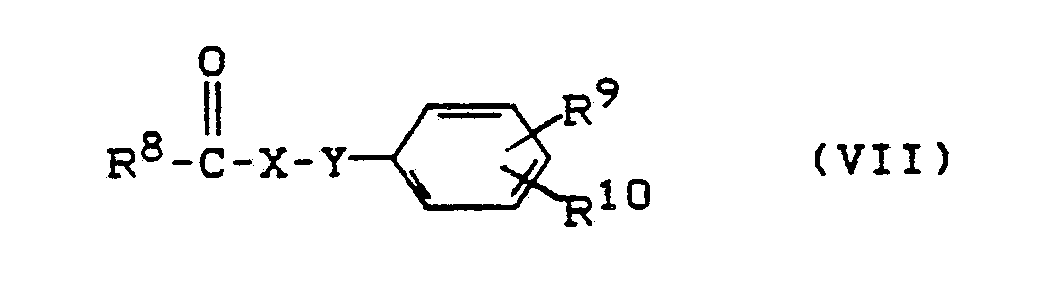
R⁸, R⁹, R¹⁰, X und Y die oben angegebene Bedeutung haben,
unter reduzierenden Bedingungen umsetzt, oder - e) indem man, für den Fall daß in Formel I R⁴ für Hydroxy steht und R⁵ und R⁶ für Wasserstoff stehen,
Verbindungen der Formel VIII
R¹, R², R³ die oben angegebene Bedeutung haben,
min Aminen der Formel IX
R⁷ bis R¹⁰ die oben angegebene Bedeutung haben,
unter reduzierenden Bedingungen umsetzt, oder
- f) indem man, für den Fall, daß in Formel I R⁴ für Hydroxy und R⁶ für Wasserstoff stehen,
Verbindungen der Formel X
R¹, R², R³, R⁷, R⁸, R⁹, R¹⁰, X und Y die oben angegebene Bedeutung haben,
reduziert.
- (a) indem man Halogenmethylketone der Formel II,
- 3. Neue Verbindungen der Formel X

in welcher
R¹, R², R³, R⁷, R⁸, R⁹, R¹⁰, X und Y die bei den Verbindungen der Formel I angegebenen Bedeutungen haben. - 4. Verfahren zur Herstellung der Verbindungen der Formel X, dadurch gekennzeichnet, daß man Verbindungen der Formel XI

R¹ bis R¹⁰, X und Y die oben angegebene Bedeutung haben,
hydrolysiert. - 5. Neue Verbindungen der Formel XI

R¹ bis R¹⁰, X und Y die oben angegebene Bedeutung haben. - 6. Verfahren zur Herstellung der Verbindungen der Formel XI, dadurch gekennzeichnet, daß man Aldehyde der Formel XII

R¹, R², R³ die oben angegebene Bedeutung haben,
mit Isonitrilen der Formel XIII

R⁷ bis R¹⁰, X und Y die oben angegebene Bedeutung haben,
in Gegenwart von Essigsäure umsetzt. - Die Verbindungen der Formal I können in Form ihrer Tautomeren vorliegen. Beispiele dafür sind für den Fall, daß
R² für NH₂ steht:
- Die Verbindungen der Formel I können auch in Form ihrer sterischen und optischen Isomeren vorliegen und dabei zueinander enantiomere und/oder diastereomere Formen bilden.
- Physiologisch verträgliche Salze der Verbindungen der Formel I können mit folgenden Säuren gebildet werden:
Salzsäure, Schwefelsäure, Phosphorsäure, Perchlorsäure, Brom-, Iodwasserstoffsäure, Salpetersäure, Essigsäure, Oxalsäure, Malonsäure, Bernsteinsäure, Ascorbinsäure, Äpfelsäure, Weinsäure, Maleinsäure, Fumarsäure, Methansulfonsäure, Benzoesäure, substituierte Benzoesäuren, Ameisensäure, Toluolsulfonsäure, Benzolsulfonsäure, Phthalsäure, Naphthalinsulfonsäure, Nikotinsäure, Palmitinsäure, Embonsäure. - Bevorzugt sind Verbundungen der Formel I
in welcher
R¹ für Wasserstoff, C1-4-Alkyl, Fluor, Chlor, Brom, C1-4-Halogenalkyl, Hydroxy, Cyano, C1-4-Alkoxycarbonyl, Mono- oder -di-C1-4-alkylaminocarbonyl, C1-6-Alkoxy, C1-6-Halogenalkoxy, C1-6-Halogenalkylthio, -NHSO₂-C1-6-Alkyl steht,
R₂ für Wasserstoff, Hydroxy, C1-6-Alkoxy oder den Rest -NR¹¹R¹² steht,
R³ für die bei R¹ angegebenen Reste steht,
R⁴ für OH, C1-6-Alkoxy oder Acyloxy steht und Acylox für Oxycarbonyl-C1-6-alkyl, gegebenenfalls substituiertes Oxycarbonylphenyl, Oxysulfonyl-C1-6-alkyl, gegebenenfalls substituiertes Oxysulfonylphenyl steht,
R⁵ für Wasserstoff oder C₁-C₆-Alkyl steht,
R⁶ für Wasserstoff, gegebenenfalls substituiertes C1-6-Alkyl steht,
R⁷ für Wasserstoff oder C₁-C₆-Alkyl steht,
R⁸ für Wasserstoff oder C₁-C₆-Alkyl steht,
X für C₁-C₆-Alkylen oder eine direkte Bindung steht,
Y für Sauerstoff oder eine direkte Bindung steht,
R⁹ für Wasserstoff, C₁-C₆-Alkyl, welches gegebenenfalls durch Hydroxy, C₁-C₆-Alkoxy, C₁-C₆-Acyloxy oder den Rest NR¹³R¹⁴ substiutiert ist, sowie für den Rest COR¹⁵ oder den Rest O-Z-R¹⁶ steht,
Z für C₁-C₆-Alkylen, C₂-C₆-Alkenylen oder C₂-C₆-Alkinylen steht,
R¹⁰ für Wasserstoff, Halogen, C₁-C₆-Alkyl, C₁-C₆-Alkoxy, Hydroxy oder den Rest COR¹⁵ steht,
R¹¹ für Wasserstoff oder C₁-C₆-Alkyl steht,
R¹² für Wasserstoff, C₁-C₆-Alkyl, C1-4-Halogenalkyl, C1-6-Alkylcarbonyl, gegebenenfalls substituiertes Phenylsulfonyl steht,
R¹³ für Wasserstoff, C₁-C₆-Alkyl, welches gegebenenfalls substituiert ist, steht,
R¹⁴ für die bei R¹³ angegebenen Reste steht,
R¹⁵ für Hydroxy, C₁-C₆-Alkoxy oder den Rest NR¹³R¹⁴ steht,
R¹⁶ für Hydroxy, C₁-C₆-Alkoxy, C₁-C₆-Acyloxy, den Rest NR¹³R¹⁴ oder den Rest COR¹⁵ steht. - Als Substituenten der gegebenenfalls substituierten Reste kommen bevorzugt infrage: Cyano, Halogen wie Fluor oder Chlor, Hydroxy, C1-4-Alkyl, C1-4-Halogenalkyl, Phenyl, C1-4-Alkoxy, C1-4-Halogenalkoxy, C1-4-Alkylthio, C1-4-Halogenalkylthio, für den Fall, daß die Substituenten an einem Phenylrest sitzen, zusätzlich bevorzugt Methylendioxy, Ethylendioxy, halogensubstituiertes Methylendioxy, halogensubstituiertes Ethylendioxy, ferner Phenyl, Phenoxy, die ihrerseits einen oder mehrere der obengenannten Substituenten tragen können.
- Besonders bevorzugt sind Verbindungen der Formel I
in welcher
R¹ für Wasserstoff, C1-4-Alkyl, Halogen, insbesondere Fluor, Chlor, Brom, Cyano, Hydroxy, C1-4-Halogenalkyl mit 1 bis 5 Halogenatomen, C1-4-Alkoxy, C1-4-Halogenalkoxy mit 1 bis 5 Halogenatomen, NHSO₂-C1-4-Alkyl, -COO-C1-4-Alkyl, -CONH₂, -CONH-C1-4-Alkyl, -CON(C1-4-Alkyl) steht,
R² für Wasserstoff, OH, C1-4-Alkoxy, -NR¹¹R¹² steht,
R³ für die bei R¹ angegebenen Reste steht,
R⁴ für OH, C1-6-Acyloxy, insbesondere Acetoxy steht,
R⁵ für Wasserstoff oder C₁-C₃-Alkyl, insbesondere Methyl oder Ethyl steht,
R⁶ für Wasserstoff steht,
R⁷ für Wasserstoff steht,
R⁸ für Wasserstoff oder C₁-C₃-Alkyl, insbesondere Methyl oder Ethyl steht,
X für C₁-C₃-Alkylen, insbesondere Methylen oder Ethylen steht,
Y für eine direkte Bindung steht,
R⁹ für Wasserstoff, C₁-C₃-Alkyl, welches bevorzugt durch Hydroxy, C₁-C₃-Alkoxy, insbesondere Methoxy, C₁-C₃-Acyloxy, insbesondere Acetoxy oder den Rest NR¹³R¹⁴ substituiert ist, für den Rest COR¹⁵ oder den Rest O-Z-R¹⁶ steht,
Z für C₁-C₄-Alkylen, insbesondere Methylen oder Ethylen, C₂-C₄-Alkenylen oder C₂-C₄-Alkinylen steht,
R¹⁰ für Wasserstoff, Halogen, insbesondere Fluor, Chlor, Brom, C₁-C₃-Alkyl, insbesondere Methyl, C₁-C₃-Alkoxy, insbesondere Methoxy, Hydroxy oder den Rest COR¹⁵ steht,
R¹¹ für Wasserstoff oder C₁-C₃-Alkyl, insbesondere Methyl oder Ethyl steht,
R¹² für Wasserstoff oder Methyl steht,
R¹³ für Wasserstoff, C₁-C₃-Alkyl, insbesondere Methyl oder Ethyl steht,
R¹⁴ für Wasserstoff steht,
R¹⁵ für Hydroxy, C₁-C₃-Alkoxy, insbesondere Methoxy oder Ethoxy, oder den Rest NR¹³R¹⁴ steht,
R¹⁶ für Hydroxy, C₁-C₃-Alkoxy, insbesondere Methoxy, C₁-C₃-Acyloxy, insbesondere Acetoxy, den Rest NR¹³R¹⁴ oder den Rest COR¹⁵ steht. - Im einzelnen seien neben den Beispielen die folgenden Verbindungen der Formel I genannt:


- Bevorzugt seien die Salze mit Salzsäure, Schwefelsäure, Phosphorsäure, Oxalsäure, Maleinsäure, Fumarsäure, Malonsäure genannt.
- Die Verbindungen der Formel I lassen sich nach den oben unter 2. angegebenen Verfahren a) bis f) herstellen.
- Setzt man bei Verfahren 2a) als Halogenmethylketon der Formel II 2-Chloracetyl-6-methoxypyridin und als Amin der Formel III 2-(4-Methoxycarbonylphenyl)ethylamin ein, läßt sich Verfahren a) durch folgendes Reaktionsschema wiedergeben:

- Die Verbindungen der Formel II sind Gegenstand einer älteren nicht vorveröffentlichten Patentanmeldung der Anmelderin, Deutsche Patentanmeldung P 3 615 293d.5.
- Sie werden hergestellt, indem man in an sich bekannter Weise die entsprechenden acetylsubstituierten Heteroarylverbindungen mit elementarem Halogen oder mit Kupferhalogeniden umsetzt. Die acetylsubstituierten Heteroarylverbindungen sind bekannt aus C.T. Gnewuch J. Med. Chem. 15, 1321 (1972), US-P 4 358 455 oder lasen sich nach den dort angegebenen Verfahren herstellen.
- Die Substiuienten R¹, R² und R³ in Formel II besitzen bevorzugt die weiter oben bei den Verbindungen der Formel I angegebenen bevorzugten Bedeutungen. Im einzelnen seien folgende Verbindungen der Formel II genannt:
(2-Amino-3-chlor-5-pyridyl)-chlormethylketon,
(2-Amino-3-chlor-5-pyridyl)-chlormethylketon,
(2,4-Dichlor-3-amino-6-pyridyl)-brommethylketon,
(2-Cyano-3-amino-6-pyridyl)-brommethylketon,
(3-Amino-4-cyano-6-pyridyl)-brommethylketon,
(3-Amino-4-cyano-6-pyridyl)-chlormethylketon,
(2-Cyano-3-amino-4-chlor-6-pyridyl)-brommethylketon,
(2-Cyano-3-amino-4-chlor-6-pyridyl)-chlormethylketon,
(2-Chlor-3-amino-4-trifluormethyl-6-pyridyl)-brommethylketon,
(2-Trifluormethyl-3-amino-4-cyano-6-pyridyl)-brommethylketon,
(2-Fluor-3-amino-4-cyano-6-pyridyl)-chlormethylketon. - Die Amine der Formel III sind bekannt (vgl. z.B. EP-OS 70 133) oder lassen sich analog zu bekannten Verfahren herstellen. Die Substituenten R⁶ bis R¹⁰ sowie X und Y besitzen bevorzugt die weiter oben bei den Verbindungen der Formel I angegebenen bevorzugten Bedeutungen. Im einzelnen seien folgende Verbindungen der Formel III genannt:

- Als Reduktionsmittel zur Durchführung des Verfahrens 2a) seien folgende Reduktionsmittel genannt:
H₂/Katalysator, als Katalysator seien beispielsweise genannt: PtO₂, Pd-Aktivkohle;
komplexe Metallhydride wie z.B. LiAlH₄, NaBH₄, NaBH₃CN. - Besonders bevorzugt werden folgende Reduktionsmittel eingesetzt:
NaBH₄ und NaBH₃CN - Verfahren 2a) wird durchgeführt indem man Verbindungen II und III in einem Verdünnungsmittel in etwa äquimolaren Verhältnis zusammengibt.
- Die Reaktion wird bei Temperaturen von -20°C bis +100°C bevorzugt durchgeführt.
- Es wird bevorzugt bei Normaldruck gearbeitet.
- Als Verdünnungsmittel dienen alle inerten organischen Lösungsmittel. Hierzu gehören insbesondere aliphatische und aromatische Kohlenwasserstoffe wie Pentan, Hexan, Cyclohexan, Petrolether, Ligroin, Benzol, Toluol; chlorierte Kohlenwasserstoffe wie Methylenchlorid, Ethylenchlorid, Chloroform; Ether wie Diethylether und Glykoldimethylether; Nitrile wie Acetonitril, Propionitril und Benzonitril; Alkohole wie Methanol, Ethanol, n- und i-Propanol.
- Bevorzugt sind Alkohole, wobei ohne Isolierung der Zwischenstufen sofort die Reduktion durchgeführt werden kann.
- Setzt man bei Verfahren 2b) als Epoxid der Formel IV 5-Methoxypyridin-3-epoxid und als Amin der Formel III 3-(4-Ethoxycarbonylmethoxyphenyl)-2-aminopropan ein, läßt sich Verfahren 2b) durch folgendes Reaktionsschema wiedergeben:

- Epoxide der Formel IV sind Gegenstand einer älteren nicht vorveröffentlichten Patentanmeldung der Anmelderin, Deutsche Patentanmeldung P 3 615 293.5. Sie werden hergestellt, indem man in an sich bekannter Weise Halogenmethylverbindungen der Formel

R¹, R² und R³ die bei den Verbindungen der Formel I angegebenen Bedeutungen besitzen,
mit Basen umsetzt oder die entsprechenden Aldehyde der Formel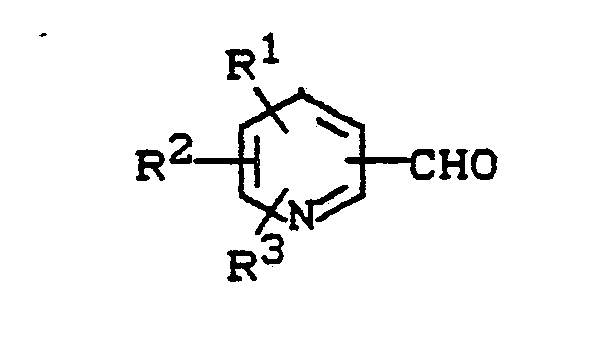
- Die Aldehyde werden erhalten, indem man die entsprechenden Alkohole der Formel


- Im einzelnen seien die folgenden Epoxide genannt:
2-Amino-3-chlorpyridin-5-epoxid,
2-Amino-3-cyanopyridin-5-epoxid,
2,4-Dichlor-3-aminopyridin-6-epoxid,
2-Chlor-3-amino-4-cyanopyridin-6-epoxid,
2-Cyano-3-amino-4-chlorpyridin-6-epoxid,
2-Cyano-3-aminopyridin-6-epoxid,
2-Chlor-3-amino-4-trifluormethylpyridin-6-epoxid,
2-Brom-3-amino-4-cyanopyridin-6-epoxid. - Verfahren b) wird durchgeführt indem man etwa äquimolare Mengen des Epoxids der Formel IV und des Amins der Formel III in einem Verdünnungsmittel umsetzt.
- Im allgemeinen wird ein Überschuß an Amin (1-3 molar, bevorzugt 1-1,5 molar) bezogen auf das Epoxid der Formel IV verwendet.
- Die Reaktion wird bei Temperaturen von +20 bis +150°C durchgeführt.
- Es wird bevorzugt bei Normaldruck gearbeitet.
- Als Verdünnungsmittel dienen alle inerten organischen Lösungsmittel. Hierzu gehören insbesondere aliphatische und aromatische, gegebenenfalls halogenierte Kohlenwasserstoffe, wie Pentan, Hexan, Heptan, Cyclohexan, Petrolether, Benzin, Ligroin, Benzol, Toluol, Methylenchlorid, Ethylenchlorid, Chloroform, Tetrachlorkohlenstoff, Chlorbenzol und o-Dichlorbenzol, ferner Ether wie Diethyl- und Dibutylether, Glykoldimethylether und Diglykoldimethylether, Tetrahydrofuran und Dioxan, ferner Nitrile wie Acetonitril und Benzonitril, Amide wie Dimethylformamid, Alkohole wie Methanol, Ethanol, n- und i-Propanol.
- Bevorzugt sind Alkohole.
- Setzt man bei Verfahren 2c) als ß-Halogenmethylverbindung der Formel V 5-Methoxy-3-(1-hydroxy-2-chlorethyl)pyridin und als Amin der Formel III 2-(4-Methoxyphenyl)-1-methylethylamin ein, läßt sich Verfahren c) durch folgendes Formelschema wiedergeben:

- ß-Halogenmethylverbindungen der Formel V sind Gegenstand einer älteren nicht vorveröffentlichten Patentanmeldung der Anmelderin (Deutsche Patentanmeldung P 3 615 293.5) und werden erhalten, indem man die entsprechenden Halogenmethylketone reduziert oder die entsprechenden Heteroarylvinylverbindungen mit N-Halogenacetamiden umsetzt.
- Im einzelnen seien folgende Verbindungen der Formel V genannt:
1-(2-Amino-3-chlor-5-pyridyl)-2-chlorethanol,
1-(2-Amino-3-cyano-5-pyridyl)-2-chlorethanol,
1-(2,4-Dichlor-3-amino-6-pyridyl)-2-chlorethanol,
1-(2-Chlor-3-amino-4-cyano-6-pyridyl)-2-chlorethanol,
1-(2-Cyano-3-amino-4-chlor-6-pyridyl)-2-bromethanol,
1-(2-Cyano-3-amino-6-pyridyl)-2-chlorethanol,
1-(3-Amino-4-cyano-6-pyridyl)-2-bromethanol,
1-(2-Chlor-3-amino-4-trifluormethyl-6-pyridyl)-2-chlorethanol,
1-(2-Cyano-3-amino-4-fluor-6-pyridyl)-2-bromethanol. - Verfahren 2c) wird durchgeführt indem man die beta-Halogenmethylverbindung der Formel V mit überschüssigem Amin der Formel III gegebenenfalls in Gegenwart eines Verdünnungsmittels umsetzt.
- Die Reaktion wird bei Temperaturen von +20 bis +150°C durchgeführt.
- Es wird bei Normaldruck oder unter erhöhtem Druck gearbeitet.
- Als Verdünnungsmittel dienen alle inerten organischen Lösungsmittel. Hierzu gehören insbesondere aliphatische und aromatische, gegebenenfalls halogenierte Kohlenwasserstoffe, wie Pentan, Hexan, Cyclohexan, Benzol, Toluol, Methylenchlorid, Chloroform, ferner Ether wie Diethylether, Tetrahydrofuran und Dioxan, weiterhin Nitrile wie Acetonitril und Benzonitril, ferner Amide wie Dimethylformamid, ferner Alkohole wie Methanol, Ethanol, n- und i-Propanol.
- Bevorzugt eingesetzt werden Alkohole.
- Setzt man bei Verfahren 2d) als Verbindung der Formel VI 5-Fluor-3-(1-hydroxy-2-aminoethyl)-pyridin und als Verbindung der Formel VII (3-Chlor-4-methoxyphenyl)-aceton ein, läßt sich Verfahren d) durch folgendes Formelschema wiedergeben:

- Verbindungen der Formel VI sind Gegenstand einer älteren nicht vorveröffentlichten Patentanmeldung der Anmelderin (Deutsche Patentanmeldung P 3 615 293.5) und lassen sich herstellen, indem man die entsprechenden Nitroverbindungen reduziert. Die Nitroverbindungen sind bekannt (K.W. Merz Arch. Pharm. 1964, 10) oder lassen sich analog zu bekannten Verfahren herstellen.
- Im einzelnen seien folgende Verbindungen der Formel VI genannt:
1-(2-Amino-3-chlor-5-pyridyl)-2-aminoethanol,
1-(2-Amino-3-cyano-5-pyridyl)-2-aminoethanol,
1-(2,4-Dichlor-3-amino-6-pyridyl)-2-aminoethanol,
1-(2-Chlor-3-amino-4-cyano-6-pyridyl)-2-aminoethanol,
1-(2-Cyano-3-amino-6-pyridyl)-2-aminoethanol,
1-(2-Chlor-3-amino-4-trifluormethyl-6-pyridyl)-2-aminoethanol. - Sie lassen sich in den Fällen, in denen in Formel VI die Reste R¹, R² und R³ nicht gleichzeitig für Wasserstoff stehen und R⁴ für OH steht, herstellen, indem man Verbindungen der Formel XIV

R¹, R² und R³ die bei den Verbindungen der Formel I angegebenen Bedeutungen haben, unter der Vor aussetzung, daß nicht alle Reste R¹, R² und R³ gleichzeitig für Wasserstoff stehen dürfen,
reduziert. - Verbindungen der Formel XIV sind neu. Sie werden erhalten, indem man Aldehyde der Formel XII

R¹, R² und R³ die bei den Verbindungen der Formel I angegebene Bedeutung haben, unter der Voraussetzung, daß nicht alle Reste R¹, R², R³ gleichzeitig für Wasserstoff stehen dürfen,
mit Cyanwasserstoff, ihren Salzen oder mit Cyanhydrinen niederer aliphatischer Ketone umsetzt. - Setzt man bei der Herstellung der Verbindungen der Formel VI als Verbindung der Formel XIV 2-Chlor-4-pyridylcyanhydrin ein, läßt sich das Verfahren durch das folgende Schema darstellen:

- Die Verbindungen der Formel XIV sind neu. Ihre Herstellung wird weiter unten beschrieben. Die Substituenten R¹, R² und R³ in den Verbindungen XIV besitzen die bei den Verbindungen der Formel I angegebenen bevorzugten Bedeutungen, wobei R¹, R² und R³ nicht gleichzeitig für Wasserstoff stehen dürfen. Im einzelnen seien folgende Verbindungen der Formel XIV genannt:
(2,6-Dichlor-4-pyridyl)-cyanhydrin
(2-Amino-5-pyridyl)-cyanhydrin
(2-Amino-3-chlor-5-pyridyl)-cyanhydrin
3(-Amino-6-pyridyl)-cyanhydrin
(2-Chlor-3-amino-6-pyridyl)-cyanhydrin
(2,4-Dichlor-3-amino-6-pyridyl)-cyanhydrin. - Das Verfahren wird durchgeführt, indem man die Verbindung XIV in einem Verdünnungsmittel reduziert.
- Die Reaktion wird bei Temperaturen von 0°C bis 150°C durchgeführt.
- Es wird bei Normaldruck oder bei erhöhtem Druck gearbeitet.
- Als Verdünnungsmittel dienen, abhängig von Reduktionsmittel, Wasser oder organische Lösungsmittel oder Mischungen hiervon. Zu den organischen Lösungsmitteln gehören aliphatische und aromatische, gegebenenfalls halogenierte Kohlenwasserstoffe wie Pentan, Hexan, Cyclohexan, Benzol, Toluol, Methylenchlorid, Ethylenchlorid, Chloroform, Chlorbenzol, ferner Ether wie Diethylether, Tetrahydrofuran, Dioxan, weiterhin Nitrile wie Acetonitril, Benzonitril, Amide wie Dimethylformamid, Alkohole wie Methanol, Ethanol.
- Als Reduktionsmittel dienen:
H₂/Katalysator, als Katalysator sei beispielsweise PtO₂ genannt; Alkali- und Erdalkaliamalgame wie z.B. Natriumamalgam; unedle Metalle in Gegenwart von Salzsäure wie z. B. Zink/Salzsäure; komplexe Metallhydride wie z. B. LiAlH₄; Borane wie z. B. Diboran. - Wie bereits erwähnt, sind die Verbindungen der Formel XIV neu.
- Setzt man zu ihrer Herstellung als Verbindung der For mel XII 2-Fluorpyridin-5-aldehyd ein, läßt sich das Verfahren durch das folgende Scheme wiedergeben:

- Die Herstellung der Aldehyde der Formel XII ist bereits bei Verfahren 2) (oben) beschrieben. Die Substituenten R¹, R² und R³ in Formel XII besitzen die bei den Verbindungen der Formel I angegebenen Bedeutungen, wobei R¹, R² und R³ nicht gleichzeitig für Wasserstoff stehen dürfen. Im einzelnen seien folgende Verbindungen der Formel XII genannt:
2,6-Dichlorpyridin-4-aldehyd
2-Aminopyridin-5-aldehyd
2-Amino-3-chlorpyridin-5-aldehyd
3-Aminopyridin-6-aldehyd
2-Chlor-3-aminopyridin-6-aldehyd
2,4-Dichlor-3-aminopyridin-6-aldehyd. - Das Verfahren wird durchgeführt, indem man in literaturbekannter Weise die Aldehyde der Formel XII bzw. deren Hydrogensulfitadditionsprodukte mit Cyanwasserstoff oder ihren Salzen oder niederaliphatischen Ketoncyanhydrinen umsetzt (P. Kurtz, in Houben-Weyl, Bd. VIII, S. 274 ff).
- Verbindungen der Formel VII sind bekannt (vgl. z.B. EP-OS 23 385) oder lassen sich analog zu bekannten Verbindungen herstellen. Die Substituenten R⁸ bis R¹⁰ sowie X und Y besitzen die weiter oben angegebenen Bedeutungen.
- Im einzelnen seien folgende Verbindungen der Formel VII genannt:

- Verfahren 2d) wird durchgeführt, indem man etwa äquimolare Mengen der Verbindungen der Formeln VI und VII in einem Verdünnungsmittel vorlegt und die Mischung reduziert.
- Die Reaktion wird bei Temperaturen von 0°C bis 150°C durchgeführt.
- Es wird bevorzugt bei Normaldruck gearbeitet.
- Als Verdünnungsmittel dienen alle inerten organischen Lösungsmittel. Hierzu gehören aliphatische und aromatische, gegebenenfalls halogenierte Kohlenwasserstoffe wie Pentan, Hexan, Cyclohexan, Benzol, Toluol, Methylenchlorid, Ethylenchlorid, Chloroform, Chlorbenzol, ferner Ether wie Diethylether, Tetrahydrofuran, Dioxan, weiterhin Nitrile wie Acetonitril, Benzonitril, Amide wie Dimethylformamid, Alkohole wie Methanol, Ethanol.
- Als Reduktionsmittel dienen:
H₂/Katalysator, als Katalysator sei beispielsweise PtO₂ genannt; komplexe Metallhydride wie z.B. LiAlH₄, NaBH₄, NaBH₃CN - Setzt man bei Verfahren 2e) als Verbindung der Formel VIII 5-Methyl-3-pyridylglyoxal und als Amin der Formel IX 2-(3-Brom-4-methoxyphenyl)-ethylamin ein, läßt sich Verfahren e) durch folgendes Reaktionsschema wiedergeben:

- Die Herstellung der Verbindungen der Formel VIII ist bereits bei Verfahren 2b erwähnt. Verbindungen der Formel IX sind bekannt (vgl. z.B. EP-OS 70 133) oder lassen sich analog zu bekannten Verbindungen herstellen.
- Die Substituenten R¹, R², R³ in Formel VIII besitzen bevorzugt die weiter oben bei den Verbindungen der Formel I angegebenen bevorzugten Bedeutungen. Im einzelnen seien folgende Verbindungen der Formel VIII genannt:
2-Amino-3-chlor-5-pyridylglyoxal,
2-Amino-3-cyano-5-pyridylglyoxal,
2,4-Dichlor-3-amino-6-pyridylglyoxal,
2-Cyano-3-amino-6-pyridylglyoxal,
2-Chlor-3-amino-4-trifluormethyl-6-pyridylglyoxal,
Verfahren 2e) wird durchgeführt, indem man zur Verbindung der Formel VIII in einem Verdünnungsmittel etwa die äquivalente Menge des Amins der Formel IX zusetzt und anschließend reduziert. - Die Reaktion wird bei Temperaturen von 0°C bis 100°C durchgeführt.
- Es wird bevorzugt bei Normaldruck gearbeitet.
- Als Verdünnungsmittel dienen alle inerten organischen Lösungsmittel. Hierzu gehören insbesondere aliphatische und aromatische, gegebenenfalls halogenierte Kohlenwasserstoffe, wie Pentan, Hexan, Heptan, Cyclohexan, Petrolether, Benzin, Ligroin, Benzol, Toluol, Methylenchlorid, Ethylenchlorid, Chloroform, Tetrachlorkohlenstoff, Chlorbenzol und o-Dichlorbenzol, ferner Ether wie Diethyl- und Dibutylether, Glykoldimethylether und Di-glykoldimethylether, Tetrahydrofuran und Dioxan, außerdem Ester, wie Essigsäuremethylester und -ethylester, ferner Nitrile, wie z.B. Acetonitril und Propionitril, Benzonitril, Glutarsäuredinitril, darüber hinaus Amide, wie z.B. Dimethylformamid, Dimethylacetamid und N- Methylpyrrolidon, sowie Tetramethylensulfon und Hexamethylphosphorsäuretriamid, weiterhin Alkohole wie Methanol, ethanol,, n- und i-Propanol.
- Als Reduktionsmittel dienen
H₂/Katalysator; als Katalysator seien PtO₂ und Pd-Kohle genannt, ferner komplexe Metallhydride wie LiAlH₄ und NaBH₄. - Setzt man bei Verfahren 2f) als Verbindung der Formel X (5-Chlor-3-pyridyl)hydroxyessigsäure-2(4-methylphenyl)ethyl-amid ein, läßt sich das Verfahren durch folgendes Formelschema wiedergeben:

- Verbindungen der Formel X sind neu. Ihre Herstellung wird weiter unten beschrieben. Die Substituenten R¹ bis R¹⁰, X und Y in den Verbindungen X besitzen die bei den Verbindungen der Formel I angegebenen bevorzugten Bedeutungen. Im einzelnen seien folgende Verbindungen der Formel X genannt:
(2-Amino-5-pyridyl)hydroxyessigsäure-(3-(4-methoxycarbonyl-methoxyphenyl)-2-propyl)amid
(2-Amino-3-chlor-5-pyridyl)hydroxyessigsäure-(3-(4-ethoxycarbonylphenyl)-2-propyl)amid
(2-Amino-3-cyano-5-pyridyl)hydroxyessigsäure-(3-(4-methoxycarbonylmethoxyphenyl)-2-propyl)amid
(3-Amino-2,4-dichlor-6-pyridyl)hydroxyessigsäure-(3-(4-ethoxycarbonylmethoxyphenyl)-2-propyl)amid
(2-Cyano-3-amino-6-pyridyl)hydroxyessigsäure-(3-(4-methoxycarbonylphenyl)-2-propyl)amid
(3-Amino-4-cyano-6-pyridyl)hydroxyessigsäure-(3-(4-ethoxycarbonylmethoxyphenyl)-2-propyl)amid
(2,6-Dichlor-4-pyridyl)hydroxyessigsäure-(3-(4-methoxycarbonylphenyl)-2-propyl)amid
(2,6-Dichlor-4-pyridyl)hydroxyessigsäure-(3-(4-methoxycarbonylmethoxyphenyl)-2-propyl)amid. - Verfahren 2f) wird durchgeführt, indem man die Verbindung der Formel X in einem Verdünnungsmittel mit überschüssigem Reduktionsmittel umsetzt.
- Die Reaktion wird bei Temperaturen von 0°C bis +150°C durchgeführt.
- Es wird bevorzugt bei Normaldruck gearbeitet.
- Als Verdünnungsmittel dienen alle inerten organischen Lösungsmittel, Hierzu gehören insbesondere aliphatische und aromatische, gegebenenfalls halogenierte Kohlenwasserstoffe, wie Pentan, Hexan, Heptan, Cyclohexan, Petrolether, Benzin, Ligroin, Benzol, Toluol, Methylenchlorid, Ethylenchlorid, Chloroform, Tetrachlorkohlenstoff, Chlorbenzol und o-Dichlorbenzol, ferner Ether wie Diethyl- und Dibutylether, Glykoldimethylether und Diglykoldimethylether, Tetrahydrofuran und Dioxan.
- Als Reduktionsmittel dienen komplexe Metallhydride wie LiAlH₄, Borane wie Diboran.
- Setzt man bei dem Verfahren 4) als Verbindung der Formel XI (2-Cyano-5-pyridyl)-acetoxyessigsäure-(2-(3-chlor-4-methylphenyl)ethylamid ein, läßt sich das Verfahren durch das folgende Schema darstellen:

- Die Verbindungen der Formel XI sind neu. Ihre Herstellung wird weiter unten beschrieben. Die Substituenten R¹ bis R¹⁰, X und Y in den Verbindungen XI besitzen die bei den Verbindungen der Formel I angegebenen bevorzugten Bedeutungen. Im einzelnen seien folgende Verbindungen der Formel XI genannt:
(2-Amino-5-pyridyl)acetoxyessigsäure-(3-(4-methoxycarbonyl-methoxyphenyl)-2-propyl)amid
(2-Amino-3-chlor-5-pyridyl)acetoxyessigsäure-(3-(4-ethoxycarbonylphenyl)-2-propyl)amid
(2-Amino-3-cyano-5-pyridyl)acetoxyessigsäure-(3-(4-methoxycarbonylmethoxyphenyl)-2-propyl)amid
(3-Amino-2,4-dichlor-6-pyridyl)acetoxyessigsäure-(3-(4-ethoxycarbonylmethoxyphenyl)-2-propyl)amid
(2-(Cyano-3-amino-6-pyridyl)acetoxyessigsäure-(3-(4-methoxycarbonylphenyl)-2-propyl)amid
(3-Amino-4-cyano-6-pyridyl)acetoxyessigsäure-(3-(4-ethoxycarbonylmethoxyphenyl)-2-propyl)amid
(2,6-Dichlor-4-pyridyl)acetoxyessigsäure-(3-(4-methoxycarbonylphenyl)-2-propyl)amid
(2,6-Dichlor-4-pyridyl)acetoxyessigsäure-(3-(4-methoxycarbonylmethoxyphenyl)-2-propyl)amid. - Zur Abspaltung der Acetylgruppe werden anorganische Säuren verwendet. Hierzu zählen Halogenwasserstoffsäuren wie Salzsäure; Schwefelsäure, Phosphorsäure.
- Das Verfahren wird durchgeführt, indem man die Verbindung XI in einem Verdünnungsmittel als Lösungsvermittler mit überschüssiger wäßriger Lösung der anorganischen Säure behandelt.
- Die Reaktion wird bei Temperaturen von +20°C bis +150°C durchgeführt.
- Es wird bevorzugt bei Normaldruck gearbeitet.
- Als Verdünnungsmittel können alle inerten organischen Lösungsmittel, die mit Wasser mischbar sind, verwendet werden. Hierzu zählen Ether wie Tetrahydrofuran, Dioxan; Nitrile, wie Acetonitril; Amide wie Dimethylformamid; Alkohole wie Methanol, Ethanol; Dimethylsulfoxid.
- Setzt man bei Verfahren 6) als Verbindung der Formel XII 2-Fluor-pyridin-5-aldehyd und als Isonitril der Formel XIII 3-(4-Methoxyphenyl)-2-propylisonitril ein, läßt sich das Verfahren durch das folgende Schema wiedergeben:

- Die Herstellung der Aldehyde der Formel XII ist bereits bei Verfahren 2b) (oben) beschrieben. Die Substituenten R¹, R², R³ in Formel XII besitzen die weiter oben bei den Verbindungen der Formel I angegebenen bevorzugten Bedeutungen. Im einzelnen seien die folgenden Verbindungen der Formel XII genannt:
2-Chlorpyridin-4-aldehyd
2-Cyanopyridin-4-aldehyd
2,6-Dichlorpyridin-4-aldehyd
2-Aminopyridin-5-aldehyd
2-Amino-3-chlorpyridin-5-aldehyd
2-Amino-3-cyanopyridin-5-aldehyd
2-Chlor-3-aminopyridin-6-aldehyd
2-Cyano-3-aminopyridin-6-aldehyd
2,4-Dichlor-3-aminopyridin-6-aldehyd
3-Amino-4-cyanopyridin-6-aldehyd. - Isonitrile der Formel XIII sind bekannt (I. Ugi et al., Angew. Chem. 77 (1965), 492) oder lassen sich analog zu bekannten Verbindungen herstellen. Die Substituenten R⁷ bis R¹⁰, X und Y besitzen die weiter oben bei den Verbindungen der Formel I angegebenen bevorzugten Bedeutungen. Im einzelnen seien folgende Verbindungen der Formel XIII genannt

- Das Verfahren wird durchgeführt, indem man die Verbindung XII mit der doppelt molaren Menge des Isonitrils der Formel XIII und Essigsäure in einem Verdünnungsmittel umsetzt.
- Die Reaktion wird bei Temperaturen von 0°C bis +150°C durchgeführt.
- Es wird bevorzugt bei Normaldruck gearbeitet.
- Als Verdünnungsmittel dienen alle inerten organischen Lösungsmittel. Hierzu gehören insbesondere gegebenenfalls halogenierte aliphatische und aromatische Kohlenwasserstoffe wie Pentan, Hexan, Cyclohexan, Benzol, Toluol, Methylenchlorid, Chloroform, Chlorbenzol; Ether wie Diethylether, Tetrahydrofuran; Nitrile wie Acetonitril und Benzonitril.
- Die Wirkstoffe werden als Leistungsförderer bei Tieren zur Förderung und Beschleunigung des Wachstums, der Milch- und Wollproduktion, sowie zur Verbesserung der Futterverwertung, der Fleischqualität und zur Verschiebung des Fleisch-Fett-Verhältnisses zugunsten von Fleisch eingesetzt. Die Wirkstoffe werden bei Nutz-, Zucht-, Zier- und Hobbytieren verwendet.
- Zu den Nutz- und Zuchttieren zählen Säugetiere wie z.B. Rinder, Schweine, Pferde, Schafe, Ziegen, Kaninchen, Hasen, Damwild, Pelztiere wie Nerze, Chinchilla, Geflügel wie z.B. Hühner, Gänze, Enten, Truthühner, Tauben, Fische wie z.B. Karpfen, Forellen, Lachse, Aale, Schleien, Hechte, Reptilien wie z.B. Schlangen und Krokodile.
- Zu den Zier- und Hobbytieren zählen Säugetiere wie Hunde und Katzen, Vögel wie Papageien, Kanarienvögel, Fische wie Zier- und Aquarienfische z.B. Goldfische.
- Die Wirkstoffe werden unabhängig vom Geschlecht der Tiere während allen Wachstums- und Leistungsphasen der Tiere eingesetzt. Bevorzugt werden die Wirkstoffe während der intensiven Wachstums- und Leistungsphase eingesetzt. Die intensive Wachstums- und Leistungsphase dauert je nach Tierart von einem Monat bis zu 10 Jahren.
- Die Menge der Wirkstoffe, die den Tieren zur Erreichung des gewünschten Effektes verabreicht wird, kann wegen der günstigen Eigenschaften der Wirkstoffe weitgehend variiert werden. Sie liegt vorzugsweise bei etwa 0,001 bis 50 mg/kg insbesondere 0,01 bis 5 mg/kg Körpergewicht pro Tag. Die passende Menge des Wirkstoffs sowie die passende Dauer der Verabreichung hängen insbesondere von der Art, dem Alter, dem Geschlecht, dem Gesundsheitszustand und der Art der Haltung und Fütterung der Tiere ab und sind durch jeden Fachmann leicht zu ermitteln.
- Die Wirkstoffe werden den Tieren nach den üblichen Methoden verabreicht. Die Art der Verabreichung hängt insbesondere von der Art, dem Verhalten und dem Gesunheitszustand der Tiere ab.
- Die Verabreichung erfolgt oral oder parenteral in dafür geeigneten Formulierungen oder in reiner Form. Orale Formulierungen sind Pulver, Tabletten, Granulate, Doenche, Boli sowie Futtermittel, Prämixe für Futtermittel, Formulierungen zur Verabreichung über Trinkwasser.
- Die oralen Formulierungen enthalten den Wirkstoff in Konzentrationen von 0,01 ppm - 100 %, bevorzugt von 0,01 ppm - 1 %.
- Die Wirkstoffe können einmalig verabreicht werden. Die Wirkstoffe können aber auch während der ganzen oder während eines Teils der Wachstums- und Leistungsphase temporär oder kontinuierlich verabreicht werden.
- Bei kontinuierlicher Verabreichung kann die Anwendung ein- oder mehrmals täglich in regelmäßigen oder unregelmäßigen Abständen erfolgen.
- Die Wirkstoffe können in den Formulierungen allein oder in Mischung mit anderen leistungsfördernden Wirkstoffen, mineralischen Futtermitteln, Spurenelement-Verbindungen, Vitaminen, stickstoff liefernden Nicht-Protein-Verbindungen, Farbstoffen, Antioxidantien, Aromastoffen, Emulgatoren, Fließhilfsstoffen, Konservierungs- und Preßhilfsstoffen vorliegen.
- Andere leistungsfördernde Wirkstoffe sind:
z.B. Antibiotika wie Tylosin und Virginiamycin.
Mineralische Futtermittel sind z.B. Dicalciumphosphat, Magnesiumoxid, Natriumchlorid.
Spurenelement-Verbindungen sind z.B. Eisenfumarat, Natriumjodid, Kobaltchlorid, Kupfersulfat, Zinkoxid.
Vitamine sind z.B. Vitamin A, Vitamin D₃, Vitamin E, B-Vitamine, Vitamin C. - Stickstoff-liefernde Nicht-Protein-Verbindungen sind z.B. Biuret, Harnstoff.
Farbstoffe sind z.B. Carotinoide wie Citranaxanthin, Zeaxanthin, Capsanthin.
Antioxidantien sind z.B. Ethoxyquin, Butylhydroxy-Toluol.
Aromastoffe sind z.B. Vanillin.
Emulgatoren sind z.B. Ester der Milchsäure, Lecithin.
Fließhilfsstoffe sind z.B. Natriumstearat, Calciumstearat. - Konservierungsstoffe sind z.B. Zitronensäure, Propionsäure.
Preßhilfsstoffe sind z.B. Ligninsulfonate, Celluloseether. - Die Verabreichung der Wirkstoffe kann auch zusammen mit dem Futter und/oder dem Trinkwasser erfolgen.
- Zum Futter zählen Einzelfuttermittel pflanzlicher Herkunft wie Heu, Rüben, Getreidenebenprodukte, Einzelfuttermittel tierischer Hernkunft wie Fleisch, Fette, Milch produkte, Knochenmehl, Fischprodukte, die Einzelfuttermittel wie Vitamine, Proteine, Aminosäuren z.B. DL-Methionin, Salze wie Kalk und Kochsalz. Zum Futter zählen auch Ergänzungs-, Fertig- und Mischfuttermittel. Diese enthalten Einzelfuttermittel in einer Zusammensetzung, die eine ausgewogene Ernährung hinsichtlich der Energie- und Proteinversorgung sowie der Versorgung mit Vitaminen, Mineralsalzen und Spurenelementen sicherstellt.
- Die Kozentration der Wirkstoffe im Futter beträgt normalerweise etwa 0,01-500 ppm, bevorzugt 0,1-50 ppm.
- Die Wirkstoffe können als solche oder in Form von Prämixen oder Futterkonzentraten dem Futter zugesetzt werden.
- Beispiel für die Zusammensetzung eines Kükenaufzuchtfutters, das 10 ppm erfindungsgemäßen Wirkstoff enthält:
200 g Weizen, 340 g Mais, 361 g Sojaschrot, 60 g Rindertalg, 15 g Dicalciumphosphat, 10 g Calciumcarbonat, 4 g jodiertes Kochsalz, 7,5 g Vitamin-Mineral-Mischung und 2,5 g des unten angegebenen Wirkstoff-Prämix ergeben nach sorgfältigem Mischen 1 kg Futter mit 10 ppm Wirkstoffgehalt. - In einem kg Vitamin-Mineralsind enthalten:
600 I.E. Vitamin A, 100 I.E. Vitamin D₃, 10 mg Vitamin E, 1 mg Vitamin K₃, 3 mg Riboflavin, 2 mg Pyridoxin, 20 mcg Vitamin B₁₂, 5 mg Calciumpantothenat, 30 mg Nikotinsäure, 200 mg Cholinchlorid, 200 mg Mn SO₄ × H₂O, 140 mg Zn SO₄ × 7 H₂O, 100 mg Fe SO₄ × 7 H₂O und 20 mg Cu SO₄ × 5 H₂O. - 2,5 g Wirkstoff-Prämix enthalten z.B. 10 mg Wirkstoff, 1 g DL-Methionin, Rest Sojabohnenmehl.
- Beispiel für die Zusammensetzung eines Schweineaufzuchtfutters, das 8 ppm erfindungsgemäßen Wirkstoff enthält:
630 g Futtergetreideschrot (zusammengesetzt aus 200 g Mais, 150 g Gerste-, 150 g Hafer- und 130 g Weizenschrot), 80 g Fischmehl, 60 g Sojaschrot, 60 g Tapiokamehl, 38 g Bierhefe, 50 g Vitamin-Mineral-Mischung für Schweine, 30 g Leinkuchenmehl, 30 g Maiskleberfutter, 10 g Sojaöl, 10 g Zuckerrohrmelasse und 2 g Wirkstoff-Prämix (Zusammensetzung z.B. wie beim Kükenfutter) ergeben nach sorgfältigem Mischen 1 kg Futter mit 8 ppm Wirkstoffgehalt. - Die angegebenen Futtergemische sind zur Aufzucht und Mast von vorzugsweise Küken bzw. Schweinen abgestimmt, sie können jedoch in gleicher oder ähnlicher Zusammensetzung auch zur Fütterung anderer Tiere verwendet werden.
- Weibliche Laborratten 90-110 g schwer vom Typ SPF Wistar (Züchtung Hagemann) werden ad lib mit Standard Rattenfutter, das mit der gewünschten Menge Wirkstoff versetzt ist, gefüttert. Jeder Versuchsansatz wird mit Futter der identischen Charge durchgeführt, so daß Unterschiede in der Zusammenetzung des Futters die Vergleichbarkeit der Ergebnisse nicht beeinträchtigen können.
- Die Ratten erhalten Wasser ad lib.
- Jeweils 12 Ratten bilden eine Versuchsgruppe und werden mit Futter, das mit der gewünschten Menge Wirkstoff versetzt ist, gefüttert. Eine Kontrollgruppe erhält Futter ohne Wirkstoff. Das durchschnittliche Körpergewicht sowie die Streuung in den Körpergewichten der Ratten ist in jeder Versuchsgruppe gleich, so daß eine Vergleichbarkeit der Versuchsgruppen untereinander gewährleistet ist.
- Während des 13-tägigen Versuchs werden Gewichtszunahme und Futterverbrauch bestimmt und die relative Gewichtszunahme im Vergleich zur unbehandelten Kontrolle errechnet.
- Es werden die aus der Tabelle ersichtlichen Ergebnisse erhalten:

- 10 mmol der Verbindung der Formel II werden bei 0°C portionsweise zu einer Lösung von 10 ml des Amins der Formel III in 15 ml absolutem Ethanol gegeben. Man läßt auf 10-15°C kommen und rührt bei dieser Temperatur eine Stunde nach. Dann wird wieder auf 0°C abgekühlt und portionsweise werden 600 mg (50 mmol) Natriumborhydrid zugegeben. Man rührt über Nacht bei Raumtemperatur nach. Nach Zugabe von 20 ml Wasser wird 30 min gerührt, eingedampft und zwischen Wasser und Essigester verteilt. Die organische Phase wird über Natriumsulfat getrocknet und eingedampft. Der Rückstand wird umkristallisiert.
- 0,1 mol der Verbindung der Formel IV und 0,11 mol des Amins der Formel III werden in 200 ml Methanol über Nacht unter Rückfluß erhitzt. Das Lösungsmittel und überschüssiges Amin werden abgezogen und der Rückstand umkristallisiert.
- 10 mmol der Verbindung der Formel V werden in 150 ml Ethanol gelöst und 20 ml des Amins der Formel III werden zugegeben, die Mischung wird 18 Stunden unter Rückfluß erhitzt. Dann werden Lösungsmittel und überschüssiges Amin abgezogen, und der Rückstand wird in 100 ml trockenem Ether aufgenommen. Das unlösliche Aminhydrohalogenid wird abfiltriert, die etherische Lösung mit Wasser gewaschen, über Natriumsulfat getrocknet und eingedampft. Das Rohprodukt wird umkristallisiert.
- Zu 22 mmol der Verbindung VI in 10 ml absolutem Ethanol werden 22 mmol der Carbonylverbindung der Formel VII bei 0-5°C zugegeben. Man läßt auf Raumtemperatur kommen und rührt noch 30 Minuten nach. Die Lösung wird dann zu 0,15 g Adams-Katalysator (vorhydriert in 10 ml absolutem Ethanol) gegeben und die Mischung 4-5 Stunden bei 40°C und 50 atm Wasserstoffdruck hydriert. Nach Abfilterieren vom Katalysator wird eingedampft und umkristallisiert.
- Zur Lösung von 10 mmol der Verbindung der Formel VIII in 50 ml Ethanol werden bei 10-15°C 15 mmol des Amins der Formel IX getropft. Man läßt auf Raumtemperatur kommen und rührt noch 15 min nach. Dann verdünnt man mit weiteren 100 ml Ethanol und gibt bei 0-5°C portionsweise 80 mmol Natriumborhydrid zu. Man läßt auf Raumtemperatur kommen und rührt über Nacht. Dann gibt man bei 10°C 200 ml Wasser zu, rührt 30 min., dampft das Ethanol ab und extrahiert den Rückstand dreimal mit je 50 ml Dichlormethan. Die vereinigten organischen Phasen werden mit 100 ml Wasser gewaschen, über Natriumsulfat getrocknet und eingedampft.
- Zu 12,4 ml einer 1 M Lösung von Boran in Tetrahydrofuran werden 2,3 mmol der Verbindung X in 30 ml absolutem Tetrahydrofuran getropft. Die Mischung wird eine 1 Stunde unter Rückfluß erhitzt, mit Eiswasser verdünnt und mit 50 ml 1N Salzsäure versetzt. Nach Abdampfen des organischen Lösungsmittels wird die saure wäßrige Lösung zweimal mit je 30 ml Ether extrahiert, dann mit gesättigter Natriumcarbonatlösung alkalisch gestellt und dreimal mit je 30 ml Essigester extrahiert. Die vereinigten Extrakte werden über Natriumsulfat getrocknet und eingedampft.
- Analog zu den oben angegebenen Verfahren 2a - 2f werden die folgenden Verbindungen hergestellt:


- Eine Suspension von 10 mmol der Verbindung XI in einer Mischung aus 37 ml Methanol, 37 ml Wasser und 18 ml 2,5 N Salzsäure wird eine Stunde zum Sieden erhitzt. Dann wird das Methanol abgezogen und der ausgefallene Feststoff abgesaugt.
- Eine Mischung von 10 mmol der Verbindung XII, 20 mmol der Verbindung XIII und 20 mmol Eisessig in 50 ml trockenem Chloroform wird zwei Stunden unter Rückfluß erhitzt. dann wird mit 5 %iger wäßriger NaHCO₃-Lösung gewaschen, über Na₂SO₄ getrocknet und eingedampft.
- Zur Lösung von 11,4 g (56 mmol) (2,6-Dichlor-4-pyridyl)cyanhydrin in 200 ml abs. Tetrahydrofuran werden bei Raumtemperatur 230 ml (230 mmol) einer 1 M Lösung von Boran in Tetrahydrofuran getropft. Nach beendeter Zugabe wird eine Stunde unter Rückfluß erhitzt, dann über Nacht bei Raumtemperatur nachgerührt. Nach Ansäuern mit konz. Salzsäure auf pH 1 wird 30 min. gerührt und eingedampft. Der Rückstand wird in wenig Wasser aufgenommen, filtriert, mit verdünnter Natronlauge auf pH 3 gestellt und mit Essigester gewaschen (3 × 50 ml). Dann wird alkalisch gestellt und mit Essigester (3 × 100 ml) das Produkt extrahiert. Nach Trocknen und Eindampfen erhält man 9,1 g (73 %), Fp. 120°C (Z.).
- Zur Lösung von 5 g (28,4 mmol) 2,6-Dichlorpyridin-4-aldehyd in 30 ml Ether werden 10 ml 40 %ige wässrige Natriumhydrogensulfit-Lösung gegeben. Dann werden auf einmal 3,85 g Natriumcyanid in Form einer gesättigten wäss rigen Lösung zugegeben. Nach einer Stunde Rühren wird die etherische Phase abgetrennt und die wässrige noch einmal mit 20 ml Ether extrahiert. Die vereinigten organischen Phasen werden getrocknet und eingedampft.
- Ausbeute: 5,7 g (quant.), Fp 140°C (Z.).
Claims (11)

R¹ für Wasserstoff, Alkyl, Halogen, Halogenalkyl, Hydroxy, Cyano, Alkoxycarbonyl, Aminocarbonyl, Mono- und Dialkylaminocarbonyl, Alkoxy Halogenalkoxy, Halogenalkylthio, NHSO₂-Alkyl steht,
R² für Wasserstoff, Hydroxy, Alkoxy oder den Rest -NR¹¹R¹² steht,
R³ für die bei R¹ angegebenen Reste steht,
R⁴ für Hydroxy, Acyloxy oder Alkoxy steht,
R⁵ für Wasserstoff oder Alkyl steht,
R⁶ für Wasserstoff oder Alkyl steht,
R⁷ für Wasserstoff oder Alkyl steht,
R⁸ für Wasserstoff oder Alkyl steht,
X für C₁-C₁₀-Alkylen oder eine direkte Bindung steht,
Y für Sauerstoff oder eine direkte Bindung steht,
R⁹ für Wasserstoff, C₁-C₁₀-Alkyl, welches gegebenenfalls durch Hydroxy, Alkoxy, Acyloxy oder den Rest -NR¹³R¹⁴ substituiert ist, sowie für den Rest COR¹⁵ oder den Rest O-Z-R¹⁶ steht,
Z für C₁-C₁₀-Alkylen, -Alkenylen oder -Alkinylen steht,
R¹⁰ für Wasserstoff, Halogen, Alkyl, Alkoxy, Hydroxy oder den Rest COR¹⁵ steht,
R¹¹ für Wasserstoff oder Alkyl steht,
R¹² für Wasserstoff, Alkyl, Halogenalkyl oder Acyl steht,
R¹³ für Wasserstoff, gegebenenfalls substituiertes Alkyl, gegebenenfalls substituiertes Aryl steht,
R¹⁴ für die bei R¹³ angegebenen Reste steht,
R¹⁵ für Hydroxy, Alkoxy oder den Rest NR¹³R¹⁴ steht,
R¹⁶ für Hydroxy, Alkoxy, Acyloxy, den Rest NR¹³R¹⁴ oder den Rest COR¹⁵ steht,
sowie ihre physiologische verträglichen Salze und N-Oxide.

R¹ für Wasserstoff, Alkyl, Halogen, Halogenalkyl, Hydroxy, Cyano, Alkoxycarbonyl, Aminocarbonyl, Mono- und Dialkylaminocarbonyl, Alkoxy, Halogenalkoxy, Halogenalkylthio, NHSO₂-Alkyl steht,
R² für Wasserstoff, Hydroxy, Alkoxy oder den Rest -NR¹¹R¹² steht,
R³ für die bei R¹ angegebenen Reste steht,
R⁴ für Hydroxy, Acyloxy oder Alkoxy steht,
R⁵ für Wasserstoff oder Alkyl steht,
R⁶ für Wasserstoff oder Alkyl steht,
R⁷ für Wasserstoff oder Alkyl steht,
R⁸ für Wasserstoff oder Alkyl steht,
X für C₁-C₁₀-Alkylen oder eine direkte Bindung steht,
Y für Sauerstoff oder eine direkte Bindung steht,
R⁹ für Wasserstoff, C₁-C₁₀-Alkyl, welches gegebenenfalls durch Hydroxy, Alkoxy, Acyloxy oder den Rest -NR¹³R¹⁴ substituiert ist, sowie für den Rest COR¹⁵ oder O-Z-R¹⁶ steht,
Z für C₁-C₁₀-Alkylen, -Alkenylen oder -Alkinylen steht,
R¹⁰ für Wasserstoff, Halogen, Alkyl, Alkoxy, Hydroxy oder den Rest COR¹⁵ steht,
R¹¹ für Wasserstoff oder Alkyl steht,
R¹² für Wasserstoff, Alkyl, Halogenalkyl oder Acyl steht,
R¹³ für Wasserstoff, gegebenenfalls substituiertes Alkyl, gegebenenfalls substituiertes Aryl steht,
R¹⁴ für die bei R¹³ angegebenen Reste steht,
R¹⁵ für Hydroxy, Alkoxy oder den Rest NR¹³R¹⁴ steht,
R¹⁶ für Hydroxy, Alkoxy, Acyloxy, den Rest NR¹³R¹⁴ oder den Rest COR¹⁵ steht,
dadurch gekennzeichnet, daß man

R¹, R², R³ die oben angegebene Bedeutung haben und Hal für Halogen steht,
mit Aminen der Formel III

R⁶ bis R¹⁰, X und Y die oben angegebene Bedeutung haben,
umsetzt und anschließend die Carbonylgruppe reduziert, oder

R¹, R², R³ die oben angegebene Bedeutung haben,
mit Aminen der Formel III

R⁶ bis R¹⁰, X und Y die oben angegebene Bedeutung haben,
umsetzt, oder

R¹, R², R³ und R⁵ die oben angegebene Bedeutung haben,
Hal für Halogen steht,
R¹⁷ für Wasserstoff oder C₁-C₄-Alkyl steht,
mit Aminen der Formel III

R⁶ bis R¹⁰, X und Y die oben angegebene Bedeutung haben,
umsetzt, oder
Verbindungen der Formel VI

R¹ bis R⁵ die oben angegebene Bedeutung haben,
mit Ketonen der Formel VII

R⁸, R⁹, R¹⁰, X und Y die oben angegebene Bedeutung haben,
unter reduzierenden Bedingungen umsetzt, oder
Verbindung der Formel VIII

R¹, R², R³ die oben angegebene Bedeutung haben,
mit Aminen der Formel IX

R⁷ bis R¹⁰ die oben angegebene Bedeutung haben,
unter reduzierenden Bedingungen umsetzt, oder
Verbindungen der Formel X

R¹, R², R³, R⁷, R⁸, R⁹, R¹⁰, X und Y die oben angegebene Bedeutung haben,
reduziert.

R¹ für Wasserstoff, Alkyl, Halogen, Halogenalkyl, Hydroxy, Cyano, Alkoxycarbonyl, Aminocarbonyl, Mono- und Dialkylaminocarbonyl, Alkoxy Halogenalkoxy, Halogenalkylthio, NHSO₂-Alkyl steht,
R² für Wasserstoff, Hydroxy, Alkoxy oder den Rest -NR¹¹R¹² steht,
R³ für die bei R¹ angegebenen Reste steht,
R⁷ für Wasserstoff oder Alkyl steht,
R⁸ für Wasserstoff oder Alkyl steht,
X für C₁-C₁₀-Alkylen oder eine direkte Bindung steht,
Y für Sauerstoff oder eine direkte Bindung steht,
R⁹ für Wasserstoff, C₁-C₁₀-Alkyl, welches gegebenenfalls durch Hydroxy, Alkoxy, Acyloxy oder den Rest -NR¹³R¹⁴ substituiert ist, sowie für den Rest COR¹⁵ oder den Rest O-Z-R¹⁶ steht,
Z für C₁-C₁₀-Alkylen, -Alkenylen oder -Alkinylen steht,
R¹⁰ für Wasserstoff, Halogen, Alkyl, Alkoxy, Hydroxy oder den Rest COR¹⁵ steht,
R¹¹ für Wasserstoff oder Alkyl steht,
R¹² für Wasserstoff, Alkyl, Halogenalkyl oder Acyl steht,
R¹³ für Wasserstoff, gegebenenfalls substituiertes Alkyl, gegebenenfalls substituiertes Aryl steht,
R¹⁴ für die bei R¹³ angegebenen Reste steht,
R¹⁵ für Hydroxy, Alkoxy oder den Rest NR¹³R¹⁴ steht,
R¹⁶ für Hydroxy, Alkoxy, Acyloxy, den Rest NR¹³R¹⁴ oder den Rest COR¹⁵ steht.

R¹ bis R¹⁰, X und Y die in Anspruch 3 angegebene Bedeutung haben,
hydrolysiert.

R¹ für Wasserstoff, Alkyl, Halogen, Halogenalkyl, Hydroxy, Cyano, Alkoxycarbonyl, Aminocarbonyl, Mono- und Dialkylaminocarbonyl, Alkoxy Halogenalkoxy, Halogenalkylthio, NHSO₂-Alkyl steht,
R² für Wasserstoff, Hydroxy, Alkoxy oder den Rest -NR¹¹R¹² steht,
R³ für die bei R¹ angegebenen Reste steht,
R⁷ für Wasserstoff oder Alkyl steht,
R⁸ für Wasserstoff oder Alkyl steht,
X für C₁-C₁₀-Alkylen oder eine direkte Bindung steht,
Y für Sauerstoff oder eine direkte Bindung steht,
R⁹ für Wasserstoff, C₁-C₁₀-Alkyl, welches gegebenenfalls durch Hydroxy, Alkoxy, Acyloxy oder den Rest -NR¹³R¹⁴ substituiert ist, sowie für den Rest COR¹⁵ oder den Rest O-Z-R¹⁶ steht,
Z für C₁-C₁₀-Alkylen, -Alkenylen oder -Alkinylen steht,
R¹⁰ für Wasserstoff, Halogen, Alkyl, Alkoxy, Hydroxy oder den Rest COR¹⁵ steht,
R¹¹ für Wasserstoff oder Alkyl steht,
R¹² für Wasserstoff, Alkyl, Halogenalkyl oder Acyl steht,
R¹³ für Wasserstoff, gegebenenfalls substituiertes Alkyl, gegebenenfalls substituiertes Aryl steht,
R¹⁴ für die bei R¹³ angegebenen Reste steht,
R¹⁵ für Hydroxy, Alkoxy oder den Rest NR¹³R¹⁴ steht,
R¹⁶ für Hydroxy, Alkoxy, Acyloxy, den Rest NR¹³R¹⁴ oder den Rest COR¹⁵ steht.

R¹, R², R³ die oben angegebene Bedeutung haben,
mit Isonitrilen der Formel XIII

R⁷ bis R¹⁰, X und Y die oben angegebene Bedeutung haben,
in Gegenwart von Essigsäure umsetzt.
Applications Claiming Priority (2)
| Application Number | Priority Date | Filing Date | Title |
|---|---|---|---|
| DE19863627663 DE3627663A1 (de) | 1986-08-14 | 1986-08-14 | Heteroarylethylamine, verfahren zu ihrer herstellung und ihre verwendung als leistungsfoerderer bei tieren |
| DE3627663 | 1986-08-14 |
Publications (2)
| Publication Number | Publication Date |
|---|---|
| EP0256420A2 true EP0256420A2 (de) | 1988-02-24 |
| EP0256420A3 EP0256420A3 (de) | 1990-03-28 |
Family
ID=6307422
Family Applications (1)
| Application Number | Title | Priority Date | Filing Date |
|---|---|---|---|
| EP87111240A Withdrawn EP0256420A3 (de) | 1986-08-14 | 1987-08-04 | Heteroarylethylamine, Verfahren zu ihrer Herstellung und ihre Verwendung als Leistungsförderer bei Tieren |
Country Status (15)
| Country | Link |
|---|---|
| US (1) | US4863939A (de) |
| EP (1) | EP0256420A3 (de) |
| JP (1) | JPS6348266A (de) |
| KR (1) | KR880002832A (de) |
| AU (1) | AU7714387A (de) |
| BR (1) | BR8704203A (de) |
| CS (1) | CS268834B2 (de) |
| DD (1) | DD266264A5 (de) |
| DE (1) | DE3627663A1 (de) |
| DK (1) | DK422687A (de) |
| FI (1) | FI873501A7 (de) |
| HU (1) | HU199799B (de) |
| NZ (1) | NZ221401A (de) |
| PH (1) | PH27023A (de) |
| PL (1) | PL153865B1 (de) |
Cited By (4)
| Publication number | Priority date | Publication date | Assignee | Title |
|---|---|---|---|---|
| EP0305845A1 (de) * | 1987-09-02 | 1989-03-08 | Dr. Karl Thomae GmbH | Pyridylethanolamine, diese Verbindungen enthaltende Arzneimittel und Verfahren zu ihrer Herstellung |
| EP0339345A3 (de) * | 1988-04-23 | 1991-03-27 | Bayer Ag | 4-Brom-6-chlor-5-amino-2-pyridyl-ethanolamine, Verfahren zu ihrer Herstellung und ihre Verwendung als Leistungsförderer |
| US5010091A (en) * | 1989-02-18 | 1991-04-23 | Bayer Aktiengesellschaft | 2,4-dihalogeno-6-pyridylethanolphenylisopropylamines for shifting the protein-fat ratio of animals in favor of protein |
| US5028617A (en) * | 1989-01-26 | 1991-07-02 | Bayer Aktiengesellschaft | Heteroarylethanol-pyridylalkylamines for controlling animal growth |
Families Citing this family (5)
| Publication number | Priority date | Publication date | Assignee | Title |
|---|---|---|---|---|
| US4906645A (en) * | 1988-09-12 | 1990-03-06 | Merck & Co., Inc. | Pyridyl aminoethanol compounds with growth promotion and an increase in feed efficiency |
| GB2305665A (en) * | 1995-09-26 | 1997-04-16 | Merck & Co Inc | Selective ß3 agonists for the treatment of diabetes aand obesity |
| US7067541B2 (en) * | 2003-06-04 | 2006-06-27 | Pfizer Inc | 2-amino-pyridine derivatives useful for the treatment of diseases |
| US7375100B2 (en) * | 2003-06-04 | 2008-05-20 | Pfizer Inc | 2-amino-pyridine derivatives useful for the treatment of diseases |
| KR100845871B1 (ko) * | 2007-03-14 | 2008-07-14 | 엘지전자 주식회사 | 명암비 조절 유닛 및 이를 이용한 프로젝션 장치 |
Family Cites Families (13)
| Publication number | Priority date | Publication date | Assignee | Title |
|---|---|---|---|---|
| DE120770C (de) * | ||||
| DE2364685C3 (de) * | 1973-12-27 | 1978-06-15 | Beiersdorf Ag, 2000 Hamburg | Phenoxyäthylamine |
| US4088764A (en) * | 1973-12-27 | 1978-05-09 | Cassella Farbwerke Mainkur Aktiengesellschaft | Pharmaceutically active derivatives of 1-phenoxy-3-amino-propan-2-ol |
| US3952101A (en) * | 1975-04-14 | 1976-04-20 | Smithkline Corporation | α-Amino methyl-5-hydroxy-2-pyridinemethanols |
| DD144050A5 (de) * | 1978-06-05 | 1980-09-24 | Ciba Geigy Ag | Verfahren zur herstellung von n-alkylierten aminoalkoholen |
| US4358455A (en) * | 1980-12-23 | 1982-11-09 | Merck & Co., Inc. | Aralkylamindethanol heterocyclic compounds |
| US4552960A (en) * | 1983-06-20 | 1985-11-12 | Eli Lilly And Company | Fungicidal amines |
| NZ212204A (en) * | 1984-06-04 | 1988-07-28 | Merck & Co Inc | Growth-promoting compositions containing hydroxylic compounds |
| EP0166025A3 (de) * | 1984-06-27 | 1986-08-20 | American Cyanamid Company | Nichtantibiotische tierische Futterzusatzzusammensetzungen |
| US4761421A (en) * | 1985-05-08 | 1988-08-02 | Merck & Co., Inc. | Use of certain compounds in livestock food as growth promotants for better feed utilization and improved carcass composition |
| DE3615293A1 (de) * | 1986-05-06 | 1987-11-12 | Bayer Ag | Verwendung von heteroarylethylaminen zur leistungsfoerderung bei tieren, heteroarylethylamine und verfahren zu ihrer herstellung |
| CA1287061C (en) * | 1986-06-27 | 1991-07-30 | F. Hoffmann-La Roche Ag | Pyridine ethanolamine derivatives |
| EP0281841B1 (de) * | 1987-03-07 | 1990-11-14 | Bayer Ag | Verfahren zur Herstellung von 5-Amino-4,6-dihalogenpyridinen |
-
1986
- 1986-08-14 DE DE19863627663 patent/DE3627663A1/de not_active Withdrawn
-
1987
- 1987-07-30 US US07/080,284 patent/US4863939A/en not_active Expired - Fee Related
- 1987-08-04 EP EP87111240A patent/EP0256420A3/de not_active Withdrawn
- 1987-08-11 JP JP62199238A patent/JPS6348266A/ja active Pending
- 1987-08-11 NZ NZ221401A patent/NZ221401A/xx unknown
- 1987-08-12 FI FI873501A patent/FI873501A7/fi not_active Application Discontinuation
- 1987-08-12 DD DD87305966A patent/DD266264A5/de not_active IP Right Cessation
- 1987-08-13 PH PH35669A patent/PH27023A/en unknown
- 1987-08-13 PL PL1987267318A patent/PL153865B1/pl unknown
- 1987-08-13 CS CS875977A patent/CS268834B2/cs unknown
- 1987-08-13 KR KR1019870008871A patent/KR880002832A/ko not_active Ceased
- 1987-08-13 HU HU873658A patent/HU199799B/hu not_active IP Right Cessation
- 1987-08-13 BR BR8704203A patent/BR8704203A/pt not_active Application Discontinuation
- 1987-08-13 DK DK422687A patent/DK422687A/da not_active Application Discontinuation
- 1987-08-14 AU AU77143/87A patent/AU7714387A/en not_active Abandoned
Cited By (6)
| Publication number | Priority date | Publication date | Assignee | Title |
|---|---|---|---|---|
| EP0305845A1 (de) * | 1987-09-02 | 1989-03-08 | Dr. Karl Thomae GmbH | Pyridylethanolamine, diese Verbindungen enthaltende Arzneimittel und Verfahren zu ihrer Herstellung |
| EP0339345A3 (de) * | 1988-04-23 | 1991-03-27 | Bayer Ag | 4-Brom-6-chlor-5-amino-2-pyridyl-ethanolamine, Verfahren zu ihrer Herstellung und ihre Verwendung als Leistungsförderer |
| US5028617A (en) * | 1989-01-26 | 1991-07-02 | Bayer Aktiengesellschaft | Heteroarylethanol-pyridylalkylamines for controlling animal growth |
| EP0379928A3 (de) * | 1989-01-26 | 1992-04-01 | Bayer Ag | Aryl- und Heteroarylethanol-pyridylalkylamine, Verfahren zu ihrer Herstellung und ihre Verwendung als Leistungsförderer bei Tieren und als Mittel gegen Adipositas |
| US5010091A (en) * | 1989-02-18 | 1991-04-23 | Bayer Aktiengesellschaft | 2,4-dihalogeno-6-pyridylethanolphenylisopropylamines for shifting the protein-fat ratio of animals in favor of protein |
| EP0384193A3 (de) * | 1989-02-18 | 1991-08-14 | Bayer Ag | 2,4-Dihalogen-6-pyridylethanol-phenylisopropylamine, Verfahren zu ihrer Herstellung und ihre Verwendung zur Verschiebung des Protein-Fett-Verhältnisses zugunsten von Protein |
Also Published As
| Publication number | Publication date |
|---|---|
| PL153865B1 (en) | 1991-06-28 |
| DD266264A5 (de) | 1989-03-29 |
| KR880002832A (ko) | 1988-05-11 |
| HUT45501A (en) | 1988-07-28 |
| HU199799B (en) | 1990-03-28 |
| EP0256420A3 (de) | 1990-03-28 |
| US4863939A (en) | 1989-09-05 |
| CS268834B2 (en) | 1990-04-11 |
| BR8704203A (pt) | 1988-04-12 |
| DK422687A (da) | 1988-02-15 |
| JPS6348266A (ja) | 1988-02-29 |
| NZ221401A (en) | 1990-06-26 |
| PL267318A1 (en) | 1989-04-03 |
| FI873501A7 (fi) | 1988-02-15 |
| DE3627663A1 (de) | 1988-03-03 |
| DK422687D0 (da) | 1987-08-13 |
| PH27023A (en) | 1993-02-01 |
| AU7714387A (en) | 1988-02-18 |
| FI873501A0 (fi) | 1987-08-12 |
| CS597787A2 (en) | 1989-08-14 |
Similar Documents
| Publication | Publication Date | Title |
|---|---|---|
| EP0202538B1 (de) | Leistungsfördernde Mittel | |
| EP0244728B1 (de) | Verwendung von Heteroarylethylaminen zur Leistungsförderung bei Tieren, Heteroarylethylamine und Verfahren zu ihrer Herstellung | |
| EP0223140A2 (de) | Thienooxazinone, Verfahren zu ihrer Herstellung und ihre Verwendung als Leistungsförderer | |
| EP0256420A2 (de) | Heteroarylethylamine, Verfahren zu ihrer Herstellung und ihre Verwendung als Leistungsförderer bei Tieren | |
| EP0301348B1 (de) | Substituierte Pyridylethanolamine, Verfahren zu ihrer Herstellung und ihre Verwendung als Leistungsförderer bei Tieren | |
| EP0209025B1 (de) | Arylethanolhydroxylamine, Verfahren zu ihrer Herstellung und ihre Verwendung zur Leistungsförderung | |
| EP0288867A2 (de) | Neue Aminophenylethylamin-Derivate, Verfahren zu ihrer Herstellung sowie ihre Verwendung als Leistungsförderer | |
| DE3800096A1 (de) | Verwendung von benzimidazolderivaten als leistungsfoerderer | |
| EP0379928A2 (de) | Aryl- und Heteroarylethanol-pyridylalkylamine, Verfahren zu ihrer Herstellung und ihre Verwendung als Leistungsförderer bei Tieren und als Mittel gegen Adipositas | |
| EP0259750A2 (de) | Arylethanolamine, Verfahren zu ihrer Herstellung und ihre Verwendung zur Leistungsförderung | |
| DE3522938A1 (de) | Leistungsfoerdernde mittel | |
| EP0154923A2 (de) | Monosilylierte Aminophenylethylamin-Derivate, Verfahren zu ihrer Herstellung und ihre Verwendung zur Wachstumsförderung | |
| EP0093949B1 (de) | Sulfinyl- und Sulfonyl-azacycloheptan-2-one, Verfahren zu ihrer Herstellung sowie ihre Verwendung als Futterzusatzstoffe | |
| DE3813839A1 (de) | 4-brom-6-chlor-5-amino-2-pyridil-ethanolamine verfahren zu ihrer herstellung u. ihre verwendung als leistungsfoerderer | |
| EP0253258A2 (de) | Arylethanolhydroxylamine, Verfahren zu ihrer Herstellung und ihre Verwendung zur Leistungsförderung | |
| DE3905028A1 (de) | 2,4-dihalogen-6-pyridylethanolphenylisopropylamine, verfahren zu ihrer herstellung und ihre verwendung zur verschiebung des protein-fett-verhaeltnisses zugunsten von protein | |
| EP0216290A2 (de) | Verwendung von Thienylaminen als leistungsfördernde Mittel, neues Thienylamin | |
| EP0212479A1 (de) | Verwendung von Lactamamiden als Leistungsförderer bei Tieren | |
| DE3801521A1 (de) | Pyrimidinderivate als leistungsfoerderer | |
| DE3714485A1 (de) | Pyrrolophenylalkanolamine und ihre derivate, verfahren zu ihrer herstellung und ihre verwendung als leistungsfoerderer | |
| DE3543636A1 (de) | Neue aminophenylethylamin-derivate, verfahren zu ihrer herstellung sowie ihre verwendung zur leistungsfoerderung | |
| DE3543637A1 (de) | Neue aminophenylethylamin-derivate, verfahren zu ihrer herstellung sowie ihre verwendung als leistungsfoerderer |
Legal Events
| Date | Code | Title | Description |
|---|---|---|---|
| PUAI | Public reference made under article 153(3) epc to a published international application that has entered the european phase |
Free format text: ORIGINAL CODE: 0009012 |
|
| 17P | Request for examination filed |
Effective date: 19870804 |
|
| AK | Designated contracting states |
Kind code of ref document: A2 Designated state(s): AT BE CH DE ES FR GB GR IT LI NL SE |
|
| PUAL | Search report despatched |
Free format text: ORIGINAL CODE: 0009013 |
|
| AK | Designated contracting states |
Kind code of ref document: A3 Designated state(s): AT BE CH DE ES FR GB GR IT LI NL SE |
|
| 17Q | First examination report despatched |
Effective date: 19920324 |
|
| STAA | Information on the status of an ep patent application or granted ep patent |
Free format text: STATUS: THE APPLICATION IS DEEMED TO BE WITHDRAWN |
|
| 18D | Application deemed to be withdrawn |
Effective date: 19930121 |
|
| RIN1 | Information on inventor provided before grant (corrected) |
Inventor name: SCHEER, MARTIN, DR. Inventor name: DE JONG, ANNO, DR. Inventor name: LINDEL, HANS, DR. Inventor name: BERSCHAUER, FRIEDRICH, DR. Inventor name: HALLENBACH, WERNER, DR. |