EP0256536A2 - Coccidiosis-Impfstoff - Google Patents
Coccidiosis-Impfstoff Download PDFInfo
- Publication number
- EP0256536A2 EP0256536A2 EP87111820A EP87111820A EP0256536A2 EP 0256536 A2 EP0256536 A2 EP 0256536A2 EP 87111820 A EP87111820 A EP 87111820A EP 87111820 A EP87111820 A EP 87111820A EP 0256536 A2 EP0256536 A2 EP 0256536A2
- Authority
- EP
- European Patent Office
- Prior art keywords
- gametocytes
- eimeria
- extract
- chicken
- vaccine
- Prior art date
- Legal status (The legal status is an assumption and is not a legal conclusion. Google has not performed a legal analysis and makes no representation as to the accuracy of the status listed.)
- Granted
Links
Images




Classifications
-
- C—CHEMISTRY; METALLURGY
- C07—ORGANIC CHEMISTRY
- C07K—PEPTIDES
- C07K16/00—Immunoglobulins [IG], e.g. monoclonal or polyclonal antibodies
- C07K16/18—Immunoglobulins [IG], e.g. monoclonal or polyclonal antibodies against material from animals or humans
- C07K16/20—Immunoglobulins [IG], e.g. monoclonal or polyclonal antibodies against material from animals or humans from protozoa
-
- A—HUMAN NECESSITIES
- A61—MEDICAL OR VETERINARY SCIENCE; HYGIENE
- A61K—PREPARATIONS FOR MEDICAL, DENTAL OR TOILETRY PURPOSES
- A61K39/00—Medicinal preparations containing antigens or antibodies
- A61K39/002—Protozoa antigens
- A61K39/012—Coccidia antigens
-
- A—HUMAN NECESSITIES
- A61—MEDICAL OR VETERINARY SCIENCE; HYGIENE
- A61P—SPECIFIC THERAPEUTIC ACTIVITY OF CHEMICAL COMPOUNDS OR MEDICINAL PREPARATIONS
- A61P31/00—Antiinfectives, i.e. antibiotics, antiseptics, chemotherapeutics
- A61P31/04—Antibacterial agents
-
- A—HUMAN NECESSITIES
- A61—MEDICAL OR VETERINARY SCIENCE; HYGIENE
- A61P—SPECIFIC THERAPEUTIC ACTIVITY OF CHEMICAL COMPOUNDS OR MEDICINAL PREPARATIONS
- A61P33/00—Antiparasitic agents
- A61P33/02—Antiprotozoals, e.g. for leishmaniasis, trichomoniasis, toxoplasmosis
-
- C—CHEMISTRY; METALLURGY
- C07—ORGANIC CHEMISTRY
- C07K—PEPTIDES
- C07K14/00—Peptides having more than 20 amino acids; Gastrins; Somatostatins; Melanotropins; Derivatives thereof
- C07K14/435—Peptides having more than 20 amino acids; Gastrins; Somatostatins; Melanotropins; Derivatives thereof from animals; from humans
- C07K14/44—Peptides having more than 20 amino acids; Gastrins; Somatostatins; Melanotropins; Derivatives thereof from animals; from humans from protozoa
- C07K14/455—Eimeria
-
- A—HUMAN NECESSITIES
- A61—MEDICAL OR VETERINARY SCIENCE; HYGIENE
- A61K—PREPARATIONS FOR MEDICAL, DENTAL OR TOILETRY PURPOSES
- A61K39/00—Medicinal preparations containing antigens or antibodies
-
- F—MECHANICAL ENGINEERING; LIGHTING; HEATING; WEAPONS; BLASTING
- F02—COMBUSTION ENGINES; HOT-GAS OR COMBUSTION-PRODUCT ENGINE PLANTS
- F02B—INTERNAL-COMBUSTION PISTON ENGINES; COMBUSTION ENGINES IN GENERAL
- F02B75/00—Other engines
- F02B75/02—Engines characterised by their cycles, e.g. six-stroke
- F02B2075/022—Engines characterised by their cycles, e.g. six-stroke having less than six strokes per cycle
- F02B2075/027—Engines characterised by their cycles, e.g. six-stroke having less than six strokes per cycle four
Definitions
- the organisms which cause the disease known as "coccidiosis" in chickens belong to the phylum Apicomplexa , class Sporozoa , subclass Coccidia , order Eucoccidia , suborder Eimeriorina , family Eimeriidae , genus Eimeria .
- Within the Eimerian genus there are many species, several of which are pathogenic in chickens.
- the species of major concern to the chicken industry are Eimeria tenella , Eimeria maxima , Eimeria acervulina , Eimeria nacatrix and Eimeria brunetti .
- Coccidiosis has become a major economic problem in the chicken industry over the past few decades, mainly due to the overcrowding of chicken houses and drug resistance.
- the rearing of chickens under crowded condi tions on a litter floor provides optimal conditions for the growth and spread of coccidia. Under such circumstances, sanitary control becomes nearly impossible and the farmer must rely on the effectiveness of coccidiostat drugs.
- drugs must be kept in the feed at all times and therefore are very expensive, certain drugs have costly side effects, and drug resistance has become a major problem under field conditions.
- Several large suppliers of these agents have come to realize that perhaps the only viable approach to the control of coccidiosis is by vaccine development.
- the Eimerian parasites undergo a complex life cycle in the mucosa of the intestinal tract. They show a great deal of specificity both in terms of the species they infect and in their location within the intestine. In fact, site specificity of infection is used as the major criterion for diagnosis. Other parameters for diagnosis include size and shape of oocysts, characteristics of the infected intestine, weight loss, and skin pigmentation changes.
- Eimeria The life cycle of Eimeria is very similar to that of the hemosporidian parasites (i.e. plasmodium) except for the lack of an arthropod vector.
- Oocysts sporulate on the litter floor producing four sporocysts, each containing two sporozoites. These are ingested by the chicken and the sporozoites are released by the mechanical grinding of the oocysts in the gizzard and the subsequent digestion of the sporocyst wall by proteolytic enzymes. Sporozoites then invade lymphocytes and go on to invade epithelial cells where the asexual cycle begins.
- the parasite goes through 2-4 cycles of replication and division (each species having a defined number of divisions) leading to the production of large numbers of merozoites.
- the sexual cycle begins with the production of macrogametocytes (female) and microgametocytes.
- the macrogametocyte is characterized by the production of wall forming bodies which are involved in the production of the oocyst wall.
- Microgametocytes contain the components involved in the formation of microgametes which bud off from the surface of the intracellular parasite. Microgametes are flagellated and are responsible for the fertilization of the macrogamete.
- a zygote is formed which matures into the oocyst by fusion of the wall forming bodies and condensation of the nucleus. Oocysts are secreted in the feces, thus completing the cycle.
- the attenuated live vaccine may be used in the field until a more defined, noninfective, subunit vaccine can be developed.
- the extracellular stages of the life cycle (the sporozoite, the merozoite and the gametes - micro and macro) are the most vulnerable to immune attack.
- the sporozoite is the first stage of development after the parasite is released from the oocyst and after a short time in the lumen invades a lymphocyte.
- high titers of antibody to sporozoites have been found and this stage is considered to be most promising for vaccine development.
- several laboratories have been working towards a sporozoite vaccine.
- a vaccine using antigens from the merozoite stage is also being tested (European patent publication No. 0 135 073).
- Several laboratories are making monoclonal antibodies to merozoite surface antigens in order to test their ability to inhibit invasion in vitro and in vivo .
- Most of these antigens were also found to be present in sporozoites as well as in different Eimerian species (9,10).
- In vivo protection results using these monoclonal antibodies again only showed partial inhibition and only with very low numbers of parasites (challenge dosage of 200 sporozoites) (European patent publication No. 0,135,172).
- Eimeria in cultured cells In the area of in vitro cultivation, of all coccidial species, the developement of Eimeria in cultured cells has been most extensively studied. To date, those Eimeria species studied in vitro have been either parasites of avian or mammalian hosts. While various cell types have been used to support the development of Eimerias , the best development occurs in cell types obtained from the natural host. In addition to cultured cells, avian Eimerias are grown in the chlorioallantoic membrane (CAM) of embryonated eggs or in tissue culture cells there. In general, cell cultures (e.g.
- the number of oocysts formed in the tissue cultured CAM cells were small compared to the numbers of gametocytes grown, suggesting that fertilization and the development of oocysts in vitro is more difficult to induce than the growth of macrogametocytes.
- the present invention involves a method for the isolation of E . maxima macrogametocytes and microgametocytes.
- the isolation procedure of the present invention allows for the purification, to a very high degree (over 90%) of E . maxima gametocytes, with little or no host contamination (based on SDS-PAGE analysis).
- the present invention also concerns the identification of protective gametocyte antigens and the RNA which encodes then. These antigens were found to give partial protection against challenge infections with E . maxima in vivo . Antisera from immunized and recovered birds as well as immunized mice, guinea pigs, and rabbits have been used to identify the antigens involved by immune precipitation and Western blotting techniques. These antisera as well as monoclonal antibodies and soybean lectin can be used to isolate these antigens either from protein extracts of gametocytes or by cloning the genes from the RNA encoding these antigens. These antibodies or antigens can then be used by passive or active immunization respectively to protect birds against coccidial infections.
- the present invention concerns a method for the growth of E . maxima parasites in an in vitro organ culture system.
- the organ culture system is based on growing parasites in whole pieces of infected intestine and closely reflects the growth conditions in vivo . It can be used to very efficiently grow E . maxima from the merozoite stage to the oocyst stage with rates of growth being nearly as high as that found in vivo .
- This system can be used to assay the effectiveness of both antibodies and drugs, as well as in the development of drugs which inhibit the sexual stages of coccidial development.
- the present invention provides substantially purified Eimeria ssp. gametocytes and a method of preparing them which comprises:
- a vaccine for conferring upon a chicken active immunity against infection by Eimeria ssp which comprises an effective immunizing amount of gametocytes of the present invention and a carrier.
- a vaccine for conferring upon a chicken active immunity against infection by Eimeria maxima comprises an effective immunizing amount of Eimeria maxima gametocytes and a carrier.
- a proteinaceous extract of the present invention derived from Eimeria maxima gametocytes is capable of inducing in a chicken an immune response conferring protection against infection by Eimeria maxima and other Eimeria spp.
- the extract is soluble in a detergent containing buffer, is present as an antigen of Eimeria maxima gametocytes, is specifically recognized by polyclonal antibodies of recovered chicken serum and comprises at least nine proteins having molecular weights of 250 ⁇ 20 kd, 116 ⁇ 10 kd, 82 ⁇ 10 kd, 78 ⁇ 5 kd, 56 ⁇ 5 kd, 54 ⁇ 5 kd, 52 ⁇ 5 kd, 43 ⁇ kd, and 36 ⁇ 5 kd.
- a method of preparing the extract of the present invention comprises:
- the present invention also provides a vaccine for conferring upon a chicken active immunity against infection by Eimeria maxima and other Eimeria spp. which comprises an effective immunizing amount of the extract of the present invention and a carrier or any combination of one or more of the proteins of the present invention and a carrier.
- Also provided is a method of in vitro development of Eimeria spp. gametocytes or oocysts which comprises:
- the present invention also provides an extract of mRNA derived from Eimeria maxima gametocytes which, when contacted with a cell-free translation system, translates at least seven immune-precipitable proteins having molecular weights of 225 ⁇ 20 kd, 100 ⁇ 10 k, 90 ⁇ 10 kd, 65 ⁇ 5 kd, 45 ⁇ 5 kd, 40 ⁇ 5 kd and 34 ⁇ 5 kd.
- the present invention provides substantially purified Eimeria spp. gametocytes and a method of preparing them which comprises:
- the gametocytes so produced may be microgametocytes or macrogametocytes.
- a desirable species of Eimeria for use in the method of the present invention is Eimeria maxima , thereby producing Eimeria maxima gametocytes.
- a desirable host animal is a chicken.
- the suitable time postinfection is between about 121 and about 144 hours, desirably about 136-138 hours.
- the treating comprises filling the removed intestine of the animal with a suitable buffer, e.g. a SAC buffer comprising about 170 mM NaCl, about 10 mM Tris, pH 7.0, about 10 mM glucose, about 5 mM CaCl2 about 1 mM PMSF and about 1 mg/ml bovine serum albumin, containing hyaluronidase at a concentration from about 200 to about 1000 units/ml, e.g. 350 units/ml.
- a suitable buffer i.e.
- the recovering comprises filtering said wash solution containing gametocytes from the tissue through a first filter and the flow through is filtered through a second filter having a smaller pore size than the first filter.
- the pore size of the first filter is from about 15 to about 20 microns, e.g. 17 microns.
- the pore size of the second filter is from about 8 to about 12 microns, e.g. 10 microns.
- An alternative method of preparing the gametocytes of the present invention comprises:
- the first filter of the set of filters may have a pore size of about 150 microns and the last filter may have a pore size of about 10 microns.
- the present invention concerns substantially purified Eimeria spp. gametocytes prepared by the methods of the present invention.
- substantially purified Eimeria maxima gametocytes may be prepared by the present methods.
- a vaccine for conferring upon a chicken active immunity against infection by Eimeria spp. comprises an effective immunizing amount of Eimeria spp. gametocytes and a suitable carrier.
- An effective immunizing amount is from about 0.5 ⁇ 106 to about 2.0 ⁇ 106 gametocytes.
- a suitable carrier is a SAC buffer, a phosphate buffer (0.01 to 0.1M) or a saline solution (0.8%).
- the carrier may also contain a suitable adjuvant, e.g. Freund's adjuvant.
- a vaccine for conferring upon a chicken active immunity against infection by Eimeria maxima comprises an effective immunizing amount of Eimeria maxima gametocytes and a suitable carrier.
- An effective immunizing amount is from about 0.5 ⁇ 106 to about 2.0 ⁇ 106 gametocytes.
- the gametocyte vaccine of the present invention may contain whole gametocytes, fractionated gametocytes, wherein the gametocytes have been treated so as to cause the release of their internal components, e.g. by sonication, or a mixture of whole plus fractionated gametocytes.
- a desirable ratio of whole gametocytes to sonicated gametocytes is 1:1.
- a method of conferring upon a chicken active immunity against infection by Eimeria spp. comprises administering to the chicken an effective amount of the vaccine of the present invention.
- a method of conferring upon a chicken active immunity against infection by Eimeria maxima comprises administering to the chicken an effective amount of the vaccine containing Eimeria maxima gametocytes.
- the administration may be by intravenous, intramuscular or intraperitoneal injection.
- An effective amount of vaccine is that amount derived from about 0.5 ⁇ 106 to about 2.0 ⁇ 106 gametoctytes or that which causes the animal's sera to have an antisera titer of about 1:000 (as determined by ELISA).
- the present invention concerns a proteinaceous extract derived from Eimeria maxima gametocytes which is capable of inducing in a chicken an immune response conferring protection against infection by Eimeria maxima , which is soluble in a detergent containing buffer, is present as an antigen of Eimeria maxima gametocytes, is specifically recognized by polyclonal antibodies of recovered chicken serum and comprises at least nine proteins having molecular weights of 250 ⁇ 20 kd, 116 ⁇ 10 kd, 82 ⁇ 10 kd, 78 ⁇ 5 kd, 56 ⁇ 5 kd, 54 ⁇ 5 kd, 52 ⁇ 5 kd, 43 ⁇ kd, and 36 ⁇ 5 kd.
- a method of preparing the extract of the present invention comprises:
- the buffered detergent solution comprises 0.5% NP-40 or 0.5% DOC in a SAC buffer.
- the suitable conditions comprise incubating the gametocytes with the buffered detergent solution at about 4°C for about one hour.
- Another vaccine for conferring upon a chicken active immunity against infection by Eimeria maxima comprises an effective immunizing amount of the extract of the present invention and a carrier.
- An effective immunizing amount of extract is an amount of extract that is derived from about 0.5 ⁇ 106 to about 2.0 ⁇ 106 gametocytes.
- a method of conferring upon a chicken active immunity against infection by Eimeria maxima comprises administering to the chicken an effective amount of the vaccine derived from an Eimeria maxima gametocyte extract.
- An effective amount of the vaccine is that which causes the sera to have an antisera titer of about 1:1000.
- the present invention also provides individual antigenic proteins, derived from the gametocyte extract of the present invention, which have the following respective molecular weights: 250 ⁇ 20 kd, 116 ⁇ 10 kd, 82 ⁇ 10 kd, 78 ⁇ 5 kd, 56 ⁇ 5 kd, 54 ⁇ 5 kd,52 ⁇ 5 kd, 43 ⁇ kd, and 36 ⁇ 5 kd.
- a method of preparing the antigenic protein derived from the gametocyte extract of the present invention having molecular weight of 82 ⁇ 10 kd comprises separately recovering the protein from the proteinaceous extract of the present invention. Recovery of the protein may be accomplished by affinity purifying the extract of the present invention over a column containing soybean lectin bound to agarose or by immunoaffinity chromatography with the monoclonal antibodies produced by hybridoma cell lines 1A-1, 1A-2 or 1A-3.
- a method of preparing the antigenic protein derived from the gametocyte extract of the present invention having a molecular weight of 56 ⁇ 5 kd comprises separately recovering the protein from the proteinaceous extract of the present invention. Recovery of the protein may be accomplished by affinity purifying the extract of the present invention over a column containing soybean lectin bound to agarose or by immunoaffinity chromatography with any one of the monoclonal antibodies 1E11-11, 1C3-23, 6B3-27 and E9-10.
- a method of preparing the antigenic protein derived from the gametocyte extract of the present invention having a molecular weight of 43 ⁇ 5 kd comprises separately recovering the protein from the proteinaceous extract of the present invention. Recovery of the protein is accomplished by affinity purifying the extract of the present invention over a column containing mono specific polyclonal chicken IgG.
- the present invention also provides monoclonal antibodies produced by the hybridoma cell lines 1A-1, 1A-2, 1A-3, 1E11-11, 1C3-23, 6B3-27 and E9-10. Also provided are monoclonal antibodies directed against the protein derived from the gametocyte extract of the present invention having molecular weight of 82 ⁇ 10 kd, as well as monoclonal antibodies directed against the protein derived from the gametocyte extract of the present invention having molecular weight of 56 ⁇ 5 kd.
- a further vaccine for conferring upon a chicken active immunity against infection by Eimeria maxima comprises an effective immunizing amount of any one of these proteins and a suitable carrier, or an effective immunizing amount of two or more of these proteins and a suitable carrier.
- a method of in vitro development of Eimeria spp. gametocytes or oocysts comprises:
- the medium of step (b) comprises RPMI 1640 medium containing 5% inactivated normal chicken serum, penicillin-streptomycin and L-glutamine.
- the suitable conditions comprise 40° C and a 95% O2/5% CO2 atmosphere.
- the ionic components of step (c) comprise 40 mM NaHCO3 and 20 mM CaCl2.
- the present invention also provides an extract of mRNA derived from Eimeria maxima gametocytes which, when contacted with a cell-free translation system, translates at least seven immune-precipitable proteins having molecular weights of 225 ⁇ 20 kd, 100 ⁇ 10 kd, 90 ⁇ 10 kd, 65 ⁇ 5 kd, 45 ⁇ 5 kd, 40 ⁇ 5 kd and 34 ⁇ 5 kd.
- the present invention contemplates preparing cDNA from any of the mRNA molecules present in the mRNA extract.
- hyaluronidase Type III from Sigma, 700 units/mg (19)
- the gametocytes were then washed off the intestinal mucosa with SAC through a 17 micron polymon filter (Swiss Silk Bolting Cloth Mfg. Co. Ltd., Zurich, Switzerland). The flowthrough was filtered through a 10 micron polymon filter and the gametocytes accumulating on the filter were washed with SAC and collected by centrifugation at 800 ⁇ g for five minutes. They were then examined microscopically and counted in a modified Fuchs-Rosenthal counting chamber. The yield was 0.5-2 ⁇ 106 gametocytes per infected intestine, however, on a few occations much higher yields of 10-20 ⁇ 106 gametocytes per infected bird were obtained. The reason for this is not clear and does not appear to be related to the intensity of the infection or the size of the birds.
- control birds gave an average oocyst output of 52.2 ⁇ 106/bird while the immunized birds gave an average of 30.5 ⁇ 106 oocyst/bird. Three out of four of the immunized birds were much lower than the average control.
- Results also showed that gametocytes prepared by Method I were heavily contaminated with host proteins, while in contrast, using Method II there was very little host contamination. This is based on both SDS-PAGE of Coomassie blue stained proteins as ell as 35S-methionine metabolically labeled gametocyte proteins.
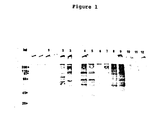
- the proteins had molecular weights between 10,000-300,000 daltons with 5 major metabolically labeled proteins of molecular weights of about 85,000, 73,000, 58,000, 52,000 and 35,000 daltons (Table 5 and Fig. 1).
- Poly A containing mRNA was prepared from the gametocyte total RNA by oligo (dT) - cellulose chromatography (22). Gametocyte poly A+ mRNA and total RNA as well as uninfected control intestine RNA were translated in a rabbit reticulocyte cell-free system (23) where it was found that the gametocyte cell-free products contained little if any contaminating host cell-free products. There were eight major bands with molecular weights of about 34,000, 40,000, 45,000, 50,000, 65,000, 90,000, 100,000 and 225,000 daltons, some of which were similar in size to the five major metabolically labeled gametocyte bands (35,000, 52,000, 58,000, 73,000, and 85,000) (see Fig. 1). The relationship of these bands was analyzed by immune precipitation and Western blotting as described in Example 4.
- RNA from infected mucosa every four hours starting on day five post infection with oocysts were translated in the rabbit reticulocyte cell-free system and compared to products directed by day six purified gametocyte RNA as well as control mucosa RNA. It appeared that various gametocyte bands were present at different times during development, however no major bands were detected early in gametocyte development which were absent from the mature gametocytes. It was concluded, therefore, that the preparations contained most if not all of the detectable gametocyte protein mRNAs.
- ELISA was performed using NP-40 extracts of purified E. maxima gametocytes as antigen. Most of the various sera tested showed titers of at least 1:1000 and some had titers as high as 1:10,000. Antisera preabsorbed with antigens from normal intestine NP-40 extracts showed no decrease in its antigametocyte titer indica ing the reaction is specific to parasite antigens. The finding that sera from birds which recovered from infections also gave strong titers by ELISA indicates that these antigens are also immunogenic during the course of an infection. The results of the ELISA were used to select antisera for the further screening tests described below.
- the immunofluorescence test was used to determine localization and stage specificity of the gametocyte antigens. Briefly, freshly prepared gametocytes were incubated with sera for 20 minutes at 37°C, washed 3 times with PBS, and then incubated with FITC conjugated second antibody. In control experiments where gametocytes were incubated with FITC conjugated rabbit anti-chicken IgG, rabbit anti-human IgG, rabbit anti-mouse IgG, or sheep anti-rabbit IgG (without antisera to the parasite present), a very high specific background was found even at dilutions as high as 1:1000.
- Noninfected chicken intestinal tissue did not react with any of the FITC-conjugates and preabsorption of these antibodies with either a chicken liver homogenate or purified gametocytes did not reduce this binding.
- preincubation with normal rabbit IgG did not effect the background.
- rabbit antiNP-40 gametocyte extract serum strongly reacted with bands in the gametocyte protein extract and weakly with control intestine protein extracts.
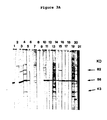
- rabbit anti-gametocyte extract serum consistently detected 6 major (90K, 76K, 75K, 73K, 58K and 56K) and 6 minor (94K, 48K, 45K, 41K, 39K and 34K) gametocyte specific proteins (Fig. 2).
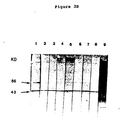
- the reactivity of normal chicken sera with the 43 kd protein can be explained in two possible ways. Either the sera contain a certain level of antibody against this gametocyte protein even though the chickens were never exposed to E. maxima , or the 43 kd protein binds chicken IgC irrespective of its source. That the latter possibility is correct was shown by using affinity purified chicken anti-cytochrome IgG on a Western blot where we found that it also bound to the 43 kd protein band. Thus, it was concluded that the 43 kd protein is an IgG binding protein, and may in fact be the Fc receptor responsible for the binding of IgG seen in the immunofluorescence studies (see above).
- antisera were used to identify antigens synthesized in vitro from gametocyte messenger RNA.
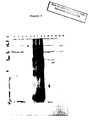
- mRNA was extracted by the guanidinium thiocyanate method (21) and translated in the rabbit reticulocyte cell free system (BRL, Bethesda, Maryland). Cell-free products were immune precipitated with the various antisera and the proteins analyzed by SDS-PAGE (Fig. 4). It was found that antisera to gametocytes from a variety of immunized animals reacted with gametocyte directed cell-free products and not with cell-free products from uninfected intestine, merozoite stage infected intestine, sporulated oocysts, or chick brain.
- Gametocyte specific proteins show a characteristic pattern of 5 (metabolic labeling) or 8 (cell-free products) major bands. Of these, most are the same size as the major antigenic proteins recognized by immune precipitation or Western blotting with anti-gametocyte or recovered sera. As defined by the Western blotting technique there are three major antigens recognized by recovered chicken serum having apparent molecular weight of 82 kd, 56 kd and 43 kd. One of these (56 kd) also reacted strongly with immune rabbit serum and based on the time course experiment using post-infection sera (Fig. 3) plays an important role in protective immunity. The 43 kd protein appears to be an IgG binding protein and is likely to be an Fc receptor (as discussed above).
- Lectins are proteins, found mainly in plants, which bind very specifically to receptors on cell surfaces. More accurately, they bind to distinct sugar moities of the receptors. Most lectins interact preferentially with a single sugar structure on cell surfaces. This interaction with cells is so selective that lectins can be used to distinguish e.g. between different human blood groups (32). This specificity of lectins was used to test gametocytes for surface antigen binding.
- lectin blots were used.
- the principle of lectin blots is similar to Western blots, however the lectin is allowed to react directly with the immobilized antigens without prior antiserum incubation.
- Lyophilized DOC-extracts of gametocyte antigens and normal chicken intestines were dissolved in water at a concentration of 10mg/ml.
- the antigens were separated on SDS-PAGE and blotted electrophoretically onto nitrocellulose paper. The paper was then cut into equal strips and tested for binding to soybean lectin.
- soybean lectin conjugated to peroxidase was used (Sigma, St. Lousi).
- nitrocellulose strips were incubated in blocking solution (TBS pH 7.0, 10% FCS) for 10 minutes, then transferred to trays containing in addition to blocking solution, 5 mM MnCl2, 5 mM CaCl2 and 10 ⁇ g/ml soybean lectin-peroxidase; the strips were incubated for 1 hour at room-temperature.
- blocking solution TBS pH 7.0, 10% FCS
- Control strips were treated as above, but all solutions contain in addition 100 mM N-acetyl-D-galactosamine.
- Negative controls consisted of nitrocellulose blots with immobilized normal chicken intestinal proteins.
- the gametocyte antigens contain 10 bands, 5 major and 5 minor, which can be detected with soybean lectin.
- the major bands have apparent molecular weights of 82, 78, 56, 54 & 52 all of which are identical in size to the major bands detected by recovered chicken serum in Western blots (See Fig. 6 and Table 5).
- the sugar inhibited the soybean lectin binding completely, proving, that the binding is indeed lectin specific.
- soybean lectin we have hereby clearly identified some of the major antigens of E. maxima gametocytes as being surface specific glycoproteins. The isolation of these proteins can easily be achieved by soybean lectin agarose column chromatography.
- Freeze dried material can usually be stored for long periods of time without losing activity.
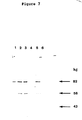
- Gametocytes purified according to method II were extracted with a variety of detergents. The extracts were analyzed by Western Blotting using recovered chicken serum, where it was found that extraction with Na2 DOC gave the best results (see Figure 7). Consequently, large scale extraction was performed using Na2 DOC. The extract was subsequently dialyzed against a 10 mM phosphate buffer pH 8.0 containing PMSF at 4°C. The dialyzed material was frozen at -80°C and then lyophilized to dryness. The antigens are stored with dessicant at -20°C.
- Gametocyte extracts contain a mixture of proteins lipids a.s.o.
- Pure gametocytes were extracted with 0.5% NP-40 (see Example 3). Proteins were precipitated by addition ammonium sulphate to the extract to a concentration of 10%. The precipitate was removed and the supernatant was brought to an ammonium sulphate concentration of 50%. The precipitated proteins (50%-cut) were tested in both ELISA and Western blots and shown to retain their activity. For column chromatography the 50% cut was dissolved in the column running buffer, namely: 10 mM Tris pH 8.0, 150 mM NaCl, 1 mM PMSF, 0.05% DOC and 1mM EDTA.
- the main component of the second peak was shown by thin layer chromatography to be mostly of lipid nature.
- gametocyte lipids as well as normal chick intestinal lipids were extracted by chloroform-methanol 2:1.
- Ethanol soluble lipids were analyzed for activity with recovered chick serum, normal chick serum, immune mouse serum and normal mouse serum using both radioimmunoassay (RIA) and ELISA. Water soluble lipids were analyzed with the same sera using the ELISA technique.
- the first monoclonal antibody was isolated by priming a Balb/C mouse 4 times with an intraperitoneal injection of 150,000 purified gametocytes. A fifth injection of a gametocyte NP-40 extract (see Example 1) was given intraspleenic. The mouse was sacrificed 4 days after the last injection and its spleen cells fused to myeloma cells according to published procedures (34). Monoclonal antibody 2B8-10 (2nd plate, row B, well 8, 10 th fusion) was tested for activity by the ELISA technique and found to react strongly to gametocyte antigen, to a lesser extent also to control chicken intestine.
- the next monoclonal antibody we described is 1C3-23. It was derived by injecting a Balb/C mouse twice with fractions of a Sephadex G-200 column (see Example 6) containing a pool of the first peak and the trough fractions. The third and last injection into this mouse was with a 50% ammonium sulphate cut (see Example 6). 1C3-23 reacted on ELISA plates with gametocyte antigen only and did not shown and response to control intestine. On Western clots we found, that IC3-23, lie E9-10, react with one single band to the 56 kd protein.
- mice were injected with gelpieces from SDS-PAGE.
- the first such fusion was done with the spleen of a mouse which had received three injections of gelpieces that contained the protein of 82 kd (see Example 4).
- the polyclonal serum of this mouse, taken before sacrifice showed a very strong response to the 82 kd protein band on Western blots as expected.
- the central well of organ culture dishes contained intestinal pieces (2 mm2, mucosa side down on GF/C filters ) from chickens four or five days post infection.
- the well was filled with 0.8 ml of RPMI 1640 medium containing 5% inactivated normal chicken serum plus penicillin-streptomycin plus L-glutamine.
- Two ml of phosphate buffered saline was placed in the outer ring of the dish which then gassed 5-15 min with 95% oxygen, 5% CO2 in an airtight sterile chamber and incubated at 40°C.
- On day six post infection i.e.
- the medium was replaced with 0.8 ml of RPMI 1640 containing 5% normal chick serum, 40 mM NaHCO3, 20 mM CaCl2, penicillin-streptomycin plus L-glutamine, and the dishes were incubated one more day at 40°C in a 5% CO2 incubator. At varying times during the incubations pieces were smeared on glass slides and examined for the appearance of gametocytes and/or oocysts.
- organ culture system for in vitro antigametocyte antibody testing and drug testing.
- the organ culture system was shown in Example 5 to be efficient in the growth of E . maxima gametocytes and oocysts in vitro .
- pieces of organ culture on the second of incubation were assayed by immunofluorescence for gametocyte antigens and compared with intestinal smears from a six-day infected chicken intestine. It was observed that in both cases gametocytes were stained with very strong intensity whereas surrounding tissue was not fluorescent at all. This result illustrates the specificity of the antisera as well as showing normal development of the parasite in vitro .
- this system may be used to isolate gametocytes, test the effects of anti-gametocyte antibody and drugs on parasite development in vitro , and develop new strategies for vaccine and drug development.
- the intestinal pieces were analyzed for gametocyte production and compared to the positive control plates.
- 14 day post-infection sera (referred to in this patent as “recovered chicken serum”) can be used to passively immunize chickens against E. maxima challenge infections (Rose et al(5,7,8)).
- These monoclonal antibodies are described in Example 7, and one of them (1E11-11) has already shown its ability to inhibit growth of gametocytes in vitro (Example 9).
- the conditions for the challenge infection will be established, namely, a titration curve will be carried out using 50, 100, 200, 500, and 2,000 oocysts of the Houghton strain of E. maxima to infect 2-3 week old birds. Oocyst counts will then be made on days 6-7, 7-8, and 8-9 post-infection as described in Example 2. Each group will consist of 20 chickens and the mean and standard deviation will be calculated. Based on these results, the challenge dosage for the immunization experiment will be determined.
- the immunization experiment will be carried out as above except that on days 4-8 post-infection either recovered chicken serum (1-3 ml), normal chicken serum (1-3 ml), mouse monoclonal antibody to a gametocyte protein (either as ascites or the Ig fraction thereof), and a monoclonal antibody to some irrelevant antigen as negative control will be administered i.m., i.v., or i.p. at 24 hours intervals. Oocyst counts will be taken as above, and the statistics determined for each group. A significant reduction in oocyst output by birds receiving recovered chicken serum or mouse monoclonal antibody to gametocyte antigen as compared to the negative controls will be considered a positive result. Passive immunization can also be used as a basis for studying cross-species protection by injecting the same monoclonal antibodies to protect against challenge infections with other Eimerian species.
- Example 10 a titration experiment will be performed as described in Example 10, however, chickens will be challenged with the FS110 strain of E . maxima isolated at Merck, Inc., Rahway, New Jersey, U.S.A. The results of the titration curve will again be used to choose the challenge dose in the immunization experiment.
- the actual immunization protocol is as follows: Birds used in test will be 2-day old Peterson X Arbor Acre males. Twenty birds per group will be immunized with either 100 ng, 300 ng or 1,000 ng of test antigen precipitated with alum and injected i.m. on days 2, 9 and 16. On day 17 the birds will be challenged with FS110 oocyst and feces will be collected on days 23, 24 and 25 for measurement of oocyst output (i.e. days 6,7 and 8 post-challenge).
- Control groups will be immunized by trickle infection on days 2, 9 and 16 with a predetermined number of oocysts, or shamimmunized with alum alone. An additional group will serve as non-infected controls. Birds will also be bled on days 2 and 25, and sera will be tested for their reactivity with gametocyte antigen on Western blots.
- the first test antigen used in these studies will be a pool of the 3 gametocyte antigens (82 kd, 56 kd and 43 kd) which were affinity purified. Afterwards each of these antigens will be tested individually. Based on these results, the antigen(s) showing the strongest protection will be produced by genetically engineered bacteria containing a cDNA encoding gametocyte antigen insert. These cloned antigens will be tested for their ability to protect birds and those shown to give good protection will be used to produce large amounts of the antigen for testing against other Eimerian species as well as in field trials.
Landscapes
- Health & Medical Sciences (AREA)
- Chemical & Material Sciences (AREA)
- Life Sciences & Earth Sciences (AREA)
- Organic Chemistry (AREA)
- General Health & Medical Sciences (AREA)
- Medicinal Chemistry (AREA)
- Veterinary Medicine (AREA)
- Public Health (AREA)
- Animal Behavior & Ethology (AREA)
- Pharmacology & Pharmacy (AREA)
- Tropical Medicine & Parasitology (AREA)
- Molecular Biology (AREA)
- Immunology (AREA)
- Biochemistry (AREA)
- Biophysics (AREA)
- Genetics & Genomics (AREA)
- Proteomics, Peptides & Aminoacids (AREA)
- Chemical Kinetics & Catalysis (AREA)
- General Chemical & Material Sciences (AREA)
- Nuclear Medicine, Radiotherapy & Molecular Imaging (AREA)
- Oncology (AREA)
- Communicable Diseases (AREA)
- Gastroenterology & Hepatology (AREA)
- Zoology (AREA)
- Toxicology (AREA)
- Microbiology (AREA)
- Mycology (AREA)
- Epidemiology (AREA)
- Medicines Containing Antibodies Or Antigens For Use As Internal Diagnostic Agents (AREA)
- Peptides Or Proteins (AREA)
- Preparation Of Compounds By Using Micro-Organisms (AREA)
- Micro-Organisms Or Cultivation Processes Thereof (AREA)
Applications Claiming Priority (2)
| Application Number | Priority Date | Filing Date | Title |
|---|---|---|---|
| US89661186A | 1986-08-14 | 1986-08-14 | |
| US896611 | 1986-08-14 |
Publications (3)
| Publication Number | Publication Date |
|---|---|
| EP0256536A2 true EP0256536A2 (de) | 1988-02-24 |
| EP0256536A3 EP0256536A3 (en) | 1989-11-02 |
| EP0256536B1 EP0256536B1 (de) | 1996-01-10 |
Family
ID=25406502
Family Applications (1)
| Application Number | Title | Priority Date | Filing Date |
|---|---|---|---|
| EP87111820A Expired - Lifetime EP0256536B1 (de) | 1986-08-14 | 1987-08-14 | Coccidiosis-Impfstoff |
Country Status (10)
| Country | Link |
|---|---|
| EP (1) | EP0256536B1 (de) |
| JP (3) | JP2617946B2 (de) |
| AT (1) | ATE132754T1 (de) |
| AU (1) | AU633244B2 (de) |
| CA (1) | CA1340838C (de) |
| DE (1) | DE3751670T2 (de) |
| ES (1) | ES2084576T3 (de) |
| GR (1) | GR3019619T3 (de) |
| IL (2) | IL83523A (de) |
| ZA (1) | ZA876027B (de) |
Cited By (14)
| Publication number | Priority date | Publication date | Assignee | Title |
|---|---|---|---|---|
| EP0349071A1 (de) * | 1988-06-27 | 1990-01-03 | Akzo Nobel N.V. | Coccidiosis-Vakzin |
| EP0382531A1 (de) * | 1989-02-10 | 1990-08-16 | Merck & Co. Inc. | Eimeria-Membran, verbunden mit Protein-Immunogenen |
| US5403581A (en) * | 1991-07-12 | 1995-04-04 | Hoffmann-La Roche Inc. | Coccidiosis vaccines |
| US5496550A (en) * | 1986-08-14 | 1996-03-05 | Chilwalner | Method of reducing the output of Eimeria oocysts from a newborn chick |
| AU707356B2 (en) * | 1994-09-16 | 1999-07-08 | Akzo Nobel N.V. | Coccidiosis poultry vaccine |
| US6008342A (en) * | 1991-07-12 | 1999-12-28 | Roche Vitamins Inc. | DNA encoding eimeria antigen |
| WO1999066953A3 (de) * | 1998-06-25 | 2000-03-16 | Hoechst Roussel Vet Gmbh | Coccidienvakzine, verfahren zu ihrer herstellung und ihre verwendung |
| EP1432722A4 (de) * | 2001-07-06 | 2005-08-10 | Abic Biolog Lab Teva Ltd | Rekombinante, 56 bzw. 82 kda grosse antigene aus gametozyten von eimeria maxima codierende nukleinsäuren und ihre verwendungen |
| US7462707B1 (en) | 2001-07-06 | 2008-12-09 | University Of Technology, Sydney | Nucleic acids encoding a recombinant 250 kDa antigen from sporozoites/merozoites of Eimeria maxima and their uses |
| CN106457090A (zh) * | 2014-04-10 | 2017-02-22 | Mep马解决方案有限责任公司 | 粪便中寄生虫卵的定量方法 |
| CN113528348A (zh) * | 2021-08-17 | 2021-10-22 | 中国农业科学院兰州兽医研究所 | 一种分离艾美尔球虫小配子的方法和应用 |
| CN114058511A (zh) * | 2021-11-30 | 2022-02-18 | 中国农业科学院兰州兽医研究所 | 一种利用dna探针分离球虫小配子的方法 |
| CN117958248A (zh) * | 2024-01-29 | 2024-05-03 | 中国科学院西北高原生物研究所 | 一种利用艾美耳球虫防控高原鼠兔的方法 |
| CN118105472A (zh) * | 2024-01-30 | 2024-05-31 | 南京农业大学 | 一种巨型艾美耳球虫纳米亚单位疫苗的制备和应用 |
Families Citing this family (1)
| Publication number | Priority date | Publication date | Assignee | Title |
|---|---|---|---|---|
| NZ500033A (en) * | 1998-10-07 | 2001-06-29 | Akzo Nobel Nv | Hydrophilic eimeria polypeptides for use as coccidiosis vaccines |
Citations (5)
| Publication number | Priority date | Publication date | Assignee | Title |
|---|---|---|---|---|
| GB2008404A (en) | 1977-11-14 | 1979-06-06 | Unilever Ltd | Method and compositions for the control of coccidiosis in poultry |
| EP0135073A2 (de) | 1983-08-19 | 1985-03-27 | American Cyanamid Company | Gegen Merozoiten von Eimeria Spp. reaktive monoklonale Antikörper und Antigene |
| EP0135172A2 (de) | 1983-08-24 | 1985-03-27 | Takeda Chemical Industries, Ltd. | Verfahren zur Behandlung der Osteoporose |
| EP0135712A2 (de) | 1983-08-19 | 1985-04-03 | American Cyanamid Company | Gegen Sporozoiten von Eimeria Spp. reaktive monoklonale Antikörper und Antigene |
| EP0164176A2 (de) | 1984-06-05 | 1985-12-11 | Solvay | Antigenische Proteine, dieselben enthaltende Vakzine, schützende Antikörper dagegen für die Verhütung von durch Eimeria tenella verursachte Coccidiosis |
-
1987
- 1987-08-13 CA CA000544427A patent/CA1340838C/en not_active Expired - Fee Related
- 1987-08-13 IL IL8352387A patent/IL83523A/en not_active IP Right Cessation
- 1987-08-14 JP JP62203006A patent/JP2617946B2/ja not_active Expired - Lifetime
- 1987-08-14 ES ES87111820T patent/ES2084576T3/es not_active Expired - Lifetime
- 1987-08-14 EP EP87111820A patent/EP0256536B1/de not_active Expired - Lifetime
- 1987-08-14 ZA ZA876027A patent/ZA876027B/xx unknown
- 1987-08-14 AT AT87111820T patent/ATE132754T1/de not_active IP Right Cessation
- 1987-08-14 DE DE3751670T patent/DE3751670T2/de not_active Expired - Lifetime
- 1987-08-17 AU AU77121/87A patent/AU633244B2/en not_active Expired
-
1994
- 1994-01-24 IL IL10841994A patent/IL108419A0/xx unknown
-
1996
- 1996-04-10 GR GR960401016T patent/GR3019619T3/el unknown
- 1996-08-20 JP JP8218952A patent/JPH09117282A/ja active Pending
- 1996-08-20 JP JP8218953A patent/JP2769313B2/ja not_active Expired - Lifetime
Patent Citations (5)
| Publication number | Priority date | Publication date | Assignee | Title |
|---|---|---|---|---|
| GB2008404A (en) | 1977-11-14 | 1979-06-06 | Unilever Ltd | Method and compositions for the control of coccidiosis in poultry |
| EP0135073A2 (de) | 1983-08-19 | 1985-03-27 | American Cyanamid Company | Gegen Merozoiten von Eimeria Spp. reaktive monoklonale Antikörper und Antigene |
| EP0135712A2 (de) | 1983-08-19 | 1985-04-03 | American Cyanamid Company | Gegen Sporozoiten von Eimeria Spp. reaktive monoklonale Antikörper und Antigene |
| EP0135172A2 (de) | 1983-08-24 | 1985-03-27 | Takeda Chemical Industries, Ltd. | Verfahren zur Behandlung der Osteoporose |
| EP0164176A2 (de) | 1984-06-05 | 1985-12-11 | Solvay | Antigenische Proteine, dieselben enthaltende Vakzine, schützende Antikörper dagegen für die Verhütung von durch Eimeria tenella verursachte Coccidiosis |
Cited By (27)
| Publication number | Priority date | Publication date | Assignee | Title |
|---|---|---|---|---|
| US5496550A (en) * | 1986-08-14 | 1996-03-05 | Chilwalner | Method of reducing the output of Eimeria oocysts from a newborn chick |
| US5932225A (en) * | 1986-08-14 | 1999-08-03 | Chilwalner | Vaccine comprising eimeria spp. gametocyte antigen |
| EP0349071A1 (de) * | 1988-06-27 | 1990-01-03 | Akzo Nobel N.V. | Coccidiosis-Vakzin |
| US5602033A (en) * | 1988-06-27 | 1997-02-11 | Akzo Nobel N.V. | Coccidiosis vaccine |
| US5783197A (en) * | 1988-06-27 | 1998-07-21 | Akzo Nobel N.V. | Eimeria polypeptide antigen and vaccines containing the same |
| EP0382531A1 (de) * | 1989-02-10 | 1990-08-16 | Merck & Co. Inc. | Eimeria-Membran, verbunden mit Protein-Immunogenen |
| US5403581A (en) * | 1991-07-12 | 1995-04-04 | Hoffmann-La Roche Inc. | Coccidiosis vaccines |
| US5688513A (en) * | 1991-07-12 | 1997-11-18 | Hoffmann-La Roche Inc. | Coccidiosis vaccines |
| US6008342A (en) * | 1991-07-12 | 1999-12-28 | Roche Vitamins Inc. | DNA encoding eimeria antigen |
| AU707356B2 (en) * | 1994-09-16 | 1999-07-08 | Akzo Nobel N.V. | Coccidiosis poultry vaccine |
| WO1999066953A3 (de) * | 1998-06-25 | 2000-03-16 | Hoechst Roussel Vet Gmbh | Coccidienvakzine, verfahren zu ihrer herstellung und ihre verwendung |
| US7423137B2 (en) | 2001-07-06 | 2008-09-09 | Abic Biological Laboratories Teva, Ltd. | Nucleic acids encoding recombinant 56 and 82 kDa antigens from gametocytes of Eimeria maxima and their uses |
| EP1432722A4 (de) * | 2001-07-06 | 2005-08-10 | Abic Biolog Lab Teva Ltd | Rekombinante, 56 bzw. 82 kda grosse antigene aus gametozyten von eimeria maxima codierende nukleinsäuren und ihre verwendungen |
| US7462707B1 (en) | 2001-07-06 | 2008-12-09 | University Of Technology, Sydney | Nucleic acids encoding a recombinant 250 kDa antigen from sporozoites/merozoites of Eimeria maxima and their uses |
| US7968695B2 (en) | 2001-07-06 | 2011-06-28 | Abic Biological Laboratories Ltd. | Nucleic acids encoding recombinant 56 and 82 kDa antigens from gametocytes of Eimeria maxima and their uses |
| US10094829B2 (en) | 2014-04-10 | 2018-10-09 | MEP Equine Solutions LLC | Method for the quantification of parasite eggs in feces |
| EP3131655A4 (de) * | 2014-04-10 | 2018-02-14 | Mep Equine Solutions LLC | Verfahren zur quantifizierung von parasitären eiern in fäkalien |
| US9933425B2 (en) | 2014-04-10 | 2018-04-03 | MEP Equine Solutions LLC | Method for the quantification of parasite eggs in feces |
| CN106457090A (zh) * | 2014-04-10 | 2017-02-22 | Mep马解决方案有限责任公司 | 粪便中寄生虫卵的定量方法 |
| AU2014389998B2 (en) * | 2014-04-10 | 2019-10-31 | Parasight System Inc. | Method for the quantification of parasite eggs in feces |
| US10677796B2 (en) | 2014-04-10 | 2020-06-09 | MEP Equine Solutions LLC | Method for the quantification of parasite eggs in feces |
| CN106457090B (zh) * | 2014-04-10 | 2020-09-29 | Mep马解决方案有限责任公司 | 粪便中寄生虫卵的定量方法 |
| AU2020200599B2 (en) * | 2014-04-10 | 2021-09-16 | Parasight System Inc. | Method for the quantification of parasite eggs in feces |
| CN113528348A (zh) * | 2021-08-17 | 2021-10-22 | 中国农业科学院兰州兽医研究所 | 一种分离艾美尔球虫小配子的方法和应用 |
| CN114058511A (zh) * | 2021-11-30 | 2022-02-18 | 中国农业科学院兰州兽医研究所 | 一种利用dna探针分离球虫小配子的方法 |
| CN117958248A (zh) * | 2024-01-29 | 2024-05-03 | 中国科学院西北高原生物研究所 | 一种利用艾美耳球虫防控高原鼠兔的方法 |
| CN118105472A (zh) * | 2024-01-30 | 2024-05-31 | 南京农业大学 | 一种巨型艾美耳球虫纳米亚单位疫苗的制备和应用 |
Also Published As
| Publication number | Publication date |
|---|---|
| EP0256536A3 (en) | 1989-11-02 |
| JPS63233928A (ja) | 1988-09-29 |
| DE3751670T2 (de) | 1996-10-24 |
| EP0256536B1 (de) | 1996-01-10 |
| IL108419A0 (en) | 1994-04-12 |
| AU7712187A (en) | 1988-05-19 |
| IL83523A (en) | 1994-10-21 |
| AU633244B2 (en) | 1993-01-28 |
| JPH09117282A (ja) | 1997-05-06 |
| ES2084576T3 (es) | 1996-05-16 |
| JPH09118700A (ja) | 1997-05-06 |
| ATE132754T1 (de) | 1996-01-15 |
| DE3751670D1 (de) | 1996-02-22 |
| CA1340838C (en) | 1999-12-07 |
| ZA876027B (en) | 1988-04-27 |
| JP2769313B2 (ja) | 1998-06-25 |
| JP2617946B2 (ja) | 1997-06-11 |
| GR3019619T3 (en) | 1996-07-31 |
Similar Documents
| Publication | Publication Date | Title |
|---|---|---|
| US5932225A (en) | Vaccine comprising eimeria spp. gametocyte antigen | |
| EP0256536B1 (de) | Coccidiosis-Impfstoff | |
| AU597603B2 (en) | Eimeria acervulina immunogens | |
| US6682737B1 (en) | Anti-cryptosporidium parvum preparations | |
| DE3586609T2 (de) | Antigenische proteine, dieselben enthaltende vakzine, schuetzende antikoerper dagegen fuer die verhuetung von durch eimeria tenella verursachte coccidiosis. | |
| JPS6118724A (ja) | コクシジウム症ワクチン | |
| EP0594743B1 (de) | Kontinuierliche zellinie sowie impfstoff gegen geflügelinfektion mit kokkidien | |
| JPS62224293A (ja) | コクシジウム症予防用抗原性蛋白質およびそれを含有するワクチン | |
| US5028694A (en) | Antigenic proteins and vaccines containing them for prevention of coccidiosis caused by eimeria Eimeria necatrix and Eimeria tenella | |
| US5677438A (en) | Coccidiosis vaccine | |
| US5843722A (en) | Coccidiosis poultry vaccine | |
| DK171259B1 (da) | Specifikke ekskretion-sekretions antigener af Toxoplasma gondii, translatiosprodukter deraf, fremgangsmåde til fremstilling deraf og diagnostiske anvendelser deraf | |
| Horton-Smith et al. | Behavior of invasive stages of Eimeria tenella in the immune fowl (Gallus domesticus) | |
| EP0709460B1 (de) | Impfstoff gegen Geflügelkokzidose | |
| Ellis et al. | Control of intracellular parasites: the coccidia | |
| WO2001013923A1 (en) | Malaria gpi anchors as vaccines anti-parasitic drugs and for use in diagnostics | |
| CA1261285A (en) | Antigens and monoclonal antibodies reactive against sporozoites of eimeria spp | |
| Griffith | Towards the immunological control of protozoal diseases: 22–23 February 1984, The Royal Society, London |
Legal Events
| Date | Code | Title | Description |
|---|---|---|---|
| PUAI | Public reference made under article 153(3) epc to a published international application that has entered the european phase |
Free format text: ORIGINAL CODE: 0009012 |
|
| AK | Designated contracting states |
Kind code of ref document: A2 Designated state(s): AT BE CH DE ES FR GB GR IT LI LU NL SE |
|
| PUAL | Search report despatched |
Free format text: ORIGINAL CODE: 0009013 |
|
| AK | Designated contracting states |
Kind code of ref document: A3 Designated state(s): AT BE CH DE ES FR GB GR IT LI LU NL SE |
|
| 17P | Request for examination filed |
Effective date: 19900423 |
|
| 17Q | First examination report despatched |
Effective date: 19911206 |
|
| GRAA | (expected) grant |
Free format text: ORIGINAL CODE: 0009210 |
|
| AK | Designated contracting states |
Kind code of ref document: B1 Designated state(s): AT BE CH DE ES FR GB GR IT LI LU NL SE |
|
| REF | Corresponds to: |
Ref document number: 132754 Country of ref document: AT Date of ref document: 19960115 Kind code of ref document: T |
|
| ITF | It: translation for a ep patent filed | ||
| REF | Corresponds to: |
Ref document number: 3751670 Country of ref document: DE Date of ref document: 19960222 |
|
| ET | Fr: translation filed | ||
| REG | Reference to a national code |
Ref country code: CH Ref legal event code: NV Representative=s name: SCHMAUDER & WANN PATENTANWALTSBUERO, INHABER KLAUS |
|
| REG | Reference to a national code |
Ref country code: ES Ref legal event code: FG2A Ref document number: 2084576 Country of ref document: ES Kind code of ref document: T3 |
|
| REG | Reference to a national code |
Ref country code: GR Ref legal event code: FG4A Free format text: 3019619 |
|
| PLBE | No opposition filed within time limit |
Free format text: ORIGINAL CODE: 0009261 |
|
| STAA | Information on the status of an ep patent application or granted ep patent |
Free format text: STATUS: NO OPPOSITION FILED WITHIN TIME LIMIT |
|
| 26N | No opposition filed | ||
| REG | Reference to a national code |
Ref country code: GB Ref legal event code: IF02 |
|
| NLS | Nl: assignments of ep-patents |
Owner name: BIOLOGICAL LABORATORIES TEVA LTD., |
|
| NLT1 | Nl: modifications of names registered in virtue of documents presented to the patent office pursuant to art. 16 a, paragraph 1 |
Owner name: ABIC BIOLOGICAL LABOTATORIES LTD. |
|
| REG | Reference to a national code |
Ref country code: FR Ref legal event code: CD Ref country code: FR Ref legal event code: TP |
|
| PGFP | Annual fee paid to national office [announced via postgrant information from national office to epo] |
Ref country code: LU Payment date: 20060814 Year of fee payment: 20 Ref country code: NL Payment date: 20060814 Year of fee payment: 20 |
|
| PGFP | Annual fee paid to national office [announced via postgrant information from national office to epo] |
Ref country code: CH Payment date: 20060815 Year of fee payment: 20 |
|
| PGFP | Annual fee paid to national office [announced via postgrant information from national office to epo] |
Ref country code: AT Payment date: 20060816 Year of fee payment: 20 Ref country code: DE Payment date: 20060816 Year of fee payment: 20 |
|
| PGFP | Annual fee paid to national office [announced via postgrant information from national office to epo] |
Ref country code: FR Payment date: 20060817 Year of fee payment: 20 |
|
| PGFP | Annual fee paid to national office [announced via postgrant information from national office to epo] |
Ref country code: GB Payment date: 20060824 Year of fee payment: 20 |
|
| PGFP | Annual fee paid to national office [announced via postgrant information from national office to epo] |
Ref country code: ES Payment date: 20060830 Year of fee payment: 20 |
|
| PGFP | Annual fee paid to national office [announced via postgrant information from national office to epo] |
Ref country code: GR Payment date: 20060831 Year of fee payment: 20 Ref country code: IT Payment date: 20060831 Year of fee payment: 20 |
|
| PGFP | Annual fee paid to national office [announced via postgrant information from national office to epo] |
Ref country code: BE Payment date: 20060914 Year of fee payment: 20 |
|
| REG | Reference to a national code |
Ref country code: GB Ref legal event code: PE20 |
|
| REG | Reference to a national code |
Ref country code: CH Ref legal event code: PL |
|
| NLV7 | Nl: ceased due to reaching the maximum lifetime of a patent |
Effective date: 20070814 |
|
| EUG | Se: european patent has lapsed | ||
| REG | Reference to a national code |
Ref country code: ES Ref legal event code: FD2A Effective date: 20070816 |
|
| PG25 | Lapsed in a contracting state [announced via postgrant information from national office to epo] |
Ref country code: GB Free format text: LAPSE BECAUSE OF EXPIRATION OF PROTECTION Effective date: 20070813 |
|
| BE20 | Be: patent expired |
Owner name: *CHILWALNER PARTNERSHIP Effective date: 20070814 |
|
| PG25 | Lapsed in a contracting state [announced via postgrant information from national office to epo] |
Ref country code: ES Free format text: LAPSE BECAUSE OF EXPIRATION OF PROTECTION Effective date: 20070816 Ref country code: NL Free format text: LAPSE BECAUSE OF EXPIRATION OF PROTECTION Effective date: 20070814 |
|
| PGFP | Annual fee paid to national office [announced via postgrant information from national office to epo] |
Ref country code: SE Payment date: 20060814 Year of fee payment: 20 |