EP0257183A2 - Verfahren zur Rückgewinnung von Digitalsignalen nach Demodulation - Google Patents
Verfahren zur Rückgewinnung von Digitalsignalen nach Demodulation Download PDFInfo
- Publication number
- EP0257183A2 EP0257183A2 EP19870104637 EP87104637A EP0257183A2 EP 0257183 A2 EP0257183 A2 EP 0257183A2 EP 19870104637 EP19870104637 EP 19870104637 EP 87104637 A EP87104637 A EP 87104637A EP 0257183 A2 EP0257183 A2 EP 0257183A2
- Authority
- EP
- European Patent Office
- Prior art keywords
- bit
- samples
- baseband signal
- signal
- digital signals
- Prior art date
- Legal status (The legal status is an assumption and is not a legal conclusion. Google has not performed a legal analysis and makes no representation as to the accuracy of the status listed.)
- Granted
Links
- 238000000034 method Methods 0.000 title claims abstract description 14
- 238000005070 sampling Methods 0.000 claims description 11
- 230000005540 biological transmission Effects 0.000 description 6
- 230000008901 benefit Effects 0.000 description 2
- 238000010586 diagram Methods 0.000 description 2
- 238000005516 engineering process Methods 0.000 description 2
- 238000012935 Averaging Methods 0.000 description 1
- 238000001514 detection method Methods 0.000 description 1
- 238000011161 development Methods 0.000 description 1
- 230000018109 developmental process Effects 0.000 description 1
- 238000011156 evaluation Methods 0.000 description 1
- 230000006870 function Effects 0.000 description 1
- 230000008569 process Effects 0.000 description 1
- 238000011084 recovery Methods 0.000 description 1
- 230000007704 transition Effects 0.000 description 1
Images

Classifications
-
- H—ELECTRICITY
- H04—ELECTRIC COMMUNICATION TECHNIQUE
- H04L—TRANSMISSION OF DIGITAL INFORMATION, e.g. TELEGRAPHIC COMMUNICATION
- H04L25/00—Baseband systems
- H04L25/38—Synchronous or start-stop systems, e.g. for Baudot code
- H04L25/40—Transmitting circuits; Receiving circuits
- H04L25/49—Transmitting circuits; Receiving circuits using code conversion at the transmitter; using predistortion; using insertion of idle bits for obtaining a desired frequency spectrum; using three or more amplitude levels ; Baseband coding techniques specific to data transmission systems
- H04L25/4917—Transmitting circuits; Receiving circuits using code conversion at the transmitter; using predistortion; using insertion of idle bits for obtaining a desired frequency spectrum; using three or more amplitude levels ; Baseband coding techniques specific to data transmission systems using multilevel codes
Definitions
- the invention is based on a method according to the type of the main claim.
- the demodulation method according to the invention with the characterizing features of the main claim has the advantage over the previous methods that a better detection of the symbol or the relevant digital value level and a perfect recovery of the transmission clock is possible by multiple scanning of each symbol.
- a preferred area of application for the method according to the invention is a digital radio telephone network.
- each digital value has a symbol duration ⁇ .
- the baseband signal U B is preferably transmitted as a frequency-modulated signal.
- the frequency-modulated signal is then demodulated at the receiving end, and the four-valued data signal according to FIG. 1 is then recovered from the baseband signal U B obtained by the demodulation.
- the baseband signal demodulator described below and shown in FIG. 4 serves this purpose.
- An input 10 of the baseband signal demodulator is connected to an analog-digital converter 11, the output of which is connected firstly to a first input 12 of an adder 13 and secondly to an input of a buffer memory 14.
- a clock input 15 of the buffer is a sampling clock of, for example, sixteen times the symbol rate.
- Eight outputs 16 of the buffer memory 14 are connected to eight inputs of a comparator 17, the output 18 of which is connected to an input of a code converter 19.
- a first output 20 and a second output 21, which is a preset signal output, are connected to corresponding inputs of a binary counter 23.
- the binary counter 23 has a clock input 24, to which, like a clock input 25 of a latch circuit 26, the sampling clock is fed.
- a signal input 27 of the latch circuit 26 is connected to the output of the adder 13, the second input 28 of which is connected to an output 29 of the latch circuit 26.
- An output 30 of the binary counter 23 is connected to an input of a code converter 32, to the first output 33 of which the reset input of the latch circuit 26 and to the second output 34 of which a signal input 35 of a second latch circuit 36 is connected.
- the sampling clock is also fed to a clock input 37 of the second latch circuit 36.
- the second latch circuit 36 outputs the symbol center signal explained below at its output 38.
- the output 29 of the first latch circuit 26 is connected to a first input 40 of a parallel-series converter 41, the second input of which is a clock input, a bit clock of, for example, twice the symbol rate with four-valued modulation.
- the parallel-serial converter 41 has an output 43 at which the received bit stream is available in accordance with the bit signal scheme according to FIG. 1.
- the connections between the individual digital stages in FIG. 4 are each represented by a line on which the number of the respective line wires is noted. On the right below the block diagram according to FIG. 4, it is shown symbolically how the symbol center is determined in a symbol scanning cycle.
- the adder 13 is preferably an 8-bit full adder
- the buffer 14 is an 8 ⁇ 4 bit word shift register
- the comparator 17 is a 4 ⁇ 4 word pair comparator
- the code converter 19 is a 4/5 bit code converter
- the binary counter 23 is a 4-bit counter
- the first latch circuit 26 is an 8-bit latch
- the code converter 32 is a 2-out-of-16 code converter
- the second latch circuit 36 is a 1-bit latch.
- the baseband signal U B to be demodulated is located at the input 10 of the analog-digital converter 11 and has, for example, the time profile shown in FIG. 3.
- the curved, dashed lines in FIG. 3 show several transitions of the baseband signal U B that are possible between the different symbols.
- the baseband signal U B is first digitized with the analog-digital converter 11 with a resolution of 6 bits, for example, in 16 sampling steps per dibit. With the required, for example, sixteen-fold sampling cycle based on the symbol rate, the sampling values are transferred to the buffer memory 14, which contains the eight last sampling values in each case - in principle a different number can also be selected - that is, the curve of a half symbol. In Fig. 3 it is indicated by the thick dashed lines what the digital signal U D to be recovered by the demodulation of the baseband signal U B should look like.
- the adder unit which follows the analog-digital converter 11 and consists of the adder 13 and the first latch circuit 26 forms the sum of the last four samples in each case.
- the received bit stream at output 43 is formed from the digital value "00" for the first half symbol, to which the digital value "11” for the second full symbol and the digital value "10" for the third Connect the symbol and the digital value "00" for the fourth, half symbol.
- the bit sequence "00 11 10 00" is finally formed from the four states shown.
- the horizontally dashed lines L1, L2 and L3 in FIG. 3 indicate the voltage limits at which a sampling voltage U B is calculated for the next sampling value.
Landscapes
- Physics & Mathematics (AREA)
- Spectroscopy & Molecular Physics (AREA)
- Engineering & Computer Science (AREA)
- Computer Networks & Wireless Communication (AREA)
- Signal Processing (AREA)
- Synchronisation In Digital Transmission Systems (AREA)
- Signal Processing For Digital Recording And Reproducing (AREA)
- Digital Transmission Methods That Use Modulated Carrier Waves (AREA)
- Analogue/Digital Conversion (AREA)
- Communication Control (AREA)
Abstract
Description
- Die Erfindung geht von einem Verfahren nach der Gattung des Hauptanspruchs aus.
- Es ist bekannt (P. Gerdsen, Digitale Übertragungstechnik, Teubner, Stuttgart, 1983), mehrwertige, zum Beispiel vierwertige, Digitalsignale zu übertragen. Es ist weiterhin bekannt (G. Söden, K. Tröndle, Digitale Übertragungstechnik, Springer, Berlin, 1985), mehrwertige Digitalsignale vor einer Übertragung, zum Beispiel durch Frequenzmodulation, derart zu bearbeiten, daß anstelle der rechteckigen Signalform mit steilen Flanken eine mehr oder weniger abgerundete Signalform tritt, so daß man ein verhältnismäßig schmalbandiges Basisbandsignal erhält. Schwierigkeiten bereitet jedoch bei der empfangsseitigen Demodulation des Basisbandsignals das sichere Erkennen der digitalen Wertstufen und des Übertragungstaktes bei Übertragungsstörungen durch Rauschen, Störimpulse oder andere Störsignale.
- Das erfindungsgemäße Demodulationsverfahren mit den kennzeichnenden Merkmalen des Hauptanspruchs hat gegenüber den bisherigen Verfahren den Vorteil, daß durch eine Mehrfachabtastung eines jeden Symbols eine bessere Erkennung des Symbols bzw. der betreffenden digitalen Wertstufe sowie eine einwandfreie Rückgewinnung des Übertragungstaktes möglich ist.
- Durch die in den Unteransprüchen aufgeführten Maßnahmen sind vorteilhafte Weiterbildungen und Verbesserungen des im Hauptanspruch angegebenen Verfahrens möglich. Ein bevorzugtes Anwendungsgebiet für das erfindungsgemäße Verfahren ist ein digitales Funktelefonnetz.
- Ein Ausführungsbeispiel der Erfindung ist in der Zeichnung anhand mehrerer Figuren dargestellt und in der nachfolgenden Beschreibung anhand der Auswertung eines vierwertigen Signals näher erläutert. Die Zeichnung zeigt in
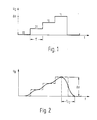
- Fig. 1 den zeitlichen Verlauf eines vierwertigen Digitalsignals,
- Fig. 2 den zeitlichen Verlauf eines dem Digitalsignal nach Fig. 1 entsprechenden Basisbandsignals,
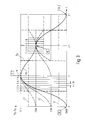
- Fig. 3 ein vierwertiges Basisbandsignal zur Erläuterung der Demodulation und
- Fig. 4 ein Blockschaltbild eines Basisbandsignal-Demodulators für vierwertige Signale.
- In Fig. 1 ist ein Vierlagen-Digitalsignal mit den Digitalwerten "00", "01", "10", "11" gezeigt, wobei jedem Digitalwert ein Spannungswert UD zugeordnet ist und der höchste Digitalwert "11" den Spannungswert ΔU aufweist. Jeder Digitalwert hat eine Symboldauer τ. Zur Übertragung des Digitalsignals wird dieses in ein von hohen Frequenzanteilen befreites analoges Modulationssignal - im folgenden Basisbandsignal UB genannt - umgeformt; vgl. Fig. 2. Mit T/2 = τ ist die halbe Grundwellen-Periodendauer bezeichnet. Das Basisbandsignal UB wird vorzugsweise als frequenzmoduliertes Signal übertragen.
- Empfangsseitig wird dann das frequenzmodulierte Signal demoduliert, und anschließend wird aus dem durch die Demodulation erhaltenen Basisbandsignal UB das vierwertige Datensignal gemäß Fig. 1 zurückgewonnen. Dazu diënt der im folgenden beschriebene und in Fig. 4 gezeigte Basisbandsignal-Demodulator. Ein Eingang 10 des Basisbandsignal-Demodulators ist mit einem Analog-Digital-Wandler 11 verbunden, dessen Ausgang erstens mit einem ersten Eingang 12 eines Addierers 13 und zweitens mit einem Eingang eines Zwischenspeichers 14 verbunden ist. Einem Takteingang 15 des Zwischenspeichers wird ein Abtasttakt von etwa zum Beispiel dem Sechzehnfachen der Symbolrate zugeführt. Acht Ausgänge 16 des Zwischenspeichers 14 sind mit acht Eingängen eines Komparators 17 verbunden, dessen Ausgang 18 mit einem Eingang eines Kodewandlers 19 in Verbindung steht. Ein erster Ausgang 20 und ein zweiter Ausgang 21, das ist ein Preset-Signalausgang, sind mit ëntsprechenden Eingängen eines Binärzählers 23 verbunden. Der Binärzähler 23 hat einen Takteingang 24, dem ebenso wie einem Takteingang 25 einer Latch-Schaltung 26 der Abtasttakt zugeführt wird. Ein Signaleingang 27 der Latch-Schaltung 26 ist mit dem Ausgang des Addierers 13 verbunden, dessen zweiter Eingang 28 mit einem Ausgang 29 der Latch-Schaltung 26 verbunden ist.
- Ein Ausgang 30 des Binärzählers 23 ist mit einem Eingang eines Kodewandlers 32 verbunden, an dessen ersten Ausgang 33 sich der Reset-Eingang der Latch-Schaltung 26 und an dessen zweiten Ausgang 34 sich ein Signaleingang 35 einer zweiten Latch-Schaltung 36 anschließt. Einem Takteingang 37 der zweiten Latch-Schaltung 36 wird ebenfalls der Abtasttakt zugeführt. An ihrem Ausgang 38 gibt die zweite Latch-Schaltung 36 das weiter unten erläuterte Symbol-Mittensignal ab.
- Der Ausgang 29 der ersten Latch-Schaltung 26 steht mit einem ersten Eingang 40 eines Parallel-Serienwandlers 41 in Verbindung, dessen zweiten Eingang, das ist ein Takteingang, ein Bittakt von zum Beispiel der doppelten Symbolrate bei vierwertiger Modulation zugeführt wird. Der Parallel-Serienwandler 41 weist einen Ausgang 43 auf, an dem der Empfangs-Bitstrom entsprechend dem Bitsignal-Schema nach Fig. 1 zur Verfügung steht. Die Verbindungen zwischen den einzelnen Digitalstufen in Fig. 4 sind durch jeweils eine Leitung dargestellt, an der die Zahl der jeweiligen Leitungsadern vermerkt ist. Rechts unterhalb des Blockschaltbildes nach Fig. 4 ist symbolisch dargestellt, wie bei einem Symbol-Abtastzyklus die Symbol-Mitte festgestellt wird.
- Der Addierer 13 ist vorzugsweise ein 8-Bit-Volladdierer, der Zwischenspeicher 14 ein 8·4-Bit-Wortschieberegister, der Komparator 17 ein 4·4-Wortpaarvergleicher, der Kodewandler 19 ein 4/5-Bit-Kodewandler, der Binärzähler 23 ein 4-Bit-Zähler, die erste Latch-Schaltung 26 ein 8-Bit-Latch, der Kodewandler 32 ein 2-aus-16-Kodewandler und die zweite Latch-Schaltung 36 ein 1-Bit-Latch.
- Im folgenden wird die Funktion des Basisbandsignal-Demodulators nach Fig. 4 erläutert.
- An dem Eingang 10 des Analog-Digital-Wandlers 11 liegt das zu demodulierende Basisbandsignal UB, das beispielsweise den in Fig. 3 gezeigten zeitlichen Verlauf hat. Die kurvenförmigen, gestrichelten Linien in Fig. 3 zeigen mehrere, zwischen den verschiedenen Symbolen mögliche Übergänge des Basisbandsignals UB.
- Das Basisbandsignal UB wird zunächst mit dem Analog-Digital-Wandler 11 mit einer Auflösung von zum Beispiel 6 Bit digitalisiert, und zwar in 16 Abtastschritten pro Dibit. Mit dem dazu erforderlichen, beispielsweise sechzehnfachen Abtasttakt bezogen auf die Symbolrate werden die Abtastwerte in den Zwischenspeicher 14 übernommen, der die jeweils acht letzten Abtastwerte - prinzipiell kann auch eine andere Anzahl gewählt werden -, also den Kurvenverlauf eines halben Symbols, enthält. In Fig. 3 ist durch die dicken gestrichelten Linien angedeutet, wie das durch die Demodulation des Basisbandsignals UB zurückzugewinnende Digitalsignal UD aussehen müßte. Das sich an den Analog-Digital-Wandler 11 anschließendë Addierwerk aus dem Addierer 13 und der ersten Latch-Schaltung 26 bildet die Summe der jeweils letzten vier Abtastwerte. Dies entspricht einer Mittelwertbildung dieser Abtastwerte; prinzipiell kann auch eine andere Zahl gewählt werden. Die hier erforderliche Teilung der Summe durch vier wird durch Verschiebung der Abgriffe um zwei bewerkstelligt. Anders ausgedrückt, werden nur das Mittensignal-Bit und das nächst niederwertige Bit, welche die eigentliche Symbol-Information tragen, zum Parallel-Serienwandler 41 weitergegeben und an dessen Ausgang 43 mit dem Bittakt als stetiger Empfangs-Bitstrom ausgegeben. Der Empfangs-Bitstrom am Ausgang 43 wird gemäß dem Beispiel in Fig. 3 gebildet aus dem Digitalwert "00" für das erste halbe Symbol, an das sich der Digitalwert "11" für das zweite volle Symbol, der Digitalwert "10" für das dritte Symbol und der Digitalwert "00" für das vierte, halbe Symbol anschließen. Aus den vier gezeigten Zuständen wird schließlich die Bitfolge "00 11 10 00" gebildet.
- Die waagerecht gestrichelten Linien L1, L2 und L3 in Fig. 3 zeigen die Spannungsgrenzen an, an denen eine Abtastspannung UB zu dem jeweils nächsten Abtastwert gerechnet wird.
- Anstelle des in dem Ausführungsbeispiel verwendeten Vierlagen-Digitalsignals ist es vielfach vorteilhaft, andere Kodierungen zu benutzen, zum Beispiel den Gray-Kode.
Claims (5)
Priority Applications (1)
| Application Number | Priority Date | Filing Date | Title |
|---|---|---|---|
| AT87104637T ATE101951T1 (de) | 1986-08-26 | 1987-03-28 | Verfahren zur rueckgewinnung von digitalsignalen nach demodulation. |
Applications Claiming Priority (2)
| Application Number | Priority Date | Filing Date | Title |
|---|---|---|---|
| DE19863628993 DE3628993A1 (de) | 1986-08-26 | 1986-08-26 | Verfahren zum demodulieren von digitalsignalen |
| DE3628993 | 1986-08-26 |
Publications (3)
| Publication Number | Publication Date |
|---|---|
| EP0257183A2 true EP0257183A2 (de) | 1988-03-02 |
| EP0257183A3 EP0257183A3 (en) | 1989-11-02 |
| EP0257183B1 EP0257183B1 (de) | 1994-02-23 |
Family
ID=6308213
Family Applications (1)
| Application Number | Title | Priority Date | Filing Date |
|---|---|---|---|
| EP87104637A Expired - Lifetime EP0257183B1 (de) | 1986-08-26 | 1987-03-28 | Verfahren zur Rückgewinnung von Digitalsignalen nach Demodulation |
Country Status (3)
| Country | Link |
|---|---|
| EP (1) | EP0257183B1 (de) |
| AT (1) | ATE101951T1 (de) |
| DE (2) | DE3628993A1 (de) |
Cited By (1)
| Publication number | Priority date | Publication date | Assignee | Title |
|---|---|---|---|---|
| CN102291343A (zh) * | 2011-08-08 | 2011-12-21 | 上海集成电路研发中心有限公司 | 模拟基带电路 |
Families Citing this family (6)
| Publication number | Priority date | Publication date | Assignee | Title |
|---|---|---|---|---|
| DE4221476A1 (de) * | 1992-06-30 | 1994-01-05 | Siemens Ag | Verfahren und Anordnung zur Regeneration eines Binärsignals |
| SI9300025A (en) * | 1993-01-21 | 1994-09-30 | Spase Drakul | Digital communication system in n-dimensional vector space for transmission coded waveforms in bandlimited chanels |
| DE4303962A1 (de) * | 1993-02-10 | 1994-08-18 | Georg Dipl Ing Figol | Datenregenerator |
| US5425056A (en) * | 1993-03-23 | 1995-06-13 | Motorola, Inc. | Method and apparatus for generating threshold levels in a radio communication device for receiving four-level signals |
| DE19549333A1 (de) * | 1995-09-23 | 1997-03-27 | Joerg Dr Arnold | Differentielles Entstörverfahren von digitalen Signalen |
| DE19815701A1 (de) | 1998-04-08 | 1999-10-14 | Bosch Gmbh Robert | Verfahren zum Demodulieren einer mit einer digitalen Symbolfolge modulierten Trägerwelle |
Family Cites Families (2)
| Publication number | Priority date | Publication date | Assignee | Title |
|---|---|---|---|---|
| FR2049578A5 (de) * | 1969-06-13 | 1971-03-26 | Thomson Csf | |
| US4302845A (en) * | 1980-02-07 | 1981-11-24 | Motorola, Inc. | Phase-encoded data signal demodulator |
-
1986
- 1986-08-26 DE DE19863628993 patent/DE3628993A1/de active Granted
-
1987
- 1987-03-28 EP EP87104637A patent/EP0257183B1/de not_active Expired - Lifetime
- 1987-03-28 AT AT87104637T patent/ATE101951T1/de not_active IP Right Cessation
- 1987-03-28 DE DE87104637T patent/DE3789129D1/de not_active Expired - Fee Related
Cited By (2)
| Publication number | Priority date | Publication date | Assignee | Title |
|---|---|---|---|---|
| CN102291343A (zh) * | 2011-08-08 | 2011-12-21 | 上海集成电路研发中心有限公司 | 模拟基带电路 |
| CN102291343B (zh) * | 2011-08-08 | 2016-12-28 | 上海集成电路研发中心有限公司 | 模拟基带电路 |
Also Published As
| Publication number | Publication date |
|---|---|
| DE3628993A1 (de) | 1988-03-03 |
| EP0257183B1 (de) | 1994-02-23 |
| ATE101951T1 (de) | 1994-03-15 |
| DE3789129D1 (de) | 1994-03-31 |
| DE3628993C2 (de) | 1993-03-04 |
| EP0257183A3 (en) | 1989-11-02 |
Similar Documents
| Publication | Publication Date | Title |
|---|---|---|
| DE4027208A1 (de) | Digitalfilter | |
| DE4290412C2 (de) | Verfahren zur Wiedergewinnung von Information aus einem differentiell codierten GMSK-Signal und entsprechende nicht-kohärente Demodulationsempfangseinrichtung | |
| DE2545753A1 (de) | Anordnung zur erkennung aehnlicher objekte | |
| EP0066229B1 (de) | Verfahren und Anordnung zum Demodulieren von FSK-Signalen | |
| DE3783915T2 (de) | Praediktive taktwiedergewinnungsschaltung. | |
| DE2221146A1 (de) | Mehrpegelsignal-UEbertragungssystem | |
| DE3238157C2 (de) | Schaltungsanordnung zum Ermitteln der Synchronisierung von Eingangs-Datenblöcken | |
| DE3782644T2 (de) | Verfahren zur informationsuebertragung mittels codesignalen, informationsuebertragungssystem zur durchfuehrung dieses verfahrens und uebertragungs- und empfangsgeraet zur verwendung in dem uebertragungssystem. | |
| DE1562052A1 (de) | Nachrichtenuebertragungssystem und in diesem vorgesehenes Umkodiersystem | |
| EP0257183B1 (de) | Verfahren zur Rückgewinnung von Digitalsignalen nach Demodulation | |
| DE3786041T2 (de) | Kommunikations-Bitmustererkennungsschaltung. | |
| DE3000941C2 (de) | Anordnung zur Übertragung zusätzlicher Informationen für eine Einrichtung zur Übertragung digitaler Daten | |
| DE2015498B2 (de) | Verfahren zum synchronisieren von digitalsignalen und eine anordnung zur durchfuehrung des verfahrens | |
| DE1298120B (de) | Verfahren und Schaltungsanordnung zur kohaerenten Demodulation synchroner, frequenzmodulierter Duobinaersignale | |
| DE2440768C3 (de) | Verfahren und Vorrichtung zur Datenkompression für die Faksimile-Übertragung graphischer Information | |
| DE2757164A1 (de) | Verfahren und vorrichtung zum uebertragen und/oder aufzeichnen von digitalen signalen | |
| DE68919437T2 (de) | Schaltungsanordnung zur Detektion von Kodeverletzungen in AMI-Signalübertragung. | |
| DE2249098C3 (de) | Verfahren und Vorrichtung zum Eliminieren von Entscheidungsfehlern infolge Intersymbol-Interferenz | |
| DE2060375C3 (de) | Empfänger für frequenzumgetastete Signale | |
| DE3612609C2 (de) | ||
| EP0048865A1 (de) | Verfahren zur Erkennung von Digitalinformation bei einer digitalen Informationsübertragung, insbesondere Informationsübertragung in Mobilfunk-Kommunikationssystemen | |
| DE3828864A1 (de) | Mehrstufen-quadraturamplitudenmodulations- und demodulationssystem | |
| DE2534518C3 (de) | Schaltungsanordnung zur Wiedergewinnung numerischer Informationen aus binär phasenmodulierten empfangenen Signalen | |
| DE2538534A1 (de) | System zum regenerieren von daten aus einem burstsignal | |
| DE4444781B4 (de) | Digitales Datenmodulationsverfahren |
Legal Events
| Date | Code | Title | Description |
|---|---|---|---|
| PUAI | Public reference made under article 153(3) epc to a published international application that has entered the european phase |
Free format text: ORIGINAL CODE: 0009012 |
|
| AK | Designated contracting states |
Kind code of ref document: A2 Designated state(s): AT BE CH DE ES FR GB GR IT LI LU NL SE |
|
| PUAL | Search report despatched |
Free format text: ORIGINAL CODE: 0009013 |
|
| AK | Designated contracting states |
Kind code of ref document: A3 Designated state(s): AT BE CH DE ES FR GB GR IT LI LU NL SE |
|
| 17P | Request for examination filed |
Effective date: 19900324 |
|
| RAP3 | Party data changed (applicant data changed or rights of an application transferred) |
Owner name: ROBERT BOSCH GMBH |
|
| 17Q | First examination report despatched |
Effective date: 19920212 |
|
| GRAA | (expected) grant |
Free format text: ORIGINAL CODE: 0009210 |
|
| AK | Designated contracting states |
Kind code of ref document: B1 Designated state(s): AT BE CH DE ES FR GB GR IT LI LU NL SE |
|
| PG25 | Lapsed in a contracting state [announced via postgrant information from national office to epo] |
Ref country code: SE Effective date: 19940223 Ref country code: GR Free format text: LAPSE BECAUSE OF FAILURE TO SUBMIT A TRANSLATION OF THE DESCRIPTION OR TO PAY THE FEE WITHIN THE PRESCRIBED TIME-LIMIT Effective date: 19940223 Ref country code: GB Effective date: 19940223 Ref country code: BE Effective date: 19940223 |
|
| REF | Corresponds to: |
Ref document number: 101951 Country of ref document: AT Date of ref document: 19940315 Kind code of ref document: T |
|
| PG25 | Lapsed in a contracting state [announced via postgrant information from national office to epo] |
Ref country code: LU Free format text: LAPSE BECAUSE OF NON-PAYMENT OF DUE FEES Effective date: 19940331 |
|
| REF | Corresponds to: |
Ref document number: 3789129 Country of ref document: DE Date of ref document: 19940331 |
|
| ET | Fr: translation filed | ||
| ITF | It: translation for a ep patent filed | ||
| PG25 | Lapsed in a contracting state [announced via postgrant information from national office to epo] |
Ref country code: ES Free format text: LAPSE BECAUSE OF FAILURE TO SUBMIT A TRANSLATION OF THE DESCRIPTION OR TO PAY THE FEE WITHIN THE PRESCRIBED TIME-LIMIT Effective date: 19940603 |
|
| GBV | Gb: ep patent (uk) treated as always having been void in accordance with gb section 77(7)/1977 [no translation filed] |
Effective date: 19940223 |
|
| PLBE | No opposition filed within time limit |
Free format text: ORIGINAL CODE: 0009261 |
|
| STAA | Information on the status of an ep patent application or granted ep patent |
Free format text: STATUS: NO OPPOSITION FILED WITHIN TIME LIMIT |
|
| 26N | No opposition filed | ||
| REG | Reference to a national code |
Ref country code: CH Ref legal event code: PUE Owner name: ROBERT BOSCH GMBH TRANSFER- SIEMENS AKTIENGESELLSC Ref country code: CH Ref legal event code: NV Representative=s name: SIEMENS SCHWEIZ AG |
|
| NLS | Nl: assignments of ep-patents |
Owner name: SIEMENS AKTIENGESELLSCHAFT |
|
| PGFP | Annual fee paid to national office [announced via postgrant information from national office to epo] |
Ref country code: AT Payment date: 20020220 Year of fee payment: 16 |
|
| PGFP | Annual fee paid to national office [announced via postgrant information from national office to epo] |
Ref country code: NL Payment date: 20020308 Year of fee payment: 16 |
|
| PGFP | Annual fee paid to national office [announced via postgrant information from national office to epo] |
Ref country code: FR Payment date: 20020326 Year of fee payment: 16 |
|
| PGFP | Annual fee paid to national office [announced via postgrant information from national office to epo] |
Ref country code: DE Payment date: 20020521 Year of fee payment: 16 |
|
| PGFP | Annual fee paid to national office [announced via postgrant information from national office to epo] |
Ref country code: CH Payment date: 20020610 Year of fee payment: 16 |
|
| PG25 | Lapsed in a contracting state [announced via postgrant information from national office to epo] |
Ref country code: AT Free format text: LAPSE BECAUSE OF NON-PAYMENT OF DUE FEES Effective date: 20030328 |
|
| PG25 | Lapsed in a contracting state [announced via postgrant information from national office to epo] |
Ref country code: LI Free format text: LAPSE BECAUSE OF NON-PAYMENT OF DUE FEES Effective date: 20030331 Ref country code: CH Free format text: LAPSE BECAUSE OF NON-PAYMENT OF DUE FEES Effective date: 20030331 |
|
| PG25 | Lapsed in a contracting state [announced via postgrant information from national office to epo] |
Ref country code: NL Free format text: LAPSE BECAUSE OF NON-PAYMENT OF DUE FEES Effective date: 20031001 Ref country code: DE Free format text: LAPSE BECAUSE OF NON-PAYMENT OF DUE FEES Effective date: 20031001 |
|
| REG | Reference to a national code |
Ref country code: CH Ref legal event code: PL |
|
| PG25 | Lapsed in a contracting state [announced via postgrant information from national office to epo] |
Ref country code: FR Free format text: LAPSE BECAUSE OF NON-PAYMENT OF DUE FEES Effective date: 20031127 |
|
| NLV4 | Nl: lapsed or anulled due to non-payment of the annual fee |
Effective date: 20031001 |
|
| REG | Reference to a national code |
Ref country code: FR Ref legal event code: ST |
|
| PG25 | Lapsed in a contracting state [announced via postgrant information from national office to epo] |
Ref country code: IT Free format text: LAPSE BECAUSE OF NON-PAYMENT OF DUE FEES;WARNING: LAPSES OF ITALIAN PATENTS WITH EFFECTIVE DATE BEFORE 2007 MAY HAVE OCCURRED AT ANY TIME BEFORE 2007. THE CORRECT EFFECTIVE DATE MAY BE DIFFERENT FROM THE ONE RECORDED. Effective date: 20050328 |