EP0259807B1 - Komplementabhängiger zytolytischer monoklonaler Antikörper gegen Trichomonas vaginalis und seine therapeutische und diagnostische Verwendung - Google Patents
Komplementabhängiger zytolytischer monoklonaler Antikörper gegen Trichomonas vaginalis und seine therapeutische und diagnostische Verwendung Download PDFInfo
- Publication number
- EP0259807B1 EP0259807B1 EP87112995A EP87112995A EP0259807B1 EP 0259807 B1 EP0259807 B1 EP 0259807B1 EP 87112995 A EP87112995 A EP 87112995A EP 87112995 A EP87112995 A EP 87112995A EP 0259807 B1 EP0259807 B1 EP 0259807B1
- Authority
- EP
- European Patent Office
- Prior art keywords
- complement
- trichomonas vaginalis
- trichomonas
- composition according
- antibody
- Prior art date
- Legal status (The legal status is an assumption and is not a legal conclusion. Google has not performed a legal analysis and makes no representation as to the accuracy of the status listed.)
- Expired - Lifetime
Links
Images




Classifications
-
- C—CHEMISTRY; METALLURGY
- C07—ORGANIC CHEMISTRY
- C07K—PEPTIDES
- C07K16/00—Immunoglobulins [IG], e.g. monoclonal or polyclonal antibodies
- C07K16/18—Immunoglobulins [IG], e.g. monoclonal or polyclonal antibodies against material from animals or humans
- C07K16/20—Immunoglobulins [IG], e.g. monoclonal or polyclonal antibodies against material from animals or humans from protozoa
-
- A—HUMAN NECESSITIES
- A61—MEDICAL OR VETERINARY SCIENCE; HYGIENE
- A61K—PREPARATIONS FOR MEDICAL, DENTAL OR TOILETRY PURPOSES
- A61K38/00—Medicinal preparations containing peptides
-
- C—CHEMISTRY; METALLURGY
- C07—ORGANIC CHEMISTRY
- C07K—PEPTIDES
- C07K2317/00—Immunoglobulins specific features
- C07K2317/70—Immunoglobulins specific features characterized by effect upon binding to a cell or to an antigen
- C07K2317/73—Inducing cell death, e.g. apoptosis, necrosis or inhibition of cell proliferation
- C07K2317/734—Complement-dependent cytotoxicity [CDC]
-
- Y—GENERAL TAGGING OF NEW TECHNOLOGICAL DEVELOPMENTS; GENERAL TAGGING OF CROSS-SECTIONAL TECHNOLOGIES SPANNING OVER SEVERAL SECTIONS OF THE IPC; TECHNICAL SUBJECTS COVERED BY FORMER USPC CROSS-REFERENCE ART COLLECTIONS [XRACs] AND DIGESTS
- Y10—TECHNICAL SUBJECTS COVERED BY FORMER USPC
- Y10S—TECHNICAL SUBJECTS COVERED BY FORMER USPC CROSS-REFERENCE ART COLLECTIONS [XRACs] AND DIGESTS
- Y10S424/00—Drug, bio-affecting and body treating compositions
- Y10S424/804—Drug, bio-affecting and body treating compositions involving IgG3, IgG4, IgA, or IgY
-
- Y—GENERAL TAGGING OF NEW TECHNOLOGICAL DEVELOPMENTS; GENERAL TAGGING OF CROSS-SECTIONAL TECHNOLOGIES SPANNING OVER SEVERAL SECTIONS OF THE IPC; TECHNICAL SUBJECTS COVERED BY FORMER USPC CROSS-REFERENCE ART COLLECTIONS [XRACs] AND DIGESTS
- Y10—TECHNICAL SUBJECTS COVERED BY FORMER USPC
- Y10S—TECHNICAL SUBJECTS COVERED BY FORMER USPC CROSS-REFERENCE ART COLLECTIONS [XRACs] AND DIGESTS
- Y10S435/00—Chemistry: molecular biology and microbiology
- Y10S435/8215—Microorganisms
- Y10S435/948—Microorganisms using viruses or cell lines
-
- Y—GENERAL TAGGING OF NEW TECHNOLOGICAL DEVELOPMENTS; GENERAL TAGGING OF CROSS-SECTIONAL TECHNOLOGIES SPANNING OVER SEVERAL SECTIONS OF THE IPC; TECHNICAL SUBJECTS COVERED BY FORMER USPC CROSS-REFERENCE ART COLLECTIONS [XRACs] AND DIGESTS
- Y10—TECHNICAL SUBJECTS COVERED BY FORMER USPC
- Y10S—TECHNICAL SUBJECTS COVERED BY FORMER USPC CROSS-REFERENCE ART COLLECTIONS [XRACs] AND DIGESTS
- Y10S530/00—Chemistry: natural resins or derivatives; peptides or proteins; lignins or reaction products thereof
- Y10S530/808—Materials and products related to genetic engineering or hybrid or fused cell technology, e.g. hybridoma, monoclonal products
-
- Y—GENERAL TAGGING OF NEW TECHNOLOGICAL DEVELOPMENTS; GENERAL TAGGING OF CROSS-SECTIONAL TECHNOLOGIES SPANNING OVER SEVERAL SECTIONS OF THE IPC; TECHNICAL SUBJECTS COVERED BY FORMER USPC CROSS-REFERENCE ART COLLECTIONS [XRACs] AND DIGESTS
- Y10—TECHNICAL SUBJECTS COVERED BY FORMER USPC
- Y10S—TECHNICAL SUBJECTS COVERED BY FORMER USPC CROSS-REFERENCE ART COLLECTIONS [XRACs] AND DIGESTS
- Y10S530/00—Chemistry: natural resins or derivatives; peptides or proteins; lignins or reaction products thereof
- Y10S530/808—Materials and products related to genetic engineering or hybrid or fused cell technology, e.g. hybridoma, monoclonal products
- Y10S530/809—Fused cells, e.g. hybridoma
-
- Y—GENERAL TAGGING OF NEW TECHNOLOGICAL DEVELOPMENTS; GENERAL TAGGING OF CROSS-SECTIONAL TECHNOLOGIES SPANNING OVER SEVERAL SECTIONS OF THE IPC; TECHNICAL SUBJECTS COVERED BY FORMER USPC CROSS-REFERENCE ART COLLECTIONS [XRACs] AND DIGESTS
- Y10—TECHNICAL SUBJECTS COVERED BY FORMER USPC
- Y10S—TECHNICAL SUBJECTS COVERED BY FORMER USPC CROSS-REFERENCE ART COLLECTIONS [XRACs] AND DIGESTS
- Y10S530/00—Chemistry: natural resins or derivatives; peptides or proteins; lignins or reaction products thereof
- Y10S530/861—Chemistry: natural resins or derivatives; peptides or proteins; lignins or reaction products thereof involving IgG3, IgG4, IgA, or IgY
Definitions
- the present invention relates to a monoclonal antibody specific to Trichomonas vaginalis, having complement-fixing ability and capable of lysing Trichomonas vaginalis in the presence of a complement, to hybridomas producing said antibody and use thereof in immunotherapy and diagnosis.
- Trichomonas vaginalis is a parasitic protozoon, responsible for trichomoniasis, an infection of the urogenital tract which is one of the most common sexually transmitted diseases in the United States and in other parts of the world.
- the treatment of trichomonasis is based on the use of metronidazole and other nitroimidazole drugs, known to be carcinogenic in rodents, mutagenic in bacteria and teratogenic to the growing embryo and fetus.
- Pregnant women should not receive metronidazole, and in any case, it should not be given to patients over a long period of time.
- metronidazole - resistant strains have emerged and this is a further reason to provide alternative means for the treatment of trichomoniasis.
- the monoclonal antibodies including those directed against Trichomonas vaginalis, are also said to be useful in therapeutic compositions for the treatment of humans and/or animals, but no data on the lytic activity of the monoclonal antibodies is disclosed in order to support said affirmation.
- European Patent Application EP 0174874, published on 19.03.86 a monoclonal antibody specific for and cytolytic against Trichomonas vaginalis is disclosed and said to be useful in diagnosis or clinically for the prevention or treatment of trichomoniasis, when administered by oral route.
- the present invention thus provides, for the first time, an anti-Trichomonas vaginalis monoclonal antibody which:
- the present invention further provides hybridoma cell lines TV. K/5.18 and TV. 1/315.10 which produce monoclonal antibodies specific to Trichomonas vaginalis, with complement-fixing ability and complement-dependent cytolytic activity.
- Another aspect of this invention is to provide methods for the production of said hybridomas and far the preparation of monoclonal antibodies from such hybridomas.
- a further aspect of this invention is the use of the present monoclonal antibodies in prevention and/or therapy of trichomoniasis in mammals.
- pharmaceutical compositions comprising, together with a pharmaceutically acceptable carrier, a combination of the monoclonal antibody of the invention with an exogenous source of complement.
- a suitable source of complement can be used, such as human or animal serum.
- Guinea pig serum is preferred because it is more active as a source of complement than serum from other species, but rabbit serum may also be used.
- Diluted serum to the extent of losing its cytotoxicity to cells but keeping its complementary activity is preferable used in the combinations of the compositions of the invention, and these are shown herein to be effective against Trichomonas vaginalis both in culture and in cervico-vaginal secretions of women patients.
- Mixtures of the monoclonal antibodies of the invention or mixture thereof with other anti-Trichomonas vaginalis monoclonal antibodies can be used in the compositions to increase the efficiency of the lytic process and to widen the range of the Trichomonas vaginalis strains susceptible to the antibodies.
- a futher aspect of the invention is to provide a composition for the diagnosis of trichomoniasis comprising a monoclonal antibody of the invention and a diagnostically acceptable carrier.
- a monoclonal antibody of the invention can be used for diagnostic and identification purposes of the various Trichomonas strains, both for research and for medical use.
- an "Antibodies Cocktail” can be used in cases where a wide range of Trichomonas-recognition is required or when amplified recognition signals are needed.
- the fact that the monoclonal antibodies of the invention were prepared against a local T. vaginalis strain and at least one of the antibodies recognized 16 strains of an entirely different geographical area (U.S.A) and from different sources implies that these antibodies may be used as a reliable tool in diagnosis.
- the hybridoma cell lines producing the novel antibodies were deposited with the Collection Nationale de Cultures de Microorganismes -CNCM, the Institut Pasteur, Paris, France, under the Budapest Treaty Deposit Procedure, on September 1st 1986, under the accession numbers I-592 and I-593, for the cell lines designated TV K/518 and TV 1/315.10, respectively.
- Figure 1 shows the binding patterns of anti-Trichomonas vaginalis monoclonal antibodies to 16 strains of Trichomonas vaginalis.
- Figure 2 shows the binding patterns of anti-Trichomonas vaginalis monoclonal antibodies to 16 acetone-fixed strains of Trichomonas.
- Figure 3 shows the polyacrylamide gel electrophoresis of the partially purified anti-Trichomonas monoclonal antibodies (clones No. TV 1/315.10 and No. TV K/5.18).
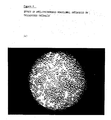
- Figure 4 a-c shows the effect of anti-Trichomonas vaginalis monoclonal antibody on Trichomonas vaginalis with and without complement.
- the method of preparing the hybridoma comprises the following steps:
- mice Female Balb/c mice (Tel-Aviv University animal breeding facilities of the Sackler Medical School, Tel-Aviv, Israel) were immunized either with live Trichomonas vaginalis or with killed parasites.
- the immunization protocol with live Trichomonas was as follows: 2x10⁵ freshly washed parasites were injected intraperitoneally into the mice 3 times at 3 weeks intervals. When killed Trichomonas were used similar protocol was used except that 2x10⁶ frozen and thawed parasites were used. One month after the last immunization the mice were injected intravenously with 2x10⁶ killed parasites. Three days later spleens were removed and cells extracted for cell fusion.
- the fusion with NSO myeloma cells was carried out according to the procedure described by Kennett et al (Kennett R.H., Denis, K.A., Tung, A.S. and Klinman, N.R. 1978, Curr. Top. Microbiol. Immunol. 81 , 77). About 1x10⁸ spleen cells were fused with 1x10⁷ NSO myeloma cells using 33% polyethylene glycol (Baker 1000).
- HAT medium hyperxanthine, aminopterin and thymidine
- HAT medium hypoxanthine, aminopterin and thymidine
- supernatants from wells containing growing hybridomas were collected and tested for antibody binding capacity to Trichomonas vaginalis using the enzyme-linked-immunosorbent-assay (ELISA) as follows: 50 ⁇ l of freshly washed or frozen Trichomonas vaginalis at a concentration of 2.5x10⁶ cells/ml were dispensed into flat bottom microtiter plates. Lyophilized Trichomonas strains were diluted to a concentration of 10 ⁇ g/ml protein in 0.05M carbonate buffer pH 9.6.
- ELISA enzyme-linked-immunosorbent-assay
- Undiluted culture supernatants or appropriately diluted murine ascitic fluid (100 ⁇ l) were added to each well. Plates were incubated for at least 1 hour at 37°C The supernatants were then discarded and the plates were washed 5 times with washing buffer (PBS containing 0.1% Tween-20). 100 ⁇ l per well of goat anti-mouse F(ab)2 alkaline phosphatase conjugate were added and the plates were incubated for 1 hour at 37°C. The unbound conjugate was then discarded and the plates washed 5 times with washing buffer.
- washing buffer PBS containing 0.1% Tween-20
- hybridizations were preformed by fusion of NSO myeloma cells and lymphocytes from Balb/c mice immunized with Trichomonas vaginalis.
- the spleen cells for two fusion were obtained from from mice immunized with live Trichomonas and the spleen cells for one fusion were obtained from a mouse immunized with killed Trichomonas. Colonies were observed in almost all the wells. Supernatants from these cultures were screened for their binding capacity to a clinical isolate of Trichomonas vaginalis. 454 hybridomas were found to be positive. Some of these hybridoma lines subsequently died or ceased to produce antibodies. 48 of the hybridomas were cloned for further studies using the limited dilution procedure.
- the Binding assay was performed using the ELISA assay as described in Example 1B above.
- the intensity of the color is proportional to the binding capacity.
- Fig. 2 are illustrated the binding patterns of monoclonal antibodies produced from the same hybridoma clones as in Fig. 1, to acetone-fixed strains of Trichomonas vaginalis.
- a strain of Trichomonas vaginalis was isolated from a patient attending the Gynecology Clinic, Zamenhoff Medical Center, Tel-Aviv, Israel. It was cultured in tissue culture flasks at 37 deg C in TY-S-33 medium containing: 2 gr Yeast extract 4 gr Bacto-peplone or tripticase 2 gr Glucose 400 mg NaCl 262 mg K2HPO4.3H20 120 mg KH2PO4 200 mg L-Cystein-HCl 40 mg Ascorbic acid 4.5 mg Ferric ammonium acetate All these ingredients are dissolved in 174 ml of distilled water and 20 ml of inactivated horse serum are added. The media is sterilized by filtration.
- Double immunodiffusion in 1% agar was performed according to the procedure of Ouchterlony (Ouchterlony, O. 1948, Acta, Pathol. Microbiol. Scand. 25 , 186-191).
- the supernatant fluids from the hybridomas were tested against goat anti-mouse immunoglobulins IgM, IgG1, IgG2a, IgG2b, IgG3, and IgA (Litton Bionetics, Kensington, MD U.S.A.). Diffusion was allowed to take place for 24-36 hrs, after which the precipitation lines were observed. The results are summarized in Table No. 1 hereinafter.
- Ascitic fluids were obtained from Balb/c mice inoculated with hybridoma cells - clones No. TV K/5.18 and No. TV 1/315.10.
- the immunoglobulin fractions were isolated using the following methods:
- Purified antibodies were tested for their binding activity to Trichomonas (using the ELISA technique), and for their ability to lyse Trichomonas in presence of complement.
- Table 2 are summarized the results of the binding activities and the complement-dependent lytic activities of crude and partially purified monoclonal antibodies clones No. TV K/5.18 and No. TV 1 /315.10. It can be seen that clone No. TV K/5.18 produces a more labile antibody than TV 1/315.10, and it could lose complement-dependent lytic activity during the purification steps.
- Clones No. TV K/5.18 and No. TV 1/315.10 belong to the immunoglobulin subtypes IgM and IgG3 respectively. Their ability to lyse Trichomonas in presence of complement was tested, using the following procedure: In flat bottom wells of microtiter plates, a mixture was prepared with the following ingredients: 20 ⁇ l of 2x10⁶/ml cultured Trichomonas vaginalis 20 ⁇ l of various dilutions of antibodies in PBS 20 ⁇ l of diluted normal guinea-pig or rabbit serum as a source of complement 60 ⁇ l of PBS
- the plates with the reaction mixtures were incubated for 30 min. at 37°C and each well was then observed microscopically for lysis.
- a monoclonal antibody to a non-related substance i.e. alpha-feto protein (clone No. 263.1), was used as negative control. It neither binds to the Trichomonas, nor lyses it. Therefore, it can be concluded that the lytic process requires:
- Table 3 - illustrates the binding capacity of various monoclonal antibodies to Trichomonas and the ability of clones No. TV K/5.18 and TV 1/315.10 to fix-complement and thus induce lysis of Trichomonas.
- the serum used as a source for complement when used undiluted, could be cytotoxic to the cells. Therefore, each batch of serum, was titrated in order to determine the levels of its toxic and its complementary activities as demonstrated in the following Table 4.
- the selected serum dilution used in the complement - dependent - cytotoxic assay was such that only the complementary activity was demonstrated.
- the monoclonal antibodies of the present invention may be formulated together with an exogenous source of complement and a pharmaceutically acceptable carrier into compositions to be used for local treatment of trichomoniasis.
- a pharmaceutically acceptable carrier Any suitable form of composition which can be administrated locally is contemplated by the present invention.
- Compositions for intravaginal application are preferred. e.g., vaginal suppositories, vaginal tablets, tampons, lyophilized vials to be reconstituted into a douche or any other suitable form for intravaginal administration.
- formulations for topical use e.g., jelly, spray, cream or ointment may be considered for the disinfection of the vaginal cavity.
- compositions may be used both for treatment of trichomoniasis and for prevention, in case of recurrent infections.
- the dosage of the active ingredients monoclonal antibody and exogenous source of complement will depend on the form of administration and on the more or less severe infections state of the patient. Higher dosages are considered for the more severe cases.
- the source of complement human or animal serum (e.g., guinea pig or rabbit serum) is preferably used in diluted form, but undiluted or less diluted concentrations may be formulated with the monoclonal antibody in case of severe infections.
- a mixture of different monoclonal antibodies may be used in the compositions together with the source of complement when it is desired to widen the range of the Trichomonas vaginalis strains to be eliminated.
- Treatment of trichomoniasis may be accomplished by administering to a mammmal the composition of the invention comprising a mixture of anti-Trichomonas vaginalis monoclonal antibody of the invention and a source of complement, together with a pharmaceutically acceptable carrier.
- the monoclonal antibodies of the invention may also be used for diagnostic purposes. To this end, they are formulated into compositions together with a diagnostically acceptable carrier. These compositions are used in a diagnostic method wherein a sample from the host suspected, to suffer from trichomoniasis, is contacted with the diagnostic composition of the invention and the antigen-antibody interaction is measured by any known method.
Landscapes
- Chemical & Material Sciences (AREA)
- Organic Chemistry (AREA)
- Health & Medical Sciences (AREA)
- Medicinal Chemistry (AREA)
- Biochemistry (AREA)
- Biophysics (AREA)
- General Health & Medical Sciences (AREA)
- Genetics & Genomics (AREA)
- Life Sciences & Earth Sciences (AREA)
- Molecular Biology (AREA)
- Proteomics, Peptides & Aminoacids (AREA)
- Immunology (AREA)
- Preparation Of Compounds By Using Micro-Organisms (AREA)
- Medicines Containing Antibodies Or Antigens For Use As Internal Diagnostic Agents (AREA)
- Micro-Organisms Or Cultivation Processes Thereof (AREA)
- Peptides Or Proteins (AREA)
Claims (21)
- Monoklonaler Antikörper gegen Trichomonas vaginalis, deri) die Fähigkeit zur Komplementfixierung hat, undii) Trichomonas vaginalis in Gegenwart von Komplement lysiert, aberiii) agglutiniert und Trichomonas vaginalis in Abwesenheit von Komplement nicht lysiert, undder aus den Antikörpern, die von der Hybridomzellinie TV. K/5.18, hinterlegt beim Institut Pasteur unter der Hinterlegungsnummer I-592, bzw. der Hybridomzellinie TV. 1/315.10, hinterlegt beim Institut Pasteur unter der Hinterlegungsnummer I-593, erzeugt werden, ausgewählt ist.
- Hybridomzellinie TV. K/5.18 mit der CNCM Hinterlegungsnummer I-592.
- Hybridomzellinie TV. 1/315.10 mit der CNCM Hinterlegungsnummer I-593.
- Verfahren zum Herstellen von monoklonalen Antikörpern gegen Trichomonas vaginalis, das das Kultivieren der Hybridomzellinie CNCM I-592 oder I-593 in einem geeigneten Wachstumsmedium und das Gewinnen des Antikörpers aus dem Überstand des wachsenden Hybridoms umfaßt.
- Verfahren zum Herstellen von monoklonalen Antikörpern gegen Trichomonas vaginalis, das das Injizieren der Hybridomzellinie CNCM I-592 oder I-593 in eine Maus und das Gewinnen des Antikörpers aus der Aszitesflüssigkeit der Maus umfaßt.
- Antikörper nach Anspruch 1 als ein Medikament.
- Verwendung mindestens eines monoklonalen Antikörpers nach Anspruch 1 zum Herstellen eines Medikamentes zur Behandlung von Trichomoniasis.
- Monoklonaler Antikörper nach Anspruch 1 für die Verwendung zur Diagnose von Trichomonas vaginalis in einem Wirt.
- Zusammensetzung für die Behandlung von Trichomoniasis in Säugetieren, umfassend einen pharmazeutisch akzeptablen Träger und eine Kombination eines monoklonalen Antikörpers nach Anspruch 1 und einer exogenen Quelle von Komplement in Mengen, die zur Lyse von Trichomonas vaginalis wirksam sind.
- Zusammensetzung nach Anspruch 9, umfassend eine Mischung der monoklonalen Antikörper nach Anspruch 1.
- Zusammensetzung nach einem der Ansprüche 9 oder 10, worin die exogene Quelle für Komplement Humanserum ist.
- Zusammensetzung nach einem der Ansprüche 9 oder 10, worin die exogene Quelle für Komplement ein Tierserum ist.
- Zusammensetzung nach Anspruch 12, umfassend Kaninchenserum.
- Zusammensetzung nach Anspruch 12, umfassend Meerschweinchenserum.
- Zusammensetzung nach einem der Ansprüche 9 bis 14 für die lokale Verabreichung.
- Zusammensetzung nach Anspruch 15 für die intravaginale Verabreichung.
- Zusammensetzung nach Anspruch 16 in Form eines Tampons, eines Zäpfchens, einer Vaginaltablette, einer lyophilisierten Ampulle, die in einer Spülung zu rekonstituieren ist, oder jeder anderen für die intravaginale Verabreichung geeigneten Form.
- Zusammensetzung nach Anspruch 15 für die topische Verabreichung.
- Zusammensetzung nach Anspruch 18 in Form eines Gelees, einer Creme, einer Salbe, eines Sprays oder einer anderen für die topische Verabreichung geeigneten Form.
- Zusammensetzung für die Diagnose von Trichomoniasis, umfassend mindestens einen der monoklonalen Antikörper nach Anspruch 1 und einen diagnostisch akzeptablen Träger.
- Verfahren zur Diagnose von Trichomonas vaginalis in einem Wirt, das das In-Kontakt-Bringen einer Probe aus dem Wirt mit der Zusammensetzung nach Anspruch 20 und das Messen der immunologischen Wechselwirkung zwischen dem Trichomonas vaginalis der Probe und dem monoklonalen Antikörper der Zusammensetzung umfaßt.
Applications Claiming Priority (2)
| Application Number | Priority Date | Filing Date | Title |
|---|---|---|---|
| IL79950 | 1986-09-05 | ||
| IL79950A IL79950A0 (en) | 1986-09-05 | 1986-09-05 | Anti-trichomonas vaginalis mono-trichomonas clonal antibodies inducing complement-dependent cytotoxicity,their use in immunotherapy and immunodiagnosis |
Publications (3)
| Publication Number | Publication Date |
|---|---|
| EP0259807A2 EP0259807A2 (de) | 1988-03-16 |
| EP0259807A3 EP0259807A3 (en) | 1989-05-03 |
| EP0259807B1 true EP0259807B1 (de) | 1993-09-01 |
Family
ID=11057112
Family Applications (1)
| Application Number | Title | Priority Date | Filing Date |
|---|---|---|---|
| EP87112995A Expired - Lifetime EP0259807B1 (de) | 1986-09-05 | 1987-09-04 | Komplementabhängiger zytolytischer monoklonaler Antikörper gegen Trichomonas vaginalis und seine therapeutische und diagnostische Verwendung |
Country Status (9)
| Country | Link |
|---|---|
| US (1) | US5004694A (de) |
| EP (1) | EP0259807B1 (de) |
| JP (1) | JPS63211298A (de) |
| AU (1) | AU7779087A (de) |
| CA (1) | CA1327168C (de) |
| DE (1) | DE3787239T2 (de) |
| ES (1) | ES2059336T3 (de) |
| IL (1) | IL79950A0 (de) |
| ZA (1) | ZA876627B (de) |
Families Citing this family (6)
| Publication number | Priority date | Publication date | Assignee | Title |
|---|---|---|---|---|
| US5876985A (en) * | 1991-04-25 | 1999-03-02 | Board Of Regents, The University Of Texas System | Methods and compositions for the preparation of recombinant Trichomonas vaginalis proteins and peptides |
| US7291477B2 (en) | 2001-07-03 | 2007-11-06 | Xenotope Diagnostics, Inc. | Method and device for trichomonas detection |
| US8017103B2 (en) * | 2005-07-01 | 2011-09-13 | Board Of Regents, The University Of Texas System | Methods and compositions to diagnose trichomonas infection |
| US20070015224A1 (en) * | 2005-07-01 | 2007-01-18 | Board Of Regents, The University Of Texas System | Methods and compositions to diagnose Trichomonas infection |
| US7439028B2 (en) * | 2005-09-30 | 2008-10-21 | Board Of Regents, The University Of Texas System | Methods and compositions to correlate Trichomonas infection with prostate cancer |
| US7803567B2 (en) * | 2005-12-09 | 2010-09-28 | Board Of Regents, The University Of Texas System | Methods and compositions for detecting trichomonas in a sample contacted with fixative |
Family Cites Families (3)
| Publication number | Priority date | Publication date | Assignee | Title |
|---|---|---|---|---|
| US4707442A (en) * | 1983-10-24 | 1987-11-17 | Board Of Regents, The University Of Texas System | Hybrid cell line producing monoclonal antibody cytolytic to Trichomonas vaginalis |
| DK493984A (da) * | 1983-10-24 | 1985-04-25 | Univ Texas | Hybrid celle linier, monokloniske antistoffer frembragt med disse samt diagnosemetode under anvendelse af antistofferne |
| GB8426461D0 (en) * | 1984-10-19 | 1984-11-28 | Technology Licence Co Ltd | Monoclonal antibodies |
-
1986
- 1986-09-05 IL IL79950A patent/IL79950A0/xx not_active IP Right Cessation
-
1987
- 1987-09-03 AU AU77790/87A patent/AU7779087A/en not_active Abandoned
- 1987-09-04 ZA ZA876627A patent/ZA876627B/xx unknown
- 1987-09-04 ES ES87112995T patent/ES2059336T3/es not_active Expired - Lifetime
- 1987-09-04 DE DE87112995T patent/DE3787239T2/de not_active Expired - Fee Related
- 1987-09-04 US US07/093,431 patent/US5004694A/en not_active Expired - Fee Related
- 1987-09-04 EP EP87112995A patent/EP0259807B1/de not_active Expired - Lifetime
- 1987-09-05 JP JP62222893A patent/JPS63211298A/ja active Pending
- 1987-09-08 CA CA000546325A patent/CA1327168C/en not_active Expired - Fee Related
Also Published As
| Publication number | Publication date |
|---|---|
| ES2059336T3 (es) | 1994-11-16 |
| ZA876627B (en) | 1988-05-25 |
| AU7779087A (en) | 1988-03-10 |
| JPS63211298A (ja) | 1988-09-02 |
| CA1327168C (en) | 1994-02-22 |
| US5004694A (en) | 1991-04-02 |
| DE3787239D1 (de) | 1993-10-07 |
| EP0259807A3 (en) | 1989-05-03 |
| DE3787239T2 (de) | 1993-12-16 |
| EP0259807A2 (de) | 1988-03-16 |
| IL79950A0 (en) | 1986-12-31 |
Similar Documents
| Publication | Publication Date | Title |
|---|---|---|
| FI111336B (fi) | Menetelmä Staphylococcus epidermidis tyyppi I:n polysakkaridiantigeenin sisältävän rokotteen ja antigeeninvastaisen hyperimmunoglobuliinin valmistamiseksi | |
| Teng et al. | Protection against gram-negative bacteremia and endotoxemia with human monoclonal IgM antibodies. | |
| FI91421C (fi) | Menetelmä ihmisen kasvainkuoliotekijän (TNF) kanssa reagoivan monoklonaalisen vasta-aineen valmistamiseksi ja vasta-ainetta tuottava hybridisolulinja | |
| EP0394946A2 (de) | Menschlicher monoklonaler Antikörper, seine Herstellung und seine Verwendung | |
| US5378812A (en) | Monoclonal antibodies cross-reactive and cross-protective against P. aeruginosa serotypes | |
| EP0884329B1 (de) | Antiidiotypischer Antikörper, der ein Immunantwort gegen ein Glykosphingolipid induziert und seine Verwendung | |
| US4834976A (en) | Monoclonal antibodies to pseudomonas aeruginosa flagella | |
| US4758549A (en) | Lymphokine, monoclonal antibody specific to the lymphokine and their production and uses | |
| EP0259807B1 (de) | Komplementabhängiger zytolytischer monoklonaler Antikörper gegen Trichomonas vaginalis und seine therapeutische und diagnostische Verwendung | |
| EP0193576A1 (de) | Monoklonale antikörper und deren verwendung | |
| EP0233289B1 (de) | Humaner monoklonaler antikörper gegen pseudomonas aeruginosagegen pseudomonas aeruginosa produzierende hybridomen | |
| EP0093775A1 (de) | Monoklonale antikörper gegen brugia malayi | |
| US4707442A (en) | Hybrid cell line producing monoclonal antibody cytolytic to Trichomonas vaginalis | |
| JP2639422B2 (ja) | シュードモナスアエルギノーザ鞭毛に対するモノクローナル抗体 | |
| EP0215131B1 (de) | E87ag-antigen des pseudomonas aeruginosa, monoklonale antikörper dagegen und hybridom | |
| JP2565303B2 (ja) | 緑膿菌感染症の予防治療剤 | |
| Butscher et al. | The therapeutic action of monoclonal antibodies against a surface glycoprotein of Giardia muris | |
| EP0327648B1 (de) | Menschlicher monoklonaler antikörper und arzneimittel zur prophylaxe und behandlung von infektiösen krankheiten | |
| US5003048A (en) | Method for the purification of lymphokine LK 2 | |
| JPS63500035A (ja) | プソイドモナス アエルギノサ 外毒素aに対する保護用ヒトモノクロ−ナル抗体 | |
| EP0326148A1 (de) | Menschlicher monoklonaler Antikörper spezifisch für Pseudomonas aeruginosa und Hybridzellinien | |
| US6805862B1 (en) | Anti-idiotypic antibody which induces an immune response against a glycosphingolipid and use thereof | |
| Moav et al. | Anti-Trichomonas vaginalis monoclonal antibodies inducing complement-dependent cytotoxicity | |
| AU708879B2 (en) | Means for detection of bacteria of the species Taylorella equigenitalis and their biological applications | |
| JPH0355106B2 (de) |
Legal Events
| Date | Code | Title | Description |
|---|---|---|---|
| PUAI | Public reference made under article 153(3) epc to a published international application that has entered the european phase |
Free format text: ORIGINAL CODE: 0009012 |
|
| AK | Designated contracting states |
Kind code of ref document: A2 Designated state(s): BE CH DE ES FR GB IT LI NL SE |
|
| PUAL | Search report despatched |
Free format text: ORIGINAL CODE: 0009013 |
|
| AK | Designated contracting states |
Kind code of ref document: A3 Designated state(s): BE CH DE ES FR GB IT LI NL SE |
|
| 17P | Request for examination filed |
Effective date: 19891019 |
|
| 17Q | First examination report despatched |
Effective date: 19910718 |
|
| ITTA | It: last paid annual fee | ||
| GRAA | (expected) grant |
Free format text: ORIGINAL CODE: 0009210 |
|
| AK | Designated contracting states |
Kind code of ref document: B1 Designated state(s): BE CH DE ES FR GB IT LI NL SE |
|
| ET | Fr: translation filed | ||
| ITF | It: translation for a ep patent filed | ||
| REF | Corresponds to: |
Ref document number: 3787239 Country of ref document: DE Date of ref document: 19931007 |
|
| PLBE | No opposition filed within time limit |
Free format text: ORIGINAL CODE: 0009261 |
|
| STAA | Information on the status of an ep patent application or granted ep patent |
Free format text: STATUS: NO OPPOSITION FILED WITHIN TIME LIMIT |
|
| PGFP | Annual fee paid to national office [announced via postgrant information from national office to epo] |
Ref country code: GB Payment date: 19940818 Year of fee payment: 8 |
|
| 26N | No opposition filed | ||
| PGFP | Annual fee paid to national office [announced via postgrant information from national office to epo] |
Ref country code: FR Payment date: 19940902 Year of fee payment: 8 |
|
| PGFP | Annual fee paid to national office [announced via postgrant information from national office to epo] |
Ref country code: SE Payment date: 19940907 Year of fee payment: 8 |
|
| PGFP | Annual fee paid to national office [announced via postgrant information from national office to epo] |
Ref country code: BE Payment date: 19940913 Year of fee payment: 8 |
|
| PGFP | Annual fee paid to national office [announced via postgrant information from national office to epo] |
Ref country code: ES Payment date: 19940916 Year of fee payment: 8 |
|
| PGFP | Annual fee paid to national office [announced via postgrant information from national office to epo] |
Ref country code: NL Payment date: 19940930 Year of fee payment: 8 |
|
| PGFP | Annual fee paid to national office [announced via postgrant information from national office to epo] |
Ref country code: DE Payment date: 19941031 Year of fee payment: 8 |
|
| PGFP | Annual fee paid to national office [announced via postgrant information from national office to epo] |
Ref country code: CH Payment date: 19941109 Year of fee payment: 8 |
|
| REG | Reference to a national code |
Ref country code: ES Ref legal event code: FG2A Ref document number: 2059336 Country of ref document: ES Kind code of ref document: T3 |
|
| EAL | Se: european patent in force in sweden |
Ref document number: 87112995.3 |
|
| PG25 | Lapsed in a contracting state [announced via postgrant information from national office to epo] |
Ref country code: GB Effective date: 19950904 |
|
| PG25 | Lapsed in a contracting state [announced via postgrant information from national office to epo] |
Ref country code: SE Effective date: 19950905 Ref country code: ES Free format text: LAPSE BECAUSE OF THE APPLICANT RENOUNCES Effective date: 19950905 |
|
| PG25 | Lapsed in a contracting state [announced via postgrant information from national office to epo] |
Ref country code: LI Effective date: 19950930 Ref country code: CH Effective date: 19950930 Ref country code: BE Effective date: 19950930 |
|
| BERE | Be: lapsed |
Owner name: INTERPHARM LABORATORIES LTD Effective date: 19950930 |
|
| PG25 | Lapsed in a contracting state [announced via postgrant information from national office to epo] |
Ref country code: NL Effective date: 19960401 |
|
| GBPC | Gb: european patent ceased through non-payment of renewal fee |
Effective date: 19950904 |
|
| REG | Reference to a national code |
Ref country code: CH Ref legal event code: PL |
|
| PG25 | Lapsed in a contracting state [announced via postgrant information from national office to epo] |
Ref country code: FR Effective date: 19960531 |
|
| PG25 | Lapsed in a contracting state [announced via postgrant information from national office to epo] |
Ref country code: DE Effective date: 19960601 |
|
| NLV4 | Nl: lapsed or anulled due to non-payment of the annual fee |
Effective date: 19960401 |
|
| EUG | Se: european patent has lapsed |
Ref document number: 87112995.3 |
|
| REG | Reference to a national code |
Ref country code: FR Ref legal event code: ST |
|
| REG | Reference to a national code |
Ref country code: ES Ref legal event code: FD2A Effective date: 19991007 |
|
| PG25 | Lapsed in a contracting state [announced via postgrant information from national office to epo] |
Ref country code: IT Free format text: LAPSE BECAUSE OF NON-PAYMENT OF DUE FEES;WARNING: LAPSES OF ITALIAN PATENTS WITH EFFECTIVE DATE BEFORE 2007 MAY HAVE OCCURRED AT ANY TIME BEFORE 2007. THE CORRECT EFFECTIVE DATE MAY BE DIFFERENT FROM THE ONE RECORDED. Effective date: 20050904 |