EP0260072A2 - Gereinigtes Enzym und Verfahren dazu - Google Patents
Gereinigtes Enzym und Verfahren dazu Download PDFInfo
- Publication number
- EP0260072A2 EP0260072A2 EP87307808A EP87307808A EP0260072A2 EP 0260072 A2 EP0260072 A2 EP 0260072A2 EP 87307808 A EP87307808 A EP 87307808A EP 87307808 A EP87307808 A EP 87307808A EP 0260072 A2 EP0260072 A2 EP 0260072A2
- Authority
- EP
- European Patent Office
- Prior art keywords
- enzyme
- concentration
- geda
- glycerol
- ascorbate
- Prior art date
- Legal status (The legal status is an assumption and is not a legal conclusion. Google has not performed a legal analysis and makes no representation as to the accuracy of the status listed.)
- Ceased
Links
Images

Classifications
-
- C—CHEMISTRY; METALLURGY
- C12—BIOCHEMISTRY; BEER; SPIRITS; WINE; VINEGAR; MICROBIOLOGY; ENZYMOLOGY; MUTATION OR GENETIC ENGINEERING
- C12N—MICROORGANISMS OR ENZYMES; COMPOSITIONS THEREOF; PROPAGATING, PRESERVING, OR MAINTAINING MICROORGANISMS; MUTATION OR GENETIC ENGINEERING; CULTURE MEDIA
- C12N9/00—Enzymes; Proenzymes; Compositions thereof; Processes for preparing, activating, inhibiting, separating or purifying enzymes
- C12N9/88—Lyases (4.)
-
- C—CHEMISTRY; METALLURGY
- C12—BIOCHEMISTRY; BEER; SPIRITS; WINE; VINEGAR; MICROBIOLOGY; ENZYMOLOGY; MUTATION OR GENETIC ENGINEERING
- C12N—MICROORGANISMS OR ENZYMES; COMPOSITIONS THEREOF; PROPAGATING, PRESERVING, OR MAINTAINING MICROORGANISMS; MUTATION OR GENETIC ENGINEERING; CULTURE MEDIA
- C12N9/00—Enzymes; Proenzymes; Compositions thereof; Processes for preparing, activating, inhibiting, separating or purifying enzymes
- C12N9/0004—Oxidoreductases (1.)
- C12N9/0071—Oxidoreductases (1.) acting on paired donors with incorporation of molecular oxygen (1.14)
-
- C—CHEMISTRY; METALLURGY
- C12—BIOCHEMISTRY; BEER; SPIRITS; WINE; VINEGAR; MICROBIOLOGY; ENZYMOLOGY; MUTATION OR GENETIC ENGINEERING
- C12N—MICROORGANISMS OR ENZYMES; COMPOSITIONS THEREOF; PROPAGATING, PRESERVING, OR MAINTAINING MICROORGANISMS; MUTATION OR GENETIC ENGINEERING; CULTURE MEDIA
- C12N9/00—Enzymes; Proenzymes; Compositions thereof; Processes for preparing, activating, inhibiting, separating or purifying enzymes
- C12N9/96—Stabilising an enzyme by forming an adduct or a composition; Forming enzyme conjugates
-
- Y—GENERAL TAGGING OF NEW TECHNOLOGICAL DEVELOPMENTS; GENERAL TAGGING OF CROSS-SECTIONAL TECHNOLOGIES SPANNING OVER SEVERAL SECTIONS OF THE IPC; TECHNICAL SUBJECTS COVERED BY FORMER USPC CROSS-REFERENCE ART COLLECTIONS [XRACs] AND DIGESTS
- Y10—TECHNICAL SUBJECTS COVERED BY FORMER USPC
- Y10S—TECHNICAL SUBJECTS COVERED BY FORMER USPC CROSS-REFERENCE ART COLLECTIONS [XRACs] AND DIGESTS
- Y10S435/00—Chemistry: molecular biology and microbiology
- Y10S435/814—Enzyme separation or purification
-
- Y—GENERAL TAGGING OF NEW TECHNOLOGICAL DEVELOPMENTS; GENERAL TAGGING OF CROSS-SECTIONAL TECHNOLOGIES SPANNING OVER SEVERAL SECTIONS OF THE IPC; TECHNICAL SUBJECTS COVERED BY FORMER USPC CROSS-REFERENCE ART COLLECTIONS [XRACs] AND DIGESTS
- Y10—TECHNICAL SUBJECTS COVERED BY FORMER USPC
- Y10S—TECHNICAL SUBJECTS COVERED BY FORMER USPC CROSS-REFERENCE ART COLLECTIONS [XRACs] AND DIGESTS
- Y10S435/00—Chemistry: molecular biology and microbiology
- Y10S435/814—Enzyme separation or purification
- Y10S435/815—Enzyme separation or purification by sorption
Definitions
- This invention relates to a purified enzyme and to a purification process for preparing the enzyme.
- it relates to the purified enzyme, deacetoxycephalosporin C synthetase (expandase) and to a process for preparing the enzyme in a high state of purity.
- DAOC deacetoxycephalosporin C
- Partial purifications of the expandase enzyme from Cephalosporium acremonium , and Streptomyces clavuligerus have been described. Kupka, J., et al., FEMS Microbial. Lett. 16 , 1-6 (1983) and Scheidegger, A., et al., J. Antibiot. 37 , 522-531 (1984) describe partial purification of the enzyme from C . acremonium while Jensen, S. E., et al., Antimicro. Agents Chemother. 24 , 307-312, 1983, and Jensen, S. E., et al., J. Antibiot. 38 , 263-265 (1985) describe the partial purification of the enzyme from S .
- the purified enzyme provides by this invention demonstrates both expandase and hydroxylase functions and, accordingly, is a bifunctional enzyme.
- the enzyme expandase obtained from Cephalosporium acremonium , is provided in purified form via weak anion exchange chromatography, gel filtration followed by hydroxyl apatite chromatography and may be further purified by chromatography over a strong anion exchange resin.
- the enzyme is provided in about 95% purity and demonstrates the bifunctionality of deacetoxycephalosporin C and deacetylcephalosporin C production that is displayed by crude enzyme extract.
- the deacetoxycephalosporin C synthetase is effectively stabilized during chromatographic purification when in the presence of glycerol or sucrose, a C1-C3 alkyl monohydric alcohol such as ethyl alcohol, a sulfhydryl containing reducing agent such as dithiothreitol and ascorbate (GEDA).
- glycerol or sucrose a C1-C3 alkyl monohydric alcohol
- a sulfhydryl containing reducing agent such as dithiothreitol and ascorbate (GEDA).
- the purified deacetoxycephalosporin C (expandase) enzyme provided by this invention is obtained in a multi-step chromatographic process which incorporates conditions under which the enzyme remains stable.
- the purified enzyme provided herein is a protein monomer which has a molecular weight of 43,000 as estimated by gel filtration.
- the minimal molecular weight as determined by sodium dodecyclsulfate polyacrylamide gel electrophoresis (SDS-PAGE) is 41,000.
- the isoelectric point of the purified expandase is 6.0 ⁇ 0.5.
- the specific activity of the purified enzyme is about 0.2 U/mg to about 0.8 U/mg.
- the amino acid composition of the expandase is shown in the following Table 1.
- the purified expandase-hydroxylase enzyme of the invention converts penicillin N to deacetoxycephalosporin C and the latter to deacetylcephalosporin C as illustrated below.
- the purified enzyme requires ferrous ion, ⁇ -ketoglutaric acid and oxygen to perform both the conversion of penicillin N to DAOC and DAOC to DAC.
- the ratio of the hydroxylase activity to the expandase activity expressed by the enzyme is 0.15 ⁇ 0.04.
- the enzyme is further characterized by its response to certain stimulants. Both functions (expandase and hydroxylase) of the purified enzyme are stimulated by the presence of dithiothreitol, ascorbate and ATP in the incubation mixture. The expandase activity and the hydroxylase activity of the enzyme are reversibly reactivated by dithiothreitol and ascorbate.
- Both functions of the enzyme are inhibited by the presence of zinc ion and by 5,5 ⁇ -dithiobis-2-nitrobenzoic acid. Both of these species are known binders of the sulfhydryl group and thus the enzyme in activated form appears to have one or more free sulfhydryl groups.
- the purified enzyme provided by the invention contains the following peptide fragments as determined by amino acid sequencing studies after cyanogen bromide cleavage and tryptic cleavage followed by reverse phase chromatography. The following 13 amino acid fragment was obtained via both degradative methods. Ala-Val-Leu-Asn-Ser-Val-Gly-Ala-Pro-Leu-Ala-Gly-Glu
- the invention also provides a process for preparing the expandase in highly purified form.
- a key feature of the process provides stability of the enzyme throughout its purification via multiple chromatographic steps. The stability during the process is achieved by carrying out the purification in the presence of a sulfhydryl containing reducing agent such as ⁇ -mercaptoethanol, dithioerythreitol, or dithiothreitol (DDT) and sodium or potassium ascorbate, both at a concentration of from about 1 mM to about 20 mM, about 5% to about 15% of a C1-C3 monohydric alcohol such as methyl alcohol or ethyl alcohol and about 5% to about 15% of glycerol or sucrose.
- a sulfhydryl containing reducing agent such as ⁇ -mercaptoethanol, dithioerythreitol, or dithiothreitol (DDT) and sodium or potassium ascorbate
- the preferred stabilization combination which provides the maximum enzyme stability in the process contains about 10% by volume ethyl alcohol, about 10% by volume glycerol, DDT at a concentration of about 10 mM and sodium ascorbate at a concentration of about 10 mM.
- the stabilization mixture is referred to as GEDA.
- GEDA apparently functions by providing the enzyme in the reduced state, i.e., the presence of free sulfhydryl groups, as well as providing the enzyme with a hydrophobic environment which it appears to favor for best activity.
- freshly prepared GEDA is used in the process.
- GEDA is used in the process as described below in a buffer such as phosphate buffer or Tris-HCl, pH 7.5.
- a crude cell extract of the expandase enzyme prepared and maintained in the presence of GEDA and buffer at 7-8 pH and treated with a protease inhibitor is initially chromatographed over a weak anion-exchange resin previously equilibrated with GEDA in buffer.
- the enzyme is eluted from the resin with potassium chloride or sodium chloride or with Tris-HCl in GEDA buffer and the major activity peak determined by HPLC assay is then subjected to gel filtration.
- the gel-filtered enzyme is next chromatographed over hydroxylapatite (hydrated calcium phosphate) using a mixture of GEDA and a gradient of potassium phosphate.
- the enzyme obtained via the 3-step process is generally about 80% to about 85% pure as shown by sodium dodecylsulfate polyacrylamide electrophoresis (SDS-PAGE).
- the enzyme can be further purified as follows.
- the eluate collected is optionally treated with a serine protease inhibitor and is then chromatographed via Fast Protein Liquid Chromatography over a strong anion exchange resin again using a mixture of GEDA and potassium chloride or Tris-HCl gradient for elution.
- the enzyme thus obtained has a purity of about 95%.
- the activity of the enzyme which is reflection of its purity, is expressed herein in units (U) of activity.
- U The activity of the enzyme, which is reflection of its purity, is expressed herein in units (U) of activity.
- One unit of expandase activity is defined as the amount of the enzyme required to cause formation of 1 ⁇ mole of DAOC plus DAC per minute from penicillin N.
- One unit of hydroxylase activity is defined as the amount of enzyme required to cause formation of 1 ⁇ mole of DAC per minute from DAOC.
- the process of the invention may be described as a 3-step process.
- the crude cell extract of expandase used in the first step is prepared by sonicating fresh cell suspensions of Cephalosporium acremonium in buffer at pH 7-8, preferably about 50 mM Tris-HCl buffer, pH 7.5, in the presence of GEDA.
- a serine protease inhibitor such as phenylmethylsulfonyl fluoride (PMSF) or diisopropyl fluorophosphate (DFP) is added to protect the enzyme as it is freed from the cells.
- PMSF phenylmethylsulfonyl fluoride
- DFP diisopropyl fluorophosphate
- the first step of the process comprises equilibrating a weak anion exchange resin with GEDA buffer and applying the crude cell extract of the enzyme.
- the resin is washed with GEDA buffer such as GEDA in 15 mM Tris-HCl, pH 7.5, or sodium or potassium phosphate.
- the enzyme is eluted from the washed resin with a linear gradient of about 50 mM to about 600 mM potassium chloride in GEDA buffer or with a linear gradient of about 15 mM to about 500 mM Tris-HCl in GEDA buffer. Multiple fractions are collected and each is assayed via HPLC as described hereinafter.
- the enzyme is eluted between 40 M to 60 M KCl or between 80 mM to 100 mM Tris-HCl as one major peak and two minor peaks of expandase activity.
- Figure 1A of the drawings shows the results of the weak anion exchange resin purification of step 1.
- Weak anion exchange resins which can be used include the cellulose derivative resins such as those commercially available, e.g., diethylaminoethyl cellu lose (DEAE cellulose, Whatman, Inc.); or the acrylic copolymer resins such as copolymers of N-[tris(hydroxymethyl)methyl]acrylamide such as diethylaminoethyl trisacryl (DEAE-trisacryl LS, LKB Instruments, Inc.) and like resins.
- cellulose derivative resins such as those commercially available, e.g., diethylaminoethyl cellu lose (DEAE cellulose, Whatman, Inc.); or the acrylic copolymer resins such as copolymers of N-[tris(hydroxymethyl)methyl]acrylamide such as diethylaminoethyl trisacryl (DEAE-trisacryl LS, LKB Instruments, Inc.) and like resins.
- DEAE-trisacryl LS diethylamin
- the fractions comprising the main peak activity from the anion exchange chromatography are pooled.
- the pooled fractions are then subjected to gel filtration in the second step of the process.
- the volume of the pooled fractions is pref strictlyerably reduced, e.g., by ultrafiltration, to a concentration of about 50 mg of protein per milliliter.
- FIG. 1B of the drawings shows the results of the gel filtration, step 2.
- a number of gels of the cross-linked polysaccharide type commercially available are suitable for use in step 2 of the process.
- the cross-linked dextrans such as Sephadex
- the cross-linked agarose such as Sepharose
- the covalently-linked acryldextrans such as Sephacryl, available from Pharmacia, Inc.
- the fractions from the gel filtration with specific activities of at least about 0.3 U/mg are combined and chromatographed over a hydrated calcium phosphate, e.g., hydroxylapatite, in step 3 of the process.
- the hydroxylapatite is equilibrated with GEDA buffer in 20 mM potassium phosphate prior to use.
- the enzyme is eluted with a step-wise gradient of 30, 40, 60, 80 and 100 mM potassium phosphate or a linear gradient of about 20 mM to about mM potassium phosphate. Again multiple fractions are collected for assay.
- the enzyme is eluted as a major peak with some minor peaks.
- the major peak comprises fractions having specific activities of greater than about 0.500 U/mg.
- the fractions may be pooled or used individually and are optionally treated with a serine protease inhibitor such as PMSF after collection or pooling. Generally, PMSF is added to a concentration of about 0.25 mM.
- the preparation of the crude extract and the chromatographic steps of the process are conveniently carried out at a temperature between about 0°C and about 10°C and preferably at about 4°C.
- the purity of the enzyme provided through step 3 of the process is adequate for efficient conversions of penicillin N to deacetoxycephalosporin C and deacetylcephalosporin C.
- Figure 1C shows the results of purification through step 3 of the process.
- the purity of the enzyme is generally about 80% to about 85% after step 3.
- Table 2 shows the progress of purification of the enzyme from crude cell extract through step 3 of the process.
- the enzyme is optionally further purified to about 95% purity via chromatography over a strong anion exchange resin.
- the fraction from the major peak of the hydroxylapatite chromatography having the highest specific activity is chromatographed over a strong anion exchange resin by Fast Protein Liquid Chromatography (FPLC).
- FPLC Fast Protein Liquid Chromatography
- a preferred resin is the polymeric anionic exchange resin Mono Q (Pharmacia, Inc.).
- the resin is first equilibrated with GEDA buffer and the fraction from step 3 containing the enzyme is added to the resin.
- the enzyme is eluted with a gradient of 0 to 0.4M KCl or NaCl or with a gradient of Tris-HCl. Multiple fractions are collected and assayed.
- Figure 1D shows the activity and protein elution patterns obtained with the FPLC.
- Step 1 of the process may be varied by using a preliminary purification of the crude extract over a weak anion exchange resin.
- contaminating proteins can be removed by washing the enzyme from the resin with about 50 mM Tris-HCl buffer in the presence of GEDA. At this concentration the enzyme is not retained by the resin and passes through. However, contaminating proteins are retained and about a 1.6-fold purification results. The enzyme-containing wash is then chromatographed over the weak anion exchange resin as described above for step 1.
- step 4 can also be achieved by chromatography over a resin of the cross-linked polysaccharide type, e.g., a cross- linked agarose such as DEAE Sepharose (Pharmacia, Inc.).
- a resin of the cross-linked polysaccharide type e.g., a cross- linked agarose such as DEAE Sepharose (Pharmacia, Inc.).
- the high-activity fractions from the chromatography in step 3 are combined and added to the resin.
- the resin is pretreated with GEDA buffer and the enzyme is eluted with a linear gradient of 0.05 to 0.6M KCl or NaCl in GEDA buffer. Multiple fractions are collected for assay.
- the process of this invention provides purified expandase having a specific activity of between about 0.2 U/mg to about 0.8 U/mg.
- crude extract of the enzyme prepared from 600 grams of fresh cells as described above, is chromatographed over a DEAE-cellulose column (2.5 ⁇ 41 cm) previously equilibrated with GEDA buffer. The resin is first washed with GEDA buffer in the presence of 0.05M KCl.
- the enzyme is eluted with a linear gradient of 0.04 to 0.6M potassium chloride in GEDA buffer. Multiple 10-ml fractions were collected at a flow rate of 25 ml/hour and each was assayed via HPLC as described hereinafter.
- the expandase is eluted at between 0.04M and 0.06M potassium chloride as one major peak and two minor peaks (HPLC assay). Approximately 85% of the total expandase activity occurs in the major peak.
- the fractions of the main peak having specific activities greater than about 0.088 U/mg are pooled and concentrated by ultrafiltration.
- the concentrate is chromatographed over Sephacryl S-200 (Pharmacia, Inc., Piscataway, NJ) previously equilibrated with GEDA buffer.
- the expandase activity is eluted with GEDA buffer, multiple fractions of about 10 ml are collected at a flow rate of about 40 ml/hour, and the fractions with specific activities of at least about 0.33 U/mg are combined.
- the pooled fractions are chromatographed over hydroxylapatite which is equilibrated prior to use with GEDA buffer in the presence of 20 mM potassium phosphate.
- the expandase is eluted by a step gradient with GEDA buffer containing potassium phosphate at concentrations of about 30, 40, 60, 80 and 100 mM. Multiple fractions of about 5 ml are collected at a flow rate of about 15 ml/hour. Each fraction is assayed and the expandase is eluted as one major and several minor peaks.
- the fractions containing specific activities greater than about 0.558 U/mg forming the major peak comprise about 80% of the total activity.
- fractions are treated with a protease inhibitor such as phenylmethylsulfonyl fluoride to a concentration of about 0.25 mM.
- a protease inhibitor such as phenylmethylsulfonyl fluoride
- the crude expandase preparation can be obtained from a variety of cephalosporin C-producing microorganisms.
- a high producer of cephalosporin C is used to prepare the crude cell extract.
- Suitable sources of the enzyme which may be mentioned are Cephalosporium acremonium (chrysogenum) ATCC 11550, C . acremonium (chrysogenum) ATCC 36225 and C . acremonium (chrysogenum) ATCC 48277 which produces high titers.
- Strains of Streptomyces clavuligerus known producers of cephalosporins, also are sources of the crude enzyme.
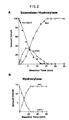
- penicillin N was converted to both DAOC and DAC during 60-minute reactions.
- the stoichiometric ratio of DAOC + DAC/penicillin N was maintained at 1:1.
- DAOC was quantitatively converted to DAC at 1:1 by the purified enzyme during a 60-minute hydroxylase catalyzed reaction.
- Figure 2 of the drawings graphically displays the stoichiometry.
- this invention provides a process for purifying the enzyme, which process comprises the use of GEDA in its chromatographic steps to stabilize the enzyme during purification.
- the purified enzyme obtained with GEDA through step 3, without further purification, retains about 96% of its activities after storage at 4°C for 4 days and about 87% of its activities after 7 days at 4°C.
- the purified enzyme provided by the process is preferably stored for later use in GEDA buffer at -70°C.
- This invention also provides a method for stabilizing the expandase enzyme which comprises mixing an aqueous solution or suspension of the enzyme at a pH between about 7 and about 8 with glycerol or sucrose, a C1-C3 monohydric alcohol, a sulfhydryl containing reducing agent and ascorbate, wherein the sucrose is mixed to a concentration of 5% to 15% by weight, the glycerol and the C1-C3 alcohol are each mixed to a concentration of between about 5% and about 15% by volume and the sulfhydryl containing reducing agent and ascorbate are each mixed to a final concentration of between about 1 mM and about 20 mM, and maintaining the temperature of the mixture at between about -70°C and about 5°C.
- the aqueous solution or suspension of the enzyme can be crude cell extract, a partially purified preparation or the purified enzyme provided herein.
- a crude cell extract of the enzyme also is preferably treated with a serine protease inhibitor such as phenylmethylsulfonyl fluoride or diisopropyl fluorophosphate.
- Ascorbate as used herein refers to a salt of ascorbic acid such as the sodium or potassium salt.
- Glycerol is preferred over sucrose in the stabilizing mixture and ethyl alcohol is the preferred monohydric alcohol. Both are best used at a concentration of about 10% by volume.
- Dithiothreitol is a preferred sulfhydryl containing reducing agent. Dithiothreitol and ascorbate are preferably present in the stabilizing mixture at concentrations of about 10 mM each.
- a preferred pH of the stabilized enzyme mixture is between about pH 7 and about pH 8, in particular pH 7.5.
- the desired pH range can be maintained by a suitable buffer, e.g., Tris-HCl (pH 7.5).
- This invention also provides a stabilized composition of the enzyme expandase which comprises an aqueous solution of the enzyme at a pH between about 7 and about 8, glycerol or sucrose at a final concentration of between about 5% and about 15%, a C1-C3 monohydric alcohol at a final concentration of between about 5% and about 15%, and a sulfhydryl containing reducing agent and ascorbate, each at a final concentration of between about 1 mM and about 20 mM.
- a preferred composition comprises dithiothreitol and ascorbate, each at a final concentration of about 10 mM.
- the composition is preferably formed in the cold, preferably at 0°C to 5°C.
- the ingredients may be added to the solution of the enzyme individually and in any order.
- the stabilizing agents may be premixed and the mixture added to the enzyme solution to the desired concentration.
- Glycerol is preferred over sucrose and ethyl alcohol is the preferred monohydric alcohol.
- the purified enzyme provided herein is useful in the preparation of deacetoxycephalosporin C, an intermediate for the cephalosporin nucleus 7-aminodeacetoxycephalosporin C (7-ADCA).
- 7-ADCA can be acylated by known methods to provide 3-methylcephalosporin antibiotics such as cephalexin.
- DAC is likewise useful in the preparation of 3-acyloxycephalosporin antibiotics.
- the purified form of the enzyme is particularly useful in determining the amino acid sequence of the enzyme for cloning purposes as well as studies of the conversion of penicillins to cephalosporins having antibiotic activity.
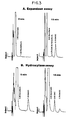
- the purity of the enzyme and the extent of purification during the course of the process can be measured by determining the expandase and hydroxylase activities of the chromatographic fractions via high performance liquid chromatography (HPLC) and by analyzing protein bands of chromatographic fractions via SDS-PAGE.
- HPLC high performance liquid chromatography
- the expandase-catalyzed reaction is conducted for 15 minutes at 30°C with 0.28 mM penicillin N, 0.60 mM ⁇ -ketoglutarate ( ⁇ KG), 0.06 mM ferrous sulfate, 0.67 mM ascorbate, 1.00 mM dithiothreitol, 0.05 mM ATP and 0.0003-0.003 units of the enzyme in 1 ml of 50 mM Tris-HCl, pH 7.5.
- the hydroxylase-catalyzed reaction is conducted at 36°C in the same medium with deacetoxycephalosporin C at a concentration of 0.05 mM instead of penicillin N
- the enzymatic reactions were interrupted by the addition of 1 ml of ethyl alcohol.
- the precipitate is separated by centrifugation at 4,000 ⁇ g for 5 minutes and the supernatant containing the enzyme reaction products assayed by HPLC as follows.
- the expandase activity is determined by monitoring formation of both DAOC and DAC from penicillin N because of the apparent bifunctionality of the enzyme.
- the hydroxylase activity is determined by monitoring the formation of DAC from DAOC.
- a preferred HPLC system comprises the components: Model 721 system controller, Model 730 data module, Model 510EF pumps, Model 710B Waters Intelligent Sample Processor and a Lambda-Max Model 481 LC spectrophotometer (Waters Assoc., Milford, MA).
- DAC and DAOC are preferably separated by a radially packed compressed ⁇ Bondapak-NH4 column (0.8 ⁇ 10 cm) (Waters Assoc.) with a mobile phase of 2% acetic acid-0-4% methyl alcohol-6-7% acetonitrile-87-92%; pH 3.8, a flow rate of 1.5-2.0 ml/min. and detection at 260 nm (cephalosporin chromophore).
- the assays are reproducible with 2% deviations for duplicate analyses of both the expandase and the hydroxylase catalyzed reactions.
- step 2 The molecular weight of active expandase from the weak anion exchange chromatography (step 2) was estimated by gel filtration on a Bio-Gel A0.5 m column (1.6 ⁇ 100 cm) which had been equilibrated with 50 mM Tris-HCl, pH 7.5, in the presence of 1 mM DTT and 1 mM ascorbate.
- the system was calibrated with yeast alcohol dehydrogenase (MW-80,000) bovine serum albumin (MW-66,200), ovalbumin (MW-45,000), carbonic anhydrase (MW-31,000) and ribonuclease (MW-13,700).
- the minimal molecular weight of the enzyme obtained by further purification via FPLC was determined by sodium dodecylsulfate polyacrylamide gel electrophoresis using protein molecular weight standards.
- the isoelectric point of the purified enzyme was determined as described by Anderson, N.G., et al., Anal. Biochem. , 85 , 331-340 (1978); and by Anderson, N.L., et al., Anal. Biochem. , 85 , 341-354 (1978).
- the electrophoresis was conducted with 5% (pH 3.5. to 10) ampholytes from Pharmacia, Inc., in a 4% acrylamide gel.
- the proteins were visualized with silver stain.
- the amino acid composition of the purified enzyme was determined with the eluate of the strong anion exchange chromatography over Mono Q via FPLC.
- the eluate was hydrolyzed in 6N HCl at 110°C for 24, 48, 72 and 96 hours.
- Amino acids were analyzed by a Beckman amino acid analyzer (Model 6300) with a computerized integration system. Threonine and serine were extrapolated to 0 time of hydrolysis. Cysteine was estimated as cysteic acid after dimethylsulfoxide treatment. Tryptophan was determined by hydrolysis with thioglycolic acid.
- the protein content of the enzyme was determined by the method of Bradford, M.M., Anal. Biochem. , 72 , 248-254 (1976) using bovine serum albumin fraction V as the standard.
- Cephalosporium acremonium a high producer of cephalosporin C, was grown for 96 hours in 50 ml Erlenmeyer flasks in a complex liquid medium described by Queener, S.W., et al., 1984. Cephalosporin C Fermentation: biochemical and regulatory aspects of sulfur metabolism, pp. 141-170; In E.. J. Van Damme (ed.) Biotechnology of Industrial Antibiotics, Marcel Dekker, Inc., New York.
- the cells were harvested by centrifugation at 20,000 ⁇ g for 10 minutes, washed with 50 mM Tris-HCl buffer, pH 7.5, in the presence of 1.0M potassium chloride and again with the buffer in the absence of potassium chloride.
- Fresh cells (wet weight of 600 g) were resuspended in 50 mM Tris-HCl buffer, pH 7.5, in the presence of 10% glycerol, 10% ethanol, 10 mM dithrothreitol and 10mM ascorbate to a total volume of one liter.
- the suspended cells were disrupted by sonication at a temperature of 4°C or below. During sonication mutiple additions of phenylmethylsulfonyl fluoride were made until the final concentration was 2 mM. DNase and magnesium sulfate were added to achieve concentrations of each of 1 ⁇ g/ml and 2 mM, respectively.
- the sonicated suspension was centrifuged at 40,000 ⁇ g for 30 minutes and the supernatant separated to provide a crude extract of the enzyme.
- the crude extract assayed for total protein content of 12,500 mg; a specific activity of 0.039 U/mg and total activity of 485 U.
- the crude extract was loaded onto a DEAE-trisacryl LS column (5 cm ⁇ 300 cm) previously equilibrated with GEDA buffer.
- the filtrate was loaded onto a DEAE-cellulose column (2.5 ⁇ 41 cm) previously equilibrated with GEDA buffer.
- the column was washed with 4-column volumes of GEDA buffer in the presence of 0.05M potassium chloride. After washing, a linear gradient of 0.05M to 0.60M KCl in GEDA buffer (800 ml total volume) was applied to the column. Fractions of 10 ml each were collected at a flow rate of 25 ml/hour.
- the enzyme was eluted between 0.04M and 0.06M KCl as one major and two minor activity peaks. About 75% of the total activity resided in the major peak.
- the fractions from the major peak with specific activities greater than 0.088 U/mg were pooled, concentrated to 9.5 ml by Amicon ultrafiltration with a PM30 membrane, and the concentrate was loaded onto a Sephacryl S-200 column (5 cm ⁇ 85 cm) previously equilibrated with GEDA buffer. Fractions of 10 ml each were collected at a flow rate of 40 ml/hour. The fractions with specific activities of at least 0.33 U/mg were combined and loaded onto a hydroxylapatite column (1.6 cm ⁇ 95 cm) previously equilibrated with GEDA buffer in the presence of 20 mM potassium phosphate. The column was washed with 2-column volumes of the same buffer.
- the enzyme was eluted from the column with a step-wise gradient of 100 ml of GEDA buffer containing 30, 40, 60, 80 and 100 mM of potassium phosphate. Fractions of 5 ml each were collected at a flow rate of 15 ml/hour. The enzyme was eluted as a major and a minor peak. The major peak contained about 80% of the total activity. Phenylmethylsulfonyl fluoride was added at 0.25 mM to individual fractions containing the enzyme. The fraction from the major peak with the highest specific activity of 0.827 U/mg was further purified as follows by Fast Protein Liquid Chromatography (FPLC), Pharmacia Inc., Piscataway, NJ, using Mono Q.
- FPLC Fast Protein Liquid Chromatography
Landscapes
- Life Sciences & Earth Sciences (AREA)
- Chemical & Material Sciences (AREA)
- Health & Medical Sciences (AREA)
- Genetics & Genomics (AREA)
- Organic Chemistry (AREA)
- Engineering & Computer Science (AREA)
- Bioinformatics & Cheminformatics (AREA)
- Zoology (AREA)
- Wood Science & Technology (AREA)
- Molecular Biology (AREA)
- Microbiology (AREA)
- Biotechnology (AREA)
- Biomedical Technology (AREA)
- Biochemistry (AREA)
- General Engineering & Computer Science (AREA)
- General Health & Medical Sciences (AREA)
- Medicinal Chemistry (AREA)
- Enzymes And Modification Thereof (AREA)
- Preparation Of Compounds By Using Micro-Organisms (AREA)
Applications Claiming Priority (2)
| Application Number | Priority Date | Filing Date | Title |
|---|---|---|---|
| US06/905,601 US4753881A (en) | 1986-09-10 | 1986-09-10 | Purified enzyme and process therefor |
| US905601 | 1992-06-29 |
Publications (2)
| Publication Number | Publication Date |
|---|---|
| EP0260072A2 true EP0260072A2 (de) | 1988-03-16 |
| EP0260072A3 EP0260072A3 (de) | 1989-05-24 |
Family
ID=25421118
Family Applications (1)
| Application Number | Title | Priority Date | Filing Date |
|---|---|---|---|
| EP87307808A Ceased EP0260072A3 (de) | 1986-09-10 | 1987-09-04 | Gereinigtes Enzym und Verfahren dazu |
Country Status (10)
| Country | Link |
|---|---|
| US (1) | US4753881A (de) |
| EP (1) | EP0260072A3 (de) |
| JP (1) | JPS6371174A (de) |
| KR (1) | KR880004086A (de) |
| AU (1) | AU602915B2 (de) |
| CA (1) | CA1301098C (de) |
| DK (1) | DK463987A (de) |
| HU (1) | HU199897B (de) |
| IE (1) | IE872415L (de) |
| IL (1) | IL83777A (de) |
Cited By (1)
| Publication number | Priority date | Publication date | Assignee | Title |
|---|---|---|---|---|
| EP0281391A1 (de) * | 1987-03-04 | 1988-09-07 | Eli Lilly And Company | Rekombinante DNS-Expressionsvektoren und DNS-Zusammensetzungen, die für Deacetoxycephalosporin C-Synthetase und Deacetylcephalosporin C-Synthetase kodieren |
Families Citing this family (4)
| Publication number | Priority date | Publication date | Assignee | Title |
|---|---|---|---|---|
| JP2832848B2 (ja) * | 1989-10-21 | 1998-12-09 | 株式会社林原生物化学研究所 | 結晶2―O―α―D―グルコピラノシル―L―アスコルビン酸とその製造方法並びに用途 |
| KR100227711B1 (ko) * | 1991-10-15 | 1999-12-01 | 한스 발터 라벤 | 7-아미노세팔로스포란산 및 7-아미노데아세틸세팔로스포란산 제조를 위한 신규한 생물학적 공정 |
| GB2323361A (en) * | 1995-11-27 | 1998-09-23 | Gist Brocades Bv | Improved process for the production of semi-synthetic cephalosporins via expandase activity on penicillin G |
| US7162289B2 (en) * | 2002-09-27 | 2007-01-09 | Medtronic Minimed, Inc. | Method and apparatus for enhancing the integrity of an implantable sensor device |
Family Cites Families (2)
| Publication number | Priority date | Publication date | Assignee | Title |
|---|---|---|---|---|
| US4178210A (en) * | 1977-03-07 | 1979-12-11 | Massachusetts Institute Of Technology | Accellular synthesis of cephalosporins |
| US4307192A (en) * | 1979-05-17 | 1981-12-22 | Massachusetts Institute Of Technology | Cell-free synthesis of deacetoxycephalosporin C |
-
1986
- 1986-09-10 US US06/905,601 patent/US4753881A/en not_active Expired - Fee Related
-
1987
- 1987-09-04 IL IL83777A patent/IL83777A/xx not_active IP Right Cessation
- 1987-09-04 EP EP87307808A patent/EP0260072A3/de not_active Ceased
- 1987-09-04 CA CA000546172A patent/CA1301098C/en not_active Expired - Lifetime
- 1987-09-07 AU AU78117/87A patent/AU602915B2/en not_active Ceased
- 1987-09-07 DK DK463987A patent/DK463987A/da not_active Application Discontinuation
- 1987-09-09 KR KR870009951A patent/KR880004086A/ko not_active Ceased
- 1987-09-09 IE IE872415A patent/IE872415L/xx unknown
- 1987-09-09 JP JP62226240A patent/JPS6371174A/ja active Pending
- 1987-09-09 HU HU874023A patent/HU199897B/hu not_active IP Right Cessation
Non-Patent Citations (3)
| Title |
|---|
| CHEMICAL ABSTRACTS, vol. 107, 1987, page 309, abstract no. 149955a, Columbus, Ohio, US; J.E. BALDWIN et al.: "Purification and initial characterization of an enzyme with deacetoxycephalosporin C synthetase and hydroxylase activities", & BIOCHEM. J. 1987, 245(3), 831-41 * |
| THE JOURNAL OF ANTIBIOTICS, vol. 37, no. 5, May 1984, pages 522-531; A. SCHEIDEGGER et al.: "Partial purification and catalytic properties of a bifunctional enzyme in the biosynthetic pathway of beta-lactams in cephalosporium acremonium" * |
| THE JOURNAL OF BACTERIOLOGY, vol. 169, no. 4, April 1987, pages 1611-1618, American Society for Microbiology; J.E. DOTZLAF et al.: "Copurification and characterization of deacetoxycephlosporin C synthetase/hydroxylase from cephalosporium acremonium" * |
Cited By (1)
| Publication number | Priority date | Publication date | Assignee | Title |
|---|---|---|---|---|
| EP0281391A1 (de) * | 1987-03-04 | 1988-09-07 | Eli Lilly And Company | Rekombinante DNS-Expressionsvektoren und DNS-Zusammensetzungen, die für Deacetoxycephalosporin C-Synthetase und Deacetylcephalosporin C-Synthetase kodieren |
Also Published As
| Publication number | Publication date |
|---|---|
| DK463987D0 (da) | 1987-09-07 |
| CA1301098C (en) | 1992-05-19 |
| EP0260072A3 (de) | 1989-05-24 |
| JPS6371174A (ja) | 1988-03-31 |
| DK463987A (da) | 1988-03-11 |
| AU7811787A (en) | 1988-03-17 |
| KR880004086A (ko) | 1988-06-01 |
| IE872415L (en) | 1988-03-10 |
| US4753881A (en) | 1988-06-28 |
| HU199897B (en) | 1990-03-28 |
| AU602915B2 (en) | 1990-11-01 |
| IL83777A (en) | 1991-12-15 |
| HUT44610A (en) | 1988-03-28 |
Similar Documents
| Publication | Publication Date | Title |
|---|---|---|
| Dotzlaf et al. | Copurification and characterization of deacetoxycephalosporin C synthetase/hydroxylase from Cephalosporium acremonium | |
| Poe et al. | Dihydrofolate reductase. Purification and characterization of the enzyme from an amethopterin-resistant mutant of Escherichia coli | |
| Baldwin et al. | ISOLATION AND PARTIAL CHARACTERISATION OF ACV SYNTHETASE FROM Cephalosporium acremonium AND Streptomyces clavuligerus EVIDENCE FOR THE PRESENCE OF PHOSPHOPANTOTHENATE IN ACV SYNTHETASE | |
| IL98349A (en) | Diphylase lipopeptide | |
| US5082772A (en) | Process for preparing deacetylcephalosporin c | |
| Ichikawa et al. | Purification and properties of 7β-(4-carboxybutanamido)-cephalosporanic acid acylase produced by mutants derived from Pseudomonas | |
| US4066506A (en) | Method of separating and purifying two active forms of urokinase using affinity chromatography | |
| EP0260072A2 (de) | Gereinigtes Enzym und Verfahren dazu | |
| Dissing et al. | Human red cell acid phosphatase: purification and properties of the A, B and C isozymes | |
| Mahajan et al. | Novel approaches to the purification of penicillin acylase | |
| Zhang et al. | Purification of ACV synthetase from Streptomyces clavuligerus | |
| Izumi et al. | Purification and properties of pyranose oxidase from basidiomycetous fungus no. 52 | |
| Kramer et al. | [35] Assay and purification of phospholipase A2 from human synovial fluid in rheumatoid arthritis | |
| Pacaud | Purification of protease II from Escherichia coli by affinity chromatography and separation of two enzyme species from cells harvested at late log phase | |
| Ryu et al. | Semisynthetic β-lactam antibiotics synthesizing enzyme from Acetobacter turbidans: purification and properties | |
| Binder et al. | Biochemical characterization of a glutaryl-7-aminocephalosporanic acid acylase from Pseudomonas strain BL072 | |
| Johnson et al. | Purification to homogeneity of the human skin chymotryptic proteinase “chymase” | |
| Johnson et al. | Investigation of a Catalytic Zinc Binding Site inEscherichia colil-Threonine Dehydrogenase by Site-Directed Mutagenesis of Cysteine-38 | |
| EP0420562B1 (de) | Deacetoxycephalosporin-C-Hydrolase | |
| Goerisch et al. | Chorismate mutase from Streptomyces. Purification, properties, and subunit structure of the enzyme from Streptomyces aureofaciens Tü 24 | |
| Nikolov et al. | Enzymatic transformation of cephalosporin C to 7-amino-cephalosporanic acid. Part I: Cultivation of Pseudomonas syringae and partial purification and immobilization of 7-β-(4-carboxybutanamido) cephalosporanic acid acylase | |
| Deshpande et al. | A rapid method for the purification of D-amino acid oxidase of Trigonopsis variabilis by hydrophobic chromatography | |
| Prabhune et al. | Evidence for involvement of arginyl residue at the catalytic site of penicillin acylase from Escherichiacoli | |
| le Goffic et al. | Affinity chromatography of β-lactamases | |
| EP0403172A2 (de) | Gereinigtes Enzym und Verfahren dazu |
Legal Events
| Date | Code | Title | Description |
|---|---|---|---|
| PUAI | Public reference made under article 153(3) epc to a published international application that has entered the european phase |
Free format text: ORIGINAL CODE: 0009012 |
|
| 17P | Request for examination filed |
Effective date: 19870911 |
|
| AK | Designated contracting states |
Kind code of ref document: A2 Designated state(s): AT BE CH DE ES FR GB GR IT LI NL SE |
|
| PUAL | Search report despatched |
Free format text: ORIGINAL CODE: 0009013 |
|
| AK | Designated contracting states |
Kind code of ref document: A3 Designated state(s): AT BE CH DE ES FR GB GR IT LI NL SE |
|
| 17Q | First examination report despatched |
Effective date: 19910813 |
|
| STAA | Information on the status of an ep patent application or granted ep patent |
Free format text: STATUS: THE APPLICATION HAS BEEN REFUSED |
|
| 18R | Application refused |
Effective date: 19930710 |
|
| RIN1 | Information on inventor provided before grant (corrected) |
Inventor name: DOTZLAF, JOE EDWARD Inventor name: YEH, WU-KUANG |