EP0260093A2 - Verfahren zur Herstellung von Zellulose I durch eine "in vitro"-Synthese - Google Patents
Verfahren zur Herstellung von Zellulose I durch eine "in vitro"-Synthese Download PDFInfo
- Publication number
- EP0260093A2 EP0260093A2 EP87307891A EP87307891A EP0260093A2 EP 0260093 A2 EP0260093 A2 EP 0260093A2 EP 87307891 A EP87307891 A EP 87307891A EP 87307891 A EP87307891 A EP 87307891A EP 0260093 A2 EP0260093 A2 EP 0260093A2
- Authority
- EP
- European Patent Office
- Prior art keywords
- cellulose
- synthesized
- vitro
- agent
- synthesis
- Prior art date
- Legal status (The legal status is an assumption and is not a legal conclusion. Google has not performed a legal analysis and makes no representation as to the accuracy of the status listed.)
- Withdrawn
Links
Images



Classifications
-
- C—CHEMISTRY; METALLURGY
- C12—BIOCHEMISTRY; BEER; SPIRITS; WINE; VINEGAR; MICROBIOLOGY; ENZYMOLOGY; MUTATION OR GENETIC ENGINEERING
- C12P—FERMENTATION OR ENZYME-USING PROCESSES TO SYNTHESISE A DESIRED CHEMICAL COMPOUND OR COMPOSITION OR TO SEPARATE OPTICAL ISOMERS FROM A RACEMIC MIXTURE
- C12P19/00—Preparation of compounds containing saccharide radicals
- C12P19/04—Polysaccharides, i.e. compounds containing more than five saccharide radicals attached to each other by glycosidic bonds
-
- D—TEXTILES; PAPER
- D06—TREATMENT OF TEXTILES OR THE LIKE; LAUNDERING; FLEXIBLE MATERIALS NOT OTHERWISE PROVIDED FOR
- D06M—TREATMENT, NOT PROVIDED FOR ELSEWHERE IN CLASS D06, OF FIBRES, THREADS, YARNS, FABRICS, FEATHERS OR FIBROUS GOODS MADE FROM SUCH MATERIALS
- D06M11/00—Treating fibres, threads, yarns, fabrics or fibrous goods made from such materials, with inorganic substances or complexes thereof; Such treatment combined with mechanical treatment, e.g. mercerising
- D06M11/32—Treating fibres, threads, yarns, fabrics or fibrous goods made from such materials, with inorganic substances or complexes thereof; Such treatment combined with mechanical treatment, e.g. mercerising with oxygen, ozone, ozonides, oxides, hydroxides or percompounds; Salts derived from anions with an amphoteric element-oxygen bond
- D06M11/36—Treating fibres, threads, yarns, fabrics or fibrous goods made from such materials, with inorganic substances or complexes thereof; Such treatment combined with mechanical treatment, e.g. mercerising with oxygen, ozone, ozonides, oxides, hydroxides or percompounds; Salts derived from anions with an amphoteric element-oxygen bond with oxides, hydroxides or mixed oxides; with salts derived from anions with an amphoteric element-oxygen bond
- D06M11/38—Oxides or hydroxides of elements of Groups 1 or 11 of the Periodic Table
Definitions
- the present invention relates to the in vitro production of cellulose and treatment of cellulose synthesized in vitro to produce cellulose I or crystalline polymorphs thereof.
- Cellulose a polymer of 1,4-beta-D-glucan, is the most abundant biopolymer on earth. It is the primary component of such products as wood, cotton, and paper. Cellulose exists in nature as microfibrils, which form the structural framework of the cell walls of plants, some algae, and certain fungi. Among the few bacteria that synthesize cellulose, Acetobacter xylinum has been studied intensely because it produces abundant amounts in growth medium. The cellulose is extruded from a row of pores aligned along the longitudinal axis of the cell and forms an extracellular pellicle, which consists of ribbons of cellulose microfibrils. Freeze etching of A. xylinum cells has revealed in the outer member a row of particles, complementary to the pores, which may take part in the synthesis of cellulose.
- Native celluloses exist in a polymorphic form known as cellulose I or crystalline polymorphs thereof (R.D. Preston. The Physical Biology of Plant Cell Walls, Chapman & Hall, London, 1974). This polymorph is known to contain glucan chains that are parallel to each other.
- the cellulose I polymorph is characteristic of all native celluloses synthesized by living systems to date.
- Cellulose is a metastable polymorph; it exists in a more thermodynamically unstable form than that of the so-called cellulose II polymorph. In this form, the glucan chains are antiparallel to one another, and there is one additional hydrogen bond linking each glucose residue. This form of cellulose is thermodynamically more stable. Cellulose II is formed only when cellulose I is dissolved and reprecipitated.
- Cellulose 11 does not exist in nature. This is because the terminal synthesizing enzymes (Brown et al, J. Appl. Polymer Sci., Appl. Polymer Symposium, 37: 33-78. 1983) involved in cellulose synthesis appear to modulate a vectored or unidirectional pattern of polymerization. The result is that the cellulose is synthesized naturally in the form of parallel glucan chains. The catalytic sites on the enzyme complex are close enough that the nascent glucan chains have a great probability of forming intermolecular hydrogen bonds, to form the basic crystalline structural unit of native cellulose known as the microfibril. Native celluloses also are synthesized in a crystalline form. This can be proved by electron diffraction analysis.
- the electron diffraction pattern is characteristic for the type of cellulose polymorph form. That is, cellulose I is a polymorph that has characteristic electron diffraction patterns different from those of cellulose II.
- the crystalline form of cellulose can be visualized by a variety of electron microscope techniques, among them negative staining. This technique is useful in that it can identify small aggregates of glucan chains down to a mean diameter of approximately 12 -15 Angstroms.
- the present invention comprises a process for converting cellulose synthesized in vitro to cellulose I or a crystalline polymorph thereof.
- the process consists essentially of treating the cellulose with an aqueous solution comprising an agent which facilitates the solubilization of proteinaceous materials or lipids and precipitation of the cellulose as cellulose I or a crystalline polymorph thereof.
- the agent is preferably an alkaline substance, an acidic substance or a detergent.
- Acetobacter xylinum is a preferred source of the cell-free system.
- the cellulose I produced by the processes of the present invention is similar to cotton fiber in microscopic appearance.
- the in vitro synthesis of microbial cellulose may be advantageously accomplished by a process involving the cultivation of a cellulose-producing microorganism in a nutrient medium comprising an amount of a cellulase preparation sufficient to hydrolyze cellulose being produced by the cellulose-producing microorganism.
- Cellulose-producing cells such as Acetobacter xylinum cells are inoculated in the cellulase preparation-containing nutrient medium and aerobically incubated by shake culture to facilitate the production of a dense cell culture.
- the cells are harvested and treated to produce a detergent-solubilized active enzymic component and a crude supernatant retaining biological activity.
- the crude supernatant and detergent-solubilized enzymic component are then combined in a solution with UDP-glucose and incubated to facilitate the in vitro synthesis of cellulose.
- Cellulose-producing microorganisms of the species Acetobacter xylinum (for example, ATCC No. 23769 from the American Type Culture Collection, Rockville, MD) were used as a source of cellular components having cellulose-synthetic capacity.
- Microorganism samples were seeded on the surface of Schramm Hestrin agar and grown for 5-7 days. Cells from a single colony were transferred to flasks containing 200 ml Schramm Hestrin nutrient medium and 50 ul Celluclast (a cellulolytic preparation from Novo Industri A/S, Denmark). The inoculated medium was incubated at 28° C for 36 hr on a rotary shaker set at 120 rpm.
- the cell suspension was passed slowly through a French pressure cell at 16,000 psi.
- the resultant homogenate was centrifuged at 12,000 x g for 10 min at 4°C.
- the pellet thus produced was resuspended in TME (1/4 the volume of TME-PEG used earlier). This resuspension was centrifuged at 18,000 x g for 20 min at 4°C to obtain a supernatant (SF) and a pellet.
- the pellet was resuspended in 50 mM Tris-HCI(pH7.5), 22 mM MgC1 2 , I mM EDTA (S-TME) (having a volume of from about 1/16 to about 3/32 of the TME-PEG volume first used herein) to form a resuspended pellet (MF).
- a crude preparation was made by first preparing a mixture containing: 10 ml of SF; 1.25 ml of 10 mM GTP; 125 ul of 0.lM CaC1 2 and 1.25 ml TME. The mixture was incubated at 37° C for 2 hours, then heated to 100°C for 3 min. After centrifugation to remove coagulated substances, a supernatant was obtained (crude Gx), frozen in liquid nitrogen and stored at -20°C.
- the MF (resuspended pellet) was used to prepare a digitonin-solubilized enzymic component.
- the MF was suspended in S-TME and mixed with the detergent, digitonin, to have a final protein concentration of 6.25 mg/ml and 10/ 0 digitonin. This mixture was sonicated for 5 min at 4° C and then shaken gently for 30 min at this temperature. The resultant mixture was then centrifuged at 100,000 x g for I hr at 4°C. The supernatant resulting was a digitonin-solubilized preparation (DS) which comprised cellulose synthase.
- DS digitonin-solubilized preparation
- cellulose is generated by an isolated enzyme system, according to procedures described above.
- An important aspect of this invention is that the material produced may be treated with an agent which removes non-cellulosic materials, thus allowing the in vitro synthesized cellulose to associate in such a manner as to produce crystalline cellulose I microfibrils.
- the in vitro synthesized fibrils In order for this to take place, the in vitro synthesized fibrils must have been vectorially synthesized and remain in relatively close position to one another to ensure intermolecular hydrogen bonding when the non-cellulosic substances are removed. It would be theoretically impossible to produce cellulose I, unless bundles of non-crystalline glucan chains were already oriented in parallel fashion.
- a strain of A. xylinum used for the in vitro studies was supplied by M. Benziman, Hebrew University, Jerusalem, Israel, and it was the same strain used by Benziman's group for their studies on cellulose synthase. Guanyl oligonucleotide was prepared as described (Ross, et al., (1985) FEBS Lett 186 191). Incubations, containing 75 mM tris (pH 8.6), 15 mM MgCi 2 .
- a precipitate When the in vitro synthesized material is treated with an aqueous solution comprising a suitable agent to remove non-cellulosic components, a precipitate will form which may be washed with distilled water.
- Aqueous solutions comprising suitable agents are capable of dissolving non-cellulosic components or contaminants and are often characteristically solvents for proteinaceous materials.
- the treatment of the cellulose synthesized in vitro to remove included contaminants results in a physical rearrangement of the cellulose intermolecular structure to form cellulose I or crystalline polymorphs thereof.
- Agents dissolved in aqueous solutions and usable in the practice of the present invention include detergents, acidic substances and alkaline substances.
- Alkaline aqueous solutions preferably comprising a hydroxide of an alkali metal in a concentration between about 2 weight percent and about 6 weight percent are one type of preferred alkaline aqueous solution.
- Acidic substances are preferably mineral acids in a strength between about 0.5 N and about 1.0 N.
- Aqueous solutions of detergent for example ALCONOX or sodium dodecyl sulfate at concentrations between about 2 weight percent and about 10 weight percent, are also preferred aqueous solutions comprising an agent facilitating the solubilization of proteinaceous materials and precipitation of the cellulose.
- Treating the cellulose synthesized in vitro with an aqueous solution comprising an agent as described above at a temperature between about 70°C and about 120°C and for a period between about 10 minutes and about 90 minutes is preferred to precipitate the cellulose synthesized in vitro as cellulose I or a crystalline polymorph thereof.
- This cellulose I or crystalline polymorph thereof may next be washed, preferably with water or purified water, for use or further processing.
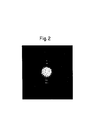
- the treated and washed material exhibits an electron diffraction pattern typical of the native cellulose I polymorph (Fig. 6).
- cellulose synthesized in vitro was treated with an aqueous solution having 4 weight percent sodium hydroxide. The treatment was at 100° C for 30 minutes and was followed by washing with distilled water. Similar electron diffraction patterns were obtained when sodium dodecyl sulfate at 5 weight percent or 10 weight percent was used in place of the sodium hydroxide and the treatment and washing were repeated once.
- a MoOs standard was used to calibrate the d spacings.
- cellulose produced by A. xylinum was cleaned with IN HCI and then a mixture of methanol and chloroform (1:1 by volume), washed with DD H 2 0, frozen in liquid nitrogen, ground to a fine powder, and dried onto carbon-coated grids. The in vitro material was placed directly onto grids and air-dried.
- a transmission electron microscope Phillips EM 420
- the low-dose technique of beam shift was employed; the diffraction pattern was recorded on electron microscope film (Mitsubishi MEM, from Japan) and developed (Mitsubishi Gekkol developer) for 4 minutes at 20°C.
- the average crystallite size as determined by line broadening was approximately 39 - 45 Angstroms for the 200 reflection, 38 - 44 Angstroms for the 110 reflection, and 39 - 45 Angstroms for the 110 reflection (see Fig. 6). These data are in line with the observed dimensions of the flattened fibrillar form of approximately 36 - 54 Angstroms (see Fig. 5). Thus, two or three of the 17 Angstrom fibrils must come together upon alkali treatment to produce a crystalline microfibril which exhibits the same polymorph as native cellulose I.
- native crystalline celluloses have been cleaned with sodium hydroxide, but generally at concentrations of 24 weight percent. With this concentration, the glucan chains are solubilized by the sodium hydroxide, and when the sodium hydroxide is removed, the cellulose is reprecipitated, this time to form antiparallel glucan chains, resulting in another cellulose polymorph known as cellulose II).
- This so-called mercerized cellulose is largely used in industry and represents the more thermodynamically stable form of cellulose. This would be the most obvious way to treat cellulose, to obtain a reprecipitated form.
- cellulose synthesized in vitro was incubated with an aqueous solution containing 2 weight percent ALCONOX for 30 minutes at 100°C to produce the cellulose I or its crystalline polymorphs. It was additionally noted that acidic aqueous solutions could be used to facilitate the production of cellulose I or crystalline polymorphs thereof from cellulose synthesized in vitro. In a series of experiments, cellulose synthesized in vitro was subjected to 0.25 N, 0.50 N, 1.0 N or 2.0 N aqueous hydrochloric acid for 30 minutes at 100°C.
- the ALCONOX-treated cellulose showed fibers appearing larger than those of cellulose synthesized in vitro, and slightly smaller than cellulose washed with an aqueous alkaline solution and about the same size as cellulose washed with sodium dodecyl sulfate.
- the cellulose preparations washed with 0.5 N HCI and 1.0 N HCI had fibrils significantly larger than untreated cellulose synthesized in vitro.
- the cellulose samples washed with 0.25 N HCI or 2.0 N HCI showed fibrils which appeared no larger than those of cellulose synthesized in vitro.
- true cellulose I or crystalline polymorphs thereof, in the form of microfibrils can be synthesized in vitro. If the procedure for enzyme preparation of Lin, et al. as described herein is used, the final crystallization step can be achieved only by treatment with an agent facilitating the solubilization of proteinaceous or other non-cellulosic materials and precipitating the cellulose. When methods are found to purify and immobilize cellulose-synthesizing enzymes, it should be possible that native cellulose I could be made directly in vitro. While this has not yet been proven possible, the embodiments of the present invention are meant to extend to the concept that crystalline cellulose I can be synthesized in vitro, provided no contaminating components interfere with the crystallization at the time polymerization takes place.
- cellulose synthesized in vitro may be converted from a physically diffuse state into a more crystalline state by removal of contaminating non-cellulosic materials.
- This more crystalline state is exemplified by a fibrous structure characteristic of cellulose I or a crystalline polymorph thereof and similar to that of cotton fiber and should thus prove usable to manufacture materials having sufficient structural integrity for uses analogous to those of cotton, for example.
- the incorporation of 3 H-UDP-glucose into the product cellulose I is shown in Figure 8.
- the grid was prepared as described (Chanzy, et al., (1984) FEBS Lett 172 193), but with radioactive substrate.
- the present invention primarily concerns in vitro cellulose synthesis by components of microorganism, the principles established herein should be applicable to in vitro cellulose synthesis by plant components when such plant component synthesize cellulose without the form of cellulose I or crystalline polymorphs thereof.
Landscapes
- Organic Chemistry (AREA)
- Chemical & Material Sciences (AREA)
- Engineering & Computer Science (AREA)
- Zoology (AREA)
- Life Sciences & Earth Sciences (AREA)
- Wood Science & Technology (AREA)
- Chemical Kinetics & Catalysis (AREA)
- Bioinformatics & Cheminformatics (AREA)
- General Chemical & Material Sciences (AREA)
- Biotechnology (AREA)
- Textile Engineering (AREA)
- Health & Medical Sciences (AREA)
- Biochemistry (AREA)
- Microbiology (AREA)
- General Engineering & Computer Science (AREA)
- General Health & Medical Sciences (AREA)
- Genetics & Genomics (AREA)
- Polysaccharides And Polysaccharide Derivatives (AREA)
- Preparation Of Compounds By Using Micro-Organisms (AREA)
- Chemical Or Physical Treatment Of Fibers (AREA)
Applications Claiming Priority (2)
| Application Number | Priority Date | Filing Date | Title |
|---|---|---|---|
| US90548186A | 1986-09-08 | 1986-09-08 | |
| US905481 | 1986-09-08 |
Publications (2)
| Publication Number | Publication Date |
|---|---|
| EP0260093A2 true EP0260093A2 (de) | 1988-03-16 |
| EP0260093A3 EP0260093A3 (de) | 1988-12-28 |
Family
ID=25420910
Family Applications (1)
| Application Number | Title | Priority Date | Filing Date |
|---|---|---|---|
| EP87307891A Withdrawn EP0260093A3 (de) | 1986-09-08 | 1987-09-07 | Verfahren zur Herstellung von Zellulose I durch eine "in vitro"-Synthese |
Country Status (4)
| Country | Link |
|---|---|
| EP (1) | EP0260093A3 (de) |
| JP (1) | JPS6413999A (de) |
| AU (1) | AU7815087A (de) |
| BR (1) | BR8704658A (de) |
Cited By (7)
| Publication number | Priority date | Publication date | Assignee | Title |
|---|---|---|---|---|
| WO1989008148A3 (en) * | 1988-02-24 | 1989-09-21 | Bio Fill Produtos Biotecnologi | Process for preparing aqueous suspensions or slurries from cellulose microfibrils, cellulose microfibril aqueous suspension or slurry and its use |
| EP0347481A1 (de) * | 1987-03-09 | 1989-12-27 | Board Of Regents, The University Of Texas System | Mikrobiologische Multiband-Zellulose |
| US4929550A (en) * | 1987-01-22 | 1990-05-29 | Imperial Chemical Industries Plc | Process for the production of microbial cellulose |
| US5268274A (en) * | 1989-04-12 | 1993-12-07 | Cetus Corporation | Methods and nucleic acid sequences for the expression of the cellulose synthase operon |
| US5382656A (en) * | 1992-10-06 | 1995-01-17 | Weyerhaeuser Company | Cellulose synthase associated proteins |
| WO1995004155A3 (en) * | 1993-08-02 | 1995-03-16 | R Malcolm Brown Jr | A method for synthesis of polysaccharides |
| US6541238B1 (en) * | 1990-03-15 | 2003-04-01 | Board Of Regents, The University Of Texas Systems | Recombinant cellulose synthase |
Families Citing this family (1)
| Publication number | Priority date | Publication date | Assignee | Title |
|---|---|---|---|---|
| GB8800183D0 (en) * | 1988-01-06 | 1988-02-10 | Ici Plc | Process for production of microbial cellulose |
Family Cites Families (1)
| Publication number | Priority date | Publication date | Assignee | Title |
|---|---|---|---|---|
| US4588400A (en) * | 1982-12-16 | 1986-05-13 | Johnson & Johnson Products, Inc. | Liquid loaded pad for medical applications |
-
1987
- 1987-09-07 EP EP87307891A patent/EP0260093A3/de not_active Withdrawn
- 1987-09-08 BR BR8704658A patent/BR8704658A/pt unknown
- 1987-09-08 JP JP62225119A patent/JPS6413999A/ja active Pending
- 1987-09-08 AU AU78150/87A patent/AU7815087A/en not_active Abandoned
Cited By (9)
| Publication number | Priority date | Publication date | Assignee | Title |
|---|---|---|---|---|
| US4929550A (en) * | 1987-01-22 | 1990-05-29 | Imperial Chemical Industries Plc | Process for the production of microbial cellulose |
| EP0347481A1 (de) * | 1987-03-09 | 1989-12-27 | Board Of Regents, The University Of Texas System | Mikrobiologische Multiband-Zellulose |
| US4954439A (en) * | 1987-03-09 | 1990-09-04 | Board Of Regents, The University Of Texas System | Multiribbon microbial cellulose |
| WO1989008148A3 (en) * | 1988-02-24 | 1989-09-21 | Bio Fill Produtos Biotecnologi | Process for preparing aqueous suspensions or slurries from cellulose microfibrils, cellulose microfibril aqueous suspension or slurry and its use |
| US5268274A (en) * | 1989-04-12 | 1993-12-07 | Cetus Corporation | Methods and nucleic acid sequences for the expression of the cellulose synthase operon |
| US6541238B1 (en) * | 1990-03-15 | 2003-04-01 | Board Of Regents, The University Of Texas Systems | Recombinant cellulose synthase |
| US5382656A (en) * | 1992-10-06 | 1995-01-17 | Weyerhaeuser Company | Cellulose synthase associated proteins |
| WO1995004155A3 (en) * | 1993-08-02 | 1995-03-16 | R Malcolm Brown Jr | A method for synthesis of polysaccharides |
| US5472859A (en) * | 1993-08-02 | 1995-12-05 | Brown, Jr.; R. Malcolm | Enzymatic method for synthesis of cellulose 1 |
Also Published As
| Publication number | Publication date |
|---|---|
| AU7815087A (en) | 1988-03-10 |
| EP0260093A3 (de) | 1988-12-28 |
| JPS6413999A (en) | 1989-01-18 |
| BR8704658A (pt) | 1988-05-03 |
Similar Documents
| Publication | Publication Date | Title |
|---|---|---|
| Hudson et al. | Polysaccharides: chitin and chitosan: chemistry and technology of their use as structural materials | |
| US8642757B2 (en) | High titer production of highly linear poly (α 1,3 glucan) | |
| EP0531486A1 (de) | Produktion kristalliner Zellulose | |
| JPH09132601A (ja) | 多孔性セルロース粒子の製造方法 | |
| EP0197748B1 (de) | Magnetische Modifizierung von Zellulose während ihrer Biosynthese | |
| Brandes et al. | Production with a high yield of bacterial cellulose nanocrystals by enzymatic hydrolysis | |
| Legge | Microbial cellulose as a speciality chemical | |
| US4950597A (en) | Modification of cellulose normally synthesizied by cellulose-producing microorganisms | |
| Kopecká et al. | Assembly of microfibrils in vivo and in vitro from (1» 3)-β-d-glucan synthesized by protoplasts of Saccharomyces cerevisiae | |
| JPH10158303A (ja) | 微細繊維状セルロースのアルカリ溶液又はゲル化物 | |
| US5472859A (en) | Enzymatic method for synthesis of cellulose 1 | |
| Chen | Degradation studies on plant cellulose and bacterial cellulose by FT-IR and ESEM | |
| JP2777981B2 (ja) | キトサン含有繊維からなる中空球状素材、及びその製造法 | |
| JP3179563B2 (ja) | 生分解性組成物 | |
| Ghosh et al. | 2. Nanocellulose: extraction and fabrication methodologies | |
| Trovatti | Bacterial cellulose | |
| Marchessault | Carbohydrate polymers: nature’s high performance materials | |
| Nasresfahani et al. | Recent research on economic production and water absorption improvement of bacterial cellulose: a review | |
| Reddy et al. | Bacterial Cellulose Fibers: Fibers from Biotechnology | |
| EL-Ghwas | Bacterial Cellulose, Fermentative Production and its Pharmaceutical Application | |
| JP2839493B2 (ja) | 培養におけるセルラーゼ製剤の使用及びセルロース生産微生物の使用 | |
| KR100252704B1 (ko) | 고순도 결정성 nocc의 제조방법 및 효소를 이용한 수용성키토산의 분자량 조절방법 | |
| JP3509126B2 (ja) | 高強度微生物セルロース複合化物およびその製造法 | |
| US12391966B2 (en) | Biopolymer film and method of preparing the same | |
| JPH0576956B2 (de) |
Legal Events
| Date | Code | Title | Description |
|---|---|---|---|
| PUAI | Public reference made under article 153(3) epc to a published international application that has entered the european phase |
Free format text: ORIGINAL CODE: 0009012 |
|
| AK | Designated contracting states |
Kind code of ref document: A2 Designated state(s): AT BE CH DE ES FR GB GR IT LI LU NL SE |
|
| PUAL | Search report despatched |
Free format text: ORIGINAL CODE: 0009013 |
|
| AK | Designated contracting states |
Kind code of ref document: A3 Designated state(s): AT BE CH DE ES FR GB GR IT LI LU NL SE |
|
| STAA | Information on the status of an ep patent application or granted ep patent |
Free format text: STATUS: THE APPLICATION IS DEEMED TO BE WITHDRAWN |
|
| 18D | Application deemed to be withdrawn |
Effective date: 19890629 |
|
| RIN1 | Information on inventor provided before grant (corrected) |
Inventor name: LIN, FONG-CHYR Inventor name: BROWN, R. MALCOLM |