EP0262678A2 - Süsser Geschmack voller weicher biegsamer zuckerloser Kaugummi und Verfahren zu dessen Herstellung - Google Patents
Süsser Geschmack voller weicher biegsamer zuckerloser Kaugummi und Verfahren zu dessen Herstellung Download PDFInfo
- Publication number
- EP0262678A2 EP0262678A2 EP87114362A EP87114362A EP0262678A2 EP 0262678 A2 EP0262678 A2 EP 0262678A2 EP 87114362 A EP87114362 A EP 87114362A EP 87114362 A EP87114362 A EP 87114362A EP 0262678 A2 EP0262678 A2 EP 0262678A2
- Authority
- EP
- European Patent Office
- Prior art keywords
- saccharin
- chewing gum
- encapsulated
- product
- sweetness
- Prior art date
- Legal status (The legal status is an assumption and is not a legal conclusion. Google has not performed a legal analysis and makes no representation as to the accuracy of the status listed.)
- Withdrawn
Links
Images



Classifications
-
- A—HUMAN NECESSITIES
- A23—FOODS OR FOODSTUFFS; TREATMENT THEREOF, NOT COVERED BY OTHER CLASSES
- A23G—COCOA; COCOA PRODUCTS, e.g. CHOCOLATE; SUBSTITUTES FOR COCOA OR COCOA PRODUCTS; CONFECTIONERY; CHEWING GUM; ICE-CREAM; PREPARATION THEREOF
- A23G4/00—Chewing gum
- A23G4/06—Chewing gum characterised by the composition containing organic or inorganic compounds
- A23G4/10—Chewing gum characterised by the composition containing organic or inorganic compounds characterised by the carbohydrates used, e.g. polysaccharides
-
- A—HUMAN NECESSITIES
- A23—FOODS OR FOODSTUFFS; TREATMENT THEREOF, NOT COVERED BY OTHER CLASSES
- A23G—COCOA; COCOA PRODUCTS, e.g. CHOCOLATE; SUBSTITUTES FOR COCOA OR COCOA PRODUCTS; CONFECTIONERY; CHEWING GUM; ICE-CREAM; PREPARATION THEREOF
- A23G4/00—Chewing gum
- A23G4/18—Chewing gum characterised by shape, structure or physical form, e.g. aerated products
- A23G4/20—Composite products, e.g. centre-filled, multi-layer, laminated
Definitions
- the present invention relates to soft, flexible sugarless chewing gum compositions which contain ⁇ 2% by weight of moisture and ⁇ 8% by weight of cooked hydrogenated starch hydrolysate and which have improved sweetness and flavor characteristics over extended periods of mastication time.
- Relatively soft sugarless chewing gum compositions have been provided by some recently developed technology which is designed around the use of relatively large amounts, i.e., ⁇ 8% by weight, of a softening agent such as glycerine or propylene glycol, with relatively large amounts of sugar alcohols, and optionally, small amounts of intense sweeteners such as saccharin and aspartame, in chewing gum products that must be made under relatively anhydrous conditions and/or which have a final total moisture content of ⁇ 1 to 2%.
- a softening agent such as glycerine or propylene glycol
- Aqueous hydrogenated starch hydrolysate having a moisture content of about 20 to 35% has been used as a stabilizer for aspartame in chewing gum and other comestibles that may have a moisture content of 2 to 8% as disclosed in U.S. Patent Application S.N. 865,493 filed May 20, 1986 in the names of D.R. Friello, et al., and entitled “Comestible Containing Moisture and Shelf Storage Stabilized L-Aspartic Acid Derivative, and S.N. 867,821 filed May 27, 1986 in the names of D.R. Friello et al. and entitled “Comestible Containing Moisture, CaCO3 and Shelf Storage Stabilized L-Aspartic Acid Derivative".
- Chewing Gum products made with 8% glycerine that are shelf stable and do not deliquesce at relative humidity of 45 to 65% at 20°C, and which may contain aqueous hydrogenated starch hydrolysate are disclosed in U.S. Patent Application Serial No. 677,718 filed December 4, 1984 in the names of R.A. Reggio et al. and entitled "Moisture Stable Chewing Gum.”
- Comestibles such as chewing gum which are soft and which contain ⁇ 2% moisture and aspartame, and which also contain cooked aqueous starch hydrolysate which may have a moisture content of about 10 ⁇ 6% are disclosed in U.S. Patent Application S.N. 717,765 filed March 29, 1985, and a continuation-in-part of said S.N. 717,765, S.N. 840,300 filed March 14, 1986, both filed in the names of Thomas J. Carroll, et al., and entitled “Flexible Sugarless Chewing Gum”; and U.S. Patent Application S.N. 717,630 filed March 29, 1985, and a continuation-in-part of said S.N. 717,630, S.N. 840,299, filed March 14, 1986, both filed in the names of Thomas J. Carroll, et al. and entitled "Stabilized APM In Comestibles".
- soft chewing gum products can be made which have relatively long term sweetness and flavor retention properties and which are sweetened, at least in part, with saccharin and which contain about 2 to 7 and preferably about 2 to 4% moisture, by formulating gum base, aqueous hydrogenated starch hydrolysate, encapsulated saccharin, unencapsulated saccharin, optionally, glycerin,and about 2 to 7% moisture, with other optional ingredients, as otherwise disclosed hereinbelow.
- the present invention relates to a saccharin containing sugarless chewing gum composition that is soft and has a continuous prolonged release of flavor and sweetness and which comprises, in weight %, about 15 to 35% synthetic elastomer based gum base, about 0.02 to 0.15% unencapsulated saccharin, about 0.02 to 0.20% encapsulated saccharin, about 10 to 30% aqueous hydrogenated starch hydrolysate having a cooked moisture content of about 10 ⁇ 6%, 0 to about 12% glycerin and about 2 to 7% total moisture, said encapsulated saccharin being encapsulated to such extent that the encapsulated saccharin is gradually released from its encapsulating agent after the initial burst of sweetness provided by the unencapsulated saccharin and for an extended period of up to a total of about 15 minutes so as to provide during said extended period a level of sweetness higher than would be provided in a comparable product formulated with the same total amount of saccharin, all in unencapsulated form.
- the invention relates to a process for providing a continuous and prolonged release of flavor and sweeteners from a soft saccharin containing chewing gum product during the normal mastication of such product which comprises modifying the composition of said product, prior to said mastication so that said product comprises, in weight %, about 15 to 35% synthetic elastomer based gum base, about 0.02 to 0.15% unencapsulated saccharin, about 0.02 to 0.20% encapsulated saccharin, about 10 to 30% aqueous hydrogenated starch hydrolysate having a cooked moisture content of about 10 ⁇ 6%, 0 to about 12% glycerin and about 2 to 7% total moisture, whereupon said encapsulated saccharin is encapsulated to such extent that upon said normal mastication of said product the encapsulated saccharin is gradually released from its encapsulating agent after the initial burst of sweetness provided by the unencapsulated saccharin and for an extended period of said mastication of up to a total of
- composition of the gum base used in the chewing gum compositions of the present invention will vary depending on whether the gum base is to be used in a chewing gum product which is to be a regular, or non-bubble, gum product or a bubble gum product.
- a chewing gum product which is to be a regular, or non-bubble, gum product or a bubble gum product.
- the following gum base formulations may be used, in accordance with the present invention:
- the masticatory substances are elastomeric materials which are synthetic in origin. Such masticatory substances would include styrene-butadiene copolymer, butyl rubber (which is isobutylene-isoprene copolymer) and polyisobutylene and mixtures thereof.
- the plasticizer for the masticatory substances will preferably comprise a hydrogenated ester gum, that is, a glycerol ester of hydrogenated rosin and/or dimerized ester gum.
- a hydrogenated ester gum that is, a glycerol ester of hydrogenated rosin and/or dimerized ester gum.
- other resins may be employed such as pentaerythritol ester gum, polymerized ester gum, polyterpene resin and ester gum. Mixtures of such plasticizers may also be used.
- the hydrophilic-type detackifier is a material which will absorb saliva and would include vinyl polymers having a molecular weight of at least 2,000, and preferably of about 2,000 to 80,000 or more, such as polyvinyl acetate, polyvinyl butyl ether and copolymers of vinyl esters and/or vinyl ethers with ethylene, as well as mixtures thereof.
- the plasticizers for the hydrophilic type detackifiers would include one or more of triacetin, acetylated glycerides and other flavor adjuvants such as ethyl acetate and triethyl citrate, and others as listed in U.S. Patent No. 4,452,820 at column 4, lines 27 to 46, the disclosure of which is incorporated herein by reference.
- the oleaginous material includes waxes which are used primarily as compatibilizers/plasticizers between the elastomeric and resin phases, where such two phases are employed.
- waxes are petroleum waxes such as paraffin wax and microcrystalline wax; the polyethylene waxes; and natural waxes derived from either plant or animal sources such as candelilla wax, carnuba wax and bees wax.
- the oleaginous material may also include hydrogenated vegetable or animal fats, cocoa butter or other softening-emulsifying agents such as phosphatides such as lecithin and di- and tri-glycerides of fatty acids, and mixtures thereof.
- the mineral fillers would include calcium carbonate, titanium dioxide, talc, alumina, tricalcium phosphate and mixtures thereof.
- the gum base may include antioxidants such as butylated hydroxy toluene, butylated hydroxy anisole and propyl gallate, and mixtures thereof.
- the cooked aqueous hydrogenated starch hydrolysate used in the compositions of the present invention has a moisture content of about 10 ⁇ 6%, and preferably of about 10 ⁇ 4%.
- This cooked hydrogenated starch hydrolysate is prepared by cooking, or heating, commercially available aqueous solutions of the hydrogenated starch hydrolysate, which have moisture contents of about 20 to 35%, at a temperature of about 250 to 310°F, and preferably of about 260 to 290°F, until the desired low moisture content of the cooked material is attained. This may take about 0.5 to 1.0 hours for a 100 gallon batch of a commercially available aqueous solution of hydrogenated starch hydrolysate having a moisture content of about 25%.
- the uncooked commercially available hydrogenated starch hydrolysate which may be used to form the cooked hydrogenated starch hydrolysate used in the composition of the present invention may be a hydrogenated corn syrup or hydrogenated starch hydrolysate of varying dextrose equivalents (DE), such as are disclosed in U.S. Patent Re. No. 26,959 and U.S. Patent Nos. 3,556,811, 4,279,931 and 4,382,962, as well as various hydrogenated glucose syrups and/or reconstituted powders which contain sorbitol, hydrogenated disaccharides, tri- to hexa-hydrogenated saccharides, and hydrogenated higher polysaccharides, or mixtures of any two or more of the above.
- DE dextrose equivalents
- the uncooked commercially available hydrogenated glucose syrups or hydrogenated starch hydrolysates and/or powders thereof may be produced by catalytic hydrogenation of standard glucose syrups (acid and/or enzyme converted) to the point where all the glucose end groups of the saccharides are reduced to alcohols, that is dextrose to sorbitol.
- the total solids contents will usually range from about 65 to about 80%, which solids are made of from about 4 to 70%, and preferably from about 4 to about 20%, sorbitol, from about 8 to about 65%, and preferably from about 20 to about 65%, hydrogenated disaccharides (that is, mannitol), and 20 to 80% of the higher ( ⁇ tri to hepta) hydrogenated saccharides.
- the preferred of the uncooked commercially available hydrogenated starch hydrolysates contain from about 8 to about 45%, and preferably about 15 to 45%, tri- to hepta-hydrogenated saccharides, and from about 10 to about 35%, and preferably about 15 to 25%, hydrogenated saccharides higher than hepta.
- the commercially available hydrogenated starch hydrolysate is also referred to in the literature as hydrogenated glucose syrup, or by the trademark of tradename Lycasin polyol or Lonza polyol.
- the term hydrogenated starch hydrolysate will be used herein to designate such material.
- the chewing gum compositions of the present invention are made with about 20 ⁇ 10%, and preferably, about 15 ⁇ 5%, of the cooked hydrogenated starch hydrolysate.
- the resulting products have poor flexibility properties, and when more than about 30% of the cooked hydrogenated starch hydrolysate is used, the resulting product is too soft.
- the chewing gum products of the present invention may also comprise about ⁇ 0 to 12%, and preferably about 5 to 9%, glycerine.
- the glycerine assists in providing long term storage flexibility, and initial softness of chew.
- the glycerine may be cooked with the hydrogenated starch hydrolysate and added, as such, to the chewing gum formulation, or it may be added separately.
- the cooking temperature should not exceed the decomposition temperature of the glycerine, which is about 290°C.
- the cooked hydrogenated starch hydrolysate and/or the glycerine may be added to the gum base portion, or with the non-gum base components, when formulating the products of the present invention.
- the cooked hydrogenated starch hydrolysate, with or without glycerine cooked therewith, is cooled to below 150°F before being admixed with the other components of the chewing gum products of the present invention.
- the cooked hydrogenated starch hydrolysate is prepared (cooked) with less than about 4% glycerine, the resulting product is in a glossy solid state at room temperature.
- the cooked hydrogenated starch hydrolysate is made with about 4 to 12% glycerine, the resulting product is liquid or is pourable at room temperature.
- This solid glossy material melts, or becomes pourable, at a temperature of about 212 to 220°F.
- cooked hydrogenated starch hydrolysate in the chewing gum products of the present invention which has been made with less than about 4% glycerine, it is preferable, to facilitate the incorporation of the cooked material into the chewing gum composition, to use the cooked hydrogenated starch hydrolysate just after it has been cooked, and it is still in a heated and liquid state. It is preferably under such circumstances to allow the cooked hydrogenated starch hydrolysate (made with less than 4% glycerine) to cool down to about 150 to 160°F before incorporating it into the chewing gum formulation.
- the cooked hydrogenated starch hydrolysate is made with about 4 to 12% glycerin, it is preferable to cool it down to about 100 to 110°F before it is added to the chewing gum formulation.
- the chewing gum products of the present invention have a total moisture content of about 2 to 7%, and preferably of about 2 to 4%.
- the chewing gum products of the present invention have ERH values of about 25 to 50, and preferably of about 30 to 50, and most preferably about 30 to 40.
- Equilibrium relative humidity (ERH) or relative vapor pressure is the humidity at which a foodstuff neither gains nor loses moisture and the figure is expressed as a percentage.
- ERH relative humidity or relative vapor pressure is the humidity at which a foodstuff neither gains nor loses moisture and the figure is expressed as a percentage.
- a discussion of ERH relative to food products and a method for the determination thereof is to be found in "Chocolate, Cocoa and Confectionery," Science and Technology, Second Edition, 1980, Bernard W. Minifie, AVI Publishing Co., Inc., Westport, Connecticut, U.S.A., Appendix I, pp. 672-677 (the disclosure of which is incorporated herein by reference).
- the test procedure disclosed in such publication is the one used for testing and evaluating the compositions disclosed herein.
- saccharin that is used in the chewing gum compositions of the present invention may be used, chemically, in the form of the free acid form of saccharin, or in the form of the various commercially available salts of saccharin such as the sodium, calcium, ammonium and aluminum salts.
- the total amount of saccharin used in the chewing gum compositions of the present invention is about 0.04 to 0.35, and is preferably about 0.12 to 0.26, weight % based on the total weight of the chewing gum composition.
- the saccharin is used in two different physical or compositional forms, i.e., both encapsulated and unencapsulated.
- About 0.02 to 0.15, and preferably about 0.05 to 0.10, weight % of the saccharin is used in unencapsulated form, and about 0.02 to 0.20, and preferably about 0.07 to 0.16, weight % of the saccharin is used in encapsulated form.
- the unencapsulated saccharin is used in the form of particles having a particle size of about 5 to 180 microns.
- the encapsulated saccharin is used in the form of saccharin encapsulated in a delayed release encapsulating agent which is designed to release the encapsulated saccharin after the unencapsulated saccharin is used in the initial sweetness burst experienced by the masticator of the chewing gum. This initial sweetness burst lasts about 1 to 4 minutes. Thereafter, the encapsulated saccharin is released, by the chewing action of the masticator, so as to release the encapsulated saccharin in a second burst of sweetness.
- a preferred means of encapsulating the saccharin is by the fluid bed type encapsulating process of U.S. 4,384,004 when using film forming encapsulating agents.
- Such encapsulating agents would include all film forming water insoluble polymers.
- the film forming polymers must, of course, be non-toxic and of food grade quality. They must be water insoluble, i.e., in water at temperatures of at least 25°C, they must not swell more than about 30% by volume nor have a solubility in water of more than about 10% by weight. They must be capable of forming films in the encapsulating processes disclosed herein.
- the preferred of such polymers are organic polymers, i.e., those having a carbon backbone, and more preferably the olefin polymers, and the most preferably polyolefins.
- the film forming polymers should also be chemically compatible with any modifying agent used therewith, and the encapsulated flavorant, i.e., they should not undergo a chemical reaction therewith under the encapsulating and use conditions employed therewith.
- the olefin polymers would include polymers containing at least 50 mol percent of one or more olefin monomers. The remainder of such olefin polymers could include up to 50 mol percent of one or more non-olefin monomers that are copolymerizable with the olefins, such as other vinyl monomers, such as vinyl esters, vinyl ethers and vinyl alcohol and acrylic monomers. These other vinyl monomers would thus include vinyl acetate, vinyl propionate, vinyl butyrate, vinyl ether, vinyl alcohol, acrylic acid, methacrylic acid, ethyl acrylate, ethyl methacrylate, methyl acrylate, and methylmethacrylate.
- the polyolefins would include olefin homopolymers such as polyethylene and polypropylene and olefin copolymers of two or more olefin and monomers such as ethylene propylene copolymers.
- the film forming olefin polymer encapsulating agents may be used with various types of modifying agents such as plasticizers and softeners in effective quantities therefor, i.e., about 10 to 30 weight %, based on the combined weight of the modifying agent and the film forming encapsulating agent. Some of such materials are disclosed in U.S. 4,384,004 the contents of which are hereby incorporated herein by reference.
- a preferred modifying agent, particularly for use with film forming polymers, such as the olefin polymers, and more particularly the polyolefins, is deoiled lecithin.
- deoiled lecithin as a modifying agent for the film forming polymer in the encapsulation of an intense sweetener such as saccharin is disclosed in copending U.S. Patent Application Serial No. 878,468 filed June 25, 1986, the contents of which are hereby incorporated herein by reference.
- film forming olefin polymers In addition to such film forming olefin polymers, other food grade film forming materials commonly used for the encapsulation of flavorants in the food and drug industry may also be used to encapsulate the saccharin for the purposes of the present invention.
- Such other encapsulating agents would include shellac, cellulose derivatives, gelatin based compositions, zein gums, starch derivatives and proteins as disclosed for example in U.S. 4,384,004; U.S. 4,386,106; U.S. 4,276,312; U.S. 4,230,687; U.S. 4,259,355 and PCT WO 84/03201 and U.S. 3,495,988.
- the disclosures of such references are incorporated herein by reference both with respect to the encapsulating materials and encapsulating procedures disclosed therein.
- the lecithin which may be used as an optional component of the encapsulation compositions of the present invention includes all the currently available forms thereof, including the heat stable forms which are admixed with oil, provided that the oil content thereof does not exceed about 25% by weight, and preferably does not exceed about 5% by weight, and most preferably does not exceed about 2% by weight.
- the low oil content lecithin to be used in the present invention therefore, may also be referred to as deoiled lecithin.
- the deoiled lecithin When the deoiled lecithin is to be used with the film forming polyolefin encapsulating agent it is preferably used in admixture with the polyolefin coating material. This provides the most desired sweetness or flavor release results according to the present invention.
- the deoiled lecithin may, however, also be used in admixture with the saccharin, with such resulting admixture then being coated with the polyolefin coating material. Further, the deoiled lecithin may also be concurrently used in both the polyolefin coating material and admixed with the saccharin.
- the deoiled lecithin When used in the polyolefin coating material it is used in an amount of about 2 to 40 and preferably of about 5 to 25, weight % based on the combined weight of the deoiled lecithin and the polyolefin coating material.
- the admixing of the deoiled lecithin and the polyolefin coating material is carried at below the decomposition temperature of either component of the admixture, and preferably by melting the polyolefin coating material and then mixing in the deoiled lecithin.
- the deoiled lecithin When used in admixture with the saccharin it is used in an amount of about 10 to 90, and preferably of about 20 to 65, weight % based on the combined weight of the deoiled lecithin and the saccharin.
- the admixing of the deoiled lecithin and the saccharin is carried out below the decomposition temperature of the various components, of the admixture, and by known dry blending procedures.
- IS particles refers to particles of the saccharin alone, or in admixture with the deoiled lecithin.
- the encapsulated contents of the IS particles may include the saccharin, alone, or in admixture with other additives such as coloring materials, other flavorants and other active ingredients. All of these materials may be dry blended together by known blending processes.
- active ingredient means any solid particulate material that may be used as a component of a chewing gum product.
- Coating Material refers to the encapsulating agent, alone, or in admixture with the deoiled lecithin.
- the Coating Material is thus used to form an encapsulating coating on the IS Particles in such a way as to provide coated, discrete, IS Particles which have a coating weight of about 20 to 80, and preferably of about 25 to 70, weight % based on the combined weight of the Coating Material and the IS Particles.
- the IS Particles may be encapsulated by more than one layer of the Coating Material, in accordance with the coating processes described hereinafter.
- the IS Particles may be coating by plural diverse Coating Materials, disposed either in mixture with each other, or in discrete layers.
- the IS Particles may be encapsulated with the Coating Material by a variety of coating techniques, including spray drying, coascervation, and the like.
- the IS Particles are encapsulated by a method that operates in similar fashion to fluidized bed coating processes, in that the IS Particles are suspended in an apparatus that creates a strong upward air current or stream in which the IS Particles move.
- the stream passes through a zone of finely atomized droplets of the Coating Material, after which the thus coated IS Particles pass out of the upward stream and pass downward in a fluidized condition countercurrent to a flow of heated fluidized gas whereupon they are dried and may reenter the upward-moving coating zone for a subsequent discrete coating application.
- the Wurster Process and its associated appartaus are set forth in detail in the following U.S. Patents, the disclosures of which are incorporated herein by reference: U.S. Pat No. 3,089,824; U.S. Pat No. 3,117,027; U.S. Pat. No. 3,196,827; U.S. Pat. No. 3,241,520; and U.S. Pat. No. 3,253,944.
- the preferred fluidized bed coating process may operate at inlet temperatures in the order of about 90° to 180°F, so that only relatively mild heating of the IS Particles takes place while the Coating Material is disposed thereon.
- the temperatures may vary up to the decomposition point of the component(s) of the contents of the IS Particles, and for example, may range as high as 200°F.
- the Coating Material is prepared for use in the preferred fluidized bed encapsulation method by the formation of a liquid capable of being uniformly atomized.
- solutions, dispersions or emulsions of the Coating Material in suitable solvents or dispersing agents may be prepared, depending upon the nature of the Coating Material.
- the encapsulating agents used in the Coating Materials may be prepared as solutions, dispersions or emulsions in appropriate organic solvents such as acetone, lower alcohols such as isopropyl alcohol, and the like. They may also be used as hot melts in the absence of solvent.
- deoiled lecithin with the film forming polyolefin polymer is helpful, from an encapsulating process point of view, when this polymeric encapsulating agent is to be used in a fluid bed type coating process and the polymeric encapsulating agent itself has a high melting point of 180°F, and/or a relatively wide solidification point range, of more than 1 to 2°F.
- a melting point in this regard it is meant one determined by the drop melting point method (ASTM 127).
- solidification point range it is meant the temperature at which the (molten) material begins to show evidence of surface (case) hardening.
- the deoiled lecithin when admixed with the polyolefin encapsulating agent, tends to lower the melting point, and narrow the solidification point range, thereof so that the resulting encapsulating agent can be used much more readily and efficiently in the fluidized bed coating process.
- the use therewith of about 2 to 40 weight % of admixed deoiled lecithin will reduce the melting point of the polyethylene to about 160 to 240°F, and narrow its solidification point range to about 155 to 235°F.
- encapsulated IS Particles may be prepared under substantially anhydrous conditions.
- substantially anhydrous in accordance with the present invention, it is meant that the IS Particles are encapsulated while in solid form, as distinguished from the disposition of the IS Particles in an aqueous emulsion that might take place if the IS Particles were encapsulated with a Coating Material by the spray drying technique.
- plasticizers would include the glyceryl ester of sebacic acid, diethyl phthalate, glyceryl triacetate, tributyl citrate, acetylated monoglyceride, citric acid ester of monodiglyceride, adipate ester, and others.
- the plasticizers may be added in known effective amounts within the scope of the invention. Other known materials acceptable for ingestion, may also be utilized herein.
- the Coating Materials are projected through an appropriately sized nozzle to form an atomized cloud of Coating Material particles.
- the Coating Materials may be projected at a rate of flow ranging from about 10 up to about 500 ml/minute and the IS Particles may receive their first coating within 3 to 10 seconds.
- the time required for the entire process may naturally vary depending upon the extent of coating desired, and can range from 10 minutes to 4 hours.
- the foregoing parameters are for purposes of illustration only, and may vary depending upon the nature of the Coating Material, the nozzle utilized in the coating apparatus and the desired extent of encapsulation.
- the encapsulated IS Particles may be prepared in a variety of sizes, and preferably of about 40 to 425 microns.
- the encapsulated IS Particles When using the encapsulated IS Particles in food and other products enough of the encapsulated IS Particles is used as to provide about 0.05 to 3.0, and preferably about 0.09 to 1.50 weight % of the encapsulated IS Particles to the end use product. Where the encapsulated material contains the saccharin about 0.01 to 1.50, and preferably about 0.02 to 0.75, weight % of the saccharin is employed in this way.
- the encapsulated IS Particles contain a relatively small amount of the saccharin or other active material therein, more of such IS Particles would be needed to provide the desired level of saccharin in the end use product than where the encapsulated IS Particles contained a relatively larger amount of the saccharin or other active material therein.
- encapsulated IS Particles made with various weights of thicknesses of coatings may be used.
- the unencapsulated water soluble additives are first absorbed by the saliva of the masticator and then the encapsulated saccharin or other active material will be first released from those encapsulated products having the thinnest coatings, and then progressively, from those of the encapsulated products having progressively larger coating weights or thicknesses.
- the staged release of the encapsulated saccharin or other active ingredient may be obtained by using a master blend of two or more encapsulated IS Particle based compositions wherein each of the respective compositions contains a coating weight that differs from the coating weights of the other compositions by about 5 to 50, and preferably by about 10 to 30, percent.
- the encapsulated saccharin is particularly useful when used in sugarless chewing gum products in combination with sugarless bulk sweeteners such as sugar alcohols, such as sorbitol, sorbitol syrup, mannitol and xylitol and hydrogenated starch hydroysate, as well as with the unencapsulated saccharin.
- sugar alcohols such as sorbitol, sorbitol syrup, mannitol and xylitol and hydrogenated starch hydroysate, as well as with the unencapsulated saccharin.
- This combination of unencapsulated saccharin, encapsulated saccharin and unencapsulated bulk sugarless sweetener when used in a sugarless chewing gum product does not give rise to a hiatus between the up-front flavor burst from the bulk sweetener and/or the unencapsulated saccharin; and the subsequent prolonged flavor release from the encapsulated saccharin, that the prior art sugarless products are subject to when chewed by the user thereof.
- the chewing gum products of the present invention do not contain a liquid filling, they are completely solid materials.
- the chewing gum products of the present invention are flexible.
- the sticks When prepared in stick form the sticks are about 0.065 to 0.072 inch in thickness, about 3/4 inch in width and about 2 7/8 to 3 inches in length.
- a single stick of gum which is at room temperature, i.e., 20-25°C, is held between the thumb and index finger of both hands, along the wide sides of the stick, and within 0.5 to 1.0 inch of each end of the stick, and is then slowly twisted in opposite directions relative to the long axis of the wide side of the stick.
- a stick of gum made according to the present invention which has good flexible properties, will bend or shape, without breaking or crumbling, after at least two or three 180° turns of the fingers, into a helical shaped structure before tearing.
- a non-flexible stick of gum on the other hand, will typically break up or crumble after, or before, the completion, of only one 180° turn of the fingers.
- the flexibility properties of stick chewing gum products made according to the present invention will last during prolonged storage of such products, i.e., for at least 9 to 12 months, when the products are stored at 40 to 70% relatively humidity and at 20 to 30°C.
- the chewing gum compositions contemplated by the present invention comprise all types of sugarless chewing gums and chewing gum formulations known to those skilled in the art, including the regular gum and the bubble gum types.
- Typical chewing gum compositions comprise a chewing gum base, a modifier, a bulking agent or sweetener, and one or more other additives such as flavoring agents, colorants and antioxidants.
- the modifying agents are used to soften, plasticize and/or compatibilize one or more of the components of the gum base and/or of the formulation as a whole.
- the chewing gum products of the present invention would have the following formulation:
- the saccharin may be employed together with another non-nutritive or artificial or intense sweetener such as poorly water-soluble, as well as water-soluble sweeteners such as aspartame, dihydrochalcones, glycyrrhizin, dipotassium glycyrrhizin, glycyrrhizic acid/ammonium salt, talin, acesulfame K, as well as Stevia rebaudiana (Stevioside), Richardella dulcifica (Miracle Berry), Dioscoreophyllum cumminisii (Serendipity Berry), free cyclamic acid and cyclamate salts, and the like, or mixtures of any two or more of the above.
- another non-nutritive or artificial or intense sweetener such as poorly water-soluble, as well as water-soluble sweeteners such as aspartame, dihydrochalcones, glycyrrhizin, dipotassium glycyr
- the flavoring which can be included in the chewing gum compositions made according to this invention can comprise one or more natural and/or synthetic flavors and/or oils derived from plants, leaves, flowers and fruit.
- Representative flavors and oils of these types include acids such as adipic, succinic and fumaric acid; citrus oils such as lemon oil, orange oil, lime oil and grapefruit oil; fruit essences, such as apple essence, pear essence, peach essence, strawberry essence, apricot essence, raspberry essence, cherry essence, plum essence and pineapple essence; essential oils such as peppermint oil, spearmint oil, mixtures of peppermint oil and spearmint oil, clove oil, bay oil, anise oil, oil of nutmeg, oil of sage, oil of bitter almonds, cassia oil and methylsalicylate (oil of wintergreen).
- Various synthetic flavors, such as those for a mixed fruit may also be incorporated in the chewing gum with or without conventional preservatives.
- the chewing gum made by this invention an also contain conventional FD&C and natural coloring agents.
- the chewing gum products of the present invention are prepared by first separately preparing the gum base. To then prepare the sugarless chewing gum formulations, the gum base for the product is melted, at a temperature about 190 to 250°F, and the other components of the composition are added thereto. The resulting composition is uniformly admixed. Each of the components if usually separately added to the formulated composition and uniformly mixed in before the next component is added. All of the admixing operations are conducted at temperatures in the range of about 115 to 185°C, and preferably of about 115 to 130°C, for a total mixing time, at such temperatures, of about 10 to 20 minutes.
- the chewing gum formulations disclosed herein may thus be prepared, and processed into chewing gum products, using conventional chewing gum formulation mixing, processing and packaging equipment and concepts.
- Various chewing gum compositions were prepared using various of the gum bases prepared as described above. In preparing the chewing gum compositions, they were prepared in pilot plant sized batches in paddle mixers. In preparing each batch, the previously prepared gum base is melted at a temperature of up to about 245° ⁇ 5°F and is premixed with (oily) lecithin (oil content of about 50%) and color additive, and, optionally, the cooked hydrogenated starch hydrolysate, and glycerine, if the latter is used, until the temperature drops to about 185 to 189°F.
- lecithin oil content of about 50%
- color additive e.glycerine
- the cooked hydrogenated starch hydrolysate used in the chewing gum compositions evaluated in the Examples had a moisture content of 7.5% or 11.5% and was prepared by cooking, at 250 to 310°F, a commercially available aqueous hydrogenated starch hydrolysate which had a solids content of 75 ⁇ 1%, a monosaccharide content of about 6 to 8%, a disaccharide content of about 50 to 55%, and a higher saccharide content of about 38 to 48%.
- the higher saccharides were about 20 to 25% in the 3-7 DP (degree of polymerization) range, and about 18 to 23% in the > 7 DP range.
- the total water content reported below for each of the chewing gum formulations of the Examples is a calculated amount based on the water content of the cooked hydrogenated starch hydrolysate (HSH), about 10 ⁇ 6%, and glycerine, about 1 to 4%, (where used) plus any added water used in the respective formulations.
- the actual water content of these formulations is about 0.2 to 0.5% higher than the reported calculated values, since such additional amounts of water enter the final formulated product from the other components of the formulation and from the ambient atmosphere.
- the total of the reported weight percents for the respective formulations of these Examples will thus total about 100% plus the respectively reported calculated water contents.
- test formulations were prepared using batch pilot plant procedures. Prior to beginning the pilot plant batch making process, a batch of cooked HSH/glycerine was prepared, and then split into two half batches each of which contains one-half of each of the formulated amounts of the glycerine and the cooked hydrogenated starch hydrolysate that are to be used in making the product of each example. One of the such premixtures is then used in each of steps 3 and 6 noted below.
- Sodium saccharin is encapsulated with 60 ⁇ 5 weight % of polyethylene.
- the sodium saccharin is used in particulate form.
- the encapsulation is accomplished by the "so-called" Wurster process using a 9 ⁇ diameter, 18 ⁇ high column fluidized bed coating chamber.
- the fluidizing air temperature at the fluidizing gas inlet of the chamber is about 90 to 170°F and at the gas outlet is about 100 to 170°F.
- the saccharin is charged into the chamber, and fluidized and encapsulated in the column using an atomized spray of molten polyethylene.
- the atomized admixture is fed to the column through an atomizer in the base of the column.
- the encapsulated composition contains about 60% of the coating composition and about 40% of the sodium saccharin.
- the coated material in the form of discrete particles having an average particle size of about 425 microns.
- the gum base used in Examples 2 and 3 was a styrene-butadiene rubber based gum base.
- the gum base used in Example 4 Gum Base B, contained both SBR elastomer and natural rubber.
- the cooked hydrogenated starch hydrolysate used in Examples 2 and 3 had a moisture content of approximately 8%. It also contained approximately 8.5% glycerine.
- the PE encapsulated sodium saccharin used in Example 2 was a particulate, spray dried material made as described above in Example 1, and contained about 40% by weight sodium saccharin and about 60% by weight polyethylene.
- the product of Example 2 represented the composition of the present invention.
- the products of Examples 3 and 4 were made for comparative purposes.
- Wrigley's Extra chewing gum Also used for comparative purposes was an off-the-shelf sample of Wrigley's Extra chewing gum.
- the composition of this Wrigleys chewing gum product was analyzed and such analysis showed the following components, in % by weight, 14.1% glycerine, 52.4% sorbitol; 6.9% mannitol and 24.3% gum base.
- This Wrigley product is a low moisture content chewing gum with a moisture content of about less than one percent.
- compositional variables were cross tested by the population of testers employed, according to the following cross-test scheme:
- test products were comparatively tested in what is known as a sensory test procedure by submitting the test samples, in duplicate, to a population of testers, from the general public, who were prescreened with respect to age, sex and frequency of use of sugarless chewing gum.
- the tests were conducted at a central testing location to which the testing population came, specifically, for the test purposes.
- Each member of the test population sequentially chewed two pieces of gum, within a period of about 30 minutes, for each test sample for each test sitting. During each test sitting the tester would chew for 10 minutes, rest for 10 minutes and then chew again for 10 minutes.
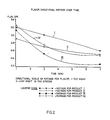
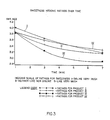
- the testers then numercially rated the tested gum products both hedonically and directionally for the individual chewing gum characteristics of flavor strength, sweetness, texture (hardness) and mouthfeel, periodically, over seven minutes of chewing time.
- the numerical ratings for such tests which were rendered at the end of about each 0.5 to 1.0 minute of test time during the full seven minute test run, were on a scale of 1 to 5 hedonically, with the higher numerical hedonic rating representing the more acceptable level, to the tester, of the attribute being evaluated.
- the testers also rated the individual product attributes being evaluated directionally, on a numercial scale of 1 to 5, with the numercial value 3 ⁇ 0.2 on such scale being the optimum value of acceptable quality for the attribute being tested, and the terminal values of 1 and 5 on such scale representing the two extremes for the attribute being tested.
- each tester also provided an overall hedonic rating, on a numerical scale of 1-9, for each product, with, again, the higher numercial ratings within such scale representing the more acceptable levels, to the tester, of the overall quality of the test products.
- the demographic make-up of the test population which was determined by the prescreening of the potentially available testing population, was as follows: 49% were of the ages of 13-18 51% were of the ages 19-34 58% were female 42% were male
- test population also indicated that they had previously used commercially available sugarless chewing gum as follows:
- Table II shows the overall acceptability ratings given by the testers to the four products evaluated in terms of numercial hedonatic ratings therefor, as well as in terms of the % of the test population showing preferences for the respective products. This data shows that, overall, there was a significant preference for product I over the other three products.
- Table III shows the overall acceptability ratings given by the testers where variable, or products, I to IV were paired off against each other. The ratings are given both in terms of hedonic numercial ratings as well as in terms of percentages of the test population. These test results also indicate that procut I was as acceptable as product II ans more, to significantly more, acceptable than products III and IV, respectively.
- the chewing gum products of the present invention i.e., those of Example 2, were flexible, in stick form.
- individual sticks of gum made from the product of Example 2 were twisted 3 times before breaking. These tests for flexibility were conducted, periodically, over a storage period of up to about 42 days under accelerated aging conditions of 100-105°F and about 30% relative humidity.
Landscapes
- Life Sciences & Earth Sciences (AREA)
- Chemical & Material Sciences (AREA)
- Engineering & Computer Science (AREA)
- Food Science & Technology (AREA)
- Polymers & Plastics (AREA)
- Health & Medical Sciences (AREA)
- Molecular Biology (AREA)
- Inorganic Chemistry (AREA)
- Confectionery (AREA)
- Seasonings (AREA)
Applications Claiming Priority (2)
| Application Number | Priority Date | Filing Date | Title |
|---|---|---|---|
| US06/914,025 US4726953A (en) | 1986-10-01 | 1986-10-01 | Sweet flavorful soft flexible sugarless chewing gum |
| US914025 | 1986-10-01 |
Publications (2)
| Publication Number | Publication Date |
|---|---|
| EP0262678A2 true EP0262678A2 (de) | 1988-04-06 |
| EP0262678A3 EP0262678A3 (de) | 1988-06-22 |
Family
ID=25433824
Family Applications (1)
| Application Number | Title | Priority Date | Filing Date |
|---|---|---|---|
| EP87114362A Withdrawn EP0262678A3 (de) | 1986-10-01 | 1987-10-01 | Süsser Geschmack voller weicher biegsamer zuckerloser Kaugummi und Verfahren zu dessen Herstellung |
Country Status (5)
| Country | Link |
|---|---|
| US (1) | US4726953A (de) |
| EP (1) | EP0262678A3 (de) |
| DK (1) | DK513487A (de) |
| NO (1) | NO874117L (de) |
| ZA (1) | ZA877318B (de) |
Cited By (1)
| Publication number | Priority date | Publication date | Assignee | Title |
|---|---|---|---|---|
| GB2225923A (en) * | 1988-12-14 | 1990-06-20 | Warner Lambert Co | Chewing gum |
Families Citing this family (54)
| Publication number | Priority date | Publication date | Assignee | Title |
|---|---|---|---|---|
| US4844883A (en) * | 1987-01-20 | 1989-07-04 | Florasynth, Inc. | Stabilization of wintergreen flavor in chalk-based dentifrice and method |
| US4820506A (en) * | 1987-05-01 | 1989-04-11 | Research Foundation, State University Of New York | Salivary stimulant |
| WO1989003170A2 (en) * | 1988-12-09 | 1989-04-20 | Wm. Wrigley Jr. Company | Method of controlling release of acesulfame k in chewing gum and gum produced thereby |
| US5108762A (en) * | 1989-04-19 | 1992-04-28 | Wm. Wrigley Jr. Company | Gradual release structures for chewing gum |
| US5229148A (en) * | 1989-04-19 | 1993-07-20 | Wm. Wrigley Jr. Company | Method of combining active ingredients with polyvinyl acetates |
| US5198251A (en) * | 1989-04-19 | 1993-03-30 | Wm. Wrigley Jr. Company | Gradual release structures for chewing gum |
| US4978537A (en) * | 1989-04-19 | 1990-12-18 | Wm. Wrigley Jr. Company | Gradual release structures for chewing gum |
| US5165944A (en) * | 1989-04-19 | 1992-11-24 | Wm. Wrigley Jr. Company | Gradual release structures for chewing gum |
| US5154939A (en) * | 1989-04-19 | 1992-10-13 | Wm. Wrigley Jr. Company | Use of salt to improve extrusion encapsulation of chewing gum ingredients |
| WO1989011212A2 (en) * | 1989-08-30 | 1989-11-30 | Wm. Wrigley Jr. Company | Method of controlling release of cyclamate in chewing gum and gum produced thereby |
| FI904598A7 (fi) * | 1989-10-10 | 1991-04-11 | Wrigley W M Jun Co | Kuidunkehruutekniikalla valmistetut ainetta vähitellen vapauttavat rakenteet |
| WO1990013994A2 (en) * | 1990-07-17 | 1990-11-29 | Wm. Wrigley Jr. Company | Controlled release of dihydrochalcones in chewing gum |
| US5128155A (en) * | 1990-12-20 | 1992-07-07 | Wm. Wrigley Jr. Company | Flavor releasing structures for chewing gum |
| US5156865A (en) * | 1991-08-16 | 1992-10-20 | Wm. Wrigley Jr. Company | Method of adding licorice to chewing gum |
| US6576246B1 (en) * | 1999-05-24 | 2003-06-10 | Seefar Technologies, Inc. | Degradable animal chewing article possessing enhanced safety, durability and mouth-feel |
| US7041277B2 (en) * | 2000-03-10 | 2006-05-09 | Cadbury Adams Usa Llc | Chewing gum and confectionery compositions with encapsulated stain removing agent compositions, and methods of making and using the same |
| AU2002323135A1 (en) * | 2001-08-14 | 2003-03-03 | Variant Holdings, Llc. | System for marketing goods and services utilizing computerized central and remote facilities |
| US7445769B2 (en) | 2002-10-31 | 2008-11-04 | Cadbury Adams Usa Llc | Compositions for removing stains from dental surfaces and methods of making and using the same |
| US8367047B2 (en) * | 2002-12-20 | 2013-02-05 | L'oreal | Hair compositions |
| US20080317681A1 (en) * | 2003-07-11 | 2008-12-25 | Petros Gebreselassie | Compositions containing a stain removing complex, and methods of making and using the same |
| US7390518B2 (en) * | 2003-07-11 | 2008-06-24 | Cadbury Adams Usa, Llc | Stain removing chewing gum composition |
| US8591968B2 (en) * | 2005-05-23 | 2013-11-26 | Kraft Foods Global Brands Llc | Edible composition including a delivery system for active components |
| US8389032B2 (en) * | 2005-05-23 | 2013-03-05 | Kraft Foods Global Brands Llc | Delivery system for active components as part of an edible composition having selected particle size |
| US20050112236A1 (en) * | 2003-11-21 | 2005-05-26 | Navroz Boghani | Delivery system for active components as part of an edible composition having preselected tensile strength |
| US8389031B2 (en) * | 2005-05-23 | 2013-03-05 | Kraft Foods Global Brands Llc | Coated delivery system for active components as part of an edible composition |
| US8597703B2 (en) * | 2005-05-23 | 2013-12-03 | Kraft Foods Global Brands Llc | Delivery system for active components as part of an edible composition including a ratio of encapsulating material and active component |
| US8591974B2 (en) * | 2003-11-21 | 2013-11-26 | Kraft Foods Global Brands Llc | Delivery system for two or more active components as part of an edible composition |
| US8591972B2 (en) * | 2005-05-23 | 2013-11-26 | Kraft Foods Global Brands Llc | Delivery system for coated active components as part of an edible composition |
| US20060263473A1 (en) * | 2005-05-23 | 2006-11-23 | Cadbury Adams Usa Llc | Compressed delivery system for active components as part of an edible composition |
| US9271904B2 (en) * | 2003-11-21 | 2016-03-01 | Intercontinental Great Brands Llc | Controlled release oral delivery systems |
| US20060263474A1 (en) * | 2005-05-23 | 2006-11-23 | Cadbury Adams Usa Llc. | Enhanced flavor-release comestible compositions and methods for same |
| US8591973B2 (en) * | 2005-05-23 | 2013-11-26 | Kraft Foods Global Brands Llc | Delivery system for active components and a material having preselected hydrophobicity as part of an edible composition |
| US20060024245A1 (en) * | 2004-07-29 | 2006-02-02 | Cadbury Adams, Llc. | Tooth whitening compositions and delivery systems therefor |
| US7641892B2 (en) | 2004-07-29 | 2010-01-05 | Cadburry Adams USA, LLC | Tooth whitening compositions and delivery systems therefor |
| US20060263476A1 (en) * | 2004-08-25 | 2006-11-23 | Cadbury Adams Usa, Llc. | Center-filled chewing gum with barrier layer |
| US7955630B2 (en) * | 2004-09-30 | 2011-06-07 | Kraft Foods Global Brands Llc | Thermally stable, high tensile strength encapsulated actives |
| US20060068058A1 (en) * | 2004-09-30 | 2006-03-30 | Cadbury Adams Usa Llc | Thermally stable, high tensile strength encapsulation compositions for actives |
| US7727565B2 (en) | 2004-08-25 | 2010-06-01 | Cadbury Adams Usa Llc | Liquid-filled chewing gum composition |
| US20060068059A1 (en) * | 2004-09-30 | 2006-03-30 | Cadbury Adams Usa Llc | Encapsulated compositions and methods of preparation |
| US9198448B2 (en) | 2005-02-07 | 2015-12-01 | Intercontinental Great Brands Llc | Stable tooth whitening gum with reactive ingredients |
| EP1874126B1 (de) * | 2005-04-29 | 2010-07-28 | Wm. Wrigley Jr. Company | Geformte kaugummiprodukte, die lösliches protein enthalten, sowie verfahren zu ihrer herstellung |
| CN101170913A (zh) * | 2005-04-29 | 2008-04-30 | Wm.雷格利Jr.公司 | 成型口香糖产品及其制备方法 |
| EP1901622B1 (de) * | 2005-05-23 | 2014-07-16 | Intercontinental Great Brands LLC | Geschmacksverstärkerzusammensetzungen und diese enthaltende getränke |
| US7851006B2 (en) * | 2005-05-23 | 2010-12-14 | Cadbury Adams Usa Llc | Taste potentiator compositions and beverages containing same |
| WO2006127605A2 (en) | 2005-05-23 | 2006-11-30 | Cadbury Adams Usa Llc | Confectionery composition including an elastomeric component, a cooked saccharide component, and a sweetener |
| US7851005B2 (en) | 2005-05-23 | 2010-12-14 | Cadbury Adams Usa Llc | Taste potentiator compositions and beverages containing same |
| US20070053972A1 (en) * | 2005-09-08 | 2007-03-08 | Cadbury Adams Usa Llc. | Gelatin capsules containing actives |
| US20070178187A1 (en) * | 2006-01-27 | 2007-08-02 | Cadbury Adams Usa Llc | Chewing gum compositions including free neotame sweetener compositions |
| US20070178188A1 (en) * | 2006-01-27 | 2007-08-02 | Cadbury Adams Usa Llc | Chewing gum compositions including free neotame sweetener compositions |
| WO2007092763A2 (en) * | 2006-02-03 | 2007-08-16 | Wm. Wrigley Jr. Company | Calcium phosphate salts in oral compositions suitable as a tooth remineralizing agent |
| AU2007267051B2 (en) * | 2006-05-26 | 2011-08-11 | Intercontinental Great Brands Llc | Confectionery compositions containing reactable ingredients |
| WO2008037251A1 (en) * | 2006-09-29 | 2008-04-03 | Cadbury Holdings Limited | Chewing gum comprising polyethylene |
| US20080166449A1 (en) * | 2006-11-29 | 2008-07-10 | Cadbury Adams Usa Llc | Confectionery compositions including an elastomeric component and a saccharide component |
| CA2686930A1 (en) * | 2007-05-14 | 2008-11-20 | Cadbury Adams Usa Llc | Taste potentiator compositions in oral delivery systems |
Family Cites Families (7)
| Publication number | Priority date | Publication date | Assignee | Title |
|---|---|---|---|---|
| US3795744A (en) * | 1970-10-21 | 1974-03-05 | Lotte Co Ltd | Flavor variable chewing gum and methods of preparing the same |
| US4248894A (en) * | 1979-01-17 | 1981-02-03 | Life Savers, Inc. | Long-lasting flavored chewing gum containing non-sugar sweetener codried on chalk or other filler and method |
| FR2459002A1 (fr) * | 1979-06-15 | 1981-01-09 | Roquette Freres | Chewing-gum perfectionne du type sans sucre |
| US4271197A (en) * | 1979-06-21 | 1981-06-02 | Walter Hopkins | Chewing gum containing sugar substitute |
| US4514422A (en) * | 1981-12-22 | 1985-04-30 | Warner-Lambert Company | Non-staling gum composition and method of preparation |
| US4590075A (en) * | 1984-08-27 | 1986-05-20 | Warner-Lambert Company | Elastomer encapsulation of flavors and sweeteners, long lasting flavored chewing gum compositions based thereon and process of preparation |
| AU586232B2 (en) * | 1985-03-29 | 1989-07-06 | Nabisco Brands Incorporated | Stabilized apm in comestibles |
-
1986
- 1986-10-01 US US06/914,025 patent/US4726953A/en not_active Expired - Lifetime
-
1987
- 1987-09-29 ZA ZA877318A patent/ZA877318B/xx unknown
- 1987-09-30 NO NO874117A patent/NO874117L/no unknown
- 1987-09-30 DK DK513487A patent/DK513487A/da not_active Application Discontinuation
- 1987-10-01 EP EP87114362A patent/EP0262678A3/de not_active Withdrawn
Cited By (1)
| Publication number | Priority date | Publication date | Assignee | Title |
|---|---|---|---|---|
| GB2225923A (en) * | 1988-12-14 | 1990-06-20 | Warner Lambert Co | Chewing gum |
Also Published As
| Publication number | Publication date |
|---|---|
| NO874117L (no) | 1988-04-05 |
| DK513487A (da) | 1988-04-02 |
| NO874117D0 (no) | 1987-09-30 |
| ZA877318B (en) | 1988-06-29 |
| DK513487D0 (da) | 1987-09-30 |
| US4726953A (en) | 1988-02-23 |
| EP0262678A3 (de) | 1988-06-22 |
Similar Documents
| Publication | Publication Date | Title |
|---|---|---|
| US4726953A (en) | Sweet flavorful soft flexible sugarless chewing gum | |
| EP0252374A1 (de) | Eingekapselte aktive Ingredienzien, Verfahren zu deren Herstellung und ihre Anwendung in eingenommenen Produkten | |
| EP0176236B1 (de) | Kaugummizusammensetzung und Herstellungsverfahren | |
| US4753806A (en) | Flexible sugarless chewing gum | |
| CA1176497A (en) | Coextruded chewing gum containing a soft non-sbr gum core portion | |
| EP0058946B1 (de) | Coextrudierter Kaugummi mit einem Kern aus weichem Gummi | |
| US4915958A (en) | High-base gum composition with extended flavor release | |
| US5023093A (en) | Reduced calorie chewing gum base and compositions containing the same | |
| US4983404A (en) | Controlled release flavor system and method of preparation | |
| US4241090A (en) | Non-adhesive chewing gums and method | |
| US5474787A (en) | Chewing gum containing a lecithin/glycerol triacetate blend | |
| US4582707A (en) | Non-sticking chewing gum | |
| IE903898A1 (en) | Encapsulated sweetener-flavor delivery system and method of¹preparation | |
| US4758438A (en) | Sweetener composition | |
| EP0652712B1 (de) | Verbesserter wachsfreier feuchtigkeitsarmer kaugummi | |
| US5667823A (en) | Sugarless chewing gum containing APM | |
| US4800095A (en) | Stabilized APM in comestibles | |
| EP0413539B1 (de) | Aroma freisetzendes System und seine Zubereitung | |
| CA1288633C (en) | Flexible sugarless chewing gum | |
| CA1292142C (en) | Stabilized apm in comestibles | |
| EP0793421B1 (de) | Verbesserter kaugummi mit salatrim | |
| EP0679061B1 (de) | Nichtklebender kaugummi mit hoher aromaintensität und verminderter plastifizierung | |
| JPH03119980A (ja) | ジペプチド甘味料および水素化澱粉加水分解物を含有する相乗甘味組成物ならびにその製法 | |
| IE902474A1 (en) | Reduced-calorie saliva stimulating chewing gums, center¹filled chewing gums, and confectionery coated gums, and¹methods for preparing same | |
| JPH04228034A (ja) | キシリトールとスクロースを含有するチューインガム組成物およびその製造方法 |
Legal Events
| Date | Code | Title | Description |
|---|---|---|---|
| PUAI | Public reference made under article 153(3) epc to a published international application that has entered the european phase |
Free format text: ORIGINAL CODE: 0009012 |
|
| AK | Designated contracting states |
Kind code of ref document: A2 Designated state(s): AT BE CH DE LI NL SE |
|
| PUAL | Search report despatched |
Free format text: ORIGINAL CODE: 0009013 |
|
| AK | Designated contracting states |
Kind code of ref document: A3 Designated state(s): AT BE CH DE LI NL SE |
|
| 17P | Request for examination filed |
Effective date: 19880804 |
|
| STAA | Information on the status of an ep patent application or granted ep patent |
Free format text: STATUS: THE APPLICATION HAS BEEN WITHDRAWN |
|
| 17Q | First examination report despatched |
Effective date: 19900205 |
|
| 18W | Application withdrawn |
Withdrawal date: 19900124 |
|
| RIN1 | Information on inventor provided before grant (corrected) |
Inventor name: CARROLL, THOMAS J. Inventor name: HOPKINS, WALTER R. |