EP0264088A2 - Brennverfahren unter kontrollierter Atmosphäre - Google Patents
Brennverfahren unter kontrollierter Atmosphäre Download PDFInfo
- Publication number
- EP0264088A2 EP0264088A2 EP87114828A EP87114828A EP0264088A2 EP 0264088 A2 EP0264088 A2 EP 0264088A2 EP 87114828 A EP87114828 A EP 87114828A EP 87114828 A EP87114828 A EP 87114828A EP 0264088 A2 EP0264088 A2 EP 0264088A2
- Authority
- EP
- European Patent Office
- Prior art keywords
- metal
- organic medium
- oxidizable
- firing
- layers
- Prior art date
- Legal status (The legal status is an assumption and is not a legal conclusion. Google has not performed a legal analysis and makes no representation as to the accuracy of the status listed.)
- Granted
Links
Images

Classifications
-
- C—CHEMISTRY; METALLURGY
- C04—CEMENTS; CONCRETE; ARTIFICIAL STONE; CERAMICS; REFRACTORIES
- C04B—LIME, MAGNESIA; SLAG; CEMENTS; COMPOSITIONS THEREOF, e.g. MORTARS, CONCRETE OR LIKE BUILDING MATERIALS; ARTIFICIAL STONE; CERAMICS; REFRACTORIES; TREATMENT OF NATURAL STONE
- C04B41/00—After-treatment of mortars, concrete, artificial stone or ceramics; Treatment of natural stone
- C04B41/009—After-treatment of mortars, concrete, artificial stone or ceramics; Treatment of natural stone characterised by the material treated
-
- C—CHEMISTRY; METALLURGY
- C04—CEMENTS; CONCRETE; ARTIFICIAL STONE; CERAMICS; REFRACTORIES
- C04B—LIME, MAGNESIA; SLAG; CEMENTS; COMPOSITIONS THEREOF, e.g. MORTARS, CONCRETE OR LIKE BUILDING MATERIALS; ARTIFICIAL STONE; CERAMICS; REFRACTORIES; TREATMENT OF NATURAL STONE
- C04B35/00—Shaped ceramic products characterised by their composition; Ceramics compositions; Processing powders of inorganic compounds preparatory to the manufacturing of ceramic products
- C04B35/622—Forming processes; Processing powders of inorganic compounds preparatory to the manufacturing of ceramic products
- C04B35/64—Burning or sintering processes
-
- B—PERFORMING OPERATIONS; TRANSPORTING
- B22—CASTING; POWDER METALLURGY
- B22F—WORKING METALLIC POWDER; MANUFACTURE OF ARTICLES FROM METALLIC POWDER; MAKING METALLIC POWDER; APPARATUS OR DEVICES SPECIALLY ADAPTED FOR METALLIC POWDER
- B22F3/00—Manufacture of workpieces or articles from metallic powder characterised by the manner of compacting or sintering; Apparatus specially adapted therefor ; Presses and furnaces
- B22F3/10—Sintering only
- B22F3/1003—Use of special medium during sintering, e.g. sintering aid
- B22F3/1007—Atmosphere
-
- B—PERFORMING OPERATIONS; TRANSPORTING
- B22—CASTING; POWDER METALLURGY
- B22F—WORKING METALLIC POWDER; MANUFACTURE OF ARTICLES FROM METALLIC POWDER; MAKING METALLIC POWDER; APPARATUS OR DEVICES SPECIALLY ADAPTED FOR METALLIC POWDER
- B22F3/00—Manufacture of workpieces or articles from metallic powder characterised by the manner of compacting or sintering; Apparatus specially adapted therefor ; Presses and furnaces
- B22F3/10—Sintering only
- B22F3/1017—Multiple heating or additional steps
- B22F3/1021—Removal of binder or filler
-
- C—CHEMISTRY; METALLURGY
- C04—CEMENTS; CONCRETE; ARTIFICIAL STONE; CERAMICS; REFRACTORIES
- C04B—LIME, MAGNESIA; SLAG; CEMENTS; COMPOSITIONS THEREOF, e.g. MORTARS, CONCRETE OR LIKE BUILDING MATERIALS; ARTIFICIAL STONE; CERAMICS; REFRACTORIES; TREATMENT OF NATURAL STONE
- C04B41/00—After-treatment of mortars, concrete, artificial stone or ceramics; Treatment of natural stone
- C04B41/45—Coating or impregnating, e.g. injection in masonry, partial coating of green or fired ceramics, organic coating compositions for adhering together two concrete elements
- C04B41/50—Coating or impregnating, e.g. injection in masonry, partial coating of green or fired ceramics, organic coating compositions for adhering together two concrete elements with inorganic materials
- C04B41/51—Metallising, e.g. infiltration of sintered ceramic preforms with molten metal
-
- C—CHEMISTRY; METALLURGY
- C04—CEMENTS; CONCRETE; ARTIFICIAL STONE; CERAMICS; REFRACTORIES
- C04B—LIME, MAGNESIA; SLAG; CEMENTS; COMPOSITIONS THEREOF, e.g. MORTARS, CONCRETE OR LIKE BUILDING MATERIALS; ARTIFICIAL STONE; CERAMICS; REFRACTORIES; TREATMENT OF NATURAL STONE
- C04B41/00—After-treatment of mortars, concrete, artificial stone or ceramics; Treatment of natural stone
- C04B41/80—After-treatment of mortars, concrete, artificial stone or ceramics; Treatment of natural stone of only ceramics
- C04B41/81—Coating or impregnation
- C04B41/85—Coating or impregnation with inorganic materials
- C04B41/88—Metals
-
- H—ELECTRICITY
- H05—ELECTRIC TECHNIQUES NOT OTHERWISE PROVIDED FOR
- H05K—PRINTED CIRCUITS; CASINGS OR CONSTRUCTIONAL DETAILS OF ELECTRIC APPARATUS; MANUFACTURE OF ASSEMBLAGES OF ELECTRICAL COMPONENTS
- H05K3/00—Apparatus or processes for manufacturing printed circuits
- H05K3/10—Apparatus or processes for manufacturing printed circuits in which conductive material is applied to the insulating support in such a manner as to form the desired conductive pattern
- H05K3/12—Apparatus or processes for manufacturing printed circuits in which conductive material is applied to the insulating support in such a manner as to form the desired conductive pattern using thick film techniques, e.g. printing techniques to apply the conductive material or similar techniques for applying conductive paste or ink patterns
- H05K3/1283—After-treatment of the printed patterns, e.g. sintering or curing methods
- H05K3/1291—Firing or sintering at relative high temperatures for patterns on inorganic boards, e.g. co-firing of circuits on green ceramic sheets
-
- H—ELECTRICITY
- H10—SEMICONDUCTOR DEVICES; ELECTRIC SOLID-STATE DEVICES NOT OTHERWISE PROVIDED FOR
- H10W—GENERIC PACKAGES, INTERCONNECTIONS, CONNECTORS OR OTHER CONSTRUCTIONAL DETAILS OF DEVICES COVERED BY CLASS H10
- H10W70/00—Package substrates; Interposers; Redistribution layers [RDL]
- H10W70/01—Manufacture or treatment
- H10W70/05—Manufacture or treatment of insulating or insulated package substrates, or of interposers, or of redistribution layers
-
- H—ELECTRICITY
- H10—SEMICONDUCTOR DEVICES; ELECTRIC SOLID-STATE DEVICES NOT OTHERWISE PROVIDED FOR
- H10W—GENERIC PACKAGES, INTERCONNECTIONS, CONNECTORS OR OTHER CONSTRUCTIONAL DETAILS OF DEVICES COVERED BY CLASS H10
- H10W99/00—Subject matter not provided for in other groups of this subclass
-
- B—PERFORMING OPERATIONS; TRANSPORTING
- B22—CASTING; POWDER METALLURGY
- B22F—WORKING METALLIC POWDER; MANUFACTURE OF ARTICLES FROM METALLIC POWDER; MAKING METALLIC POWDER; APPARATUS OR DEVICES SPECIALLY ADAPTED FOR METALLIC POWDER
- B22F2201/00—Treatment under specific atmosphere
- B22F2201/01—Reducing atmosphere
- B22F2201/013—Hydrogen
-
- B—PERFORMING OPERATIONS; TRANSPORTING
- B22—CASTING; POWDER METALLURGY
- B22F—WORKING METALLIC POWDER; MANUFACTURE OF ARTICLES FROM METALLIC POWDER; MAKING METALLIC POWDER; APPARATUS OR DEVICES SPECIALLY ADAPTED FOR METALLIC POWDER
- B22F2201/00—Treatment under specific atmosphere
- B22F2201/04—CO or CO2
-
- C—CHEMISTRY; METALLURGY
- C04—CEMENTS; CONCRETE; ARTIFICIAL STONE; CERAMICS; REFRACTORIES
- C04B—LIME, MAGNESIA; SLAG; CEMENTS; COMPOSITIONS THEREOF, e.g. MORTARS, CONCRETE OR LIKE BUILDING MATERIALS; ARTIFICIAL STONE; CERAMICS; REFRACTORIES; TREATMENT OF NATURAL STONE
- C04B2111/00—Mortars, concrete or artificial stone or mixtures to prepare them, characterised by specific function, property or use
- C04B2111/00474—Uses not provided for elsewhere in C04B2111/00
- C04B2111/00844—Uses not provided for elsewhere in C04B2111/00 for electronic applications
-
- H—ELECTRICITY
- H05—ELECTRIC TECHNIQUES NOT OTHERWISE PROVIDED FOR
- H05K—PRINTED CIRCUITS; CASINGS OR CONSTRUCTIONAL DETAILS OF ELECTRIC APPARATUS; MANUFACTURE OF ASSEMBLAGES OF ELECTRICAL COMPONENTS
- H05K1/00—Printed circuits
- H05K1/02—Details
- H05K1/03—Use of materials for the substrate
- H05K1/0306—Inorganic insulating substrates, e.g. ceramic, glass
-
- H—ELECTRICITY
- H05—ELECTRIC TECHNIQUES NOT OTHERWISE PROVIDED FOR
- H05K—PRINTED CIRCUITS; CASINGS OR CONSTRUCTIONAL DETAILS OF ELECTRIC APPARATUS; MANUFACTURE OF ASSEMBLAGES OF ELECTRICAL COMPONENTS
- H05K2203/00—Indexing scheme relating to apparatus or processes for manufacturing printed circuits covered by H05K3/00
- H05K2203/08—Treatments involving gases
- H05K2203/087—Using a reactive gas
-
- H—ELECTRICITY
- H05—ELECTRIC TECHNIQUES NOT OTHERWISE PROVIDED FOR
- H05K—PRINTED CIRCUITS; CASINGS OR CONSTRUCTIONAL DETAILS OF ELECTRIC APPARATUS; MANUFACTURE OF ASSEMBLAGES OF ELECTRICAL COMPONENTS
- H05K3/00—Apparatus or processes for manufacturing printed circuits
- H05K3/46—Manufacturing multilayer circuits
- H05K3/4611—Manufacturing multilayer circuits by laminating two or more circuit boards
-
- H—ELECTRICITY
- H05—ELECTRIC TECHNIQUES NOT OTHERWISE PROVIDED FOR
- H05K—PRINTED CIRCUITS; CASINGS OR CONSTRUCTIONAL DETAILS OF ELECTRIC APPARATUS; MANUFACTURE OF ASSEMBLAGES OF ELECTRICAL COMPONENTS
- H05K3/00—Apparatus or processes for manufacturing printed circuits
- H05K3/46—Manufacturing multilayer circuits
- H05K3/4611—Manufacturing multilayer circuits by laminating two or more circuit boards
- H05K3/4626—Manufacturing multilayer circuits by laminating two or more circuit boards characterised by the insulating layers or materials
- H05K3/4629—Manufacturing multilayer circuits by laminating two or more circuit boards characterised by the insulating layers or materials laminating inorganic sheets comprising printed circuits, e.g. green ceramic sheets
Definitions
- the invention is directed to a process for firing oxidizable base metals in a controlled atmosphere to avoid oxidation of the base metal.
- Multilayer circuits containing base metal conductors interleaved with insulating dielectric layers are made from base metal and ceramic powders, both mixed with organic binders and other organic constituents. When fired, the organic constituents must be removed while the metal must be retained in its unoxidized state.
- Multilayer base metal circuits are conventionally fired one layer at a time in a nitrogen atmosphere containing up to a few hundred ppm O2 to remove the organics.
- the metal oxide and not the metal in its elemental form is usually thermodynamically stable under these conditions.
- the rate of oxidation of the metal is usually low, especially in the relatively reducing environment created by the organic decomposition products.
- After the metal powder has sintered oxidation requires diffusion of the oxygen through the metal oxide layer to the bulk metal.
- Most of the O2 in the N2 atmosphere is added at lower temperatures where the diffusion rate through the metal oxide layer into the metal is relatively low. Sintering, then, partially protects the metal from oxidation when the next layer is fired on top of it.
- a certain amount of oxidation is typical, especially when using organics that require high O2 concentrations in the firing atmosphere for removal. Firing in an O2/N2 atmosphere often results in discoloration of the dielectric layer when over metal because of diffusion of metal ions and precipitation of metal atoms in the dielectric.
- the amount of metal oxidation and dielectric discoloration depend on the level of O2 used which in turn depends on both the quantity and nature of the organics present. In general, low levels of O2 give low metal oxidation but high dielectric discoloration, while high levels of O2 give low dielectric discoloration but high oxidation. Optimizing the O2 level under these circumstances is often difficult.
- Cofiring, or simultaneous firing, of dielectric and metal layers in an O2/N2 atmosphere is even more difficult than firing the layers one at a time because longer times are required to remove the organics and since the metal layers have not been previously sintered they have little protection against this oxidizing atmosphere.
- the patent is directed to a method of firing porcelain in which the organic content of biscuit paste is burned off in a reducing atmosphere of CO/CO2 and H2O.
- Copper-alloy clad vessels are processed in a neutral or reducing atmosphere to avoid oxidation of the copper.
- Silicon carbide-containing resistor compositions are sintered in a reactive hydrocarbonaceous gas at 2220-2450°C.
- This patent is directed to monolithic ceramic electrical interconnecting structures which are fired in a reducing atmosphere such as argon containing 10% H2.
- the patent is directed to the decal metallization of ceramic substrates in which the decal is fired in two steps. In the first, the decal is fired in an oxidizing atmosphere to burn off the decal binder and in the second the substrate is fired in a reducing atmosphere of H2 and H2O or H2 and N2 to effect bonding of the metal to the substrate.
- the patent is directed to multilayer ceramic circuit structures made from green sheets in which the binder is burned off in either air or a reducing atmosphere.
- the patent is directed to making multilayer ceramic circuit structures from green sheets in which the binder is burned off in a reducing atmosphere of H2 and H2O.
- the patent discloses firing BaTiO3-based dielectrics in an atmosphere of N2 and optionally either 2-10 mole % H2O or H2/CO2.
- the patent is directed to a method of making monolithic ceramic capacitors in which the electrodes are fired at 2500°C in a low oxygen atmosphere comprising CO2 and CO.
- the reference is directed to monolithic ceramic capacitors which are sintered at 950-1080°C in a CO2/CO atmosphere to avoid oxidation of the electrode metals.
- the patent discloses the firing of multilayer interconnected thick film circuits having copper conductors in an atmosphere of H2/H2O.
- the patent discloses firing multilayered glass-ceramic structures having copper-based patterns in which firing is carried out in two steps.
- the binder is volatilized in an atmosphere of inert gas (N,Ar,He) and H2O and the sintering is carried out in inert gas without water.
- inert gas N,Ar,He
- the reference is directed to a method of cofiring dielectric and base metal conductor pastes in which the organic medium of the conductor paste has a higher decomposition temperature than the binder in the dielectric paste.
- the cofiring is carried out in two steps: (1) an oxidizing step to decompose the binder without decomposing the organic medium and (2) a low oxygen atmosphere step to decompose the organic medium.
- An atmosphere of H2 + N2 + H2O is disclosed as a suitable atmosphere for decomposing the organic medium.
- the invention is directed to a process for firing an oxidizable base metal in the presence of an organic medium to effect volatilization of the organic medium without substantial oxidation of the metal.
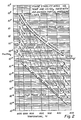
- the process comprises heating the dispersion in an atmosphere consisting essentially of CO, CO2 and from 0.1 to 90 mole % H2O basis CO2, to a temperature above the thermal decomposition temperature of the organic medium and below the melting point of the base metal between the metal/metal oxide and carbon/carbon oxides phase transition lines of the resultant mixture of the atmosphere with gaseous products from decomposition of the organic medium for a time sufficient to burn out essentially all of the organic medium.
- the invention is directed to the above-described process in which the base metal is comprised of an admixture of first and second base metals having lower and higher metal/metal oxide phase transition lines respectively and the firing temperature is between the metal/metal oxide transition lines of the base metals by which the first metal undergoes no substantial oxidation and the second metal undergoes essentially complete oxidation.
- Firing in O2/N2 as described above is a kinetically-controlled process. That is, conditions are chosen that maximize the rate of carbon oxidation and minimize rates of metal oxidation, diffusion, and precipitation. Another approach is to use a thermodynamically-controlled process in which undesirable reaction rates are set to zero by choosing conditions under which the changes in the free energies of the undesirable reactions are positive.
- a CO/CO2 atmosphere functions thermodynamically by controlling oxygen partial pressure. With the appropriate CO/CO2 ratio, organics can be removed from the metal and dielectric layers with no metal oxidation or dielectric discoloration. There is no theoretical limit to the number of layers that can be cofired. In practice, however, relatively long times are required to remove the organics using this firing atmosphere.
- the amount of water to be added to the CO/CO2 atmosphere is not itself narrowly critical. As little as 0.1 mole % water is beneficial and as much as 90 mole % H2O does not appear to be detrimental. However, no further benefit of H2O addition is apparent beyond about 30 mole % H2O addition. Moreover, H2O additions above about 5% yield only slight increases in firing rates. Thus, H2O additions of 0.1-5 mole % are preferred and, at least for copper, about 3% appears to be optimum.
- the firing atmospheres for use in the invention are conveniently prepared by admixing CO and CO2 gases in the desired proportions and then bubbling the admixture of gases through water in order to humidify the gases to the desired level.
- the temperature of the water can be raised or lowered to increase or reduce the amount of water addition.
- the addition of water to the CO/CO2 admixture is approximately 3 mole %.
- oxidizable base metal so long as their metal/metal oxide phase transition lines in a CO/CO2 atmosphere lie below the carbon/carbon oxides phase transition line.
- suitable metals include Cu, Ni and Mo, the last only above about 700°C.
- oxidizable base metals such as Ti and W are not suitable for use in the invention process because their metal/metal oxide phase transition lines lie above the carbon/carbon oxides phase transition line of CO/CO2 atmospheres and thus the CO/CO2 atmosphere itself will precipitate carbon under these conditions.
- the process of the invention can be used to fire liquid dispersions, thick film pastes or solid films such as green tapes or dry films. Also when firing sequentially the process can be used to prevent the oxidation of already formed oxidizable metal layers adjacent to layers of other electrically functional material dispersions in organic medium. Furthermore, it will be recognized that the process can be used in the manufacture of multilayer electronic elements such as multilayer interconnects, whether they are fired sequentially, semisequentially or cofired.
- the terms "electric functionality” and “electrically functional” refer to materials--either inorganic or organic--which when appropriately processed have conductive, resistive, or dielective functionality.
- the firing temperature be above the decomposition temperature of the organic medium in which the base metal is dispersed, but below the melting point of the base metal.
- the volatilization process that is, the process of removing organic media during firing occurs in three steps: first, evaporation of lower molecular components; second, nonoxidative pyrolysis of heavier materials; and third, oxidation of the remaining materials.
- the firing temperature for the process must be at least about 350 to 400°C and can, or course, be much higher to obtain more rapid and complete volatilization.
- volatilization means substantially complete removal of the organic medium which would normally take place as mentioned above by a combination of evaporation, oxidation and pyrolysis depending, inter alia, on the composition of the organic medium in which the base metal is dispersed.
- the process of the invention must be carried out below the melting point of the base metal.
- the process is carried out at a temperature at least 50°C below the melting point of the base metal being fired.
- the firing temperature will normally fall within the range of 900-1025°C.
- One of the advantages of the CO/CO2 firing atmosphere is that it is an equilibrium-related or "buffered" system in which the O2 concentration is fixed easily by adjusting the CO/CO2 ratio.
- the oxidation reduction potential of the gas admixture is easily established by adjusting the CO/CO2.
- oxidation/reduction potential means the tendency of the atmosphere under defining conditions either to oxidize or reduce other materials.
- An advantage of the invention process is that it utilizes a high partial pressure of CO2 (relative to O2) which is the source of the oxidizing species of the CO/CO2 system.
- CO2 relative to O2
- the diffusion transfer rate of CO2 into the substrate is quite high and therefore volatilization is more complete in a given period of time.
- the CO/CO2 system also has a high concentration of CO, the reducing species, which gives a high diffusion transfer rate of CO and thus maintains the base metal in the nonoxidized (bright) state.
- the oxidative reaction of CO2 is endothermic, the system is very unlikely to incur localized runaway reactions which can cause hot spots which in turn lead to unwanted entrapment of organic materials and other unwanted effects such as melting the base metal.
- the Ink Adsorption Test is a qualitative test for estimating the degree of dielectric porosity, and thus provides a rough measure of the completeness of organic removal.
- the test is carried out as follows. The test piece is held horizontally. A drop of nonsmear rubber-stamp ink (Ranger Products Company, Red Bank, NJ) is placed on the dielectric surface and allowed to stand 30 seconds. The test part is then held vertically in a stream of cold tap water for 30 seconds, followed by a stream of acetone for 15 seconds, in the attempt to wash off the ink. Areas of ink retention which are traceable to distinct defects, such as blisters or dirt, should be ignored. If there is no visible ink retention on the dielectric surface, the dielectric is deemed nonporous. If there is visible ink retention on the dielectric surface, the dielectric is deemed porous.
- Examples 6 and 7 both show that when enough CO is added to the CO2 the reduction potential of the gaseous mixture is sufficient completely to protect the copper from oxidation.
- Examples 6 and 7 there was no apparent difference in the effectiveness of CO/CO2 and Co/CO2/H2O at equilibrium. This is of course because of the long firing time used in the three tests.
- Examples 8 and 9 below the addition of water has a dramatic effect in speeding up the volatilization process without altering in any significant way the favorable thermodynamics of the underlying CO/CO2 atmosphere.
- This example illustrates the use of the firing process of the invention in the manufacture of multilayer composite elements consisting of four copper layers alternating with three dielectric layers supported on an alumina substrate.
- the same conductor and dielectric materials were used as in the other Examples.
- a layer of copper film dispersion was laminated to the alumina substrate and a layer of the dielectric film was laminated to the copper film and the composite structure was fired in an atmosphere of CO/CO2/H2O 1/96/3.
- the firing profile was 5° per minute from room temperature to 650°C, about 16 hours at 650°C, 5° per minute up to 900°C and 10 minutes dwell time at 900°C before turning off the furnace to effect slow cooldown.
- the eight-layer (including the substrate) device was made in four firing steps.
- the finished device had no interlayer shorts or line breaks, had no detectable stain and was hermetic as measured by the Ink Adsorption Test described hereinabove.
- This Example again illustrates the use of the firing process of the invention in the manufacture of multilayer composite elements as in Example 14.
- the structure was made with only two firings.
- a composite supported on alumina was built up by lamination on the alumina substrate of two layers each of copper and dielectric (DE) films in the sequence Cu/DE/Cu/DE and firing the five layered laminate.
- DE copper and dielectric
- three further layers were laminated atop the exposed dielectric layer of the first fired laminated structure in the sequence Cu/DE/Cu and the entire eight layer structure was cofired.
- the finished device had no interlayer shorts, had no interlayer stain and was hermetic as measured by the Ink Adsorption Test.
Landscapes
- Chemical & Material Sciences (AREA)
- Engineering & Computer Science (AREA)
- Ceramic Engineering (AREA)
- Inorganic Chemistry (AREA)
- Structural Engineering (AREA)
- Organic Chemistry (AREA)
- Materials Engineering (AREA)
- Manufacturing & Machinery (AREA)
- Mechanical Engineering (AREA)
- Microelectronics & Electronic Packaging (AREA)
- Compositions Of Oxide Ceramics (AREA)
- Powder Metallurgy (AREA)
- Production Of Multi-Layered Print Wiring Board (AREA)
- Inorganic Insulating Materials (AREA)
Applications Claiming Priority (2)
| Application Number | Priority Date | Filing Date | Title |
|---|---|---|---|
| US91830386A | 1986-10-14 | 1986-10-14 | |
| US918303 | 1992-07-21 |
Publications (3)
| Publication Number | Publication Date |
|---|---|
| EP0264088A2 true EP0264088A2 (de) | 1988-04-20 |
| EP0264088A3 EP0264088A3 (en) | 1989-06-14 |
| EP0264088B1 EP0264088B1 (de) | 1992-08-26 |
Family
ID=25440153
Family Applications (1)
| Application Number | Title | Priority Date | Filing Date |
|---|---|---|---|
| EP87114828A Expired - Lifetime EP0264088B1 (de) | 1986-10-14 | 1987-10-10 | Brennverfahren unter kontrollierter Atmosphäre |
Country Status (6)
| Country | Link |
|---|---|
| EP (1) | EP0264088B1 (de) |
| JP (1) | JP2578832B2 (de) |
| KR (1) | KR900006631B1 (de) |
| CA (1) | CA1274430A (de) |
| DE (1) | DE3781358T2 (de) |
| HK (1) | HK105092A (de) |
Cited By (4)
| Publication number | Priority date | Publication date | Assignee | Title |
|---|---|---|---|---|
| EP0381430A3 (de) * | 1989-02-03 | 1991-05-02 | The Boc Group, Inc. | Verfahren Einbrennen von kupferverträglichen Dickschichtmaterialien |
| EP0481637A3 (en) * | 1990-10-16 | 1992-12-23 | The Boc Group, Inc. | Method for firing ceramic articles |
| US5302412A (en) * | 1989-02-03 | 1994-04-12 | The Boc Group, Inc. | Single atmosphere for firing compatible thick film material |
| DE102021202349A1 (de) | 2021-03-10 | 2022-09-15 | Autoneum Management Ag | Radhaus mit optimierter radhausverkleidung |
Families Citing this family (1)
| Publication number | Priority date | Publication date | Assignee | Title |
|---|---|---|---|---|
| US4971738A (en) * | 1988-07-18 | 1990-11-20 | International Business Machines Corporation | Enhanced removal of carbon from ceramic substrate laminates |
Family Cites Families (4)
| Publication number | Priority date | Publication date | Assignee | Title |
|---|---|---|---|---|
| US2547149A (en) * | 1946-04-17 | 1951-04-03 | Bernardaud & Cie Soc | Method of firing porcelain |
| US4101952A (en) * | 1976-08-17 | 1978-07-18 | Sprague Electric Company | Monolithic base-metal glass-ceramic capacitor |
| JPS60254697A (ja) * | 1984-05-31 | 1985-12-16 | 富士通株式会社 | 多層セラミック回路基板および製法 |
| US4613560A (en) * | 1984-12-28 | 1986-09-23 | E. I. Du Pont De Nemours And Company | Photosensitive ceramic coating composition |
-
1987
- 1987-10-08 CA CA000548912A patent/CA1274430A/en not_active Expired - Lifetime
- 1987-10-10 DE DE8787114828T patent/DE3781358T2/de not_active Expired - Fee Related
- 1987-10-10 EP EP87114828A patent/EP0264088B1/de not_active Expired - Lifetime
- 1987-10-13 JP JP62256437A patent/JP2578832B2/ja not_active Expired - Lifetime
- 1987-10-14 KR KR1019870011380A patent/KR900006631B1/ko not_active Expired
-
1992
- 1992-12-24 HK HK1050/92A patent/HK105092A/en not_active IP Right Cessation
Cited By (5)
| Publication number | Priority date | Publication date | Assignee | Title |
|---|---|---|---|---|
| EP0381430A3 (de) * | 1989-02-03 | 1991-05-02 | The Boc Group, Inc. | Verfahren Einbrennen von kupferverträglichen Dickschichtmaterialien |
| US5302412A (en) * | 1989-02-03 | 1994-04-12 | The Boc Group, Inc. | Single atmosphere for firing compatible thick film material |
| EP0481637A3 (en) * | 1990-10-16 | 1992-12-23 | The Boc Group, Inc. | Method for firing ceramic articles |
| DE102021202349A1 (de) | 2021-03-10 | 2022-09-15 | Autoneum Management Ag | Radhaus mit optimierter radhausverkleidung |
| WO2022189477A1 (en) | 2021-03-10 | 2022-09-15 | Autoneum Management Ag | Wheel arch with optimized wheel arch lining |
Also Published As
| Publication number | Publication date |
|---|---|
| KR880005845A (ko) | 1988-06-30 |
| HK105092A (en) | 1992-12-31 |
| JPS63170271A (ja) | 1988-07-14 |
| CA1274430A (en) | 1990-09-25 |
| EP0264088B1 (de) | 1992-08-26 |
| DE3781358T2 (de) | 1993-01-28 |
| DE3781358D1 (de) | 1992-10-01 |
| KR900006631B1 (ko) | 1990-09-15 |
| JP2578832B2 (ja) | 1997-02-05 |
| EP0264088A3 (en) | 1989-06-14 |
Similar Documents
| Publication | Publication Date | Title |
|---|---|---|
| EP0163478B1 (de) | Verfahren zur Herstellung einer keramischen Leiterplatte | |
| EP0275052B1 (de) | Verfahren zur Herstellung eines keramischen Mehrschichtkörpers mit inneren Kupferteilen | |
| US4795512A (en) | Method of manufacturing a multilayer ceramic body | |
| US5468445A (en) | Ceramic via composition, multilayer ceramic circuit containing same, and process for using same | |
| US4619836A (en) | Method of fabricating thick film electrical components | |
| EP0264088B1 (de) | Brennverfahren unter kontrollierter Atmosphäre | |
| EP0222075B1 (de) | Verfahren zum Herstellen von elektrischen Dickschichtkomponenten | |
| US5512353A (en) | Ceramic substrate for an electronic circuit | |
| US5302412A (en) | Single atmosphere for firing compatible thick film material | |
| US4891246A (en) | Controlled atmosphere firing process | |
| EP0267602A2 (de) | Verfahren zur Herstellung einer Mehrschichtstruktur hoher Dichte aus Glaskeramik mit metallischen Leitern | |
| AU644481B2 (en) | Method for preparing multi-layered ceramic with internal copper conductor | |
| JPH02277282A (ja) | ハイブリッド回路基体上での厚フィルム電気部品の製造方法 | |
| EP0797225A2 (de) | Verfahren zur Herstellung von Vielschichtkondensatoren | |
| JPS622406A (ja) | 多層基板用絶縁ペ−スト | |
| JPH0320914B2 (de) | ||
| JPS62205692A (ja) | セラミツク多層配線基板の製造方法 | |
| EP0481637A2 (de) | Verfahren zum Brennen keramischer Gegenstände | |
| Hankey et al. | Development of a novel resistor system for nitrogen firing applications | |
| JPS5915481B2 (ja) | グレ−ズ抵抗器の製造方法 | |
| JPH0242796A (ja) | 多層セラミックス基板の製造方法 | |
| JPH0321110B2 (de) | ||
| JPH04317311A (ja) | 積層セラミックコンデンサ | |
| JPS62198198A (ja) | セラミツク多層配線基板の製造方法 | |
| JPS63155696A (ja) | Cr内蔵厚膜配線基板の製造方法 |
Legal Events
| Date | Code | Title | Description |
|---|---|---|---|
| PUAI | Public reference made under article 153(3) epc to a published international application that has entered the european phase |
Free format text: ORIGINAL CODE: 0009012 |
|
| AK | Designated contracting states |
Kind code of ref document: A2 Designated state(s): BE CH DE FR GB IT LI LU NL |
|
| PUAL | Search report despatched |
Free format text: ORIGINAL CODE: 0009013 |
|
| AK | Designated contracting states |
Kind code of ref document: A3 Designated state(s): BE CH DE FR GB IT LI LU NL |
|
| 17P | Request for examination filed |
Effective date: 19890930 |
|
| 17Q | First examination report despatched |
Effective date: 19910207 |
|
| GRAA | (expected) grant |
Free format text: ORIGINAL CODE: 0009210 |
|
| AK | Designated contracting states |
Kind code of ref document: B1 Designated state(s): BE CH DE FR GB IT LI LU NL |
|
| PG25 | Lapsed in a contracting state [announced via postgrant information from national office to epo] |
Ref country code: BE Effective date: 19920826 |
|
| ET | Fr: translation filed | ||
| ITF | It: translation for a ep patent filed | ||
| REF | Corresponds to: |
Ref document number: 3781358 Country of ref document: DE Date of ref document: 19921001 |
|
| PG25 | Lapsed in a contracting state [announced via postgrant information from national office to epo] |
Ref country code: LU Free format text: LAPSE BECAUSE OF NON-PAYMENT OF DUE FEES Effective date: 19921031 |
|
| PLBE | No opposition filed within time limit |
Free format text: ORIGINAL CODE: 0009261 |
|
| STAA | Information on the status of an ep patent application or granted ep patent |
Free format text: STATUS: NO OPPOSITION FILED WITHIN TIME LIMIT |
|
| 26N | No opposition filed | ||
| PGFP | Annual fee paid to national office [announced via postgrant information from national office to epo] |
Ref country code: CH Payment date: 19930909 Year of fee payment: 7 |
|
| PGFP | Annual fee paid to national office [announced via postgrant information from national office to epo] |
Ref country code: NL Payment date: 19931031 Year of fee payment: 7 |
|
| PG25 | Lapsed in a contracting state [announced via postgrant information from national office to epo] |
Ref country code: LI Effective date: 19941031 Ref country code: CH Effective date: 19941031 |
|
| PG25 | Lapsed in a contracting state [announced via postgrant information from national office to epo] |
Ref country code: NL Effective date: 19950501 |
|
| NLV4 | Nl: lapsed or anulled due to non-payment of the annual fee | ||
| REG | Reference to a national code |
Ref country code: CH Ref legal event code: PL |
|
| PGFP | Annual fee paid to national office [announced via postgrant information from national office to epo] |
Ref country code: FR Payment date: 19960903 Year of fee payment: 10 |
|
| PGFP | Annual fee paid to national office [announced via postgrant information from national office to epo] |
Ref country code: DE Payment date: 19960912 Year of fee payment: 10 |
|
| PGFP | Annual fee paid to national office [announced via postgrant information from national office to epo] |
Ref country code: GB Payment date: 19960926 Year of fee payment: 10 |
|
| PG25 | Lapsed in a contracting state [announced via postgrant information from national office to epo] |
Ref country code: GB Free format text: LAPSE BECAUSE OF NON-PAYMENT OF DUE FEES Effective date: 19971010 |
|
| PG25 | Lapsed in a contracting state [announced via postgrant information from national office to epo] |
Ref country code: FR Free format text: THE PATENT HAS BEEN ANNULLED BY A DECISION OF A NATIONAL AUTHORITY Effective date: 19971031 |
|
| GBPC | Gb: european patent ceased through non-payment of renewal fee |
Effective date: 19971010 |
|
| PG25 | Lapsed in a contracting state [announced via postgrant information from national office to epo] |
Ref country code: DE Free format text: LAPSE BECAUSE OF NON-PAYMENT OF DUE FEES Effective date: 19980701 |
|
| REG | Reference to a national code |
Ref country code: FR Ref legal event code: ST |
|
| PG25 | Lapsed in a contracting state [announced via postgrant information from national office to epo] |
Ref country code: IT Free format text: LAPSE BECAUSE OF NON-PAYMENT OF DUE FEES;WARNING: LAPSES OF ITALIAN PATENTS WITH EFFECTIVE DATE BEFORE 2007 MAY HAVE OCCURRED AT ANY TIME BEFORE 2007. THE CORRECT EFFECTIVE DATE MAY BE DIFFERENT FROM THE ONE RECORDED. Effective date: 20051010 |