EP0266057A2 - Eine eukaryotische sekretorische Signalsequenz enthaltendes Plasmid und Verfahren zur Sekretion der kodierten Proteine - Google Patents
Eine eukaryotische sekretorische Signalsequenz enthaltendes Plasmid und Verfahren zur Sekretion der kodierten Proteine Download PDFInfo
- Publication number
- EP0266057A2 EP0266057A2 EP87308484A EP87308484A EP0266057A2 EP 0266057 A2 EP0266057 A2 EP 0266057A2 EP 87308484 A EP87308484 A EP 87308484A EP 87308484 A EP87308484 A EP 87308484A EP 0266057 A2 EP0266057 A2 EP 0266057A2
- Authority
- EP
- European Patent Office
- Prior art keywords
- plasmid
- secretory signal
- signal peptide
- bgh
- protein
- Prior art date
- Legal status (The legal status is an assumption and is not a legal conclusion. Google has not performed a legal analysis and makes no representation as to the accuracy of the status listed.)
- Withdrawn
Links
Images




Classifications
-
- C—CHEMISTRY; METALLURGY
- C12—BIOCHEMISTRY; BEER; SPIRITS; WINE; VINEGAR; MICROBIOLOGY; ENZYMOLOGY; MUTATION OR GENETIC ENGINEERING
- C12N—MICROORGANISMS OR ENZYMES; COMPOSITIONS THEREOF; PROPAGATING, PRESERVING, OR MAINTAINING MICROORGANISMS; MUTATION OR GENETIC ENGINEERING; CULTURE MEDIA
- C12N15/00—Mutation or genetic engineering; DNA or RNA concerning genetic engineering, vectors, e.g. plasmids, or their isolation, preparation or purification; Use of hosts therefor
- C12N15/09—Recombinant DNA-technology
- C12N15/63—Introduction of foreign genetic material using vectors; Vectors; Use of hosts therefor; Regulation of expression
- C12N15/79—Vectors or expression systems specially adapted for eukaryotic hosts
- C12N15/85—Vectors or expression systems specially adapted for eukaryotic hosts for animal cells
-
- C—CHEMISTRY; METALLURGY
- C07—ORGANIC CHEMISTRY
- C07K—PEPTIDES
- C07K14/00—Peptides having more than 20 amino acids; Gastrins; Somatostatins; Melanotropins; Derivatives thereof
- C07K14/435—Peptides having more than 20 amino acids; Gastrins; Somatostatins; Melanotropins; Derivatives thereof from animals; from humans
- C07K14/575—Hormones
- C07K14/61—Growth hormone [GH], i.e. somatotropin
-
- C—CHEMISTRY; METALLURGY
- C07—ORGANIC CHEMISTRY
- C07K—PEPTIDES
- C07K14/00—Peptides having more than 20 amino acids; Gastrins; Somatostatins; Melanotropins; Derivatives thereof
- C07K14/435—Peptides having more than 20 amino acids; Gastrins; Somatostatins; Melanotropins; Derivatives thereof from animals; from humans
- C07K14/575—Hormones
- C07K14/65—Insulin-like growth factors, i.e. somatomedins, e.g. IGF-1, IGF-2
-
- C—CHEMISTRY; METALLURGY
- C12—BIOCHEMISTRY; BEER; SPIRITS; WINE; VINEGAR; MICROBIOLOGY; ENZYMOLOGY; MUTATION OR GENETIC ENGINEERING
- C12N—MICROORGANISMS OR ENZYMES; COMPOSITIONS THEREOF; PROPAGATING, PRESERVING, OR MAINTAINING MICROORGANISMS; MUTATION OR GENETIC ENGINEERING; CULTURE MEDIA
- C12N15/00—Mutation or genetic engineering; DNA or RNA concerning genetic engineering, vectors, e.g. plasmids, or their isolation, preparation or purification; Use of hosts therefor
- C12N15/09—Recombinant DNA-technology
- C12N15/11—DNA or RNA fragments; Modified forms thereof; Non-coding nucleic acids having a biological activity
- C12N15/62—DNA sequences coding for fusion proteins
- C12N15/625—DNA sequences coding for fusion proteins containing a sequence coding for a signal sequence
-
- C—CHEMISTRY; METALLURGY
- C07—ORGANIC CHEMISTRY
- C07K—PEPTIDES
- C07K2319/00—Fusion polypeptide
- C07K2319/01—Fusion polypeptide containing a localisation/targetting motif
- C07K2319/036—Fusion polypeptide containing a localisation/targetting motif targeting to the medium outside of the cell, e.g. type III secretion
-
- C—CHEMISTRY; METALLURGY
- C07—ORGANIC CHEMISTRY
- C07K—PEPTIDES
- C07K2319/00—Fusion polypeptide
- C07K2319/70—Fusion polypeptide containing domain for protein-protein interaction
- C07K2319/74—Fusion polypeptide containing domain for protein-protein interaction containing a fusion for binding to a cell surface receptor
- C07K2319/75—Fusion polypeptide containing domain for protein-protein interaction containing a fusion for binding to a cell surface receptor containing a fusion for activation of a cell surface receptor, e.g. thrombopoeitin, NPY and other peptide hormones
Definitions
- the instant invention describes the expression of proteins in mammalian cells.
- a mammalian protein such as human insulin growth factor (hIGF-I) in bacteria (See Buell et al ., Nucleic Acids Research , 13 pg 1923- (1985); Peters et al ., Gene 35 pg 83-89 (1984); and Nilsson et al ., Nucleic Acids Research 13 , pg 1151- (1985)).
- Human IGF-I is produced in E . coli in a denatured inactive form that must be renatured in vitro in order to produce biologically active proteins (See Peters et al .
- the instant invention concerns a plasmid derived from the cytomegalovirus immediate early promoter (CMV-IE) into which an exogenous protein gene encoding eucaryotic proteins has been inserted and optionally into which a mammalian secretory signal peptide has been incorporated.
- CMV-IE cytomegalovirus immediate early promoter
- the protein is secreted into the medium in a biologically active form.
- plasmid constructs were screened for their ability to direct expression and secretion of the protein or peptide coded for by the exogenous gene. These constructs were co-transformed into a cell culture, preferably a mammalian, such as a mouse, cell culture, in order to obtain a stable cell culture secreting large amounts of the protein or peptide coded for by the exogenous gene.
- the preparation of a plasmid containing the cytomegalovirus immediate early promoter with the bovine growth hormone gene incorporated therein has been described. See Pasleau et al ., Gene 38 pg 227-232 (1985).
- This plasmid transformed into cultured mammalian fibroblasts directs the synthesis and secretion of bovine growth hormone.
- the instant invention contemplates the recombinant transformation of this plasmid in two ways.
- the plasmid can be constructed with a synthetic gene, cDNA clones, genomic clones or a combination thereof which, when the plasmid is transformed into cultured mammalian cells, a mammalian protein corresponding to the synthetic gene is secreted by the cells.
- the plasmid may be constructed with the synthetic gene incorporated therein and the bGH secretory signal peptide may be substituted by the secretory signal peptide of another mammalian protein.
- the doubly modified plasmid will still express and secrete the mammalian protein into the cell culture medium in biologically active form without the need for any additional biological or chemical procedures.
- exogenous genes which can be incorporated into the p-CMV-IEbGHb plasmid to be expressed by the transformed cultured mammalian cells are those derived from human growth hormone, human somatocrinin, human placental lactogen, human proinsulin, human insulin-like growth factor 1, human insulin-like growth factor 2, human complement factor 5A, human blood coagulation factors, human ⁇ -interferon A, B, C, D, E, or F, human ⁇ -interferon, human ⁇ -interferon, human interleukin-1 or -2, human apolipoprotein A-1, human antithrombin III, human prosomatostatin, human proenkephalin A or B, bovine parathyroid hormone, bovine growth hormone, bovine vasopressin, bovine proalbumin, canine amylase, canine proinsulin, hamster proinsulin and the like.
- the secretory signal peptides which may also be incorporated into the CMV-IE plasmid to express the mammalian protein also constructed into the plasmid are described for the above proteins and many others in Watson, Nucleic Acids Research 12, pg 5145-5164 (1984).
- the cytomegalovirus immediate early promoter could be replaced by the following eucaryotic transcriptional regulatory sequences: mouse metallothionein, mouse mammary tumor virus long terminal repeat, simian virus 40 early or late promoters, herpes thymidine kinase, rous sarcoma virus long terminal repeat, Moloney leukemia virus long terminal repeat or any eucaryotic transcriptional regulatory sequence.
- the exogenous protein gene is preferably a mammalian protein gene.
- the ends of the purified exogenous protein gene are modified to allow for ligation in proper translational framing to the NarI and SmaI ends of pCMVIE-bGHb.
- the plasmid pCMVIE-bGHb supplemented with the secretory signal peptide at I and II is subjected to NarI and SmaI or PvuII cleavage to produce a fragment with the majority of the gene for bovine growth hormone excised and the mammalian secretory signal peptide present.
- the two fragments are ligated to produce a plasmid containing both the secretory signal peptide and mammalian protein genes.
- the general procedure used for the cleavage and ligation of plasmids and fragments are described in Molecular Cloning -- A Laboratory Manual , T. Maniatis et al .
- the proteins secreted by the mammalian cells into the culture medium are in a biologically active form and require no further processing to be fully utilized.
- Restriction endonucleases were purchased from New England Biolabs. T4 DNA ligase and T4 polynucleotide kinase and nucleic acid grade agarose were obtained from Pharmacia, Thr59-IGF-I analog and antisera against it were from Amgen. 125I-Protein A was obtained form Amersham. Elutip-d columns were from Schleicher and Schuell. Sep-Pak C18 cartridges were purchased from Waters Associates. Diisopropyl phosphoramidites were obtained from Applied Biosystems. Phosphotriester reagents were from Biosearch. 3H-thymidine (20 Ci/mmol) was purchased from Amersham Corp. Purified human IGF-I was from Dr. R.E. Humbel, ⁇ -32P-ATP was from Amersham. Nu-serum was obtained- from Hyclone. 2,6-diaminopurine was from Sigma.
- Oligodeoxynucleotides 1-9, and 12-22 were synthesized using phosphotriester chemistry on a Biosearch Model Sam 1 oligonucleotide synthesizer. Oligodeoxynucleotides 10 and 11 were synthesized by phosphoramidite chemistry on an Applied Biosystems Model 380A synthesizer. Oligodeoxynucleotides 1GF-101 and 1GF-102 were synthesized by phosphoramidite chemistry on the Biosearch synthesizer.
- Oligonucleotides were purified by 12% or 20% polyacrylamide gel electrophoresis under denaturing conditions or by high performance liquid chromatography using a PEI column and a linear 15% acetonitrile in H2O to a 15% acetonitrile in 1M NH4SO4 gradient. Gel purified oligonucleotides were eluted from the gel in 200 mM triethylammonium bicarbonate and purified on Sep-Pak C18cartridges.
- Oligodeoxynucleotides used in the assembly of the synthetic hIGF-I gene were phosphorylated as follows: 1 mmole of each purified oligonucleotide was incubated in a 40 ul solution of 20 mM Tris-HCl pH 7.5, 10 mM MgCl2, 2 mM EDTA, 5 mM DTT, 50 um ( ⁇ -32P-ATP) (specific activity 5 Ci/mMole) containing 10 units of T4 polynucleotide kinase. After 1 hour at 37°C the kinase was inactivated by heating to 95°C for 5 minutes.
- Mouse L cell fibroblasts (thymidine kinase negative and adenine phosphoribosyl transferase negative) were maintained in Dulbecco's Modified Eagle's Medium (DMEM) containing 20% Nu serum and 50 ug/ml 2,6 diaminopurine.
- DMEM Dulbecco's Modified Eagle's Medium
- the transient mouse L cell expression assay system using DEAE-Dextran was previously described (Kopchick et al ., DNA 4 , pg 23 et seq (1985)).
- 125I-IGF-I (specific activity, 85 Ci/g) was prepared as previously described (18). Freshly obtained placenta was homogenized in 0.25 M sucrose containing 25 mM benzamidine HCL, 5 mM EDTA, and 0.2 mM PMSF using a blender at 4°C. The homogenate was centrifuged at 10,000 ⁇ g for 30 minutes. The supernatant was adjusted to give 0.1 M NaCl and 0.2 mM MgCl2 final concentration and was centrifuged at 100,000 ⁇ g for 1 hour. The 100,000 ⁇ g pellet was resuspended in 10 mM Tris-HCl, pH 7.5 containing 0.15 M NaCl by homogenization and centrifuged as above.
- the final pellet was suspended at 12 mg/ml protein in assay buffer and stored at -70°C.
- 125I-IGF-I (50 fmol) membranes (0.2 mg) and 20-50 ul tissue culture supernatant were incubated at 20°C for 1 hour in 0.2 ml 0.1 M Hepes, pH 8 containing 120 mM NaCl, 5 mM KCl, 0.12 mM MgSO4 and 0.1% BSA.
- Samples were filtered over Whatman GF/F filters presoaked in 0.1% polyethyleneimine to separate bound from free ligand. The incubation tubes and filters were washed 4 times with 2.5 ml with cold assay buffer (minus BSA).
- 125I-IGF-I 50 fmol was incubated with 0.1 mg crude binding protein and 2-5 ⁇ l of tissue culture supernatant in 0.15 ml phosphate buffered saline, pH 7.5 containing 0.2% BSA for 24 hours at 4°C. The assay was terminated by the addition of 1 ml of 5% Norit A charcoal in 2% BSA. After 30 minutes at 4°C, samples were centrifuged in an Eppendorf microfuge for 20 minutes at 4°C. An aliquot (0.9 ml) of the supernatant was removed and counted.
- the cells were washed 4 times with 1 ml phosphate buffered saline, then lysed by the addition of 0.3 ml of 0.4 N NaOH.
- the lysates were supplemented with calf thymus DNA (0.2 mg), then neutralized with 0.3 ml of 0.4 N HCl. DNA was precipitated by the addition of 1.2 ml absolute ethanol (-20°C).
- a synthetic gene encoding the 70 amino acids of hIGF-I was designed based on the known amino acid sequence.
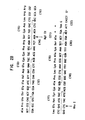
- the nucleotide sequence for the gene was selected by optimizing the number of unique restriction endonuclease recognition sites, and by avoiding secondary structure problems and poorly utilized E. coli codons. Twenty-two oligonucleotides, ranging in size from 10 to 40 nucleotides, were synthesized, purified and assembled to form the synthetic hIFG-I gene ( Figure 2).
- oligonucleotides were divided into three sections; Section A, oligo's 1-9; section B, oligo's 10-15; and section C, oligo's 16-22.
- Section A, B and C were purified by polyacrylamide gel electrophoresis under denaturing conditions, annealed and ligated to form the intact gene.
- the synthetic gene was ligated to Nde I/Sal I digested pBR322 and transformed into E. coli HB101.
- Plasmid pCMV-IE-bGH is a pBR322 based expression plasmid containing the immediate early transcriptional regulatory region of cytomegalovirus (CMV-IE) joined to the bovine growth hormone (bGH) gene.
- CMV-IE cytomegalovirus
- bGH bovine growth hormone
- This plasmid transformed into cultured mouse fibroblasts directs the synthesis and secretion of bGH. During the secretion process the secretory signal peptide of bGH is removed.
- a derivative of this plasmid, pCMV-IE-bGH-b was constructed by moving the EcoRI, Cla I expression cassette from pCMV-IE-bGH into EcoRI, Pvu II digested pBR322 (see Figure 3).
- This plasmid has a unique Nar I site in exon II of the bGH gene at the junction of the signal peptide and the secreted form of bGH.
- two oligonucleotides were synthesized; IGF-101 5 ⁇ CGCCGGACCGGAGACGCTCTGCGGGGCTGAGCT 3 ⁇ , and IGF-102 5 ⁇ CAGCCCCGCAGAGCGTCTCCGGTCCGG 3 ⁇ . These oligonucleotides were annealed to form a Nar I/Sac I fragment that regenerates the first ten amino acids of hIGF-I.
- the amino acid sequence at the junction of the bGH signal peptide and hIGF-I is the following:
- the expression vector retains the 3 ⁇ end of the bovine growth hormone gene that contains the polyadenylation signal as well as putative transcriptional termination signals.
- DNA sequence analysis of pCMV-bGH-IGF confirmed that the predicted hIGF-I coding sequence was inserted.
- Plasmids pCMVIE-bGH-b and pCMV-bGH-hIGF were introduced transiently into mouse L cell fibroblasts by the DNA-DEAE-Dextran sulfate technique. Three days later the cells were rinsed three times in serum-free media then incubated an additional 40 hours in serum-free media. Aliquots of the cell culture media were analyzed for the presence of hIGF-I by radioimmunoassay, radioreceptor assay using human placental membranes, and by binding to acid stable human IGF serum carrier proteins.
- No detectable amount of IGF-I is measured by radioimmunoassay or by binding to acid stable human IGF carrier proteins in conditioned media from L cells alone, or from L cells transfected with the pCMVIE-bGH-b vector.
- Media from cells transfected with pCMV-bGH-hIGF contain 110 or 190 ng/ml IGF-I-like activity when measured by radioimmunoassay or serum carrier protein binding activity, respectively (Table I).
- Small amounts of receptor active IGF-I-like material are measured in L cell conditioned media and in media from cells transfected with pCMVIE-bGH-b (Table II).
- hIGF-I produced by the transiently transformed mouse fibroblasts
- the cell culture media was analyzed by SDS-polyacrylamide gel electrophoresis followed by immunoblotting using anti-hIGF-I antiserum.
- cells transformed by pCMV-bGH-hIGF (lane D) secrete a protein identical in size to the Thr59 analog of hIGF-I (lane A).
- No IGF-I like material is seen in media derived from cells transformed with pCMV-bGH-b, or from normal mouse L cells conditioned media (lanes B and C).
- the size of the recombinant hIGF-I suggests that the bGH signal peptide has been removed during the secretion process.
- Amino acid sequencing of hIGF-I produced by mouse L cells stably transformed with pCMV-bGH-hIGF Amino acid sequencing of hIGF-I produced by mouse L cells stably transformed with pCMV-bGH-hIGF yields the sequence Ala-Gly-Pro-Glu. . . etc. indicating that the alanine residue at the junction of the bGH secretory signal peptide and the synthetic hIGF-I gene remains at the amino terminus of the recombinant hIGF-I.
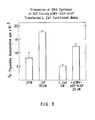
- FIG. 5 demonstrates the activity of conditioned media from cells transiently transformed with pCMV-bGH-hIGF.
- IGF-I 50 nM
- IGF-I causes a 2 fold increase in the incorporation of 3H-thymidine into DNA of A10 cells.
- Conditioned media from pCMV-bGH-hIGF transfected L cells, which contained 20 nM receptor active IGF-I causes a 2.5 fold increase in DNA synthesis when compared to non-transfected L cells conditioned media ( Figure 5).
- a chimeric plasmid containing the cytomegalovirus immediate early (CMV-IE) transcriptional regulatory region fused to the bovine growth hormone (bGH) gene will direct synthesis and secretion of bGH by transiently transformed mouse L cells (Pasleau et al ., Gene 38 , pg 227-232 (1985)).
- This plasmid, pCMV-IE-bGH contains transcriptional initiation signals derived from the CMV genome and transcriptional termination signals of the bGH gene.
- the plasmid also encodes a 26 amino acid signal peptide believed to be involved in bGH secretion.
- plasmid pCMV-bGH-b may be a useful expression vector for the synthesis and secretion of heterologous proteins in cultured mammalian cells.
- Mammalian cell culture may be the expression system of choice when specific post-translational modifications such as glycosylation, phosphorylation or amidation are required to produce recombinant proteins with full spectrums of biological activities.
- Mouse L-cells were transiently transformed with either plasmid pCMV-IE-bGH-b or pCMV-bGH-hIGF-I.
- hIGF-I hIGF-I by radioimmunoassay (RIA), radioreceptor assay (RRA) or binding to serum binding proteins (SBP) as described above. N.D. indicates that no activity above background was detected in these assays.
Landscapes
- Health & Medical Sciences (AREA)
- Genetics & Genomics (AREA)
- Life Sciences & Earth Sciences (AREA)
- Chemical & Material Sciences (AREA)
- Organic Chemistry (AREA)
- Engineering & Computer Science (AREA)
- Zoology (AREA)
- Biomedical Technology (AREA)
- Molecular Biology (AREA)
- Biochemistry (AREA)
- Wood Science & Technology (AREA)
- Biophysics (AREA)
- Bioinformatics & Cheminformatics (AREA)
- General Health & Medical Sciences (AREA)
- General Engineering & Computer Science (AREA)
- Biotechnology (AREA)
- Endocrinology (AREA)
- Gastroenterology & Hepatology (AREA)
- Physics & Mathematics (AREA)
- Toxicology (AREA)
- Plant Pathology (AREA)
- Proteomics, Peptides & Aminoacids (AREA)
- Microbiology (AREA)
- Medicinal Chemistry (AREA)
- Diabetes (AREA)
- Preparation Of Compounds By Using Micro-Organisms (AREA)
- Peptides Or Proteins (AREA)
- Micro-Organisms Or Cultivation Processes Thereof (AREA)
Applications Claiming Priority (2)
| Application Number | Priority Date | Filing Date | Title |
|---|---|---|---|
| US91390986A | 1986-10-01 | 1986-10-01 | |
| US913909 | 1986-10-01 |
Publications (2)
| Publication Number | Publication Date |
|---|---|
| EP0266057A2 true EP0266057A2 (de) | 1988-05-04 |
| EP0266057A3 EP0266057A3 (de) | 1989-11-08 |
Family
ID=25433710
Family Applications (1)
| Application Number | Title | Priority Date | Filing Date |
|---|---|---|---|
| EP87308484A Withdrawn EP0266057A3 (de) | 1986-10-01 | 1987-09-25 | Eine eukaryotische sekretorische Signalsequenz enthaltendes Plasmid und Verfahren zur Sekretion der kodierten Proteine |
Country Status (3)
| Country | Link |
|---|---|
| EP (1) | EP0266057A3 (de) |
| JP (1) | JPS63240788A (de) |
| AU (1) | AU613876B2 (de) |
Cited By (6)
| Publication number | Priority date | Publication date | Assignee | Title |
|---|---|---|---|---|
| US5330971A (en) * | 1989-06-09 | 1994-07-19 | Gropep Pty. Ltd. | Growth hormone fusion proteins, methods of production, and methods of treatment |
| WO1995010620A1 (en) * | 1993-10-15 | 1995-04-20 | Mallinckrodt Veterinary, Inc. | A plasmid vector useful for the expression of a foreign dna sequence |
| US5679771A (en) * | 1990-02-13 | 1997-10-21 | Gropep Pty. Ltd. | Method for treating intestinal diseases |
| WO1999013090A1 (en) * | 1997-09-05 | 1999-03-18 | Rowett Research Services Limited | Regulation of protein secretion |
| WO2004019965A3 (en) * | 2002-08-30 | 2004-04-22 | Univ Liege | Thymus-based tolerogenic approaches for type i diabetes. |
| WO2005001099A2 (en) | 2003-06-25 | 2005-01-06 | Unitargeting Research As | Protein expression system |
Families Citing this family (2)
| Publication number | Priority date | Publication date | Assignee | Title |
|---|---|---|---|---|
| US4876242A (en) * | 1987-09-21 | 1989-10-24 | Merck & Co., Inc. | Human insulin-like growth factor analoges with reduced binding to serum carrier proteins and their production in yeast |
| ATE195339T1 (de) * | 1989-10-12 | 2000-08-15 | Univ Ohio | Antagonisten von wachstumshormonen |
Family Cites Families (6)
| Publication number | Priority date | Publication date | Assignee | Title |
|---|---|---|---|---|
| US4713339A (en) * | 1983-01-19 | 1987-12-15 | Genentech, Inc. | Polycistronic expression vector construction |
| IL71991A (en) * | 1983-06-06 | 1994-05-30 | Genentech Inc | Preparation of human FGI and FGE in their processed form through recombinant AND tranology in prokaryotes |
| WO1985000831A1 (en) * | 1983-08-10 | 1985-02-28 | Amgen | Microbial expression of insulin-like growth factor |
| EP0173552B1 (de) * | 1984-08-24 | 1991-10-09 | The Upjohn Company | Rekombinante DNA-Verbindungen und Expression von Polypeptiden wie tPA |
| ATE89314T1 (de) * | 1985-02-13 | 1993-05-15 | Scios Nova Inc | Menschlicher metallothionein ii-promotor in saeugetierexpressionssystemen. |
| GB2197321B (en) * | 1986-09-12 | 1990-10-03 | Genentech Inc | Method and vectors for obtaining continuous production of heterologous protein in a eukaryotic host cell line |
-
1987
- 1987-09-22 AU AU78838/87A patent/AU613876B2/en not_active Ceased
- 1987-09-25 EP EP87308484A patent/EP0266057A3/de not_active Withdrawn
- 1987-10-01 JP JP62245963A patent/JPS63240788A/ja active Pending
Cited By (10)
| Publication number | Priority date | Publication date | Assignee | Title |
|---|---|---|---|---|
| US5330971A (en) * | 1989-06-09 | 1994-07-19 | Gropep Pty. Ltd. | Growth hormone fusion proteins, methods of production, and methods of treatment |
| US5679771A (en) * | 1990-02-13 | 1997-10-21 | Gropep Pty. Ltd. | Method for treating intestinal diseases |
| WO1995010620A1 (en) * | 1993-10-15 | 1995-04-20 | Mallinckrodt Veterinary, Inc. | A plasmid vector useful for the expression of a foreign dna sequence |
| WO1999013090A1 (en) * | 1997-09-05 | 1999-03-18 | Rowett Research Services Limited | Regulation of protein secretion |
| US6881832B1 (en) | 1997-09-05 | 2005-04-19 | Uni Targeting Research As | Expression system for the secretion of intracellular proteins |
| WO2004019965A3 (en) * | 2002-08-30 | 2004-04-22 | Univ Liege | Thymus-based tolerogenic approaches for type i diabetes. |
| AU2003266331B2 (en) * | 2002-08-30 | 2008-08-07 | Universite De Liege | Thymus-based tolerogenic approaches for type I diabetes. |
| WO2005001099A2 (en) | 2003-06-25 | 2005-01-06 | Unitargeting Research As | Protein expression system |
| US8067198B2 (en) | 2003-06-25 | 2011-11-29 | Prolume Ltd. | Protein expression system |
| US9115364B2 (en) | 2003-06-25 | 2015-08-25 | Prolume Ltd. | Protein expression system |
Also Published As
| Publication number | Publication date |
|---|---|
| EP0266057A3 (de) | 1989-11-08 |
| JPS63240788A (ja) | 1988-10-06 |
| AU613876B2 (en) | 1991-08-15 |
| AU7883887A (en) | 1988-05-19 |
Similar Documents
| Publication | Publication Date | Title |
|---|---|---|
| KR910002692B1 (ko) | 수정 호르몬의 제조방법 | |
| US5439818A (en) | DNA encoding human recombinant basic fibroblast growth factor | |
| Lei et al. | Genomic DNA sequence for human C-reactive protein. | |
| Jones et al. | The rat casein multigene family. Fine structure and evolution of the beta-casein gene. | |
| CA1341640C (en) | Recombinant fibroblast growth factors | |
| EP0406272B1 (de) | Herstellung eines insulinähnlichen, wachstümsfaktor bindenden proteins | |
| JP3276933B2 (ja) | エリスロポエチン活性を有する糖蛋白質の製造方法 | |
| US4663281A (en) | Enhanced production of proteinaceous materials in eucaryotic cells | |
| Bayne et al. | Expression of a synthetic gene encoding human insulin-like growth factor I in cultured mouse fibroblasts. | |
| US4992367A (en) | Enhanced expression of human interleukin-2 in mammalian cells | |
| EP0111389A2 (de) | Wesentlich sauberes Schweinewachstumshormon, DNS-Sequenzen dafür und Expressionsvektoren und transfektierte Mikroorganismen zur Herstellung von Schweinewachstumshormon | |
| EP0288307A2 (de) | Rekombinante Herstellung von A-Ketten-Polypeptiden von PDGF | |
| GB2251622A (en) | Vectors for use in mammalian systems | |
| AU613876B2 (en) | Synthetic genes encoding proteins from plasmid containing eucaryotic secretory signal peptides and process for secreting encoded proteins | |
| US5156957A (en) | Follicle stimulating hormone | |
| Bennani-Baiti et al. | Physical linkage of the human growth hormone gene cluster and the skeletal muscle sodium channel α-subunit gene (SCN4A) on chromosome 17 | |
| CA1299119C (en) | Dna encoding a grf precursor | |
| EP0271003A2 (de) | Expressionsvektoren | |
| WO1988000975A1 (en) | High level inducible expression of heterologous genes | |
| Naylor et al. | Hemopexin is localized to human chromosome 11 | |
| EP0369458A2 (de) | Regulatorische Region des bovinen Metallothioneins | |
| JP2826114B2 (ja) | 遺伝子産物の製法 | |
| Zhuo et al. | Proline-rich-protein promoters direct LacZ expression to the granular convoluted tubular cells of the submandibular gland in adult transgenic mice | |
| US6468750B1 (en) | Cell regulation factor TTO 20 | |
| HK1007335B (en) | Production of insulin-like growth factor binding protein |
Legal Events
| Date | Code | Title | Description |
|---|---|---|---|
| PUAI | Public reference made under article 153(3) epc to a published international application that has entered the european phase |
Free format text: ORIGINAL CODE: 0009012 |
|
| AK | Designated contracting states |
Kind code of ref document: A2 Designated state(s): CH DE FR GB IT LI NL |
|
| ITCL | It: translation for ep claims filed |
Representative=s name: SOCIETA' ITALIANA BREVETTI S.P.A. |
|
| PUAL | Search report despatched |
Free format text: ORIGINAL CODE: 0009013 |
|
| AK | Designated contracting states |
Kind code of ref document: A3 Designated state(s): CH DE FR GB IT LI NL |
|
| 17P | Request for examination filed |
Effective date: 19900411 |
|
| 17Q | First examination report despatched |
Effective date: 19910819 |
|
| STAA | Information on the status of an ep patent application or granted ep patent |
Free format text: STATUS: THE APPLICATION IS DEEMED TO BE WITHDRAWN |
|
| 18D | Application deemed to be withdrawn |
Effective date: 19930728 |
|
| RIN1 | Information on inventor provided before grant (corrected) |
Inventor name: KOPCHICK, JOHN J. Inventor name: BAYNE, MARVIN L. |