EP0266099A2 - Alkyl- oder Arylphosphonat-Oligonukleosid, das sich mit Nukleinesäuren vernetzen kann oder das Nukleinsäure spalten kann - Google Patents
Alkyl- oder Arylphosphonat-Oligonukleosid, das sich mit Nukleinesäuren vernetzen kann oder das Nukleinsäure spalten kann Download PDFInfo
- Publication number
- EP0266099A2 EP0266099A2 EP87309121A EP87309121A EP0266099A2 EP 0266099 A2 EP0266099 A2 EP 0266099A2 EP 87309121 A EP87309121 A EP 87309121A EP 87309121 A EP87309121 A EP 87309121A EP 0266099 A2 EP0266099 A2 EP 0266099A2
- Authority
- EP
- European Patent Office
- Prior art keywords
- nucleic acid
- mrna
- oligomer
- composition according
- functional group
- Prior art date
- Legal status (The legal status is an assumption and is not a legal conclusion. Google has not performed a legal analysis and makes no representation as to the accuracy of the status listed.)
- Withdrawn
Links
- 150000007523 nucleic acids Chemical class 0.000 title claims abstract description 72
- 108020004707 nucleic acids Proteins 0.000 title claims abstract description 68
- 102000039446 nucleic acids Human genes 0.000 title claims abstract description 68
- 125000000217 alkyl group Chemical group 0.000 title claims abstract description 17
- 238000004132 cross linking Methods 0.000 title description 19
- 230000000295 complement effect Effects 0.000 claims abstract description 33
- 125000000524 functional group Chemical group 0.000 claims abstract description 27
- 239000000203 mixture Substances 0.000 claims abstract description 14
- 230000000415 inactivating effect Effects 0.000 claims abstract 3
- YACKEPLHDIMKIO-UHFFFAOYSA-N methylphosphonic acid Chemical compound CP(O)(O)=O YACKEPLHDIMKIO-UHFFFAOYSA-N 0.000 claims description 43
- 238000000034 method Methods 0.000 claims description 14
- 229910052723 transition metal Inorganic materials 0.000 claims description 7
- 150000003624 transition metals Chemical class 0.000 claims description 7
- ABLZXFCXXLZCGV-UHFFFAOYSA-N Phosphorous acid Chemical class OP(O)=O ABLZXFCXXLZCGV-UHFFFAOYSA-N 0.000 claims description 3
- 239000002168 alkylating agent Substances 0.000 claims description 3
- 229940100198 alkylating agent Drugs 0.000 claims description 3
- 230000008569 process Effects 0.000 claims description 3
- DGEZNRSVGBDHLK-UHFFFAOYSA-N [1,10]phenanthroline Chemical group C1=CN=C2C3=NC=CC=C3C=CC2=C1 DGEZNRSVGBDHLK-UHFFFAOYSA-N 0.000 claims description 2
- 150000001350 alkyl halides Chemical class 0.000 claims description 2
- OYVAGSVQBOHSSS-UAPAGMARSA-O bleomycin A2 Chemical group N([C@H](C(=O)N[C@H](C)[C@@H](O)[C@H](C)C(=O)N[C@@H]([C@H](O)C)C(=O)NCCC=1SC=C(N=1)C=1SC=C(N=1)C(=O)NCCC[S+](C)C)[C@@H](O[C@H]1[C@H]([C@@H](O)[C@H](O)[C@H](CO)O1)O[C@@H]1[C@H]([C@@H](OC(N)=O)[C@H](O)[C@@H](CO)O1)O)C=1N=CNC=1)C(=O)C1=NC([C@H](CC(N)=O)NC[C@H](N)C(N)=O)=NC(N)=C1C OYVAGSVQBOHSSS-UAPAGMARSA-O 0.000 claims description 2
- 150000004032 porphyrins Chemical class 0.000 claims description 2
- KCXVZYZYPLLWCC-UHFFFAOYSA-N EDTA Chemical group OC(=O)CN(CC(O)=O)CCN(CC(O)=O)CC(O)=O KCXVZYZYPLLWCC-UHFFFAOYSA-N 0.000 claims 1
- 229940071106 ethylenediaminetetraacetate Drugs 0.000 claims 1
- 108020004999 messenger RNA Proteins 0.000 description 118
- ZCCUUQDIBDJBTK-UHFFFAOYSA-N psoralen Chemical group C1=C2OC(=O)C=CC2=CC2=C1OC=C2 ZCCUUQDIBDJBTK-UHFFFAOYSA-N 0.000 description 32
- 230000014616 translation Effects 0.000 description 28
- 102100027685 Hemoglobin subunit alpha Human genes 0.000 description 21
- 108091005902 Hemoglobin subunit alpha Proteins 0.000 description 21
- 238000006243 chemical reaction Methods 0.000 description 20
- 102000018146 globin Human genes 0.000 description 20
- 108060003196 globin Proteins 0.000 description 20
- 230000000694 effects Effects 0.000 description 19
- 238000013519 translation Methods 0.000 description 19
- WBIICVGYYRRURR-UHFFFAOYSA-N 3-(aminomethyl)-2,5,9-trimethylfuro[3,2-g]chromen-7-one Chemical group O1C(=O)C=C(C)C2=C1C(C)=C1OC(C)=C(CN)C1=C2 WBIICVGYYRRURR-UHFFFAOYSA-N 0.000 description 18
- 102100021519 Hemoglobin subunit beta Human genes 0.000 description 18
- 108091005904 Hemoglobin subunit beta Proteins 0.000 description 18
- 241000283973 Oryctolagus cuniculus Species 0.000 description 18
- 241000700605 Viruses Species 0.000 description 17
- 210000004027 cell Anatomy 0.000 description 17
- 239000000499 gel Substances 0.000 description 15
- VXGRJERITKFWPL-UHFFFAOYSA-N 4',5'-Dihydropsoralen Natural products C1=C2OC(=O)C=CC2=CC2=C1OCC2 VXGRJERITKFWPL-UHFFFAOYSA-N 0.000 description 14
- 230000015572 biosynthetic process Effects 0.000 description 14
- 241000711975 Vesicular stomatitis virus Species 0.000 description 13
- ISAKRJDGNUQOIC-UHFFFAOYSA-N Uracil Chemical group O=C1C=CNC(=O)N1 ISAKRJDGNUQOIC-UHFFFAOYSA-N 0.000 description 12
- 230000005764 inhibitory process Effects 0.000 description 12
- 238000002474 experimental method Methods 0.000 description 10
- 239000002773 nucleotide Substances 0.000 description 10
- 125000003729 nucleotide group Chemical group 0.000 description 10
- 108090000623 proteins and genes Proteins 0.000 description 10
- 238000001243 protein synthesis Methods 0.000 description 9
- 102000004169 proteins and genes Human genes 0.000 description 9
- 238000003786 synthesis reaction Methods 0.000 description 8
- 101710128836 Large T antigen Proteins 0.000 description 7
- 108091081024 Start codon Proteins 0.000 description 7
- 239000011541 reaction mixture Substances 0.000 description 7
- RWQNBRDOKXIBIV-UHFFFAOYSA-N thymine Chemical compound CC1=CNC(=O)NC1=O RWQNBRDOKXIBIV-UHFFFAOYSA-N 0.000 description 7
- 230000014509 gene expression Effects 0.000 description 6
- 230000002401 inhibitory effect Effects 0.000 description 6
- 239000002777 nucleoside Substances 0.000 description 6
- 108091032973 (ribonucleotides)n+m Proteins 0.000 description 5
- 101710141454 Nucleoprotein Proteins 0.000 description 5
- 239000007864 aqueous solution Substances 0.000 description 5
- 230000007062 hydrolysis Effects 0.000 description 5
- 238000006460 hydrolysis reaction Methods 0.000 description 5
- 125000001424 substituent group Chemical group 0.000 description 5
- RAXXELZNTBOGNW-UHFFFAOYSA-N 1H-imidazole Chemical compound C1=CNC=N1 RAXXELZNTBOGNW-UHFFFAOYSA-N 0.000 description 4
- 108091034117 Oligonucleotide Proteins 0.000 description 4
- 239000011543 agarose gel Substances 0.000 description 4
- 239000002246 antineoplastic agent Substances 0.000 description 4
- 230000001276 controlling effect Effects 0.000 description 4
- 229940127089 cytotoxic agent Drugs 0.000 description 4
- 125000005647 linker group Chemical group 0.000 description 4
- 239000000463 material Substances 0.000 description 4
- 125000003835 nucleoside group Chemical group 0.000 description 4
- 230000036961 partial effect Effects 0.000 description 4
- 229940035893 uracil Drugs 0.000 description 4
- OISVCGZHLKNMSJ-UHFFFAOYSA-N 2,6-dimethylpyridine Chemical compound CC1=CC=CC(C)=N1 OISVCGZHLKNMSJ-UHFFFAOYSA-N 0.000 description 3
- HRPVXLWXLXDGHG-UHFFFAOYSA-N Acrylamide Chemical compound NC(=O)C=C HRPVXLWXLXDGHG-UHFFFAOYSA-N 0.000 description 3
- PMPVIKIVABFJJI-UHFFFAOYSA-N Cyclobutane Chemical compound C1CCC1 PMPVIKIVABFJJI-UHFFFAOYSA-N 0.000 description 3
- 108020004414 DNA Proteins 0.000 description 3
- 108091006027 G proteins Proteins 0.000 description 3
- 102000030782 GTP binding Human genes 0.000 description 3
- 108091000058 GTP-Binding Proteins 0.000 description 3
- 241000700588 Human alphaherpesvirus 1 Species 0.000 description 3
- XSQUKJJJFZCRTK-UHFFFAOYSA-N Urea Chemical compound NC(N)=O XSQUKJJJFZCRTK-UHFFFAOYSA-N 0.000 description 3
- 230000004913 activation Effects 0.000 description 3
- -1 aryl phosphonate Chemical compound 0.000 description 3
- 238000000211 autoradiogram Methods 0.000 description 3
- 230000008901 benefit Effects 0.000 description 3
- 239000004202 carbamide Substances 0.000 description 3
- 230000015556 catabolic process Effects 0.000 description 3
- 230000001413 cellular effect Effects 0.000 description 3
- 238000003776 cleavage reaction Methods 0.000 description 3
- 150000001875 compounds Chemical class 0.000 description 3
- 238000006731 degradation reaction Methods 0.000 description 3
- 230000002452 interceptive effect Effects 0.000 description 3
- BAUYGSIQEAFULO-UHFFFAOYSA-L iron(2+) sulfate (anhydrous) Chemical compound [Fe+2].[O-]S([O-])(=O)=O BAUYGSIQEAFULO-UHFFFAOYSA-L 0.000 description 3
- 229910000359 iron(II) sulfate Inorganic materials 0.000 description 3
- 239000006166 lysate Substances 0.000 description 3
- 230000004048 modification Effects 0.000 description 3
- 238000012986 modification Methods 0.000 description 3
- 150000003833 nucleoside derivatives Chemical class 0.000 description 3
- 238000002360 preparation method Methods 0.000 description 3
- 210000001995 reticulocyte Anatomy 0.000 description 3
- 230000007017 scission Effects 0.000 description 3
- 229940113082 thymine Drugs 0.000 description 3
- LMDZBCPBFSXMTL-UHFFFAOYSA-N 1-ethyl-3-(3-dimethylaminopropyl)carbodiimide Chemical compound CCN=C=NCCCN(C)C LMDZBCPBFSXMTL-UHFFFAOYSA-N 0.000 description 2
- JVXHQHGWBAHSSF-UHFFFAOYSA-L 2-[2-[bis(carboxylatomethyl)amino]ethyl-(carboxylatomethyl)amino]acetate;hydron;iron(2+) Chemical compound [H+].[H+].[Fe+2].[O-]C(=O)CN(CC([O-])=O)CCN(CC([O-])=O)CC([O-])=O JVXHQHGWBAHSSF-UHFFFAOYSA-L 0.000 description 2
- DWAOUXYZOSPAOH-UHFFFAOYSA-N 4-[2-(diethylamino)ethoxy]furo[3,2-g]chromen-7-one;hydrochloride Chemical compound [Cl-].O1C(=O)C=CC2=C1C=C1OC=CC1=C2OCC[NH+](CC)CC DWAOUXYZOSPAOH-UHFFFAOYSA-N 0.000 description 2
- 108091026890 Coding region Proteins 0.000 description 2
- GUBGYTABKSRVRQ-WFVLMXAXSA-N DEAE-cellulose Chemical compound OC1C(O)C(O)C(CO)O[C@H]1O[C@@H]1C(CO)OC(O)C(O)C1O GUBGYTABKSRVRQ-WFVLMXAXSA-N 0.000 description 2
- 230000006820 DNA synthesis Effects 0.000 description 2
- LFQSCWFLJHTTHZ-UHFFFAOYSA-N Ethanol Chemical compound CCO LFQSCWFLJHTTHZ-UHFFFAOYSA-N 0.000 description 2
- XEEYBQQBJWHFJM-UHFFFAOYSA-N Iron Chemical compound [Fe] XEEYBQQBJWHFJM-UHFFFAOYSA-N 0.000 description 2
- 108091028043 Nucleic acid sequence Proteins 0.000 description 2
- NQRYJNQNLNOLGT-UHFFFAOYSA-N Piperidine Chemical compound C1CCNCC1 NQRYJNQNLNOLGT-UHFFFAOYSA-N 0.000 description 2
- DRTQHJPVMGBUCF-XVFCMESISA-N Uridine Chemical group O[C@@H]1[C@H](O)[C@@H](CO)O[C@H]1N1C(=O)NC(=O)C=C1 DRTQHJPVMGBUCF-XVFCMESISA-N 0.000 description 2
- JLCPHMBAVCMARE-UHFFFAOYSA-N [3-[[3-[[3-[[3-[[3-[[3-[[3-[[3-[[3-[[3-[[3-[[5-(2-amino-6-oxo-1H-purin-9-yl)-3-[[3-[[3-[[3-[[3-[[3-[[5-(2-amino-6-oxo-1H-purin-9-yl)-3-[[5-(2-amino-6-oxo-1H-purin-9-yl)-3-hydroxyoxolan-2-yl]methoxy-hydroxyphosphoryl]oxyoxolan-2-yl]methoxy-hydroxyphosphoryl]oxy-5-(5-methyl-2,4-dioxopyrimidin-1-yl)oxolan-2-yl]methoxy-hydroxyphosphoryl]oxy-5-(6-aminopurin-9-yl)oxolan-2-yl]methoxy-hydroxyphosphoryl]oxy-5-(6-aminopurin-9-yl)oxolan-2-yl]methoxy-hydroxyphosphoryl]oxy-5-(6-aminopurin-9-yl)oxolan-2-yl]methoxy-hydroxyphosphoryl]oxy-5-(6-aminopurin-9-yl)oxolan-2-yl]methoxy-hydroxyphosphoryl]oxyoxolan-2-yl]methoxy-hydroxyphosphoryl]oxy-5-(5-methyl-2,4-dioxopyrimidin-1-yl)oxolan-2-yl]methoxy-hydroxyphosphoryl]oxy-5-(4-amino-2-oxopyrimidin-1-yl)oxolan-2-yl]methoxy-hydroxyphosphoryl]oxy-5-(5-methyl-2,4-dioxopyrimidin-1-yl)oxolan-2-yl]methoxy-hydroxyphosphoryl]oxy-5-(5-methyl-2,4-dioxopyrimidin-1-yl)oxolan-2-yl]methoxy-hydroxyphosphoryl]oxy-5-(6-aminopurin-9-yl)oxolan-2-yl]methoxy-hydroxyphosphoryl]oxy-5-(6-aminopurin-9-yl)oxolan-2-yl]methoxy-hydroxyphosphoryl]oxy-5-(4-amino-2-oxopyrimidin-1-yl)oxolan-2-yl]methoxy-hydroxyphosphoryl]oxy-5-(4-amino-2-oxopyrimidin-1-yl)oxolan-2-yl]methoxy-hydroxyphosphoryl]oxy-5-(4-amino-2-oxopyrimidin-1-yl)oxolan-2-yl]methoxy-hydroxyphosphoryl]oxy-5-(6-aminopurin-9-yl)oxolan-2-yl]methoxy-hydroxyphosphoryl]oxy-5-(4-amino-2-oxopyrimidin-1-yl)oxolan-2-yl]methyl [5-(6-aminopurin-9-yl)-2-(hydroxymethyl)oxolan-3-yl] hydrogen phosphate Polymers Cc1cn(C2CC(OP(O)(=O)OCC3OC(CC3OP(O)(=O)OCC3OC(CC3O)n3cnc4c3nc(N)[nH]c4=O)n3cnc4c3nc(N)[nH]c4=O)C(COP(O)(=O)OC3CC(OC3COP(O)(=O)OC3CC(OC3COP(O)(=O)OC3CC(OC3COP(O)(=O)OC3CC(OC3COP(O)(=O)OC3CC(OC3COP(O)(=O)OC3CC(OC3COP(O)(=O)OC3CC(OC3COP(O)(=O)OC3CC(OC3COP(O)(=O)OC3CC(OC3COP(O)(=O)OC3CC(OC3COP(O)(=O)OC3CC(OC3COP(O)(=O)OC3CC(OC3COP(O)(=O)OC3CC(OC3COP(O)(=O)OC3CC(OC3COP(O)(=O)OC3CC(OC3COP(O)(=O)OC3CC(OC3COP(O)(=O)OC3CC(OC3CO)n3cnc4c(N)ncnc34)n3ccc(N)nc3=O)n3cnc4c(N)ncnc34)n3ccc(N)nc3=O)n3ccc(N)nc3=O)n3ccc(N)nc3=O)n3cnc4c(N)ncnc34)n3cnc4c(N)ncnc34)n3cc(C)c(=O)[nH]c3=O)n3cc(C)c(=O)[nH]c3=O)n3ccc(N)nc3=O)n3cc(C)c(=O)[nH]c3=O)n3cnc4c3nc(N)[nH]c4=O)n3cnc4c(N)ncnc34)n3cnc4c(N)ncnc34)n3cnc4c(N)ncnc34)n3cnc4c(N)ncnc34)O2)c(=O)[nH]c1=O JLCPHMBAVCMARE-UHFFFAOYSA-N 0.000 description 2
- 238000000246 agarose gel electrophoresis Methods 0.000 description 2
- 238000005804 alkylation reaction Methods 0.000 description 2
- 230000000840 anti-viral effect Effects 0.000 description 2
- 239000003443 antiviral agent Substances 0.000 description 2
- 238000006664 bond formation reaction Methods 0.000 description 2
- 238000004587 chromatography analysis Methods 0.000 description 2
- ZMMJGEGLRURXTF-UHFFFAOYSA-N ethidium bromide Chemical compound [Br-].C12=CC(N)=CC=C2C2=CC=C(N)C=C2[N+](CC)=C1C1=CC=CC=C1 ZMMJGEGLRURXTF-UHFFFAOYSA-N 0.000 description 2
- 229960005542 ethidium bromide Drugs 0.000 description 2
- 230000003993 interaction Effects 0.000 description 2
- 150000004713 phosphodiesters Chemical class 0.000 description 2
- 238000002264 polyacrylamide gel electrophoresis Methods 0.000 description 2
- 238000012545 processing Methods 0.000 description 2
- 125000006239 protecting group Chemical group 0.000 description 2
- 230000010076 replication Effects 0.000 description 2
- 238000011160 research Methods 0.000 description 2
- 239000002342 ribonucleoside Substances 0.000 description 2
- 238000002211 ultraviolet spectrum Methods 0.000 description 2
- 230000003612 virological effect Effects 0.000 description 2
- 125000000022 2-aminoethyl group Chemical group [H]C([*])([H])C([H])([H])N([H])[H] 0.000 description 1
- JUIKUQOUMZUFQT-UHFFFAOYSA-N 2-bromoacetamide Chemical compound NC(=O)CBr JUIKUQOUMZUFQT-UHFFFAOYSA-N 0.000 description 1
- XWKFPIODWVPXLX-UHFFFAOYSA-N 2-methyl-5-methylpyridine Natural products CC1=CC=C(C)N=C1 XWKFPIODWVPXLX-UHFFFAOYSA-N 0.000 description 1
- 241000894006 Bacteria Species 0.000 description 1
- 108010006654 Bleomycin Proteins 0.000 description 1
- QCMYYKRYFNMIEC-UHFFFAOYSA-N COP(O)=O Chemical class COP(O)=O QCMYYKRYFNMIEC-UHFFFAOYSA-N 0.000 description 1
- 241000282552 Chlorocebus aethiops Species 0.000 description 1
- 102000053602 DNA Human genes 0.000 description 1
- 241000588724 Escherichia coli Species 0.000 description 1
- PIICEJLVQHRZGT-UHFFFAOYSA-N Ethylenediamine Chemical compound NCCN PIICEJLVQHRZGT-UHFFFAOYSA-N 0.000 description 1
- 108010007403 Immediate-Early Proteins Proteins 0.000 description 1
- 101710172804 K protein Proteins 0.000 description 1
- 101710085938 Matrix protein Proteins 0.000 description 1
- 101710127721 Membrane protein Proteins 0.000 description 1
- 101710163270 Nuclease Proteins 0.000 description 1
- 241000700584 Simplexvirus Species 0.000 description 1
- 239000007983 Tris buffer Substances 0.000 description 1
- 239000002253 acid Substances 0.000 description 1
- 230000002152 alkylating effect Effects 0.000 description 1
- 230000029936 alkylation Effects 0.000 description 1
- 229940121357 antivirals Drugs 0.000 description 1
- 125000003118 aryl group Chemical group 0.000 description 1
- 125000004429 atom Chemical group 0.000 description 1
- 230000001580 bacterial effect Effects 0.000 description 1
- 229960001561 bleomycin Drugs 0.000 description 1
- 239000000872 buffer Substances 0.000 description 1
- 150000001718 carbodiimides Chemical class 0.000 description 1
- 230000003197 catalytic effect Effects 0.000 description 1
- 239000006143 cell culture medium Substances 0.000 description 1
- 210000000170 cell membrane Anatomy 0.000 description 1
- 210000004671 cell-free system Anatomy 0.000 description 1
- 239000003795 chemical substances by application Substances 0.000 description 1
- 230000000052 comparative effect Effects 0.000 description 1
- 239000003431 cross linking reagent Substances 0.000 description 1
- 150000001930 cyclobutanes Chemical class 0.000 description 1
- 231100000433 cytotoxic Toxicity 0.000 description 1
- 230000001472 cytotoxic effect Effects 0.000 description 1
- 230000007423 decrease Effects 0.000 description 1
- 230000003247 decreasing effect Effects 0.000 description 1
- 238000013461 design Methods 0.000 description 1
- VHJLVAABSRFDPM-QWWZWVQMSA-N dithiothreitol Chemical compound SC[C@@H](O)[C@H](O)CS VHJLVAABSRFDPM-QWWZWVQMSA-N 0.000 description 1
- 238000005886 esterification reaction Methods 0.000 description 1
- 235000003891 ferrous sulphate Nutrition 0.000 description 1
- 239000011790 ferrous sulphate Substances 0.000 description 1
- 238000001502 gel electrophoresis Methods 0.000 description 1
- 210000005260 human cell Anatomy 0.000 description 1
- 238000009396 hybridization Methods 0.000 description 1
- 239000001257 hydrogen Substances 0.000 description 1
- 229910052739 hydrogen Inorganic materials 0.000 description 1
- 125000004435 hydrogen atom Chemical group [H]* 0.000 description 1
- JBFYUZGYRGXSFL-UHFFFAOYSA-N imidazolide Chemical compound C1=C[N-]C=N1 JBFYUZGYRGXSFL-UHFFFAOYSA-N 0.000 description 1
- 238000001114 immunoprecipitation Methods 0.000 description 1
- 230000006872 improvement Effects 0.000 description 1
- 238000000338 in vitro Methods 0.000 description 1
- 238000011534 incubation Methods 0.000 description 1
- 208000015181 infectious disease Diseases 0.000 description 1
- 239000003112 inhibitor Substances 0.000 description 1
- 229910052742 iron Inorganic materials 0.000 description 1
- XDROKJSWHURZGO-UHFFFAOYSA-N isopsoralen Natural products C1=C2OC=CC2=C2OC(=O)C=CC2=C1 XDROKJSWHURZGO-UHFFFAOYSA-N 0.000 description 1
- 125000000468 ketone group Chemical group 0.000 description 1
- 210000003292 kidney cell Anatomy 0.000 description 1
- 210000004962 mammalian cell Anatomy 0.000 description 1
- 230000007246 mechanism Effects 0.000 description 1
- CAAULPUQFIIOTL-UHFFFAOYSA-N methyl dihydrogen phosphate Chemical class COP(O)(O)=O CAAULPUQFIIOTL-UHFFFAOYSA-N 0.000 description 1
- 125000002496 methyl group Chemical group [H]C([H])([H])* 0.000 description 1
- 230000011987 methylation Effects 0.000 description 1
- 238000007069 methylation reaction Methods 0.000 description 1
- QJGQUHMNIGDVPM-UHFFFAOYSA-N nitrogen group Chemical group [N] QJGQUHMNIGDVPM-UHFFFAOYSA-N 0.000 description 1
- 238000006552 photochemical reaction Methods 0.000 description 1
- 229920002401 polyacrylamide Polymers 0.000 description 1
- 239000002243 precursor Substances 0.000 description 1
- 238000000425 proton nuclear magnetic resonance spectrum Methods 0.000 description 1
- MLMVLVJMKDPYBM-UHFFFAOYSA-N pseudoisopsoralene Natural products C1=C2C=COC2=C2OC(=O)C=CC2=C1 MLMVLVJMKDPYBM-UHFFFAOYSA-N 0.000 description 1
- 230000002285 radioactive effect Effects 0.000 description 1
- 230000001105 regulatory effect Effects 0.000 description 1
- 238000007363 ring formation reaction Methods 0.000 description 1
- 239000000523 sample Substances 0.000 description 1
- 238000007086 side reaction Methods 0.000 description 1
- KZJWDPNRJALLNS-VJSFXXLFSA-N sitosterol Chemical compound C1C=C2C[C@@H](O)CC[C@]2(C)[C@@H]2[C@@H]1[C@@H]1CC[C@H]([C@H](C)CC[C@@H](CC)C(C)C)[C@@]1(C)CC2 KZJWDPNRJALLNS-VJSFXXLFSA-N 0.000 description 1
- 229950005143 sitosterol Drugs 0.000 description 1
- 239000007790 solid phase Substances 0.000 description 1
- 239000000243 solution Substances 0.000 description 1
- 238000010186 staining Methods 0.000 description 1
- 239000007858 starting material Substances 0.000 description 1
- 238000006467 substitution reaction Methods 0.000 description 1
- 230000006231 tRNA aminoacylation Effects 0.000 description 1
- 238000012360 testing method Methods 0.000 description 1
- LENZDBCJOHFCAS-UHFFFAOYSA-N tris Chemical compound OCC(N)(CO)CO LENZDBCJOHFCAS-UHFFFAOYSA-N 0.000 description 1
- 210000003501 vero cell Anatomy 0.000 description 1
Images



Classifications
-
- C—CHEMISTRY; METALLURGY
- C07—ORGANIC CHEMISTRY
- C07H—SUGARS; DERIVATIVES THEREOF; NUCLEOSIDES; NUCLEOTIDES; NUCLEIC ACIDS
- C07H21/00—Compounds containing two or more mononucleotide units having separate phosphate or polyphosphate groups linked by saccharide radicals of nucleoside groups, e.g. nucleic acids
Definitions
- the present invention is concerned with certain novel derivatives of oligonucleoside alkyl or arylphosphonates and uses thereof.
- the present invention is concerned with the provision of derivatives of the previously disclosed oligonucleoside alkyl or arylphosphonates, especially oligonucleoside methyl phosphonates, which include one or more functional groups that can react with a targeted nucleic acid to render the same nonfunctional or inactive.
- the reaction may involve crosslinking with the nucleic acid, cleaving the acid or the like.
- the nucleic acid is rendered ineffective and thus controlled by the combination of a reactive functional group attached to complementary oligomers.
- the parent (underivatized) oligomers are themselves effective for controlling selected nucleic acids as previously described, the derivatives contemplated herein have been found to be more effective than the parent oligomers as evidenced, for example, by the fact that the derivatives can be used in substantially smaller amounts to obtain equivalent inhibitory effects.
- the derivatives of the invention may be broadly described as oligonucleoside alkyl or arylphosphonates which have a base sequence that is complementary to the base sequence of the targeted nucleic acid of concern and which includes a functional group reactive with the targeted nucleic acid to render the same targeted nucleic acid inactive or nonfunctional.
- the oligomer is an oligonucleoside methyl phosphonate although other alkyl or arylphosphonates may be used.
- the functional group is photoreactable, e.g. activated by ultraviolet light, for reaction with the nucleic acid so as to effect the desired crosslinking between the oligomer and the nucleic acid.
- the functional group is one which cleaves the nucleic acid.
- the functional group may be an alkylating agent which on reaction separates from the oligomer and attaches to the targeted nucleic acid to render the same nonfunctional.
- the oligomer with its base sequence complementary to the nucleic acid of interest, binds itself to the targeted nucleic acid and so positions its functional group as to enable the group to effectively react in one way or another with the nucleic acid to inactivate the same.
- the positioning of the functional group on the oligomers may be varied. For example, it may be positioned at an end of the oligomer or intermediate the ends as may be most advantageous in the circumstances and taking into account the nature of the nucleic acid. A plurality of functional groups may also be included on the oligomer although this is not usually necessary.
- olicodeoxyribonucleoside methylphosphonates modified to include an aminomethyltrimethyl psoralen group (AMT).
- AMT aminomethyltrimethyl psoralen group
- a typical derivative for cleaving the nucleic acid is a transition metal chelating complex, e.g. ethylene diamine tetracetate (EDTA) or derivative thereof.
- EDTA ethylene diamine tetracetate
- cleaving groups other than EDTA are also contemplated e.g. phenanthroline, porphyrin or bleomycin.
- the invention is applicable to any type of nucleic acid including double stranded DNA.
- RNA especially messenger RNA (mRNA) and pre- messenger RNA (pre-mRNA).
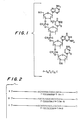
- Figure 1 illustrates a typical oligonucleotide analog which prior work has shown can be taken up intact by cells and which can be derivatized for purposes of the present invention.
- these analogs contain a 3 ⁇ -5 ⁇ linked methylphosphonate internucleotide bond which replaces the phosphodiester bond found in naturally occurring nucleic acids.
- the methylphosphonate group is non-charged.
- the oligomer is quite lipophilic and is able to penetrate the plasma membrane of cells.
- the methylphosphonate linkage is also resistant to nuclease hydrolysis and therefore the oligomers have very long halflives in cell culture medium and inside cells.
- the invention contemplates modifying the previously known type of sequence specific oligomers to provide derivatives which will crosslink or otherwise react with nucleic acids, e.g. mRNAs to render them functionally inactive.
- the invention is illustrated herein using psoralen or EDTA-derivatized oligodeoxyribonucleoside methylphosphonates.
- the invention contemplates the use of a wide variety of functional groups on the oligomers to react in any one of several ways (crosslinking, cleaving, alkylation) with the nucleic acid.
- Psoralen is typical of the photochemically reactive derivatives which are contemplated for use although other such groups, e.g. angelicin, reactive with the nucleic acid at appropriate wavelengths (e.g. 350-500 nm) may also be used.
- Substituents capable of alkylation reaction, especially methylation, which do not require photochemical activation for reaction with the nucleic acid may also be used.
- the alkylating group may or may not leave the oligomer when it attaches to the nucleic acid to inactivate the same.
- Alkyl halides, haloacetamides such as bromoacetamide, phosphotriesters, etc. may be mentioned as alkylating agents for use herein.
- the EDTA-type derivatives function by cleaving the nucleic acid.
- EDTA is preferred for use but other nitrogen containing materials, e.g. azo compounds or nitreens, or transition metal chelating complexes referred to earlier, may be used.
- iron is also advantageously tethered to the oligomer to help generate the cleaving radicals.
- EDTA-iron to cleave nucleic acids. See Proc. Natl. Acad. Sci., USA, Vol. 82, pages 963-967 and 968-972, February, 1985.
- the concept of attaching the EDTA-iron to a complementary oligomer as contemplated herein to improve selectivity and to permit use in cells is novel and not obvious.
- the length of the oligomer and the positioning of the functional group can be varied.
- the oligomer may comprise, for example, from 3-25 nucleosides and the functional group may be positioned along the chain where it will most effectively react with the nucleic acid. This will depend, in large measure, on the nucleic acid involved and its key site or sites although the optimum position can be readily determined for any particular situation by simple experiment.
- composition of the derivatives of the invention e.g. the psoralen or EDTA derivatives, will vary depending on the base sequence of the oligonucleoside alkyl or aryl phosphonate, the sequence itself being determined by the nature of the nucleic acid.
- Typical derivatives which may be mentioned as exemplified herein include such psoralen-type derivatives as: d-AMT-pApTGC d-AMT-pTpGCACCAT d-AMT-pTGTTGGTC d-AMT-pTpGCACCAT d-AMT(CH2)2NHpTpGTTGGTC d-AMT(CH2)4NHpTpGTTGGTC d-AMT(CH2)6NHpTpGTTGGTC D-AMT-pTpGTTGGTCTTGT
- Typical EDTA derivatives include, without limitation, d-EDTA-p-TpGTTGGTC and d-EDTA-pTpGCACCAT.
- the derivatives of the invention may be readily prepared by adding the desired functional group, e.g., a photoactivatable or cleaving substituent, to an oligonucleoside methylphosphonate of the required sequence.
- a photoactivatable or cleaving substituent e.g., a photoactivatable or cleaving substituent
- the latter may be prepared as described in, for example, the above-mentioned U.S. patent 4,469,863 after which the crosslinking, cleaving or other functional group, e.g. psoralen, EDTA or an equivalent thereof, is attached to the appropriate position of the oligomer.
- nucleic acid which is to be bound or cleaved with the methylphosphonate analogue or equivalent thereof.
- sequence can be determined in conventional fashion using methods and apparatus currently available to those in the art.
- sequences for some viral, bacterial and mammmalian cellular nucleic acids are already well established but in other cases it will be necessary to determine these sequences, or at least an essential portion thereof, at the outset.
- the length of the nucleic acid sequence which is determined can be varied. Additionally, it appears that the positioning of the determined sequence in terms of the overall nucleic acid chain can also be varied although, generally speaking, it may be preferable to utilize a sequence at or near the 5 ⁇ end of the chain or the middle thereof rather than the end as related to the function of the foreign nucleic acid in replication, expression, or translation processes. Normally the sequence determined, and the complementary analogue, should cover at least 3 adjacent bases and preferably 9-15 such bases. This may be varied, however, depending on other factors, e.g. whether a virus or bacteria or a malfunctioning cell is involved and the nature and effect of the nucleic acid of concern.
- the appropriate complementary alkyl or arylphosphonate analogue preferably the methylphosphonate analogue
- esterification reactions are continued with sequential reaction involving the phosphonic acid group of the preceding product and a selected nucleoside until the desired oligonucleoside is obtained after which protecting group or groups are removed to give the desired oligonucleoside alkyl or arylphosphonate analogue wherein the nucleoside units are linked by isoteric 3 ⁇ -5 ⁇ alkyl or arylphosphonate groups.
- protecting group or groups are removed to give the desired oligonucleoside alkyl or arylphosphonate analogue wherein the nucleoside units are linked by isoteric 3 ⁇ -5 ⁇ alkyl or arylphosphonate groups.
- These latter groups are preferably methylphosphonate linking groups although if desired the methyl substituent may be replaced by other alkyl or aryl groups or substituents.
- the phosphonate analogue it is essential for the phosphonate analogue to have a sequence complementary to the foreign nucleic acid involved or targeted.
- the analogue in the case of a virus DNA where the sequence may be -A-T-C-G, the analogue must have the complementary sequence of -T-A-G-C- so that the sequences are bound together according to the Watson-Crick theory as follows:
- the complementary analogue would be -ATCG-.
- the oligomer serves two functions, i.e. it exhibits an inhibiting effect of its own on the nucleic acid and it helps to selectively position the functional group at the appropriate spot for most effective reaction with the nucleic acid.
- the oligomer itself may remain attached to the reactive substituent or the oligomer may split off when the functional substituent reacts with the nucleic acid. In both cases, the oligomer functions to appropriately position the functional or reactive component.
- Psoralen is photoreactable, as noted, and requires ultraviolet light for reaction with the nucleic acid.
- a photoactivable group When a photoactivable group is used, it is important to use one which will crosslink or react with the nucleic acid on exposure to light (including laser) but not photodegrade. It appears that any ⁇ ⁇ -unsaturated ketone substitution which is ultraviolet light reactable can be used for present purposes.
- An advantage in using psoralen however, is that it appears to be free from side reactions and any alternative thereto should also preferably be specifically reactive with the nucleic acid.
- oligonucleoside methylphosphonates contemplated herein contain psoralen or EDTA linked to the 5 ⁇ -end of a deoxyribooligonucleoside methylphosphonate.
- the psoralen derivatives have been shown to covalently crosslink to the target mRNA on activation with ultraviolet light to inhibit translation of the mRNA. This inhibition has been obtained at very low concentrations (2.5 ⁇ M) of oligomer and represents a marked improvement (about 80 fold) in efficiency over that of non-derivatized oligomers of the same nucleotide sequence.
- the EDTA-derivatives selectively cleave their target nucleic acid to render it biologically nonfunctional. Such derivatives have been shown to cleave mRNA at extremely low oligomer concentrations ( ⁇ 0.1 ⁇ M). This indicates that the EDTA derivative has potential as an antiviral or chemotherapeutic agent.
- Both types of derivatized methylphosphonate oligomers i.e. the crosslinking type represented by the psoralen derivative and the cleaving type represented by the EDTA derivative are particularly useful to molecular biologists and virologists in enabling them to study gene expression in a selective and well defined manner.
- the present derivatives are useful in basic research, and particularly with respect to the control of gene expression.
- Methylphosphonate oligomers complementary to the initiation codon regions of Vesicular stomatitis virus (VSV) N, NS and G protein mRNAs were synthesized (see Figure 2).
- the results of studies with d-Ap ACAGACAT which is complementary to the N protein mRNA are shown in Table 1.
- the oligomer selectively inhibits N protein synthesis when N, NS and M protein mRNAs are translated simultaneously in a reticulocyte lysate.
- FIG. 3 shows the results obtained with d-Ap ACAGACAT which is complementary to N protein mRNA.
- the oligomer inhibits synthesis of all five virus proteins to approximately the same extent.
- the oligomer has no detectable inhibitory effects on cellular protein synthesis by mouse L-cells and is not cytotoxic to the mouse L-cells as determined from mass culture growth curves.
- the methylphosphonate oligomer appears to specifically inhibit virus function.
- the observation that synthesis of all five virus proteins is inhibited may be due to the known requirement of N protein for synthesis of VSV proteins in infected cells.
- each of the oligomers reduce virus titer approximately one log unit at an oligomer concentration of 150 ⁇ M .
- oligonucleoside methylphosphoates have been synthesized which are designed to interact with the donor and acceptor splice junction sequences of SV40 large T-antigen precursor mRNA (pre-mRNA).
- pre-mRNA SV40 large T-antigen precursor mRNA
- the methylphosphonate oligomers shown in Figure 4 which are complementary to the donor splice junction of SV40 large T-antigen and to the 5 ⁇ -terminal sequences of U1 RNA were tested.
- U1 RNA has been implicated as an agent involved in the splicing of mammalian and viral pre-mRNAs (Nature 283, pp. 220-223, 1980).
- the effects of the compounds on large T-antigen synthesis in SV40-infected African green monkey kidney cells were determined.
- the level of large T-antigen was measured by an immunoprecipitation technique using a monoclonal antibody directed against large T-antigen.
- the splice junction-complementary oligomer, d- AATACCTCA , and the two U1 RNA-complementary oligomers each reduce the level of large T-antigen in the cells, while the non-specific oligomer, d- TTTTTT , had no effect. None of the oligomers had any effect on overall protein synthesis by the BSC40 cells.
- a methylphosphonate oligomer, d-Tp CCTCCTG which is complementary to the acceptor splice junctions of Herpes simplex virus type 1 immediate early mRNA 4 and 5 was also prepared.
- the immediate early proteins are believed to be necessary for regulating the early and late genes of HSV-1 during infection.
- the oligomer was tested for its effects on HSV-1 in virus infected Vero and human cells. Virus growth was inhibited two log units by 300 ⁇ M oligomer. The oligomer selectively inhibits HVS-1 protein synthesis and DNA synthesis in the infected cells. It has no appreciable effect on cellular protein or DNA synthesis. Of particular interest is the effect of d-Tp CCTCCTG on the virus proteins.
- Immediate early mRNA 4 codes for a 68 K protein. This protein is virtually absent in virus infected cells treated with the oligomer.
- Oligonucleoside methylphosphonates derivatized at their 5 ⁇ -end with aminomethyltrimethylpsoralen (AMT), a photoactivatable crosslinking reagent, were prepared.
- AMT aminomethyltrimethylpsoralen
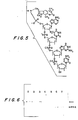
- the structure of one such derivatized oligomer is shown in Figure 5.
- the derivatized oligomer d-AMT-pTp- GCACCAT which is complementary to the initiation codon region of rabbit ⁇ globin mRNA and partially complementary to the initiation codon region of ⁇ globin mRNA, was prepared.
- the AMT group is opposite a U residue when the oligomer is complexed with ⁇ globin mRNA, whereas it lies opposite a G residue when complexed with ⁇ globin mRNA.
- the d-AMT-pTp GCACCAT is able to form a photoadduct with ⁇ globin mRNA.
- the comparative effect of d-AMT-pTp GCACCAT and d-TpGCACCAT on mRNA translation was also determined. After photoirradiation, translation was inhibited 75% ( ⁇ globin) and 56% ( ⁇ globin) by only 25 ⁇ M AMT-pTp GCACCAT . In contrast, 25 ⁇ M d-Tp GCACCAT had no inhibitory effect. Comparable inhibition by d-Tp GCACCAT , 70% ⁇ globin, 73% ⁇ globin, was observed at 200 ⁇ M concentration.
- the derivatized oligodeoxyribonucleoside methylphosphonates can be used to specifically control gene expression in living cells by interfering with translation or splicing of mRNA. Because the specificity of these compounds resides in their ability to bind to complementary nucleic acid sequences, it should be possible to use nucleic acid sequence information to design novel derivatives of methylphosphonate oligomers which can be used to probe the function of specific proteins in normal, transformed or virus-infected cells. It may also be possible to use these analogs as anti-viral or chemotherapeutic agents.
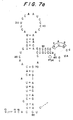
- the structures and binding sites for AMT-derivatized oligomers which are complementary to either ⁇ and ⁇ globin mRNA are given in Table II and illustrated in Figures 7a and 7b. As shown, the oligomers are each eight nucleotides in length and begin with the sequence pTpG.
- the AMT group is linked directly to the 5 ⁇ phosphoryl group via a phosphoramidate bond or via an aminoethyl or aminohexyl linker arm.
- the oligomers are complementary to either the coding region of ⁇ globin mRNA (nucleotides 60-67) or the initiation codon region of ⁇ globin mRNA (nucleotides 54-61).
- the physical binding sites for both oligomers lie in single stranded loop regions of the mRNAs.
- the AMT group is lined up opposite a uracil residue in the mRNA which is the covalent binding site for the oligomer.
- this uracil is hydrogen bonded to an A residue at the end of a base-paired stem region, whereas in ⁇ globin mRNA the uracil residue is free.
- d-AMTpTp GTTGGTC appears to crosslink more efficiently with its target mRNA than does d-AMTpTp GCACCAT .
- This behavior may be the result of differences in the binding sites for the two oligomers.
- the binding site for d-AMTpTp GCACCAT lies adjacent to a stem region.
- the stem In order to crosslink to uracil #62, the stem must open up which may be energetically unfavorable.
- uracil residue #68 of ⁇ globin mRNA is free to crosslink with the psoralen of d-AMTpTp GTTGGTC .
- the decreased efficiency of crosslinking by d-AMTpTp GCACCAT may also reflect its conversion to a new product, possibly intramolecular cyclobutane adduct, during the course of irradiation.
- a separate experiment showed that d-AMTpTp GCACCAT , which had been pre-irradiated at 365 nm for 45 min., underwent little or no crosslinking when it was subsequently irradiated in the presence of globin mRNA.
- the photoconversion of d-AMTpTp GCACCAT to an inactive product competes effectively with the crosslinking reaction resulting in a lowered efficiency of covalent adduct formation with the globin mRNA.
- linker length is not completely defined. Examination of molecular models suggest that a linker containing between 3 to 7 atoms facilitates crosslinking by allowing the 3,4 double bond of the psoralen pyrone ring to lie closer to the uracil 5,6 double bond. This increased proximity decreases the re-orientation of the uracil required for crosslinking.
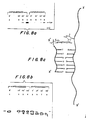
- Figure 8a shows the formation of photoadducts between rabbit globin mRNA and d-AMTpTp GTTGGTC (lanes 1-4) or d-AMTpTp GCACCAT (lanes 5-8).
- Aqueous solutions of mRNA (80 n M ) and [32p]-labeled oligomer (100 n M ) were irradiated at 365 nm at 4°C for 5 min. (lanes 1,5) 15 min. (lanes 2,6), 30 min. (lanes 3,7), and 45 min. (lanes 4,8).
- the reaction mixtures were electrophoresed on a 7% acrylamide/0.25% agarose gel which contained 7 M urea at 500 V for 4 hrs.
- the gel was autoradiographed at -80°C for 16 hrs.
- the material in the lower part of the gel is unreacted oligomer.
- Figure 8b shows the photoreactions of d-AMT-p TGTTGGTC (lanes 1-4) and d-AMTpTp GCACCAT (lanes 5-8).
- Aqueous solutions of the [32p]-labeled oligomers were irradiated at 365 nm at 4°C for 5 min. (lanes 1,5), 15 min. (lanes 2,6), 30 min. (lanes 3,7) and 45 min. (lanes 4,8).
- the reaction mixtures were electrophoresed on a 20% acrylamide gel which contained 7 M urea at 800 V for 2 hrs.
- the gel was autoradiographed at -80°C for 16 hrs. The position of the starting oligomers are indicated at the sides of the autoradiogram.
- Figure 8c illustrates how a psoralen-derivatized oligodeoxyribonucleoside methylphosphonate crosslinks with a uridine residue of mRNA.
- d-AMT(CH2)2-NHpTp GTTGGTC and d-AMT(CH2)6NHpTp GTTGGTC both specifically crosslink with ⁇ globin mRNA at an oligomer concentration of 2.7 n M .
- Separate experiments did not detect crosslinking with 2 n M d-AMTpTp GTTGGTC .
- the oligomers containing aminoalkyl linkers appear to crosslink more efficiently than the oligomer in which AMT is attached directly to the oligomer.
- This figure shows the formation of photoadducts between rabbit globin mRNA and d-AMT(CH2)2NHpTp GTTGGTC (lanes 1-5) or d-AMT(CH2)6NHpTp GTTGGTC (lanes 6-9).
- Aqueous solutions of mRNA (100 n M ) and [32p]-labeled oligomer (2.7 n M ) were irradiated at 365 nm at 4°C for 0 min. (lane 1), 5 min. (lanes 2,6), 15 min. (lanes 3,7), and 30 min. (lanes 4,8).
- the oligomers were also irradiated in the absence of mRNA for 30 min. (lanes 5,9).
- reaction mixtures were electrophoresed on a 7% acrylamide/0.25% agarose gel which contained 7 M urea at 500 V for 4 hrs.
- the gel autoradiographed at -80°C for 16 hrs.
- the top of the gel and the positions of ⁇ and ⁇ globin mRNA are indicated along the side of the autoradiogram.
- specificity may reflect the coordination of translation of ⁇ and ⁇ globin mRNA in the reticulocyte lysate. In any case, the inhibition does not appear to be due to degradation of mRNA. Irradiation of globin mRNA in the presence of 10 ⁇ M oligomer for 60 min. does not result in any detectable hydrolylsis of the mRNA as assayed by polyacrylamide gel electrophoresis.
- AMT derivatized oligonucleoside methyphosphonates can photocrosslink with mRNA in a sequence specific manner, even at very low oligomer concentrations and thus inhibit mRNA translation.
- linker length and oligomer chain length it is possible to optimize the specificity of the crosslinking reaction for any particular situation.
- the oligomers should be useful to inhibit the translation of virus mRNA in virus-infected cells.
- Tests with Vesicular Stomatitis virus (VSV) indicate that an AMT-derivatized oligomer complementary to VSV N protein mRNA photocrosslinks with VSV mRNA but not rabbit globin mRNA.
- the EDTA-derivatized methylphosphonate oligomer shown in Figure 10 was prepared.
- This oligomer is complementary to nucleotides 60-67 in the coding region of rabbit ⁇ globin mRNA.
- the stability of the oligomer was examined in aqueous solution. The oligomer was found to be stable indefinitely in aqueous ethanol solutions at -20°C. In tris buffer at pH 8.0, the oligomer undergoes autodegradation in the presence of 4 m M dithiothreitol and 10 ⁇ M ferrous sulfate.
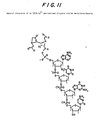
- This Example describes the preparation of an EDTA-derivatized oligodeoxyribonucleoside methylphosphonate starting with an octamer, d-Tp GCACCAT .
- the general structure of the EDTA-modified product is shown in Figure 11.
- the octamer d-Tp GCACCAT which is complementary to nucleotides 37-43 of ⁇ -globin mRNA and nucleotides 54-61 of ⁇ -globin mRNA, was converted to its EDTA derivative by the method of Chu and Orgel (Proc. Natl. Acad. Sci., 82 , 9 ⁇ (1985)) as shown in Figure 12.
- the EDTA-pTp GCACCAT was purified by polyacrylamide gel electrophoresis.
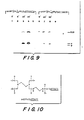
- reaction mixtures containing 0.25 ⁇ M rabbit globin mRNA were treated as follows: lane 2-no treatment; lane 3-incubated with 1 M aqueous piperidine at 37°C for 60 min.; lanes 4 and 5-incubated with 0.1 ⁇ M oligomer at 22° for 60 min.; lanes 6 and 7-incubated with 0.1 ⁇ M oligome ⁇ at 37°C for 60 min. After incubation, the reaction mixtures were applied to an agarose gel and electrophoresed. The gel was stained with ethidium bromide and photographed. The results are shown in Figure 13.
- the mRNA was hydrolyzed by the oligomer. Significantly more hydrolysis occurred at 22°C (lanes 4 and 5) than at 37°C (lanes 6 and 7). This behavior is consistent with the abilityof the oligomer to bind more strongly to the mRNA at lower temperatures.
- the mRNA concentration was 0.25 ⁇ M whereas the oligomer concentration was 0.1 ⁇ M .
- the complete hydrolysis of the mRNA observed at 22°C thus shows that oligomer functions in a catalytic manner at very low concentrations.
- the chain length of the oligomers may be varied as desired and the nature and positioning of the crosslinking or cleaving group may also be varied.
- the effectiveness of the derivative may be changed by varying the positioning of the EDTA or psoralen group so that the group is placed either at the 5 ⁇ -end of a methylphosphonate oligomer which contains no phosphodiester group or by placing the group in the middle or at the 3 ⁇ -end of the oligomer.
- methylphosphonate oligomers derivatized at their 5 ⁇ -end with psoralen may be accomplished by first preparing the imidazolid of the oligonucleoside methylphosphonate by reaction with imidazole and 1-ethyl-3-(3-dimethylaminopropyl) carbodiimide following the procedure of Chu et al (Nucleic Acid Res., 11, 6513-6529). The imidazolide is then reacted with aminomethyltrimethylpsoralen (AMT) to give the desired product. This series of reactions takes approximately two days to complete.
- AMT aminomethyltrimethylpsoralen
- oligonucleoside methylphosphonate conversion of oligonucleoside methylphosphonate to the desired product is incomplete. Because the oligomer and product have the same net charge, it is difficult to separate them by gel electrophoresis or DEAE cellulose chromatography.
- d-pNp(N p ) n N can be converted directly to its aminomethyltrimethylpsoralen derivative, d-AMT-pNp(N p ) n N, by reaction with aminomethyltrimethylpsoralen and carbodiimide in 2,6-lutidine buffer, pH 7.0. The reaction is essentially complete within 6 hours at room temperature. The product is readily purified by DEAE cellulose chromatography.
- This derivatized oligomer appears to inhibit mRNA translation in the concentration range of 1 to 10 ⁇ M .
- amounts of the AMT derivatized octanucleoside methylphosphonate, d-AMTpTp GCACCAT , in this range will form a covalent adduct with rabbit globin mRNA when irradiated at 365 nm.
- Methods for attaching EDTA or psoralen, or the like to the oligonucleotide are known and these can be used for present purposes to place a variety of functional groups, reactive with RNA, on the selected oligomer sequences.
- EDTA covalently to the 5 ⁇ terminus of a deoxynucleotide sequence
- the resulting adduct can be used for sequence specific cleavage of DNA. See, for example, papers by Chu et al and Dreyer et al in Proc. Natl. Acad. Sci. USA, Vol. 82, pages 963-967 and 968-972, February 1985.
- the psoralen- and the EDTA-derivatized methylphosphonate oligomers serve to illustrate the broad aspects of the invention.
- the psoralen derivative, or its equivalent can be used to covalently crosslink to the target nucleic acid upon activation with ultraviolet light. This can be done to, for example, inhibit translation of mRNA at low concentrations of the oligomer.
- the oligomers modified with EDTA or the like can be used to selectively cleave the target nucleic acid and thus render it biologically nonfunctional.
Landscapes
- Chemical & Material Sciences (AREA)
- Health & Medical Sciences (AREA)
- Life Sciences & Earth Sciences (AREA)
- Biochemistry (AREA)
- Molecular Biology (AREA)
- Organic Chemistry (AREA)
- Engineering & Computer Science (AREA)
- Biotechnology (AREA)
- General Health & Medical Sciences (AREA)
- Genetics & Genomics (AREA)
- Pharmaceuticals Containing Other Organic And Inorganic Compounds (AREA)
- Saccharide Compounds (AREA)
Applications Claiming Priority (2)
| Application Number | Priority Date | Filing Date | Title |
|---|---|---|---|
| US92423486A | 1986-10-28 | 1986-10-28 | |
| US924234 | 1986-10-28 |
Publications (2)
| Publication Number | Publication Date |
|---|---|
| EP0266099A2 true EP0266099A2 (de) | 1988-05-04 |
| EP0266099A3 EP0266099A3 (de) | 1990-09-19 |
Family
ID=25449930
Family Applications (1)
| Application Number | Title | Priority Date | Filing Date |
|---|---|---|---|
| EP19870309121 Withdrawn EP0266099A3 (de) | 1986-10-28 | 1987-10-15 | Alkyl- oder Arylphosphonat-Oligonukleosid, das sich mit Nukleinesäuren vernetzen kann oder das Nukleinsäure spalten kann |
Country Status (3)
| Country | Link |
|---|---|
| EP (1) | EP0266099A3 (de) |
| JP (1) | JPS63295596A (de) |
| CA (1) | CA1296664C (de) |
Cited By (29)
| Publication number | Priority date | Publication date | Assignee | Title |
|---|---|---|---|---|
| EP0324616A3 (en) * | 1988-01-13 | 1990-11-14 | Amoco Corporation | Template-directed photoligation |
| EP0316016A3 (de) * | 1987-11-12 | 1991-03-27 | Max-Planck-Gesellschaft zur Förderung der Wissenschaften e.V. | Modifizierte oligonukleotide |
| US5134066A (en) * | 1989-08-29 | 1992-07-28 | Monsanto Company | Improved probes using nucleosides containing 3-dezauracil analogs |
| EP0537994A1 (de) * | 1991-10-16 | 1993-04-21 | Ciba Corning Diagnostics Corp. | Effektive Gensonden-Konjugationen mittels eines aussergewöhnlichen Mischanhydridverfahrens |
| US5274157A (en) * | 1991-11-12 | 1993-12-28 | Ciba-Geigy Corporation | Protected formylpentanediols, hydroxymethylpentanediols, process for their preparation and intermediates |
| US5319080A (en) * | 1991-10-17 | 1994-06-07 | Ciba-Geigy Corporation | Bicyclic nucleosides, oligonucleotides, process for their preparation and intermediates |
| US5332814A (en) * | 1991-11-12 | 1994-07-26 | Ciba-Geigy Corporation | Process for the preparation of carbacyclic nucleosides, and intermediates |
| WO1995001364A1 (en) * | 1993-06-25 | 1995-01-12 | Yale University | Chemically modified oligonucleotide for site-directed mutagenesis |
| EP0661979A4 (de) * | 1991-08-21 | 1995-09-13 | Microprobe Corp | Vernetzen von oligonukleotiden für enzymvermittelte dreifachstrangbildung. |
| EP0653438A3 (de) * | 1993-08-06 | 1995-10-18 | Takeda Chemical Industries Ltd | Oligonukleotid Verbindungen ihre Herstellung und ihre Verwendung. |
| US5461152A (en) * | 1992-07-01 | 1995-10-24 | Ciba-Geigy Corporation | Carbocyclic nucleosides containing bicycle rings, oligonucleotides therefrom, process for their preparation, their use and intermediates |
| EP0604409A4 (en) * | 1990-01-11 | 1996-06-12 | Isis Pharmaceuticals Inc | Compositions and methods for detecting and modulating rna activity and gene expression. |
| US5750673A (en) * | 1994-04-27 | 1998-05-12 | Novartis Corporation | Nucleosides with 2'-O-modifications |
| US5824796A (en) * | 1988-09-28 | 1998-10-20 | Epoch Pharmaceuticals, Inc. | Cross-linking oligonucleotides |
| US5925744A (en) * | 1994-09-02 | 1999-07-20 | Novartis Finance Corporation | Functional terpyridine-metal complexes, a process for the preparation thereof and oligonucleotide conjugates with terpyridine-metal complexes |
| US5935830A (en) * | 1995-06-07 | 1999-08-10 | Epoch Pharmaceuticals, Inc. | Targeted mutagenesis in living cells using modified oligonucleotides |
| US5962426A (en) * | 1993-06-25 | 1999-10-05 | Yale University | Triple-helix forming oligonucleotides for targeted mutagenesis |
| US5969116A (en) * | 1993-05-12 | 1999-10-19 | Novartis Corporation | Nucleosides and oligonucleotides having 2'-ether groups |
| US6066447A (en) * | 1994-01-26 | 2000-05-23 | Novartis Corporation | Modified oligonucleotides |
| US6136601A (en) * | 1991-08-21 | 2000-10-24 | Epoch Pharmaceuticals, Inc. | Targeted mutagenesis in living cells using modified oligonucleotides |
| US6262241B1 (en) | 1990-08-13 | 2001-07-17 | Isis Pharmaceuticals, Inc. | Compound for detecting and modulating RNA activity and gene expression |
| DE10051628A1 (de) * | 2000-10-18 | 2002-05-02 | Fresenius Hemocare Gmbh | Mittel zur Inaktivierung von pathogenen Keimen und dessen Verwendung |
| EP1123930A4 (de) * | 1998-10-22 | 2002-05-08 | Cosmo Res Inst | Cyclische phenolsulfid-metallkomplexe, katalysatoren, die diese enthalten, und analytische verfahren für wasserstoffperoxid |
| US6562960B1 (en) | 1996-03-05 | 2003-05-13 | Isis Pharmaceuticals, Inc. | Oligonucleotide analogues |
| USRE38416E1 (en) | 1988-09-28 | 2004-02-03 | Epoch Biosciences, Inc. | Cross-linking oligonucleotides |
| US7235650B2 (en) | 1990-01-11 | 2007-06-26 | Isis Pharmaceuticals, Inc. | Derivatized oligonucleotides having improved uptake and other properties |
| US8658608B2 (en) | 2005-11-23 | 2014-02-25 | Yale University | Modified triple-helix forming oligonucleotides for targeted mutagenesis |
| US11136597B2 (en) | 2016-02-16 | 2021-10-05 | Yale University | Compositions for enhancing targeted gene editing and methods of use thereof |
| US12268774B2 (en) | 2017-04-04 | 2025-04-08 | Yale University | Compositions and methods for in utero delivery |
Family Cites Families (4)
| Publication number | Priority date | Publication date | Assignee | Title |
|---|---|---|---|---|
| US4469863A (en) * | 1980-11-12 | 1984-09-04 | Ts O Paul O P | Nonionic nucleic acid alkyl and aryl phosphonates and processes for manufacture and use thereof |
| US4707440A (en) * | 1984-01-30 | 1987-11-17 | Enzo Biochem, Inc. | Nucleic acid hybridization assay and detectable molecules useful in such assay |
| FR2568254B1 (fr) * | 1984-07-25 | 1988-04-29 | Centre Nat Rech Scient | Application d'oligonucleotides lies a un agent intercalant, notamment a titre de medicament |
| FR2586704B1 (fr) * | 1985-09-04 | 1987-12-18 | Centre Nat Rech Scient | Nouveaux composes comportant une sequence d'oligonucleotide liee a un agent d'intercalation et a un groupe chimique activable, leur synthese et leurs applications a titre de nucleases artificielles specifiques de sequences. centre national de la recherche scientifique (cnrs) |
-
1987
- 1987-10-15 EP EP19870309121 patent/EP0266099A3/de not_active Withdrawn
- 1987-10-22 JP JP26549987A patent/JPS63295596A/ja active Pending
- 1987-10-27 CA CA000550287A patent/CA1296664C/en not_active Expired - Lifetime
Cited By (39)
| Publication number | Priority date | Publication date | Assignee | Title |
|---|---|---|---|---|
| EP0316016A3 (de) * | 1987-11-12 | 1991-03-27 | Max-Planck-Gesellschaft zur Förderung der Wissenschaften e.V. | Modifizierte oligonukleotide |
| US5112963A (en) * | 1987-11-12 | 1992-05-12 | Max-Planck-Gesellschaft Zur Foerderung Der Wissenschaften E.V. | Modified oligonucleotides |
| EP0324616A3 (en) * | 1988-01-13 | 1990-11-14 | Amoco Corporation | Template-directed photoligation |
| USRE38416E1 (en) | 1988-09-28 | 2004-02-03 | Epoch Biosciences, Inc. | Cross-linking oligonucleotides |
| US5824796A (en) * | 1988-09-28 | 1998-10-20 | Epoch Pharmaceuticals, Inc. | Cross-linking oligonucleotides |
| US5134066A (en) * | 1989-08-29 | 1992-07-28 | Monsanto Company | Improved probes using nucleosides containing 3-dezauracil analogs |
| EP1418179A3 (de) * | 1990-01-11 | 2006-03-08 | Isis Pharmaceuticals, Inc. | Zusammensetzungen und Verfahren zum Detektieren und zur Modulation von RNA Aktivität und Genexpression |
| US7235650B2 (en) | 1990-01-11 | 2007-06-26 | Isis Pharmaceuticals, Inc. | Derivatized oligonucleotides having improved uptake and other properties |
| EP0604409A4 (en) * | 1990-01-11 | 1996-06-12 | Isis Pharmaceuticals Inc | Compositions and methods for detecting and modulating rna activity and gene expression. |
| US6262241B1 (en) | 1990-08-13 | 2001-07-17 | Isis Pharmaceuticals, Inc. | Compound for detecting and modulating RNA activity and gene expression |
| EP0661979A4 (de) * | 1991-08-21 | 1995-09-13 | Microprobe Corp | Vernetzen von oligonukleotiden für enzymvermittelte dreifachstrangbildung. |
| US6136601A (en) * | 1991-08-21 | 2000-10-24 | Epoch Pharmaceuticals, Inc. | Targeted mutagenesis in living cells using modified oligonucleotides |
| EP0537994A1 (de) * | 1991-10-16 | 1993-04-21 | Ciba Corning Diagnostics Corp. | Effektive Gensonden-Konjugationen mittels eines aussergewöhnlichen Mischanhydridverfahrens |
| US5393878A (en) * | 1991-10-17 | 1995-02-28 | Ciba-Geigy Corporation | Bicyclic nucleosides, oligonucleotides, process for their preparation and intermediates |
| US5319080A (en) * | 1991-10-17 | 1994-06-07 | Ciba-Geigy Corporation | Bicyclic nucleosides, oligonucleotides, process for their preparation and intermediates |
| US5274157A (en) * | 1991-11-12 | 1993-12-28 | Ciba-Geigy Corporation | Protected formylpentanediols, hydroxymethylpentanediols, process for their preparation and intermediates |
| US5332814A (en) * | 1991-11-12 | 1994-07-26 | Ciba-Geigy Corporation | Process for the preparation of carbacyclic nucleosides, and intermediates |
| US5700920A (en) * | 1992-07-01 | 1997-12-23 | Novartis Corporation | Carbocyclic nucleosides containing bicyclic rings, oligonucleotides therefrom, process for their preparation, their use and intermediates |
| US5461152A (en) * | 1992-07-01 | 1995-10-24 | Ciba-Geigy Corporation | Carbocyclic nucleosides containing bicycle rings, oligonucleotides therefrom, process for their preparation, their use and intermediates |
| US5610300A (en) * | 1992-07-01 | 1997-03-11 | Ciba-Geigy Corporation | Carbocyclic nucleosides containing bicyclic rings, oligonucleotides therefrom, process for their preparation, their use and intermediates |
| US5969116A (en) * | 1993-05-12 | 1999-10-19 | Novartis Corporation | Nucleosides and oligonucleotides having 2'-ether groups |
| WO1995001364A1 (en) * | 1993-06-25 | 1995-01-12 | Yale University | Chemically modified oligonucleotide for site-directed mutagenesis |
| US6303376B1 (en) | 1993-06-25 | 2001-10-16 | Yale University | Methods of targeted mutagenesis using triple-helix forming oligonucleotides |
| AU691194B2 (en) * | 1993-06-25 | 1998-05-14 | Yale University | Chemically modified oligonucleotide for site-directed mutagenesis |
| US5962426A (en) * | 1993-06-25 | 1999-10-05 | Yale University | Triple-helix forming oligonucleotides for targeted mutagenesis |
| EP0653438A3 (de) * | 1993-08-06 | 1995-10-18 | Takeda Chemical Industries Ltd | Oligonukleotid Verbindungen ihre Herstellung und ihre Verwendung. |
| US6066447A (en) * | 1994-01-26 | 2000-05-23 | Novartis Corporation | Modified oligonucleotides |
| US5977332A (en) * | 1994-04-27 | 1999-11-02 | Novartis Corporation | Oligonucleotides having 2'-ether groups |
| US5750673A (en) * | 1994-04-27 | 1998-05-12 | Novartis Corporation | Nucleosides with 2'-O-modifications |
| US5925744A (en) * | 1994-09-02 | 1999-07-20 | Novartis Finance Corporation | Functional terpyridine-metal complexes, a process for the preparation thereof and oligonucleotide conjugates with terpyridine-metal complexes |
| US5935830A (en) * | 1995-06-07 | 1999-08-10 | Epoch Pharmaceuticals, Inc. | Targeted mutagenesis in living cells using modified oligonucleotides |
| US6562960B1 (en) | 1996-03-05 | 2003-05-13 | Isis Pharmaceuticals, Inc. | Oligonucleotide analogues |
| EP1327619A1 (de) * | 1998-10-22 | 2003-07-16 | Cosmo Research Institute | Verfahren zur Phosphodiester-Hydrolyse mittels eines Katalysators enthaltend einen zyklischen Phenolsulfid-Metallkomplex |
| EP1123930A4 (de) * | 1998-10-22 | 2002-05-08 | Cosmo Res Inst | Cyclische phenolsulfid-metallkomplexe, katalysatoren, die diese enthalten, und analytische verfahren für wasserstoffperoxid |
| DE10051628B4 (de) * | 2000-10-18 | 2007-06-06 | Fresenius Hemocare Beteiligungs Gmbh | Einzelsträngiges Oligonukleotid und dessen Verwendung |
| DE10051628A1 (de) * | 2000-10-18 | 2002-05-02 | Fresenius Hemocare Gmbh | Mittel zur Inaktivierung von pathogenen Keimen und dessen Verwendung |
| US8658608B2 (en) | 2005-11-23 | 2014-02-25 | Yale University | Modified triple-helix forming oligonucleotides for targeted mutagenesis |
| US11136597B2 (en) | 2016-02-16 | 2021-10-05 | Yale University | Compositions for enhancing targeted gene editing and methods of use thereof |
| US12268774B2 (en) | 2017-04-04 | 2025-04-08 | Yale University | Compositions and methods for in utero delivery |
Also Published As
| Publication number | Publication date |
|---|---|
| CA1296664C (en) | 1992-03-03 |
| JPS63295596A (ja) | 1988-12-01 |
| EP0266099A3 (de) | 1990-09-19 |
Similar Documents
| Publication | Publication Date | Title |
|---|---|---|
| EP0266099A2 (de) | Alkyl- oder Arylphosphonat-Oligonukleosid, das sich mit Nukleinesäuren vernetzen kann oder das Nukleinsäure spalten kann | |
| US5912339A (en) | Oligonucleoside alkyl or arylphosphonate derivatives capable of crosslinking with or cleaving nucleic acids | |
| Lee et al. | Interaction of psoralen-derivatized oligodeoxyribonucleoside methylphosphonates with single-stranded DNA | |
| US5786138A (en) | Hyperstabilizing antisense nucleic acid binding agents | |
| Kean et al. | Photochemical cross-linking of psoralen-derivatized oligonucleoside methylphosphonates to rabbit globin messenger RNA | |
| US5013830A (en) | Compounds for the cleavage at a specific position of RNA, oligomers employed for the formation of said compounds, and starting materials for the synthesis of said oligomers | |
| US6271369B1 (en) | Chimeric molecules targeted to viral RNAs | |
| US6140491A (en) | Nucleozymes | |
| Bartholomew et al. | The subunit structure of Saccharomyces cerevisiae transcription factor IIIC probed with a novel photocrosslinking reagent. | |
| US6159951A (en) | 2'-O-amino-containing nucleoside analogs and polynucleotides | |
| Stein et al. | Phosphorothioate and normal oligodeoxyribonucleotides with 5′-linked acridine: characterization and preliminary kinetics of cellular uptake | |
| US5962425A (en) | Methods for decreasing the expression of specifically targeted genes | |
| Micura | Cyclic oligoribonucleotides (RNA) by solid‐phase synthesis | |
| JPS62277395A (ja) | オリゴヌクレオチド又はオリゴデオキシヌクレオチドから構成されている化学化合物、その合成方法及びその利用方法 | |
| Praseuth et al. | Sequence-targeted photosensitized reactions in nucleic acids by oligo-. alpha.-deoxynucleotides and oligo-. beta.-deoxynucleotides covalently linked to proflavin | |
| US5646261A (en) | 3'-derivatized oligonucleotide analogs with non-nucleotidic groupings, their preparation and use | |
| US4990498A (en) | 2- and 8-azido(2'-5')oligoadenylates and antiviral uses thereof | |
| Zon | Oligonucleoside phosphorothioates | |
| WO1994006815A1 (en) | Oligonucleotide and nucleotide amine analogs, methods of synthesis and use | |
| US5834607A (en) | Amines and methods of making and using the same | |
| Xiao et al. | Synthesis and Characterization of Composite Nucleic Acids Containing 2‵, 5‵-Oligoriboadenylate Linked to Antisense DNA | |
| Gaglione et al. | Current methods in synthesis of cyclic oligonucleotides and analogues | |
| Jacob et al. | Inhibition of viral growth by an α‐oligonucleotide directed to the splice junction of Herpes simplex virus type‐1 immediate‐early pre‐mRNA species 22 and 47 | |
| US5650399A (en) | Reactive anthraquinone derivatives and conjugates thereof | |
| EP0436582A1 (de) | Phosphorothioat und normale oligodeoxynucleotide mit 5'-gebundenen acridinen |
Legal Events
| Date | Code | Title | Description |
|---|---|---|---|
| PUAI | Public reference made under article 153(3) epc to a published international application that has entered the european phase |
Free format text: ORIGINAL CODE: 0009012 |
|
| AK | Designated contracting states |
Kind code of ref document: A2 Designated state(s): AT BE CH DE ES FR GB GR IT LI LU NL SE |
|
| PUAL | Search report despatched |
Free format text: ORIGINAL CODE: 0009013 |
|
| AK | Designated contracting states |
Kind code of ref document: A3 Designated state(s): AT BE CH DE ES FR GB GR IT LI LU NL SE |
|
| 17P | Request for examination filed |
Effective date: 19901221 |
|
| 17Q | First examination report despatched |
Effective date: 19920217 |
|
| APAD | Appeal reference recorded |
Free format text: ORIGINAL CODE: EPIDOS REFNE |
|
| APAB | Appeal dossier modified |
Free format text: ORIGINAL CODE: EPIDOS NOAPE |
|
| STAA | Information on the status of an ep patent application or granted ep patent |
Free format text: STATUS: THE APPLICATION HAS BEEN WITHDRAWN |
|
| 18W | Application withdrawn |
Withdrawal date: 19980805 |
|
| APAF | Appeal reference modified |
Free format text: ORIGINAL CODE: EPIDOSCREFNE |
|
| RIN1 | Information on inventor provided before grant (corrected) |
Inventor name: TS'O, PAUL O.P. Inventor name: MILLER, PAUL S. |