EP0268763B1 - Zahnpflegemittel - Google Patents
Zahnpflegemittel Download PDFInfo
- Publication number
- EP0268763B1 EP0268763B1 EP87113005A EP87113005A EP0268763B1 EP 0268763 B1 EP0268763 B1 EP 0268763B1 EP 87113005 A EP87113005 A EP 87113005A EP 87113005 A EP87113005 A EP 87113005A EP 0268763 B1 EP0268763 B1 EP 0268763B1
- Authority
- EP
- European Patent Office
- Prior art keywords
- precipitation
- acid
- salicic
- value
- suspension
- Prior art date
- Legal status (The legal status is an assumption and is not a legal conclusion. Google has not performed a legal analysis and makes no representation as to the accuracy of the status listed.)
- Expired - Lifetime
Links
- 238000002360 preparation method Methods 0.000 title description 4
- VYPSYNLAJGMNEJ-UHFFFAOYSA-N Silicium dioxide Chemical compound O=[Si]=O VYPSYNLAJGMNEJ-UHFFFAOYSA-N 0.000 claims abstract description 128
- PEDCQBHIVMGVHV-UHFFFAOYSA-N Glycerine Chemical compound OCC(O)CO PEDCQBHIVMGVHV-UHFFFAOYSA-N 0.000 claims abstract description 26
- XLYOFNOQVPJJNP-UHFFFAOYSA-N water Substances O XLYOFNOQVPJJNP-UHFFFAOYSA-N 0.000 claims abstract description 22
- 239000000203 mixture Substances 0.000 claims abstract description 15
- 239000010451 perlite Substances 0.000 claims abstract description 8
- 235000019362 perlite Nutrition 0.000 claims abstract description 8
- 238000001556 precipitation Methods 0.000 claims description 38
- 239000000725 suspension Substances 0.000 claims description 38
- QAOWNCQODCNURD-UHFFFAOYSA-N Sulfuric acid Chemical compound OS(O)(=O)=O QAOWNCQODCNURD-UHFFFAOYSA-N 0.000 claims description 23
- 239000002253 acid Substances 0.000 claims description 23
- 239000000126 substance Substances 0.000 claims description 12
- 235000011187 glycerol Nutrition 0.000 claims description 10
- 239000012429 reaction media Substances 0.000 claims description 10
- 239000002245 particle Substances 0.000 claims description 9
- 230000008719 thickening Effects 0.000 claims description 8
- 238000005498 polishing Methods 0.000 claims description 6
- 238000001035 drying Methods 0.000 claims description 5
- 238000001914 filtration Methods 0.000 claims description 5
- 238000005406 washing Methods 0.000 claims description 5
- PMZURENOXWZQFD-UHFFFAOYSA-L Sodium Sulfate Chemical compound [Na+].[Na+].[O-]S([O-])(=O)=O PMZURENOXWZQFD-UHFFFAOYSA-L 0.000 claims description 4
- 238000000227 grinding Methods 0.000 claims description 4
- 239000011877 solvent mixture Substances 0.000 claims description 4
- 229910052938 sodium sulfate Inorganic materials 0.000 claims description 2
- 235000011152 sodium sulphate Nutrition 0.000 claims description 2
- BPQQTUXANYXVAA-UHFFFAOYSA-N Orthosilicate Chemical compound [O-][Si]([O-])([O-])[O-] BPQQTUXANYXVAA-UHFFFAOYSA-N 0.000 claims 4
- 239000001117 sulphuric acid Substances 0.000 claims 4
- 235000011149 sulphuric acid Nutrition 0.000 claims 4
- 238000006243 chemical reaction Methods 0.000 claims 2
- 150000007513 acids Chemical class 0.000 claims 1
- 230000015572 biosynthetic process Effects 0.000 claims 1
- 230000004941 influx Effects 0.000 claims 1
- 229910052751 metal Inorganic materials 0.000 claims 1
- 239000002184 metal Substances 0.000 claims 1
- 229910052914 metal silicate Inorganic materials 0.000 claims 1
- 239000007921 spray Substances 0.000 claims 1
- 230000009466 transformation Effects 0.000 claims 1
- 239000000377 silicon dioxide Substances 0.000 abstract description 63
- 239000000606 toothpaste Substances 0.000 abstract description 7
- 239000002904 solvent Substances 0.000 abstract description 4
- 229940034610 toothpaste Drugs 0.000 abstract description 4
- 239000006072 paste Substances 0.000 description 40
- 239000000243 solution Substances 0.000 description 17
- 238000005299 abrasion Methods 0.000 description 14
- 239000000551 dentifrice Substances 0.000 description 13
- 238000004140 cleaning Methods 0.000 description 12
- 238000005259 measurement Methods 0.000 description 10
- 230000000694 effects Effects 0.000 description 9
- 238000012360 testing method Methods 0.000 description 9
- 239000010949 copper Substances 0.000 description 8
- 239000011734 sodium Substances 0.000 description 8
- 238000002156 mixing Methods 0.000 description 7
- 229910001562 pearlite Inorganic materials 0.000 description 7
- NTHWMYGWWRZVTN-UHFFFAOYSA-N sodium silicate Chemical compound [Na+].[Na+].[O-][Si]([O-])=O NTHWMYGWWRZVTN-UHFFFAOYSA-N 0.000 description 7
- 239000007787 solid Substances 0.000 description 7
- IJGRMHOSHXDMSA-UHFFFAOYSA-N Atomic nitrogen Chemical compound N#N IJGRMHOSHXDMSA-UHFFFAOYSA-N 0.000 description 6
- RYGMFSIKBFXOCR-UHFFFAOYSA-N Copper Chemical compound [Cu] RYGMFSIKBFXOCR-UHFFFAOYSA-N 0.000 description 6
- 239000004115 Sodium Silicate Substances 0.000 description 6
- 229910052910 alkali metal silicate Inorganic materials 0.000 description 6
- 229910052802 copper Inorganic materials 0.000 description 6
- 229910052911 sodium silicate Inorganic materials 0.000 description 6
- 238000003756 stirring Methods 0.000 description 6
- 239000006185 dispersion Substances 0.000 description 4
- 238000000034 method Methods 0.000 description 4
- 239000000376 reactant Substances 0.000 description 4
- 238000011282 treatment Methods 0.000 description 4
- 210000003298 dental enamel Anatomy 0.000 description 3
- 229910052757 nitrogen Inorganic materials 0.000 description 3
- 230000003449 preventive effect Effects 0.000 description 3
- 238000011321 prophylaxis Methods 0.000 description 3
- 208000002064 Dental Plaque Diseases 0.000 description 2
- 229910004298 SiO 2 Inorganic materials 0.000 description 2
- 230000008859 change Effects 0.000 description 2
- 239000008367 deionised water Substances 0.000 description 2
- 229910021641 deionized water Inorganic materials 0.000 description 2
- 238000009826 distribution Methods 0.000 description 2
- 239000003792 electrolyte Substances 0.000 description 2
- 238000011156 evaluation Methods 0.000 description 2
- 230000002349 favourable effect Effects 0.000 description 2
- 239000007788 liquid Substances 0.000 description 2
- 238000004519 manufacturing process Methods 0.000 description 2
- QSHDDOUJBYECFT-UHFFFAOYSA-N mercury Chemical compound [Hg] QSHDDOUJBYECFT-UHFFFAOYSA-N 0.000 description 2
- 229910052753 mercury Inorganic materials 0.000 description 2
- 210000000214 mouth Anatomy 0.000 description 2
- 239000012071 phase Substances 0.000 description 2
- 230000000069 prophylactic effect Effects 0.000 description 2
- RMAQACBXLXPBSY-UHFFFAOYSA-N silicic acid Chemical compound O[Si](O)(O)O RMAQACBXLXPBSY-UHFFFAOYSA-N 0.000 description 2
- 235000012239 silicon dioxide Nutrition 0.000 description 2
- YCKRFDGAMUMZLT-UHFFFAOYSA-N Fluorine atom Chemical compound [F] YCKRFDGAMUMZLT-UHFFFAOYSA-N 0.000 description 1
- 244000246386 Mentha pulegium Species 0.000 description 1
- 235000016257 Mentha pulegium Nutrition 0.000 description 1
- 235000004357 Mentha x piperita Nutrition 0.000 description 1
- 241001465754 Metazoa Species 0.000 description 1
- 239000004677 Nylon Substances 0.000 description 1
- 239000004698 Polyethylene Substances 0.000 description 1
- 238000010521 absorption reaction Methods 0.000 description 1
- 239000008346 aqueous phase Substances 0.000 description 1
- 239000010692 aromatic oil Substances 0.000 description 1
- 230000008901 benefit Effects 0.000 description 1
- 230000001680 brushing effect Effects 0.000 description 1
- 239000003795 chemical substances by application Substances 0.000 description 1
- 239000012459 cleaning agent Substances 0.000 description 1
- 239000002537 cosmetic Substances 0.000 description 1
- 208000002925 dental caries Diseases 0.000 description 1
- 210000004268 dentin Anatomy 0.000 description 1
- 238000011161 development Methods 0.000 description 1
- 238000010586 diagram Methods 0.000 description 1
- 239000012153 distilled water Substances 0.000 description 1
- 238000007580 dry-mixing Methods 0.000 description 1
- 239000000428 dust Substances 0.000 description 1
- 238000011049 filling Methods 0.000 description 1
- 239000012065 filter cake Substances 0.000 description 1
- 238000005189 flocculation Methods 0.000 description 1
- 230000016615 flocculation Effects 0.000 description 1
- 229910052731 fluorine Inorganic materials 0.000 description 1
- 239000011737 fluorine Substances 0.000 description 1
- 239000011521 glass Substances 0.000 description 1
- 239000007970 homogeneous dispersion Substances 0.000 description 1
- 238000000265 homogenisation Methods 0.000 description 1
- 235000001050 hortel pimenta Nutrition 0.000 description 1
- 238000002347 injection Methods 0.000 description 1
- 239000007924 injection Substances 0.000 description 1
- 230000003993 interaction Effects 0.000 description 1
- 238000010902 jet-milling Methods 0.000 description 1
- 230000007774 longterm Effects 0.000 description 1
- 238000012986 modification Methods 0.000 description 1
- 230000004048 modification Effects 0.000 description 1
- 229920001778 nylon Polymers 0.000 description 1
- 239000003921 oil Substances 0.000 description 1
- 239000003973 paint Substances 0.000 description 1
- 230000035515 penetration Effects 0.000 description 1
- -1 polyethylene Polymers 0.000 description 1
- 229920000573 polyethylene Polymers 0.000 description 1
- 229910052573 porcelain Inorganic materials 0.000 description 1
- 239000011148 porous material Substances 0.000 description 1
- 235000019353 potassium silicate Nutrition 0.000 description 1
- 230000001376 precipitating effect Effects 0.000 description 1
- 238000003825 pressing Methods 0.000 description 1
- 230000008569 process Effects 0.000 description 1
- 238000012545 processing Methods 0.000 description 1
- 239000000047 product Substances 0.000 description 1
- 239000008262 pumice Substances 0.000 description 1
- 230000002285 radioactive effect Effects 0.000 description 1
- 238000011160 research Methods 0.000 description 1
- 239000013049 sediment Substances 0.000 description 1
- 238000005204 segregation Methods 0.000 description 1
- 150000004760 silicates Chemical class 0.000 description 1
- 239000002002 slurry Substances 0.000 description 1
- 239000000344 soap Substances 0.000 description 1
- 238000001179 sorption measurement Methods 0.000 description 1
- 238000001694 spray drying Methods 0.000 description 1
- 238000003860 storage Methods 0.000 description 1
- 230000002195 synergetic effect Effects 0.000 description 1
- 238000005303 weighing Methods 0.000 description 1
- 230000004580 weight loss Effects 0.000 description 1
- 238000004383 yellowing Methods 0.000 description 1
- GFQYVLUOOAAOGM-UHFFFAOYSA-N zirconium(iv) silicate Chemical compound [Zr+4].[O-][Si]([O-])([O-])[O-] GFQYVLUOOAAOGM-UHFFFAOYSA-N 0.000 description 1
Images


Classifications
-
- C—CHEMISTRY; METALLURGY
- C01—INORGANIC CHEMISTRY
- C01B—NON-METALLIC ELEMENTS; COMPOUNDS THEREOF; METALLOIDS OR COMPOUNDS THEREOF NOT COVERED BY SUBCLASS C01C
- C01B33/00—Silicon; Compounds thereof
- C01B33/113—Silicon oxides; Hydrates thereof
- C01B33/12—Silica; Hydrates thereof, e.g. lepidoic silicic acid
- C01B33/18—Preparation of finely divided silica neither in sol nor in gel form; After-treatment thereof
- C01B33/187—Preparation of finely divided silica neither in sol nor in gel form; After-treatment thereof by acidic treatment of silicates
- C01B33/193—Preparation of finely divided silica neither in sol nor in gel form; After-treatment thereof by acidic treatment of silicates of aqueous solutions of silicates
-
- A—HUMAN NECESSITIES
- A61—MEDICAL OR VETERINARY SCIENCE; HYGIENE
- A61K—PREPARATIONS FOR MEDICAL, DENTAL OR TOILETRY PURPOSES
- A61K8/00—Cosmetics or similar toiletry preparations
- A61K8/18—Cosmetics or similar toiletry preparations characterised by the composition
- A61K8/19—Cosmetics or similar toiletry preparations characterised by the composition containing inorganic ingredients
- A61K8/25—Silicon; Compounds thereof
-
- A—HUMAN NECESSITIES
- A61—MEDICAL OR VETERINARY SCIENCE; HYGIENE
- A61K—PREPARATIONS FOR MEDICAL, DENTAL OR TOILETRY PURPOSES
- A61K8/00—Cosmetics or similar toiletry preparations
- A61K8/18—Cosmetics or similar toiletry preparations characterised by the composition
- A61K8/19—Cosmetics or similar toiletry preparations characterised by the composition containing inorganic ingredients
- A61K8/26—Aluminium; Compounds thereof
-
- A—HUMAN NECESSITIES
- A61—MEDICAL OR VETERINARY SCIENCE; HYGIENE
- A61Q—SPECIFIC USE OF COSMETICS OR SIMILAR TOILETRY PREPARATIONS
- A61Q11/00—Preparations for care of the teeth, of the oral cavity or of dentures; Dentifrices, e.g. toothpastes; Mouth rinses
-
- C—CHEMISTRY; METALLURGY
- C01—INORGANIC CHEMISTRY
- C01P—INDEXING SCHEME RELATING TO STRUCTURAL AND PHYSICAL ASPECTS OF SOLID INORGANIC COMPOUNDS
- C01P2004/00—Particle morphology
- C01P2004/51—Particles with a specific particle size distribution
-
- C—CHEMISTRY; METALLURGY
- C01—INORGANIC CHEMISTRY
- C01P—INDEXING SCHEME RELATING TO STRUCTURAL AND PHYSICAL ASPECTS OF SOLID INORGANIC COMPOUNDS
- C01P2004/00—Particle morphology
- C01P2004/60—Particles characterised by their size
- C01P2004/61—Micrometer sized, i.e. from 1-100 micrometer
-
- C—CHEMISTRY; METALLURGY
- C01—INORGANIC CHEMISTRY
- C01P—INDEXING SCHEME RELATING TO STRUCTURAL AND PHYSICAL ASPECTS OF SOLID INORGANIC COMPOUNDS
- C01P2006/00—Physical properties of inorganic compounds
- C01P2006/11—Powder tap density
-
- C—CHEMISTRY; METALLURGY
- C01—INORGANIC CHEMISTRY
- C01P—INDEXING SCHEME RELATING TO STRUCTURAL AND PHYSICAL ASPECTS OF SOLID INORGANIC COMPOUNDS
- C01P2006/00—Physical properties of inorganic compounds
- C01P2006/12—Surface area
-
- C—CHEMISTRY; METALLURGY
- C01—INORGANIC CHEMISTRY
- C01P—INDEXING SCHEME RELATING TO STRUCTURAL AND PHYSICAL ASPECTS OF SOLID INORGANIC COMPOUNDS
- C01P2006/00—Physical properties of inorganic compounds
- C01P2006/14—Pore volume
-
- C—CHEMISTRY; METALLURGY
- C01—INORGANIC CHEMISTRY
- C01P—INDEXING SCHEME RELATING TO STRUCTURAL AND PHYSICAL ASPECTS OF SOLID INORGANIC COMPOUNDS
- C01P2006/00—Physical properties of inorganic compounds
- C01P2006/19—Oil-absorption capacity, e.g. DBP values
-
- C—CHEMISTRY; METALLURGY
- C01—INORGANIC CHEMISTRY
- C01P—INDEXING SCHEME RELATING TO STRUCTURAL AND PHYSICAL ASPECTS OF SOLID INORGANIC COMPOUNDS
- C01P2006/00—Physical properties of inorganic compounds
- C01P2006/22—Rheological behaviour as dispersion, e.g. viscosity, sedimentation stability
-
- C—CHEMISTRY; METALLURGY
- C01—INORGANIC CHEMISTRY
- C01P—INDEXING SCHEME RELATING TO STRUCTURAL AND PHYSICAL ASPECTS OF SOLID INORGANIC COMPOUNDS
- C01P2006/00—Physical properties of inorganic compounds
- C01P2006/40—Electric properties
-
- C—CHEMISTRY; METALLURGY
- C01—INORGANIC CHEMISTRY
- C01P—INDEXING SCHEME RELATING TO STRUCTURAL AND PHYSICAL ASPECTS OF SOLID INORGANIC COMPOUNDS
- C01P2006/00—Physical properties of inorganic compounds
- C01P2006/80—Compositional purity
-
- C—CHEMISTRY; METALLURGY
- C01—INORGANIC CHEMISTRY
- C01P—INDEXING SCHEME RELATING TO STRUCTURAL AND PHYSICAL ASPECTS OF SOLID INORGANIC COMPOUNDS
- C01P2006/00—Physical properties of inorganic compounds
- C01P2006/80—Compositional purity
- C01P2006/82—Compositional purity water content
-
- C—CHEMISTRY; METALLURGY
- C01—INORGANIC CHEMISTRY
- C01P—INDEXING SCHEME RELATING TO STRUCTURAL AND PHYSICAL ASPECTS OF SOLID INORGANIC COMPOUNDS
- C01P2006/00—Physical properties of inorganic compounds
- C01P2006/90—Other properties not specified above
-
- Y—GENERAL TAGGING OF NEW TECHNOLOGICAL DEVELOPMENTS; GENERAL TAGGING OF CROSS-SECTIONAL TECHNOLOGIES SPANNING OVER SEVERAL SECTIONS OF THE IPC; TECHNICAL SUBJECTS COVERED BY FORMER USPC CROSS-REFERENCE ART COLLECTIONS [XRACs] AND DIGESTS
- Y10—TECHNICAL SUBJECTS COVERED BY FORMER USPC
- Y10S—TECHNICAL SUBJECTS COVERED BY FORMER USPC CROSS-REFERENCE ART COLLECTIONS [XRACs] AND DIGESTS
- Y10S106/00—Compositions: coating or plastic
- Y10S106/02—Perlite
Definitions
- the invention relates to a dentifrice for preventive dental hygiene.
- Such a dentifrice usually consists of three different pastes classified according to hardness (hard, medium, soft), the structure of which cannot be compared to a commonly used toothpaste. It corresponds more to an almost crumbly polishing paste. This crumbly structure is necessary when used in the oral cavity with a polishing device to prevent substance loss due to e.g. To avoid splashing. These pastes are used in addition to the daily dental care of dental hygienists to remove stubborn dental plaque. This additional treatment is intended to support dental care in such a way that tooth decay is reduced and dental treatment is largely almost unnecessary. Experience has shown that a 2-month cleaning cycle is necessary for a good effect. The minimum number of this care is twice a year.
- the dental hygienist When performing this additional care, the dental hygienist first treats the dental plaque with the hard, then with the medium-hard paste and then with the soft paste.
- the aim is to roughen the tooth surface with the hard paste in order to embed the fluorine component of the dentifrice in this rough surface in order to achieve a long-term effect.
- the medium-hard and the soft paste should polish away the roughest unevenness on the tooth.
- Known toothpastes for preventive dental hygiene prophylaxis contain not only silicates but also pumice, zirconium silicate or hard AI2 03.
- the invention relates to a dentifrice for preventive dental hygiene, characterized in that it contains, as a cleaning body, a mixture consisting of a pearlite and a synthetically produced precipitated silica, the precipitated silica being obtained by the precipitation silicas of different particle sizes obtained in the usual way by precipitation and particle density in the suspension phase are homogeneously mixed with one another and the mixtures are worked up in the customary manner by filtration, washing, drying and grinding.
- the dentifrice according to the invention can contain, in addition to the cleaning body, which can make up 30-50% by weight of the total dentifrice, 50-70% by weight of a solvent mixture consisting of glycerin (86%) and water in a ratio of 1: 1.
- the proportion of precipitated silica in the cleaning body can exceed the proportion of pearlite. This measure can result in the setting of moderate abrasiveness.
- the solvent can consist of glycerol (86%) and water in any mixing ratio, preferably 1: 1.
- the cleaning body can predominantly contain amorphous precipitated silica in order to set the abrasiveness to a low value.
- the ratio of pearlite to precipitated silica can be 1: 1 to 1: 6 depending on the desired abrasiveness.
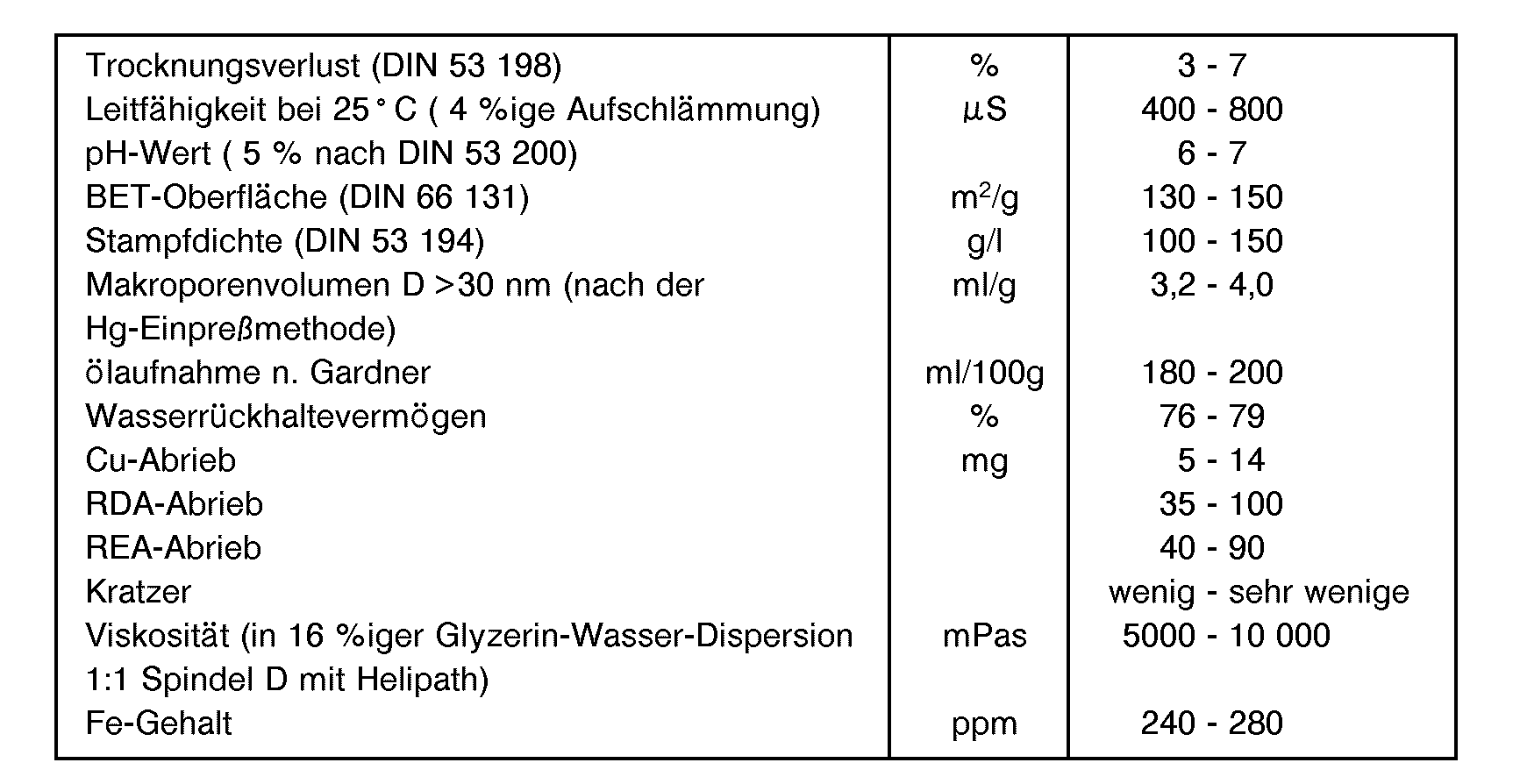
- the dentifrice can contain a precipitated silica with the following physico-chemical characteristics:
- the dentifrice according to the invention can be a precipitated silica with the physico-chemical characteristics contain, which is produced by firstly producing a thickening precipitated silica suspension by reacting alkali silicate solutions with an acid while avoiding yellowing, the precipitated silica being precipitated into a submitted alkali silicate solution with a concentration of about 5 to 25 g SiO 2 per liter solution, the acid and the alkali silicate solution with certain solution concentrations and certain feed rates while maintaining a falling temperature in the reaction medium between 80 and 90 C are fed in such a way that the viscosity of the reaction medium is uniformly low over a period of at least 30% of the total precipitation time and the pH value between 10 and 12 is maintained, and the addition of the reactants is stopped before the viscosity has dropped to a value less than 100% above the initial viscosity after passing through
- the thickening silica suspension is produced essentially in accordance with DE-AS 14 67 019.
- Abrasive precipitation silica suspension is preferably produced essentially according to DE-OS 31 14 493 Example 10.
- Suitable precipitated silica suspensions can be obtained directly by precipitation or by reslurrying precipitated silica filter press dough. Precipitated silica suspensions prepared directly by precipitation are preferably used.
- the precipitated silicas obtained by mixing precipitated silicic acid suspensions according to the invention by filtering, drying and grinding have more favorable properties in dentifrices than dry mixing of the same initial precipitated silicic acid in the same ratio.
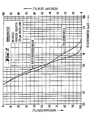
- the precipitated silicas used according to the invention show synergistic effects in such a way that for a given viscosity or Thickening effect an unexpectedly high abrasiveness occurs, i.e. the viscosity-abrasiveness relationship is surprisingly not linear (see Figure 1).
- the precipitated silicas used according to the invention can advantageously be produced particularly easily because the amounts can be adjusted continuously or in batches using suitable volume or weight measurements with known solids contents. Furthermore, the wet process advantageously does not pose any dust problems. Signs of segregation are also minimized.
- the precipitated silica according to the invention increases the viscosity of a model mixture of glycerol and water significantly less than the dry mixture.
- the thickening effect of the precipitated silica must develop fully when it is incorporated into the toothpaste mass, i.e. Thereafter, there must be no change in the rheological behavior of the toothpaste, which makes it difficult or even impossible to fill and subsequently empty the tubes and containers.
- a dentifrice should support or increase the cleaning effect of the toothbrush by building a film between the bristle and the tooth surface that mechanically removes plaque.
- This performance can only be achieved by an agent with abrasive properties.
- Precipitated silicas which produce the fewest scratches, are of course to be preferred with the same REA abrasion performance.
- the precipitated silicas according to the invention advantageously combine demands for stable viscosity development at a medium height with a high abrasive and cleaning effect while avoiding scratches.
- the measurement of abrasiveness is applied to extracted, radioactive human teeth exposed dentine (RDA value) or on tooth enamel (REA value).
- RDA value radioactive human teeth exposed dentine
- REA value tooth enamel
- the increase in radioactivity of the suspension of the dentifrice to be tested is measured in each case after defined treatment of the test teeth with brushes.
- the weight loss of copper plates when brushing with test suspension can be determined.
- the values obtained in this way can often not be compared with RDA and REA values.
- Precipitated silica with a thickening effect is produced essentially in accordance with DE-AS 14 67 019.
- concentrated sulfuric acid 97% are used for economic reasons. This results in a solids content of 85 g / l in the precipitated silica suspension.
- the precipitated silica suspension obtained in this way is then adjusted to a pH of 3.5 using sulfuric acid (96% strength), which happens at 1.25 l / hour through an acid inflow which lasts for several minutes.
- the precipitated silica suspension obtained in this way has a solids content of 85.0 g / l.
- the precipitated silica obtained after filtering off, washing out, spray drying and grinding on an air jet mill has the physico-chemical characteristics listed in Table 1.
- the example describes the preparation of an abrasive precipitated silica according to DE-OS 31 14 493, example 10, but with the modification that the entire amount of water is added to the precipitation charge, which means that the water is not added during the precipitation, and the precipitation time is extended from 60 to 100 minutes .
- the precipitated silica suspension obtained in this way is then adjusted to a pH of 8.5 using concentrated sulfuric acid (96% strength), which takes place at 1.25 l / h through an acid flow which lasts for several minutes.
- the precipitated silica suspension obtained in this way has a solids content of 85 g / l. Its Na 2 SO 4 content is 55 g / l.
- the precipitated silica obtained after filtering and washing out has the physico-chemical characteristics listed in Table 1:
- 18.05 m 3 suspension of the abrasive precipitated silica suspension with a precipitated silica content of 92.0 g / l according to example 2 are mixed with 40.0 m 3 suspension of a thickened precipitated silica according to example 1 with a precipitated silica content of 85.0 g / l corresponding to a weight ratio of 1: 2 (based on the precipitated silica content) mixed.
- the precipitated silica of this suspension mixture is separated off by means of filter presses for further processing.
- the precipitated silica content in the filter press batter is 24%.
- the washed and spray-dried filter press batter is air-jet milled.
- the precipitated silica obtained has the physico-chemical characteristics listed in Table 1.
- the physico-chemical characteristics specified in the application are determined as follows: Drying loss according to DIN 53 198.
- a 4.0 g sample is heated with 50 ml of deionized water in a 150 ml beaker and boiled for one minute with stirring. The suspension is then transferred to a 100 ml flask, cooled and made up to the mark with deionized water.
- the electrical conductivity is measured at 25 C using a commercially available measuring device, eg the "Scientific and Technical Workshops" (WTW), conductivity meter type LF 530. pH value in 5% aqueous dispersion according to DIN 53 200 BET Surface in accordance with DIN 66 131.
- a sample is flushed with nitrogen at 100 ° C.
- the volumetric measurement is carried out with ultrapure nitrogen at the temperature of the liquid nitrogen (-195.8 ° C.). Tamped density according to DIN 53 194.
- the examination is carried out without pretreatment of the sample.
- the water retention capacity shows the water content contained in the press batter after pressing off the precipitated silica suspension and washing out for low electrolyte.
- 250 g of press batter are dried to constant weight at 105 ° C.
- the measurement is carried out using the Coulter Conter model TA 11 from Coulter Eletronies GmbH.
- the RDA method is described in Journal of Dental Research, 55 (4), 563 (1976), and is also used for the REA abrasion test. Scratches are determined visually using a microscope.
- the abrasive silicas were stirred by hand in a 400 ml beaker (wide shape) into the glycerin / water mixture with a glass rod (1 minute) and left to stand for 24 hours. Then the viscosity is measured.
- the viscosity measurement is carried out in the same beaker using the Brookfield viscometer RVT, spindle 10, with Helipath at 10 rpm.
- the powdery components are placed in a 600 ml beaker, tared on a balance and the solvent mixture is stirred in with a spatula in portions until a consistency similar to that of Nupro pastes is reached, followed by the addition of 1% aromatic oil (peppermint). The mixture was then passed through a 1 mm sieve again for homogenization. The composition of the paste is then calculated from the weight of the carrier and the amount of solvent added.
- the precipitated silica according to Example 3 is used as the precipitated silica.
- Perlit 2000 is a perlite with the following physico-chemical characteristics:
- Pastes 1 and 2 which have a ratio of pearlite to precipitated silica of 1: 1 to 1: 2, are hard pastes.
- Pastes 3 and 4 which have a ratio of pearlite to precipitated silica of 1: 3 to 1: 4, are medium-hard pastes.
- Pastes 5 and 6 which have a ratio of pearlite to precipitated silica of 1: 5 bit 1: 6, are soft pastes.
- the paste 7, which contains no pearlite, is too soft.
- Pastes that do not have this mixing ratio are not stable in storage.
- Perlit 2000 is the more abrasive component compared to precipitated silica, but has almost no absorbency or adsorption ability. It is not possible to shift the ratio of perlite 2000: precipitated silica 1: 1 in favor of perlite 2000, otherwise the paste will become unstable and liquid will be separated and the sediment will become very hard. In the opposite case, however, a paste can be made with the precipitated silica alone.
- Perlit 2000 has a high abrasiveness and therefore causes scratches on the tooth surface. With the precipitated silica as a cleaning medium with medium abrasiveness, the score can be significantly improved.
- the Nupro pastes have a much less favorable effect on the enamel.
- the evaluation of the scoring or The scratch value of the individual pastes is as follows:
- a scratch value of 100 ⁇ 20 is tolerated for prophylactic pastes.
- the precipitated silica pastes according to the invention have values of around 20-60.
- the score is determined in the literature as the average roughness value (RA).
- the measurements are carried out on 4 teeth each, with a defined comparison being included in the tests.
- FIGS. 3 and 4 it can be seen that the Nupro pastes behave considerably less favorably than the pastes according to the invention.
- the prophylactic pastes according to the invention have the advantage over already known and marketable products, that they have a significantly higher cleaning power and at the same time have a gentler effect on the enamel.
Landscapes
- Health & Medical Sciences (AREA)
- Life Sciences & Earth Sciences (AREA)
- Chemical & Material Sciences (AREA)
- Veterinary Medicine (AREA)
- Animal Behavior & Ethology (AREA)
- General Health & Medical Sciences (AREA)
- Public Health (AREA)
- Inorganic Chemistry (AREA)
- Birds (AREA)
- Epidemiology (AREA)
- Organic Chemistry (AREA)
- Oral & Maxillofacial Surgery (AREA)
- Cosmetics (AREA)
- Silicon Compounds (AREA)
- Dental Preparations (AREA)
Description
- Die Erfindung betrifft ein Zahnpflegemittel zur vorbeugenden Zahnhygiene.
- Ein derartiges Zahnpflegemittel besteht in der Regel aus drei verschiedenen nach Härte eingeordneten Pasten (hart, mittel, weich), deren Struktur nicht mit einer üblicherweise allgemeinverwendeten Zahnpasta vergleichbar ist. Sie entspricht eher einer fast krümeligen Polierpaste. Diese krümelige Struktur ist bei Anwendung in der Mundhöhle mit einem Poliergerät notwendig, um Substanzverlust durch z.B. Spritzen zu vermeiden. Diese Pasten werden in Ergänzung zur täglichen Zahnpflege von Zahnhygienikern benutzt, um hartnäckig anhaftende Zahnbeläge zu entfernen. Diese zusätzliche Behandlung soll die Zahnpflege derart unterstützen, dass Karies verringert und somit zahnärztliche Behandlung weitgehend nahezu überflüssig wird. Erfahrungen haben gezeigt, dass für eine gute Wirkung ein 2-monatiger Reinigungsturnus notwendig ist. Die Mindestanzahl dieser Pflege beträgt 2x im Jahr. Bei der Durchführung dieser zusätzlichen Pflege wird von dem Zahnhygieniker der Zahnbelag zuerst mit der harten, dann mit der mittelharten und anschliessend mit der weichen Paste behandelt. Dabei wird ein Aufrauhen der Zahnoberfläche mit der harten Paste angestrebt, um die Fluorkomponente des Zahnpflegemittel zum Erzielen einer Langzeitwirkung in dieser rauhen Oberfläche einzubetten. Die mittelharte und die Weiche Paste sollen die gröbsten Unebenheit auf dem Zahn wegpolieren.
- Bekannte Zahnpasten zur vorbeugeden Zahnhygiene-Prophylaxe enthalten neben Silikaten auch Bimsstein, Zirkonsilikat bzw. hartes AI2 03.
- Damit werden RDA-Werte von 250 (harte Paste), 120 (mittelharte Paste) und 40 (weiche Paste) erreicht. Versuche haben ergeben, dass der Kupferabrieb dieser 3 Varianten mit 70-100 mgCu relativ hoch, aber doch nicht sehr unterschiedlich ist.
- Gegenstand der Erfindung ist ein Zahnpflegemittel zur vorbeugenden Zahnhygiene dadurch gekennzeichnet, dass es als Putzkörper eine Mischung, bestehend aus einem Perlit und einer synthetisch hergestellten Fällungskieselsäure enthält, wobei man die Fällungskieselsäure dadurch erhält, dass man die in üblicher Weise auf dem Fällungswege erhaltenen Fällungskieselsäuren unterschiedlicher Teilchengrösse und Teilchendichte in der Suspensionsphase homogen miteinander vermischt und die Gemische in üblicher Weise durch Filtrieren, Waschen, Trocknen und Vermahlen aufarbeitet.
- Das erfindungsgemässe Zahnpflegemittel kann neben dem Putzkörper, der 30-50 Gew.-% des gesamten Zahnpflegemittels ausmachen kann, 50-70 Gew.-% eines Lösungsmittelgemisches, bestehend aus Glycerin (86 %) und Wasser im Verhältnis von 1:1, enthalten.
- Der Anteil an Fällungskieselsäure kann in dem Putzkörper den Anteil an Perlit übersteigen. Diese Massnahme kann die Einstellung einer mittleren Abrasivität bewirken.
- Das Lösungsmittel kann aus Glycerin (86 %) und Wasser im beliebigen Mischungsverhältnis, vorzugsweise 1:1, bestehen.
- Der Putzkörper kann überwiegend amorphe Fällungskieselsäure enthalten, um die Abrasivität auf einen niedrigen Wert einzustellen.
- Das Verhältnis von Perlit zu Fällungskieselsäure kann je nach gewünschter Abrasivität 1:1 bis 1:6 betragen.
- In einer bevorzugten Ausführungsform der Erfindung kann das Zahnpfegemittel eine Fällungskieselsäure mit den folgenden physikalisch-chemischen Kenndaten enthalten:

- In einer bevorzugten Ausführungsform der Erfindung wird die Verdickungskieselsäuresuspension im wesentlichen gemäss DE-AS 14 67 019 hergestellt.
- Abrasivfällungskieselsäuresuspension wird vorzugsweise im wesentlichen gemäss DE-OS 31 14 493 Beispiel 10 hergestellt.
- Es wurde nun gefunden, dass man durch Mischen von Fällungskieselsäuren unterschiedlicher Eigenschaften in der Suspensionsphase zu besonders wertvollen Fällungskieselsäuren für den Einsatz in Zahnpflegemitteln kommt. Geeignete Fällungskieselsäuresuspensionen sind direkt durch Fällung oder durch Wideraufschlämmung von Fällungskieselsäurefilterpressenteig erhältlich. Vorzugsweise werden direkt durch Fällung hergestellte Fällungskieselsäuresuspensionen verwendet.
- Die durch das erfindungsgemässe Mischen von Fällungskieselsäuresuspensionen durch Filtrieren, Trocknen und Vermahlen gewonnenen Fällungskieselsäuren haben in Zahnpflegemitteln günstigere Eigenschaften als Trockenmischung derselben Ausgangsfällungskieselsäure im gleichen Verhältnis.
- Die erfindungsgemäss eingesetzen Fällungskieselsäuren zeigen synergistische Effekte derart, dass bei gegebener Viskositäts-bzw. Verdickungswirkung eine unerwartet hohe Abrasivität auftritt, d.h., die Viskositäts-Abrasivitätsbeziehung verläuft überraschenderweise nicht linear (vgl. Figur 1).
- Die erfindungsgemäss eingesetzten Fällungskieselsäuren lassen sich vorteilhafterweise besonders leicht herstelllen, weil die Mengen über geeignete Volumen-oder Gewichtsmessungen bei bekannten Feststoffgehalten kontinuierlich oder chargenweise exakt eingestellt werden können. Ferner wirft der Nassprozess vorteilhafterweise keine Staubprobleme auf. Auch Entmischungserscheinungen sind minimiert.
- Anscheinend verlieren in Nassmischungen im Unterschied zu Trockenmischungen die Komponenten einen Teil ihrer Identität. Beim Vermischen und vermutlich besonders beim Trocknen kommt es zur Wechselwirkungen kleiner mit grösseren Teilchen, wobei die kleinen Teilchen an grössere Teilchen angelagert werden oder aufwachsen.
- Auch verschiedene Formen gegenseitiger Flockung und Durchdringung in der wässrigen Phase sind in Betracht zu ziehen.
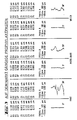
- Eine erste deutliche Unterscheidung zwischen Trocken-und Nassmischung ergibt sich aus der Teilchengrössenverteilung der gemahlenen Proben. Während die Trockenmischung zweier Fällungskieselsäuren mit unterschiedlicher Korngrösse und Dichte bei der Vermessung im Coulter Counter erwartungsgemäss 2 Maxima ziegt und die entsprechende Kurve einen Höcker aufweist, verläuft die Kurve der gleichen Fällungskieselsäuren, im gleichen Verhältnis nass miteinander gemischt, vollkommen harmonisch (vgl. Figur 2).
- Ein weiterer merklicher Unterschied besteht in der Verdickungswirkung. Die erfindungsgemässe Fällungskieselsäure erhöht die Viskosität einer Modellmischung aus Glyzerin und Wasser deutlich weniger als das Trockengemisch.
- Fällungskieselsäuren mit mässiger Verdickungskraft erlauben höhere Füllungsgrade und damit die Herstellung von Pasten mit "vollem" Charakter.
- Niedrig gefüllte Pasten wirken demgegenüber in Mund "leer" bzw. "wässrig".
- Die verdickende Wirkung der Fällungskieselsäure muss sich bei der Einarbeitung in die Zahnpasta-Masse voll entfalten, d.h. es darf danach keine Veränderung des rheologischen Verhaltens der Zahnpasta auftreten, die das Befüllen und spätere Entleeren der Tuben und Behältnisse erschwert oder gar unmöglich macht.
- Grundsätzlich soll ein Zahnpflegemittel die Reinigungswirkung der Zahnbürste unterstützen bzw. erhöhen, indem zwischen Borste und Zahnoberfläche ein Film aufgebaut wird, der Zahnbeläge mechanisch entfernt.
- Diese Leistung kann nur von einem Mittel mit abrasiven Eigenschaften erbracht werden.
- Bei gleicher REA-Abriebleistung sind selbstverständlich Fällungskieselsäuren zu bevorzugen, die die wenigsten Kratzer erzeugen.
- Die erfindungsgemässen Fällungskieselsäuren vereinigen in vorteilhafter Weise Forderungen nach stabiler Viskositätsentwicklung in mittlerer Höhe mit hoher Abrasiv-und Reinigungswirkung unter Vermeidung einer Kratzer.
- Die Messung der Abrasivität wir bei extrahierten, radioaktiv gemachten menschlichen Zähnen an freigelegtem Zahnbein (RDA-Wert) oder an Zahnschmelz (REA-Wert) durchgeführt. Gemessen wird jeweils die Zunahme der Radioaktivität der Suspension des zu prüfenden Zahnpflegemittels nach definierter Bearbeitung der Probezähne mit Bürsten.
- Ersatzweise kann die Gewichtsabnahme von Kupferplatten beim Bürsten mit Prüfsuspension bestimmt werden. Die so erhaltenen Werte lassen sich aber häufig nicht mit RDA-und REA-Werten vergleichen.
- In Speziallaboratorien erhält man mit verfeinerten, z.B. mikroskopischen, Methoden Aufschluss über die reinigende und polierende Wirkung von Zahnpflegemitteln, wobei Proben, die viele oder tiefe Kratzer verursachen, ausgeschieden werden. Diese Untersuchungen werden an extrahierten tierischen oder menschlichen Zähnen durchgeführt.
- Der Feststoffgehalt (Fällungskieselsäuregehalt) der Fällungskieselsäuresuspension wird wie folgt bestimmt:
- 250 ml der auf 20 C abgekühlten Fällungskieselsäuresuspension werden auf einer Porzellannutsche (0 120 mm) abgenutscht und danach der Filterkuchen mit 500 ml Wasser elektrolytarm gewaschen. Der Kuchen wird bei 105" C bis zur Gewichtskonstanz getrocknet.
- Berechnung: g Auswaage x 4 = g Feststoffe
- Es wird eine Fällungskieselsäure mit Verdickungswirkung im wesentlichen gemäss DE-AS 14 67 019 hergestellt, in Abänderung hierzu wird aus ökonomischen Gründen konzentrierte Natriumsilikätlösung (Dichte = 1,353 g/ml) und konzentrierte Schwefelsäure (96 %) eingesetzt. Hieraus resultiert ein Feststoffgehalt von 85 g/I in der Fällungskieselsäuresuspension.
- In einem gummierten 120 I-Fällgefäss werden 73 I heissen Wasser und 5,25 I Natriumsilikatlösung (Dichte p = 1,353 g/ml, Modul Si02 : Na20 = 3,46) unter Rühren auf 85° C erhitzt. In diese alkalische Fällungsvorlage werden während der folgenden 90 Minuten unter Rühren und Aufrechterhaltung der Temperatur von 85 C gleichzeitig 16,51 Natriumsilikatlösung (Dichte p = 1,353 g/ml, Modul Si02 : Na20 = 3,46) mit 11,0 I/Stunde und 1,448 I Schwefselsäure (96 % ig) mit 0,965 I/Stunde dosiert. Die Zugabe der Reaktionsteilnehmen wird beendet, bevor die Viskosität des Reaktionsmediums nach Durchlaufen eines Maximums auf einen weniger als 100 % über der Anfangsviskosität liegenden Wert gesunken ist.
- Danach wird die so erhaltene Fällungskieselsäuresuspension mit Schwefelsäure (96 % ig) auf einen pH-Wert von 3,5 eingestellt, was durch einen mehrere Minuten lang andauernden Säurezufluss mit 1,25 I/Stunde geschieht. Die auf diese Weise erhaltene Fällungskieselsäuresuspension hat einen Feststoffgehalt von 85,0 g/I.
- Die nach dem Abfiltrieren, Auswaschen, Sprühtrocknen und Vermahlen auf der Luftstrahlmühle erhaltene Fällungskieselsäure hat die in der Tabelle 1 aufgeführten physikalisch-chemischen Kenndaten.
- Das Beispiel beschreibt die Herstellung einer Abrasivfällungskieselsäure gemäss DE-OS 31 14 493, Beispiel 10, jedoch mit der Abänderung, dass die gesamte Wassermenge zur Fällungsvorlage gegeben wird, wodurch die Wasserzugabe während der Fällung entfällt, und die Fällzeit von 60 auf 100 Minuten verlängert wird.
- In einem gummierten 120 I-Fällgefäss werden 73 I heisses Wasser und 5,25 I Natriumsilikatlösung (Dichte p = 1,353 g/ml; Modul: Si02 : Na20 = 3,46) unter Rühren auf 85° C erhitzt. In diese alkalische Fällungsvorlage werden während der folgenden 90 Minuten unter Rühren und Aufrechterhaltung der Temperatur von 85° C gleichzeitig 16,5 I Natriumsilikatlösung (Dichte p = 1,353 g/ml; Modul SiO2:Na2O = 3,46) mit 11,0 I/h und 1,448 I konzentrierte Schwefelsäure (96 % ig) mit 0,965 I/h dosiert. Die Zugabe der Reaktionsteilnehmer wir beendet, bovordie Viskosität des Reaktionsmediums nach Durchlaufen eines Maximums auf einen weniger als 100 % über der Anfangsviskosität liegenden Wert gesunken ist.
- Danach wird die so erhaltene Fällungskieselsäuresuspension mit konzentrierter Schwefelsäure (96 % ig) auf einen pH-Wert von 8,5 eingestellt, was durch einen mehrere Minuten lang andauernden Säurezufluss mit 1,25 I/h geschieht. Die auf diese Weise erhaltene Fällungskieselsäuresuspension hat einen Feststoffgehalt von 85 g/I.Ihr Na2S04 Gehalt liegt bei 55 g/I.
- Während der gesamten Fälldauer von 90 Minuten wird mittels einer Kreiselpumpe, die den Behälterinhalt mehrfach umwälzt, intensiv geschert. Nähere Angaben über die apparative Einrichtung sowie über die Scherbedingungen finden sich in der DE-PS 17 67 332 und dort insbesondere in Spalte 8, Zeilen 31 - 68.
- Die auf diese Weise hergestellte Originalfällungskieselsäuresuspension wird mit Wasser auf einen Fällungskieselsäuregehalt von 13 g/I und 8,5 g Na2S04/1 eingestellt. 16.06 I dieser Suspension werden in einem gummierten 120 I-Fällgefäss unter Rühren auf 85 C erhitzt. Unter Aufrechterhaltung dieser Temperatur und eines pH-Wertes von 8,5 werden für die Dauer von 100 Minuten gleichzeitig 28,1 I Wasserglaslösung (Dichte = 1,353 g/ml; Modul Si02 : Na20 = 3,46) mit einer Geschwindigkeit von 231.0 ml/min und 1,94 I Schwefelsäure (96 % ig) mit einer Geschwindigkeit von 19,4 ml/min. zur Fällungskieselsäuresuspension hinzugegeben. Die Fällungskieselsäuresuspension wird anschliessend mit Schwefelsäure (96 % ig) auf einen pH-Wert von ca. 3,5 eingestellt. Die erhaltene Fällungskieselsäuresuspension hat einen Feststoffgehalt von 92,0 g/I.
- Die nach dem Abfiltrieren und Auswaschen erhaltene Fällungskieselsäure hat die in der Tabelle 1 aufgeführten physikalisch-chemischen Kenndaten:
- 18,05 m3 Suspension der Abrasivfällungskieselsäuresuspension mit einem Fällungskieselsäuregehalt von 92,0 g/I gemäss Beispiel 2 werden mit 40,0 m3 Suspension einer Verdickungsfällungskieselsäure gemäss Beispiel 1 mit einem Fällungskieselsäuregehalt von 85,0 g/I entsprechend einem Gewichtsverhältnis von 1:2 (bezogen auf den Fällungskieselsäuregehalt) gemischt.
- Zur Weiterverarbeitung wird die Fällungskieselsäure dieses Suspensionsgemisches mittels Filterpressen abgetrennt. Der Fällungskieselsäuregehalt im Filterpressenteig beträgt 24 %. Der gewaschene und sprühgetrocknete Filterpressenteig wird luftstrahlvermahlen. Die erhaltene Fällungskieselsäure weist die in der Tabelle 1 aufgeführten physikalisch-chemischen Kenndaten auf.

- Die physikalisch-chemischen Kenndaten, die in der Anmeldung angegeben werden, werden wie folgt bestimmt: Trocknungsverlust nach DIN 53 198.
- Eine Probe von 4,0 g wird mit 50 ml vollentsalztem Wasser in einem 150 ml-Becherglas erhitzt und eine Minute unter Rühren gekocht. Anschliessend wird die Suspension in einen 100 ml-Kolben überführt, abgekühlt und mit vollentsalztem Wasser bis zur Marke aufgefüllt. Die elektrische Leitffähigkeit wird mit einem handelsüblichen Messgerät, z.B. der "Wissenschaftlich-Technischen Werkstätten" (WTW), Konduktometer Typ LF 530, bei 25 C gemessen. pH-Wert in 5 % wässriger Dispersion nach DIN 53 200 BET-Oberfläche gemäss DIN 66 131.
- Eine Probe wird bei 100" C mit Stickstoff gespült. Die volumetrische Messung wird mit Reinststickstoff bei der Temperatur des flüssigen Stickstoffes (-195,8° C) durchgeführt. Stampfdichte gemäss DIN 53 194.
- Die Untersuchung wird ohne Vorbehandlung der Probe vorgenommen. Makroporenvolumen D 30 mm nach der Hg-Einpressmethode.
- Die Messung erfolgt mit dem Mercury Pressure Porosimeter, 200 Series, der Fa. Carlo Erba Strumentazione.
- Oelaufnahme n. Gardner-Coleman
- gemäss ASTM : D 1483-60
- Das Wasserrückhaltevermögen zeigt den, nach Abpressen von Fällungskieselsäuresuspension und Auswaschen auf Elektrolytarmut, enthaltenen Wasseranteil im Pressenteig auf. Zur Bestimmung werden 250 g Pressenteig bis zur Gewichtskonstanz bei 105 °C getrocknet.
- Berechnung:

- Die Messung erfolgt mit dem Coulter Conter-Modell TA 11 der Fa. Coulter Eletronies GmbH.
- 153 g Glyzerin (wasserfrei, reinst pH Eur, BP USP, Dichte = 1,26 g/ml, Fa. Merck, Darmstadt), werden in einem Polyäthylenbecher (250 ml) eingewogen. Mit dem Spatel werden vorsichtig 17 g Fällungskieselsäure untergemischt. Die Mischung wird anschliessend mit einem Flügelrührer (Durchmesser 5,2 cm) 12 Minuten lang bei 1.500 Upm homogenisiert.
- Die Bestimmung der Abriebmessung erfolgt in dem Abriebtestgerät, welches gemäss den folgenden Druckschriften bekannt ist: (1) Pfrengle: Fette, Seifen, Anstrichmittel, 63 (5) (1961), Seiten 445 bis 451 "Abrasion und Reinigungskraft von Putzkörpern in Zahnpasten" (2) A. RENG. F. DANY: Parfümerie und Kosmetik 59 (2) (1978), Seiten 37 bis 45: "Anwendungstechnische Prüfung von Zahnpasten". Dazu werden die 6 Tröge des Testgerätes mit je 20 ml der homogenen Dispersion beschichtet. Der Abrieb, den sechs plangeschliffene Nylonbürsten an sechs plangeschliffenen Cu-Blechen (Elektrolyt-Kupfer) in fünf Stunden mit 50.000 Doppelhüben bewirken, wird durch Differenzwägung bestimmt. Bei der Berechnung der Abrasivität werden von den erhaltenen Werten Mittelwerte gebildet. Der Abrieb (Abrasivität) wird in mg Cu angegeben
- RDA-Abrieb
- REA-Abrieb
- Die RDA-Methode wird beschrieben in Journal of Dental Research, 55 (4), 563 (1976), und wird auch für den REA-Abriebtest angewandt. Kratzer werden visuell mittels Mikroskop bestimmt.
- Bestimmung der Viskosität gemessen in 16 %iger Glyzerin/Wasser-Dispersion (Gemisch 1:1) mit Broockfield-Viskosimeter RTV Spinde 10 mit Helipath bei 10 UpM.
-

- Die Abrasivkieselsäuren wurden von Hand in einem 400 ml-Becherglas (breite Form) in das Glyzerin/Wasser-Gemisch mit einem Glasstab eingerührt (1 Minute) und 24 Stunden stehen gelassen. Danach wird die Viskosität gemessen.
- Die Viskositätsmessung wird in demselben Becherglas mit dem Brookfield-Viskosimeter RVT, Spindel 10, mit Helipath bei 10 UpM durchgeführt.
- Abgelesener Skalenwert x Faktor = Viskosität in mPas.
-
- 1. Zusammenmischung der pulverförmigen Komponenten im Turbulamischer (5 Min.)
- 2. Herstellung des Lösungsmittelgemisches Glyzerin (86 %) und destilliertes Wasser im Verhältnis 1:1.
- 3. Herstellung der Pasten
- Die pulverförmigen Komponenten werden in einem 600 ml Becherglas vorgelegt, auf einer Waage tariert und so lange das Lösungsmittelgemisch portionsweise mit einem Spatel eingerührt bis eine der Nupro-Pasten ähnliche Konsistenz erreicht ist, anschliessend Zugabe von 1 % Aromaöl (Pefferminz). Zur Homogenisierung wurde dann die Mischung nochmals durch ein 1 mm Sieb passiert. Die Zusammensetzung der Paste errechnet sich dann aus der Einwaage des Trägers und der zugegebenen Lösungsmittelmenge.
- Als Fällungskieselsäure wird die Fällungskieselsäure gemäss Beispiel 3 eingesetzt.
- Perlit 2000 ist ein Perlit mit den folgenden physikalisch-chemischen Kenndaten:


- Die hergestellten Pasten sind in der Tabelle 2 zusammengestellt:

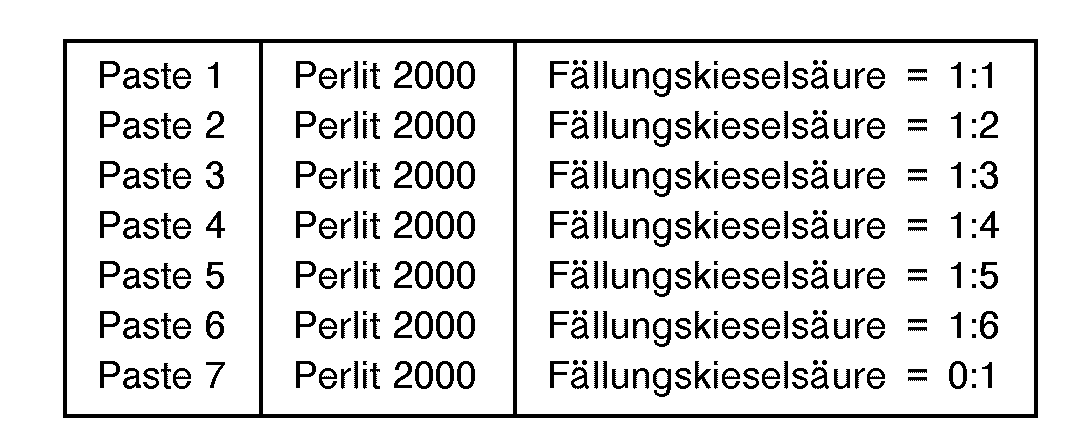
- Die Pasten 1 und 2, die ein Verhältnis von Perlit zu Fällungskieselsäure von 1:1 bis 1:2 aufweisen, sind harte Pasten.
- Die Pasten 3 und 4, die ein Verhältnis von Perlit zu Fällungskieselsäure von 1:3 bis 1:4 aufweisen, sind mittelharte Pasten.
- Die Pasten 5 und 6, die ein Verhältnis von Perlit zu Fällungskieselsäure von 1:5 bit 1:6 aufweisen, sind weiche Pasten.
- Die Pasten 7, die kein Perlit enthält, ist zu weich.
- Pasten, die dieses Mischungsverhältnis nicht aufweisen, sind nicht lagerstabil.
- Beschreibung der Pasten
- Perlit 2000 ist die abrasivere Komponente im Vergleich zur Fällungskieselsäure, hat aber nahezu keine Saugfähigkeit bzw. Adsorptionsfähigkeit. So besteht nicht die Möglichkeit, das Verhältnis Perlit 2000 : Fällungskieselsäure 1 : 1 zugunsten Perlit 2000 zu verschieben, da die Paste sonst instabil wird und Flüssigkeit seporiert und das Sediment sehr hart wird. Im umgekehrten Fall kann aber eine Paste mit der Fällungskieselsäure allein hergestellt werden.
- Perlit 2000 hat eine hohe Abrasivität und verursacht deshalb Riefen auf der Zahnoberfläche. Mit der Fällungskieselsäure als Putzkörper mittlerer Abrasivität kann der Riefenwert entscheidend verbessert werden.
- Auswertungsdiagramme von Kratzwertbestimmungen handelsüblicher Prophylaxepasten (Nupro) und Fällungskieselsäure/Perlit 2000 Pasten
- Die Nupro-Pasten wirken auf den Zahnschmelz sehr viel ungünstiger. Die Auswertung des Riefen-bzw. Kratzwertes der einzelnen Pasten ist wie folgt:

- Ein Kratzwert von 100 ± 20 wird für Prophylaxepasten toleriert. Im Vergleich dazu haben die erfindungsgemässen Fällungskieselsäurepasten Werte um 20 - 60. Der Riefenwert wird in der Literatur als Mittenrauhigkeitswert (RA) ermittelt. Die Messungen werden an jeweils 4 Zähnen durchgeführt, wobei ein definierter Vergleich in die Versuche einbezogen wird. Bereits anhand der Kurven (Figur 3 und Figur 4) ist zu sehen, dass sich die Nupro-Pasten wesentlich ungünstiger im Vergleich zu den erfindungsgemässen Pasten verhalten.
- Betrachtet man den Kupferabrieb, bleibt festzustellen, dass die Reinigungskraft der erfindungsgemässen Pasten deutlich höher gegenüber den Nupro-Pasten ist, und dennoch zeigt die Kratzbestimmung, dass eine schonendere Behandlung zu erwarten ist.
- Aus diesen Ergebnissen kann abgeleitet werden, dass die mit erfindungsgemässen Prophylaxepasten den Vorteil gegenüber bereits bekannten und marktgängigen Produkten haben, dass sie deutlich höhere Reinigungskraft aufweisen und dabei noch schonender auf den Zahnschmelz einwirken.
Claims (5)


Priority Applications (1)
| Application Number | Priority Date | Filing Date | Title |
|---|---|---|---|
| AT87113005T ATE79020T1 (de) | 1986-11-21 | 1987-09-05 | Zahnpflegemittel. |
Applications Claiming Priority (2)
| Application Number | Priority Date | Filing Date | Title |
|---|---|---|---|
| DE3639844 | 1986-11-21 | ||
| DE19863639844 DE3639844A1 (de) | 1986-11-21 | 1986-11-21 | Zahnpflegemittel |
Publications (3)
| Publication Number | Publication Date |
|---|---|
| EP0268763A2 EP0268763A2 (de) | 1988-06-01 |
| EP0268763A3 EP0268763A3 (en) | 1989-05-03 |
| EP0268763B1 true EP0268763B1 (de) | 1992-08-05 |
Family
ID=6314485
Family Applications (1)
| Application Number | Title | Priority Date | Filing Date |
|---|---|---|---|
| EP87113005A Expired - Lifetime EP0268763B1 (de) | 1986-11-21 | 1987-09-05 | Zahnpflegemittel |
Country Status (5)
| Country | Link |
|---|---|
| US (1) | US5124143A (de) |
| EP (1) | EP0268763B1 (de) |
| AT (1) | ATE79020T1 (de) |
| DE (2) | DE3639844A1 (de) |
| ES (1) | ES2051718T3 (de) |
Cited By (1)
| Publication number | Priority date | Publication date | Assignee | Title |
|---|---|---|---|---|
| US10299997B2 (en) | 2013-03-11 | 2019-05-28 | Voco Gmbh | Particularly storage-stable and thixotropically stable prophylaxis paste for professional dental use |
Families Citing this family (55)
| Publication number | Priority date | Publication date | Assignee | Title |
|---|---|---|---|---|
| US4895720A (en) * | 1988-03-28 | 1990-01-23 | Pfizer Inc. | Compositions and methods for cleaning the gums |
| FR2632185B1 (fr) * | 1988-06-01 | 1992-05-22 | Rhone Poulenc Chimie | Silice pour compositions dentifrices compatible notamment avec le zinc |
| FR2649089B1 (fr) * | 1989-07-03 | 1991-12-13 | Rhone Poulenc Chimie | Silice a porosite controlee et son procede d'obtention |
| FR2678259B1 (fr) * | 1991-06-26 | 1993-11-05 | Rhone Poulenc Chimie | Nouvelles silices precipitees sous forme de granules ou de poudres, procedes de synthese et utilisation au renforcement des elastomeres. |
| US5108734A (en) * | 1991-07-01 | 1992-04-28 | Colgate-Palmolive Company | Prophy mouthfeel dentifrice having low RDA value |
| EP0528756B1 (de) * | 1991-08-19 | 1995-09-20 | HAWE NEOS DENTAL Dr. H. V. WEISSENFLUH AG | Zahnputzmittel |
| EP0630227B1 (de) * | 1993-01-14 | 1999-04-14 | HAWE NEOS DENTAL Dr. H. V. WEISSENFLUH AG | Zahnpasta |
| WO1995009127A1 (fr) | 1993-09-29 | 1995-04-06 | Rhone-Poulenc Chimie | Silice precipitee |
| US6001322A (en) * | 1993-09-29 | 1999-12-14 | Rhone-Poulenc Chimie | Precipitated silicas |
| US6169135B1 (en) | 1993-09-29 | 2001-01-02 | Rhone Poulenc Chimie | Precipitated silica |
| FR2710630B1 (fr) * | 1993-09-29 | 1995-12-29 | Rhone Poulenc Chimie | Nouvelles silices précipitées, leur procédé de préparation et leur utilisation au renforcement des élastomères. |
| WO1996006593A1 (en) * | 1994-08-31 | 1996-03-07 | J.M. Huber Corporation | Cost effective dental compositions containing novel sodium aluminosilicates |
| EP0783293B1 (de) * | 1994-09-21 | 2001-11-14 | Crosfield Limited | Granuläre zusammenzetzungen |
| US5571494A (en) * | 1995-01-20 | 1996-11-05 | J. M. Huber Corporation | Temperature-activated polysilicic acids |
| US5658553A (en) * | 1995-05-02 | 1997-08-19 | The Procter & Gamble Company | Dentifrice compositions |
| US5676932A (en) * | 1995-05-02 | 1997-10-14 | J.M. Huber Corporation | Silica abrasive compositions |
| US5860850A (en) * | 1995-05-24 | 1999-01-19 | Larimer; Roy E. | Method and kit for preparing polished amber |
| US5891473A (en) * | 1995-09-09 | 1999-04-06 | Crosfield Limited | Granular Compositions |
| US5891949A (en) * | 1997-05-02 | 1999-04-06 | J.M. Huber Corporation | Natural rubber compound |
| US5929156A (en) * | 1997-05-02 | 1999-07-27 | J.M. Huber Corporation | Silica product for use in elastomers |
| US6010683A (en) * | 1997-11-05 | 2000-01-04 | Ultradent Products, Inc. | Compositions and methods for reducing the quantity but not the concentration of active ingredients delivered by a dentifrice |
| DE19916155A1 (de) * | 1999-04-11 | 2000-11-16 | Orochemie Duerr & Pflug Gmbh & | Suspension zur Behandlung natürlichen Hartgewebes |
| EP1050293A1 (de) * | 1999-05-06 | 2000-11-08 | HAWE NEOS DENTAL Dr. H. V. WEISSENFLUH AG | Zahnpflegemittel |
| ES2191625T3 (es) * | 1999-06-04 | 2003-09-16 | Unilever Nv | Composicion oral que contiene perlita. |
| US6187294B1 (en) * | 1999-06-10 | 2001-02-13 | Russell Anthony Penner | Topical anesthetic prophylaxis composition and the method for use thereof in scaling and polishing teeth |
| US6432387B1 (en) * | 2000-03-23 | 2002-08-13 | Create Co., Ltd. | Ionic tooth polishing agent |
| FR2808266B1 (fr) * | 2000-04-28 | 2002-06-14 | Rhodia Chimie Sa | Granules de silice de precipitation epaississante obtenus par granulation et leur utilisation comme agent epaississant dans les compositions dentaires |
| FR2815335B1 (fr) * | 2000-10-12 | 2002-12-13 | Rhodia Chimie Sa | Granules de silice de haute structure et leur utilisation dans les compositions dentaires |
| DE10112650A1 (de) * | 2001-03-16 | 2002-09-19 | Degussa | Inhomogene Kieselsäuren in Zahnpflegemittel |
| DE10112651A1 (de) | 2001-03-16 | 2002-09-19 | Degussa | Inhomogene Kieselsäuren als Trägermaterial |
| DE10112652A1 (de) | 2001-03-16 | 2002-09-19 | Degussa | Inhomogene Kieselsäuren für Elastomerenmischungen |
| WO2002092508A1 (fr) * | 2001-05-11 | 2002-11-21 | Rhodia Chimie | Granules de silice de precipitation epaississante obtenus par granulation et leur utilisation comme agent epaississant dans les compositions dentaires |
| US6952856B2 (en) | 2001-11-06 | 2005-10-11 | Create Co., Ltd. | Ionic toothbrush |
| US7303600B2 (en) | 2002-04-25 | 2007-12-04 | Advanced Minerals Corporation | Unexpanded perlite ore polishing composition and methods |
| US20030203337A1 (en) * | 2002-04-25 | 2003-10-30 | Roulston John S. | Unexpanded perlite ore polishing composition and methods |
| US7104948B2 (en) | 2003-10-06 | 2006-09-12 | Create Co., Ltd. | Bracelet that radiates anion and far infrared rays |
| JP3102862U (ja) * | 2004-01-16 | 2004-07-15 | 株式会社クレイツ | 美顔用スチーマ |
| US7303742B2 (en) * | 2004-11-24 | 2007-12-04 | J.M. Huber Corporation | Viscosity-modifying silica materials that exhibit low cleaning and abrasive levels and dentifrices thereof |
| US7670593B2 (en) * | 2004-11-24 | 2010-03-02 | J.M. Huber Corporation | High-cleaning silica materials and dentifrice containing such |
| US20060110307A1 (en) * | 2004-11-24 | 2006-05-25 | Mcgill Patrick D | High-cleaning silica materials made via product morphology control and dentifrice containing such |
| US7306788B2 (en) * | 2004-11-24 | 2007-12-11 | J.M. Huber Corporation | High-cleaning/moderate abrasive silica materials and dentifrice containing such materials |
| US7267814B2 (en) * | 2004-11-24 | 2007-09-11 | J.M. Huber Corporation | High-cleaning/low abrasive silica and materials and dentifrice containing such materials |
| USD535372S1 (en) | 2005-07-25 | 2007-01-16 | Create Co., Ltd. | Facial steamer |
| EP1968476A1 (de) * | 2005-12-29 | 2008-09-17 | 3M Innovative Properties Company | Abrasives werkzeug mit agglomeratteilchen und einem elastomer und verwandte verfahren |
| US20070154413A1 (en) * | 2005-12-30 | 2007-07-05 | Nolan Lee Phillips | Dentifrices comprising biogenic silica materials |
| US20070154412A1 (en) * | 2005-12-30 | 2007-07-05 | Nolan Lee Phillips | Dentifrices comprising biogenic silica materials |
| US20070224133A1 (en) * | 2006-03-23 | 2007-09-27 | Mcgill Patrick D | High-cleaning silica materials made via product morphology control under high shear conditions |
| US7270803B1 (en) | 2006-03-23 | 2007-09-18 | J.M. Huber Corporation | High-cleaning, low abrasion, high brightness silica materials for dentrifices |
| US20080159967A1 (en) * | 2006-12-27 | 2008-07-03 | Fultz William C | Dentifrices comprising biogenic silica materials and at least one calcium phosphate |
| US20080159968A1 (en) * | 2006-12-27 | 2008-07-03 | Fultz William C | Dentifrices comprising biogenic silica materials and calcium carbonate |
| US20090297459A1 (en) * | 2008-06-03 | 2009-12-03 | Duen-Wu Hua | Transparent silica gel/precipitated silica composite materials for dentifrices |
| CN104780929A (zh) | 2012-09-11 | 2015-07-15 | Slh最佳保健有限责任公司 | 牙齿清洁组合物 |
| DE102014226639A1 (de) | 2014-12-19 | 2016-06-23 | Minimax Gmbh & Co. Kg | Feuerlöschanlagenventile und Feuerlöschanlagen mit selbigen |
| CN111232995B (zh) * | 2020-03-27 | 2020-10-09 | 广州市飞雪材料科技有限公司 | 一种缓解牙齿敏感的牙膏用二氧化硅的制备方法及其应用 |
| EP4570235A1 (de) * | 2023-12-12 | 2025-06-18 | Haleon UK IP Limited | Zahncreme umfassend sphärisches siliciumdioxid und perlitpartikel |
Family Cites Families (14)
| Publication number | Priority date | Publication date | Assignee | Title |
|---|---|---|---|---|
| NL289590A (de) * | 1962-03-02 | |||
| NL134071C (de) * | 1965-07-02 | |||
| IT988355B (it) * | 1971-11-02 | 1975-04-10 | Degussa | Dentifricio |
| DE2206285C3 (de) * | 1972-02-10 | 1986-01-02 | Degussa Ag, 6000 Frankfurt | Transparentes Zahnpflege- und Zahnreinigungsmittel |
| GB1433743A (en) * | 1972-07-21 | 1976-04-28 | Unilever Ltd | Toothpastes |
| US3928541A (en) * | 1972-09-05 | 1975-12-23 | Huber Corp J M | Amorphous precipitated siliceous pigments for cosmetic or dentrifrice use and methods for their production |
| US3960586A (en) * | 1973-10-03 | 1976-06-01 | J. M. Huber Corporation | Amorphous precipitated siliceous pigments and improved process for producing such pigments |
| US4140757A (en) * | 1975-07-21 | 1979-02-20 | J. M. Huber Corporation | Extension of gum thickener with silicon dioxide and toothpaste containing the same |
| US4421527A (en) * | 1977-12-20 | 1983-12-20 | J. M. Huber Corporation | High fluoride compatibility dentifrice abrasives and compositions |
| US4340584A (en) * | 1978-09-28 | 1982-07-20 | J. M. Huber Corporation | Therapeutic dentifrices in unlined container and methods |
| US4420312A (en) * | 1979-05-23 | 1983-12-13 | J. M. Huber Corporation | Method for production of high fluoride compatibility dentifrice abrasives and compositions |
| US4356107A (en) * | 1979-11-26 | 1982-10-26 | Nalco Chemical Company | Process for preparing silica sols |
| DE3114493A1 (de) * | 1981-04-10 | 1982-10-28 | Degussa Ag, 6000 Frankfurt | "faellungskieselsaeuren und verfahren zu ihrer herstellung" |
| DE3144299A1 (de) * | 1981-11-07 | 1983-05-19 | Degussa Ag, 6000 Frankfurt | Faellungskieselsaeuren mit hoher struktur und verfahren zu ihrer herstellung |
-
1986
- 1986-11-21 DE DE19863639844 patent/DE3639844A1/de not_active Withdrawn
-
1987
- 1987-09-05 ES ES87113005T patent/ES2051718T3/es not_active Expired - Lifetime
- 1987-09-05 AT AT87113005T patent/ATE79020T1/de not_active IP Right Cessation
- 1987-09-05 DE DE8787113005T patent/DE3780917D1/de not_active Expired - Lifetime
- 1987-09-05 EP EP87113005A patent/EP0268763B1/de not_active Expired - Lifetime
-
1988
- 1988-12-07 US US07/281,948 patent/US5124143A/en not_active Expired - Lifetime
Cited By (1)
| Publication number | Priority date | Publication date | Assignee | Title |
|---|---|---|---|---|
| US10299997B2 (en) | 2013-03-11 | 2019-05-28 | Voco Gmbh | Particularly storage-stable and thixotropically stable prophylaxis paste for professional dental use |
Also Published As
| Publication number | Publication date |
|---|---|
| US5124143A (en) | 1992-06-23 |
| EP0268763A3 (en) | 1989-05-03 |
| DE3639844A1 (de) | 1988-06-01 |
| ATE79020T1 (de) | 1992-08-15 |
| DE3780917D1 (de) | 1992-09-10 |
| EP0268763A2 (de) | 1988-06-01 |
| ES2051718T3 (es) | 1994-07-01 |
Similar Documents
| Publication | Publication Date | Title |
|---|---|---|
| EP0272380B1 (de) | Fällungskieselsäuren, Verfahren zu ihrer Herstellung und Verwendung | |
| EP0268763A2 (de) | Zahnpflegemittel | |
| DE69612977T2 (de) | Amorphe kieselsäuren und orale zusammensetzungen | |
| DE69716068T2 (de) | Fällungskieselsäure mit verbesserten leistungseigenschaften im zahnpflegemittel | |
| DE3689227T2 (de) | Präzipitierte Kieselsäuren. | |
| DE69208995T2 (de) | Kieselsäuren | |
| DE60226072T2 (de) | Amorphe kieselsäure | |
| DE69127964T2 (de) | Kieselsäuren | |
| DE60312371T2 (de) | Schmirgelzusammensetzungen für eine klare zahnpaste | |
| DE3872125T2 (de) | Siliciumdioxide. | |
| EP0063222B2 (de) | Zahnpflegemittel | |
| DE3490099C3 (de) | Siliziumdioxid-Grundmaterial für Zahnputzmittel und Verfahren zu dessen Herstellung | |
| DE69714846T2 (de) | Zur verwendung in zahnpasten geeignete kieselsäure | |
| DE60127691T2 (de) | Abrasive zubereitung und verfahren zu deren herstellung | |
| DE69418065T2 (de) | Schleifmittelkieselsäure für zahnpastazusammensetzungen | |
| DE69717155T2 (de) | Geschmacksvertraegliches kieselgel, verfahren zu seiner herstellung und diese enthaltende zahnpastezusammenstellung | |
| DE2853647A1 (de) | Verfahren zur herstellung von kieselsaeuregelen sowie deren verwendung | |
| DE69714485T3 (de) | Amorphe Kieselsäuren und orale Zusammensetzungen | |
| DE3430931C2 (de) | Zahnputzmittel und Verfahren zur Herstellung des darin enthaltenen synthetischen, amorphen, zirkongebundenen Silikats | |
| DE2417070A1 (de) | Zahnpflegemittel | |
| DE3501432A1 (de) | Zahnpflegemittel | |
| DE69721280T2 (de) | In zahnpasten verwendbare abrasive kieselsäure | |
| DE1275252B (de) | Zahnpflege- und Zahnreinigungsmittel | |
| DE958243C (de) | Verfahren zur Herstellung von wasserfreiem Dicalciumphosphat mit einer Putzkraft zwischen 2 und 15, vorzugsweise zwischen 10 und 13 | |
| DE69009685T2 (de) | Verbesserung der Fluoridstabilität eines Dicalciumphosphat-Dihydratpräparats. |
Legal Events
| Date | Code | Title | Description |
|---|---|---|---|
| PUAI | Public reference made under article 153(3) epc to a published international application that has entered the european phase |
Free format text: ORIGINAL CODE: 0009012 |
|
| 17P | Request for examination filed |
Effective date: 19870905 |
|
| AK | Designated contracting states |
Kind code of ref document: A2 Designated state(s): AT BE CH DE ES FR GB LI NL SE |
|
| PUAL | Search report despatched |
Free format text: ORIGINAL CODE: 0009013 |
|
| AK | Designated contracting states |
Kind code of ref document: A3 Designated state(s): AT BE CH DE ES FR GB LI NL SE |
|
| RAP1 | Party data changed (applicant data changed or rights of an application transferred) |
Owner name: HAWE-NEOS DENTAL DR. H. V. WEISSENFLUH AG |
|
| 17Q | First examination report despatched |
Effective date: 19910516 |
|
| ITF | It: translation for a ep patent filed | ||
| GRAA | (expected) grant |
Free format text: ORIGINAL CODE: 0009210 |
|
| AK | Designated contracting states |
Kind code of ref document: B1 Designated state(s): AT BE CH DE ES FR GB LI NL SE |
|
| PG25 | Lapsed in a contracting state [announced via postgrant information from national office to epo] |
Ref country code: NL Effective date: 19920805 Ref country code: BE Effective date: 19920805 |
|
| REF | Corresponds to: |
Ref document number: 79020 Country of ref document: AT Date of ref document: 19920815 Kind code of ref document: T |
|
| PG25 | Lapsed in a contracting state [announced via postgrant information from national office to epo] |
Ref country code: AT Effective date: 19920905 |
|
| GBT | Gb: translation of ep patent filed (gb section 77(6)(a)/1977) | ||
| REF | Corresponds to: |
Ref document number: 3780917 Country of ref document: DE Date of ref document: 19920910 |
|
| ET | Fr: translation filed | ||
| NLV1 | Nl: lapsed or annulled due to failure to fulfill the requirements of art. 29p and 29m of the patents act | ||
| PLBE | No opposition filed within time limit |
Free format text: ORIGINAL CODE: 0009261 |
|
| STAA | Information on the status of an ep patent application or granted ep patent |
Free format text: STATUS: NO OPPOSITION FILED WITHIN TIME LIMIT |
|
| 26N | No opposition filed | ||
| REG | Reference to a national code |
Ref country code: ES Ref legal event code: FG2A Ref document number: 2051718 Country of ref document: ES Kind code of ref document: T3 |
|
| EAL | Se: european patent in force in sweden |
Ref document number: 87113005.0 |
|
| REG | Reference to a national code |
Ref country code: GB Ref legal event code: IF02 |
|
| REG | Reference to a national code |
Ref country code: CH Ref legal event code: PVP |
|
| REG | Reference to a national code |
Ref country code: CH Ref legal event code: PVP |
|
| PGFP | Annual fee paid to national office [announced via postgrant information from national office to epo] |
Ref country code: FR Payment date: 20060918 Year of fee payment: 20 |
|
| PGFP | Annual fee paid to national office [announced via postgrant information from national office to epo] |
Ref country code: GB Payment date: 20060925 Year of fee payment: 20 |
|
| PGFP | Annual fee paid to national office [announced via postgrant information from national office to epo] |
Ref country code: ES Payment date: 20060926 Year of fee payment: 20 |
|
| PGFP | Annual fee paid to national office [announced via postgrant information from national office to epo] |
Ref country code: CH Payment date: 20060928 Year of fee payment: 20 |
|
| PGFP | Annual fee paid to national office [announced via postgrant information from national office to epo] |
Ref country code: DE Payment date: 20061031 Year of fee payment: 20 |
|
| REG | Reference to a national code |
Ref country code: GB Ref legal event code: PE20 |
|
| REG | Reference to a national code |
Ref country code: CH Ref legal event code: PL |
|
| EUG | Se: european patent has lapsed | ||
| PG25 | Lapsed in a contracting state [announced via postgrant information from national office to epo] |
Ref country code: GB Free format text: LAPSE BECAUSE OF EXPIRATION OF PROTECTION Effective date: 20070904 |
|
| REG | Reference to a national code |
Ref country code: ES Ref legal event code: FD2A Effective date: 20070906 |
|
| PG25 | Lapsed in a contracting state [announced via postgrant information from national office to epo] |
Ref country code: ES Free format text: LAPSE BECAUSE OF EXPIRATION OF PROTECTION Effective date: 20070906 |
|
| PGFP | Annual fee paid to national office [announced via postgrant information from national office to epo] |
Ref country code: SE Payment date: 20060927 Year of fee payment: 20 |