EP0269322B1 - Analogues de fermentation de virginiamycine M1 - Google Patents
Analogues de fermentation de virginiamycine M1 Download PDFInfo
- Publication number
- EP0269322B1 EP0269322B1 EP87310022A EP87310022A EP0269322B1 EP 0269322 B1 EP0269322 B1 EP 0269322B1 EP 87310022 A EP87310022 A EP 87310022A EP 87310022 A EP87310022 A EP 87310022A EP 0269322 B1 EP0269322 B1 EP 0269322B1
- Authority
- EP
- European Patent Office
- Prior art keywords
- compound
- virginiamycin
- formula
- compounds
- cck
- Prior art date
- Legal status (The legal status is an assumption and is not a legal conclusion. Google has not performed a legal analysis and makes no representation as to the accuracy of the status listed.)
- Expired - Lifetime
Links
- WMRDFPCMUHBJKH-LDTONTHQSA-N CC(C)[C@H]([C@H](C)CCC(NC/C=C/C(/C)=C/C=C/[C@@H](Cc1nc(C(N2C3=CCC2)=O)c[o]1)O)=O)OC3=O Chemical compound CC(C)[C@H]([C@H](C)CCC(NC/C=C/C(/C)=C/C=C/[C@@H](Cc1nc(C(N2C3=CCC2)=O)c[o]1)O)=O)OC3=O WMRDFPCMUHBJKH-LDTONTHQSA-N 0.000 description 1
Images


Classifications
-
- C—CHEMISTRY; METALLURGY
- C12—BIOCHEMISTRY; BEER; SPIRITS; WINE; VINEGAR; MICROBIOLOGY; ENZYMOLOGY; MUTATION OR GENETIC ENGINEERING
- C12N—MICROORGANISMS OR ENZYMES; COMPOSITIONS THEREOF; PROPAGATING, PRESERVING, OR MAINTAINING MICROORGANISMS; MUTATION OR GENETIC ENGINEERING; CULTURE MEDIA
- C12N1/00—Microorganisms; Compositions thereof; Processes of propagating, maintaining or preserving microorganisms or compositions thereof; Processes of preparing or isolating a composition containing a microorganism; Culture media therefor
- C12N1/20—Bacteria; Culture media therefor
- C12N1/205—Bacterial isolates
-
- A—HUMAN NECESSITIES
- A61—MEDICAL OR VETERINARY SCIENCE; HYGIENE
- A61K—PREPARATIONS FOR MEDICAL, DENTAL OR TOILETRY PURPOSES
- A61K38/00—Medicinal preparations containing peptides
-
- C—CHEMISTRY; METALLURGY
- C12—BIOCHEMISTRY; BEER; SPIRITS; WINE; VINEGAR; MICROBIOLOGY; ENZYMOLOGY; MUTATION OR GENETIC ENGINEERING
- C12R—INDEXING SCHEME ASSOCIATED WITH SUBCLASSES C12C - C12Q, RELATING TO MICROORGANISMS
- C12R2001/00—Microorganisms ; Processes using microorganisms
- C12R2001/01—Bacteria or Actinomycetales ; using bacteria or Actinomycetales
- C12R2001/465—Streptomyces
- C12R2001/58—Streptomyces olivaceus
Definitions
- Figure 1 is a H1-nuclear magnetic resonance (NMR) spectrum of the compound of Formula I.
- Figure 2 is a H1-nuclear magnetic resonance (NMR) spectrum of the compound of Formula II.
- Figure 3 is a H1-nuclear magnetic resonance (NMR) spectrum of the compound of Formula III.
- Figure 4 is a H1-nuclear magnetic resonance (NMR) spectrum of the compound of Formula IV.
- an object of the present invention to provide virginiamycin M1 and analogs which are CCK and gastrin antagonists. Another object is to provide novel analogs of virginiamycin M1 with antibiotic activity. A further object is to provide a fermentation process for the preparation of virginiamycin M1 and the analogs of Formulae I, III and IV. Another object is to provide a chemical process for the synthesis of compounds with the Formulae I, II and III. Still another object is to provide pharmaceutical compositions comprising virginiamycin M1 and such analogs. Another object is to provide methods of treatment comprising administering virginiamycin M1 and such analogs and compositions when an antibiotic analgesic, antiulcer antitumor or a therapeutic agent for gastrointestinal, central nervous and appetite regulatory system disorders is indicated.
- Virginiamycin M1 having the Formula: and virginiamycin M1 analogs having the Formulae I-IV:
- Virginiamycin M1 and the analogs I-IV are antagonists of cholecystokinin (CCK) and gastrin.
- Cholecystokinin antagonists are useful as analgesics and in the treatment and prevention of disorders of the gastrointestinal, central nervous and appetite regulatory systems in animals, especially humans.
- Gastrin antagonists are useful in blocking the receptors for gastrin in humans and may function as agents for the treatment of ulcers, tumors or other gastrointestinal disorders.
- the compounds of Formulae I-IV are also antibiotics and are useful as antimicrobial agents in animals including man and are useful as food additives to promote feed utilization in animals.
- Cholecystokinin (CCK) and gastrin (G) are regulatory peptides which are found in gastrointestinal tissue and in the central nervous system, Mutt, Gastrointestinal Hormones , Glass, Ed. Raven Press, N.Y., p. 169 (1980).
- the CCK peptides reportedly co-exist with dopamine in certain mid-brain neurons and thus may play a role in the functioning of dopaminergic systems in the brain, as well as serving as neurotransmitters, Prange et al., Ann. Repts. Med. Chem. 17 : 31 (1982).
- Gastrointestinal CCK and gastrin may act on parietal and chief cells of the fundic glands of the mammalian gastric mucosa to stimulate acid and pepsinogen secretion, Chew and Hersey, Am. J. Physiol. 242 : G504 (1982). Cholecystokinins are also believed to be physiological satiety hormones and, thus, may play a role in appetite regulation, Smith, Eating and Its Disorders , Stunkard and Sachr, Eds., Raven Press, N.Y., p. 67 (1984). Additional effects of CCKs include the stimulation of colonic motility, gall bladder concentration, pancreatic enzyme secretion and the inhibition of gastric emptying.
- Intestinal CCK exists in 39-and 33-amino acid forms with the C-terminal 33-amino acid residues being identical. Biological activity is restricted to the C-terminal heptapeptide of the native peptide and a C-terminal octapeptide has the same efficacy as CCK-33 but is approximately ten-times more potent, Jensen et al ., Proc. Natl. Acad. Sci. USA 77 : 2079 (1980).
- Gastrin also occurs naturally in several different forms; 34-amino acids, 17-amino acids and 13-amino acids with the tyrosine being either sulfated or unsulfated.
- the 17-and 13-amino acid forms can be viewed as C-terminal fragments of the 34-amino acid form.
- the different forms exhibit varying potency for stimulating gastric acid secretion.
- Gastrin-17 is 5 times more potent than Gastrin-34 and 2.5 times more potent than Gastrin-13, Walsh and Grossman, New Engl. J. Med. 292 : 1324 (1975).
- Gastrin and CCK share a common C-terminal pentapeptide amide sequence, Gly-Trp-Met-Asp-Phe-NH2.
- Gastrin and CCK antagonists are useful for treating diseases mediated by gastrin and CCK.
- CCK antagonists are successful in preventing or treating CCK-related disorders of the gastrointestinal, central nervous and appetite regulatory systems of animals, especially of humans.
- Antagonists of CCK are also useful in potentiating and prolonging opiate-mediated analgesia and thus have utility in the treatment of pain, Faris et al ., Science 226 : 1215 (1984).
- Gastrin antagonists are useful in the treatment and prevention of gastrin-related disorders of the gastrointestinal system in humans and animals, such as ulcers, Zollinger-Ellison syndrome, antral G cell hyperplasia and other conditions, in which reduced gastrin activity is of therapeutic value.
- CCK and gastrin also have trophic effects on certain tumors, Ohyama, Hokkaido J. Med. Sci., 60 : 206 (1985), and antagonists of CCK and gastrin are useful in treating these tumors.
- Antibiotics of the Virginiamycin family have been used as food additives to improve the growth of poultry, swine and cattle. Although growth promotion by antibiotics is not thoroughly understood, there is little doubt that the effect is due in part to an inhibition of the intestinal flora, Coccito, Micro. Rev. 43 : 145 (1979). Virginiamycin M1 and related antibiotics are generally specific for gram positive bacteria and prevent cell multiplication. The virginiamycin antibiotics are most effective when in their complex form, that is when they are composed of both M and S components, Coccito, Micro. Rev. 43 : 145 (1979). The wide use of these antibiotics as growth promoters relates their low toxicity, lack of accumulation in animal tissues, no production of resistant mutants and a rapid degradation in animal feces.
- Virginiamycin M1 and the compounds of Formulae I, III and IV are produced by controlled aerobic fermentation of a strain of the Streptomyces olivaceus . It is to be understood that for the fermentation production of virginiamycin M1 and the compounds of Formulae I, III and IV the present invention is not limited to the use of this specific species or strain of Streptomyces . It is especially desired and intended that there be included within the scope of this invention, the use of other natural or artificial mutants produced or derived from the described cultures, or other variants or species of the genus Streptomyces in so far as they can produce virginiamycin M1 and the compounds of Formulae I, III and IV or any related analogs.
- mutant species or strains of this strain of Streptomyces may be achieved by conventional physical or chemical mutagens, for example, ultraviolet irradiation of the described cultures, or nitrosoguanidine treatment and the like.
- Recent recombinant DNA techniques such as plasmid incorporation in bacteria and fungi and the like may also prove useful.
- Virginiamycin M1 and the compounds of Formulae I, III and IV are produced by the controlled aerobic fermentation of a species of Streptomyces which has been deposited in the American Type Culture Collection, 12301 Parklawn Drive, Rockville, Maryland 20852, USA, on July 29, 1986, under the "Budapest Treaty on the International Recognition of the Deposit of Microorganisms for the Purposes of Patent Procedure" and has been assigned ATCC number 53527.
- Streptomyces species was isolated from soil associated with tree roots in Pimpri, India and expresses morphological and cultural characteristics as shown in the following table:
- Morophology Sporophores form very loose coils, chains are more than 15 spores in length, spores are spherical to oval, and are about 0.9 ⁇ to 0.9 x 1.2 ⁇ in size
- V Reverse - grayish brown edged with gray A. Light gray mixed with white and edged with dark gray SP: None Oatmeal agar (ISP Medium 3) V: Reverse light grayish tan edged with gray A: Light gray mixed with white, edged with dark gray SP: None Inorganic salts-starch agar (ISP Medium 4) V: Reverse - grayish tan edged with gray A: Light gray mixed with white, edged with dark gray SP: None Glycerol asparagine agar (ISP Medium 5) V: Reverse - tan edged with gray A: Light gray and white edged with light gray SP: None Peptone-iron-yeast extract-agar (ISP Medium 6) V: Reverse - tan A: Pale gray mixed with white and edged with medium gray SP: None Melanin: None Tyrosine Agar (ISP Medium 7) V: Reverse - tan edged with brown A: Mixed
- ATCC 53527 was determined using Pridham-Gottling basal medium (ISP Medium 9) supplemented with 1% carbon sources as seen in the following table:
- the fermentation is carried out at a temperature range of from about 20°C to about 37°C, with 28°C being preferred.
- the composition of the assimilable nutrient medium may be varied over a wide range.
- the essential nutrient ingredients are a carbon source and a nitrogen source.
- Other essential nutrients are provided via mineral salts such as chlorides, nitrates, sulfates, carbonates and phosphates of sodium, potassium, ammonium and calcium.
- the nutrient medium may also contain sources of inorganic trace elements such as magnesium, iron, copper, manganese, zinc, cobalt and the like.
- Typical sources of carbon include; sugars, oils, organic acids, dextrin, starches, glycerol and the like.
- Typical nitrogen sources include; amino acids, vegetable meals, and extracts (e.g., malts, soy, cotton seed, figs, tomato, corn, etc.), animal viscera, various hydrolysates (e.g., casein, yeast, etc.) and industrial by-products such as lard water and distillers solubles.
- the maximum yield of virginiamycin M1 and the compounds of Formulae I, III and IV is achieved within about 24 to about 96 hours, usually in about 48 to about 72 hours, of fermentation under optimum conditions.
- the inoculum for the fermentation is provided from vegetative growth in a medium which supports rapid growth of the microorganism or by direct inoculation of frozen biomass.
- seed and "production” media are employed as terms of art. Generally, a seed medium supports rapid growth of the microorganism and an aliquot (seed) of this medium is used to inoculate a production medium for a large scale fermentation.
- the accumulated virginiamycin M1 and the compounds of Formulae I, III and IV are recovered from the culture broth by conventional chromatographic means.
- the individual compounds are separated by reverse phase high performance chromatography.
- Virginiamycin M1 and the compounds of Formulae I, III and IV are isolated from whole fermentation broth by the addition of a nearly equal volume of a moderately polar solvent immiscible in water.
- solvents include chloroform, ethyl acetate, methyl ethyl ketone and the like, with methyl ethyl ketone being preferred.
- the layers are allowed to settle and the organic layer collected.
- the organic layer contains virginiamycin M1 and the compounds of Formulae I, III and IV.
- Isolation of the various compounds from the fermentation broth is based on specific biological activity.
- the products resulting from the chemical conversion of virginiamycin M1 to compound III and subsequently to compounds I and II are also assayed for biological activity.
- the biological assays include gastrin binding to mammalian gastric glands, preferably guinea pig and CCK binding to mammalian brain, preferably guinea pig or mammalian pancreas, preferably rat.
- the active organic layer isolated from the culture broth was flash evaporated under reduced pressure at a temperature of about 30°C to about 50°C, with 40°C being preferred, and partitioned between a saturated hydrocarbon such as hexane and an alcohol such as methanol.
- the methanol layer is flash evaporated at about 30°C to about 50°C, with 40°C being preferred, under pressure and chromatographed on silica gel using a mobile phase of acetone about 50% to about 75% in hexane.
- the active fraction was purified by reverse phase high performance liquid chromatography (HPLC).
- Virginiamycin M1 is converted to the compound of Formula III by the addition of about 1 mole equivalent of methanesulfonyl chloride to an anhydrous pyridine solution of virginiamycin M1.
- the mesylation reaction is allowed to proceed at about 25°C for about 20 minutes and the pyridine is removed by flash evaporation.
- the residue is partitioned in about 1% aqueous NaCl and dichloromethane.
- the organic layer is then dried and chromatographed by reverse phase HPLC.
- the compound of Formula III is reduced to the compounds of Formulae II and I by sodium borohydride reduction.
- To a methanolic solution of the compound of Formula III is added a slight excess of 1 mole equivalent of a NaBH4/methanol solution at about 10 mg/ml. Purification is similar to that for the fermentation products.
- Biological activity of virginiamycin M1 and the compounds of Formulae I, II, III and IV is determined by gastrin receptor binding, pancreas CCK receptor binding, brain CCK binding and microbial growth inhibition assays.
- Virginiamycin M1 and the compounds of Formulae I, II, III and IV can be administered to mammals, including humans, either alone, or preferably, in combination with pharmaceutically acceptable carriers or diluents, in a pharmaceutical composition, according to standard pharmaceutical practice.
- the compounds can be administered orally or parenterally.
- Parenteral administration includes intravenous, intramuscular, intraperitoneal, subcutaneous, and topical administration.
- the selected compound can be administered, for example, in the form of tablets or capsules, or as an aqueous solution or suspension.
- carriers which are commonly used include lactose and corn starch, and lubricating agents, such as magnesium stearate, are commonly added.
- useful diluents are lactose and dried corn starch.
- aqueous suspensions are required for oral use, the active ingredient is combined with emulsifying and suspending agents.
- the compounds of Formulae I, II, III, and IV are added to the animal feed. If desired, certain sweetening and/or flavoring agents can be added.
- sterile solutions of the active ingredient are usually prepared, and the pH of the solutions should be suitably adjusted and buffered.
- the total concentration of solutes should be controlled to render the preparation isotonic.
- the daily dosage will normally be determined by the prescribing physician. Moreover, the dosage will vary according to the age, weight, and response of the individual patient, as well as the severity of the patient's symptoms. However, in most instances, an effective daily dosage will be in the range from about 1 mg to about 1500 mg and preferably 10 mg to 500 mg in a single or divided doses. On the other hand, it may be necessary to use dosages outside these limits in some cases.
- the daily dosage will be determined according to the age, weight, and species of animal being treated.
- the effective dosage will be in the range from about 5 to about 200 parts per million per volume of food.
- Virginiamycin M1 and the compounds of Formulae I, II, III and IV bind to both CCK and gastrin receptors.
- virginiamycin M1 and the four analogues may have a unique function in appetite regulation, the treatment of CCK-related disorders of the gastrointestinal and central nervous system.
- the unique action of virginiamycin M1 and the four analogues as gastrin antagonists will allow their use in the treatment and prevention of gastrin-related disorders such as ulcers, Zollinger-Ellison syndrome and antral G cell hyperplasia.
- the four analogs also function as antibiotic agents and can be used to treat microbial infections.
- a lyophilized tube of the Streptomyces ATCC No. 53527 was added under aseptic conditions to 54 ml of a seed medium in a 250 ml baffled Erlenmeyer flask.
- the seed media contained the following: dextrose, 1 gm/L; soluble starch, 10 g/L; beef extract, 3 g/L; ardamine pH, 5 g/L; NZ amine, 5 g/L; MgSO4 ⁇ 7H2O, 0.08 g/L; phosphate buffer, 2 ml/L and CaCO3, 0.5 g/L.
- the pH of the medium was between 7.0 and 7.2.
- the flask was maintained at 28°C on a 220 rpm rotary shaker for 48 hours.
- Ten ml of the 48 hour culture was aseptically transferred to 500 ml in a 2 L baffled flask and incubated at 28°C on a 220 rpm rotary shaker for 24 hours.
- a 500 ml inoculum from the second seed culture was added to 10 L of production medium in a 14 L fermenter.
- the production media contained corn gluten meal, 5.0 g/L; primatone HS, 2.5 g/L; yeast extract (Difco), 1.0 g/L; malt extract, 10.0 g/L; sucrose, 5.0 g/L; CaCO3, 5.0 g/L and P-2000, 2.0 ml.
- the pH of the production medium was between 7.2 and 7.4.
- the inoculated production media was incubated for 64 hours at 28°C, aerated at a flow of 3 L per minute and agitated at 400 rpm
- Virginiamycin M1 from Example 2 or obtained commercially, was converted to the compound of Formula III by adding methanesulfonyl chloride, 0.2 ml, to 199.36 mg of virginiamycin M1 in anhydrous pyridine solution, 5 ml. The mesylation reaction was allowed to proceed at room temperature for 20 minutes. Flash evaporation of the solvent, pyridine, under reduced pressure and at 40°C gave a residue. Partition of this residue in 1% aqueous NaCl, 20 ml, and dichloromethane (2 x 25 ml) followed by drying the organic layers in anhydrous Na2SO4 and flash removal of solvent under reduced pressure and at 40°C yielded 245 mg of a crude product.
- Example 2 The physiochemical characterization of the compound of Formula I is presented in Example 2.
- Guinea pig gastric mucosal glands were prepared by the procedure of Praissman et al ., J. Receptor Res . 3 :647 (1983). Stomachs from male Hartley guinea pigs (250-400 g body weight) were washed thoroughly and minced with fine scissors in HEPES buffer consisting of the following: 130 mM NaCl, 12 mM NaHCO3, 3 mM NaH2PO4, 3 mM Na3HPO4, 3 mM K2HPO4, 2 mM MgSO4, 1 mM CaCl2, 5 mM glucose and 4 mM L-glutamine, 25 mM HEPES at pH 7.4.
- HEPES buffer consisting of the following: 130 mM NaCl, 12 mM NaHCO3, 3 mM NaH2PO4, 3 mM Na3HPO4, 3 mM K2HPO4, 2 mM MgSO4, 1 mM CaCl2, 5 mM glucose and 4
- the minced tissues were washed and incubated in a 37°C shaker bath for 40 minutes, with HEPES buffer containing 0.1% collagenase and 0.1% bovine serum albumin (BSA), and bubbled with 95% O2 and 5% CO2.
- the tissues were passed twice through a 5 ml glass syringe to liberate the gastric glands, and then filtered through 200 mesh nylon.
- the filtered glands were centrifuged at 270 x g for 5 minutes and washed twice by resuspension and centrifugation.
- the washed guinea pig gastric glands were resuspended in 25 ml of HEPES buffer containing 0.25 mg/ml of bacitracin.
- 14.2 ⁇ l of 50% MeOH/H2O (for total binding) or gastrin (1 ⁇ M final concentration, for nonspecific binding) or broth or test compound from Examples 2, 3 or 4 and 20 ⁇ l of 125I-gastrin (New England Nuclear [NEN], 20,000 cpm 20 ⁇ l) were added to 220 ⁇ l of gastric glands in triplicate tubes which were aerated with 95% O2 and 5% CO2 and capped.
- reaction mixtures after incubation at 25°C for 30 minutes in a shaking water bath, were filtered under reduced pressure on glass GF/B filters (Whatman) and immediately washed with 3 x 4 ml of HEPES buffer containing 0.1% BSA fraction V.
- the radioactivity on the filters was measured using a Beckman 5500 gamma counter for 125I-gastrin.
- Radiolabeled CCK-8 was purchased from New England Nuclear as 125I-CCK-8. Receptor binding was performed according to Innis and Snyder, Proc. Natl. Acad. Sci., 77 : 6917 (1980), with the minor modification of adding the additional protease inhibitors, phenylmethane sulfonyl fluoride (PMSF) and o-phenanthroline, which have no effect on the 125I-CCK receptor binding assay. All assays were performed in triplicate. Pancreatic receptor membranes were prepared by homogenzing a gram of fresh rat pancreas tissue in 30 ml TRIS-HCl (50 mM), pH 7.7 using a Brinkman polytron PT10 (Brinkman).
- the homogenate was washed twice and collected by centrifugation at 46,000 x g at 4°C for 10 minutes.
- the membranes were resuspended in assay buffer consisting of 5 mM dithiothieitol, 0.1 mM bacitiacin, 5 mM MgCl2 ⁇ H2O, 0.2% heat denatured BSA, 1.2 mM PMSF and 0.5 mM O-phenanthroline at a concentration of 100 ml per gram of pancreas.
- the filters were washed with 3 x 4 ml of the same buffer and the radioactivity associated with the filters was counted in a Beckman Gamma 5500 counter. Broths were prepared by adding two volumes of acetone to original broth; supernatants were freeze dried after centrifugation at 1500 g for 10 minutes. The dried samples were then brought up in methanol/H2O (1:1) and ready for assay.
- pancreatic CCK binding assay results of the pancreatic CCK binding assay are shown in the following table: TABLE V Pancreatic CCK Receptor Binding Compound IC50 (nM) Virginiamycin M1 >100,000 I >10,000 II >10,000 III >10,000
- CCK-8 binding was performed according to the description for the pancreatic method, with modifications by Saito et al ., J. Neurochem., 37 : 483 (1981).
- the brains from male Hartley guinea pigs (300-500 g) were removed and placed in ice-cold 50 mM Tris HCl plus 7.58 g/L Trizma-7.4 [pH 7.4 at 25°C].
- the cerebral cortex was dissected and used as a receptor source and each gram of fresh guinea pig brain tissue was homogenized in 10 ml of Tris/Trizma buffer, pH 7.4, with a Brinkmann polytron PT-10.
- binding assay buffer 10 mM N-2-hydroxyethyl-piperazine-N'-2-ethane-suIfonic acid (HEPES), pH 7.7 at 25°C, mM MgCl2, 1 mM ethylene glycol-bis ( ⁇ -amino-ethyl-ether-N,N'-tetraacetic acid (EGTA), 0.4% BSA and 0.25 mg/ml bacitracin, pH 6.5).
- the remainder of the binding assay method was as described for the pancreatic method, Example 6, except that the reaction mixtures were incubated at 25°C for 2 hours before filtration and the filters were washed with HEPES buffer.
- the compounds of Formulae I, II, and IV and virginiamycin M1 from Example 2 were assayed for antibiotic activity following a method described by Matsen and Barry, Manual of Clinical Microbiology , Lennette, Spaulding, and Truant, Eds., American Society for Microbiology, Washington, D.C., p. 418 (1974).
- the minimal inhibitory concentrations (MIC) were determined by applying serial dilutions of the compounds of Formulae I, III, and IV and virginiamycin M1 to standard filter paper discs.
- the concent ⁇ ation of the test compounds ⁇ anged f ⁇ om 0N05 ⁇ g to 3.0 ⁇ g per disc in 20 ⁇ l of diluent.
- the test organism Micrococcus luteus , was innoculated on the surface of an agar based nutrient medium in petri plates and the discs placed on the surface of the medium.
- the nutrient media consisted of nutrient broth supplemented with 0.2% yeast extract and 1.5% agar. The innoculated plates were incubated for 15 hours at 28°C and the zones of inhibition determined.
- the MIC of each compound was determined by the method described in Matsen and Barry, supra. The results are shown in the following table: TABLE IV Minimal Inhibitory Concentration Compound MIC ( ⁇ M) Virginiamycin M1 1.5 I 90.0 III 250.0 IV 15.0
Landscapes
- Health & Medical Sciences (AREA)
- Life Sciences & Earth Sciences (AREA)
- Chemical & Material Sciences (AREA)
- Engineering & Computer Science (AREA)
- Bioinformatics & Cheminformatics (AREA)
- Genetics & Genomics (AREA)
- Organic Chemistry (AREA)
- Zoology (AREA)
- Biotechnology (AREA)
- Wood Science & Technology (AREA)
- Microbiology (AREA)
- Medicinal Chemistry (AREA)
- Biomedical Technology (AREA)
- Virology (AREA)
- Biochemistry (AREA)
- General Engineering & Computer Science (AREA)
- General Health & Medical Sciences (AREA)
- Tropical Medicine & Parasitology (AREA)
- Pharmaceuticals Containing Other Organic And Inorganic Compounds (AREA)
Claims (14)
- Composé de formule I :

- Composé de formule II :

- Composé de formule III :
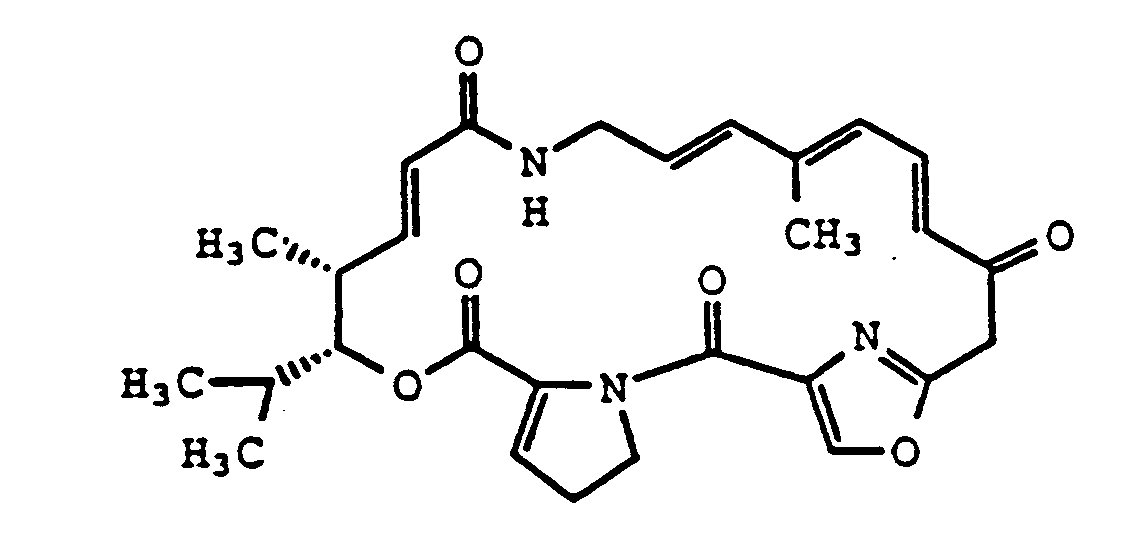
- Composé de formule IV :

- Procédé de préparation des composés des revendications 1, 3 et 4, qui comprend la fermentation aérobie contrôlée d'une souche de Streptomyces olivaceus dans un milieu nutritif aqueux assimilable.
- Procédé selon la revendication 5, dans lequel la souche de Streptomyces olivaceus est ATCC 53527.
- Culture biologiquement pure de l'organisme Streptomyces olivaceus ATCC 53527.
- Procédé pour transformer de la virginiamycine M₁ en composé selon la revendication 3, comprenant la déshydratation de la virginiamycine M₁ en présence de chlorure de méthanesulfonyle et de pyridine.
- Procédé pour transformer le composé selon la revendication 3 en composés selon les revendications 1 et 2, comprenant la réduction du composé de la revendication 3.
- Composition pharmaceutique utile pour traiter les troubles gastro-intestinaux, les troubles du système nerveux central et pour réguler l'appétit chez les mammifères, comprenant une quantité pharmaceutiquement efficace de virginiamycine M₁ et un véhicule pharmaceutiquement acceptable.
- Composition pharmaceutique utile pour traiter les troubles gastro-intestinaux, les troubles du système nerveux central et pour réguler l'appétit chez les mammifères, comprenant une quantité pharmaceutiquement efficace du composé selon l'une quelconque des revendications 1 à 4 et un véhicule pharmaceutiquement acceptable.
- Utilisation de virginiamycine M₁ pour préparer un médicament utile pour traiter les troubles gastro-intestinaux, les troubles du système nerveux central et pour réguler l'appétit chez les mammifères.
- Utilisation d'un composé selon l'une quelconque des revendications 1 - 4 pour préparer un médicament utile pour traiter les troubles gastro-intestinaux, les troubles du système nerveux central et pour réguler l'appétit chez les mammifères.
- Utilisation d'un composé selon l'une quelconque des revendications 1 - 4 pour préparer un médicament utile pour traiter les infections bactériennes chez les mammifères.
Applications Claiming Priority (8)
| Application Number | Priority Date | Filing Date | Title |
|---|---|---|---|
| US93421486A | 1986-11-21 | 1986-11-21 | |
| US934231 | 1986-11-21 | ||
| US934232 | 1986-11-21 | ||
| US06/934,212 US4859690A (en) | 1986-11-21 | 1986-11-21 | Therapeutic virginiamycin M1 analogs |
| US06/934,232 US4772595A (en) | 1986-11-21 | 1986-11-21 | Synthetic virginiamycin M1 analogs |
| US934214 | 1986-11-21 | ||
| US934212 | 1986-11-21 | ||
| US06/934,231 US4762923A (en) | 1986-11-21 | 1986-11-21 | Fermentation analogs of virginiamycin M1 |
Publications (2)
| Publication Number | Publication Date |
|---|---|
| EP0269322A1 EP0269322A1 (fr) | 1988-06-01 |
| EP0269322B1 true EP0269322B1 (fr) | 1992-12-23 |
Family
ID=27506022
Family Applications (1)
| Application Number | Title | Priority Date | Filing Date |
|---|---|---|---|
| EP87310022A Expired - Lifetime EP0269322B1 (fr) | 1986-11-21 | 1987-11-12 | Analogues de fermentation de virginiamycine M1 |
Country Status (3)
| Country | Link |
|---|---|
| EP (1) | EP0269322B1 (fr) |
| CA (1) | CA1279278C (fr) |
| DE (1) | DE3783218T2 (fr) |
Families Citing this family (3)
| Publication number | Priority date | Publication date | Assignee | Title |
|---|---|---|---|---|
| US5189050A (en) * | 1991-06-03 | 1993-02-23 | Merck & Co., Inc. | Fermentation analogs of virginiamycin m1 to treat panic and anxiety disorder |
| DK1123937T3 (da) | 1998-10-23 | 2004-10-11 | Sosei Co Ltd | Substans GM-95, fremgangsmåde til dets fremstilling samt anvendelse deraf |
| CN108753879A (zh) * | 2018-06-26 | 2018-11-06 | 北京泛球生物科技有限公司 | 一种提高维吉尼亚霉素产量的发酵生产方法 |
Family Cites Families (2)
| Publication number | Priority date | Publication date | Assignee | Title |
|---|---|---|---|---|
| DE2633105C2 (de) * | 1976-07-23 | 1985-08-22 | Henkel KGaA, 4000 Düsseldorf | Futtermittelmischung, enthaltend Virginiamycin und proteolytische Enzyme |
| DE3483779D1 (de) * | 1983-12-23 | 1991-01-31 | American Cyanamid Co | Antimikrobielle tierfutterzusatzzusammensetzungen. |
-
1987
- 1987-11-12 EP EP87310022A patent/EP0269322B1/fr not_active Expired - Lifetime
- 1987-11-12 DE DE8787310022T patent/DE3783218T2/de not_active Expired - Fee Related
- 1987-11-16 CA CA000551943A patent/CA1279278C/fr not_active Expired - Lifetime
Non-Patent Citations (2)
| Title |
|---|
| JOURNAL OF THE AMERICAN CHEMICAL SOCIETY, vol. 105, no. 15, 1983, Washington D.C. - D.G.I. KINGSTON et al. "Biosynthesis of Antibiotics of the Virginiamycin Family. 3. Biosynthesis of Virginiamycin M1", pp. 5106-5110 * |
| SCIENCE, vol. 226, no. 4679, 7. December 1984, Washington D.C. - P.L. FARIS et al. "Morphine Analgesia Potentiated but Tolerance Not Affected by Active Immunization Against Cholecystokinin", pp. 1215-1217 * |
Also Published As
| Publication number | Publication date |
|---|---|
| EP0269322A1 (fr) | 1988-06-01 |
| DE3783218D1 (de) | 1993-02-04 |
| DE3783218T2 (de) | 1993-06-03 |
| CA1279278C (fr) | 1991-01-22 |
Similar Documents
| Publication | Publication Date | Title |
|---|---|---|
| DK173802B1 (da) | Præparat til behandling af Pneumocystis carinii infeksioner og anvendelse af et cyclohexapeptid til fremstilling af et lægemiddel mod Pneumocystis carinii infektioner | |
| EP0274873B1 (fr) | Antibiotique A10255 complexe et facteurs, procédé, micro-organismes pour sa fabrication | |
| EP0231111A2 (fr) | Antibiotiques du type glycopeptide, leur préparation et leur utilisation et microorganismes qui les produisent | |
| EP0132118B1 (fr) | Antibiotiques produits par kibdelosporangium aridum shearer gen. NOV., SP. NOV. ATCC 39323 | |
| KR960012063B1 (ko) | 글리콜펩티드 항생물질 pa-45052 및 그의 제조방법 | |
| EP2097423B1 (fr) | Dérivés macrocycliques du aminothiazole, leur utilisation comme antibacteriens et procédés pour leur preparation | |
| US4762923A (en) | Fermentation analogs of virginiamycin M1 | |
| US4772595A (en) | Synthetic virginiamycin M1 analogs | |
| US4859690A (en) | Therapeutic virginiamycin M1 analogs | |
| NL8501708A (nl) | Antitumor antibioticum. | |
| US5242938A (en) | Derivatives of virginiamycin M1 | |
| US5137900A (en) | Therapeutic virginiamycin M1 analogs | |
| CA1279278C (fr) | Analogues de fermentation de la virginiamycine m1 | |
| CA1337758C (fr) | Antibiotiques peptidiques | |
| US5006466A (en) | Fermentation analogs of virginiamycin M1 | |
| JP2506568B2 (ja) | 抗生物質10381b2の製法および該抗生物質を含有する食肉用動物の成長促進用組成物 | |
| US4894370A (en) | Compositions having fermentation analogs of virginiamycin M1 as active ingredient | |
| Lam et al. | NOVEL AND POTENT GASTRIN AND BRAIN CHOLECYSTOKININ ANTAGONISTS FROM Streptomyces olivaceus TAXONOMY, FERMENTATION, ISOLATION, CHEMICAL CONVERSIONS, AND PHYSICO-CHEMICAL AND BIOCHEMICAL PROPERTIES | |
| US4942230A (en) | Process for preparing synthetic virginiamycin M1 analogs | |
| US5189050A (en) | Fermentation analogs of virginiamycin m1 to treat panic and anxiety disorder | |
| US4672036A (en) | Pure cultures of Kibdelsporangium aridum Shearer gen. nov., sp. nov. ATCC 39323 and mutants thereof | |
| WO1989002441A1 (fr) | Composes antibiotiques | |
| JPS60172985A (ja) | 抗生物質a39079因子s−1およびその製造方法 | |
| KR860001215B1 (ko) | 안지오텐신-전환 효소 억제제의 제조방법 | |
| NO853567L (no) | Nye antibiotika, fremgangsm¨te for fremstilling av disse o g farmas¯ytiske preparater inneholdende disse. |
Legal Events
| Date | Code | Title | Description |
|---|---|---|---|
| PUAI | Public reference made under article 153(3) epc to a published international application that has entered the european phase |
Free format text: ORIGINAL CODE: 0009012 |
|
| AK | Designated contracting states |
Kind code of ref document: A1 Designated state(s): CH DE FR GB IT LI NL |
|
| ITCL | It: translation for ep claims filed |
Representative=s name: SOCIETA' ITALIANA BREVETTI S.P.A. |
|
| 17P | Request for examination filed |
Effective date: 19881104 |
|
| 17Q | First examination report despatched |
Effective date: 19910612 |
|
| GRAA | (expected) grant |
Free format text: ORIGINAL CODE: 0009210 |
|
| AK | Designated contracting states |
Kind code of ref document: B1 Designated state(s): CH DE FR GB IT LI NL |
|
| REF | Corresponds to: |
Ref document number: 3783218 Country of ref document: DE Date of ref document: 19930204 |
|
| ET | Fr: translation filed | ||
| ITF | It: translation for a ep patent filed | ||
| PLBE | No opposition filed within time limit |
Free format text: ORIGINAL CODE: 0009261 |
|
| STAA | Information on the status of an ep patent application or granted ep patent |
Free format text: STATUS: NO OPPOSITION FILED WITHIN TIME LIMIT |
|
| PG25 | Lapsed in a contracting state [announced via postgrant information from national office to epo] |
Ref country code: GB Effective date: 19931112 |
|
| PG25 | Lapsed in a contracting state [announced via postgrant information from national office to epo] |
Ref country code: LI Effective date: 19931130 Ref country code: CH Effective date: 19931130 |
|
| 26N | No opposition filed | ||
| PG25 | Lapsed in a contracting state [announced via postgrant information from national office to epo] |
Ref country code: NL Effective date: 19940601 |
|
| GBPC | Gb: european patent ceased through non-payment of renewal fee |
Effective date: 19931112 |
|
| NLV4 | Nl: lapsed or anulled due to non-payment of the annual fee | ||
| PG25 | Lapsed in a contracting state [announced via postgrant information from national office to epo] |
Ref country code: FR Effective date: 19940729 |
|
| REG | Reference to a national code |
Ref country code: CH Ref legal event code: PL |
|
| PG25 | Lapsed in a contracting state [announced via postgrant information from national office to epo] |
Ref country code: DE Effective date: 19940802 |
|
| REG | Reference to a national code |
Ref country code: FR Ref legal event code: ST |
|
| PG25 | Lapsed in a contracting state [announced via postgrant information from national office to epo] |
Ref country code: IT Free format text: LAPSE BECAUSE OF NON-PAYMENT OF DUE FEES;WARNING: LAPSES OF ITALIAN PATENTS WITH EFFECTIVE DATE BEFORE 2007 MAY HAVE OCCURRED AT ANY TIME BEFORE 2007. THE CORRECT EFFECTIVE DATE MAY BE DIFFERENT FROM THE ONE RECORDED. Effective date: 20051112 |