EP0272645A2 - Verfahren zur selektiven Füllstoffmessung an laufenden Materialbahnen, insbesondere Papierbahnen - Google Patents
Verfahren zur selektiven Füllstoffmessung an laufenden Materialbahnen, insbesondere Papierbahnen Download PDFInfo
- Publication number
- EP0272645A2 EP0272645A2 EP87118822A EP87118822A EP0272645A2 EP 0272645 A2 EP0272645 A2 EP 0272645A2 EP 87118822 A EP87118822 A EP 87118822A EP 87118822 A EP87118822 A EP 87118822A EP 0272645 A2 EP0272645 A2 EP 0272645A2
- Authority
- EP
- European Patent Office
- Prior art keywords
- radiation
- measurement
- measuring
- measurement signal
- filler
- Prior art date
- Legal status (The legal status is an assumption and is not a legal conclusion. Google has not performed a legal analysis and makes no representation as to the accuracy of the status listed.)
- Granted
Links
Images


Classifications
-
- G—PHYSICS
- G01—MEASURING; TESTING
- G01N—INVESTIGATING OR ANALYSING MATERIALS BY DETERMINING THEIR CHEMICAL OR PHYSICAL PROPERTIES
- G01N33/00—Investigating or analysing materials by specific methods not covered by groups G01N1/00 - G01N31/00
- G01N33/34—Paper
- G01N33/346—Paper sheets
-
- G—PHYSICS
- G01—MEASURING; TESTING
- G01N—INVESTIGATING OR ANALYSING MATERIALS BY DETERMINING THEIR CHEMICAL OR PHYSICAL PROPERTIES
- G01N23/00—Investigating or analysing materials by the use of wave or particle radiation, e.g. X-rays or neutrons, not covered by groups G01N3/00 – G01N17/00, G01N21/00 or G01N22/00
- G01N23/02—Investigating or analysing materials by the use of wave or particle radiation, e.g. X-rays or neutrons, not covered by groups G01N3/00 – G01N17/00, G01N21/00 or G01N22/00 by transmitting the radiation through the material
- G01N23/06—Investigating or analysing materials by the use of wave or particle radiation, e.g. X-rays or neutrons, not covered by groups G01N3/00 – G01N17/00, G01N21/00 or G01N22/00 by transmitting the radiation through the material and measuring the absorption
- G01N23/083—Investigating or analysing materials by the use of wave or particle radiation, e.g. X-rays or neutrons, not covered by groups G01N3/00 – G01N17/00, G01N21/00 or G01N22/00 by transmitting the radiation through the material and measuring the absorption the radiation being X-rays
-
- G—PHYSICS
- G01—MEASURING; TESTING
- G01N—INVESTIGATING OR ANALYSING MATERIALS BY DETERMINING THEIR CHEMICAL OR PHYSICAL PROPERTIES
- G01N23/00—Investigating or analysing materials by the use of wave or particle radiation, e.g. X-rays or neutrons, not covered by groups G01N3/00 – G01N17/00, G01N21/00 or G01N22/00
- G01N23/02—Investigating or analysing materials by the use of wave or particle radiation, e.g. X-rays or neutrons, not covered by groups G01N3/00 – G01N17/00, G01N21/00 or G01N22/00 by transmitting the radiation through the material
- G01N23/06—Investigating or analysing materials by the use of wave or particle radiation, e.g. X-rays or neutrons, not covered by groups G01N3/00 – G01N17/00, G01N21/00 or G01N22/00 by transmitting the radiation through the material and measuring the absorption
- G01N23/16—Investigating or analysing materials by the use of wave or particle radiation, e.g. X-rays or neutrons, not covered by groups G01N3/00 – G01N17/00, G01N21/00 or G01N22/00 by transmitting the radiation through the material and measuring the absorption the material being a moving sheet or film
-
- G—PHYSICS
- G01—MEASURING; TESTING
- G01N—INVESTIGATING OR ANALYSING MATERIALS BY DETERMINING THEIR CHEMICAL OR PHYSICAL PROPERTIES
- G01N21/00—Investigating or analysing materials by the use of optical means, i.e. using sub-millimetre waves, infrared, visible or ultraviolet light
- G01N21/17—Systems in which incident light is modified in accordance with the properties of the material investigated
- G01N21/25—Colour; Spectral properties, i.e. comparison of effect of material on the light at two or more different wavelengths or wavelength bands
- G01N21/31—Investigating relative effect of material at wavelengths characteristic of specific elements or molecules, e.g. atomic absorption spectrometry
- G01N21/35—Investigating relative effect of material at wavelengths characteristic of specific elements or molecules, e.g. atomic absorption spectrometry using infrared light
-
- G—PHYSICS
- G01—MEASURING; TESTING
- G01N—INVESTIGATING OR ANALYSING MATERIALS BY DETERMINING THEIR CHEMICAL OR PHYSICAL PROPERTIES
- G01N21/00—Investigating or analysing materials by the use of optical means, i.e. using sub-millimetre waves, infrared, visible or ultraviolet light
- G01N21/17—Systems in which incident light is modified in accordance with the properties of the material investigated
- G01N21/25—Colour; Spectral properties, i.e. comparison of effect of material on the light at two or more different wavelengths or wavelength bands
- G01N21/31—Investigating relative effect of material at wavelengths characteristic of specific elements or molecules, e.g. atomic absorption spectrometry
- G01N21/35—Investigating relative effect of material at wavelengths characteristic of specific elements or molecules, e.g. atomic absorption spectrometry using infrared light
- G01N21/3554—Investigating relative effect of material at wavelengths characteristic of specific elements or molecules, e.g. atomic absorption spectrometry using infrared light for determining moisture content
- G01N21/3559—Investigating relative effect of material at wavelengths characteristic of specific elements or molecules, e.g. atomic absorption spectrometry using infrared light for determining moisture content in sheets, e.g. in paper
-
- G—PHYSICS
- G01—MEASURING; TESTING
- G01N—INVESTIGATING OR ANALYSING MATERIALS BY DETERMINING THEIR CHEMICAL OR PHYSICAL PROPERTIES
- G01N21/00—Investigating or analysing materials by the use of optical means, i.e. using sub-millimetre waves, infrared, visible or ultraviolet light
- G01N21/17—Systems in which incident light is modified in accordance with the properties of the material investigated
- G01N21/25—Colour; Spectral properties, i.e. comparison of effect of material on the light at two or more different wavelengths or wavelength bands
- G01N21/31—Investigating relative effect of material at wavelengths characteristic of specific elements or molecules, e.g. atomic absorption spectrometry
- G01N21/35—Investigating relative effect of material at wavelengths characteristic of specific elements or molecules, e.g. atomic absorption spectrometry using infrared light
- G01N21/3563—Investigating relative effect of material at wavelengths characteristic of specific elements or molecules, e.g. atomic absorption spectrometry using infrared light for analysing solids; Preparation of samples therefor
Definitions
- the invention relates to a method for selective filler measurement on running material webs, in particular paper webs, from a two filler components, a carrier material and possibly a further material mixture containing material.
- a natural radioactive Fe-55 radiation source is used as the source for the characteristic X-ray radiation, which emits a quantum radiation with a monochromatic energy of 5.9 keV.
- the known filler measuring method takes advantage of the fact that when the monoenergetic measuring beam from the Fe-55 radiation source is used, a strictly exponential absorption law with well-defined absorption coefficients applies.
- a measurement method using X-ray fluorescence analysis for measuring the filler content in paper webs is known.
- a filler component mixture containing Mg, Ca, Al and Ti can be measured with this.
- the fact is used that each of the elements Mg, Ca, Al and Ti has a specific fluorescence wavelength.
- the content of each of the elements in the paper web examined is obtained by measuring the element-specific fluorescence per unit of time.
- This analytical method which is used as standard in devices for laboratory sample analysis today, has not been successful in online use due to serious equipment problems.
- the main problems are: temperature sensitivity of the stintillation counter for the detection of fluorescent radiation; Application of the reflectance geometry with the problem of the non-constant distance between the sample and the emitter and detector for moving webs.
- DE-PS 29 10 673 it is known from DE-PS 29 10 673 to measure the absolute content or basis weight of a substance in a running web of material with high accuracy using infrared radiation and beta radiation, provided that both the substance to be measured and the web of material essentially forming further substance each have a pronounced absorption band in the infrared radiation range and the substances of the material are mixed, ie form a material mixture.
- This known measuring method is used in particular to determine the absolute content of water in paper webs with cellulose as the main substance.
- the measurement in the infrared radiation range is carried out with the aid of a measuring wavelength absorbed by the water, a measuring wavelength absorbed by the cellulose and a comparison wavelength essentially not absorbed by both the water and the cellulose.
- an extinction signal is obtained which represents a measure of the absolute content of the water in the paper web.
- this measurement signal for the absolute water content is falsified by an elongation of the infrared radiation path caused by the opacity (internal scatter) of the paper.
- the measurement result obtained for water is therefore multiplied by a correction variable taking into account the structural properties of the mixture of water and cellulose.
- This correction variable is formed by comparing the measurement result obtained by means of beta radiation for the total basis weight of the material web with the measurement signal obtained by means of infrared radiation for the basis weight of cellulose.
- This correction quantity is formed on the assumption that the measurement signal obtained by infrared measurement for the basis weight of the water is falsified in the same ratio as the measurement signal obtained by infrared measurement for cellulose and that the measurement result obtained by means of beta radiation for the entire basis weight of the material web of the small percentage of water in the total basis weight corresponds to the true basis weight of the cellulose. It is also important in this context that the measurement by means of beta radiation is known not to be influenced by the structural properties of the material web.
- two comparison wavelengths are preferably used in infrared radiation measurement to eliminate wavelength-dependent scattering losses of infrared radiation. With the aid of the two comparison wavelengths, it is possible to determine a corrected reference value for the measurement signals obtained with the measurement wavelengths.
- the four-beam measuring method according to DE-PS 29 10 673 should not only be used for measuring the content of water in paper, but generally for measurements on thin webs of material, in which the content of a substance in the material is to be measured, provided that that the substance to be measured is mixed with the other substances in the material and that the other substance from which a measurement value falsification can arise, like the substance to be measured, has a pronounced absorption band for infrared radiation.
- the known measuring method could therefore also be used to measure the content of a filler component in a material web, in particular a paper web, provided the filler components show a pronounced absorption band in the infrared radiation range.
- the problem arises that the approximation that the filler component present in a paper web no longer applies is that the total basis weight of the paper web measured by means of beta radiation corresponds to the true basis weight of the cellulose. This applies all the more if, in addition to a first filler component, a second filler component in the material mixture is present. In addition, the second filler component provided in a paper web generally has no pronounced absorption band in the infrared radiation range.
- the measuring method known from DE-PS 29 10 673 is therefore not suitable for selective filler measurement on material webs with two filler components.
- the fillers used for paper production generally contain compounds made of metals such as aluminum in kaolin and satin white, calcium in calcium carbonate and satin white, titanium in titanium dioxide and barium in barium sulfate.
- metals such as aluminum in kaolin and satin white, calcium in calcium carbonate and satin white, titanium in titanium dioxide and barium in barium sulfate.
- metals are known to have characteristic absorption properties which lend themselves to the highly selective measurement of the individual fillers in question, essentially independently of the filler composition, in the presence of the cellulose carrier and also of the moisture present in the paper web.
- the problem of selective filler measurement could in principle also be solved by, for example, carrying out two independent measurements for two different fillers present in the material mixture, and then solving a system of two linear equations with two unknown quantities, each of which is the Content of the two fillers.
- the possibility of coordinating the energy of an X-ray radiation which generates braking radiation seems to offer a solution to the problem shown.
- Two filler measuring devices with suitably coordinated energy spectra could be used.
- One measuring device could be matched to the energy range at the resonance point of one filler component and the other to the energy range at the resonance point of the other filler component. In the area of resonances, the respective absorption coefficients differ the most from one another, so that optimal conditions would be obtained with regard to selectivity.
- the emission spectrum of an X-ray radiation source emitting brake radiation is extremely broad.
- the full width at half maximum of the spectrum is approximately 1/3 of the maximum energy.
- the result of this broad spectrum of brake radiation is that the absorption coefficient of the substance to be measured changes with increasing weight, because a higher proportion of the radiation of lower energy is absorbed.
- This means that the law of absorption would have to be determined empirically as a function of higher order.
- the law of absorption of an X-ray brake radiation filler measuring device would therefore be system-dependent.
- the advantage of the tunability of the radiation energy in the case of a filler measuring device working with brake radiation would thus be completely nullified by the fact that the system of equations to be solved would contain non-linear terms.
- the invention is based on the object of specifying a method for selective filler measurement on running material webs, in particular paper webs, by means of which the content of the individual filler components in a material mixture making up the material web can be determined with high accuracy using the simplest and most practical technique possible.
- the invention specified in claim 1 is proposed.
- the method according to the invention makes it possible to selectively determine the content of two filler components in a material web, provided, however, that at least one of the two filler components, for example the first filler component, has a pronounced absorption band in the infrared radiation range. This is true for kaolin and talc. This makes it possible to use infrared radiation to obtain a measurement signal for the absolute content or basis weight of the first filler component which is essentially independent of the other substances in the material web, but which is falsified due to the internal scattering occurring in the material web.
- the invention is based on the simultaneous use of infra to form a correction factor which takes account of the measurement falsification red radiation, beta radiation and a characteristic x-ray radiation on the material web to be measured.
- the processing of the measurement signals obtained with this radiation is based on the knowledge that a correction factor which takes account of the actual circumstances of the internal scatter or opacity of the material web can be obtained by the fact that between the measurement signal obtained by means of beta radiation and representing the total weight per unit area of the material web and a sum signal, the ratio is formed, the sum signal being obtained by summing up the measurement signals obtained by means of the IR radiation for the basis weight of all substances occurring in the material web.
- infrared radiation and the acquisition of the measurement signals obtained with the aid of the different measuring wavelengths and preferably two comparison wavelengths for the basis weights of the materials of the material web which can be measured by means of infrared radiation can essentially be carried out as described in DE-PS 29 10 673.
- two comparison wavelengths a more precise reference value can be formed for the radiation intensity signals measured at the measuring wavelengths.
- the radiation intensity measured for a substance with the measurement wavelength of the infrared radiation absorbed by this substance is additionally corrected for an intensity distortion which is caused in the measurement wavelength of this substance by a substance assigned to a different measurement wavelength.
- the measurement of the total basis weight of a material web with the beta radiation is a measurement which is known per se and is well known to the person skilled in the art.
- beta radiation as corpuscular radiation is not influenced by the structural properties of the material mixture of the material web to be measured.
- the beta radiation therefore generally provides a measurement signal for the total basis weight of the material web.
- the characteristic X-ray radiation is preferably the quantum radiation of the natural radioactive radiation source Fe-55 occurring at 5.9 keV.
- the Fe-55 radiation source is known per se to the person skilled in the art, and corresponding radiation detectors are also available to him.
- the characteristic X-ray radiation In contrast to the X-ray brake radiation covering a wide spectral range, the characteristic X-ray radiation consists of individual characteristic lines.
- the characteristic X-rays or the quantum radiation emitted by the Fe-55 radiation source cannot be matched to a specific energy and therefore seems to be less suitable than the tunable X-ray brake radiation for solving the task according to the invention, it is precisely the monoenergetic property of the stable Fe 55 radiation sources in combination with infrared radiation measurement and beta radiation measurement are essential for the overall success of the invention.
- the absorption law is strictly exponential with well-defined absorption coefficients, which are tabulated and can also be determined empirically without further ado.
- the invention takes advantage of the knowledge that both the filler kaolin and one of the most important substitute fillers for kaolin, namely talc, have pronounced but separate absorption bands in the infrared radiation range. This makes it possible to obtain a measurement signal for the first filler component that is in need of correction but is independent of the second filler component. If the second filler component is, for example, the filler calcium carbonate, which cannot be detected by means of infrared radiation, it is nevertheless possible with the aid of the measuring method according to the invention to precisely determine the division between these two filler components.
- the measurement signal obtained by using the X-ray measurement does represent the total extinction caused by kaolin and / or talc and calcium carbonate as well as cellulose and water, but due to the monochromatic and stable energy of the X-rays used, the extinction contribution for the radiation energy present in the paper web can be exactly determined to calculate.
- the absorption coefficients for the energy of the X-rays of kaolin and / or talc, calcium carbonate, cellulose and water are well defined and known.
- the difference between the total extinction measured with the characteristic X-rays and the extinction contributions calculated and added up for cellulose, kaolin and / or talc and water can only be attributed to the absorption effect of the second filler component calcium carbonate.
- the filler calcium carbonate is replaced by titanium dioxide, satin white or barium sulfate.
- the first filler component is measured by means of infrared radiation both with a measurement wavelength absorbed by kaolin and with a measurement wavelength absorbed by talc.
- the measuring method according to the invention satisfies an urgent need that arises in papermaking, which enables the papermaker to control the filler composition of the paper produced while continuously knowing the division of two different filler components in such a way that the most economical fillers are used to achieve the set quality goal .
- the solution shown is practically easy to implement Sieren and is still characterized by the special advantage that calibration of the X-ray source depending on the type of paper to be measured is not required.
- the method according to the invention can be used advantageously not only in the selective filler measurement on running webs of paper, but in general in all material films or thin material webs in which one of two different filler components has a pronounced absorption spectrum in the infrared radiation range and which is related to monoenergetic X-ray radiation measured total absorbance can be clearly divided between the two filler components and, if necessary, further substances, provided that these other substances equally know that one filler component has a pronounced absorption band in the infrared radiation range.
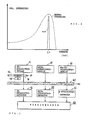
- FIG. 1 shows the typical course of the absorption coefficient of fillers occurring in paper webs, such as kaolin and calcium carbonate, which contain compounds of metals.
- the absorption edges shown are characteristic of the metal atoms of the fillers in question.
- the position of the quantum radiation of the natural radioactive radiation source Fe-55 which is preferably used for the purposes according to the invention, is also shown.
- FIG. FIG. 2 illustrates the monochromatic energy spectrum of the Fe-55 radiation source, which is located at 5.9 KeV, in comparison with an X-ray brake radiation which has been matched to the monochromatic radiation energy of the Fe-55 radiation source using the acceleration voltage.
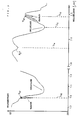
- FIG. 3 shows the absorption of various substances or substances from paper in the near infrared region of the electromagnetic spectrum.
- cellulose contains Paper web contains the fillers kaolin and talc as well as moisture or water. As can be seen, not only cellulose and water, but also kaolin and talc have pronounced absorption spectra in the infrared radiation range, which are indicated by hatched areas.
- absorbance measurements are to be carried out on this paper web, one assigns, in a manner known per se, the substances of the paper web whose absorbance is to be measured in each case to a measuring wavelength which is absorbed by the substance in question.
- FIG. 3 accordingly shows a possible measuring wavelength ⁇ Z for cellulose, ⁇ W for water, ⁇ A1 for kaolin and ⁇ A2 for talc.
- the assigned zero points R A1 and R A2 are also shown for kaolin and talc.
- the zero points for cellulose and water as well as two comparison wavelengths which could be 1.3 and 1.8 ⁇ m, for example, have been left out. From the prior art according to DE-PS 29 10 673 it is known how the zero points for the measuring wavelengths can be obtained from the intensity measurements with the two comparison wavelengths.
- the in FIG. 4 contains an infrared radiation device with an infrared radiation source 10, a filter wheel 14 driven by a motor 18 and an infrared radiation detector 12.
- a beta radiation measuring device contains a beta radiation source 20 and a beta radiation detector 22.
- a monoenergetic X-ray or z radiation measuring device contains an Fe 55 radiation source 30 and an x radiation detector 32.
- a thin paper web 40 to be measured which continuously moves in the direction of an arrow, is penetrated by the measuring beams of the individual measuring devices.
- the filter wheel 14 has five filters 16, three of which are intended for one measuring wavelength and two for a respective comparison wavelength.
- the electrical measurement signals received by the radiation detectors 12, 22 and 32 are fed to a microcomputer 50 which basically processes the measurement signals or proportional signals derived therefrom in a manner such as that shown in the signal flow diagram according to FIG. 5 emerges.
- the paper web 40 to be measured contains, in addition to the cellulose carrier designated Z and the further water designated W, a first filler component designated A and a second filler component designated B.
- the first filler component A is kaolin and the second filler component is calcium carbonate.
- a first filter of the five filters 16 selects a measurement wavelength ⁇ A ( ⁇ A1 according to FIG. 3) based on the absorption spectrum of kaolin, a second filter selects a measurement wavelength ⁇ Z based on the absorption spectrum of cellulose, and a third filter selects one on the absorption spectrum measuring wavelength ⁇ W removed from water. The two remaining filters select the comparison wavelengths ⁇ 1 and ⁇ 2.
- I mean the radiation intensity measured by the detector 12 at one of the measuring wavelengths, I0 a zero intensity assigned to the relevant measuring wavelength, which is determined from the radiation intensities measured by the detector 12 at the comparison wavelengths ⁇ 1 and ⁇ 2, and E ⁇ the at relevant measurement wavelength for the assigned absorbance measured.
- a measurement signal M ⁇ A for the basis weight of kaolin, M ⁇ Z for the basis weight of cellulose and M ⁇ W for the basis weight of water from the measured extinction signals for the individual substances using the respectively assigned absorption coefficient.
- a A is the absorption coefficient of kaolin at the measuring wavelength ⁇ A
- a Z is the absorption coefficient of cellulose at the measuring wavelength ⁇ Z
- a W is the absorption coefficient for water at the measuring wavelength ⁇ W.
- the measurement signals M ⁇ obtained with infrared radiation measurement do not correspond to the actual basis weight M of the substances measured in the paper web. Rather, it is necessary to multiply the respective measurement signal M ⁇ by a correction factor K in order to obtain the respective actual basis weight M.
- M T is the measurement signal obtained by means of beta radiation for the total basis weight of the paper web.
- the measurement signal M T is obtained in a manner known per se from the radiation intensity signals supplied by the beta radiation detector 22, the reference intensity being dimensioned in the absence of a paper web.
- the signal M ⁇ B should take into account the portion of the measurement value falsification of the measurement signals M ⁇ measured by infrared radiation caused by the second filler component calcium carbonate and is initially unknown.
- M A means the true basis weight of the first filler component kaolin
- M B the true basis weight of the second filler component calcium carbonate
- M A is the basis weight of the kaolin filler present in the paper web
- M B the basis weight of the calcium carbonate filler present in the paper web
- M Z the basis weight of the cellulose carrier present in the paper web
- M W the basis weight of the ent in the paper web water
- ⁇ A the absorption coefficient of kaolin at the x measurement radiation energy of 5.9 keV
- ⁇ B the absorption coefficient of calcium carbonate at the x measurement radiation energy of 5.9 keV
- ⁇ Z the absorption coefficient of cellulose at the x measurement radiation energy of 5 , 9 keV
- ⁇ W the absorption coefficient of water at the x measurement radiation energy of 5.9 keV.
- the absorption coefficients ⁇ are known and can also be determined experimentally without further notice.
- Equation (6) can be transformed into the following equation (7):
- the calculation blocks 51 to 56 given there, using the measurement signals M ⁇ A , M ⁇ Z , M ⁇ W , M T and E T obtained from the output signals of the detectors 12, 22 and 32, the correction factor K for correcting the infrared radiation obtained Determine measuring signals M ⁇ A , M ⁇ Z and M ⁇ W.
- the initially unknown signal M Signal B is a signal fed back to the calculation block 54, the formation of which is based on the output signal M A of the calculation block 54 itself and the output signal M B of the calculation block 55, the calculation block 55 itself being adjacent the output signals M A , M W and M Z of the calculation block 54 are fed to the measurement signal E T.
- the basis weights M A and M B for kaolin and calcium carbonate can then be determined in the usual way To be linked with the total basis weight M T of the paper web, for example to indicate the percentage content of the individual filler components or the percentage ash content in the paper web.
- the following relationships can be used: In equations (8) to (10), P A is the percentage of the first filler component in the paper web, P B is the percentage of the second filler component in the paper web and P H is the percentage of ash in the paper web.
Landscapes
- Health & Medical Sciences (AREA)
- Chemical & Material Sciences (AREA)
- Life Sciences & Earth Sciences (AREA)
- Immunology (AREA)
- Analytical Chemistry (AREA)
- Biochemistry (AREA)
- General Health & Medical Sciences (AREA)
- General Physics & Mathematics (AREA)
- Physics & Mathematics (AREA)
- Pathology (AREA)
- Engineering & Computer Science (AREA)
- Food Science & Technology (AREA)
- Medicinal Chemistry (AREA)
- Toxicology (AREA)
- Analysing Materials By The Use Of Radiation (AREA)
- Paper (AREA)
- Investigating Or Analysing Materials By Optical Means (AREA)
Abstract
Description
- Die Erfindung bezieht sich auf ein Verfahren zur selektiven Füllstoffmessung an laufenden Materialbahnen, insbesondere Papierbahnen, aus einer zwei Füllstoffkomponenten, einen Trägerstoff und gegebenenfalls einen weiteren Stoff enthaltenden Materialmischung.
- Es ist bekannt, durch Anwendung einer Beta-Strahlung das Flächengewicht einer laufenden Papierbahn zu messen. Ferner ist es bekannt, durch gleichzeitige Anwendung einer Beta-Strahlung und einer charakteristischen Röntgenstrahlung an laufenden Papierbahnen den gesamten Asche- oder Füllstoffgehalt zu messen, allerdings unter der Voraussetzung, daß entweder in der Papierbahn nur ein einziger Füllstoff, nämlich Koalin, Talkum oder eine Füllstoffkomponente mit reinem CaCO₃ enthalten ist oder daß im Falle eines Füllstoffkomponentengemisches, nämlich Kaolin, Talkum, CaCO₃ und/oder TiO₂, die Füllstoffkomponentenrezeptur, d.h. das Verhältnis zwischen den einzelnen Füllstoffkomponenten, bekannt ist.
- Bei diesem bekannten Meßverfahren wird als Quelle für die charakteristische Röntgenstrahlung eine natürliche radioaktive Fe-55-Strahlungsquelle verwendet, die eine Quantenstrahlung mit einer monochromatischen Energie von 5,9 keV emittiert. Das bekannte Füllstoffmeßverfahren nutzt den Umstand aus, daß bei Verwendung des monoenergetischen Meßstrahls der Fe-55-Strahlungsquelle ein streng exponentielles Absorptionsgesetz mit wohl definierten Absorptionskoeffizienten gilt.
- Dies bedeutet, daß sich alle Strahlungsextinktionsbeiträge der verschiedenen Bestandteile der untersuchten Materialbahn mathematisch zu einem resultierenden Extinktionssignal aufaddieren.
- Weiterhin ist ein die Röntgenfluoreszenzanalyse ausnutzendes Meßverfahren zur Messung des Füllstoffgehalts in Papierbahnen bekannt. Gemessen werden kann hiermit ein Füllstoffkomponentengemisch, das Mg, Ca, Al und Ti enthält. Ausgenutzt wird dabei der Umstand, daß jedes der Elemente Mg, Ca, Al und Ti eine spezifische Fluoreszenzwellenlänge aufweist. Der Gehalt jedes der Elemente in der untersuchten Papierbahn wird dadurch gewonnen, daß die elementspezifische Fluoreszenz pro Zeiteinheit gemessen wird. Diese analytische Methode, in Geräten für die labormäßige Probenanalyse heute standardmäßig eingesetzt, hat sich wegen schwerwiegender apparativer Probleme bis heute im on-line Einsatz nicht durchgesetzt. Die Probleme sind im wesentlichen: Temperaturempfindlichkeit des Stintillationszählers für den Nachweis der Fluoreszenzstrahlung; Anwendung der Remissionsgeometrie mit dem Problem des nicht konstanten Abstandes der Probe zum Strahler und Detektor bei bewegten Bahnen.
- Andererseits ist es aus der DE-PS 29 10 673 bekannt, den absoluten Gehalt oder das Flächengewicht eines Stoffes in einer laufenden Materialbahn unter Anwendung von Infrarotstrahlung und Beta-Strahlung mit hoher Genauigkeit zu messen, sofern sowohl der zu messende Stoff als auch ein die Materialbahn im wesentlichen bildender weiterer Stoff jeweils eine ausgeprägte Absorptionsbande im Infrarotstrahlungsbereich haben und die Stoffe des Material gemischt vorliegen, d.h. eine Materialmischung bilden. Dieses bekannte Meßverfahren wird insbesondere angewendet zur Ermittlung des absoluten Gehalts von Wasser in Papierbahnen mit Cellulose als Hauptsubstanz. Die Messung im Infrarotstrahlungsbereich erfolgt mit Hilfe einer vom Wasser absorbierten Meßwellenlänge, einer von der Cellulose absorbierten Meßwellenlänge und einer sowohl vom Wasser als auch von der Cellulose im wesentlichen nicht absorbierten Vergleichswellenlänge. Durch Vergleich der mit der Meßwellenlänge des Wassers gemessenen Strahlungsintensität mit der Strahlungsintensität der Vergleichswellenlänge wird ein Extinktionssignal gewonnen, das ein Maß für den absoluten Gehalt des Wassers in der Papierbahn darstellt. Dieses Meßsignal für den absoluten Gehalt des Wassers ist jedoch durch eine von der Opazität (innere Streuung) des Papiers hervorgerufene Verlängerung des Infrarotstrahlungswegs verfälscht. Zur Ermittlung des wahren absoluten Gehalts des Wassers in der Papierbahn wird daher das für Wasser gewonnene Meßergebnis mit einer die strukturellen Eigenschaften der Mischung aus Wasser und Cellulose berücksichtigenden Korrekturgröße multipliziert. Diese Korrekturgröße wird dadurch gebildet, daß das mittels Beta-Strahlung für das gesamte Flächengewicht der Materialbahn erhaltene Meßergebnis in Vergleich gesetzt wird mit dem mittels Infrarotstrahlung erhaltenen Meßsignal für das Flächegewicht von Cellulose. Diese Bildung der Korrekturgröße erfolgt unter der Annahme, daß das durch Infrarotmessung gewonnene Meßsignal für das Flächengewicht des Wassers im gleichen Verhältnis verfälscht ist wie das durch Infrarotmessung gewonnene Meßsignal für die Cellulose und daß das mittels Beta-Strahlung gewonnene Meßergebnis für das gesamte Flächengewicht der Materialbahn wegen des prozentual geringen Anteils des Wassers am gesamten Flächengewicht mit dem wahren Flächengewicht der Cellulose übereinstimmt. Von Bedeutung in diesem Zusammenhang ist noch, daß die Messung mittels der Beta-Strahlung durch die strukturellen Eigenschaften der Materialbahn bekanntlich nicht beeinflußt wird.
- Bei dem bekannten Stand der Technik nach der DE-PS 29 10 673 werden bei der Infrarotstrahlungsmessung zum Eliminieren wellenlängenabhängiger Streuverluste von Infrarotstrahlung vorzugsweise zwei Vergleichswellenlängen angewendet. Mit Hilfe der beiden Vergleichswellenlängen ist es möglich, einen korrigierten Bezugswert für die mit den Meßwellenlängen erhaltenen Meßsignale zu ermitteln.
- Das Vierstrahl-Meßverfahren nach der DE-PS 29 10 673 soll nicht nur für die Messung des Gehaltes von Wasser in Papier einsetzbar sein, sondern allgemein für Messungen an dünnen Materialbahnen, bei denen der Gehalt eines Stoffes im Material gemessen werden soll, unter de Voraussetzung, daß der zu messende Stoff mit den übrigen Stoffen des Materials gemischt vorliegt und derjenige weitere Stoff, von dem eine Meßwertverfälschung ausgehen kann, ebenfalls wie der zu messende Stoff eine ausgeprägte Absorptionsbande für Infrarotstrahlung hat. Das bekannte Meßverfahren ließe sich daher auch zur Messung des Gehalts einer Füllstoffkomponente in einer Materialbahn, insbesondere Papierbahn, heranziehen, sofern die Füllstoffkomponenten eine ausgeprägte Absorptionsbande im Infrarotstrahlungsbereich zeigt. Es tritt allerdings das Problem auf, daß bei einer in einer Papierbahn vorhandenen Füllstoffkomponente nicht mehr die Näherung gilt, daß das mittels der Beta-Strahlung gemessene gesamte Flächengewicht der Papierbahn mit dem wahren Flächengewicht der Cellulose übereinstimmt. Dies gilt um so mehr, wenn zusätzlich zu einer ersten Füllstoffkomponente noch eine zweite Füllstoffkomponente in dem Material gemisch vorliegt. Darüber hinaus hat im allgemeinen die in einer Papierbahn vorgesehen zweite Füllstoffkomponente keine ausgeprägte Absorptionsbande im Infrarotstrahlungsbereich. Das aus der DE-PS 29 10 673 bekannte Meßverfahren ist daher zur selektiven Füllstoffmessung an Materialbahnen mit zwei Füllstoffkomponenten nicht geeignet.
- Es besteht in der Papierindustrie ein allgemeines großes Bedürfnis an einer Meßeinrichtung, die die Aufteilung von zwei Füllstoffkomponenten, beispielsweise von Kaolin und Calciumcarbonat, an laufenden Bahnen aus gestrichenem Papier bestimmen kann. Dieses Bedürfnis liegt insbesondere dann vor, wenn dem zur Herstellung der Papierbahn benutzten Papierbrei in ungeregelter Weise als Papierabfall und Ausschußpapier zugeführt werden oder pigmentiertes gestrichenes Papier als Ausschub in den Rohpapierbrei zurückgeführt wird und dabei die genaue Kenntnis über die Füllstoffzusammensetzung verlorengeht.
- Andererseits enthalten die zur Papierherstellung benutzen Füllstoffe in der Regel Verbindungen aus Metallen wie Aluminium in Kaolin und Satinweiß, Calcium in Calciumcarbonat und Satinweiß, Titan in Titandioxid und Barium in Bariumsulfat. Solche Metalle haben bekanntlich in einem Strahlungsenergiebereich von einigen keV charakteristische Absorptionseigenschaften, die sich zur hochselektiven Messung der betreffenden einzelnen Füllstoffe, im wesentlichen unabhängig von der Füllstoffzusammensetzung, anbieten, und zwar in Gegenwart des Trägerstoffes Cellulose und auch in der Papierbahn enthaltener Feuchtigkeit.
- Diese Eigenschaften der Füllstoffe bilden die Grundlage für das bereits oben erwähnte, die Röntgenfluoreszenzanalyse ausnutzende Meßverfahren.
- Das Problem der selektiven Füllstoffmessung ließe sich prinzipiell auch dadurch lösen, daß beispielsweise für zwei verschiedene, in der Materialmischung vorhandene Füllstoffe zwei voneinander unabhängige Messungen durchgeführt und dann ein System aus zwei linearen Gleichungen mit zwei unbekannten Größen gelöst wird, bei denen es sich jeweils um den Gehalt der beiden Füllstoffe handelt. Die Möglichkeit der Abstimmung der Energie einer Bremsstrahlung erzeugenden Röntgenstrahlung scheint eine Lösung für das aufgezeigte Problem zu bieten. Es könnten zwei Füllstoffmeßeinrichtungen mit in geeigneter Weise abgestimmten Energiespektren eingesetzt weden. Die eine Meßeinrichtung könnte auf den Energiebereich bei der Resonanzstelle der einen Füllstoffkomponente und die andere auf den Energiebereich bei der Resonanzstelle der anderen Füllstoffkomponente abgestimmt sein. Im Bereich der Resonanzen unterscheiden sich nämlich die jeweiligen Absorptionskoeffizienten am stärksten voneinander, so daß man bezüglich der Selektivität optimale Verhältnisse erhielte.
- Das Emissionsspektrum einer Bremsstrahlung emittierenden Röntgenstrahlungsquelle ist allerdings äußerst breit. Die Halbwertbreite des Spektrums beträgt etwa 1/3 der Maximalenergie. Dieses breite Spektrum der Bremsstrahlung hat zur Folge, daß sich der Absorptionskoeffizient des zu messenden Stoffes mit zunehmendem Gewicht ändert, weil ein höherer Anteil der Strahlung niedriger Energie absorbiert wird. Dies bedeutet, daß das Absorptionsgesetz als Funktion höherer Ordnung empirisch bestimmt werden müßte. Das Absorptionsgesetz einer die Röntgenbremsstrahlung anwendenden Füllstoffmeßeinrichtung wäre daher systemabhängig. Der Vorteil der Abstimmbarkeit der Strahlungsenergie bei einer mit Bremsstrahlung arbeitenden Füllstoffmeßeinrichtung würde somit dadurch vollkommen aufgehoben werden, daß das zu lösende Gleichungssystem nichtlineare Terme enthielte. Darüber hinaus stellt sich das Problem der Instabilität der Messung infolge von Drift in der Hochspannungsversorgung von Röntgenröhren.
- Der Erfindung liegt die Aufgabe zugrunde, ein Verfahren zur selektiven Füllstoffmessung an laufenden Materialbahnen, insbesondere Papierbahnen, anzugeben, mit Hilfe dessen unter Einsatz einer möglichst einfachen und praktikablen Technik der Gehalt der einzelnen Füllstoffkomponenten in einer die Materialbahn ausmachenden Materialmischung mit hoher Genauigkeit ermittelt werden kann. Zur Lösung dieser Aufgabe wird die im Anspruch 1 angegebene Erfindung vorgeschlagen.
- Das erfindungsgemäße Verfahren ermöglicht die selektive Ermittlung des Gehalts von zwei Füllstoffkomponenten in einer Materialbahn, allerdings unter der Voraussetzung, daß wenigstens die einer der beiden Füllstoffkomponenten, beispielsweise die erste Füllstoffkomponente, eine ausgeprägte Absorptionsbande in dem Infrarotstrahlungsbereich hat. Dies ist für Kaolin und Talkum erfüllt. Dadurch ist es möglich, mittels der Infrarotstrahlung ein von den übrigen Stoffen der Materialbahn im wesentlichen unabhängiges Meßsignal für den absoluten Gehalt oder das Flächengewicht der ersten Füllstoffkomponente zu erhalten, das allerdings wegen der in der Materialbahn auftretenden inneren Streuung verfälscht ist. Zur Bildung eines die Meßwertverfälschung berücksichtigenden Korrekturfaktors stützt sich die Erfindung auf die gleichzeitige Anwendung von Infra rotstrahlung, Beta-Strahlung und einer charakteristischen Röntgenstrahlung an der zu messenden Materialbahn. Die Verarbeitung der mit diesen Strahlung gewonnenen Meßsignale beruht auf der Erkenntnis, daß ein die tatsächlichen Umstände der inneren Streuung oder Opazität der Materialbahn Rechnung tragender Korrekturfaktor dadurch gewonnen werden kann, daß zwischen dem mittels der Beta-Strahlung gewonnenen, das gesamte Flächengewicht der Materialbahn darstellenden Meßsignal und einem Summensignal das Verhältnis gebildet wird, wobei das Summensignal durch Aufsummieren der mittels der IR-Strahlung gewonnenen Meßsignale für das Flächengewicht aller in der Materialbahn vorkommender Stoffe gewonnen wird. Die hierbei auftretende Schwierigkeit, daß für die zweite Füllstoffkomponente mangels einer ausgeprägten Absorptionsbande im Infrarotstrahlungsbereich ein solches Meßsignal nicht erhalten werden kann, wird durch den weiteren Ansatz überwunden, daß ein das nicht meßbare Signal ersetzendes fiktives oder theoretisches Signal für das Flächengewicht der zweiten Füllstoffkomponente durch die Opazität der Materialbahn im gleichen Verhältnis verfälscht sein soll wie das mittels Infrarotstrahlung erfaßbare Meßsignal für das Flächengewicht der ersten Füllstoffkomponente.
- Die oben erläuterten Annahmen gestatten es dann, unter Heranziehung der mittels der drei Strahlungsarten erhaltenen Meßsignale den Korrekturfaktor zu bilden, der nicht nur auf das mittels der Infrarotstrahlung gewonnene Meßsignal für das Flächengewicht der ersten Füllstoffkomponente, sondern auf jedes der mittels Infrarotstrahlung gewonnenen Meßsignale für das Flächengewicht eines in der Materialbahn enthaltenen und eine ausgeprägte Absorptions bande im Infrarotstrahlungsbereich aufweisenden Stoffes angewendet werden kann.
- Die Anwendung der Infrarotstrahlung und die Gewinnung der mit Hilfe der verschiedenen Meßwellenlängen und vorzugsweise zwei Vergleichswellenlänge gewonnenen Meßsignale für die Flächengewichte der mittels Infrarotstrahlung meßbaren Stoffe der Materialbahn kann im wesentlichen so erfolgen, wie es in der DE-PS 29 10 673 beschrieben ist. Bei Anwendung von zwei Vergleichswellenlängen kann ein genauerer Bezugswert für die bei den Meßwellenlängen gemessenen Strahlungsintensitätssignale gebildet werden. Sollte es erforderlich sein, wird zusätzlich die für einen Stoff mit der von diesem Stoff absorbierten Meßwellenlänge der Infrarotstrahlung gemessene Strahlungsintensität bezüglich einer Intensitätsverfälschung korrigiert, die bei der Meßwellenlänge dieses Stoffes durch einen einer anderen Meßwellenlänge zugeordneten Stoff verursacht wird.
- Die Messung des gesamten Flächengewichtes einer Materialbahn mit der Beta-Strahlung ist eine an sich bekannte und dem Fachmann wohlvertraute Messung. Als Korpuskularstrahlung wird die Beta-Strahlung im Gegensatz zur Infrarotstrahlung durch die strukturellen Eigenschaften der Materialmischung der zu messenden Materialbahn nicht beeinflußt. Die Beta-Strahlung liefert daher im allgemeinen ein Meßsignal für das gesamte Flächengewicht der Materialbahn. Bei Messung von einer Papierbahn bedeutet dies, daß mittels der Beta-Strahlung der Celluloseanteil, die beiden Füllstoffkomponentenanteile und der Wasseranteil des Papiers erfaßt werden.
- Bei der charakteristischen Röntgenstrahlung handelt es sich vorzugsweise um die bei 5,9 keV auftretende Quantenstrahlung der natürlichen radioaktiven Strahlungsquelle Fe-55. Die Fe-55-Strahlungsquelle ist an sich dem Fachmann wohlbekannt, und es stehen ihm auch entsprechende Strahlungsdetektoren zur Verfügung.
- Im Gegensatz zur der einen weiten Spektralbereich überdeckenden Röntgenbremsstrahlung besteht die charakteristische Röntgenstrahlung aus einzelnen charakteristischen Linien. Obgleich die charakteristische Röntgenstrahlung bzw. die von der Fe-55-Strahlungsquelle emittierte Quantenstrahlung nicht auf eine spezifische Energie abgestimmt werden kann und daher zur Lösung der erfindungsgemäßen Aufgabe weniger als die abstimmbare Röntgenbremsstrahlung geeignet zu sein scheint, ist gerade die monoenergetische Eigenschaft der stabilen Fe-55-Strahlungsqulle in Kombination mit der Infrarotstrahlungsmessung und der Beta-Strahlungsmessung für den erzielten Gesamterfolg der Erfindung von wesentlicher Bedeutung. Für die monoenergetische Quantenstrahlung der Fe-55-Quelle ist das Absorptionsgesetz streng exponentiell mit wohldefinierten Absorptionskoeffizienten, die tabelliert sich und ohne weiteres auch empirisch bestimmt werden können. Aus dem streng exponentiellen Absorptionsgesetz folgt, daß sich alle Strahlungsextinktionsbeiträge der verschiedenen Stoffe der untersuchten Materialbahn mathematisch zu einem resultierenden Extinktionssignal aufaddieren. Im Falle einer Papierbahn handelt es sich dabei in erster Linie um die Bestandteile Cellulose, Füllstoffe und Wasser. In Anbetracht der monochromatischen Energie der Fe-55-Strahlungsquellen kann die von jedem Bestandteil verursachte Extinktion von der gemessenen Gesamtextinktion subtrahiert werden. Obgleich somit mit der charakteristichen Röntgenstrahlung allein keine selektive Messung durchgeführt werden kann, ist bei der erfindungsgemäßen selektiven Füllstoffmessung die Heranziehung des mit der charakteristischen Röntgenstrahlung gewonnenen Meßsignals in Verbindung mit den mittels der Beta-Strahlung und Infrarotstrahlung gewonnenen Meßsignalen zur Korrektur der mittels der Infrarotstrahlung gewonnenen Meßsignale zum Erreichen des erfindungsgemäßen Zwecks von entscheidender Bedeutung.
- Für den Fall der berührungslosen selektiven Füllstoffmessung an laufenden Papierbahnen nutzt die Erfindung die Erkenntnis aus, daß sowohl der Füllstoff Kaolin als auch einer der hauptsächlichsten Ersatzfüllstoffe für Kaolin, nämlich Talkum, ausgeprägte, aber voneinander getrennte Absorptionsbanden im Infrarotstrahlungsbereich haben. Dadurch ist es möglich, für die erste Füllstoffkomponente ein zwar korrekturbedürftiges, jedoch von der zweiten Füllstoffkomponente unabhängiges Meßsignal zu gewinnen. Handelt es sich bei der zweiten Füllstoffkomponente beispielsweise um den Füllstoff Calciumcarbonat, der mittels Infrarotstrahlung nicht erfaßt werden kann, ist es mit Hilfe des erfindungsgemäßen Meßverfahrens dennoch möglich, die Aufteilung zwischen diesen beiden Füllstoffkomponenten genau zu bestimmten. Das durch Anwendung der Röntgenstrahlmessung erhaltene Meßsignal stellt zwar die durch Kaolin und/oder Talkum und Calciumcarbonat sowie Cellulose und Wasser hervorgerufene Gesamtextinktion dar, jedoch läßt sich infolge der monochromatischen und stabilen Energie der benutzten Röntgenstrahlung der für diese Strahlungsenergie auftretende Extinktionsbeitrag der in der Papierbahn vorhandenen genau berechnen. Die für die Energie der Röntgenstrahlung auftretenden Absorptionskoeffizienten von Kaolin und/oder Talkum, Calciumcarbonat, Cellulose und Wasser sind wohldefiniert und bekannt. Im Hinblick auf die exponentielle Absorption der die Papierbahn durchsetzenden Röntgenstrahlung ist die Differenz zwischen der mit der charakteristischen Röntgenstrahlung gemessenen Gesamtextinktion und den für Cellulose, Kaolin und/oder Talkum und Wasser berechneten und aufsummierten Extinktionsbeiträgen ausschließlich auf die Absorptionswirkung der zweiten Füllstoffkomponente Calciumcarbonat zurückzuführen. Mann kann daher ohne weiteres die Flächengewichte für die beiden Füllstoffkomponenten erhalten. Damit ist es auch möglich, die Aufteilung zwischen den beiden Füllstoffkomponenten Kaolin und Calciumcarbonat sowie den gesamten Füllstoffgehalt anzugeben.
- Die obigen Ausführungen gelten selbstverständlich auch für den Fall, daß der Füllstoff Calciumcarbonat durch Titandioxid, Satinweiß oder Bariumsulfat ersetzt ist. Für den Fall, daß beide Füllstoffe Kaolin und Talkum gleichzeitig vorhanden sind, erfolgt die Messung der ersten Füllstoffkomponente mittels Infrarotstrahlung sowohl mit einer von Kaolin absorbierten Meßwellenlänge als auch mit einer von Talkum absorbierten Meßwellenlänge.
- Das erfindungsgemäße Meßverfahren befriedigt ein bei der Papierherstellung auftretendes dringendes Bedürfnis, das den Papierhersteller in die Lage versetzt, bei laufender Kenntnis der Aufteilung von zwei verschiedenen Füllstoffkomponenten die Füllstoffzusammensetzung des hergestellten Papiers so zu steuern, daß unter Verwendung der jeweils wirtschaftlichsten Füllstoffe das gesteckte Qualitätsziel erreicht wird. Die aufgezeigte Lösung ist praktisch leicht zu reali sieren und zeichnet sich noch durch den besonderen Vorteil aus, daß eine Eichung der Röntgenstrahlungsquelle in Abhängigkeit von den zu messenden Papiersorten nicht erforderlich ist.
- Selbstverständlich ist das erfindungsgemäße Verfahren nicht nur bei der selektiven Füllstoffmessung an laufenden Bahnen aus Papier vorteilhaft einsetzbar, sondern allgemein bei allen Materialfilmen oder dünnen Materialbahnen, bei denen von zwei verschiedenen Füllstoffkomponenten die eine Komponente ein ausgeprägtes Absorptionsspektrum im Infrarotstrahlungsbereich aufweist und sich die mit der monoenergetischen Röntgenstrahlung gemessene Gesamtextinktion eindeutig auf die beiden Füllstoffkomponenten und gegebenenfalls weitere Stoffe aufteilen läßt, sofern diese weiteren Stoffe gleichermaßen wei die eine Füllstoffkomponente eine ausgeprägte Absorptionsbande im Infrarotstrahlungsbereich aufweisen. Gedacht wird beispielsweise an dünnen Kunststoffbahnen oder Kunststoffolien.
- Zur weiteren Erläuterung der Erfindung wird auch auf die beigefügten Zeichnungen Bezug genommen. Es zeigt:
- FIG. 1 ein Diagramm, das für zwei Füllstoffe die Abhängigkeit des Absorptionskoeffizienten von der Strahlungsenergie im Bereich von einigen keV veranschaulicht,
- FIG. 2 ein Diagramm zur Veranschaulichung der relativen Intensität einer Rönten-Bremsstrahlung und der monoenergetischen Röntgenstrahlung einer Fe-55-Strahlungsquelle in Abhängigkeit von der Strahlungsenergie,
- FIG. 3 Teile von Nahinfrarot-Spektren zur Veranschaulichung der Absorption verschiedener Substanzen von Papier in Abhängigkeit von der Wellenlänge,
- FIG. 4 eine Schemadarstellung einer möglichen Meßanordnung zur Durchführung des erfindungsgemäßen Verfahrens und
- FIG. 5 ein vereinfachtes Signalflußbild zur Erläuterung des erfindungsgemäßen Meßverfahrens.
- FIG. 1 zeigt den typischen Verlauf des Absorptionskoeffizienten von in Papierbahnen vorkommenden Füllstoffen wie Kaolin und Calciumcarbonat, die Verbindungen von Metallen enthalten. Die dargestellten Absorptionskanten sind für die Metallatome der betreffenden Füllstoffe charakteristisch. In das Diagramm von FIG. 1 ist noch im Vergleich zur Lage der spezifischen Absorptionskanten von Kaolin und Calciumcarbonat die Lage der Quantenstrahlung der natürlichen radioaktiven Strahlungsquelle Fe-55 eingezeichnet, die vorzugsweise für die erfindungsgemäßen Zwecke verwendet wird.
- FIG. 2 veranschaulicht das bei 5,9 KeV liegende, monochromatische Energiespektrum der Fe-55-Strahlungsquelle im Vergleich zu einer Röntgenbremsstrahlung, die mit Hilfe der Beschleunigungsspannung im Maximum auf die monochromatische Strahlungsenergie der Fe-55-Strahlungsquelle abgestimmt worden ist.
- FIG. 3 zeigt die Absorption verschiedener Substanzen oder Stoffe von Papier im Nahinfrarotbereich des elektromagnetischen Spektrums. Außer dem Trägerstoff Cellulose enthält die Papierbahn die Füllstoffe Kaolin und Talkum sowie Feuchtigkeit bzw. Wasser. Wie man erkennen kann, weisen im Infrarotstrahlungsbereich nicht nur Cellulose und Wasser, sondern auch Kaolin und Talkum ausgeprägte Absorptionsspektren auf, die durch schraffierte Flächen kenntlich gemacht sind.
- Sollen an dieser Papierbahn Extinktionsmessungen vorgenommen werden, ordnet man in an sich bekannter Weise den Stoffen der Papierbahn, deren Extinktion gemessen werden soll, jeweils eine Meßwellenlänge zu, die von dem betreffenden Stoff absorbiert wird. In FIG. 3 sind demzufolge eine mögliche Meßwellenlänge λZ für Cellulose, λW für Wasser, λA1 für Kaolin und λA2 für Talkum eingezeichnet. Für Kaolin und Talkum sind auch die jeweils zugeordneten Nullpunkte RA1 und RA2 eingezeichnet. Auf die Einzeichnung der Nullpunkte für Cellulose und Wasser sowie auf die Einzeichnung von zwei Vergleichswellenlängen, die beispielsweise bei 1,3 und 1,8 µm liegen könnten, wurde der besseren Übersicht halber verzichtet. Aus dem Stand der Technik nach der DE-PS 29 10 673 ist es bekannt, wie aus den Intensitätsmessungen mit den beiden Vergleichswellenlängen die Nullpunkte für die Meßwellenlängen gewonnen werden.
- Die in FIG. 4 dargestellte Meßanordnung enthält eine Infrarot-Strahlungseinrichtung mit einer Infrarot-Strahlungsquelle 10, einem von einem Motor 18 angetriebenen Filterrad 14 und einem Infrarot-Strahlungsdetektor 12. Eine Beta-Strahlungsmeßeinrichtung enthält eine Beta-Strahlungsquelle 20 und einen Beta-Strahlungsdetektor 22. Eine monoenergetische Röntgen- oder z-Strahlungsmeßeinrichtung enthält eine Fe-55-Strahlungsquelle 30 und einen x-Strahlungsdetektor 32.
- Eine dünne zu messende Papierbahn 40, die sich kontinuierlich in der Richtung eines eingezeichneten Pfeils bewegt, wird von den Meßstrahlen der einzelnen Meßeinrichtungen durchsetzt. Das Filterrad 14 weist bei einem betrachteten Ausführungsbeispiel fünf Filter 16 auf, von denen drei für jeweils eine Meßwellenlänge und zwei für jeweils eine Vergleichswellenlänge gedacht sind. Die von den Strahlungsdetektoren 12, 22 und 32 erhaltenen elektrischen Meßsignale werden einem Mikrorechner 50 zugeführt, der die Meßsignale bzw. daraus abgeleitete proportionale Signale grundsätzlich in einer Weise verarbeitet, wie es aus dem Signalflußbild nach FIG. 5 hervorgeht.
- Für die nachfolgende Betrachtung wird angenommen, daß die zu messende Papierbahn 40 neben dem mit Z bezeichneten Trägerstoff Cellulose und dem mit W bezeichneten weiteren Stoff Wasser eine mit A bezeichnete erste Füllstoffkomponente und eine mit B bezeichnete zweite Füllstoffkomponente enthält. Bei der ersten Füllstoffkomponente A handelt es sich bei dem betrachteten Ausführungsbeispiel um Kaolin und bei der zweiten Füllstoffkomponente um Calciumcarbonat. Demzufolge wählt ein erstes Filter der fünf Filter 16 eine auf das Absorptionsspektrum von Kaolin abgestellte Meßwellenlänge λA (λA1 nach FIG. 3) aus, ein zweites Filter eine auf der Absorptionsspektrum von Cellulose abgestellte Meßwellenlänge λZ und ein drittes Filter eine auf das Absorptionsspektrum von Wasser abgestellte Meßwellenlänge λW. Die beiden noch verbleibenden Filter wählen die Vergleichswellenlängen λ₁ und λ₂ aus. Nach der bekannten Beziehung

- Nach der bekannten Beziehung

- Für die zweite Füllstoffkomponente Calciumcarbonat kann man mangels einer Absorptionsbande im Infrarotstrahlungsbereich ein Meßsignal für das Flächengewicht von Calciumcarbonat nicht erhalten.
- Wie es im einzelnen in der DE-PS 29 10 673 dargelegt ist, entsprechen die mit Infrarotstrahlungsmessung gewonnenen Meßsignale Mʹ nicht dem tatsächlichen Flächengewicht M der jeweils in der Papierbahn gemessenen Stoffe. Es ist vielmehr erforderlich, das jeweilige Meßsignal Mʹ mit einem Korrekturfaktor K zu multiplizieren, um das jeweilige tatsächliche Flächengewicht M zu erhalten.
- Es hat sich experimentell bestätigt, daß für den Korrekturfaktor K der folgende Ansatz gemacht werden kann:
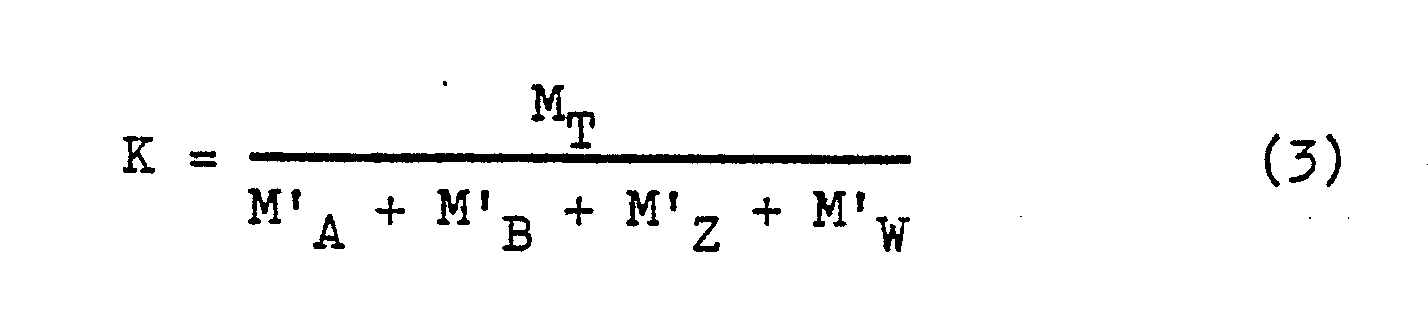
- Zur Bestimmung des Signals MʹB wird angenommen, daß in dem fiktiven oder theoretischen Meßsignal MʹB für das Flächengewicht der nicht mittels Infrarotstrahlung meßbaren zweiten Füllstoffkomponente Calciumcarbonat eine Verfälschung enthalten ist, die verhältnisgleich zu der Verfälschung in dem Meßsignal MʹA für das Flächengewicht der mittels Infrarotstrahlung meßbaren ersten Füllstoffkomponente Kaolin ist. Hieraus folgt die Beziehung

- Nach der bekannten Beziehung

- Unter Beachtung des für die benutzte x-Strahlungsquelle geltenden exponentiellen Absorptionsgesetzes kann man für das von dieser Meßeinrichtung gelieferte Meßsignal ET die folgende Gleichung aufstellen:

- Die Gleichung (6) läßt sich in die nachfolgende Gleichung (7) umformen:

- Unter Bezugnahme auf das Signalflußdiagramm nach FIG. 5 kann man somit mit den dort angegebenen Kalkulationsblöcken 51 bis 56 unter Verwendung der von den Ausgangssignalen der Detektoren 12, 22 und 32 gewonnenen Meßsignale MʹA, MʹZ, MʹW, MT und ET den Korrekturfaktor K zur Korrektur der mittels Infrarotstrahlung gewonnenen Meßsignale MʹA, MʹZ und MʹW ermitteln. Wie man aus FIG. 5 erkennen kann, handelt es sich bei dem zunächst unbekanntten Signal MʹB um ein zum Kalkulationsblock 54 zurückgeführtes Signal, zu dessen Bildung das Ausgangssignal MA des Kalkulationsblocks 54 selbst und das Ausgangssignal MB des Kalkulationsblocks 55 herangezogen werden, wobei dem Kalkulationsblocks 55 seinerseits neben dem Meßsignal ET die Ausgangssignale MA, MW und MZ des Kalkulationsblocks 54 zugeführt werden.
- Die ermittelten Flächengewichte MA und MB für Kaolin und Calciumcarbonat können dann in üblicher Weise mit dem gesamten Flächengewicht MT der Papierbahn verknüpft werden, um beispielsweise den prozentualen Gehalt der einzelnen Füllstoffkomponenten oder den prozentualen Aschegehalt in der Papierbahn anzugeben. Dazu können beispielsweise die folgenden Beziehungen benutzt werden:

Claims (5)
gekennzeichnet durch
dadurch gekennzeichnet,
daß zum Ermitteln eines korrigierten Bezugswertes für die mit den Meßwellenlängen der Infrarotstrahlung gemessenen Strahlungsintensitäten zwei von den Stoffen der Materialbahn im wesentlichen nicht absorbierte Vergleichswellenlängen (λ₁, λ₂) angewendet werden.
dadurch gekennzeichent,
daß die für einen Stoff mit der diesem Stoff zugeordneten Meßwellenlänge der Infrarotstrahlung gemessene Strahlungsintensität bezüglich einer Intensitätsverfälschung korrigiert wird, die bei der diesem einen Stoff zugeordneten Meßwellenlänge durch einen einer anderen Meßwellenlänge zugeordneten Stoff verursacht wird.
dadurch gekennzeichnet,
daß es verwendet wird zur Messung an laufenden dünnen Papierbahn mit Cellulose als Trägerstoff, mit den Füllstoffen Kaolin und/oder Talkum als erste Füllstoffkomponente, mit einem der Füllstoffe Satinweiß, Calciumcarbonat, Titanoxid und Bariumsulfat als zweite Füllstoffkomponente und mit Wasser als weiterem Stoff, wobei für den Fall, daß die erste Füllstoffkomponente aus den beiden Füllstoffen Kaolin und Talkum besteht, für jeden dieser beiden Füllstoffe eine von ihm absorbierte Meßwellenlänge (λA1, λA2) im Infrarotstrahlungsbereich angewendet wird.
gekennzeichnet durch
eine Kombination aus einer Mehrwellenlängen-Infrarotstrahlungsmeßeinrichtung (10 bis 18), einer Beta-Strahlungsmeßeinrichtung (20, 22), einer Röntgenstrahlungsmeßeinrichtung (30, 32) mit einer Fe-55-Strahlungsquelle sowie einem Mikrorechner (50) zur Auswertung der von den drei Meßeinrichtungen gewonnenen Meßsignale.
Applications Claiming Priority (2)
| Application Number | Priority Date | Filing Date | Title |
|---|---|---|---|
| DE3643764 | 1986-12-20 | ||
| DE19863643764 DE3643764A1 (de) | 1986-12-20 | 1986-12-20 | Verfahren zur selektiven fuellstoffmessung an laufenden materialbahnen, insbesondere papierbahnen |
Publications (3)
| Publication Number | Publication Date |
|---|---|
| EP0272645A2 true EP0272645A2 (de) | 1988-06-29 |
| EP0272645A3 EP0272645A3 (en) | 1989-08-09 |
| EP0272645B1 EP0272645B1 (de) | 1992-11-04 |
Family
ID=6316775
Family Applications (1)
| Application Number | Title | Priority Date | Filing Date |
|---|---|---|---|
| EP87118822A Expired - Lifetime EP0272645B1 (de) | 1986-12-20 | 1987-12-18 | Verfahren zur selektiven Füllstoffmessung an laufenden Materialbahnen, insbesondere Papierbahnen |
Country Status (4)
| Country | Link |
|---|---|
| US (1) | US4845730A (de) |
| EP (1) | EP0272645B1 (de) |
| DE (2) | DE3643764A1 (de) |
| ES (1) | ES2036567T3 (de) |
Cited By (6)
| Publication number | Priority date | Publication date | Assignee | Title |
|---|---|---|---|---|
| EP0394128A3 (de) * | 1989-04-20 | 1991-04-17 | Measurex Corporation | Röntgenstrahlfilter und Gerät zur Regelung des Gewichts einer Beschichtung |
| EP0332018A3 (de) * | 1988-03-10 | 1991-07-24 | Abb Process Automation Inc. | Vorrichtung zur Messung des Inhalts an Tonerde |
| EP0628794A1 (de) * | 1993-05-24 | 1994-12-14 | Courtaulds Fibres (Holdings) Limited | Verbesserter Durchflussmesser |
| WO1998036264A1 (en) * | 1997-02-13 | 1998-08-20 | Valmet Automation Inc. | Method for measuring the components of a coating on a moving base material |
| US5914490A (en) * | 1997-02-13 | 1999-06-22 | Valmet Automatic, Inc. | Procedure for measuring the components of a coating on a moving base material |
| WO2010026281A1 (en) | 2008-09-05 | 2010-03-11 | Metso Automation Oy | Determining the amount of starch |
Families Citing this family (19)
| Publication number | Priority date | Publication date | Assignee | Title |
|---|---|---|---|---|
| US4943721A (en) * | 1989-06-22 | 1990-07-24 | Measurex Corporation | Method of obtaining accurate compositional information of multi-layer compositions |
| US5021666A (en) * | 1989-09-14 | 1991-06-04 | Barber-Colman Company | Pass-line independent web measuring method and apparatus |
| JPH03292780A (ja) * | 1990-04-11 | 1991-12-24 | Fujitsu Ltd | 超伝導体の特性評価方法およびこれに用いた超伝導体薄膜の成長方法および装置 |
| US5077478A (en) * | 1990-08-06 | 1991-12-31 | Walford Graham V | Basis weight measuring system |
| EP0483607B1 (de) * | 1990-11-02 | 1997-04-23 | Maschinenfabrik Rieter Ag | Verfahren zum Feststellen einer Eigenschaft eines Faserverbandes |
| US5099118A (en) * | 1991-05-30 | 1992-03-24 | Francis Kenneth E | Dual sensor scanner for measuring weight of paper and related sheet products |
| SE503386C2 (sv) * | 1994-09-30 | 1996-06-03 | Skogsind Tekn Foskningsinst | Förfarande vid bestämning av mängden fyllmedel i papper |
| US6155491A (en) * | 1998-05-29 | 2000-12-05 | Welch Allyn Data Collection, Inc. | Lottery game ticket processing apparatus |
| DE10343517A1 (de) * | 2003-09-19 | 2005-05-04 | Voith Paper Patent Gmbh | Verfahren und Anordnung zur Bestimmung der Wasserdurchlässigkeit einer Bespannung |
| EP1749201A1 (de) * | 2004-05-26 | 2007-02-07 | Picometrix, LLC | Tetrahertz-abbildung in reflexions- und transmissionsmodus zur inspektion von gepäck und personen |
| US8101047B2 (en) * | 2008-09-29 | 2012-01-24 | Honeywell International Inc. | Method of correcting gypsum crystal water effect on infrared moisture measurement |
| FI125721B (en) * | 2012-05-25 | 2016-01-29 | Valmet Automation Oy | Apparatus and method for measuring an object comprising a cellulosic material and at least one dye containing printing ink |
| RU2554593C1 (ru) * | 2014-04-10 | 2015-06-27 | Федеральное государственное автономное образовательное учреждение высшего образования "Национальный исследовательский Томский государственный университет" (ТГУ) | Способ определения глинистых минералов |
| US11879765B2 (en) * | 2018-09-26 | 2024-01-23 | Honeywell International Inc. | Apparatus for composite sheet weight determinations |
| US11333544B2 (en) * | 2019-06-17 | 2022-05-17 | Honeywell International Inc. | Apparatus for simultaneously determining weights of composite sheets |
| US10876882B1 (en) * | 2019-06-26 | 2020-12-29 | Honeywell International Inc. | Online grade selection for weight measurements of composite sheets |
| US11519867B2 (en) * | 2019-12-09 | 2022-12-06 | Honeywell International Inc. | X-ray-based determining of weights for coated substrates |
| FI130159B (en) | 2021-03-31 | 2023-03-22 | Valmet Automation Oy | Measuring device and measuring method for determining the dry matter content of a moving paper or cardboard web |
| EP4575462A1 (de) * | 2023-12-20 | 2025-06-25 | Flooring Technologies Ltd. | Verfahren zur bestimmung von weisspigment in einer papierlage |
Family Cites Families (8)
| Publication number | Priority date | Publication date | Assignee | Title |
|---|---|---|---|---|
| GB1115904A (en) * | 1964-06-11 | 1968-06-06 | Reed Paper Group Ltd | Method of testing cellulosic sheet material |
| US3904876A (en) * | 1974-09-20 | 1975-09-09 | Cons Paper Inc | Determination of paper ash content by X-ray absorption analysis |
| DE2910673C2 (de) * | 1979-03-19 | 1985-08-08 | Paul Lippke Gmbh & Co Kg, 5450 Neuwied | Verfahren zum berührungslosen Messen des absoluten Gehaltes eines Stoffes(Beisubstanz) in einer die Form eines dünnen Filmes aufweisenden Mischung(Hauptsubstanz und Beisubstanz) mehrerer Stoffe, insbesondere zum Messen des absoluten Gehaltes von Wasser in Papier |
| JPS5746146A (en) * | 1980-09-04 | 1982-03-16 | Yokogawa Hokushin Electric Corp | Continuous measurement device for ash contained in paper |
| US4815116A (en) * | 1981-09-17 | 1989-03-21 | Process Automation Business, Inc. | Method and apparatus for x-ray analysis of rapidly moving multicomponent materials |
| FI68321C (fi) * | 1982-12-01 | 1985-08-12 | Valtion Teknillinen | Foerfarande foer att medelst straolning utsaend av ett roentgenroer utan att foerstoera provet maeta foerdelningen av fyll- och/eller belaeggningsmedel i tjockleksriktningen av papper kartong eller liknande och halten av dessa medel anordningar foer tillaempande av foerfarandet samt anvaendningar av foerfarandet och anordningarna |
| US4599514A (en) * | 1982-12-13 | 1986-07-08 | Accuray Corporation | Isotopic radiation method and apparatus for measuring the resinous binder applied to a mat of glass fibers |
| US4577104A (en) * | 1984-01-20 | 1986-03-18 | Accuray Corporation | Measuring the percentage or fractional moisture content of paper having a variable infrared radiation scattering characteristic and containing a variable amount of a broadband infrared radiation absorber |
-
1986
- 1986-12-20 DE DE19863643764 patent/DE3643764A1/de not_active Withdrawn
-
1987
- 1987-12-18 DE DE8787118822T patent/DE3782488D1/de not_active Expired - Fee Related
- 1987-12-18 ES ES198787118822T patent/ES2036567T3/es not_active Expired - Lifetime
- 1987-12-18 US US07/134,716 patent/US4845730A/en not_active Expired - Fee Related
- 1987-12-18 EP EP87118822A patent/EP0272645B1/de not_active Expired - Lifetime
Cited By (9)
| Publication number | Priority date | Publication date | Assignee | Title |
|---|---|---|---|---|
| EP0332018A3 (de) * | 1988-03-10 | 1991-07-24 | Abb Process Automation Inc. | Vorrichtung zur Messung des Inhalts an Tonerde |
| EP0394128A3 (de) * | 1989-04-20 | 1991-04-17 | Measurex Corporation | Röntgenstrahlfilter und Gerät zur Regelung des Gewichts einer Beschichtung |
| EP0628794A1 (de) * | 1993-05-24 | 1994-12-14 | Courtaulds Fibres (Holdings) Limited | Verbesserter Durchflussmesser |
| US5399859A (en) * | 1993-05-24 | 1995-03-21 | Courtaulds Fibres (Holdings) Limited | Flow meter |
| WO1998036264A1 (en) * | 1997-02-13 | 1998-08-20 | Valmet Automation Inc. | Method for measuring the components of a coating on a moving base material |
| US5914490A (en) * | 1997-02-13 | 1999-06-22 | Valmet Automatic, Inc. | Procedure for measuring the components of a coating on a moving base material |
| WO2010026281A1 (en) | 2008-09-05 | 2010-03-11 | Metso Automation Oy | Determining the amount of starch |
| EP2326938A4 (de) * | 2008-09-05 | 2014-06-04 | Metso Automation Oy | Stärkemengenbestimmung |
| US9029776B2 (en) | 2008-09-05 | 2015-05-12 | Metso Automation Oy | Determining the amount of starch |
Also Published As
| Publication number | Publication date |
|---|---|
| ES2036567T3 (es) | 1993-06-01 |
| EP0272645B1 (de) | 1992-11-04 |
| DE3643764A1 (de) | 1988-06-30 |
| DE3782488D1 (de) | 1992-12-10 |
| US4845730A (en) | 1989-07-04 |
| EP0272645A3 (en) | 1989-08-09 |
Similar Documents
| Publication | Publication Date | Title |
|---|---|---|
| EP0272645B1 (de) | Verfahren zur selektiven Füllstoffmessung an laufenden Materialbahnen, insbesondere Papierbahnen | |
| EP0534166B1 (de) | Verfahren und Vorrichtung zur quantitativen Bestimmung optisch aktiver Substanzen | |
| DE2910673C2 (de) | Verfahren zum berührungslosen Messen des absoluten Gehaltes eines Stoffes(Beisubstanz) in einer die Form eines dünnen Filmes aufweisenden Mischung(Hauptsubstanz und Beisubstanz) mehrerer Stoffe, insbesondere zum Messen des absoluten Gehaltes von Wasser in Papier | |
| EP0571017B1 (de) | Filterverfahren für ein Röntgensystem und Anordnung zur Durchführung eines solchen Filterverfahrens | |
| DE3586961T2 (de) | Farbensensor. | |
| DE2613617C2 (de) | Verfahren zur Analyse von Proben, z.B. Urin | |
| DE2054084C3 (de) | Zweistrahl-Infrarotmessung im Reflexions- oder Durchstrahlungsverfahren | |
| DE2014531C3 (de) | Verfahren und Vorrichtung zum Bestimmen von in einem Fluid suspendierten Teilchen | |
| DE69017495T2 (de) | Röntgenstrahlfilter und Gerät zur Regelung des Gewichts einer Beschichtung. | |
| DE3236261C2 (de) | ||
| DE60003695T2 (de) | Röntgenfluoreszenzanalyse von mehrschichtigen proben | |
| DE2552541A1 (de) | Gleichzeitige durchlaessigkeit periodischer spektralkomponenten durch vielfach interferometrische geraete | |
| EP0959346A2 (de) | Simultanes Röntgenfluoreszenz-Spektrometer | |
| DE2844704A1 (de) | Verfahren und vorrichtung fuer eine roentgenanalyse von materialproben | |
| DE2747181A1 (de) | Verfahren und vorrichtung zum bestimmen des volumens und der volumenverteilung von suspendierten kleinen teilchen | |
| DE60029343T2 (de) | Verfahren und vorrichtung zum kontrollieren der herstellungsqualität einer bewegten bahn | |
| DE4330460A1 (de) | Vorrichtung zur Untersuchung von Gewebe mit Licht unterschiedlicher Wellenlängen | |
| DE2432891A1 (de) | Einrichtung zum messen des gewichts pro flaecheneinheit verschiedener bestandteile eines bahnenfoermigen materials | |
| EP1931976A1 (de) | Vorrichtung und verfahren zur schnell- oder online-bestimmung der komponenten eines zwei- oder mehrstoffsystems | |
| EP0217464B1 (de) | Verfahren zur Bestimmung der Fotoschwächung in einem Bereich eines Untersuchungskörpers und Anordnung zur Durchführung des Verfahrens | |
| EP0349839A2 (de) | Mehrkomponenten-Photometer | |
| DE2543011A1 (de) | Einrichtung zur roentgenstrahlen- fluoreszenzanalyse | |
| DE2207298B2 (de) | Verfahren und vorrichtung fuer die atomabsorptionsspektralanalyse | |
| DE4240301A1 (de) | ||
| DE3306464A1 (de) | Verfahren und vorrichtung zum analysieren von festem kohlenstoffhaltigem material mit aschegehalt, insbesondere von kohle |
Legal Events
| Date | Code | Title | Description |
|---|---|---|---|
| PUAI | Public reference made under article 153(3) epc to a published international application that has entered the european phase |
Free format text: ORIGINAL CODE: 0009012 |
|
| AK | Designated contracting states |
Kind code of ref document: A2 Designated state(s): DE ES FR GB IT NL SE |
|
| PUAL | Search report despatched |
Free format text: ORIGINAL CODE: 0009013 |
|
| AK | Designated contracting states |
Kind code of ref document: A3 Designated state(s): DE ES FR GB IT NL SE |
|
| 17P | Request for examination filed |
Effective date: 19891026 |
|
| 17Q | First examination report despatched |
Effective date: 19910327 |
|
| RAP1 | Party data changed (applicant data changed or rights of an application transferred) |
Owner name: AHLSTROM AUTOMATION GMBH & CO. KG |
|
| GRAA | (expected) grant |
Free format text: ORIGINAL CODE: 0009210 |
|
| AK | Designated contracting states |
Kind code of ref document: B1 Designated state(s): DE ES FR GB IT NL SE |
|
| REF | Corresponds to: |
Ref document number: 3782488 Country of ref document: DE Date of ref document: 19921210 |
|
| ITF | It: translation for a ep patent filed | ||
| GBT | Gb: translation of ep patent filed (gb section 77(6)(a)/1977) |
Effective date: 19921214 |
|
| ET | Fr: translation filed | ||
| REG | Reference to a national code |
Ref country code: ES Ref legal event code: FG2A Ref document number: 2036567 Country of ref document: ES Kind code of ref document: T3 |
|
| PLBE | No opposition filed within time limit |
Free format text: ORIGINAL CODE: 0009261 |
|
| STAA | Information on the status of an ep patent application or granted ep patent |
Free format text: STATUS: NO OPPOSITION FILED WITHIN TIME LIMIT |
|
| PGFP | Annual fee paid to national office [announced via postgrant information from national office to epo] |
Ref country code: DE Payment date: 19930929 Year of fee payment: 7 |
|
| 26N | No opposition filed | ||
| PGFP | Annual fee paid to national office [announced via postgrant information from national office to epo] |
Ref country code: SE Payment date: 19931112 Year of fee payment: 7 |
|
| PGFP | Annual fee paid to national office [announced via postgrant information from national office to epo] |
Ref country code: ES Payment date: 19931129 Year of fee payment: 7 |
|
| PGFP | Annual fee paid to national office [announced via postgrant information from national office to epo] |
Ref country code: GB Payment date: 19931210 Year of fee payment: 7 |
|
| PGFP | Annual fee paid to national office [announced via postgrant information from national office to epo] |
Ref country code: FR Payment date: 19931224 Year of fee payment: 7 |
|
| PGFP | Annual fee paid to national office [announced via postgrant information from national office to epo] |
Ref country code: NL Payment date: 19931231 Year of fee payment: 7 |
|
| PG25 | Lapsed in a contracting state [announced via postgrant information from national office to epo] |
Ref country code: GB Effective date: 19941218 |
|
| PG25 | Lapsed in a contracting state [announced via postgrant information from national office to epo] |
Ref country code: SE Effective date: 19941219 |
|
| EAL | Se: european patent in force in sweden |
Ref document number: 87118822.3 |
|
| PG25 | Lapsed in a contracting state [announced via postgrant information from national office to epo] |
Ref country code: NL Effective date: 19950701 |
|
| GBPC | Gb: european patent ceased through non-payment of renewal fee |
Effective date: 19941218 |
|
| PG25 | Lapsed in a contracting state [announced via postgrant information from national office to epo] |
Ref country code: FR Effective date: 19950831 |
|
| NLV4 | Nl: lapsed or anulled due to non-payment of the annual fee |
Effective date: 19950701 |
|
| PG25 | Lapsed in a contracting state [announced via postgrant information from national office to epo] |
Ref country code: DE Effective date: 19950901 |
|
| EUG | Se: european patent has lapsed |
Ref document number: 87118822.3 |
|
| REG | Reference to a national code |
Ref country code: FR Ref legal event code: ST |
|
| PG25 | Lapsed in a contracting state [announced via postgrant information from national office to epo] |
Ref country code: ES Free format text: LAPSE BECAUSE OF NON-PAYMENT OF DUE FEES Effective date: 19951219 |
|
| REG | Reference to a national code |
Ref country code: ES Ref legal event code: FD2A Effective date: 19960113 |
|
| PG25 | Lapsed in a contracting state [announced via postgrant information from national office to epo] |
Ref country code: IT Free format text: LAPSE BECAUSE OF NON-PAYMENT OF DUE FEES;WARNING: LAPSES OF ITALIAN PATENTS WITH EFFECTIVE DATE BEFORE 2007 MAY HAVE OCCURRED AT ANY TIME BEFORE 2007. THE CORRECT EFFECTIVE DATE MAY BE DIFFERENT FROM THE ONE RECORDED. Effective date: 20051218 |