EP0273111A2 - Procédé et installation pour la purification des eaux résiduaires contenant des phosphates et pour l'élimination du phosphore par voie biologique - Google Patents
Procédé et installation pour la purification des eaux résiduaires contenant des phosphates et pour l'élimination du phosphore par voie biologique Download PDFInfo
- Publication number
- EP0273111A2 EP0273111A2 EP87114139A EP87114139A EP0273111A2 EP 0273111 A2 EP0273111 A2 EP 0273111A2 EP 87114139 A EP87114139 A EP 87114139A EP 87114139 A EP87114139 A EP 87114139A EP 0273111 A2 EP0273111 A2 EP 0273111A2
- Authority
- EP
- European Patent Office
- Prior art keywords
- sludge
- tank
- phosphate
- wastewater
- basin
- Prior art date
- Legal status (The legal status is an assumption and is not a legal conclusion. Google has not performed a legal analysis and makes no representation as to the accuracy of the status listed.)
- Granted
Links
Images



Classifications
-
- C—CHEMISTRY; METALLURGY
- C02—TREATMENT OF WATER, WASTE WATER, SEWAGE, OR SLUDGE
- C02F—TREATMENT OF WATER, WASTE WATER, SEWAGE, OR SLUDGE
- C02F3/00—Biological treatment of water, waste water, or sewage
- C02F3/02—Aerobic processes
- C02F3/12—Activated sludge processes
- C02F3/1205—Particular type of activated sludge processes
- C02F3/1215—Combinations of activated sludge treatment with precipitation, flocculation, coagulation and separation of phosphates
-
- C—CHEMISTRY; METALLURGY
- C02—TREATMENT OF WATER, WASTE WATER, SEWAGE, OR SLUDGE
- C02F—TREATMENT OF WATER, WASTE WATER, SEWAGE, OR SLUDGE
- C02F1/00—Treatment of water, waste water, or sewage
- C02F1/38—Treatment of water, waste water, or sewage by centrifugal separation
- C02F1/385—Treatment of water, waste water, or sewage by centrifugal separation by centrifuging suspensions
-
- C—CHEMISTRY; METALLURGY
- C02—TREATMENT OF WATER, WASTE WATER, SEWAGE, OR SLUDGE
- C02F—TREATMENT OF WATER, WASTE WATER, SEWAGE, OR SLUDGE
- C02F1/00—Treatment of water, waste water, or sewage
- C02F1/52—Treatment of water, waste water, or sewage by flocculation or precipitation of suspended impurities
- C02F1/5236—Treatment of water, waste water, or sewage by flocculation or precipitation of suspended impurities using inorganic agents
-
- C—CHEMISTRY; METALLURGY
- C02—TREATMENT OF WATER, WASTE WATER, SEWAGE, OR SLUDGE
- C02F—TREATMENT OF WATER, WASTE WATER, SEWAGE, OR SLUDGE
- C02F3/00—Biological treatment of water, waste water, or sewage
- C02F3/28—Anaerobic digestion processes
-
- C—CHEMISTRY; METALLURGY
- C02—TREATMENT OF WATER, WASTE WATER, SEWAGE, OR SLUDGE
- C02F—TREATMENT OF WATER, WASTE WATER, SEWAGE, OR SLUDGE
- C02F3/00—Biological treatment of water, waste water, or sewage
- C02F3/30—Aerobic and anaerobic processes
- C02F3/308—Biological phosphorus removal
-
- Y—GENERAL TAGGING OF NEW TECHNOLOGICAL DEVELOPMENTS; GENERAL TAGGING OF CROSS-SECTIONAL TECHNOLOGIES SPANNING OVER SEVERAL SECTIONS OF THE IPC; TECHNICAL SUBJECTS COVERED BY FORMER USPC CROSS-REFERENCE ART COLLECTIONS [XRACs] AND DIGESTS
- Y02—TECHNOLOGIES OR APPLICATIONS FOR MITIGATION OR ADAPTATION AGAINST CLIMATE CHANGE
- Y02W—CLIMATE CHANGE MITIGATION TECHNOLOGIES RELATED TO WASTEWATER TREATMENT OR WASTE MANAGEMENT
- Y02W10/00—Technologies for wastewater treatment
- Y02W10/10—Biological treatment of water, waste water, or sewage
-
- Y—GENERAL TAGGING OF NEW TECHNOLOGICAL DEVELOPMENTS; GENERAL TAGGING OF CROSS-SECTIONAL TECHNOLOGIES SPANNING OVER SEVERAL SECTIONS OF THE IPC; TECHNICAL SUBJECTS COVERED BY FORMER USPC CROSS-REFERENCE ART COLLECTIONS [XRACs] AND DIGESTS
- Y10—TECHNICAL SUBJECTS COVERED BY FORMER USPC
- Y10S—TECHNICAL SUBJECTS COVERED BY FORMER USPC CROSS-REFERENCE ART COLLECTIONS [XRACs] AND DIGESTS
- Y10S210/00—Liquid purification or separation
- Y10S210/902—Materials removed
- Y10S210/906—Phosphorus containing
Definitions
- the invention relates to a process for the purification of phosphate-containing wastewater with biological phosphorus elimination, in which the settable and / or non-settable wastewater constituents are treated in successive treatment tanks first under anaerobic and then under aerobic conditions with activated sludge and in which an activated return sludge from the secondary settling tank into the under anaerobic conditions working stage is returned, as well as a plant for performing such a method.
- phosphorus compounds can only be removed from wastewater if they can be separated from the wastewater in a solid state due to chemical or biochemical reactions.
- the necessary conversion of phosphates from the water into the solid state can only be carried out by incorporation into the biomass or by chemical precipitation.
- the phosphorus contained in the waste water is dependent on certain microorganisms depending on the conditions, under which wastewater and activated sludge are in contact, released or bound.
- the phosphorus is almost exclusively in the form of phosphate, to a large extent as dissolved phosphate and to a much lesser extent as bound, particulate phosphate.
- the activated sludge is subjected to a constant change of anaerobic conditions (absence of dissolved oxygen, nitrite and nitrate) and aerobic conditions (presence of dissolved oxygen) in a biological sewage treatment plant operating according to the activated sludge process, it is shown that the activated sludge releases phosphate under anaerobic conditions and absorbs phosphate under aerobic conditions.
- the release of phosphate in the anaerobic phase is opposed to the absorption of phosphate in the aerobic phase. It has been shown in all the investigations carried out in this field to date that the degree of phosphate uptake under aerobic conditions is directly related to the degree of previous phosphate redissolution in the anaerobic phase.
- the specific excess sludge production is determined by the sludge load.
- the phosphorus content of the excess sludge can be increased on the basis of the above-mentioned relationships, namely by intensifying the phosphorus redissolution and the resulting intensified phosphorus absorption.
- UCT universality of cape town
- the sludge is then fed into the upstream, non-aerated mixing basin, which is to serve for the phosphorus redissolution.
- the sludge ver because times are of the order of 1.5 hours.
- the aim of the Phostrip method is to record the proportion of phosphorus load that cannot be eliminated from the wastewater by means of purely biological effects by chemical partial wastewater precipitation.
- the specific peculiarities of precipitation with lime (Ca (OH) 2) mean that lime can be used much more economically in the partial wastewater stream precipitation than in the precipitation from the entire wastewater stream.
- the application of the Phostrip process is restricted to non-nitrifying, ie highly loaded, activation systems, since nitrite or nitrate with the return mud can enter the stripper.
- Appropriate countermeasures are conceivable and have already been implemented.
- the last-mentioned process was modified several times, on the one hand with the aim of "accelerating the phosphorus redissolution in the stripper” (feeding of pre-clarified wastewater), but above all with the aim “extensive transfer of phosphate into the stripper supernatant” (feeding of pre-clarified wastewater, purified wastewater or chemically treated wastewater, recycling of stripper sludge).
- the present invention is therefore based on the object of a method according to the preamble of patent claim 1 or an installation for carrying out such a method To be designed so that the biological phosphorus removal is improved with a relatively low or at least reduced plant expenditure.
- the return sludge at the head of the basin can be brought into contact with raw waste water.
- the pre-clarification which has mostly been provided up to now, can be dispensed with, and the pre-clarification tank, which is available in most cases in a sewage treatment plant, can be converted into an anaerobic phosphate redissolving tank in which the first stage of the process according to the invention is carried out.
- raw sewage is understood to mean municipal, commercial or industrial wastewater which has possibly been pretreated in a computing stage, sand and / or fat trapping stage, but has not been subjected to preliminary treatment and thus still has a high proportion of settable substances.
- pre-sewage sludge which is exposed to anaerobic conditions for some time, changes into the so-called acid fermentation.
- some of the microorganisms contained in the pre-sewage sludge break down fats, sugar and other degradable substances into lower organic fatty acids, especially acetate. Since organic acids are formed as degradation products, this process is also known as acidogenesis. The breakdown products are excreted. These substances are only subjected to further degradation if the so-called methane fermentation begins due to a very long stay (several days to weeks).
- the organic fatty acids are taken up by organisms in the return sludge and, in correlation to this, a release of phosphate can be determined. Due to the optimal conditions created, the phosphate release is extremely intensive, which, taking into account the introductory explanations, leads to the fact that the phosphate intake in the aeration tank is also optimal.
- the applicability of the process is not limited to highly stressed plants without nitrification.
- the reductive potential in the anaerobic settling tank is so great that the return sludge denitrification can take place without the phosphate redissolving capacity being significantly impaired.
- the nitrate introduced with the return sludge is immediately distributed in all areas of the tank and the phosphate solution is prevented everywhere, the nitrate originating from the return sludge reaches the settling tank of the process according to the invention when it is discharged together with the raw sewage only into the top zone of the basin, where it is quickly reduced. This prevents the phosphate redissolution from being inhibited in the lower zones.
- Stable phosphorus elimination is thus also guaranteed in sewage treatment plants that are in the critical load range and only nitrify temporarily.
- the process according to the invention can also be easily combined with extensive nitrogen elimination, be it by means of upstream denitrification, simultaneous denitrification or alternating operation (biodenitro process).
- a combination is possible with any process in which a mobile activated sludge exists that is not fixed on the carrier material.
- the thick sludge drawn off from the anaerobically operated sedimentation tank can also be subjected to an additional anaerobic dwell time. This can be done in another sedimentation basin or a mixing basin. Such a measure should be necessary above all if the thickening of the mixed sludge in the anaerobic settling basin is not so extensive due to the high hydraulic load that a sufficient anaerobic residence time of the sludge is achieved.
- the anaerobic sedimentation tank is advantageously preceded by a pre-settling tank in which the settable wastewater components, i.e. pre-sewage sludge, and the non-settable wastewater components, i.e. pre-treated wastewater, are separated.
- This variant of the process places a lower hydraulic load on the anaerobically operated sedimentation tank, which results in better sludge thickening and thus a longer anaerobic sludge residence time.
- a disadvantage is that the dissolved wastewater ingredients are not used for intensification the phosphorus redissolution can be effective in the anaerobic stage since the pre-treated wastewater is fed directly into the aerobic treatment stage.
- the increased anaerobic dwell time of the sludge results in a further phosphorus redissolution and thus also a further phosphorus absorption in the aeration tank.
- the phosphorus elimination performance is improved.
- the pre-sewage sludge could also be subjected to a treatment that is suitable for separating the coarse solids from the fine ones.
- a centrifuge can be used.
- the centrifuged sludge which contains the coarse solids and accumulates in a strongly thickened form, can be fed directly to the sludge treatment.
- the centrate with a high proportion of fine solids, is fed into the anaerobic settling tank.
- Another process variant of the process according to the invention provides that only the non-settable wastewater components are fed to the anaerobically operated settling tank, while the settable wastewater components are withdrawn.
- the separable wastewater constituents, ie from primary sewage sludge, are separated from non-settable wastewater constituents, ie from pre-treated wastewater, in turn in a preliminary wastewater treatment tank.
- the aspect of the digestion of particulate substrate does not come into play, but the aspect of an increased anaerobic sludge residence time in comparison with totally mixed systems.
- This process procedure avoids possible negative effects of foregoing the preliminary clarification stage, such as increased oxygen demand, deposits, blockages etc.
- the process variants described so far can reach their performance limits.
- the sludge drawn off from the aerobically operated sedimentation tank is dissolved in phosphate-rich water and low-phosphate sludge, e.g. separated by means of a centrifuge.
- the phosphate-rich water is subjected to lime precipitation at a pH of approx. 9, during which the precipitated sludge is drawn off and the excess water is fed to the treatment tank, which is kept under aerobic conditions.
- the low-phosphate sludge is fed directly to the treatment tank, which is kept under aerobic conditions.
- the small amount of waste water flow and the high dissolved phosphate concentrations provide ideal conditions for phosphate precipitation.
- the calcium phosphate precipitation sludge drawn off can be recycled.
- the thick sludge drawn off from the anaerobically operated sedimentation tank is subjected directly to lime precipitation.
- the precipitated sludge which is formed at a pH of approx. 9, reaches the aerobically operated treatment tank together with the organic sludge and is partially dissolved again due to the pH decrease.
- a more or less large proportion of the precipitation sludge will remain in solid form due to the so-called "aging" of the calcium phosphate crystals and will leave the system with the excess sludge.
- a chemically bound portion is added to the biologically bound phosphate, which increases the efficiency of elimination.
- a plant according to the invention comprises three interconnected plant parts which correspond to three process stages. These are a sedimentation basin 1, an aeration basin 2 and a secondary clarification basin 3.
- a raw waste water is fed to the sedimentation basin 1 via a line 4, to which return sludge from the sedimentation basin 3 is mixed at the head of the sedimentation basin 1 via a line 9.
- the feed line 4 opens into the area of the liquid surface in the settling basin, so that the settable solid particles can sink unhindered and in the area where there is still a relatively fresh mixture of raw sewage and return sludge, denitrification can take place, which prevents nitrate components get into the deposited thick sludge.
- the overflow of the settling tank 1 is fed directly or, as will be described later, via further intermediate anaerobic stages, to an aeration tank 2, to which thick sludge is also fed via a line 6 from the bottom of the settling tank.
- the aeration tank 2 is any known suitable aeration tank which can be aerated from the surface (for example with aerators 13) or by means of other devices for aerating or gassing with air or pure oxygen which are known per se.
- the activated sludge tank 2 is connected in a conventional manner via a line 7 to the secondary clarification tank 3, from which the clarified waste water flows out in a conventional manner via a line 8, while a biological sludge is drawn off from the bottom and returned to a via a line 9 Return sludge and an excess sludge drawn off via a line 10 is divided.
- the excess sludge can also be drawn off directly from the aeration tank 2, which could have the advantage that the phosphorus content of the excess sludge cannot be reduced by a phosphorus redissolution used in the secondary settling tank. Extracting excess sludge from the sedimentation basin is less preferred, but may also be useful in individual cases.
- the settling tank 1 ensures that sludge dwell times are obtained which are above the hydraulic dwell times lie, so that an intensive phosphate redissolution is obtained, which is a prerequisite for effective phosphate absorption in the subsequent activation tank.
- the settling tank 1 can be a conventional pre-settling tank available in most sewage treatment plants, which can be modified accordingly, i.e. by adapting the various inlets and outlets, was converted into an anaerobic sedimentation tank for the present process.
- the advantages of such a method according to the invention have already been essentially described at the beginning.
- FIGS. 2-6 show preferred embodiments of the invention, the same reference symbols having the same meaning as in FIG. 1.
- FIG. 2 shows a system according to the invention which, in addition to the basic elements essential to the invention, contains a mixing basin for extending the anaerobic residence time.
- the discharge line 6 for thick sludge from the bottom of the anaerobic settling basin 1 is connected to a mixing basin 15a, which is also operated under anaerobic conditions.
- the sludge treated in this way is finally fed to the aerated activation tank 2.
- An additional anaerobic residence time is necessary if the thickening of the mixed sludge in the anaerobic sedimentation basin 1 is not extensive enough due to the pre-hydraulic load.
- FIG. 3 Another possibility of extending the anaerobic dwell time is shown in FIG. 3, where the mixing basin 15a of FIG. 2 is replaced by a second anaerobic operated settling basin 15b.
- FIG. 4 shows a plant according to the invention which is fed with primary sewage sludge.
- a preclearment tank 16 is connected upstream of the anaerobic settling tank 1, to which raw sewage is fed via line 19.
- the primary clarifier 16 the raw waste water is separated into primary sewage sludge and primary clarified waste water.
- the primary sewage sludge is fed via line 17 to the anaerobically operated sedimentation tank 1 together with the return sludge supplied via line 9.
- the pre-clarified wastewater is fed directly to the aerated activation tank 2 via line 18.
- this procedure offers the advantage that the anaerobically operated sedimentation tank 1 is subjected to a lower hydraulic load.
- FIGS 5 and 6 show the operation of the plant according to the invention with partial wastewater precipitation.
- the thick sludge drawn off from the anaerobically operated sedimentation tank 1 via line 6 is fed to a centrifuge 20, where it is separated into phosphate-rich water and low-phosphate sludge.
- the phosphate-rich water is fed via line 21 into a mixing basin 22 to which lime is added.
- the precipitated sludge is drawn off, while the excess water is introduced via line 24 into the aerated aeration basin 2.
- the low-phosphate sludge is fed directly into the activation tank 2 via line 25.
- this method variant according to the invention enables elimination of high phosphate loads with the least use of lime.
- FIG. 6 Another possibility of partial flow precipitation is shown in FIG. 6.
- the thick sludge drawn off from sedimentation tank 1 via line 6 is directly subjected to lime precipitation in the mixing tank 22.
- the resulting sludge together with the organic sludge enters the activation tank 2 via line 26.
- a large part of the precipitation sludge remains in the activation tank 2 in solid form and leaves the plant with the excess sludge via line 10.
- This embodiment describes a three-month test operation on a semi-industrial scale.
- the aeration tank 2 of the pilot plant was operated with pure oxygen gassing.
- the activation tank of the test facility was a triple cascade with a total content of 1.7 m3 in a closed design with surface aerators 13 and an oxygen supply into the gas space of the first cascade tank 12a.
- the gas spaces of the individual cascade chambers 12a, b, c are connected to one another by means of hose lines.
- the exhaust gas which mainly consists of CO2 and residual oxygen, leaves the activation tank via the third cascade chamber 12c.
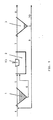
- the activation was performed with a upstream denitrification (cf. FIG. 7) operated by switching a mixed denitrification chamber 11 upstream of the activation tank 2, to which a partial flow of the outflow from the activation tank 2 was fed together with the overflow and the thick sludge from the settling tank 1.
- a upstream denitrification cf. FIG. 7 operated by switching a mixed denitrification chamber 11 upstream of the activation tank 2, to which a partial flow of the outflow from the activation tank 2 was fed together with the overflow and the thick sludge from the settling tank 1.
- Total phosphorus, BOD5, COD and the solids in the inlet and outlet of the test facility were determined from 24-hour mixed samples.
- the 24-hour mixed sampling was maintained over the entire test period.
- the determination of total phosphorus was basically carried out from every daily mixed sample.
- the phosphorus content of the excess sludge was also continuously recorded in order to be able to carry out the most accurate phosphorus balancing possible.
- the orthophosphate concentration was only determined from random samples.
- BOD5, COD, filterable substances and all nitrogen parameters were determined from daily mixed samples, but not daily.
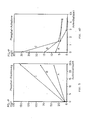
- Table 2 shows, the entire documented examination period is divided into two test phases, each lasting 28 days (phases 1b and 2 corresponding to FIGS. 7 and 8). As can be seen in Table 2, a long-term mean value of less than 1 mg / l total phosphorus was observed in the test facility. The resulting elimination performance was almost 90%.
- the COD and BSB5 elimination is also very good.
- the degradation performance is not affected in any way by the long anaerobic residence time of the return sludge in the upstream sedimentation basin (approx. 24 hours).
- the mentioned sludge residence time results from the amount of sludge drawn off and the volume of the sludge zone in the sedimentation basin (approx. 1.5 m3).
- Table 3 contains mean values of random samples of the process and the activated sludge of the 3rd cascade chamber 12c. Accordingly, only 0.15 mg / l PO4 phosphorus can be detected in the filtered sample from the 3rd cascade chamber. The activated sludge practically completely absorbs orthophosphate. In the outlet 8, on the other hand, 0.25 mg / l PO4 phosphorus can be detected, the slight increase compared to the aeration tank outlet 7 being due to the beginning of a phosphate redissolution in the secondary clarifier 3.
- the picture shows that the total phosphorus content of the drain is made up of roughly equal parts of orthophosphate phosphorus, filterable phosphorus compounds and non-filterable phosphorus compounds (without orthophosphate). Of these components, the latter is the most difficult to grasp, the others could be further reduced by further improved process engineering (e.g. wastewater filtration or flocculation filtration).
- a sewage sludge from conventional sewage treatment plants has a phosphorus content of 1 to 2% by weight. This correlates the usual phosphorus removal rates of approx. 20%.
- An increased phosphorus elimination must be offset by an increased phosphorus content of the excess sludge in the case of the test plant.
- the determination of the phosphorus content of the excess sludge gave an average value of 4.0% by weight of phosphorus, based on the dry matter, or 5.5% by weight of phosphorus, based on the organic dry matter.
- the three-month test operation of the pilot plant on a semi-industrial scale thus shows that after a one-month running-in phase, a total phosphorus elimination of over 80% could be stably maintained. A total phosphorus elimination of almost 90% was determined as the long-term mean, with drain concentrations of 0.93 mg total phosphorus / l and 0.23 mg PO4-phosphorus / l.
- the method according to the invention can be put into practice without a large investment.
- the process elements of pre-settling tanks, aeration tanks and post-treatment tanks can be restructured with little effort so that extensive biological phosphorus elimination is achieved by the process according to the invention.
Landscapes
- Life Sciences & Earth Sciences (AREA)
- Chemical & Material Sciences (AREA)
- Engineering & Computer Science (AREA)
- Hydrology & Water Resources (AREA)
- Environmental & Geological Engineering (AREA)
- Water Supply & Treatment (AREA)
- Organic Chemistry (AREA)
- Microbiology (AREA)
- Biodiversity & Conservation Biology (AREA)
- Analytical Chemistry (AREA)
- Molecular Biology (AREA)
- Health & Medical Sciences (AREA)
- Inorganic Chemistry (AREA)
- Mechanical Engineering (AREA)
- Purification Treatments By Anaerobic Or Anaerobic And Aerobic Bacteria Or Animals (AREA)
- Activated Sludge Processes (AREA)
- Materials For Medical Uses (AREA)
- Micro-Organisms Or Cultivation Processes Thereof (AREA)
- Removal Of Specific Substances (AREA)
- Solid-Sorbent Or Filter-Aiding Compositions (AREA)
Priority Applications (1)
| Application Number | Priority Date | Filing Date | Title |
|---|---|---|---|
| AT87114139T ATE52749T1 (de) | 1986-12-30 | 1987-09-28 | Verfahren zur reinigung phosphathaltiger abwaesser und biologischer phosphorelimination sowie anlage zur durchfuehrung dieses verfahren. |
Applications Claiming Priority (2)
| Application Number | Priority Date | Filing Date | Title |
|---|---|---|---|
| DE3644770 | 1986-12-30 | ||
| DE3644770A DE3644770C1 (de) | 1986-12-30 | 1986-12-30 | Verfahren zur Reinigung phosphathaltiger Abwaesser mittels biologischer Phosphorelimination sowie Anlage zur Durchfuehrung dieses Verfahrens |
Publications (3)
| Publication Number | Publication Date |
|---|---|
| EP0273111A2 true EP0273111A2 (fr) | 1988-07-06 |
| EP0273111A3 EP0273111A3 (en) | 1988-08-31 |
| EP0273111B1 EP0273111B1 (fr) | 1990-05-16 |
Family
ID=6317409
Family Applications (1)
| Application Number | Title | Priority Date | Filing Date |
|---|---|---|---|
| EP19870114139 Expired - Lifetime EP0273111B1 (fr) | 1986-12-30 | 1987-09-28 | Procédé et installation pour la purification des eaux résiduaires contenant des phosphates et pour l'élimination du phosphore par voie biologique |
Country Status (8)
| Country | Link |
|---|---|
| US (1) | US4885093A (fr) |
| EP (1) | EP0273111B1 (fr) |
| JP (1) | JPH0763710B2 (fr) |
| CN (1) | CN1014142B (fr) |
| AT (1) | ATE52749T1 (fr) |
| CA (1) | CA1324844C (fr) |
| DE (2) | DE3644770C1 (fr) |
| ES (1) | ES2015027B3 (fr) |
Cited By (3)
| Publication number | Priority date | Publication date | Assignee | Title |
|---|---|---|---|---|
| EP0474702A4 (en) * | 1989-06-01 | 1992-05-20 | Commonwealth Scientific And Industrial Research Organization | Wastewater treatment |
| DE9215208U1 (de) * | 1992-11-09 | 1992-12-24 | Koch, Reinhard, O-8402 Gröditz | Einrichtung zur biologischen und chemisch-adsorptiven Abwasserbehandlung |
| US5376275A (en) * | 1989-06-01 | 1994-12-27 | Commonwealth Scientific And Industrial Research Organisation | Wastewater treatment |
Families Citing this family (12)
| Publication number | Priority date | Publication date | Assignee | Title |
|---|---|---|---|---|
| US5252214A (en) * | 1987-02-27 | 1993-10-12 | Gunter Lorenz | Biological dephosphatization and (de)nitrification |
| DE3826147A1 (de) * | 1988-08-01 | 1990-02-08 | Metallgesellschaft Ag | Verfahren zum behandeln von abwasser |
| DE3908988A1 (de) * | 1989-03-18 | 1990-09-20 | Steinmann & Ittig Gmbh & Co Kg | Verfahren und vorrichtung zum aufbereiten eines abwassers nach dem belebungsverfahren mit biologischer phosphorelimination |
| US5356537A (en) * | 1992-05-28 | 1994-10-18 | No Sludge, Inc. | Method and apparatus for treating waste water |
| WO1994011313A1 (fr) * | 1992-11-06 | 1994-05-26 | THE MINISTER FOR PUBLIC WORKS for and on behalf ofTHE STATE OF NEW SOUTH WALES | Elimination biologique du phosphore des eaux usees |
| AU701363B2 (en) * | 1993-12-02 | 1999-01-28 | Commonwealth Scientific And Industrial Research Organisation | Removal of nutrients from effluents |
| AT400949B (de) * | 1994-06-17 | 1996-04-25 | Haushofer Christa | Verfahren zum biologischen reinigen von abwasser und vorrichtung zu seiner durchführung |
| AT188U1 (de) * | 1994-06-17 | 1995-04-25 | Haushofer Christa Haushofer Ch | Verfahren zum biologischen reinigen von abwasser und vorrichtung zu seiner durchfuehrung |
| PL316595A1 (en) * | 1996-10-17 | 1998-04-27 | Rejonowe Przed Wodociagow I Ka | Method of biologically dephosphating waste waters |
| DE102009011490A1 (de) | 2008-12-11 | 2010-06-17 | Envicon Klärtechnik Verwaltungsgesellschaft mbH | Verfahren zur belastungsabhängigen Regelung der Nitrifikation und Denitrifikation in Abwasserbehandlungsanlagen mit vorgeschalteter Denitrifikation |
| JP4995215B2 (ja) * | 2009-03-23 | 2012-08-08 | 前澤工業株式会社 | 汚水処理設備 |
| CN101597093B (zh) * | 2009-07-06 | 2011-05-11 | 武汉理工大学 | 一种光催化还原去除污水中磷酸盐的方法 |
Family Cites Families (11)
| Publication number | Priority date | Publication date | Assignee | Title |
|---|---|---|---|---|
| US32429A (en) * | 1861-05-28 | Grain-separator | ||
| DE505154C (de) * | 1926-09-25 | 1930-08-14 | Abwasser Reinigungs Ges M B H | Vorrichtung zum Reinigen von Abwaessern mit belebtem Schlamm und zur Ausfaulung dieses Schlammes in einem einzigen Behaelter |
| DE1207294B (de) * | 1961-06-09 | 1965-12-16 | E H Franz Schmitz Lenders Dipl | Vorrichtung zum Reinigen von Abwasser mittels Belebtschlamms |
| US3654147A (en) * | 1971-03-16 | 1972-04-04 | Biospherics Inc | Nitrate removal from sewage |
| SU784754A3 (ru) * | 1975-06-04 | 1980-11-30 | Юнион Карбид Корпорейшн (Фирма) | Способ биохимической очистки сточных вод, содержащих фосфор |
| USRE32429E (en) | 1976-04-12 | 1987-06-02 | Air Products And Chemicals, Inc. | Production of non-bulking activated sludge |
| US4271026A (en) * | 1979-10-09 | 1981-06-02 | Air Products And Chemicals, Inc. | Control of activated sludge wastewater treating process for enhanced phosphorous removal |
| JPS5839599B2 (ja) * | 1981-04-13 | 1983-08-31 | 荏原インフイルコ株式会社 | 有機性廃液からのリン除去法 |
| US4488968A (en) * | 1983-03-07 | 1984-12-18 | Air Products And Chemicals, Inc. | Removal of phosphates and BOD from wastewaters |
| US4650585A (en) * | 1984-04-17 | 1987-03-17 | Air Products And Chemicals, Inc. | Method for minimizing diurnal swing in phosphorus content of effluent streams from wastewater treating plants |
| JPS61174996A (ja) * | 1985-01-28 | 1986-08-06 | Mitsubishi Kakoki Kaisha Ltd | 廃水処理方法 |
-
1986
- 1986-12-30 DE DE3644770A patent/DE3644770C1/de not_active Expired
-
1987
- 1987-09-28 AT AT87114139T patent/ATE52749T1/de not_active IP Right Cessation
- 1987-09-28 EP EP19870114139 patent/EP0273111B1/fr not_active Expired - Lifetime
- 1987-09-28 DE DE8787114139T patent/DE3762731D1/de not_active Expired - Fee Related
- 1987-09-28 ES ES87114139T patent/ES2015027B3/es not_active Expired - Lifetime
- 1987-12-29 JP JP33669287A patent/JPH0763710B2/ja not_active Expired - Lifetime
- 1987-12-29 CN CN87105996A patent/CN1014142B/zh not_active Expired
- 1987-12-30 CA CA000555673A patent/CA1324844C/fr not_active Expired - Fee Related
- 1987-12-30 US US07/139,535 patent/US4885093A/en not_active Expired - Fee Related
Cited By (3)
| Publication number | Priority date | Publication date | Assignee | Title |
|---|---|---|---|---|
| EP0474702A4 (en) * | 1989-06-01 | 1992-05-20 | Commonwealth Scientific And Industrial Research Organization | Wastewater treatment |
| US5376275A (en) * | 1989-06-01 | 1994-12-27 | Commonwealth Scientific And Industrial Research Organisation | Wastewater treatment |
| DE9215208U1 (de) * | 1992-11-09 | 1992-12-24 | Koch, Reinhard, O-8402 Gröditz | Einrichtung zur biologischen und chemisch-adsorptiven Abwasserbehandlung |
Also Published As
| Publication number | Publication date |
|---|---|
| JPH0763710B2 (ja) | 1995-07-12 |
| CN1014142B (zh) | 1991-10-02 |
| ES2015027B3 (es) | 1990-08-01 |
| US4885093A (en) | 1989-12-05 |
| JPS63229199A (ja) | 1988-09-26 |
| EP0273111A3 (en) | 1988-08-31 |
| CA1324844C (fr) | 1993-11-30 |
| ATE52749T1 (de) | 1990-06-15 |
| DE3762731D1 (de) | 1990-06-21 |
| CN87105996A (zh) | 1988-09-28 |
| EP0273111B1 (fr) | 1990-05-16 |
| DE3644770C1 (de) | 1988-06-01 |
Similar Documents
| Publication | Publication Date | Title |
|---|---|---|
| DE68904598T2 (de) | Abwasserbehandlungsverfahren. | |
| DE69221993T2 (de) | Verfahren für Abwasserbehandlung | |
| DE69004507T2 (de) | Verbesserte Beseitigung von Phosphaten in der Abwasserbehandlung mit Belebtschlammverfahren. | |
| EP0273111B1 (fr) | Procédé et installation pour la purification des eaux résiduaires contenant des phosphates et pour l'élimination du phosphore par voie biologique | |
| DE2233801B2 (de) | Verfahren zur biologischen Reinigung von Abwasser mit zwei von dem Abwasser nacheinander durchflossenen Stufen | |
| DE3427310A1 (de) | Verfahren zur biologischen reinigung von abwasser | |
| DE3241348C2 (fr) | ||
| DE69513205T2 (de) | Methode und einrichtung für die reinigung von abwasser nach der belebtschlamm-methode | |
| DE3833039C2 (fr) | ||
| EP1531123B1 (fr) | Méthode et installation pour traiter des eaux de déchet de bateaux | |
| EP0014394B1 (fr) | Procédé de purification d'eau résiduaire à teneur élevée en composés nitrogénés | |
| DE3833185C2 (fr) | ||
| AT395845B (de) | Verfahren zur reinigung von organische substanzen enthaltenden abwaessern | |
| DE2616273C2 (de) | Verfahren zur biologischen Reinigung von Abwasser | |
| EP0834474B1 (fr) | Procédé de purification en discontinu et installation pour la mise en oeuvre de ce procédé | |
| DE2924449C2 (de) | Verfahren zum Reinigen von Abwasser nach dem Belebtschlammverfahren | |
| DE3136409A1 (de) | Verfahren und vorrichtung zur biologischen reinigung von abwasser | |
| EP0527123B1 (fr) | Procédé de traitement d'eaux usées en boue activée | |
| DE3215404A1 (de) | Verfahren und vorrichtung zur biologischen reinigung von abwasser | |
| DE19640761C1 (de) | Verfahren zur kontinuierlichen Abwasserreinigung und Anlage zur Durchführung dieses Verfahrens | |
| DE69614286T2 (de) | Verfahren und Anlage zur Behandlung von fettigen Abfällen | |
| DE69200086T2 (de) | Verfahren zum Entfernen von organischem Kohlenstoff, Stickstoff und Phosphor. | |
| DE19802957C1 (de) | Verfahren zur diskontinuierlichen Abwasserreinigung | |
| DE19547364A1 (de) | Verfahren und Vorrichtung zur erhöhten biologischen Phosphatelimination bei gleichzeitiger biologischer Stickstoffelimination | |
| DE2627781C2 (de) | Biologisch-chemisches Verfahren zur Abwasserreinigung mit Dephosphatierung |
Legal Events
| Date | Code | Title | Description |
|---|---|---|---|
| PUAI | Public reference made under article 153(3) epc to a published international application that has entered the european phase |
Free format text: ORIGINAL CODE: 0009012 |
|
| AK | Designated contracting states |
Kind code of ref document: A2 Designated state(s): AT BE CH DE ES FR GB GR IT LI NL SE |
|
| PUAL | Search report despatched |
Free format text: ORIGINAL CODE: 0009013 |
|
| AK | Designated contracting states |
Kind code of ref document: A3 Designated state(s): AT BE CH DE ES FR GB GR IT LI NL SE |
|
| 17P | Request for examination filed |
Effective date: 19880716 |
|
| 17Q | First examination report despatched |
Effective date: 19890919 |
|
| GRAA | (expected) grant |
Free format text: ORIGINAL CODE: 0009210 |
|
| AK | Designated contracting states |
Kind code of ref document: B1 Designated state(s): AT BE CH DE ES FR GB GR IT LI NL SE |
|
| PG25 | Lapsed in a contracting state [announced via postgrant information from national office to epo] |
Ref country code: GR Free format text: LAPSE BECAUSE OF FAILURE TO SUBMIT A TRANSLATION OF THE DESCRIPTION OR TO PAY THE FEE WITHIN THE PRESCRIBED TIME-LIMIT Effective date: 19900516 |
|
| REF | Corresponds to: |
Ref document number: 52749 Country of ref document: AT Date of ref document: 19900615 Kind code of ref document: T |
|
| REF | Corresponds to: |
Ref document number: 3762731 Country of ref document: DE Date of ref document: 19900621 |
|
| GBT | Gb: translation of ep patent filed (gb section 77(6)(a)/1977) | ||
| ET | Fr: translation filed | ||
| ITF | It: translation for a ep patent filed | ||
| PGFP | Annual fee paid to national office [announced via postgrant information from national office to epo] |
Ref country code: BE Payment date: 19901108 Year of fee payment: 4 |
|
| PLBE | No opposition filed within time limit |
Free format text: ORIGINAL CODE: 0009261 |
|
| STAA | Information on the status of an ep patent application or granted ep patent |
Free format text: STATUS: NO OPPOSITION FILED WITHIN TIME LIMIT |
|
| 26N | No opposition filed | ||
| PG25 | Lapsed in a contracting state [announced via postgrant information from national office to epo] |
Ref country code: GB Effective date: 19910928 |
|
| ITTA | It: last paid annual fee | ||
| PG25 | Lapsed in a contracting state [announced via postgrant information from national office to epo] |
Ref country code: BE Effective date: 19910930 |
|
| BERE | Be: lapsed |
Owner name: LINDE A.G. Effective date: 19910930 |
|
| GBPC | Gb: european patent ceased through non-payment of renewal fee | ||
| EAL | Se: european patent in force in sweden |
Ref document number: 87114139.6 |
|
| PGFP | Annual fee paid to national office [announced via postgrant information from national office to epo] |
Ref country code: DE Payment date: 19950929 Year of fee payment: 9 |
|
| PGFP | Annual fee paid to national office [announced via postgrant information from national office to epo] |
Ref country code: FR Payment date: 19960910 Year of fee payment: 10 |
|
| PGFP | Annual fee paid to national office [announced via postgrant information from national office to epo] |
Ref country code: AT Payment date: 19960912 Year of fee payment: 10 |
|
| PGFP | Annual fee paid to national office [announced via postgrant information from national office to epo] |
Ref country code: SE Payment date: 19960917 Year of fee payment: 10 |
|
| PGFP | Annual fee paid to national office [announced via postgrant information from national office to epo] |
Ref country code: ES Payment date: 19960927 Year of fee payment: 10 |
|
| PGFP | Annual fee paid to national office [announced via postgrant information from national office to epo] |
Ref country code: NL Payment date: 19960930 Year of fee payment: 10 |
|
| PGFP | Annual fee paid to national office [announced via postgrant information from national office to epo] |
Ref country code: CH Payment date: 19961004 Year of fee payment: 10 |
|
| PG25 | Lapsed in a contracting state [announced via postgrant information from national office to epo] |
Ref country code: DE Effective date: 19970603 |
|
| PG25 | Lapsed in a contracting state [announced via postgrant information from national office to epo] |
Ref country code: AT Free format text: LAPSE BECAUSE OF NON-PAYMENT OF DUE FEES Effective date: 19970928 |
|
| PG25 | Lapsed in a contracting state [announced via postgrant information from national office to epo] |
Ref country code: SE Free format text: LAPSE BECAUSE OF NON-PAYMENT OF DUE FEES Effective date: 19970929 Ref country code: ES Free format text: THE PATENT HAS BEEN ANNULLED BY A DECISION OF A NATIONAL AUTHORITY Effective date: 19970929 |
|
| PG25 | Lapsed in a contracting state [announced via postgrant information from national office to epo] |
Ref country code: LI Free format text: LAPSE BECAUSE OF NON-PAYMENT OF DUE FEES Effective date: 19970930 Ref country code: FR Free format text: THE PATENT HAS BEEN ANNULLED BY A DECISION OF A NATIONAL AUTHORITY Effective date: 19970930 Ref country code: CH Free format text: LAPSE BECAUSE OF NON-PAYMENT OF DUE FEES Effective date: 19970930 |
|
| PG25 | Lapsed in a contracting state [announced via postgrant information from national office to epo] |
Ref country code: NL Free format text: LAPSE BECAUSE OF NON-PAYMENT OF DUE FEES Effective date: 19980401 |
|
| REG | Reference to a national code |
Ref country code: CH Ref legal event code: PL |
|
| NLV4 | Nl: lapsed or anulled due to non-payment of the annual fee |
Effective date: 19980401 |
|
| EUG | Se: european patent has lapsed |
Ref document number: 87114139.6 |
|
| REG | Reference to a national code |
Ref country code: FR Ref legal event code: ST |
|
| REG | Reference to a national code |
Ref country code: ES Ref legal event code: FD2A Effective date: 20001204 |
|
| PG25 | Lapsed in a contracting state [announced via postgrant information from national office to epo] |
Ref country code: IT Free format text: LAPSE BECAUSE OF NON-PAYMENT OF DUE FEES;WARNING: LAPSES OF ITALIAN PATENTS WITH EFFECTIVE DATE BEFORE 2007 MAY HAVE OCCURRED AT ANY TIME BEFORE 2007. THE CORRECT EFFECTIVE DATE MAY BE DIFFERENT FROM THE ONE RECORDED. Effective date: 20050928 |