EP0274803A2 - Méthode de fabrication de chaussures - Google Patents
Méthode de fabrication de chaussures Download PDFInfo
- Publication number
- EP0274803A2 EP0274803A2 EP87300201A EP87300201A EP0274803A2 EP 0274803 A2 EP0274803 A2 EP 0274803A2 EP 87300201 A EP87300201 A EP 87300201A EP 87300201 A EP87300201 A EP 87300201A EP 0274803 A2 EP0274803 A2 EP 0274803A2
- Authority
- EP
- European Patent Office
- Prior art keywords
- shoes
- manufacturing
- shoe
- rapid cooling
- cooling
- Prior art date
- Legal status (The legal status is an assumption and is not a legal conclusion. Google has not performed a legal analysis and makes no representation as to the accuracy of the status listed.)
- Withdrawn
Links
Images

Classifications
-
- A—HUMAN NECESSITIES
- A43—FOOTWEAR
- A43D—MACHINES, TOOLS, EQUIPMENT OR METHODS FOR MANUFACTURING OR REPAIRING FOOTWEAR
- A43D95/00—Shoe-finishing machines
- A43D95/12—Devices for conditioning, tempering, or moistening
-
- F—MECHANICAL ENGINEERING; LIGHTING; HEATING; WEAPONS; BLASTING
- F25—REFRIGERATION OR COOLING; COMBINED HEATING AND REFRIGERATION SYSTEMS; HEAT PUMP SYSTEMS; MANUFACTURE OR STORAGE OF ICE; LIQUEFACTION SOLIDIFICATION OF GASES
- F25D—REFRIGERATORS; COLD ROOMS; ICE-BOXES; COOLING OR FREEZING APPARATUS NOT OTHERWISE PROVIDED FOR
- F25D3/00—Devices using other cold materials; Devices using cold-storage bodies
- F25D3/10—Devices using other cold materials; Devices using cold-storage bodies using liquefied gases, e.g. liquid air
- F25D3/11—Devices using other cold materials; Devices using cold-storage bodies using liquefied gases, e.g. liquid air with conveyors carrying articles to be cooled through the cooling space
Definitions
- This invention relates to shoe making and more particularly to a method of manufacturing shoes of the kind in which a shoe is formed by assembling its componenet parts and joining them together on a last.
- a direct-binding manufacturing method (cemented manufacturing method) is known in the art.
- the parts differ a little according to the kinds of shoes, the manufacturing method for the standard type of shoes will be explained as for the typical example.
- the prior manufacturing method first of all the uppers which are assembled from the toecaps, the right and left sides and the boxings (back parts of the shoes) cut out according to their respective proper configurations and the insoles are pressed onto the shoe lasts.
- those uppers and soles are lasted each other exactly on the peripheries of the lasts by means of tacking and/or gluing their overlapped edges and then are joined integratedly by means of heat-setting.
- the bottoms of the shoes are secured to the undersides of said lasted soles by means of gluing the pressing and then the heels thereof are secured to the bottoms accordingly.
- the enamel or the varnish for shoes is sprayed onto the outside surfaces of said joined shoes by means of a spray gun.
- the commodity value for the shoes is estimated from general point of view, actually it depends on the finishing condition of the shoes surfaces and shapes greatly. Accordingly, the following conditions are essential for the enhancement of the commodity value for the shoes. That is, (1) the shoes surfaces should be smooth. (2) And the uppers should be got into "habits” so as to retain the shapes in accordance with the lasts. That is, (2-a) the top-lines of the shoes should be formed proportionally so as to keep them in shape. (2-b) And the shapes of the shoes should be kept correctly without being shrinked or wrinkled, especially so as to maintain the correct shaped contours of the toecaps well.
- the temperature of the shoes sufaces rises to 65 - 70°C for the heat-setting, and said surfaces are still kept at such hot temperature as 25 - 35°C at the end of bottom press-securing step.
- the commodity value thereof is apt to be diminished greatly because the shoes get out of shape until their shipping.
- the present invention is directed to solving the problems noted above, and has for its objects to restrain the shoes from being disfigured and to enhance the efficiency of the finishing work.
- the invention is characterised in that the method includes the step of treating the shoe to a rapid cooling down after it has been formed and whilst it is still on the last.
- the rapid cooling down treatment may be by means of liquefied gas such as liquid nitrogen or the like in a rapid freezing apparatus located near the end of the shoes manufacturing line.
- the present invention can be applied to shoe manufacturing methods such as the Goodyear method, the Macca method, the out-stitch method and the injection method, and so on besides said cemented method.
- both a natural leather and synthetic leather can be utilized for the component parts of the shoes.
- said rapid cooling of the shoes is carried out in such a way that the shoes are conveyed into a tunnel-shaped rapid freezing room located in a part of the shoe manufacturing line so as for the surface thereof to be applied with the liquefied gas such as liquid nitrogen, liquid carbon dioxide, liquid air and liquid argon.
- the shoes are cooled at the temperature of -50 to -120°C during the time of 1 min. 20 secs. to 2 mins. 30 secs. in order to restrain the shoes from disfiguring or to limit their disfigurements to the minimum.
- a principal advantage of the present invention is that is provides a method of manufacturing shoes wherein a physical change of shoe material, for example a shrinkage of the material and the likes can be restrained at an early stage by the finishing work including a rapid cooling of shoes.
- a physical change of shoe material for example a shrinkage of the material and the likes
- the commodity value of the shoes is enhanced because the top-lines, the shaped contours of toecaps and the uppers are kept in shape corresponding to the lasts for a disgurement thereof to be prevented by restraining the restorative action of the material.
- the shapes of the shoes can be stabilized in a shorter time because it is not necessary to have such a long time as that in the prior method for the shape stabilization.
- Another advantage of the present invention is that it provides the such method of manufacturing shoes wherein the efficiency of the finishing work can be enhanced by the cooling time shortened owing to the rapid cooling thereof. At the same time, the shoe manufacturing line can be made compacter by shortening the line succeeding the finish step.
- Yet another advantage of the invention is that it provides such method of manufacturing shoes wherein the turnover rate of the last utilization in the line is decreased due to said shortening of the line succeeding the finish step.
- the method of the present invention can cut down both the cooling time for finishing and the stabilizing time and accordinly shorten the days required between whiles from manufacturing to shipping by about half in comparison with the prior method wherein the time required between whiles from the finishing work including the shoes cooling to the cooling down for the shoes stabilizing at a room temperature is so long as taking about half of the entire manufacturing time.
- Fig. 1 An outline of a finishing work apparatus for use in a method of the present invention is explained referring to Fig. 1.
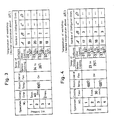
- Fig. 2 through Fig. 4 the temperature changes of shoes surfaces and the quality of shoes are examined in the following rapid cooling tests with use of the apparatus.
- the environmental temperature of the workshop is a normal temperature (about 20°C).
- the rapid freezing apparatus comprises a tunnel-shaped room 1, a bar type of conveyor 2 provided transversely at the central portion thereof and a spray nozzle 3 projected inwardly from the top wall thereof for injecting liquid nitrogen gas.
- the conveyor 2 is adapted to be driven at a regulated revolution speed by means of a geared motor 4 and supports a plurality of shoes 7 assembled from uppers and bottoms on shoe lasts by means of a known automatic shoe manufacturing machine to convey them into the tunnel-shaped room 1.
- the liquid nitrogen gas is adapted to be supplied from a nitrogen gas source 6 so as to be sprayed into the room 1 through the nozzle 3 and dispersed uniformly in the room 1 by a fan 5 in order to lower the room temperature and rapidly cool the shoes 7 on the conveyer 2.
- the interior of the tunnel-shaped room 1 is kept at a constant temperature by always detecting a change of the room temperature through a sensor 8 and controlling a quantity of the nitrogen gas injected from the nozzle 3 through a solenoid valve 11 provided in a nitrogen gas supply line 10 so as to link to the sensor 8.
- the nitrogen gas exhausted for cooling of the shoes is adapted to be discharged to the outside of the apparatus through an exhaust line 14 by means of an exhaust fan 12.
- This finish work test is carried out in such a way as the shoes brought to completion of bottoms securing thereof is cooled rapidly on the way of convenyance through said liquid nitrogen type of rapid freezing apparatus.
- every group of shoes is evaluated by comparing with the following four kinds of models previously set by the skilled persons in this art after completion of such sequential works as a finishing work of shoes cooling, wiping up frost thereon, removing lasts therefrom and leaving them undisturbed in a storage during three days.
- the four kinds of models are sorted to the following four grades respectively. That is, the symbol A indicates the best state of shoes which have totally no wrinkles and no disfigurements caused around their toplines and the contours of their toecaps.
- the symbol B indicates the good state of shoes which maintain the beautiful shapes in spite of having a little lack of smoothness, but inconspicuously in the contours thereof.
- the symbol C indicates a little bad state of shoes which have a little conspicuous wrinkles and not a little disfigurements.
- the symbol D indicates the bad state of shoes which have serious disfigurements and badly gets out of shape in comparison to the shoe last.
- the test results gets better as the room temperature becomes lower (-50°C to -100°C) under the same cooling time and also as the cooling time becomes shorter (2 mins. 30 secs. to 1 min. 20 sec) under the same room temperature. Further, the test results get better as the fan is utilised under the same cooling time and the same cooling temperature. As for the typical example, there are caused no disfigurements in the shoes of No. 6 specimen under the condition that the room temperature is -100°C, the cooling time is 1 min. 20 secs. and the fan is utilized.
- this test for checking disfigurements of shoes is carried out in the condition that two kinds of cooling time, one is 1 min. 40 secs. and the other is 2 mins., are applied respectively to two groups of boots (one group including twenty shoes) under that room temperature.
- this test for checking disfigurements of shoes is carried out under the condition that two steps of room temperatures, one is -100°C and the other is -120°C, are applied respectively to two groups of shoes (one group including twenty shoes) under the cooling time of 1 min. 30 secs.
- the present method since the present method also can be applied to soft leather shoes without causing any disfigurements after shipping, the present method can save time and labor for keeping them in a storage during about two weeks in order to check a presence of disfigurements thereof as well as the space for the storage needed in the prior art.
- the present method since the present method is intended to restrain physical changes of the shoe leather by the rapid cooling finish, it can be applied to not only natural leather shoes but also synthetic leather shoes, further to general leather goods such as clogs like slippers except shoes, bags, handbags, baskets, belts and gloves so as to obtain good results.
- the above-mentioned cooling temperature in the rapid freezing apparatus is one set up under the condition that the temperature of the working environment is around 20°C as a usual temperature. Therefore, in the case, even though it is a rare case, that the finish work of the rapid cooling is carried out in a severe cold (such as 0°C) or a very hot (such as 40°C) working environment, the cooling temperature may be extended to such a wide applicable range as its upper limit temperature is -30°C and its lower limit temperature is -150°C.
- the present method since the present method is intended to restrain physical changes of the shoe leather by the rapid cooling finish, it can be applied to not only natural leather shoes but also synthetic leather shoes, further to general leather goods such as clogs like slippers except shoes, bags, handbags, baskets, belts and gloves so as to obtain good results.
- the above-mentioned cooling temperature in the rapid freezing apparatus is one set up under the condition that the temperature of the working environment is around 20°C as a usual temperature. Therefore, in the case, even though it is a rare case, that the finish work of the rapid cooling is carried out in a severe cold (such as 0°C) or a very hot (such as 40°C) working environment, the cooling temperature may be extended to such a wide applicable range as its upper limit temperature is -30°C and its lower limit temperature is -150°C.
Landscapes
- Engineering & Computer Science (AREA)
- Chemical & Material Sciences (AREA)
- Combustion & Propulsion (AREA)
- Physics & Mathematics (AREA)
- Mechanical Engineering (AREA)
- Thermal Sciences (AREA)
- General Engineering & Computer Science (AREA)
- Footwear And Its Accessory, Manufacturing Method And Apparatuses (AREA)
Priority Applications (2)
| Application Number | Priority Date | Filing Date | Title |
|---|---|---|---|
| US07/001,453 US4777733A (en) | 1987-01-09 | 1987-01-08 | Method of manufacturing shoes |
| EP87300201A EP0274803A3 (fr) | 1987-01-09 | 1987-01-09 | Méthode de fabrication de chaussures |
Applications Claiming Priority (1)
| Application Number | Priority Date | Filing Date | Title |
|---|---|---|---|
| EP87300201A EP0274803A3 (fr) | 1987-01-09 | 1987-01-09 | Méthode de fabrication de chaussures |
Publications (2)
| Publication Number | Publication Date |
|---|---|
| EP0274803A2 true EP0274803A2 (fr) | 1988-07-20 |
| EP0274803A3 EP0274803A3 (fr) | 1989-07-12 |
Family
ID=8197747
Family Applications (1)
| Application Number | Title | Priority Date | Filing Date |
|---|---|---|---|
| EP87300201A Withdrawn EP0274803A3 (fr) | 1987-01-09 | 1987-01-09 | Méthode de fabrication de chaussures |
Country Status (2)
| Country | Link |
|---|---|
| US (1) | US4777733A (fr) |
| EP (1) | EP0274803A3 (fr) |
Cited By (1)
| Publication number | Priority date | Publication date | Assignee | Title |
|---|---|---|---|---|
| WO2007119159A3 (fr) * | 2006-04-18 | 2007-12-21 | Iron Fox Srl | Procédé et appareil pour traiter des articles chaussants vers la fin du processus de production |
Families Citing this family (11)
| Publication number | Priority date | Publication date | Assignee | Title |
|---|---|---|---|---|
| US4955209A (en) * | 1989-11-01 | 1990-09-11 | Cryo-Chem Inc. | Cryogenic bath freezer with pivoted conveyor belt |
| US4947654A (en) * | 1989-11-30 | 1990-08-14 | Liquid Carbonic Corporation | Liquid cryogen freezer with improved vapor balance control |
| JP3442253B2 (ja) * | 1997-03-13 | 2003-09-02 | 東京エレクトロン株式会社 | 基板処理装置 |
| US6345148B1 (en) * | 2000-07-27 | 2002-02-05 | Liang-Tsuen Chang | Cylindrical denaturation steaming, heating, and freezing footwear fabrication machine |
| FR2834554B1 (fr) * | 2002-01-09 | 2006-06-30 | Air Liquide | Procede et dispositif de refroidissement d'une veine de fluide gazeux, et procede de refroidissement d'articles |
| US7992393B2 (en) * | 2008-12-30 | 2011-08-09 | Linde Aktiengesellschaft | Cooling or freezing apparatus using high heat transfer nozzle |
| US9283583B2 (en) * | 2014-01-07 | 2016-03-15 | Nike, Inc. | System for shoe sole portion painting |
| US10376019B2 (en) | 2014-01-07 | 2019-08-13 | Nike, Inc. | Jig for a shoe sole portion |
| US20170172259A1 (en) * | 2015-12-17 | 2017-06-22 | Pou Chen Corporation | Multi-Axis Automatic Shoe Sole Processing Apparatus and Method of the Same |
| CN107965938B (zh) * | 2017-12-19 | 2024-04-05 | 浙江青风环境股份有限公司 | 集装箱式冷定型制冷机组 |
| CN114451639A (zh) * | 2022-02-09 | 2022-05-10 | 金方会 | 一种面板式框架的制鞋流水线 |
Family Cites Families (8)
| Publication number | Priority date | Publication date | Assignee | Title |
|---|---|---|---|---|
| US2781533A (en) * | 1955-10-14 | 1957-02-19 | United Shoe Machinery Corp | Machines for contracting the margins of sheet material |
| US3220033A (en) * | 1962-03-06 | 1965-11-30 | Morton S Bromfield | Apparatus for treating shoe uppers |
| GB1039297A (en) * | 1962-12-12 | 1966-08-17 | British Boot Shoe And Allied T | Improvements in and relating to the manufacture of footwear |
| FR2435220A1 (fr) * | 1978-09-06 | 1980-04-04 | Bonnet Pierre | Installation pour la production de chaussures |
| FR2505146B1 (fr) * | 1981-05-05 | 1985-10-11 | Anver | Perfectionnements aux machines a galber les contreforts de chaussures |
| SE8206627L (sv) * | 1982-11-22 | 1984-05-23 | Sture Astrom | Frystunnel |
| US4528710A (en) * | 1982-12-29 | 1985-07-16 | Usm Corporation | Method of manufacturing a reinforced article |
| US4627244A (en) * | 1984-04-13 | 1986-12-09 | Willhoft Edward Max Adolf | Cryogenic cooling |
-
1987
- 1987-01-08 US US07/001,453 patent/US4777733A/en not_active Expired - Fee Related
- 1987-01-09 EP EP87300201A patent/EP0274803A3/fr not_active Withdrawn
Cited By (1)
| Publication number | Priority date | Publication date | Assignee | Title |
|---|---|---|---|---|
| WO2007119159A3 (fr) * | 2006-04-18 | 2007-12-21 | Iron Fox Srl | Procédé et appareil pour traiter des articles chaussants vers la fin du processus de production |
Also Published As
| Publication number | Publication date |
|---|---|
| EP0274803A3 (fr) | 1989-07-12 |
| US4777733A (en) | 1988-10-18 |
Similar Documents
| Publication | Publication Date | Title |
|---|---|---|
| EP0274803A2 (fr) | Méthode de fabrication de chaussures | |
| US4304020A (en) | Installation for shoe production | |
| NO954980L (no) | Fremgangsmåte til fordeling av pakker, og container til utförelse av fremgangsmåten | |
| US4302416A (en) | Method and apparatus for molding polyurethane soles for footwear | |
| KR20150126919A (ko) | 물품을 착색하기 위한 시스템 및 방법 | |
| US4956234A (en) | Foamed PVC pneumatic ball | |
| US5356327A (en) | Water grenade balloon | |
| CA1159252A (fr) | Chaussure a semelle moulee, et methode de fabrication connexe | |
| US3761562A (en) | Method of heat setting footwear | |
| US3965517A (en) | Method and device for the manufacture of footwear | |
| US2377631A (en) | Method and apparatus for manufacturing articles from preformed parts | |
| US2051374A (en) | System of finishing shoes | |
| US4553341A (en) | Apparatus for the heat treatment of lasted shoe uppers | |
| JPS642361B2 (fr) | ||
| US4864923A (en) | Apparatus for cooling pieces of meat | |
| US2097799A (en) | Manufacture of shoes | |
| US3290708A (en) | Apparatus for conditioning articles of manufacture | |
| EP0363629A3 (fr) | Procédé de fabrication d'empeignes et empeignes ainsi obtenues | |
| Music et al. | Evaluation of the air bubbles present in polyurethane shoe outsoles as applicable in footwear impression comparisons | |
| ES8301606A1 (es) | Procedimiento mejorado de fabricacion de un articulo de calzado con costura noruega flexible. | |
| USRE25411E (en) | bromfield | |
| US2005765A (en) | Method of tempering leather soles | |
| US2373922A (en) | Method of attaching soles to shoes | |
| US3248748A (en) | Method of manufacturing shoes | |
| US803086A (en) | Shoe-holder for factory-racks. |
Legal Events
| Date | Code | Title | Description |
|---|---|---|---|
| PUAI | Public reference made under article 153(3) epc to a published international application that has entered the european phase |
Free format text: ORIGINAL CODE: 0009012 |
|
| AK | Designated contracting states |
Kind code of ref document: A2 Designated state(s): AT BE CH DE ES FR GB GR IT LI LU NL SE |
|
| RBV | Designated contracting states (corrected) |
Designated state(s): DE ES FR GB IT |
|
| PUAL | Search report despatched |
Free format text: ORIGINAL CODE: 0009013 |
|
| AK | Designated contracting states |
Kind code of ref document: A3 Designated state(s): DE ES FR GB IT |
|
| 17P | Request for examination filed |
Effective date: 19890809 |
|
| 17Q | First examination report despatched |
Effective date: 19910118 |
|
| STAA | Information on the status of an ep patent application or granted ep patent |
Free format text: STATUS: THE APPLICATION IS DEEMED TO BE WITHDRAWN |
|
| 18D | Application deemed to be withdrawn |
Effective date: 19911217 |
|
| RIN1 | Information on inventor provided before grant (corrected) |
Inventor name: FUJISHIMA, CHISATO Inventor name: SHINKAI, MASANOBU Inventor name: USUIWA, MIKIO |