EP0277413B1 - Adhésif particulierement utilisable en art dentaire - Google Patents
Adhésif particulierement utilisable en art dentaire Download PDFInfo
- Publication number
- EP0277413B1 EP0277413B1 EP87308801A EP87308801A EP0277413B1 EP 0277413 B1 EP0277413 B1 EP 0277413B1 EP 87308801 A EP87308801 A EP 87308801A EP 87308801 A EP87308801 A EP 87308801A EP 0277413 B1 EP0277413 B1 EP 0277413B1
- Authority
- EP
- European Patent Office
- Prior art keywords
- adhesive
- group
- compound
- organic
- formula
- Prior art date
- Legal status (The legal status is an assumption and is not a legal conclusion. Google has not performed a legal analysis and makes no representation as to the accuracy of the status listed.)
- Expired - Lifetime
Links
Classifications
-
- C—CHEMISTRY; METALLURGY
- C09—DYES; PAINTS; POLISHES; NATURAL RESINS; ADHESIVES; COMPOSITIONS NOT OTHERWISE PROVIDED FOR; APPLICATIONS OF MATERIALS NOT OTHERWISE PROVIDED FOR
- C09J—ADHESIVES; NON-MECHANICAL ASPECTS OF ADHESIVE PROCESSES IN GENERAL; ADHESIVE PROCESSES NOT PROVIDED FOR ELSEWHERE; USE OF MATERIALS AS ADHESIVES
- C09J4/00—Adhesives based on organic non-macromolecular compounds having at least one polymerisable carbon-to-carbon unsaturated bond ; adhesives, based on monomers of macromolecular compounds of groups C09J183/00 - C09J183/16
-
- A—HUMAN NECESSITIES
- A61—MEDICAL OR VETERINARY SCIENCE; HYGIENE
- A61K—PREPARATIONS FOR MEDICAL, DENTAL OR TOILETRY PURPOSES
- A61K6/00—Preparations for dentistry
- A61K6/70—Preparations for dentistry comprising inorganic additives
- A61K6/71—Fillers
- A61K6/74—Fillers comprising phosphorus-containing compounds
- A61K6/75—Apatite
-
- A—HUMAN NECESSITIES
- A61—MEDICAL OR VETERINARY SCIENCE; HYGIENE
- A61K—PREPARATIONS FOR MEDICAL, DENTAL OR TOILETRY PURPOSES
- A61K6/00—Preparations for dentistry
- A61K6/70—Preparations for dentistry comprising inorganic additives
- A61K6/71—Fillers
- A61K6/77—Glass
Definitions
- the present invention relates to adhesives for metals, especially precious metals, particularly for use in dentistry.
- adhesive used in the present specification includes primers used when a metallic material is bonded to other materials.
- Adhesives composed of polymerizable monomers such as acrylic monomers and epoxy compounds are in general used to bond metallic materials because of their good workability and their ability to cure in a short time at normal temperature under normal pressure. However, they suffer from the serious disadvantage in some applications where water resistance is required, because their bond strength rapidly decreases when the bonding interface is permanently exposed to water.
- Adhesives containing N-(4-mercaptophenyl)methacrylamide unlike those disclosed in US-A-4,539,382, do not need surface treatment of the adherend. However, they are not practically satisfactory in that the bond strength is affected by water.
- the present invention provides an adhesive comprising (a) an olefinically unsaturated compound having at least one mercapto group or polysulfide group joined to a saturated carbon atom and (b) either a solvent that does not copolymerize with the said compound, or a liquid polymerizable monomer that does copolymerize with the said compound.
- R1 is a hydrogen atom or methyl group
- R2 is a C1 ⁇ 40 organic group (which may contain a group and/or mercapto group); each of R3 and R4 is a 6/1-40 organic group (which may contain a group and/or mercapto group), a hydrogen or halogen atom, or a mercapto group; or two or three of R2, R3, and R4 are optionally joined to each other to form a cyclic structure when R3 and/or R4 is an organic group;
- X denotes -COO-, -OOC-, -CONH-, -COS-, -SOC-, -S-, or and k is 0 or 1 , or the formula where R1, k and X are as defined above;
- R2' is a C1 ⁇ 40 organic group (which may contain a group and/or polysulfide group); each of R3', R4', R5, R6 and R7 is a C1 ⁇
- Such adhesives or primers can be used to treat the adherend surface prior to bonding to ensure firm bonding between a metal (especially precious metal) object and a metal or non-metal object, and to bond a metal (especially precious metal) object to a metal object or non-metal object.
- the above-mentioned compound (a) used as an adhesive component in the present invention can be synthesized according to the process described in "Shin-Jikken Kagaku Koza", Vol. 14, (published by Maruzen, 1977-8), The Chemistry of the Thiol Group (published by John Wiley & Sons, 1974), and Comprehensive Organic Chemistry, Vol. 3 (published by Pergamon Press, 1979).
- the compound represented by the formula [I] can be synthesized through any of the following three routes.
- the compound represented by the formula [II] can be synthesized through either of the following two routes.
- the adhesive of the present invention is prepared from the above-mentioned compound (a) by the following process (1) or (2).
- the compound (a) exhibits the adhesion promoting effect even when its amount is very small, because the effect is attributable to the monomolecular layer formed on the adherend surface by adsorption. This adhesion promoting effect remains even when the primer coat is washed with a solvent.
- the adhesive of the present invention is used preferably as a primer.
- a known adhesive of polymerization curing type preferably an adhesive containing an acrylic monomer, as mentioned above.
- the tensile bond strength thus achieved is usually higher than 200 kg/cm2, depending on the mechanical strength of the adhesive per se. Almost all failure is cohesive failure or adherend failure.
- the bond interface has such an extremely good water resistance that the bond strength does not decrease appreciably when the adherend is dipped in water at normal temperature for several months.
- the copolymerizable monomer used for the adhesive (especially that mentioned in (2) above) of the present invention should preferably be a (meth)acrylic ester such as methyl methacrylate, 2-hydroxyethyl methacrylate, ethylene glycol dimethacrylate, triethylene glycol dimethacrylate, neopentyl glycol dimethacrylate, 2,2-bis[4-(3-methacryloyloxy-2-hydroxypropoxy)phenyl]propane (called Bis-GMA), 2,2-bis[methacryloyloxyethoxyphenyl]propane, trimethylolethane triacrylate, pentaerythritol tetraacrylate, 4-(2-methacryloyloxyethyl) trimellitate, 4-methacryloxyethyl trimellitate anhydride, bis(2-methacryloyloxyethyl) hydrogen phosphate, 2-methacryloyloxyethylphenyl hydrogen phosphate, 6-
- the adhesive of the present invention is usually incorporated with a polymerization initiator as mentioned above. It includes benzoyl peroxide-aromatic tertiary amine, peroxide (cumene hydroperoxide, etc.), tributyl borane, and aromatic sulfinic acid (or salt thereof)-aromatic secondary or tertiary amine-acyl peroxide. It further includes photopolymerization initiators such as camphorquinone, camphorquinone-tertiary amine, camphorquione-aldehyde, and camphorquinone-mercaptan.
- the adhesive of the present invention is used as a primer and another adhesive is applied onto the primer coat, it is not necessary that the adhesive of the present invention contains a polymerization initiator. In such a case, a polymerization initiator in the adhesive migrates into the primer coat to effect polymerization curing of the primer.
- the adhesive of the present invention may be incorporated with an inorganic filler such as quartz, glass, hydroxyapatite, calcium carbonate, barium sulfate, titanium oxide, and zirconium oxide; and polymer powder such as poly(methyl methacrylate), polystylene, and polyvinyl chloride.
- an inorganic filler such as quartz, glass, hydroxyapatite, calcium carbonate, barium sulfate, titanium oxide, and zirconium oxide
- polymer powder such as poly(methyl methacrylate), polystylene, and polyvinyl chloride.
- the adhesive of the present invention may be applied to precious metals such as gold, platinum, palladium, silver, ruthenium, rhodium, osmium, and iridium; and base metals such as iron, nickel, cobalt, copper, zinc, tin, aluminum, titanium, vanadium, chromium, manganese, zirconium, molybdenum, cadmium, and antimony. It also exhibits the adhesion promoting effect when applied to metal oxides such as aluminum oxide, titanium oxide, and zirconium oxide, and ceramics containing such metal oxides.
- precious metals such as gold, platinum, palladium, silver, ruthenium, rhodium, osmium, and iridium
- base metals such as iron, nickel, cobalt, copper, zinc, tin, aluminum, titanium, vanadium, chromium, manganese, zirconium, molybdenum, cadmium, and antimony. It also exhibits the adh
- the adhesive of the present invention provides a high bond strength which is very little affected by water when applied to precious metals, it can be suitably used in the field of dentistry.
- it is used to bond a precious metal casting such as inlay, crown, and bridge to a tooth.
- a prosthetic appliance of precious metal by bonding a pontic to a bridge frame-work or bonding separately cast parts together.
- the bonding will provides improved performance and workability which were not achieved with the conventional technique.
- the adhesive of the present invention can be used not only in the field of dentistry but also in any industrial field where the bonding of metals and metal oxides is necessary.
- the liberated organic substance was extracted with methylene chloride, followed by washing with water several times and drying with anhydrous magnesium sulfate. After the addition of 0.1 g of hydroquinone monomethyl ether, the methylene chloride was evaporated away at a temperature below 40 °C under reduced pressure. Thus there was obtained 79 g of a mixture composed of p-toluenesulfonate of 10-hydroxydecyl methacrylate and 1,10-dimethacryloyloxy decane.
- Each compound was dissolved in acetone to give a 1 wt% primer.
- the primer was applied by brushing to the following three adherends.
- the coating was washed with pure acetone so that only the molecules adsorbed on the surface remain.
- the washed coating was covered with a piece of adhesive tape having a hole 5 mm in diameter.
- the primer-coated surface exposed through the hole serves as an adherend.
- a round rod of SUS304 measuring 7 mm in diameter and 25 mm long, was provided.
- the end of the rod was roughed by sand blasting with 50- ⁇ m alumina abrasive grains.
- "Panavia EX” paste (a dental adhesive made by Kuraray Co., Ltd.) composed of 100 parts by weight of methacrylate ester, 3 parts by weight of sodium sulfinate-benzoyl peroxide-tertiary amine polymerization initiator, and 320 parts by weight of silane-treated inorganic filler.
- the rod end was pressed against the adherend to effect adhesion.
- the bonded test pieces were immersed in water at 37°C for 24 hours. After water immersion, the tensile bond strength was measured using a universal tester (made by Instron Ltd.) at a cross-head speed of 2 mm/min. An average of measurements of eight samples were obtained. The results are shown in Table 1.
- Example 5 The compound used in Example 5 was dissolved in acetone to give a 1% solution.
- the solution was applied to "Cast Well” according to the same procedure as in Examples 1 to 13.
- One minute after application the coated surface was washed with pure acetone.
- a stainless steel rod was bonded with "Panavia EX” (made by Kuraray Co., Ltd.) (Example 28)
- Test pieces were prepared in the same manner as above using the compound used in Example 19. (Example 29)
- test pieces were prepared in the same manner as above, except that the acetone solution was not applied to "Cast Well".
- test pieces were immersed in water at 37°C for 24 hours and then at 70°C for 10 days.
- the tensile bond strength was measured in the same manner as in Example 1 to 13.
- the average bond strength was 280 kg/cm2 and 165 kg/cm2 in Examples 28 and 29, respectively, whereas it was 31 kg/cm2 in Comparative Example 3.
- a two-part adhesive (paste type) of the following composition was prepared.
- Paste A Bis-GMA 12.5 parts by weight Triethyleneglycol dimethacrylate 12.5
- Adhesive component in Example 5 0.1 N,N-diethanol-p-toluidine 0.5 Silane-treated quartz powder 74.5
- Paste B Bis-GMA 12.5 parts by weight Triethyleneglycol dimethacrylate 12.5 Benzoyl peroxide 0.5 Silane-treated quartz powder 74.5
- Paste A and paste B were mixed in equal amount to give an adhesive.
- a sand-blasted stainless steel rod was bonded to dental gold alloy ("Herador H", Au : 79%, Pt : 10%, Pd : 8%, made by Heraus Edulmetale GmbH in West Germany) polished with silicon carbide abrasive paper (1000 grit). Bonding was performed in the same manner as in Examples 1 to 13 except that the primer was not applied.
- Example 30 The same procedure as mentioned above was repeated except that the adhesive component in Example 5 was replaced by the adhesive component in Example 19. The average strength was 201 kg/cm2.
- Example 31 For comparison, the same procedure as Examples 30 and 31 was repeated except that paste A was replaced by paste A' (in which the adhesive component in Example 5 was excluded). Failure took place at the interface between the gold alloy and the adhesive, and the average value was 106 kg/cm2.
- a two-part adhesive (powder-liquid mix type) of the following composition was prepared.
- Powder component C Silane-treated silica powder 100.0 parts by weight Sodium benzenesulfinate 0.4 N,N-diethanol-p-toluidine 0.5
- Liquid component D Bis-GMA 50 parts by weight 1,6-hexanediol dimethacrylate 39 10-methacryloyloxydecyl dihydrogen phosphate 10 10-mercaptodecyl methacrylate 1 Benzoyl peroxide 1
- a paste adhesive was prepared by mixing the powder component C (3 g) and the liquid component D (1 g).
- test piece was immersed in water at 37 °C for 24 hours, and the tensile bond strength was measured. Cohesive Failure of the adhesive took place, and the average value (of 8 measurements) was 315 kg/cm2.
Landscapes
- Health & Medical Sciences (AREA)
- Chemical & Material Sciences (AREA)
- Animal Behavior & Ethology (AREA)
- Oral & Maxillofacial Surgery (AREA)
- Epidemiology (AREA)
- Life Sciences & Earth Sciences (AREA)
- Inorganic Chemistry (AREA)
- General Health & Medical Sciences (AREA)
- Public Health (AREA)
- Veterinary Medicine (AREA)
- Organic Chemistry (AREA)
- Adhesives Or Adhesive Processes (AREA)
- Dental Preparations (AREA)
- Addition Polymer Or Copolymer, Post-Treatments, Or Chemical Modifications (AREA)
Claims (17)
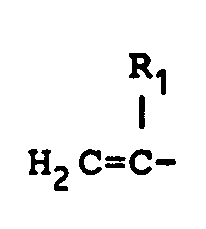
- Un adhésif comprenant (a) un composé ayant au moins un groupe mercapto ou un groupe polysulfure uni à un atome de carbone saturé et au moins une double liaison oléfinique et (b) un solvant qui ne se copolymérise pas avec ledit composé, dans lequel le composé (a) a soit la formule



- Un adhésif selon la revendication 1, dans lequel le composé (a) a pour formule

- Un adhésif selon la revendication 1, dans lequel le composé (a) a pour formule

- Un adhésif selon l'une quelconque des revendications 1 à 3, dans lequel le solvant est un solvant organique volatil, l'eau ou un de leurs mélanges.
- Un adhésif selon l'une quelconque des revendications 1 à 4 comprenant 0,0001 à 99 % en poids du composé (a) et 99,9999 à 1 % en poids du solvant.
- Un adhésif selon l'une quelconque des revendications 1 à 5 comprenant de plus un monomère polymérisable qui se copolymérise avec le composé (a).
- Un adhésif comprenant (a) un composé ayant au moins un groupe mercapto ou un groupe polysulfure uni à un atome de carbone saturé et au moins une double liaison oléfinique et (b) un monomère polymérisable copolymérisable avec le composé (a), le composé (a) étant comme défini dans la revendication 1.
- Un adhésif selon la revendication 7, dans lequel le composé (a) est comme défini dans la revendication 2.
- Un adhésif selon la revendication 7, dans lequel le composé (a) est comme défini dans la revendication 3.
- Un adhésif selon l'une quelconque des revendications 7 à 9, dans lequel le monomère polymérisable est un ester (méth)acrylate.
- Un adhésif selon l'une quelconque des revendications 7 à 10 comprenant 0,005 à 99 % en poids du composé (a) et 99,995 à 1 % en poids du monomère polymérisable.
- Un adhésif selon la revendication 10 ou 11 comprenant de plus un solvant organique volatil et/ou de l'eau.
- Un adhésif selon l'une quelconque des revendications 1 à 12 comprenant de plus un amorceur de polymérisation.
- Un adhésif selon l'une quelconque des revendications 1 à 13 comprenant de plus une charge.
- Un adhésif selon l'une quelconque des revendications précédentes pour l'emploi dans un traitement dentaire.
- Utilisation d'un adhésif selon l'une quelconque des revendications 1 à 14 pour faire adhérer une matière métallique dans des conditions nécessitant la résistance à l'eau.
- Utilisation selon la revendication 16, dans laquelle la matière métallique est un métal précieux.
Applications Claiming Priority (2)
| Application Number | Priority Date | Filing Date | Title |
|---|---|---|---|
| JP238946/86 | 1986-10-06 | ||
| JP23894686 | 1986-10-06 |
Publications (3)
| Publication Number | Publication Date |
|---|---|
| EP0277413A2 EP0277413A2 (fr) | 1988-08-10 |
| EP0277413A3 EP0277413A3 (en) | 1988-09-14 |
| EP0277413B1 true EP0277413B1 (fr) | 1992-04-22 |
Family
ID=17037633
Family Applications (1)
| Application Number | Title | Priority Date | Filing Date |
|---|---|---|---|
| EP87308801A Expired - Lifetime EP0277413B1 (fr) | 1986-10-06 | 1987-10-05 | Adhésif particulierement utilisable en art dentaire |
Country Status (4)
| Country | Link |
|---|---|
| US (2) | US5064495A (fr) |
| EP (1) | EP0277413B1 (fr) |
| JP (1) | JP2677994B2 (fr) |
| DE (1) | DE3778527D1 (fr) |
Cited By (1)
| Publication number | Priority date | Publication date | Assignee | Title |
|---|---|---|---|---|
| US9770395B2 (en) | 2001-10-26 | 2017-09-26 | Dentsply Detrey Gmbh | Dental adhesive |
Families Citing this family (27)
| Publication number | Priority date | Publication date | Assignee | Title |
|---|---|---|---|---|
| JPH0753846B2 (ja) * | 1988-06-20 | 1995-06-07 | 株式会社クラレ | 含イオウ接着剤 |
| US6093084A (en) * | 1988-08-01 | 2000-07-25 | Dentsply Research & Development Corp. | Device and method for dispensing polymerizable compositions |
| DE4114640A1 (de) * | 1991-05-04 | 1992-11-05 | Basf Ag | Copolymerisate fuer klebstoffe |
| US5247040A (en) * | 1991-06-27 | 1993-09-21 | Rohm And Haas Company | Graft copolymers prepared by two staged aqueous emulsion polymerization |
| US5756559A (en) * | 1992-02-06 | 1998-05-26 | Dentsply Research & Development | Method and composition for adhering to tooth structure |
| US6191190B1 (en) | 1993-04-19 | 2001-02-20 | Dentsply Research & Development Corp. | Method and composition for adhering to tooth structure |
| US6391940B1 (en) | 1993-04-19 | 2002-05-21 | Dentsply Research & Development Corp. | Method and composition for adhering to metal dental structure |
| US6313191B1 (en) | 1994-08-22 | 2001-11-06 | Dentsply Gmbh | Method and composition for priming and adhering to tooth structure |
| US5645429A (en) * | 1994-08-22 | 1997-07-08 | Dentsply Research & Development Corp. | Method for adhering to tooth structure |
| US5688883A (en) * | 1995-03-14 | 1997-11-18 | Dentsply Gmbh | Polymerizable composition |
| JP3245324B2 (ja) | 1995-03-31 | 2002-01-15 | カネボウ株式会社 | 金属接着剤及び接着方法 |
| US5866629A (en) * | 1995-12-05 | 1999-02-02 | The University Of Toronto Innovations Foundation | Dental and medical primer formulations containing tissue infiltrating agents |
| US5916987A (en) | 1996-05-29 | 1999-06-29 | Mitsui Chemicals, Inc. | Thiol and Sulfur-containing O-(meth) acrylate compounds and use thereof |
| EP0999818A1 (fr) * | 1997-06-19 | 2000-05-17 | Ivan Stangel | Materiaux composites et promoteurs d'adherence a usage dentaire |
| JP3965510B2 (ja) * | 1997-12-27 | 2007-08-29 | ナガセケムテックス株式会社 | 光ディスク貼り合わせ用紫外線硬化型接着剤 |
| DE69942571D1 (de) | 1998-04-23 | 2010-08-26 | Dentsply Detrey Gmbh | Lagerungsbeständige polymerisierbare Zusammensetzung |
| AT406054B (de) * | 1998-11-04 | 2000-02-25 | Andreas Bernkop-Schnuerch | Verfahren zur verbesserung der mucoadhäsion von polymeren sowie deren herstellung und verwendung |
| US6514535B2 (en) * | 1999-05-21 | 2003-02-04 | Noveon Ip Holdings Corp. | Bioadhesive hydrogels with functionalized degradable crosslinks |
| JP2001072936A (ja) * | 1999-07-06 | 2001-03-21 | Kuraray Co Ltd | 接着性組成物 |
| US6803406B2 (en) * | 2002-03-29 | 2004-10-12 | National Starch And Chemical Investmnet Holding Corporation | Electron donors, electron acceptors and adhesion promoters containing disulfide |
| US6818680B2 (en) * | 2002-09-23 | 2004-11-16 | Corning Incorporated | Curable adhesive compositions |
| EP1776943B1 (fr) | 2005-10-20 | 2011-12-14 | Dentsply DeTrey GmbH | Adhésif dentaire |
| EP2229930B1 (fr) * | 2009-03-17 | 2012-12-12 | Ivoclar Vivadent AG | Composé dentaire adhésif universel |
| JP5612419B2 (ja) * | 2010-09-28 | 2014-10-22 | 株式会社ジーシー | 歯科用グラスアイオノマーセメント組成物 |
| CN108047104B (zh) * | 2018-01-17 | 2020-11-20 | 北京化工大学 | 一种可降低体积收缩的可聚合的二硫化合物的制备及用途 |
| EP3782598B1 (fr) * | 2018-04-20 | 2023-02-15 | Kuraray Noritake Dental Inc. | Composition adhésive à usage dentaire |
| CN115485310B (zh) * | 2020-03-13 | 2025-08-12 | 阿莱恩技术有限公司 | 热固性材料中用于提高韧性的弱共价交联 |
Family Cites Families (6)
| Publication number | Priority date | Publication date | Assignee | Title |
|---|---|---|---|---|
| US3265673A (en) * | 1962-12-28 | 1966-08-09 | Shell Oil Co | Copolymers of long-chained acrylic esters with sulfur containing acrylates |
| NL6515280A (fr) * | 1965-11-24 | 1967-05-25 | ||
| US3900451A (en) * | 1973-08-24 | 1975-08-19 | Dow Chemical Co | Method of making sulfhydryl-containing polymers |
| DE2945549A1 (de) * | 1979-11-10 | 1981-05-21 | Röhm GmbH, 6100 Darmstadt | Fluesiges, durch uv-strahlung haertbares ueberzugs- und bindemittel |
| JPS57105472A (en) * | 1980-12-19 | 1982-06-30 | Matsushita Electric Ind Co Ltd | Adhesive for optical device |
| US4812363A (en) * | 1987-10-26 | 1989-03-14 | Bell James P | Polymeric coupling agent |
-
1987
- 1987-10-05 JP JP62251846A patent/JP2677994B2/ja not_active Expired - Fee Related
- 1987-10-05 DE DE8787308801T patent/DE3778527D1/de not_active Expired - Lifetime
- 1987-10-05 EP EP87308801A patent/EP0277413B1/fr not_active Expired - Lifetime
-
1989
- 1989-07-13 US US07/379,666 patent/US5064495A/en not_active Expired - Lifetime
-
1990
- 1990-12-26 US US07/633,959 patent/US5085726A/en not_active Expired - Lifetime
Cited By (1)
| Publication number | Priority date | Publication date | Assignee | Title |
|---|---|---|---|---|
| US9770395B2 (en) | 2001-10-26 | 2017-09-26 | Dentsply Detrey Gmbh | Dental adhesive |
Also Published As
| Publication number | Publication date |
|---|---|
| US5064495A (en) | 1991-11-12 |
| JPS63225674A (ja) | 1988-09-20 |
| EP0277413A3 (en) | 1988-09-14 |
| JP2677994B2 (ja) | 1997-11-17 |
| EP0277413A2 (fr) | 1988-08-10 |
| US5085726A (en) | 1992-02-04 |
| DE3778527D1 (de) | 1992-05-27 |
Similar Documents
| Publication | Publication Date | Title |
|---|---|---|
| EP0277413B1 (fr) | Adhésif particulierement utilisable en art dentaire | |
| EP0115948B1 (fr) | Compositions adhésives | |
| EP0115410B1 (fr) | Compositions adhésives | |
| US5670657A (en) | (Meth) arcylic ester derivatives | |
| EP1421927B1 (fr) | Agent dentaire de decapage a mordancage spontane | |
| EP0074708A2 (fr) | Composition adhésive | |
| EP0321683B1 (fr) | Composition adhésive pouvant se lier au collagène et au calcium | |
| EP0348166A2 (fr) | Composition adhésive contenant un acide thiocarboxylique ou le dérivé d'un tel acide | |
| DE19918974A1 (de) | Dentalwerkstoff mit polymerisierbaren Phosphonsäuren | |
| CA2082132C (fr) | Ciment dentaire | |
| JP2011225489A (ja) | 含イオウ重合性化合物およびそれを含有する接着性組成物 | |
| JPS6313435B2 (fr) | ||
| JP2731785B2 (ja) | 接着剤 | |
| US5795497A (en) | Thiouracil derivatives and metal surface-treating agent comprising thereof | |
| JP3296476B2 (ja) | 金属表面処理剤 | |
| JPH0567146B2 (fr) | ||
| JPH0125757B2 (fr) | ||
| CN112513016B (zh) | 含硫聚合性单体及其用途 | |
| JPH0127077B2 (fr) | ||
| JPH0813798B2 (ja) | ω−メルカプトアルキル(メタ)アクリレ−ト | |
| EP0802194A2 (fr) | Dérivés de thiouracil et agent de traitement de surface métallique les comprenant | |
| JP3517041B2 (ja) | 金属用接着性組成物 | |
| JP3604839B2 (ja) | 新規化合物およびこれを用いた接着剤組成物 | |
| JP2642105B2 (ja) | 接着剤 | |
| Ikemura et al. | Synthesis of novel acryloyloxyalkyl and methacryloyloxyalkyl 6, 8-dithiooctanoates and evaluation of their bonding performances to precious metals and alloys |
Legal Events
| Date | Code | Title | Description |
|---|---|---|---|
| PUAI | Public reference made under article 153(3) epc to a published international application that has entered the european phase |
Free format text: ORIGINAL CODE: 0009012 |
|
| PUAL | Search report despatched |
Free format text: ORIGINAL CODE: 0009013 |
|
| AK | Designated contracting states |
Kind code of ref document: A2 Designated state(s): DE FR GB IT NL |
|
| AK | Designated contracting states |
Kind code of ref document: A3 Designated state(s): DE FR GB IT NL |
|
| 17P | Request for examination filed |
Effective date: 19890228 |
|
| 17Q | First examination report despatched |
Effective date: 19900807 |
|
| GRAA | (expected) grant |
Free format text: ORIGINAL CODE: 0009210 |
|
| AK | Designated contracting states |
Kind code of ref document: B1 Designated state(s): DE FR GB IT NL |
|
| REF | Corresponds to: |
Ref document number: 3778527 Country of ref document: DE Date of ref document: 19920527 |
|
| ITF | It: translation for a ep patent filed | ||
| ET | Fr: translation filed | ||
| PLBE | No opposition filed within time limit |
Free format text: ORIGINAL CODE: 0009261 |
|
| STAA | Information on the status of an ep patent application or granted ep patent |
Free format text: STATUS: NO OPPOSITION FILED WITHIN TIME LIMIT |
|
| 26N | No opposition filed | ||
| K2C2 | Correction of patent specification (partial reprint) published |
Effective date: 19920422 |
|
| REG | Reference to a national code |
Ref country code: GB Ref legal event code: IF02 |
|
| PGFP | Annual fee paid to national office [announced via postgrant information from national office to epo] |
Ref country code: DE Payment date: 20060928 Year of fee payment: 20 |
|
| PGFP | Annual fee paid to national office [announced via postgrant information from national office to epo] |
Ref country code: NL Payment date: 20061003 Year of fee payment: 20 |
|
| PGFP | Annual fee paid to national office [announced via postgrant information from national office to epo] |
Ref country code: GB Payment date: 20061004 Year of fee payment: 20 |
|
| PGFP | Annual fee paid to national office [announced via postgrant information from national office to epo] |
Ref country code: IT Payment date: 20061031 Year of fee payment: 20 |
|
| REG | Reference to a national code |
Ref country code: GB Ref legal event code: PE20 |
|
| NLV7 | Nl: ceased due to reaching the maximum lifetime of a patent |
Effective date: 20071005 |
|
| PG25 | Lapsed in a contracting state [announced via postgrant information from national office to epo] |
Ref country code: NL Free format text: LAPSE BECAUSE OF EXPIRATION OF PROTECTION Effective date: 20071005 |
|
| PG25 | Lapsed in a contracting state [announced via postgrant information from national office to epo] |
Ref country code: GB Free format text: LAPSE BECAUSE OF EXPIRATION OF PROTECTION Effective date: 20071004 |
|
| PGFP | Annual fee paid to national office [announced via postgrant information from national office to epo] |
Ref country code: FR Payment date: 20061010 Year of fee payment: 20 |