EP0278694A2 - Methode für die Entfernung von basischen Stickstoffverbindungen aus extrahierten Ölen durch Anwendung von Sauren polaren Adsorbenzien und Regeneration dieser Adsorbenzien - Google Patents
Methode für die Entfernung von basischen Stickstoffverbindungen aus extrahierten Ölen durch Anwendung von Sauren polaren Adsorbenzien und Regeneration dieser Adsorbenzien Download PDFInfo
- Publication number
- EP0278694A2 EP0278694A2 EP88300982A EP88300982A EP0278694A2 EP 0278694 A2 EP0278694 A2 EP 0278694A2 EP 88300982 A EP88300982 A EP 88300982A EP 88300982 A EP88300982 A EP 88300982A EP 0278694 A2 EP0278694 A2 EP 0278694A2
- Authority
- EP
- European Patent Office
- Prior art keywords
- adsorbent
- bnc
- adsorbents
- oil
- nmp
- Prior art date
- Legal status (The legal status is an assumption and is not a legal conclusion. Google has not performed a legal analysis and makes no representation as to the accuracy of the status listed.)
- Granted
Links
Images




Classifications
-
- C—CHEMISTRY; METALLURGY
- C10—PETROLEUM, GAS OR COKE INDUSTRIES; TECHNICAL GASES CONTAINING CARBON MONOXIDE; FUELS; LUBRICANTS; PEAT
- C10G—CRACKING HYDROCARBON OILS; PRODUCTION OF LIQUID HYDROCARBON MIXTURES, e.g. BY DESTRUCTIVE HYDROGENATION, OLIGOMERISATION, POLYMERISATION; RECOVERY OF HYDROCARBON OILS FROM OIL-SHALE, OIL-SAND, OR GASES; REFINING MIXTURES MAINLY CONSISTING OF HYDROCARBONS; REFORMING OF NAPHTHA; MINERAL WAXES
- C10G67/00—Treatment of hydrocarbon oils by at least one hydrotreatment process and at least one process for refining in the absence of hydrogen only
- C10G67/02—Treatment of hydrocarbon oils by at least one hydrotreatment process and at least one process for refining in the absence of hydrogen only plural serial stages only
- C10G67/14—Treatment of hydrocarbon oils by at least one hydrotreatment process and at least one process for refining in the absence of hydrogen only plural serial stages only including at least two different refining steps in the absence of hydrogen
-
- C—CHEMISTRY; METALLURGY
- C10—PETROLEUM, GAS OR COKE INDUSTRIES; TECHNICAL GASES CONTAINING CARBON MONOXIDE; FUELS; LUBRICANTS; PEAT
- C10G—CRACKING HYDROCARBON OILS; PRODUCTION OF LIQUID HYDROCARBON MIXTURES, e.g. BY DESTRUCTIVE HYDROGENATION, OLIGOMERISATION, POLYMERISATION; RECOVERY OF HYDROCARBON OILS FROM OIL-SHALE, OIL-SAND, OR GASES; REFINING MIXTURES MAINLY CONSISTING OF HYDROCARBONS; REFORMING OF NAPHTHA; MINERAL WAXES
- C10G25/00—Refining of hydrocarbon oils in the absence of hydrogen, with solid sorbents
-
- C—CHEMISTRY; METALLURGY
- C10—PETROLEUM, GAS OR COKE INDUSTRIES; TECHNICAL GASES CONTAINING CARBON MONOXIDE; FUELS; LUBRICANTS; PEAT
- C10G—CRACKING HYDROCARBON OILS; PRODUCTION OF LIQUID HYDROCARBON MIXTURES, e.g. BY DESTRUCTIVE HYDROGENATION, OLIGOMERISATION, POLYMERISATION; RECOVERY OF HYDROCARBON OILS FROM OIL-SHALE, OIL-SAND, OR GASES; REFINING MIXTURES MAINLY CONSISTING OF HYDROCARBONS; REFORMING OF NAPHTHA; MINERAL WAXES
- C10G53/00—Treatment of hydrocarbon oils, in the absence of hydrogen, by two or more refining processes
- C10G53/02—Treatment of hydrocarbon oils, in the absence of hydrogen, by two or more refining processes plural serial stages only
- C10G53/08—Treatment of hydrocarbon oils, in the absence of hydrogen, by two or more refining processes plural serial stages only including at least one sorption step
Definitions
- Polar basic nitrogen compounds are identified in the art as the cause of, or at least contributors to the poor oxidation stability of solvent extracted, especially n-methyl-2-pyrrolidone (NMP) extracted oils, such as transformer oils. Uninhibited oxidation stability is quite low in such oils when the BNC's are removed by hydrofinishing since such hydrofinishing removes not only the nitrogen compounds, which are detrimental to oxidation, but also a significant portion of the sulfur compounds, which are also present in the oil and some of which are believed to contribute to the oxidation stability of the oil.
- NMP n-methyl-2-pyrrolidone
- Solvent extracted oils e.g., extracted lube or specialty oils (transformer or refrigeration oils), particularly NMP extracted raffinates, have their BNC levels reduced and their oxidation stability (especial ly their uninhibited oxidation stability) improved by contacting said solvent extracted oil with an adsorbent which selectively removes the BNC's from the extracted oils.
- the adsorbents which are employed in the present invention are identified as solid acidic adsorbents containing between 20-30 weight percent alumina, preferably 20-25 weight percent alumina.
- Such adsorbents which satisfy the requirements of the present invention include silica-alumina and silica-alumina-magnesia-type materials. They can be crystalline (such as H-Y zeolite) or amorphous (such as Ketjen/Akzo amorphous silica-alumina cracking catalyst base) in nature. Amorphous adsorbents are generally preferred.
- the adsorbents should have sufficient surface area, porosity and acidity to adsorb effective amounts of basic nitrogen from extracted oils. Also, pore diameter of the adsorbent should be large enough to allow fast adsorption of oil molecules and effective regeneration of adsorbent.
- the above characteristics are both important.
- One factor alone provides insufficient basis for adsorbent selection.
- active carbon and silica gel have high surface area but low acidity, thus give poor capacity for BNC removal (see Table I).
- the surface area of a desirable adsorbent should be from 50-700 m2/g and preferably 100-500 m2/g.
- the average pore diameter of amorphous adsorbents is usually from 10-200 ⁇ and preferably 20-100 ⁇ .
- Silica-to-alumina ratio which can govern the adsorbent acidity, should be such that the alumina content of the material is between 20-30 weight percent, preferably 20-25 weight percent.
- This alumina content cannot be achieved simply by adding additional alumina to a material having an alumina content outside (i.e., lower than) the desired range, thereby producing a mixture having an alumina content of 20-30 weight percent.
- the alumina content of 20-30 weight percent must be that of the material itself, that is, of the amorphous silica-alumina adsorbents, such as Ketjen HA, or alumino-silicate (zeolites), such as H-Y zeolite. Deficiencies in alumina cannot be made up simply by adding additional free alumina.
- Adsorbent containing up to about 30 weight percent water showed improved adsorption capacity as compared to dry adsorbent.
- Water content above 30 weight percent results in rapid deterioration of adsorption capacity.
- Water content is preferably between about 10 to 30 weight percent, more preferably between about 20 to 30 weight percent.
- the solvent extracted oils are contacted with the solid acidic polar adsorbent at a temperature of between 25°C to 250°C, preferably 50°C to 200°C, most preferably 50°C to 150°C.
- Contacting may be at a pressure in the range of 15 to 600 psig, preferably 50 to 400 psig.
- Contacting is also performed in an atmosphere of N2, H2, Group Zero noble gases (e.g., the inert gases, helium, argon, neon, etc.).
- NH3-free hydrofiner off-gas and powerformer gas and mixtures thereof can also be used.
- the presence of a small amount of H2S in the treat gas had no adverse effect on the adsorbent performance for BNC removal.
- Contacting with the solid acidic polar adsorbent may be under batch or continuous conditions, employing fixed or fluidized beds of adsorbent, under either concurrent or countercurrent flow conditions (as appropriate).
- the preferred mode of effecting the extracted oil/adsorbent contacting is passing a stream of liquid feed through a fixed bed of adsorbent.
- a two-bed system is desirable for a continuous production, with one bed adsorbing while the other is being regenerated.
- Extracted oils are contacted with adsorbent for from 15 to 240 minutes, preferably 60 to 120 minutes.
- the extracted oils are contacted with the adsorbent at a flow rate of 0.25 to 4 LHSV (v/v/hr), preferably 0.5 to 1.0 LHSV.
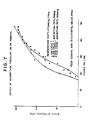
- Adsorption pressure has little effect on liquid phase adsorption (see Figure 7).
- low LHSV or long residence time could produce a product having lower BNC.
- the adsorption run length could be lengthened.
- total volume oil that can be processed per volume adsorbent is fixed by the adsorbent capacity for BNC removal.
- the spent adsorbent i.e., BNC saturated adsorbent
- This regeneration is accomplished by: (i) terminating oil feed flow to the adsorbent and substituting therefor a flow of hydrogen containing gas or inert gas to purge the adsorbent; and (ii) stripping off BNC from the adsorbent with hot hydrogen containing gas stream (ammonia free).
- H2-containing gaseous stream i.e., pure H2 and powerformer gas
- pure H2 and powerformer gas can be used to purge and regenerate the spent adsorbent.
- the purge gas flow is at a range of 50 to 1,000 GHSV, preferably 100 to 400 GHSV.
- This purge step is preferably conducted at the same pressure as that employed in the adsorption step since pressure is not critical during purge. Pressure during purge can be increased to 400 psig if a lower pressure is used in the adsorption operation. Temperature during this purge is held to between 25°C to 250°C, preferably 50°C to 150°C.
- the purge flow is conducted for a period of 4 to 16 hours, preferably 6 to 12 hours.
- the adsorber temperature was increased from the normal operating temperature to a temperature of between 300°C and 500°C, preferably 350°C to 450°C, at any convenient rate, a rate of 30°C to 50°C per hour being acceptable.
- hydrogen flow rate and adsorber pressure are kept the same as that used in purging.
- Reference to Figure 8 shows that higher regeneration temperatures are preferred as regeneration at higher temperatures results in an adsorbent which recovered more of its adsorbent capacity.
- a steady increase in temperature is preferred.
- a fast and uncontrolled increase in temperature is undesirable as it could affect the efficiency of adsorbent regeneration.
- the duration of high temperature regeneration is preferably from 24 to 36 hours. Depending on the amount of BNC adsorbed onto the adsorbent, a longer or shorter time can be used. In general, the regeneration is monitored by the concentration of NH3 in the off-gas. When it falls to a very low level this is usually an indication that the regeneration is about complete.
- the spent adsorbent can be regenerated by washing said spent adsorbent with a stream of the extraction solvent commonly used to extract the oil.
- This stream of extraction solvent typically NMP, phenol, furfural, etc., preferably NMP
- This regeneration step employing a stream of extraction solvent as wash solvent is preferably performed after a hydrogen, nitrogen Group Zero noble gas or other inert gas purge under the conditions previously recited.
- a flow system could be employed for adsorbent regeneration with extraction solvent, NMP. Conditions estimated for continuous wash are about 5-10 volume NMP per volume adsorbent and 0.5-1.0 LHSV can be used. Circulation of wash solvent through the adsorbent bed is the preferred operation because it would employ less solvent than a once-through mode.
- BNC's are stripped from the extraction solvent wash solution by evaporation of the extraction solvent.
- the regenerated adsorbent is stripped of any residual extraction solvent remaining in the adsorbent by use of a stripping gas, such as N2, at temperatures between about 200°C to 400°C, preferably 250°C to 350°C.
- Another method for removing BNC from solvent extracted oil is to contact the oil with fuel cat cracker catalysts. Once the cracking catalyst is saturated with BNC the catalyst can be fed as make-up catalyst to a cat cracker unit and should function satisfactorily. Sending nitrogen-containing cracking catalyst, along with NMP extracted extract oil (which contains less BNC than phenol extract) to the cat cracker is not expected to put an extra load on the cat cracker operation since the total BNC in the slurry is about the same as that present in the current phenol extract oil. In this manner a separate adsorbent regeneration or disposal step can be avoided since the cracker catalyst used to adsorb the BNC can be employed (after saturation with BNC) as make-up catalyst, a use for which it was already intended.
- the cracking catalyst saturated with BNC's need not be regenerated or treated in any way and is not a disposal problem.
- the BNC-saturated cracking catalyst can be fed directly to the cat cracker as make-up catalyst since it is usual for some catalyst to be lost as fines in cat crackers and this loss has to be replaced by make-up catalyst.
- the BNC-saturated cracker catalyst can be fed to the cat cracker unit, either as such or diluted with extract oil. Dilution with extract oil is preferred since extract oil is presently typically fed to the cat cracker unit and its combination in the present invention with BNC-saturated cracker catalyst makes the BNC saturated cracker catalyst more easily to handle (as by pumping).
- the BNC-saturated cracker catalyst can be separated from the raffinate oil with which it is contacted (so as to adsorb BNC therefrom) by settling and decantation, filtering or, preferably, by centrifuging in a centrifuge decanter. It is preferred that the BNC saturated cracker catalyst be as dry as possible so as to minimize the amount of oil lost through entrainment. Similarly, the recovered raffinate must be free of fines.
- Decanting centrifuges achieve these ends and their performance is further enhanced and their use is even more desirable since the density difference between the oil (raffinate) and adsorbent is high.
- the oil feeds which are solvent extracted can come from any natural or synthetic hydrocarbon source, but are preferably any natural petroleum or synthetic stream generally accepted as suitable lube or specialty oil feedstock.
- Such stocks include naphthenic or paraffinic petroleum stocks and those oils which are now derived from synthetic sources, such as tar sands, shale or coal.
- NMP extracted oils due to the lower acidity of the NMP extraction solvent (as compared to furfural extraction solvent) possess a higher concentration of basic nitrogen compounds and, thus, are most beneficially effected by a procedure designed to remove basic nitrogen compounds therefrom, i.e., procedures as herein described.
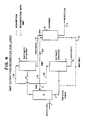
- distillate is fed via line (1) to an extraction treater tower (2) wherein it is countercurrently extracted with an extraction solvent (NMP) introduced to the tower via line (3).
- Extracted raffinate is recovered via line (4), while extract is recovered via line (5).
- Raffinate is fed via line (4) to stripper (6), wherein the extraction solvent is stripped from the raffinate oil.
- Recovered extraction solvent is recycled via lines (3A) and (3) back to the treater tower.
- Extract is fed via line (5) to a stripper (7), wherein the solvent is stripped from the extract using standard procedures, such as N2 stripping, recycled via lines (3B) and (3) back to the treater tower. Extract is recovered via line (8) and sent for further processing/handling (not shown).
- Raffinate is recovered from stripper (6) via line (9) and sent to adsorber (10), wherein basic nitrogen compounds are adsorbed from the oil.
- Base stock substantially reduced in BNC is recovered via line (11).
- feed is cut-off to unit (10) via valve (9A).
- Extraction solvent is fed to absorber (10) via line (12), valve (12A), previously closed, now being open to permit such flow.
- the BNC's are stripped from the adsorbent and the extraction solvent bearing BNC's from unit (10) is fed via line (13) to line (5) for introduction to the extract stripper, wherein the extraction solvent is freed from the BNC's and the purified extraction solvent is recovered via line (3B) for recycle in the system.
- adsorbents were evaluated in a batch system for their effectiveness in removing BNC from lube oils. Results shown in Table I indicated that silica-alumina type adsorbents, Ketjen high alumina base (amorphous) and H-Y zeolite (crystalline) are more effective than either alumina or silica for basic nitrogen removal. Ketjen base was further compared with H-Y zeolite for removing BNC from NMP extracted raffinate oil. Results shown in Table II indicate that the former is the preferred adsorbent.
- the preferred Ketjen high alumina base has a silica/alumina weight ratio of about 3.
- H-Y zeolite has a silica/alumina weight ratio of 2-3 and pore diameter of about 10 ⁇ (total alumina present, all forms, about 18 weight percent).
- Davison RC-25 consists of small pore zeolite (3 ⁇ ) and about 20 weight percent amorphous silica/alumina and other clays (total alumina present, all forms, is about 28 weight percent).
- Ketjen high-alumina base an acidic, wide pore adsorbent
- Adsorption was carried out by passing the NMP extracted raffinate oil in a continuous flow over a fixed bed of adsorbent at 70°C to 100°C, 350 kPa and 0.7 LHSV with a small flow of N2 or H2 as blanket.
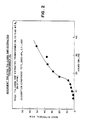
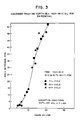
- the NMP extracted transformer oil raffinates, Coastal and Tia Juana 60N, and a North Sea 150N 95 VI oil were used as feedstocks. Samples taken during the run were inspected for basic nitrogen and sulphur. Plots of basic nitrogen versus hours on-stream are shown in Figures 1-2-3. The results indicated that basic nitrogen removal decreased with increasing adsorbent age (as expected), but sulphur removal was negligible during the entire run.
- Adsorbent regeneration a critical part of a successful adsorption process, was also determined in pilot plant studies.
- product basic nitrogen approached that of the incoming feed the oil feed was shut off and H2 flow rate was increased to 380 GHSV to purge the adsorbent bed for 6 hours and rector pressure was increased to 2.8 MPa.
- Temperature was kept at that of the adsorption runs.
- adsorber temperature was then increased at a rate of 50°C/hour to 400°C. These conditions were held for 24 hours. At the end of the regeneration period adsorber conditions were re-established for the next cycle adsorption.
- Table VI shows the performance of typical cat cracking catalyst for the removal of BNC from typical raffinates.
- cat cracking catalysts are molecular sieve types they are diffusion limited. To obtain acceptable capacity the temperature of adsorption was raised up to about 200°C.
- the cat cracking catalyst employed in the Example was Davison RC-25, which has the following characteristics:
- SiO2 70 Al2O3: 28 Na: 0.54 Fe: 0.48
- Figure 5 is a schematic of the process wherein raw distillate to be solvent extracted is fed via line (1) into extraction zone (2) wherein it is combined with extraction solvent feed into zone (2) via line (3). Extract is recovered from zone (2) via line (4). This recovered extract is fed via line 4 to solvent stripper (6A) wherein solvent is recovered via line (7A) for recycle. Solvent free extract is recovered via line (13).
- Raffinate is recovered from zone (2) via line (5). This raffinate is fed into solvent stripper (6B) wherein solvent is separated from the raffinate and recovered via line (7B) for recycle. Solvent free raffinate is recovered via line (8). While in line (8) it is contacted with adsorbent [fresh cracker catalyst introduced into line (8) via line (9)].
- the cracker catalyst (containing adsorbed BNC) is separated from the raffinate in centrifuge decanter (10). Dry BNC saturated cracker catalyst is recovered from centrifuge (10) via line (11). Treated raffinate product is recovered from centrifuge (10) via line (12).
- the BNC saturated cracker catalyst via line (11) is combined with solvent free extract from line (13) and the combined extract-BNC saturated cracker catalyst slurry is fed via line (14) to the cat cracker.
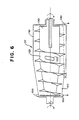
- FIG. 6 a simplified schematic drawing is shown on a Sharples Model P850 vertical scroll decanter centrifuge (20), often also referred to as a solid-bowl centrifuge, 150 mm in diameter and 350 mm in length.
- a vertical cylinder rotor bowl (110), driven by a motor and gear means (not shown) contains a helical screw conveyor (120), rotating in the same or opposite direction to the bowl but at a different speed, which is affixed to hollow shaft (130). Feed is introduced through shaft (130) and discharged into bowl (110) through opening (122), typically located near the end of the cylindrical section of bowl (110).
- the slurry feed discharged is forced to travel around the helical screw conveyor (120) by centrifugal force, causing the fines and liquid to separate.
- the fines deposit on the interior wall of bowl (110), while the liquid forms an inner ring, with the thickness of the ring determined by the height of overflow weir (140).
- the liquid becomes clearer as it approaches overflow weir (140).
- Liquid, substantially free of entrained BNC saturated catalyst fines, passes over weir (140) for recovery as product oil.
- the catalyst layer is forced to travel in a direction opposite to that of the liquid by the difference in rotary speed between rotating bowl (110) and screw conveyor (120).
- the speed of catalyst discharged is directly proportional to the relative velocity of bowl (110) and screw conveyor (120).
- bowl (110) and screw conveyor (120) are rotating in the same direction bowl (110) typically rotates at a higher speed than screw conveyor (120).
- faster rotation of screw conveyor (120) in the same direction as the rotation of of bowl (110) usually reduces the relative velocity between the bowl and the screw conveyor, thereby decreasing the rate of catalyst movement through centrifuge (20).
- the catalyst travels along the conical beach section (112) for further drying prior to discharge through ports (150) and eventual feeding as make-up catalyst to the cracker unit.
- the pre-hydrofining conditions are quite similar to those used in conventional hydrofinishing, i.e., 200-350°C, preferably 200-300°C; about 2-6 MPa, preferably about 3-6 MPa H2 pressure; about 0.5-4 LHSV, preferably 0.5-2 LHSV; and about 1-10 K mol/m3, preferively about 1.5-5.0 K mol/m3 gas rate and utilize typical hydrocarbon catalysts, i.e., mixed Group VB and Group VIII metals, their oxides and sulfides, and mixtures thereof, on a refractory metal oxide support, such as alumina catalysts of the type Ni/Mo on alumina and Co/Mo on alumina are representative of typical catalysts.
- typical hydrocarbon catalysts i.e., mixed Group VB and Group VIII metals, their oxides and sulfides, and mixtures thereof
- alumina catalysts of the type Ni/Mo on alumina and Co/Mo on alumina are representative of typical catalysts.
- Ketjen HA was first calcined at 400°C for 2 hours and then allowed to cool to ambient temperature.
- the calcined Ketjen HA was used as a base case adsorbent in comparison studies.
- a flow of anhydrous HCl gas was passed through the calcined adsorbent bed to incorporate HCl into adsorbent.
- the HCl-loaded adsorbent was tested for basic nitrogen removal.
- a sample of some HCl-loaded adsorbent was purged with argon gas at 400°C to simulate an adsorbent regeneration. The argon stripped adsorbent was then evaluated for basic nitrogen removal.
- Ketjen HA base was mixed with NH4F aqueous solution to give different fluorine strength on adsorbent. These materials were mixed and then evaporated with a rotavaporator at about 50°C at 30 mmHg for 6 hours to remove excess water from the wet adsorbent. Then it was dried in an oven at 100°C for 16 hours. The dried adsorbent was then calcined at 400°C and 500°C in air for 2 hours.
- drying temperatures may range from about 50°C to 150°C.
- a two-hour calcination at 400°C appears to be adequate, but higher calcination temperatures did not affect the adsorbent performance.
- Atmospheres other than air can be used.
- Fluorine sources other than NH4F, i.e., aqueous HF, could be used for fluorination.
- Ketjen HA pretreatment of Ketjen HA with H2O is beneficial to basic nitrogen adsorption.
- Samples of wet Ketjen HA base were prepared by either treating the calcined adsorbent (the base case no fluorine loading) with wet nitrogen purge or by first soaking with distilled water, then adjusting final water level by filtration and drying. The amount of water added to the calcined adsorbent was measured by the increase in weight.
- the calcined and water pretreated adsorbents were ground to a powder and slurry mixed with a North Sea 150N dewaxed NMP raffinate to test the effect of water content on adsorption performance.
- Temperatures in °F are converted to °C by subtracting 32 and then dividing by 1.8.
- Pressures in mmHg are converted to kPa equivalent by multiplying by 0.1333.
- GHSV and LHSV denote “gas hourly space velocity” and liquid hourly space velocity” respectively.
Landscapes
- Chemical & Material Sciences (AREA)
- Oil, Petroleum & Natural Gas (AREA)
- Engineering & Computer Science (AREA)
- Chemical Kinetics & Catalysis (AREA)
- General Chemical & Material Sciences (AREA)
- Organic Chemistry (AREA)
- Production Of Liquid Hydrocarbon Mixture For Refining Petroleum (AREA)
- Solid-Sorbent Or Filter-Aiding Compositions (AREA)
- Treatment Of Liquids With Adsorbents In General (AREA)
Applications Claiming Priority (2)
| Application Number | Priority Date | Filing Date | Title |
|---|---|---|---|
| US07/014,271 US4846962A (en) | 1987-02-12 | 1987-02-12 | Removal of basic nitrogen compounds from extracted oils by use of acidic polar adsorbents and the regeneration of said adsorbents |
| US14271 | 2001-11-09 |
Publications (3)
| Publication Number | Publication Date |
|---|---|
| EP0278694A2 true EP0278694A2 (de) | 1988-08-17 |
| EP0278694A3 EP0278694A3 (en) | 1989-10-18 |
| EP0278694B1 EP0278694B1 (de) | 1992-07-29 |
Family
ID=21764475
Family Applications (1)
| Application Number | Title | Priority Date | Filing Date |
|---|---|---|---|
| EP88300982A Expired EP0278694B1 (de) | 1987-02-12 | 1988-02-05 | Methode für die Entfernung von basischen Stickstoffverbindungen aus extrahierten Ölen durch Anwendung von Sauren polaren Adsorbenzien und Regeneration dieser Adsorbenzien |
Country Status (5)
| Country | Link |
|---|---|
| US (1) | US4846962A (de) |
| EP (1) | EP0278694B1 (de) |
| JP (1) | JPS63200804A (de) |
| CA (1) | CA1323841C (de) |
| DE (1) | DE3873111T2 (de) |
Cited By (5)
| Publication number | Priority date | Publication date | Assignee | Title |
|---|---|---|---|---|
| DE4429643A1 (de) * | 1994-08-20 | 1996-02-22 | Sued Chemie Ag | Säurebehandelte anorganische Formkörper und deren Verwendung |
| EP1264317A4 (de) * | 2000-01-18 | 2004-08-18 | Exxonmobil Res & Eng Co | Herstellung von mit hydrofiniertem gasöl angereichertem isolieröl zur verbesserung der oxidation und des elektrischen widerstands |
| WO2007005298A3 (en) * | 2005-06-30 | 2007-02-22 | Chinese Petroleum Corp | Process for producing petroleum oils with ultra-low nitrogen content |
| US20100268008A1 (en) * | 2002-02-28 | 2010-10-21 | Shyh-Yuan Hwang | Production of alkyl aromatic compounds |
| WO2020224666A3 (zh) * | 2019-05-05 | 2020-12-30 | 西安热工研究院有限公司 | 一种工业润滑油再生吸附剂的再生能力评价方法 |
Families Citing this family (24)
| Publication number | Priority date | Publication date | Assignee | Title |
|---|---|---|---|---|
| US5282960A (en) * | 1991-10-02 | 1994-02-01 | Exxon Research And Engineering Company | Method for improving the demulsibility of base oils |
| DE4207191C2 (de) * | 1992-03-06 | 2001-03-08 | Intevep Sa | Verfahren zum Herstellen eines etherreichen Additivs |
| US5466364A (en) * | 1993-07-02 | 1995-11-14 | Exxon Research & Engineering Co. | Performance of contaminated wax isomerate oil and hydrocarbon synthesis liquid products by silica adsorption |
| US5894012A (en) * | 1993-08-19 | 1999-04-13 | Gilbert W. Denison | Method and system for recovering marketable end products from waste rubber |
| IT1283626B1 (it) * | 1996-04-22 | 1998-04-22 | Snam Progetti | Procedimento per rimuovere contaminanti azotati e solforati da correnti idrocarburiche |
| KR100524447B1 (ko) * | 1998-06-25 | 2005-12-21 | 에스케이 주식회사 | 천연 헤테로 화합물의 제조방법 및 이의 용도 |
| KR100557586B1 (ko) | 1999-04-24 | 2006-03-03 | 에스케이 주식회사 | 석유계 탄화수소내의 헤테로화합물을 제거 또는 농축시키기 위한 액상 흡탈착공정 |
| GB0106269D0 (en) * | 2001-03-14 | 2001-05-02 | Auntiegravity Ltd | Improvements in noise cancellation |
| US7205448B2 (en) * | 2003-12-19 | 2007-04-17 | Uop Llc | Process for the removal of nitrogen compounds from a fluid stream |
| US6894201B1 (en) | 2003-12-19 | 2005-05-17 | Uop Llc | Process and apparatus for the removal of nitrogen compounds from a fluid stream |
| US7666295B2 (en) * | 2005-10-20 | 2010-02-23 | Ergon Refining, Inc. | Uninhibited electrical insulating oil |
| US7799211B2 (en) | 2006-10-20 | 2010-09-21 | Saudi Arabian Oil Company | Process for upgrading whole crude oil to remove nitrogen and sulfur compounds |
| US8246814B2 (en) * | 2006-10-20 | 2012-08-21 | Saudi Arabian Oil Company | Process for upgrading hydrocarbon feedstocks using solid adsorbent and membrane separation of treated product stream |
| CN101559357B (zh) * | 2008-06-23 | 2011-04-06 | 北京三聚环保新材料股份有限公司 | 一种吸附脱氮剂的脱附再生方法 |
| US20110073527A1 (en) * | 2009-09-30 | 2011-03-31 | Uop Llc | Process for Removing Nitrogen Compounds from a Hydrocarbon Stream |
| US8828219B2 (en) * | 2011-01-24 | 2014-09-09 | Saudi Arabian Oil Company | Hydrocracking process with feed/bottoms treatment |
| US9150463B2 (en) | 2012-05-31 | 2015-10-06 | Uop Llc | Methods and apparatus for treating a hydrocarbon stream |
| US9150464B2 (en) | 2012-05-31 | 2015-10-06 | Uop Llc | Methods and apparatus for treating a hydrocarbon stream |
| CN105765027A (zh) | 2013-09-30 | 2016-07-13 | 马士基橄榄和气体公司 | 利用使用磁性粒子耗尽离子的水来提高油回收的方法和系统 |
| CN105992808B (zh) | 2013-09-30 | 2018-10-19 | 综合E&P丹麦股份有限公司 | 磁性纳米粒子用于耗尽油中的芳族化合物的用途 |
| WO2015044446A1 (en) | 2013-09-30 | 2015-04-02 | Mærsk Olie Og Gas A/S | Method and system for the recovery of oil, using water that has been treated using magnetic particles |
| WO2015044444A1 (en) | 2013-09-30 | 2015-04-02 | Mærsk Olie Og Gas A/S | Water treatment suited for oil production wells |
| US20160312136A1 (en) * | 2015-04-24 | 2016-10-27 | Exxonmobil Research And Engineering Company | Reduction of distillation unit fouling |
| CN106932521A (zh) * | 2015-12-31 | 2017-07-07 | 中国石油天然气股份有限公司 | 重油中含氮化合物的分离分析方法 |
Family Cites Families (61)
| Publication number | Priority date | Publication date | Assignee | Title |
|---|---|---|---|---|
| US1997938A (en) * | 1932-01-06 | 1935-04-16 | Standard Oil Dev Co | Process of refining oils |
| US2195659A (en) * | 1937-02-06 | 1940-04-02 | Standard Oil Co | Stable mineral oil and method of preparing the same |
| US2352064A (en) * | 1937-12-20 | 1944-06-20 | Zerbe Carl | Refining mineral oil |
| US2316005A (en) * | 1940-10-26 | 1943-04-06 | Schwarz Engineering Company In | Recovery of sorbed oil |
| US2273846A (en) * | 1941-08-25 | 1942-02-24 | Buckeye Lab Inc | Process for treating hydrocarbons |
| US2384315A (en) * | 1942-08-06 | 1945-09-04 | Standard Oil Dev Co | Process for cracking crude hydrocarbon oil |
| US2375696A (en) * | 1943-10-02 | 1945-05-08 | Margaret E Shick | Chair and music stand unit |
| US2647858A (en) * | 1950-08-23 | 1953-08-04 | Socony Vacuum Oil Co Inc | Oil decolorization method |
| US2744053A (en) * | 1951-04-26 | 1956-05-01 | Union Oil Co | Hydrocarbon conversion process, including preliminary nitrogen removal by adsorption |
| US2708519A (en) * | 1953-01-30 | 1955-05-17 | Ohio Commw Eng Co | Chromatographic adsorption apparatus with eluting solvent flow control valve |
| US2769751A (en) * | 1953-04-30 | 1956-11-06 | Texaco Development Corp | Process for treating spent oil refinery clay |
| US2908639A (en) * | 1955-06-16 | 1959-10-13 | Texaco Inc | Method for the regeneration of zeolite molecular sieve solid selective adsorbents |
| US2954338A (en) * | 1955-06-24 | 1960-09-27 | Standard Oil Co | Process for monitoring a solid adsorption process by radioactive means |
| US2919251A (en) * | 1955-12-12 | 1959-12-29 | Sun Oil Co | Regeneration of spent contact clay |
| US2949421A (en) * | 1955-12-29 | 1960-08-16 | Sun Oil Co | Preparation and use of acid activated clay |
| US2926135A (en) * | 1956-07-30 | 1960-02-23 | Shell Dev | Process for decolorizing a hydrocarbon oil using an alumina adsorbent |
| US2984620A (en) * | 1957-08-01 | 1961-05-16 | Union Oil Co | Isothermal adsorption process for separation of organic nitrogen compounds from hydrocarbons |
| US2951036A (en) * | 1958-07-07 | 1960-08-30 | Socony Mobil Oil Co Inc | Adsorbent washing process |
| US3243366A (en) * | 1958-08-18 | 1966-03-29 | Exxon Research Engineering Co | Dewaxing by contact with a crystalline zeolitic adsorbent |
| US2999861A (en) * | 1958-11-12 | 1961-09-12 | Union Oil Co | Segregation of organic nitrogen compounds |
| US3238123A (en) * | 1962-05-11 | 1966-03-01 | Exxon Research Engineering Co | Catalytic hydrofining process |
| US3189539A (en) * | 1962-05-14 | 1965-06-15 | California Research Corp | Removal of nitrogen compounds from hydrocarbon oils by adsorption on cracking catalyst |
| US3201344A (en) * | 1962-11-29 | 1965-08-17 | Universal Oil Prod Co | Refining hydrocarbon lubricating oils |
| NL302074A (de) * | 1962-12-18 | |||
| US3239455A (en) * | 1963-05-13 | 1966-03-08 | Universal Oil Prod Co | Separation of aliphatic paraffins from normally liquid hydrocarbon mixtures |
| GB1068588A (en) * | 1963-12-23 | 1967-05-10 | Gas Council | Method of treating gases |
| US3462358A (en) * | 1967-03-11 | 1969-08-19 | Sun Oil Co | Clay treatment of hydrorefined cable oils |
| NL6710291A (de) * | 1967-07-26 | 1969-01-28 | ||
| US3551324A (en) * | 1968-07-26 | 1970-12-29 | James G Lillard | Transformer oil production by acetic acid extraction |
| US3732154A (en) * | 1969-02-19 | 1973-05-08 | Sun Oil Co | Catalytic hydrofinishing of lube oil product of solvent extraction of petroleum distillate |
| US3654128A (en) * | 1969-12-24 | 1972-04-04 | Texaco Inc | Dewaxing of lubricating oils |
| US3755152A (en) * | 1970-09-14 | 1973-08-28 | Ouvoe Chem Ind Inc | Removing contaminants from organic materials |
| US3705850A (en) * | 1971-01-08 | 1972-12-12 | Hydrocarbon Research Inc | Multifunction contacting process |
| BE790381A (fr) * | 1971-10-21 | 1973-04-20 | Kanegafuchi Chemical Ind | Procede de preparation de paraffines normales purifiees |
| US3830730A (en) * | 1972-04-07 | 1974-08-20 | Texaco Inc | Viscosity index improvement of lubricating oil fractions |
| US3926783A (en) * | 1972-04-19 | 1975-12-16 | Hydrocarbon Research Inc | Ebullated bed process |
| US3901792A (en) * | 1972-05-22 | 1975-08-26 | Hydrocarbon Research Inc | Multi-zone method for demetallizing and desulfurizing crude oil or atmospheric residual oil |
| US3920540A (en) * | 1973-04-03 | 1975-11-18 | Texaco Inc | Method of treating oils to remove contaminants of sulfur nitrogen and color bodies |
| CA995437A (en) * | 1973-05-09 | 1976-08-24 | Hydrocarbon Research | Ebullated bed process |
| FR2229440B1 (de) * | 1973-05-17 | 1977-07-29 | Inst Francais Du Petrole | |
| JPS5148200A (en) * | 1974-10-23 | 1976-04-24 | Nippon Oil Co Ltd | Denkizetsuenyuno seizohoho |
| US4081352A (en) * | 1976-06-17 | 1978-03-28 | Exxon Research & Engineering Co. | Combination extraction-dewaxing of waxy petroleum oils |
| US4110196A (en) * | 1976-12-10 | 1978-08-29 | Exxon Research & Engineering Co. | Conversion of sulfonic acids into a hydrocarbon oil of superior oxidation stability |
| FR2378845A2 (fr) * | 1977-01-26 | 1978-08-25 | Inst Francais Du Petrole | Procede de purification d'hydrocarbures par adsorption |
| US4090951A (en) * | 1977-06-06 | 1978-05-23 | Atlantic Richfield Company | Denitrogenation of syncrude |
| US4137154A (en) * | 1977-07-05 | 1979-01-30 | Mobil Oil Corporation | Process for the removal of nitrogen compounds from various organic media |
| US4120782A (en) * | 1978-01-03 | 1978-10-17 | Mobil Oil Corporation | Method for improving the treating capacity of a clay sorbent |
| JPS5547103A (en) * | 1978-10-02 | 1980-04-03 | Mobil Oil | Method of removing nitrogenous compound from various organic media |
| US4269694A (en) * | 1979-10-01 | 1981-05-26 | Phillips Petroleum Company | Method of removing contaminant from a feedstock stream |
| US4487688A (en) * | 1979-12-19 | 1984-12-11 | Mobil Oil Corporation | Selective sorption of lubricants of high viscosity index |
| US4358297A (en) * | 1980-01-02 | 1982-11-09 | Exxon Research And Engineering Company | Removal of sulfur from process streams |
| JPS588790A (ja) * | 1981-07-02 | 1983-01-18 | Idemitsu Kosan Co Ltd | 高品質ナフテン基油の製造方法 |
| US4455444A (en) * | 1981-07-30 | 1984-06-19 | Uop Inc. | Low temperature process for separating hydrocarbons |
| US4424114A (en) * | 1981-09-24 | 1984-01-03 | Exxon Research And Engineering Co. | Separating basic asphaltenes using transition metal oxide acid catalysts |
| US4419219A (en) * | 1981-09-24 | 1983-12-06 | Exxon Research And Engineering Co. | Adsorption of basic asphaltenes on solid acid catalysts |
| US4422926A (en) * | 1981-09-24 | 1983-12-27 | Exxon Research And Engineering Co. | Separating basic asphaltenes using Bronsted acid transition metal oxide acid catalysts |
| US4404118A (en) * | 1981-12-28 | 1983-09-13 | Uop Inc. | Regeneration of adsorbents by low temperature hydrogen stripping |
| US4469805A (en) * | 1982-10-25 | 1984-09-04 | Gulf Research & Development Company | Regeneration of filter clay with liquid methanol |
| US4423278A (en) * | 1983-01-17 | 1983-12-27 | Conoco Inc. | Removing color from polyphenylated alkane |
| JPS6021802A (ja) * | 1983-07-15 | 1985-02-04 | Daido Sanso Kk | 均一な細孔を有する金属酸化物、その製造方法およびその金属酸化物からなる触媒用担体 |
| US4622130A (en) * | 1985-12-09 | 1986-11-11 | Shell Oil Company | Economic combinative solvent and catalytic dewaxing process employing methylisopropyl ketone as the solvent and a silicate-based catalyst |
-
1987
- 1987-02-12 US US07/014,271 patent/US4846962A/en not_active Expired - Fee Related
-
1988
- 1988-01-19 CA CA000556851A patent/CA1323841C/en not_active Expired - Fee Related
- 1988-02-05 EP EP88300982A patent/EP0278694B1/de not_active Expired
- 1988-02-05 DE DE8888300982T patent/DE3873111T2/de not_active Expired - Fee Related
- 1988-02-10 JP JP63027839A patent/JPS63200804A/ja active Pending
Cited By (7)
| Publication number | Priority date | Publication date | Assignee | Title |
|---|---|---|---|---|
| DE4429643A1 (de) * | 1994-08-20 | 1996-02-22 | Sued Chemie Ag | Säurebehandelte anorganische Formkörper und deren Verwendung |
| EP0697454A3 (de) * | 1994-08-20 | 1996-04-24 | Sued Chemie Ag | Säurebehandelte anorganische Formkörper und deren Verwendung |
| EP1264317A4 (de) * | 2000-01-18 | 2004-08-18 | Exxonmobil Res & Eng Co | Herstellung von mit hydrofiniertem gasöl angereichertem isolieröl zur verbesserung der oxidation und des elektrischen widerstands |
| US20100268008A1 (en) * | 2002-02-28 | 2010-10-21 | Shyh-Yuan Hwang | Production of alkyl aromatic compounds |
| WO2007005298A3 (en) * | 2005-06-30 | 2007-02-22 | Chinese Petroleum Corp | Process for producing petroleum oils with ultra-low nitrogen content |
| US7727383B2 (en) | 2005-06-30 | 2010-06-01 | Amt International, Inc. | Process for producing petroleum oils with ultra-low nitrogen content |
| WO2020224666A3 (zh) * | 2019-05-05 | 2020-12-30 | 西安热工研究院有限公司 | 一种工业润滑油再生吸附剂的再生能力评价方法 |
Also Published As
| Publication number | Publication date |
|---|---|
| US4846962A (en) | 1989-07-11 |
| JPS63200804A (ja) | 1988-08-19 |
| DE3873111T2 (de) | 1993-03-04 |
| CA1323841C (en) | 1993-11-02 |
| EP0278694B1 (de) | 1992-07-29 |
| EP0278694A3 (en) | 1989-10-18 |
| DE3873111D1 (de) | 1992-09-03 |
Similar Documents
| Publication | Publication Date | Title |
|---|---|---|
| EP0278694B1 (de) | Methode für die Entfernung von basischen Stickstoffverbindungen aus extrahierten Ölen durch Anwendung von Sauren polaren Adsorbenzien und Regeneration dieser Adsorbenzien | |
| US4115249A (en) | Process for removing sulfur from a gas | |
| RU2238299C2 (ru) | Комбинированный способ улучшенной гидроочистки дизельного топлива | |
| US5322615A (en) | Method for removing sulfur to ultra low levels for protection of reforming catalysts | |
| US7799210B2 (en) | Process for removing sulfur from naphtha | |
| US4179361A (en) | Sorbent regeneration in a process for removing sulfur-containing impurities from mineral oils | |
| EP0521716B1 (de) | Verfahren zur Reaktivierung von erschöpften Hydrobehandlungskatalysatoren mit Aluminiumoxidträger | |
| US6245223B1 (en) | Selective adsorption process for resid upgrading (law815) | |
| JPS6141952B2 (de) | ||
| JP2002047497A (ja) | ガソリンの水素化脱硫の2工程と、第1工程中に生じたh2sの中間除去とを含む方法 | |
| US4645587A (en) | Process for removing silicon compounds from hydrocarbon streams | |
| CA2078458A1 (en) | Separation of active catalyst particles from spent catalyst particles by air elutriation | |
| US4244810A (en) | Fluidized catalytic cracking process for increased hydrogen production | |
| US4363717A (en) | Conversion of heavy hydrocarbon oils | |
| US4486298A (en) | Adsorptive demetalation of heavy petroleum residua | |
| JPS6027711B2 (ja) | 潤滑油の製造法 | |
| KR100877004B1 (ko) | 연료유 수소화 분해공정의 미전환유 및 이의 감압증류분획 유분으로부터 질소화합물을 제거하는 방법 | |
| JPS6210278B2 (de) | ||
| EP0278792A2 (de) | Methode für ein gleichzeitige Entfernung von Aromaten und Wachs aus Schmieröldestillaten durch ein Adsorptionsverfahren | |
| US4409124A (en) | Process for regenerating sulfur sorbent by oxidation and leaching | |
| JP2004516927A (ja) | 不均一系触媒および吸着剤の再生方法 | |
| US20020098971A1 (en) | Regeneration method of heterogeneous catalysts and adsorbents | |
| US3162596A (en) | Pretreatment and cracking of residual oils | |
| US3562145A (en) | Stable hydrocarbon lubricating oils and process for forming same | |
| EP0833690A1 (de) | Verfahren zum regenieren eines hochtemperaturbehandelten zeolitischen katalysators |
Legal Events
| Date | Code | Title | Description |
|---|---|---|---|
| PUAI | Public reference made under article 153(3) epc to a published international application that has entered the european phase |
Free format text: ORIGINAL CODE: 0009012 |
|
| AK | Designated contracting states |
Kind code of ref document: A2 Designated state(s): DE FR GB IT |
|
| PUAL | Search report despatched |
Free format text: ORIGINAL CODE: 0009013 |
|
| AK | Designated contracting states |
Kind code of ref document: A3 Designated state(s): DE FR GB IT |
|
| 17P | Request for examination filed |
Effective date: 19900314 |
|
| 17Q | First examination report despatched |
Effective date: 19901204 |
|
| GRAA | (expected) grant |
Free format text: ORIGINAL CODE: 0009210 |
|
| AK | Designated contracting states |
Kind code of ref document: B1 Designated state(s): DE FR GB IT |
|
| ITF | It: translation for a ep patent filed | ||
| REF | Corresponds to: |
Ref document number: 3873111 Country of ref document: DE Date of ref document: 19920903 |
|
| ET | Fr: translation filed | ||
| PLBE | No opposition filed within time limit |
Free format text: ORIGINAL CODE: 0009261 |
|
| STAA | Information on the status of an ep patent application or granted ep patent |
Free format text: STATUS: NO OPPOSITION FILED WITHIN TIME LIMIT |
|
| 26N | No opposition filed | ||
| PGFP | Annual fee paid to national office [announced via postgrant information from national office to epo] |
Ref country code: FR Payment date: 19961217 Year of fee payment: 10 |
|
| PGFP | Annual fee paid to national office [announced via postgrant information from national office to epo] |
Ref country code: DE Payment date: 19961227 Year of fee payment: 10 |
|
| PGFP | Annual fee paid to national office [announced via postgrant information from national office to epo] |
Ref country code: GB Payment date: 19970107 Year of fee payment: 10 |
|
| PG25 | Lapsed in a contracting state [announced via postgrant information from national office to epo] |
Ref country code: GB Free format text: LAPSE BECAUSE OF NON-PAYMENT OF DUE FEES Effective date: 19980205 |
|
| PG25 | Lapsed in a contracting state [announced via postgrant information from national office to epo] |
Ref country code: FR Free format text: THE PATENT HAS BEEN ANNULLED BY A DECISION OF A NATIONAL AUTHORITY Effective date: 19980228 |
|
| GBPC | Gb: european patent ceased through non-payment of renewal fee |
Effective date: 19980205 |
|
| PG25 | Lapsed in a contracting state [announced via postgrant information from national office to epo] |
Ref country code: DE Free format text: LAPSE BECAUSE OF NON-PAYMENT OF DUE FEES Effective date: 19981103 |
|
| REG | Reference to a national code |
Ref country code: FR Ref legal event code: ST |
|
| PG25 | Lapsed in a contracting state [announced via postgrant information from national office to epo] |
Ref country code: IT Free format text: LAPSE BECAUSE OF NON-PAYMENT OF DUE FEES;WARNING: LAPSES OF ITALIAN PATENTS WITH EFFECTIVE DATE BEFORE 2007 MAY HAVE OCCURRED AT ANY TIME BEFORE 2007. THE CORRECT EFFECTIVE DATE MAY BE DIFFERENT FROM THE ONE RECORDED. Effective date: 20050205 |