EP0280224B1 - 3H-indoles substitués, leur procédé de préparation et médicaments les contenant - Google Patents
3H-indoles substitués, leur procédé de préparation et médicaments les contenant Download PDFInfo
- Publication number
- EP0280224B1 EP0280224B1 EP88102533A EP88102533A EP0280224B1 EP 0280224 B1 EP0280224 B1 EP 0280224B1 EP 88102533 A EP88102533 A EP 88102533A EP 88102533 A EP88102533 A EP 88102533A EP 0280224 B1 EP0280224 B1 EP 0280224B1
- Authority
- EP
- European Patent Office
- Prior art keywords
- alkyl
- oxo
- group
- dihydro
- amino
- Prior art date
- Legal status (The legal status is an assumption and is not a legal conclusion. Google has not performed a legal analysis and makes no representation as to the accuracy of the status listed.)
- Expired - Lifetime
Links
Classifications
-
- C—CHEMISTRY; METALLURGY
- C07—ORGANIC CHEMISTRY
- C07D—HETEROCYCLIC COMPOUNDS
- C07D401/00—Heterocyclic compounds containing two or more hetero rings, having nitrogen atoms as the only ring hetero atoms, at least one ring being a six-membered ring with only one nitrogen atom
- C07D401/14—Heterocyclic compounds containing two or more hetero rings, having nitrogen atoms as the only ring hetero atoms, at least one ring being a six-membered ring with only one nitrogen atom containing three or more hetero rings
-
- A—HUMAN NECESSITIES
- A61—MEDICAL OR VETERINARY SCIENCE; HYGIENE
- A61P—SPECIFIC THERAPEUTIC ACTIVITY OF CHEMICAL COMPOUNDS OR MEDICINAL PREPARATIONS
- A61P9/00—Drugs for disorders of the cardiovascular system
- A61P9/04—Inotropic agents, i.e. stimulants of cardiac contraction; Drugs for heart failure
-
- C—CHEMISTRY; METALLURGY
- C07—ORGANIC CHEMISTRY
- C07D—HETEROCYCLIC COMPOUNDS
- C07D403/00—Heterocyclic compounds containing two or more hetero rings, having nitrogen atoms as the only ring hetero atoms, not provided for by group C07D401/00
- C07D403/02—Heterocyclic compounds containing two or more hetero rings, having nitrogen atoms as the only ring hetero atoms, not provided for by group C07D401/00 containing two hetero rings
- C07D403/04—Heterocyclic compounds containing two or more hetero rings, having nitrogen atoms as the only ring hetero atoms, not provided for by group C07D401/00 containing two hetero rings directly linked by a ring-member-to-ring-member bond
-
- C—CHEMISTRY; METALLURGY
- C07—ORGANIC CHEMISTRY
- C07D—HETEROCYCLIC COMPOUNDS
- C07D409/00—Heterocyclic compounds containing two or more hetero rings, at least one ring having sulfur atoms as the only ring hetero atoms
- C07D409/14—Heterocyclic compounds containing two or more hetero rings, at least one ring having sulfur atoms as the only ring hetero atoms containing three or more hetero rings
Definitions
- the present invention relates to new 3H-indoles of the general formula I.
- R1 represents a phenyl ring of the general formula II, where R5, R6, R7 may be the same or different and each is hydrogen, a (C1-C5) alkanesulfonyloxy, trifluoromethanesulfonyloxy, (C1-C5) alkanesulfonylamino, trifluoromethanesulfonylamino, N- (C1-C5) alkyl (C1-C5 ) alkanesulfonylamino-, N- (C1-C5) alkyltrifluoromethanesulfonylamino-, (C1-C5) alkylsulfenylmethyl-, (C1-C5) alkylsulfinyl-methyl- or (C1-C5) alkylsulfonylmethyl group, one through a hydroxy-, (C1-C5) Alkoxy
- the invention also relates to the optically active forms and racemic mixtures of these compounds.
- These new compounds of the present invention have valuable pharmacological properties, in particular they increase the cardiac strength and / or lower blood pressure and / or influence the platelet function and improve the microcirculation.
- R1 is a phenyl ring of the general formula II
- the alkyl part of the substituents mentioned for R5, R6 and R7 can preferably contain 1-4 carbon atoms.
- sulfonyl groups which can be substituted by cyclic imino groups
- the morpholino, thiomorpholino, pyrrolidino, piperidino and hexamethyleneiminosulfonyl groups are preferred.
- R5 are hydrogen, a (C1-C2) alkylsulfonyloxy-, trifluoromethylsulfonyloxy-, (C1-C2) alkylsulfenylmethyl-, (C1-C2) alkylsulfinylmethyl-, (C1-C2) alkylsulfonylmethyl-, (C1-C2) alkylsulfonylamino , N- (C1-C2) alkyl (C1-C2) alkylsulfonylamino, trifluoromethylsulfonylamino, or N- (C1-C2) alkyltrifluoromethylsulfonylamino group, by a hydroxy, (C1-C2) alkoxy, amino, (C1- C2) alkylamino or di (C1-C2) alkylamino group substituted carbonyl group or a sulfonyl group substituted by an amino, di (C1-C
- the phenyl moiety can carry 1 to 3 of the substituents mentioned.
- Preferred monosubstituted phenyl compounds are the hydroxy, C1-C3 alkyl, C1-C3 alkoxy, allyloxy, propargyloxy, cyanomethyloxy, methoxycarbonylmethyloxy, halogen, nitro, cyano, aminocarbonyl, methoxycarbonyl, amino, C1-C3 dialkylamino, C1-C3 alkylmercapto, C1-C3 alkylsulfinyl, C1-C3 alkylsulfonyl, C1-C3 alkylsulfonyloxy and 1-imidazolylphenyls, the substituent being in the 2-, 3- or 4-position can stand.
- Preferred disubstituted phenyls contain, as substituents, an alkanesulfonyloxy-, trifluoromethylsulfonyloxy-, alkylsulfonylmethyl-, alkylsulfinylmethyl-, alkylsulfonylmethyl-, alkylsulfonylamino-, N-alkyl-alkylsulfonylamino-, trifluoromethylsulfonyl-sulfonylamino- or N-a Amino, alkylamino or dialkylamino group substituted carbonyl group or a sulfonyl group substituted by an amino, dialkylamino or morpholino group, an alkylaminosulfonyl, alkylcarbonylamino, aminocarbonylamino or N-alkylamino carbonylamino group, a hydroxy, allyloxy, alkoxy -, Propargyloxy
- the preferred trisubstituted phenyl radical is the 3,4,5-trimethoxyphenyl radical.
- R1 is a heterocyclic five-membered ring with 1-4 heteroatoms or a heterocyclic six-membered ring with 1-5 heteroatoms, where the heteroatoms of the aforementioned five- or six-membered rings can be the same or different and denote nitrogen, oxygen or sulfur and optionally an oxygen on one or more nitrogen atoms
- pyrrole, furan, thiophene, pyrazole, imidazole, thiazole, isothiazole, oxazole, isoxazole, triazole, tetrazole, thiadiazole, oxadiazole, pyrazine are preferred -, N, N -dioxypyrazine, pyrimidine, N, N -dioxy-pyrimidine, pyridazine, oxazine, thiazine, triazine, tetrazine, pyridine, N-oxypyridine, piperidine, piperazine, Mor
- Alkyl, alkoxy and alkyl mercapto substituents in the heterocyclic five and six rings preferably contain 1-4 carbon atoms.
- the methyl, ethyl, methoxy, ethoxy, methyl mercapto and ethyl mercapto radical is preferred.
- Halogen is to be understood as fluorine, chlorine and bromine, preferably chlorine.
- R1 is a (C1-C10) alkyl, or a (C1-C10) alkenyl radical or an alkynyl group having up to 10 C atoms, then straight or branched chains are to be understood. In this sense, the methyl, ethyl, propyl, butyl, pentyl, hexyl, vinyl, propenyl and propynyl radical is preferred.
- R1 is a (C3-C7) cycloalkyl or a (C3-C7) cycloalkenyl radical
- the cyclopropyl, cyclobutyl, cyclopentyl, cyclohexyl, cyclopentenyl and cyclohexenyl radical is preferred in this sense.
- X is a bond and R1 is a (C1-C6) alkoxy (C1-C6) alkyl, carboxy (C1-C6) alkyl, (C1-C6) alkoxycarbonyl (C1-C6) alkyl, hydroxy (C1 -C6) alkyl-, amino (C1-C6) -alkyl, (C1-C6) alkylamino, or a (C1-C-) alkyl-carbonylamino radical is in this sense the ethoxymethyl, methoxyethyl, ethoxyethyl, carboxymethyl , Carboxypropyl, carboxybutyl, methoxycarbonylmethyl, methoxycarbonylethyl, methoxycarbonylpropyl, ethoxycarbonylmethyl, ethoxycarbonylethyl, ethoxycarbonylpropyl, propoxycarbonylethyl, aminomethyl, aminoethyl, aminopropyl, aminobut
- Halogen means fluorine, chlorine and bromine, but preferably chlorine.
- R2 and R3 (C1-C6) alkyl groups, it means straight or branched chains. In this sense, the methyl, ethyl, propyl and butyl groups are preferred.
- R4 is a heterocyclic five-membered or six-membered ring with 1-4 or 1-5 identical or different heteroatoms, such as nitrogen, oxygen or sulfur, and these five- and six-membered rings are optionally substituted by one or more (C1-C6) alkyl, (C1 -C6) alkoxy, (C1-C6) alkoxy (C1-C6) alkyl, (C1-C6) alkylmercapto, hydroxy, hydroxy (C1-C6) alkyl, amino, halogen, oxo or cyano groups substituted, in this sense the 3-oxo-2,3-dihydro-6-pyridazinyl-, 5- (C1-C6) alkyl-3-oxo-2,3-dihydro-6-pyridazinyl-, 3- Oxo-2,3,4,5-tetrahydro-6-pyridazinyl-, 5- (C1-C6) alkyl-3-oxo-2,3,4,5-t
- X is a (C1-C4) alkylene group, the methylene and ethylene group is preferred in this sense.
- Particularly preferred compounds are compounds of the general formula I.
- the R1 is the phenyl radical of the general formula II, in which R5 is a hydrogen atom, the methanesulfonyloxy, trifluoromethanesulfonyloxy, methanesulfonylamino, trifluoromethanesulfonylamino, methylmercapto, methylsulfinyl, methylsulfonyl, hydroxy, methyl, methoxy, trifluoromethyl - or the 1-imidazolyl group, R6 is hydrogen, the methyl, methoxy, dimethylamino or chlorine group, R7 represents hydrogen or the methoxy group or R1 den pyrrol, furan, thiophene, pyrazole, imidazole, isothiazole, thiazole, oxazole, triazole, tetrazole, thiadiazole, isoxazole, oxadiaiol, pyr
- the compounds of general formula I can be prepared by processes known from the literature for indole synthesis.
- the hydrazones of the general formula VI can also be obtained by reacting the diazonium salt of the amines III in a Japp-Klingemann reaction with compounds of the general formula VII in the R1, R2, R3 and X have the meaning given and Y is a residue activating the methine group.
- This residue can be, for example, an aldehyde, ketone, ester, carboxylic acid or nitrile.
- the azo compound obtained in the reaction mixture is saponified directly to the hydrazone without isolation.
- the diazotization of the amines III is preferably carried out under neutral or acidic conditions in a polar solvent such as water, methanol, ethanol, glacial acetic acid, hydrochloric acid, sulfuric acid or phosphoric acid at temperatures between -70 ° C and 50 ° C, but preferably between -5 ° C and 10 ° C.
- a polar solvent such as water, methanol, ethanol, glacial acetic acid, hydrochloric acid, sulfuric acid or phosphoric acid at temperatures between -70 ° C and 50 ° C, but preferably between -5 ° C and 10 ° C.
- Diazotization is primarily carried out using inorganic salts or organic esters of nitrous acid, e.g. NaNO2, KNO2 or amyl nitrite.
- the reduction of the diazonium salts is predominantly carried out in the abovementioned solvents in which the diazotization has been carried out at temperatures between -50 ° C. and the boiling point of the solvent, but preferably between 0 ° C. and 80 ° C., using alkali metal sulfites, sulfur dioxide as the reducing agent , Dithionite, tin (II) chloride, zinc dust, iron, sodium amalgam, triphenylphosphine, endiols or an electrochemical reduction.
- the reaction of the hydrazines with compounds of the general formula V can be carried out in solvents such as water, alcohol, benzene, toluene, dioxane, DMF, diethyl ether or THF at temperatures between -80 ° C to the boiling point of the solvent used.
- solvents such as water, alcohol, benzene, toluene, dioxane, DMF, diethyl ether or THF at temperatures between -80 ° C to the boiling point of the solvent used.
- an inorganic or organic acid such as hydrochloric acid, sulfuric acid, phosphoric acid or acetic acid is also advantageous.
- the Japp-Klingemann reaction is advantageously carried out in the solvents in which the diazotization described above can be carried out.
- solvents in which the diazotization described above can be carried out.
- These are in particular water, methanol, ethanol, glacial acetic acid, hydrochloric acid, sulfuric acid or phosphoric acid at temperatures between -50 ° C to 80 ° C, but preferably between 0 ° C and 25 ° C.
- the subsequent saponification can be carried out thermally or after addition of a base or acid such as e.g. Sodium hydroxide solution, potassium hydroxide solution, hydrochloric acid, sulfuric acid, phosphoric acid or glacial acetic acid at temperatures up to the boiling point of the solvent.
- the Fischer-indole synthesis of hydrazone VI is carried out without solvent or in a solvent such as alcohol, nitrobenzene, acetic acid, xylene, cumene, toluene, thermally or in the presence of an acidic catalyst, which can also be a solvent, hydrochloric acid, sulfuric acid, Phosphoric acid, polyphosphoric acid, glacial acetic acid, formic acid, zinc (II) chloride, boron trifluoride, cation exchanger, sulfosalicylic acid or polyphosphate ester come into question at temperatures between 0 ° C and the boiling point of the solvent used.
- a solvent such as alcohol, nitrobenzene, acetic acid, xylene, cumene, toluene
- an acidic catalyst which can also be a solvent, hydrochloric acid, sulfuric acid, Phosphoric acid, polyphosphoric acid, glacial acetic acid, formic acid, zinc (II) chloride,
- the hydrazones of the general formula VI can optionally also be prepared from the amines III via the Sydnone X according to scheme 2.
- the reaction of amines III with haloacetates VIII, in which Z is a halogen such as F, Cl, Br or J, but preferably Br, is advantageously carried out in polar or non-polar solvents such as, for example, methylene chloride, toluene, dioxane, alcohols or dimethylformide at temperatures between -50 ° C and the boiling point of the solvent, preferably between 25 ° C and 100 ° C.
- esters thus obtained can be prepared using well-known methods, for example using inorganic bases such as sodium hydroxide, potassium hydroxide, sodium hydrogen carbonate or potassium hydrogen carbonate in protic solvents such as water or alcohol, or using inorganic or organic Acids such as hydrochloric acid, sulfuric acid, glacial acetic acid, phosphoric acid or polyphosphoric acid are optionally saponified with the addition of a solvent such as water or alcohol.
- inorganic bases such as sodium hydroxide, potassium hydroxide, sodium hydrogen carbonate or potassium hydrogen carbonate in protic solvents such as water or alcohol
- inorganic or organic Acids such as hydrochloric acid, sulfuric acid, glacial acetic acid, phosphoric acid or polyphosphoric acid are optionally saponified with the addition of a solvent such as water or alcohol.
- the nitrosation of the acids obtained to give the compounds of the general formula IX is preferably carried out under neutral or acidic conditions in a polar solvent such as water, methanol, ethanol, glacial acetic acid, hydrochloric acid, sulfuric acid or phosphoric acid at temperatures between -70 ° C. and 50 ° C. between -5 ° C and 10 ° C.
- a polar solvent such as water, methanol, ethanol, glacial acetic acid, hydrochloric acid, sulfuric acid or phosphoric acid at temperatures between -70 ° C. and 50 ° C. between -5 ° C and 10 ° C.
- inorganic salts or organic esters of nitrous acid come into question, e.g. NaNO2, KNO2 or amyl nitrite.
- the conversion of the N-nitrosocarboxylic acids IX to the Sydnones X succeeds in inert solvents such as e.g. Dioxane, diethyl ether, tetrahydrofuran, toluene with dehydrating reagents such as Acetic anhydride, propionic anhydride, sulfuric acid, phosphorus pentoxide, PCl5 or PCl3 at temperatures between -50 ° C and the boiling point of the solvent, but advantageously between 25 ° C and 100 ° C.
- solvents such as e.g. Dioxane, diethyl ether, tetrahydrofuran, toluene
- dehydrating reagents such as Acetic anhydride, propionic anhydride, sulfuric acid, phosphorus pentoxide, PCl5 or PCl3 at temperatures between -50 ° C and the boiling point of the solvent, but advantageously between 25 ° C and 100 ° C.
- the Sydnone X can be broken down into the hydrazines IV, which are intercepted in situ with the ketones V to give the hydrazones VI.
- Suitable acids for the saponification of the Sydnone are hydrochloric acid, sulfuric acid, phosphoric acid, polyphorphoric acid or organic acids such as glacial acetic acid at temperatures between -70 ° C and 100 ° C, preferably between 0 ° C and 70 ° C.
- R is a 3-oxo-2,3,4,5-tetrahydro-6-pyridazinyl or 5-methyl-3-oxo-2,3,4,5-tetrahydro-6-pyridazinyl radical
- these compounds of the general formula I can also be prepared by adding compounds of the general formula XI in which R1, R2, R3 and X have the meaning given, with acid chlorides of the formula XII R8OOCCH2CHR9COCl (XII), or carboxylic anhydrides of the formula XIII in which R8 represent alkyl radicals with 1-6 C atoms and R9 is hydrogen or the methyl group, to compounds of the general formula XIV or their R8 esters implements.
- the compounds of general formula XIV can with hydrazines to give compounds of general formula I in which R1, R2, R3 and X have the meaning given and R4 is a 3-oxo-2,3,4,5-tetrahydro-6-pyridazinyl- or 5-methyl-3-oxo-2,3,4,5-tetrahydro-6-pyridazinyl radical means can be cyclized.
- reaction of compounds of formula XI with compounds of formula XII or XIII is carried out in a solvent such as carbon disulfide, methylene chloride, dichloroethane or nitrobenzene in the presence of an excess of a Lewis acid such as aluminum chloride or aluminum bromide at temperatures between 0 ° C and 150 ° C, preferably at Boiling point of the solvent or in the presence of a large excess (up to 10 mol) of aluminum chloride in dimethylformamide at temperatures between 0 ° C and 150 ° C by.
- a solvent such as carbon disulfide, methylene chloride, dichloroethane or nitrobenzene
- a Lewis acid such as aluminum chloride or aluminum bromide
- the cyclization of compounds of formula XIV is preferably carried out in a solvent such as ethanol, isopropanol or in a mixture such as isopropanol / water in the presence of 1-5 mol of hydrazine hydrate, preferably with 1-2 mol of hydrazine hydrate, at temperatures between room temperature and the boiling point of the solvent or solvent mixture.
- a solvent such as ethanol, isopropanol or in a mixture such as isopropanol / water in the presence of 1-5 mol of hydrazine hydrate, preferably with 1-2 mol of hydrazine hydrate, at temperatures between room temperature and the boiling point of the solvent or solvent mixture.
- the compounds of the general formula I obtained in this way can then, if desired, be converted into their physiologically tolerable acid addition salts with inorganic or organic acids.
- suitable acids for this purpose are hydrochloric acid, hydrobromic acid, sulfuric acid, phosphoric acid, fumaric acid, succinic acid, tartaric acid, citric acid, lactic acid, maleic acid or methanesulfonic acid.
- the new compounds of the general formula I, their tautomers and their physiologically tolerable acid addition salts have superior pharmacological properties over a long period of action, in particular an antihypertensive and / or positive inotropic effect and / or influence the platelet function and improve the microcirculation, while the indoline derivatives described in the prior art in FR-A-2 530 246 are substances with negative inotropic and hypotensive properties.
- the substances of the general formula I are mixed in a manner known per se with suitable pharmaceutical carriers, flavorings, flavors and colors and shaped, for example, as tablets or dragées or with the addition of appropriate auxiliaries in water or oil, such as olive oil, for example. suspended or dissolved.
- the new substances of general formula I according to the invention and their salts can be administered enterally or parenterally in liquid or solid form.
- Water is preferably used as the injection medium, which contains the additives customary for injection solutions, such as stabilizing agents, solubilizers or buffers.
- Such additives are e.g. Tartrate and citrate buffers, ethanol, complexing agents (such as ethylenediaminetetraacetic acid and its non-toxic salts) and high molecular weight polymers (such as liquid polyethylene oxide) for viscosity regulation.
- Solid carriers are e.g. Starch, lactose, mannitol, methyl cellulose, talc, highly disperse silicas, high molecular fatty acids (such as stearic acid), gelatin, agar, calcium phosphate, magnesium stearate, animal and vegetable fats and solid high molecular polymers (such as polyethylene glycols).
- Preparations suitable for oral administration can, if desired, contain flavorings and sweeteners.
- the compounds according to the invention are usually applied in amounts of 1-500 mg per day based on 75 kg of body weight. It is preferred to administer 1-2 tablets with an active substance content of 0.5-200 mg 2-3 times a day. The tablets can also be delayed, which means that 1-2 tablets with 1-500 mg of active ingredient only have to be given once a day. The active ingredient can also be given by injection 1-8 times a day or by continuous infusion, with amounts of 0.5-200 mg per day usually being sufficient.
Landscapes
- Chemical & Material Sciences (AREA)
- Organic Chemistry (AREA)
- Health & Medical Sciences (AREA)
- Engineering & Computer Science (AREA)
- Bioinformatics & Cheminformatics (AREA)
- Cardiology (AREA)
- Nuclear Medicine, Radiotherapy & Molecular Imaging (AREA)
- Life Sciences & Earth Sciences (AREA)
- General Chemical & Material Sciences (AREA)
- Medicinal Chemistry (AREA)
- Heart & Thoracic Surgery (AREA)
- Hospice & Palliative Care (AREA)
- Pharmacology & Pharmacy (AREA)
- Chemical Kinetics & Catalysis (AREA)
- Animal Behavior & Ethology (AREA)
- General Health & Medical Sciences (AREA)
- Public Health (AREA)
- Veterinary Medicine (AREA)
- Pharmaceuticals Containing Other Organic And Inorganic Compounds (AREA)
- Plural Heterocyclic Compounds (AREA)
- Indole Compounds (AREA)
Claims (9)
- Composés de formule générale I
 R₁ représente un noyau phényle de formule générale II
 R₅, R₆, R₇ peuvent être identiques ou différents et peuvent représenter chacun un atome d'hydrogène, un groupe alcane(C₁-C₅)sulfonyloxy, trifluorométhanesulfonyloxy, alcane(C₁-C₅)-sulfonylamino, trifluorométhanesulfonylamino, N-alkyl(C₁-C₅)-alcane(C₁-C₅)-sulfonylamino, N-alkyl(C₁-C₅)-trifluorométhanesulfonylamino, alkyl(C₁-C₅)-sulfénylméthyle, alkyl(C₁-C₅)-sulfinylméthyle ou alkyle(C₁-C₅)-sulfonylméthyle, un groupe carbonyle substitué par un groupe hydroxy, alcoxy(C₁-C₅), amino, alkyl(C₁-C₅)amino ou dialkyl(C₁-C₅)amino, un groupe sulfonyle substitué par un groupe amino, alkyl(C₁-C₅)amino, dialkyl(C₁-C₅)amino ou iminocyclique, un groupe méthylène en position 4 pouvant être substitué par un atome de soufre ou d'oxygène, un groupe alkyl(C₁-C₅)carbonylamino, aminocarbonylamino ou alkyl(C₁-C₅)aminocarbonylamino, un groupe alkyl(C₁-C₅)mercapto, alkyl(C₁-C₅)sulfinyle ou alkyl(C₁-C₅)sulfonyle, un groupe nitro, halogéno, amino, hydroxy, alkyle(C₁-C₅), alcoxy(C₁-C₅), alcényloxy(C₁-C₅), alcynyloxy(C₁-C₅), cyanoalkyloxy(C₁-C₅), carboxyalkyl(C₁-C₅)oxy, alcoxy(C₁-C₅)-carbonyl-alkyl(C₁-C₅)oxy, dialkyl(C₁-C₅)amino, 1-imidazolyle, trifluorométhyle ou cyano, ouR₁ représente un reste naphtyle ou un hétérocycle à cinq chaînons, saturé ou insaturé, comportant 1-4 hétéroatomes, ou un hétérocycle à six chaînons, saturé ou insaturé, comportant 1-5 hétéroatomes, les hétéroatomes pouvant être identiques ou différents et représentent l'oxygène, le soufre ou l'azote et éventuellement, peuvent porter un atome d'oxygène sur un ou plusieurs atomes d'azote, et les cycles à cinq ou six chaînons peuvent être également substitués par un ou plusieurs groupes alkyle(C₁-C₆), alcoxy(C₁-C₆), alkyl(C₁-C₆)mercapto, hydroxy, nitro, amino, halogéno ou cyano, ou peuvent être condensés avec un noyau phényle pour former un bicycle,
ou dans le cas où X représente une liaison, R₁ peut représenter, outre les groupes mentionnés ci-dessus, également un atome d'hydrogène, un groupe alkyle(C₁-C₁₀), cycloalkyle(C₃-C₇), alcényle(C₂-C₁₀), cycloalcényle(C₃-C₇), alcoxy(C₁-C₆)alkyle(C₁-c₆), carboxyalkyle(C₁-C₆), alcoxy(C₁-C₆)carbonylalkyle(C₁-C₆), aminoalkyle(C₁-C₆), hydroxyalkyle(C₁-C₆), amino, alkyl(C₁-C₆)amino, alkyl(C₁-C₆)carbonylamino, formylamino, alkyl(C₁-C₆)sulfonylamino ou un groupe alcynyle comportant à au plus 10 atomes de C,R₂ représente un groupe alkyle(C₁-C₆) ou phényle,R₃ représente un groupe alkyle(C₁-C₆) ou phényle ou forme, conjointement avec R₂, un groupe cycloalcényle(C₃-C₇),R₄ représente un hétérocycle à cinq chaînons comportant 1-4 hétéroatomes ou un hétérocycle à six chaînons comportant 1-5 hétéroatomes, les hétéroatomes des cycles à cinq et six chaînons mentionnés précédemment pouvant être identiques ou différents et représentent l'azote, l'oxygène ou le soufre, et les cycles à cinq et six chaînons mentionnés ci-dessus peuvent être également substitués par un ou plusieurs groupes alkyle(C₁-C₆), alcoxy(C₁-C₆), alcoxy(C₁-C₆)alkyle(C₁-C₆), alkylmercapto(C₁-C₆), hydroxy, hydroxyalkyle(C₁-C₆), amino, halogéno, oxo ou cyano,X représente une liaison, un groupe alcényle(C₁-C₄), le groupe vinylène, le groupe imino -NH- ou le groupe carbonylamino -CONH-,leurs tautomères et leurs sels physiologiquement acceptables formés avec des acides organiques ou inorganiques. - Composés de formule I selon la revendication 1, dans lesquelsR₁ représente un noyau phényle de formule II, dans laquelle R₅ représente un atome d'hydrogène, un groupe alkyl(C₁-C₂)sulfonyloxy, trifluorométhylsulfonyloxy, alkyl(C₁-C₂)-sulfénylméthyle, alkyle(C₁-C₂)sulfynylméthyle, alkyl(C₁-C₂)-sulfonylméthyle, alkyle(C₁-C₂)sulfonylamino, N-alkyl-(C₁-C₂)-alkyl(C₁-C₂)sulfonylamino, trifluorométhylsulfonylamino ou un groupe N-alkyl(C₁-C₂)trifluorométhylsulfonylamino, un groupe carbonyle substitué par un groupe hydroxy, alcoxy(C₁-C₂), amino, alylamino(C₁-C₂) ou dialkyl(C₁-C₂)amino, ou un groupe sulfonyle substitué par un groupe amino, dialkyl(C₁-C₂)amino ou morpholino, un groupe nitro, cyano ou alkyl(C₁-C₄)aminosulonyle, un groupe alkyl(C₁-C₂)carbonylamino, aminocarbonylamino ou N-alkyl(C₁-C₂)-aminocarbonylamino, un groupe alkyl(C₁-C₂)mercapto, alkyl(C₁-C₂)-sulfinyle ou alkyl(C₁-C₂)sulfonyle, un groupe halogéno, amino, hydroxy, dialkyl(C₁-C₃)amino, alkyle(C₁-C₃), alcoxy(C₁-C₃), alcényloxy(C₂-C₃) ou alcynyloxy(C₂-C₃), un groupe cyanométhyloxy ou méthoxycarbonylméthoxy, le groupe trifluorométhyle ou le groupe 1-imidazolyle,
etR₆ représente un atome d'hydrogène, un groupe alkyle(C₁-C₃), un groupe alcoxy(C₁-C₂) ou dialkyl(C₁-C₂)amino ou un atome d'halogène etR₇ représente un atome d'hydrogène ou le groupe méthoxy,
ouR₁ représente un reste pyrrole, furane, thiophène, pyrazole, imidazole, thiazole, isothiazole, oxazole, isoxazole, triazole, tétrazole, thiadiazole, oxadiazole, pyrazine, N,N-dioxypyrazine, pyrimidine, N,N-dioxy-pyrimidine, pyridazine, oxazine, thiazine, triazine, tétrazine, pyridine, N-oxy-pyridine, pipéridine, pipérazine, morpholine et thiomorpholine,
ou
dans le cas où X représente une liaison, R₁ représente, outre les groupes mentionnés ci-dessus, également un atome d'hydrogène, un groupe alkyle(C₁-C₁₀), cycloalkyle(C₃-C₇), alcényle(C₂-C₁₀), cycloalcényle(C₃-C₇), alcynyle(C₂-C₁₀), alcoxy(C₁-C₆)-alkyle(C₁-C₆), carboxyalkyle(C₁-C₆), alcoxy(C₁-C₆)-carbonylalkyle(C₁-C₆), aminoalkyle(C₁-C₆), hydroxyalkyle(C₁-C₆), amino, alkyl(C₁-C₆)amino, alkyl(C₁-C₆)carbonylamino, formylamino ou alkyl(C₁-C₆)sulfonylamino,R₂ représente une chaîne alkyle(C₁-C₅) droite ou ramifiée,R₃ représente une chaîne alkyle(C₁-C₅) droite ou ramifiée, ou conjointement avec R₂, une chaîne cycloalcényle(C₃-C₇),R₄ représente un reste 3-oxy-2,3-dihydro-6-pyridazinyle, 5-alkyl(C₁-C₆)3-oxo-2,3-dihydro-6-pyridazinyle, 3-oxo-2,3,4,5-tétrahydro-6-pyridazinyle, 5-alkyl(C₁-C₆)-3-oxo-2,3,4,5-tétrahydro-6-pyridazinyle, 5-hydroxyalkyl(C₁-C₆)-3-oxo-2,3,4,5-tétrahydro-6-pyridazinyle, 3-cyano-6-alkyl(C₁-C₆)-2-oxo-1,2-dihydro-5-pyridinyle, 6-alkyl(C₁-C₆)-2-oxo-1,2-dihydro-5-pyridinyle, 3-amino-2-oxo-1,2-dihydro-5-pyridinyle, 3-amino-6-alkyl(C₁-C₆)-2-oxo-1,2-dihydro-5-pyridinyle, 3-hydroxy-6-alkyl-(C₁-C₆)-2-oxo-1,2-dihydro-5-pyridinyle, 3-oxo-2H-3,4-dihydro-1,4-thiazine-6-yle, 6-oxo-1,6-dihydro-1,2,4-triazine-3-yle, 6-oxo-1,4,5,6-tétrahydro-1,2,4-triazine-3-yle, 5-oxo-4,5-dihydro-6H-1,3,4-oxadiazine-2-yle, 5-oxo-4,5-dihydro-6H-1,3,4-thiadiazine-2-yle, 3-oxo-2,3-dihydro-1,2,4-triazine-6-yle, 3-oxo-2,3,4,5-tétrahydro-1,2,4-triazine-6-yle, 2-oxo-2,3-dihydro-6H-1,3,4-oxadiazine-5-yle, 2-oxo-2,3-dihydro-6H-1,3,4-thiadiazine-5-yle, 5-alkyl(C₁-C₆)-3-oxo-2,3,4,5-tétrahydro-1,2,4-triazine-6-yle, 2-oxo-1,2-dihydro-5-pyrimidinyle, 4-alkyl(C₁-C₆)-2-oxo-1,2-dihydro-5-pyrimidinyle, 2-oxo-1,2-dihydro-5-pyrazinyle, 3-alkyl(C₁-C₆)-2-oxo-1,2-dihydro-5-pyrazinyle, 6-alkyl(C₁-C₆)-2-oxo-1,2-dihydro-5-pyrazinyle, 4,4-dialkyl(C₁-C₆)-5-oxo-4,5-dihydro-3-pyrazolyle, 2-oxo-4-pyrrolidinyle, 3-alkyl(C₁-C₆)-2-oxo-4-pyrrolidinyle, 5-oxo-4,5-dihydro-1,2,4-triazol-3-yle, 4-alkyl(C₁-C₆)-5-oxo-4,5-dihydro-1,2,4-triazole-3-yle, 2-oxo-2,3-dihydro-4(5)-imidazolyle ou 5(4)-alkyl(C₁-C₆)-2-oxo-2,3-dihydro-4(5)-imidazolyle,X représente une liaison, un groupe alcényle(C₁-C₂), le groupe vinylène, un groupe imino -NH- ou un groupe carbonylamino -CONH-. - Composés de formule générale I selon la revendication 1 ou 2, dans laquelleR₁ représente un groupe phényle de formule générale II, dans laquelle R₅ représente un atome d'hydrogène, le groupe méthanesulfonyloxy, trifluorométhanesulfonyloxy, méthanesulfonylamino, trifluorométhanesulfonylamino, méthylmercapto, méthylsulfinyle, méthylsulfonyle, hydroxy, méthyle, méthoxy, propargyloxy, trifluorométhyle ou 1-imidazolyle, R₆ représente un atome d'hydrogène, le groupe méthyle, méthoxy, diméthylamino ou chloro et R₇ représente un atome d'hydrogène ou le groupe méthoxy, ouR₁ représente le groupe pyrrole, furane, thiophène, pyrazole, imidazole, isothiazole, thiazole, oxazole, triazole, tétrazole, thiadiazole, isoxazole, oxadiazole, pyridine, N-oxy-pyridine, pyrazine, N,N-dioxypyrazine, pyrimidine, N,N-dioxypyrimidine, pyridazine, oxazine, thiazine, triazine, tétrazine, pipéridine, pipérazine, morpholine ou thiomorpholine, ainsi que leurs dérivés substitués par méthyle, éthyle, méthoxy, éthoxy, méthylmercapto, éthylmercapto et chloro, ou R₁ représente le reste indole, indazole, quinoléine, isoquinoléine ou naphtyle, ouR₁ peut également représenter, dans le cas où X représente une liaison, en plus des groupes mentionnés, un atome d'hydrogène, le groupe méthyle, éthyle, propyle, butyle, pentyle, hexyle, propényle, cyclopentyle, cyclohexyle, méthylamino, amino, acétamido ou formamido,R₂ et R₃ sont identiques et représentent un groupe méthyle, ou R₂ et R₃ forment, conjointement avec l'atome de carbone auquel ils sont liés, un cycle cylcopentane ou cyclohexane,R₄ représente le reste 3-oxo-2,3,4,5-tétrahydro-6-pyridazinyle, 5-méthyl-3-oxo-2,3,4,5-tétrahydro-6-pyridazinyle, 5-hydroxyméthyl-3-oxo-2,3,4,5-tétrahydro-6-pyridazinyle, 3-oxo-2,3-dihydro-6-pyridazinyle, 3-cyano-6-méthyl-2-oxo-1,2-dihydro-5-pyridinyle, 3-oxo-2,3,4,5-tétrahydro-1,2,4-triazine-6-yle, 2-oxo-4,5-dihydro-6H-1,3,4-oxadiazine-5-yle, 6-oxo-1,4,5,6-tétrahydro-1,2,4-triazine-3-yle, 5-oxo-4,5-dihydro-6H-1,3,4-oxadiazine-2-yle, 2-oxo-1,2-dihydro-5-pyrimidinyle, 2-oxo-1,2-dihydro-5-pyrazinyle, 4,4-diméthyl-5-oxo-4,5-dihydro-3-pyrazolyle, 2-oxo-4-pyrrolidinyle, 4-méthyl-5-oxo-4,5-dihydro-1,2,4-triazol-3-yle ou le reste 5(4)-méthyl-2-oxo-2,3-dihydro-4(5)-imidazolyle, etX représente une liaison, le groupe vinylène, le groupe méthylène, le groupe imino ou le groupe carbonylamino.
- Composés de formule générale I selon la revendication 1, 2 ou 3, dans laquelleR₁ représente un noyau phényle non substitué ou substitué par des groupes alkyle(C₁-C₅), alcoxy(C₁-C₅), halogène ou alkyl(C₁-C₅)mercapto, ou un groupe pyridyle ou thiényle, ou dans le cas où X représente une liaison ou le groupe imino -NH-, R₁ représente également un groupe alkyle(C₁-C₆),R₂ et R₃ sont identiques et représentent un groupe méthyle,
ouR₂ et R₃ forment, conjointement avec l'atome de carbone auquel ils sont liés, un cycle cylcopentane ou cyclohexane,R₄ représente le reste 3-oxo-2,3,4,5-tétrahydro-6-pyridazinyle, 5-méthyl-3-oxo-2,3,4,5-tétrahydro-6-pyridazinyle ou 3-oxo-2,3-dihydro-6-pyridazinyle, etX représente une liaison. - Procédé de préparation des composés de formule I selon les revendications 1-4, caractérisé en ce que, de manière connue en soi,A) on cyclise des composés de formule générale VI

ouB) dans le cas où R₄ représente un reste pyridazinyle éventuellement substitué une ou plusieurs fois par des groupes alkyle(C₁-C₆), alcoxy(C₁-C₆), hydroxy ou oxo, on fait réagir des composés de formule générale XIet ensuite, on transforme éventuellement les composés ainsi obtenus, de formule générale I, en d'autres composés de formule générale I, et l'on transforme ces composés en leurs sels pharmacologiquement acceptables.
R₈OOC-CH₂-CHR₉-COCl (XII),
dans laquelle R₈ représente un groupe alkyle(C₁-C₆) et R₉ représente un atome d'hydrogène ou un groupe alkyle(C₁-C₆), ou avec des anhydrides d'acide carboxylique de formule générale XIII

- Médicaments contenant au moins un composé de formule I selon l'une quelconque des revendications 1-4, ainsi qu'éventuellement, des véhicules et adjuvants usuels pharmacologiquement acceptables.
- Utilisation des composés de formule I selon l'une quelconque des revendications 1-4, pour la préparation de médicaments ayant une action inotrope positive.
- Procédé de préparation de médicaments contenant au moins un composé de formule I selon l'une quelconque des revendications 1-4, caractérisé en ce qu'on mélange un composé de formule I avec des véhicules et adjuvants usuels pharmacologiquement acceptables.
- Composés de formule VI
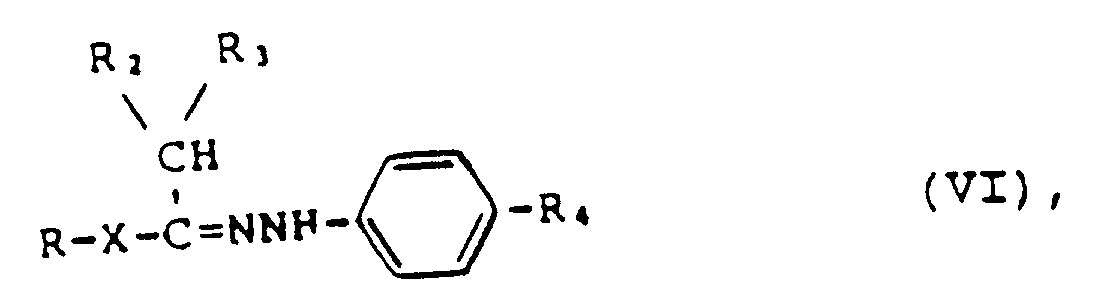 R₁ représente un noyau phényle de formule générale II
 R₅, R₆, R₇ peuvent être identiques ou différents et peuvent représenter chacun un atome d'hydrogène, un groupe alcane(C₁-C₅)sulfonyloxy, trifluorométhanesulfonyloxy, alcane(C₁-C₅)-sulfonylamino, trifluorométhanesulfonylamino, N-alkyl(C₁-C₅)-alcane(C₁-C₅)-sulfonylamino, N-alkyl(C₁-C₅)-trifluorométhanesulfonylamino, alkyl(C₁-C₅)-sulfénylméthyle, alkyl(C₁-C₅)-sulfinylméthyle ou alkyle(C₁-C₅)-sulfonylméthyle, un groupe carbonyle substitué par un groupe hydroxy, alcoxy(C₁-C₅), amino, alkyl(C₁-C₅)amino ou dialkyl(C₁-C₅)amino, un groupe sulfonyle substitué par un groupe amino, alkyl(C₁-C₅)amino, dialkyl(C₁-C₅)amino ou iminocyclique, un groupe méthylène en position 4 pouvant être substitué par un atome de soufre ou d'oxygène, un groupe alkyl(C₁-C₅)carbonylamino, aminocarbonylamino ou alkyl(C₁-C₅)aminocarbonylamino, un groupe alkyl(C₁-C₅)mercapto, alkyl(C₁-C₅)sulfinyle ou alkyl(C₁-C₅)sulfonyle, un groupe nitro, halogéno, amino, hydroxy, alkyle(C₁-C₅), alcoxy(C₁-C₅), alcényloxy(C₁-C₅), alcynyloxy(C₁-C₅), cyanoalkyloxy(C₁-C₅), carboxyalkyl(C₁-C₅)oxy, alcoxy(C₁-C₅)-carbonyl-alkyl(C₁-C₅)oxy, dialkyl(C₁-C₅)amino, 1-imidazolyle, trifluorométhyle ou cyano, ouR₁ représente un reste naphtyle ou un hétérocycle à cinq chaînons, saturé ou insaturé, comportant 1-4 hétéroatomes, ou un hétérocycle à six chaînons, saturé ou insaturé, comportant 1-5 hétéroatomes, les hétéroatomes pouvant être identiques ou différents et representent l'oxygène, le soufre ou l'azote et éventuellement, peuvent porter un atome d'oxygène sur un ou plusieurs atomes d'azote, et les cycles à cinq ou six chaînons peuvent être également substitués par un ou plusieurs groupes alkyle(C₁-C₆), alcoxy(C₁-C₆), alkyl(C₁-C₆)mercapto, hydroxy, nitro, amino, halogéno ou cyano, ou peuvent être condensés avec un noyau phényle pour former un bicycle,
ou dans le cas où X représente une liaison, R₁ peut représenter, outre les groupes mentionnés ci-dessus, également un atome d'hydrogène, un groupe alkyle(C₁-C₁₀), cycloalkyle(C₃-C₇), alcényle(C₂-C₁₀), cycloalcényle(C₃-C₇), alcoxy(C₁-C₆)alkyle(C₁-C₆), carboxyalkyle(C₁-C₆), alcoxy(C₁-C₆)carbonylalxyle(C₁-C₆), aminoalkyle(C₁-C₆), hydroxyalkyle(C₁-C₆), amino, alkyl(C₁-C₆)amino, alkyl(C₁-C₆)carbonylamino, formylamino, alkyl(C₁-C₆)sulfonylamino ou un groupe alcynyle comportant à au plus 10 atomes de C,R₂ représente un groupe alkyle(C₁-C₆) ou phényle,R₃ représente un groupe alkyle(C₁-C₆) ou phényle ou forme, conjointement avec R₂, un groupe cycloalcényle(C₃-C₇),R₄ représente un hétérocycle à cinq chaînons comportant 1-4 hétéroatomes ou un hétérocycle à six chaînons comportant 1-5 hétéroatomes, les hétéroatomes des cycles à cinq et six chaînons mentionnés précédemment pouvant être identiques ou différents et représentent l'azote, l'oxygène ou le soufre, et les cycles à cinq et six chaînons mentionnés ci-dessus peuvent être également substitués par un ou plusieurs groupes alkyle(C₁-C₆), alcoxy(C₁-C₆), alcoxy(C₁-C₆)alkyle(C₁-C₆), alkylmercapto(C₁-C₆), hydroxy, hydroxyalkyle(C₁-C₆), amino, halogéno, oxo ou cyano,X représente une liaison, un groupe alcényle(C₁-C₄), le groupe vinylène, le groupe imino -NH- ou le groupe carbonylamino -CONH-,à l'exception du composé 6-(4-sec.-butylidène-hydrazinophényl)-5-méthyl-4,5-dihydro-1,2,4-triazine-3(2H)-one.
Applications Claiming Priority (2)
| Application Number | Priority Date | Filing Date | Title |
|---|---|---|---|
| DE3706427 | 1987-02-27 | ||
| DE19873706427 DE3706427A1 (de) | 1987-02-27 | 1987-02-27 | Neue substituierte 3h-indole, zwischenprodukte, verfahren zu ihrer herstellung sowie arzneimittel |
Publications (3)
| Publication Number | Publication Date |
|---|---|
| EP0280224A2 EP0280224A2 (fr) | 1988-08-31 |
| EP0280224A3 EP0280224A3 (en) | 1990-04-11 |
| EP0280224B1 true EP0280224B1 (fr) | 1994-06-01 |
Family
ID=6321965
Family Applications (1)
| Application Number | Title | Priority Date | Filing Date |
|---|---|---|---|
| EP88102533A Expired - Lifetime EP0280224B1 (fr) | 1987-02-27 | 1988-02-22 | 3H-indoles substitués, leur procédé de préparation et médicaments les contenant |
Country Status (5)
| Country | Link |
|---|---|
| US (1) | US4925845A (fr) |
| EP (1) | EP0280224B1 (fr) |
| JP (1) | JPS63227587A (fr) |
| AT (1) | ATE106400T1 (fr) |
| DE (2) | DE3706427A1 (fr) |
Families Citing this family (10)
| Publication number | Priority date | Publication date | Assignee | Title |
|---|---|---|---|---|
| DE3706427A1 (de) * | 1987-02-27 | 1988-09-08 | Boehringer Mannheim Gmbh | Neue substituierte 3h-indole, zwischenprodukte, verfahren zu ihrer herstellung sowie arzneimittel |
| GB8903130D0 (en) * | 1989-02-11 | 1989-03-30 | Orion Yhtymae Oy | Substituted pyridazinones |
| US6800658B2 (en) | 1997-11-20 | 2004-10-05 | Children's Medical Center Corporation | Substituted diphenyl indanone, indane and indole compounds and analogues thereof useful for the treatment of prevention of diseases characterized by abnormal cell proliferation |
| US6184226B1 (en) | 1998-08-28 | 2001-02-06 | Scios Inc. | Quinazoline derivatives as inhibitors of P-38 α |
| OA12923A (en) * | 2002-09-17 | 2006-10-13 | Warner Lambert Co | Heterocyclic substituted piperazines for the treatment of schizophrenia. |
| US7868037B2 (en) | 2004-07-14 | 2011-01-11 | Ptc Therapeutics, Inc. | Methods for treating hepatitis C |
| US7772271B2 (en) | 2004-07-14 | 2010-08-10 | Ptc Therapeutics, Inc. | Methods for treating hepatitis C |
| US7781478B2 (en) | 2004-07-14 | 2010-08-24 | Ptc Therapeutics, Inc. | Methods for treating hepatitis C |
| WO2006019832A1 (fr) | 2004-07-22 | 2006-02-23 | Ptc Therapeutics, Inc. | Thienopyridines utilisees pour traiter l'hepatite c |
| HRP20130044T1 (hr) | 2006-07-25 | 2013-02-28 | Cephalon, Inc. | Derivati piridizinona |
Citations (1)
| Publication number | Priority date | Publication date | Assignee | Title |
|---|---|---|---|---|
| EP0122494A2 (fr) * | 1983-03-22 | 1984-10-24 | Fujisawa Pharmaceutical Co., Ltd. | Dérivés de triazine, leur procédé de préparation et les compositions pharmaceutiques les contenants |
Family Cites Families (19)
| Publication number | Priority date | Publication date | Assignee | Title |
|---|---|---|---|---|
| BE790106A (fr) * | 1971-10-14 | 1973-04-13 | Basf Ag | Dihydropyridazones, leur preparation et leurs utilisations therapeutiques |
| US4225711A (en) * | 1978-10-02 | 1980-09-30 | Schering Corporation | Substituted 2-[(methylsulfinyl)acetyl]-3-heterocyclicindoles and their use as immunosuppressants |
| US4258185A (en) * | 1978-10-17 | 1981-03-24 | Yoshitomi Pharmaceutical Industries, Ltd. | Pyridazinone compounds |
| DE2845220A1 (de) * | 1978-10-17 | 1980-04-30 | Yoshitomi Pharmaceutical | Pyridazinon-derivate, ihre salze mit saeuren, verfahren zu ihrer herstellung und ihre verwendung bei der behandlung von thrombosen und hypertonie |
| EP0052442B1 (fr) * | 1980-11-14 | 1985-09-11 | Imperial Chemical Industries Plc | Composés hétérocycliques |
| FR2530246B1 (fr) * | 1982-07-16 | 1985-06-14 | Delalande Sa | Nouveaux derives pyrido indoliniques et pirido indoliques et leurs sels, ainsi que le procede de preparation et l'application en therapeutique de ces derives et sels |
| JPS5998806U (ja) * | 1982-12-24 | 1984-07-04 | 吉田工業株式会社 | コンパクト容器 |
| US4591591A (en) * | 1984-03-08 | 1986-05-27 | Eli Lilly And Company | Pyridazinone derivatives as inotropic agents |
| IL75122A (en) * | 1984-05-14 | 1989-02-28 | Lilly Co Eli | 3-methyl-5-(tetrahydro-6-oxopyridazin-3-yl)indoline derivatives,their preparation and use |
| US4647564A (en) * | 1984-05-14 | 1987-03-03 | Eli Lilly And Company | Inotropic agents |
| US4816454A (en) * | 1984-09-21 | 1989-03-28 | Cassella Aktiengesellschaft | 4,5-dihydro-3(2H)-pyridazinones and their pharmacological use |
| US4631279A (en) * | 1984-10-15 | 1986-12-23 | Eli Lilly And Company | 6-(pyridinylphenyl)dihydropyridazinones as inotropic agents |
| US4617302A (en) * | 1984-10-15 | 1986-10-14 | Eli Lilly And Company | Inotropic agents |
| US4835280A (en) * | 1985-01-18 | 1989-05-30 | Boehringer Mannheim Gmbh | Indoline compounds for synthesis of pharmaceutically active pyrrolobenzimidazoles |
| DE3501497A1 (de) * | 1985-01-18 | 1986-07-24 | Boehringer Mannheim Gmbh, 6800 Mannheim | Neue pyrrolo-benzimidazole, verfahren zu ihrer herstellung und diese verbindungen enthaltende arzneimittel sowie zwischenprodukte |
| DE3531658A1 (de) * | 1985-09-05 | 1987-03-12 | Boehringer Mannheim Gmbh | Heterocyclisch substituierte indole, zwischenprodukte, verfahren zu ihrer herstellung und arzneimittel |
| DE3626865A1 (de) * | 1986-08-08 | 1988-02-11 | Boehringer Mannheim Gmbh | Neue pyridazinon-derivate, verfahren zu ihrer herstellung sowie ihre verwendung als arzneimittel |
| DE3631085A1 (de) * | 1986-09-12 | 1988-03-24 | Boehringer Mannheim Gmbh | Heterocyclisch substituierte indolinone, verfahren zu ihrer herstellung, arzneimittel sowie zwischenprodukte |
| DE3706427A1 (de) * | 1987-02-27 | 1988-09-08 | Boehringer Mannheim Gmbh | Neue substituierte 3h-indole, zwischenprodukte, verfahren zu ihrer herstellung sowie arzneimittel |
-
1987
- 1987-02-27 DE DE19873706427 patent/DE3706427A1/de not_active Withdrawn
-
1988
- 1988-02-22 DE DE3889741T patent/DE3889741D1/de not_active Expired - Fee Related
- 1988-02-22 EP EP88102533A patent/EP0280224B1/fr not_active Expired - Lifetime
- 1988-02-22 AT AT88102533T patent/ATE106400T1/de not_active IP Right Cessation
- 1988-02-24 US US07/159,744 patent/US4925845A/en not_active Expired - Fee Related
- 1988-02-26 JP JP63042432A patent/JPS63227587A/ja active Pending
Patent Citations (1)
| Publication number | Priority date | Publication date | Assignee | Title |
|---|---|---|---|---|
| EP0122494A2 (fr) * | 1983-03-22 | 1984-10-24 | Fujisawa Pharmaceutical Co., Ltd. | Dérivés de triazine, leur procédé de préparation et les compositions pharmaceutiques les contenants |
Also Published As
| Publication number | Publication date |
|---|---|
| JPS63227587A (ja) | 1988-09-21 |
| ATE106400T1 (de) | 1994-06-15 |
| DE3706427A1 (de) | 1988-09-08 |
| EP0280224A2 (fr) | 1988-08-31 |
| EP0280224A3 (en) | 1990-04-11 |
| DE3889741D1 (de) | 1994-07-07 |
| US4925845A (en) | 1990-05-15 |
Similar Documents
| Publication | Publication Date | Title |
|---|---|---|
| EP0223937B1 (fr) | Indoles substituées par des hétérocycles, leurs intermédiaires, leur procédé de préparation et médicaments | |
| EP0275888B1 (fr) | Benzimidazoles tricycliques, leur procédé de préparation et utilisation comme médicament | |
| DE3935514A1 (de) | Neue bicyclo-imidazole, verfahren zu ihrer herstellung und diese verbindungen enthaltende arzneimittel | |
| DE69723447T2 (de) | Substituierte indazolderivate und ihre verwendung als inhibitoren des phosphodiesterase (pde) typs 4 und des tumor-necrosin-factors (tnf) | |
| AU736303B2 (en) | New heterocyclylmethyl-substituted pyrazol derivates | |
| DE69433353T2 (de) | Bicyclische, heterocyclische sulfonamide und sulfonsäureester | |
| US4886803A (en) | Benzimidazole derivatives | |
| EP0189103B1 (fr) | Pyrrolo-benzimidazoles, procédé pour leur préparation, médicaments les contenant et intermédiaires | |
| DE3634066A1 (de) | Neue 5-alkylbenzimidazole, verfahren zu ihrer herstellung sowie arzneimittel | |
| DD283376A5 (de) | Verfahren zur herstellung von lactamen | |
| EP0271040A2 (fr) | Pyrrolobenzimidazoles, procédé pour leur préparation, et médicaments | |
| EP0344634B1 (fr) | Carboxamides bicycliques, procédé pour leur préparation et médicaments les contenant | |
| EP0280224B1 (fr) | 3H-indoles substitués, leur procédé de préparation et médicaments les contenant | |
| EP0216165B1 (fr) | Benzodipyrroles, leurs procédés de préparation et médicaments contenant ces composés | |
| DD242045A5 (de) | Neue pyrolo-benzimidazole, verfahren zu ihrer herstellung und diese verbindungen enthaltende arzneimittel | |
| DE3509333A1 (de) | Substituierte benzimidazolderivate, verfahren zu ihrer herstellung, sie enthaltende pharmazeutische zubereitungen und ihre verwendung als magensaeuresekretionshemmer | |
| EP0207483B1 (fr) | Benzimidazoles, procédé pour leur préparation, médicaments les contenant et intermédiaires | |
| EP0473963A1 (fr) | Pyrrolobenzimidazoles, imidazobenzoxazinones et imidazoquinolones, procédés pour leur préparation et leur utilisation ainsi que des compositions contenant ces composés | |
| EP0255704A2 (fr) | Dérivés de pyridazinone, procédé pour leur préparation et leur utilisation comme médicament | |
| EP0268178A1 (fr) | Pyrrolo benzimidazoles, médicaments contenant ces composés et leur procédé de préparation | |
| DD283627A5 (de) | Verfahren zur herstellung von [3,2-f]benzoxazol-6-onen | |
| EP0322692B1 (fr) | Alkylsulfonamides substitués par un hétérocycle, procédé pour leur préparation ainsi que médicaments |
Legal Events
| Date | Code | Title | Description |
|---|---|---|---|
| PUAI | Public reference made under article 153(3) epc to a published international application that has entered the european phase |
Free format text: ORIGINAL CODE: 0009012 |
|
| 17P | Request for examination filed |
Effective date: 19880222 |
|
| AK | Designated contracting states |
Kind code of ref document: A2 Designated state(s): AT BE CH DE ES FR GB GR IT LI LU NL SE |
|
| PUAL | Search report despatched |
Free format text: ORIGINAL CODE: 0009013 |
|
| AK | Designated contracting states |
Kind code of ref document: A3 Designated state(s): AT BE CH DE ES FR GB GR IT LI LU NL SE |
|
| 17Q | First examination report despatched |
Effective date: 19920519 |
|
| GRAA | (expected) grant |
Free format text: ORIGINAL CODE: 0009210 |
|
| AK | Designated contracting states |
Kind code of ref document: B1 Designated state(s): AT BE CH DE ES FR GB GR IT LI LU NL SE |
|
| PG25 | Lapsed in a contracting state [announced via postgrant information from national office to epo] |
Ref country code: IT Free format text: LAPSE BECAUSE OF FAILURE TO SUBMIT A TRANSLATION OF THE DESCRIPTION OR TO PAY THE FEE WITHIN THE PRE;WARNING: LAPSES OF ITALIAN PATENTS WITH EFFECTIVE DATE BEFORE 2007 MAY HAVE OCCURRED AT ANY TIME BEFORE 2007. THE CORRECT EFFECTIVE DATE MAY BE DIFFERENT FROM THE ONE RECORDED.SCRIBED TIME-LIMIT Effective date: 19940601 Ref country code: NL Effective date: 19940601 Ref country code: GR Free format text: LAPSE BECAUSE OF FAILURE TO SUBMIT A TRANSLATION OF THE DESCRIPTION OR TO PAY THE FEE WITHIN THE PRESCRIBED TIME-LIMIT Effective date: 19940601 Ref country code: BE Effective date: 19940601 Ref country code: GB Effective date: 19940601 Ref country code: ES Free format text: THE PATENT HAS BEEN ANNULLED BY A DECISION OF A NATIONAL AUTHORITY Effective date: 19940601 Ref country code: FR Effective date: 19940601 |
|
| REF | Corresponds to: |
Ref document number: 106400 Country of ref document: AT Date of ref document: 19940615 Kind code of ref document: T |
|
| REF | Corresponds to: |
Ref document number: 3889741 Country of ref document: DE Date of ref document: 19940707 |
|
| PG25 | Lapsed in a contracting state [announced via postgrant information from national office to epo] |
Ref country code: SE Effective date: 19940901 |
|
| EN | Fr: translation not filed | ||
| NLV1 | Nl: lapsed or annulled due to failure to fulfill the requirements of art. 29p and 29m of the patents act | ||
| GBV | Gb: ep patent (uk) treated as always having been void in accordance with gb section 77(7)/1977 [no translation filed] |
Effective date: 19940601 |
|
| PG25 | Lapsed in a contracting state [announced via postgrant information from national office to epo] |
Ref country code: AT Effective date: 19950222 |
|
| PG25 | Lapsed in a contracting state [announced via postgrant information from national office to epo] |
Ref country code: CH Effective date: 19950228 Ref country code: LI Effective date: 19950228 Ref country code: LU Free format text: LAPSE BECAUSE OF NON-PAYMENT OF DUE FEES Effective date: 19950228 |
|
| PLBE | No opposition filed within time limit |
Free format text: ORIGINAL CODE: 0009261 |
|
| STAA | Information on the status of an ep patent application or granted ep patent |
Free format text: STATUS: NO OPPOSITION FILED WITHIN TIME LIMIT |
|
| 26N | No opposition filed | ||
| PG25 | Lapsed in a contracting state [announced via postgrant information from national office to epo] |
Ref country code: DE Effective date: 19951101 |