EP0281029B1 - Verwendung von Derivaten des Tricyclo- [5.3.1.0 2,6]-decens-3 als Schäumer in der Kohle- und Erzflotation - Google Patents
Verwendung von Derivaten des Tricyclo- [5.3.1.0 2,6]-decens-3 als Schäumer in der Kohle- und Erzflotation Download PDFInfo
- Publication number
- EP0281029B1 EP0281029B1 EP88102886A EP88102886A EP0281029B1 EP 0281029 B1 EP0281029 B1 EP 0281029B1 EP 88102886 A EP88102886 A EP 88102886A EP 88102886 A EP88102886 A EP 88102886A EP 0281029 B1 EP0281029 B1 EP 0281029B1
- Authority
- EP
- European Patent Office
- Prior art keywords
- radical
- flotation
- coal
- general formula
- carbon atoms
- Prior art date
- Legal status (The legal status is an assumption and is not a legal conclusion. Google has not performed a legal analysis and makes no representation as to the accuracy of the status listed.)
- Expired - Lifetime
Links
Images
Classifications
-
- B—PERFORMING OPERATIONS; TRANSPORTING
- B03—SEPARATION OF SOLID MATERIALS USING LIQUIDS OR USING PNEUMATIC TABLES OR JIGS; MAGNETIC OR ELECTROSTATIC SEPARATION OF SOLID MATERIALS FROM SOLID MATERIALS OR FLUIDS; SEPARATION BY HIGH-VOLTAGE ELECTRIC FIELDS
- B03D—FLOTATION; DIFFERENTIAL SEDIMENTATION
- B03D1/00—Flotation
- B03D1/001—Flotation agents
- B03D1/004—Organic compounds
- B03D1/008—Organic compounds containing oxygen
-
- B—PERFORMING OPERATIONS; TRANSPORTING
- B03—SEPARATION OF SOLID MATERIALS USING LIQUIDS OR USING PNEUMATIC TABLES OR JIGS; MAGNETIC OR ELECTROSTATIC SEPARATION OF SOLID MATERIALS FROM SOLID MATERIALS OR FLUIDS; SEPARATION BY HIGH-VOLTAGE ELECTRIC FIELDS
- B03D—FLOTATION; DIFFERENTIAL SEDIMENTATION
- B03D2201/00—Specified effects produced by the flotation agents
- B03D2201/04—Frothers
-
- B—PERFORMING OPERATIONS; TRANSPORTING
- B03—SEPARATION OF SOLID MATERIALS USING LIQUIDS OR USING PNEUMATIC TABLES OR JIGS; MAGNETIC OR ELECTROSTATIC SEPARATION OF SOLID MATERIALS FROM SOLID MATERIALS OR FLUIDS; SEPARATION BY HIGH-VOLTAGE ELECTRIC FIELDS
- B03D—FLOTATION; DIFFERENTIAL SEDIMENTATION
- B03D2203/00—Specified materials treated by the flotation agents; Specified applications
- B03D2203/02—Ores
- B03D2203/04—Non-sulfide ores
- B03D2203/08—Coal ores, fly ash or soot
Definitions
- the invention relates to the use of derivatives of tricyclo- [5.3.1.0 2,6 ] -decens-3 as foaming agents in coal and ore flotation.
- Raw coal from mining in coal mining is processed mechanically on a large scale using the density differences.
- the raw coal is mechanically separated into a coal fraction and a so-called "recovery fraction”.
- Flotation is preferred as a sorting process, particularly for the fine grain fraction (particle size smaller than 0.5 mm), whereby the fine grain coal is separated from the ash fraction due to the different surface properties of coal particles and rock particles.
- This takes advantage of the natural, water-repellent character of the surface of the carbon particles and reinforces it by adsorbing hydrophobic reagents.
- the separation of fine-grain coal and ash is possible using a flotation process and has also proven itself as an industrially used process.
- the fine carbon particles are bound to foam bubbles of a sufficiently stable foam produced by adding a foamer and are thus discharged from the flotation system.
- the criteria mentioned for the area of coal flotation apply in principle in the same way to flotation in ore processing.
- the value mineral contained in the ores is to be separated from the gangue by the flotation process and an enrichment of the minerals is to be achieved in the value mineral fraction.
- the ore is crushed and preferably ground wet and subjected to flotation after the addition of a foamer and a collector as well as other chemicals necessary for flotation.
- Appropriate adjustment of the slurry with regard to pH value, type and concentration of the collector and type and concentration of the foamer enables a selective separation of valuable mineral and gait with high yield.
- the effect of a foamer which usually consists of molecules with a polar and a non-polar part of the molecule, is not limited to the simple production of the foam.
- the type and amount of foaming agents can be used to control important foam characteristics, such as bubble size, bubble strength and cohesion of the bubbles.
- an influence of the foamer on the other components of the flotation slurry is usually observed.
- An influence of the foamer is undesirable if it acts unselectively on the collectors, which change the hydrophilicity of the particle surface and should ensure better adhesion of the particles to the foam bubbles.
- Foamers should not have any structures for flotation processes that lead to parallel orientation of the individual molecules. Therefore, hydrocarbons with branched chains and asymmetrically arranged hydrocarbon groups are preferably used.
- Terpenes of various structures "pine oil”, which consists predominantly of terpene alcohols, for example of terpinol, as well as cresol and a large number of synthetic foaming agents, such as methylisobutylcarbinol (MIBC) and triethoxybutane (TEB), are described as foaming agents.
- MIBC methylisobutylcarbinol
- TEB triethoxybutane
- the optimal use of the foamer mentioned depends not only on the separation problem to be solved, but also - as stated above - on the other components present in the slurry, such as collectors, regulators, etc.
- DE-A-19 30 671 describes a process based on flotation for separating minerals from ore in aqueous slurry, in which air is supplied to the slurry containing a foamer and the air bubbles are used to remove the valuable minerals.
- a reaction product of ethylene oxide or propylene oxide with alcohols or glycols or their lower alkyl monoethers is used as the foamer.
- DE-A-19 30 864 describes a method analogous to the above publication, in which the foamer is the reaction product of ethylene oxide, propylene oxide or their mixtures with one or more term alcohol with at least 3 hydroxyl groups in the molecule.
- the foaming agents mentioned in the two aforementioned publications can be used both for the flotation of coal and for the flotation of a large number of ores and lead to a satisfactory discharge of the fractions, the enrichment of which is desired by the flotation process.
- conventional collectors no adverse influence of the foamer on the properties of the collector in the flotation slurry was observed.
- the selectivity of some separation processes was not completely satisfactory, so that there was still a need for highly selective collectors which lead to a high discharge of the desired fraction.
- Flotation processes for coal using foaming agents are also known from EP-A 0 113 310.
- Reaction products made from a mono- or dibasic carboxylic acid with 1 to 10 carbon atoms and a polyhydroxy compound are used as foaming agents, the resulting ester alcohols having at least one free hydroxyl group.
- products containing branched alkyl groups are preferred which have a total number of C atoms in the range between 6 and 19.
- the invention relates to the use of derivatives of tricyclo- [5.3.1.0 2,6 ] decens-3 of the general formula (I) in which R 1 is hydrogen, a straight-chain or branched alkyl radical having 1 to 8 C atoms, for an acyl radical R 2 -CO, in which R 2 is hydrogen or a straight-chain or branched alkyl radical or alkenyl radical having 1 to 18 C atoms, or for a hydroxyalkyl radical in which R 3 and R 4 can independently be hydrogen or a hydroxy group and m and n represent integers in the range from 0 to 5 and the sum (m + n) is an integer in the range from 1 to 5, with the proviso that at least one of the radicals R 3 and R 4 is a hydroxy group and / or the mixtures of several isomeric derivatives (I) as foaming agents in coal and ore flotation.
- R 1 is hydrogen, a straight-chain or branched alkyl radical having 1 to 8 C atom
- the radical R 1 O can be compounds in which the radical R 1 O is bonded to the C atoms 8 or 9 of the tricyclic ring system.
- the radical R 1 can, for example, in addition to hydrogen, stand for a straight-chain or branched alkyl radical having 1 to 8 carbon atoms.
- the groups methyl, ethyl, n-propyl, i-propyl, n-butyl, sec-butyl, tert-butyl, and also n-pentyl, n-hexyl, n-heptyl or n-octyl and their isomers come as such radicals in question.
- Alkyl radicals with 1 to 4 carbon atoms are particularly preferred as alkyl radicals. Particularly good foamer results are achieved when R 1 is an ethyl radical.
- radical R 1 in the general formula (I) mentioned can also be an acyl radical R 2 -CO, in which R 2 is hydrogen or a straight-chain or branched alkyl radical or alkenyl radical having 1 to 18 carbon atoms.
- acyl radicals here are in particular radicals of the formula R 2 CO, in which R 2 is ethyl, propyl, butyl, pentyl, hexyl, heptyl, octyl, nonyl, decyl, undecyl, dodecyl, tridecyl, tetradecyl, pentadecyl, hexadecyl, heptadecyl or octadecyl stands.
- the respective alkyl radicals can be straight-chain or branched. They can also have one or more double bonds anywhere in the molecule.
- the radical R 1 is most preferably acyl radicals which derive from the lower carboxylic acids having 1 to 6 carbon atoms or the fatty acids which are obtainable from native sources, such as, for example, coconut oil or palm oil.
- R 1 is preferably acetyl, propionyl or caproyl on the one hand and lauryl or oleyl on the other.
- the radical R 1 can also be a hydroxyalkyl radical of the formula stand.
- the radicals represented by this formula independently of one another contain hydrogen or hydroxyl groups as substituents R 3 and R 4 .
- m and n represent an integer in the range from 0 to 5, the sum (m + n) being an integer in the range from 1 to 5. It is crucial in the formula given for the hydroxyalkyl radical that at least one of the radicals R 3 and R 4 is a hydroxy group.
- the radical R 1 thus derives from dihydric or polyhydric alcohols having 1 to 6 carbon atoms in the alkyl chain, the respective hydroxyl groups in addition to the 1-position carbon atoms on one or more subsequent carbon atoms the chain can stand.
- the compounds of the general formula (I) containing such a radical R 1 are thus ethers of 8 (9) -hydroxy-tricyclo- [5.3.1.0 2,6 ] -decene-3 with ethanediol, 1,2-propanediol, 1,3-propanediol, Propanetriol, the various isomeric butanediols, triols or tetraols, and the corresponding di- or polyvalent pentaols and hexaols.
- the ethers of ethanediol and glycerol are preferred.
- Reaction partners of dicyclopentadiene (II) are preferably carboxylic acids having 1 to 6 carbon atoms, such as, for example, acetic acid, propionic acid or caproic acid, or also fatty acids accessible from native fats and oils by ester cleavage, preferably lauric acid or oleic acid.
- Ethers of the general formula (I) are synthesized by reacting dicyclopentadiene (II) with or polyhydric alcohols of the formulas R I OH or in which R 1 , R 3 , R 4 , m and n have the meanings given above.
- the preferred monohydric alcohols preferably have an alkyl radical having 1 to 4 carbon atoms as the radical R 1 .
- Ethanol is used with particular advantage.
- polyhydric alcohols can also be used for the reaction with dicyclopentadiene (II).
- the polyhydric alcohols particularly suitable for this purpose are ethanediol and glycerol.
- the reactions are usually carried out at temperatures in the range from 20 to 150 ° C., optionally also in an organic solvent.
- Suitable organic solvents are in particular aliphatic or aromatic hydrocarbons, especially toluene or xylenes or their mixtures.
- Catalysts in reactions for the preparation of derivatives (I) of tricyclo- [5.3.1.0 2,6 ] -decene-3 can be all compounds known from the prior art for such alkylation or acylation reactions.
- Mineral acids such as HCI or H 2 S0 4 and Lewis acidic compounds are particularly noteworthy. From the group of the latter, boron trifluoride etherate or antimony fluoride, for example, can be used with advantage.
- the solvent is optionally removed. This is preferably done by distillation.
- the remaining residue then consists, in addition to small amounts of starting materials, of derivatives of the general formula (I) or, if appropriate, mixtures of the isomeric compounds (I) which carry the substituent R 1 O-- in the 8- or 9-position of the tricyclic ring system.
- the educt / product mixtures are then purified by methods known per se. This can also be done, for example, by distillation or using chromatographic methods.
- esters of the general formula (I) from dicyclopentadiene (11) and carboxylic acids.
- reaction mixture was mixed with 1 l of toluene and washed with water.
- the separated organic phase was washed with 1% by weight sodium carbonate solution and then with water until neutral and dried with calcium chloride.
- the residue remaining after evaporation of the toluene in a water jet vacuum was distilled in a high vacuum.
- 90 g of oleic acid ester of 8 (9) -hydroxy-tricyclo- [5.3.1 .0 2,6 ] -decens-3 (product E) passed over.
- Products A to D were obtained in an analogous manner from dicyclopentadiene and acetic acid, propionic acid, caproic acid and lauric acid.
- the physical properties of these substances are shown in Table 1 below.
- Products F to J were prepared in an analogous manner from dicyclopentadiene and methanol, ethanol, n-propanol, isopropanol and sec-butanol.
- the physical properties of products F to K are shown in Table 2 below.
- the product M was obtained in an analogous manner from dicyclopentadiene and glycerol.
- the physical properties of products L and M are shown in Table 3 below.
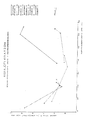
- Coal flotation was carried out in accordance with DIN working specification 22017. Of the six flotation stages prescribed in the regulation, three stages were carried out because, in particular, the first flotation stages provide information about the effectiveness of the foamer to be examined in coal flotation.
- the derivatives (I) were added undiluted to the flotation slurry.
- Fine-grain coal with the following task content was used for the flotation tests:
- the foamers tested were compared with standard foams known from the prior art. As such, methyl isobutylcarbinol (MIBC), pine oil and 2-ethylhexanol were used in a comparative experiment. The results are shown in Table 4 below.
- MIBC methyl isobutylcarbinol
- pine oil pine oil
- 2-ethylhexanol 2-ethylhexanol
- the foaming action is most favorable in the reaction products of dicyclopentadiene (II) with acetic acid and propionic acid.
- the selectivity and effectiveness of the propionic acid ester reach the standard foamer 2-ethylhexanol.
- R 1 represents alkyl radicals having 1 to 4 carbon atoms, in particular methyl, ethyl, isopropyl or isobutyl, show significantly better foaming properties than the standard 2-ethylhexanol foamer.
- the material to be floated consisted of a South African cassiterite, which contains approx. 1% Sn0 2 , 59% silicates and 7% magnetite and haematite.
- the flotation task had the following grain size distribution:
- the flotation experiments were carried out in a Denver laboratory flotation cell type D 1 in 1 l cells with turbidity densities of approx. 500 g / l tap water (16 ° dH). At pH 7-8, water glass with a dosage of 2200 g / t was added and conditioned.
- the pH was then adjusted to 5 using sulfuric acid before the collector was metered in.
- a preconcentrate was floated in two stages without subsequent cleaning stages.
- Styrene phosphonic acid (technical quality) was used as a collector in all experiments.
- Foamers B and N were added undiluted directly to the flotation slurry using a microliter pipette.
- the ore to be floated was a very finely overgrown ore from the Harz, which was only ground up for laboratory flotation to such an extent that the coarser overgrown minerals were sufficiently digested.
- the ore In order to achieve a satisfactory separation by flotation and to obtain salable concentrates, the ore is usually re-ground and re-floated in the processing plant.
- MIBC standard foamer methylisobutylcarbinol
- the flotation experiments were carried out in the Denver laboratory flotation cell type D 1 in 1 I cells with a turbidity density of approx. 500 g / I tap water (16 ° dH).
- potassium amyl xanthate (140 g / t) lead and copper were floated collectively at natural pH 7.5 using sodium cyanide (150 g / t) and zinc sulfate (400 g / t) as regulators.
- zinc was floated with sodium isopropyl xanthate (120 g / t) as collector and copper sulfate (600 g / t) as regulator and products B and N as foaming agents at pH 10.
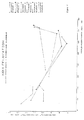
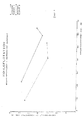
- the foaming agents B and N according to the invention achieved an equivalent metal output in this pre-flotation with a reduced dosage compared to the standard foamer MIBC.
Landscapes
- Organic Low-Molecular-Weight Compounds And Preparation Thereof (AREA)
- Solid Fuels And Fuel-Associated Substances (AREA)
- Manufacture And Refinement Of Metals (AREA)
- Disintegrating Or Milling (AREA)
- Emulsifying, Dispersing, Foam-Producing Or Wetting Agents (AREA)
Priority Applications (1)
| Application Number | Priority Date | Filing Date | Title |
|---|---|---|---|
| AT88102886T ATE84991T1 (de) | 1987-03-05 | 1988-02-26 | Verwendung von derivaten des tricyclo- (5.3.1.0 2,6>-decens-3 als schaeumer in der kohle- und erzflotation. |
Applications Claiming Priority (2)
| Application Number | Priority Date | Filing Date | Title |
|---|---|---|---|
| DE3707034 | 1987-03-05 | ||
| DE19873707034 DE3707034A1 (de) | 1987-03-05 | 1987-03-05 | Verwendung von derivaten des tricyclo-(5.3.1.0(pfeil hoch)2(pfeil hoch)(pfeil hoch),(pfeil hoch)(pfeil hoch)6(pfeil hoch))-decens-3 als schaeumer in der kohle- und erzflotation |
Publications (3)
| Publication Number | Publication Date |
|---|---|
| EP0281029A2 EP0281029A2 (de) | 1988-09-07 |
| EP0281029A3 EP0281029A3 (de) | 1991-01-02 |
| EP0281029B1 true EP0281029B1 (de) | 1993-01-27 |
Family
ID=6322315
Family Applications (1)
| Application Number | Title | Priority Date | Filing Date |
|---|---|---|---|
| EP88102886A Expired - Lifetime EP0281029B1 (de) | 1987-03-05 | 1988-02-26 | Verwendung von Derivaten des Tricyclo- [5.3.1.0 2,6]-decens-3 als Schäumer in der Kohle- und Erzflotation |
Country Status (11)
| Country | Link |
|---|---|
| US (1) | US4925559A (cs) |
| EP (1) | EP0281029B1 (cs) |
| JP (1) | JPS63236554A (cs) |
| AT (1) | ATE84991T1 (cs) |
| AU (1) | AU598915B2 (cs) |
| BR (1) | BR8800957A (cs) |
| CA (1) | CA1320768C (cs) |
| CS (1) | CS275595B2 (cs) |
| DE (2) | DE3707034A1 (cs) |
| PL (1) | PL158354B1 (cs) |
| ZA (1) | ZA881585B (cs) |
Families Citing this family (5)
| Publication number | Priority date | Publication date | Assignee | Title |
|---|---|---|---|---|
| DE4133388A1 (de) * | 1991-10-09 | 1993-04-15 | Henkel Kgaa | Verfahren zur anreicherung und/oder reinigung von kohle und mineralien durch flotation |
| US5291332A (en) * | 1992-03-25 | 1994-03-01 | Hughes Aircraft Company | Etalons with dispersive coatings |
| CN101547754B (zh) * | 2006-12-11 | 2012-04-25 | 三井造船株式会社 | 煤灰中的未燃碳的除去方法 |
| US8469197B2 (en) * | 2008-08-19 | 2013-06-25 | Tata Steel Limited | Blended frother for producing low ash content clean coal through flotation |
| US20230014341A1 (en) * | 2019-12-19 | 2023-01-19 | The University Of Queensland | A sensor for monitoring flotation recovery |
Family Cites Families (9)
| Publication number | Priority date | Publication date | Assignee | Title |
|---|---|---|---|---|
| US2395452A (en) * | 1943-02-20 | 1946-02-26 | Resinous Prod & Chemical Co | Esters of hydroxydihydronorpolycyclopentadienes |
| US3118938A (en) * | 1962-11-28 | 1964-01-21 | Sun Oil Co | Preparation of amino products from cyclododecatriene-1, 5, 9 |
| US3332978A (en) * | 1963-10-17 | 1967-07-25 | Eastman Kodak Co | Sulfate esters of hindered alcohols |
| US3595390A (en) * | 1968-06-18 | 1971-07-27 | American Cyanamid Co | Ore flotation process with poly(ethylene-propylene)glycol frothers |
| ZM6969A1 (en) * | 1968-06-18 | 1969-12-17 | American Cyanamid Co | Ore flotation process |
| US4304573A (en) * | 1980-01-22 | 1981-12-08 | Gulf & Western Industries, Inc. | Process of beneficiating coal and product |
| US4564369A (en) * | 1981-05-28 | 1986-01-14 | The Standard Oil Company | Apparatus for the enhanced separation of impurities from coal |
| US4504385A (en) * | 1982-12-30 | 1985-03-12 | Sherex Chemical Company, Inc. | Ester-alcohol frothers for froth flotation of coal |
| DE3517154A1 (de) * | 1985-05-11 | 1986-11-13 | Henkel KGaA, 4000 Düsseldorf | Verwendung von tensidgemischen als hilfsmittel fuer die flotation von nichtsulfidischen erzen |
-
1987
- 1987-03-05 DE DE19873707034 patent/DE3707034A1/de not_active Withdrawn
-
1988
- 1988-02-26 EP EP88102886A patent/EP0281029B1/de not_active Expired - Lifetime
- 1988-02-26 AT AT88102886T patent/ATE84991T1/de active
- 1988-02-26 DE DE8888102886T patent/DE3877787D1/de not_active Expired - Fee Related
- 1988-03-03 CS CS881396A patent/CS275595B2/cs unknown
- 1988-03-04 AU AU12706/88A patent/AU598915B2/en not_active Ceased
- 1988-03-04 US US07/164,166 patent/US4925559A/en not_active Expired - Fee Related
- 1988-03-04 PL PL1988271011A patent/PL158354B1/pl unknown
- 1988-03-04 ZA ZA881585A patent/ZA881585B/xx unknown
- 1988-03-04 CA CA000560647A patent/CA1320768C/en not_active Expired - Fee Related
- 1988-03-04 BR BR8800957A patent/BR8800957A/pt unknown
- 1988-03-05 JP JP63052477A patent/JPS63236554A/ja active Pending
Also Published As
| Publication number | Publication date |
|---|---|
| DE3877787D1 (de) | 1993-03-11 |
| PL271011A1 (en) | 1989-03-06 |
| CS8801396A3 (en) | 1992-02-19 |
| US4925559A (en) | 1990-05-15 |
| EP0281029A2 (de) | 1988-09-07 |
| CA1320768C (en) | 1993-07-27 |
| DE3707034A1 (de) | 1988-09-15 |
| AU1270688A (en) | 1988-09-08 |
| CS275595B2 (en) | 1992-02-19 |
| JPS63236554A (ja) | 1988-10-03 |
| AU598915B2 (en) | 1990-07-05 |
| BR8800957A (pt) | 1988-10-11 |
| ZA881585B (en) | 1988-09-05 |
| EP0281029A3 (de) | 1991-01-02 |
| ATE84991T1 (de) | 1993-02-15 |
| PL158354B1 (pl) | 1992-08-31 |
Similar Documents
| Publication | Publication Date | Title |
|---|---|---|
| EP0201815B2 (de) | Verwendung von Tensidgemischen als Hilfsmittel für die Flotation von nichtsulfidischen Erzen | |
| DE69904820T2 (de) | Herstellung von kollektorzusammensetzungen aus mischungen von hydroxamfettsäuren und öl zur erzflotation | |
| EP0585277B1 (de) | Verfahren zur gewinnung von mineralien aus nichtsulfidischen erzen durch flotation | |
| EP0270933B1 (de) | Tensidmischungen als Sammler für die Flotation nichtsulfidischer Erze | |
| WO1993006935A1 (de) | Verfahren zur herstellung von eisenerzkonzentraten durch flotation | |
| EP0298392A2 (de) | Verfahren zur Gewinnung von Mineralen aus sulfidischen aus Erzen durch Flotation und Mittel zu seiner Durchführung | |
| EP0270018B1 (de) | Verwendung von N-Alkyl- und N-Alkenylasparaginsäuren als Co-Sammler für die Flotation nichtsulfidischer Erze | |
| EP0281029B1 (de) | Verwendung von Derivaten des Tricyclo- [5.3.1.0 2,6]-decens-3 als Schäumer in der Kohle- und Erzflotation | |
| EP0108914A2 (de) | Flotationshilfsmittel und Verfahren zur Flotation nichtsulfidischer Minerale | |
| DE3878440T2 (de) | Verfahren zur aufbereitung von andalusit. | |
| EP0378128A2 (de) | Verfahren zur selektiven Flotation von Phosphormineralien | |
| DE4127151C2 (de) | Verfahren zur selektiven Flotation von Phosphormineralen | |
| EP0368061B1 (de) | Grenzflächenaktive Fettsäureester- und/oder Fettsäurederivate als Sammler bei der Flotation von nichtsulfidischen Erzen | |
| DE4325017A1 (de) | Verfahren zur Flotation von Kupfer- und Kobalterzen | |
| WO1991015298A1 (de) | Verfahren zur gewinnung von mineralien aus nichtsulfidischen erzen durch flotation | |
| EP0344553A1 (de) | Tensidmischungen als Sammler für die Flotation nichtsulfidischer Erze | |
| WO1993007110A1 (de) | Verfahren zur anreicherung und/oder reinigung von kohle und mineralien durch flotation unter verwendung von hydroxyllimonenether | |
| DE3224302C2 (de) | Flotationshilfsmittel zur Gewinnung von Phosphaten und Kali | |
| WO1991018674A1 (de) | Verfahren zur gewinnung von mineralien aus nichtsulfidischen erzen durch flotation | |
| EP0544185A1 (de) | Verfahren zur Gewinnung von Mineralien aus nichtsulfidischen Erzen durch Flotation | |
| DE2263988C2 (de) | Flotationsschäumer | |
| US1833464A (en) | Ore concentration | |
| US1897265A (en) | Mineral treatment | |
| EP0550483A1 (de) | Verfahren zur gewinnung von mineralien aus nichtsulfidischen erzen durch flotation | |
| DE4106866A1 (de) | Verfahren zur selektiven flotation von phosphormineralen |
Legal Events
| Date | Code | Title | Description |
|---|---|---|---|
| PUAI | Public reference made under article 153(3) epc to a published international application that has entered the european phase |
Free format text: ORIGINAL CODE: 0009012 |
|
| AK | Designated contracting states |
Kind code of ref document: A2 Designated state(s): AT BE CH DE ES FR GB GR IT LI NL SE |
|
| PUAL | Search report despatched |
Free format text: ORIGINAL CODE: 0009013 |
|
| AK | Designated contracting states |
Kind code of ref document: A3 Designated state(s): AT BE CH DE ES FR GB GR IT LI NL SE |
|
| RBV | Designated contracting states (corrected) |
Designated state(s): AT DE FR GB SE |
|
| RBV | Designated contracting states (corrected) |
Designated state(s): AT DE FR GB SE |
|
| 17P | Request for examination filed |
Effective date: 19910119 |
|
| 17Q | First examination report despatched |
Effective date: 19920324 |
|
| GRAA | (expected) grant |
Free format text: ORIGINAL CODE: 0009210 |
|
| AK | Designated contracting states |
Kind code of ref document: B1 Designated state(s): AT DE FR GB SE |
|
| REF | Corresponds to: |
Ref document number: 84991 Country of ref document: AT Date of ref document: 19930215 Kind code of ref document: T |
|
| PGFP | Annual fee paid to national office [announced via postgrant information from national office to epo] |
Ref country code: DE Payment date: 19930128 Year of fee payment: 6 |
|
| RBV | Designated contracting states (corrected) |
Designated state(s): DE |
|
| REF | Corresponds to: |
Ref document number: 3877787 Country of ref document: DE Date of ref document: 19930311 |
|
| PLBE | No opposition filed within time limit |
Free format text: ORIGINAL CODE: 0009261 |
|
| STAA | Information on the status of an ep patent application or granted ep patent |
Free format text: STATUS: NO OPPOSITION FILED WITHIN TIME LIMIT |
|
| 26N | No opposition filed | ||
| PG25 | Lapsed in a contracting state [announced via postgrant information from national office to epo] |
Ref country code: DE Effective date: 19941101 |