EP0281232A1 - Réfrigération et congélation à contact d'articles utilisant des liquides de transfert de chaleur à l'halocarbone - Google Patents
Réfrigération et congélation à contact d'articles utilisant des liquides de transfert de chaleur à l'halocarbone Download PDFInfo
- Publication number
- EP0281232A1 EP0281232A1 EP88300534A EP88300534A EP0281232A1 EP 0281232 A1 EP0281232 A1 EP 0281232A1 EP 88300534 A EP88300534 A EP 88300534A EP 88300534 A EP88300534 A EP 88300534A EP 0281232 A1 EP0281232 A1 EP 0281232A1
- Authority
- EP
- European Patent Office
- Prior art keywords
- heat transfer
- articles
- cfc
- freezing
- direct contact
- Prior art date
- Legal status (The legal status is an assumption and is not a legal conclusion. Google has not performed a legal analysis and makes no representation as to the accuracy of the status listed.)
- Withdrawn
Links
Images

Classifications
-
- A—HUMAN NECESSITIES
- A23—FOODS OR FOODSTUFFS; TREATMENT THEREOF, NOT COVERED BY OTHER CLASSES
- A23B—PRESERVATION OF FOODS, FOODSTUFFS OR NON-ALCOHOLIC BEVERAGES; CHEMICAL RIPENING OF FRUIT OR VEGETABLES
- A23B2/00—Preservation of foods or foodstuffs, in general
- A23B2/80—Freezing; Subsequent thawing; Cooling
-
- A—HUMAN NECESSITIES
- A23—FOODS OR FOODSTUFFS; TREATMENT THEREOF, NOT COVERED BY OTHER CLASSES
- A23B—PRESERVATION OF FOODS, FOODSTUFFS OR NON-ALCOHOLIC BEVERAGES; CHEMICAL RIPENING OF FRUIT OR VEGETABLES
- A23B4/00—Preservation of meat, sausages, fish or fish products
- A23B4/06—Freezing; Subsequent thawing; Cooling
- A23B4/08—Freezing; Subsequent thawing; Cooling with addition of chemicals or treatment with chemicals before or during cooling, e.g. in the form of an ice coating or frozen block
- A23B4/09—Freezing; Subsequent thawing; Cooling with addition of chemicals or treatment with chemicals before or during cooling, e.g. in the form of an ice coating or frozen block with direct contact between the food and the chemical, e.g. liquid N2, at cryogenic temperature
-
- F—MECHANICAL ENGINEERING; LIGHTING; HEATING; WEAPONS; BLASTING
- F25—REFRIGERATION OR COOLING; COMBINED HEATING AND REFRIGERATION SYSTEMS; HEAT PUMP SYSTEMS; MANUFACTURE OR STORAGE OF ICE; LIQUEFACTION SOLIDIFICATION OF GASES
- F25D—REFRIGERATORS; COLD ROOMS; ICE-BOXES; COOLING OR FREEZING APPARATUS NOT OTHERWISE PROVIDED FOR
- F25D9/00—Devices not associated with refrigerating machinery and not covered by groups F25D1/00 - F25D7/00; Combinations of devices covered by two or more of the groups F25D1/00 - F25D7/00
- F25D9/005—Devices not associated with refrigerating machinery and not covered by groups F25D1/00 - F25D7/00; Combinations of devices covered by two or more of the groups F25D1/00 - F25D7/00 using fluorinated halogenous hydrocarbons
-
- F—MECHANICAL ENGINEERING; LIGHTING; HEATING; WEAPONS; BLASTING
- F25—REFRIGERATION OR COOLING; COMBINED HEATING AND REFRIGERATION SYSTEMS; HEAT PUMP SYSTEMS; MANUFACTURE OR STORAGE OF ICE; LIQUEFACTION SOLIDIFICATION OF GASES
- F25D—REFRIGERATORS; COLD ROOMS; ICE-BOXES; COOLING OR FREEZING APPARATUS NOT OTHERWISE PROVIDED FOR
- F25D2400/00—General features of, or devices for refrigerators, cold rooms, ice-boxes, or for cooling or freezing apparatus not covered by any other subclass
- F25D2400/30—Quick freezing
Definitions
- the present invention relates to the art of direct contact cooling or freezing of articles and, more particularly, to the direct contact cooling or freezing of articles in which contamination of the article by migration to the article of toxins in the heat transfer fluid must be avoided.
- Such is particularly the case when the articles to be chilled or frozen are intended for human or animal consumption such as foods or dietary supplements, or during the ultra rapid freezing of blood plasma and the like.
- Direct contact heat transfer liquids such as liquid nitrogen and liquid carbon dioxide are well known and are used in extremely low temperature applications such as cryogenic freezing which requires expensive equipment to maintain the liquid state of the coolant by the proper combination of pressure and low temperature to prevent evaporation and consequent loss of the vapor to atmosphere. Since there is a direct relationship between, for example, frozen food that tastes fresh and the rate at which the food is frozen, some of the more expensive foods are cryogenically frozen with liquid nitrogen, etc. despite the high freezing costs. However, for the economical freezing of less sensitive foodstuffs, plasma, and the like, the extreme low temperatures of liquid nitrogen and liquid carbon dioxide and attendant expense of the specialized equipment to handle it are not deemed cost effective.
- heat transfer fluid is air.
- liquids are more efficient than gases as heat transfer fluids, when freezing or chilling foodstuffs and the like, direct contact with the heat transfer fluid is acceptable only if the fluid is substantially non-toxic and/or has tolerable levels of migration of toxins to food. Air or sometimes water is thus used for cooling of foodstuffs.
- Apparatus for immersion or spray contact of plasma in a heat transfer liquid will preferably have a relatively small chamber size and multiple freezing compartments so that repeated opening and closing of the small freezer doors does not expose the whole freezing chamber to ambient air.
- the inefficiency of conventional air freezers caused by ice buildup on the freezer coils can be eliminated if the freezer coils are not subject to contact by moisture laden air.
- the coils will be submerged in a heat transfer liquid that is immiscible with water so that ice is not permitted to encase the coils.
- Chlorofluorocarbon refrigerants such as the Freon (trademark of the Dupont Company) compositions have previously been employed in closed loop non-direct contact refrigeration systems in which the circulating refrigerant is never permitted to come into direct contact with the articles to be chilled.
- Toxins present in refrigerants of this type have, with one exception noted below, prevented these refrigerants from being approved by regulatory authorities such as the United States Food and Drug Administration (FDA) for direct contact with foodstuffs.
- FDA United States Food and Drug Administration
- a suitable heat transfer liquid preferably will have all of the following properties:
- a heat transfer liquid comprising the chlorofluorocarbon 1,1,2 trichloro-1,2,2 trifluoro-ethane (Freon 113), herein referred to as CFC 113, alone or in mixtures thereof with various amounts of the fluorocarbon perfluorohexane (C6F14), or other chemically similar fluorocarbons including perfluoropentane (C5F12), perfluoromethylcyclohexane (C7F14), perfluoroheptane (C7F16), perfluoromonomethyldimethylcyclohexanes (C7F14/C8F16), perfluorodecalin isomers (C1F18), mixed perfluorodecalin and methyldecalin isomers (C10F18 + C11F20), and perflourinated polyethers ([OCF(CF3)CF2] n -(OCF2) m
- a particularly suitable composition comprises a mixture of from 0.5% to 2.0% by weight of perfluorohexane (C6F14) and the remainder CFC 113 (1,1,2 trichloro 1,2,2 trifluoro ethane) with the surprising result of a substantial reduction in the amounts of toxins which migrated to foodstuffs, plasma or other products immersed in the liquid mixture.
- C6F14 perfluorohexane
- CFC 113 1,1,2 trichloro 1,2,2 trifluoro ethane
- Raw shrimp each weighing approximately 4 grams were first removed from a tank of water, blotted dry and were then immersed for 3 minutes in a liquid bath of commercially pure CFC 113 maintained at a temperature of - 30 C. The shrimp were found to be completely frozen when removed from the bath.
- the shrimp were them removed from the CFC 113 bath and allowed to set for 3 minutes to permit resilual CFC 113 to drain off of the shrimp before testing for migration of the CFC 113 to the shrimp.
- Gas chromatography testing revealed a residue of about 600 parts per million (ppm) of CFC 113 in the raw shrimp.
- Example 1 The process of Example 1 was followed with the exception that the shrimp were immersed for 3 minutes in a bath comprising a liquid mixture of 99 parts by weight of CFC 113 and 1 part by weight of C6F14 maintained at a temperature of -30° C. The removed shrimp were completely frozen.
- Example 1 The process of Example 1 was repeated using the mixture composition set forth above. The test results showed a migration of about 390 ppm of CFC 113 to the shrimp.
- Example 1 The process of Example 1 was again repeated using the mixture composition set forth above.
- the test results showed a migration of about 460 ppm of CFC 113 to the dry shrimp.
- Example 1 The process of Example 1 was performed with the exception that the shrimp were not blotted dry to remove residual water therefrom prior to immersion into the CFC 113.
- the purpose was to determine the effect, if any, of allowing some water to remain on the shrimp during the freezing process.
- the expected ice barrier on the shrimp caused by the freezing of the water in the CFC 113 bath resulted in approximately 300 ppm of residual CFC 113 in the shrimp.
- Example 3 The process of Example 3 was repeated with the only change comprising the use of a freezing bath identical with that used in Example 2. Approximately 150 ppm of CFC 113 were found to have migrated to the wet frozen shrimp as compared with the approximately 450 ppm which migrated to the dry shrimp as shown in Example 2. This constitutes a 67% reduction to be expected when wet instead of dry shrimp are frozen in a 99/1 wt. mixture as set forth above.
- Example 4 The process of Example 4 was followed with the exception that the proportions of the freezing bath components were changed to 95/5 weight percent to determine the effect, if any, of slight increases in the proportion of C6F14 present in the bath. Residual CFC 113 present in the shrimp was about 100 ppm.
- Example 8 Freezing Temperature Migration to Wet Shrimp Exposed to Direct Contact with 99.5/0.5 by Weight Mixture of CFC 113 and C6F14
- Example 4 The process of Example 4 was followed with the exception that the proportions of the freezing bath components were changed to 99.5/0.5 weight percent to determine the effect, if any, of slight decreases in the proportion of C6F14 present in the bath. Residual CFC 113 present in the shrimp was about 200 ppm.
- the relatively high vapor pressures of CFC 113 and C6F14 and the mixtures of these compositions disclosed in the above Examples is important in further reducing the residual levels of the freezing bath toxins in the food and also reducing the losses to evaporation of the bath components from the freezer.
- a recovery system that places the frozen food under vacuum or negative pressure reduces the amounts of the CFC 113 retained on the shrimp by about 50% as compared with the amounts retained when the freezing is conducted under atmospheric conditions. This recovered CFC 113 can then be returned to the freezing bath.
- chlorofluorocarbon CFC 113 and mixture of small amounts ranging from 0.5 - 5.0 volume percent of certain fluorocarbons, particularly C6F14, therewith results in compositions having properties which render them particularly suitable as a heat transfer liquid for direct contact with foodstuffs and other products intended for human or veterinary use.
- Careful control of the mixed amounts of C6F14 enables variation of the freezing point of the heat transfer liquid so that the time of the freezing process can easily be reduced when desired by using a liquid with a suitably low freezing point and maintaining the liquid temperature near said freezing point while immersion or spray contacting foodstuffs therewith.
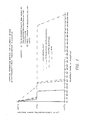
- toxin migration through the walls of the plastic bags or bottles ordinarily used to freeze plasma may be kept to a tolerable level despite the direct contact of the liquid heat transfer fluid with the bags or bottles. Since water is not miscible in the heat transfer liquid, ice does not form on the evaporation cooling coils immersed in the liquid. Freezing times of about 30 minutes for plasma bags immersed in liquid maintained at -35° C are made possible by use of the liquid heat transfer fluids disclosed herein as compared with typical prior art freezing times in air freezers of about three to four hours. Figure 1 shows typical freezing rates for plasma bags.
- Example 1 Room Temperature Test for Migration of CFC 113 through Plastic Bags and Bottles to Plasma
- Tests were run on standard 650 milliliter capacity PVC bags having a wall thickness of 2 mils and on standard 850 ml. capacity polypropylene bottles having a wall thickness of 4 mils.
- the bags and bottles were filled with plasma and were immersed in pure CFC 113 at a temperature of 22° C for 45 minutes to determine ppm migration of CFC 113.
- Gas chromatography testing of the plasma revealed that 21 parts per million (ppm) of CFC 113 had migrated through the bag walls to the plasma and that 12 ppm had migrated through the thicker walls of the bottles to the plasma contained therein.
- Example 2 This test was performed with the same parameters as Example 1 except that the temperature of the CFC 113 bath in which the bags and bottles of plasma were immersed was maintained at the lower temperature of -30° C during the test. Analysis of the plasma in the bags revealed that only 10 ppm of CFC 113 was present therein and that only 5 ppm was present in the plasma which had been placed in the polypropylene bottles.
- Example 3 Room Temperature Test for Migration of Components of 9/1 weight Mixture of CFC 113 and C6F14 Through Plastic Bags and Bottles to Plasma
- Example 1 The procedure of Example 1 was repeated using a bath comprising a 99 parts CFC 113 and 1 part by weight C6F14 mixture in the immersion bath. Only 15 ppm of CFC 113 were found to have migrated through the walls of the plastic bags to the plasma and only 9 ppm had migrated through the walls of the bottles.
- Example 4 Freezing Temperature Test for Migration of Components of 99/1 Weight Mixture of CFC 113 and C6F14 Through Plastic Bags and Bottles to Plasma
- Example 3 The same procedure used in Example 3 was followed except that the immersion bath temperature was maintained at -30° C during the testing. Testing of the plasma revealed a migration through the bag walls of 7 ppm of CFC 113 and a migration through the bottle walls of 2 ppm CFC 113.
- Example 5 Room Temperature Test for Migration of Components of 95/5 Weight Mixture of CFC 113 and C6F14 Through Plastic Bags and Bottles to Plasma
- Example 3 The procedure of Example 3 was followed but using an immersion bath comprising a mixture as set forth above. Test results showed 12 ppm of CFC 113 migration through the bags and 7 ppm migration through the bottles.
- Example 6 Freezing Temperature Test for Migration of Components of 95/5 Weight Mixture of CFC 113 and C6F14 Through Plastic Bags and Bottles to Plasma
- Example 4 The tests were performed like Example 4, except the proportions of the components of the freezing bath were altered to 95 parts by weight of CFC 113 and 5 parts by weight of C6F14. The test results indicated that slight increases in the C6F14 proportion further lowered the amount of CFC 113 migration through the container walls to 6 ppm through the bag walls and to 1 ppm through the bottle walls.
- Example 7 Room Temperature Test for Migration of Components of 99.5/0.5 Weight Mixture of CFC 113 and C6F14 Through Plastic Bags and Bottles to Plasma
- test results using this mixture of components in the immersion bath revealed 18 ppm migration of CFC 113 through the bags and 11 ppm through the bottles.
- Example 8 Freezing Temperature Test for Migration of Components of 99.5/0.5 Weight Mixture of CFC 13 and C6F14 Through Plastic Bags and Bottles to Plasma
- Figure 1 shows plasma temperature vs time for plasma samples immersed in the 99/1 weight mixture of Example 4 and, for comparison, in a typical prior art mixture of 50% alcohol and 50% glycerol.
- the freezing times are drastically reduced by use of the mixture and process of Example 4.
- the plateau reached at 0° C is greatly reduced by using liquids as disclosed and claimed herein. This reduction of crystallization time is believed to result in less damage during freezing of the recoverable fraction in the plasma.
- Figure 2 shows the graphical relationship between CFC 113 concentration in plasma frozen in blood-plasma pooling bags versus temperature for a 45 minute immersion.
- the fraction of C6F14 which has migrated through the container walls is nil, and that the CFC 113 fraction which has migrated is within tolerable levels. Since the vapor pressure of CFC is thirty - fold higher than that of water, freeze drying of plasma in typical vacuum freeze dryers draws off substantially all of the CFC 113 fraction which remains after the direct contact freezing of the plasma. Precipitation products such as Factor 8 which is a life sustaining staple to the hemophiliac population of the world prepared from plasmas frozen as taught herein are sufficiently free of CFC 113 toxin that maximum patient intravenous exposure to CFC 113 is well under one gram per year assuming worse case conditions.
Landscapes
- Engineering & Computer Science (AREA)
- Chemical & Material Sciences (AREA)
- Life Sciences & Earth Sciences (AREA)
- Polymers & Plastics (AREA)
- Zoology (AREA)
- Food Science & Technology (AREA)
- Wood Science & Technology (AREA)
- Chemical Kinetics & Catalysis (AREA)
- General Chemical & Material Sciences (AREA)
- Combustion & Propulsion (AREA)
- Physics & Mathematics (AREA)
- Mechanical Engineering (AREA)
- Thermal Sciences (AREA)
- General Engineering & Computer Science (AREA)
- Meat, Egg Or Seafood Products (AREA)
Applications Claiming Priority (4)
| Application Number | Priority Date | Filing Date | Title |
|---|---|---|---|
| US07/012,197 US4803842A (en) | 1987-02-09 | 1987-02-09 | Direct contact cooling of foodstuffs with halocarbon heat transfer liquids |
| US12196 | 1987-02-09 | ||
| US12197 | 1987-02-09 | ||
| US07/012,196 US4730460A (en) | 1987-02-09 | 1987-02-09 | Ultra - rapid plasma freezing with halocarbon heat transfer liquids |
Publications (1)
| Publication Number | Publication Date |
|---|---|
| EP0281232A1 true EP0281232A1 (fr) | 1988-09-07 |
Family
ID=26683272
Family Applications (1)
| Application Number | Title | Priority Date | Filing Date |
|---|---|---|---|
| EP88300534A Withdrawn EP0281232A1 (fr) | 1987-02-09 | 1988-01-22 | Réfrigération et congélation à contact d'articles utilisant des liquides de transfert de chaleur à l'halocarbone |
Country Status (1)
| Country | Link |
|---|---|
| EP (1) | EP0281232A1 (fr) |
Cited By (2)
| Publication number | Priority date | Publication date | Assignee | Title |
|---|---|---|---|---|
| EP0448292A3 (en) * | 1990-03-19 | 1992-01-08 | Instacool Inc. Of North America | Rapid cooling through a thin flexible membrane |
| WO1993008256A1 (fr) * | 1991-10-21 | 1993-04-29 | Allied-Signal Inc. | Compositions du type azeotrope de 1,1,1-trifluorohexane et de perfluoromethylcyclohexane |
Citations (3)
| Publication number | Priority date | Publication date | Assignee | Title |
|---|---|---|---|---|
| US3792180A (en) * | 1971-07-30 | 1974-02-12 | Du Pont | Adding fat adjuvants to foods in an ebullient freezant |
| US3812040A (en) * | 1971-10-20 | 1974-05-21 | Du Pont | Heat transfer fluids |
| EP0174170A2 (fr) * | 1984-09-07 | 1986-03-12 | Castleton, Inc. | Procédé et appareil pour réfrigérer et congeler des objets |
-
1988
- 1988-01-22 EP EP88300534A patent/EP0281232A1/fr not_active Withdrawn
Patent Citations (3)
| Publication number | Priority date | Publication date | Assignee | Title |
|---|---|---|---|---|
| US3792180A (en) * | 1971-07-30 | 1974-02-12 | Du Pont | Adding fat adjuvants to foods in an ebullient freezant |
| US3812040A (en) * | 1971-10-20 | 1974-05-21 | Du Pont | Heat transfer fluids |
| EP0174170A2 (fr) * | 1984-09-07 | 1986-03-12 | Castleton, Inc. | Procédé et appareil pour réfrigérer et congeler des objets |
Cited By (2)
| Publication number | Priority date | Publication date | Assignee | Title |
|---|---|---|---|---|
| EP0448292A3 (en) * | 1990-03-19 | 1992-01-08 | Instacool Inc. Of North America | Rapid cooling through a thin flexible membrane |
| WO1993008256A1 (fr) * | 1991-10-21 | 1993-04-29 | Allied-Signal Inc. | Compositions du type azeotrope de 1,1,1-trifluorohexane et de perfluoromethylcyclohexane |
Similar Documents
| Publication | Publication Date | Title |
|---|---|---|
| JPH04222375A (ja) | 腐敗性物品の冷却装置、冷却用バリア−と冷却方法 | |
| KR940000206B1 (ko) | 저온냉각장치용 냉각제와 그 제조방법 및 냉각방법 | |
| GB900808A (en) | Improvements in and relating to preservation | |
| GB2115677A (en) | A method for expanding tobacco | |
| CA2201108A1 (fr) | Prolongation de la conservation des plaquettes sanguines | |
| US4730460A (en) | Ultra - rapid plasma freezing with halocarbon heat transfer liquids | |
| CN110041163A (zh) | 三氟乙烯的保存方法 | |
| CN110226621A (zh) | 一种水产品保鲜用的冷冻贮存方法 | |
| Ishevskiy et al. | Freezing as a method of food preservation | |
| CA1302294C (fr) | Methode de congelation du liquides organiques nobles | |
| EP0281232A1 (fr) | Réfrigération et congélation à contact d'articles utilisant des liquides de transfert de chaleur à l'halocarbone | |
| US4803842A (en) | Direct contact cooling of foodstuffs with halocarbon heat transfer liquids | |
| US3603102A (en) | Method and apparatus for extracting heat from articles with a liquid freezant | |
| Massaux et al. | High hydrostatic pressure freezing and thawing of pork meat: quality preservation, processing times and high pressure treatment advantages | |
| US5452584A (en) | Method of freezing biological tissue specimens with opti-cryo-fluid | |
| Ronsivalli et al. | Low temperature preservation of seafoods: A review | |
| EP0290666B1 (fr) | Solution congélée basse et processus de congélation basse | |
| JP2000043946A (ja) | 低温貯蔵及び輸送容器 | |
| US3298109A (en) | Azeotropic drying process | |
| US2280827A (en) | Method of freezing and preserving foodstuffs | |
| CA2431582A1 (fr) | Congelation de produits carnes sales | |
| EP1686852B1 (fr) | Procede ameliore de congelation dans de la saumure | |
| Flosdorf | Advances in drying by sublimation. Blood plasma, penicillin, foods | |
| US3482412A (en) | Method of extracting heat from articles with an ebullient liquid freezant | |
| Lambert | Heat and mass transfer in freeze drying |
Legal Events
| Date | Code | Title | Description |
|---|---|---|---|
| PUAI | Public reference made under article 153(3) epc to a published international application that has entered the european phase |
Free format text: ORIGINAL CODE: 0009012 |
|
| AK | Designated contracting states |
Kind code of ref document: A1 Designated state(s): DE FR GB IT |
|
| 17P | Request for examination filed |
Effective date: 19890228 |
|
| 17Q | First examination report despatched |
Effective date: 19900810 |
|
| STAA | Information on the status of an ep patent application or granted ep patent |
Free format text: STATUS: THE APPLICATION IS DEEMED TO BE WITHDRAWN |
|
| 18D | Application deemed to be withdrawn |
Effective date: 19920801 |