EP0284205A2 - An der Carbomycinbiosynthese beteiligtes Gen, carG genannt, zur Verwendung in Streptomyces und anderen Organismen - Google Patents
An der Carbomycinbiosynthese beteiligtes Gen, carG genannt, zur Verwendung in Streptomyces und anderen Organismen Download PDFInfo
- Publication number
- EP0284205A2 EP0284205A2 EP88301533A EP88301533A EP0284205A2 EP 0284205 A2 EP0284205 A2 EP 0284205A2 EP 88301533 A EP88301533 A EP 88301533A EP 88301533 A EP88301533 A EP 88301533A EP 0284205 A2 EP0284205 A2 EP 0284205A2
- Authority
- EP
- European Patent Office
- Prior art keywords
- car
- plasmid
- gene
- streptomyces
- dna
- Prior art date
- Legal status (The legal status is an assumption and is not a legal conclusion. Google has not performed a legal analysis and makes no representation as to the accuracy of the status listed.)
- Ceased
Links
Images


Classifications
-
- C—CHEMISTRY; METALLURGY
- C12—BIOCHEMISTRY; BEER; SPIRITS; WINE; VINEGAR; MICROBIOLOGY; ENZYMOLOGY; MUTATION OR GENETIC ENGINEERING
- C12N—MICROORGANISMS OR ENZYMES; COMPOSITIONS THEREOF; PROPAGATING, PRESERVING, OR MAINTAINING MICROORGANISMS; MUTATION OR GENETIC ENGINEERING; CULTURE MEDIA
- C12N15/00—Mutation or genetic engineering; DNA or RNA concerning genetic engineering, vectors, e.g. plasmids, or their isolation, preparation or purification; Use of hosts therefor
- C12N15/09—Recombinant DNA-technology
- C12N15/11—DNA or RNA fragments; Modified forms thereof; Non-coding nucleic acids having a biological activity
- C12N15/52—Genes encoding for enzymes or proenzymes
-
- C—CHEMISTRY; METALLURGY
- C12—BIOCHEMISTRY; BEER; SPIRITS; WINE; VINEGAR; MICROBIOLOGY; ENZYMOLOGY; MUTATION OR GENETIC ENGINEERING
- C12N—MICROORGANISMS OR ENZYMES; COMPOSITIONS THEREOF; PROPAGATING, PRESERVING, OR MAINTAINING MICROORGANISMS; MUTATION OR GENETIC ENGINEERING; CULTURE MEDIA
- C12N15/00—Mutation or genetic engineering; DNA or RNA concerning genetic engineering, vectors, e.g. plasmids, or their isolation, preparation or purification; Use of hosts therefor
- C12N15/09—Recombinant DNA-technology
- C12N15/63—Introduction of foreign genetic material using vectors; Vectors; Use of hosts therefor; Regulation of expression
- C12N15/74—Vectors or expression systems specially adapted for prokaryotic hosts other than E. coli, e.g. Lactobacillus, Micromonospora
- C12N15/76—Vectors or expression systems specially adapted for prokaryotic hosts other than E. coli, e.g. Lactobacillus, Micromonospora for Actinomyces; for Streptomyces
-
- C—CHEMISTRY; METALLURGY
- C12—BIOCHEMISTRY; BEER; SPIRITS; WINE; VINEGAR; MICROBIOLOGY; ENZYMOLOGY; MUTATION OR GENETIC ENGINEERING
- C12P—FERMENTATION OR ENZYME-USING PROCESSES TO SYNTHESISE A DESIRED CHEMICAL COMPOUND OR COMPOSITION OR TO SEPARATE OPTICAL ISOMERS FROM A RACEMIC MIXTURE
- C12P19/00—Preparation of compounds containing saccharide radicals
- C12P19/44—Preparation of O-glycosides, e.g. glucosides
- C12P19/60—Preparation of O-glycosides, e.g. glucosides having an oxygen of the saccharide radical directly bound to a non-saccharide heterocyclic ring or a condensed ring system containing a non-saccharide heterocyclic ring, e.g. coumermycin, novobiocin
- C12P19/62—Preparation of O-glycosides, e.g. glucosides having an oxygen of the saccharide radical directly bound to a non-saccharide heterocyclic ring or a condensed ring system containing a non-saccharide heterocyclic ring, e.g. coumermycin, novobiocin the hetero ring having eight or more ring members and only oxygen as ring hetero atoms, e.g. erythromycin, spiramycin, nystatin
-
- Y—GENERAL TAGGING OF NEW TECHNOLOGICAL DEVELOPMENTS; GENERAL TAGGING OF CROSS-SECTIONAL TECHNOLOGIES SPANNING OVER SEVERAL SECTIONS OF THE IPC; TECHNICAL SUBJECTS COVERED BY FORMER USPC CROSS-REFERENCE ART COLLECTIONS [XRACs] AND DIGESTS
- Y10—TECHNICAL SUBJECTS COVERED BY FORMER USPC
- Y10S—TECHNICAL SUBJECTS COVERED BY FORMER USPC CROSS-REFERENCE ART COLLECTIONS [XRACs] AND DIGESTS
- Y10S435/00—Chemistry: molecular biology and microbiology
- Y10S435/8215—Microorganisms
- Y10S435/822—Microorganisms using bacteria or actinomycetales
- Y10S435/886—Streptomyces
Definitions
- the present invention relates to a novel carbomycin biosynthetic gene, designated car G, methods for using the car G gene, recombinant DNA cloning vectors that comprise the novel gene, and transformants containing the novel vectors.
- Streptomyces thermotolerans (ATCC 11416) produces carbomycin, a macrolide antibiotic consisting of a 16-member cyclic lactone and two sugar residues.
- the antibiotic activity of carbomycin like that of other macrolides, is due to inhibition of protein synthesis by a mechanism that involves the binding of carbomycin to the ribosome.
- the car G gene encodes the activities required to produce the 16-member cyclic lactone of carbomycin.
- the present invention provides carbomycin biosynthetic gene expression vectors for use in Streptomyces and other host cells.
- the development and exploitation of recombinant DNA technology in Streptomyces has been driven by the desire to improve the antibiotic-producing ability of this industrially important organism, not only to increase antibiotic yield, but also to produce novel antibiotics.
- This development has been somewhat retarded by the low number of antibiotic biosynthetic genes presently available for use in modifying Streptomyces by recombinant DNA technology.
- the present invention is useful and especially important in that it expands the number of antibiotic biosynthetic genes suitable for such use.
- the vectors of the present invention are particularly useful, because the vectors can be introduced into and selected for in a variety of Streptomyces cells. Streptomyces provides over half of the clinically important antibiotics and thus is a commercially significant group.
- the present invention provides new and useful vectors and methods not only for this industrially important group but also for other antibiotic-producing organisms and allows for increasing the yield of carbomycin in fermentations and also for producing new antibiotics and antibiotic derivatives.
- Antibiotic - a substance produced by a microorganism which, either naturally or with limited modification, will inhibit the growth of or kill another microorganism or eukaryotic cell.
- Antibiotic Biosynthetic Gene - a DNA segment that encodes one or more activities that are necessary in the biochemical process of converting primary metabolites into antibiotics.
- Antibiotic Biosynthetic Pathway the entire set of antibiotic biosynthetic genes necessary for the process of converting primary metabolites into antibiotics.
- Antibiotic-Producing Organism any organism, including, but not limited to, Actinoplanes , Actinomadura , Bacillus , Cephalosporium , Micromonospora , Penicillium , Nocardia , and Streptomyces , which either produces an antibiotic or contains genes which, if expressed, would produce an antibiotic.
- Antibiotic Resistance-Conferring Gene a DNA segment that encodes an enzymatic or other activity that confers resistance to an antibiotic.
- Bifunctional Cloning Shuttle Vector a recombinant DNA cloning vector that can replicate and/or integrate into organisms of two different taxa.
- Cloning the process of incorporating a segment of DNA into a recombinant DNA cloning vector and transforming a host cell with the recombinant DNA.
- car A - a carbomycin resistance-conferring gene of type A.
- car B - a carbomycin resistance-conferring gene of type B.
- car G - a DNA sequence that comprises one or more genes that encode the activities required to form the 16-member cyclic lactone of carbomycin.
- Cosmid - a recombinant DNA cloning vector which not only can replicate in a host cell in the same manner as a plasmid but also can be packaged into phage heads.
- Genetic Library a set of recombinant DNA cloning vectors into which segments of DNA, comprising substantially all of the DNA of a particular organism, have been cloned.
- Hybrid Antibiotic an antibiotic that is not naturally produced by a host cell but can be produced by the host cell after transformation of the host cell with a recombinant DNA vector that contains an antibiotic biosynthetic gene.
- Hybridization the process of annealing two single-stranded DNA molecules to form a double-stranded DNA molecule, which may or may not be completely base-paired.
- NmR - the neomycin resistance-conferring gene.
- ori - a plasmid origin of replication.
- Phasmid--a recombinant DNA vector that may act as a phage or as a plasmid.
- Recombinant DNA Cloning Vector any autonomously replicating or integrating agent, including, but not limited to, plasmids, comprising a DNA molecule to which one or more additional DNA molecules can be or have been added.
- Recombinant DNA Expression Vector any autonomously replicating or integrating agent, including, but not limited to, plasmids, that drives expression of a gene product, such as mRNA, tRNA, rRNA, and, after translation of mRNA, protein, in a host cell.
- plasmids that drives expression of a gene product, such as mRNA, tRNA, rRNA, and, after translation of mRNA, protein, in a host cell.
- Recombinant DNA Vector any recombinant DNA cloning or expression vector.
- Restriction Fragment any linear DNA molecule generated by the action of one or more restriction enzymes.
- Sensitive Host Cell - a host cell that cannot grow in the presence of a given antibiotic without a DNA segment that confers resistance thereto.
- TcR - the tetracycline-resistant phenotype or gene conferring same.
- Transformant - a recipient host cell that has undergone transformation.
- Transformation the introduction of DNA into a recipient host cell that changes the genotype and results in a change in the recipient cell.
- restriction fragment size may vary somewhat from calculated size based on map distances.
- restriction enzymes such as Mbo I, only certain cut sites are shown for convenience.
- the present invention relates to a novel carbomycin biosynthetic gene, designated car G, that can be used to increase antibiotic yield and to produce new antibiotics.
- the car G gene is useful in a method for increasing the carbomycin-producing ability of an organism that comprises transforming the organism with a recombinant DNA vector that codes for expression of the car G gene product and culturing the transformed cell under conditions suitable for producing carbomycin. The method is especially preferred for increasing the carbomycin-producing ability of Streptomyces thermotolerans host cells.
- the car G gene can be isolated from plasmid pOJ171 on an ⁇ 14.0 kb Bgl II restriction fragment; plasmid pOJ171 can be isolated from E. .
- Plasmid pOJ171 can be isolated from E . coli K12 SF8/pOJ171 in substantial accordance with the procedure described in Example 1.
- Plasmid pOJ171 serves as useful starting material for the construction of other vectors that contain the car G carbomycin biosynthetic gene.
- the ⁇ 14.0 kb Bgl II, carbomycin biosynthetic gene-containing restriction fragment of plasmid pOJ171 was isolated and inserted into Bgl II-digested plasmid pOJ160 (NRRL B-18088) to yield plasmids pOJ325 and pOJ325A, which differ only with respect to the orientation of the ⁇ 14.0 kb Bgl II, carbomycin biosynthetic-containing restriction fragment.
- the construction protocol for plasmids pOJ325 and pOJ325A is given in Example 2; a restriction site and function map of plasmid pOJ325 is presented in Figure 3 of the accompanying drawings.
- the car G-containing, ⁇ 14 kb Bgl II restriction fragment of the present invention may actually comprise more than one gene.
- the activity of the car G gene is best understood by defining the mutation which the car G gene complements. Certain mutants of Streptomyces thermotolerans , such as NRRL 15270, described in U.S. Patent No. 4,522,919, do not produce carbomycin or carbomycin-related compounds unless supplemented with the 16-member cyclic lactone of carbomycin or similar antibiotics.
- the car G gene of the present invention encodes the enzymatic activities required to allow an organism such as NRRL 15270 to produce carbomycin without supplying the 16-member cyclic lactone.
- the present invention also provides a method for producing a hybrid antibiotic in a host cell that comprises transforming a host cell with a recombinant DNA vector that drives expression of the car G gene product and culturing the transformed host cell under conditions suitable for producing the hybrid antibiotic.
- the method is particularly useful in macrolide-producing host cells, especially macrolide-producing strains of Streptomyces .
- the car G gene was isolated from a carbomycin-producing strain of Streptomyces thermotolerans (ATCC 11416). Thus, genomic DNA of S . thermotolerans was partially digested with restriction enzyme Mbo I, and the resulting DNA was inserted into Hpa I- Bam HI-digested cosmid pKC462A to yield a number of car G-containing plasmids, including plasmid pOJ171.
- Plasmid pKC462A (NRRL B-15973) is a cosmid shuttle vector of the type described in U.S. Patent Application Serial No. 842,102, filed March 20, 1986, attorney docket No. X-6422B.
- the vectors of the present invention can be used to transform a variety of organisms to increase the carbomycin-producing ability of the organism or to enable the organism to synthesize the 16-member cyclic lactone of carbomycin, a useful intermediate in antibiotic biosynthesis.
- the car G gene can be used to transform a variety of antibiotic-producing organisms, particularly macrolide antibiotic-producing organisms, for purposes of making novel antibiotics.
- the car G gene itself can be reconstructed using recombinant DNA techniques for purposes of producing the car G gene product in non- Streptomyces species.
- Tables present a representative sampling of various antibiotic-producing organisms in which the car G gene can be used either to produce a novel antibiotic or to increase antibiotic production.
- Illustrative vectors of the present invention were introduced into Streptomyces thermotolerans NRRL 15270 for purposes of exemplifying the use of the car G gene to increase the carbomycin-producing ability of an organism.
- S . thermotolerans NRRL 15270 was derived from S . thermotolerans ATCC 11416 by mutagenesis as described in U.S. Patent No. 4,552,919.
- NRRL 15270 does not produce carbomycin because of a deletion in the car G region of the chromosome. This deletion is about 6 kb in size, which indicates that the ⁇ 14 kb Bgl II car G-containing restriction fragment of the present invention could be reduced in size yet still confer the car G activity.
- the car G gene functions particularly well in Streptomyces thermotolerans . Yet even if the original car G gene failed to express in a given organism, such as E. . coli , because, for example, the Streptomyces promoter failed to function in that organism, the car G coding sequence of the present invention could be ligated to a DNA containing an appropriate promoter and ribosome-binding site to achieve expression of the car G gene in the host of choice.
- Plasmid pOJ171 contains the car G gene: (1) a promoter that directs transcription of the protein-coding sequence; (2) a sequence that, when transcribed into mRNA, directs translation of the transcript; (3) a protein-coding sequence; and (4) a transcription terminator. Each of these elements is independently useful and can, through the techniques of recombinant DNA technology, be used to form recombinant genes of great variety.
- the DNA sequence of the car G gene reveals the location of the car G coding sequence and thus allows one to position other promoters, for example, the trp , lpp , and lac promoters of E. .
- the hybrid tac promoter By choosing the proper promoter, one can construct vectors that drive expression of the car G gene product in any host cell.
- the promoter of the car G gene is useful in its own right.
- the promoter and other regulatory elements of the car G gene can be linked to the coding sequence of a non-carbomycin antibiotic biosynthetic gene to prepare a hybrid antibiotic pathway gene that functions in other Streptomyces species to yield a hybrid antibiotics.
- the individual elements of the gene on the plasmids described herein comprise important components of the present invention.
- Streptomyces replicons can be used in conjunction with the car G gene to construct expression vectors of the present invention.
- Table VI is an illustrative, but not comprehensive, listing of Streptomyces plasmids from which Streptomyces replicons can be obtained. Those skilled in the art recognize that, so long as the replicon function is not disrupted, all or part of the plasmids can be used to construct vectors that contain the car G gene of the present invention.
- the plasmid-containing host and depository accession number are also listed in Table VI.
- Restriction fragments used to construct vectors illustrative of the present invention can be conventionally modified to facilitate ligation.
- molecular linkers can be provided to a particular car G biosynthetic gene-containing restriction fragment or to DNA comprising vector replication or integration functions.
- specific sites for subsequent ligation can be conveniently constructed.
- the various car G biosynthetic gene-containing restric tion fragments, origin of replication, or sequences that provide for chromosomal integration of a given vector can be modified by adding, eliminating, or substituting certain nucleotides to alter characteristics and to provide a variety of restriction sites for ligation of DNA.
- Phage ⁇ C31 is a well-known Streptomyces phage that is an excellent source of starting material for constructing integrative carbomycin resistance-conferring vectors that further exemplify the present invention.
- a derivative of phage ⁇ C31, phasmid pKC331, is especially preferred for constructing such integrating vectors and can be obtained from E . coli K12 BE447/pKC331 (NRRL B-15828).
- ⁇ C31-type phages are integrative vectors and can be readily modified to incorporate the car G gene and thus confer car G activity to Streptomyces .
- plasmids that contain a replicon that provides for extrachromosomal maintenance of the plasmid sometimes integrate into the genome of the host cell, usually with concomitant deletion of the replicon sequences.
- the present invention thus is not limited by the type of vector used to introduce the car G gene into the target host cell nor by the location of the car G gene once introduction has occurred.
- the vectors of the present invention comprise a Streptomyces replicon and a car G gene-containing restriction fragment. Because amplification and manipulation of plasmids is done faster and more efficiently in E . coli than in Streptomyces , it is convenient to add DNA sequences that also allow for replication in E . coli . Thus, the addition of functional replicon-containing and antibiotic resistance-conferring restriction fragments from E . coli plasmids such as, for example, pUC8, pUC18, pUC19, pBR322, pACYC184, pBR325, pBR328, and the like is highly advantageous and adds to the general utility of the present illustrative vectors.
- Streptomyces thermotolerans contains two carbomycin resistance-conferring genes, designated car A and car B. These two carbomycin resistance genes may act in concert to cause high-level resistance to carbomycin in Streptomyces thermotolerans and thus may be advantageously used as vectors of the invention.
- the car A gene can be isolated from plasmid pOJ158, available in S . griseofuscus host cells from the NRRL under the accession number NRRL 18089.
- the car B gene can be isolated from plasmid pOJ159, available in S . griseofuscus host cells from the NRRL under the accession number NRRL 18090.
- the present invention also comprises vectors that contain the car G gene and either or both of the car A and car B genes. Plasmid pOJ171, for example, comprises both the car G and car B genes.
- the cloning vectors and transformants of the present invention provide for the cloning of genes to improve yields of various products that are currently produced in Streptomyces and related cells. Examples of such products include, but are not limited to, Carbomycin Streptomycin, Tylosin, Cephalosporins, Actaplanin, Narasin, Monensin, Tobramycin, Erythromycin, and the like.
- the present invention also provides selectable vectors that are useful for cloning, characterizing, and reconstructing a variety of useful DNA sequences.
- Streptomyces can be cultured in a number of ways using any of several different media.
- Preferred carbohydrate sources in a culture medium include, for example, molasses, glucose, dextrin, and glycerol.
- Nitrogen sources include, for example, soy flour, amino acid mixtures, and peptones.
- Nutrient inorganic salts are also incorporated and include the customary salts capable of yielding sodium, potassium, ammonium, calcium, phosphate, chloride, sulfate, and like ions.
- essential trace elements are also added. Such trace elements are commonly supplied as impurities incidental to the addition of other constituents of the medium.
- Streptomyces is grown under aerobic culture conditions over a relatively wide pH range of about 5 to 9 at temperatures ranging from about 15° to 40°C.
- a culture medium For plasmid stability and maintenance, it is desirable to start with a culture medium at a pH of about 7.2 and maintain a culture temperature of about 30°C.
- Plasmid pOJ171 can be obtained from the Northern Regional Research Center in E . coli K12 SF8 under the accession number NRRL B-18169.
- the lyophils of E. . coli K12 SF8/pOJ171 are plated onto L-agar plates (10 g of Bacto-tryptone, 10 g of NaCl, 5 g of Bacto-Yeast Extract, and 15 g of agar per liter) containing 200 ⁇ g/ml apramycin to obtain a single colony isolate of the strain.
- This colony is used to inoculate about 500 ml of L broth (L agar without agar) containing 200 ⁇ g/ml apramycin, and the resulting culture is incubated at 37°C with aeration until the cells reach stationary phase.
- Plasmid DNA was obtained from the cells to use in construction of plasmid pOJ325 in accordance with the following procedure, which is adapted from Maniatis et al ., 1982, Molecular Cloning (Cold Spring Harbor Laboratory). This same procedure was used, but on a smaller scale and with the ultracentrifugation steps replaced with phenol followed by chloroform extractions, to prepare the plasmid DNA used to identify the E. . coli K12 RR1 ⁇ M15/pOJ325 transformants.
- CsCl Eight grams are added to the DNA solution. About 0.8 ml of a 10 mg/ml solution of ethidium bromide in water are added for each 10 ml of CsCl-DNA solution. The final density of the solution is about 0.761 g/ml, and the ethidium bromide concentraton is about 800 ⁇ g/ml.
- the solution is transferred to a Beckman Type 50 centrifuge tube, filled to the top with TE buffer containing 0.761 g of CsCl per ml, sealed, and centrifuged at 45,000 rpm for 24 hours at 20°C. After centrifugation, two bands of DNA are visible in ordinary light and become even more prominent in UV light. The cap is removed from the tube, and the lower DNA band is recovered using a syringe with a #21 hypodermic needle inserted through the side of the centrifuge tube.
- the ethidium bromide is removed from the solution of plasmid DNA by several extractions with water-saturated 1-butanol, and the CsCl is removed by dialysis against TE buffer. After extractions with buffered phenol and then chloroform, the DNA is precipitated, washed with 70% ethanol, and dried. About 0.5 mg of plasmid pOJ171 DNA can be obtained by this procedure.
- a restriction site and function map of plasmid pOJ171 is presented in Figure 1 of the accompanying drawings.
- Plasmid pOJ160 can be obtained from the Northern Regional Research Center in E. . coli K12 JM109 under the accession number NRRL B-18088.
- the lyophils of E . coli K12 JM109/pOJ160 are plated onto L-agar plates (10 g of Bacto-tryptone, 10 g of NaCl, 5 g of Bacto-Yeast Extract, and 15 g of agar per liter) containing 200 ⁇ g/ml apramycin to obtain a single colony isolate of the strain.
- This colony is used to inoculate about 500 ml of L broth (L agar without agar) containing 200 ⁇ g/ml apramycin, and the resulting culture is incubated at 37°C with aeration until the cells reach stationary phase.
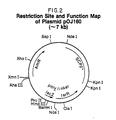
- Plasmid DNA was obtained from the cells to use in construction of plasmid pOJ325 in accordance with the procedure set forth in Example 1, above. About 0.5 mg of plasmid pOJ160 DNA can be obtained by this procedure. A restriction site and function map of plasmid pOJ160 is presented in Figure 2 of the accompanying drawings.
- the Bam HI-digested plasmid pOJ160 DNA was collected by adjusting the sodium acetate (NaOAc) concentration of the reaction mixture to 0.30 M, adding 2.5 volumes of ethanol, chilling the reaction mixture to -70°C, and centrifuging to pellet the precipitated DNA.
- the resulting reaction was incubated at 37°C for 2 hours.
- the reaction mixture was extracted, and the DNA was collected as described above.
- the DNA pellet was dissolved in 50 ⁇ l of TE buffer and contained ⁇ 2.5 ⁇ g of the desired ⁇ 14 kb Bgl II restriction fragment of plasmid pOJ171.
- the ligated DNA contained the desired plasmid pOJ325; a restriction site and function map of plasmid pOJ325 is presented in Figure 3 of the accompanying drawings. Because the ⁇ 14 kb, car G gene-containing Bgl II restriction fragment of plasmid pOJ171 could insert into plasmid pOJ160 in either of two orientations, the ligation also produced plasmid pOJ325A, which differs from plasmid pOJ325 only with respect to the orientatin of the car G gene-containing restriction fragment.
- the Bam HI site on plasmid pOJ160 resides within a polylinker that itself forms part of the DNA sequence encoding the lac Z ⁇ -fragment.
- E. . coli K12 RR1 ⁇ M15 NRRL B-15440
- plasmid pOJ160 can restore ⁇ -galactosidase activity to the E. . coli K12 RR1 ⁇ M15 strain.
- ⁇ -galactosidase can hydrodyze X-Gal, which is 5-bromo-4- chloro-3-indolyl- ⁇ -D-galactopyranoside, a colorless compound, to an indigo-colored product and thus allows for a convenient screening method for discriminating between transformants containing starting plasmid pOJ160 and those containing a plasmid pOJ160 derivative, such as plasmid pOJ325.
- E. . coli K12 RR1 ⁇ M15 cells that are competent for transformation
- the lyophils of E . coli K12 RR1 ⁇ M15 obtained from the NRRL are reconstituted to isolate single colonies.
- One single-colony isolate of RR1 ⁇ M15 was inoculated into 10 ml of L broth (10 g of Bacto-tryptone, 10 g of NaCl, and 5 g of Bacto-Yeast Extract per liter), and the culture was incubated at 37°C overnight with aeration. The overnight culture was used to inoculate 200 ml of L broth to yield a culture with an O.D.600 of about 0.1.
- the culture was incubated at 37°C with aeration until the O.D.600 was about 0.6.
- the culture was collected by centrifugation at 4000 ⁇ g for 10 minutes at 4°C, resuspended in 100 ml of cold 50 mM CaCl2, and incubated on ice for 15 to 30 minutes.
- the cells were again collected by centrifugation and resuspended in 10 ml of cold 50 mM CaCl2 containing 20% glycerol. A 200 ⁇ l aliquot of the cells was added to the ligated DNA prepared above. The cell-DNA mixture was incubated on ice for one hour, centrifuged, and the cell pellet was resuspended into 0.5 ml of L broth in a 1.5 ml tube and incubated with aeration at 37°C for one-half hour.
- Such unwanted vectors were differentiated from plasmid pOJ325 by digestion with restriction enzymes Aha III and Xba I. These sites are present in portions of plasmid pOJ171 derived from plasmid pKC462A, and so are present in the undesired ⁇ 14 kb Bgl II restriction fragments of plasmid pOJ171, but are completely absent in the S . thermotolerans DNA insert portion of pOJ171, which contains the car G gene. Plasmid DNA was obtained from the E . coli K12 RR1 ⁇ M15/pOJ325 transformants in accordance with the procedure for isolating plasmid pOJ160 DNA, described above. The plasmid pOJ325 DNA can be used to transform Streptomyces thermotolerans , as described in Example 3, below.
- Plasmid pOJ171 and plasmid pOJ325 were individually used to transform Streptomyces thermotolerans (NRRL 15270) in substantial accordance with the procedure set forth below.
- Streptomyces thermotolerans (NRRL 15270) was plated on Bennett's agar and incubated at 30°C for about 72 hours. A spore scraping was removed from the plate and used to inoculate 10 ml of TSB (TSB is made at 30 g/l and is obtained from Baltimore Biological Laboratories (BBL), P.O. Box 243, Cockeysville, Maryland 21031). The culture was incubated in an air-shaker incubator at 30°C for ⁇ 30 hours. This culture was homogenized and sonicated; then, 3 ml of the culture were used to inoculate 17 ml of TSB containing 0.4% glycine.
- the culture was incubated in an air-shaker incubator at 30°C for about ⁇ 24 hours. This culture was again homogenized and sonicated; then, 3 ml of the culture were used to inoculate 17 ml of TSB containing 0.4% glycine. The culture was incubated at 30°C for about 16 hours. The culture was again homogenized and sonicated; then, the mycelial fragments were harvested and washed two times with a 10.3% sucrose solution. The mycelial fragments were resuspended in 20 ml of P media (Example 3A1) containing 1 mg/ml lysozyme, and the resulting solution was incubated at room temperature for about one to one-and-one-half hours.
- P media Example 3A1
- the cells were pipetted up and down to disperse clumps.
- the protoplasts were collected and washed two times with P medium.
- the protoplasts were then suspended in 2 ml of P medium. This process usually generates about 2 to 5 ⁇ 107 protoplasts per 200 ⁇ l of solution.
- heparin Sigma Chemical Co, P.O. Box 14508, St. Louis, Missouri 63178
- the plates were incubated at 30°C overnight ( ⁇ 16 hours) and then overlaid with ⁇ 3 ml of R2-modified soft agar containing enough apramycin to give a final concentration, after diffusion, of 25 ⁇ g/ml.
- the plates were then incubated for about four days at 30°C, when colonies became visible to the unaided eye.
- Streptomyces thermotolerans (NRRL 15270)/pOJ325 transformants were patched from the R2-agar regeneration plates to plates containing Bennett's agar (Example 3A12) and 25 ⁇ g/ml apramycin and incubated at 37°C for 2-3 days until the colonies were 5-10 millimeters in diameter.
- the colonies were then plugged and the plugs transferred, using a sterile transfer tube (Spectrum Medical Industrial, Inc., Los Angeles, CA 90054) to trypticase soy agar (TSA) plates, which had been previously overlayed with soft-agar nutrient broth (Difco Laboratories, Detroit, MI 48232) containing Micrococcus luteus X160 (ATCC 9341).
- TSA trypticase soy agar
- the plates were incubated at 37°C for 16-24 hours.
- Micrococcus luteus (ATCC 9341) is sensitive to carbomycin and resistant to apramycin. Consequently, this M . luteus strain cannot grow around a plug which contains Streptomyces that are producing carbomycin.
- the chromatograms for the plugs prepared from Streptomyces thermotolerans /pOJ325 transformants produced zones of inhibition resulting from substances on the chromatogram that comigrated with the carbomycin standard.
- Each 50 ml aliquot of inoculated medium was incubated in a 250 ml Erlenmeyer flask at 37°C for 48 hours in an air-shaker incubator rotating through an arc of two inches at 260 rpm.
- Two ml aliquots of each vegetative culture were used to inoculate several 50 ml aliquots of CSI (3A10) fermentation medium.
- Each 50 ml aliquot of inoculated fermentation medium was incubated 48 hours in a 250 ml Erlenmeyer flask at 37°C in an air-shaker incubator rotating through an arc of two inches at 260 rpm.
- Streptomyces thermotolerans (NRRL 15270)/pOJ325 makes 4.8 times as much carbomycin as S . thermotolerans ATCC 11416.
- S . thermotolerans NRRL 15270 makes no carbomycin.
- strain Streptomyces thermotolerans (NRRL 15270)/pOJ325 produces more antibiotic than either S . thermotolerans ATCC 11416 or S . thermotolerans NRRL 15270.
Landscapes
- Genetics & Genomics (AREA)
- Health & Medical Sciences (AREA)
- Life Sciences & Earth Sciences (AREA)
- Engineering & Computer Science (AREA)
- Organic Chemistry (AREA)
- Chemical & Material Sciences (AREA)
- Wood Science & Technology (AREA)
- Zoology (AREA)
- Biomedical Technology (AREA)
- Bioinformatics & Cheminformatics (AREA)
- General Engineering & Computer Science (AREA)
- Biotechnology (AREA)
- Biochemistry (AREA)
- General Health & Medical Sciences (AREA)
- Microbiology (AREA)
- Molecular Biology (AREA)
- Biophysics (AREA)
- Plant Pathology (AREA)
- Physics & Mathematics (AREA)
- Chemical Kinetics & Catalysis (AREA)
- General Chemical & Material Sciences (AREA)
- Micro-Organisms Or Cultivation Processes Thereof (AREA)
- Preparation Of Compounds By Using Micro-Organisms (AREA)
Applications Claiming Priority (2)
| Application Number | Priority Date | Filing Date | Title |
|---|---|---|---|
| US07/017,660 US4952502A (en) | 1987-02-24 | 1987-02-24 | Carbomycin biosynthetic gene, designated carG, for use in streptomyces and other organisms |
| US17660 | 1998-02-03 |
Publications (2)
| Publication Number | Publication Date |
|---|---|
| EP0284205A2 true EP0284205A2 (de) | 1988-09-28 |
| EP0284205A3 EP0284205A3 (de) | 1989-08-23 |
Family
ID=21783846
Family Applications (1)
| Application Number | Title | Priority Date | Filing Date |
|---|---|---|---|
| EP88301533A Ceased EP0284205A3 (de) | 1987-02-24 | 1988-02-23 | An der Carbomycinbiosynthese beteiligtes Gen, carG genannt, zur Verwendung in Streptomyces und anderen Organismen |
Country Status (8)
| Country | Link |
|---|---|
| US (1) | US4952502A (de) |
| EP (1) | EP0284205A3 (de) |
| JP (1) | JPS63263091A (de) |
| AU (1) | AU602954B2 (de) |
| CA (1) | CA1311431C (de) |
| DK (1) | DK90088A (de) |
| HU (1) | HU203578B (de) |
| IL (1) | IL85478A (de) |
Cited By (3)
| Publication number | Priority date | Publication date | Assignee | Title |
|---|---|---|---|---|
| EP0354641A3 (en) * | 1988-05-13 | 1990-05-23 | Eli Lilly And Company | Recombinant dna encoding a 4''-0-isovaleryl acylase |
| EP0258046A3 (de) * | 1986-08-28 | 1990-06-13 | Eli Lilly And Company | Verfahren zur Selektion von Rekombinante-DNS enthaltenden Streptomyceten und andere Wirtszellen |
| EP0361905A3 (de) * | 1988-09-29 | 1991-07-10 | Eli Lilly And Company | Carbomycin-Biosynthese-Gene, bezeichnet als carL und carM, zur Verwendung in Streptomyzeten und anderen Organismen |
Families Citing this family (5)
| Publication number | Priority date | Publication date | Assignee | Title |
|---|---|---|---|---|
| US5589385A (en) * | 1990-07-26 | 1996-12-31 | American Cyanamid Company | Cloning of the biosynthetic pathway for chlortetracycline and tetracycline formation and cosmids useful therein |
| WO1997022711A1 (en) | 1995-12-19 | 1997-06-26 | Regents Of The University Of Minnesota | Metabolic engineering of polyhydroxyalkanoate monomer synthases |
| US6265202B1 (en) | 1998-06-26 | 2001-07-24 | Regents Of The University Of Minnesota | DNA encoding methymycin and pikromycin |
| US20030194784A1 (en) * | 2001-04-17 | 2003-10-16 | Sherman David H. | DNA encoding methymycin and pikromycin |
| CN113588840A (zh) * | 2021-08-17 | 2021-11-02 | 丽珠集团福州福兴医药有限公司 | 一种检测米尔贝霉素含量的方法 |
Family Cites Families (6)
| Publication number | Priority date | Publication date | Assignee | Title |
|---|---|---|---|---|
| US2902412A (en) * | 1956-06-04 | 1959-09-01 | Olin Mathieson | Fermentative carbomycin production |
| DE3141691A1 (de) * | 1981-10-21 | 1983-05-19 | Hoechst Ag, 6230 Frankfurt | Plasmid pac 1, verfahren zu seiner gewinnung und seine verwendung |
| DK144084A (da) * | 1983-03-03 | 1984-09-04 | Lilly Co Eli | Makrolid, dets fremstilling og anvendelse |
| ATE88215T1 (de) * | 1983-09-06 | 1993-04-15 | Microlife Technics | Abgeleitete nisin produzierende mikroorganismen, verfahren zur herstellung und verwendung und so erhaltene produkte. |
| CA1340599C (en) * | 1986-03-21 | 1999-06-22 | Karen Leigh Cox | Antibiotic-producing microorganisms |
| US4904591A (en) * | 1986-08-28 | 1990-02-27 | Eli Lilly And Company | Carbomycin resistance-conferring gene, designated cara, for use in streptomyces and other organisms |
-
1987
- 1987-02-24 US US07/017,660 patent/US4952502A/en not_active Expired - Fee Related
-
1988
- 1988-02-17 CA CA000559080A patent/CA1311431C/en not_active Expired - Lifetime
- 1988-02-19 IL IL85478A patent/IL85478A/xx unknown
- 1988-02-22 AU AU12019/88A patent/AU602954B2/en not_active Ceased
- 1988-02-22 DK DK090088A patent/DK90088A/da not_active Application Discontinuation
- 1988-02-23 EP EP88301533A patent/EP0284205A3/de not_active Ceased
- 1988-02-23 JP JP63040539A patent/JPS63263091A/ja active Pending
- 1988-02-23 HU HU88848A patent/HU203578B/hu not_active IP Right Cessation
Cited By (3)
| Publication number | Priority date | Publication date | Assignee | Title |
|---|---|---|---|---|
| EP0258046A3 (de) * | 1986-08-28 | 1990-06-13 | Eli Lilly And Company | Verfahren zur Selektion von Rekombinante-DNS enthaltenden Streptomyceten und andere Wirtszellen |
| EP0354641A3 (en) * | 1988-05-13 | 1990-05-23 | Eli Lilly And Company | Recombinant dna encoding a 4''-0-isovaleryl acylase |
| EP0361905A3 (de) * | 1988-09-29 | 1991-07-10 | Eli Lilly And Company | Carbomycin-Biosynthese-Gene, bezeichnet als carL und carM, zur Verwendung in Streptomyzeten und anderen Organismen |
Also Published As
| Publication number | Publication date |
|---|---|
| IL85478A0 (en) | 1988-07-31 |
| HU203578B (en) | 1991-08-28 |
| DK90088A (da) | 1988-12-15 |
| DK90088D0 (da) | 1988-02-22 |
| AU602954B2 (en) | 1990-11-01 |
| IL85478A (en) | 1993-01-31 |
| CA1311431C (en) | 1992-12-15 |
| US4952502A (en) | 1990-08-28 |
| AU1201988A (en) | 1988-08-25 |
| EP0284205A3 (de) | 1989-08-23 |
| HUT46738A (en) | 1988-11-28 |
| JPS63263091A (ja) | 1988-10-31 |
Similar Documents
| Publication | Publication Date | Title |
|---|---|---|
| EP0346000A2 (de) | Makrolid-Biosynthese-Gene zur Verwendung in Streptomyceten und anderen Organismen | |
| MacNeil et al. | Analysis of Streptomyces avermitilis genes required for avermectin biosynthesis utilizing a novel integration vector | |
| AU603088B2 (en) | Improvements in or relating to antibiotic-producing microorganisms | |
| US5672497A (en) | Method for increasing the antibiotic-producing ability of antibiotic-producing microorganisms | |
| EP0238892A2 (de) | Streptomyces-Klonierungsvektoren und ihre Verwendung zur Herstellung von makrolidischen Antibiotika | |
| EP0403173A2 (de) | Verwendung von der ortsspezifischen Integrationsfunktion der Phage OC31 | |
| Rajgarhia et al. | The product of dpsC confers starter unit fidelity upon the daunorubicin polyketide synthase of Streptomyces sp. strain C5 | |
| AU652766B2 (en) | Cloning of the biosynthetic pathway genes for chlortetracycline production from streptomyces aureofaciens and their expression in streptomyces lividans | |
| EP0354641B1 (de) | Für eine 4''-0-Isovalerylacylase kodierende rekombinante DNS | |
| US5589385A (en) | Cloning of the biosynthetic pathway for chlortetracycline and tetracycline formation and cosmids useful therein | |
| Arisawa et al. | Direct fermentative production of acyltylosins by genetically-engineered strains of Streptomyces fradiae | |
| AU602954B2 (en) | Carbomycin biosynthetic gene, designated carg, for use in streptomyces and other organisms | |
| EP0345546A2 (de) | Codierende DNS für ein Enzym, das die Position- 4'' von makrolidischen Antibiotika azyliert | |
| Jones | Cloning of streptomycete genes involved in antibiotic synthesis and its regulation | |
| EP0468217A2 (de) | Zur Actinomyceten-DNS-Klonierung nützliches bifunktionelles Cosmid | |
| US4879241A (en) | Tylosin resistance-conferring gene, designated tlrB, for use in streptomyces and other organisms | |
| EP0361905A2 (de) | Carbomycin-Biosynthese-Gene, bezeichnet als carL und carM, zur Verwendung in Streptomyzeten und anderen Organismen | |
| US5665564A (en) | Isolation and characterisation of genes resistant to anthracycline antibiotics | |
| EP0364130B1 (de) | Neue Tylosin-Biosynthese-Gene | |
| US4914030A (en) | Carbomycin resistance-conferring gene, designated carb, for use in streptomyces and other organisms | |
| US4904591A (en) | Carbomycin resistance-conferring gene, designated cara, for use in streptomyces and other organisms | |
| EP0371112B1 (de) | Isolierung und charakterisierung von gegen anthracyclin-antibiotika resistenten gegen | |
| EP0258046A2 (de) | Verfahren zur Selektion von Rekombinante-DNS enthaltenden Streptomyceten und andere Wirtszellen | |
| Pageni et al. | Characterization of a chalcosyltransferase (gerGTII) in dihydrochalcomycin biosynthesis | |
| KR19990074514A (ko) | 아미노글라이코사이드계 항생제에 대해 다제내성을지정하는유전자 |
Legal Events
| Date | Code | Title | Description |
|---|---|---|---|
| PUAI | Public reference made under article 153(3) epc to a published international application that has entered the european phase |
Free format text: ORIGINAL CODE: 0009012 |
|
| 17P | Request for examination filed |
Effective date: 19880305 |
|
| AK | Designated contracting states |
Kind code of ref document: A2 Designated state(s): AT BE CH DE ES FR GB GR IT LI NL SE |
|
| PUAL | Search report despatched |
Free format text: ORIGINAL CODE: 0009013 |
|
| AK | Designated contracting states |
Kind code of ref document: A3 Designated state(s): AT BE CH DE ES FR GB GR IT LI NL SE |
|
| 17Q | First examination report despatched |
Effective date: 19920605 |
|
| STAA | Information on the status of an ep patent application or granted ep patent |
Free format text: STATUS: THE APPLICATION HAS BEEN REFUSED |
|
| 18R | Application refused |
Effective date: 19940210 |