EP0284998A2 - Polymer-Zusammensetzungen mit Brandschutz-Eigenschaften - Google Patents
Polymer-Zusammensetzungen mit Brandschutz-Eigenschaften Download PDFInfo
- Publication number
- EP0284998A2 EP0284998A2 EP88104708A EP88104708A EP0284998A2 EP 0284998 A2 EP0284998 A2 EP 0284998A2 EP 88104708 A EP88104708 A EP 88104708A EP 88104708 A EP88104708 A EP 88104708A EP 0284998 A2 EP0284998 A2 EP 0284998A2
- Authority
- EP
- European Patent Office
- Prior art keywords
- prepolymer
- containing compound
- curable
- resinous solution
- methylol
- Prior art date
- Legal status (The legal status is an assumption and is not a legal conclusion. Google has not performed a legal analysis and makes no representation as to the accuracy of the status listed.)
- Withdrawn
Links
- 239000003063 flame retardant Substances 0.000 title claims description 29
- RNFJDJUURJAICM-UHFFFAOYSA-N 2,2,4,4,6,6-hexaphenoxy-1,3,5-triaza-2$l^{5},4$l^{5},6$l^{5}-triphosphacyclohexa-1,3,5-triene Chemical compound N=1P(OC=2C=CC=CC=2)(OC=2C=CC=CC=2)=NP(OC=2C=CC=CC=2)(OC=2C=CC=CC=2)=NP=1(OC=1C=CC=CC=1)OC1=CC=CC=C1 RNFJDJUURJAICM-UHFFFAOYSA-N 0.000 title claims description 22
- 239000000203 mixture Substances 0.000 title claims description 18
- 238000006243 chemical reaction Methods 0.000 claims abstract description 53
- -1 nitrogen-containing compound Chemical class 0.000 claims abstract description 50
- 238000000576 coating method Methods 0.000 claims abstract description 41
- 239000011248 coating agent Substances 0.000 claims abstract description 28
- 125000005842 heteroatom Chemical group 0.000 claims abstract description 24
- OKKJLVBELUTLKV-UHFFFAOYSA-N Methanol Chemical class OC OKKJLVBELUTLKV-UHFFFAOYSA-N 0.000 claims abstract description 18
- 150000001875 compounds Chemical class 0.000 claims abstract description 15
- 125000002887 hydroxy group Chemical group [H]O* 0.000 claims abstract description 14
- 150000003512 tertiary amines Chemical class 0.000 claims abstract description 12
- 238000000034 method Methods 0.000 claims abstract description 11
- 150000004023 quaternary phosphonium compounds Chemical class 0.000 claims abstract description 10
- 239000001257 hydrogen Substances 0.000 claims abstract description 8
- 229910052739 hydrogen Inorganic materials 0.000 claims abstract description 8
- UFHFLCQGNIYNRP-UHFFFAOYSA-N Hydrogen Chemical compound [H][H] UFHFLCQGNIYNRP-UHFFFAOYSA-N 0.000 claims abstract description 4
- NBIIXXVUZAFLBC-UHFFFAOYSA-N phosphoric acid Substances OP(O)(O)=O NBIIXXVUZAFLBC-UHFFFAOYSA-N 0.000 claims description 37
- 239000000758 substrate Substances 0.000 claims description 36
- 239000002253 acid Substances 0.000 claims description 33
- XLYOFNOQVPJJNP-UHFFFAOYSA-N water Substances O XLYOFNOQVPJJNP-UHFFFAOYSA-N 0.000 claims description 21
- XSQUKJJJFZCRTK-UHFFFAOYSA-N Urea Chemical compound NC(N)=O XSQUKJJJFZCRTK-UHFFFAOYSA-N 0.000 claims description 20
- 239000004202 carbamide Substances 0.000 claims description 20
- 229910000147 aluminium phosphate Inorganic materials 0.000 claims description 19
- OAICVXFJPJFONN-UHFFFAOYSA-N Phosphorus Chemical compound [P] OAICVXFJPJFONN-UHFFFAOYSA-N 0.000 claims description 18
- 229910052698 phosphorus Inorganic materials 0.000 claims description 17
- 239000011574 phosphorus Substances 0.000 claims description 17
- 230000015572 biosynthetic process Effects 0.000 claims description 12
- 229920000642 polymer Polymers 0.000 claims description 12
- 239000003795 chemical substances by application Substances 0.000 claims description 10
- IJGRMHOSHXDMSA-UHFFFAOYSA-N Atomic nitrogen Chemical compound N#N IJGRMHOSHXDMSA-UHFFFAOYSA-N 0.000 claims description 8
- 229920000877 Melamine resin Polymers 0.000 claims description 8
- MNNHAPBLZZVQHP-UHFFFAOYSA-N diammonium hydrogen phosphate Chemical compound [NH4+].[NH4+].OP([O-])([O-])=O MNNHAPBLZZVQHP-UHFFFAOYSA-N 0.000 claims description 8
- 239000007787 solid Substances 0.000 claims description 7
- 239000003054 catalyst Substances 0.000 claims description 6
- 238000001035 drying Methods 0.000 claims description 5
- 229910052809 inorganic oxide Inorganic materials 0.000 claims description 5
- XZMCDFZZKTWFGF-UHFFFAOYSA-N Cyanamide Chemical compound NC#N XZMCDFZZKTWFGF-UHFFFAOYSA-N 0.000 claims description 4
- 229910052757 nitrogen Inorganic materials 0.000 claims description 4
- 150000003672 ureas Chemical class 0.000 claims description 4
- VGGLHLAESQEWCR-UHFFFAOYSA-N N-(hydroxymethyl)urea Chemical compound NC(=O)NCO VGGLHLAESQEWCR-UHFFFAOYSA-N 0.000 claims description 3
- JDSHMPZPIAZGSV-UHFFFAOYSA-N melamine Chemical compound NC1=NC(N)=NC(N)=N1 JDSHMPZPIAZGSV-UHFFFAOYSA-N 0.000 claims description 3
- 239000004254 Ammonium phosphate Substances 0.000 claims description 2
- 229910000148 ammonium phosphate Inorganic materials 0.000 claims description 2
- 235000019289 ammonium phosphates Nutrition 0.000 claims description 2
- QGBSISYHAICWAH-UHFFFAOYSA-N dicyandiamide Chemical compound NC(N)=NC#N QGBSISYHAICWAH-UHFFFAOYSA-N 0.000 claims description 2
- 230000003993 interaction Effects 0.000 claims description 2
- WSFSSNUMVMOOMR-NJFSPNSNSA-N methanone Chemical compound O=[14CH2] WSFSSNUMVMOOMR-NJFSPNSNSA-N 0.000 claims description 2
- 238000002329 infrared spectrum Methods 0.000 claims 1
- 238000000655 nuclear magnetic resonance spectrum Methods 0.000 claims 1
- 239000007795 chemical reaction product Substances 0.000 abstract description 46
- WSFSSNUMVMOOMR-UHFFFAOYSA-N Formaldehyde Chemical compound O=C WSFSSNUMVMOOMR-UHFFFAOYSA-N 0.000 description 27
- VYPSYNLAJGMNEJ-UHFFFAOYSA-N Silicium dioxide Chemical compound O=[Si]=O VYPSYNLAJGMNEJ-UHFFFAOYSA-N 0.000 description 24
- 239000000463 material Substances 0.000 description 20
- 235000013877 carbamide Nutrition 0.000 description 19
- 239000007864 aqueous solution Substances 0.000 description 17
- 239000006185 dispersion Substances 0.000 description 14
- 239000000376 reactant Substances 0.000 description 13
- 238000006482 condensation reaction Methods 0.000 description 12
- 150000003839 salts Chemical class 0.000 description 12
- 239000000243 solution Substances 0.000 description 12
- 239000002585 base Substances 0.000 description 10
- 239000000377 silicon dioxide Substances 0.000 description 10
- 238000003756 stirring Methods 0.000 description 10
- YIEDHPBKGZGLIK-UHFFFAOYSA-L tetrakis(hydroxymethyl)phosphanium;sulfate Chemical compound [O-]S([O-])(=O)=O.OC[P+](CO)(CO)CO.OC[P+](CO)(CO)CO YIEDHPBKGZGLIK-UHFFFAOYSA-L 0.000 description 10
- GWEVSGVZZGPLCZ-UHFFFAOYSA-N Titan oxide Chemical compound O=[Ti]=O GWEVSGVZZGPLCZ-UHFFFAOYSA-N 0.000 description 9
- 238000012360 testing method Methods 0.000 description 8
- GSEJCLTVZPLZKY-UHFFFAOYSA-N Triethanolamine Chemical compound OCCN(CCO)CCO GSEJCLTVZPLZKY-UHFFFAOYSA-N 0.000 description 7
- 239000004744 fabric Substances 0.000 description 7
- 238000010438 heat treatment Methods 0.000 description 7
- 239000000178 monomer Substances 0.000 description 7
- 229920000620 organic polymer Polymers 0.000 description 7
- HZAXFHJVJLSVMW-UHFFFAOYSA-N 2-Aminoethan-1-ol Chemical compound NCCO HZAXFHJVJLSVMW-UHFFFAOYSA-N 0.000 description 6
- IKHGUXGNUITLKF-UHFFFAOYSA-N Acetaldehyde Chemical compound CC=O IKHGUXGNUITLKF-UHFFFAOYSA-N 0.000 description 6
- 125000000217 alkyl group Chemical group 0.000 description 6
- ZGTNBBQKHJMUBI-UHFFFAOYSA-N bis[tetrakis(hydroxymethyl)-lambda5-phosphanyl] sulfate Chemical compound OCP(CO)(CO)(CO)OS(=O)(=O)OP(CO)(CO)(CO)CO ZGTNBBQKHJMUBI-UHFFFAOYSA-N 0.000 description 6
- 229910000388 diammonium phosphate Inorganic materials 0.000 description 6
- 235000019838 diammonium phosphate Nutrition 0.000 description 6
- FAUOSXUSCVJWAY-UHFFFAOYSA-N tetrakis(hydroxymethyl)phosphanium Chemical compound OC[P+](CO)(CO)CO FAUOSXUSCVJWAY-UHFFFAOYSA-N 0.000 description 6
- 239000000835 fiber Substances 0.000 description 5
- 239000011094 fiberboard Substances 0.000 description 5
- 239000000499 gel Substances 0.000 description 5
- 238000004519 manufacturing process Methods 0.000 description 5
- 238000006386 neutralization reaction Methods 0.000 description 5
- 239000000123 paper Substances 0.000 description 5
- 239000005696 Diammonium phosphate Substances 0.000 description 4
- VEXZGXHMUGYJMC-UHFFFAOYSA-N Hydrochloric acid Chemical compound Cl VEXZGXHMUGYJMC-UHFFFAOYSA-N 0.000 description 4
- CPELXLSAUQHCOX-UHFFFAOYSA-N Hydrogen bromide Chemical compound Br CPELXLSAUQHCOX-UHFFFAOYSA-N 0.000 description 4
- XEEYBQQBJWHFJM-UHFFFAOYSA-N Iron Chemical compound [Fe] XEEYBQQBJWHFJM-UHFFFAOYSA-N 0.000 description 4
- 229910052782 aluminium Inorganic materials 0.000 description 4
- XAGFODPZIPBFFR-UHFFFAOYSA-N aluminium Chemical compound [Al] XAGFODPZIPBFFR-UHFFFAOYSA-N 0.000 description 4
- 150000001412 amines Chemical class 0.000 description 4
- QVGXLLKOCUKJST-UHFFFAOYSA-N atomic oxygen Chemical compound [O] QVGXLLKOCUKJST-UHFFFAOYSA-N 0.000 description 4
- HUMNYLRZRPPJDN-UHFFFAOYSA-N benzaldehyde Chemical compound O=CC1=CC=CC=C1 HUMNYLRZRPPJDN-UHFFFAOYSA-N 0.000 description 4
- 238000004132 cross linking Methods 0.000 description 4
- 150000002431 hydrogen Chemical group 0.000 description 4
- 239000001301 oxygen Substances 0.000 description 4
- 229910052760 oxygen Inorganic materials 0.000 description 4
- 150000004714 phosphonium salts Chemical group 0.000 description 4
- 238000002360 preparation method Methods 0.000 description 4
- 239000004753 textile Substances 0.000 description 4
- ZMXDDKWLCZADIW-UHFFFAOYSA-N N,N-Dimethylformamide Chemical compound CN(C)C=O ZMXDDKWLCZADIW-UHFFFAOYSA-N 0.000 description 3
- ZMANZCXQSJIPKH-UHFFFAOYSA-N Triethylamine Chemical compound CCN(CC)CC ZMANZCXQSJIPKH-UHFFFAOYSA-N 0.000 description 3
- 150000007513 acids Chemical class 0.000 description 3
- 238000013459 approach Methods 0.000 description 3
- 125000003118 aryl group Chemical group 0.000 description 3
- 238000005886 esterification reaction Methods 0.000 description 3
- 229940031098 ethanolamine Drugs 0.000 description 3
- IVJISJACKSSFGE-UHFFFAOYSA-N formaldehyde;1,3,5-triazine-2,4,6-triamine Chemical compound O=C.NC1=NC(N)=NC(N)=N1 IVJISJACKSSFGE-UHFFFAOYSA-N 0.000 description 3
- 239000011521 glass Substances 0.000 description 3
- 239000003365 glass fiber Substances 0.000 description 3
- 230000003301 hydrolyzing effect Effects 0.000 description 3
- 239000002655 kraft paper Substances 0.000 description 3
- 239000002002 slurry Substances 0.000 description 3
- IOIHFHNPXJFODN-UHFFFAOYSA-M tetrakis(hydroxymethyl)phosphanium;hydroxide Chemical compound [OH-].OC[P+](CO)(CO)CO IOIHFHNPXJFODN-UHFFFAOYSA-M 0.000 description 3
- 239000004408 titanium dioxide Substances 0.000 description 3
- BGJSXRVXTHVRSN-UHFFFAOYSA-N 1,3,5-trioxane Chemical compound C1OCOCO1 BGJSXRVXTHVRSN-UHFFFAOYSA-N 0.000 description 2
- YTVQIZRDLKWECQ-UHFFFAOYSA-N 2-benzoylcyclohexan-1-one Chemical compound C=1C=CC=CC=1C(=O)C1CCCCC1=O YTVQIZRDLKWECQ-UHFFFAOYSA-N 0.000 description 2
- HRPVXLWXLXDGHG-UHFFFAOYSA-N Acrylamide Chemical compound NC(=O)C=C HRPVXLWXLXDGHG-UHFFFAOYSA-N 0.000 description 2
- NLXLAEXVIDQMFP-UHFFFAOYSA-N Ammonia chloride Chemical compound [NH4+].[Cl-] NLXLAEXVIDQMFP-UHFFFAOYSA-N 0.000 description 2
- VTYYLEPIZMXCLO-UHFFFAOYSA-L Calcium carbonate Chemical compound [Ca+2].[O-]C([O-])=O VTYYLEPIZMXCLO-UHFFFAOYSA-L 0.000 description 2
- OKTJSMMVPCPJKN-UHFFFAOYSA-N Carbon Chemical compound [C] OKTJSMMVPCPJKN-UHFFFAOYSA-N 0.000 description 2
- OKTJSMMVPCPJKN-OUBTZVSYSA-N Carbon-13 Chemical compound [13C] OKTJSMMVPCPJKN-OUBTZVSYSA-N 0.000 description 2
- IAZDPXIOMUYVGZ-UHFFFAOYSA-N Dimethylsulphoxide Chemical compound CS(C)=O IAZDPXIOMUYVGZ-UHFFFAOYSA-N 0.000 description 2
- CSNNHWWHGAXBCP-UHFFFAOYSA-L Magnesium sulfate Chemical compound [Mg+2].[O-][S+2]([O-])([O-])[O-] CSNNHWWHGAXBCP-UHFFFAOYSA-L 0.000 description 2
- 229910019142 PO4 Inorganic materials 0.000 description 2
- 229920002873 Polyethylenimine Polymers 0.000 description 2
- JUJWROOIHBZHMG-UHFFFAOYSA-N Pyridine Chemical compound C1=CC=NC=C1 JUJWROOIHBZHMG-UHFFFAOYSA-N 0.000 description 2
- CDBYLPFSWZWCQE-UHFFFAOYSA-L Sodium Carbonate Chemical compound [Na+].[Na+].[O-]C([O-])=O CDBYLPFSWZWCQE-UHFFFAOYSA-L 0.000 description 2
- 229910000831 Steel Inorganic materials 0.000 description 2
- 229920002522 Wood fibre Polymers 0.000 description 2
- MBHRHUJRKGNOKX-UHFFFAOYSA-N [(4,6-diamino-1,3,5-triazin-2-yl)amino]methanol Chemical class NC1=NC(N)=NC(NCO)=N1 MBHRHUJRKGNOKX-UHFFFAOYSA-N 0.000 description 2
- IKHGUXGNUITLKF-XPULMUKRSA-N acetaldehyde Chemical compound [14CH]([14CH3])=O IKHGUXGNUITLKF-XPULMUKRSA-N 0.000 description 2
- 230000002378 acidificating effect Effects 0.000 description 2
- 230000002411 adverse Effects 0.000 description 2
- 125000003545 alkoxy group Chemical group 0.000 description 2
- PNEYBMLMFCGWSK-UHFFFAOYSA-N aluminium oxide Inorganic materials [O-2].[O-2].[O-2].[Al+3].[Al+3] PNEYBMLMFCGWSK-UHFFFAOYSA-N 0.000 description 2
- 239000012736 aqueous medium Substances 0.000 description 2
- KGBXLFKZBHKPEV-UHFFFAOYSA-N boric acid Chemical compound OB(O)O KGBXLFKZBHKPEV-UHFFFAOYSA-N 0.000 description 2
- 239000004327 boric acid Substances 0.000 description 2
- OSGAYBCDTDRGGQ-UHFFFAOYSA-L calcium sulfate Chemical compound [Ca+2].[O-]S([O-])(=O)=O OSGAYBCDTDRGGQ-UHFFFAOYSA-L 0.000 description 2
- 125000004432 carbon atom Chemical group C* 0.000 description 2
- 150000004649 carbonic acid derivatives Chemical class 0.000 description 2
- 238000005336 cracking Methods 0.000 description 2
- 239000003431 cross linking reagent Substances 0.000 description 2
- 230000003247 decreasing effect Effects 0.000 description 2
- 230000002950 deficient Effects 0.000 description 2
- 230000001419 dependent effect Effects 0.000 description 2
- ZBCBWPMODOFKDW-UHFFFAOYSA-N diethanolamine Chemical compound OCCNCCO ZBCBWPMODOFKDW-UHFFFAOYSA-N 0.000 description 2
- 238000007598 dipping method Methods 0.000 description 2
- 230000032050 esterification Effects 0.000 description 2
- 125000001495 ethyl group Chemical group [H]C([H])([H])C([H])([H])* 0.000 description 2
- 238000001704 evaporation Methods 0.000 description 2
- 230000008020 evaporation Effects 0.000 description 2
- 239000000945 filler Substances 0.000 description 2
- 239000012467 final product Substances 0.000 description 2
- 239000007789 gas Substances 0.000 description 2
- VKYKSIONXSXAKP-UHFFFAOYSA-N hexamethylenetetramine Chemical compound C1N(C2)CN3CN1CN2C3 VKYKSIONXSXAKP-UHFFFAOYSA-N 0.000 description 2
- 229920001519 homopolymer Polymers 0.000 description 2
- 125000004435 hydrogen atom Chemical group [H]* 0.000 description 2
- 229910000042 hydrogen bromide Inorganic materials 0.000 description 2
- 125000004029 hydroxymethyl group Chemical group [H]OC([H])([H])* 0.000 description 2
- 229910052742 iron Inorganic materials 0.000 description 2
- 239000002609 medium Substances 0.000 description 2
- 150000007974 melamines Chemical class 0.000 description 2
- VNWKTOKETHGBQD-UHFFFAOYSA-N methane Chemical compound C VNWKTOKETHGBQD-UHFFFAOYSA-N 0.000 description 2
- 230000007935 neutral effect Effects 0.000 description 2
- QJGQUHMNIGDVPM-UHFFFAOYSA-N nitrogen group Chemical group [N] QJGQUHMNIGDVPM-UHFFFAOYSA-N 0.000 description 2
- 239000003960 organic solvent Substances 0.000 description 2
- 229920001568 phenolic resin Polymers 0.000 description 2
- NBIIXXVUZAFLBC-UHFFFAOYSA-K phosphate Chemical compound [O-]P([O-])([O-])=O NBIIXXVUZAFLBC-UHFFFAOYSA-K 0.000 description 2
- 239000010452 phosphate Substances 0.000 description 2
- 235000021317 phosphate Nutrition 0.000 description 2
- 239000002244 precipitate Substances 0.000 description 2
- 239000002987 primer (paints) Substances 0.000 description 2
- 239000000047 product Substances 0.000 description 2
- 229920005989 resin Polymers 0.000 description 2
- 239000011347 resin Substances 0.000 description 2
- 239000010959 steel Substances 0.000 description 2
- 239000004094 surface-active agent Substances 0.000 description 2
- 229920001187 thermosetting polymer Polymers 0.000 description 2
- 238000007039 two-step reaction Methods 0.000 description 2
- 239000010455 vermiculite Substances 0.000 description 2
- 235000019354 vermiculite Nutrition 0.000 description 2
- 229910052902 vermiculite Inorganic materials 0.000 description 2
- 239000002025 wood fiber Substances 0.000 description 2
- NQPJDJVGBDHCAD-UHFFFAOYSA-N 1,3-diazinan-2-one Chemical compound OC1=NCCCN1 NQPJDJVGBDHCAD-UHFFFAOYSA-N 0.000 description 1
- RYHBNJHYFVUHQT-UHFFFAOYSA-N 1,4-Dioxane Chemical compound C1COCCO1 RYHBNJHYFVUHQT-UHFFFAOYSA-N 0.000 description 1
- BFSVOASYOCHEOV-UHFFFAOYSA-N 2-diethylaminoethanol Chemical compound CCN(CC)CCO BFSVOASYOCHEOV-UHFFFAOYSA-N 0.000 description 1
- 125000000954 2-hydroxyethyl group Chemical group [H]C([*])([H])C([H])([H])O[H] 0.000 description 1
- BLFRQYKZFKYQLO-UHFFFAOYSA-O 4-hydroxybutan-1-aminium Chemical compound [NH3+]CCCCO BLFRQYKZFKYQLO-UHFFFAOYSA-O 0.000 description 1
- QTBSBXVTEAMEQO-UHFFFAOYSA-M Acetate Chemical compound CC([O-])=O QTBSBXVTEAMEQO-UHFFFAOYSA-M 0.000 description 1
- ATRRKUHOCOJYRX-UHFFFAOYSA-N Ammonium bicarbonate Chemical compound [NH4+].OC([O-])=O ATRRKUHOCOJYRX-UHFFFAOYSA-N 0.000 description 1
- VHUUQVKOLVNVRT-UHFFFAOYSA-N Ammonium hydroxide Chemical compound [NH4+].[OH-] VHUUQVKOLVNVRT-UHFFFAOYSA-N 0.000 description 1
- 229910001369 Brass Inorganic materials 0.000 description 1
- CPELXLSAUQHCOX-UHFFFAOYSA-M Bromide Chemical compound [Br-] CPELXLSAUQHCOX-UHFFFAOYSA-M 0.000 description 1
- 241000218645 Cedrus Species 0.000 description 1
- VEXZGXHMUGYJMC-UHFFFAOYSA-M Chloride anion Chemical compound [Cl-] VEXZGXHMUGYJMC-UHFFFAOYSA-M 0.000 description 1
- RYGMFSIKBFXOCR-UHFFFAOYSA-N Copper Chemical compound [Cu] RYGMFSIKBFXOCR-UHFFFAOYSA-N 0.000 description 1
- 239000004971 Cross linker Substances 0.000 description 1
- PIICEJLVQHRZGT-UHFFFAOYSA-N Ethylenediamine Chemical compound NCCN PIICEJLVQHRZGT-UHFFFAOYSA-N 0.000 description 1
- 239000004606 Fillers/Extenders Substances 0.000 description 1
- BDAGIHXWWSANSR-UHFFFAOYSA-M Formate Chemical group [O-]C=O BDAGIHXWWSANSR-UHFFFAOYSA-M 0.000 description 1
- NPPQSCRMBWNHMW-UHFFFAOYSA-N Meprobamate Chemical compound NC(=O)OCC(C)(CCC)COC(N)=O NPPQSCRMBWNHMW-UHFFFAOYSA-N 0.000 description 1
- UEEJHVSXFDXPFK-UHFFFAOYSA-N N-dimethylaminoethanol Chemical compound CN(C)CCO UEEJHVSXFDXPFK-UHFFFAOYSA-N 0.000 description 1
- OPKOKAMJFNKNAS-UHFFFAOYSA-N N-methylethanolamine Chemical compound CNCCO OPKOKAMJFNKNAS-UHFFFAOYSA-N 0.000 description 1
- MXRIRQGCELJRSN-UHFFFAOYSA-N O.O.O.[Al] Chemical compound O.O.O.[Al] MXRIRQGCELJRSN-UHFFFAOYSA-N 0.000 description 1
- ISWSIDIOOBJBQZ-UHFFFAOYSA-N Phenol Chemical compound OC1=CC=CC=C1 ISWSIDIOOBJBQZ-UHFFFAOYSA-N 0.000 description 1
- XYFCBTPGUUZFHI-UHFFFAOYSA-N Phosphine Chemical compound P XYFCBTPGUUZFHI-UHFFFAOYSA-N 0.000 description 1
- 229920003265 Resimene® Polymers 0.000 description 1
- 239000006087 Silane Coupling Agent Substances 0.000 description 1
- QAOWNCQODCNURD-UHFFFAOYSA-L Sulfate Chemical compound [O-]S([O-])(=O)=O QAOWNCQODCNURD-UHFFFAOYSA-L 0.000 description 1
- SLINHMUFWFWBMU-UHFFFAOYSA-N Triisopropanolamine Chemical compound CC(O)CN(CC(C)O)CC(C)O SLINHMUFWFWBMU-UHFFFAOYSA-N 0.000 description 1
- 229920001807 Urea-formaldehyde Polymers 0.000 description 1
- YGCOKJWKWLYHTG-UHFFFAOYSA-N [[4,6-bis[bis(hydroxymethyl)amino]-1,3,5-triazin-2-yl]-(hydroxymethyl)amino]methanol Chemical compound OCN(CO)C1=NC(N(CO)CO)=NC(N(CO)CO)=N1 YGCOKJWKWLYHTG-UHFFFAOYSA-N 0.000 description 1
- 125000002252 acyl group Chemical group 0.000 description 1
- 239000002318 adhesion promoter Substances 0.000 description 1
- 239000000443 aerosol Substances 0.000 description 1
- 230000032683 aging Effects 0.000 description 1
- 150000001298 alcohols Chemical class 0.000 description 1
- 239000003513 alkali Substances 0.000 description 1
- 150000008044 alkali metal hydroxides Chemical class 0.000 description 1
- 150000001408 amides Chemical class 0.000 description 1
- 229920003180 amino resin Polymers 0.000 description 1
- 239000001099 ammonium carbonate Substances 0.000 description 1
- 235000012501 ammonium carbonate Nutrition 0.000 description 1
- 235000019270 ammonium chloride Nutrition 0.000 description 1
- 239000000908 ammonium hydroxide Substances 0.000 description 1
- 235000011114 ammonium hydroxide Nutrition 0.000 description 1
- 150000003863 ammonium salts Chemical class 0.000 description 1
- 150000001450 anions Chemical class 0.000 description 1
- 150000004945 aromatic hydrocarbons Chemical class 0.000 description 1
- 150000005840 aryl radicals Chemical class 0.000 description 1
- 125000004104 aryloxy group Chemical group 0.000 description 1
- 239000010425 asbestos Substances 0.000 description 1
- 239000010951 brass Substances 0.000 description 1
- 230000001680 brushing effect Effects 0.000 description 1
- 229910000019 calcium carbonate Inorganic materials 0.000 description 1
- ZFXVRMSLJDYJCH-UHFFFAOYSA-N calcium magnesium Chemical compound [Mg].[Ca] ZFXVRMSLJDYJCH-UHFFFAOYSA-N 0.000 description 1
- 235000011132 calcium sulphate Nutrition 0.000 description 1
- 125000003917 carbamoyl group Chemical group [H]N([H])C(*)=O 0.000 description 1
- 229910052799 carbon Inorganic materials 0.000 description 1
- 239000006229 carbon black Substances 0.000 description 1
- 238000001460 carbon-13 nuclear magnetic resonance spectrum Methods 0.000 description 1
- 239000001913 cellulose Substances 0.000 description 1
- 229920002678 cellulose Polymers 0.000 description 1
- 230000001143 conditioned effect Effects 0.000 description 1
- 230000003750 conditioning effect Effects 0.000 description 1
- 239000010949 copper Substances 0.000 description 1
- 229910052802 copper Inorganic materials 0.000 description 1
- 229960002887 deanol Drugs 0.000 description 1
- 230000007423 decrease Effects 0.000 description 1
- 238000011161 development Methods 0.000 description 1
- 230000018109 developmental process Effects 0.000 description 1
- 229940043237 diethanolamine Drugs 0.000 description 1
- LVTYICIALWPMFW-UHFFFAOYSA-N diisopropanolamine Chemical compound CC(O)CNCC(C)O LVTYICIALWPMFW-UHFFFAOYSA-N 0.000 description 1
- 229940043276 diisopropanolamine Drugs 0.000 description 1
- 238000007865 diluting Methods 0.000 description 1
- VONWDASPFIQPDY-UHFFFAOYSA-N dimethyl methylphosphonate Chemical compound COP(C)(=O)OC VONWDASPFIQPDY-UHFFFAOYSA-N 0.000 description 1
- LRCFXGAMWKDGLA-UHFFFAOYSA-N dioxosilane;hydrate Chemical compound O.O=[Si]=O LRCFXGAMWKDGLA-UHFFFAOYSA-N 0.000 description 1
- 229920001971 elastomer Polymers 0.000 description 1
- 150000002170 ethers Chemical class 0.000 description 1
- 238000002474 experimental method Methods 0.000 description 1
- 238000004880 explosion Methods 0.000 description 1
- 239000012632 extractable Substances 0.000 description 1
- 238000000605 extraction Methods 0.000 description 1
- 239000011152 fibreglass Substances 0.000 description 1
- 230000009970 fire resistant effect Effects 0.000 description 1
- 229920001821 foam rubber Polymers 0.000 description 1
- SLGWESQGEUXWJQ-UHFFFAOYSA-N formaldehyde;phenol Chemical compound O=C.OC1=CC=CC=C1 SLGWESQGEUXWJQ-UHFFFAOYSA-N 0.000 description 1
- 238000009472 formulation Methods 0.000 description 1
- 229910021485 fumed silica Inorganic materials 0.000 description 1
- HYBBIBNJHNGZAN-UHFFFAOYSA-N furfural Chemical compound O=CC1=CC=CO1 HYBBIBNJHNGZAN-UHFFFAOYSA-N 0.000 description 1
- XPFVYQJUAUNWIW-UHFFFAOYSA-N furfuryl alcohol Chemical compound OCC1=CC=CO1 XPFVYQJUAUNWIW-UHFFFAOYSA-N 0.000 description 1
- VPVSTMAPERLKKM-UHFFFAOYSA-N glycoluril Chemical compound N1C(=O)NC2NC(=O)NC21 VPVSTMAPERLKKM-UHFFFAOYSA-N 0.000 description 1
- 210000004209 hair Anatomy 0.000 description 1
- 150000004820 halides Chemical class 0.000 description 1
- 230000008821 health effect Effects 0.000 description 1
- 239000004312 hexamethylene tetramine Substances 0.000 description 1
- 235000010299 hexamethylene tetramine Nutrition 0.000 description 1
- WJRBRSLFGCUECM-UHFFFAOYSA-N hydantoin Chemical compound O=C1CNC(=O)N1 WJRBRSLFGCUECM-UHFFFAOYSA-N 0.000 description 1
- 229940091173 hydantoin Drugs 0.000 description 1
- 125000005113 hydroxyalkoxy group Chemical group 0.000 description 1
- 150000002466 imines Chemical class 0.000 description 1
- 230000006872 improvement Effects 0.000 description 1
- 239000011256 inorganic filler Substances 0.000 description 1
- 229910003475 inorganic filler Inorganic materials 0.000 description 1
- 229910003480 inorganic solid Inorganic materials 0.000 description 1
- 238000003780 insertion Methods 0.000 description 1
- 230000037431 insertion Effects 0.000 description 1
- 230000001788 irregular Effects 0.000 description 1
- ZXEKIIBDNHEJCQ-UHFFFAOYSA-N iso-butyl alcohol Natural products CC(C)CO ZXEKIIBDNHEJCQ-UHFFFAOYSA-N 0.000 description 1
- 239000006233 lamp black Substances 0.000 description 1
- 229910052943 magnesium sulfate Inorganic materials 0.000 description 1
- 235000019341 magnesium sulphate Nutrition 0.000 description 1
- 229910052751 metal Inorganic materials 0.000 description 1
- 239000002184 metal Substances 0.000 description 1
- 229960004011 methenamine Drugs 0.000 description 1
- CAAULPUQFIIOTL-UHFFFAOYSA-N methyl dihydrogen phosphate Chemical compound COP(O)(O)=O CAAULPUQFIIOTL-UHFFFAOYSA-N 0.000 description 1
- 125000002496 methyl group Chemical group [H]C([H])([H])* 0.000 description 1
- 239000010445 mica Substances 0.000 description 1
- 229910052618 mica group Inorganic materials 0.000 description 1
- 239000003595 mist Substances 0.000 description 1
- 210000000050 mohair Anatomy 0.000 description 1
- 239000002808 molecular sieve Substances 0.000 description 1
- 238000005580 one pot reaction Methods 0.000 description 1
- MPQXHAGKBWFSNV-UHFFFAOYSA-N oxidophosphanium Chemical group [PH3]=O MPQXHAGKBWFSNV-UHFFFAOYSA-N 0.000 description 1
- QNGNSVIICDLXHT-UHFFFAOYSA-N para-ethylbenzaldehyde Natural products CCC1=CC=C(C=O)C=C1 QNGNSVIICDLXHT-UHFFFAOYSA-N 0.000 description 1
- ZFLIKDUSUDBGCD-UHFFFAOYSA-N parabanic acid Chemical compound O=C1NC(=O)C(=O)N1 ZFLIKDUSUDBGCD-UHFFFAOYSA-N 0.000 description 1
- 239000002245 particle Substances 0.000 description 1
- ACVYVLVWPXVTIT-UHFFFAOYSA-N phosphinic acid Chemical compound O[PH2]=O ACVYVLVWPXVTIT-UHFFFAOYSA-N 0.000 description 1
- 125000005496 phosphonium group Chemical group 0.000 description 1
- 150000003014 phosphoric acid esters Chemical class 0.000 description 1
- 229910000073 phosphorus hydride Inorganic materials 0.000 description 1
- 238000001394 phosphorus-31 nuclear magnetic resonance spectrum Methods 0.000 description 1
- ODGAOXROABLFNM-UHFFFAOYSA-N polynoxylin Chemical compound O=C.NC(N)=O ODGAOXROABLFNM-UHFFFAOYSA-N 0.000 description 1
- 229920000137 polyphosphoric acid Polymers 0.000 description 1
- 229910052700 potassium Inorganic materials 0.000 description 1
- 239000000843 powder Substances 0.000 description 1
- 230000008569 process Effects 0.000 description 1
- 238000010926 purge Methods 0.000 description 1
- UMJSCPRVCHMLSP-UHFFFAOYSA-N pyridine Natural products COC1=CC=CN=C1 UMJSCPRVCHMLSP-UHFFFAOYSA-N 0.000 description 1
- 230000035484 reaction time Effects 0.000 description 1
- 239000011342 resin composition Substances 0.000 description 1
- 239000012262 resinous product Substances 0.000 description 1
- 229910052895 riebeckite Inorganic materials 0.000 description 1
- 229920006395 saturated elastomer Polymers 0.000 description 1
- 238000007086 side reaction Methods 0.000 description 1
- 150000004760 silicates Chemical class 0.000 description 1
- 229960004029 silicic acid Drugs 0.000 description 1
- URGAHOPLAPQHLN-UHFFFAOYSA-N sodium aluminosilicate Chemical compound [Na+].[Al+3].[O-][Si]([O-])=O.[O-][Si]([O-])=O URGAHOPLAPQHLN-UHFFFAOYSA-N 0.000 description 1
- 229910000029 sodium carbonate Inorganic materials 0.000 description 1
- 239000011343 solid material Substances 0.000 description 1
- 241000894007 species Species 0.000 description 1
- 238000001228 spectrum Methods 0.000 description 1
- 238000005507 spraying Methods 0.000 description 1
- 230000000087 stabilizing effect Effects 0.000 description 1
- 150000003467 sulfuric acid derivatives Chemical class 0.000 description 1
- FZUJWWOKDIGOKH-UHFFFAOYSA-N sulfuric acid hydrochloride Chemical compound Cl.OS(O)(=O)=O FZUJWWOKDIGOKH-UHFFFAOYSA-N 0.000 description 1
- 238000003786 synthesis reaction Methods 0.000 description 1
- AGGKEGLBGGJEBZ-UHFFFAOYSA-N tetramethylenedisulfotetramine Chemical compound C1N(S2(=O)=O)CN3S(=O)(=O)N1CN2C3 AGGKEGLBGGJEBZ-UHFFFAOYSA-N 0.000 description 1
- 239000013008 thixotropic agent Substances 0.000 description 1
- OGIDPMRJRNCKJF-UHFFFAOYSA-N titanium oxide Inorganic materials [Ti]=O OGIDPMRJRNCKJF-UHFFFAOYSA-N 0.000 description 1
- 230000002110 toxicologic effect Effects 0.000 description 1
- 231100000027 toxicology Toxicity 0.000 description 1
- 229940086542 triethylamine Drugs 0.000 description 1
- 229960004418 trolamine Drugs 0.000 description 1
- 238000003809 water extraction Methods 0.000 description 1
- 239000002023 wood Substances 0.000 description 1
Images

Classifications
-
- C—CHEMISTRY; METALLURGY
- C09—DYES; PAINTS; POLISHES; NATURAL RESINS; ADHESIVES; COMPOSITIONS NOT OTHERWISE PROVIDED FOR; APPLICATIONS OF MATERIALS NOT OTHERWISE PROVIDED FOR
- C09D—COATING COMPOSITIONS, e.g. PAINTS, VARNISHES OR LACQUERS; FILLING PASTES; CHEMICAL PAINT OR INK REMOVERS; INKS; CORRECTING FLUIDS; WOODSTAINS; PASTES OR SOLIDS FOR COLOURING OR PRINTING; USE OF MATERIALS THEREFOR
- C09D5/00—Coating compositions, e.g. paints, varnishes or lacquers, characterised by their physical nature or the effects produced; Filling pastes
- C09D5/18—Fireproof paints including high temperature resistant paints
-
- C—CHEMISTRY; METALLURGY
- C08—ORGANIC MACROMOLECULAR COMPOUNDS; THEIR PREPARATION OR CHEMICAL WORKING-UP; COMPOSITIONS BASED THEREON
- C08G—MACROMOLECULAR COMPOUNDS OBTAINED OTHERWISE THAN BY REACTIONS ONLY INVOLVING UNSATURATED CARBON-TO-CARBON BONDS
- C08G73/00—Macromolecular compounds obtained by reactions forming a linkage containing nitrogen with or without oxygen or carbon in the main chain of the macromolecule, not provided for in groups C08G12/00 - C08G71/00
Definitions
- the present invention is directed to an aqueous dispersible, curable polymeric compositions and cured thermoset coatings therefrom having phosphorus in the backbone of the polymeric chain and having heteroatoms pendant from the backbone of the polymer. These materials provide improved thermal or fire retardant properties to a variety of substrates.
- a variety of flame retardant coatings have been developed utilizing the flame retardant properties of phosphorus with organic polymers like formaldehyde condensates. These materials include: crosslinked condensates of tetrakishydroxymethylphosphonium compounds; homopolymers of tetrakishydroxymethylphosphonium compounds; and formaldehyde condensates with urea, melamine or phenol having phosphoric acid.
- the direction in the course of developing these materials involved a nonlinear correlation between increasing the amount of phosphorus in the polymeric material and a decreasing improvement in flame retardancy of the material. Additional desired properties such as flame retardant durability, hydrolytic stability (water resistance), aging stability, depend upon the structure of the organic polymer.
- the geometry and dimensions of such backboards and housing and support components of electronic devices require that flame retardant coatings have a fair degree of flexibility to avoid cracking of the coating with resultant loss of fire retardant protection.
- the television backboards are formed by heat and pressure treatment of pulped wood fibers collected on a screen in a process similar to papermaking. These backboards are generally 3/8" thick without flame retardant coating they burn quite readily. With increasing cathode ray screen size to 25 inches and more for televisions, the backings are becoming longer and wider; therefore, they require the necessary degree of flexibility. Flexibility of the substrate requires good flexibility of the flame retardant coating to avoid cracking of the coating with a resultant loss of flame retardant protection.
- An object of the present invention is to produce a curable phosphorus-containing polymer and cured coating therefrom having an increased phosphorus content resulting in good flame retardancy without sacrificing properties dependent from the organic polymer and having reduced contents of free formaldehyde and having good flexibility.
- the present invention involves the formation of a curable polymeric reaction product by reacting heteroatom-containing acid or salt; hydroxyl-containing, quaternary phosphonium compound and divalent nitrogen-containing compound.
- the order of addition of these reactants is approximately simultaneously or sequentially to form a prepolymer with subsequent addition of the heteroatom-containing acid or salt.
- the heteroatom-containing acid or salt is one like phosphoric acid or its derivatives, diammonium hydrogen phosphate, boric acid, hydrogen bromide and the like.
- the hydroxyl-containing quaternary phosphonium compound is like tetrakishydroxymethylphosphonium with anions like sulfate chloride and the like.
- the divalent nitrogen-containing compound has at least two active hydrogens and/or methylol radicals attached to a trivalent nitrogen.
- the mole ratio reactants whether the reactions is by the simultaneous or the prepolymer mode of reaction is generally in the range of: around 1 for the quaternary phosphonium compound, around 1.5 to around 5 or more for the nitrogen-containing compound to leave some reactive sites for curing reactions, and around 0.5 to around 4 for the heteroatom-containing acid or salt.
- the reaction is conducted at an effective pH, temperature and residence time to favor the formation of a methylene bridge linkages between the reactants.
- the pH of the prepolymer reaction of the quaternary phosphonium salt and urea-containing compound is effective to avoid formation of free formaldehyde that would react as a crosslinker and result in gellation.
- the viscosity of the prepolymer solution should not exceed around 39-70 centipoise.
- the curable polymeric reaction product generally is formed in an aqueous medium or by any other method known to those skilled in the art such as formation of powders. In the aqueous solution, the solids content of the curable reaction product can range up to around 95 weight percent.
- the condensate prepolymer generally is formed in an aqueous medium or in any other medium known to those skilled in the art.
- a sufficient quantity of the nitrogen-containing compound or other suitable crosslinking material is added to give an overall molar ratio of the nitrogen-containing compound to the methylol-containing quaternary phosphonium compound in the range of about 2:1 to less than 5.
- aldehyde compounds such as acetaldehyde, trioxane, hexmethylene, tetramine, furfurol, benzaldehyde and the like can be present initially or to form the polymeric reaction product.
- the aqueous solution of the curable polymeric reaction product can be combined with various components known to those skilled in the art to form intumescent coatings and can include adhesion promoters like melamine formaldehyde resins and the like and various forms of inorganic fillers.
- the aqueous solutions of the curable polymeric reaction product with or without additional components can be applied to a variety of substrates such as: cellulosic solids, fibers and textile fabrics and mats, glass solids, fibers, textiles, fabrics and mats, and other synthetic and natural fibers, textiles, fabrics and mats.
- the substrate or coating is treated to drive off water and promote the crosslinking reaction between the crosslinking agent and the curable reaction product.
- Suitable conditions include heating at a temperature in a range of about 50°C to 150°C for a period of time in the range of about 0.15 to 2 hours or any equivalent temperature and time relationship that cures the coating which is also dependent on the type and amount of curing or crosslinking agent.
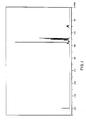
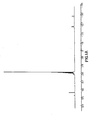
- Figure 1 and 1a are NMR Carbon 13 and Phosphorus 31 spectra, respectively, of the polymeric reaction product of quaternary phosphonium compound, and urea prepolymer of Example 1.
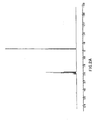
- Figures 2 and 2b are the Carbon 13 and Phosphorus 31 NMR spectra, respectively, of the curable reaction product of the curable polymeric reaction product of Example 1.
- the reactants are added to togetherer in a one-step reaction or a condensate prepolymer is formed and further reacted in a two-step reaction.
- the methylol-containing quaternary phosphonium reactant used in the present invention generally is like the tetrakishydroxyalkyl phosphonium salts having the formula: wherein m is an integer from 1 to 3 but preferably 1.
- suitable quaternary phosphonium compounds include: tetrakis-(hydroxymethyl)-phosphonium (THP) salts where the salt is formate, acetate, phosphate, sulfate and halides, such as, for example, bromide and chloride.
- TTPOH tetrakis-(hydroxymethyl)-phosphonium hydroxide
- the tetrakis-(hydroxymethyl)-phosphonium chloride is prepared by the reaction of PH3 with formaldehyde and hydrochloric acid. It is not necessary to convert any of the THP salts to the THPOH, and it is preferable to avoid subjecting the THP salts to neutral carbonates like calcium carbonate, alkali carbonates like sodium carbonate and alkali metal hydroxides and strong bases in general to avoid conversion of the salt to the trishydroxy methyl phosphate oxide.
- the hydroxy methyl groups of the phosphine oxide compound are less reactive than the hydroxy methyl groups on the phosphonium salts in condensation reactions.
- the presence of the phosphine oxide group would limit sites on the prepolymer backbone for crosslinking or for further addition of heteroatom-containing acids.
- the THP salts are present in aqueous and suitable commercial solutions include: Retardol S available from Albright and Wilson Inc., 180 Old Tappan Road, Old Tappan, New Jersey 07675 and Pyroset TKOW from American Cyanamide, Wayne, New Jersey.
- the divalent nitrogen-containing monomer having at least two active hydrogens includes such materials as urea and urea derivatives like methylol ureas, alkylates methylol ureas, oxalyl urea and hydantoin; melamine and melamine derivatives like methylol melamines; alkylated methylol melamines, alkylates substituted melamines, where the alkyl group or groups are either unsaturated or saturated; cyanamide and dicyanadiamide and aliphatic diamines and polyimines such as ethylene diamine and polyethyleneimine, urea formaldehyde and melamine formaldehyde condensates and cyanamide, acrylamide, alkyl thioureas or aryl thioureas, propylene urea, acetylene diurea and compounds having at least one active hydrogen and at least one methylol group such as those having a formula: where Y
- the heteroatom-containing acid or salt is useful as a reactant in a direct forming reaction or a prepolymer two step reaction in forming the polymeric reaction product of the present invention.
- suitable acids include: phosphoric acid, boric acid, hydrogen bromide and the like.
- phosphoric acid it is meant to include all of the oxy acids of phosphorus such as hypophosphoric, (H3PO2), phosphoric (H3PO4), phosphorus (H3PO3) pyrophosphoric (H4P2O7), metophosphoric (H3PO3)3, polyphosphoric, and any of these as esterified acids provided at least one free acidic functionality is present.
- the quaternary phosphonium compound and divalent nitrogen-containing compound are reacted to produce a prepolymer condensate.
- This condensate may have branching, but is not a three-dimensional cage-like structure, and the prepolymer has more reacted divalent nitrogen-containing compound than that which would be used for merely crosslinking an abundance of the phosphonium compound. Larger amounts of certain nitrogen-containing compound per the amount of phosphorus can actually enhance flame retardant properties.
- the molar ratio of the two monomers for the condensation reaction is in the range of 1:1 to about 3:1 of the nitrogen containing monomer to the phosphonium compound monomer.
- the condensation reaction is conducted preferably in an aqeuous medium although the reaction can be conducted in the presence of inert organic solvents such as aromatic hydrocarbons or organic solvents forming azeotropes with water or alcohols, ethers, (e.g., dioxane), dimethylsulfoxide, dimethylformamide, and dimethylmethyl phosphonate.
- inert organic solvents such as aromatic hydrocarbons or organic solvents forming azeotropes with water or alcohols, ethers, (e.g., dioxane), dimethylsulfoxide, dimethylformamide, and dimethylmethyl phosphonate.
- An effective pH is maintained in the condensation reaction to avoid formation of free formaldehyde.
- This effective pH control allows for the production of methylene bridges between the carbon of the phosphonium compound and the nitrogen containing compound.
- the pH is controlled within the range of about 5 to about 7.
- Effective pH control is provided by the presence of an effective amount of a tertiary amine like trialkanol amines, for example, triethanolamine, diethanolamine, ethanolamine, and triethyl amine or alkanol amines and alkanyl amines, such as ethanol amine, dimethyl amino ethanol, diethyl amino ethanol, diisopropanol amine, triisopropanolamine, 4-hydroxy-n-butyl amine, 2-dimethyl amino, 2-methyl propanol and the like having a formula R2 ⁇ N-CH2-CH2-OH wherein 1 R ⁇ is methyl or ethyl and the other independently is ethyl or 2 hydroxy ethyl.
- a tertiary amine like trialkanol amines
- triethanolamine dimethyl amino ethanol, diethyl amino ethanol, diisopropanol amine, triisopropanolamine, 4-hydroxy-n-butyl amine, 2-
- those specific alkanolamines which are more highly preferred are triethanolamine, diethanolamine, ethanolamine, N-methyl ethanolamine and N-N-dimethyl ethanolamine and the like.
- the temperature and reaction time of the condensation reaction are controlled to prevent the production of insoluble gels or of side reactions or of conflicting reactions. For instance, if the temperature is too high, an insoluble gel results. It is preferred to have a temperature of ambient temperature and possibly as high as 80°C, but preferably the temperature is no higher than up to about 40°C.
- the time of the reaction depends upon the temperature of the reaction and can range from several days for ambient temperature reactions to around 10 minutes for higher temperature reactions.
- the reaction is limited to control the formation of methylene bridges between the monomers and to avoid abstraction of hydrogen to keep intact as many hydroxyl groups as possible, the water of the condensation reaction need not be removed.
- the reaction is conducted for a period of time to produce a prepolymer which is water soluble so the viscosity does not extend too much beyond 70 to 100 centipoise at reaction conditions.
- the viscosity of the material can be determined by any method known to those skilled in the art.
- the viscosity need not be measured if a carefully controlled heating is conducted of the THP salt and divalent nitrogen-containing compound, since this results in an adequate viscosity, and generally the weight average molecular weight Mw of the prepolymer is in the range of around 466 to around that which results in the first formation of a precipitate which when quenched with the heteroatom-containing compound like phosphoric acid is resolubilized.
- the Mw is up to around 1334 based on the sulfate salt of the phosphonium compound.
- an ammonium salt catalyst such as diammonium phosphate, ammonium chloride, ammonium carbonate and ammonium hydroxide.
- Other suitable catalysts include organic amines, amides, and imines such as pyridine, acrylamide and polyethyleneimine. The function of the catalyst is to accelerate the condensation reaction in a controlled manner, but the catalyst may also react with the phosphonium salt.
- the prepolymer reaction route involves the production of an oligomer or resinous condensate having a repeating unit such as: where x is an integer from 1 to about 3 to give the number average molecular weight in the range of about 466 to 1334 gm/mole.
- the prepolymer condensate is branched but not highly branched and it is essentially free of free formaldehyde and it has phosphorus in the backbone of the polymer in a linkage of a P-C-N type.
- Additional components can be present with the two types of monomers in the condensation reaction.
- Nonexclusive examples include acetaldehyde, trioxane, hexamethylene tetramine, formaldehyde, furfuraldehyde and benzylaldehyde. When acetaldehyde is present it can be present in an amount up to around 1 mole. It is believed that the repeating unit for a prepolymer condensate having acetaldehyde would be:
- the heteroatom acid or salt is added. This addition to the aqueous solution of the prepolymer condensate results in the production of the aqueous soluble, curable polymeric reaction product of the present invention.
- the acid or salt could be incorporated in the side chains, or through chain extension reaction, it could condense onto the polymer backbone. Either way, the predominant reaction is at the internal and external hydroxyl sites of the prepolymer.
- heteroatom-containing flame retardant acid or salt to the aqueous dispersion of prepolymer condensate, which usually has a total solids in the range of up to about 95 weight percent, is performed to terminate the base catalyzed condensation reaction and to stabilize the intermediate oligomers such that the polymeric reaction product is soluble in water and is curable.
- One method of stabilizing the polymeric reaction product is by selection of the molar ratios of the heteroatom acid and prepolymer condensate. The ratio is in the range of about 0.5:1 to less than about 4:1 of the former to the latter.
- the main reaction of the heteroatom acid and prepolymer condensate is an esterification reaction accelerated by the divalent nitrogen-containing compound.
- esterification we mean that the free hydroxyl groups on the prepolymer or within the resin composition will be transformed into phosphate esters after water is removed in forming a cured coating.
- the acid Prior to removal of water, the acid stabilizes the intermediate oligomers, and the presence of urea and urea derivatives maximize the phosphate esterification.
- the condensation reaction can be and preferably is base catalyzed.
- the base present in the aqueous dispersion of the prepolymer condensate is volatile and dissociates from the acid (preacid or phosphoester of the P-OH groups), this is an additional reason for the base being a tertiary amine.
- An additional possible reaction of the base neutralization is performed by diluting the basic aqueous solution of prepolymer condensate with the heteroatom-containing acid. A set number of equivalents of acid (2 moles of acid) for example, (for each mole of prepolymer condensate is charged to the reaction. The amount of acid required may be measured out accordingly to a predetermined base content in the material to be neutralized.
- litmus paper or pH paper or a pH meter may be used to determined when to stop adding acid.
- Another option which may be satisfactory in routine operation is simply to add the acid in increments with good stirring until the appearance or behavior of the stirring dispersion markedly alters in a way known to correspond to attainment of the desired degree of neutralization.
- a definite pH within the range of from around 0.5 to around 5 will be preselected as the N point for the neutralization. Since the rate of neutralization will drop off as the number of unneutralized acidic hydroxyls present decreases, sufficient time should be allowed after each acid addition to insure that any apparent end point is in fact a true end point.
- the reaction occurring upon addition of the acid to the prepolymer is in part transisterification and in other part base neutralization reactions.
- the resultant resinous reaction product is water thinnable to any desired concentration.
- the preparation of the prepolymer condensate can be by addition of the reactants in any manner as long as the reaction does not proceed until the tertiary amine base is present to control the pH of the reaction. For instance, when the reaction temperature is ambient temperature, the tetrakis hydroxymethyl phosphonium salt can be dissolved in water along with the urea-containing compound. Afterwards, the tertiary amine can be added since the two reactants do not react at ambient temperatures. Addition of diammonium phosphate accelerates the condensation reaction begins.
- the aqueous dispersion of the polymeric reaction product has a color tint changing from clear to pinkish and is stable for several months depending on how cool the solution is maintained. After several weeks, the aqueous dispersion of the resinous reaction product can become hazy and insoluble precipitates or gels are formed.
- a reaction route to preparing the aqueous soluble, curable polymeric reaction product all or part of the heteroatom acid can be added directly in the initial reaction. If all of the acid is added, the reaction route is more direct than through any prepolymer formation, since there is no subsequent addition of the acid. In the direct approach, the aqueous soluble, curable polymeric reaction product may have a different structure for that of the prepolymer reaction route. The final product will depend on relative rates of reaction, but it is believed that the heteroatom acid like phosphorus acid would limit a large portion of the polymeric species to lower molecular weight species.
- the direct reaction is conducted in the same manner as the prepolymer reaction route except the heteroatom-containing acid is present as a reactant.
- the aqueous solution of the curable polymeric reaction product optionally contains various types of fillers and/or extenders.
- fillers and/or extenders include: silicas like hydroded silica, precipitated silica, Hi-Sil® silicas, silicates, clays, titanium dioxide, wallastonite, vermiculite and the like.
- the amount of these materials which are are incorporated into the aqueous solution of curable polymeric reaction product varies somewhat for the different types of materials. Generally, the amounts range from up to 50 weight percent of the coating. Generally, the addition of these materials is performed to prepare a stable, curable, polymeric reaction product with reasonable shelf life.
- surfactants can be added to the aqueous solution of curable polymeric reaction product. This results in better film properties of cured coating on some types of substrates. Also internal surfactants can be incorporated into the curable polymeric reaction product in the prepolymer or direct reaction sequence.
- the aqueous solution of curable polymeric final product with curing agent can be formulated into intumescent coatings using components known to those skilled in the art.
- an intumescent coating is prepared as an aqueous slurry with melamine formaldehyde silica like Hi-Sil silica, and wallostonite.
- the remaining amount of the nitrogen-containing compound from the deficient amount reacted to produce the prepolymer condensate is added.
- any other curing agents such as water dispersible aminoplast and phenoplast resin such as hexamethylol melamine and phenol-formaldehyde, A-stage novalacs can be used.
- Various substrates can be treated with the aqueous dispersion by any manner known to those skilled in the art such as dipping, brushing, spraying, padding, contacting with rollers and the like.
- the aqueous solution can be applied to the substrate as a primer coating.
- various types of known thixotropic agent can be added at this point to increase the viscosity for supplying the curable polymeric reaction product as a gel.
- any other known means can be employed for supplying the solution to the substrates.
- the substrates which can be treated, include hydroxy-containing substrates like cellulosic materials such as: fiber boards, wood, viscous, cellulose containing textiles, fabrics and mats, and pulp paper products and the like.
- the inorganic oxide substrates include: any inorganic solid material which possesses either oxygen (chemisorbed or covalently bonded as in oxide coatings of aluminum and iron or steel) or hydroxyl (bonded or free) as its exposed surface. It also includes any mateiral which can be treated by silane coupling agents known in the prior art.
- the inorganic oxide material can be any form including particles of irregular or regular (e.g., spherical) shape, individual fibers, woven fiber mats or fabric or continuous surfaces such as sheets, films, slabs and formed surfaces.
- suitably employed inorganic oxide materials are, for example, brass with an oxidized surface, copper metal with an oxidized surface, aluminum metal with an oxidized surface, iron or steel with an oxidized surface, alumina, aluminum, trihydrate, siliceous material such as fumed silica, hydrated silica (precipitated silica), silica aerosols, silica zero gels, aluminum silicates, calcium magnesium silica, asbestos, glass including glass fibers, clays, molecular sieves, wallostonite, carbon black (including lamp black), titanium dioxide including titanium dioxide which contains hydrochloric acid soluble alumina and/or silica, calcium sulfate, magnesium sulfate, vermiculite, mica and the like.
- siliceous material such as fumed silica, hydrated silica (precipitated silica), silica aerosols, silica zero gels, aluminum silicates, calcium magnesium silica, asbestos, glass including glass fibers, clays, mo
- the term flame retardant includes performance resulting in increased heat or temperature resistance or stability of such a treated substrate.
- the affective amount can vary from about 0.1 weight percent to about 10 weight percent based on the weight of the substrate.
- the effective amount of the mixture or interaction product can vary from about 0.05 grams per square meter to about 1.5 grams per square meter.
- the curing of the curable polymeric reaction product applied to the substrate is affected by evaporation of water from the solution and/or by chemical reaction with the curing agent initiated by drying or heating.
- the evaporation or drying is accomplished by any method known to those skilled in the art.
- the substrates are dried and the coating is cured generally by heating to a temperature of from about 60 to about 150°C.
- the drying of the substrate may involve a first drying step in a conventional manner to a fairly low moisture content at a temperature between about 40 to 70°C.
- the substrate is cured further by heating to a temperature between 60 and 150°C.
- Curing temperatures greater than 110°C should not be used on substrates that are cellulosic since adverse affects on the properties of the substrate may develop. However, care must be taken to ensure that sufficient temperatures and times are used properly to cure the coated substrates. The best conditions may be determined readily by one of ordinary skill in the art.
- the cured coatings on the substrates can have varying thicknesses depending on the amount of curing agent are other components in the formulation. Generally film thickness are obtainable in the range of about 1 to 10 mils.
- a prepolymer condensate is prepared by reaction of tetrakis (hydroxymethyl) phosphonium sulfate and urea in a molar ratio in the range of 1:1 to 1:1.7 in the presence of a tertiary amine such as triethanolamine.
- the amount of the tertiary amine is sufficient to give a pH for the reactants in water in the range of about 5 to about 7.
- a catalyst such as diammonium phosphate is added in sufficient amounts to accelerate the reaction at ambient temperatures. The reaction is conducted for a period of time ranging from about 0.5 hours to 24 hours without the removal of water.
- phosphoric acid is added to the aqueous dispersion in an amount to give a molar ratio of the phosphoric acid to the tetrakishydroxymethyl phosphonium sulfate of 1:1 up to about 4:1 respectively.
- Addition of phosphoric acid results in an exotherm that is controlled to under 100°C.
- This reaction is conducted for any length of time since the reaction is limited by the addition of a deficient amount of phosphoric acid to produce the curable polymeric reaction product.
- the resultant aqueous dispersion of reaction products has a nonvolatile solids content in the range of about 75 to about 85 weight percent, a viscosity of U-V on the Gardner-Holdt scale.
- the remaining amount of urea is added to provide a stochiometric amount of urea for the amount of THPS initially reacted to form the prepolymer condensate.
- This addition is conducted at ambient temperatures and the aqueous dispersion is stable for up to several months.
- This aqueous dispersion is coated onto substrates, preferably fiber board or glass, and cured at a temperatures in the range of 40°C to less than 110°C for fiberboard and to around 150°C for glass. This drives off water and completes the reaction of the urea and the polymeric reaction product.
- the resultant coating has good flexibility, hydrolytic stability and durability.
- tetrakishydroxymethyl phosphonium sulfate as Retardol S THPS in an amount of 3,070 grams (5.67 moles) was combined with urea in an amount of 538 grams (8.97 moles) and stirred until homogeneous.
- Triethanolamine in an amount of 314 grams (2.14 moles) and diammonium hydrogen phosphate in an amount of 5 grams were added to the mixture with continued stirring for 24 hours to form a prepolymer solution.
- phosphoric acid in an amount of 985 grams (8.54 moles). Stirring was continued until a clear pink solution was obtained.
- tetrakishydroxymethyl phosphonium sulfate as Retardol S in an amount of 25 grams (0.048 mole) was combined with urea in an amount of 5.76 grams (0.096 mole) then heated to -75°-80°C for 2 hours after which phosphoric acid in an amount of 10.9 g (0.094 mole) was added.
- the above composition had a shelf life of 12 days and formed soft nontacky flame retardant films.
- Tetrakishydroxymethyl phosphonium sulfate as REtardol S in an amount of 50 grams (0.092 mole) was combined with urea in an amount of 8.8 grams (015 mole) and stirred until homogenous.
- Triethanolamine in an amount of 5.1 grams (0.034 moles) and diammonium phosphate in an amount of 0.2 grams (0.0015 moles) was added to the mixture with continued stirring for 24 hours.
- hot (110°C) polyphosphoric acid in an amount of 16.5 grams was added, and stirring was continued for 1 hour or until cool.
- a round-bottom equipped with a magnetic stir bar was charged with a 50 percent aqueous solution of urea (62 grams), triethanolamine (12 grams), Retardol S THPS (58 grams), and a cold (-20°C) aqueous solution of acetalaldehyde (40 percent by weight), 72 grams.
- the flask was quickly capped with a rubber septum to prevent escape of acetalaldehyde and stirred for 0.5 to 1 hours.
- the flask was vented with a needle and phosphoric acid (30 grams) was added via syringe. The vent needle was removed and the mixture stirred until cool (room temperature).
- Example 2 In the same procedure as in Example 1, the varying mole ratios of materials as shown in Table 2 for Examples 10 and 12 were used to produce the aqueous solution of polymeric reaction product.
- Example 11 the same procedure was used as Example 2 with stirring for 2 hours before the addition of phosphoric acid. A colorless good film former cured to a clear hard finish but an offensive phosphine-like odor was present. The procedure was repeated with stirring for an 8 to 10 hour period rather than 2 hours and a good film former was produced which cured to a clear hard finish.
- Tetrahydroxymethylphosphonium salt (Pyroset TKOW) in an amount of 125.9 grams (0.232 mole) and urea 22.3 grams (0.372 mole) were combined and stirred under nitrogen purge until solubilized. At this time, triethanolamine in an amount of 13 grams (0.088 mole) was added and stirred for 24 hours. The mist was quenched with phosphoric acid in an amount of 26.7 grams (0.23 mole). The Gardner viscosity of the prepolymer was around J-K, and in this example, the mole ratio of the phosphoric acid to the THPS was 1:1.
- the films produced by the polymeric reaction product of Examples 17-19 were adequate films.
- aqueous polymeric reaction product and cured coatings were prepared with varying types and amounts of phosphoric compounds.
- the amounts, conditions and properties are given in Table 4, where the abbreviation "AP ⁇ " means ammonium phosphate.
- Burnthrough fire testing was conducted on glass fiber fabrics coated with the coating of Example 1 having titanium oxide filler in an amount of 40 percent.
- the fabrics were two-ply chopped strand mat, needled mat and a combination of chopped strand mat and continuous strand mat.
- the pickup of the coating on the mats were respectively 20 percent, 16 percent and 16 percent.
- the burnthrough times for all the mats were greater than 9 minutes.
- composition A having: curable polymeric reaction product from Example 1 with TiO2 in a ratio of 1:1
- Composition B having aqueous curable polymeric reaction product from Example 1, (24%), Resimene 841 melamine formaldehyde (35%), Wallostonite (24%) and Hi-Sil silica (17%).
Landscapes
- Chemical & Material Sciences (AREA)
- Organic Chemistry (AREA)
- Health & Medical Sciences (AREA)
- Materials Engineering (AREA)
- Wood Science & Technology (AREA)
- Engineering & Computer Science (AREA)
- Life Sciences & Earth Sciences (AREA)
- Chemical Kinetics & Catalysis (AREA)
- Medicinal Chemistry (AREA)
- Polymers & Plastics (AREA)
- Paints Or Removers (AREA)
- Phenolic Resins Or Amino Resins (AREA)
- Compositions Of Macromolecular Compounds (AREA)
- Fireproofing Substances (AREA)
Applications Claiming Priority (2)
| Application Number | Priority Date | Filing Date | Title |
|---|---|---|---|
| US31631 | 1987-03-30 | ||
| US07/031,631 US4806620A (en) | 1987-03-30 | 1987-03-30 | Polymeric compositions having flame retardant properties |
Publications (2)
| Publication Number | Publication Date |
|---|---|
| EP0284998A2 true EP0284998A2 (de) | 1988-10-05 |
| EP0284998A3 EP0284998A3 (de) | 1990-04-25 |
Family
ID=21860555
Family Applications (1)
| Application Number | Title | Priority Date | Filing Date |
|---|---|---|---|
| EP88104708A Withdrawn EP0284998A3 (de) | 1987-03-30 | 1988-03-24 | Polymer-Zusammensetzungen mit Brandschutz-Eigenschaften |
Country Status (3)
| Country | Link |
|---|---|
| US (1) | US4806620A (de) |
| EP (1) | EP0284998A3 (de) |
| JP (1) | JPS63260969A (de) |
Families Citing this family (8)
| Publication number | Priority date | Publication date | Assignee | Title |
|---|---|---|---|---|
| JPH03504022A (ja) * | 1988-02-23 | 1991-09-05 | パイロテック リミテッド | 防火材 |
| US5151225A (en) * | 1989-05-01 | 1992-09-29 | Hoover Treated Wood Products, Inc. | Flame retardant composition and method for treating wood |
| US5009964A (en) * | 1989-07-11 | 1991-04-23 | Osmose Wood Preserving, Inc. | Composition and process for imparting fire retardant properties and improved thermal stability to cellulosic materials |
| US5156775A (en) * | 1991-10-17 | 1992-10-20 | Blount David H | Flame retardant compositions |
| KR100552999B1 (ko) * | 2003-08-04 | 2006-02-15 | 제일모직주식회사 | 난연성 열가소성 수지 조성물 |
| US8808412B2 (en) | 2006-09-15 | 2014-08-19 | Saint-Gobain Abrasives, Inc. | Microfiber reinforcement for abrasive tools |
| AT510909B1 (de) | 2010-12-20 | 2013-04-15 | Chemiefaser Lenzing Ag | Flammgehemmte cellulosische man-made-fasern |
| EP3476985A1 (de) | 2017-10-27 | 2019-05-01 | Lenzing Aktiengesellschaft | Flammgehemmte cellulosische man-made-fasern |
Family Cites Families (39)
| Publication number | Priority date | Publication date | Assignee | Title |
|---|---|---|---|---|
| US2809941A (en) * | 1952-04-22 | 1957-10-15 | Wilson A Reeves | Producing phosphorus containing amino resins and flameproofing organic textiles |
| US2772188A (en) * | 1953-11-18 | 1956-11-27 | Wilson A Reeves | Ammonia insolubilized methylol-phosphorus polymers and cellulosic materials impregnated therewith |
| US2812311A (en) * | 1954-04-05 | 1957-11-05 | Albright & Wilson | Water dispersible solid nitrilo-methylolphosphorus polymers |
| NL129265C (de) * | 1959-10-05 | 1900-01-01 | ||
| US3122581A (en) * | 1961-10-27 | 1964-02-25 | Union Carbide Corp | Preparation of phosphorus-containing organosilicon compounds |
| GB1179242A (en) * | 1966-07-07 | 1970-01-28 | Midland Silicones Ltd | Organosilicon Compounds. |
| LU55826A1 (de) * | 1967-04-19 | 1969-11-13 | ||
| CH485869A4 (de) * | 1969-03-31 | 1970-08-31 | ||
| US3698854A (en) * | 1970-06-24 | 1972-10-17 | Us Agriculture | Process for producing flame resistant organic textiles |
| CH526673A (de) * | 1970-07-22 | 1972-08-15 | Ciba Geigy Ag | Verfahren zum Flammfestmachen von Textilmaterial |
| US4026711A (en) * | 1971-05-27 | 1977-05-31 | American Cyanamid Company | Flame retardant finish for textiles |
| US3765837A (en) * | 1971-09-03 | 1973-10-16 | Burlington Industries Inc | Flame retardant finish for polyester/cotton blends |
| BE788585A (fr) * | 1971-09-10 | 1973-03-08 | Ciba Geigy | Preparation de produits de condensation contenant du phosphore,les produits ainsi obtenus et leur utilisation comme agents ignifuges |
| BE788586A (fr) * | 1971-09-10 | 1973-03-08 | Ciba Geigy | Procede d'obtention de produits de condensation contenant du phosphore,les produits obtenus et leur utilisation comme agent ignifuges |
| BE790735A (fr) * | 1971-11-03 | 1973-02-15 | Dynamit Nobel Ag | Application de phosphoro-organosilanes comme promoteurs d'adhesion |
| BE788592A (fr) * | 1972-01-14 | 1973-03-08 | Ciba Geigy | Procede de preparation de produits de condensation phosphoriques, produits obtenus et emploi comme ignifuges |
| BE788596A (fr) * | 1972-01-14 | 1973-03-08 | Ciba Geigy | Preparation de produits de condensation renfermant du phosphore, les produits ainsi obtenus et leur utilisation comme ignifuges |
| SU418458A1 (ru) * | 1972-06-06 | 1974-03-05 | гплап РТОп | Способ обработки стекловолокнистых материалов |
| CH1830872A4 (de) * | 1972-12-15 | 1974-10-31 | ||
| JPS4987821A (de) * | 1972-12-28 | 1974-08-22 | ||
| US3883462A (en) * | 1973-01-16 | 1975-05-13 | Glenn A Pearson | Novel resinous compositions comprising sequential reaction product of formaldehyde, inorganic acid, triethanolamine and urea |
| US3983269A (en) * | 1973-01-16 | 1976-09-28 | Pearson Glenn A | Durable press composition and process |
| US3984367A (en) * | 1973-01-16 | 1976-10-05 | Pearson Glenn A | Durable press composition and process |
| US3936585A (en) * | 1973-12-05 | 1976-02-03 | Robert Bruce Leblanc | Fire retarding textile materials |
| US3961110A (en) * | 1974-08-22 | 1976-06-01 | The United States Of America As Represented By The Secretary Of Agriculture | Treatment of organic textiles with adduct polymers and phenols |
| US4020262A (en) * | 1975-02-24 | 1977-04-26 | Leblanc Research Corporation | Method of applying phosphoramide-hydroxymethyl phosphine condensation products for textile fire retardation |
| JPS5218800A (en) * | 1975-08-05 | 1977-02-12 | Toyobo Co Ltd | Process for preparing condensation products containing phosphorus |
| US4119598A (en) * | 1975-08-22 | 1978-10-10 | Pearson Glenn A | Fire retardant urea-formaldehyde compositions |
| US4215172A (en) * | 1975-08-22 | 1980-07-29 | Pearson Glenn A | Novel resinous coating compositions |
| DE2549474A1 (de) * | 1975-11-05 | 1977-05-12 | Dynamit Nobel Ag | Verfahren zur herstellung von verbund-sicherheitsglas |
| US4148602A (en) * | 1975-12-22 | 1979-04-10 | Leblanc Research Corporation | Phosphoramide-hydroxymethyl phosphine condensation products for textile fire retardation |
| US4146585A (en) * | 1977-03-02 | 1979-03-27 | Union Carbide Corporation | Process for preparing silane grafted polymers |
| US4097560A (en) * | 1977-06-29 | 1978-06-27 | M & T Chemicals Inc. | Novel phosphorus compounds and flame retardant compositions containing same |
| US4265945A (en) * | 1979-04-06 | 1981-05-05 | The United States Of America As Represented By The Secretary Of Agriculture | Quaternary ureidomethyl phosphonium salts |
| IN151045B (de) * | 1980-04-30 | 1983-02-12 | Dalmia Inst Scient Ind Res | |
| ATE7686T1 (de) * | 1980-07-11 | 1984-06-15 | Imperial Chemical Industries Plc | Faserige zusammengesetzte materialien, ihre herstellung und ihre verwendung. |
| US4427745A (en) * | 1980-12-05 | 1984-01-24 | Pearson Glenn A | Novel fire retardant compositions and methods |
| US4419401A (en) * | 1982-08-03 | 1983-12-06 | Pearson Glenn A | Fire retardant concentrates and methods |
| US4468495A (en) * | 1983-01-28 | 1984-08-28 | Pearson Glenn A | Fire retardant powders |
-
1987
- 1987-03-30 US US07/031,631 patent/US4806620A/en not_active Expired - Fee Related
-
1988
- 1988-03-24 EP EP88104708A patent/EP0284998A3/de not_active Withdrawn
- 1988-03-30 JP JP63080193A patent/JPS63260969A/ja active Pending
Also Published As
| Publication number | Publication date |
|---|---|
| JPS63260969A (ja) | 1988-10-27 |
| US4806620A (en) | 1989-02-21 |
| EP0284998A3 (de) | 1990-04-25 |
Similar Documents
| Publication | Publication Date | Title |
|---|---|---|
| US4784918A (en) | Compositions and coatings of phosphorus-containing film formers with organo silane and coated substrates | |
| US3822327A (en) | Neutralized polycondensed vinylphosphonates | |
| US6423251B1 (en) | Urea and borates for fire and termite control | |
| CA2095839C (en) | Composition with integral intumescence properties | |
| US6444718B1 (en) | Aquerous urea for fire control | |
| US6464903B1 (en) | Urea condensate salt of sulfur oxyacid for fire control | |
| US4210452A (en) | Novel intumescent composition | |
| US4226907A (en) | Flame retardant article | |
| US4806620A (en) | Polymeric compositions having flame retardant properties | |
| US4201677A (en) | Intumescent composition comprising cyclic nitrogen compound and phosphorus compounds | |
| US20160273156A1 (en) | Fiberglass composites with improved flame resistance from phosphorous-containing materials and methods of making the same | |
| US4345002A (en) | Novel intumescent composition and flame retardant articles treated therewith | |
| US6423250B1 (en) | Flame retardant compositions utilizing a mixture of cyanuric acid and cyamelide compounds | |
| US4241145A (en) | Novel intumescent composition | |
| US4205022A (en) | 2,2-Bis(haloalkyl)-3-hydroxy-1-propyl phosphoric acids | |
| US4013813A (en) | Aminoalkylphosphonic acid ester-based textile fire retardants | |
| US4221837A (en) | Flame retardant article | |
| US4201593A (en) | Novel intumescent composition | |
| US3671304A (en) | Process for flameproofing and resultant product | |
| US4339357A (en) | Intumescent composition | |
| US4265791A (en) | Novel phosphoric acid | |
| US4918122A (en) | Flame retardant compositions | |
| CA1091685A (en) | Process for the preparation of polyaddition products containing phosphorus | |
| US3247015A (en) | Flameproofing of textile materials | |
| US3953165A (en) | Flameproofing resins for organic textiles from adduct polymers |
Legal Events
| Date | Code | Title | Description |
|---|---|---|---|
| PUAI | Public reference made under article 153(3) epc to a published international application that has entered the european phase |
Free format text: ORIGINAL CODE: 0009012 |
|
| AK | Designated contracting states |
Kind code of ref document: A2 Designated state(s): BE CH DE FR GB IT LI NL |
|
| PUAL | Search report despatched |
Free format text: ORIGINAL CODE: 0009013 |
|
| AK | Designated contracting states |
Kind code of ref document: A3 Designated state(s): BE CH DE FR GB IT LI NL |
|
| 17P | Request for examination filed |
Effective date: 19901012 |
|
| STAA | Information on the status of an ep patent application or granted ep patent |
Free format text: STATUS: THE APPLICATION HAS BEEN WITHDRAWN |
|
| 17Q | First examination report despatched |
Effective date: 19911209 |
|
| 18W | Application withdrawn |
Withdrawal date: 19920114 |