EP0287916A1 - Immunoassay - Google Patents
Immunoassay Download PDFInfo
- Publication number
- EP0287916A1 EP0287916A1 EP88105721A EP88105721A EP0287916A1 EP 0287916 A1 EP0287916 A1 EP 0287916A1 EP 88105721 A EP88105721 A EP 88105721A EP 88105721 A EP88105721 A EP 88105721A EP 0287916 A1 EP0287916 A1 EP 0287916A1
- Authority
- EP
- European Patent Office
- Prior art keywords
- antigen
- antibody
- immunoassay
- acid
- excrement
- Prior art date
- Legal status (The legal status is an assumption and is not a legal conclusion. Google has not performed a legal analysis and makes no representation as to the accuracy of the status listed.)
- Withdrawn
Links
Images


Classifications
-
- G—PHYSICS
- G01—MEASURING; TESTING
- G01N—INVESTIGATING OR ANALYSING MATERIALS BY DETERMINING THEIR CHEMICAL OR PHYSICAL PROPERTIES
- G01N33/00—Investigating or analysing materials by specific methods not covered by groups G01N1/00 - G01N31/00
- G01N33/48—Biological material, e.g. blood, urine; Haemocytometers
- G01N33/50—Chemical analysis of biological material, e.g. blood, urine; Testing involving biospecific ligand binding methods; Immunological testing
- G01N33/53—Immunoassay; Biospecific binding assay; Materials therefor
- G01N33/575—Immunoassay; Biospecific binding assay; Materials therefor for cancer
- G01N33/5756—Immunoassay; Biospecific binding assay; Materials therefor for cancer involving tumour-associated glycolinkage [TAG]
Definitions
- This invention relates to an immunoassay, and more particularly to a novel immunoassay for determining Disialosyl Le a antigen which is useful for screening and diagnosing cancers.
- Disialosyl Le a antigen is a cancer antigen of carbohydrate nature which is known to be useful as a serum tumor marker. E. Nudelman et al discovered that this antigen is identical with a glycolipid in respect of the carbohydrate linkage having the structure represented by the following formula (1), the glycolipid being termed III4FucIII6NeuAcIV3NeuAcLC4 and separated from colonic adenocarcinoma:
- the carbohydrates, lipids, modes of combination thereof, etc. are herein expressed in terms according to IUPAC-IUB and generally used in the art or in terms which are conventional, as exemplified below.
- NeuAc N-acetylneuraminic acid
- Gal galactose
- Glc glucose
- GlcNAc N-acetylglucosamine
- Fuc fucose Cer: ceramide
- the specific antibody recognizing the Disialosyl Le a antigen has been established [e.g. Monoclonal antibody termed "FH-7" by E. Nudelman et al is known. The monoclonal antibody FH-7 is known to be reactive also with monosialosyl Le a II (III4FucIII6NeuAcLc4).
- the "Disialosyl Le a antigen" referred to herein is intended to include the carbohydrate linkage of such antigen.]
- the method of determining said antigen by an immunoassay using the above antibody has been reported.
- the antigen recognized by the antibody can be determined by an immunoassay. Determination systems have been engineered and established in respect of various antigens. However, while the antibody recognizing the Disialosyl Le a antigen has been established, the immunoassays heretofore reported have posed the serious problem over the preparation of an antigen in the determination system. With the problem unresolved, a satisfactory method for determining the Disialosyl Le a antigen has not been heretofore developed. Although most basically it is possible to assume the use of the glycolipid having the carbohydrate linkage structure of the formula (1) as the antigen in the determination system, the purification of the glycolipid involves numerous and complex procedures as reported by E.
- the glycolipid can not provide the antigen useful in the determination technique. Further because of its further problems on the conditions of determination system, e.g. being insoluble in water, the glycolipid can not meet the demands for antigens sought after in the art.
- Fukushi et al proposed a determining method in which a crude extract fraction of Disialosyl Le a antigen produced from a cancer cell line expressing Disialosyl Le a antigen is used as an antigen in the determination system in place of the glycolipid (purified antigen) with the carbohydrate linkage structure of the formula (1). Since the cancer cell line is difficult to mass culture and Disialosyl Le a antigen is difficult to extract from the cancer cell line (Disialosyl Le a antigen is not released into the culture medium by incubation), the antigen to be used in this method can be prepared only in small quantities and thus is not satisfactory for practical use.
- An object of the present invention is to provide an immunoassay for determining Disialosyl Le a antigen which can overcome these technological problems and which can be easily carried out with high sensitivity and high precision through simplified procedures.
- Another object of the invention is to provide a novel antigen in the determination system for the determination technique in the foregoing object.
- an acid-soluble fraction of excrement as Disialosyl Le a antigen and an immunoassay for determining Disialosyl Le a antigen characterized by using the acid- soluble fraction of excrement as the antigen in the determination system.
- the present invention has been accomplished based on these novel findings.
- the novel immunoassay of the present invention is particularly useful for screening and diagnosing cancers.
- the antigen of the invention can be easily prepared by subjecting the excrement of humans or other animals to extraction with an acid. While the kind of excrement useful as the starting material is not specifically limited, the excrement of humans, particularly meconium or fetuses is among preferred examples.
- the extraction with an acid can be carried out by various methods heretofore commonly employed. For example, an acid is added to excrement to a final concentration of about 0.4 M to about 1.2 M, preferably about 0.6 M, and the supernatant of the mixture is collected by centrifugation or like method. Examples of useful acids are hydrochloric acid and like mineral acids, acetic acid, citric acid, perchloric acid (PCA) and like organic acids among which PCA is preferred.
- PCA perchloric acid
- the resulting acid-soluble fraction of excrement as it is can be used as the antigen of the present invention.
- the fraction is purified by gel filtration, dialysis or like usual purification procedure for removal of the acid from the fraction to provide the antigen of the invention.
- the immunological determination method of this invention for determining Disialosyl Le a antigen critically uses the antigen of the invention thus obtained in the determination system and basically include common immunoassays such as radioimmunoassay (RIA), enzyme immunoassay (EIA), etc. These methods can be practiced by procedures and means which are generally employed, such as competition method, sandwich method and the like.
- RIA radioimmunoassay
- EIA enzyme immunoassay
- Body fluids usable as samples in the immunoassay of the invention are, for example, blood, cell fluid, lymph, pleural fluid, peritoneal fluid, amniotic fluid, gastric juice, urine, pancreatic juice, spinal fluid, saliva, etc.
- blood especially serum or blood plasma is desirable.
- the antibody to be used in the immunoassay of the invention is not specifically limited insofar as it is able to recognize Disialosyl Le a antigen.
- Typical examples of the antibody are the monoclonal antibody FH-7 as described above and other antibodies produced by conventional methods [Method in Enzymology, Vol. 73, p 3 (1981), etc.].
- the immunoassay of the invention can be performed also by known solid phase techniques.
- the antigen of the invention or antibody is insolubilized by being caused to chemically or physically react with an insoluble carrier in the usual manner.
- useful insoluble carriers are cellulose powder, Sephadex, Sepharose, polystyrene, filter paper, carboxymethylcellulose, ion exchange resin, dextran, plastics film, plastics tube, nylon, glass beads, silk, polyamine-methyl vinyl ether-maleic acid copolymer, amino acid copolymer, ethylene-maleic acid copolymer and the like.
- the insolubilization is accomplished by the diazo method as a covalent method, peptide method (with use of an acid amide derivative, carboxy chloride resin, carbodiimide resin, maleic anhydride derivative, isocyanate derivative, cyan bromide-activated polysaccharide, cellulose carbonate derivative, condensation reagent or the like), alkylation method, carrier bonding method using a crosslinking reagent (using glutaraldehyde, hexamethylene isocyanate or the like as the crosslinking reagent), carrier binding method resorting to Ugi reaction and like chemical reaction methods; the ion bonding method using a carrier such as an ion exchange resin; and the physical adsorption method wherein glass beads or like porous glass is used as a carrier.
- the agglutination method the antibody is used as adsorbed by (sensitized with) particles, such as erythrocytes or latex particles, which are usually used for the agglutination test.
- radioactive substances such as 125I or like radioactive iodine
- fluorescent substances such as fluorescein isothiocyanate (FITC), tetramethylrhodamine isothiocyanate (TRITC), substituted-rhodamine isothiocyanate (XRITC), Rhodamine B isothiocyanate, dichlorotriazinefluorescein (DTAF) and the like
- enzymatic labeling substances such as peroxidase (POX), mycloperoxidase, chymotryspsinogen, procarboxypeptidase, glyceroaldehyde-3-phosphate dehydrogenase, amylase, phosphorylase, deoxyribonuclease (DNA-ase), ribonuclease
- Such labeling agents can be applied in the usual manner [see J. Biol. Chem., 254 , 9349-9351 (1979); Nature, 194 , 495 (1962); "Fluorescent Antibody Technique,” Medical Chemistry Experiment Lecture No.4, 263-270; Acta. Endocrinol Suppl., 168 , 206 (1972): Proc. Nat. Acad. Sci., USA, 57 , 713 (1967); etc.]
- the reaction of the determination system can be conducted in the same manner as usual immunoreactions of this type.
- the solvent to be used in the determination system is a usual one which will not adversely affect the reaction.
- preferred solvents are buffers having a pH of about 4 to about 8 such as citrate buffer, phosphate buffer, Tris-HCl buffer, acetate buffer and the like.
- the conditions for immunoreaction in determination are not limited specifically; those usually employed for determination methods of this type are useful. More specifically, the immunoreaction is conducted generally at a temperature of up to about 45°C, preferably at about 4 to about 40°C, for about 1 to about 40 hours.
- the combined product (B) is separated from the free substance (F) by a known method.
- the solid phase method When the solid phase method is resorted to, the solid phase can be separated from the liquid phase, for example, by centrifuging, filtration, washing or decantation. In other cases, the dextran-coated charcoal method, double antibody method or like conventional method is used.
- the antigen of the invention is used preferably as an insolubilized antigen and/or as a standard antigen in the immunoassay of the invention.
- This method comprises the steps of: performing competitive reaction in which the substance to be determined in the sample and a specific amount of insolubilized antigen are reacted respectively with specific amounts of labeled antibody; separating the solid phase from the liquid phase; and checking the labeling reagent for the activity to determine quantitatively the mass of the substance.
- the immunoassay of the invention can be performed very conveniently using an assay kit incorporating the antigen of the invention as the essential component.
- the antigen reagent of the kit containing the antigen of the invention may have incorporated therein a stabilizer, such as glycerol or bovine serum protein, and/or a preservative.
- the kit may contain an antibody reagent containing the specific antibody recognizing Disialosyl Le a antigen.
- a buffer for holding the reagent system at a predetermined pH after reconstitution and/or a preservative and/or a stabilizer for preventing the degradation of sample before use can be further incorporated in the antibody reagent.
- the buffer is not considered to be an essential component of the kit reagent, it is desirable to add such a substance as to give a pH of about 4 to about 8 to the system when this method is practiced.
- the reconstituting agent is preferably one containing water, the water can be partially or wholly replaced by a solvent which is miscible with water. Solvents which are miscible with water are well known to those skilled in the art. Examples of useful solvents are glycerins, alcohols, glycols, glycol ethers, etc.
- an immunoassay for determining Disialosyl Le a antigen having improved properties particularly for diagnosis of cancers.
- the immunoassay of the invention can conveniently determine Disialosyl Le a antigen with great ease, high sensitivity and high accuracy. Consequently the immunoassay of the invention is very useful particularly for screening and diagnosing cancers.
- Each of the antigens obtained in Reference Example 1-(1) and -(2) was dissolved in 0.1M bicarbonate buffer to a concentration of 20 ⁇ g/ml. To 60 ml of the solution were added 400 of the beads treated above. The mixture was stirred for 2 hours and left to stand at 4°C overnight. The beads were filtered off and washed with physiological saline. The beads were stirred in 50 mM PBS (pH 7.4) containing 0.5% crystal BSA (bovine serum albumin; product of Seikagaku Kogyo Co., Ltd., Japan) for 2 hours and left to stand at 4°C overnight. The beads were filtered off and thoroughly washed to obtain an insolubilized antigen. In this way, two types of insolubilized antigens were prepared.
- PBS pH 7.4
- crystal BSA bovine serum albumin
- NCA insolubilized antigen prepared from the antigen resulting from the meconium in Reference Example 1-(1)
- NFA insolubilized antigen obtained from the antigen given in Reference Example 1-(2) to "NFA”.
- Each of the antigens obtained in Reference Example 1-(1) and -(2) was diluted with sheep serum to a concentration of 100 ng/ml. This solution was further diluted to give solutions at varying concentrations of from 224 U/ml to 7 U/ml. The solutions are hereinafter referred to as "standard antigen".
- NCA standard antigen The standard antigen obtained from the meconium-derived antigen afforded in Reference Example 1-(1) is hereinafter called "NCA standard antigen", and the standard antigen from the antigen given in Reference Example 1-(2) "NFA standard antigen".
- a monoclonal antibody FH-7 [J.B.C., 261 (12), pp 5487-5495 (1986)] was adjusted to a concentration of 20 ⁇ g protein/ml with 50 mM PBS (pH 7.4) containing 0.15M NaCl and 0.05% NaN3.
- a monoclonal antibody FH-7 (100 ⁇ g) was dissolved in 0.5 ml of 0.1M borate buffer (pH 8.0). One mCi of Na125 I (product of New England Nuclear Co., Ltd., U.S.A.) was added to the solution.
- a dichloromethane solution (40 ⁇ l) of 1 mg/ml of Iodogen (product of Pierce Co., Ltd.) was placed into a glass test tube, which was then dried by removing the solvent in a nitrogen gas stream.
- the antibody solution obtained above was placed into the test tube and then gently stirred with ice cooling for 5 minutes for reaction.
- the reaction product was placed into another test tube to terminate the reaction and then subjected to gel filtration (Sepharose CL-6B, eluent: 50 mM phosphate buffer containing 0.15M NaCl, 0.1% BSA and 0.02% NaN3), whereby IgG fractions matching in radioactivity peak were collected to obtain 125I-labeled antibody.
- NCA bead or 1 NFA bead obtained in Reference Example 2 was added to 200 ⁇ l of a solution (about 50,000 cpm) of the labeled antibody obtained in Reference Example 5 in 40 mM sodium citrate buffer (pH 5.0) containing 0.1% BSA and 0.05% NaN3 and the mixture was incubated at room temperature with gentle shaking for 90 minutes.
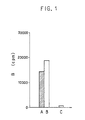
- Fig. 1 shows the result.
- Fig. 1 the radioactivity (B ; cpm) of the bead is plotted as ordinate, and a vertical column at A on the abscissa shows the result given with NCA, a vertical column at B thereon the result afforded with NFA and a vertical column at C the result imparted with the bead obtained with 20 ⁇ g/ml solution of HSA (human serum albumin; product of Sigma Chemical Co., Ltd., U.S.A.) as the control in the same manner as done in Reference Example 2.
- HSA human serum albumin
- Fig. 1 shows that NCA and NFA are both useful as the antigens in the immunoassay for determining Disialosyl Le a antigen.
- NCA standard antigen obtained in Reference Example 3 To 10 ⁇ l of NCA standard antigen obtained in Reference Example 3 were added a solution (about 70,000 cpm) of the labeled antibody given in Reference Example 5 (in 200 ⁇ l of 40 mM sodium citrate buffer (pH 5.0) containing 0.1% BSA, 0.05% NaN3 and 0.1% mouse serum) and one bead of NCA obtained in Reference Example 2. The mixture was incubated with gentle shaking at room temperature for 90 minutes.
- Fig. 2 shows the result obtained (standard curve).
- Fig. 2 reveals that the use of the above determination system results in the determination of Disialosyl Le a antigen with high precision (duplicate matched) achieved in a short time.
- NCA standard antigen obtained in Reference Example 3 were added 200 ⁇ l of 40 mM sodium citrate buffer (pH 5.0) containing 0.1% BSA, 0.05% NaN3 and 2.5% sheep serum and one insolubilized antibody bead obtained in Reference Example 4. The mixture was incubated at room temperature with gentle shaking for 2 hours.
- the bead was washed with distilled water twice and 200 ⁇ l of the same labeled antibody solution (about 110,000 cpm) as used in Example 1 was added thereto. The mixture was incubated under the same conditions as above. The bead was washed twice in the same manner as above and the radioactivity of the bead was counted with a gamma-counter.
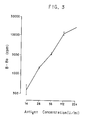
- Fig. 3 The result obtained (standard curve) is shown in Fig. 3 in which the concentration of the antigen (U/ml) is plotted as abscissa and B-B0 (cpm) as ordinate.
- Fig. 3 shows that the determination system (determination system of Example 1) using the antigen of the invention as an insolubilized one in the immunoassay for determining Disialosyl Le a antigen can better utilize the characteristics of the antigen of the invention, hence desirable.
- Table 2 shows that 16 cases identified as negative in the case of the method of Example 2 are in the group of positive in the case of the method of Example 1 while only 2 cases are reversely evaluated (namely 2 cases identified as negative in the method of Example 1 are in the group of positive in the method of of Example 2). This result confirmed that the method of Example 1 is improved over the method of Example 2 in terms of screening and diagnosing cancers.
- An insolubilized antigen was prepared by the same procedure as in Reference Example 2 with the exception of using the antigen obtained above and a polystyrene bead of 6.5 mm diameter.
- Disialosyl Le a antigen using the insolubilized antigen was conducted according to the method described above in Example 1. Stated more specifically, one bead of the insolubilized antigen and a solution (about 10,000 cpm) of labeled antibody [200 ⁇ l of 50 mM sodium citrate buffer (pH 5.0) containing 25% sheep serum, 1% mouse serum and 0.05% NaN3] were added to 50 ⁇ l of each NCA standard antigen [prepared using seep serum in the same manner as in Reference Example 3 and each having varying concentrations of 0 (blank), 5, 10, 20, 40, 80 and 160 U/ml in terms of optionally predetermined unit (U)].
- a solution (about 10,000 cpm) of labeled antibody 200 ⁇ l of 50 mM sodium citrate buffer (pH 5.0) containing 25% sheep serum, 1% mouse serum and 0.05% NaN3] were added to 50 ⁇ l of each NCA standard antigen [prepared using seep serum in the same manner as in Reference Example 3
- Fig. 4 standard curve in which the concentration of the antigen is plotted as abscissa (U/ml: log dose) and the binding rate as ordinate.
- the binding rate is determined by the following equation: wherein B and Bo are as defined hereinbefore, BL is the radioactivity (cpm) of the bead when using a blank solution [sheep serum containing 2% antibody F-H (ascites)].
Landscapes
- Health & Medical Sciences (AREA)
- Life Sciences & Earth Sciences (AREA)
- Immunology (AREA)
- Engineering & Computer Science (AREA)
- Molecular Biology (AREA)
- Biomedical Technology (AREA)
- Chemical & Material Sciences (AREA)
- Hematology (AREA)
- Urology & Nephrology (AREA)
- Biotechnology (AREA)
- Microbiology (AREA)
- Cell Biology (AREA)
- Food Science & Technology (AREA)
- Medicinal Chemistry (AREA)
- Physics & Mathematics (AREA)
- Analytical Chemistry (AREA)
- Biochemistry (AREA)
- General Health & Medical Sciences (AREA)
- General Physics & Mathematics (AREA)
- Pathology (AREA)
- Medicines Containing Antibodies Or Antigens For Use As Internal Diagnostic Agents (AREA)
Applications Claiming Priority (2)
| Application Number | Priority Date | Filing Date | Title |
|---|---|---|---|
| JP91678/87 | 1987-04-13 | ||
| JP9167887 | 1987-04-13 |
Publications (1)
| Publication Number | Publication Date |
|---|---|
| EP0287916A1 true EP0287916A1 (de) | 1988-10-26 |
Family
ID=14033149
Family Applications (1)
| Application Number | Title | Priority Date | Filing Date |
|---|---|---|---|
| EP88105721A Withdrawn EP0287916A1 (de) | 1987-04-13 | 1988-04-11 | Immunoassay |
Country Status (2)
| Country | Link |
|---|---|
| EP (1) | EP0287916A1 (de) |
| DK (1) | DK198888A (de) |
Cited By (2)
| Publication number | Priority date | Publication date | Assignee | Title |
|---|---|---|---|---|
| WO1992019634A1 (en) * | 1991-05-06 | 1992-11-12 | The Biomembrane Institute | Extended type 1 chain glycosphingolipids as tumor-associated antigens |
| US6294523B1 (en) | 1991-05-06 | 2001-09-25 | The Biomembrane Institute | Extended type 1 chain glycosphingolipids as tumor-associated antigens |
Citations (4)
| Publication number | Priority date | Publication date | Assignee | Title |
|---|---|---|---|---|
| US4507391A (en) * | 1982-04-02 | 1985-03-26 | Sloan-Kettering Institute For Cancer Research | Method for detecting the presence of GD3 ganglioside |
| EP0165811A2 (de) * | 1984-06-21 | 1985-12-27 | The Regents Of The University Of California | Sialyliertes Lewis X-Epitop, Antikörper und Diagnose |
| EP0173663A2 (de) * | 1984-08-28 | 1986-03-05 | Kabi Pharmacia AB | Verwendung eines spezifischen tumorassoziierten Antigens, Sialosyllactotetraose, in Diagnose- oder Therapieverfahren bezüglich Krebskrankheiten |
| EP0248147A2 (de) * | 1986-03-04 | 1987-12-09 | Sloan-Kettering Institute For Cancer Research | Verfahren zur Bestimmung der Anwesenheit von Krebszellen |
-
1988
- 1988-04-11 EP EP88105721A patent/EP0287916A1/de not_active Withdrawn
- 1988-04-12 DK DK198888A patent/DK198888A/da not_active Application Discontinuation
Patent Citations (4)
| Publication number | Priority date | Publication date | Assignee | Title |
|---|---|---|---|---|
| US4507391A (en) * | 1982-04-02 | 1985-03-26 | Sloan-Kettering Institute For Cancer Research | Method for detecting the presence of GD3 ganglioside |
| EP0165811A2 (de) * | 1984-06-21 | 1985-12-27 | The Regents Of The University Of California | Sialyliertes Lewis X-Epitop, Antikörper und Diagnose |
| EP0173663A2 (de) * | 1984-08-28 | 1986-03-05 | Kabi Pharmacia AB | Verwendung eines spezifischen tumorassoziierten Antigens, Sialosyllactotetraose, in Diagnose- oder Therapieverfahren bezüglich Krebskrankheiten |
| EP0248147A2 (de) * | 1986-03-04 | 1987-12-09 | Sloan-Kettering Institute For Cancer Research | Verfahren zur Bestimmung der Anwesenheit von Krebszellen |
Non-Patent Citations (1)
| Title |
|---|
| The Journal of Biological Chemistry, Vol. 261, No. 12, April 25, 1986 E. NUDELMAN et al. "Novel Fucolipids of Human Adenocarcinoma: Disialosyl Lea Antigen (III4 FucIII6 NeuAcIV3--NeuAcLc4) of Human Colonic Adenocardinoma and the Monoclonal Antibody (FH7) Defining this Structure" pages 5487-5495 * Abstract * * |
Cited By (2)
| Publication number | Priority date | Publication date | Assignee | Title |
|---|---|---|---|---|
| WO1992019634A1 (en) * | 1991-05-06 | 1992-11-12 | The Biomembrane Institute | Extended type 1 chain glycosphingolipids as tumor-associated antigens |
| US6294523B1 (en) | 1991-05-06 | 2001-09-25 | The Biomembrane Institute | Extended type 1 chain glycosphingolipids as tumor-associated antigens |
Also Published As
| Publication number | Publication date |
|---|---|
| DK198888A (da) | 1988-10-14 |
| DK198888D0 (da) | 1988-04-12 |
Similar Documents
| Publication | Publication Date | Title |
|---|---|---|
| USRE31006E (en) | Process for the demonstration and determination of reaction components having specific binding affinity for each other | |
| US4389392A (en) | Determination of tumor associated glycolinkage and diagnosis of cancers | |
| US4343896A (en) | Method and test pack for the demonstration and determination of an antigen or antibody | |
| US4039652A (en) | Column method of immunoassay employing an immobilized binding partner | |
| CARTRON et al. | Demonstration of T‐transferase deficiency in Tn‐polyagglutinable blood samples | |
| USRE29169E (en) | Process for the demonstration and determination of reaction components having specific binding affinity for each other | |
| US4146603A (en) | Tumor specific glycoproteins and method for detecting tumorigenic cancers | |
| DK150170B (da) | Fremgangsmaade til bestemmelse af et antigen eller dets tilsvarende antistof | |
| EP0064274B1 (de) | Verfahren zur Bestimmung von Antigen-Antikörper-Reaktionen und Reagens hierfür | |
| EP0041426A1 (de) | Kupplungsprodukt zwischen einem Lectin und einem spezifischen Liganden, Herstellung und Anwendung auf biologischem Gebiet | |
| US4191533A (en) | Pregnancy-specific β1 -glycoprotein and process for isolating it | |
| DE2840768A1 (de) | Immunologisches reagenz | |
| US4725557A (en) | Production of fucosyl antigens and antibodies for recognizing same determination of cancer associated carbohydrate linkage using same and kit for the determination | |
| US4757003A (en) | Method for the detection of cancer | |
| US4180556A (en) | Pretreatment method for carcinoembryonic antigen assay | |
| Spiegel et al. | Membrane sialoglycolipids emerging as possible signal transducers for lymphocyte stimulation. | |
| US4746731A (en) | Isolated tissue protein PP18 | |
| EP0173663A2 (de) | Verwendung eines spezifischen tumorassoziierten Antigens, Sialosyllactotetraose, in Diagnose- oder Therapieverfahren bezüglich Krebskrankheiten | |
| Molnar et al. | The Biosynthesis of Glycoproteins: VI. Production of Extracellular Radioactive Macromolecules by Ehrlich Ascites Carcinoma Cells during Incubation with Glucosamine-14C | |
| Pritchard et al. | Purification of carcinoembryonic antigen by removal of contaminating mucopolysaccharides | |
| EP0057236A1 (de) | Verfahren zum feststellen der tumorgebundenen glukoseseitenkette, verfahren zur diagnose von tumoren sowie "kit" dazu | |
| US6352831B1 (en) | Glycolipid complexes and their uses | |
| JPH0792458B2 (ja) | 糖鎖特異抗体アツセイプレ−ト及びその製造方法 | |
| JPS6193A (ja) | 特異性がん関連抗原、フコシルシアロシルガングリオテトラオースおよびヒトの肺がんに関連する診断または治療処置におけるその使用 | |
| Kochibe et al. | [31] Aleuria aurantia hemagglutinin |
Legal Events
| Date | Code | Title | Description |
|---|---|---|---|
| PUAI | Public reference made under article 153(3) epc to a published international application that has entered the european phase |
Free format text: ORIGINAL CODE: 0009012 |
|
| AK | Designated contracting states |
Kind code of ref document: A1 Designated state(s): CH DE ES FR GB IT LI NL SE |
|
| 17P | Request for examination filed |
Effective date: 19890321 |
|
| 17Q | First examination report despatched |
Effective date: 19900924 |
|
| STAA | Information on the status of an ep patent application or granted ep patent |
Free format text: STATUS: THE APPLICATION IS DEEMED TO BE WITHDRAWN |
|
| 18D | Application deemed to be withdrawn |
Effective date: 19910205 |