EP0287960B1 - Procédé de fabrication d'un hydrolysat d'hémicellulose et une pâte spéciale - Google Patents
Procédé de fabrication d'un hydrolysat d'hémicellulose et une pâte spéciale Download PDFInfo
- Publication number
- EP0287960B1 EP0287960B1 EP88106006A EP88106006A EP0287960B1 EP 0287960 B1 EP0287960 B1 EP 0287960B1 EP 88106006 A EP88106006 A EP 88106006A EP 88106006 A EP88106006 A EP 88106006A EP 0287960 B1 EP0287960 B1 EP 0287960B1
- Authority
- EP
- European Patent Office
- Prior art keywords
- cooking
- prehydrolysis
- wood
- temperature
- lignin
- Prior art date
- Legal status (The legal status is an assumption and is not a legal conclusion. Google has not performed a legal analysis and makes no representation as to the accuracy of the status listed.)
- Expired - Lifetime
Links
- 238000000034 method Methods 0.000 title claims abstract description 46
- 238000004519 manufacturing process Methods 0.000 title claims abstract description 19
- 229920002488 Hemicellulose Polymers 0.000 title claims abstract description 11
- 239000000413 hydrolysate Substances 0.000 title claims abstract description 11
- 238000010411 cooking Methods 0.000 claims abstract description 89
- 229920005610 lignin Polymers 0.000 claims abstract description 33
- 239000000463 material Substances 0.000 claims abstract description 25
- PYKYMHQGRFAEBM-UHFFFAOYSA-N anthraquinone Natural products CCC(=O)c1c(O)c2C(=O)C3C(C=CC=C3O)C(=O)c2cc1CC(=O)OC PYKYMHQGRFAEBM-UHFFFAOYSA-N 0.000 claims abstract description 13
- 150000004056 anthraquinones Chemical class 0.000 claims abstract description 13
- 239000002023 wood Substances 0.000 claims description 47
- HEMHJVSKTPXQMS-UHFFFAOYSA-M Sodium hydroxide Chemical compound [OH-].[Na+] HEMHJVSKTPXQMS-UHFFFAOYSA-M 0.000 claims description 42
- RAHZWNYVWXNFOC-UHFFFAOYSA-N Sulphur dioxide Chemical compound O=S=O RAHZWNYVWXNFOC-UHFFFAOYSA-N 0.000 claims description 28
- GEHJYWRUCIMESM-UHFFFAOYSA-L sodium sulfite Chemical compound [Na+].[Na+].[O-]S([O-])=O GEHJYWRUCIMESM-UHFFFAOYSA-L 0.000 claims description 16
- XLYOFNOQVPJJNP-UHFFFAOYSA-N water Substances O XLYOFNOQVPJJNP-UHFFFAOYSA-N 0.000 claims description 15
- CDBYLPFSWZWCQE-UHFFFAOYSA-L Sodium Carbonate Chemical compound [Na+].[Na+].[O-]C([O-])=O CDBYLPFSWZWCQE-UHFFFAOYSA-L 0.000 claims description 14
- UFHFLCQGNIYNRP-UHFFFAOYSA-N Hydrogen Chemical compound [H][H] UFHFLCQGNIYNRP-UHFFFAOYSA-N 0.000 claims description 12
- 230000000630 rising effect Effects 0.000 claims description 10
- 235000010265 sodium sulphite Nutrition 0.000 claims description 10
- 239000004291 sulphur dioxide Substances 0.000 claims description 10
- 235000010269 sulphur dioxide Nutrition 0.000 claims description 10
- 229920000875 Dissolving pulp Polymers 0.000 claims description 9
- 229910000029 sodium carbonate Inorganic materials 0.000 claims description 7
- -1 dissolving pulp Chemical compound 0.000 claims description 6
- QAOWNCQODCNURD-UHFFFAOYSA-N Sulfuric acid Chemical compound OS(O)(=O)=O QAOWNCQODCNURD-UHFFFAOYSA-N 0.000 claims description 4
- 235000011149 sulphuric acid Nutrition 0.000 claims description 4
- GRVFOGOEDUUMBP-UHFFFAOYSA-N sodium sulfide (anhydrous) Chemical compound [Na+].[Na+].[S-2] GRVFOGOEDUUMBP-UHFFFAOYSA-N 0.000 claims description 3
- 239000011121 hardwood Substances 0.000 claims description 2
- 239000011122 softwood Substances 0.000 claims description 2
- 239000001117 sulphuric acid Substances 0.000 claims description 2
- LSNNMFCWUKXFEE-UHFFFAOYSA-L sulfite Chemical compound [O-]S([O-])=O LSNNMFCWUKXFEE-UHFFFAOYSA-L 0.000 abstract description 21
- 230000007935 neutral effect Effects 0.000 abstract description 8
- 239000003054 catalyst Substances 0.000 abstract description 4
- 229910021653 sulphate ion Inorganic materials 0.000 description 13
- QAOWNCQODCNURD-UHFFFAOYSA-L Sulfate Chemical compound [O-]S([O-])(=O)=O QAOWNCQODCNURD-UHFFFAOYSA-L 0.000 description 9
- 238000004061 bleaching Methods 0.000 description 9
- 239000003795 chemical substances by application Substances 0.000 description 9
- 230000002378 acidificating effect Effects 0.000 description 8
- 230000007062 hydrolysis Effects 0.000 description 7
- 238000006460 hydrolysis reaction Methods 0.000 description 7
- 239000000126 substance Substances 0.000 description 7
- 235000018185 Betula X alpestris Nutrition 0.000 description 6
- 235000018212 Betula X uliginosa Nutrition 0.000 description 6
- 235000017550 sodium carbonate Nutrition 0.000 description 6
- LSNNMFCWUKXFEE-UHFFFAOYSA-M Bisulfite Chemical compound OS([O-])=O LSNNMFCWUKXFEE-UHFFFAOYSA-M 0.000 description 5
- 229920002678 cellulose Polymers 0.000 description 5
- 239000001913 cellulose Substances 0.000 description 5
- 239000002253 acid Substances 0.000 description 4
- YAZJBJXUPFNJSH-UHFFFAOYSA-N anthracene-9,10-dione;sulfurous acid Chemical compound OS(O)=O.C1=CC=C2C(=O)C3=CC=CC=C3C(=O)C2=C1 YAZJBJXUPFNJSH-UHFFFAOYSA-N 0.000 description 4
- OSVXSBDYLRYLIG-UHFFFAOYSA-N dioxidochlorine(.) Chemical compound O=Cl=O OSVXSBDYLRYLIG-UHFFFAOYSA-N 0.000 description 4
- 229920003043 Cellulose fiber Polymers 0.000 description 3
- 230000007423 decrease Effects 0.000 description 3
- 238000004537 pulping Methods 0.000 description 3
- 239000004155 Chlorine dioxide Substances 0.000 description 2
- DGAQECJNVWCQMB-PUAWFVPOSA-M Ilexoside XXIX Chemical compound C[C@@H]1CC[C@@]2(CC[C@@]3(C(=CC[C@H]4[C@]3(CC[C@@H]5[C@@]4(CC[C@@H](C5(C)C)OS(=O)(=O)[O-])C)C)[C@@H]2[C@]1(C)O)C)C(=O)O[C@H]6[C@@H]([C@H]([C@@H]([C@H](O6)CO)O)O)O.[Na+] DGAQECJNVWCQMB-PUAWFVPOSA-M 0.000 description 2
- 235000008331 Pinus X rigitaeda Nutrition 0.000 description 2
- 235000011613 Pinus brutia Nutrition 0.000 description 2
- 241000018646 Pinus brutia Species 0.000 description 2
- 229920000297 Rayon Polymers 0.000 description 2
- UCKMPCXJQFINFW-UHFFFAOYSA-N Sulphide Chemical compound [S-2] UCKMPCXJQFINFW-UHFFFAOYSA-N 0.000 description 2
- 241000209140 Triticum Species 0.000 description 2
- 235000021307 Triticum Nutrition 0.000 description 2
- QVGXLLKOCUKJST-UHFFFAOYSA-N atomic oxygen Chemical compound [O] QVGXLLKOCUKJST-UHFFFAOYSA-N 0.000 description 2
- 238000006243 chemical reaction Methods 0.000 description 2
- 235000019398 chlorine dioxide Nutrition 0.000 description 2
- 230000000694 effects Effects 0.000 description 2
- 230000003301 hydrolyzing effect Effects 0.000 description 2
- WQYVRQLZKVEZGA-UHFFFAOYSA-N hypochlorite Chemical compound Cl[O-] WQYVRQLZKVEZGA-UHFFFAOYSA-N 0.000 description 2
- 230000004048 modification Effects 0.000 description 2
- 238000012986 modification Methods 0.000 description 2
- 239000001301 oxygen Substances 0.000 description 2
- 229910052760 oxygen Inorganic materials 0.000 description 2
- 150000002978 peroxides Chemical class 0.000 description 2
- 239000000047 product Substances 0.000 description 2
- 238000011084 recovery Methods 0.000 description 2
- 239000011734 sodium Substances 0.000 description 2
- 229910052708 sodium Inorganic materials 0.000 description 2
- 239000010902 straw Substances 0.000 description 2
- 238000005406 washing Methods 0.000 description 2
- 239000002699 waste material Substances 0.000 description 2
- QGZKDVFQNNGYKY-UHFFFAOYSA-O Ammonium Chemical compound [NH4+] QGZKDVFQNNGYKY-UHFFFAOYSA-O 0.000 description 1
- 235000008733 Citrus aurantifolia Nutrition 0.000 description 1
- 235000011941 Tilia x europaea Nutrition 0.000 description 1
- 150000007513 acids Chemical class 0.000 description 1
- 239000000654 additive Substances 0.000 description 1
- 230000000996 additive effect Effects 0.000 description 1
- 239000003513 alkali Substances 0.000 description 1
- 238000005904 alkaline hydrolysis reaction Methods 0.000 description 1
- 238000004458 analytical method Methods 0.000 description 1
- JXLHNMVSKXFWAO-UHFFFAOYSA-N azane;7-fluoro-2,1,3-benzoxadiazole-4-sulfonic acid Chemical compound N.OS(=O)(=O)C1=CC=C(F)C2=NON=C12 JXLHNMVSKXFWAO-UHFFFAOYSA-N 0.000 description 1
- 230000015572 biosynthetic process Effects 0.000 description 1
- 239000007844 bleaching agent Substances 0.000 description 1
- 238000005660 chlorination reaction Methods 0.000 description 1
- 150000001875 compounds Chemical class 0.000 description 1
- 238000009833 condensation Methods 0.000 description 1
- 230000005494 condensation Effects 0.000 description 1
- 238000000605 extraction Methods 0.000 description 1
- 239000000835 fiber Substances 0.000 description 1
- 239000012634 fragment Substances 0.000 description 1
- 238000010438 heat treatment Methods 0.000 description 1
- 229910052500 inorganic mineral Inorganic materials 0.000 description 1
- 239000004571 lime Substances 0.000 description 1
- 235000013336 milk Nutrition 0.000 description 1
- 239000008267 milk Substances 0.000 description 1
- 210000004080 milk Anatomy 0.000 description 1
- 239000011707 mineral Substances 0.000 description 1
- 235000010755 mineral Nutrition 0.000 description 1
- 230000003472 neutralizing effect Effects 0.000 description 1
- 230000000269 nucleophilic effect Effects 0.000 description 1
- 150000007524 organic acids Chemical class 0.000 description 1
- 235000005985 organic acids Nutrition 0.000 description 1
- 238000006116 polymerization reaction Methods 0.000 description 1
- 235000021309 simple sugar Nutrition 0.000 description 1
- 235000000346 sugar Nutrition 0.000 description 1
- 150000008163 sugars Chemical class 0.000 description 1
- XTQHKBHJIVJGKJ-UHFFFAOYSA-N sulfur monoxide Chemical compound S=O XTQHKBHJIVJGKJ-UHFFFAOYSA-N 0.000 description 1
Images
Classifications
-
- D—TEXTILES; PAPER
- D21—PAPER-MAKING; PRODUCTION OF CELLULOSE
- D21C—PRODUCTION OF CELLULOSE BY REMOVING NON-CELLULOSE SUBSTANCES FROM CELLULOSE-CONTAINING MATERIALS; REGENERATION OF PULPING LIQUORS; APPARATUS THEREFOR
- D21C3/00—Pulping cellulose-containing materials
- D21C3/22—Other features of pulping processes
- D21C3/222—Use of compounds accelerating the pulping processes
-
- C—CHEMISTRY; METALLURGY
- C13—SUGAR INDUSTRY
- C13K—SACCHARIDES OBTAINED FROM NATURAL SOURCES OR BY HYDROLYSIS OF NATURALLY OCCURRING DISACCHARIDES, OLIGOSACCHARIDES OR POLYSACCHARIDES
- C13K1/00—Glucose; Glucose-containing syrups
- C13K1/02—Glucose; Glucose-containing syrups obtained by saccharification of cellulosic materials
Definitions
- the invention relates to a process for the production of a hemicellulose hydrolysate and special pulp having a high content of alpha cellulose, such as dissolving pulp, from a material containing lignocellulose through two steps, the first step comprising the prehydrolysis of the material and the second step the dissolving of the lignin contained in the prehydrolyzed material by means of a cooking liquor comprising sodium sulphite, sodium hydroxide and an anthraquinone.
- US-A-3 532 597 describes a prehydrolysis-digestion process for preparing dissolving pulp utilizing an alkaline sodium sulphite cooking liquor to which has been added a substantial proportion of sodium, sulphide, optionally some sodium carbonate, and sodium hydroxide.
- DE-A-2 628 971 describes a prehydrolysis-neutral sulphite process, wherein prior to the sulphite cooking the hydrolysate products are removed by washing. However, it is not possible to produce dissolving pulp by said process.
- the product produced by the known process is defibrated mechanically to be used in the production of e.g. board.
- Such additional chemicals used in addition to the basic chemicals of sulphite cooking, include sulphide, white liquor, and antraquinone, see e.g. FI-A-67 104 and US-A-4 213 821. These sulphite cooking variations do not, however, imply hydrolytic conditions.
- a separate prehydrolysis step is interesting in the view of the fact that it enables the adjustment of the hydrolysis of hemicelluloses as desired by varying the hydrolysis conditions.
- the prehydrolysis-sulphate process the delignification is not carried out until in a separate second cooking step.
- the prehydrolysis is carried out either as a water prehydrolysis or in the presence of a catalyst.
- Organic acids liberated from wood in the water prehydrolysis perform a major part of the process, whereas small amounts of mineral acid or sulphur dioxide, in some cases even sulphite waste liquor, are added to the digester in "assisted" prehydrolysis. It has previously been necessary to effect the lignin dissolving step after the prehydrolysis as sulphate cooking which has several drawbacks.
- the prehydrolysis-sulphate process has e.g. the following drawbacks:
- An object of the present invention is to provide an improved process for the production of special pulp having a high content of alpha cellulose, such as dissolving pulp, which gives a high yield of the special pulp to be produced and good delignification.
- Suitable prehydrolyzing agents include e.g. water, mineral acid, sulphur dioxide, sulphite cooking acid, and sulphite waste liquor.
- Preferred prehydrolyzing agents include sulphur oxide, sulphuric acid, and water.
- a suitable prehydrolyzing temperature is 100 to 180 °C, preferably 155 to 170 °C, and a suitable hydrolyzing time is 10 to 200 minutes, preferably 90 to 170 minutes.
- the material containing lignocellulose preferably consists of softwood or hardwood.
- the use of the so called neutral sulphite antraquinone cooking process effects a partial ionization of the lignin inactivated in the prehydrolysis, the initial pH being at least 10, e.g. 11 to 12, and that anthraquinone as an additive in the cooking catalyzes the breaking of nucleophilic beta aryl ether bonds, which at the end results in the liberation of fibres, i.e. a successful cooking.
- sulphite ions in neutral sulphite cooking react simultaneously and participate in the decomposing of the structure of lignin and above all sulphonate the lignin material and fragments which thus become more hydrophilic and dissolve more easily in the cooking liquor, thus contributing to the formation of a successful cooking and to the continuation thereof to a very low content of residual lignin.
- the prehydrolysis-neutral sulphite anthraquinone process according to the invention not only gives a result as successful as that of the sulphate process but also provides all the advantages typical of sulphite cooking.
- the increased yield of the process according to the invention is due to the fact that there does not occur splitting of cellulose to any greater degree during the neutral sulphite cooking step.
- the high alkalinity causes alkaline hydrolysis, and the peeling-off reaction in particular results irrevocably in a yield loss.
- the process according to the invention enables the recovery of nearly all of the high molecular weight cellulose material originally contained in the wood material.
- pulp which has undergone neutral sulphite anthraquinone cooking is easy to bleach, i.e. the residual lignin remaining in the fibre after the cooking is easy to remove.
- the delignification resembles sulphite cooking; the condensation of the structure of lignin is insignificant; and the sulphonation makes lignin more hydrophilic.
- the residual lignin in sulphate cooking is strongly condensated and the content thereof is on a higher level.
- the removal of this kind of residual lignin in bleaching requires five to six bleaching steps and plenty of expensive chlorine dioxide.
- the bleaching of pulp obtained by means of the process according to the invention can be carried out by three steps only and the demand of chemicals, too, is lower.
- Chips and a prehydrolyzing liquor were metered into a chip basket positioned in a 20-litre forced circulation digester.
- the cover of the digester was closed and the prehydrolysis was carried out according to the temperature program by heating the digester circulation indirectly by means of steam. After the hydrolysis time had passed, the hydrolysate was removed from the digester and recovered.
- the prehydrolyzed chip material contained in the digester was washed in the digester for 5 minutes with warm water, the cover was opened, and the chips were passed into a centrifuge in which excess water was removed. The centrifugalized material was weighed and a dry substance sample was taken for determining the hydrolysis loss.
- the prehydrolyzed chip material was returned to the digester, cooking liquor and anthraquinone were added, the cover was closed, and the cooking was carried out according to the temperature program. At the end of the cooking the cooking liquor was removed rapidly and the digester was filled with cold water, whereafter water was allowed to flow for 10 hours for washing the cooked chip material. After the wash the pulp was disintegrated by means of a wet disintegrator for one minute and assorted with a flat screen plate of 0.35 mm. Shives were recovered and weighed dry for determining the shive content. The accepted fraction was passed into the centrifuge for dewatering, homogenized, and weighed. Laboratory analyses were carried out on this pulp and the pulp was further used in bleaching tests.
- Prehydrolyzing step Wood amount, g of abs. dry chips 2000 Prehydrolyzing agent SO2 Amount of prehydrolyzing agent, % on dry wood 0.25 Liquor ratio 6:1 Temperature rising time, min 40 Prehydrolysis temperature, °C 155 Prehydrolysis time, min 170 Prehydrolysis loss, % on wood 26.6 Cooking step Na2SO3, % on wood as NaOH 22 Na2CO3, % on wood as NaOH 5 Anthraquinone, % on wood 0.1 Liquor ratio 4.5:1 pH of the cooking liquor 11.3 Rising of the temperature °C/min 1 Cooking temperature, °C 175 Cooking time, min 170 Yield, % on wood 39.3 Kappa number 17.2 Shive content, % on wood 0.1 Properties of O-D-E-D bleached pulp Final yield, % of wood 36.7 ISO brightness 87.1 Alpha cellulose % 94.2 Viscosity, SCAN dm3/kg 764
- Sulphur dioxide prehydrolysis Cooking step 1 ammonium neutral sulphite cooking Cooking step 2: sulphur dioxide water acidic sulphite cooking Kappa number 141
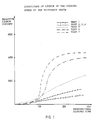
- lignin starts to dissolve rapidly in the relative cooking time of 100, the subsequent step being the main delignification of a successful cooking which is completed by a slow residual delignification towards the end of the cooking.
- the kappa level of 40 in Test 6 and the kappa level of 15 in Test 7 were achieved. Accordingly, it is obvious that an efficient removal of lignin from prehydrolyzed chip material takes place in the cooking step of the process according to the invention such as disclosed in Test 6; thus, it can replace the sulphate cooking used in Test 7.
- the tests carried out show that normal technical prehydrolysis conditions inactivate lignin to such an extent that no cooking modification within an acidic or neutral cooking pH range is able to dissolve lignin even though the chip material would be neutralized between the prehydrolysis and the cooking.
- the sulphite cooking step used in the process according to the invention is operative only when the cooking conditions and the cooking catalyst are chosen appropriately.
Landscapes
- Chemical & Material Sciences (AREA)
- Health & Medical Sciences (AREA)
- Emergency Medicine (AREA)
- General Health & Medical Sciences (AREA)
- Life Sciences & Earth Sciences (AREA)
- Biochemistry (AREA)
- Organic Chemistry (AREA)
- Paper (AREA)
- Polysaccharides And Polysaccharide Derivatives (AREA)
- Medicines Containing Material From Animals Or Micro-Organisms (AREA)
- Amplifiers (AREA)
Claims (4)
- Procédé de production d'un hydrolysat d'hémicellulose et d'une pâte spéciale présentant une teneur élevée en alpha-cellulose, comme une pâte dissolvante, à partir d'une matière contenant de la lignocellulose, en deux étapes dont la première comporte une préhydrolyse de ladite matière et la seconde comporte la dissolution de la lignine contenue dans la matière préhydrolysée, à l'aide d'une liqueur de cuisson contenant du sulfite de sodium, de l'hydroxyde de sodium et une anthraquinone, caractérisé en ce que la matière contenant de la lignocellulose est du bois et en ce qu'on effectue la dissolution de la lignine à l'aide d'une liqueur de cuisson contenant de 100 à 400 g de sulfite de sodium par kg de bois sec, de 10 à 100 g de carbonate de sodium par kg de bois sec, assez d'hydroxyde de sodium pour élever le pH de la liqueur de cuisson jusqu'à une valeur initiale située entre 10 et 13, et de 0,01 à 0,2 %, par rapport au bois sec, d'anthraquinone ou d'un de ses dérivés, mais ne contenant pas du tout de sulfure de sodium, à une température de 160°C à 180°C et pendant 100 à 200 minutes, après avoir élevé la température à une vitesse de 0,1 °C à 2°C par minute à partir d'une température située entre la température ambiante et 100°C.
- Procédé conforme à la revendication 1, caractérisé en ce que la matière contenant de la lignocellulose est du bois de feuillu.
- Procédé conforme à la revendication 1, caractérisé en ce que la matière contenant de la lignocellulose est du bois de résineux.
- Procédé conforme à l'une des revendications précédentes, caractérisé en ce que l'on effectue la préhydrolyse à l'aide d'eau, de dioxyde de soufre ou d'acide sulfurique, à une température de 155°C à 170°C et pendant 90 à 170 minutes.
Applications Claiming Priority (2)
| Application Number | Priority Date | Filing Date | Title |
|---|---|---|---|
| FI871730 | 1987-04-21 | ||
| FI871730A FI79564C (fi) | 1987-04-21 | 1987-04-21 | Foerfarande foer framstaellning av hemicellulosahydrolysat och specialmassa. |
Publications (3)
| Publication Number | Publication Date |
|---|---|
| EP0287960A2 EP0287960A2 (fr) | 1988-10-26 |
| EP0287960A3 EP0287960A3 (fr) | 1991-04-17 |
| EP0287960B1 true EP0287960B1 (fr) | 1994-09-21 |
Family
ID=8524351
Family Applications (1)
| Application Number | Title | Priority Date | Filing Date |
|---|---|---|---|
| EP88106006A Expired - Lifetime EP0287960B1 (fr) | 1987-04-21 | 1988-04-15 | Procédé de fabrication d'un hydrolysat d'hémicellulose et une pâte spéciale |
Country Status (8)
| Country | Link |
|---|---|
| EP (1) | EP0287960B1 (fr) |
| AT (1) | ATE111986T1 (fr) |
| BR (1) | BR8801894A (fr) |
| CA (1) | CA1295095C (fr) |
| DE (1) | DE3851565T2 (fr) |
| ES (1) | ES2062995T3 (fr) |
| FI (1) | FI79564C (fr) |
| RU (1) | RU1799408C (fr) |
Cited By (1)
| Publication number | Priority date | Publication date | Assignee | Title |
|---|---|---|---|---|
| US12601114B2 (en) | 2020-07-06 | 2026-04-14 | Amppc Finland Oy | High yield cooking method |
Families Citing this family (2)
| Publication number | Priority date | Publication date | Assignee | Title |
|---|---|---|---|---|
| DE10064131C2 (de) * | 2000-12-22 | 2003-03-27 | Sca Hygiene Prod Gmbh | Vollgebleichter Sulfit-Zellstoff, Verfahren zu seiner Herstellung und daraus hergestellte Produkte |
| ATE478096T1 (de) * | 2007-11-27 | 2010-09-15 | Innventia Ab | Verwendung eines holzhydrolysats |
Citations (1)
| Publication number | Priority date | Publication date | Assignee | Title |
|---|---|---|---|---|
| US4213821A (en) * | 1976-06-02 | 1980-07-22 | Australian Paper Manufacturers Limited | Pulping with quinones and hydroquinones |
Family Cites Families (3)
| Publication number | Priority date | Publication date | Assignee | Title |
|---|---|---|---|---|
| US3532597A (en) * | 1969-03-11 | 1970-10-06 | Uddeholms Ab | Preparation of dissolving pulps from wood by hydrolysis and alkaline sulfite digestion |
| DE2628971A1 (de) * | 1976-06-28 | 1978-01-05 | Waldhof Aschaffenburg Papier | Verfahren zur herstellung von zellstoff in verbindung mit der gewinnung von holzzuckern |
| CA1216105A (fr) * | 1984-04-06 | 1987-01-06 | C-I-L Inc. | Fabrication de la pate a papier |
-
1987
- 1987-04-21 FI FI871730A patent/FI79564C/fi not_active IP Right Cessation
-
1988
- 1988-04-15 EP EP88106006A patent/EP0287960B1/fr not_active Expired - Lifetime
- 1988-04-15 CA CA000564311A patent/CA1295095C/fr not_active Expired - Lifetime
- 1988-04-15 AT AT88106006T patent/ATE111986T1/de active
- 1988-04-15 DE DE3851565T patent/DE3851565T2/de not_active Expired - Fee Related
- 1988-04-20 RU SU884355611A patent/RU1799408C/ru active
- 1988-04-21 BR BR8801894A patent/BR8801894A/pt unknown
- 1988-05-11 ES ES88106006T patent/ES2062995T3/es not_active Expired - Lifetime
Patent Citations (1)
| Publication number | Priority date | Publication date | Assignee | Title |
|---|---|---|---|---|
| US4213821A (en) * | 1976-06-02 | 1980-07-22 | Australian Paper Manufacturers Limited | Pulping with quinones and hydroquinones |
Cited By (1)
| Publication number | Priority date | Publication date | Assignee | Title |
|---|---|---|---|---|
| US12601114B2 (en) | 2020-07-06 | 2026-04-14 | Amppc Finland Oy | High yield cooking method |
Also Published As
| Publication number | Publication date |
|---|---|
| FI871730L (fi) | 1988-10-22 |
| FI79564C (fi) | 1990-01-10 |
| DE3851565T2 (de) | 1995-01-26 |
| CA1295095C (fr) | 1992-02-04 |
| EP0287960A2 (fr) | 1988-10-26 |
| FI871730A0 (fi) | 1987-04-21 |
| BR8801894A (pt) | 1988-11-22 |
| EP0287960A3 (fr) | 1991-04-17 |
| FI79564B (fi) | 1989-09-29 |
| DE3851565D1 (de) | 1994-10-27 |
| RU1799408C (ru) | 1993-02-28 |
| ES2062995T3 (es) | 1995-01-01 |
| ATE111986T1 (de) | 1994-10-15 |
Similar Documents
| Publication | Publication Date | Title |
|---|---|---|
| AU688447B2 (en) | Production of prehydrolyzed pulp | |
| US8475627B2 (en) | Process of treating a lignocellulosic material | |
| US4486267A (en) | Chemithermomechanical pulping process employing separate alkali and sulfite treatments | |
| US3888727A (en) | Treatment of lignocellulosic material in an alkaline pulping liquor containing anthraquinone sulphonic acid followed by oxygen delignification | |
| US5139617A (en) | Process for the production of a hemicellulose hydrolysate and special high alpha cellulose pulp | |
| US4244778A (en) | Process for the chemical refining of cellulose pulp | |
| US20170314197A1 (en) | Process for the production of a treated pulp, treated pulp, and textile fibres produced from the treated pulp | |
| CA2378927C (fr) | Preparation de pate a papier chimique et de xylose par hydrolyse acide realisee directement sur la pate a papier | |
| US6464827B1 (en) | Method of digesting wood with an alkaline liquor by adding an acidic agent to precipitate dissociated lignin | |
| US5004523A (en) | Delignification of lignocellulosic materials with monoperoxysulfuric acid | |
| NZ237098A (en) | Process for producing dissolving pulp (high alpha-cellulose pulp) | |
| US3919041A (en) | Multi-stage chlorine dioxide delignification of wood pulp | |
| EP0287960B1 (fr) | Procédé de fabrication d'un hydrolysat d'hémicellulose et une pâte spéciale | |
| FI121310B (fi) | Menetelmä pektiiniä sisältävien lignoselluloosapitoisten materiaalien käsittelemiseksi | |
| US1640853A (en) | Process of producing pulp having a high percentage of resistant cellulose | |
| US3923591A (en) | Prehydrolysis and digestion of fibrous lignocellulosic material | |
| US3738908A (en) | Prehydrolysis and digestion of bagasse fibers | |
| Sundquist et al. | Milox pulping and bleaching | |
| US3832278A (en) | Prehydrolysis and digestion of bagasse fibers | |
| US20090032208A1 (en) | Processes and systems for the bleaching of lignocellulosic pulps following cooking with soda and anthraquinone | |
| US1880049A (en) | Process of producing white wood pulp for high grade paper manufacture | |
| SU1379381A1 (ru) | Способ получени целлюлозы дл химической переработки | |
| US1848662A (en) | of berlin | |
| US2810647A (en) | Process of preparing fiber from pithcontaining plant materials | |
| US2324230A (en) | Process of preparing wood pulp |
Legal Events
| Date | Code | Title | Description |
|---|---|---|---|
| PUAI | Public reference made under article 153(3) epc to a published international application that has entered the european phase |
Free format text: ORIGINAL CODE: 0009012 |
|
| AK | Designated contracting states |
Kind code of ref document: A2 Designated state(s): AT BE CH DE ES FR GB GR IT LI LU NL SE |
|
| 17P | Request for examination filed |
Effective date: 19890105 |
|
| RAP3 | Party data changed (applicant data changed or rights of an application transferred) |
Owner name: CULTOR LTD. |
|
| PUAL | Search report despatched |
Free format text: ORIGINAL CODE: 0009013 |
|
| RAP1 | Party data changed (applicant data changed or rights of an application transferred) |
Owner name: SCITECH SERVICES, INC. |
|
| AK | Designated contracting states |
Kind code of ref document: A3 Designated state(s): AT BE CH DE ES FR GB GR IT LI LU NL SE |
|
| 17Q | First examination report despatched |
Effective date: 19920221 |
|
| GRAA | (expected) grant |
Free format text: ORIGINAL CODE: 0009210 |
|
| AK | Designated contracting states |
Kind code of ref document: B1 Designated state(s): AT BE CH DE ES FR GB GR IT LI LU NL SE |
|
| PG25 | Lapsed in a contracting state [announced via postgrant information from national office to epo] |
Ref country code: IT Free format text: LAPSE BECAUSE OF FAILURE TO SUBMIT A TRANSLATION OF THE DESCRIPTION OR TO PAY THE FEE WITHIN THE PRE;WARNING: LAPSES OF ITALIAN PATENTS WITH EFFECTIVE DATE BEFORE 2007 MAY HAVE OCCURRED AT ANY TIME BEFORE 2007. THE CORRECT EFFECTIVE DATE MAY BE DIFFERENT FROM THE ONE RECORDED.SCRIBED TIME-LIMIT Effective date: 19940921 Ref country code: NL Effective date: 19940921 Ref country code: BE Effective date: 19940921 Ref country code: CH Effective date: 19940921 Ref country code: GR Free format text: LAPSE BECAUSE OF FAILURE TO SUBMIT A TRANSLATION OF THE DESCRIPTION OR TO PAY THE FEE WITHIN THE PRESCRIBED TIME-LIMIT Effective date: 19940921 Ref country code: LI Effective date: 19940921 |
|
| REF | Corresponds to: |
Ref document number: 111986 Country of ref document: AT Date of ref document: 19941015 Kind code of ref document: T |
|
| ET | Fr: translation filed | ||
| REF | Corresponds to: |
Ref document number: 3851565 Country of ref document: DE Date of ref document: 19941027 |
|
| REG | Reference to a national code |
Ref country code: CH Ref legal event code: PL |
|
| REG | Reference to a national code |
Ref country code: ES Ref legal event code: FG2A Ref document number: 2062995 Country of ref document: ES Kind code of ref document: T3 |
|
| EAL | Se: european patent in force in sweden |
Ref document number: 88106006.5 |
|
| NLV1 | Nl: lapsed or annulled due to failure to fulfill the requirements of art. 29p and 29m of the patents act | ||
| PG25 | Lapsed in a contracting state [announced via postgrant information from national office to epo] |
Ref country code: GB Effective date: 19950415 |
|
| PG25 | Lapsed in a contracting state [announced via postgrant information from national office to epo] |
Ref country code: LU Free format text: LAPSE BECAUSE OF NON-PAYMENT OF DUE FEES Effective date: 19950430 |
|
| PLBE | No opposition filed within time limit |
Free format text: ORIGINAL CODE: 0009261 |
|
| STAA | Information on the status of an ep patent application or granted ep patent |
Free format text: STATUS: NO OPPOSITION FILED WITHIN TIME LIMIT |
|
| 26N | No opposition filed | ||
| GBPC | Gb: european patent ceased through non-payment of renewal fee |
Effective date: 19950415 |
|
| PGFP | Annual fee paid to national office [announced via postgrant information from national office to epo] |
Ref country code: SE Payment date: 19970414 Year of fee payment: 10 |
|
| PGFP | Annual fee paid to national office [announced via postgrant information from national office to epo] |
Ref country code: AT Payment date: 19970417 Year of fee payment: 10 Ref country code: FR Payment date: 19970417 Year of fee payment: 10 |
|
| PGFP | Annual fee paid to national office [announced via postgrant information from national office to epo] |
Ref country code: DE Payment date: 19970506 Year of fee payment: 10 |
|
| PGFP | Annual fee paid to national office [announced via postgrant information from national office to epo] |
Ref country code: ES Payment date: 19970717 Year of fee payment: 10 |
|
| PG25 | Lapsed in a contracting state [announced via postgrant information from national office to epo] |
Ref country code: AT Free format text: LAPSE BECAUSE OF NON-PAYMENT OF DUE FEES Effective date: 19980415 |
|
| PG25 | Lapsed in a contracting state [announced via postgrant information from national office to epo] |
Ref country code: ES Free format text: THE PATENT HAS BEEN ANNULLED BY A DECISION OF A NATIONAL AUTHORITY Effective date: 19980416 Ref country code: SE Free format text: LAPSE BECAUSE OF NON-PAYMENT OF DUE FEES Effective date: 19980416 |
|
| PG25 | Lapsed in a contracting state [announced via postgrant information from national office to epo] |
Ref country code: FR Free format text: THE PATENT HAS BEEN ANNULLED BY A DECISION OF A NATIONAL AUTHORITY Effective date: 19980430 |
|
| EUG | Se: european patent has lapsed |
Ref document number: 88106006.5 |
|
| PG25 | Lapsed in a contracting state [announced via postgrant information from national office to epo] |
Ref country code: DE Free format text: LAPSE BECAUSE OF NON-PAYMENT OF DUE FEES Effective date: 19990202 |
|
| REG | Reference to a national code |
Ref country code: FR Ref legal event code: ST |
|
| REG | Reference to a national code |
Ref country code: ES Ref legal event code: FD2A Effective date: 20020204 |