EP0288258A2 - Verfahren zum hydrophilen Gestalten von Metalloberflächen und auf diese Weise erhaltenes Produkt - Google Patents
Verfahren zum hydrophilen Gestalten von Metalloberflächen und auf diese Weise erhaltenes Produkt Download PDFInfo
- Publication number
- EP0288258A2 EP0288258A2 EP88303545A EP88303545A EP0288258A2 EP 0288258 A2 EP0288258 A2 EP 0288258A2 EP 88303545 A EP88303545 A EP 88303545A EP 88303545 A EP88303545 A EP 88303545A EP 0288258 A2 EP0288258 A2 EP 0288258A2
- Authority
- EP
- European Patent Office
- Prior art keywords
- coating
- activated alumina
- alumina
- metal
- particles
- Prior art date
- Legal status (The legal status is an assumption and is not a legal conclusion. Google has not performed a legal analysis and makes no representation as to the accuracy of the status listed.)
- Withdrawn
Links
Images

Classifications
-
- C—CHEMISTRY; METALLURGY
- C23—COATING METALLIC MATERIAL; COATING MATERIAL WITH METALLIC MATERIAL; CHEMICAL SURFACE TREATMENT; DIFFUSION TREATMENT OF METALLIC MATERIAL; COATING BY VACUUM EVAPORATION, BY SPUTTERING, BY ION IMPLANTATION OR BY CHEMICAL VAPOUR DEPOSITION, IN GENERAL; INHIBITING CORROSION OF METALLIC MATERIAL OR INCRUSTATION IN GENERAL
- C23C—COATING METALLIC MATERIAL; COATING MATERIAL WITH METALLIC MATERIAL; SURFACE TREATMENT OF METALLIC MATERIAL BY DIFFUSION INTO THE SURFACE, BY CHEMICAL CONVERSION OR SUBSTITUTION; COATING BY VACUUM EVAPORATION, BY SPUTTERING, BY ION IMPLANTATION OR BY CHEMICAL VAPOUR DEPOSITION, IN GENERAL
- C23C22/00—Chemical surface treatment of metallic material by reaction of the surface with a reactive liquid, leaving reaction products of surface material in the coating, e.g. conversion coatings, passivation of metals
- C23C22/73—Chemical surface treatment of metallic material by reaction of the surface with a reactive liquid, leaving reaction products of surface material in the coating, e.g. conversion coatings, passivation of metals characterised by the process
- C23C22/74—Chemical surface treatment of metallic material by reaction of the surface with a reactive liquid, leaving reaction products of surface material in the coating, e.g. conversion coatings, passivation of metals characterised by the process for obtaining burned-in conversion coatings
-
- F—MECHANICAL ENGINEERING; LIGHTING; HEATING; WEAPONS; BLASTING
- F28—HEAT EXCHANGE IN GENERAL
- F28D—HEAT-EXCHANGE APPARATUS, NOT PROVIDED FOR IN ANOTHER SUBCLASS, IN WHICH THE HEAT-EXCHANGE MEDIA DO NOT COME INTO DIRECT CONTACT
- F28D17/00—Regenerative heat-exchange apparatus in which a stationary intermediate heat-transfer medium or body is contacted successively by each heat-exchange medium, e.g. using granular particles
- F28D17/005—Regenerative heat-exchange apparatus in which a stationary intermediate heat-transfer medium or body is contacted successively by each heat-exchange medium, e.g. using granular particles using granular particles
-
- C—CHEMISTRY; METALLURGY
- C23—COATING METALLIC MATERIAL; COATING MATERIAL WITH METALLIC MATERIAL; CHEMICAL SURFACE TREATMENT; DIFFUSION TREATMENT OF METALLIC MATERIAL; COATING BY VACUUM EVAPORATION, BY SPUTTERING, BY ION IMPLANTATION OR BY CHEMICAL VAPOUR DEPOSITION, IN GENERAL; INHIBITING CORROSION OF METALLIC MATERIAL OR INCRUSTATION IN GENERAL
- C23C—COATING METALLIC MATERIAL; COATING MATERIAL WITH METALLIC MATERIAL; SURFACE TREATMENT OF METALLIC MATERIAL BY DIFFUSION INTO THE SURFACE, BY CHEMICAL CONVERSION OR SUBSTITUTION; COATING BY VACUUM EVAPORATION, BY SPUTTERING, BY ION IMPLANTATION OR BY CHEMICAL VAPOUR DEPOSITION, IN GENERAL
- C23C24/00—Coating starting from inorganic powder
- C23C24/08—Coating starting from inorganic powder by application of heat or pressure and heat
- C23C24/082—Coating starting from inorganic powder by application of heat or pressure and heat without intermediate formation of a liquid in the layer
- C23C24/085—Coating with metallic material, i.e. metals or metal alloys, optionally comprising hard particles, e.g. oxides, carbides or nitrides
-
- F—MECHANICAL ENGINEERING; LIGHTING; HEATING; WEAPONS; BLASTING
- F28—HEAT EXCHANGE IN GENERAL
- F28F—DETAILS OF HEAT-EXCHANGE AND HEAT-TRANSFER APPARATUS, OF GENERAL APPLICATION
- F28F13/00—Arrangements for modifying heat-transfer, e.g. increasing, decreasing
- F28F13/18—Arrangements for modifying heat-transfer, e.g. increasing, decreasing by applying coatings, e.g. radiation-absorbing, radiation-reflecting; by surface treatment, e.g. polishing
-
- F—MECHANICAL ENGINEERING; LIGHTING; HEATING; WEAPONS; BLASTING
- F28—HEAT EXCHANGE IN GENERAL
- F28F—DETAILS OF HEAT-EXCHANGE AND HEAT-TRANSFER APPARATUS, OF GENERAL APPLICATION
- F28F2245/00—Coatings; Surface treatments
- F28F2245/02—Coatings; Surface treatments hydrophilic
-
- Y—GENERAL TAGGING OF NEW TECHNOLOGICAL DEVELOPMENTS; GENERAL TAGGING OF CROSS-SECTIONAL TECHNOLOGIES SPANNING OVER SEVERAL SECTIONS OF THE IPC; TECHNICAL SUBJECTS COVERED BY FORMER USPC CROSS-REFERENCE ART COLLECTIONS [XRACs] AND DIGESTS
- Y10—TECHNICAL SUBJECTS COVERED BY FORMER USPC
- Y10T—TECHNICAL SUBJECTS COVERED BY FORMER US CLASSIFICATION
- Y10T428/00—Stock material or miscellaneous articles
- Y10T428/25—Web or sheet containing structurally defined element or component and including a second component containing structurally defined particles
- Y10T428/256—Heavy metal or aluminum or compound thereof
- Y10T428/257—Iron oxide or aluminum oxide
-
- Y—GENERAL TAGGING OF NEW TECHNOLOGICAL DEVELOPMENTS; GENERAL TAGGING OF CROSS-SECTIONAL TECHNOLOGIES SPANNING OVER SEVERAL SECTIONS OF THE IPC; TECHNICAL SUBJECTS COVERED BY FORMER USPC CROSS-REFERENCE ART COLLECTIONS [XRACs] AND DIGESTS
- Y10—TECHNICAL SUBJECTS COVERED BY FORMER USPC
- Y10T—TECHNICAL SUBJECTS COVERED BY FORMER US CLASSIFICATION
- Y10T428/00—Stock material or miscellaneous articles
- Y10T428/26—Web or sheet containing structurally defined element or component, the element or component having a specified physical dimension
- Y10T428/263—Coating layer not in excess of 5 mils thick or equivalent
- Y10T428/264—Up to 3 mils
- Y10T428/265—1 mil or less
Definitions
- This invention relates to a method of surface treatment for metal articles, and particularly the fins which form the heat radiating and cooling parts of an aluminum heat exchanger.
- a method for treating the surface of metal articles which comprises applying a continuous coating thereto comprising fine particles of activated alumina.
- Activated alumina is a high surface area alumina formed by rapid calcination of hydrated alumina at a temperature below that required for complete dehydration.
- this type of alumina is amorphous or has a microcrystalline structure (as determined by XRD), has a high porosity and specific surface area, has a particle size less than 10 microns and is readily dispersible in aqueous or certain polar organic solvents.
- a suitable activated alumina can be prepared by flash calcining an alumina trihydrate to give a product with loss on ignition (LOI) of about 4 to 10%.
- This material which is commonly known as activated alumina, has a weak XRD pattern, a surface area of greater than 200 m2/g and a high porosity. Compared to ⁇ -alumina, it is relatively non-abrasive and friable.
- This material is ground in an aqueous or polar organic solvent with or without peptizing (dispersing) agents to give a highly dispersible activated alumina. After grinding, the particles normally have a size of less than 10 microns, and preferably less than 2 microns.
- Coatings containing activated alumina can be applied to metal surfaces using standard methods, such as spraying, brushing, roller coating, dipping, silk screening, etc., followed by an appropriate drying process.
- the resin contributes to the corrosion protection of the metal and helps to bind the finely dispersed alumina to the metal substrate.
- the resin can be an acrylic, polyester, epoxy or any other type of organic film forming resin which is compatible with the dispersed alumina.
- the resin can be either an air dry or bake type.
- the ratio of resin solids to alumina can vary from 10-90 to 70-30 by weight and is typically from 30-70 to 60-40.
- the coating is prepared by blending the alumina dispersion with a resin solution containing the organic resin, solvent and other coating ingredients as required, such as dispersion stabilizers, cosolvents, catalysts, plasticizers and cross-linking agents. Blending is carried out on a high shear mixer such as dispersator. For laboratory testing, the coating may be applied to test coupons using a draw down bar or by spray application. On a production scale, the coating may be applied by any conventional coating procedure such as roller coating, dipping, spraying, brushing or silk screen.
- the dry coating thickness is typically in the range of 1-20 microns, with about 2 to 5 microns being preferred.
- the coating of activated alumina may be applied to aluminum finstock before or after forming or as a post-treatment to a completed heat exchanger.
- Flash activated Bayer trihydrate was rapidly heated to give a loss on ignition of 4 to 10%. This was placed in 60 litres of deionized water in a 200 litre plastic drum. To this was added 230 ml of HNO3 (70%) followed by 50 kg of flash activated alumina (FAA). The above mixture was stirred for 15 minutes and then allowed to settle.
- a water dispersible product was made in a similar manner to the above product by replacing the methanol with water and grinding in the presence of up to 0.08 moles HNO3/mole AlOOH.
- the dispersibility can be increased even further by autoclaving the ground slurry at about 180°C for several hours.
- a dispersion of alumina in water prepared as described in Example 1 above was applied to a sheet of aluminum using a roller and silk screen. This formed a thin coating on the aluminum and the coating was dried by placing the sheet in an oven at 200°C. To increase the adhesion of the coating, the sheet was passed through a small rolling mill having polished steel rollers to give a very slight reduction in thickness. The rolling forced the alumina particles into the metal surface and produced a coating with good adhesion.
- a coating composition was prepared using a methanol dispersion of activated alumina prepared according Example 1. This methanol dispersion contained 20% by weight of activated alumina. The composition contained the following components: methanol dispersion of activated alumina (20% by weight) 450 parts acrylic resin solution *(65% by weight) 65 parts crosslinking agent (Cymel 301®) 10.5 parts catalyst (Cycat 4040®) 1.0 parts butyl cellosolve 1.25 parts dimethylaminoethanol 5.5 parts
- Aluminum test coupons were coated with the above composition using a draw down bar. Cure was achieved by subjecting the coated coupons to 210°C peak metal temperature.
- the hydrophilic nature of the coating was determined by spraying water from a squeeze bottle onto the test specimens. The water spread easily over the surface and did not break up as it would with a hydrophobic surface.
- test coupons were dipping test coupons into a beaker of water. Again, the water did not bead up, indicating that the surface was hydrophilic.
- Adhesion of the coating to the substrate was measured by cross hatching the coating with a series of lines 2 mm apart. Tape applied over the cross hatched surface and quickly pulled off did not remove any of the coating, indicating excellent adhesion.
- the corrosion preventative nature of the alumina-organic binder coating was determined by submitting coated test coupons to a neutral salt spray test.
- the salt solution was 5% sodium chloride.
- the coupons were scribed so that the metal under the coating was exposed to the salt solution. Samples were inserted into the salt spray cabinet and examined at regular intervals. Wettability was measured at the same time. Using a coupon coated with a 5 micron layer, after 500 hours exposure to salt spray the coating still provided excellent corrosion protection and the surface of the coupon remained wettable.
- Solvent resistance of the coating was determined by immersing test coupons into trichloroethylene at 80°C for 5 minutes. The coating was unaffected by this procedure, i.e. no coating was removed from the substrate and the wettability remained unchanged. This procedure was repeated on test coupons that had been dipped into a lubricating oil. After removal of the lubricant with trichloroethylene at 80°C, the properties of the coating were unaffected.
- the coating was also tested for abrasiveness because an important consideration for precoated finstock is the effect of the coating on metal-forming machinery, such as fin-forming machinery. This is particularly important for coatings containing inorganic pigments as the pigments may be abrasive to the tooling.
- the degree of abrasion that could be expected from the activated alumina coatings was measured using a pin-on-disc abrasion tester. This device applied a set loading (220 g) onto a pin which had a stainless steel ball bearing (3 mm diameter) at the tip. The pin rested on a disc of the coated test coupon. The disc was rotated at a set speed (40 rpm) for a set time period (20 minutes).
- the pin was attached to an arm which moved across the disc as the disc rotated so as to cover a wide area of the disc.
- the ball bearing was examined under a microscope to determine the degree of abrasion which had occurred. This showed the coating to have excellent abrasion resistance.
- Example 3 Using the same general procedure as described in Example 3, four different coatings were tested. These included the same activated alumina composition described in Example 3 and three other compositions in which the activated alumina was replaced by (1) ⁇ -alumina [Alcan C72FG], (2) magnesium silicate [Cyprus Industrial Minerals Company] and (3) activated alumina [300A available from Kaiser Aluminium]. All materials were ground to an average particle size in the range of 1.5-3 ⁇ m and a dispersion of each was prepared according to the procedure of Example 3.
- Aluminum test coupons were coated with the four compositions using a draw down bar. Drying and cure was achieved for all specimens by subjecting coated coupons to a peak metal temperature of 210°C.
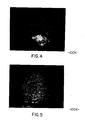
- the coatings were tested for abrasiveness using a pin-on-disc abrasion tester and the same test procedure described in Example 3. At the end of the experiment, the ball bearings used to test each coating were examined under a microscope and the results are shown in Figures 1-5.
- Figure 1 is a photomicrograph of an unused ball bearing to serve as a reference.
- the ball bearing tested on the activated alumina coating of this invention is shown in Figure 2 and is essentially identical to the unused ball bearing, indicating that the coating provides excellent abrasion resistance.
- the coatings containing ⁇ -alumina ( Figure 3) or magnesium silicate ( Figure 4) show a high degree of abrasion.
- the ⁇ -alumina coating abraded to such an extent that a flat section can be seen on the ball bearing.
- the coating incorporating Kaiser activated alumina (Figure 5) also shows a significant degree of abrasion.
Landscapes
- Engineering & Computer Science (AREA)
- Chemical & Material Sciences (AREA)
- Mechanical Engineering (AREA)
- Physics & Mathematics (AREA)
- Thermal Sciences (AREA)
- General Engineering & Computer Science (AREA)
- Chemical Kinetics & Catalysis (AREA)
- Materials Engineering (AREA)
- Metallurgy (AREA)
- Organic Chemistry (AREA)
- General Chemical & Material Sciences (AREA)
- Paints Or Removers (AREA)
- Other Surface Treatments For Metallic Materials (AREA)
- Application Of Or Painting With Fluid Materials (AREA)
Applications Claiming Priority (2)
| Application Number | Priority Date | Filing Date | Title |
|---|---|---|---|
| CA535497 | 1987-04-24 | ||
| CA535497 | 1987-04-24 |
Publications (2)
| Publication Number | Publication Date |
|---|---|
| EP0288258A2 true EP0288258A2 (de) | 1988-10-26 |
| EP0288258A3 EP0288258A3 (de) | 1989-03-08 |
Family
ID=4135492
Family Applications (1)
| Application Number | Title | Priority Date | Filing Date |
|---|---|---|---|
| EP88303545A Withdrawn EP0288258A3 (de) | 1987-04-24 | 1988-04-20 | Verfahren zum hydrophilen Gestalten von Metalloberflächen und auf diese Weise erhaltenes Produkt |
Country Status (8)
| Country | Link |
|---|---|
| US (1) | US5079087A (de) |
| EP (1) | EP0288258A3 (de) |
| JP (1) | JPS6465273A (de) |
| KR (1) | KR880012793A (de) |
| AU (1) | AU602979B2 (de) |
| BR (1) | BR8801960A (de) |
| MY (1) | MY100819A (de) |
| ZA (1) | ZA882881B (de) |
Cited By (2)
| Publication number | Priority date | Publication date | Assignee | Title |
|---|---|---|---|---|
| US5128211A (en) * | 1991-02-28 | 1992-07-07 | Diversey Corporation | Aluminum based phosphate final rinse |
| US6500490B1 (en) | 2000-03-23 | 2002-12-31 | Honeywell International Inc. | Hydrophilic zeolite coating |
Families Citing this family (11)
| Publication number | Priority date | Publication date | Assignee | Title |
|---|---|---|---|---|
| US5514478A (en) * | 1993-09-29 | 1996-05-07 | Alcan International Limited | Nonabrasive, corrosion resistant, hydrophilic coatings for aluminum surfaces, methods of application, and articles coated therewith |
| CA2179448A1 (en) * | 1995-07-12 | 1997-01-13 | Atsuyumi Ishikawa | Heat exchanger for refrigerating cycle |
| US5955048A (en) * | 1995-09-27 | 1999-09-21 | Aluminum Company Of America | Process for making flash activated hydrotalcite |
| US6568465B1 (en) * | 2002-05-07 | 2003-05-27 | Modine Manufacturing Company | Evaporative hydrophilic surface for a heat exchanger, method of making the same and composition therefor |
| KR100624877B1 (ko) * | 2002-07-08 | 2006-09-18 | 한국과학기술연구원 | 젖음성 향상을 위한 습표면 열교환기의 표면처리방법 |
| JP2005113228A (ja) * | 2003-10-09 | 2005-04-28 | Daikin Ind Ltd | プレート素材及びその製造方法 |
| CN100453955C (zh) * | 2005-01-07 | 2009-01-21 | 鸿富锦精密工业(深圳)有限公司 | 热管及其制造方法 |
| KR102033820B1 (ko) | 2011-12-16 | 2019-10-17 | 노벨리스 인코퍼레이티드 | 알루미늄 핀 합금 및 그 제조 방법 |
| FR3010513B1 (fr) * | 2013-09-09 | 2015-10-16 | Fives Cryo | Matrice d'echangeur de chaleur collee et procede de collage correspondant |
| US20160040947A1 (en) | 2014-08-06 | 2016-02-11 | Novelis Inc. | Aluminum alloy for heat exchanger fins |
| JP2021021492A (ja) * | 2019-07-24 | 2021-02-18 | 三菱アルミニウム株式会社 | ろう付親水性皮膜およびアルミニウムフィンと熱交換器 |
Family Cites Families (3)
| Publication number | Priority date | Publication date | Assignee | Title |
|---|---|---|---|---|
| US4181773A (en) * | 1978-03-29 | 1980-01-01 | General Electric Company | Process for rendering surfaces permanently water wettable and novel products thus-produced |
| US4405493A (en) * | 1979-02-03 | 1983-09-20 | The British Petroleum Company Limited | Corrosion inhibitors, method of producing them and protective coatings containing them |
| JPS55164264A (en) * | 1979-06-08 | 1980-12-20 | Hitachi Ltd | Aqueous coating composition and heat exchanger coated with it |
-
1988
- 1988-04-20 EP EP88303545A patent/EP0288258A3/de not_active Withdrawn
- 1988-04-22 KR KR1019880004585A patent/KR880012793A/ko not_active Withdrawn
- 1988-04-22 BR BR8801960A patent/BR8801960A/pt unknown
- 1988-04-22 AU AU15101/88A patent/AU602979B2/en not_active Ceased
- 1988-04-22 JP JP63101195A patent/JPS6465273A/ja active Pending
- 1988-04-22 ZA ZA882881A patent/ZA882881B/xx unknown
- 1988-04-23 MY MYPI88000426A patent/MY100819A/en unknown
-
1990
- 1990-08-22 US US07/571,835 patent/US5079087A/en not_active Expired - Fee Related
Cited By (3)
| Publication number | Priority date | Publication date | Assignee | Title |
|---|---|---|---|---|
| US5128211A (en) * | 1991-02-28 | 1992-07-07 | Diversey Corporation | Aluminum based phosphate final rinse |
| US6500490B1 (en) | 2000-03-23 | 2002-12-31 | Honeywell International Inc. | Hydrophilic zeolite coating |
| US6849568B2 (en) | 2000-03-23 | 2005-02-01 | Honeywell International Inc. | Hydrophilic zeolite coating |
Also Published As
| Publication number | Publication date |
|---|---|
| ZA882881B (en) | 1988-12-28 |
| AU602979B2 (en) | 1990-11-01 |
| US5079087A (en) | 1992-01-07 |
| AU1510188A (en) | 1988-10-27 |
| JPS6465273A (en) | 1989-03-10 |
| MY100819A (en) | 1991-02-28 |
| KR880012793A (ko) | 1988-11-29 |
| EP0288258A3 (de) | 1989-03-08 |
| BR8801960A (pt) | 1988-11-22 |
Similar Documents
| Publication | Publication Date | Title |
|---|---|---|
| US5079087A (en) | Process for making metal surfaces hydrophilic and novel products thus produced | |
| CA2343260C (en) | Moniliform silica sol, method for producing it and ink jet recording medium | |
| EP1124693B1 (de) | Kieseldispersion, beschichtungszusammensetzung und aufzeichnungsmedium | |
| US9676980B2 (en) | Abrasive particles having particular shapes and methods of forming such particles | |
| Song et al. | Ultrafast fabrication of rough structures required by superhydrophobic surfaces on Al substrates using an immersion method | |
| JP2887098B2 (ja) | 被記録媒体、その製造方法及び画像形成方法 | |
| JP2921787B2 (ja) | 被記録媒体及びこれを用いた画像形成方法 | |
| JP2921785B2 (ja) | 被記録媒体、該媒体の製造方法及び画像形成方法 | |
| KR100237509B1 (ko) | 비결정성 실리카형 충진제 | |
| US3151993A (en) | Planographic inks containing aluminum hydroxide coated kaolinite particles | |
| WO2013049239A1 (en) | Abrasive articles including abrasive particulate materials, coated abrasives using the abrasive particulate materials and methods of forming | |
| KR20100098426A (ko) | 내부식성 물질 | |
| EP2852473A1 (de) | Geformte schleifpartikel und verfahren zur herstellung davon | |
| EP1279697A1 (de) | Poröser harzfilm | |
| JP2005507760A (ja) | 基材の表面を処理する方法 | |
| EP1490234A1 (de) | Beschichtungszusammensetzung enthaltend kolloidale kieselsäure und damit hergestelltes, glänzendes tintenstrahlaufzeichnungsblatt | |
| JPH0439362A (ja) | 塗料用アルミナ顔料 | |
| JP2011093735A (ja) | 改質アルミナ水和物粒子およびその製造方法、ならびに改質アルミナ水和物粒子を含むインクジェット受容層成用塗布液および受容層付基材 | |
| JP2001113848A (ja) | 印刷版材料及びその製造方法並びに印刷版の製造方法 | |
| JP2022113144A (ja) | 撥水皮膜、撥水部材、塗料組成物及び撥水部材の製造方法 | |
| EP0967088B1 (de) | Aufzeichnungsmedium und Bilderzeugungsverfahren damit | |
| JPH04202011A (ja) | 微粉末状アルミナ系複合酸化物、その製法及びインクジェット記録紙用填料 | |
| JP4137446B2 (ja) | 新規なアルミナ水和物粒子、アルミナ水和物粒子分散ゾルおよびインク受容層形成用塗布液およびインク受容層付基材 | |
| CA2367401C (en) | Heat sensitive type plate material for use in making lithography and method for preparing the same, liquid heat sensitive material for use in making lithography, and lithography | |
| US20090148692A1 (en) | Alumina particles and methods of making the same |
Legal Events
| Date | Code | Title | Description |
|---|---|---|---|
| PUAI | Public reference made under article 153(3) epc to a published international application that has entered the european phase |
Free format text: ORIGINAL CODE: 0009012 |
|
| AK | Designated contracting states |
Kind code of ref document: A2 Designated state(s): AT BE CH DE ES FR GB GR IT LI LU NL SE |
|
| PUAL | Search report despatched |
Free format text: ORIGINAL CODE: 0009013 |
|
| AK | Designated contracting states |
Kind code of ref document: A3 Designated state(s): AT BE CH DE ES FR GB GR IT LI LU NL SE |
|
| 17P | Request for examination filed |
Effective date: 19890822 |
|
| 17Q | First examination report despatched |
Effective date: 19900326 |
|
| STAA | Information on the status of an ep patent application or granted ep patent |
Free format text: STATUS: THE APPLICATION IS DEEMED TO BE WITHDRAWN |
|
| 18D | Application deemed to be withdrawn |
Effective date: 19911119 |