EP0288788A2 - Verfahren zur Herstellung von linearen Polycarbonaten aus cyclischen Oligomeren unter Verwendung eines Carbanion bildenden Katalysators - Google Patents
Verfahren zur Herstellung von linearen Polycarbonaten aus cyclischen Oligomeren unter Verwendung eines Carbanion bildenden Katalysators Download PDFInfo
- Publication number
- EP0288788A2 EP0288788A2 EP88105455A EP88105455A EP0288788A2 EP 0288788 A2 EP0288788 A2 EP 0288788A2 EP 88105455 A EP88105455 A EP 88105455A EP 88105455 A EP88105455 A EP 88105455A EP 0288788 A2 EP0288788 A2 EP 0288788A2
- Authority
- EP
- European Patent Office
- Prior art keywords
- composition
- cyclic
- catalyst
- formula
- formation catalyst
- Prior art date
- Legal status (The legal status is an assumption and is not a legal conclusion. Google has not performed a legal analysis and makes no representation as to the accuracy of the status listed.)
- Pending
Links
- 125000004122 cyclic group Chemical group 0.000 title claims abstract description 56
- 239000003054 catalyst Substances 0.000 title claims abstract description 48
- 239000004417 polycarbonate Substances 0.000 title claims abstract description 42
- 229920000515 polycarbonate Polymers 0.000 title claims abstract description 37
- 125000001797 benzyl group Chemical group [H]C1=C([H])C([H])=C(C([H])=C1[H])C([H])([H])* 0.000 title claims abstract description 11
- 239000000203 mixture Substances 0.000 title claims description 88
- 230000009021 linear effect Effects 0.000 title abstract description 19
- 238000002360 preparation method Methods 0.000 title description 9
- 230000015572 biosynthetic process Effects 0.000 claims abstract description 25
- WLJVXDMOQOGPHL-UHFFFAOYSA-N phenylacetic acid Chemical class OC(=O)CC1=CC=CC=C1 WLJVXDMOQOGPHL-UHFFFAOYSA-N 0.000 claims abstract description 19
- 150000003839 salts Chemical class 0.000 claims abstract description 15
- -1 aromatic radicals Chemical class 0.000 claims description 31
- 238000006116 polymerization reaction Methods 0.000 claims description 27
- 150000003254 radicals Chemical class 0.000 claims description 26
- 238000000034 method Methods 0.000 claims description 24
- 150000001875 compounds Chemical class 0.000 claims description 22
- 125000003118 aryl group Chemical group 0.000 claims description 9
- 125000001931 aliphatic group Chemical group 0.000 claims description 8
- QVGXLLKOCUKJST-UHFFFAOYSA-N atomic oxygen Chemical compound [O] QVGXLLKOCUKJST-UHFFFAOYSA-N 0.000 claims description 8
- 239000001301 oxygen Substances 0.000 claims description 8
- 229910052760 oxygen Inorganic materials 0.000 claims description 8
- 125000002723 alicyclic group Chemical group 0.000 claims description 7
- 125000001140 1,4-phenylene group Chemical group [H]C1=C([H])C([*:2])=C([H])C([H])=C1[*:1] 0.000 claims description 6
- 229960003424 phenylacetic acid Drugs 0.000 claims description 6
- 239000003279 phenylacetic acid Substances 0.000 claims description 6
- WHXSMMKQMYFTQS-UHFFFAOYSA-N Lithium Chemical group [Li] WHXSMMKQMYFTQS-UHFFFAOYSA-N 0.000 claims description 5
- NINIDFKCEFEMDL-UHFFFAOYSA-N Sulfur Chemical compound [S] NINIDFKCEFEMDL-UHFFFAOYSA-N 0.000 claims description 5
- 125000000654 isopropylidene group Chemical group C(C)(C)=* 0.000 claims description 5
- 229910052717 sulfur Inorganic materials 0.000 claims description 5
- 239000011593 sulfur Substances 0.000 claims description 5
- 229910052744 lithium Inorganic materials 0.000 claims description 4
- 125000002950 monocyclic group Chemical group 0.000 claims description 4
- NRPFNQUDKRYCNX-UHFFFAOYSA-N 4-methoxyphenylacetic acid Chemical group COC1=CC=C(CC(O)=O)C=C1 NRPFNQUDKRYCNX-UHFFFAOYSA-N 0.000 claims 2
- YBADLXQNJCMBKR-UHFFFAOYSA-N (4-nitrophenyl)acetic acid Chemical group OC(=O)CC1=CC=C([N+]([O-])=O)C=C1 YBADLXQNJCMBKR-UHFFFAOYSA-N 0.000 claims 1
- ITIONVBQFUNVJV-UHFFFAOYSA-N Etomidoline Chemical compound C12=CC=CC=C2C(=O)N(CC)C1NC(C=C1)=CC=C1OCCN1CCCCC1 ITIONVBQFUNVJV-UHFFFAOYSA-N 0.000 claims 1
- 229940071257 lithium acetate Drugs 0.000 claims 1
- 229940006198 sodium phenylacetate Drugs 0.000 claims 1
- HPPVXGUTRQEEPC-UHFFFAOYSA-M sodium;2-(4-methoxyphenyl)acetate Chemical compound [Na+].COC1=CC=C(CC([O-])=O)C=C1 HPPVXGUTRQEEPC-UHFFFAOYSA-M 0.000 claims 1
- ZHBWMCGLXGDFAV-UHFFFAOYSA-M sodium;2-(4-nitrophenyl)acetate Chemical compound [Na+].[O-]C(=O)CC1=CC=C([N+]([O-])=O)C=C1 ZHBWMCGLXGDFAV-UHFFFAOYSA-M 0.000 claims 1
- 238000010438 heat treatment Methods 0.000 abstract description 3
- 229920005668 polycarbonate resin Polymers 0.000 abstract 1
- 239000004431 polycarbonate resin Substances 0.000 abstract 1
- YMWUJEATGCHHMB-UHFFFAOYSA-N Dichloromethane Chemical compound ClCCl YMWUJEATGCHHMB-UHFFFAOYSA-N 0.000 description 24
- 235000013350 formula milk Nutrition 0.000 description 21
- HEMHJVSKTPXQMS-UHFFFAOYSA-M sodium hydroxide Inorganic materials [OH-].[Na+] HEMHJVSKTPXQMS-UHFFFAOYSA-M 0.000 description 20
- 238000006243 chemical reaction Methods 0.000 description 17
- 239000007788 liquid Substances 0.000 description 17
- 238000005755 formation reaction Methods 0.000 description 16
- ZMANZCXQSJIPKH-UHFFFAOYSA-N Triethylamine Chemical compound CCN(CC)CC ZMANZCXQSJIPKH-UHFFFAOYSA-N 0.000 description 15
- 239000000243 solution Substances 0.000 description 14
- 229920000642 polymer Polymers 0.000 description 12
- 239000000047 product Substances 0.000 description 11
- 150000001412 amines Chemical class 0.000 description 10
- IISBACLAFKSPIT-UHFFFAOYSA-N bisphenol A Chemical compound C=1C=C(O)C=CC=1C(C)(C)C1=CC=C(O)C=C1 IISBACLAFKSPIT-UHFFFAOYSA-N 0.000 description 10
- YXFVVABEGXRONW-UHFFFAOYSA-N Toluene Chemical compound CC1=CC=CC=C1 YXFVVABEGXRONW-UHFFFAOYSA-N 0.000 description 9
- 239000002253 acid Substances 0.000 description 9
- 150000007513 acids Chemical class 0.000 description 8
- 229940073584 methylene chloride Drugs 0.000 description 8
- 239000002904 solvent Substances 0.000 description 8
- 239000003153 chemical reaction reagent Substances 0.000 description 7
- 229930185605 Bisphenol Natural products 0.000 description 6
- 150000008044 alkali metal hydroxides Chemical class 0.000 description 6
- 125000001424 substituent group Chemical group 0.000 description 6
- XLYOFNOQVPJJNP-UHFFFAOYSA-N water Substances O XLYOFNOQVPJJNP-UHFFFAOYSA-N 0.000 description 6
- 239000000463 material Substances 0.000 description 5
- 229940086542 triethylamine Drugs 0.000 description 5
- RFFLAFLAYFXFSW-UHFFFAOYSA-N 1,2-dichlorobenzene Chemical compound ClC1=CC=CC=C1Cl RFFLAFLAYFXFSW-UHFFFAOYSA-N 0.000 description 4
- VPWNQTHUCYMVMZ-UHFFFAOYSA-N 4,4'-sulfonyldiphenol Chemical class C1=CC(O)=CC=C1S(=O)(=O)C1=CC=C(O)C=C1 VPWNQTHUCYMVMZ-UHFFFAOYSA-N 0.000 description 4
- CSCPPACGZOOCGX-UHFFFAOYSA-N Acetone Chemical compound CC(C)=O CSCPPACGZOOCGX-UHFFFAOYSA-N 0.000 description 4
- HEDRZPFGACZZDS-UHFFFAOYSA-N Chloroform Chemical compound ClC(Cl)Cl HEDRZPFGACZZDS-UHFFFAOYSA-N 0.000 description 4
- VEXZGXHMUGYJMC-UHFFFAOYSA-N Hydrochloric acid Chemical compound Cl VEXZGXHMUGYJMC-UHFFFAOYSA-N 0.000 description 4
- ATUOYWHBWRKTHZ-UHFFFAOYSA-N Propane Chemical compound CCC ATUOYWHBWRKTHZ-UHFFFAOYSA-N 0.000 description 4
- WYURNTSHIVDZCO-UHFFFAOYSA-N Tetrahydrofuran Chemical compound C1CCOC1 WYURNTSHIVDZCO-UHFFFAOYSA-N 0.000 description 4
- 125000004432 carbon atom Chemical group C* 0.000 description 4
- 125000001309 chloro group Chemical group Cl* 0.000 description 4
- 238000006114 decarboxylation reaction Methods 0.000 description 4
- 238000010790 dilution Methods 0.000 description 4
- 239000012895 dilution Substances 0.000 description 4
- 239000012074 organic phase Substances 0.000 description 4
- 125000001989 1,3-phenylene group Chemical group [H]C1=C([H])C([*:1])=C([H])C([*:2])=C1[H] 0.000 description 3
- MMWCQWOKHLEYSP-UHFFFAOYSA-N BisPhenol A bis(chloroformate) Chemical compound C=1C=C(OC(Cl)=O)C=CC=1C(C)(C)C1=CC=C(OC(Cl)=O)C=C1 MMWCQWOKHLEYSP-UHFFFAOYSA-N 0.000 description 3
- XEKOWRVHYACXOJ-UHFFFAOYSA-N Ethyl acetate Chemical compound CCOC(C)=O XEKOWRVHYACXOJ-UHFFFAOYSA-N 0.000 description 3
- LYCAIKOWRPUZTN-UHFFFAOYSA-N Ethylene glycol Chemical compound OCCO LYCAIKOWRPUZTN-UHFFFAOYSA-N 0.000 description 3
- KWYUFKZDYYNOTN-UHFFFAOYSA-M Potassium hydroxide Chemical compound [OH-].[K+] KWYUFKZDYYNOTN-UHFFFAOYSA-M 0.000 description 3
- 125000003545 alkoxy group Chemical group 0.000 description 3
- 125000000217 alkyl group Chemical group 0.000 description 3
- 125000004429 atom Chemical group 0.000 description 3
- 239000006227 byproduct Substances 0.000 description 3
- 230000003197 catalytic effect Effects 0.000 description 3
- 239000000460 chlorine Substances 0.000 description 3
- 229940060038 chlorine Drugs 0.000 description 3
- 229910052801 chlorine Inorganic materials 0.000 description 3
- 235000017168 chlorine Nutrition 0.000 description 3
- 238000001914 filtration Methods 0.000 description 3
- 239000012535 impurity Substances 0.000 description 3
- 238000002844 melting Methods 0.000 description 3
- 230000008018 melting Effects 0.000 description 3
- 125000000449 nitro group Chemical group [O-][N+](*)=O 0.000 description 3
- 159000000000 sodium salts Chemical class 0.000 description 3
- 239000007787 solid Substances 0.000 description 3
- 238000003756 stirring Methods 0.000 description 3
- 150000003512 tertiary amines Chemical class 0.000 description 3
- 125000002030 1,2-phenylene group Chemical group [H]C1=C([H])C([*:1])=C([*:2])C([H])=C1[H] 0.000 description 2
- VHYFNPMBLIVWCW-UHFFFAOYSA-N 4-Dimethylaminopyridine Chemical compound CN(C)C1=CC=NC=C1 VHYFNPMBLIVWCW-UHFFFAOYSA-N 0.000 description 2
- WKBOTKDWSSQWDR-UHFFFAOYSA-N Bromine atom Chemical group [Br] WKBOTKDWSSQWDR-UHFFFAOYSA-N 0.000 description 2
- 239000004215 Carbon black (E152) Substances 0.000 description 2
- CURLTUGMZLYLDI-UHFFFAOYSA-N Carbon dioxide Chemical compound O=C=O CURLTUGMZLYLDI-UHFFFAOYSA-N 0.000 description 2
- BVKZGUZCCUSVTD-UHFFFAOYSA-L Carbonate Chemical compound [O-]C([O-])=O BVKZGUZCCUSVTD-UHFFFAOYSA-L 0.000 description 2
- RTZKZFJDLAIYFH-UHFFFAOYSA-N Diethyl ether Chemical compound CCOCC RTZKZFJDLAIYFH-UHFFFAOYSA-N 0.000 description 2
- VGGSQFUCUMXWEO-UHFFFAOYSA-N Ethene Chemical compound C=C VGGSQFUCUMXWEO-UHFFFAOYSA-N 0.000 description 2
- UFHFLCQGNIYNRP-UHFFFAOYSA-N Hydrogen Chemical compound [H][H] UFHFLCQGNIYNRP-UHFFFAOYSA-N 0.000 description 2
- CSNNHWWHGAXBCP-UHFFFAOYSA-L Magnesium sulfate Chemical compound [Mg+2].[O-][S+2]([O-])([O-])[O-] CSNNHWWHGAXBCP-UHFFFAOYSA-L 0.000 description 2
- RTAQQCXQSZGOHL-UHFFFAOYSA-N Titanium Chemical compound [Ti] RTAQQCXQSZGOHL-UHFFFAOYSA-N 0.000 description 2
- BWVAOONFBYYRHY-UHFFFAOYSA-N [4-(hydroxymethyl)phenyl]methanol Chemical compound OCC1=CC=C(CO)C=C1 BWVAOONFBYYRHY-UHFFFAOYSA-N 0.000 description 2
- 238000007259 addition reaction Methods 0.000 description 2
- 150000001450 anions Chemical class 0.000 description 2
- 150000004945 aromatic hydrocarbons Chemical class 0.000 description 2
- GDTBXPJZTBHREO-UHFFFAOYSA-N bromine Chemical group BrBr GDTBXPJZTBHREO-UHFFFAOYSA-N 0.000 description 2
- 229910052794 bromium Chemical group 0.000 description 2
- 229910052799 carbon Inorganic materials 0.000 description 2
- 125000002915 carbonyl group Chemical group [*:2]C([*:1])=O 0.000 description 2
- MVPPADPHJFYWMZ-UHFFFAOYSA-N chlorobenzene Chemical compound ClC1=CC=CC=C1 MVPPADPHJFYWMZ-UHFFFAOYSA-N 0.000 description 2
- 238000006482 condensation reaction Methods 0.000 description 2
- 239000012043 crude product Substances 0.000 description 2
- 230000001419 dependent effect Effects 0.000 description 2
- 230000000694 effects Effects 0.000 description 2
- 150000002148 esters Chemical class 0.000 description 2
- 238000005227 gel permeation chromatography Methods 0.000 description 2
- 125000005843 halogen group Chemical group 0.000 description 2
- 229930195733 hydrocarbon Natural products 0.000 description 2
- 239000001257 hydrogen Substances 0.000 description 2
- 229910052739 hydrogen Inorganic materials 0.000 description 2
- PQNFLJBBNBOBRQ-UHFFFAOYSA-N indane Chemical compound C1=CC=C2CCCC2=C1 PQNFLJBBNBOBRQ-UHFFFAOYSA-N 0.000 description 2
- WMFOQBRAJBCJND-UHFFFAOYSA-M lithium hydroxide Inorganic materials [Li+].[OH-] WMFOQBRAJBCJND-UHFFFAOYSA-M 0.000 description 2
- LQNUZADURLCDLV-UHFFFAOYSA-N nitrobenzene Chemical compound [O-][N+](=O)C1=CC=CC=C1 LQNUZADURLCDLV-UHFFFAOYSA-N 0.000 description 2
- 239000001294 propane Substances 0.000 description 2
- 230000035484 reaction time Effects 0.000 description 2
- 238000011084 recovery Methods 0.000 description 2
- 238000010992 reflux Methods 0.000 description 2
- 239000011347 resin Substances 0.000 description 2
- 229920005989 resin Polymers 0.000 description 2
- 238000000926 separation method Methods 0.000 description 2
- YLQBMQCUIZJEEH-UHFFFAOYSA-N tetrahydrofuran Natural products C=1C=COC=1 YLQBMQCUIZJEEH-UHFFFAOYSA-N 0.000 description 2
- 150000003573 thiols Chemical class 0.000 description 2
- 239000010936 titanium Substances 0.000 description 2
- 229910052719 titanium Inorganic materials 0.000 description 2
- DIQLMURKXNKOCO-UHFFFAOYSA-N 1,1,1',1'-tetramethyl-3,3'-spirobi[3a,7a-dihydro-2H-indene]-5,5'-diol Chemical compound CC1(C)CC2(CC(C)(C)C3C=CC(O)=CC23)C2C=C(O)C=CC12 DIQLMURKXNKOCO-UHFFFAOYSA-N 0.000 description 1
- 125000005838 1,3-cyclopentylene group Chemical group [H]C1([H])C([H])([H])C([H])([*:2])C([H])([H])C1([H])[*:1] 0.000 description 1
- 125000004955 1,4-cyclohexylene group Chemical group [H]C1([H])C([H])([H])C([H])([*:1])C([H])([H])C([H])([H])C1([H])[*:2] 0.000 description 1
- WBFSNUIBCJBXSJ-UHFFFAOYSA-N 2-butan-2-yl-4-[2-(3-butan-2-yl-4-hydroxyphenyl)propan-2-yl]phenol 2-tert-butyl-4-[2-(3-tert-butyl-4-hydroxyphenyl)propan-2-yl]phenol 2-cyclohexyl-4-[2-(3-cyclohexyl-4-hydroxyphenyl)propan-2-yl]phenol 4-[2-(4-hydroxy-3-propan-2-ylphenyl)propan-2-yl]-2-propan-2-ylphenol Chemical compound C1(CCCCC1)C=1C=C(C=CC1O)C(C)(C)C1=CC(=C(C=C1)O)C1CCCCC1.C(C)(C)(C)C=1C=C(C=CC1O)C(C)(C)C1=CC(=C(C=C1)O)C(C)(C)C.C(C)(CC)C=1C=C(C=CC1O)C(C)(C)C1=CC(=C(C=C1)O)C(C)CC.C(C)(C)C=1C=C(C=CC1O)C(C)(C)C1=CC(=C(C=C1)O)C(C)C WBFSNUIBCJBXSJ-UHFFFAOYSA-N 0.000 description 1
- WLJVXDMOQOGPHL-PPJXEINESA-N 2-phenylacetic acid Chemical compound O[14C](=O)CC1=CC=CC=C1 WLJVXDMOQOGPHL-PPJXEINESA-N 0.000 description 1
- 125000003903 2-propenyl group Chemical group [H]C([*])([H])C([H])=C([H])[H] 0.000 description 1
- BHWMWBACMSEDTE-UHFFFAOYSA-N 4-[1-(4-hydroxyphenyl)cyclododecyl]phenol Chemical compound C1=CC(O)=CC=C1C1(C=2C=CC(O)=CC=2)CCCCCCCCCCC1 BHWMWBACMSEDTE-UHFFFAOYSA-N 0.000 description 1
- QVHPKUNPCDUVQM-UHFFFAOYSA-N 4-[2,2-dichloro-1-(4-hydroxy-3-phenoxyphenyl)ethenyl]-2-phenoxyphenol Chemical group OC1=CC=C(C(=C(Cl)Cl)C=2C=C(OC=3C=CC=CC=3)C(O)=CC=2)C=C1OC1=CC=CC=C1 QVHPKUNPCDUVQM-UHFFFAOYSA-N 0.000 description 1
- WOCGGVRGNIEDSZ-UHFFFAOYSA-N 4-[2-(4-hydroxy-3-prop-2-enylphenyl)propan-2-yl]-2-prop-2-enylphenol Chemical compound C=1C=C(O)C(CC=C)=CC=1C(C)(C)C1=CC=C(O)C(CC=C)=C1 WOCGGVRGNIEDSZ-UHFFFAOYSA-N 0.000 description 1
- WEFHJJXWZHDCCM-UHFFFAOYSA-N 4-[2-(4-hydroxyphenyl)-2-adamantyl]phenol Chemical compound C1=CC(O)=CC=C1C1(C=2C=CC(O)=CC=2)C(C2)CC3CC2CC1C3 WEFHJJXWZHDCCM-UHFFFAOYSA-N 0.000 description 1
- SHDCRERFLLVSJX-UHFFFAOYSA-N 4-[9-(4-hydroxyphenyl)fluoren-9-yl]phenol;pyrene-2,7-diol Chemical compound C1=C(O)C=C2C=CC3=CC(O)=CC4=CC=C1C2=C43.C1=CC(O)=CC=C1C1(C=2C=CC(O)=CC=2)C2=CC=CC=C2C2=CC=CC=C21 SHDCRERFLLVSJX-UHFFFAOYSA-N 0.000 description 1
- 125000004203 4-hydroxyphenyl group Chemical group [H]OC1=C([H])C([H])=C(*)C([H])=C1[H] 0.000 description 1
- GCRSQHXWUKYIHC-UHFFFAOYSA-N BrC1=C(C(=C(C(=C1C)O)C)Br)C(C)(C)C1=C(C(=C(C(=C1Br)C)O)C)Br.BrC=1C=C(C=C(C1O)Br)C(C)(C)C1=CC(=C(C(=C1)Br)O)Br Chemical compound BrC1=C(C(=C(C(=C1C)O)C)Br)C(C)(C)C1=C(C(=C(C(=C1Br)C)O)C)Br.BrC=1C=C(C=C(C1O)Br)C(C)(C)C1=CC(=C(C(=C1)Br)O)Br GCRSQHXWUKYIHC-UHFFFAOYSA-N 0.000 description 1
- WRMPKJQCXFNYBG-UHFFFAOYSA-N CC1=C(C(=C(C(=C1C)O)C)C)C(C)(C)C1=C(C(=C(C(=C1C)C)O)C)C.CC=1C=C(C=C(C1O)C)C(C)(C)C1=CC(=C(C(=C1)C)O)C.COC=1C=C(C=CC1O)C(C)(C)C1=CC(=C(C=C1)O)OC Chemical compound CC1=C(C(=C(C(=C1C)O)C)C)C(C)(C)C1=C(C(=C(C(=C1C)C)O)C)C.CC=1C=C(C=C(C1O)C)C(C)(C)C1=CC(=C(C(=C1)C)O)C.COC=1C=C(C=CC1O)C(C)(C)C1=CC(=C(C=C1)O)OC WRMPKJQCXFNYBG-UHFFFAOYSA-N 0.000 description 1
- OKTJSMMVPCPJKN-UHFFFAOYSA-N Carbon Chemical compound [C] OKTJSMMVPCPJKN-UHFFFAOYSA-N 0.000 description 1
- ZAMOUSCENKQFHK-UHFFFAOYSA-N Chlorine atom Chemical compound [Cl] ZAMOUSCENKQFHK-UHFFFAOYSA-N 0.000 description 1
- QXNVGIXVLWOKEQ-UHFFFAOYSA-N Disodium Chemical class [Na][Na] QXNVGIXVLWOKEQ-UHFFFAOYSA-N 0.000 description 1
- 239000005977 Ethylene Substances 0.000 description 1
- DGAQECJNVWCQMB-PUAWFVPOSA-M Ilexoside XXIX Chemical compound C[C@@H]1CC[C@@]2(CC[C@@]3(C(=CC[C@H]4[C@]3(CC[C@@H]5[C@@]4(CC[C@@H](C5(C)C)OS(=O)(=O)[O-])C)C)[C@@H]2[C@]1(C)O)C)C(=O)O[C@H]6[C@@H]([C@H]([C@@H]([C@H](O6)CO)O)O)O.[Na+] DGAQECJNVWCQMB-PUAWFVPOSA-M 0.000 description 1
- 239000002841 Lewis acid Substances 0.000 description 1
- NTIZESTWPVYFNL-UHFFFAOYSA-N Methyl isobutyl ketone Chemical compound CC(C)CC(C)=O NTIZESTWPVYFNL-UHFFFAOYSA-N 0.000 description 1
- UIHCLUNTQKBZGK-UHFFFAOYSA-N Methyl isobutyl ketone Natural products CCC(C)C(C)=O UIHCLUNTQKBZGK-UHFFFAOYSA-N 0.000 description 1
- CTQNGGLPUBDAKN-UHFFFAOYSA-N O-Xylene Chemical compound CC1=CC=CC=C1C CTQNGGLPUBDAKN-UHFFFAOYSA-N 0.000 description 1
- PQMOSPXAXSNFSE-UHFFFAOYSA-N OC1=CC=2NC3=CC(=CC=C3C2C=C1)O.OC=1C=CC2=C(SC3=C2C=CC=C3O)C1.OC=1C=CC3=C(OC2=C3C=CC=C2O)C1 Chemical compound OC1=CC=2NC3=CC(=CC=C3C2C=C1)O.OC=1C=CC2=C(SC3=C2C=CC=C3O)C1.OC=1C=CC3=C(OC2=C3C=CC=C2O)C1 PQMOSPXAXSNFSE-UHFFFAOYSA-N 0.000 description 1
- MMJUSOPBUUGDAH-UHFFFAOYSA-N OC1=CC=C(C=C1)C(C)(C)C1=CC=C(C=C1)O.OC1=CC=C(C=C1)C(C)(C1=CC=CC=C1)C1=CC=C(C=C1)O.OC1=CC=C(C=C1)CCC1=CC=C(C=C1)O.OC1=CC=C(C=C1)C(C)C1=CC=C(C=C1)O Chemical compound OC1=CC=C(C=C1)C(C)(C)C1=CC=C(C=C1)O.OC1=CC=C(C=C1)C(C)(C1=CC=CC=C1)C1=CC=C(C=C1)O.OC1=CC=C(C=C1)CCC1=CC=C(C=C1)O.OC1=CC=C(C=C1)C(C)C1=CC=C(C=C1)O MMJUSOPBUUGDAH-UHFFFAOYSA-N 0.000 description 1
- QABSSSDONJTGKW-UHFFFAOYSA-N OC1=CC=C(C=C1)C(C1=CC=CC2=CC=CC=C12)C1=CC=C(C=C1)O.OC1=CC=C(C=C1)C(C1=CC=CC=C1)(C1=CC=CC=C1)C1=CC=C(C=C1)O.OC1=CC=C(C=C1)CC1=CC=C(C=C1)O.OC1=CC2=CC=C(C=C2C=C1)O.OC1=CC=CC2=CC(=CC=C12)O Chemical compound OC1=CC=C(C=C1)C(C1=CC=CC2=CC=CC=C12)C1=CC=C(C=C1)O.OC1=CC=C(C=C1)C(C1=CC=CC=C1)(C1=CC=CC=C1)C1=CC=C(C=C1)O.OC1=CC=C(C=C1)CC1=CC=C(C=C1)O.OC1=CC2=CC=C(C=C2C=C1)O.OC1=CC=CC2=CC(=CC=C12)O QABSSSDONJTGKW-UHFFFAOYSA-N 0.000 description 1
- 239000004793 Polystyrene Substances 0.000 description 1
- XBDQKXXYIPTUBI-UHFFFAOYSA-M Propionate Chemical compound CCC([O-])=O XBDQKXXYIPTUBI-UHFFFAOYSA-M 0.000 description 1
- DHNCFAWJNPJGHS-UHFFFAOYSA-J [C+4].[O-]C([O-])=O.[O-]C([O-])=O Chemical group [C+4].[O-]C([O-])=O.[O-]C([O-])=O DHNCFAWJNPJGHS-UHFFFAOYSA-J 0.000 description 1
- KXKVLQRXCPHEJC-UHFFFAOYSA-N acetic acid trimethyl ester Natural products COC(C)=O KXKVLQRXCPHEJC-UHFFFAOYSA-N 0.000 description 1
- 125000002252 acyl group Chemical group 0.000 description 1
- DCBMHXCACVDWJZ-UHFFFAOYSA-N adamantylidene Chemical group C1C(C2)CC3[C]C1CC2C3 DCBMHXCACVDWJZ-UHFFFAOYSA-N 0.000 description 1
- 150000001338 aliphatic hydrocarbons Chemical class 0.000 description 1
- 229910052783 alkali metal Inorganic materials 0.000 description 1
- 125000003342 alkenyl group Chemical group 0.000 description 1
- 125000001118 alkylidene group Chemical group 0.000 description 1
- 229910052782 aluminium Inorganic materials 0.000 description 1
- XAGFODPZIPBFFR-UHFFFAOYSA-N aluminium Chemical compound [Al] XAGFODPZIPBFFR-UHFFFAOYSA-N 0.000 description 1
- 150000001408 amides Chemical class 0.000 description 1
- 125000003277 amino group Chemical group 0.000 description 1
- 125000000129 anionic group Chemical group 0.000 description 1
- 239000008346 aqueous phase Substances 0.000 description 1
- 239000002585 base Substances 0.000 description 1
- MOQGOZPIKYHBHT-UHFFFAOYSA-N benzene-1,3-diol;benzene-1,4-diol;4-bromobenzene-1,3-diol Chemical compound OC1=CC=C(O)C=C1.OC1=CC=CC(O)=C1.OC1=CC=C(Br)C(O)=C1 MOQGOZPIKYHBHT-UHFFFAOYSA-N 0.000 description 1
- 229920000402 bisphenol A polycarbonate polymer Polymers 0.000 description 1
- 238000009835 boiling Methods 0.000 description 1
- 125000001246 bromo group Chemical group Br* 0.000 description 1
- 239000001569 carbon dioxide Substances 0.000 description 1
- 229910002092 carbon dioxide Inorganic materials 0.000 description 1
- 125000005587 carbonate group Chemical group 0.000 description 1
- 150000004649 carbonic acid derivatives Chemical class 0.000 description 1
- 125000002843 carboxylic acid group Chemical group 0.000 description 1
- 150000001735 carboxylic acids Chemical class 0.000 description 1
- 239000003795 chemical substances by application Substances 0.000 description 1
- 238000009833 condensation Methods 0.000 description 1
- 230000005494 condensation Effects 0.000 description 1
- 238000001816 cooling Methods 0.000 description 1
- WIPFXLVSMUKWOU-UHFFFAOYSA-N cyclohexane-1,3-diol cyclohexane-1,4-diol [4-(hydroxymethyl)phenyl]methanol Chemical compound OCC1=CC=C(C=C1)CO.C1(CCC(CC1)O)O.C1(CC(CCC1)O)O WIPFXLVSMUKWOU-UHFFFAOYSA-N 0.000 description 1
- 230000003247 decreasing effect Effects 0.000 description 1
- 230000000368 destabilizing effect Effects 0.000 description 1
- SYZWSSNHPZXGML-UHFFFAOYSA-N dichloromethane;oxolane Chemical compound ClCCl.C1CCOC1 SYZWSSNHPZXGML-UHFFFAOYSA-N 0.000 description 1
- PQZTVWVYCLIIJY-UHFFFAOYSA-N diethyl(propyl)amine Chemical compound CCCN(CC)CC PQZTVWVYCLIIJY-UHFFFAOYSA-N 0.000 description 1
- 239000003085 diluting agent Substances 0.000 description 1
- 239000000539 dimer Substances 0.000 description 1
- WGMBWDBRVAKMOO-UHFFFAOYSA-L disodium;4-[2-(4-oxidophenyl)propan-2-yl]phenolate Chemical compound [Na+].[Na+].C=1C=C([O-])C=CC=1C(C)(C)C1=CC=C([O-])C=C1 WGMBWDBRVAKMOO-UHFFFAOYSA-L 0.000 description 1
- CSPJONKOEMIPFY-UHFFFAOYSA-N disulfo sulfate Chemical compound OS(=O)(=O)OS(=O)(=O)OS(O)(=O)=O CSPJONKOEMIPFY-UHFFFAOYSA-N 0.000 description 1
- 150000004662 dithiols Chemical class 0.000 description 1
- 238000001035 drying Methods 0.000 description 1
- 150000002170 ethers Chemical class 0.000 description 1
- 238000002474 experimental method Methods 0.000 description 1
- 238000000605 extraction Methods 0.000 description 1
- 238000004108 freeze drying Methods 0.000 description 1
- 239000002198 insoluble material Substances 0.000 description 1
- 150000002576 ketones Chemical class 0.000 description 1
- 239000010410 layer Substances 0.000 description 1
- 150000007517 lewis acids Chemical class 0.000 description 1
- 229910003002 lithium salt Inorganic materials 0.000 description 1
- 159000000002 lithium salts Chemical class 0.000 description 1
- ZSICDRPAYOOLQB-UHFFFAOYSA-M lithium;2-phenylacetate Chemical compound [Li+].[O-]C(=O)CC1=CC=CC=C1 ZSICDRPAYOOLQB-UHFFFAOYSA-M 0.000 description 1
- 229910052943 magnesium sulfate Inorganic materials 0.000 description 1
- 235000019341 magnesium sulphate Nutrition 0.000 description 1
- 229910052751 metal Inorganic materials 0.000 description 1
- 239000002184 metal Substances 0.000 description 1
- 125000000956 methoxy group Chemical group [H]C([H])([H])O* 0.000 description 1
- 238000012986 modification Methods 0.000 description 1
- 230000004048 modification Effects 0.000 description 1
- CRSOQBOWXPBRES-UHFFFAOYSA-N neopentylidene Natural products CC(C)(C)C CRSOQBOWXPBRES-UHFFFAOYSA-N 0.000 description 1
- 230000000269 nucleophilic effect Effects 0.000 description 1
- 150000005677 organic carbonates Chemical class 0.000 description 1
- 239000012044 organic layer Substances 0.000 description 1
- 238000005192 partition Methods 0.000 description 1
- 239000012071 phase Substances 0.000 description 1
- 238000005191 phase separation Methods 0.000 description 1
- 125000000843 phenylene group Chemical group C1(=C(C=CC=C1)*)* 0.000 description 1
- 239000002861 polymer material Substances 0.000 description 1
- 239000002685 polymerization catalyst Substances 0.000 description 1
- 229920002223 polystyrene Polymers 0.000 description 1
- 238000001556 precipitation Methods 0.000 description 1
- 239000002243 precursor Substances 0.000 description 1
- 239000011541 reaction mixture Substances 0.000 description 1
- 239000012266 salt solution Substances 0.000 description 1
- 229920006395 saturated elastomer Polymers 0.000 description 1
- 238000001228 spectrum Methods 0.000 description 1
- 230000000087 stabilizing effect Effects 0.000 description 1
- 230000002311 subsequent effect Effects 0.000 description 1
- 238000006467 substitution reaction Methods 0.000 description 1
- 125000000446 sulfanediyl group Chemical group *S* 0.000 description 1
- 150000003457 sulfones Chemical class 0.000 description 1
- 125000005270 trialkylamine group Chemical group 0.000 description 1
- IMFACGCPASFAPR-UHFFFAOYSA-N tributylamine Chemical compound CCCCN(CCCC)CCCC IMFACGCPASFAPR-UHFFFAOYSA-N 0.000 description 1
- 239000013638 trimer Substances 0.000 description 1
- YFTHZRPMJXBUME-UHFFFAOYSA-N tripropylamine Chemical compound CCCN(CCC)CCC YFTHZRPMJXBUME-UHFFFAOYSA-N 0.000 description 1
- 238000007738 vacuum evaporation Methods 0.000 description 1
- 125000000391 vinyl group Chemical group [H]C([*])=C([H])[H] 0.000 description 1
- 229920002554 vinyl polymer Polymers 0.000 description 1
- 239000008096 xylene Substances 0.000 description 1
Images

Classifications
-
- C—CHEMISTRY; METALLURGY
- C08—ORGANIC MACROMOLECULAR COMPOUNDS; THEIR PREPARATION OR CHEMICAL WORKING-UP; COMPOSITIONS BASED THEREON
- C08G—MACROMOLECULAR COMPOUNDS OBTAINED OTHERWISE THAN BY REACTIONS ONLY INVOLVING UNSATURATED CARBON-TO-CARBON BONDS
- C08G64/00—Macromolecular compounds obtained by reactions forming a carbonic ester link in the main chain of the macromolecule
- C08G64/20—General preparatory processes
- C08G64/30—General preparatory processes using carbonates
Definitions
- This invention relates to the preparation of linear polycarbonates and similar condensation polymers, and more particularly to an improved method for their preparation from cyclic oligomer compositions.
- catalysts include various bases and Lewis acids, exemplified by polyvalent titanium and aluminum chelates and tetraarylborate salts.
- said catalysts are not ideal for use under all possible conditions.
- the titanium-containing catalysts frequently lead to the formation of colored products, a serious disadvantage in the preparation of transparent polycarbonate sheet material.
- Various other catalysts become active only at temperatures too high for commercial practicability.
- the tetraarylborates and particularly the tetraphenylborates constitute a class of particularly interesting polycarbonate formation catalysts.
- various tetraphenylborate salts begin causing polymerization of cyclic oligomers at temperatures so low that melting of said oligomers is not yet complete, exemplified by temperatures in the range of 185-190°C.
- these catalysts are not suitable for use under conditions where it is desired to manipulate the catalyst-cyclic oligomer mixture under conditions of complete liquidity and relatively low melt viscosity. Such manipulation is frequently necessary at temperatures of 200°C or slightly above.
- the present invention provides a genus of polycarbonate formation catalysts which are inactive or only moderately active at temperatures in the range of about 200-230°C, but which become highly active at higher temperatures such as those in the range of about 230-300°C. Furthermore, said catalysts may be used in very low concentrations, often lower than is the case with previously disclosed polycarbonate formation catalysts.
- the linear polycarbonate products obtained by the use of such catalysts are colorless and have other desirable properties.
- the invention is an improvement in a method for preparing a resinous composition by contacting with a polycarbonate formation catalyst a composition comprising cyclic oligomers having the formula wherein at least about 60% of the total number of R1 radicals are divalent aromatic organic radicals and the balance are divalent aliphatic, alicyclic or aromatic radicals, each Y1 is independently oxygen or sulfur and n is from 2 to about 30; said improvement comprising employing as the polycarbonate formation catalyst at least one compound which generates unsubstituted or substituted benzyl carbanions at temperatures in the range of about 200-300°C.
- the polycarbonate formation catalyst is an unsubstituted or nuclearly substituted phenylacetic acid or salt thereof.
- the free acids are substantially inactive at temperatures up to about 250°C, while the salts become active at lower temperatures, sometimes as low as about 210°C.
- the cyclic oligomers useful according to this invention may contain organic carbonate, thiolcarbonate and/or dithiolcarbonate units.
- the various R1 values therein may be different but are usually the same, and may be aliphatic, alicyclic, aromatic or mixed; those which are aliphatic or alicyclic generally contain up to about 8 carbon atoms.
- Suitable R1 values include ethylene, propylene, trimethylene, tetramethylene, hexamethylene, dodecamethylene, poly-1,4-(2-butenylene), poly-1,10-(2-ethyldecylene), 1,3-cyclopentylene, 1,3-cyclohexylene, 1,4-cyclohexylene, m-phenylene, p-phenylene, 4,4 ⁇ -biphenylene, 2,2-bis(4-phenylene)propane, benzene-1,4-dimethylene (which is a vinylog of the ethylene radical and has similar properties) and similar radicals such as those which correspond to the dihydroxy compounds disclosed by name or formula (generic or specific) in U.S.
- Patent 4,217,4308 the disclosure of which is incorporated by reference herein.
- radicals containing non-hydrocarbon moieties may be substituents such as chloro, nitro, alkoxy and the like, and also linking radicals such as thio, sulfoxy, sulfone, ester, amide, ether and carbonyl. Most often, however, all R radicals are hydrocarbon radicals.
- R1 values are aromatic.
- the aromatic R1 radicals preferably have the formula (II) -A1-Y2-A2- , wherein each of A1 and A2 is a monocyclic divalent aromatic radical and Y2 is a bridging radical in which one or two atoms separate A1 from A2.
- the free valence bonds in formula II are usually in the meta or para positions of A1 and A2 in relation to Y2.
- Such R values may be considered as being derived from bisphenols of the formula HO-A1-Y2-A2-OH. Frequent reference to bisphenols will be made hereinafter, but it should be understood that R values derived from suitable compounds other than bisphenols may be employed as appropriate.
- the A1 and A2 values may be unsubstituted phenylene or substituted derivatives thereof, illustrative substituents (one or more) being alkyl, alkenyl (e.g., crosslinkable-graftable moieties such as vinyl and allyl), halo (especially chloro and/or bromo), nitro, alkoxy and the like. Unsubstituted phenylene radicals are preferivelyred.
- Both A1 and A2 are preferably p-phenylene, although both may be o- or m-phenylene or one o- or m-phenylene and the other p-phenylene.
- the bridging radical, Y1 is one in which one or two atoms, preferably one, separate A1 from A2. It is most often a hydrocarbon radical and particularly a saturated radical such as methylene, cyclohexylmethylene, 2-[2.2.1]-bicycloheptylmethylene, ethylene, isopropylidene, neopentylidene, cyclohexylidene, cyclopentadecylidene, cyclododecylidene or adamantylidene, especially a gem-alkylene (alkylidene) radical.
- unsaturated radicals and radicals which contain atoms other than carbon and hydrogen; for example, 2,2-dichloroethylidene, carbonyl, phthalidylidene, oxy, thio, sulfoxy and sulfone.
- the R1 values may be considered as being derived from dihydroxy compounds of the formula (III) HO-R1-OH or their dithiol analogs, especially dihydroxyaromatic compounds and preferably bisphenols of the formula HO-A1-Y1-A2-OH.
- dihydroxy compounds are illustrative: Ethylene glycol Propylene glycol 1,3-Propanediol 1,4-Butanediol 1,6-Hexanediol 1,12-Dodecanediol 2-Ethyl-1,10-decanediol 2-Butene-1,4-diol 1,3-Cyclopentanediol 1,3-Cyclohexanediol 1,4-Cyclohexanediol 1,4-Bis(hydroxymethyl)benzene (which is a vinylog of ethylene glycol and has similar properties)
- the cyclic oligomers have degrees of polymerization from 2 to about 30.
- Cyclic oligomer mixtures in which the molecular species have varying degrees of polymerization up to about 20, with a major proportion being up to about 12 and a still larger proportion up to about 15, are especially preferred. Such mixtures have relatively low melting points as compared to single compounds such as the corresponding cyclic trimer.
- the cyclic oligomer mixtures are generally liquid at temperatures above 300°C, most often at temperatures above 225°C and frequently above 200°C.
- the cyclic oligomer mixtures contain very low proportions (if any) of linear oligomers. In general, no more than about 10% by weight, and most often no more than about 5%, of such linear oligomers are present.
- the mixtures also usually contain low percentages, if any (frequently less than 30% and preferably no higher than about 20%) of polymers (linear or cyclic) having a degree of polymerization greater than about 30. Such polymers are frequently identified hereinafter as "high polymer".
- Suitable cyclic oligomer mixtures may be prepared by a condensation reaction involving at least one compound selected from the group consisting of bishaloformates and thiol analogs thereof, said compounds having the formula (IV) R1(Y1COX)2 , or a mixture thereof with at least one bis(active hydrogen) compound having the formula (V) R1(Y3H)2 , wherein R1 and Y1 are as defined hereinabove and X is chlorine or bromine.
- the condensation reaction typically takes place interfacially when a solution of said compound in a substantially non-polar organic liquid is contacted with a tertiary amine from a specific class and an aqueous alkali metal hydroxide solution.
- the bishaloformate composition may also contain other compounds, including oligomers of the formula wherein R1, X and Y1 are as previously defined and n is a small number, typically about 1-4.
- Suitable dihydroxy compounds of formula V include those having divalent radicals of formula I which are different from the corresponding divalent radicals in the compound of formula IV. When such dihydroxy compounds are present, they generally comprise up to about 50%, most often up to about 20% and preferably up to about 10%, of the bischloroformate mixture. Most preferably, however, said mixture consists essentially of bischloroformates.
- tertiary amines useful in the oligomer formation reaction generally comprise those which are oleophilic; i.e., which are soluble in and highly active in organic media, especially those used in the oligomer preparation method, and in particular those which are useful for the formation of polycarbonates.
- tertiary amines disclosed in U.S. Patents 4,217,438 and 4,368,315, the disclosures of which are incorporated by reference herein.
- aliphatic amines such as triethylamine, tri-n-propylamine, diethyl-n-propylamine and tri-n-butylamine and highly nucleophilic heterocyclic amines such as 4-dimethylaminopyridine (which, for the purposes of this invention, contains only one active amine group).
- the preferred amines are those which dissolve preferentially in the organic phase of the reaction system; that is, for which the organic-aqueous partition coefficient is greater than 1. This is true because intimate contact between the amine and bischloroformate composition is essential for the formation of the cyclic oligomer mixture. For the most part, such amines contain at least about 6 and preferably about 6-14 carbon atoms.
- the most useful amines are trialkylamines containing no branching on the carbon atoms in the 1- and 2- positions. Especially preferred are tri-n-alkylamines in which the alkyl groups contain up to about 4 carbon atoms. Triethylamine is most preferred by reason of its particular availability, low cost, and effectiveness in the preparation of products containing low percentages of linear oligomers and high polymers.
- aqueous alkali metal hydroxide solution is also employed in the oligomer formation reaction. It is most often lithium, sodium or potassium hydroxide, with sodium hydroxide being preferred because of its availability and relatively low cost.
- concentration of said solution is about 0.2-16 M and preferably no higher than about 3 M .
- the fourth essential component in the cyclic oligomer preparation method is a substantially non-polar organic liquid which forms a two-phase system with water.
- the identity of the liquid is not critical, provided it possesses the stated properties.
- Illustrative liquids are aromatic hydrocarbons such as toluene and xylene; substituted aromatic hydrocarbons such as chlorobenzene, o-dichlorobenzene and nitrobenzene; chlorinated aliphatic hydrocarbons such as chloroform and methylene chloride; and mixtures of the foregoing with ethers such as tetrahydrofuran.
- the reagents and components are placed in contact under conditions wherein the bischloroformate composition is present in high dilution, or equivalent conditions.
- high dilution conditions requiring a large proportion of organic liquid, may be employed but are usually not preferred for cost and convenience reasons. Instead, simulated high dilution conditions known to those skilled in the art may be employed.
- the bischloroformate composition or a mixture thereof with the amine is added gradually to a mixture of the other materials.
- bischloroformate composition neat (i.e., without solvents) is within the scope of this embodiment, it is frequently inconvenient because many bischloroformates are solids. Therefore, it is preferably added as a solution in a portion of the organic liquid, especially when it consists essentially of bischloroformate.
- the proportion of organic liquid used for this purpose is not critical; about 25-75% by weight, and especially about 40-60%, is preferred.
- the reaction temperature is generally in the range of about 0-50°C. It is most often about 0-40°C and preferively 20-40°C.
- the molar proportions of the reagents constitute another important feature for yield and purity maximization.
- the preferred molar ratio of amine to bischloroformate composition (calculated as bisphenol bischloroformate) is about 0.1-1.0:1 and most often about 0.2-0.6:1.
- the preferred molar ratio of alkali metal hydroxide to said composition is about 1.5-3:1 and most often about 2-3:1.
- the oligomer mixture may be separated from at least a portion of the polymer and insoluble material present.
- the cyclic oligomer mixture obtained as a solution in the organic liquid
- the product may contain 10% or even less of such material.
- the separation step may then be unnecessary.
- a highly preferred method for preparing the cyclic oligomer mixture comprises the single step of conducting the reaction using at least one aliphatic or heterocyclic tertiary amine which, under the reaction conditions, dissolves preferentially in the organic phase of the reaction system, and gradually adding all the reagents simultaneously to a substantially non-polar organic liquid or a mixture of said liquid with water, said liquid or mixture being maintained at a temperature in the range of about 0-50°C; the amount of bischloroformate composition used being up to about 0.7 mole for each liter of said organic liquid present in the reaction system, and the molar proportions of amine and alkali metal hydroxide to bischloroformate composition being approximately 0.2-1.0:1 and 2-3:1, respectively; and recovering the cyclic oligomers thus formed.
- another portion of said liquid may serve as a solvent for the bischloroformate composition.
- Addition of each reagent is preferably continuous, but may be incremental for any or all of said reagents.
- the non-criticality of the degree of dilution of the reagents and the ability to complete the addition and reaction in a relatively short time, regardless of reaction scale. It ordinarily takes only about 25-30 minutes to complete cyclic oligomer preparation by this method, and the cyclic oligomer yield may be 85-90% or more.
- the crude product usually also contains only minor amounts of high molecular weight linear polycarbonates as by-products.
- the unwanted impurities may be removed in the necessary amounts by conventional operations such as combining the solution with a non-solvent for said impurities.
- non-solvents include ketones such as acetone and methyl isobutyl ketone and esters such as methyl acetate and ethyl acetate. Acetone is a particularly preferred non-solvent.
- Recovery of the cyclic oligomers normally means merely separating the same from diluent (by known methods such as vacuum evaporation) and, optionally, from high polymer and other impurities. As previously suggested, the degree of sophistication of recovery will depend on such variables as the intended end use of the product.
- cyclic oligomer mixtures useful in this invention is illustrated by the following examples. All parts and percentages in the examples herein are by weight unless otherwise indicated. Temperatures are in degrees Celsius. Molecular weights, whenever referred to herein, are weight average unless otherwise indicated and were determined by gel permeation chromatography relative to polystyrene.
- the crude bischloroformate composition used was a bisphenol A bischloroformate composition corresponding roughly to the dimer.
- a 300-ml. Morton flask was charged with 128 ml. of methylene chloride, 10 ml. of water, 2 ml. of 4.9 M aqueous sodium hydroxide, 1.16 ml. of triethylamine and 5 ml. of 0.66 M aqueous disodium salt of bisphenol A.
- the mixture was heated under reflux, with stirring, as 40 ml. of a 1.06 M solution of the bischloroformate in methylene chloride was added over 37 minutes. There were concurrently added an additional 35 ml. of the bisphenol A disodium salt solution over 32 minutes, 10 ml. of sodium hydroxide solution over 30 minutes, and 0.36 ml.
- one aspect of the present invention is conversion of the above-described cyclic oligomers to linear polycarbonates by contact with a polycarbonate formation catalyst which generates unsubstituted or nuclearly substituted benzyl carbanions. While the present invention is not dependent on any theory or reaction mechanism, it is believed that said carbanions undergo an addition reaction with the electrophilic carbonate carbon atoms in accordance with the equation wherein n is the number of structural units in the oligomer molecule, X2 is the carbanion and R1 and Y1 are as previously defined. The product of this step is a highly reactive linear oxy anion which in turn undergoes an addition reaction with further carbonate moieties, forming "living" linear polycarbonate species.
- benzyl carbanions are the salts of unsubstituted and nuclearly substituted phenylacetic acids. Such salts are readily decarboxylated to benzyl carbanions at about 210°C or higher, and are therefore catalytically active above that temperature.
- the alkali metal salts are preferred, with lithium salts being very active catalysts and sodium salts somewhat less active.
- the presence of one or more electron-withdrawing nuclear substituents such as nitro, acyl or halo facilitates decarboxylation by stabilizing the benzyl carbanion, thus increasing catalytic activity.
- electron-releasing substituents such as alkyl and alkoxy inhibit decarboxylation by destabilizing the benzyl carbanion, thus decreasing catalytic activity.
- the free phenylacetic acids are also frequently active as polycarbonate formation catalysts, despite the fact they they do not normally generate benzyl carbanions upon decarboxylation. While the invention is not dependent on theory, it is believed that the free carboxylic acid groups in said acids are deprotonated by "living" polycarbonate anions, which are generally present in any cyclic polycarbonate oligomer mixture prepared as previously described.
- the polycarbonate formation catalyst is a lithium or sodium salt of a phenylacetic acid and polymerization is effected at a temperature in the range of about 235-300°C.
- the catalyst is a free phenylacetic acid and polymerization is effected at a temperature in the range of about 255-300°C.
- the polymerization reaction is typically effected by merely contacting the cyclic oligomer mixture with the catalyst at temperatures in the above ranges until polymerization has proceeded to the extent desired.
- a solvent may be used, it is not necessary and is frequently not preferred. It is within the scope of the invention to conduct the polymerization in a mold to produce a molded article, or in an extruder to produce a linear polycarbonate as the extrudate.
- compositions comprising cyclic oligomers of formula I and at least one of the catalysts described herein may be prepared by dissolving the cyclic composition in a suitable solvent, preferably methylene chloride, to which the catalyst species is added in the desired proportions. The solvent is then evaporated to produce an intimate blend of the catalyst with the cyclic composition. Such blend is stable at ambient temperatures but may be readily polymerized by heating to an appropriate temperature. Polymerizable compositions of this type are another aspect of the invention.
- the proportion of catalyst used in the method of this invention will depend to some extent on the molecular weight of the polymer desired and the time available for completion of the polymerization reaction. Since a "living" polymerization is involved, the molecular weight of the polymer will vary inversely with the proportion of catalyst used. On the other hand, the reaction rate varies directly with the proportion of catalyst. Therefore, as said proportion is increased, the time required for polymerization and the molecular weight of the product both decrease.
- catalyst proportions of about 0.001-0.5 mole percent, based on structural units in the oligomer are satisfactory.
- catalyst amounts such as about 0.001-0.1 mole percent. Such evolution at these levels does not present difficulties.
- the invention is illustrated by the following example.
- the cyclics composition used in the example was a cyclic bisphenol A polycarbonate oligomer mixture similar to that of Example 1.
- the carboxylic acids employed were commercially available materials, and the salts were prepared from the free acids by treatment with an equivalent amount of metal carbonate in boiling water, followed by cooling, filtration and removal of water by lyophilization.
- Cyclic compositions were dissolved in methylene chloride and various phenylacetic acids or their salts were added in the amounts of 0.1 mole percent based on structural units in the oligomer compositions.
- the methylene chloride was evaporated and resulting solids were dried in a vacuum oven for 15 hours at 100°C.
- Polymerization was effected by heating the samples in a molten salt bath at the desired temperature for the specified time. The products were cooled, dissolved in chloroform and analyzed by gel permeation chromatography.
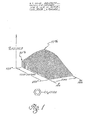
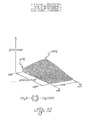
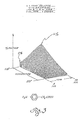
- FIGURES 1-3 are graphical representations of the results of the polymerization reactions.
- polymerization using the free acids as catalysts was relatively slow, being incomplete after 30 minutes even at 285°C; however, complete polymerization may be expected to occur upon employing longer reaction times and/or higher temperatures.
- the acids increase in catalytic activity with an increase in electron-withdrawing nature of the nuclear substituents.
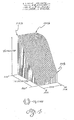
- FIGURES 4-6 compare salts of the same acids. It will be seen that salt-catalyzed polymerization was complete for all samples after 10 minutes at 270°C. At lower temperatures the substitution and counterion effects are seen, with the salt containing the electron-releasing methoxy substituent being essentially inactive at 210°C and the same being true of the sodium salt of the acid containing a highly electron-withdrawing substituent. At 240°C, however, all three salts are substantially active and polymerization is essentially complete within 30 minutes.
- Tables I and II list the approximate weight average molecular weights of the linear polycarbonates obtained according to Example 13.
Landscapes
- Chemical & Material Sciences (AREA)
- Health & Medical Sciences (AREA)
- Chemical Kinetics & Catalysis (AREA)
- Medicinal Chemistry (AREA)
- Polymers & Plastics (AREA)
- Organic Chemistry (AREA)
- Polyesters Or Polycarbonates (AREA)
- Organic Low-Molecular-Weight Compounds And Preparation Thereof (AREA)
Applications Claiming Priority (2)
| Application Number | Priority Date | Filing Date | Title |
|---|---|---|---|
| US44376 | 1987-04-27 | ||
| US07/044,376 US4778875A (en) | 1987-04-27 | 1987-04-27 | Preparation of linear polycarbonates from cyclic oligomer compositions using benzyl carbanion-generating catalyst |
Publications (2)
| Publication Number | Publication Date |
|---|---|
| EP0288788A2 true EP0288788A2 (de) | 1988-11-02 |
| EP0288788A3 EP0288788A3 (de) | 1990-03-21 |
Family
ID=21932051
Family Applications (1)
| Application Number | Title | Priority Date | Filing Date |
|---|---|---|---|
| EP88105455A Pending EP0288788A3 (de) | 1987-04-27 | 1988-04-06 | Verfahren zur Herstellung von linearen Polycarbonaten aus cyclischen Oligomeren unter Verwendung eines Carbanion bildenden Katalysators |
Country Status (3)
| Country | Link |
|---|---|
| US (1) | US4778875A (de) |
| EP (1) | EP0288788A3 (de) |
| JP (1) | JPS63314236A (de) |
Families Citing this family (4)
| Publication number | Priority date | Publication date | Assignee | Title |
|---|---|---|---|---|
| US5087692A (en) * | 1989-11-06 | 1992-02-11 | General Electric Company | Preparation of linear polycarbonates from cyclic oligomer compositions with salicylic acid salt as catalyst |
| US5102984A (en) * | 1991-06-21 | 1992-04-07 | General Electric Company | Preparation of linear polycarbonates from cyclic oligomer compositions using ultrasonic cavitation |
| US5514322A (en) * | 1992-11-20 | 1996-05-07 | Toyota Jidosha Kabushiki Kaisha | Rim method of molding thermoplastic resin |
| JP5369296B2 (ja) * | 2008-11-26 | 2013-12-18 | 三菱瓦斯化学株式会社 | 芳香族ポリカーボネート樹脂組成物、及び成形品 |
Family Cites Families (3)
| Publication number | Priority date | Publication date | Assignee | Title |
|---|---|---|---|---|
| US4644053A (en) * | 1984-05-11 | 1987-02-17 | General Electric Company | Cyclic polycarbonate oligomers and methods for their preparation and use |
| US4605731A (en) * | 1985-04-16 | 1986-08-12 | General Electric Company | Method for preparing linear polycarbonate from cyclic oligomer with aryl carbanion generating catalyst |
| US4650852A (en) * | 1985-07-18 | 1987-03-17 | General Electric Company | Method for controlling polymerization rate of cyclic polycarbonate oligomers with pretreated catalyst |
-
1987
- 1987-04-27 US US07/044,376 patent/US4778875A/en not_active Expired - Fee Related
-
1988
- 1988-04-06 EP EP88105455A patent/EP0288788A3/de active Pending
- 1988-04-27 JP JP63102826A patent/JPS63314236A/ja active Pending
Also Published As
| Publication number | Publication date |
|---|---|
| US4778875A (en) | 1988-10-18 |
| JPS63314236A (ja) | 1988-12-22 |
| EP0288788A3 (de) | 1990-03-21 |
Similar Documents
| Publication | Publication Date | Title |
|---|---|---|
| US4737573A (en) | Method for polymerizing aromatic bischloroformate composition to polycarbonate | |
| US4696998A (en) | Cyclic heterocarbonates and methods for their preparation and use | |
| US4816548A (en) | Cyclic polycarbonate oligomers: inhibition and control of polymerization to linear polycarbonates | |
| EP0280067B1 (de) | Verfahren zur Herstellung von Polycarbonat/Polyepoxid-Massen | |
| US4831001A (en) | Cyclic polycarbonate oligomers: inhibition and control of polymerization to linear polycarbonates | |
| AU4295485A (en) | Cyclic polycarbonate oligomers and method for their preparation and use | |
| EP0254994A1 (de) | Polyetherimid-Bishaloformiat-Zusammensetzungen | |
| EP0289826A2 (de) | Verfahren zur Herstellung von Polycarbonaten mit kontrolliertem Molekulargewicht | |
| US4699974A (en) | Method of preparing copolyester carbonate from cyclic aromatic polycarbonate oligomer and lactone | |
| US4736016A (en) | Cyclic polycarbonate oligomers from spirobiindane bisphenols | |
| US4755588A (en) | Composition and method for controlling polymerization rate of cyclic polycarbonate oligomer with encapsulated catalyst | |
| US4701519A (en) | Method for polymerizing cyclic polycarbonate oligomers with catalyst comprising polymer containing alkali metal phenoxide moieties | |
| US5464930A (en) | Article for use in optical application formed from linear polycarbonate resins | |
| EP0288788A2 (de) | Verfahren zur Herstellung von linearen Polycarbonaten aus cyclischen Oligomeren unter Verwendung eines Carbanion bildenden Katalysators | |
| US4746726A (en) | Cycle polycarbonate oligomers: inhibition and control of polymerization to linear polycarbonate with Lewis acid | |
| US4839462A (en) | Cyclic polycarbonate oligomers: inhibition of polymerization to linear polycarbonates | |
| EP0249809B1 (de) | Copolyamidcarbonate und Verfahren zur Herstellung aus zyklischen, aromatischen Polycarbonatoligomeren | |
| US4921975A (en) | Cyclic monocarbonate bishaloformates | |
| US4767877A (en) | Nitrogen-containing bisphenol compositions | |
| US4775741A (en) | Preparation of resin composition from cyclic polycarbonate oligomers from spirobiindane bisphenol | |
| US4722994A (en) | Method of preparing cyclic oligomeric polycarbonates |
Legal Events
| Date | Code | Title | Description |
|---|---|---|---|
| PUAI | Public reference made under article 153(3) epc to a published international application that has entered the european phase |
Free format text: ORIGINAL CODE: 0009012 |
|
| AK | Designated contracting states |
Kind code of ref document: A2 Designated state(s): DE FR GB IT NL |
|
| PUAL | Search report despatched |
Free format text: ORIGINAL CODE: 0009013 |
|
| AK | Designated contracting states |
Kind code of ref document: A3 Designated state(s): DE FR GB IT NL |
|
| 17P | Request for examination filed |
Effective date: 19900817 |
|
| STAA | Information on the status of an ep patent application or granted ep patent |
Free format text: STATUS: EXAMINATION IS IN PROGRESS |
|
| 17Q | First examination report despatched |
Effective date: 19920807 |