EP0289850A2 - Pyrrolophenylalkanolamine und ihre Derivate, Verfahren zu ihrer Herstellung und ihre Verwendung als Leistungsförderer - Google Patents
Pyrrolophenylalkanolamine und ihre Derivate, Verfahren zu ihrer Herstellung und ihre Verwendung als Leistungsförderer Download PDFInfo
- Publication number
- EP0289850A2 EP0289850A2 EP88106190A EP88106190A EP0289850A2 EP 0289850 A2 EP0289850 A2 EP 0289850A2 EP 88106190 A EP88106190 A EP 88106190A EP 88106190 A EP88106190 A EP 88106190A EP 0289850 A2 EP0289850 A2 EP 0289850A2
- Authority
- EP
- European Patent Office
- Prior art keywords
- formula
- compounds
- alkyl
- halogen
- hydrogen
- Prior art date
- Legal status (The legal status is an assumption and is not a legal conclusion. Google has not performed a legal analysis and makes no representation as to the accuracy of the status listed.)
- Withdrawn
Links
- 238000000034 method Methods 0.000 title claims abstract description 174
- 230000008569 process Effects 0.000 title claims abstract description 155
- 150000001412 amines Chemical class 0.000 title claims description 25
- 238000002360 preparation method Methods 0.000 title claims description 24
- 150000001875 compounds Chemical class 0.000 claims abstract description 292
- 241001465754 Metazoa Species 0.000 claims abstract description 29
- 238000004519 manufacturing process Methods 0.000 claims abstract description 4
- -1 cyano, Formyl Chemical group 0.000 claims description 75
- 229910052736 halogen Inorganic materials 0.000 claims description 71
- 150000002367 halogens Chemical class 0.000 claims description 69
- 238000006243 chemical reaction Methods 0.000 claims description 66
- UFHFLCQGNIYNRP-UHFFFAOYSA-N Hydrogen Chemical compound [H][H] UFHFLCQGNIYNRP-UHFFFAOYSA-N 0.000 claims description 65
- 229910052739 hydrogen Inorganic materials 0.000 claims description 64
- 239000001257 hydrogen Substances 0.000 claims description 64
- 125000000217 alkyl group Chemical group 0.000 claims description 53
- 239000003085 diluting agent Substances 0.000 claims description 53
- 150000002431 hydrogen Chemical class 0.000 claims description 37
- UUEVFMOUBSLVJW-UHFFFAOYSA-N oxo-[[1-[2-[2-[2-[4-(oxoazaniumylmethylidene)pyridin-1-yl]ethoxy]ethoxy]ethyl]pyridin-4-ylidene]methyl]azanium;dibromide Chemical compound [Br-].[Br-].C1=CC(=C[NH+]=O)C=CN1CCOCCOCCN1C=CC(=C[NH+]=O)C=C1 UUEVFMOUBSLVJW-UHFFFAOYSA-N 0.000 claims description 24
- 125000003545 alkoxy group Chemical group 0.000 claims description 23
- 125000004414 alkyl thio group Chemical group 0.000 claims description 21
- 239000003795 chemical substances by application Substances 0.000 claims description 19
- 125000003917 carbamoyl group Chemical group [H]N([H])C(*)=O 0.000 claims description 16
- WKBOTKDWSSQWDR-UHFFFAOYSA-N Bromine atom Chemical compound [Br] WKBOTKDWSSQWDR-UHFFFAOYSA-N 0.000 claims description 15
- 125000001931 aliphatic group Chemical group 0.000 claims description 15
- 125000004453 alkoxycarbonyl group Chemical group 0.000 claims description 14
- 125000003118 aryl group Chemical group 0.000 claims description 14
- 125000004966 cyanoalkyl group Chemical group 0.000 claims description 14
- 125000004183 alkoxy alkyl group Chemical group 0.000 claims description 13
- 125000001188 haloalkyl group Chemical group 0.000 claims description 13
- 125000002768 hydroxyalkyl group Chemical group 0.000 claims description 13
- GDTBXPJZTBHREO-UHFFFAOYSA-N bromine Substances BrBr GDTBXPJZTBHREO-UHFFFAOYSA-N 0.000 claims description 12
- 229910052794 bromium Inorganic materials 0.000 claims description 12
- 125000004093 cyano group Chemical group *C#N 0.000 claims description 12
- 125000004473 dialkylaminocarbonyl group Chemical group 0.000 claims description 12
- 125000004438 haloalkoxy group Chemical group 0.000 claims description 12
- 150000001299 aldehydes Chemical class 0.000 claims description 10
- 125000004995 haloalkylthio group Chemical group 0.000 claims description 10
- 125000004356 hydroxy functional group Chemical group O* 0.000 claims description 10
- YGYAWVDWMABLBF-UHFFFAOYSA-N Phosgene Chemical compound ClC(Cl)=O YGYAWVDWMABLBF-UHFFFAOYSA-N 0.000 claims description 9
- 125000002252 acyl group Chemical group 0.000 claims description 9
- 230000001603 reducing effect Effects 0.000 claims description 9
- 230000002829 reductive effect Effects 0.000 claims description 9
- 125000004665 trialkylsilyl group Chemical group 0.000 claims description 9
- ZAMOUSCENKQFHK-UHFFFAOYSA-N Chlorine atom Chemical compound [Cl] ZAMOUSCENKQFHK-UHFFFAOYSA-N 0.000 claims description 8
- 125000004457 alkyl amino carbonyl group Chemical group 0.000 claims description 8
- 125000000623 heterocyclic group Chemical group 0.000 claims description 8
- 125000004432 carbon atom Chemical group C* 0.000 claims description 7
- 239000000460 chlorine Substances 0.000 claims description 7
- 229910052801 chlorine Inorganic materials 0.000 claims description 7
- 239000003651 drinking water Substances 0.000 claims description 7
- 235000020188 drinking water Nutrition 0.000 claims description 7
- 150000002576 ketones Chemical class 0.000 claims description 7
- 125000004448 alkyl carbonyl group Chemical group 0.000 claims description 6
- 125000006350 alkyl thio alkyl group Chemical group 0.000 claims description 6
- 125000000753 cycloalkyl group Chemical group 0.000 claims description 6
- 125000000449 nitro group Chemical group [O-][N+](*)=O 0.000 claims description 5
- 230000001737 promoting effect Effects 0.000 claims description 5
- 125000000547 substituted alkyl group Chemical group 0.000 claims description 4
- XEEYBQQBJWHFJM-UHFFFAOYSA-N Iron Chemical compound [Fe] XEEYBQQBJWHFJM-UHFFFAOYSA-N 0.000 claims description 3
- 229910003849 O-Si Inorganic materials 0.000 claims description 3
- 229910003872 O—Si Inorganic materials 0.000 claims description 3
- 125000004104 aryloxy group Chemical group 0.000 claims description 3
- 150000002366 halogen compounds Chemical class 0.000 claims description 3
- 230000003578 releasing effect Effects 0.000 claims description 3
- 125000002915 carbonyl group Chemical group [*:2]C([*:1])=O 0.000 claims description 2
- MLUCVPSAIODCQM-NSCUHMNNSA-N crotonaldehyde Chemical compound C\C=C\C=O MLUCVPSAIODCQM-NSCUHMNNSA-N 0.000 claims description 2
- MLUCVPSAIODCQM-UHFFFAOYSA-N crotonaldehyde Natural products CC=CC=O MLUCVPSAIODCQM-UHFFFAOYSA-N 0.000 claims description 2
- 239000000654 additive Substances 0.000 claims 2
- 239000004606 Fillers/Extenders Substances 0.000 claims 1
- 150000003839 salts Chemical class 0.000 abstract description 7
- 235000013372 meat Nutrition 0.000 abstract description 6
- 230000000694 effects Effects 0.000 abstract description 3
- 230000009471 action Effects 0.000 abstract description 2
- 239000000543 intermediate Substances 0.000 abstract 1
- YXFVVABEGXRONW-UHFFFAOYSA-N Toluene Chemical compound CC1=CC=CC=C1 YXFVVABEGXRONW-UHFFFAOYSA-N 0.000 description 69
- YMWUJEATGCHHMB-UHFFFAOYSA-N Dichloromethane Chemical compound ClCCl YMWUJEATGCHHMB-UHFFFAOYSA-N 0.000 description 66
- RTZKZFJDLAIYFH-UHFFFAOYSA-N Diethyl ether Chemical compound CCOCC RTZKZFJDLAIYFH-UHFFFAOYSA-N 0.000 description 64
- OKKJLVBELUTLKV-UHFFFAOYSA-N Methanol Chemical compound OC OKKJLVBELUTLKV-UHFFFAOYSA-N 0.000 description 57
- VLKZOEOYAKHREP-UHFFFAOYSA-N n-Hexane Chemical compound CCCCCC VLKZOEOYAKHREP-UHFFFAOYSA-N 0.000 description 57
- UHOVQNZJYSORNB-UHFFFAOYSA-N Benzene Chemical compound C1=CC=CC=C1 UHOVQNZJYSORNB-UHFFFAOYSA-N 0.000 description 51
- WYURNTSHIVDZCO-UHFFFAOYSA-N Tetrahydrofuran Chemical compound C1CCOC1 WYURNTSHIVDZCO-UHFFFAOYSA-N 0.000 description 46
- LFQSCWFLJHTTHZ-UHFFFAOYSA-N Ethanol Chemical compound CCO LFQSCWFLJHTTHZ-UHFFFAOYSA-N 0.000 description 44
- WEVYAHXRMPXWCK-UHFFFAOYSA-N Acetonitrile Chemical compound CC#N WEVYAHXRMPXWCK-UHFFFAOYSA-N 0.000 description 39
- OFBQJSOFQDEBGM-UHFFFAOYSA-N Pentane Chemical compound CCCCC OFBQJSOFQDEBGM-UHFFFAOYSA-N 0.000 description 34
- HEDRZPFGACZZDS-UHFFFAOYSA-N Chloroform Chemical compound ClC(Cl)Cl HEDRZPFGACZZDS-UHFFFAOYSA-N 0.000 description 32
- QTBSBXVTEAMEQO-UHFFFAOYSA-N Acetic acid Chemical compound CC(O)=O QTBSBXVTEAMEQO-UHFFFAOYSA-N 0.000 description 30
- XEKOWRVHYACXOJ-UHFFFAOYSA-N Ethyl acetate Chemical compound CCOC(C)=O XEKOWRVHYACXOJ-UHFFFAOYSA-N 0.000 description 30
- 239000004480 active ingredient Substances 0.000 description 28
- JFDZBHWFFUWGJE-UHFFFAOYSA-N benzonitrile Chemical compound N#CC1=CC=CC=C1 JFDZBHWFFUWGJE-UHFFFAOYSA-N 0.000 description 27
- 239000000203 mixture Substances 0.000 description 27
- IAZDPXIOMUYVGZ-UHFFFAOYSA-N Dimethylsulphoxide Chemical compound CS(C)=O IAZDPXIOMUYVGZ-UHFFFAOYSA-N 0.000 description 26
- ZMXDDKWLCZADIW-UHFFFAOYSA-N N,N-Dimethylformamide Chemical compound CN(C)C=O ZMXDDKWLCZADIW-UHFFFAOYSA-N 0.000 description 23
- IMNFDUFMRHMDMM-UHFFFAOYSA-N N-Heptane Chemical compound CCCCCCC IMNFDUFMRHMDMM-UHFFFAOYSA-N 0.000 description 23
- YLQBMQCUIZJEEH-UHFFFAOYSA-N tetrahydrofuran Natural products C=1C=COC=1 YLQBMQCUIZJEEH-UHFFFAOYSA-N 0.000 description 23
- MVPPADPHJFYWMZ-UHFFFAOYSA-N chlorobenzene Chemical compound ClC1=CC=CC=C1 MVPPADPHJFYWMZ-UHFFFAOYSA-N 0.000 description 22
- 150000002170 ethers Chemical class 0.000 description 22
- 229940052303 ethers for general anesthesia Drugs 0.000 description 22
- XLYOFNOQVPJJNP-UHFFFAOYSA-N water Substances O XLYOFNOQVPJJNP-UHFFFAOYSA-N 0.000 description 21
- 239000003960 organic solvent Substances 0.000 description 20
- CSCPPACGZOOCGX-UHFFFAOYSA-N Acetone Chemical compound CC(C)=O CSCPPACGZOOCGX-UHFFFAOYSA-N 0.000 description 19
- 239000002585 base Substances 0.000 description 19
- 229910001868 water Inorganic materials 0.000 description 19
- XDTMQSROBMDMFD-UHFFFAOYSA-N Cyclohexane Chemical compound C1CCCCC1 XDTMQSROBMDMFD-UHFFFAOYSA-N 0.000 description 18
- 150000001298 alcohols Chemical class 0.000 description 18
- 239000002253 acid Substances 0.000 description 17
- 239000003054 catalyst Substances 0.000 description 16
- 229960004132 diethyl ether Drugs 0.000 description 16
- ZMANZCXQSJIPKH-UHFFFAOYSA-N Triethylamine Chemical compound CCN(CC)CC ZMANZCXQSJIPKH-UHFFFAOYSA-N 0.000 description 15
- 125000004178 (C1-C4) alkyl group Chemical group 0.000 description 14
- RYHBNJHYFVUHQT-UHFFFAOYSA-N 1,4-Dioxane Chemical compound C1COCCO1 RYHBNJHYFVUHQT-UHFFFAOYSA-N 0.000 description 14
- 125000002496 methyl group Chemical group [H]C([H])([H])* 0.000 description 14
- 150000003254 radicals Chemical class 0.000 description 14
- HEMHJVSKTPXQMS-UHFFFAOYSA-M Sodium hydroxide Chemical compound [OH-].[Na+] HEMHJVSKTPXQMS-UHFFFAOYSA-M 0.000 description 13
- 239000003638 chemical reducing agent Substances 0.000 description 13
- 150000008282 halocarbons Chemical class 0.000 description 12
- 150000002825 nitriles Chemical class 0.000 description 12
- VZGDMQKNWNREIO-UHFFFAOYSA-N tetrachloromethane Chemical compound ClC(Cl)(Cl)Cl VZGDMQKNWNREIO-UHFFFAOYSA-N 0.000 description 12
- VEXZGXHMUGYJMC-UHFFFAOYSA-N Hydrochloric acid Chemical compound Cl VEXZGXHMUGYJMC-UHFFFAOYSA-N 0.000 description 11
- QAOWNCQODCNURD-UHFFFAOYSA-N Sulfuric acid Chemical compound OS(O)(=O)=O QAOWNCQODCNURD-UHFFFAOYSA-N 0.000 description 11
- RFFLAFLAYFXFSW-UHFFFAOYSA-N 1,2-dichlorobenzene Chemical compound ClC1=CC=CC=C1Cl RFFLAFLAYFXFSW-UHFFFAOYSA-N 0.000 description 10
- WFDIJRYMOXRFFG-UHFFFAOYSA-N Acetic anhydride Chemical compound CC(=O)OC(C)=O WFDIJRYMOXRFFG-UHFFFAOYSA-N 0.000 description 9
- XTHFKEDIFFGKHM-UHFFFAOYSA-N Dimethoxyethane Chemical compound COCCOC XTHFKEDIFFGKHM-UHFFFAOYSA-N 0.000 description 9
- NBIIXXVUZAFLBC-UHFFFAOYSA-N Phosphoric acid Chemical compound OP(O)(O)=O NBIIXXVUZAFLBC-UHFFFAOYSA-N 0.000 description 9
- KWYUFKZDYYNOTN-UHFFFAOYSA-M Potassium hydroxide Chemical compound [OH-].[K+] KWYUFKZDYYNOTN-UHFFFAOYSA-M 0.000 description 9
- 229960000583 acetic acid Drugs 0.000 description 9
- RAXXELZNTBOGNW-UHFFFAOYSA-N imidazole Natural products C1=CNC=N1 RAXXELZNTBOGNW-UHFFFAOYSA-N 0.000 description 9
- 229910052500 inorganic mineral Inorganic materials 0.000 description 9
- 239000011707 mineral Substances 0.000 description 9
- 239000000243 solution Substances 0.000 description 9
- GVJHHUAWPYXKBD-UHFFFAOYSA-N (±)-α-Tocopherol Chemical compound OC1=C(C)C(C)=C2OC(CCCC(C)CCCC(C)CCCC(C)C)(C)CCC2=C1C GVJHHUAWPYXKBD-UHFFFAOYSA-N 0.000 description 8
- WSLDOOZREJYCGB-UHFFFAOYSA-N 1,2-Dichloroethane Chemical compound ClCCCl WSLDOOZREJYCGB-UHFFFAOYSA-N 0.000 description 8
- ZWEHNKRNPOVVGH-UHFFFAOYSA-N 2-Butanone Chemical compound CCC(C)=O ZWEHNKRNPOVVGH-UHFFFAOYSA-N 0.000 description 8
- 0 CC1(/C=C/C(/*(C(*)=O)O)=C/*(*)CC1)N Chemical compound CC1(/C=C/C(/*(C(*)=O)O)=C/*(*)CC1)N 0.000 description 8
- VTYYLEPIZMXCLO-UHFFFAOYSA-L Calcium carbonate Chemical compound [Ca+2].[O-]C([O-])=O VTYYLEPIZMXCLO-UHFFFAOYSA-L 0.000 description 8
- LCGLNKUTAGEVQW-UHFFFAOYSA-N Dimethyl ether Chemical compound COC LCGLNKUTAGEVQW-UHFFFAOYSA-N 0.000 description 8
- DGAQECJNVWCQMB-PUAWFVPOSA-M Ilexoside XXIX Chemical compound C[C@@H]1CC[C@@]2(CC[C@@]3(C(=CC[C@H]4[C@]3(CC[C@@H]5[C@@]4(CC[C@@H](C5(C)C)OS(=O)(=O)[O-])C)C)[C@@H]2[C@]1(C)O)C)C(=O)O[C@H]6[C@@H]([C@H]([C@@H]([C@H](O6)CO)O)O)O.[Na+] DGAQECJNVWCQMB-PUAWFVPOSA-M 0.000 description 8
- FAPWRFPIFSIZLT-UHFFFAOYSA-M Sodium chloride Chemical compound [Na+].[Cl-] FAPWRFPIFSIZLT-UHFFFAOYSA-M 0.000 description 8
- 150000007513 acids Chemical class 0.000 description 8
- 239000003513 alkali Substances 0.000 description 8
- 150000002118 epoxides Chemical class 0.000 description 8
- JOXIMZWYDAKGHI-UHFFFAOYSA-N toluene-4-sulfonic acid Chemical compound CC1=CC=C(S(O)(=O)=O)C=C1 JOXIMZWYDAKGHI-UHFFFAOYSA-N 0.000 description 8
- 125000005913 (C3-C6) cycloalkyl group Chemical group 0.000 description 7
- CIWBSHSKHKDKBQ-JLAZNSOCSA-N Ascorbic acid Natural products OC[C@H](O)[C@H]1OC(=O)C(O)=C1O CIWBSHSKHKDKBQ-JLAZNSOCSA-N 0.000 description 7
- OFOBLEOULBTSOW-UHFFFAOYSA-N Malonic acid Chemical compound OC(=O)CC(O)=O OFOBLEOULBTSOW-UHFFFAOYSA-N 0.000 description 7
- MUBZPKHOEPUJKR-UHFFFAOYSA-N Oxalic acid Chemical compound OC(=O)C(O)=O MUBZPKHOEPUJKR-UHFFFAOYSA-N 0.000 description 7
- 150000001408 amides Chemical class 0.000 description 7
- 150000002148 esters Chemical class 0.000 description 7
- 229910052987 metal hydride Inorganic materials 0.000 description 7
- 150000004681 metal hydrides Chemical class 0.000 description 7
- 125000000229 (C1-C4)alkoxy group Chemical group 0.000 description 6
- OJVAMHKKJGICOG-UHFFFAOYSA-N 2,5-hexanedione Chemical compound CC(=O)CCC(C)=O OJVAMHKKJGICOG-UHFFFAOYSA-N 0.000 description 6
- AFVFQIVMOAPDHO-UHFFFAOYSA-N Methanesulfonic acid Chemical compound CS(O)(=O)=O AFVFQIVMOAPDHO-UHFFFAOYSA-N 0.000 description 6
- 241000700159 Rattus Species 0.000 description 6
- XSQUKJJJFZCRTK-UHFFFAOYSA-N Urea Chemical compound NC(N)=O XSQUKJJJFZCRTK-UHFFFAOYSA-N 0.000 description 6
- 240000008042 Zea mays Species 0.000 description 6
- 150000001338 aliphatic hydrocarbons Chemical class 0.000 description 6
- 150000004945 aromatic hydrocarbons Chemical class 0.000 description 6
- 125000003178 carboxy group Chemical group [H]OC(*)=O 0.000 description 6
- 239000010949 copper Substances 0.000 description 6
- 235000013312 flour Nutrition 0.000 description 6
- 230000012010 growth Effects 0.000 description 6
- 239000003208 petroleum Substances 0.000 description 6
- 239000012071 phase Substances 0.000 description 6
- 239000011734 sodium Substances 0.000 description 6
- 239000002904 solvent Substances 0.000 description 6
- 125000001424 substituent group Chemical group 0.000 description 6
- DURPTKYDGMDSBL-UHFFFAOYSA-N 1-butoxybutane Chemical compound CCCCOCCCC DURPTKYDGMDSBL-UHFFFAOYSA-N 0.000 description 5
- IJVSBMIEGLIRIA-UHFFFAOYSA-N 2-hydroxy-n-propan-2-ylacetamide Chemical compound CC(C)NC(=O)CO IJVSBMIEGLIRIA-UHFFFAOYSA-N 0.000 description 5
- VZCYOOQTPOCHFL-OWOJBTEDSA-N Fumaric acid Chemical compound OC(=O)\C=C\C(O)=O VZCYOOQTPOCHFL-OWOJBTEDSA-N 0.000 description 5
- 229910010082 LiAlH Inorganic materials 0.000 description 5
- 229910001860 alkaline earth metal hydroxide Inorganic materials 0.000 description 5
- 125000004177 diethyl group Chemical group [H]C([H])([H])C([H])([H])* 0.000 description 5
- 125000002485 formyl group Chemical group [H]C(*)=O 0.000 description 5
- 239000003502 gasoline Substances 0.000 description 5
- 235000012054 meals Nutrition 0.000 description 5
- 150000007522 mineralic acids Chemical class 0.000 description 5
- 239000012074 organic phase Substances 0.000 description 5
- KDLHZDBZIXYQEI-UHFFFAOYSA-N palladium Substances [Pd] KDLHZDBZIXYQEI-UHFFFAOYSA-N 0.000 description 5
- 229910052708 sodium Inorganic materials 0.000 description 5
- 239000012279 sodium borohydride Substances 0.000 description 5
- 229910000033 sodium borohydride Inorganic materials 0.000 description 5
- 235000002639 sodium chloride Nutrition 0.000 description 5
- 238000012360 testing method Methods 0.000 description 5
- 229940088594 vitamin Drugs 0.000 description 5
- 229930003231 vitamin Natural products 0.000 description 5
- 235000013343 vitamin Nutrition 0.000 description 5
- 239000011782 vitamin Substances 0.000 description 5
- 125000004916 (C1-C6) alkylcarbonyl group Chemical group 0.000 description 4
- FPIPGXGPPPQFEQ-UHFFFAOYSA-N 13-cis retinol Natural products OCC=C(C)C=CC=C(C)C=CC1=C(C)CCCC1(C)C FPIPGXGPPPQFEQ-UHFFFAOYSA-N 0.000 description 4
- SYBYTAAJFKOIEJ-UHFFFAOYSA-N 3-Methylbutan-2-one Chemical compound CC(C)C(C)=O SYBYTAAJFKOIEJ-UHFFFAOYSA-N 0.000 description 4
- KWOLFJPFCHCOCG-UHFFFAOYSA-N Acetophenone Chemical compound CC(=O)C1=CC=CC=C1 KWOLFJPFCHCOCG-UHFFFAOYSA-N 0.000 description 4
- BDAGIHXWWSANSR-UHFFFAOYSA-N Formic acid Chemical compound OC=O BDAGIHXWWSANSR-UHFFFAOYSA-N 0.000 description 4
- 229910020889 NaBH3 Inorganic materials 0.000 description 4
- PVNIIMVLHYAWGP-UHFFFAOYSA-N Niacin Chemical class OC(=O)C1=CC=CN=C1 PVNIIMVLHYAWGP-UHFFFAOYSA-N 0.000 description 4
- JCXJVPUVTGWSNB-UHFFFAOYSA-N Nitrogen dioxide Chemical class O=[N]=O JCXJVPUVTGWSNB-UHFFFAOYSA-N 0.000 description 4
- XBDQKXXYIPTUBI-UHFFFAOYSA-M Propionate Chemical compound CCC([O-])=O XBDQKXXYIPTUBI-UHFFFAOYSA-M 0.000 description 4
- VYPSYNLAJGMNEJ-UHFFFAOYSA-N Silicium dioxide Chemical compound O=[Si]=O VYPSYNLAJGMNEJ-UHFFFAOYSA-N 0.000 description 4
- FPIPGXGPPPQFEQ-BOOMUCAASA-N Vitamin A Natural products OC/C=C(/C)\C=C\C=C(\C)/C=C/C1=C(C)CCCC1(C)C FPIPGXGPPPQFEQ-BOOMUCAASA-N 0.000 description 4
- 229930003427 Vitamin E Natural products 0.000 description 4
- 235000005824 Zea mays ssp. parviglumis Nutrition 0.000 description 4
- 235000002017 Zea mays subsp mays Nutrition 0.000 description 4
- KXKVLQRXCPHEJC-UHFFFAOYSA-N acetic acid trimethyl ester Natural products COC(C)=O KXKVLQRXCPHEJC-UHFFFAOYSA-N 0.000 description 4
- OKTJSMMVPCPJKN-UHFFFAOYSA-N activated carbon Substances [C] OKTJSMMVPCPJKN-UHFFFAOYSA-N 0.000 description 4
- 229910052784 alkaline earth metal Inorganic materials 0.000 description 4
- FPIPGXGPPPQFEQ-OVSJKPMPSA-N all-trans-retinol Chemical compound OC\C=C(/C)\C=C\C=C(/C)\C=C\C1=C(C)CCCC1(C)C FPIPGXGPPPQFEQ-OVSJKPMPSA-N 0.000 description 4
- 229910000147 aluminium phosphate Inorganic materials 0.000 description 4
- 239000011230 binding agent Substances 0.000 description 4
- 239000003153 chemical reaction reagent Substances 0.000 description 4
- 235000005822 corn Nutrition 0.000 description 4
- 125000001559 cyclopropyl group Chemical group [H]C1([H])C([H])([H])C1([H])* 0.000 description 4
- MTHSVFCYNBDYFN-UHFFFAOYSA-N diethylene glycol Chemical compound OCCOCCO MTHSVFCYNBDYFN-UHFFFAOYSA-N 0.000 description 4
- XBDQKXXYIPTUBI-UHFFFAOYSA-N dimethylselenoniopropionate Natural products CCC(O)=O XBDQKXXYIPTUBI-UHFFFAOYSA-N 0.000 description 4
- WIGCFUFOHFEKBI-UHFFFAOYSA-N gamma-tocopherol Natural products CC(C)CCCC(C)CCCC(C)CCCC1CCC2C(C)C(O)C(C)C(C)C2O1 WIGCFUFOHFEKBI-UHFFFAOYSA-N 0.000 description 4
- 125000005842 heteroatom Chemical group 0.000 description 4
- 150000007529 inorganic bases Chemical class 0.000 description 4
- 150000002527 isonitriles Chemical class 0.000 description 4
- NUJOXMJBOLGQSY-UHFFFAOYSA-N manganese dioxide Chemical compound O=[Mn]=O NUJOXMJBOLGQSY-UHFFFAOYSA-N 0.000 description 4
- 125000000956 methoxy group Chemical group [H]C([H])([H])O* 0.000 description 4
- 125000001570 methylene group Chemical group [H]C([H])([*:1])[*:2] 0.000 description 4
- SGWCSGJBNVWDQO-UHFFFAOYSA-N n-tert-butyl-2-hydroxyacetamide Chemical compound CC(C)(C)NC(=O)CO SGWCSGJBNVWDQO-UHFFFAOYSA-N 0.000 description 4
- XHXFXVLFKHQFAL-UHFFFAOYSA-N phosphoryl trichloride Chemical compound ClP(Cl)(Cl)=O XHXFXVLFKHQFAL-UHFFFAOYSA-N 0.000 description 4
- 239000000047 product Substances 0.000 description 4
- FVSKHRXBFJPNKK-UHFFFAOYSA-N propionitrile Chemical compound CCC#N FVSKHRXBFJPNKK-UHFFFAOYSA-N 0.000 description 4
- 102000004169 proteins and genes Human genes 0.000 description 4
- 108090000623 proteins and genes Proteins 0.000 description 4
- 239000000741 silica gel Substances 0.000 description 4
- 229910002027 silica gel Inorganic materials 0.000 description 4
- 239000011780 sodium chloride Substances 0.000 description 4
- YBRBMKDOPFTVDT-UHFFFAOYSA-N tert-butylamine Chemical compound CC(C)(C)N YBRBMKDOPFTVDT-UHFFFAOYSA-N 0.000 description 4
- 150000003512 tertiary amines Chemical class 0.000 description 4
- FYSNRJHAOHDILO-UHFFFAOYSA-N thionyl chloride Chemical compound ClS(Cl)=O FYSNRJHAOHDILO-UHFFFAOYSA-N 0.000 description 4
- VZCYOOQTPOCHFL-UHFFFAOYSA-N trans-butenedioic acid Natural products OC(=O)C=CC(O)=O VZCYOOQTPOCHFL-UHFFFAOYSA-N 0.000 description 4
- 235000019155 vitamin A Nutrition 0.000 description 4
- 239000011719 vitamin A Substances 0.000 description 4
- 235000019165 vitamin E Nutrition 0.000 description 4
- 229940046009 vitamin E Drugs 0.000 description 4
- 239000011709 vitamin E Substances 0.000 description 4
- 229940045997 vitamin a Drugs 0.000 description 4
- 125000004767 (C1-C4) haloalkoxy group Chemical group 0.000 description 3
- 125000004765 (C1-C4) haloalkyl group Chemical group 0.000 description 3
- BVKZGUZCCUSVTD-UHFFFAOYSA-M Bicarbonate Chemical class OC([O-])=O BVKZGUZCCUSVTD-UHFFFAOYSA-M 0.000 description 3
- PXGOKWXKJXAPGV-UHFFFAOYSA-N Fluorine Chemical compound FF PXGOKWXKJXAPGV-UHFFFAOYSA-N 0.000 description 3
- WSFSSNUMVMOOMR-UHFFFAOYSA-N Formaldehyde Chemical compound O=C WSFSSNUMVMOOMR-UHFFFAOYSA-N 0.000 description 3
- KFZMGEQAYNKOFK-UHFFFAOYSA-N Isopropanol Chemical compound CC(C)O KFZMGEQAYNKOFK-UHFFFAOYSA-N 0.000 description 3
- FXHOOIRPVKKKFG-UHFFFAOYSA-N N,N-Dimethylacetamide Chemical compound CN(C)C(C)=O FXHOOIRPVKKKFG-UHFFFAOYSA-N 0.000 description 3
- SJRJJKPEHAURKC-UHFFFAOYSA-N N-Methylmorpholine Chemical compound CN1CCOCC1 SJRJJKPEHAURKC-UHFFFAOYSA-N 0.000 description 3
- SECXISVLQFMRJM-UHFFFAOYSA-N N-Methylpyrrolidone Chemical compound CN1CCCC1=O SECXISVLQFMRJM-UHFFFAOYSA-N 0.000 description 3
- CDBYLPFSWZWCQE-UHFFFAOYSA-L Sodium Carbonate Chemical compound [Na+].[Na+].[O-]C([O-])=O CDBYLPFSWZWCQE-UHFFFAOYSA-L 0.000 description 3
- 241000209140 Triticum Species 0.000 description 3
- 235000021307 Triticum Nutrition 0.000 description 3
- FZNCGRZWXLXZSZ-CIQUZCHMSA-N Voglibose Chemical compound OCC(CO)N[C@H]1C[C@](O)(CO)[C@@H](O)[C@H](O)[C@H]1O FZNCGRZWXLXZSZ-CIQUZCHMSA-N 0.000 description 3
- 125000002777 acetyl group Chemical group [H]C([H])([H])C(*)=O 0.000 description 3
- 230000002378 acidificating effect Effects 0.000 description 3
- 239000013543 active substance Substances 0.000 description 3
- 235000010323 ascorbic acid Nutrition 0.000 description 3
- 239000011668 ascorbic acid Substances 0.000 description 3
- 229960005070 ascorbic acid Drugs 0.000 description 3
- 125000004429 atom Chemical group 0.000 description 3
- WPYMKLBDIGXBTP-UHFFFAOYSA-N benzoic acid Chemical compound OC(=O)C1=CC=CC=C1 WPYMKLBDIGXBTP-UHFFFAOYSA-N 0.000 description 3
- 229910000019 calcium carbonate Inorganic materials 0.000 description 3
- 239000001506 calcium phosphate Substances 0.000 description 3
- 150000004649 carbonic acid derivatives Chemical class 0.000 description 3
- 235000013339 cereals Nutrition 0.000 description 3
- 239000012141 concentrate Substances 0.000 description 3
- 229910052802 copper Inorganic materials 0.000 description 3
- 125000001495 ethyl group Chemical group [H]C([H])([H])C([H])([H])* 0.000 description 3
- 239000003925 fat Substances 0.000 description 3
- 125000002541 furyl group Chemical group 0.000 description 3
- ZTOMUSMDRMJOTH-UHFFFAOYSA-N glutaronitrile Chemical compound N#CCCCC#N ZTOMUSMDRMJOTH-UHFFFAOYSA-N 0.000 description 3
- GNOIPBMMFNIUFM-UHFFFAOYSA-N hexamethylphosphoric triamide Chemical compound CN(C)P(=O)(N(C)C)N(C)C GNOIPBMMFNIUFM-UHFFFAOYSA-N 0.000 description 3
- 229930195733 hydrocarbon Natural products 0.000 description 3
- 150000002430 hydrocarbons Chemical class 0.000 description 3
- XMBWDFGMSWQBCA-UHFFFAOYSA-N hydrogen iodide Chemical compound I XMBWDFGMSWQBCA-UHFFFAOYSA-N 0.000 description 3
- 239000003701 inert diluent Substances 0.000 description 3
- 125000001449 isopropyl group Chemical group [H]C([H])([H])C([H])(*)C([H])([H])[H] 0.000 description 3
- 239000011572 manganese Substances 0.000 description 3
- 239000000463 material Substances 0.000 description 3
- 238000002844 melting Methods 0.000 description 3
- 230000008018 melting Effects 0.000 description 3
- 229940098779 methanesulfonic acid Drugs 0.000 description 3
- 235000010755 mineral Nutrition 0.000 description 3
- 235000013379 molasses Nutrition 0.000 description 3
- LYGJENNIWJXYER-UHFFFAOYSA-N nitromethane Chemical compound C[N+]([O-])=O LYGJENNIWJXYER-UHFFFAOYSA-N 0.000 description 3
- 239000007800 oxidant agent Substances 0.000 description 3
- ULSIYEODSMZIPX-UHFFFAOYSA-N phenylethanolamine Chemical class NCC(O)C1=CC=CC=C1 ULSIYEODSMZIPX-UHFFFAOYSA-N 0.000 description 3
- BDERNNFJNOPAEC-UHFFFAOYSA-N propan-1-ol Chemical compound CCCO BDERNNFJNOPAEC-UHFFFAOYSA-N 0.000 description 3
- 230000000384 rearing effect Effects 0.000 description 3
- 238000010992 reflux Methods 0.000 description 3
- FVAUCKIRQBBSSJ-UHFFFAOYSA-M sodium iodide Chemical compound [Na+].[I-] FVAUCKIRQBBSSJ-UHFFFAOYSA-M 0.000 description 3
- HXJUTPCZVOIRIF-UHFFFAOYSA-N sulfolane Chemical compound O=S1(=O)CCCC1 HXJUTPCZVOIRIF-UHFFFAOYSA-N 0.000 description 3
- 125000000999 tert-butyl group Chemical group [H]C([H])([H])C(*)(C([H])([H])[H])C([H])([H])[H] 0.000 description 3
- 125000003718 tetrahydrofuranyl group Chemical group 0.000 description 3
- 125000001412 tetrahydropyranyl group Chemical group 0.000 description 3
- 239000011573 trace mineral Substances 0.000 description 3
- 235000013619 trace mineral Nutrition 0.000 description 3
- QYSXJUFSXHHAJI-YRZJJWOYSA-N vitamin D3 Chemical compound C1(/[C@@H]2CC[C@@H]([C@]2(CCC1)C)[C@H](C)CCCC(C)C)=C\C=C1\C[C@@H](O)CCC1=C QYSXJUFSXHHAJI-YRZJJWOYSA-N 0.000 description 3
- 239000011701 zinc Substances 0.000 description 3
- 125000004739 (C1-C6) alkylsulfonyl group Chemical group 0.000 description 2
- 125000006272 (C3-C7) cycloalkyl group Chemical group 0.000 description 2
- DCTOHCCUXLBQMS-UHFFFAOYSA-N 1-undecene Chemical compound CCCCCCCCCC=C DCTOHCCUXLBQMS-UHFFFAOYSA-N 0.000 description 2
- MJZUMMKYWBNKIP-UHFFFAOYSA-N 2-isocyanopropane Chemical compound CC(C)[N+]#[C-] MJZUMMKYWBNKIP-UHFFFAOYSA-N 0.000 description 2
- PFCHFHIRKBAQGU-UHFFFAOYSA-N 3-hexanone Chemical compound CCCC(=O)CC PFCHFHIRKBAQGU-UHFFFAOYSA-N 0.000 description 2
- IKHGUXGNUITLKF-UHFFFAOYSA-N Acetaldehyde Chemical compound CC=O IKHGUXGNUITLKF-UHFFFAOYSA-N 0.000 description 2
- 241000272517 Anseriformes Species 0.000 description 2
- 241000283690 Bos taurus Species 0.000 description 2
- CPELXLSAUQHCOX-UHFFFAOYSA-M Bromide Chemical compound [Br-] CPELXLSAUQHCOX-UHFFFAOYSA-M 0.000 description 2
- OZOADAZPJYXRAY-VKLJSXBSSA-N Cl.NC1C(CC(CC1Cl)[C@@H](C)NCC(=O)C1=CC=CC=C1)Cl Chemical compound Cl.NC1C(CC(CC1Cl)[C@@H](C)NCC(=O)C1=CC=CC=C1)Cl OZOADAZPJYXRAY-VKLJSXBSSA-N 0.000 description 2
- 235000019739 Dicalciumphosphate Nutrition 0.000 description 2
- JGFZNNIVVJXRND-UHFFFAOYSA-N N,N-Diisopropylethylamine (DIPEA) Chemical compound CCN(C(C)C)C(C)C JGFZNNIVVJXRND-UHFFFAOYSA-N 0.000 description 2
- GRYLNZFGIOXLOG-UHFFFAOYSA-N Nitric acid Chemical compound O[N+]([O-])=O GRYLNZFGIOXLOG-UHFFFAOYSA-N 0.000 description 2
- 206010030113 Oedema Diseases 0.000 description 2
- JUJWROOIHBZHMG-UHFFFAOYSA-N Pyridine Chemical compound C1=CC=NC=C1 JUJWROOIHBZHMG-UHFFFAOYSA-N 0.000 description 2
- 239000007868 Raney catalyst Substances 0.000 description 2
- NPXOKRUENSOPAO-UHFFFAOYSA-N Raney nickel Chemical compound [Al].[Ni] NPXOKRUENSOPAO-UHFFFAOYSA-N 0.000 description 2
- 229910000564 Raney nickel Inorganic materials 0.000 description 2
- AUNGANRZJHBGPY-SCRDCRAPSA-N Riboflavin Chemical compound OC[C@@H](O)[C@@H](O)[C@@H](O)CN1C=2C=C(C)C(C)=CC=2N=C2C1=NC(=O)NC2=O AUNGANRZJHBGPY-SCRDCRAPSA-N 0.000 description 2
- KEAYESYHFKHZAL-UHFFFAOYSA-N Sodium Chemical compound [Na] KEAYESYHFKHZAL-UHFFFAOYSA-N 0.000 description 2
- UIIMBOGNXHQVGW-UHFFFAOYSA-M Sodium bicarbonate Chemical compound [Na+].OC([O-])=O UIIMBOGNXHQVGW-UHFFFAOYSA-M 0.000 description 2
- WQDUMFSSJAZKTM-UHFFFAOYSA-N Sodium methoxide Chemical compound [Na+].[O-]C WQDUMFSSJAZKTM-UHFFFAOYSA-N 0.000 description 2
- 235000019764 Soybean Meal Nutrition 0.000 description 2
- XLOMVQKBTHCTTD-UHFFFAOYSA-N Zinc monoxide Chemical compound [Zn]=O XLOMVQKBTHCTTD-UHFFFAOYSA-N 0.000 description 2
- GHVZOJONCUEWAV-UHFFFAOYSA-N [K].CCO Chemical compound [K].CCO GHVZOJONCUEWAV-UHFFFAOYSA-N 0.000 description 2
- 238000005917 acylation reaction Methods 0.000 description 2
- 229910001854 alkali hydroxide Inorganic materials 0.000 description 2
- 150000001340 alkali metals Chemical class 0.000 description 2
- 150000001342 alkaline earth metals Chemical class 0.000 description 2
- 239000003963 antioxidant agent Substances 0.000 description 2
- 235000006708 antioxidants Nutrition 0.000 description 2
- AYJRCSIUFZENHW-UHFFFAOYSA-L barium carbonate Chemical compound [Ba+2].[O-]C([O-])=O AYJRCSIUFZENHW-UHFFFAOYSA-L 0.000 description 2
- SRSXLGNVWSONIS-UHFFFAOYSA-N benzenesulfonic acid Chemical compound OS(=O)(=O)C1=CC=CC=C1 SRSXLGNVWSONIS-UHFFFAOYSA-N 0.000 description 2
- 150000001559 benzoic acids Chemical class 0.000 description 2
- 125000003236 benzoyl group Chemical group [H]C1=C([H])C([H])=C(C([H])=C1[H])C(*)=O 0.000 description 2
- 230000015572 biosynthetic process Effects 0.000 description 2
- 230000037396 body weight Effects 0.000 description 2
- 238000009835 boiling Methods 0.000 description 2
- UORVGPXVDQYIDP-UHFFFAOYSA-N borane Chemical class B UORVGPXVDQYIDP-UHFFFAOYSA-N 0.000 description 2
- 229910000085 borane Inorganic materials 0.000 description 2
- 238000009395 breeding Methods 0.000 description 2
- 230000001488 breeding effect Effects 0.000 description 2
- 239000004202 carbamide Substances 0.000 description 2
- 229910052799 carbon Inorganic materials 0.000 description 2
- 150000008280 chlorinated hydrocarbons Chemical class 0.000 description 2
- STJMRWALKKWQGH-UHFFFAOYSA-N clenbuterol Chemical compound CC(C)(C)NCC(O)C1=CC(Cl)=C(N)C(Cl)=C1 STJMRWALKKWQGH-UHFFFAOYSA-N 0.000 description 2
- 239000012230 colorless oil Substances 0.000 description 2
- 238000001816 cooling Methods 0.000 description 2
- 125000001316 cycloalkyl alkyl group Chemical group 0.000 description 2
- JHIVVAPYMSGYDF-UHFFFAOYSA-N cyclohexanone Chemical compound O=C1CCCCC1 JHIVVAPYMSGYDF-UHFFFAOYSA-N 0.000 description 2
- 125000000596 cyclohexenyl group Chemical group C1(=CCCCC1)* 0.000 description 2
- 125000000113 cyclohexyl group Chemical group [H]C1([H])C([H])([H])C([H])([H])C([H])(*)C([H])([H])C1([H])[H] 0.000 description 2
- 125000001511 cyclopentyl group Chemical group [H]C1([H])C([H])([H])C([H])([H])C([H])(*)C1([H])[H] 0.000 description 2
- NEFBYIFKOOEVPA-UHFFFAOYSA-K dicalcium phosphate Chemical compound [Ca+2].[Ca+2].[O-]P([O-])([O-])=O NEFBYIFKOOEVPA-UHFFFAOYSA-K 0.000 description 2
- 229910000390 dicalcium phosphate Inorganic materials 0.000 description 2
- 229940038472 dicalcium phosphate Drugs 0.000 description 2
- 125000004342 dicyclopropylmethyl group Chemical group [H]C1([H])C([H])([H])C1([H])C([H])(*)C1([H])C([H])([H])C1([H])[H] 0.000 description 2
- 125000000118 dimethyl group Chemical group [H]C([H])([H])* 0.000 description 2
- 239000000975 dye Substances 0.000 description 2
- 239000003995 emulsifying agent Substances 0.000 description 2
- 238000001704 evaporation Methods 0.000 description 2
- 235000019197 fats Nutrition 0.000 description 2
- 230000002349 favourable effect Effects 0.000 description 2
- 229910052731 fluorine Inorganic materials 0.000 description 2
- 239000011737 fluorine Substances 0.000 description 2
- 235000013305 food Nutrition 0.000 description 2
- 239000001530 fumaric acid Substances 0.000 description 2
- 230000002140 halogenating effect Effects 0.000 description 2
- 230000036541 health Effects 0.000 description 2
- IPCSVZSSVZVIGE-UHFFFAOYSA-N hexadecanoic acid Chemical class CCCCCCCCCCCCCCCC(O)=O IPCSVZSSVZVIGE-UHFFFAOYSA-N 0.000 description 2
- IXCSERBJSXMMFS-UHFFFAOYSA-N hydrogen chloride Substances Cl.Cl IXCSERBJSXMMFS-UHFFFAOYSA-N 0.000 description 2
- 229910000041 hydrogen chloride Inorganic materials 0.000 description 2
- 230000001965 increasing effect Effects 0.000 description 2
- JVTAAEKCZFNVCJ-UHFFFAOYSA-N lactic acid Chemical compound CC(O)C(O)=O JVTAAEKCZFNVCJ-UHFFFAOYSA-N 0.000 description 2
- 229920005610 lignin Polymers 0.000 description 2
- VZCYOOQTPOCHFL-UPHRSURJSA-N maleic acid Chemical compound OC(=O)\C=C/C(O)=O VZCYOOQTPOCHFL-UPHRSURJSA-N 0.000 description 2
- 239000011976 maleic acid Substances 0.000 description 2
- VNWKTOKETHGBQD-UHFFFAOYSA-N methane Chemical compound C VNWKTOKETHGBQD-UHFFFAOYSA-N 0.000 description 2
- 125000002816 methylsulfanyl group Chemical group [H]C([H])([H])S[*] 0.000 description 2
- 238000002156 mixing Methods 0.000 description 2
- 229960003512 nicotinic acid Drugs 0.000 description 2
- 239000011664 nicotinic acid Chemical class 0.000 description 2
- 235000001968 nicotinic acid Nutrition 0.000 description 2
- 150000002828 nitro derivatives Chemical class 0.000 description 2
- QJGQUHMNIGDVPM-UHFFFAOYSA-N nitrogen group Chemical group [N] QJGQUHMNIGDVPM-UHFFFAOYSA-N 0.000 description 2
- 239000003921 oil Substances 0.000 description 2
- 235000019198 oils Nutrition 0.000 description 2
- 125000001181 organosilyl group Chemical group [SiH3]* 0.000 description 2
- 235000006408 oxalic acid Nutrition 0.000 description 2
- CTSLXHKWHWQRSH-UHFFFAOYSA-N oxalyl chloride Chemical compound ClC(=O)C(Cl)=O CTSLXHKWHWQRSH-UHFFFAOYSA-N 0.000 description 2
- FDPIMTJIUBPUKL-UHFFFAOYSA-N pentan-3-one Chemical compound CCC(=O)CC FDPIMTJIUBPUKL-UHFFFAOYSA-N 0.000 description 2
- VLTRZXGMWDSKGL-UHFFFAOYSA-N perchloric acid Chemical compound OCl(=O)(=O)=O VLTRZXGMWDSKGL-UHFFFAOYSA-N 0.000 description 2
- 125000003170 phenylsulfonyl group Chemical group C1(=CC=CC=C1)S(=O)(=O)* 0.000 description 2
- XNGIFLGASWRNHJ-UHFFFAOYSA-N phthalic acid Chemical class OC(=O)C1=CC=CC=C1C(O)=O XNGIFLGASWRNHJ-UHFFFAOYSA-N 0.000 description 2
- BWHMMNNQKKPAPP-UHFFFAOYSA-L potassium carbonate Chemical compound [K+].[K+].[O-]C([O-])=O BWHMMNNQKKPAPP-UHFFFAOYSA-L 0.000 description 2
- BDAWXSQJJCIFIK-UHFFFAOYSA-N potassium methoxide Chemical compound [K+].[O-]C BDAWXSQJJCIFIK-UHFFFAOYSA-N 0.000 description 2
- 239000000843 powder Substances 0.000 description 2
- 239000003755 preservative agent Substances 0.000 description 2
- 238000003825 pressing Methods 0.000 description 2
- 235000019260 propionic acid Nutrition 0.000 description 2
- 125000004309 pyranyl group Chemical group O1C(C=CC=C1)* 0.000 description 2
- IUVKMZGDUIUOCP-BTNSXGMBSA-N quinbolone Chemical compound O([C@H]1CC[C@H]2[C@H]3[C@@H]([C@]4(C=CC(=O)C=C4CC3)C)CC[C@@]21C)C1=CCCC1 IUVKMZGDUIUOCP-BTNSXGMBSA-N 0.000 description 2
- 239000011541 reaction mixture Substances 0.000 description 2
- 229910000029 sodium carbonate Inorganic materials 0.000 description 2
- 239000012312 sodium hydride Substances 0.000 description 2
- 229910000104 sodium hydride Inorganic materials 0.000 description 2
- 239000004455 soybean meal Substances 0.000 description 2
- 239000007858 starting material Substances 0.000 description 2
- 239000000126 substance Substances 0.000 description 2
- 150000003871 sulfonates Chemical class 0.000 description 2
- 238000003786 synthesis reaction Methods 0.000 description 2
- 238000012546 transfer Methods 0.000 description 2
- IMNIMPAHZVJRPE-UHFFFAOYSA-N triethylenediamine Chemical compound C1CN2CCN1CC2 IMNIMPAHZVJRPE-UHFFFAOYSA-N 0.000 description 2
- GETQZCLCWQTVFV-UHFFFAOYSA-N trimethylamine Chemical compound CN(C)C GETQZCLCWQTVFV-UHFFFAOYSA-N 0.000 description 2
- OWUGVJBQKGQQKJ-UHFFFAOYSA-M trimethylsulfanium;chloride Chemical compound [Cl-].C[S+](C)C OWUGVJBQKGQQKJ-UHFFFAOYSA-M 0.000 description 2
- 239000008096 xylene Substances 0.000 description 2
- XBWOPGDJMAJJDG-SSDOTTSWSA-N (1r)-1-cyclohexylethanamine Chemical compound C[C@@H](N)C1CCCCC1 XBWOPGDJMAJJDG-SSDOTTSWSA-N 0.000 description 1
- JKQXZKUSFCKOGQ-JLGXGRJMSA-N (3R,3'R)-beta,beta-carotene-3,3'-diol Chemical compound C([C@H](O)CC=1C)C(C)(C)C=1/C=C/C(/C)=C/C=C/C(/C)=C/C=C/C=C(C)C=CC=C(C)C=CC1=C(C)C[C@@H](O)CC1(C)C JKQXZKUSFCKOGQ-JLGXGRJMSA-N 0.000 description 1
- VYIRVAXUEZSDNC-TXDLOWMYSA-N (3R,3'S,5'R)-3,3'-dihydroxy-beta-kappa-caroten-6'-one Chemical compound C([C@H](O)CC=1C)C(C)(C)C=1/C=C/C(/C)=C/C=C/C(/C)=C/C=C/C=C(C)C=CC=C(C)C=CC(=O)[C@]1(C)C[C@@H](O)CC1(C)C VYIRVAXUEZSDNC-TXDLOWMYSA-N 0.000 description 1
- 125000004191 (C1-C6) alkoxy group Chemical group 0.000 description 1
- BJEPYKJPYRNKOW-REOHCLBHSA-N (S)-malic acid Chemical compound OC(=O)[C@@H](O)CC(O)=O BJEPYKJPYRNKOW-REOHCLBHSA-N 0.000 description 1
- IMWCPTKSESEZCL-SPSNFJOYSA-H (e)-but-2-enedioate;iron(3+) Chemical compound [Fe+3].[Fe+3].[O-]C(=O)\C=C\C([O-])=O.[O-]C(=O)\C=C\C([O-])=O.[O-]C(=O)\C=C\C([O-])=O IMWCPTKSESEZCL-SPSNFJOYSA-H 0.000 description 1
- GMUIHGWBQIUCST-RQOWECAXSA-N (z)-2-chlorobut-2-enal Chemical compound C\C=C(/Cl)C=O GMUIHGWBQIUCST-RQOWECAXSA-N 0.000 description 1
- DHKHKXVYLBGOIT-UHFFFAOYSA-N 1,1-Diethoxyethane Chemical compound CCOC(C)OCC DHKHKXVYLBGOIT-UHFFFAOYSA-N 0.000 description 1
- XXJIUZFEUSYLOG-INHVJJQHSA-N 1-(4-amino-3,5-dichlorophenyl)-2-[[(1r)-1-cyclohexylethyl]amino]ethanol Chemical compound N([C@H](C)C1CCCCC1)CC(O)C1=CC(Cl)=C(N)C(Cl)=C1 XXJIUZFEUSYLOG-INHVJJQHSA-N 0.000 description 1
- OQHSIYGLTSELCJ-UHFFFAOYSA-N 1-(4-amino-3-ethyl-5-fluorophenyl)-1-(tert-butylamino)ethanol Chemical compound CCC1=CC(C(C)(O)NC(C)(C)C)=CC(F)=C1N OQHSIYGLTSELCJ-UHFFFAOYSA-N 0.000 description 1
- POYMFKJUYZDXAT-UHFFFAOYSA-N 1-(4-iodophenyl)pyrrolidine Chemical compound C1=CC(I)=CC=C1N1CCCC1 POYMFKJUYZDXAT-UHFFFAOYSA-N 0.000 description 1
- ZFPGARUNNKGOBB-UHFFFAOYSA-N 1-Ethyl-2-pyrrolidinone Chemical compound CCN1CCCC1=O ZFPGARUNNKGOBB-UHFFFAOYSA-N 0.000 description 1
- VABIUNAUYWRHBZ-UHFFFAOYSA-N 1-[chloro(dimethyl)silyl]-3-methylbutan-1-one Chemical compound CC(C)CC(=O)[Si](C)(C)Cl VABIUNAUYWRHBZ-UHFFFAOYSA-N 0.000 description 1
- XBWOPGDJMAJJDG-UHFFFAOYSA-N 1-cyclohexylethanamine Chemical compound CC(N)C1CCCCC1 XBWOPGDJMAJJDG-UHFFFAOYSA-N 0.000 description 1
- RIFKADJTWUGDOV-UHFFFAOYSA-N 1-cyclohexylethanone Chemical compound CC(=O)C1CCCCC1 RIFKADJTWUGDOV-UHFFFAOYSA-N 0.000 description 1
- SSWVVEYZXQCZNK-UHFFFAOYSA-N 1-isocyano-2-methylpropane Chemical compound CC(C)C[N+]#[C-] SSWVVEYZXQCZNK-UHFFFAOYSA-N 0.000 description 1
- IIZPXYDJLKNOIY-JXPKJXOSSA-N 1-palmitoyl-2-arachidonoyl-sn-glycero-3-phosphocholine Chemical compound CCCCCCCCCCCCCCCC(=O)OC[C@H](COP([O-])(=O)OCC[N+](C)(C)C)OC(=O)CCC\C=C/C\C=C/C\C=C/C\C=C/CCCCC IIZPXYDJLKNOIY-JXPKJXOSSA-N 0.000 description 1
- 238000005160 1H NMR spectroscopy Methods 0.000 description 1
- RYVZVGSKSPALGF-UHFFFAOYSA-N 2,5-dimethoxy-2,5-dimethyloxolane Chemical compound COC1(C)CCC(C)(OC)O1 RYVZVGSKSPALGF-UHFFFAOYSA-N 0.000 description 1
- GFISDBXSWQMOND-UHFFFAOYSA-N 2,5-dimethoxyoxolane Chemical compound COC1CCC(OC)O1 GFISDBXSWQMOND-UHFFFAOYSA-N 0.000 description 1
- GZGXWSZGKAWATN-UHFFFAOYSA-N 2-(2,2-diethoxyethyl)oxirane Chemical compound CCOC(OCC)CC1CO1 GZGXWSZGKAWATN-UHFFFAOYSA-N 0.000 description 1
- XHMSRGDEBWJLBE-UHFFFAOYSA-N 2-(oxan-2-yl)ethanamine Chemical compound NCCC1CCCCO1 XHMSRGDEBWJLBE-UHFFFAOYSA-N 0.000 description 1
- XNWFRZJHXBZDAG-UHFFFAOYSA-N 2-METHOXYETHANOL Chemical compound COCCO XNWFRZJHXBZDAG-UHFFFAOYSA-N 0.000 description 1
- LBLYYCQCTBFVLH-UHFFFAOYSA-N 2-Methylbenzenesulfonic acid Chemical class CC1=CC=CC=C1S(O)(=O)=O LBLYYCQCTBFVLH-UHFFFAOYSA-N 0.000 description 1
- NGNBDVOYPDDBFK-UHFFFAOYSA-N 2-[2,4-di(pentan-2-yl)phenoxy]acetyl chloride Chemical compound CCCC(C)C1=CC=C(OCC(Cl)=O)C(C(C)CCC)=C1 NGNBDVOYPDDBFK-UHFFFAOYSA-N 0.000 description 1
- OHCSQVAFUXEUOE-UHFFFAOYSA-N 2-[4-amino-5-(trifluoromethyl)thiophen-2-yl]-1-(cyclobutylamino)ethanol Chemical compound S1C(C(F)(F)F)=C(N)C=C1CC(O)NC1CCC1 OHCSQVAFUXEUOE-UHFFFAOYSA-N 0.000 description 1
- DZGQXGIWPCQCOD-UHFFFAOYSA-N 2-[[2-(4-amino-3-chlorophenyl)cyclohexyl]amino]ethanol Chemical compound C1=C(Cl)C(N)=CC=C1C1C(NCCO)CCCC1 DZGQXGIWPCQCOD-UHFFFAOYSA-N 0.000 description 1
- MGAPESYORZVKQD-UHFFFAOYSA-N 2-cyclobutylethanamine Chemical compound NCCC1CCC1 MGAPESYORZVKQD-UHFFFAOYSA-N 0.000 description 1
- HFACYWDPMNWMIW-UHFFFAOYSA-N 2-cyclohexylethanamine Chemical compound NCCC1CCCCC1 HFACYWDPMNWMIW-UHFFFAOYSA-N 0.000 description 1
- ZOGZOXRETBBBJI-UHFFFAOYSA-N 2-cyclopropylethanamine Chemical compound NCCC1CC1 ZOGZOXRETBBBJI-UHFFFAOYSA-N 0.000 description 1
- 239000001763 2-hydroxyethyl(trimethyl)azanium Substances 0.000 description 1
- WMMGIBWFZLSMHE-UHFFFAOYSA-N 2-isocyanobutane Chemical compound CCC(C)[N+]#[C-] WMMGIBWFZLSMHE-UHFFFAOYSA-N 0.000 description 1
- JJKWHOSQTYYFAE-UHFFFAOYSA-N 2-methoxyacetyl chloride Chemical compound COCC(Cl)=O JJKWHOSQTYYFAE-UHFFFAOYSA-N 0.000 description 1
- BSKHPKMHTQYZBB-UHFFFAOYSA-N 2-methylpyridine Chemical compound CC1=CC=CC=N1 BSKHPKMHTQYZBB-UHFFFAOYSA-N 0.000 description 1
- BMYNFMYTOJXKLE-UHFFFAOYSA-N 3-azaniumyl-2-hydroxypropanoate Chemical compound NCC(O)C(O)=O BMYNFMYTOJXKLE-UHFFFAOYSA-N 0.000 description 1
- FAXDZWQIWUSWJH-UHFFFAOYSA-N 3-methoxypropan-1-amine Chemical compound COCCCN FAXDZWQIWUSWJH-UHFFFAOYSA-N 0.000 description 1
- AEDORKVKMIVLBW-BLDDREHASA-N 3-oxo-3-[[(2r,3s,4s,5r,6r)-3,4,5-trihydroxy-6-[[5-hydroxy-4-(hydroxymethyl)-6-methylpyridin-3-yl]methoxy]oxan-2-yl]methoxy]propanoic acid Chemical compound OCC1=C(O)C(C)=NC=C1CO[C@H]1[C@H](O)[C@@H](O)[C@H](O)[C@@H](COC(=O)CC(O)=O)O1 AEDORKVKMIVLBW-BLDDREHASA-N 0.000 description 1
- OSWFIVFLDKOXQC-UHFFFAOYSA-N 4-(3-methoxyphenyl)aniline Chemical class COC1=CC=CC(C=2C=CC(N)=CC=2)=C1 OSWFIVFLDKOXQC-UHFFFAOYSA-N 0.000 description 1
- CSDQQAQKBAQLLE-UHFFFAOYSA-N 4-(4-chlorophenyl)-4,5,6,7-tetrahydrothieno[3,2-c]pyridine Chemical compound C1=CC(Cl)=CC=C1C1C(C=CS2)=C2CCN1 CSDQQAQKBAQLLE-UHFFFAOYSA-N 0.000 description 1
- 241000251468 Actinopterygii Species 0.000 description 1
- NLXLAEXVIDQMFP-UHFFFAOYSA-N Ammonium chloride Substances [NH4+].[Cl-] NLXLAEXVIDQMFP-UHFFFAOYSA-N 0.000 description 1
- VHUUQVKOLVNVRT-UHFFFAOYSA-N Ammonium hydroxide Chemical compound [NH4+].[OH-] VHUUQVKOLVNVRT-UHFFFAOYSA-N 0.000 description 1
- 241000252073 Anguilliformes Species 0.000 description 1
- 241000271566 Aves Species 0.000 description 1
- 239000005711 Benzoic acid Substances 0.000 description 1
- 241000283698 Bubalus Species 0.000 description 1
- NLZUEZXRPGMBCV-UHFFFAOYSA-N Butylhydroxytoluene Chemical compound CC1=CC(C(C)(C)C)=C(O)C(C(C)(C)C)=C1 NLZUEZXRPGMBCV-UHFFFAOYSA-N 0.000 description 1
- BCZXFFBUYPCTSJ-UHFFFAOYSA-L Calcium propionate Chemical compound [Ca+2].CCC([O-])=O.CCC([O-])=O BCZXFFBUYPCTSJ-UHFFFAOYSA-L 0.000 description 1
- 241000282832 Camelidae Species 0.000 description 1
- 241000283707 Capra Species 0.000 description 1
- VYIRVAXUEZSDNC-LOFNIBRQSA-N Capsanthyn Natural products CC(=C/C=C/C=C(C)/C=C/C=C(C)/C=C/C1=C(C)CC(O)CC1(C)C)C=CC=C(/C)C=CC(=O)C2(C)CC(O)CC2(C)C VYIRVAXUEZSDNC-LOFNIBRQSA-N 0.000 description 1
- 241000700112 Chinchilla Species 0.000 description 1
- 235000019743 Choline chloride Nutrition 0.000 description 1
- 235000008733 Citrus aurantifolia Nutrition 0.000 description 1
- 241000938605 Crocodylia Species 0.000 description 1
- 241000252233 Cyprinus carpio Species 0.000 description 1
- AUNGANRZJHBGPY-UHFFFAOYSA-N D-Lyxoflavin Natural products OCC(O)C(O)C(O)CN1C=2C=C(C)C(C)=CC=2N=C2C1=NC(=O)NC2=O AUNGANRZJHBGPY-UHFFFAOYSA-N 0.000 description 1
- 239000004470 DL Methionine Substances 0.000 description 1
- 241000283014 Dama Species 0.000 description 1
- FEWJPZIEWOKRBE-JCYAYHJZSA-N Dextrotartaric acid Chemical compound OC(=O)[C@H](O)[C@@H](O)C(O)=O FEWJPZIEWOKRBE-JCYAYHJZSA-N 0.000 description 1
- 239000004593 Epoxy Substances 0.000 description 1
- 241000283086 Equidae Species 0.000 description 1
- 239000004258 Ethoxyquin Substances 0.000 description 1
- CFQSIYDPHWZRTM-UHFFFAOYSA-N F[Br]Cl Chemical compound F[Br]Cl CFQSIYDPHWZRTM-UHFFFAOYSA-N 0.000 description 1
- 235000019733 Fish meal Nutrition 0.000 description 1
- 241000287828 Gallus gallus Species 0.000 description 1
- 108010068370 Glutens Proteins 0.000 description 1
- 235000010469 Glycine max Nutrition 0.000 description 1
- 240000005979 Hordeum vulgare Species 0.000 description 1
- 235000007340 Hordeum vulgare Nutrition 0.000 description 1
- 206010061218 Inflammation Diseases 0.000 description 1
- 206010022998 Irritability Diseases 0.000 description 1
- 102000006835 Lamins Human genes 0.000 description 1
- 108010047294 Lamins Proteins 0.000 description 1
- 229910010084 LiAlH4 Inorganic materials 0.000 description 1
- 240000006240 Linum usitatissimum Species 0.000 description 1
- 235000004431 Linum usitatissimum Nutrition 0.000 description 1
- 241000124008 Mammalia Species 0.000 description 1
- 240000003183 Manihot esculenta Species 0.000 description 1
- 235000016735 Manihot esculenta subsp esculenta Nutrition 0.000 description 1
- 240000004658 Medicago sativa Species 0.000 description 1
- 235000010624 Medicago sativa Nutrition 0.000 description 1
- NTIZESTWPVYFNL-UHFFFAOYSA-N Methyl isobutyl ketone Chemical compound CC(C)CC(C)=O NTIZESTWPVYFNL-UHFFFAOYSA-N 0.000 description 1
- UIHCLUNTQKBZGK-UHFFFAOYSA-N Methyl isobutyl ketone Natural products CCC(C)C(C)=O UIHCLUNTQKBZGK-UHFFFAOYSA-N 0.000 description 1
- MVTQIFVKRXBCHS-SMMNFGSLSA-N N-[(3S,6S,12R,15S,16R,19S,22S)-3-benzyl-12-ethyl-4,16-dimethyl-2,5,11,14,18,21,24-heptaoxo-19-phenyl-17-oxa-1,4,10,13,20-pentazatricyclo[20.4.0.06,10]hexacosan-15-yl]-3-hydroxypyridine-2-carboxamide (10R,11R,12E,17E,19E,21S)-21-hydroxy-11,19-dimethyl-10-propan-2-yl-9,26-dioxa-3,15,28-triazatricyclo[23.2.1.03,7]octacosa-1(27),6,12,17,19,25(28)-hexaene-2,8,14,23-tetrone Chemical compound CC(C)[C@H]1OC(=O)C2=CCCN2C(=O)c2coc(CC(=O)C[C@H](O)\C=C(/C)\C=C\CNC(=O)\C=C\[C@H]1C)n2.CC[C@H]1NC(=O)[C@@H](NC(=O)c2ncccc2O)[C@@H](C)OC(=O)[C@@H](NC(=O)[C@@H]2CC(=O)CCN2C(=O)[C@H](Cc2ccccc2)N(C)C(=O)[C@@H]2CCCN2C1=O)c1ccccc1 MVTQIFVKRXBCHS-SMMNFGSLSA-N 0.000 description 1
- HQABUPZFAYXKJW-UHFFFAOYSA-N N-butylamine Natural products CCCCN HQABUPZFAYXKJW-UHFFFAOYSA-N 0.000 description 1
- 241000772415 Neovison vison Species 0.000 description 1
- CTQNGGLPUBDAKN-UHFFFAOYSA-N O-Xylene Chemical compound CC1=CC=CC=C1C CTQNGGLPUBDAKN-UHFFFAOYSA-N 0.000 description 1
- DCEPKRZORBYMBF-UHFFFAOYSA-N O=CC(CC1C(F)(F)F)C=CC1[n]1cccc1 Chemical compound O=CC(CC1C(F)(F)F)C=CC1[n]1cccc1 DCEPKRZORBYMBF-UHFFFAOYSA-N 0.000 description 1
- BPFNPGHSYWBOLF-UHFFFAOYSA-N OCC(C=CC1c2ccccc2)=CC1C(F)(F)F Chemical compound OCC(C=CC1c2ccccc2)=CC1C(F)(F)F BPFNPGHSYWBOLF-UHFFFAOYSA-N 0.000 description 1
- 241000283973 Oryctolagus cuniculus Species 0.000 description 1
- 235000021314 Palmitic acid Nutrition 0.000 description 1
- 241001494479 Pecora Species 0.000 description 1
- 241000286209 Phasianidae Species 0.000 description 1
- 241000282330 Procyon lotor Species 0.000 description 1
- 241000283011 Rangifer Species 0.000 description 1
- 240000004808 Saccharomyces cerevisiae Species 0.000 description 1
- 235000014680 Saccharomyces cerevisiae Nutrition 0.000 description 1
- 240000000111 Saccharum officinarum Species 0.000 description 1
- 235000007201 Saccharum officinarum Nutrition 0.000 description 1
- PMZURENOXWZQFD-UHFFFAOYSA-L Sodium Sulfate Chemical compound [Na+].[Na+].[O-]S([O-])(=O)=O PMZURENOXWZQFD-UHFFFAOYSA-L 0.000 description 1
- UIIMBOGNXHQVGW-DEQYMQKBSA-M Sodium bicarbonate-14C Chemical compound [Na+].O[14C]([O-])=O UIIMBOGNXHQVGW-DEQYMQKBSA-M 0.000 description 1
- 229920002472 Starch Polymers 0.000 description 1
- KDYFGRWQOYBRFD-UHFFFAOYSA-N Succinic acid Natural products OC(=O)CCC(O)=O KDYFGRWQOYBRFD-UHFFFAOYSA-N 0.000 description 1
- 241000282887 Suidae Species 0.000 description 1
- FEWJPZIEWOKRBE-UHFFFAOYSA-N Tartaric acid Natural products [H+].[H+].[O-]C(=O)C(O)C(O)C([O-])=O FEWJPZIEWOKRBE-UHFFFAOYSA-N 0.000 description 1
- 235000011941 Tilia x europaea Nutrition 0.000 description 1
- 244000098338 Triticum aestivum Species 0.000 description 1
- 239000004182 Tylosin Substances 0.000 description 1
- 229930194936 Tylosin Natural products 0.000 description 1
- 239000004188 Virginiamycin Substances 0.000 description 1
- 108010080702 Virginiamycin Proteins 0.000 description 1
- 229930003448 Vitamin K Natural products 0.000 description 1
- JKQXZKUSFCKOGQ-LQFQNGICSA-N Z-zeaxanthin Natural products C([C@H](O)CC=1C)C(C)(C)C=1C=CC(C)=CC=CC(C)=CC=CC=C(C)C=CC=C(C)C=CC1=C(C)C[C@@H](O)CC1(C)C JKQXZKUSFCKOGQ-LQFQNGICSA-N 0.000 description 1
- QOPRSMDTRDMBNK-RNUUUQFGSA-N Zeaxanthin Natural products CC(=C/C=C/C=C(C)/C=C/C=C(C)/C=C/C1=C(C)CCC(O)C1(C)C)C=CC=C(/C)C=CC2=C(C)CC(O)CC2(C)C QOPRSMDTRDMBNK-RNUUUQFGSA-N 0.000 description 1
- 150000008062 acetophenones Chemical class 0.000 description 1
- WETWJCDKMRHUPV-UHFFFAOYSA-N acetyl chloride Chemical compound CC(Cl)=O WETWJCDKMRHUPV-UHFFFAOYSA-N 0.000 description 1
- 239000012346 acetyl chloride Substances 0.000 description 1
- 229910052783 alkali metal Inorganic materials 0.000 description 1
- 229910000272 alkali metal oxide Inorganic materials 0.000 description 1
- 229910000095 alkaline earth hydride Inorganic materials 0.000 description 1
- 150000001350 alkyl halides Chemical class 0.000 description 1
- 125000005103 alkyl silyl group Chemical group 0.000 description 1
- 230000029936 alkylation Effects 0.000 description 1
- 238000005804 alkylation reaction Methods 0.000 description 1
- JKQXZKUSFCKOGQ-LOFNIBRQSA-N all-trans-Zeaxanthin Natural products CC(=C/C=C/C=C(C)/C=C/C=C(C)/C=C/C1=C(C)CC(O)CC1(C)C)C=CC=C(/C)C=CC2=C(C)CC(O)CC2(C)C JKQXZKUSFCKOGQ-LOFNIBRQSA-N 0.000 description 1
- NMPVEAUIHMEAQP-UHFFFAOYSA-N alpha-bromo-acetaldehyde Natural products BrCC=O NMPVEAUIHMEAQP-UHFFFAOYSA-N 0.000 description 1
- BJEPYKJPYRNKOW-UHFFFAOYSA-N alpha-hydroxysuccinic acid Natural products OC(=O)C(O)CC(O)=O BJEPYKJPYRNKOW-UHFFFAOYSA-N 0.000 description 1
- 235000001014 amino acid Nutrition 0.000 description 1
- 150000001413 amino acids Chemical class 0.000 description 1
- 235000011114 ammonium hydroxide Nutrition 0.000 description 1
- 238000003975 animal breeding Methods 0.000 description 1
- 235000019728 animal nutrition Nutrition 0.000 description 1
- 239000003242 anti bacterial agent Substances 0.000 description 1
- 229940124599 anti-inflammatory drug Drugs 0.000 description 1
- 230000003110 anti-inflammatory effect Effects 0.000 description 1
- 229940088710 antibiotic agent Drugs 0.000 description 1
- 239000003435 antirheumatic agent Substances 0.000 description 1
- 239000007864 aqueous solution Substances 0.000 description 1
- 239000012298 atmosphere Substances 0.000 description 1
- 235000004251 balanced diet Nutrition 0.000 description 1
- 235000015278 beef Nutrition 0.000 description 1
- 230000008901 benefit Effects 0.000 description 1
- 229940092714 benzenesulfonic acid Drugs 0.000 description 1
- 235000010233 benzoic acid Nutrition 0.000 description 1
- PASDCCFISLVPSO-UHFFFAOYSA-N benzoyl chloride Chemical compound ClC(=O)C1=CC=CC=C1 PASDCCFISLVPSO-UHFFFAOYSA-N 0.000 description 1
- OHJMTUPIZMNBFR-UHFFFAOYSA-N biuret Chemical compound NC(=O)NC(N)=O OHJMTUPIZMNBFR-UHFFFAOYSA-N 0.000 description 1
- 239000002374 bone meal Substances 0.000 description 1
- 229940036811 bone meal Drugs 0.000 description 1
- KDYFGRWQOYBRFD-NUQCWPJISA-N butanedioic acid Chemical compound O[14C](=O)CC[14C](O)=O KDYFGRWQOYBRFD-NUQCWPJISA-N 0.000 description 1
- 150000003940 butylamines Chemical group 0.000 description 1
- 239000006227 byproduct Substances 0.000 description 1
- FAPWYRCQGJNNSJ-UBKPKTQASA-L calcium D-pantothenic acid Chemical compound [Ca+2].OCC(C)(C)[C@@H](O)C(=O)NCCC([O-])=O.OCC(C)(C)[C@@H](O)C(=O)NCCC([O-])=O FAPWYRCQGJNNSJ-UBKPKTQASA-L 0.000 description 1
- 229960002079 calcium pantothenate Drugs 0.000 description 1
- 229910000389 calcium phosphate Inorganic materials 0.000 description 1
- 239000004330 calcium propionate Substances 0.000 description 1
- 235000010331 calcium propionate Nutrition 0.000 description 1
- CJZGTCYPCWQAJB-UHFFFAOYSA-L calcium stearate Chemical compound [Ca+2].CCCCCCCCCCCCCCCCCC([O-])=O.CCCCCCCCCCCCCCCCCC([O-])=O CJZGTCYPCWQAJB-UHFFFAOYSA-L 0.000 description 1
- 235000013539 calcium stearate Nutrition 0.000 description 1
- 239000008116 calcium stearate Substances 0.000 description 1
- WRANYHFEXGNSND-LOFNIBRQSA-N capsanthin Natural products CC(=C/C=C/C=C(C)/C=C/C=C(C)/C=C/C1=C(C)CC(O)CC1(C)C)C=CC=C(/C)C=CC(=O)C2(C)CCC(O)C2(C)C WRANYHFEXGNSND-LOFNIBRQSA-N 0.000 description 1
- 235000018889 capsanthin Nutrition 0.000 description 1
- 239000002775 capsule Substances 0.000 description 1
- BVKZGUZCCUSVTD-UHFFFAOYSA-N carbonic acid Chemical compound OC(O)=O BVKZGUZCCUSVTD-UHFFFAOYSA-N 0.000 description 1
- 150000001732 carboxylic acid derivatives Chemical class 0.000 description 1
- 235000021466 carotenoid Nutrition 0.000 description 1
- 150000001747 carotenoids Chemical class 0.000 description 1
- 239000000679 carrageenan Substances 0.000 description 1
- 229920001525 carrageenan Polymers 0.000 description 1
- 235000010418 carrageenan Nutrition 0.000 description 1
- 229940113118 carrageenan Drugs 0.000 description 1
- 239000000969 carrier Substances 0.000 description 1
- 229920003086 cellulose ether Polymers 0.000 description 1
- 150000001805 chlorine compounds Chemical class 0.000 description 1
- QEQHDFWGDMROFZ-UHFFFAOYSA-N chloro-dimethyl-(3-methylbutan-2-yl)silane Chemical compound CC(C)C(C)[Si](C)(C)Cl QEQHDFWGDMROFZ-UHFFFAOYSA-N 0.000 description 1
- SGMZJAMFUVOLNK-UHFFFAOYSA-M choline chloride Chemical compound [Cl-].C[N+](C)(C)CCO SGMZJAMFUVOLNK-UHFFFAOYSA-M 0.000 description 1
- 229960003178 choline chloride Drugs 0.000 description 1
- 238000011097 chromatography purification Methods 0.000 description 1
- 238000003776 cleavage reaction Methods 0.000 description 1
- 239000003245 coal Substances 0.000 description 1
- GVPFVAHMJGGAJG-UHFFFAOYSA-L cobalt dichloride Chemical compound [Cl-].[Cl-].[Co+2] GVPFVAHMJGGAJG-UHFFFAOYSA-L 0.000 description 1
- FDJOLVPMNUYSCM-UVKKECPRSA-L cobalt(3+);[(2r,3s,4r,5s)-5-(5,6-dimethylbenzimidazol-1-yl)-4-hydroxy-2-(hydroxymethyl)oxolan-3-yl] [(2r)-1-[3-[(2r,3r,4z,7s,9z,12s,13s,14z,17s,18s,19r)-2,13,18-tris(2-amino-2-oxoethyl)-7,12,17-tris(3-amino-3-oxopropyl)-3,5,8,8,13,15,18,19-octamethyl-2,7, Chemical compound [Co+3].N#[C-].C1([C@H](CC(N)=O)[C@@]2(C)CCC(=O)NC[C@@H](C)OP([O-])(=O)O[C@H]3[C@H]([C@H](O[C@@H]3CO)N3C4=CC(C)=C(C)C=C4N=C3)O)[N-]\C2=C(C)/C([C@H](C\2(C)C)CCC(N)=O)=N/C/2=C\C([C@H]([C@@]/2(CC(N)=O)C)CCC(N)=O)=N\C\2=C(C)/C2=N[C@]1(C)[C@@](C)(CC(N)=O)[C@@H]2CCC(N)=O FDJOLVPMNUYSCM-UVKKECPRSA-L 0.000 description 1
- 239000003086 colorant Substances 0.000 description 1
- 238000004040 coloring Methods 0.000 description 1
- 229910000365 copper sulfate Inorganic materials 0.000 description 1
- ARUVKPQLZAKDPS-UHFFFAOYSA-L copper(II) sulfate Chemical compound [Cu+2].[O-][S+2]([O-])([O-])[O-] ARUVKPQLZAKDPS-UHFFFAOYSA-L 0.000 description 1
- QTMDXZNDVAMKGV-UHFFFAOYSA-L copper(ii) bromide Chemical compound [Cu+2].[Br-].[Br-] QTMDXZNDVAMKGV-UHFFFAOYSA-L 0.000 description 1
- 235000013365 dairy product Nutrition 0.000 description 1
- 239000012973 diazabicyclooctane Substances 0.000 description 1
- 229940079593 drug Drugs 0.000 description 1
- 239000000839 emulsion Substances 0.000 description 1
- 150000002168 ethanoic acid esters Chemical class 0.000 description 1
- BEFDCLMNVWHSGT-UHFFFAOYSA-N ethenylcyclopentane Chemical compound C=CC1CCCC1 BEFDCLMNVWHSGT-UHFFFAOYSA-N 0.000 description 1
- DECIPOUIJURFOJ-UHFFFAOYSA-N ethoxyquin Chemical compound N1C(C)(C)C=C(C)C2=CC(OCC)=CC=C21 DECIPOUIJURFOJ-UHFFFAOYSA-N 0.000 description 1
- 235000019285 ethoxyquin Nutrition 0.000 description 1
- 229940093500 ethoxyquin Drugs 0.000 description 1
- OAYLNYINCPYISS-UHFFFAOYSA-N ethyl acetate;hexane Chemical compound CCCCCC.CCOC(C)=O OAYLNYINCPYISS-UHFFFAOYSA-N 0.000 description 1
- 230000008020 evaporation Effects 0.000 description 1
- 235000013332 fish product Nutrition 0.000 description 1
- 239000004467 fishmeal Substances 0.000 description 1
- 235000004426 flaxseed Nutrition 0.000 description 1
- 235000019253 formic acid Nutrition 0.000 description 1
- 238000001640 fractional crystallisation Methods 0.000 description 1
- 238000010575 fractional recrystallization Methods 0.000 description 1
- 239000007789 gas Substances 0.000 description 1
- 239000012362 glacial acetic acid Substances 0.000 description 1
- 235000021312 gluten Nutrition 0.000 description 1
- 229960004275 glycolic acid Drugs 0.000 description 1
- 239000008187 granular material Substances 0.000 description 1
- 229940093915 gynecological organic acid Drugs 0.000 description 1
- 125000005843 halogen group Chemical group 0.000 description 1
- 239000012433 hydrogen halide Substances 0.000 description 1
- 229910000039 hydrogen halide Inorganic materials 0.000 description 1
- 229940071870 hydroiodic acid Drugs 0.000 description 1
- 150000004679 hydroxides Chemical class 0.000 description 1
- 239000007943 implant Substances 0.000 description 1
- 230000004054 inflammatory process Effects 0.000 description 1
- 239000004615 ingredient Substances 0.000 description 1
- 238000002347 injection Methods 0.000 description 1
- 239000007924 injection Substances 0.000 description 1
- 238000007918 intramuscular administration Methods 0.000 description 1
- 238000001990 intravenous administration Methods 0.000 description 1
- 229910052740 iodine Inorganic materials 0.000 description 1
- 230000001788 irregular Effects 0.000 description 1
- BPCWCZCOOFUXGQ-UHFFFAOYSA-N isocyanoethane Chemical compound CC[N+]#[C-] BPCWCZCOOFUXGQ-UHFFFAOYSA-N 0.000 description 1
- ZRKSVHFXTRFQFL-UHFFFAOYSA-N isocyanomethane Chemical compound C[N+]#[C-] ZRKSVHFXTRFQFL-UHFFFAOYSA-N 0.000 description 1
- 238000002955 isolation Methods 0.000 description 1
- JJWLVOIRVHMVIS-UHFFFAOYSA-N isopropylamine Chemical compound CC(C)N JJWLVOIRVHMVIS-UHFFFAOYSA-N 0.000 description 1
- 239000004310 lactic acid Substances 0.000 description 1
- 235000014655 lactic acid Nutrition 0.000 description 1
- 210000005053 lamin Anatomy 0.000 description 1
- 239000000787 lecithin Substances 0.000 description 1
- 235000010445 lecithin Nutrition 0.000 description 1
- 229940067606 lecithin Drugs 0.000 description 1
- 239000004571 lime Substances 0.000 description 1
- 239000012280 lithium aluminium hydride Substances 0.000 description 1
- 244000144972 livestock Species 0.000 description 1
- 239000000395 magnesium oxide Substances 0.000 description 1
- CPLXHLVBOLITMK-UHFFFAOYSA-N magnesium oxide Inorganic materials [Mg]=O CPLXHLVBOLITMK-UHFFFAOYSA-N 0.000 description 1
- 235000012245 magnesium oxide Nutrition 0.000 description 1
- AXZKOIWUVFPNLO-UHFFFAOYSA-N magnesium;oxygen(2-) Chemical compound [O-2].[Mg+2] AXZKOIWUVFPNLO-UHFFFAOYSA-N 0.000 description 1
- 239000001630 malic acid Substances 0.000 description 1
- 235000011090 malic acid Nutrition 0.000 description 1
- UKVIEHSSVKSQBA-UHFFFAOYSA-N methane;palladium Chemical compound C.[Pd] UKVIEHSSVKSQBA-UHFFFAOYSA-N 0.000 description 1
- WSFSSNUMVMOOMR-NJFSPNSNSA-N methanone Chemical compound O=[14CH2] WSFSSNUMVMOOMR-NJFSPNSNSA-N 0.000 description 1
- FFEARJCKVFRZRR-UHFFFAOYSA-N methionine Chemical compound CSCCC(N)C(O)=O FFEARJCKVFRZRR-UHFFFAOYSA-N 0.000 description 1
- 229930182817 methionine Natural products 0.000 description 1
- 235000006109 methionine Nutrition 0.000 description 1
- 235000013336 milk Nutrition 0.000 description 1
- 239000008267 milk Substances 0.000 description 1
- 210000004080 milk Anatomy 0.000 description 1
- 239000002808 molecular sieve Substances 0.000 description 1
- WQEPLUUGTLDZJY-UHFFFAOYSA-N n-Pentadecanoic acid Chemical class CCCCCCCCCCCCCCC(O)=O WQEPLUUGTLDZJY-UHFFFAOYSA-N 0.000 description 1
- FSBLVBBRXSCOKU-UHFFFAOYSA-N n-butyl isocyanide Chemical compound CCCC[N+]#[C-] FSBLVBBRXSCOKU-UHFFFAOYSA-N 0.000 description 1
- FFDKYFGBIQQMSR-UHFFFAOYSA-N n-propyl isocyanide Chemical compound CCC[N+]#[C-] FFDKYFGBIQQMSR-UHFFFAOYSA-N 0.000 description 1
- PSZYNBSKGUBXEH-UHFFFAOYSA-N naphthalene-1-sulfonic acid Chemical class C1=CC=C2C(S(=O)(=O)O)=CC=CC2=C1 PSZYNBSKGUBXEH-UHFFFAOYSA-N 0.000 description 1
- 229910017604 nitric acid Inorganic materials 0.000 description 1
- 229940074355 nitric acid Drugs 0.000 description 1
- 210000000056 organ Anatomy 0.000 description 1
- 150000007524 organic acids Chemical class 0.000 description 1
- 235000005985 organic acids Nutrition 0.000 description 1
- 150000007530 organic bases Chemical class 0.000 description 1
- 229940116315 oxalic acid Drugs 0.000 description 1
- 230000001590 oxidative effect Effects 0.000 description 1
- 229910052760 oxygen Inorganic materials 0.000 description 1
- WLJNZVDCPSBLRP-UHFFFAOYSA-N pamoic acid Chemical class C1=CC=C2C(CC=3C4=CC=CC=C4C=C(C=3O)C(=O)O)=C(O)C(C(O)=O)=CC2=C1 WLJNZVDCPSBLRP-UHFFFAOYSA-N 0.000 description 1
- 239000001688 paprika extract Substances 0.000 description 1
- 235000012658 paprika extract Nutrition 0.000 description 1
- 239000006072 paste Substances 0.000 description 1
- 125000001997 phenyl group Chemical group [H]C1=C([H])C([H])=C(*)C([H])=C1[H] 0.000 description 1
- UHZYTMXLRWXGPK-UHFFFAOYSA-N phosphorus pentachloride Chemical compound ClP(Cl)(Cl)(Cl)Cl UHZYTMXLRWXGPK-UHFFFAOYSA-N 0.000 description 1
- SHUZOJHMOBOZST-UHFFFAOYSA-N phylloquinone Natural products CC(C)CCCCC(C)CCC(C)CCCC(=CCC1=C(C)C(=O)c2ccccc2C1=O)C SHUZOJHMOBOZST-UHFFFAOYSA-N 0.000 description 1
- 229910000027 potassium carbonate Inorganic materials 0.000 description 1
- LPNYRYFBWFDTMA-UHFFFAOYSA-N potassium tert-butoxide Chemical compound [K+].CC(C)(C)[O-] LPNYRYFBWFDTMA-UHFFFAOYSA-N 0.000 description 1
- XUWVIABDWDTJRZ-UHFFFAOYSA-N propan-2-ylazanide Chemical compound CC(C)[NH-] XUWVIABDWDTJRZ-UHFFFAOYSA-N 0.000 description 1
- WYVAMUWZEOHJOQ-UHFFFAOYSA-N propionic anhydride Chemical compound CCC(=O)OC(=O)CC WYVAMUWZEOHJOQ-UHFFFAOYSA-N 0.000 description 1
- 125000001436 propyl group Chemical group [H]C([*])([H])C([H])([H])C([H])([H])[H] 0.000 description 1
- 230000001681 protective effect Effects 0.000 description 1
- 235000018102 proteins Nutrition 0.000 description 1
- UMJSCPRVCHMLSP-UHFFFAOYSA-N pyridine Natural products COC1=CC=CN=C1 UMJSCPRVCHMLSP-UHFFFAOYSA-N 0.000 description 1
- 150000003233 pyrroles Chemical class 0.000 description 1
- 239000012429 reaction media Substances 0.000 description 1
- 239000002151 riboflavin Substances 0.000 description 1
- 235000019192 riboflavin Nutrition 0.000 description 1
- 229960002477 riboflavin Drugs 0.000 description 1
- 230000007017 scission Effects 0.000 description 1
- 229940065287 selenium compound Drugs 0.000 description 1
- 150000003343 selenium compounds Chemical class 0.000 description 1
- 238000000926 separation method Methods 0.000 description 1
- 239000004460 silage Substances 0.000 description 1
- URGAHOPLAPQHLN-UHFFFAOYSA-N sodium aluminosilicate Chemical compound [Na+].[Al+3].[O-][Si]([O-])=O.[O-][Si]([O-])=O URGAHOPLAPQHLN-UHFFFAOYSA-N 0.000 description 1
- 235000017557 sodium bicarbonate Nutrition 0.000 description 1
- 229910000030 sodium bicarbonate Inorganic materials 0.000 description 1
- QDRKDTQENPPHOJ-UHFFFAOYSA-N sodium ethoxide Chemical compound [Na+].CC[O-] QDRKDTQENPPHOJ-UHFFFAOYSA-N 0.000 description 1
- 235000009518 sodium iodide Nutrition 0.000 description 1
- RYYKJJJTJZKILX-UHFFFAOYSA-M sodium octadecanoate Chemical compound [Na+].CCCCCCCCCCCCCCCCCC([O-])=O RYYKJJJTJZKILX-UHFFFAOYSA-M 0.000 description 1
- 229910052938 sodium sulfate Inorganic materials 0.000 description 1
- 235000011152 sodium sulphate Nutrition 0.000 description 1
- 239000004334 sorbic acid Substances 0.000 description 1
- 235000010199 sorbic acid Nutrition 0.000 description 1
- 229940075582 sorbic acid Drugs 0.000 description 1
- 235000012424 soybean oil Nutrition 0.000 description 1
- 239000003549 soybean oil Substances 0.000 description 1
- 235000019698 starch Nutrition 0.000 description 1
- 239000008107 starch Substances 0.000 description 1
- 238000007920 subcutaneous administration Methods 0.000 description 1
- 235000000346 sugar Nutrition 0.000 description 1
- 229910052717 sulfur Inorganic materials 0.000 description 1
- 239000001117 sulphuric acid Substances 0.000 description 1
- 239000000725 suspension Substances 0.000 description 1
- 239000003826 tablet Substances 0.000 description 1
- 239000003760 tallow Substances 0.000 description 1
- 239000011975 tartaric acid Substances 0.000 description 1
- 235000002906 tartaric acid Nutrition 0.000 description 1
- FAGLEPBREOXSAC-UHFFFAOYSA-N tert-butyl isocyanide Chemical compound CC(C)(C)[N+]#[C-] FAGLEPBREOXSAC-UHFFFAOYSA-N 0.000 description 1
- BCNZYOJHNLTNEZ-UHFFFAOYSA-N tert-butyldimethylsilyl chloride Chemical compound CC(C)(C)[Si](C)(C)Cl BCNZYOJHNLTNEZ-UHFFFAOYSA-N 0.000 description 1
- 230000001988 toxicity Effects 0.000 description 1
- 231100000419 toxicity Toxicity 0.000 description 1
- KBPHJBAIARWVSC-XQIHNALSSA-N trans-lutein Natural products CC(=C/C=C/C=C(C)/C=C/C=C(C)/C=C/C1=C(C)CC(O)CC1(C)C)C=CC=C(/C)C=CC2C(=CC(O)CC2(C)C)C KBPHJBAIARWVSC-XQIHNALSSA-N 0.000 description 1
- 238000011282 treatment Methods 0.000 description 1
- 150000003852 triazoles Chemical class 0.000 description 1
- QORWJWZARLRLPR-UHFFFAOYSA-H tricalcium bis(phosphate) Chemical compound [Ca+2].[Ca+2].[Ca+2].[O-]P([O-])([O-])=O.[O-]P([O-])([O-])=O QORWJWZARLRLPR-UHFFFAOYSA-H 0.000 description 1
- 125000004953 trihalomethyl group Chemical group 0.000 description 1
- VFJYIHQDILEQNR-UHFFFAOYSA-M trimethylsulfanium;iodide Chemical compound [I-].C[S+](C)C VFJYIHQDILEQNR-UHFFFAOYSA-M 0.000 description 1
- WBPYTXDJUQJLPQ-VMXQISHHSA-N tylosin Chemical compound O([C@@H]1[C@@H](C)O[C@H]([C@@H]([C@H]1N(C)C)O)O[C@@H]1[C@@H](C)[C@H](O)CC(=O)O[C@@H]([C@H](/C=C(\C)/C=C/C(=O)[C@H](C)C[C@@H]1CC=O)CO[C@H]1[C@@H]([C@H](OC)[C@H](O)[C@@H](C)O1)OC)CC)[C@H]1C[C@@](C)(O)[C@@H](O)[C@H](C)O1 WBPYTXDJUQJLPQ-VMXQISHHSA-N 0.000 description 1
- 229960004059 tylosin Drugs 0.000 description 1
- 235000019375 tylosin Nutrition 0.000 description 1
- 235000012141 vanillin Nutrition 0.000 description 1
- MWOOGOJBHIARFG-UHFFFAOYSA-N vanillin Chemical compound COC1=CC(C=O)=CC=C1O MWOOGOJBHIARFG-UHFFFAOYSA-N 0.000 description 1
- FGQOOHJZONJGDT-UHFFFAOYSA-N vanillin Natural products COC1=CC(O)=CC(C=O)=C1 FGQOOHJZONJGDT-UHFFFAOYSA-N 0.000 description 1
- 235000015112 vegetable and seed oil Nutrition 0.000 description 1
- 239000008158 vegetable oil Substances 0.000 description 1
- 235000013311 vegetables Nutrition 0.000 description 1
- 229960003842 virginiamycin Drugs 0.000 description 1
- 235000019373 virginiamycin Nutrition 0.000 description 1
- 239000011647 vitamin D3 Substances 0.000 description 1
- 235000019168 vitamin K Nutrition 0.000 description 1
- 239000011712 vitamin K Substances 0.000 description 1
- 150000003721 vitamin K derivatives Chemical class 0.000 description 1
- 150000003722 vitamin derivatives Chemical class 0.000 description 1
- 229940046010 vitamin k Drugs 0.000 description 1
- 230000004584 weight gain Effects 0.000 description 1
- 235000019786 weight gain Nutrition 0.000 description 1
- 210000002268 wool Anatomy 0.000 description 1
- 238000010626 work up procedure Methods 0.000 description 1
- 150000003738 xylenes Chemical class 0.000 description 1
- 235000010930 zeaxanthin Nutrition 0.000 description 1
- 239000001775 zeaxanthin Substances 0.000 description 1
- 229940043269 zeaxanthin Drugs 0.000 description 1
- 239000011787 zinc oxide Substances 0.000 description 1
- UHVMMEOXYDMDKI-JKYCWFKZSA-L zinc;1-(5-cyanopyridin-2-yl)-3-[(1s,2s)-2-(6-fluoro-2-hydroxy-3-propanoylphenyl)cyclopropyl]urea;diacetate Chemical compound [Zn+2].CC([O-])=O.CC([O-])=O.CCC(=O)C1=CC=C(F)C([C@H]2[C@H](C2)NC(=O)NC=2N=CC(=CC=2)C#N)=C1O UHVMMEOXYDMDKI-JKYCWFKZSA-L 0.000 description 1
Classifications
-
- C—CHEMISTRY; METALLURGY
- C07—ORGANIC CHEMISTRY
- C07D—HETEROCYCLIC COMPOUNDS
- C07D207/00—Heterocyclic compounds containing five-membered rings not condensed with other rings, with one nitrogen atom as the only ring hetero atom
- C07D207/02—Heterocyclic compounds containing five-membered rings not condensed with other rings, with one nitrogen atom as the only ring hetero atom with only hydrogen or carbon atoms directly attached to the ring nitrogen atom
- C07D207/30—Heterocyclic compounds containing five-membered rings not condensed with other rings, with one nitrogen atom as the only ring hetero atom with only hydrogen or carbon atoms directly attached to the ring nitrogen atom having two double bonds between ring members or between ring members and non-ring members
- C07D207/32—Heterocyclic compounds containing five-membered rings not condensed with other rings, with one nitrogen atom as the only ring hetero atom with only hydrogen or carbon atoms directly attached to the ring nitrogen atom having two double bonds between ring members or between ring members and non-ring members with only hydrogen atoms, hydrocarbon or substituted hydrocarbon radicals, directly attached to ring carbon atoms
- C07D207/325—Heterocyclic compounds containing five-membered rings not condensed with other rings, with one nitrogen atom as the only ring hetero atom with only hydrogen or carbon atoms directly attached to the ring nitrogen atom having two double bonds between ring members or between ring members and non-ring members with only hydrogen atoms, hydrocarbon or substituted hydrocarbon radicals, directly attached to ring carbon atoms with substituted hydrocarbon radicals directly attached to the ring nitrogen atom
-
- A—HUMAN NECESSITIES
- A61—MEDICAL OR VETERINARY SCIENCE; HYGIENE
- A61P—SPECIFIC THERAPEUTIC ACTIVITY OF CHEMICAL COMPOUNDS OR MEDICINAL PREPARATIONS
- A61P15/00—Drugs for genital or sexual disorders; Contraceptives
-
- C—CHEMISTRY; METALLURGY
- C07—ORGANIC CHEMISTRY
- C07D—HETEROCYCLIC COMPOUNDS
- C07D207/00—Heterocyclic compounds containing five-membered rings not condensed with other rings, with one nitrogen atom as the only ring hetero atom
- C07D207/02—Heterocyclic compounds containing five-membered rings not condensed with other rings, with one nitrogen atom as the only ring hetero atom with only hydrogen or carbon atoms directly attached to the ring nitrogen atom
- C07D207/30—Heterocyclic compounds containing five-membered rings not condensed with other rings, with one nitrogen atom as the only ring hetero atom with only hydrogen or carbon atoms directly attached to the ring nitrogen atom having two double bonds between ring members or between ring members and non-ring members
- C07D207/32—Heterocyclic compounds containing five-membered rings not condensed with other rings, with one nitrogen atom as the only ring hetero atom with only hydrogen or carbon atoms directly attached to the ring nitrogen atom having two double bonds between ring members or between ring members and non-ring members with only hydrogen atoms, hydrocarbon or substituted hydrocarbon radicals, directly attached to ring carbon atoms
- C07D207/33—Heterocyclic compounds containing five-membered rings not condensed with other rings, with one nitrogen atom as the only ring hetero atom with only hydrogen or carbon atoms directly attached to the ring nitrogen atom having two double bonds between ring members or between ring members and non-ring members with only hydrogen atoms, hydrocarbon or substituted hydrocarbon radicals, directly attached to ring carbon atoms with substituted hydrocarbon radicals, directly attached to ring carbon atoms
-
- C—CHEMISTRY; METALLURGY
- C07—ORGANIC CHEMISTRY
- C07D—HETEROCYCLIC COMPOUNDS
- C07D207/00—Heterocyclic compounds containing five-membered rings not condensed with other rings, with one nitrogen atom as the only ring hetero atom
- C07D207/02—Heterocyclic compounds containing five-membered rings not condensed with other rings, with one nitrogen atom as the only ring hetero atom with only hydrogen or carbon atoms directly attached to the ring nitrogen atom
- C07D207/30—Heterocyclic compounds containing five-membered rings not condensed with other rings, with one nitrogen atom as the only ring hetero atom with only hydrogen or carbon atoms directly attached to the ring nitrogen atom having two double bonds between ring members or between ring members and non-ring members
- C07D207/34—Heterocyclic compounds containing five-membered rings not condensed with other rings, with one nitrogen atom as the only ring hetero atom with only hydrogen or carbon atoms directly attached to the ring nitrogen atom having two double bonds between ring members or between ring members and non-ring members with hetero atoms or with carbon atoms having three bonds to hetero atoms with at the most one bond to halogen, e.g. ester or nitrile radicals, directly attached to ring carbon atoms
-
- C—CHEMISTRY; METALLURGY
- C07—ORGANIC CHEMISTRY
- C07D—HETEROCYCLIC COMPOUNDS
- C07D401/00—Heterocyclic compounds containing two or more hetero rings, having nitrogen atoms as the only ring hetero atoms, at least one ring being a six-membered ring with only one nitrogen atom
- C07D401/02—Heterocyclic compounds containing two or more hetero rings, having nitrogen atoms as the only ring hetero atoms, at least one ring being a six-membered ring with only one nitrogen atom containing two hetero rings
- C07D401/12—Heterocyclic compounds containing two or more hetero rings, having nitrogen atoms as the only ring hetero atoms, at least one ring being a six-membered ring with only one nitrogen atom containing two hetero rings linked by a chain containing hetero atoms as chain links
-
- C—CHEMISTRY; METALLURGY
- C07—ORGANIC CHEMISTRY
- C07D—HETEROCYCLIC COMPOUNDS
- C07D413/00—Heterocyclic compounds containing two or more hetero rings, at least one ring having nitrogen and oxygen atoms as the only ring hetero atoms
- C07D413/02—Heterocyclic compounds containing two or more hetero rings, at least one ring having nitrogen and oxygen atoms as the only ring hetero atoms containing two hetero rings
- C07D413/10—Heterocyclic compounds containing two or more hetero rings, at least one ring having nitrogen and oxygen atoms as the only ring hetero atoms containing two hetero rings linked by a carbon chain containing aromatic rings
Definitions
- the present invention relates to new pyrrolophenylalkanolamines, their derivatives, processes for their preparation and their use as performance promoters in animals.
- the compounds of the formula I and their physiologically tolerable salts have an activity-promoting effect in animals, in particular an action for shifting the meat / fat ratio in favor of meat.
- the invention relates to the use of the compounds of the formula I in animal breeding and animal nutrition.
- radicals R 6 which may be mentioned are t-butyl, i-propyl, C 1-4 alkoxy-C 2-4 alkyl, C 1-4 alkylthio C 2-4 alkyl, C 3-6 cycloalkyl C 2-4 alkyl, C 2-4 haloalkyl, tetrahydropyranyl C 2-4 alkyl, tetrahydrofuryl C 2-4 alkyl, furyl C 2 -4 alkyl, pyranylC 2-4 alkyl.
- salts of the compounds of the formula I with hydrochloric acid, sulfuric acid, phosphoric acid, oxalic acid, maleic acid, fumaric acid, malonic acid are preferred.
- the compounds of the formula I can be prepared by processes 2a) to p) given above.
- process a) can be reproduced by the following reaction scheme :
- the compounds of the formula III are known or can be prepared analogously to known processes (cf. Houben-Weyl Methods in Organic Chemistry Volume 7 / 2b pp. 1876 ff; Volume 6/3 pp. 707 ff; Volume 7/1 pp. 255 ff ). Like the compounds of the formula III, their monoacetals, diacetals or cyclic acetals of the formulas Illa, b, c can also be used.
- the reaction is carried out analogously to the conditions known for the Knorr-Paal synthesis (Synthesis 1976 p. 295; The Chemistry of Pyrroles, p. 77 ff).
- hydrocarbons such as toluene
- acids such as glacial acetic acid
- nitriles such as acetonitrile
- esters such as ethyl acetate.
- acidic catalysts The following may be mentioned as such: acetic acid, p-toluenesulfonic acid, hydrochloric acid, methanesulfonic acid.
- the preparation is carried out by pouring the reaction mixture onto water, making it alkaline, extracting with solvents such as ethyl acetate, ether, methylene chloride, evaporating the organic phase, chromatographing or redissolving or distilling off.
- solvents such as ethyl acetate, ether, methylene chloride
- reaction of compounds of the formula II with epoxybutanes of the formula V in process 2c) can be carried out in the case of 2- (4-amino-5-cyanophenyl) -N-1-ethyltetrahydrofurylamino-propanol (2) and 3,4-epoxybutyraldehyde diethylacetal reproduced the following formula:
- the process is carried out in a manner known per se.
- the epoxybutanes of the formula V are known or can be prepared analogously to known processes.
- reaction scheme In the case of 4-amino-3-fluoro-5-ethyl-phenyl-t-butylaminoethanol and 2-chlorocrotonaldehyde, the reaction of compounds of the formula II with halocrotonaldehyde in process 2d) can be represented by the following reaction scheme: The process is carried out in a manner known per se.
- the halogen crotonaldehydes of the formula VI are known or can be prepared analogously to known processes.
- process 2e) can be represented by the following formula:
- the compounds of formula VII are new. They are produced using the method described below (4).
- R ', R 2 , R 4 , R 5 , R 6 in formula VII preferably have the preferred and particularly preferred meanings given for the compounds of the formula I.
- the following compounds of the formula VII may be mentioned individually:
- the reaction is carried out at temperatures from -20 ° C to + 100 ° C, preferably between 0 and 50 ° C.
- inert organic solvents are used as diluents. These include in particular aliphatic and aromatic hydrocarbons such as pentane, hexane, cyclohexane, petroleum ether, ligroin, benzene, toluene; chlorinated hydrocarbons such as methylene chloride, ethylene chloride, chloroform; Ethers such as diethyl ether and glycol dimethyl ether; Nitriles such as acetonitrile, propionitrile and benzonitrile; Alcohols such as methanol, ethanol, n- and i-propanol. Alcohols are preferred.
- aliphatic and aromatic hydrocarbons such as pentane, hexane, cyclohexane, petroleum ether, ligroin, benzene, toluene
- chlorinated hydrocarbons such as methylene chloride, ethylene chloride, chloroform
- Ethers such as diethyl ether and
- Epoxies of formula VII are new. They are produced according to the method described in (6). Epoxides of the formula VIII are preferably used in which R 1 , R 2 and R 4 have the preferred and particularly preferred meanings given for the compounds of the formula I.
- amines of the formula IX are, for example tert-butylamine, isopropylamine, 2-methoxymethylethylamine, 2-tetrahydropyranylethylamine, 2-cyclohexylethylamine, 2-cyclobutylethylamine, 2-cyclopropylethylamine.
- inert organic solvents are used as diluents. These include in particular aliphatic and aromatic, optionally halogenated hydrocarbons, such as pentane, hexane, heptane, cyclohexane, petroleum ether, gasoline, ligroin, benzene, toluene, methylene chloride, ethylene chloride, chloroform, carbon tetrachloride, chlorobenzene and o-dichlorobenzene, and also ethers such as diethyl and Dibutyl ether, glycol dimethyl ether and diglycol dimethyl ether, tetrahydrofuran and dioxane, also nitriles such as acetonitrile and benzonitrile, amides such as dimethylformamide, alcohols such as methanol, ethanol, n- and i-propanol.
- ethers such as diethyl and Dibutyl ether, glycol dimethyl
- Alcohols are preferred.
- process 2g) uses 3-chloro-4- (2-ethoxycarbonylpyrrole) chloroacetophenone as the 2-halogen ketone of the formula X and 1-cyclohexylethylamine as the amine of the formula IX
- process 2g) can be represented by the following formula:
- the 2-halogen ketones of formula X are new. They are produced according to the process described in (8).
- Compounds of the formula X are preferably used in which R ', R 2 have the preferred and particularly preferred meanings given for the compounds of the formula I and halogen is chlorine or bromine.
- Process 2g) is carried out by reacting approximately equimolar amounts of the 2-haloketone of the formula X and the amine of the formula IX in a diluent. In general, an excess of amine (1-3 molar, preferably 1-1.5 molar) based on the 2-haloketone of the formula X is used.
- the reaction is carried out at temperatures from 20 to 150 ° C., preferably 50 to 120 ° C.
- process 2h) uses 3- (1-hydroxy-2-chloroethyl) methoxyphenylpyridine as the beta-halomethyl compound of the formula XI and t-butylamine as the amine of the formula IX
- process 2h) can be represented by the following formula: Beta-halomethyl compounds of the formula XI are new. They are produced according to the method described in (10). Compounds of the formula IX in which R 1 , R 2 , R 4 have the preferred meanings given for the compounds of the formula I and Hal for chlorine or bromine are preferred stands.
- Process 2h is carried out by reacting the beta-halomethyl compound of the formula XI with excess amine of the formula IX, if appropriate in the presence of a diluent.
- the reaction is carried out at temperatures from +20 to + 150 ° C.
- inert organic solvents are used as diluents. These include in particular aliphatic and aromatic, optionally halogenated hydrocarbons, such as pentane, hexane, cyclohexane, benzene, toluene, methylene chloride, chloroform, furthermore ethers such as diethyl ether, tetrahydrofuran and dioxane, furthermore nitriles such as acetonitrile and benzonitrile, furthermore amides such as dimethylformamide, furthermore alcohols such as Methanol, ethanol, n- and i-propanoi.
- Alcohols are preferably used.
- process 2i) uses 3-fluoro-4-pyrrolo- (1-hydroxy-2-aminoethyl) phenyl as the compound of the formula XII and acetophenone as the compound of the formula XIII
- process 2i) can be represented by the following formula:
- Compounds of formula XII are new. They are produced according to the process described in (12).
- Compounds of the formula XII are preferably used in which R ', R 2 , R 3 , R 4 have the preferred and particularly preferred meanings given for the compounds of the formula I.
- the following compounds of the formula XIII may be mentioned individually: acetone, methyl ethyl ketone, methyl isopropyl ketone, diethyl ketone, ethyl propyl ketone, methyl cyclohexyl ketone, cyclohexanone.
- the reaction is carried out at temperatures from 0 ° C to 150 ° C.
- inert organic solvents are used as diluents. These include aliphatic and aromatic, optionally halogenated hydrocarbons such as pentane, hexane, cyclohexane, benzene, toluene, methylene chloride, ethylene chloride, chloroform, chlorobenzene, furthermore ethers such as diethyl ether, tetrahydrofuran, dioxane, furthermore nitriles such as acetonitrile, benzonitrile, amides such as dimethylformamide, alcohols such as Methanol, ethanol.
- aliphatic and aromatic optionally halogenated hydrocarbons
- halogenated hydrocarbons such as pentane, hexane, cyclohexane, benzene, toluene, methylene chloride, ethylene chloride, chloroform, chlorobenzene, furthermore ethers such as diethyl ether, te
- H 2 / catalyst Pt0 2 may be mentioned as the catalyst; complex metal hydrides such as LiAlH 4 , NaBH 4 , NaBH 3 CN; Raney nickel.
- process 2j) can be represented by the following formula.
- the compounds of formula XIV are new. They are produced according to the process described in (14).
- Process 2j is carried out by adding approximately the equivalent amount of the amine of the formula IX to the compound of the formula XIV in a diluent and then reducing it.
- the reaction is carried out at temperatures from 0 ° C to 100 ° C.
- inert organic solvents are used as diluents. These include in particular aliphatic and aromatic, optionally halogenated hydrocarbons, such as pentane, hexane, heptane, cyclohexane, petroleum ether, gasoline, ligroin, benzene, toluene, methylene chloride, ethylene chloride, chloroform, carbon tetrachloride, chlorobenzene and o-dichlorobenzene, and also ethers such as diethyl and Dibutyl ether, glycol dimethyl ether and di glycol dimethyl ether, tetrahydrofuran and dioxane, also esters such as methyl acetate and ethyl acetate, and also nitriles, such as Acetonitrile and propionitrile, benzonitrile, glutaronitrile, and also amides, such as e.g.
- H 2 / catalyst are used as reducing agents (PtO 2 and Pd-carbon may be mentioned as catalysts), furthermore complex metal hydrides such as LiAlH 4 and NaBH 4 .
- process 2k) is used as the compound of the formula XV (5-chloro-4-pyrrolophenyl) -hydroxyacetic acid isopropylamide
- process 2k) can be repeated using the following reaction scheme ben:
- Compounds of formula XV are new. They are produced according to the process described in (16).
- Compounds of the formula XV are preferably used in which R ', R 2 , R 5 , R 6 have the preferred and particularly preferred meanings given for the compounds of the formula I.
- Process 2k is carried out by reacting the compound of the formula XV in a diluent with excess reducing agent.
- the reaction is carried out at temperatures from 0 ° C to + 150 ° C.
- inert organic solvents are used as diluents. These include in particular aliphatic and aromatic, optionally halogenated hydrocarbons, such as pentane, hexane, heptane, cyclohexane, petroleum ether, gasoline, ligroin, benzene, toluene, methylene chloride, ethylene chloride, chloroform, carbon tetrachloride, chlorobenzene and o-dichlorobenzene, and also ethers such as diethyl and Dibutyl ether, glycol dimethyl ether and diglycol dimethyl ether, tetrahydrofuran and dioxane.
- ethers such as diethyl and Dibutyl ether, glycol dimethyl ether and diglycol dimethyl ether, tetrahydrofuran and dioxane.
- process (21) uses 4- (2-ethylpyrrolo) -3,5-difluorophenylethanoldicyclopropylmethylamine as the compound of formula I and benzoyl chloride as the acylating agent
- process (21) can be represented by the following reaction scheme: The acylation reaction is carried out analogously to known acylation reactions.
- acylating agents acetyl chloride, acetic anhydride, propionic anhydride, methoxyacetyl chloride.
- inert organic solvents are suitable as diluents. These include in particular aliphatic and aromatic, optionally halogenated hydrocarbons, such as pentane, Hexane, heptane, cyclohexane, petroleum ether, gasoline, ligroin, benzene, toluene, methylene chloride.
- ethers such
- the reaction is carried out at 0-150 ° C, preferably at 20-100 ° C, preferably under normal pressure.
- the compounds of the formula and the acylating agents are preferably used in an equimolar ratio to one another. An excess of one or the other compound has no significant advantage.
- the acid binders are preferably used in equimolar amounts or in an excess of up to 10 molar, based on the compounds of the formula 1. If tertiary amines are used as acid binders, they can also serve as the reaction medium.
- process 2m) can be carried out by the following Play back reaction scheme:
- the compounds of the formula can be prepared by one of the abovementioned processes 2a-e).
- the compounds of formula XVI are known.
- the process can be carried out in the presence of catalysts.
- catalysts The following can preferably be used as catalysts: imidazole, triazole or diisopropylethylamine.
- the reaction temperature is between about 0 ° C and 130 ° C, preferably between about 20 ° C and 60 ° C, held.
- the process is preferably carried out at normal pressure.
- the starting compounds are generally used in an approximately equimolar ratio.
- process 2n can be represented by the following formula:
- the process is carried out by reacting phenylethanolamines of the formula with phosgene or phosgene-releasing agents, if appropriate in the presence of bases such as, for example, tertiary amines, preferably triethylamine or imidazole, between 0-100 ° C. in inert diluents, such as, if appropriate, halogenated hydrocarbons, preferably methylene chloride or toluene .
- bases such as, for example, tertiary amines, preferably triethylamine or imidazole, between 0-100 ° C.
- inert diluents such as, if appropriate, halogenated hydrocarbons, preferably methylene chloride or toluene .
- process 2 0 uses 4- (3,4-dimethylpyrrolo) -3-methoxyphenylethanol-monofluorotertiary butylamine as the compound of formula I and acetaldehyde as the aldehyde of formula XVII
- process 2 0 can be represented by the following formula:
- the process is carried out by reacting phenylethanolamines of the formula with aldehydes or ketones, preferably formaldehyde, acetone, if appropriate in the presence of acidic catalysts such as p-toluenesulfonic acid or in the presence of molecular sieves, if appropriate in inert diluents such as, for example, optionally halogen-substituted hydrocarbons between 0-100 ° C implements.
- Process 2p is carried out under the conditions customary for the alkylation of amines with alkyl halides.
- inert diluents such as hydrocarbons, e.g. Toluene, xylene, ethers such as dioxane, tetrahydrofuran, ketones such as acetone, at temperatures of 20-180 ° C, preferably between 60 and 150 ° C.
- bases such as inorganic bases, e.g. Alkali and alkaline earth metal hydroxides, carbonates or bicarbonates, organic bases such as tertiary amines, e.g. Triethylamine.
- the compounds of the formula XXXVIII are mostly used in equimolar amounts to the compounds of the formula XII. It can be advantageous to use a 1 to 3-fold excess of compounds of the formula XXXVIII.
- the compounds of the formula XXXVIII are known or can be prepared by processes known per se getting produced.
- R 13 and R 14 preferably have the preferred and particularly preferred meanings given above for the compounds of the formula XIII.
- the compounds of the formula XII which are preferably used further above in process 2i) are preferably used as the compounds of the formula XII.
- the new compounds of the formula VII can be prepared by the process indicated under 4.
- Method 4 is carried out as described in method 2f) in the first stage.
- the compounds of the formula X and amines of the formula IX mentioned in process 2g) are preferably used.
- the new compounds of the formula VIII can be prepared by the processes given under (6).
- Process 6 is carried out by reacting a compound of the formula XI in a diluent with the 2-5 molar, preferably 2-4 molar amount of a base. If 1- (3-chloro-4-pyrrolophenyl) -2-bromoethanol is used as the compound of the formula XI and NaOH as the base, the reaction can be represented by the following scheme: Compounds of formula XI are new. They are manufactured according to the procedure described in (10).
- alkali and alkaline earth metal hydroxides such as sodium hydroxide, potassium hydroxide
- carbonates and bicarbonates such as sodium carbonate, sodium bicarbonate, barium carbonate
- - alcoholates such as sodium methylate and sodium ethylate .
- Alcohols such as methanol, ethanol, water and mixtures of alcohols with water may be mentioned as diluents.
- the reaction is carried out at temperatures from 0 ° C to + 100 ° C, it is preferably carried out under normal pressure.
- Trimethylsulfoxonium halides such as trimethylsulfoxonium chloride, bromide and iodide.
- the bases used are: alkali and alkaline earth hydrides such as sodium hydride, alkali and alkaline earth alcoholates such as potassium tert-butoxide.
- the reaction is carried out at temperatures from 0 ° C to 100 ° C, preferably at 50-70 ° C, it is preferably carried out at normal pressure.
- Dimethyl sulfoxide or mixtures of dimethyl sulfoxide with inert organic solvents are used as diluents.
- ethers such as diethyl ether, tetrahydrofuran, dioxane.
- the new halomethyl ketones of the formula X can be prepared by the processes mentioned under (8).
- Process 8 is carried out by adding to compound XIX in a diluent the equivalent amount of halogen, possibly dissolved in a diluent.
- the reaction is carried out at +20 ° C to +150 ° C, preferably at the boiling point of the diluent used.
- diluents aliphatic, optionally halogenated hydrocarbons such as pentane, hexane, heptane, cyclohexane, methylene chloride, ethylene chloride, chloroform, carbon tetrachloride, alcohols such as methanol, ethanol, esters such as ethyl acetate and mixtures of these diluents.
- reaction 8 If 3-chloro-4-pyrroloacetophenone is used in process 8 as compound of formula XIX and copper (11) bromide as copper halide, the reaction can be represented by the following scheme: The process is carried out by refluxing equivalent amounts of the compound of the formula XIX and copper halide in the diluent for 1-24 h, preferably 6-12 h.
- process 10 can be represented by the following reaction scheme:
- the substituents R 1 , R 2 in the compounds of the formula X have the preferred meanings given for the compounds of the formula I.
- Shark is preferably chlorine or bromine.
- Process 10 is carried out by reacting Compound X with the reducing agent in a diluent.
- the reaction is carried out at temperatures from -20 ° C to + 100 ° C.
- inert organic solvents are used as diluents. These include, in particular, optionally halogenated aliphatic and aromatic hydrocarbons such as pentane, hexane, cyclohexane, benzene, toluene, methylene chloride, chloroform, chlorobenzene; Ethers such as diethyl ether, tetrahydrofuran; Nitriles such as acetonitrile, benzonitrile; Alcohols such as methanol, ethanol, n- and i-propanol. Alcohols are preferably used.
- optionally halogenated aliphatic and aromatic hydrocarbons such as pentane, hexane, cyclohexane, benzene, toluene, methylene chloride, chloroform, chlorobenzene
- Ethers such as diethyl ether, tetrahydrofuran
- Nitriles such as acetonitrile,
- the compounds of the formula XII can be prepared by the process indicated under 12.
- Hydrogen / catalyst serves as the reducing agent for the process.
- catalysts are: Raney nickel, Pt0 2 , Pd / coal.
- the process is carried out by catalytically hydrogenating compound XXI in a diluent with the addition of an acid.
- inert organic solvents are used as diluents. These include in particular aliphatic and aromatic hydrocarbons such as pentane, hexane, cyclohexane, benzene, toluene; Ethers such as diethyl ether, tetrahydrofuran; Alcohols such as methanol, ethanol.
- the following acids are used: inorganic acids such as carbonic acid; Hydrohalic acids such as hydrogen chloride; Sulfuric acid, organic acids such as acetic acid, propionic acid.
- the new compounds of the formula XIV can be prepared by the process mentioned under (14).
- the process is carried out by oxidizing compound X, optionally in the presence of a diluent.
- the reaction is carried out 00 ° C at temperatures of from +20 ° C to + 1st
- Dimethyl sulfoxide is preferably used as the oxidizing agent (N. Kornblum et. Al., JACS 79, 6562 (1957).
- inert organic solvents can be used. These include in particular aliphatic and aromatic, optionally halogenated hydrocarbons such as pentane, hexane, cyclohexane, benzene, toluene, methylene chloride, chloroform, chlorobenzene; Ethers such as diethyl ether, tetrahydrofuran; Nitriles such as acetonitrile, benzonitrile. It is preferred to work in dimethyl sulfoxide without another solvent.
- the new compounds of formula XV can be prepared by the process mentioned under 16.
- the process is carried out by combining compound XVIII with the double molar amount of isonitrile of formula XXVI and acetic acid in a diluent.
- the reaction is carried out at temperatures from + 20 ° C to + 150 ° C.
- inert organic solvents are used as diluents. These include, in particular, optionally halogenated aliphatic and aromatic hydrocarbons such as pentane, hexane, cyclohexane, benzene, toluene, methylene chloride, chloroform, chlorobenzene; Ethers such as diethyl ether, tetrahydrofuran; Nitriles such as acetonitrile and benzonitrile.
- optionally halogenated aliphatic and aromatic hydrocarbons such as pentane, hexane, cyclohexane, benzene, toluene, methylene chloride, chloroform, chlorobenzene
- Ethers such as diethyl ether, tetrahydrofuran
- Nitriles such as acetonitrile and benzonitrile.
- Inorganic acids are used to split off the acetyl group. These include hydrohalic acids such as hydrochloric acid; Sulfuric acid, phosphoric acid. The cleavage can also take place in the presence of inorganic bases such as alkali metal or alkaline earth metal hydroxides, carbonates or bicarbonates.
- the process is carried out by treating the acetylated compound directly or after prior isolation in a diluent as solubilizer with excess aqueous solution of the inorganic acid or base.
- the reaction is carried out at temperatures from + 20 ° C to +150 ° C.
- inert organic solvents which are miscible with water can be used as diluents. These include ethers such as tetrahydrofuran, dioxane; Nitriles such as acetonitrile; Amides such as dimethylformamide; Alcohols such as methanol, ethanol; Dimethyl sulfoxide.
- oxidizing agents for carrying out the process: a) activated DMSO such as DMSO / acetic anhydride, DMSO / thionyl chloride, DMSO / oxalyl chloride and b) manganese dioxide.
- activated DMSO such as DMSO / acetic anhydride, DMSO / thionyl chloride, DMSO / oxalyl chloride and b) manganese dioxide.
- Process a) is carried out by reacting the alcohol of the formula XIII with 1-1.5 equivalents of the oxidizing agent.
- the reaction is carried out at temperatures from -70 ° C to + 25 ° C.
- Solvents for example, may be mentioned: optionally chlorinated hydrocarbons such as methylene chloride, chloroform, ethers such as diethyl ether and tetrahydrofuran.
- the reaction is carried out at temperatures from +20 ° C to + 150 ° C, it is preferably carried out at normal pressure.
- inert organic solvents in particular aliphatic and aromatic optionally halogenated carbons such as pentane, hexane, cyclohexane, benzene, toluene, methylene chloride, chloroform, ethers such as diethyl ether and tetrahydrofuran, ketones such as acetone and methyl ethyl ketone.
- H 2 / catalyst serves as the reducing agent; palladium on barium sulfate may be mentioned as an example of the catalyst.
- the process is carried out by passing a stream of hydrogen through a solution of compound XXVIII in a boiling diluent after adding 5-10 mol% of catalyst.
- the reaction is carried out at temperatures of 100-200 ° C, it is preferably carried out at normal pressure.
- Aliphatic and aromatic hydrocarbons are used as diluents. Examples include: hexane, heptane, cyclohexane, benzene, toluene, xylenes.
- the new compounds of the formula XIX can be prepared by the process given under 20.
- the process is carried out by reacting the compound of formula XXIX in a diluent in the presence of an excess of an acid or base.
- the reaction is carried out at temperatures from +20 ° C to + 15 0 ° C.
- inert organic solvents are used as diluents. These include in particular aliphatic and aromatic optionally halogenated hydrocarbons such as pentane, hexane, cyclohexane, benzene, toluene, methylene chloride, chloroform, chlorobenzene; Ethers such as diethyl ether, tetrahydrofuran, ethylene glycol monomethyl ether, ethylene glycol dimethyl ether, alcohols such as methanol, ethanol and water. It is preferred to work in alcohol or in water.
- aliphatic and aromatic optionally halogenated hydrocarbons such as pentane, hexane, cyclohexane, benzene, toluene, methylene chloride, chloroform, chlorobenzene
- Ethers such as diethyl ether, tetrahydrofuran, ethylene glycol monomethyl ether, ethylene glycol dimethyl ether, alcohols such
- inorganic acids can be used as acids. These include in particular hydrogen halide acids such as hydrogen chloride, furthermore sulfuric acid, phosphoric acid.
- All inorganic bases can be used as bases. These include alkali and alkaline earth metal carbonates such as sodium and potassium carbonate and hydroxides such as sodium and potassium hydroxide.
- process 20 can be represented by the following scheme: The compounds mentioned above are preferably used as aldehydes of the formula XVIII.
- the process is carried out by reacting equivalent amounts of compound XVIII and nitromethane in a diluent in the presence of a base.
- inert organic solvents are used as diluents. These include in particular ethers such as diethyl ether, tetrahydrofuran; Alcohols such as methanol, ethanol.
- the bases used are: alkali and alkaline earth metal hydroxides such as sodium and potassium hydroxide, alcoholates such as sodium and potassium methylate, sodium and potassium ethylate.
- the new compounds of the formula XVII can be prepared by the process indicated under (24) by reducing appropriately substituted benzoic acids or esters of the formula XXXIII.
- the compounds of formula XXXIII are new. They can be produced by the process (30) given below.
- Compounds of the formula XXXIII are preferably used in which R ', R 2 have the preferred meanings given for the compounds of the formula I and R 9 is hydrogen, methyl or ethyl.
- the process is carried out by reacting the compounds of the formula XXXIII in a diluent with the 1-4 molar amount of reducing agent.
- the reaction is carried out at temperatures from -50 ° C to + 100 ° C, it is preferably carried out at normal pressure.
- Inorganic acid chlorides are used as halogenating agents. Examples include: phosphorus oxychloride, phosphorus pentachloride, thionyl chloride.
- reaction is carried out by treating a compound of formula XXXIII with 0.5-1.5 equivalents of the inorganic acid chloride, optionally in a diluent.
- the reaction is carried out at temperatures from 20 ° C to 100 ° C, it is preferably carried out at normal pressure.
- inert organic solvents can be used as diluents. These include in particular aliphatic and aromatic optionally halogenated hydrocarbons such as pentane, hexane, cyclohexane, benzene, toluene, methylene chloride, chloroform, chlorobenzene; Ethers such as diethyl ether, tetrahydrofuran, dioxane and phosphorus oxychloride.
- aliphatic and aromatic optionally halogenated hydrocarbons such as pentane, hexane, cyclohexane, benzene, toluene, methylene chloride, chloroform, chlorobenzene
- Ethers such as diethyl ether, tetrahydrofuran, dioxane and phosphorus oxychloride.
- process 28 can be represented by the following formula:
- the compounds mentioned above are preferably used as compounds of the formula XXXVI.
- the process is carried out by reacting equivalent amounts of compounds XXXIII, XXXVI and a base in a diluent.
- inert organic solvents are used as diluents. These include in particular aliphatic and aromatic hydrocarbons such as pentane, hexane, heptane, cyclohexane, benzene, toluene; Ethers such as diethyl ether, tetrahydrofuran; Alcohols such as methanol, ethanol.
- Alkali and alkaline earth metal hydrides such as sodium and calcium hydride, alkali metal alcoholates such as sodium and potassium methylate, sodium and potassium ethylate serve as bases.
- the new compounds of the formula XXXIII can be prepared by the process mentioned under (30).
- the compounds according to the invention show good anti-inflammatory activity in the paw edema test induced by carrageenan in the rat.
- the active ingredients are used directly or in the form of preparations suitable for animals, enterally or parenterally.
- the enteral application of the active ingredients takes place e.g. orally in the form of powders, tablets, capsules, pastes, drinkers, granules, orally applicable solutions, emulsions or suspensions, boluses as well as in the feed or in the drinking water.
- Parenteral use happens e.g. in the form of injection (intramuscular, subcutaneous, intravenous or through implants).
- the feed includes single feed of vegetable origin such as hay, beets, cereals and grain by-products, molasses, silage, single feed of animal origin such as. Meat, fats, dairy products, bone meal, fish products, the feed materials such as vitamins, proteins, sugar, starch, flours, amino acids e.g. DL-methionine, salts such as lime and table salt.
- the feed also includes supplementary, finished and compound feed. These contain feed materials in a composition that ensures a balanced diet in terms of energy and protein supply as well as the supply of vitamins, mineral salts and trace elements.
- Premixes and feed concentrates are mixtures of the active ingredient with carriers and, where appropriate, other auxiliary substances.
- the carrier substances include all feed materials or mixtures thereof.
- performance-enhancing active ingredients are e.g. Antibiotics like tylosin and virginiamycin.
- Mineral feeds are e.g. Dicalcium phosphate, magnesium oxide, sodium chloride.
- Nitrogen-containing non-protein compounds are, for example, biuret, urea.
- Dyes are, for example, carotenoids such as canthaxidine, zeaxanthin, capsanthin or all dyes that are approved for coloring food.
- Antioxidants are, for example, ethoxyquin, butylhydroxy-toluene and ascorbic acid.
- Flavorings are, for example, vanillin.
- Emulsifiers are, for example, esters of lactic acid, lecithin.
- Flow aids are, for example, sodium stearate, calcium stearate, silicas, bentonites, lignin sulfonates.
- Preservatives are e.g. Propionic acid, calcium propionate, sorbic acid, ascorbic acid.
- Pressing aids are e.g. Lignin sulfonates, cellulose ethers.
- the concentration of the active ingredients in the feed is normally about 0.001-500 ppm, preferably 0.1-50 ppm.
- the concentration of the active ingredients in the premixes or feed concentrates is approximately 0.5 to 50 percent by weight, preferably 1 to 20 percent by weight.
- the amount of active ingredients that are administered to the animals to achieve the desired effect can be varied widely because of the favorable properties of the active ingredients. It is preferably about 0.001 to 50 mg / kg, in particular 0.01 to 5 mg / kg of body weight per day.
- the appropriate amount of the active ingredient and the appropriate duration of administration depend in particular on the type, age, gender, state of health and the type of keeping and feeding the animals and are easy to determine by any person skilled in the art.
- the active substances are administered to the animals according to the usual methods.
- the type of administration depends in particular on the type, behavior and state of health of the animals.
- the active substances can be administered once. However, the active compounds can also be administered temporarily or continuously during the whole or part of the growth and performance phase. With continuous administration, the application can take place once or several times a day at regular or irregular intervals.
- One kg vitamin-mineral mixture contains: 600 IU vitamin A, 100 IU vitamin Da, 10 mg vitamin E, 1 mg vitamin K s , 3 mg riboflavin, 2 mg pyridoxine, 20 mcg vitamin B 12 , 5 mg calcium pantothenate, 30 mg nicotinic acid, 200 mg choline chloride, 200 mg Mn S04 x H 2 0, 140 mg Zn SO4 x 7 H 2 0, 100 mg Fe S04 x 7 H 2 0 and 20 mg Cu S0 4 x 5 H 2 0 in cereal flour as Carrier.
- 1 kg of active ingredient premix contains 100 g of active ingredient, 900 g of wheat flour.
- 1 kg of active ingredient premix contains 200 g of active ingredient, 20 g of vegetable oil and 780 g of calcium carbonate powder.
- the active ingredient is added to the vitamin-mineral mixture in the required amount and then carefully mixed with the other ingredients.
- the rats receive water ad lib.
- rats each form a test group and are fed with feed that has the desired amount of active ingredient added.
- a control group receives feed without active ingredient.
- the average body weight and the scatter in the body weights of the rats are the same in each test group, so that the test groups can be compared with one another.
- Weight gain is determined during the 13-day trial.
- 2- (3,5-dichloro-4-aminophenyl) -2- is obtained from 4-amino-3,5-dichloro- ⁇ - [(S) -1-cyclohexylethylamino] acetophenone hydroxy-N - [(S) -1-cyclohexyl-ethyl] -ethylamine, which is separated into the diastereomers C and D by fractional crystallization.
Landscapes
- Organic Chemistry (AREA)
- Chemical & Material Sciences (AREA)
- Health & Medical Sciences (AREA)
- Pharmacology & Pharmacy (AREA)
- Bioinformatics & Cheminformatics (AREA)
- Endocrinology (AREA)
- Chemical Kinetics & Catalysis (AREA)
- General Chemical & Material Sciences (AREA)
- Medicinal Chemistry (AREA)
- Nuclear Medicine, Radiotherapy & Molecular Imaging (AREA)
- Engineering & Computer Science (AREA)
- Life Sciences & Earth Sciences (AREA)
- Reproductive Health (AREA)
- Animal Behavior & Ethology (AREA)
- General Health & Medical Sciences (AREA)
- Public Health (AREA)
- Veterinary Medicine (AREA)
- Pharmaceuticals Containing Other Organic And Inorganic Compounds (AREA)
- Plural Heterocyclic Compounds (AREA)
- Organic Low-Molecular-Weight Compounds And Preparation Thereof (AREA)
- Pyrrole Compounds (AREA)
Abstract

R1 bis R6 die in der Beschreibung angegebene Bedeutung besitzen.
Description
- Die vorliegende Erfindung betrifft neue Pyrrolophenylalkanolamine, ihre Derivate, Verfahren zu ihrer Herstellung sowie ihre Verwendung als Leistungsförderer bei Tieren.
- Es ist bekannt, daß substituierte Phenylethanolamine das Wachstum von Tieren fördernde Eigenschaften besitzen (EP-OS 26 298, EP-OS 49 728). Die leistungsfördernden Eigenschaften der bekannten Verbindungen sind jedoch nicht immer voll befriedigend.
- Die vorliegende Erfindung betrifft
- 1. die neuen Pyrrolophenylalkanolamine der Formel I und ihre Derivate

- R' für einen oder mehrere gleiche oder verschiedene Reste aus der Gruppe Wasserstoff, Halogen, Cyano, Formyl, Nitro, Carboxyl, Carbalkoxyalkyl, Alkoxycarboxyalkyl, Alkylcarbonyl, Alkoxycarbonyl, Aminocarbonyl, Alkylaminocarbonyl, Dialkylaminocarbonyl, Alkyl, Alkoxy, Alkenoxy, Halogenalkyl, Halogenalkoxy, Alkylthio, Halogenalkylthio, Hydroxyalkyl, Cyanoalkyl, Alkoxyalkyl, Alkylthioalkyl, Alkylcarbonylalkoxy steht,
- R2 für einen oder mehrere gleiche oder verschiedene Reste aus der Gruppe Wasserstoff, Hydroxy, Halogen, Cyano, Nitro, Alkyl, Alkoxy, Alkylthio, Halogenalkyl, Halogenalkoxy, Halogenalkylthio, Cyanoalkyl, Alkoxyalkyl, Hydroxyalkyl, Alkoxycarbonyl, Aminocarbonyl, Mono-, Dialkylaminocarbonyl steht,
- R3 für Wasserstoff, Acyl oder Trialkylsilyl steht,
- R4 für Wasserstoff oder Alkyl steht,
- R5 für Wasserstoff oder gemeinsam mit R3 für folgende Reste steht,

- R6 für verzweigtes oder cyclisches Alkyl steht, die gegebenenfalls substituiert sind.
- 2. Verfahren zur Herstellung der neuen Pyrrolophenylalkanolamine der Formel und ihrer Derivate

- R' für einen oder mehrere gleiche oder verschiedene Reste aus der Gruppe Wasserstoff, Halogen, Cyano, Formyl, Nitro, Carboxyl, Carbalkoxyalkyl, Alkoxycarboxyalkyl, Alkylcarbonyl, Alkoxycarbonyl, Aminocarbonyl, Alkylaminocarbonyl, Dialkylaminocarbonyl, Alkyl, Alkoxy, Alkenoxy, Halogenalkyl, Halogenalkoxy, Alkylthio, Halogenalkylthio, Hydroxyalkyl, Cyanoalkyl, Alkoxyalkyl, Alkylthioalkyl, Alkylcarbonylalkoxy steht,
- R2 für einen oder mehrere gleiche oder verschiedene Reste aus der Gruppe Wasserstoff, Hydroxy, Halogen, Cyano, Nitro, Alkyl, Alkoxy, Alkylthio, Halogenalkyl, Halogenalkoxy, Halogenalkylthio, Cyanoalkyl, Alkoxyalkyl, Hydroxyalkyl, Alkoxycarbonyl, Aminocarbonyl, Mono-, Dialkylaminocarbonyl steht,
- R3 für Wasserstoff, Acyl oder Trialkylsilyl steht,
- R4 für Wasserstoff oder Alkyl steht,
- R5 für Wasserstoff oder gemeinsam mit R3 für folgende Reste steht,

- R6 für verzweigtes oder cyclisches Alkyl steht, die gegebenenfalls substituiert sind, dadurch gekennzeichnet, daß man Verbindungen der Formel II

- R 2, R3, R4, RS, R6 die oben angegebene Bedeutung haben,
- a) mit 1,4-Dicarbonylverbindungen der Formel III


- b) mit Dihaloqenallenen der Formel IV

- c) mit Epoxybutanen der Formel V

- d) mit Halogencrotonaldehyd der Formel VI

- e) indem man Verbindungen der Formel VII

- f) indem man Verbindungen der Formel VIII


- g) indem man Verbindungen der Formel X

- h) indem man Verbindungen der Formel XI

- i) indem man für den Fall, daß in Formel I der Rest R5 für Wasserstoff steht, Verbindungen der Formel XII .


- j) indem man Verbindungen der Formel XIV

- k) indem man für den Fall, daß in Formel I R3 und R4 für Wasserstoff stehen, Verbindungen der Formel XV

- I) indem man für den Fall, daß R3 für Acyl steht, Verbindungen der Formel I in welcher R3 für Wasserstoff steht, mit Acylierungsmitteln in Gegenwart von Basen umsetzt, oder
- m) indem man für den Fall, daß R3 für Trialkylsilyl steht, Verbindungen der Formel in welcher R3 für Wasserstoff steht,
mit Silvlierunpsmitteln der Formel XVI
Z für Halogen, CN, OS02-CF3, O-Si(Alkyl)3 oder O-SO2-OSi(Alkyl)3 steht und R15 für gleiche oder verschiedene Alkylreste steht, umsetzt, oder - n) indem man für den Fall, daß R3 und RS gemeinsam für den

- o) indem man für den Fall, daß R3 und R5 gemeinsam für den

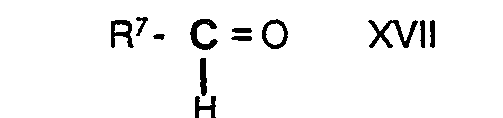
R7 die oben angegebene Bedeutung hat,
in Gegenwart wasserentziehender Mittel oder unter wasserentziehenden Reaktionsbedingungen umsetzt, oder - p) indem man Verbindungen der Formel XII, in der R' - R4 die oben angegebene Bedeutung haben, mit Halogenverbindungen der Formel XXXVIII
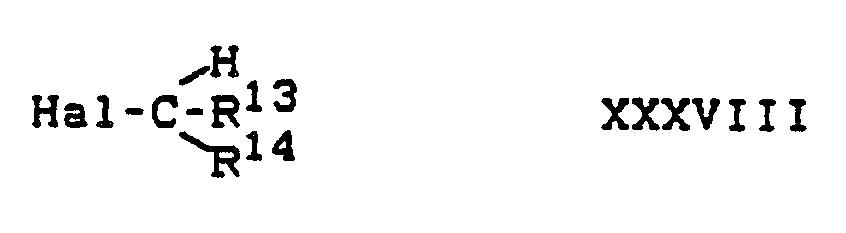
- a) mit 1,4-Dicarbonylverbindungen der Formel III
- 3. Neue Verbindungen der Formel VII

R1, R2, R4 bis R6 die bei den Verbindungen der Formel I angegebenen Bedeutungen haben. - 4. Verfahren zur Herstellung der Verbindungen der Formel VII, dadurch gekennzeichnet, daß man wie bei Verfahren 2 g) in der ersten Stufe beschrieben, Halogenacetophenone der Formel X

R1, R2 die bei den Verbindungen der Formel 1 angegebenen Bedeutungen haben und Hal für Halogen steht,
mit Aminen der Formel IX umsetzt, oder indem man Verbindungen der Formel XX
R2, R4 bis R6 die bei den Verbindungen der Formel angegebene Bedeutung besitzen und RS und R6 nicht beide für Wasserstoff stehen,
analog zu den bei Verfahren 2 a-d) genannten Reaktionen umsetzt. - 5. Neue Verbindungen der Formel VIII

R1, R2, R4 die bei den Verbindungen der Formel I angegebenen Bedeutungen besitzen. - 6. Verfahren zur Herstellung der Verbindungen der Formel VIII, dadurch gekennzeichnet, daß man Verbindungen der Formel XI

R1, R2, R4 die bei den Verbindungen der Formel I angegebenen Bedeutungen haben und Hai für Halogen steht,
mit Basen umsetzt oder daß man Verbindungen der Formel XVIII
R1 und R2 die bei den Verbindungen der Formel I angegebenen Bedeutungen haben, mit Methylengruppen-übertragenden Reagenzien in Gegenwart von Basen umsetzt, oder indem man Verbindungen der Formel XXI
R2 und R4 die bei den Verbindungen der Formel I genannten Bedeutungen besitzen und Hai für Halogen steht
analog zu den bei Verfahren 2 a-d) genannten Reaktionen umsetzt. - 7. Neue Verbindungen der Formel X

in welcher
R1 und R2 die bei den Verbindungen der Formel I angegebenen Bedeutungen besitzen und
Hal für Halogen steht. - 8. Verfahren zur Herstellung der Verbindungen der Formel X, dadurch gekennzeichnet, daß man Acetophenone der Formel XIX

R1 und R2 die bei den Verbindungen der Formel I angegebenen Bedeutungen haben,
mit Halogen oder Kupferhalogeniden Cu(Halogen)2 oder N-Halogensuccinimiden umsetzt, oder indem man Verbindungen der Formel XXII
R2 die bei den Verbindungen der Formel I angegebenen Bedeutungen besitzt und Hai für Halogen steht
analog zu den bei Verfahren 2 a-d) genannten Reaktionen umsetzt. - 9. Neue Verbindungen der Formel XI

R1, R2 die bei den Verbindungen der Formel I angegebenen Bedeutungen besitzen,
Hal für Halogen steht und
R4 für Wasserstoff steht. - 10. Verfahren zur Herstellung der Verbindungen der Formel XI, dadurch gekennzeichnet, daß man Verbindungen der Formel X

R1 und R2 die bei den Verbindungen der Formel I angegebenen Bedeutungen haben und Hai für Halogen steht,
reduziert oder, indem man Verbindungen der Formel XXIII
R2 und R4 die bei den Verbindungen der Formel I angegebene Bedeutung haben und Hal für Halogen steht,
analog zu den bei Verfahren 2 a-d) genannten Reaktionen umsetzt. - 11. Neue Verbindungen der Formel XII

R1 bis R4 die bei den Verbindungen der Formel I angegebenen Bedeutungen besitzen. - 12. Verfahren zur Herstellung der Verbindungen der Formel XII, dadurch gekennzeichnet, daß man Nitroverbindungen der Formel XXIV

R1 bis R4 die bei den Verbindungen der Formel I angegebenen Bedeutungen haben, reduziert oder, daß man Verbindungen der Formel XXV
R2 bis R4 die bei den Verbindungen der Formel I angegebenen Bedeutungen haben
analog zu den bei Verfahren 2 a-d) genannten Reaktionen umsetzt und anschließend reduziert. - 13. Neue Verbindungen der Formel XIV

R1 und R2 die bei den Verbindungen der Formel I angegebenen Bedeutungen besitzen. - 14. Verfahren zur Herstellung der Verbindungen der Formel XIV, dadurch gekennzeichnet, daß man Verbindungen der Formel X
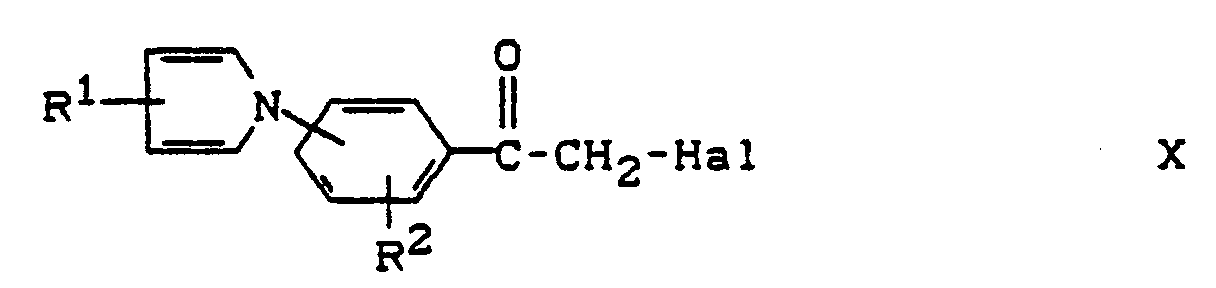
R1 und R2 die bei den Verbindungen der Formel I angegebenen Bedeutungen haben und Hal für Halogen steht,
oxidiert, oder daß man Verbindungen der Formel XXII
R2 die bei den Verbindungen der Formel I angegebene Bedeutung hat,
analog zu den bei Verfahren 2 a-d) genannten Reaktionen umsetzt. - 15. Neue Verbindungen der Formel XV
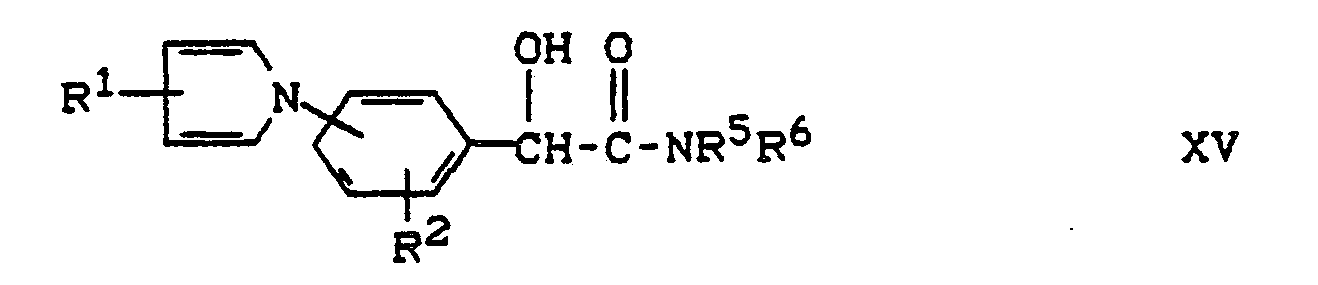
R1, R2, R5, R6 die bei den Verbindungen der Formel angegebenen Bedeutungen besitzen. - 16. Verfahren zur Herstellung der Verbindungen der Formel XV in welcher R5 für Wasserstoff steht, dadurch gekennzeichnet, daß man Verbindungen der Formel XVIII

R1 und R2 die bei den Verbindungen der Formel I angegebenen Bedeutungen besitzen, mit Isonitrilen der Formel XXVI
in welcher
R6 die bei den Verbindungen der Formel I angegebene Bedeutung hat,
in Gegenwart von Essigsäure umsetzt und die entstandenen 0-Acetylverbindungen verseift, oder indem man Verbindungen der Formel XXX
in welcher
R2, R5, R6 die bei den Verbindungen der Formel I angegebenen Bedeutungen besitzen und R5 und R6 nicht beide gleichzeitig für Wasserstoff stehen dürfen,
analog zu den bei Verfahren 2 a-d) genannten Reaktionen umsetzt. - 17. Neue Verbindungen der Formel XVIII

R' und R2 die bei den Verbindungen der Formel I angegebenen Bedeutungen haben. - 18. Verfahren zur Herstellung der Verbindungen der Formel XVIII, dadurch gekennzeichnet, daß man Verbindungen der Formel XXVII

R1 und R2 die bei den Verbindungen der Formel I angegebenen Bedeutungen haben oxidiert, oder indem man Säurechloride der Formel XXVIII
R1 und R2 die bei den Verbindungen der Formel angegebenen Bedeutungen haben reduziert, oder indem man Verbindungen der Formel XXXI
R2 die bei den Verbindungen der Formel I angegebene Bedeutung hat, analog zu den bei Verfahren 2 a-d) angegebenen Reaktionen umsetzt. - 19. Neue Verbindungen der Formel XIX

R1 und R2 die bei den Verbindungen der Formel I angegebenen Bedeutungen haben. - 20. Verfahren zur Herstellung der Verbindungen der Formel XIX, dadurch gekennzeichnet, daß man Verbindungen der Formel XXIX

R1 und R2 die bei den Verbindungen der Formel 1 angegebenen Bedeutungen besitzen und Alk für C1-a-Alkyl steht,
verseift und decarboxyliert, oder indem man Verbindungen der Formel XXXII
R2 die bei den Verbindungen der Formel angegebene Bedeutung hat, analog zu den bei Verfahren 2 a-d) angegebenen Reaktionen umsetzt. - 21. Neue Verbindungen der Formel XXIV

R1, R4 die bei den Verbindungen der Formel I angegebenen Bedeutungen haben. - 22. Verfahren zur Herstellung der Verbindungen der Formel XXIV, dadurch gekennzeichnet, daß man Aldehyde der Formel XVIII
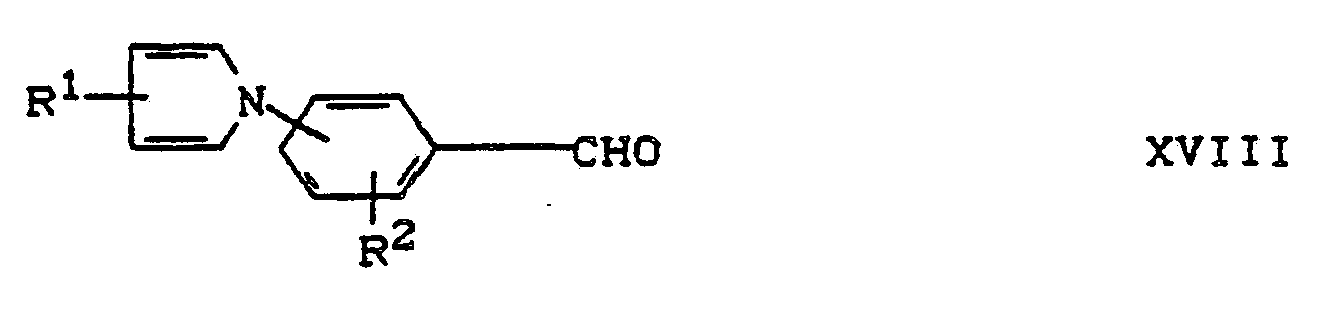
R1 und R2 die bei den Verbindungen der Formel I angegebenen Bedeutungen haben, mit Nitromethan umsetzt. - 23. Neue Verbindungen der Formel XVII

R1 und R2 die bei den Verbindungen der Formel I angegebenen Bedeutungen haben. - 24. Verfahren zur Herstellung der Verbindungen der Formel XVII, dadurch gekennzeichnet, daß man Verbindungen der Formel XXXIII

R' und R2 die bei den Verbindungen der Formel I angegebenen Bedeutungen haben und R4 für Wasserstoff oder C1-4-Alkyl steht,
reduziert, oder indem man Verbindungen der Formel XXXIV
R2 die bei den Verbindungen der Formel I angegebene Bedeutung haben analog zu den bei Verfahren 2 a-d) genannten Reaktionen umsetzt. - 25. Neue Verbindungen der Formel XXVIII

R1 und R2 die bei den Verbindungen der Formel I angegebenen Bedeutungen besitzen. - 26. Verfahren zur Herstellung der Verbindungen der Formel XXVIII, dadurch gekennzeichnet, daß man Verbindungen der Formel XXXIII

R1 und R2 die bei den Verbindungen der Formel I genannten Bedeutungen haben und R9 für Wasserstoff steht,
mit Halogenierungsmitteln umsetzt, oder indem man Verbindungen der Formel XXXV
R2 die bei den Verbindungen der Formel I angegebene Bedeutung hat, analog zu den bei Verfahren 2 a-d) angegebenen Reaktionen umsetzt. - 27. Neue Verbindungen der Formel XXIX

R1 und R2 die bei den Verbindungen der Formel I genannten Bedeutungen haben und
Alk für C1-4-Alkyl steht. - 28. Verfahren zur Herstellung der Verbindungen der Formel XXIX, dadurch gekennzeichnet, daß man Verbindungen der Formel XXXIII

R1 und R2 die bei den Verbindungen der Formel I angegebenen Bedeutungen besitzen und R9 für C1-4-Alkyl steht,
mit Essigsäureestern der Formel XXXVI
Alk für C1-4-Alkyl steht,
umsetzt, oder indem man Verbindungen der Formel XXXVII
R2 die bei den Verbindungen der Formel I angegebenen Reste steht, analog zu den bei Verfahren 2 a-d) genannten Reaktionen umsetzt. - 29. Neue Verbindungen der Formel XXXIII

R1 und R2 die bei den Verbindungen der Formel 1 angegebenen Bedeutungen besitzen und
R9 für Waserstoff oder C1-4-Alkyl steht. - 30. Verfahren zur Herstellung der Verbindungen der Formel XXXIII, dadurch gekennzeichnet, daß man Verbindungen der Formel XXXVII

R2 die bei den Verbindungen der Formel I angegebene Bedeutung besitzt und
R9 für C1-4-Alkyl oder Wasserstoff steht,
analog zu den bei Verfahren 2 a-d) angegebenen Reaktionen umsetzt. - Es wurde ferner gefunden, daß die Verbindungen der Formel I sowie ihre physiologisch verträglichen Salze leistungsfördernde Wirkung bei Tieren, insbesondere eine Wirkung zur Verschiebung des Fleisch/Fett-Verhältnisses zugunsten von Fleisch besitzen. Die Erfindung betrifft die Verwendung der Verbindungen der Formel I in der Tierzucht und Tierernährung.
- Die Verbindungen der Formel I können auch in Form ihrer Diastereomere, Racemate oder enantiomeren Formen vorliegen.
- Physiologisch verträgliche Salze der Verbindungen der Formel I können mit folgenden Säuren gebildet werden:
- Salzsäure, Schwefelsäure, Phosphorsäure, Perchlorsäure, Brom-, lodwasserstoffsäure, Salpetersäure, Essigsäure, Oxalsäure, Malonsäure, Bernsteinsäure, Ascorbinsäure, Äpfelsäure, Weinsäure, Maleinsäure, Fumarsäure, Methansulfonsäure, Benzoesäure, substituierte Benzoesäuren, Ameisensäure, Toluolsulfonsäure, Benzolsulfonsäure, Phthalsäure, Naphthalinsulfonsäure, Nikotinsäure, Palmitinsäure, Embonsäure.
- Bevorzugt sind Verbindungen der Formel I in welcher
- R1 für einen oder mehrere gleiche oder verschiedene Reste aus der Gruppe Wasserstoff, Halogen, Cyano, Nitro, Formyl(CHO), Carboxyl(COOH), Carbalkoxyalkyl, Alkoxycarboxyalkyl, C1-4-Alkylcarbonyl(Alk-CO-), C1-1-Alkoxycarbonyl(Alk-O-CO-), Aminocarbonyl(H2N-CO-), C1-4-Alkylaminocarbonyl, Di-C1-4-alkylaminocarbonyl, C1-4-Alkyl, C1-4-Alkoxy, C2-6-Alkenoxy, C1-4-Halogenalkyl, C1-4-Halogenalkoxy, C1-4-Alkylthio, C1-4-Halogenalkylthio, Ci-4-Hydroxyalkyl, C1-4-Cyanoalkyl, C2-s-Alkoxyalkyl, C2-s-Alkylthioalkyl, C1-4-Alkylcarbonyl-C1-4-alkoxy steht,
- R2 für einen oder mehrere gleiche oder verschiedene Reste aus der Gruppe Wasserstoff, Halogen, Hydroxy, Cyano, Nitro, C1-4-Alkyl, C1-4-Alkoxy, C1-4-Alkylthio, C1-4-Halogenalkyl, C1-4-Halogenalkoxy, C1-4-Halogenalkylthio, C1-4-Cyanoalkyl, C2-8-Alkoxyalkyl, Ci-4-Hydroxyalkyl, C1-4-Alkoxycarbonyl, Aminocarbonyl, Mono-, Di-Ci -4-alkylaminocarbonyl steht,
- R3 für Wasserstoff, C1-6-Alkylcarbonyl, gegebenenfalls substituiertes Benzoyl, C1-6-Alkylsulfonyl, gegebenenfalls substituiertes Phenylsulfonyl, Tri-C1 -6-alkyl-silyl steht,
- R4 für Wasserstoff oder Methyl steht,
- R5 für Wasserstoff steht,
- R6 für geradkettiges, verzweigtes oder cyclisches Alkyl mit bis zu 12 C-Atomen steht, das gegebenenfalls substituiert ist durch Heterocyclyl mit 4 bis 6 Ringatomen und 1 bis 3 Heteroatomen, C1-6-Alkoxy, C1-4-Alkylthio oder Halogen oder für Cycloalkyl-alkyl mit bis zu 12 C-Atomen, das gegebenenfalls substituiert ist durch Halogen, C1 -4-Alkoxy oder C1 -4-Alkylthio.
- Besonders bevorzugt sind Verbindungen der Formel I in welcher
- R1 für einen oder mehrere gleiche oder verschiedene Reste aus der Gruppe Wasserstoff, C1-4-Alkyl, Formyl, C1-4-Alkoxycarbonyl, C1-4-Alkylcarbonyl steht,
- R2 für einen oder mehrere gleiche oder verschiedene Reste aus der Gruppe Wasserstoff, Hydroxy, Cyano, Halogen, insbesondere Chlor, Fluor, Brom, C1-4-Alkyl, C1-4-Alkoxy, C1-4-Alkylthio, C1-4-Halogenalkyl insbesondere Trihalogenmethyl, C1 -4-Halogenalkoxy steht,
- R3 für Wasserstoff, C1 -6-Alkylcarbonyl insbesondere Acetyl, Dimethyl(C4-8-alkyl)silyl steht,
- R4 für Wasserstoff, Methyl steht,
- R5 für Wasserstoff steht,
- R6 für t-Butyl, i-Propyl, C3-7-Cycloalkyl, Dicyclopropylmethyl steht, die gegebenenfalls substituiert sein können durch einen oder mehrere Substituenten aus der Gruppe Halogen, C1-4-Alkoxy, C1-4-Alkylthio, ferner steht R6 für den Rest

wobei
A für C3-6Cycloalkyl, C4-6-Heterocyclyl mit O oder S als Heteratom steht, die gegebenenfalls durch C1-4-Alkyl, C, -4-Alkoxy oder C1-4-Alkylthio substituiert sein können. - Insbesondere seien als Reste R6 genannt t-Butyl, i-Propyl, C1-4-Alkoxy-C2-4-alkyl, C1-4-Alkylthio-C2-4-alkyl, C3-6-Cycloalkyl-C2-4-alkyl, C2-4-Halogenalkyl, Tetrahydropyranyl-C2-4-Alkyl, Tetrahydrofuryl-C2-4-alkyl, Furyl-C2-4-Alkyl, Pyranyl-C2-4-alkyl.
- Im einzelnen seien folgende Verbindungen der Formel I genannt:

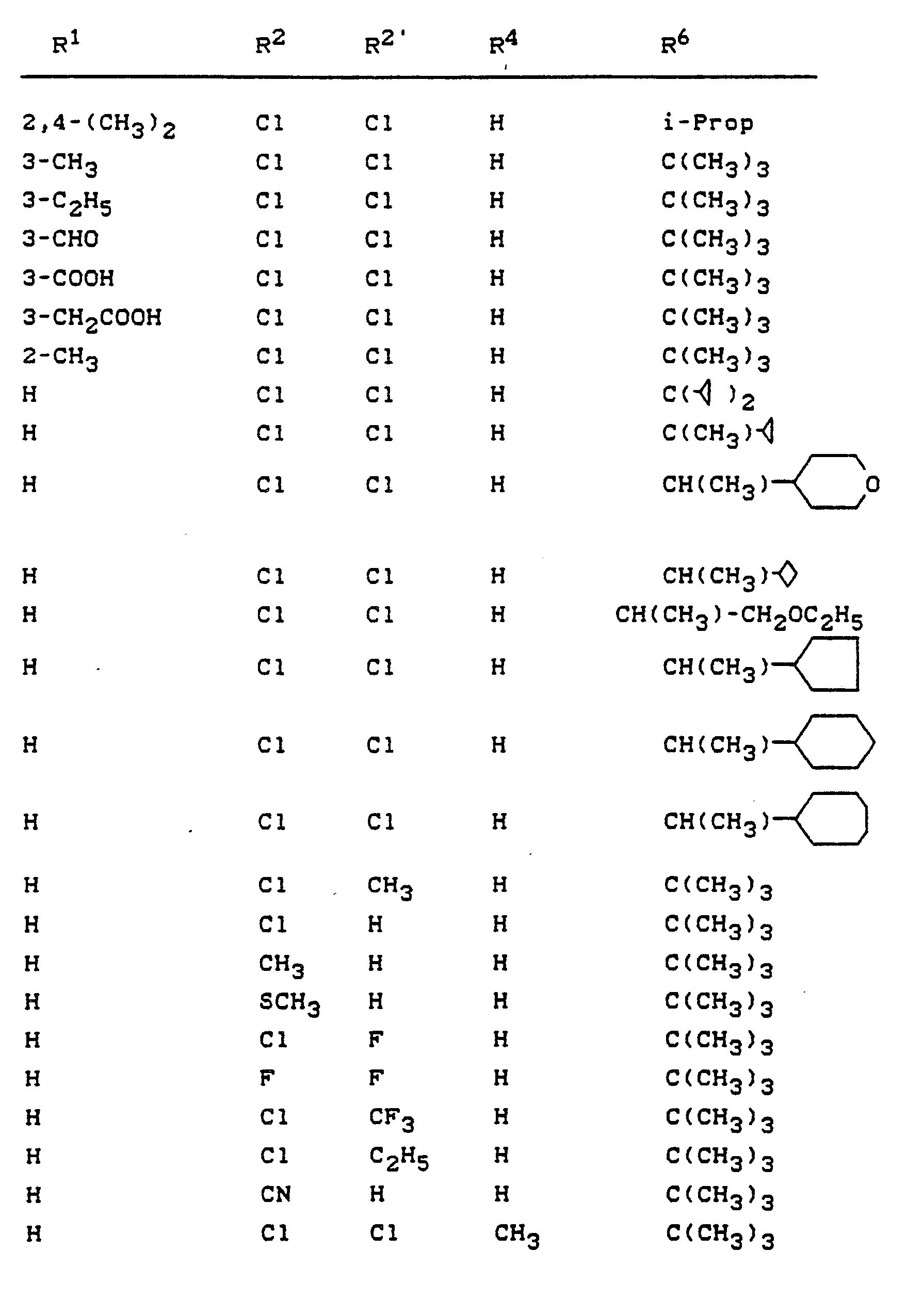

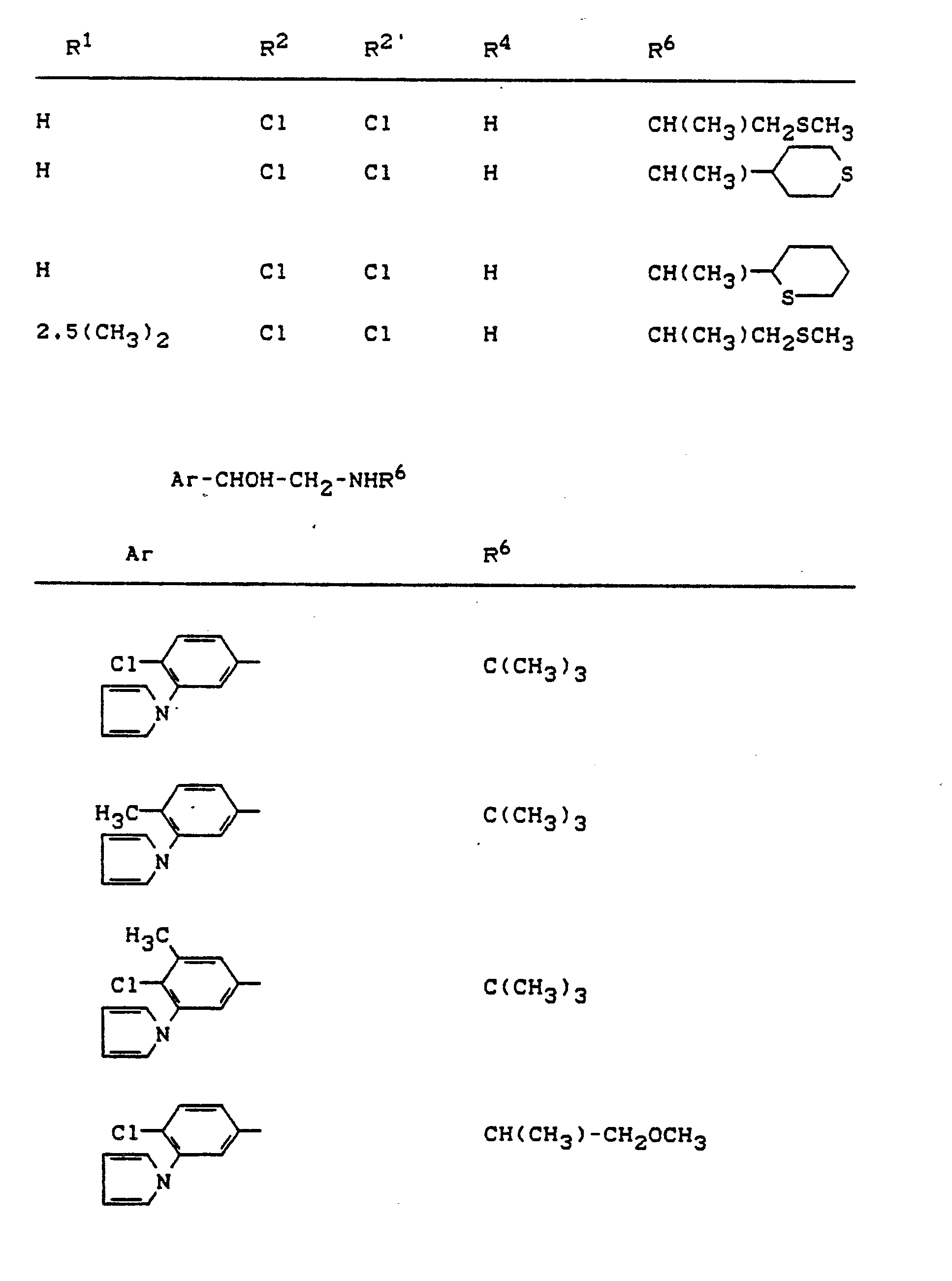

- Bevorzugt seien die Salze der Verbindungen der Formel I mit Salzsäure, Schwefelsäure, Phosphorsäure, Oxalsäure, Maleinsäure, Fumarsäure, Malonsäure genannt.
- Die Verbindungen der Formel I lassen sich nach den oben angegebenen Verfahren 2a) bis p) herstellen.
- Setzt man bei Verfahren 2a) als Verbindung der Formel II 2-(4-Amino-3-chlorphenyl)-N-cyclohexyl- ethanolamin und als Verbindung der Formel III 2,5-Hexandion ein, läßt sich Verfahren a) durch folgendes Reaktionsschema wiedergeben:

- Die Verbindungen der Formel II sind zum Teil bekannt (Arzneim.-Forsch. 34, 1625 (1984); 22, 861/1972). Neue Verbindungen der Formel II sind Gegenstand einer gleichzeitig eingereichten Patentanmeldung der Anmelderin. Sie werden in an sich bekannter Weise hergestellt, z.B. analog zu den bei Verfahren 2e) bis p) genannten Reaktionen. Bevorzugt werden Verbindungen der Formel II eingesetzt, in denen die Reste R2 bis R6 die bei den Verbindungen der Formel angegebenen bevorzugten und besonders bevorzugten Bedeutungen besitzen. Im einzelnen seien folgende Verbindungen der Formel II genannt:


- Die Verbindungen der Formel III sind bekannt oder lassen sich analog zu bekannten Verfahren herstellen (vgl. Houben-Weyl Methoden der Organischen Chemie Band 7/2b S. 1876 ff; Band 6/3 Seite 707 ff; Band 7/1 S. 255 ff). Wie die Verbindungen der Formel III lassen sich auch deren Monoacetale, Diacetale oder cyclischen Acetale der Formeln Illa, b, c einsetzen.
- Bevorzugt werden Verbindungen der Formel III eingesetzt, in der R1 die bei den Verbindungen der Formel I angegebenen bevorzugten und besonders bevorzugten Bedeutungen besitzt. Im einzelnen seien folgende Verbindungen der Formel III genannt:


- Bevorzugt seien die Methyl-oder Ethylacetale genannt wie z.B.:


- Sie wird bevorzugt in folgenden Lösungsmittel durchgeführt: Kohlenwasserstoffe wie Toluol, Säuren wie Eisessig, Nitrile wie Acetonitril, Ester wie Essigsäureethylester.
- Sie wird vorteilhaft in Gegenwart saurer Katalysatoren durchgeführt. Als solche seien genannt: Essigsäure, p-Toluolsulfonsäure, Chlorwasserstoffsäure, Methansulfonsäure.
- Sie wird bei Temperaturen von 0 - 150° C, bevorzugt zwischen 20 und 100° C, vorteilhafterweise am Wasserabscheider durchgeführt.
- Die Ausgangsprodukte werden in etwa äquimolarem Verhältnis zueinander eingesetzt.
- Die Aufarabeitung erfolgt indem man das Reaktionsgemisch auf Wasser gießt, alkalisch stellt, mit Lösemitteln wie Essigester, Ether, Methylenchlorid extrahiert, die organische Phase eindampft, chromatographiert oder umlöst oder abdestilliert.
- Setzt man cyclische Acetale der Formel IIIc als Ausgangsprodukte ein, wird vorteilhaft in Gegenwart saurer Katalysatoren gearbeitet. Als solche seien genannt: Essigsäure, p-Toluolsulfonsäure, Methansulfonsäure.
- Die Umsetzung von Verbindungen der Formel II mit Dihalogenketonen der Formel IV in Verfahren 2b) läßt sich im Fall von 2-[4-Amino-5-trifluormethylthiophenyl]-N-cyclobutylaminoethanol und Dibromallen durch folgendes Formelschema darstellen:

- Die Umsetzung von Verbindungen der Formel II mit Epoxybutanen der Formel V im Verfahren 2c) läßt sich im Fall von 2-(4-Amino-5-cyanophenyl)-N-1-ethyltetrahydrofurylamino-propanol(2) und 3,4-Epoxybutyraldehyddiethylacetal durch folgendes Formelschema wiedergegeben:

- Die Umsetzung von Verbindungen der Formel II mit Halogencrotonaldehyd im Verfahren 2d) läßt sich im Fall von 4-Amino-3-fluor-5-ethyl-phenyl-t-butylaminoethanol und 2-Chlorcrotonaldehyd durch folgendes Reaktionsschema darstellen:

- Setzt man bei Verfahren 2e) als Verbindung der Formel VII 2-(3-Pyrrolo-5-methoxyphenyl-)-2-oxocyclo- hexylethylamin ein, läßt sich Verfahren 2e) durch folgendes Formelschema wiedergeben:

- Die Substituenten R', R2, R4, R5, R6 in Formel VII besitzen bevorzugt die bei den Verbindungen der Formel I genannten bevorzugten und besonders bevorzugten Bedeutungen. Im einzelnen seien folgende Verbindungen der Formel VII genannt:

- Als Reduktionsmittel zur Durchführung des Verfahrens seien folgende Reduktionsmittel genannt:
- H2iKatalysator, als Katalysator seien beispielsweise genannt: Pt02, Pd-Aktivkohle:
- komplexe Metallhydride wie z.B. LiAIH4, NaBH4, NaBH3CN.
- Besonders bevorzugt werden folgende Reduktionsmittel eingesetzt:
- NaBH4 und NaBH3CN
- Die Reaktion wird bei Temperaturen von -20°C bis + 100°C bevorzugt zwischen 0 und 50°C durchgeführt.
- Es wird bevorzugt bei Normaldruck gearbeitet.
- Als Verdünnungsmittel dienen alle inerten organischen Lösungsmittel. Hierzu gehören insbesondere aliphatische und aromatische Kohlenwasserstoffe wie Pentan, Hexan, Cyclohexan, Petrolether, Ligroin, Benzol, Toluol; chlorierte Kohlenwasserstoffe wie Methylenchlorid, Ethylenchlorid, Chloroform; Ether wie Diethylether und Glykoldimethylether; Nitrile wie Acetonitril, Propionitril und Benzonitril; Alkohole wie Methanol, Ethanol, n-und i-Propanol. Bevorzugt sind Alkohole.
- Setzt man bei Verfahren 2f) als Epoxid der Formel VII 3-Methyl-4-pyrrolophenyl-epoxid und als Amin der Formel IX t-Butylamin ein, läßt sich Verfahren 2f) durch folgendes Reaktionsschema wiedergeben:

- Im einzelnen seien die folgenden Epoxide genannt:
- 4-Pyrrolo-3-chlorphenyl-epoxid,
- 4-Pyrrolo-3-cyanophenyl-epoxid,
- 3,5-Dichlor-4-pyrrolophenyl-epoxid,
- 3-Chlor-4-pyrrolo-5-cyanophenyl-epoxid,
- 3-Cyano-4-pyrrolo-5-chlorphenyl-epoxid,
- 3-Cyano-4-pyrrolo-phenyl-epoxid,
- 3-Chlor-4-pyrrolo-5-trifluormethylphenyl-epoxid,
- 3-Brom-4-pyrrolo-5-cyanophenyl-epoxid.
- Bevorzugt werden Amine der Formel IX eingesetzt, in welchen R5 und R6 die bei den Verbindungen der Formel I genannten bevorzugten und besonders bevorzugten Bedeutungen besitzen.
- Als Amine der Formel IX seien genannt z.B. tert.-Butylamin, Isopropylamin, 2-Methoxymethyl-ethylamin, 2-Tetrahydropyranylethylamin, 2-Cyclohexylethylamin, 2-Cyclobutylethylamin, 2-Cyclopropyl-ethylamin.
- Verfahren 2f) wird durchgeführt indem man etwa äquimolare Mengen des Epoxids der Formel VIII und des Amins der Formel IX in einem Verdünnungsmittel umsetzt.
- Im allgemeinen wird ein Überschuß an Amin (1-3 molar, bevorzugt 1-1,5 molar) bezogen auf das Epoxid der Formel VIII verwendet.
- Die Reaktion wird bei Temperaturen von +20 bis +150°C durchgeführt.
- Es wird bevorzugt bei Normaldruck gearbeitet.
- Als Verdünnungsmittel dienen alle inerten organischen Lösungsmittel. Hierzu gehören insbesondere aliphatische und aromatische, gegebenenfalls halogenierte Kohlenwasserstoffe, wie Pentan, Hexan, Heptan, Cyclohexan, Petrolether, Benzin, Ligroin, Benzol, Toluol, Methylenchlorid, Ethylenchlorid, Chloroform, Tetrachlorkohlenstoff, Chlorbenzol und o-Dichlorbenzol, ferner Ether wie Diethyl-und Dibutylether, Glykoldimethylether und Diglykoldimethylether, Tetrahydrofuran und Dioxan, ferner Nitrile wie Acetonitrile und Benzonitril, Amide wie Dimethylformamid, Alkohole wie Methanol, Ethanol, n-und i-Propanol.
- Bevorzugt sind Alkohole.
- Setzt man bei Verfahren 2g) als 2-Halogenketon der Formel X 3-Chlor-4-(2-Ethoxycarbonylpyrrol)-chloracetophenon und als Amin der Formel IX 1-Cyclohexylethylamin ein, läßt sich Verfahren 2g) durch folgendes Formelschema wiedergeben:

- Bevorzugt werden die bei Verfahren 2f) genannten Amine eingesetzt.
- Im einzelnen seien folgende Verbindungen der Formel X genannt:
- (2-Pyrrolo-3-chlorphenyl-5-chlormethylketon,
- (2-Pyrrolo-3-cyanophenyl-5-chlormethylketon,
- (2,4-Dichlor-3-pyrrolophenyl-6-brommethylketon,
- (2-Cyano-3-pyrrolophenyl-6-brommethylketon,
- (3-Pyrrolo-4-cyanophenyl-6-brommethylketon,
- (2-Pyrrolo-3-cyanophenyl-5-brommethylketon,
- (2-Cyano-3-pyrrolo-4-chlorphenyl-brommethylketon,
- (2-Cyano-3-pyrrolo-4-chlorphenyl-6-chlormethylketon,
- (2-Chlor-3-pyrrolo-4-trifluormethylphenyl-6-brommethylketon,
- (2-Trifluormethyl-3-pyrrolo-4-cyanophenyl-6-brommethylketon,
- (2-Fluor-3-pyrrolo-4-cyanophenyl-6-chlormethylketon.
- Verfahren 2g) wird durchgeführt indem man etwa äquimolare Mengen des 2-Halogenketons der Formel X und des Amins der Formel IX in einem Verdünnungsmittel umsetzt. Im allgemeinen wird ein Überschuß an Amin (1-3 molar, bevorzugt 1-1,5 molar) bezogen auf das 2-Halogenketon der Formel X verwendet.
- Die Reaktion wird bei Temperaturen von 20 bis 150°C, bevorzugt 50 bis 120°C, durchgeführt.
- Als bevorzugte Verdünnungsmittel seinen die bei Verfahren 2f) genannten Verdünnungsmittel genannt.
- Setzt man bei Verfahren 2h) als beta-Halogenmethylverbindung der Formel XI 3-(1-Hydroxy-2-chlorethyl)-methoxyphenylpyridin und als Amin der Formel IX t-Butylamin ein, läßt sich Verfahren 2h) durch folgendes Formelschema wiedergeben:

- Im einzelnen seien folgende Verbindungen der Formel XI genannt:
- 1-(2-Pyrrolo-3-chlor-phenyl)-2-chlorethanol,
- 1-(2-Pyrrolo-3-cyano-phenyl)-2-chlorethanol,
- 1-(2,4-Dichlor-3-pyrrolophenyl)-2-chlorethanol,
- 1-(2-Chlor-3-pyrrolo-4-cyano-phenyl)-2-chlorethanol,
- 1-(2-Cyano-3-pyrrolo-4-chlor-phenyl)-2-bromethanol,
- 1-(2-Cyano-3-pyrrolophenyl)-2-chlorethanol,
- 1-(3-Pyrrolo-4-cyano-phenyl)-2-bromethanol,
- 1-(2-Chlor-3-pyrrolo-4-trifluormethyl-phenyl)-2-chlorethanol,
- 1-(2-Cyano-3-pyrrolo-4-fluor-phenyl)-2-bromethanol.
- Verfahren 2h) wird durchgeführt indem man die beta-Halogenmethylverbindung der Formel XI mit überschüssigem Amin der Formel IX gegebenenfalls in Gegenwart eines Verdünnungsmittels umsetzt.
- Die Reaktion wird bei Temperaturen von +20 bis + 150°C durchgeführt.
- Es wird bei Normaldruck oder unter erhöhtem Druck gearbeitet.
- Als Verdünnungsmittel dienen alle inerten organischen Lösungsmittel. Hierzu gehören insbesondere aliphatische und aromatische, gegebenenfalls halogenierte Kohlenwasserstoffe, wie Pentan, Hexan, Cyclohexan, Benzol, Toluol, Methylenchlorid, Chloroform, ferner Ether wie Diethylether, Tetrahydrofuran und Dioxan, weiterhin Nitrile wie Acetonitril und Benzonitril, ferner Amide wie Dimethylformamid, ferner Alkohole wie Methanol, Ethanol, n-und i-Propanoi.
- Bevorzugt eingesetzt werden Alkohole.
- Setzt man bei Verfahren 2i) als Verbindung der Formel XII 3-Fluor-4-pyrrolo-(1-hydroxy-2-aminoethyl)-phenyl und als Verbindung der Formel XIII Acetophenon ein, läßt sich Verfahren 2i) durch folgendes Formelschema wiedergeben:

- Im einzelnen seien folgende Verbindungen der Formel XII genannt:
- 1-(2-Pyrrolo-3-ch lor-phenyl)-2-aminoethanol,
- 1-(2-Pyrrolo-3-cyano-phenyl)-2-aminoethanol,
- 1-(2,4-Dichlor-3-pyrrolophenyl)-2-aminoethanol,
- 1-(2-Chlor-3-pyrrolo-4-cyano-phenyl)-2-aminoethanol,
- 1-(2-Cyano-3-pyrrolophenyl)-2-aminoethanol,
- 1-(2-Ch lor-3-pyrrolo-4-trifluormethyl-phenyl)-2-aminoethanol.
- Verbindungen der Formel XIII sind bekannt oder lassen sich analog zu bekannten Verfahren herstellen.
- R13 steht bevorzugt für C1-4-Alkyl, insbesondere Methyl, C3-6-Cycloalkyl, insbesondere Cyclopropyl,
- R14 steht bevorzugt für C1-4-Alkyl, des gegebenenfalls substituiert ist durch Halogen, insbesondere Fluor, C1-4-Alkoxy, insbesondere Methoxy, C1-4-Alkylthio. insbesondere Methylthio,
- ferner für C3-6-Cycloalkyl, das gegebenenfalls substituiert ist durch C1-4-Alkyl, insbesondere Methyl, C1-4-Alkoxy, insbesondere Methoxy,
- ferner für Heterocyclyl mit 4 - 6 Ringatomen und 0 als Heteroatom, das gegebenenfalls substituiert ist durch C, -4-Alkyl, insbesondere Methyl, wie z.B. Tetrahydrofuranyl, Furanyl, Pyranyl, Tetrahydropyranyl, ferner stehen R'3 und R14 gemeinsam mit dem C-Atom an das sie gebunden sind, für einen aliphatischen Ring mit 3 - 7 Ringatomen wie Cyclopropyl, Cyclopentyl, Cyclohexyl, Cyclohexenyl.
- Im einzelnen seien folgende Verbindungen der Formel XIII genannt: Aceton, Methylethylketon, Methylisopropylketon, Diethylketon, Ethylpropylketon, Methylcyclohexylketon, Cyclohexanon.
- Verfahren 2i) wird durchgeführt indem man etwa äquimolare Mengen der Verbindungen der Formeln XII und XIII in einem Verdünnungsmittel vorlegt und die Mischung reduziert.
- Die Reaktion wird bei Temperaturen von 0°C bis 150°C durchgeführt.
- Es wird bevorzugt bei Normaldruck gearbeitet.
- Als Verdünnungsmittel dienen alle inerten organischen Lösungsmittel. Hierzu gehören aliphatische und aromatische, gegebenenfalls halogenierte Kohlenwasserstoffe wie Pentan, Hexan, Cyclohexan, Benzol, Toluol, Methylenchlorid, Ethylenchlorid, Chloroform, Chlorbenzol, ferner Ether wie Diethylether, Tetrahydrofuran, Dioxan, weiterhin Nitrile wie Acetonitril, Benzonitril, Amide wie Dimethylformamid, Alkohole wie Methanol, Ethanol.
- Als Reduktionsmittel dienen: H2/Katalysator, als Katalysator sei beispielsweise Pt02 genannt; komplexe Metallhydride wie z.B. LiAlH4, NaBH4, NaBH3CN; Raney-Nickel.
- Setzt man bei Verfahren 2j) als Verbindung der Formel XIV 3-Methyl-4-pyrrolophenylglyoxal und als Amin der Formel 111 t-Butylamin ein, läßt sich Verfahren 2j) durch folgendes Formelschema wiedergeben.

- Die Substituenten R1, R2 in Formel XIV besitzen bevorzugt die weiter oben bei den Verbindungen der Formel I angegebenen bevorzugten Bedeutungen. Im einzelnen seien folgende Verbindungen der Formel XIV genannt:
- 4-Pyrrolo-3-chlor-phenylglyoxal,
- 4-Pyrrolo-3-cyano-phenylglyoxal,
- 3,5-Dichlor-4-pyrrolophenylglyoxal,
- 3-Cyano-4-pyrrolophenylglyoxal,
- 3-Chlor-4-pyrrolo-5-trifluormethyl-phenylglyoxal,
- Verfahren 2j) wird durchgeführt, indem man zur Verbindung der Formel XIV in einem Verdünnungsmittel etwa die äquivalente Menge des Amins der Formel IX zusetzt und anschließend reduziert.
- Die Reaktion wird bei Temperaturen durchgeführt von 0°C bis 100°C.
- Es wird bevorzugt bei Normaldruck gearbeitet.
- Als Verdünnungsmittel dienen alle inerten organischen Lösungsmittel. Hierzu gehören insbesondere aliphatische und aromatische, gegebenenfalls halogenierte Kohlenwasserstoffe, wie Pentan, Hexan, Heptan, Cyclohexan, Petrolether, Benzin, Ligroin, Benzol, Toluol, Methylenchlorid, Ethylenchlorid, Chloroform, Tetrachlorkohlenstoff, Chlorbenzol und o-Dichlorbenzol, ferner Ether wie Diethyl-und Dibutylether, Glykoldimethylether und Di glykoldimethylether, Tetrahydrofuran und Dioxan, außerdem Ester wie Essigsäuremethylester und -ethylester, ferner Nitrile, wie z.B. Acetonitril und Propionitril, Benzonitril, Glutarsäuredinitril, darüber hinaus Amide, wie z.B. Dimethylformamid, Dimethylacetamid und N-Methylpyrrolidon, sowie Tetramethylensulfon und Hexamethylphosphorsäuretriamid, weiterhin Alkohole wie Methanol, Ethanol, n-und i-Propanoi.
- Als Reduktionsmittel dienen H2/Katalysator (als Katalysator seien PtO2 und Pd-Kohle genannt), ferner komplexe Metallhydride wie LiAlH4 und NaBH4.
- Setzt man bei Verfahren 2k) als Verbindung der Formel XV (5-Chlor-4-pyrrolophenyl)-hydroxyessigsäureisopropylamid ein, läßt sich Verfahren 2k) durch folgendes Reaktionsschema wiedergeben:

- Im einzelnen seien die folgenden Verbindungen der Formel XV genannt:
- (3-Chlor-4-pyrrolophenyl)hydroxyessigsäureisopropylamid,
- (3-Cyano-4-pyrrolophenyl)hydroxyessigsäureisopropylamid,
- (3-Chlor-4-pyrrolopphenyl)hydroxyessigsäure-tert.-butylamid,
- (3-Chlor-4-pyrrolo-5-amino-cyano-phenyl)hydroxyessigsäure-isopropylamid,
- (3-Cyano-4-pyrrolo-5-chlor-phenyl)hydroxyessigsäure-tert.-butylamid
- (3-Cyano-4-pyrrolo-5-chlor-phenyl)hydroxyessigsäureisopropylamid,
- (3,5-Dichlor-4-pyrrolophenyl)hydroxyessigsäure-tert.-butylamid,
- (3,5-Dichlor-4-pyrrolophenyl)hydroxyessigsäureisopropylamid,
- (3,5-Dichlor-4-pyrrolophenyl)hydroxyessigsäure-tert.-butylamid.
- Verfahren 2k) wird durchgeführt, indem man die Verbindung der Formel XV in einem Verdünnungsmittel mit überschüssigem Reduktionsmittel umsetzt.
- Die Reaktion wird bei Temperaturen von 0°C bis +150°C durchgeführt.
- Es wird bevorzugt bei Normaldruck gearbeitet.
- Als Verdünnungsmittel dienen alle inerten organischen Lösungsmittel. Hierzu gehören insbesondere aliphatische und aromatische, gegebenenfalls halogenierte Kohlenwasserstoffe, wie Pentan, Hexan, Heptan, Cyclohexan, Petrolether, Benzin, Ligroin, Benzol, Toluol, Methylenchlorid, Ethylenchlorid, Chloroform, Tetrachlorkohlenstoff, Chlorbenzol und o-Dichlorbenzol, ferner Ether wie Diethyl-und Dibutylether, Glykoldimethylether und Diglykoldimethylether, Tetrahydrofuran und Dioxan.
- Als Reduktionsmittel dienen komplexe Metallhydride wie LiAlH4, Borane wie Diboran.
- Setzt man bei Verfahren 21) als Verbindung der Formel I 4-(2-Ethylpyrrolo)-3,5-difluorphenylethanol- dicyclopropylmethylamin und als Acylierungsmittel Benzoylchlorid ein, so läßt sich Verfahren 21) durch folgendes Reaktionsschema wiedergeben:

- Als Acylierungsmittel seien bevorzugt genannt: Acetylchlorid, Acetanhydrid, Propionsäureanhydrid, Methoxyacetylchlorid.
- Verbindungen der Formel 1 und die Acylierungsmittel werden bevorzugt in Gegenwart von Verdünnungsmitteln sowie in Gegenwart von Säurebindemitteln umgesetzt.
- Als Verdünnungsmittel kommen alle inerten organischen Lösungsmittel in Frage. Hierzu gehören insbesondere aliphatische und aromatische, gegebenenfalls halogenierte Kohlenwasserstoffe, wie Pentan, Hexan, Heptan, Cyclohexan, Petrolether, Benzin, Ligroin, Benzol, Toluol, Methylenchlorid. Ethylenchlorid, Chloroform, Tetrachlorkohlenstoff, Chlorbenzol und o-Dichlorbenzol, ferner Ether wie Diethyl-und Dibutylether, Glykoldimethylether und Diglykoldimethylether, Tetrahydrofuran und Dioxan, weiterhin Ketone, wie Aceton, Methylethyl-, Methylisopropyl-und Methylisobutylketon, außerdem Ester, wie Essigsäure-methylester und -ethylester, ferner Nitrile, wie z.B. Acetonitril und Propionitril, Benzontril, Glutarsäuredinitril, darüber hinaus Amide, wie z.B. Dimethylformamid, Dimethylacetamid und N-methylpyrrolidon, sowie Dimethylsulfoxid, Tetramethylensulfon und Hexamethylphosphorsäuretriamid.
- Als Säurebindemittel seien genannt: Alkali-, Erdalkalialkoholate und tertiäre Amine. Besonders bevorzugt seien folgende Basen genannt: Triethylamin, Pyridin, Picoline, Trimethylamin, N-Methyl-morpholin, N-Ethyl-pyrrolidon, Diazabicyclo(4,3,0)undecen (DBU), 1,4-Diaza-bicyclo-2,2,2-octan (DABCO), Diazabicyclo-(3,2,0)nonen (DBN).
- Die Reaktion wird durchgeführt bei 0 - 150°C, bevorzugt bei 20 - 100°C, vorzugsweise unter Normaldruck.
- Bevorzugt wird unter Schutzgasatmosphäre gearbeitet.
- Die Verbindungen der Formel und die Acylierungsmittel werden bevorzugt in äquimolarem Verhältnis zueinander eingesetzt. Ein Überschuß der einen oder anderen Verbindung bringt keinen wesentlichen Vorteil. Die Säurebindemittel werden bevorzugt äquimolar oder in einem Überschuß bis zu 10 molar, bezogen auf die Verbindungen der Formel 1 eingesetzt. Werden tertiäre Amine als Säurebindemittel eingesetzt, können diese auch als Reaktionsmedium dienen.
- Die Aufarbeitung erfolgt in an sich bekannter Weise, inde das ausgeschiedene Salz abfiltriert wird und die organische Phase eingeengt wird oder indem das Reaktionsgemisch in Wasser eingegossen wird und die organische Phase nach Abtrennung eingeengt wird.
- Setzt man bei Verfahren 2m) als Verbindung der Formel I 3-Cyano-4-(2-methoxypyrrolo)-phenyl-2-cyclopentylamino-propanol und als Silylierungsmittel der Formel XVI Dimethyl-isovaleryl-silylchlorid ein, läßt sich Verfahren 2m) durch folgendes Reaktionsschema wiedergeben:

- Das Verfahren wird analog zu bekannten Methoden der organischen Chemie durchgeführt.
- Das Verfahren kann in Gegenwart von Verdünnungsmitteln durchgeführt werden. Als Verdünnungsmittel kommen alle inerten organischen Lösungsmittel infrage. Hierzu gehören insbesondere aliphatische und aromatische, gegebenenfalls halogenierte Kohlenwasserstoffe, wie Pentan,. Hexan, Heptan, Cyclohexan, Petrolether, Benzin, Ligroin, Benzol, Toluol, Methylenchlorid, Ethylenchlorid, Chloroform, Tetrachlorkohlenstoff, Chlorbenzol und o-Dichlorbenzol, ferner Ether, wie Diethyl-und Dibutylether, Glykoldimethylether und Diglykoldimethylether, Tetrahydrofuran und Dioxan, weiterhin Ketone, wie Aceton, Methylethyl-, Methylisopropyl-und Methylisobutylketon, außerdem Ester, wie Essigsäure-methylester und -ethylester, ferner Nitrile, wie z.B. Acetonitril und Propionnitril, Benzonitril, Glutarsäuredinitril, darüber hinaus Amide, wie z.B. Dimethylformamid, Dimethylacetamid und N-Methylpyrrolidon, sowie Dimethylsulfoxid, Tetramethylensulfon und Hexamethylphosphorsäuretriamid.
- Das Verfahren kann in Gegenwart von Katalysatoren durchgeführt werden. Als Katalysatoren können bevorzugt verwendet werden: Imidazol, Triazol oder Diisopropylethylamin.
- Die Reaktionstemperatur wird zwischen etwa 0°C und 130°C, vorzugsweise zwischen etwa 20°C und 60°C, gehalten. Das Verfahren wird vorzugsweise bei Normaldruck durchgeführt.
- Die Ausgangsverbindungen werden im allgemeinen in etwa äquimolarem Verhältnis eingesetzt.
- Setzt man bei Verfahren 2n) als Verbindung der Formel I 4-Pyrrolo-3-trifluormethyl-5-chlorphenyl- ethanol-methoxyisopropylamin und Phosgen ein, so läßt sich Verfahren 2n) durch folgendes Formelschema wiedergeben:
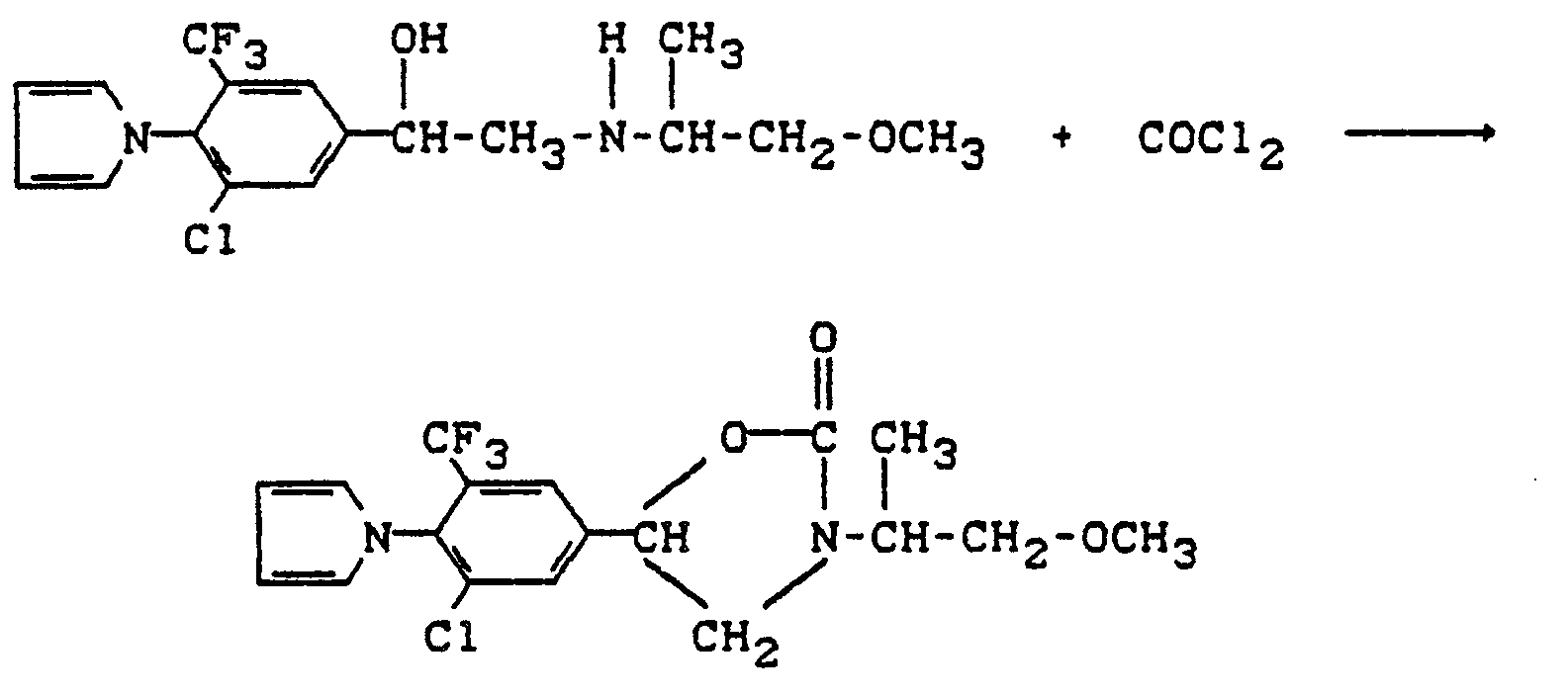
- Setzt man bei Verfahren 20) als Verbindung der Formel I 4-(3,4-Dimethylpyrrolo)-3-methoxyphenyl- ethanol-monofluortertiärbutylamin und als Aldehyd der Formel XVII Acetaldehyd ein, so läßt sich Verfahren 20) durch folgendes Formelschema wiedergeben:

- Verfahren 2p) wird unter den für die Alkylierung von Aminen mit Alkylhalogeniden üblichen Bedingungen durchgeführt. Bevorzugt wird in inerten Verdünnungsmitein wie Kohlenwasserstoffen, z.B. Toluol, Xylol, Ethern wie Dioxan, Tetrahydrofuran, Ketonen wie Aceton, bei Temperaturen von 20-180°C, bevorzugt zwischen 60 und 150°C, gearbeitet. Gegebenenfalls wird unter Zusatz von Basen wie anorganischen Basen, z.B. Alkali-und Erdalkalihydroxiden, -carbonaten oder -hydrogencarbonaten, organischen Basen wie tertiären Aminen, z.B. Triethylamin, gearbeitet.
- Die Verbindungen der Formel XXXVIII werden meist äquimolar zu den Verbindungen der Formel XII eingesetzt. Es kann vorteilhaft sein, einen 1-bis 3-fachen Überschuß an Verbindungen der Formel XXXVIII einzusetzen.
- Die Verbindungen der Formel XXXVIII sind bekannt oder können nach an sich bekannten Verfahren hergestellt werden. R13 und R14 besitzen bevorzugt die weiter oben bei den Verbindungen der Formel XIII angegebenen bevorzugten und besonders bevorzugten Bedeutungen.
- Als Verbindungen der Formel XII werden bevorzugt die weiter oben bei Verfahren 2i) bevorzugt eingesetzten Verbindungen der Formel XII verwendet.
- Wie bereits erwähnt lassen sich die neuen Verbindungen der Formel VII nach dem unter 4 angegebenen Verfahren herstellen.
- Verfahren 4 wird durchgeführt wie bei Verfahren 2f) in der ersten Stufe beschrieben. Es werden bevorzugt die bei Verfahren 2g) genannten Verbindungen der Formel X und Amine der Formel IX eingesetzt.
- Wie bereits erwähnt, lassen sich die neuen Verbindungen der Formel VIII nach den unter (6) angegebenen Verfahren herstellen.
- Verfahren 6 wird durchgeführt, indem man eine Verbindung der Formel XI in einem Verdünnungsmittel mit der 2-5 molaren, bevorzugt 2-4 molaren Menge einer Base umsetzt. Setzt man als Verbindung der Formel XI 1-(3-Chlor-4-pyrrolophenyl)-2-bromethanol und als Base NaOH ein, läßt sich die Reaktion durch folgendes Schema darstellen:

- Bevorzugt werden Verbindungen der Formel XI eingesetzt, in welcher R', R2, R4 die bei den Verbindungen der Formel I angegebenen bevorzugten Bedeutungen besitzen und Hal für Chlor oder Brom steht.
- Im einzelnen seien folgende Verbindungen der Formel XI genannt:

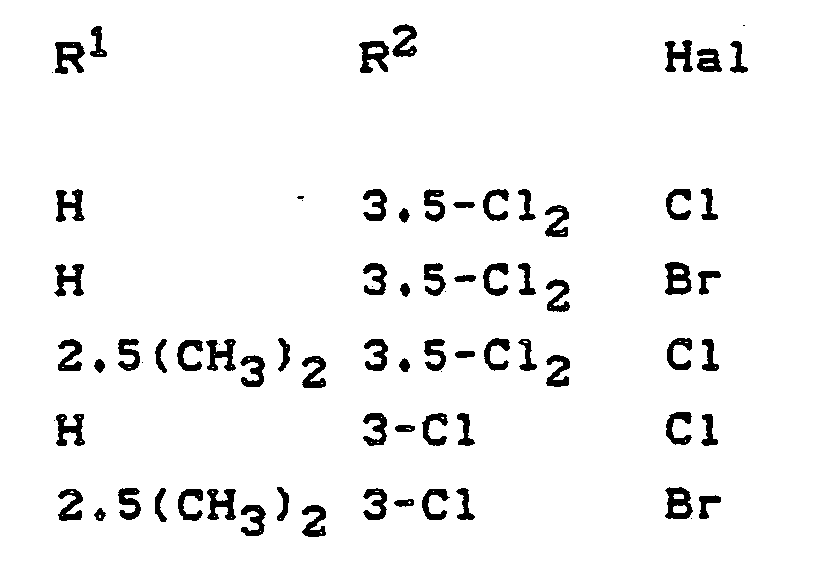
- Als Basen seien genannt: Alkali-und Erdalkalihydroxide wie Natriumhydroxid, Kaliumhydroxid; - carbonate und -hydrogencarbonate wie Natriumcarbonat, Natriumhydrogencarbonat, Bariumcarbonat; - alkoholate wie Natriummethylat und Natriumethylat..
- Als Verdünnungsmittel seien genannt Alkohole, wie Methanol, Ethanol, Wasser, sowie Mischungen von Alkoholen mit Wasser.
- Die Reaktion wird bei Temperaturen von 0°C bis + 100°C durchgeführt, es wird bevorzugt unter Normaldruck gearbeitet.
- Setzt man bei Verfahren 6 als Verbindung der Formel XVIII 3-Methyl-4-pyrrolobenzaldehyd und als methylengruppenübertragendes Reagenz Trimethylsulfoniumiodid sowie als Base Natriumhydrid ein, läßt sich die Umsetzung durch folgendes Schema darstellen:

- Im einzelnen seien folgende Verbindungen der Formel XVIII genannt:


- Als methylengruppenübertragende Reagentien seien genannt:
- Trimethylsulfoniumhalogenide wie Trimethylsulfoniumchlorid, -bromid und -iodid,
- Trimethylsulfoxoniumhalogenide wie Trimethylsulfoxoniumchlorid, -bromid und -iodid.
- Als Basen werden verwendet: Alkali-und Erdalkalihydride wie Natriumhydrid, Alkali-und Erdalkalialkoholate wie Kalium-tert.-butylat.
- Das Verfahren wird durchgeführt, indem man 1,1-Äquivalente der Base z.B. in Dimethylsulfoxid vorlegt, dann das methylengruppenübertragende Agens (1,1 Äquivalente) zufügt und zuletzt 1 Äquivalent der Verbindung der Formel XVIII zugibt.
- Die Reaktion wird bei Temperaturen von 0°C bis 100°C, bevorzugt bei 50-70°C durchgeführt, es wird bevorzugt bei Normaldruck gearbeitet.
- Als Verdünnungsmittel werden Dimethylsulfoxid oder Mischungen von Dimethylsulfoxid mit inerten organischen Lösungsmitteln eingesetzt.
- Als inerte organische Lösungsmittel seien genannt: Ether wie Diethylether, Tetrahydrofuran, Dioxan.
- Die neuen Halogenmethylketone der Formel X lassen sich nach den unter (8) genannten Verfahren herstellen.
- Die Verbindungen der Formel XIX sind neu. Sie lassen sich nach dem unter (20) beschriebenen Verfahren herstellen. Bevorzugt werden Verbindungen der Formel XIX eingesetzt, in welcher R' und R2 die bei den Verbindungen der Formel I angegebenen bevorzugten und besonders bevorzugten Bedeutungen besitzen.
- Im einzelnen seien folgende Verbindungen der Formel XIX genannt:


- Setzt man bei Verfahren 8 als Verbindung der Formel XIX 4-Fluor-5-pyrroloacetophenon und als Halogen Hal Brom ein, läßt sich die Reaktion durch folgendes Schema darstellen:

- Verfahren 8 wird durchgeführt, indem man zu Verbindung XIX in einem Verdünnungsmittel die äquivalente Menge Halogen, eventuell in einem Verdünnungsmittel gelöst, zugibt.
- Die Reaktion wird bei +20°C bis +150°C durchgeführt, bevorzugt bei der Siedetemperatur des verwendeten Verdünnungsmittels.
- Es wird bevorzugt bei Normaldruck gearbeitet.
- Als Verdünnungsmittel seien genannt: aliphatische, gegebenenfalls halogenierte Kohlenwasserstoffe wie Pentan, Hexan, Heptan, Cyclohexan, Methylenchlorid, Ethylenchlorid, Chloroform, Tetrachlorkohlenstoff, Alkohole wie Methanol, Ethanol, Ester wie Essigsäureethylester und Mischungen aus diesen Verdünnungsmitteln.
- Setzt man bei Verfahren 8 als Verbindung der Formel XIX 3-Chlor-4-pyrroloacetophenon und als Kupferhalogenid Kupfer(11)bromid ein, läßt sich die Reaktion durch folgendes Schema darstellen:

- Reaktionsparameter und Verdünnungsmittel sind wie oben beschrieben.
- Wie bereits erwähnt, lassen sich die neuen Verbindungen der Formel XI nach dem unter (10) angegebenen Verfahren herstellen.
- Setzt man bei Verfahren 10 als Verbindung der Formel X 3-Cyano-4-pyrrolochloracetophenon ein, läßt sich Verfahren 10 durch das folgende Reaktionsschema darstellen:

- Als Reduktionsmittel zur Durchführung des Verfahrens seien genannt:
- H2/Katalysator (als Katalysatoren seien genannt: Pt02, Pd/Kohle), komplexe Metallhydride, wie z.B. LiAlH4, NaBH4, NaBH3CN. Bevorzugt werden NaBH4 und NaBH3CN eingesetzt.
- Verfahren 10 wird durchgeführt, indem man die Verbindung X in einem Verdünnungsmittel mit dem Reduktionsmittel umsetzt.
- Die Reaktion wird bei Temperaturen von -20°C bis +100°C durchgeführt.
- Es wird bevorzugt bei Normaldruck gearbeitet.
- Als Verdünnungsmittel dienen alle inerten organischen Lösungsmittel. Hierzu zählen insbesondere gegebenenfalls halogenierte aliphatische und aromatische Kohlenwasserstoffe wie Pentan, Hexan, Cyclohexan, Benzol, Toluol, Methylenchlorid, Chloroform, Chlorbenzol; Ether wie Diethylether, Tetrahydrofuran; Nitrile wie Acetonitril, Benzonitril; Alkohole wie Methanol, Ethanol, n-und i-Propanol. Bevorzugt werden Alkohole eingesetzt.
- Wie bereits erwähnt, lassen sich die Verbindungen der Formel XII nach dem unter 12 angegebenen Verfahren herstellen.
- Setzt man bei Verfahren 12 als Nitroverbindung der Formel XXIV 1-(3-Brom-4-pyrrolophenyl)-2-nitroe- thanol ein, läßt sich die Reaktion durch das folgende Schema darstellen:

- Im einzelnen seien folgende Verbindungen der Formel XXIV genannt:


- Als Reduktionsmittel für das Verfahren dient Wasserstoff/ Katalysator. Als Katalysatoren seien beispielhaft genannt: Raney-Nickel, Pt02, Pd/Kohle.
- Das Verfahren wird durchgeführt, indem man Verbindung XXI in einem Verdünnungsmittel unter Zusatz einer Säure katalytisch hydriert.
- Die Reaktion wird bei Temperaturen von +20°C bis +150°C durchgeführt.
- Es wird unter Normaldruck oder erhöhtem Druck gearbeitet.
- Als Verdünnungsmittel dienen alle inerten organischen Lösungsmittel. Hierzu gehören insbesondere aliphatische und aromatische Kohlenwasserstoffe wie Pentan, Hexan, Cyclohexan, Benzol, Toluol; Ether wie Diethylether, Tetrahydrofuran; Alkohole wie Methanol, Ethanol.
- Als Säuren werden verwendet: anorganische Säuren wie Kohlensäure; Halogenwasserstoffsäuren wie Chlorwasserstoff; Schwefelsäure, organische Säuren wie Essigsäure, Propionsäure.
- Wie bereits erwähnt lassen sich die neuen Verbindungen der Formel XIV nach dem unter (14) genannten Verfahren herstellen.
- Setzt man bei dem Verfahren als Halogenmethylketon der Formel X 3-Cyano-4-tetramethylpyrrolo- bromacetophenon ein, läßt sich das Verfahren durch das folgende Schema darstellen: _

- Das Verfahren wird durchgeführt, indem man die Verbindung X, gegebenenfalls in Gegenwart eines Verdünnungsmittels, oxidiert.
- Die Reaktion wird bei Temperaturen von +20°C bis +100°C durchgeführt.
- Es wird bevorzugt bei Normaldruck gearbeitet.
- Als Oxidationsmittel wird bevorzugt Dimethylsulfoxid verwendet (N. Kornblum et. al., JACS 79, 6562 (1957).
- Wie die Umsetzung in Gegenwart eines Verdünnungsmittels durchgeführt, können alle inerten organischen Lösungsmittel verwendet werden. Hierzu gehören insbesondere aliphatische und aromatische, gegebenenfalls halogenierte Kohlenwasserstoffe wie Pentan, Hexan, Cyclohexan, Benzol, Toluol, Methylenchlorid, Chloroform, Chlorbenzol; Ether wie Diethylether, Tetrahydrofuran; Nitrile wie Acetonitril, Benzonitril. Bevorzugt wird in Dimethylsulfoxid ohne ein weiteres Lösungsmittel gearbeitet.
- Wie bereits erwähnt lassen sich die neuen Verbindungen der Formel XV nach dem unter 16 genannten Verfahren herstellen.
- Setzt man bei dem Verfahren 16 als Aldehyd der Formel XVIII 3-Fluor-4-pyrrolobenzaldehyd und als Isonitril der Formel XXVI Isopropylisonitril ein, so läßt sich das Verfahren durch das folgende Schema darstellen:

- Isonitrile der Formel XXVI sind bekannt oder lassen sich analog zu bekannten Verfahren herstellen. Der Substituent R6 besitzt bevorzugt die weiter oben bei den Verbindungen der Formel angegebenen bevorzugten Bedeutungen. Im einzelnen seien folgende Verbindungen der Formel XXVI genannt: Methylisonitril, Ethylisonitril, n-Propylisonitril, Isopropylisonitril, n-Butylisonitril, sec.-Butylisonitril, Isobutylisonitril, tert.-Butylisonitril.
- Das Verfahren wird durchgeführt, indem man die Verbindung XVIII mit der doppelt molaren Menge von Isonitril der Formel XXVI und Essigsäure in einem Verdünnungsmittel zusammengibt.
- Die Reaktion wird bei Temperaturen von +20°C bis +150°C durchgeführt.
- Es wird bevorzugt bei Normaldruck gearbeitet.
- Als Verdünnungsmittel dienen alle inerten organischen Lösungsmittel. Hierzu gehören insbesondere gegebenenfalls halogenierte aliphatische und aromatische Kohlenwasserstoffe wie Pentan, Hexan, Cyclohexan, Benzol, Toluol, Methylenchlorid, Chloroform, Chlorbenzol; Ether wie Diethylether, Tetrahydrofuran; Nitrile wie Acetonitril und Benzonitril.
- Zur Abspaltung der Acetylgruppe werden anorganische Säuren verwendet. Hierzu zählen Halogenwasserstoffsäuren wie Salzsäure; Schwefelsäure, Phosphorsäure. Die Abspaltung kann auch in Gegenwart anorganischer Basen wie Alkali-oder Erdalkalihydroxide, -carbonate oder -hydrogencarbonate erfolgen.
- Das Verfahren wird durchgeführt, indem man die acetylierte Verbindung direkt oder nach vorheriger Isolierung in einem Verdünnungsmittel als Lösungsvermittler mit überschüssiger wäßriger Lösung der anorganischen Säure oder Base behandelt.
- Die Reaktion wird bei Temperaturen von +20°C bis +150°C durchgeführt.
- Es wird bevorzugt bei Normaldruck gearbeitet.
- Als Verdünnungsmittel können alle inerten organischen Lösungsmittel, die mit Wasser mischbar sind, verwendet werden. Hierzu zählen Ether wie Tetrahydrofuran, Dioxan; Nitrile, wie Acetonitril; Amide wie Dimethylformamid; Alkohole wie Methanol, Ethanol; Dimethylsulfoxid.
- Wie bereits erwähnt lassen sich die neuen Verbindungen der Formel XVIII nach den unter (18) angegebenen verfahren herstellen.
- Setzt man bei Verfahren (18) als Alkohol der Formel XXVII 3-Trifluormethyl-4-pyrrolobenzylalkohol ein, läßt sich die Reaktion durch folgendes Schema darstellen:

- Im einzelnen seien folgende Verbindungen der Formel XXVII genannt:


- Verfahren a) wird durchgeführt, indem man den Alkohol der Formel XIII mit 1-1,5 Äquivalenten des Oxidationsmittels umsetzt.
- Die Reaktion wird bei Temperaturen von -70°C bis +25°C durchgeführt.
- Es wird bevorzugt bei Normaldruck gearbeitet.
- Als Verdünnungsmittel dienen inerte organ. Lösungsmittel, beispielhaft seien genannt: Gegebenenfalls chlorierte Kohlenwasserstoffe wie Methylenchlorid, Chlorform, Ether wie Diethylether und Tetrahydrofuran.
- Verfahren b) wird durchgeführt, indem man den Alkohol der Formel XXVII mit überschüssigem Mangandioxid umsetzt.
- Die Reaktion wird bei Temperaturen von +20°C bis +150°C durchgeführt, es wird bevorzugt bei Normaldruck gearbeitet.
- Als Verdünnungsmittel werden verwendet: inerte organische Lösungsmittel, insbesondere aliphatische und aromatische gegebenenfalls halogenierte Kohlenstoffe wie Pentan, Hexan, Cyclohexan, Benzol, Toluol, Methylenchlorid, Chloroform, Ether wie Diethylether und Tetrahydrofuran, Ketone wie Aceton und Methylethylketon.
- Setzt man bei Verfahren 18 als Verbindung der Formel XXVIII 3-Chlor-4-pyrrolobenzoesäurechlorid ein, läßt sich die Reaktion durch das folgende Schema darstellen:

- Verbindungen der Formel XXVIII sind neu. Sie lassen sich nach dem unter (26) angegebenen Verfahren herstellen. Bevorzugt seien Verbindungen der Formel XXVIII genannt, in denen R1 und R2 die bei den Verbindungen der Formel 1 genannten bevorzugten Bedeutungen besitzen.
- Im einzelnen seien folgende Verbindungen der Formel XXVIII genannt:


- Als Reduktionsmittel dient H2/Katalysator, als Katalysator sei beispielhaft Palladium auf Bariumsulfat genannt.
- Das Verfahren wird durchgeführt, indem man durch eine Lösung der Verbindung XXVIII in einem siedenden Verdünnungsmittel nach Zugabe von 5-10 mol-% Katalysator einen Wasserstoffstrom leitet.
- Die Reaktion wird bei Temperaturen von 100-200°C durchgeführt, es wird bevorzugt bei Normaldruck gearbeitet.
- Als Verdünnungsmittel dienen aliphatische und aromatische Kohlenwasserstoffe. Beispielhaft seien genannt: Hexan, Heptan, Cyclohexan, Benzol, Toluol, Xylole.
- Wie bereits erwähnt lassen sich die neuen Verbindungen der Formel XIX nach dem unter 20 angegebenen Verfahren herstellen.
- Setzt man bei Verfahren (20) als Verbindung der Formel XXIX 3-Chlor-4-pyrrolocarbethoxyacetophenon ein, läßt sich das Verfahren durch das folgende Schema darstellen:

- Im einzelnen seien folgende Verbindungen genannt:
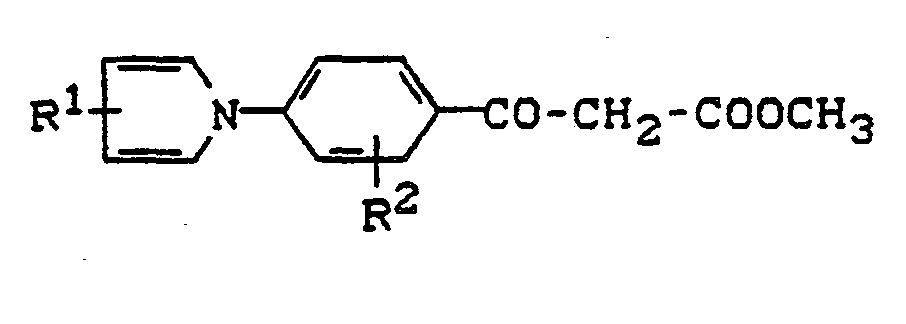

- Das Verfahren wird durchgeführt, indem man die Verbindung der Formel XXIX in einem Verdünnungsmittel in Gegenwart eines Überschusses einer Säure oder Base umsetzt.
- Die Reaktion wird bei Temperaturen von +20°C bis +150°C durchgeführt.
- Es wird bevorzugt bei Normaldruck gearbeitet.
- Als Verdünnungsmittel dienen alle inerten organischen Lösungsmittel. Hierzu gehören insbesondere aliphatische und aromatische gegebenenfalls halogenierte Kohlenwasserstoffe wie Pentan, Hexan, Cyclohexan, Benzol, Toluol, Methylenchlorid, Chloroform, Chlorbenzol; Ether wie Diethylether, Tetrahydrofuran, Ethylenglykolmonomethylether, Ethylenglykoldimethylether, Alkohole wie Methanol, Ethanol, sowie Wasser. Bevorzugt wird in Alkohol oder in Wasser gearbeitet.
- Als Säuren können alle anorganischen Säuren verwendet werden. Hierzu zählen insbesondere Halogenwasserstoff säuren wie Chlorwasserstoff, des weiteren Schwefelsäure, Phosphorsäure.
- Als Basen können alle anorganischen Basen verwendet werden. Hierzu zählen Alkali-und Erdalkalimetallcarbonate wie Natrium-und Kaliumcarbonat sowie Hydroxide wie Natrium-und Kaliumhydroxid.
- Wie bereits erwähnt lassen sich die neuen Verbindungen der Formel XXIV nach dem unter (22) angegebenen Verfahren herstellen.
- Setzt man bei Verfahren (22) als Aldehyd der Formel XVIII 3-Methyl-4-pyrrolobenzaldehyd ein, läßt sich Verfahren 20 durch das folgende Schema darstellen:
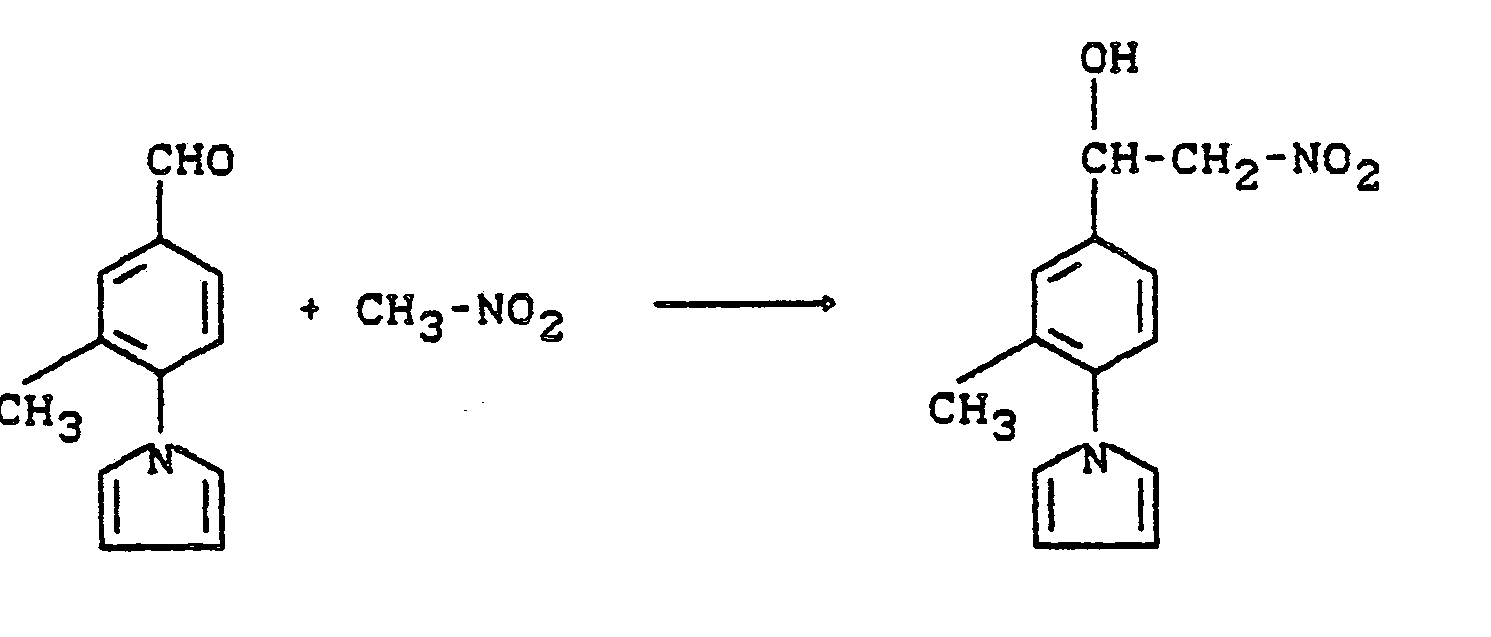
- Das Verfahren wird durchgeführt, indem man äquivalente Mengen der Verbindung XVIII und Nitromethan in einem Verdünnungsmittel in Gegenwart einer Base umsetzt.
- Die Reaktion wird bei Temperaturen von -20°C bis +50°C durchgeführt.
- Es wird bevorzugt bei Normaldruck gearbeitet.
- Als Verdünnungsmittel dienen alle inerten organischen Lösungsmittel. Hierzu gehören insbesondere Ether wie Diethylether, Tetrahydrofuran; Alkohole wie Methanol, Ethanol.
- Als Basen werden verwendet: Alkali-und Erdalkalihydroxide wie Natrium-und Kaliumhydroxid, - alkoholate wie Natrium-und Kaliummethylat, Natrium-und Kaliumethylat.
- Wie bereits erwähnt, lassen sich die neuen Verbindungen der Formel XVII nach dem unter (24) angegebenen Verfahren herstellen, indem man entsprechend substituierte Benzoesäuren oder -ester der Formel XXXIII reduziert.
- Die Verbindungen der Formel XXXIII sind neu. Sie lassen sich nach dem weiter unten angegebenen Verfahren (30) herstellen. Bevorzugt werden Verbindungen der Formel XXXIII eingesetzt, in welcher R', R2 die bei den Verbindungen der Formel I genannten bevorzugten Bedeutungen besitzen und R9 für Wasserstoff, Methyl oder Ethyl steht.
- Im einzelnen seien folgende Verbindungen der Formel XXXIII genannt:
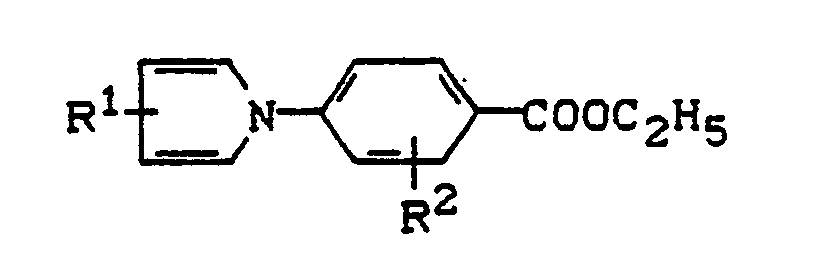

- Als Reduktionsmittel dienen
für Ester der Formel XXXIII, komplexe Metallhydride wie z.B. LiAIH4,
für Säuren der Formel XXXIII, Borane wie z.B. Diboran, komplexe Metallhydride, wie z.B. LiAlH4. - Das Verfahren wird durchgeführt, indem man die Verbindungen der Formel XXXIII in einem Verdünnungsmittel mit der 1-4 molaren Menge Reduktionsmittel umsetzt.
- Die Reaktion wird bei Temperaturen von -50°C bis +100°C durchgeführt, es wird bevorzugt bei Normaldruck gearbeitet.
- Als Verdünnungsmittel dienen:
- Ether wie Diethylether, Tetrahydrofuran, Dioxan.
- Wie bereits erwähnt lassen sich die neuen Verbindungen der Formel XXXIII nach dem unter (26) genannten Verfahren herstellen.
- Setzt man bei Verfahren (26) als Carbonsäure der Formel XXXIII 3-Brom-4-pyrrolobenzoesäure ein, läßt sich die Reaktion durch das folgende Schema darstellen:

- Als Halogenierungsmittel werden anorganische Säurechloride verwendet. Beispielhaft seien genannt: Phosphoroxichlorid, Phosphorpentachlorid, Thionylchlorid.
- Die Reaktion wird durchgeführt, indem man eine Verbindung der Formel XXXIII mit 0,5-1,5 Äquivalenten des anorganischen Säurechlorids, gegebenenfalls in einem Verdünnungsmittel, behandelt.
- Die Umsetzung wird bei Temperaturen von 20°C bis 100°C durchgeführt, es wird bevorzugt bei Normaldruck gearbeitet.
- Als Verdünnungsmittel können alle inerten organischen Lösungsmittel verwendet werden. Hierzu zählen insbesondere aliphatische und aromatische gegebenenfalls halogenierte Kohlenwasserstoffe wie Pentan, Hexan, Cyclohexan, Benzol, Toluol, Methylenchlorid, Chloroform, Chlorbenzol; Ether wie Diethylether, Tetrahydrofuran, Dioxan sowie Phosphoroxichlorid.
- Bevorzugt wird ohne Verdünnungsmittel gearbeitet..
- Wie bereits erwähnt lassen sich die neuen Verbindungen der Formel XXIX nach dem unter (28) angegebenen Verfahren herstellen.
- Setzt man bei Verfahren 28 als Verbindung der Formel XXXIII 4-Pyrrolobenzoesäureisopropylester ein und als Verbindung der Formel XXXVI Essigsäuremethylester ein, läßt sich das Verfahren 28 durch folgendes Formelschema darstellen:

- Verbindungen der Formel XXXVI sind bekannt oder lassen sich analog zu bekannten Verfahren herstellen.
- Im einzelnen seien folgende Verbindungen der Formel XXXVI genannt:
- Essigsäuremethylester, Essigsäureethylester.
- Das Verfahren wird durchgeführt, indem man äquivalente Mengen der Verbindungen XXXIII, XXXVI und einer Base in einem Verdünnungsmittel umsetzt.
- Die Reaktion wird bei Temperaturen von 00 C bis + 1500 C durchgeführt.
- Es wird bevorzugt bei Normaldruck gearbeitet.
- Als Verdünnungsmittel dienen alle inerten organischen Lösungsmittel. Hierzu zählen insbesondere aliphatische und aromatische Kohlenwasserstoffe wie Pentan, Hexan, Heptan, Cyclohexan, Benzol, Toluol; Ether wie Diethylether, Tetrahydrofuran; Alkohole wie Methanol, Ethanol.
- Als Basen dienen Alkali-und Erdalkalimetallhydride wie Natrium-und Calciumhydrid, Alkalimetallalkoholate wie Natrium-und Kaliummethylat, Natrium-und Kaliumethylat.
- Wie bereits erwähnt lassen sich die neuen Verbindungen der Formel XXXIII nach dem unter (30) genannten Verfahren herstellen.
- Die als Ausgangsprodukte für Verfahren (30) dienenden Verbindungen der Formel XXXVII sind bekannt oder lassen sich analog zu bekannten Verfahren herstellen. Bevorzugt sind Verbindungen der Formel XXXVII, in denen R2 die bei den Verbindungen der Formel angegebenen bevorzugten Bedeutungen besitzt und R9 für Methyl, Ethyl, Propyl oder Wasserstoff steht.
- Im einzelnen seien folgende Verbindungen der Formel XXXVII genannt:


- Die Wirkstoffe eignen sich bei günstiger Warmblütertoxizität als Mittel zur Leistungsförderung bei Zucht-und Nutztieren. Sie dienen dabei zur Förderung und Beschleunigung des Wachstums, der Milch-und Wollproduktion, sowie zur Verbesserung der Futterverwertung, der Fleischqualität und zur Verschiebung des Fleisch-Fett-Verhältnisses zugunsten von Fleisch.
- Darüber hinaus zeigen die erfindungsgemäßen Verbindungen gute antiinflammatorische Wirkung im durch Carrageenan induzierten Pfotenödem-Test an der Ratte.
- Sie können somit als Antiphlogistika, Antirheumatika sowie zur Behandlung von Entzündungen und Ödemen eingesetzt werden.
- Zu den Nutz-und Zuchttieren gehören Säugetiere wie z.B. Rinder, Pferde, Schafe, Schweine, Ziegen, Kamele, Wasserbüffel, Esel, Kaninchen, Damwild, Rentiere, Pelztiere wie z.B. Nerze, Chinchilla, Waschbär, Vögel wie z.B. Hühner, Gänse, Puten, Enten, Süß und Salzwasserfische wie z.B. Forellen, Karpfen, Aale, Reptilien.
- Die Wirkstoffe werden unabhängig von der Rasse und dem Geschlecht der Tiere während allen Wachstums-und Leistungsphasen der Tiere eingesetzt. Bevorzugt werden die Wirkstoffe während der intensiven Wachstums-und Leistungsphase eingesetzt. Die intensive Wachstums-und Leistungsphase dauert je nach Tierart von einem Monat bis zu 10 Jahren. Besonders wertvoll erweisen sich die Wirkstoffe bei Aufzucht und Haltung von Jung-und Masttieren.
- Die Anwendung der Wirkstoffe erfolgt direkt oder in Form von für Tiere geeigneten Zubereitungen enteral oder parentereal. Die enterale Anwendung der Wirkstoffe geschieht z.B. oral in Form von Pulvern, Tabletten, Kapseln, Pasten, Tränken, Granulaten, oral applizirbaren Lösungen, Emulsionen oder Suspensionen, Boli sowie über das Futter oder über das Trinkwasser. Die parenterale Anwendung geschieht z.B. in Form der Injektion (intramuskulär, subcutan, intravenös oder durch Implantate).
- Besonders hervorgehoben seien Zubereitungen zur Verabreichung über das Futter oder das Trinkwasser. Dabei können die Wirkstoffe dem Futter direkt oder in Form von Prämixen oder Futterkonzentraten zugesetzt werden.
- Zum Futter zählen Einzelfuttermittel pflanzlicher Herkunft wie Heu, Rüben, Getreide und Getreidenebenprodukte, Melasse, Silage, Einzelfuttermittel tierischer Herkunft wie. Fleisch, Fette, Milchprodukte, Knochenmehl, Fischprodukte, die Einzelfuttermittel wie Vitamine, Proteine, Zucker, Stärke, Mehle, Aminosäuren z.B. DL-Methionin, Salze wie Kalk und Kochsalz. Zum Futter zählen auch Ergänzungs-, Fertig-und Mischfuttermittel. Diese enthalten Einzelfuttermittel in einer Zusammensetzung, die eine ausgewogene Ernährung hinsichtlich der Energie-und Proteinversorgung sowie der Versorgung mit Vitaminen, Mineralsalzen und Spurenelementen sicherstellt.
- Prämixe und Futterkonzentrate sind Mischungen des Wirkstoffs mit Trägerstoffen und gegebenenfalls weiteren Hilfsstoffen. Zu den Trägerstoffen zählen alle Einzelfuttermittel oder Gemische derselben.
- Die Wirkstoffe können in den Zubereitungen allein oder in Mischung mit anderen leistungsfördernden Wirkstoffen, mineralischen Futtermitteln, Spurenelement-Verbindungen, Vitaminen, stickstoffhaltigen nicht-Protein-Verbindungen, Farbstoffen, Antioxidantien, Aromastoffen, Emulgatoren, Fließhilfsstoffen, Konservierungs-und Preßhilfsstoffen vorliegen.
- Andere leistungsfördernde Wirkstoffe sind z.B. Antibiotika wie Tylosin und Virginiamycin. Mineralische Futtermittel sind z.B. Dicalciumphosphat, Magnesiumoxid, Natriumchlorid.
- Spurenelement-Verbindungen sind z.B. Eisenfumarat, Natriumjodid, Kobaltchlorid, Kupfersulfat, Zinkoxid, Selenverbindungen .
Vitamine sind z.B. Vitamin A, Vitamin D3, Vitamin E. - Stickstoffhaltige nicht-Protein-Verbindungen sind z.B. Biuret, Harnstoff.
Farbstoffe sind z.B. Carotinoide wie Canthaxidin, Zeaxanthin, Capsanthin oder alle Farbstoffe, die zur Färbung von Lebensmitteln zugelassen sind.
Antioxidantien sind z.B. Ethoxyquin, Butylhydroxy-Toluol, Ascorbinsäure.
Aromastoffe sind z.B. Vanillin.
Emulgatoren sind z.B. Ester der Milchsäure, Lecithin.
Fließhilfsstoffe sind z.B. Natriumstearat, Caiciumstearat, Kieselsäuren, Bentonite, Ligninsulfonate. - Konservierungsstoffe sind z.B. Propionsäure, Calciumpropionat, Sorbinsäure, Ascorbinsäure. Preßhilfsstoffe sind z.B. Ligninsulfonate, Celluloseether.
- Die Konzentration der Wirkstoffe im Futter beträgt normalerweise etwa 0,001-500 ppm, bevorzugt 0,1-50 ppm.
- Die Konzentration der Wirkstoffe in den Prämixen oder Futterkonzentraten beträgt ca. 0,5 bis 50 Gewichtsprozent, bevorzugt 1 bis 20 Gewichtsprozent.
- Die Menge der Wirkstoffe, die den Tieren zur Erreichung des gewünschten Effektes verabreicht wird, kann wegen der günstigen Eigenschaften der Wirkstoffe weitgehend variiert werden. Sie liegt vorzugsweise bei etwa 0,001 bis 50 mg/kg insbesondere 0,01 bis 5 mg/kg Körpergewicht pro Tag. Die passende Menge des Wirkstoffs sowie die passende Dauer der Verabreichung hängen insbesondere von der Art, dem Alter, dem Geschlecht, dem Gesundheitszustand und der Art der Haltung und Fütterung der Tiere ab und sind durch jeden Fachmann leicht zu ermitteln.
- Die Wirkstoffe werden den Tieren nach den üblichen Methoden verabreicht. Die Art der Verarbreichung hängt insbesondere von der Art, dem Verhalten und dem Gesundheitszustand der Tiere ab.
- Die Wirkstoffe können einmalig verabreicht werden. Die Wirkstoffe können aber auch während der ganzen oder während eines Teils der Wachstums-und Leistungsphase temporär oder kontinuierlich verabreicht werden. Bei kontinuierlicher Verabreichung kann die Anwendung ein-oder mehrmals täglich in regelmäßigen oder unregelmäßigen Abständen erfolgen.
- Beispiel für die Zusammensetzung eines Kükenaufzuchtfutters, das erfindungsgemäßen Wirkstoff enthält:
- 200 g Weizen, 340 g Mais, 361 g Sojaschrot, 60 g Rindertalg, 15 g Dicalciumphosphat, 10 g Calciumcarbonat, 4 g jodiertes Kochsalz, 7,5 g Vitamin-Mineral-Mischung der unten angegebenen Zusammensetzung und 2,5 g Wirkstoff-Prämix der unten angegebenen Zusammensetzung ergeben nach sorgfältigem Mischen 1 kg Futter.
- In einem kg Vitamin-Mineral-Mischung sind enthalten: 600 I.E. Vitamin A, 100 I.E. Vitamin Da, 10 mg Vitamin E, 1 mg Vitamin Ks, 3 mg Riboflavin, 2 mg Pyridoxin, 20 mcg Vitamin B12, 5 mg Calciumpantothenat, 30 mg Nikotinsäure, 200 mg Cholinchlorid, 200 mg Mn S04 x H20, 140 mg Zn SO4 x 7 H20, 100 mg Fe S04 x 7 H20 und 20 mg Cu S04 x 5 H20 in Getreidemehl als Trägerstoff.
- 1 kg Wirkstoff-Prämix enthalten 100 g Wirkstoff, 900 g Weizenmehl.
- Beispiel für die Zusammensetzung eines Schweineaufzuchtfutters, das erfindungsgemäßen Wirkstoff enthält:
- 630 g Futtergetreideschrot (zusammengesetzt aus 200 g Mais, 150 g Gerste-, 150 g Hafer-und 130 g Weizenschrot), 80 g Fischmehl, 60 g Sojaschrot, 60 g Tapiokamehl, 38 g Bierhefe, 50 g Vitamin-Mineral-Mischung (Zusammensetzung wie beim Kükenfutter) 30 g Leinkuchenmehl, 30 g Maiskleberfutter, 10 g Sojaöl, 10 g Zuckerrohrmelasse und 2 g Wirkstoff-Prämix der unten angegebenen Zusammensetzung ergeben nach sorgfältigem Mischen 1 kg Futter.
- 1 kg Wirkstoff Prämix enthält 200 g Wirkstoff, 20 g Pflanzenöl und 780 g Calciumcarbonatpulver.
- Beispiel für die Zusammensetzung eines Futters für Rinder, das den erfindungsgemäßen Wirkstoff enthält:
- 69,95 % Futtergetreideschrot, 10 % gemahlene Maiskolben, 8 % Sojabohnenmehl, 5 % Luzernemehl, 5 % Melasse, 0,6 % Harnstoff, 0,5 % Calciumphosphat, 0,5 % Calciumcarbonat, 0,3 % Kochsalz und 0,15 % Vitamin-Mineral-Mischung. Die Vitamin-Mineral-Mischung enthält pro kg 70.000 i.E. Vitamin A, 70.000 i:E. Vitamin D3, 100 mg Vitamin E, 50 mg Mn SO4 x H20, 30 mg Zn S04 x 7H20 in Getreidemehl als Trägerstoff.
- Der Wirkstoff wird der Vitamin-Mineral-Mischung in der erforderlichen Menge beigemischt und diese anschließend sorgfältig mit den übrigen Bestandteilen vermischt.
- Weibliche Laborraten 90-110 g schwer vom Typ SPF Wistar (Züchtung Hagemann) werden ad lib mit Standard Rattenfutter, das mit der gewünschten Menge Wirkstoff versetzt ist, gefüttert. Jeder Versuchsansatz wird mit Futter der identischen Charge durchgeführt, so daß Unterschiede in der Zusammensetzung des Futters die Vergleichbarkeit der Ergebnisse nicht beeinträchtigen können.
- Die Ratten erhalten Wasser ad lib.
- Jeweils 12 Ratten bilden eine Versuchsgruppe und werden mit Futter, das mit der gewünschten Menge Wirkstoff versetzt ist gefüttert. Eine Kontrollgruppe erhält Futter ohne Wirkstoff. Das durchschnittliche Körpergewicht sowie die Streuung in den Körpergewichten der Ratten ist in jeder Versuchsgruppe gleich, so daß eine Vergleichbarkeit der Versuchsgruppen untereinander gewährleistet ist.
- Während des 13-tägigen Versuchs wird die Gewichtszunahme bestimmt.
- Es werden die aus der Tabelle ersichtlichen Ergebnisse erhalten:

- 10 g 2-(3,5-Dichlor-4-amino-phenyl)-2-hydroxy-N-tert.-butyl-1-ethylamin werden mit 5,3 g 2,5-Dimethoxytetrahydrofuran in 50 ml Essigsäure 1 Stunde unter Rückfluß erhitzt. Nach dem Abkühlen gießt man auf 500 ml Wasser, macht mit konzentrierter Ammoniaklösung alkalisch, extrahiert 2 x mit je 50 ml Essigester und trennt die organischen Phasen ab und trocknet sie über Natriumsulfat. Man dampft ein und erhält nach chromatographischer Reinigung/Kieselgelsäule (HCCl3:CH3OH:NH3 = 20:3:0,3) 10 g vom Fp.: 125°C.
- Eine Lösung von 15 g 2-(3,5-Dichlor-4-amino-phenyl)-2-hydroxy-N-tert.-butyl-1-ethylamin und 10,3 g 2,5-Hexandion in 75 ml Essigsäure wurde 12 Stunden unter Rückfluß erhitzt. Man erhielt nach der in Beispiel 1 beschriebenen Aufarbeitung 10,2 g vom Fp.: 95°C.
- Anstelle von 2,5-Hexandion kann man 2,5-Dimethyl-2,5-dimethoxy-tetrahydrofuran verwenden und erhält die o.g. Verbindung in einer Ausbeute von 13 g. Fp.: 95°C.
- Nach der in Beispiel 1 und 2 beschriebenen Reaktion erhielt man folgende Verbindungen, die in H-NMR charakterisiert wurden.


-

- In entsprechender Arbeitsweise erhält man mit Dimethyl-tert.-butyl-silylchlorid

- 5-(3,5-Dichlor-4-pyrrolo-phenyl)-3-tert.-butyl-2-oxazolidinon
-

- Zu 3,27 g (0,01 Mol) 2-(3,5-Dichlor-4-pyrrolo-phenyl)-2-hydroxy-N-tert.-butyl-ethylamin, gelöst in 30 ml Methylenchlorid und 3 g Triethylamin tropft man bei -5°C eine Lösung von 1 g COCI2 in 20 ml Methylenchlorid innerhalb von 20 Minuten. Man rührt 30 Minuten bei -5°C und 1 Stunde bei Raumtemperatur, dampft ein im Vakuum und chromatographiert den Rückstand über eine Kieselgelsäule mit n-Heptan, Methylenchlorid = 1:1. Ausbeute 1,5 g.
- 5-(3,5-Dichlor-4-pyrrolo-phenyl)-3-tert.-butyl-oxazolidin
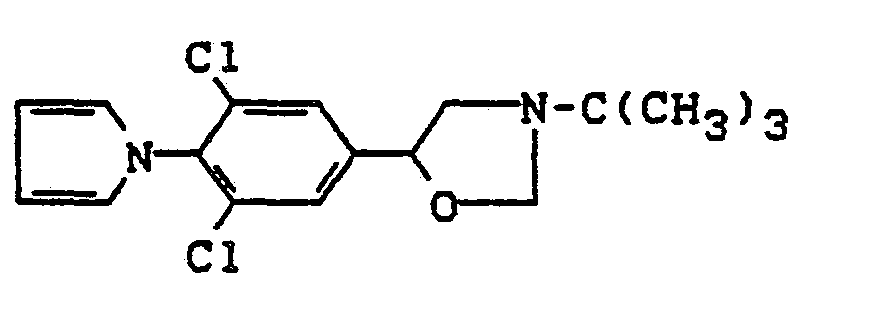
- 2-(3,5-Dichlor-4-pyrrolo-phenyl)-2-acetoxy-N-tert.-butyl-ethylamin
- Zu 3,27 g (0,01 Mol) 2-(3,5-Dichlor-4-pyrrolo-phenyl)-2-hydroxy-N-tert.-butyl-ethylamin gelöst in 50 ml CHCl3 fügt man 3 g Triethylamin, tropft 1,1 g (0,011 Mol) Acetanhydrid bei -5°C und erwärmt 2 Stunden auf Zimmertemperatur. Nach beendeter Umsetzung (Kontrolle durch DC) dampft man ein im Vakuum, nimmt in Essigester auf, wäscht mit Natriumbicarbonatlösung, dann mit gesättigter Kochsalzlösung, dampft die organische Phase ein und chromatographiert über eine Kieselgelsäule (Hexan-Essigester = 2:1). Ausbeute: 2,8 g.
- Die für die Beispiele 11.1 und 11.2 verwendeten Ausgangsverbindungen wurden auf folgendem Wege erhalten:
- 10,9 g (29,8 mMol) 4-Amino-3,5-dichlor-ω-[(R)-1-cyclohexyl-ethylamino]-acetophenon-hydrochlorid, F 226°C (erhalten aus 4-Amino-3,5-dichlor-ω-brom-acetophenon durch Umsetzung mit (R)-1-Cyclohexyl-ethylamin werden in 75 ml Methanol und 18 ml Wasser gelöst und bei einem pH-Wert zwischen 2 und 7 mit einer Lösung von 2,5 g Natriumborhydrid in 8 ml Wasser tropfenweise versetzt.
- Es wurde auf pH 9 eingestellt, eingeengt und mit Essigester extrahiert. Die Essigesterphase wird mit Wasser gewaschen, getrocknet und eingeengt. Das kristalline Produkt wird mit Heptan verrührt, abgesaugt und mit Heptan gewaschen. Man erhält 6,5 g 2-(3,5-Dichlor-4-amino-phenyl)-2-hydroxy-N-[(R)-1-cyclohexylethyl]-ethylamin, F 110 bis 116°C. Durch fraktionierte Umkristallisation aus Acetonitril werden die beiden Diastereomeren getrennt:
- Physikalische Daten:
- Diastereomer 11.1: Schmelzpunkt: 142°C
- [a] 58 g = -22 (c = 0,69, Methanol)
- Diastereomer 11.2: Schmelzpunkt: 108-111 °C
- [α]20 = -27,26 (c = 0,8576, Methanol)
- In entsprechender Weise erhält man aus 4-Amino-3,5-dichlor-ω-[(S)-1-cyclohexyl-ethylamino]-acetophenon das 2-(3,5-Dichlor-4-amino-phenyl)-2-hydroxy-N-[(S)-1-cyclohexyl-ethyl]-ethylamin, das durch fraktionierte Kristallisation in die Diastereomeren C und D aufgetrennt wird.
- In entsprechender Weise erhält man aus 4-Amino-3,5-dichlor-ω-(cyclohexylethylamino)-acetophenon ein Diastereomerengemisch von 2-(3,5-Dichlor-4-aminophenyl)-2-hydroxy-N-(1-cyclohexyl-ethyl)-ethylamin.
Claims (8)


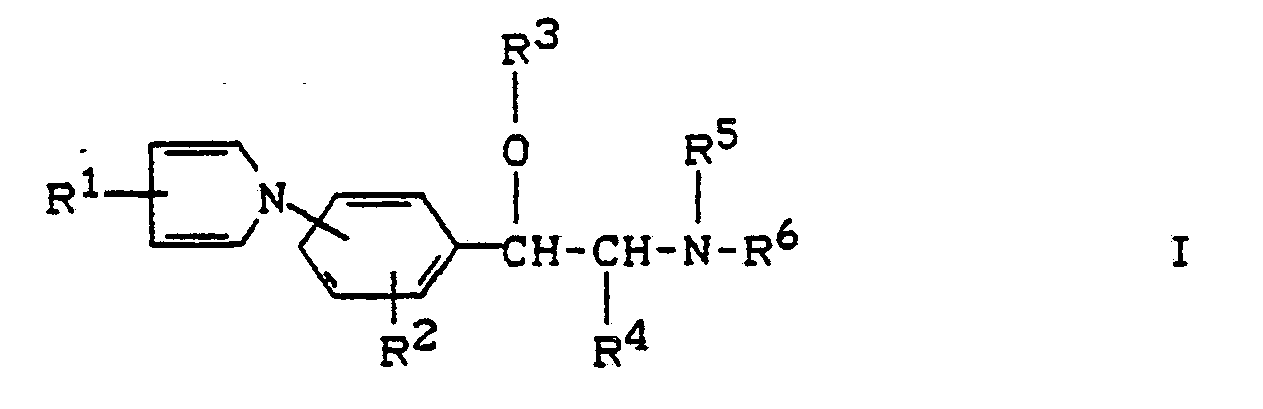


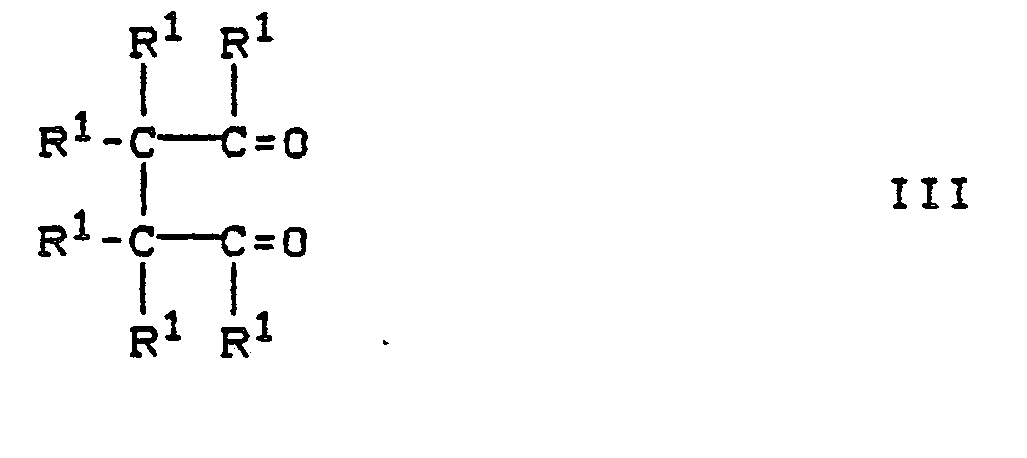

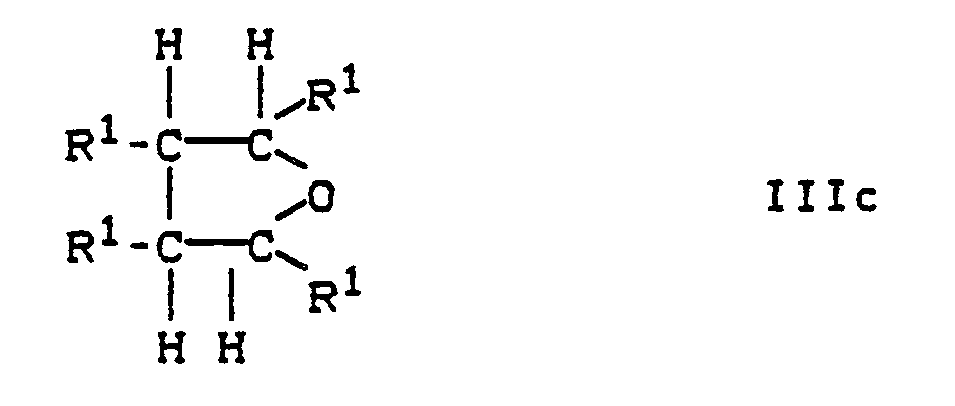
R1 die oben angegebene Bedeutung hat, R8 für Wasserstoff, Alkyl oder Aryl steht, umsetzt oder

Hal für Halogen steht umsetzt oder
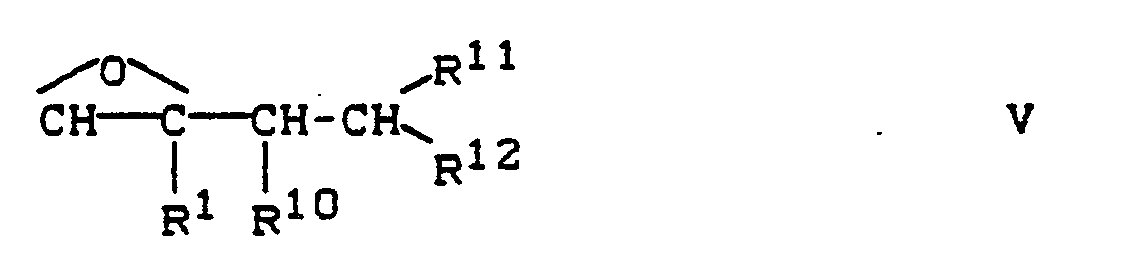
R1 die oben angegebene Bedeutung hat, R10 für Wasserstoff oder Brom steht,
R" für Wasserstoff und R 12 für Brom steht oder
R" und R12 für Alkoxy oder Aryloxy stehen, umsetzt oder

Hal für Halogen steht, umsetzt oder

R1, R2, R4, R5, R6 die oben angegebene Bedeutung haben, reduziert oder

R1, R2, R4 die oben angegebene Bedeutung haben, mit Aminen der Formel IX

R5 und R6 die oben angegebene Bedeutung haben, umsetzt oder

R1 und R2 die oben angegebene Bedeutung haben und
Hal für Halogen steht,
mit Aminen der Formel IX umsetzt und anschließend die Carbonylgruppe reduziert oder
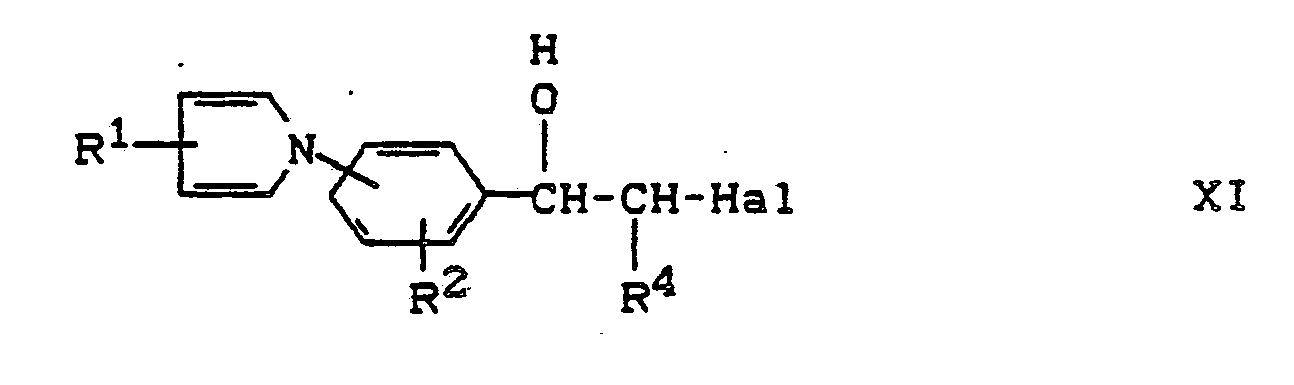
in welcher
R1, R2, R4 die oben angegebene Bedeutung haben,
Hal für Halogen steht,
mit Aminen der Formel IX umsetzt oder

R1 bis R4 die oben angegebene Bedeutung haben,
mit Ketonen der Formel XIII

R13 für gegebenenfalls substituiertes Alkyl oder Cycloalkyl steht,
R14 für gegebenenfalls substituiertes Alkyl, Cycloalkyl oder Heterocyclyl steht,
R13 und R14 gemeinsam mit dem angrenzenden C-Atom für einen gegebenenfalls substituierten aliphatischen Ring stehen,
unter reduzierenden Bedingungen umsetzt oder

R1 und R2 die oben angegebenen Bedeutungen haben,
mit Aminen der Formel IX unter reduzierenden Bedingungen umsetzt oder

in welcher
R1, R2, R5, R6 die oben angegebenen Bedeutungen haben,
reduziert oder
mit Silylierungsmitteln der Formel XVI

Z für Halogen, CN, OS02, CF3, O-Si(Alkyl)3 oder O-SO2-OSi(Alkyl)3 steht und R15 für gleiche oder verschiedene Alkylreste steht,
umsetzt oder

stehen, Verbindungen der Formel I in welcher R3 und R5 für Wasserstoff stehen, mit Phosgen oder phosgenabspaltenden Mitteln umsetzt oder


R7 die oben angegebene Bedeutung hat,
in Gegenwart wasserentziehender Mittel oder Reaktionsbedingungen umsetzt, oder

in welcher
R13 und R14 die bei Verfahren 2i, bei den Verbindungen der Formel XIII angegebenen Bedeutungen haben
und
Hal für Chlor oder Brom steht,
umsetzt.
Applications Claiming Priority (2)
| Application Number | Priority Date | Filing Date | Title |
|---|---|---|---|
| DE19873714485 DE3714485A1 (de) | 1987-04-30 | 1987-04-30 | Pyrrolophenylalkanolamine und ihre derivate, verfahren zu ihrer herstellung und ihre verwendung als leistungsfoerderer |
| DE3714485 | 1987-04-30 |
Publications (2)
| Publication Number | Publication Date |
|---|---|
| EP0289850A2 true EP0289850A2 (de) | 1988-11-09 |
| EP0289850A3 EP0289850A3 (de) | 1989-09-20 |
Family
ID=6326621
Family Applications (1)
| Application Number | Title | Priority Date | Filing Date |
|---|---|---|---|
| EP88106190A Withdrawn EP0289850A3 (de) | 1987-04-30 | 1988-04-19 | Pyrrolophenylalkanolamine und ihre Derivate, Verfahren zu ihrer Herstellung und ihre Verwendung als Leistungsförderer |
Country Status (14)
| Country | Link |
|---|---|
| US (1) | US4904679A (de) |
| EP (1) | EP0289850A3 (de) |
| JP (1) | JPS63280058A (de) |
| KR (1) | KR880012546A (de) |
| AU (1) | AU603440B2 (de) |
| BR (1) | BR8802092A (de) |
| DE (1) | DE3714485A1 (de) |
| DK (1) | DK233188A (de) |
| FI (1) | FI882005A7 (de) |
| HU (1) | HUT49327A (de) |
| IL (1) | IL86187A0 (de) |
| NZ (1) | NZ224398A (de) |
| PL (1) | PL272156A1 (de) |
| ZA (1) | ZA883063B (de) |
Families Citing this family (1)
| Publication number | Priority date | Publication date | Assignee | Title |
|---|---|---|---|---|
| EP0738713B1 (de) * | 1995-04-21 | 2000-02-09 | Rhone-Poulenc Agrochimie | Herstellungsverfahren für 1-(Chloroaryl)heterozyklische Pestizide |
Family Cites Families (5)
| Publication number | Priority date | Publication date | Assignee | Title |
|---|---|---|---|---|
| AR204241A1 (es) * | 1973-03-09 | 1975-12-10 | Ciba Geigy Ag | Procedimiento para preparar compuestos derivados del 1-pirrolil(1)-fenoxi-2-hidroxi-3-alquilamino-propano y del 1-pirrolil-(1)-fenoxi-3-hidroxi-3-morfolino-propano |
| US4404222A (en) * | 1980-08-25 | 1983-09-13 | American Cyanamid Company | Phenylethanolamine derivatives and acid addition salts thereof for enhancing the growth rate of meat-producing animals and improving the efficiency of feed utilization thereby |
| IL60530A (en) * | 1979-08-16 | 1984-10-31 | American Cyanamid Co | Animal feed compositions useful as growth promotors and for reduction of fat in animals,comprising phenylethanolamine derivatives and certain such novel compounds |
| DE3175580D1 (en) * | 1980-08-25 | 1987-01-02 | American Cyanamid Co | Method for enhancing the growth rate of meat-producing animals and for improving the lean meat to fat ratio thereof |
| US4407819A (en) * | 1980-08-25 | 1983-10-04 | American Cyanamid Company | Phenylethanolamine derivatives and acid addition salts thereof for the depression of fat deposition in warm blooded animals |
-
1987
- 1987-04-30 DE DE19873714485 patent/DE3714485A1/de not_active Withdrawn
-
1988
- 1988-04-19 EP EP88106190A patent/EP0289850A3/de not_active Withdrawn
- 1988-04-22 US US07/185,177 patent/US4904679A/en not_active Expired - Fee Related
- 1988-04-27 NZ NZ224398A patent/NZ224398A/xx unknown
- 1988-04-27 IL IL86187A patent/IL86187A0/xx unknown
- 1988-04-28 JP JP63104378A patent/JPS63280058A/ja active Pending
- 1988-04-28 FI FI882005A patent/FI882005A7/fi not_active Application Discontinuation
- 1988-04-28 DK DK233188A patent/DK233188A/da not_active Application Discontinuation
- 1988-04-29 PL PL27215688A patent/PL272156A1/xx unknown
- 1988-04-29 ZA ZA883063A patent/ZA883063B/xx unknown
- 1988-04-29 BR BR8802092A patent/BR8802092A/pt unknown
- 1988-04-29 HU HU882222A patent/HUT49327A/hu unknown
- 1988-04-30 KR KR1019880005005A patent/KR880012546A/ko not_active Withdrawn
- 1988-05-02 AU AU15696/88A patent/AU603440B2/en not_active Expired - Fee Related
Also Published As
| Publication number | Publication date |
|---|---|
| US4904679A (en) | 1990-02-27 |
| FI882005A0 (fi) | 1988-04-28 |
| AU1569688A (en) | 1988-11-03 |
| PL272156A1 (en) | 1989-09-18 |
| HUT49327A (en) | 1989-09-28 |
| AU603440B2 (en) | 1990-11-15 |
| NZ224398A (en) | 1990-08-28 |
| DK233188A (da) | 1989-02-03 |
| DK233188D0 (da) | 1988-04-28 |
| IL86187A0 (en) | 1988-11-15 |
| FI882005A7 (fi) | 1988-10-31 |
| KR880012546A (ko) | 1988-11-28 |
| DE3714485A1 (de) | 1988-11-17 |
| JPS63280058A (ja) | 1988-11-17 |
| ZA883063B (en) | 1989-01-25 |
| BR8802092A (pt) | 1988-11-29 |
| EP0289850A3 (de) | 1989-09-20 |
Similar Documents
| Publication | Publication Date | Title |
|---|---|---|
| EP0244728B1 (de) | Verwendung von Heteroarylethylaminen zur Leistungsförderung bei Tieren, Heteroarylethylamine und Verfahren zu ihrer Herstellung | |
| EP0301348B1 (de) | Substituierte Pyridylethanolamine, Verfahren zu ihrer Herstellung und ihre Verwendung als Leistungsförderer bei Tieren | |
| EP0288867A2 (de) | Neue Aminophenylethylamin-Derivate, Verfahren zu ihrer Herstellung sowie ihre Verwendung als Leistungsförderer | |
| DE3627663A1 (de) | Heteroarylethylamine, verfahren zu ihrer herstellung und ihre verwendung als leistungsfoerderer bei tieren | |
| US4960783A (en) | Use of benzimidazole derivatives as yield promoters | |
| EP0209025B1 (de) | Arylethanolhydroxylamine, Verfahren zu ihrer Herstellung und ihre Verwendung zur Leistungsförderung | |
| EP0379928A2 (de) | Aryl- und Heteroarylethanol-pyridylalkylamine, Verfahren zu ihrer Herstellung und ihre Verwendung als Leistungsförderer bei Tieren und als Mittel gegen Adipositas | |
| DE3714485A1 (de) | Pyrrolophenylalkanolamine und ihre derivate, verfahren zu ihrer herstellung und ihre verwendung als leistungsfoerderer | |
| US4845262A (en) | Novel arylethanolamines for promoting livestock production | |
| EP0154923A2 (de) | Monosilylierte Aminophenylethylamin-Derivate, Verfahren zu ihrer Herstellung und ihre Verwendung zur Wachstumsförderung | |
| EP0093949B1 (de) | Sulfinyl- und Sulfonyl-azacycloheptan-2-one, Verfahren zu ihrer Herstellung sowie ihre Verwendung als Futterzusatzstoffe | |
| US5086181A (en) | 4-bromo-6-chloro-5-amino-2-substituted pyridyl compounds | |
| DE3522938A1 (de) | Leistungsfoerdernde mittel | |
| EP0225600A2 (de) | Verfahren zur Leistungsförderung bei Nutztieren, neue Aminophenylethylamin-Derivate und ihre Herstellung | |
| DE3905028A1 (de) | 2,4-dihalogen-6-pyridylethanolphenylisopropylamine, verfahren zu ihrer herstellung und ihre verwendung zur verschiebung des protein-fett-verhaeltnisses zugunsten von protein | |
| EP0253258A2 (de) | Arylethanolhydroxylamine, Verfahren zu ihrer Herstellung und ihre Verwendung zur Leistungsförderung | |
| DE3801521A1 (de) | Pyrimidinderivate als leistungsfoerderer | |
| EP0212479A1 (de) | Verwendung von Lactamamiden als Leistungsförderer bei Tieren | |
| DE2213077A1 (de) | ||
| DE3543636A1 (de) | Neue aminophenylethylamin-derivate, verfahren zu ihrer herstellung sowie ihre verwendung zur leistungsfoerderung | |
| DE3543637A1 (de) | Neue aminophenylethylamin-derivate, verfahren zu ihrer herstellung sowie ihre verwendung als leistungsfoerderer |
Legal Events
| Date | Code | Title | Description |
|---|---|---|---|
| PUAI | Public reference made under article 153(3) epc to a published international application that has entered the european phase |
Free format text: ORIGINAL CODE: 0009012 |
|
| 17P | Request for examination filed |
Effective date: 19880419 |
|
| AK | Designated contracting states |
Kind code of ref document: A2 Designated state(s): AT BE CH DE ES FR GB GR IT LI NL SE |
|
| PUAL | Search report despatched |
Free format text: ORIGINAL CODE: 0009013 |
|
| AK | Designated contracting states |
Kind code of ref document: A3 Designated state(s): AT BE CH DE ES FR GB GR IT LI NL SE |
|
| STAA | Information on the status of an ep patent application or granted ep patent |
Free format text: STATUS: THE APPLICATION HAS BEEN WITHDRAWN |
|
| 18W | Application withdrawn |
Withdrawal date: 19901228 |
|
| R18W | Application withdrawn (corrected) |
Effective date: 19901228 |